Anaes · Perioperative medicine
Anaesthesia for the solid organ transplant recipient
Also known as Post-transplant nontransplant surgery · Immunosuppression anaesthesia · Kidney liver heart lung recipient GA
Exam-pass anaesthesia for solid organ transplant recipients having non-transplant surgery: graft function, immunosuppression drug interactions, infection risk, physiology by organ, and multidisciplinary planning.
On this page & tools
Your progress
Saved locally on this device.
Target exams
Red flags

Why this is examined / the one-line answer
Transplant recipients appear on every general, obstetric, and emergency list. The exam is not “how to redo the original transplant” — it is graft protection, drug interactions, infection, and organ-specific physiology during non-transplant surgery.[1]
One-liner: I document the organ and date, check graft function and rejection/infection status, continue essential immunosuppressants with transplant advice, avoid nephrotoxins and CYP interactors, use meticulous asepsis, and escalate subtle sepsis early. [1]
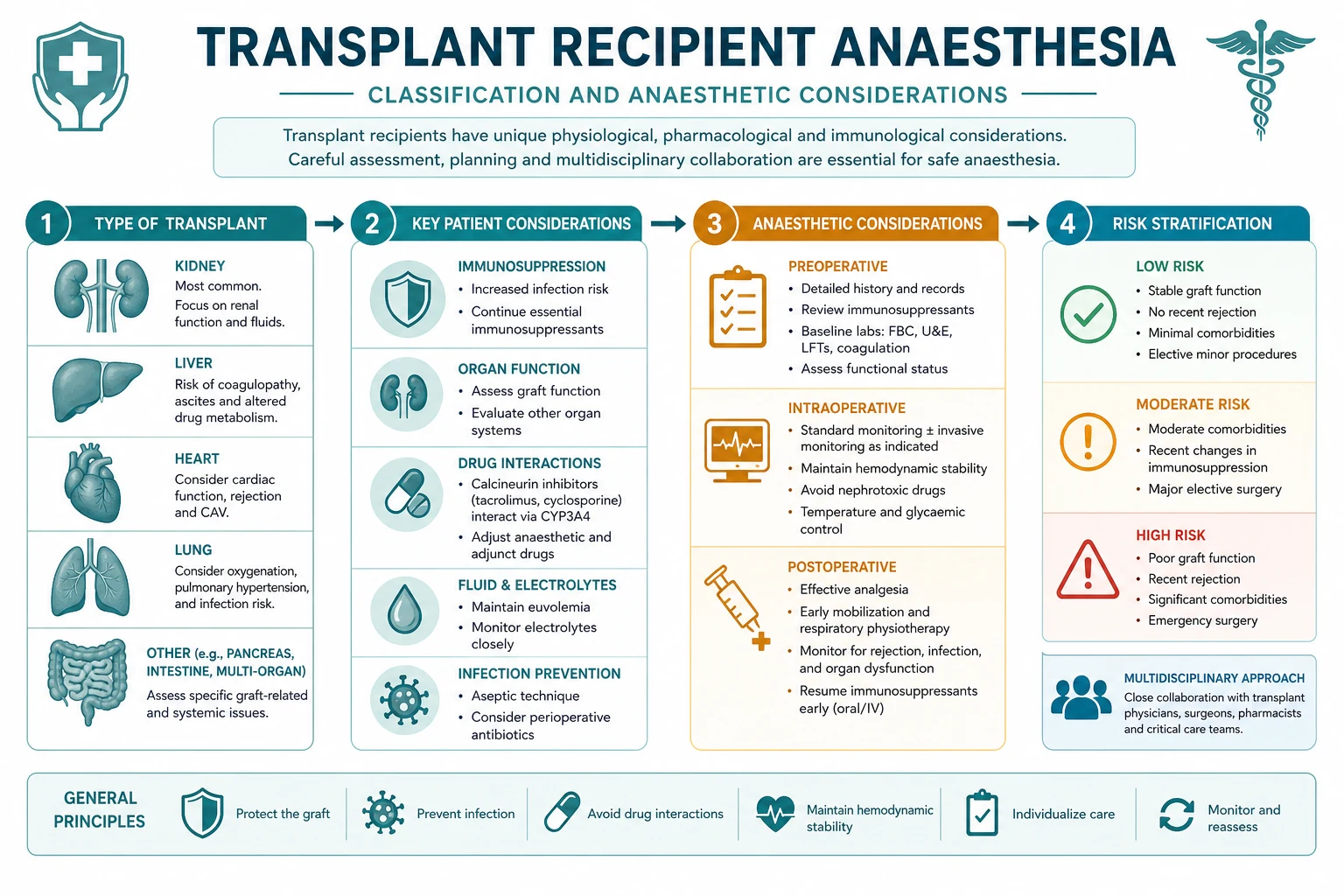
Preoperative assessment — universal checklist
- Which organ(s), when, which centre, baseline function numbers.
- Current immunosuppression (drug, dose, recent levels).
- Rejection history and current graft status.
- Infection (including opportunistic: CMV, BK virus in kidney, respiratory colonisation in lung, etc.).
- Comorbidities: diabetes (steroids/CNIs), hypertension, CVD, CKD, osteoporosis, adrenal suppression.
- Airway/surgical history (sternotomy, clamshell, dialysis fistula, previous difficult airway).
- Contact transplant team for elective major cases, unstable graft, or unclear drug plan. [1]
Investigations: FBC, U&E/creatinine trend, LFTs, coagulation, glucose, drug levels when indicated, ECG/echo as indicated, infection screen if unwell. [1]
Time since transplant: first 3–6 months = highest infection and rejection risk — delay pure elective surgery when possible.[1]
Immunosuppression pharmacology for anaesthetists
| Class | Examples | Perioperative issues |
|---|---|---|
| Calcineurin inhibitors | Tacrolimus, ciclosporin | Nephrotoxicity, hypertension, neurotoxicity; CYP3A4 interactions (azoles, macrolides, diltiazem, grapefruit — raise levels) |
| Antimetabolites | Mycophenolate, azathioprine | Marrow suppression, GI upset; infection risk |
| mTOR inhibitors | Sirolimus, everolimus | Impaired wound healing, hyperlipidaemia; rare pneumonitis |
| Corticosteroids | Prednisolone | HPA suppression → stress-dose plan if indicated; hyperglycaemia |
| Induction biologics (early) | Basiliximab, ATG | Profound early infection risk |
Rule: do not stop essential immunosuppressants for trivial NBM periods; convert routes with transplant/pharmacy advice. Missed doses cause rejection; interaction spikes cause toxicity.[1]
[1]Organ-specific physiology
Kidney recipient
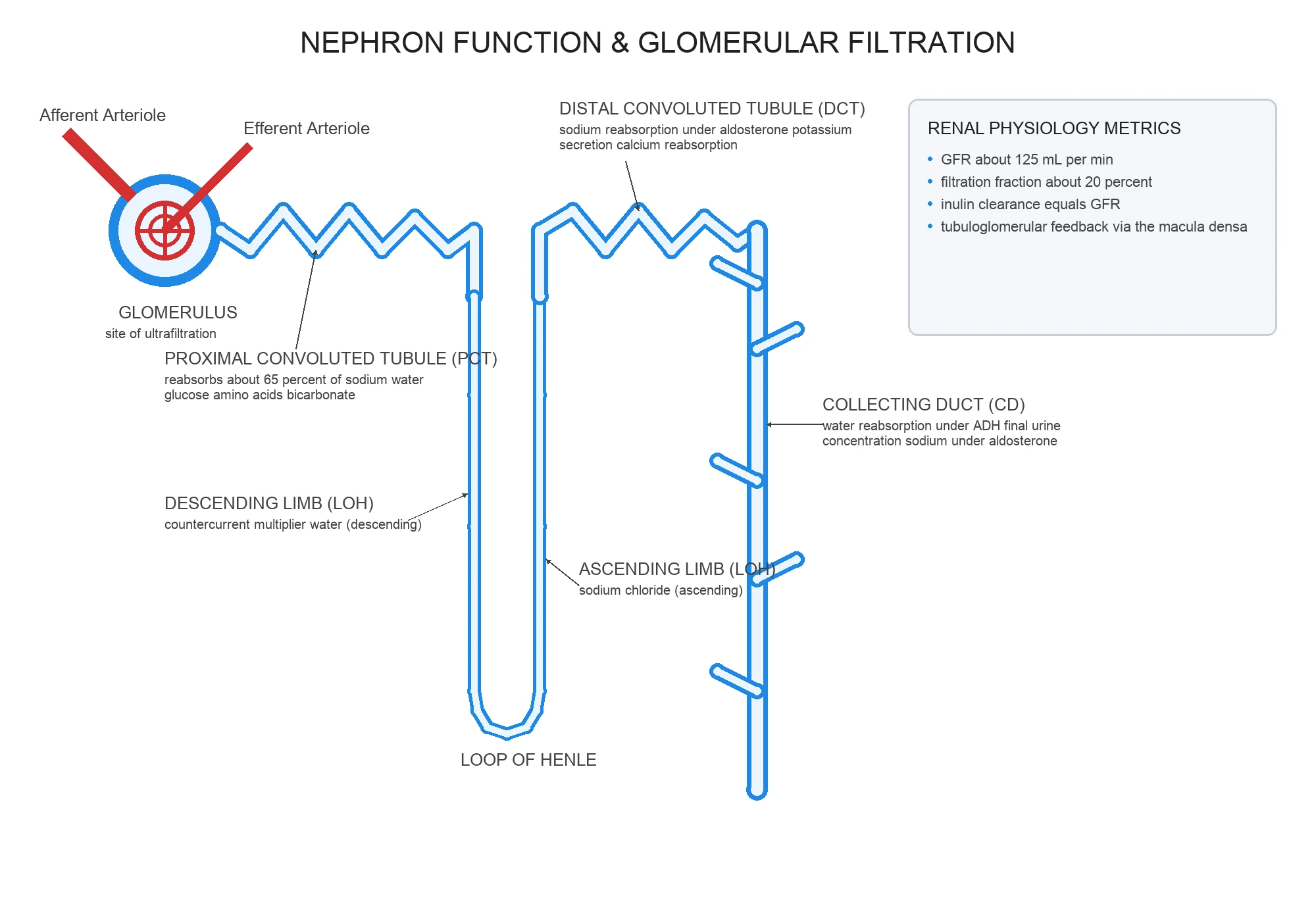
Protect the graft: adequate perfusion pressure, avoid hypovolaemia, avoid NSAIDs and aminoglycosides where alternatives exist, careful iodinated contrast. Never put BP cuff or IV on a fistula arm. Baseline creatinine is the compass — know their normal. [1]
Liver recipient
Early post-transplant may retain portal hypertension physiology; later often near-normal if excellent graft. Check LFTs/coags. Drug metabolism tracks graft function. Encephalopathy/varices rare late if graft excellent — do not assume “always coagulopathic”. [1]
Heart recipient
Denervated heart: resting tachycardia common; blunted response to atropine and indirect sympathomimetics; use direct-acting agents (adrenaline, isoprenaline) and pacing. Graft coronary disease possible years later. Maintain preload; avoid extreme afterload swings. [1]
Lung recipient
Airway below anastomosis is denervated — impaired cough, secretion retention. Infection vigilance is extreme. Single-lung recipients still have diseased native lung physiology. Fluid caution; avoid barotrauma; plan physiotherapy early. [1]
Pancreas / combined kidney–pancreas
Glucose management changes with graft function; autonomic neuropathy may coexist from diabetes history. [1]
Anaesthetic goals
- Protect graft perfusion and avoid drug injury.
- Continue appropriate immunosuppression.
- Prevent and detect infection.
- Manage steroids and glucose.
- Match monitoring to organ and surgery magnitude. [1]
Technique matrix
Monitoring and equipment
Standard monitoring; arterial/central access as surgery dictates. Protect dialysis access. Invasive haemodynamics more readily for major cases in heart/lung recipients. Glucose monitoring when steroids/stress. Quantitative neuromuscular monitoring if NMB used — renal/hepatic impairment may prolong some agents. [1]
Intraoperative management
Routine techniques are usually fine if graft function is good. Maintain MAP appropriate for kidney grafts. Time antibiotic prophylaxis carefully. Choose antiemetics with interaction/QT awareness when polypharmacy is heavy. Apply PBM: iron for elective anaemia, conserve blood, use restrictive transfusion thoughtfully rather than reflexive multi-unit top-ups.[2][3]
Regional anaesthesia is welcome when coagulation and infection status allow — excellent for opioid-sparing in many recipients. [1]
Crisis pivots
Subtle sepsis
Immunosuppressed patients may lack fever/leucocytosis drama — early cultures, broad therapy after source thinking, source control, ICU early. [1]
Acute graft dysfunction
Medical emergency: transplant centre involvement, ultrasound (kidney perfusion/obstruction), reverse insults (hypotension, nephrotoxins, urinary retention), biopsy pathways as directed. [1]
Heart recipient collapse
Direct-acting vasoactive drugs; early echo; pacing; treat like a cardiac denervation physiology problem. [1]
Anaphylaxis / drug reaction
Standard algorithm; review recent biologics or new antibiotics. [1]
Hyperkalaemia / renal graft oliguria
ABC, ECG, standard hyperkalaemia therapy, exclude obstruction and hypoperfusion, call renal/transplant. [1]
Postoperative plan
Restart oral immunosuppressants ASAP or use IV equivalents planned preoperatively. Monitor graft labs daily after major surgery. Physiotherapy and secretion management for lung recipients. Glucose control. VTE prophylaxis balancing bleeding. Early transplant team review after major procedures. Wound healing may be slower on mTOR inhibitors — surgical awareness. [1]
Special populations
- Combined organ transplants.
- Pregnancy after transplant (multidisciplinary).
- Paediatric transition adults.
- Recent transplant (<3–6 months) — delay elective if possible.
- Retransplant candidates with poor function — physiology closer to end-stage organ failure topics. [1]
SAQ answer scaffold
A 55-year-old kidney transplant recipient (tacrolimus, mycophenolate, prednisolone) for emergency laparotomy. Outline management. [1]
- Graft status (3): creatinine trend, urine output, rejection/infection history, contact transplant team.[1]
- Drugs (3): continue IS with route plan; avoid NSAIDs/nephrotoxins; CYP interaction awareness; steroid stress dosing if indicated.
- Intraop (3): MAP for graft perfusion, asepsis, antibiotics, haemodynamic support, PBM.
- Sepsis vigilance (2): muted signs; source control.
- Postop (2): labs, IS restart, transplant review.
Viva stem bank and model phrases
Stem 1: “Do you stop tacrolimus on the day of surgery?”
Model: “Essential immunosuppressants are generally continued. If the patient is NBM I convert route with transplant/pharmacy advice — I do not stop casually.” [1]
Stem 2: “Why avoid NSAIDs?”
Model: “Calcineurin inhibitor nephrotoxicity plus NSAID haemodynamic renal injury risks the graft — I use other multimodal options.” [1]
Stem 3: “Atropine for bradycardia in a heart transplant?”
Model: “The heart is denervated — atropine is unreliable. I use direct-acting chronotropes and pacing.” [1]
Stem 4: “They look ‘fine’ but lactate is rising after bowel surgery.”
Model: “Immunosuppression blunts classic signs — I treat as possible sepsis/ischaemia until proven otherwise and escalate early.” [1]
Stem 5: “Fistula arm?”
Model: “No BP cuff, no IV, no arterial line on that arm — protect the access.” [1]
Stem 6: “Sirolimus and wound dehiscence?”
Model: “mTOR inhibitors impair wound healing — surgical and transplant teams may adjust perioperatively for major wounds.” [1]
Stem 7: “Anaemia before elective hernia repair.”
Model: “PBM still applies — investigate and treat iron deficiency rather than default multi-unit transfusion.”[3]
Common traps
- Stopping all immunosuppressants overnight
- NSAIDs in renal grafts
- Atropine-only bradycardia plan in heart transplant
- Ignoring subtle sepsis
- Elective major surgery during rejection
- BP cuff on fistula arm
- New azole without tacrolimus level plan [1]
Recipient checklist — GRAFT
Infection and isolation practicalities
Know whether the patient has contact precautions (resistant organisms, C. difficile history) and protect other theatre patients as well as the recipient. Timing of perioperative antibiotics may interact with ongoing treatment courses — do not double-dose toxic agents casually. Wound infections can progress rapidly on heavy immunosuppression — low threshold for review. [1]
Diabetes after transplant
Steroids and calcineurin inhibitors worsen glycaemia. Intraoperative glucose monitoring and a clear insulin plan prevent both hypo on the ward and hyperosmolar crises after major stress. Coordinate with the patient's usual transplant diabetes regimen rather than inventing sliding scales in isolation. [1]
Examiner mental map
- Which organ and how well it works.
- Immunosuppression list and interactions.
- Organ-specific physiology (kidney/heart/lung/liver).
- Infection vigilance.
- Intraop graft protection.
- Postop IS restart and transplant review. [1]
Graft-first thinking passes; generic GA recipes fail. [1]
References
- [1]Herborn J, Parulkar S Anesthetic Considerations in Transplant Recipients for Nontransplant Surgery Anesthesiol Clin, 2017.PMID 28784225
- [2]Mazer CD, Whitlock RP, Fergusson DA, et al. Restrictive or Liberal Red-Cell Transfusion for Cardiac Surgery N Engl J Med, 2017.PMID 29130845
- [3]Gómez-Ramírez S, Bisbe E, Shander A, et al. Management of Perioperative Iron Deficiency Anemia Acta Haematol, 2019.PMID 30970362