Anaes · Applied cardiovascular & respiratory physiology
Immunology basics
Also known as Immune system · Innate and adaptive immunity · Hypersensitivity · Anaphylaxis mechanism · Complement system · IgE-mediated allergy
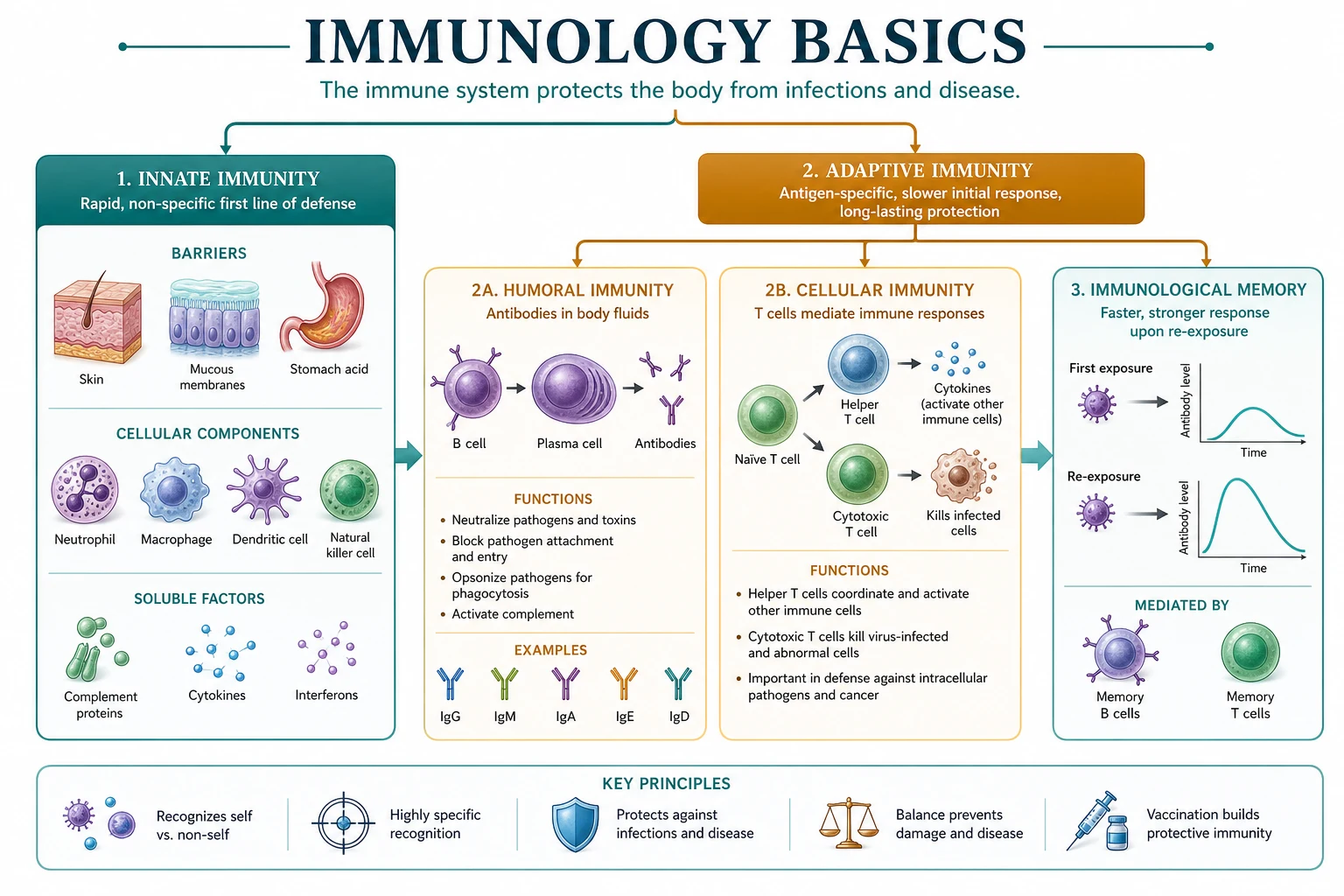
The immune system defends against pathogens and tumours, and its disorders underlie the most dramatic anaesthetic emergency — anaphylaxis. The framework rests on five exam-critical ideas: the innate immune system (physical barriers, complement, phagocytes, natural killer cells) provides immediate, non-specific defence; the adaptive immune system (T lymphocytes for cell-mediated immunity, B lymphocytes for antibody-mediated humoral immunity) provides specific, memory-based defence; the complement system (classical, alternative and lectin pathways) opsonises pathogens, recruits inflammatory cells, and forms the membrane attack complex; hypersensitivity reactions are classified by the Gell and Coombs system into four types (Type I IgE-mediated immediate, Type II antibody-mediated cytotoxic, Type III immune-complex, Type IV delayed cell-mediated); and anaesthesia-induced anaphylaxis is a Type I IgE-mediated reaction in which a drug (most commonly a neuromuscular blocker) cross-links IgE on mast cells, triggering degranulation and the release of histamine, tryptase and leukotrienes that cause vasodilation, bronchospasm and cardiovascular collapse. Built on the NKT-cell study (Trujillo-Ocampo 2026), the vitamin D immuno-modulator study (Shende 2026), the perioperative anaphylaxis epidemiology review (Takazawa 2026), the remimazolam-anaphylaxis report (Jo 2026), the sugammadex-airway-oedema report (Habib 2026), and the IgE amplification loop review (Tanei 2026).
On this page & tools
Your progress
Saved locally on this device.
8 MCQs with explanations
Target exams
Red flags
Why this matters to the anaesthetist
Primary expects innate vs adaptive, MHC/T and B cell roles, antibody classes, and Gell–Coombs hypersensitivity types with anaphylaxis mechanism. Final expects recognition, adrenaline, and culprit patterns (NMBAs, antibiotics, chlorhexidine, latex).[1]
One-liner: Innate is fast and non-specific; adaptive is specific with memory; Type I is IgE–mast cell–histamine minutes; anaphylaxis is airway + shock + rash/±GI — treat with IM adrenaline first. [1]
Innate immunity
- Barriers: skin, mucosa, cilia, acid, lysozyme.
- Cells: neutrophils, macrophages, dendritic cells, NK cells, eosinophils/basophils/mast cells.
- Molecules: complement, acute-phase proteins, cytokines, defensins.
- Pattern recognition: TLRs detect PAMPs/DAMPs → inflammation.
- Complement: classical (antibody), alternative, lectin pathways → C3 convertase → opsonisation (C3b), anaphylatoxins (C3a/C5a), MAC (C5–9). [1]
Anaesthetic link: surgical inflammation and SIRS are innate amplification; complement activation can cause non-IgE anaphylactoid reactions. [1]
Adaptive immunity
Cellular
- Antigen presentation: dendritic cells process antigen → MHC to T cells in lymph nodes.
- MHC I (all nucleated cells) → CD8 cytotoxic T (viral/intracellular).
- MHC II (APCs) → CD4 helper T → orchestrate B cells and macrophages (Th1/Th2/Th17 patterns — keep light).
- Memory T cells speed second response. [1]
Humoral
- B cells → plasma cells → antibodies.
- IgM: first response, pentamer, activates complement.
- IgG: major serum Ig, crosses placenta, opsonises, secondary response.
- IgA: mucosal/secretory.
- IgE: binds mast cells/basophils — allergy/parasites.
- IgD: B-cell receptor roles. [1]
Primary vs secondary response: lag then IgM→IgG first time; faster higher-affinity IgG on re-exposure (sensitisation for allergy). [1]
Hypersensitivity — Gell and Coombs

| Type | Mechanism | Timing | Examples relevant to anaesthesia |
|---|---|---|---|
| I | IgE → mast cell degranulation (histamine, tryptase, leukotrienes, PGs) | Minutes | Anaphylaxis to NMBA, antibiotic, latex, chlorhexidine |
| II | IgG/IgM vs cell surface | Hours | ABO mismatch haemolysis, some drug cytopenias, HIT is more complex immune but often discussed nearby |
| III | Immune complexes → complement | Hours–days | Serum sickness, some vasculitides |
| IV | T-cell mediated | 48–72 h | Contact dermatitis, TB skin test, some drug rashes (SJS/TEN severe variants) |
Anaphylaxis physiology (exam core)
Sensitisation: prior exposure → IgE on mast cells. Re-exposure: antigen cross-links IgE → degranulation. [1]
Mediators: histamine (vasodilation, capillary leak, bronchospasm, urticaria), tryptase (marker), leukotrienes/PGs (bronchospasm, leak), etc. [1]
Clinical triad domains: skin (urticaria, flush — may be absent), respiratory (bronchospasm, stridor, hypoxia), cardiovascular (hypotension, PEA), ± GI. [1]
Tryptase: rises after mast-cell events; timed samples support diagnosis; normal tryptase does not fully exclude. [1]
Anaphylaxis vs anaphylactoid (non-IgE): same final common mast-cell pathway clinically — treat the same. Difference is mechanism/testing (skin tests, specific IgE). [1]
Immediate management physiology logic
- Stop trigger, call for help.
- Adrenaline — α1 vascular tone/reduces leak; β1 cardiac support; β2 bronchodilation and mast-cell stabilisation. IM to anterolateral thigh early; IV carefully in monitored settings per protocol.
- Airway/O2, crystalloid for leak-driven hypovolaemia.
- Adjuncts: antihistamines, steroids (late modulation), bronchodilators — not substitutes for adrenaline.
- Observe biphasic risk; investigate later (tryptase, allergy clinic). [1]
Transfusion immunology sketch
- ABO: preformed IgM isoagglutinins → acute intravascular haemolysis if incompatible.
- RhD: IgG after sensitisation → delayed haemolysis/HDFN.
- TRALI, TACO, allergic transfusion reactions — separate mechanisms (see transfusion leaves). [1]
Immunosuppression and anaesthesia
- Steroids, chemotherapy, transplant drugs, HIV, asplenia → infection risk, vaccination rules, stress-steroid cover if HPA suppressed.
- Live vaccines and timing are specialty details; know that cell-mediated immunity matters for opportunistic pathogens. [1]
Numbers / anchors
- Type I minutes; Type IV days.
- IgE mast-cell fixed; tryptase sampling timed (e.g. 1 h peak teaching, plus baseline later — follow local protocol).
- Complement MAC = C5–9. [1]
Type I anaphylaxis
- IgE–mast cell
- Minutes
- Adrenaline core
- NMBAs/antibiotics/latex/CHX
Type IV delayed
- T cells
- 48–72 h
- Contact allergy
- Not adrenaline-first rash
Viva scripts
List the four hypersensitivity types with one example each. [1]
Explain IgE anaphylaxis pathway from antigen to hypotension. [1]
Why give adrenaline before antihistamine? [1]
ABO mismatch mechanism in one minute. [1]
Extended viva dialogue
Examiner: What is the difference between innate and adaptive immunity? [1]
Candidate: Innate is immediate, uses barriers, phagocytes and complement without antigen specificity or classic memory. Adaptive uses T and B lymphocytes with specific receptors, MHC presentation, and memory for faster re-challenge responses. [1]
Examiner: A patient bronchospasms and crashes 3 minutes after rocuronium — mechanism? [1]
Candidate: Likely Type I hypersensitivity with mast-cell degranulation if previously sensitised, or non-IgE mast-cell activation; mediators cause vasodilation, leak and bronchospasm. Stop trigger, call help, give adrenaline, support airway and volume, sample tryptase later. [1]
Clinical synthesis: Immunology for anaesthesia collapses to host defence structure plus hypersensitivity timing — and anaphylaxis muscle memory. [1]
Complement pathways in 6 lines
Classical: antigen–antibody → C1. Lectin: mannose-binding lectin. Alternative: tick-over on surfaces. All form C3 convertase → C3a/C5a anaphylatoxins, C3b opsonin, C5–9 MAC. Hereditary angioedema is C1-inhibitor related — not IgE anaphylaxis, adrenaline less effective, need specific therapy pathways. [1]
Investigation after perioperative anaphylaxis
Timed tryptase (acute + baseline), referral for skin testing / specific IgE, document all exposures (including chlorhexidine, patent blue, gels), medic-alert, and future anaesthesia planning with tested alternatives. [1]
Worked SAQ
SAQ: Classify hypersensitivity with anaesthetic examples (8 marks)
Type I IgE immediate: anaphylaxis to neuromuscular blockers or antibiotics. Type II antibody against cells: ABO incompatible transfusion haemolysis. Type III immune complex: serum sickness-like reactions. Type IV T-cell delayed: contact dermatitis to rubber accelerators, some drug rashes. Timing and mechanism dictate acute treatment and later testing. [1]
MHC clinical hooks
MHC I presents cytosolic peptides to CD8 — viral immunity and transplant cytotoxicity. MHC II presents exogenous peptides to CD4 — helps B cells and macrophages. HLA matching matters for transplant; some HLA alleles associate with severe drug reactions (e.g. certain antiepileptics — specialty knowledge). [1]
Neutrophil life cycle
Marrow → circulating ↔ marginated pool → tissues. Steroids raise circulating neutrophils by demargination (not true new production acute). Neutropenia risk from chemo is infection physiology for lists. [1]
Extended viva add-on
Examiner: Why might tryptase be normal after a clinical anaphylaxis? [1]
Candidate: Timing may miss the peak, some reactions are basophil-predominant with less tryptase release, and clinical diagnosis can still stand. Always take correctly timed samples and baseline later, and refer for formal testing. [1]
Primary exam expansion — dense examiner pack
Innate versus adaptive immunity (framework first)
| Feature | Innate | Adaptive |
|---|---|---|
| Speed | Minutes–hours | Days (first exposure) |
| Specificity | Pattern recognition | Antigen-specific receptors |
| Memory | Limited/trained immunity nuance | Strong memory |
| Cells | Neutrophils, macrophages, NK, complement | T and B lymphocytes |
| Anaesthetic relevance | Barrier break, surgical inflammation | Allergy, immunodeficiency, vaccines |
Cells and signals you must name
Neutrophils: acute bacterial phagocytosis; neutropenia → bacterial/fungal risk. Macrophages/monocytes: phagocytosis, antigen presentation, cytokine factories (IL-1, TNF, IL-6). Dendritic cells: bridge innate→adaptive. NK cells: virus/tumour without prior sensitisation. T helper CD4: orchestrate (Th1 cell-mediated, Th2 humoral/allergy teaching, Th17, Treg). Cytotoxic CD8: kill virus-infected cells. B cells → plasma cells → antibodies. [1]
Antibodies: IgM first acute; IgG memory/placental transfer; IgA mucosal; IgE allergy/parasites; IgD receptor roles. [1]
Complement pathways (short)
Classical (antibody-driven), alternative, lectin → C3 convertase centre → opsonisation (C3b), anaphylatoxins (C3a/C5a), MAC (C5–9). Deficiency → infection or immune complex disease patterns. Protamine–heparin and some extracorporeal circuits activate complement — inflammatory response teaching. [1]
Hypersensitivity types (Gell and Coombs) with anaesthesia examples
| Type | Mechanism | Example |
|---|---|---|
| I | IgE mast cell | Anaphylaxis to NMBA, antibiotic, latex, chlorhexidine |
| II | IgG/M cytotoxic | ABO transfusion; HIT more complex immune |
| III | Immune complex | Serum sickness patterns; some drug rashes |
| IV | Delayed T cell | Contact dermatitis; some drug rashes; TB skin test |
Anaphylaxis molecular steps
Sensitization → IgE on mast cells/basophils → re-exposure cross-links IgE → degranulation (histamine, tryptase, leukotrienes, prostaglandins) → vasodilation, ↑permeability, bronchospasm, urticaria. Under anaesthesia rash may be absent; cardiovascular collapse dominates. Tryptase supports diagnosis if timed correctly. Non-IgE anaphylactoid histamine release (vancomycin red-man, atracurium) can mimic — still treat life threats similarly first. [1]
Sepsis immune sketch
Pathogen-associated molecular patterns (LPS etc.) → TLR → cytokine storm → endothelial dysfunction, capillary leak, coagulopathy (DIC), myocardial depression, vasoplegia. Later immunoparalysis concept in ICU. Anaesthetist: source control, antibiotics, fluids, vasopressors, organ support — immunology explains why not just “low BP.” [1]
Transfusion immunology
ABO IgM isoagglutinins → acute haemolytic reaction if incompatible. RhD IgG → delayed haemolytic / HDFN. TRALI: immune/non-immune neutrophil lung injury. Allergic transfusion reactions: donor plasma proteins. Irradiation prevents TA-GVHD in at-risk hosts. [1]
Immunosuppression perioperative notes
Chronic steroids, transplant drugs (tacrolimus, ciclosporin, mycophenolate), biologics, chemotherapy — infection risk, wound healing, adrenal suppression, drug interactions (CYP3A calcineurin inhibitors). Avoid live vaccines context. Asepsis and antibiotic timing matter more, not less. [1]
Wound healing phases (brief)
Haemostasis → inflammation → proliferation → remodelling. Factors impairing: hypoxia, steroids, malnutrition, diabetes, smoking, infection, radiation. [1]
SAQ: classify hypersensitivity with anaesthetic examples (8 marks)
Four types with mechanisms (4). One detailed Type I perioperative anaphylaxis recognition and immediate management outline (3). Non-IgE contrast (1). [1]
Viva
Q: Why measure tryptase? A: Mast-cell activation marker supporting anaphylaxis diagnosis when timed (peak 1–2 h, baseline later). Q: Difference Type I vs non-immune histamine release? A: IgE-specific vs direct mast-cell displacement; history/testing differ, emergency Rx overlaps. Q: Why is complement relevant on CPB? A: Circuit activation drives systemic inflammatory response. [1]
High-yield viva battery and numbers lock-in
Anaphylaxis under anaesthesia — recognition clusters
Sudden hypotension ± tachycardia or bradycardia; increased airway pressures/bronchospasm; desaturation; urticaria/flushing/angioedema (may be hidden under drapes); cardiovascular collapse alone. Differential: PE, air embolism, MH, scombroid, high spinal, haemorrhage, vaso-vagal, primary cardiac. Treat as anaphylaxis if probable — do not wait for rash. [1]
Antibody classes one-liners
IgM: primary response, pentamer, ABO. IgG: secondary, crosses placenta, opsonises. IgA: mucosal secretions. IgE: mast-cell allergy. IgD: B-cell receptor co-role. [1]
Transfusion reaction rapid sort
| Reaction | Timing | Key features | First actions |
|---|---|---|---|
| Acute haemolytic ABO | Immediate | Fever, flank pain (awake), shock, DIC dark urine | Stop transfusion, ABC, check identity, fluids, ICU |
| Allergic/anaphylaxis | Immediate | Urticaria → anaphylaxis (IgA def risk) | Stop, adrenaline if severe |
| TRALI | Hours | Hypoxaemic respiratory failure | Support O2/ventilate; report |
| TACO | Hours | Hydrostatic oedema, hypertension | Diurese, support |
| Bacterial contamination | Early | Septic shock | Stop, cultures, antibiotics |
Full viva dialogue (additional)
Examiner: Walk through Type I hypersensitivity mechanism. [1]
Candidate: After sensitisation, antigen-specific IgE coats mast cells and basophils. Re-exposure cross-links IgE, causing degranulation of histamine, tryptase and lipid mediators. The result is vasodilation, capillary leak, bronchospasm and urticaria — clinically anaphylaxis when systemic. [1]
Examiner: Why is chlorhexidine a modern anaphylaxis culprit? [1]
Candidate: It is ubiquitous in skin prep and impregnated lines; repeated exposures sensitise; reactions can be severe. Prevention includes history of prior reactions to prep or central lines and using alternatives when allergy confirmed. [1]
Exam traps
- Waiting for rash before treating anaphylaxis.
- Confusing TACO and TRALI.
- Saying all vancomycin red-man is IgE anaphylaxis.
- Forgetting tryptase timing for later diagnosis. [1]
References
- [1]Trujillo-Ocampo A, et al. Human NKT10 cells are enriched in cord-derived invariant natural killer T cells and mediate immune-regulation in a xenogeneic graft-versus-host disease model Front Immunol, 2026.PMID 42358969
- [2]Shende S, et al. Vitamin D as an Immuno-Endocrine Modulator: Discovering Its Role in Autoimmune Disorders and Host Defense Mechanisms J Clin Med, 2026.PMID 42355910
- [3]Takazawa T, et al. Perioperative anaphylaxis in Japan: Epidemiology, diagnosis, and challenges Allergol Int, 2026.PMID 41455630
- [4]Jo Y, et al. Remimazolam-Induced Anaphylaxis After Spinal Anesthesia: A Case Report and Literature Review J Clin Med, 2026.PMID 42278971
- [5]Habib R, et al. Sugammadex-Associated Delayed Laryngeal and Upper Airway Edema: A Novel Adverse Effect J Investig Med High Impact Case Rep, 2026.PMID 42113672
- [6]Tanei R. Revisiting Atopy: The IgE-Dependent Amplification Loop as a Forgotten Driver of Atopic Dermatitis Pathophysiology, 2026.PMID 42347026