Anaes · Obstetric anaesthesia
Maternal physiology of pregnancy for the anaesthetist
Also known as Pregnancy physiology anaesthesia · Aortocaval compression · FRC pregnancy desaturation · MAC reduction pregnancy
Exam-exhaustive maternal physiological changes by system with anaesthetic implications: aortocaval compression, reduced FRC and rapid desaturation, airway oedema, aspiration risk, hypercoagulability, reduced MAC and local anaesthetic requirements, and positioning/preoxygenation practice.
On this page & tools
Your progress
Saved locally on this device.
10 MCQs with explanations
Target exams
Red flags
Why this is examined / the one-line answer
Maternal physiology is the foundation under every obstetric SAQ, viva, and hot case on the ANZCA Final Examination and its global cousins (FRCA Final, EDAIC Part II, ABA APPLIED, FCAI). The examiner is not asking you to recite that “cardiac output goes up.” They are testing whether you can link each system change to a concrete anaesthetic action: left lateral tilt, meticulous preoxygenation, OAA/DAS airway planning, reduced volatile and local anaesthetic dose expectations, vasopressor choice after spinal, aspiration prophylaxis, and VTE risk management.[1]
The one-line answer that opens the viva is: Pregnancy produces a high-output, low-resistance circulation with aortocaval compression risk from about twenty weeks, reduced functional residual capacity with raised oxygen consumption so apnoea is lethal within minutes, mucosal airway engorgement and aspiration risk that mandate a failed-intubation plan, hypercoagulability, and approximately thirty percent reductions in MAC and neuraxial local anaesthetic requirements — I plan every induction, neuraxial block, and recovery from those facts.
[1]MBRRACE-UK and related confidential enquiries repeatedly show cardiac disease as a leading indirect cause of maternal death and haemorrhage as a leading direct cause. Physiology explains both: the heart is already working harder and preload can swing violently at delivery, while expanded blood volume can mask early postpartum haemorrhage until decompensation is abrupt.[3]
Cardiovascular system — numbers, mechanisms, implications
Volume and red cell mass
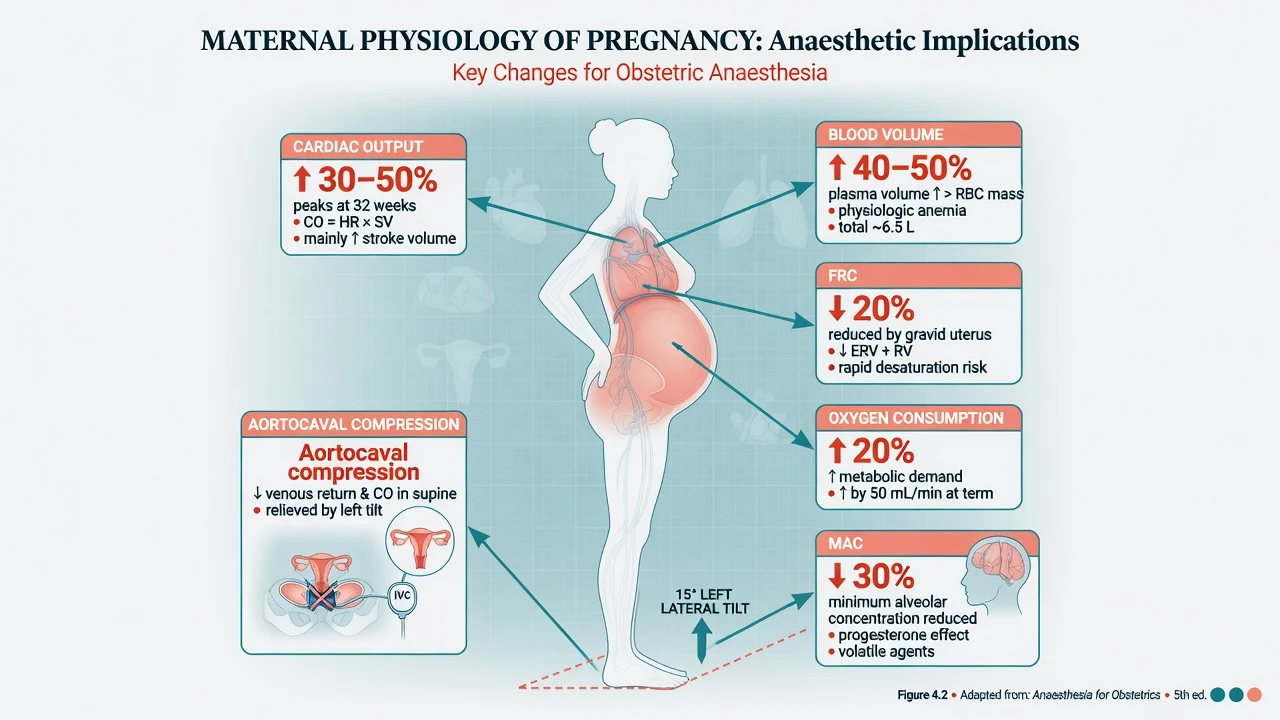
Total blood volume rises by approximately 40–50% by term. Plasma volume expands more than red cell mass, producing the classic physiological anaemia of pregnancy (teaching range often haemoglobin around 105–110 g/L at term, with unit and ethnicity variation). The expanded volume is a buffer against peripartum blood loss, but it is not a licence to ignore haemorrhage: once compensatory mechanisms fail, collapse is rapid. Fibrinogen and clotting factor increases (see haematology) further complicate the bleeding–thrombosis duality of obstetrics.
[1]Cardiac output, heart rate, and SVR
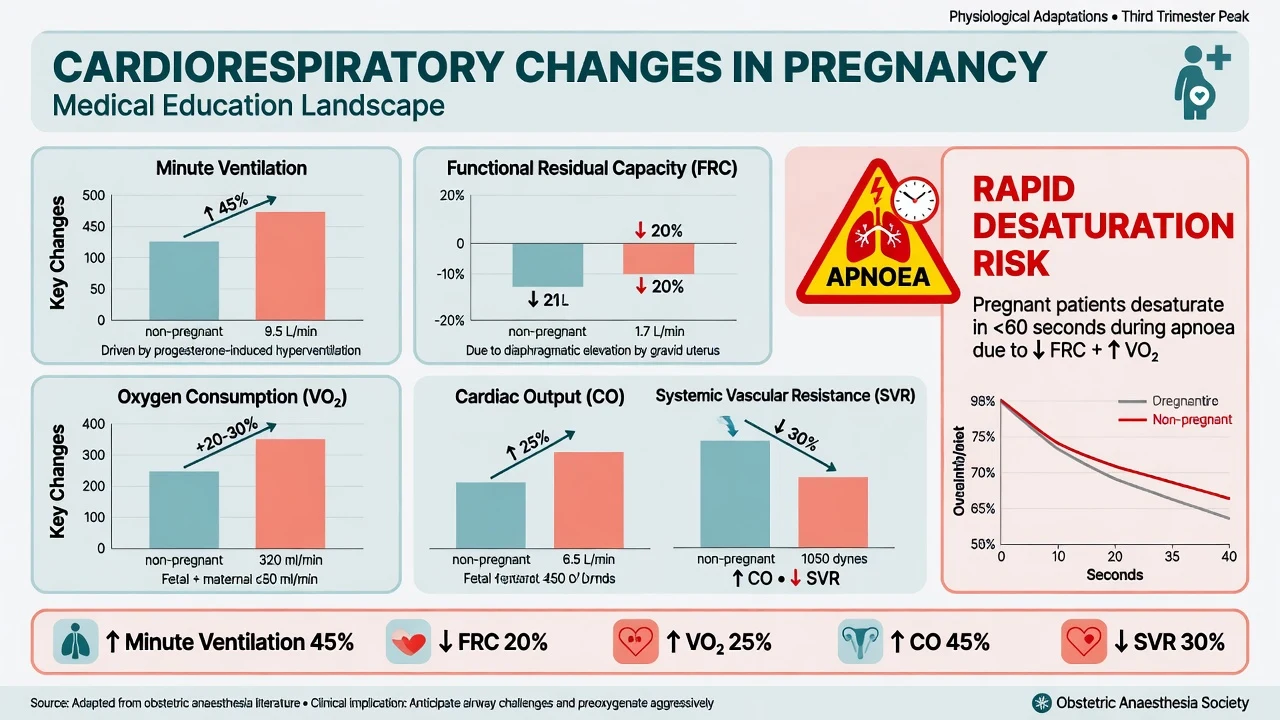
Cardiac output rises by approximately 30–50% by the end of the second trimester, driven first by stroke volume and later by heart rate. Labour multiplies cardiac output further with each contraction and with pain-driven catecholamines; immediately after delivery, autotransfusion of uterine blood and relief of aortocaval compression produce another surge in preload. Systemic vascular resistance falls (progesterone effect plus the low-resistance placental bed), diastolic pressure tends to fall, and pulse pressure widens. Mean arterial pressure is often near baseline or only modestly reduced in healthy pregnancy.
[2]Anaesthetic implications: baseline vital signs on the labour ward are not non-pregnant norms. A “normal” non-pregnant blood pressure in a woman with chronic hypertension or pre-eclampsia may already represent relative hypotension or, conversely, uncontrolled disease. Cardiac lesions that cannot tolerate high preload (some cardiomyopathy, stenotic left-sided lesions) or high cardiac output demand specialist planning — cardiac disease in pregnancy is examined as a separate high-yield topic because physiology collides with fixed cardiac pathology.
[2]Aortocaval compression — the highest-yield CVS viva point
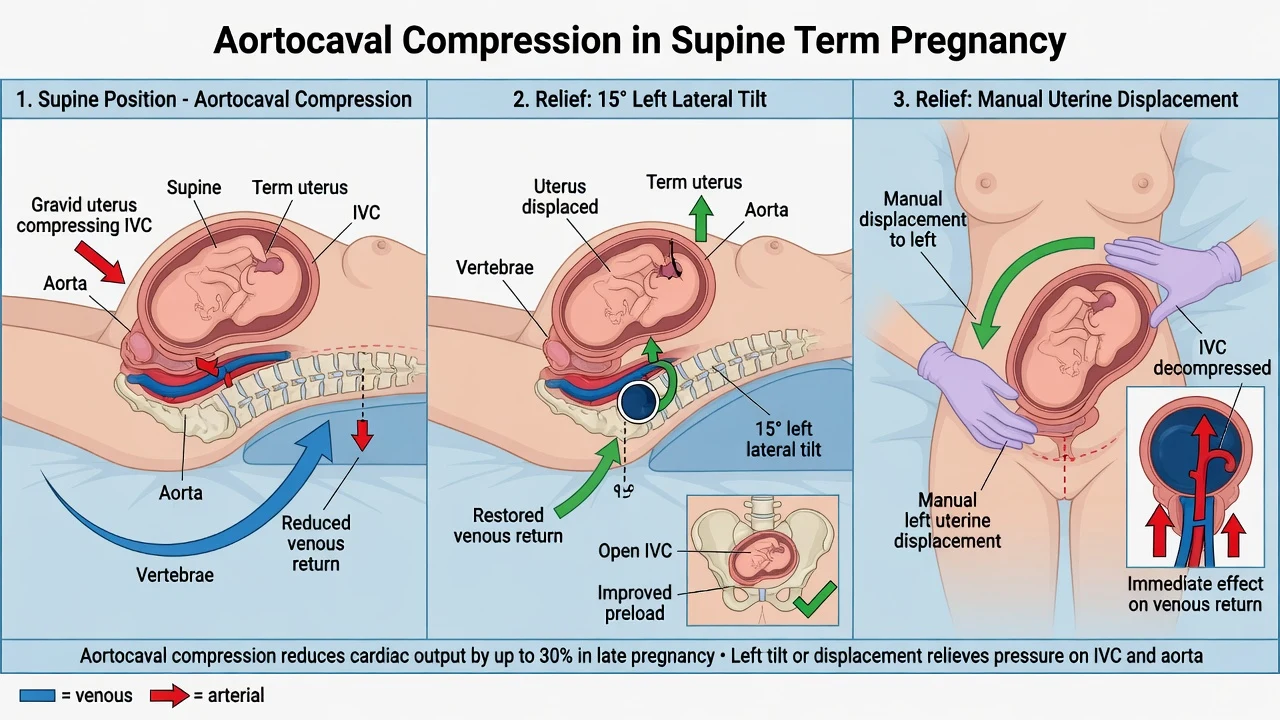
From about 20 weeks, the gravid uterus can compress the inferior vena cava and, less constantly, the aorta when the mother lies flat supine. Venous return falls, cardiac output falls, maternal blood pressure may fall (supine hypotension syndrome), and uteroplacental perfusion falls even when maternal brachial pressure looks acceptable (aortic compression distal to the upper-limb cuff). Some women are asymptomatic until sympathectomy from spinal or epidural anaesthesia removes compensatory vasoconstriction — then catastrophic hypotension appears.
[2]Practice that examiners expect by name:
- Left lateral tilt of approximately 15 degrees, or a wedge under the right hip, whenever the mother is supine from the mid-second trimester.
- Manual uterine displacement (usually leftward) during CPR or when tilt is impractical on a narrow table.
- Do not rely on tilt alone after spinal for caesarean: combine with prophylactic phenylephrine strategy, co-hydration as unit protocol allows, and frequent blood pressure cycling.[2]
Respiratory system and the desaturation clock
Ventilation and blood gases
Minute ventilation rises by approximately 40–50%, largely progesterone-driven, producing a chronic respiratory alkalosis: PaCO2 typically falls to about 3.7–4.3 kPa (28–32 mmHg) with renal compensation (lower plasma bicarbonate). Do not “correct” a parturient’s PaCO2 to 5.3 kPa on a ventilator after intubation as if she were non-pregnant without considering placental gas exchange; modest hypocapnia relative to non-pregnant norms is physiological, while extreme hypocapnia causes uterine vasoconstriction.
[1]FRC, oxygen consumption, and apnoea
Functional residual capacity falls by approximately 20% by term (cephalad diaphragm, chest wall geometry). Oxygen consumption rises by approximately 20% (mother, placenta, fetus). Closing capacity encroaches on FRC especially in the supine position and in obesity. The combined effect is the classic short safe apnoea time: after denitrogenation a healthy non-pregnant adult may tolerate several minutes before critical desaturation; a labouring, obese, or pre-eclamptic parturient may desaturate within one to three minutes.
[3]Anaesthetic implications for every obstetric GA:
- Preoxygenate to end-tidal oxygen fraction ≥0.9 (three minutes tidal or eight vital capacity breaths of 100% oxygen as classic teaching).
- Head-up or ramped position when body habitus allows, aligning external auditory meatus with sternal notch.
- Consider high-flow nasal oxygen during preoxygenation and apnoea where available (extends the curve; does not replace a secured airway).
- First intubation attempt is the best attempt; declare failure early per OAA/DAS.[1]
Airway anatomy
Capillary engorgement and interstitial oedema of nasal, oral, and pharyngeal mucosa worsen through pregnancy, labour, fluid loading, and pre-eclampsia. The Mallampati class often increases from booking to delivery. Breasts and soft tissue reduce laryngoscope handle space. Mucosa is friable — nasal instrumentation risks bleeding. Failed tracheal intubation is over-represented in obstetric general anaesthesia relative to case volume; the physiological stack above is why OAA/DAS 2015 exists as a named obstetric algorithm rather than a casual application of adult DAS alone.[1]
Gastrointestinal tract and aspiration
Lower oesophageal sphincter tone falls (progesterone). Intragastric pressure rises (uterus). Gastric emptying of solids is delayed in labour, especially with systemic opioids; clear fluids empty more normally in many studies but unit practice still treats the labouring parturient as high aspiration risk for general anaesthesia. Mendelson’s chemical pneumonitis remains the historical driver of non-particulate antacid, H2-blocker or PPI timing, RSI framework, and cuffed tracheal tube preference.
[1]Teaching threshold examiners accept: from the second trimester, plan general anaesthesia with aspiration precautions. In labour and for emergency caesarean, assume a full stomach regardless of fasting clock.
[1]Haematology, coagulation, and haemorrhage physiology
- Physiological anaemia as above.
- Hypercoagulable state: increased fibrinogen and factors VII, VIII, IX, X; reduced protein S; relative impairment of fibrinolysis → VTE risk roughly four- to fivefold versus non-pregnant baselines, highest postpartum.
- Mild gestational thrombocytopenia can occur; progressive or severe falls demand investigation (pre-eclampsia/HELLP, ITP, other consumptive processes) before neuraxial anaesthesia.
- Expanded blood volume buffers delivery loss until it does not — early PPH can look deceptively stable. Tranexamic acid 1 g IV within three hours of birth reduces death due to bleeding in the WOMAN trial and is standard in modern PPH algorithms.[3]
Renal, hepatic, endocrine, and nervous systems
Renal: renal blood flow and GFR rise; serum creatinine and urea fall. A “normal non-pregnant creatinine” in a parturient may already indicate impairment. Drug clearance for renally excreted agents can increase.
[1]Hepatic: mild rise in alkaline phosphatase is often placental; interpret liver enzymes against pregnancy-specific ranges. HELLP and acute fatty liver are disease states, not normal physiology.
[1]Endocrine: insulin resistance rises (gestational diabetes pathway). Thyroid binding proteins rise; free hormone interpretation needs care. The hypothalamic–pituitary–adrenal axis is stressed in labour.
[1]CNS and anaesthesia depth: minimum alveolar concentration is reduced by approximately 30% (progesterone and endogenous opioid effects). Epidural venous engorgement and reduced cerebrospinal fluid volume in the lumbar region contribute to greater spread of a given local anaesthetic dose — labour and caesarean spinal/epidural recipes are not non-pregnant doses copied down by guesswork.
[2]Plasma cholinesterase activity falls modestly; suxamethonium duration is usually not critically prolonged after a single intubating dose, but the fact is examinable.
[1]Pharmacological implications summarised
| Domain | Change | Practice implication |
|---|---|---|
| Volatile MAC | ↓ ~30% | Expect lower end-tidal requirements; still prevent awareness (NAP5 risk in obstetrics) |
| Neuraxial LA | Greater spread / lower dose need | Use obstetric spinal and epidural recipes, not generic adult surgical doses |
| Induction agents | Standard mg/kg still used with titration | Reduce in haemorrhage or severe PET; ketamine if hypovolaemic |
| Vasopressors | Uteroplacental flow sensitive | Phenylephrine first-line for spinal caesarean hypotension vs ephedrine-dominant legacy practice |
| Anticoagulation / VTE | Hypercoagulable | Pharmacological and mechanical prophylaxis per risk; neuraxial timing rules |
| Aspiration drugs | Full stomach risk | Citrate immediately pre-induction; H2/PPI earlier when time allows |
Phenylephrine (often as a prophylactic infusion after spinal for caesarean) is preferred over ephedrine-heavy regimes for fetal acid-base profile in the modern evidence base; treat maternal bradycardia that accompanies pure alpha-agonism with anticholinergic as needed.[2]
Monitoring and positioning checklist (exam-ready)
- From ~20 weeks: left lateral tilt or uterine displacement whenever supine.
- Non-invasive blood pressure at short intervals after neuraxial block (1-minute cycles immediately post-spinal for caesarean is common teaching).
- Arterial line early if pre-eclampsia crisis, haemorrhage, cardiac disease, or expected massive transfusion.
- Continuous pulse oximetry; waveform capnography mandatory for every obstetric general anaesthetic.
- Fetal heart rate monitoring as the obstetric plan dictates — maternal resuscitation remains the fetal resuscitation.
- Airway plan stated aloud before RSI: video laryngoscope, second-generation SGA, front-of-neck kit, wake-versus-proceed provisional decision.[1]
Labour and immediate postpartum — physiology in motion
Each contraction autotransfuses blood from the uterus into the central circulation and raises cardiac output. Pain and expulsive effort add catecholamines, tachycardia, and increased oxygen demand. Neuraxial labour analgesia blunts the pain-driven component and is part of why epidurals are more than comfort measures in cardiac and respiratory disease. Immediately after delivery of the placenta, uterine contraction returns approximately 300–500 mL of blood to the central circulation while aortocaval compression is relieved — preload can rise sharply. Healthy mothers tolerate this; mothers with tight mitral stenosis, peripartum cardiomyopathy, or severe pre-eclamptic diastolic dysfunction may decompensate. Simultaneously, the risk of postpartum haemorrhage peaks: the same physiology that autotransfuses can fail if the uterus does not contract, and hyperfibrinolysis in PPH is why early tranexamic acid matters.[3]
Crisis pivots linked directly to physiology
Supine hypotension syndrome
Tilt, fluids, vasopressor, displace uterus. Do not stack induction agents on an empty right heart.
Rapid desaturation at RSI
The FRC–VO2 trap. Preoxygenate, position, limit attempts, early second-generation SGA if intubation fails, structured OAA/DAS pathway.[1]
Spinal hypotension at caesarean
Sympathectomy on a circulation already dependent on low SVR and vulnerable venous return. Prophylactic phenylephrine, tilt, co-load, and treat early — do not wait for profound hypotension and fetal acidosis.[2]
Massive PPH
Expanded volume masks loss; fibrinogen falls early as a predictor of progression; TXA 1 g IV early; activate major obstetric haemorrhage protocol; remember that physiological hypercoagulability does not protect against dilutional and consumptive coagulopathy once bleeding is established.[3]
Pre-eclampsia contrast
Not “normal pregnancy with high blood pressure.” SVR is high, intravascular volume may be low relative to extravascular oedema, airway oedema is worse, and platelets may fall — physiology teaching must flip from pure high-CO low-SVR comfort to a disease-modified plan while still respecting tilt and desaturation risk.
Special populations
- Multiple pregnancy: more exaggerated aortocaval and respiratory change; higher PPH risk.
- Obesity plus pregnancy: compounded FRC loss, higher failed airway risk, harder tilt mechanics, higher VTE risk.
- Cardiac disease: leading indirect maternal mortality theme — lesion-specific targets for afterload, heart rate, and preload override generic “high CO is fine” teaching.
- Anaemia and haemoglobinopathies: reduced oxygen carrying capacity shortens the desaturation clock further.
- Sepsis: the high-CO state of pregnancy can look like compensated sepsis until it does not — use obstetric early warning scores (MEOWS) rather than false reassurance from a single normal blood pressure.
Regional notes
ANZ: OAA/DAS algorithms are standard teaching in ANZCA Final preparation; left lateral tilt and phenylephrine prophylaxis are expected phrases in hot cases.
UK: same OAA/DAS and MBRRACE framing; NAP series colour airway and awareness discussions.
US/Canada: ASA difficult airway and obstetric anaesthesia practice guidelines sit alongside local massive transfusion protocols; phenylephrine preference is widespread.
India / resource-variable settings: same physiology; equipment for high-flow apnoeic oxygenation and video laryngoscopy may be limited — the examiner still expects tilt, preoxygenation, and an explicit failed-intubation plan with available tools.
SAQ answer scaffold
- List cardiovascular changes with approximate percentages and state the anaesthetic implication of each.
- Explain why a term parturient desaturates faster than a non-pregnant adult (FRC, VO2, closing capacity, airway).
- Describe aortocaval compression: mechanism, gestation threshold, clinical features, and management including tilt and vasopressors.
- Summarise gastrointestinal and airway changes that drive RSI and OAA/DAS planning.
- Outline haematological changes relevant to VTE and PPH, naming WOMAN and TXA dosing.
- State MAC and neuraxial dose implications with approximate magnitudes.
Viva stem bank with model answer outlines
Stem 1: “Why does a term parturient desaturate faster than a non-pregnant adult?”
Model outline: FRC down ~20%; VO2 up ~20%; closing capacity encroaches; higher minute ventilation does not protect during apnoea; labour, obesity, and anaemia worsen; therefore preoxygenate to high etO2, head-up, limit apnoea, first-pass success.
Stem 2: “Demonstrate how you position for caesarean section under spinal.”
Model outline: Sitting or lateral for block; then supine with left lateral tilt ~15° or wedge; ramped if obese; confirm uterine displacement if tilt inadequate; prepare phenylephrine infusion; cycle BP minutely after block.
Stem 3: “What happens to MAC in pregnancy and why do you care?”
Model outline: MAC reduced ~30%; risk of relative overdose and haemodynamic depression if non-pregnant MAC fractions are used blindly; opposite risk is awareness if volatile is cut too low during pre-delivery high-relaxant RSI — titrate with context.
Stem 4: “Why is phenylephrine preferred over ephedrine for spinal hypotension at caesarean?”
Model outline: Better fetal acid-base profile in comparative studies; pure alpha-agonism treats the low SVR state; watch for reflex bradycardia; still use ephedrine when heart rate is low or as unit protocol adjunct.[2]
Stem 5: “She is 32 weeks, flat on the CT table, nauseated and hypotensive — what is happening?”
Model outline: Aortocaval compression until proven otherwise; tilt or displace uterus immediately; fluids and vasopressor; do not attribute solely to contrast allergy without fixing position.
Stem 6: “How does physiology change your consent conversation for labour epidural?”
Model outline: Best analgesia; can extend for theatre; risks include failure, hypotension (tilt/vasopressors), PDPH, rare serious neuraxial complications; motor block usually mild with modern low-dose solutions; VTE risk of pregnancy itself is separate from the block discussion.
Common traps
- Inducing obstetric general anaesthesia flat supine without tilt or displacement.
- Treating pregnancy haemoglobin of ~105 g/L as an automatic transfusion trigger without context.
- Using non-pregnant “normal” PaCO2 targets rigidly after intubation.
- Forgetting reduced MAC and overdosing volatile, or underdosing and risking awareness.
- Ignoring VTE prophylaxis because “she is young and mobile.”
- Applying adult non-obstetric airway algorithms without OAA/DAS obstetric specifics.
- Assuming expanded blood volume means PPH will be obvious early — it often is not.
Examiner mental map — fifteen dimensions
- CVS numbers — volume +40–50%, CO +30–50%, SVR down.
- Aortocaval — ≥20 weeks, tilt 15°, MUD, phenylephrine.
- Respiratory — MV up, PaCO2 low, FRC down, VO2 up.
- Desaturation clock — 1–3 minutes in vulnerable parturients.
- Airway — oedema, friability, Mallampati drift, OAA/DAS.
- GI — LOS down, aspiration risk, antacid/RSI.
- Haematology — physiological anaemia, hypercoagulable, VTE 4–5×.
- PPH interface — autotransfusion vs bleeding; WOMAN TXA 1 g.
- Renal — high GFR, low baseline creatinine.
- MAC — down ~30%.
- Neuraxial dosing — greater spread, obstetric recipes.
- Cholinesterase — modest fall, usually not critical.
- Labour/postpartum swings — contraction autotransfusion, post-delivery preload surge.
- Disease modifiers — PET, cardiac disease, obesity, twins.
- Human factors — time pressure must not erase physiology-based planning.
Fellowship consolidation — maternal physiology numbers and implications [1]
Blood volume rises about 40 to 50 percent by term with plasma volume outpacing red cell mass, producing physiological anaemia. Cardiac output rises about 30 to 50 percent while SVR falls. From about 20 weeks, aortocaval compression in the supine position reduces venous return and placental perfusion; manage with left lateral tilt about 15 degrees or manual uterine displacement. [1]
FRC falls about 20 percent and oxygen consumption rises about 20 percent, so apnoeic desaturation is rapid. Minute ventilation rises and PaCO2 falls to roughly 28 to 32 mmHg with renal compensation. Preoxygenate head-up to high end-tidal oxygen and plan first-pass airway success using OAA/DAS obstetric algorithms. [1]
Airway mucosa is oedematous and friable; failed intubation risk is higher than in the general population. Gastrointestinal changes and labour opioids increase aspiration risk; treat as full stomach for GA planning from second-trimester teaching thresholds with antacid strategies and RSI with a cuffed tube. [1]
Pregnancy is hypercoagulable with elevated fibrinogen and several clotting factors and reduced natural anticoagulant activity, raising VTE risk several-fold. MAC is reduced about 30 percent and neuraxial local anaesthetic requirements fall. Spinal caesarean hypotension is managed with tilt plus phenylephrine-based strategies supported by trial evidence for better fetal acid-base profiles than ephedrine-dominant historical practice. [1]
PPH can be masked early by expanded blood volume then decompensate rapidly. Early tranexamic acid 1 g IV in PPH reduces death due to bleeding in the WOMAN trial framework. Postpartum autotransfusion raises preload and can destabilise selected cardiac lesions even while helping healthy mothers. [1]
[3]Bottom line for the Final Exam
If you can only remember one paragraph: Pregnancy is a high-output, low-resistance state with aortocaval vulnerability from twenty weeks, a collapsing apnoea safety margin, an engorged aspiration-prone airway, hypercoagulability, and lower anaesthetic dose requirements. Tilt, preoxygenate, plan the failed airway, use obstetric neuraxial and vasopressor recipes, respect VTE and PPH, and modify the whole stack when pre-eclampsia or cardiac disease is present. That paragraph, expanded with the numbers above, is a pass-level maternal physiology answer on any fellowship board that examines obstetric anaesthesia.
[1]References
- [1]Mushambi MC et al. Obstetric Anaesthetists' Association and Difficult Airway Society guidelines for the management of difficult and failed tracheal intubation in obstetrics Anaesthesia, 2015.PMID 26449292
- [2]Ngan Kee WD et al. Prophylactic phenylephrine infusion for preventing hypotension during spinal anesthesia for cesarean delivery Anesth Analg, 2004.PMID 14980943
- [3]WOMAN Trial Collaborators. Effect of early tranexamic acid administration on mortality, hysterectomy, and other morbidities in women with post-partum haemorrhage (WOMAN): an international, randomised, double-blind, placebo-controlled trial Lancet, 2017.PMID 28456509