ICU · Infection / pharmacology
Antifungals — Azoles, Echinocandins & Amphotericin B
Also known as Azole · Fluconazole · Voriconazole · Posaconazole · Isavuconazole · Echinocandin · Caspofungin · Micafungin · Amphotericin B · Liposomal amphotericin · AmBisome · Flucytosine · Mucormycosis · Aspergillus
The antifungals comprise the three classes. The azoles (the fluconazole, the voriconazole, the posaconazole, the isavuconazole) inhibit the 14-alpha-demethylase, the block the ergosterol synthesis; the fluconazole for the Candida and the Cryptococcus, the voriconazole the Aspergillus first-line (the TDM, the visual disturbances), the posaconazole the mucormycosis, the isavuconazole the broad plus the UNIQUE the SHORTENS the QT; the adverse the hepatotoxicity, the QT prolongation, the CYP3A4. The echinocandins (the caspofungin, the micafungin, the anidulafungin) inhibit the beta-1,3-glucan synthase, the cell-wall; the Candida (incl the fluconazole-resistant and the biofilm and the catheter), the low the toxicity and the low the interactions, the IV only. The amphotericin B binds the ergosterol, the pore, the fungicidal, the broadest (the Mucorales, the Cryptococcus, the Aspergillus), the NEPHROtoxicity (the use the LIPID formulations — the AmBisome), the infusion reactions, the hypokalaemia and the hypomagnesaemia; the plus the flucytosine for the Cryptococcus meningitis.
On this page & tools
Your progress
Saved locally on this device.
8 MCQs with explanations
Target exams
Overview & definition
The antifungals comprise the three classes: the azoles (the ergosterol-synthesis inhibitors), the echinocandins (the cell-wall), and the amphotericin B (the membrane pore-former). The choice depends on the organism (the Candida, the Aspergillus, the Mucorales, the Cryptococcus), the site (the CSF penetration), the toxicity, and the interactions. The invasive candidiasis and the aspergillosis are the commonest ICU indications.[1]
The azoles (ergosterol-synthesis inhibitors)
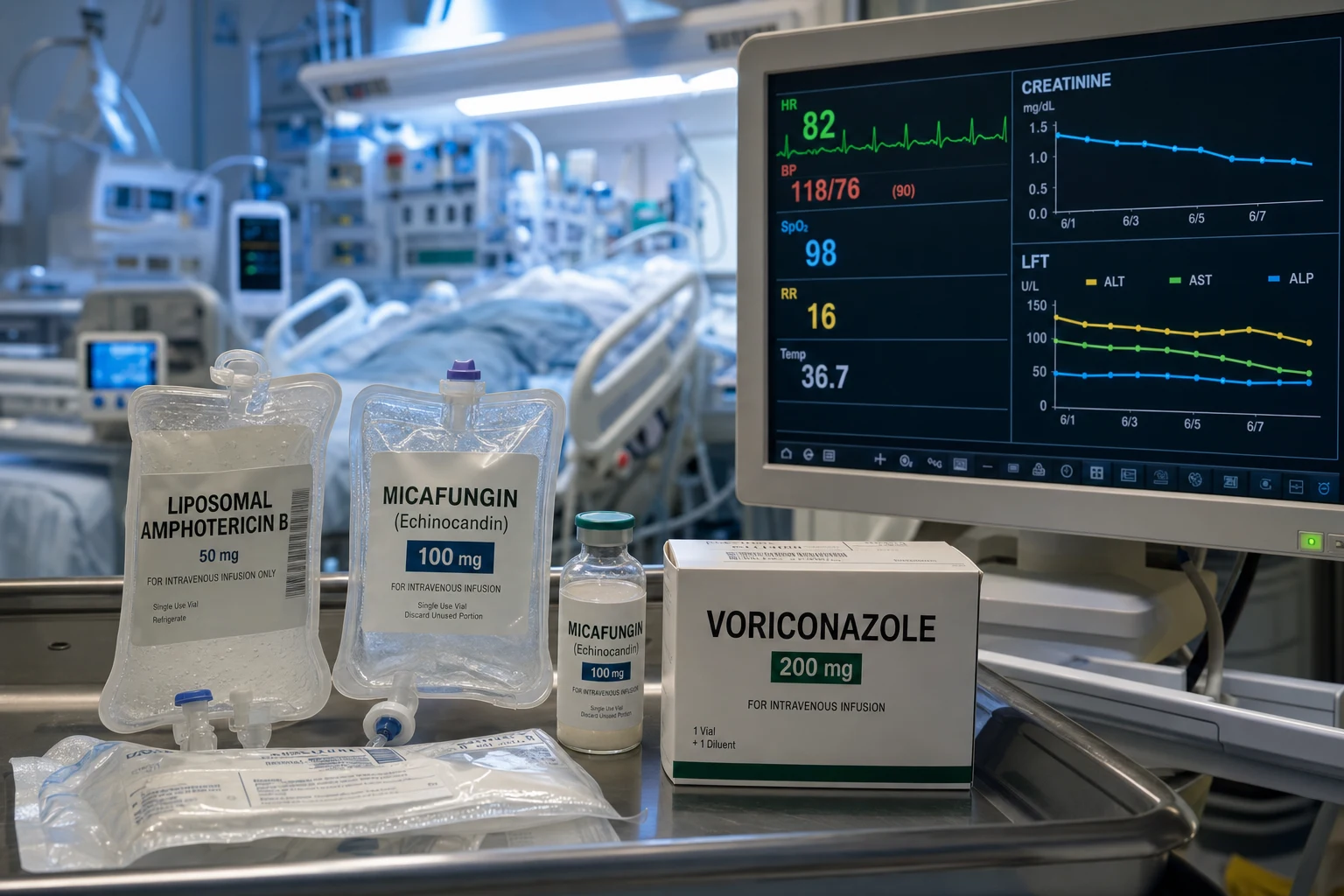
- The mechanism — the inhibit the 14-alpha-demethylase (the cytochrome P450 enzyme) → the block the ergosterol synthesis → the fungal-membrane disruption. The fungistatic.[1]
- The fluconazole — the Candida (the albicans and the many non-albicans), the Cryptococcus. The good CSF penetration, the renal excretion. The weak against the molds (the Aspergillus) and the some resistant Candida (the glabrata, the krusei).[1]
- The voriconazole — the Aspergillus first-line (the invasive aspergillosis), the Fusarium, the Scedosporium. The therapeutic drug monitoring (TDM) — the variable pharmacokinetics. The visual disturbances (the 'starburst' vision), the hepatotoxicity, the photosensitivity, the skin cancer, the CYP interactions, the QT.[1]
- The posaconazole — the broadest azole (the mucormycosis — the Mucorales, the Aspergillus, the Fusarium). The prophylaxis in the neutropenia and the GVHD. The GI absorption (the delayed-release tablet or the IV the better than the suspension).[1]
- The isavuconazole — the broad (the mucormycosis, the Aspergillus); the SHORTENS the QT (the unique — the only antifungal that shortens the QT; the safe in the long-QT); the fewer interactions.[1]
- The adverse (azole class) — the hepatotoxicity (the monitor the LFTs), the QT prolongation (the except the isavuconazole), the CYP3A4 interactions (the voriconazole, the itraconazole, the posaconazole the strong), the adrenal insufficiency (the ergosterol block affects the steroidogenesis).[1]
The echinocandins (cell-wall inhibitors)
- The mechanism — the inhibit the beta-1,3-glucan synthase → the block the fungal cell-wall synthesis. The fungicidal for the Candida, the fungistatic for the Aspergillus.[1]
- The spectrum — the Candida (incl the fluconazole-resistant — the glabrata, the krusei), the Candida biofilm and the catheter infections (the echinocandins penetrate the biofilm), the Aspergillus salvage.[1]
- The advantage — the low the toxicity, the low the interactions (the no major CYP3A4), the no the renal dose adjustment.[1]
- The caveat — the IV only (the no oral).[1]
- The agents — the caspofungin, the micafungin, the anidulafungin.[1]
The amphotericin B (the pore-former)
- The mechanism — the binds the ergosterol → the pore formation → the membrane leak and the death. The fungicidal. The broadest antifungal.[1]
- The spectrum — the most fungi (the Candida, the Aspergillus, the Cryptococcus, the Histoplasma, the Mucorales). The resistance: the Aspergillus terreus, the some Mucorales, the Scedosporium.[1]
- The adverse (the major):[1]
- The nephrotoxicity (the deoxycholate form — the dose-related, the renal tubular). The lipid formulations (the liposomal amphotericin B — the AmBisome; the lipid complex) the much less nephrotoxic — the standard now. The pre-hydration and the saline loading reduce the deoxycholate nephrotoxicity.[1]
- The infusion reactions (the fever, the chills, the rigors) — the premedicate (the paracetamol, the antihistamine, the hydrocortisone, the meperidine for the rigors).[1]
- The hypokalaemia and the hypomagnesaemia (the renal wasting) — the supplement.[1]
- The anaemia (the bone-marrow suppression).[1]
- The flucytosine (5-FC) — the converted to the 5-FU → the inhibits the DNA. The used WITH the amphotericin for the Cryptococcus meningitis (the synergy). The bone-marrow toxicity.[1]
Red flags
Classification — the four antifungal classes at a glance
The systemic antifungals divide into four mechanistic families. Knowing which cellular target each class hits is the single most useful organising principle, because it predicts spectrum, toxicity, and — for the azoles — the drug-interaction profile. [1]
| Class | Agents | Cellular target | Effect | Hallmark adverse effect |
|---|
| Class | Agents | Cellular target | Effect | Hallmark adverse effect |
|---|---|---|---|---|
| Polyenes | Amphotericin B (deoxycholate; liposomal — AmBisome; lipid complex) | Binds ergosterol in the fungal membrane → pore (transmembrane channel) | Fungicidal — membrane leak and cell death | Nephrotoxicity (dose-related tubular injury); infusion reactions; K/Mg wasting |
| Azoles (triazoles) | Fluconazole, voriconazole, posaconazole, isavuconazole, itraconazole | Inhibit 14-α-demethylase (lanosterol → ergosterol; cytochrome P450 51) → depletes ergosterol | Fungistatic — membrane dysfunction | Hepatotoxicity; QT prolongation (except isavuconazole); CYP3A4 interactions |
| Echinocandins | Caspofungin, micafungin, anidulafungin | Inhibit β-1,3-glucan synthase → blocks cell-wall glucan | Fungicidal for yeast (Candida); fungistatic for moulds (Aspergillus) | Low toxicity; IV only; mild LFT upset |
| Pyrimidine analogue | Flucytosine (5-FC) | Taken up by cytosine permease → deaminated to 5-FU → inhibits DNA/RNA synthesis | Fungistatic — never used alone (rapid resistance) | Bone-marrow suppression; colitis; hepatotoxicity |
The polyenes and azoles both ultimately disrupt the ergosterol-containing membrane, but by different routes — the polyene punches a hole in the existing membrane, the azole starves the cell of new ergosterol. The echinocandins uniquely attack the cell wall (β-glucan), a structure absent from mammalian cells — hence their exceptionally low toxicity. Flucytosine is a niche agent, used only in combination for cryptococcal meningitis and occasionally deep Candida infection; monotherapy selects resistance within days.[1]
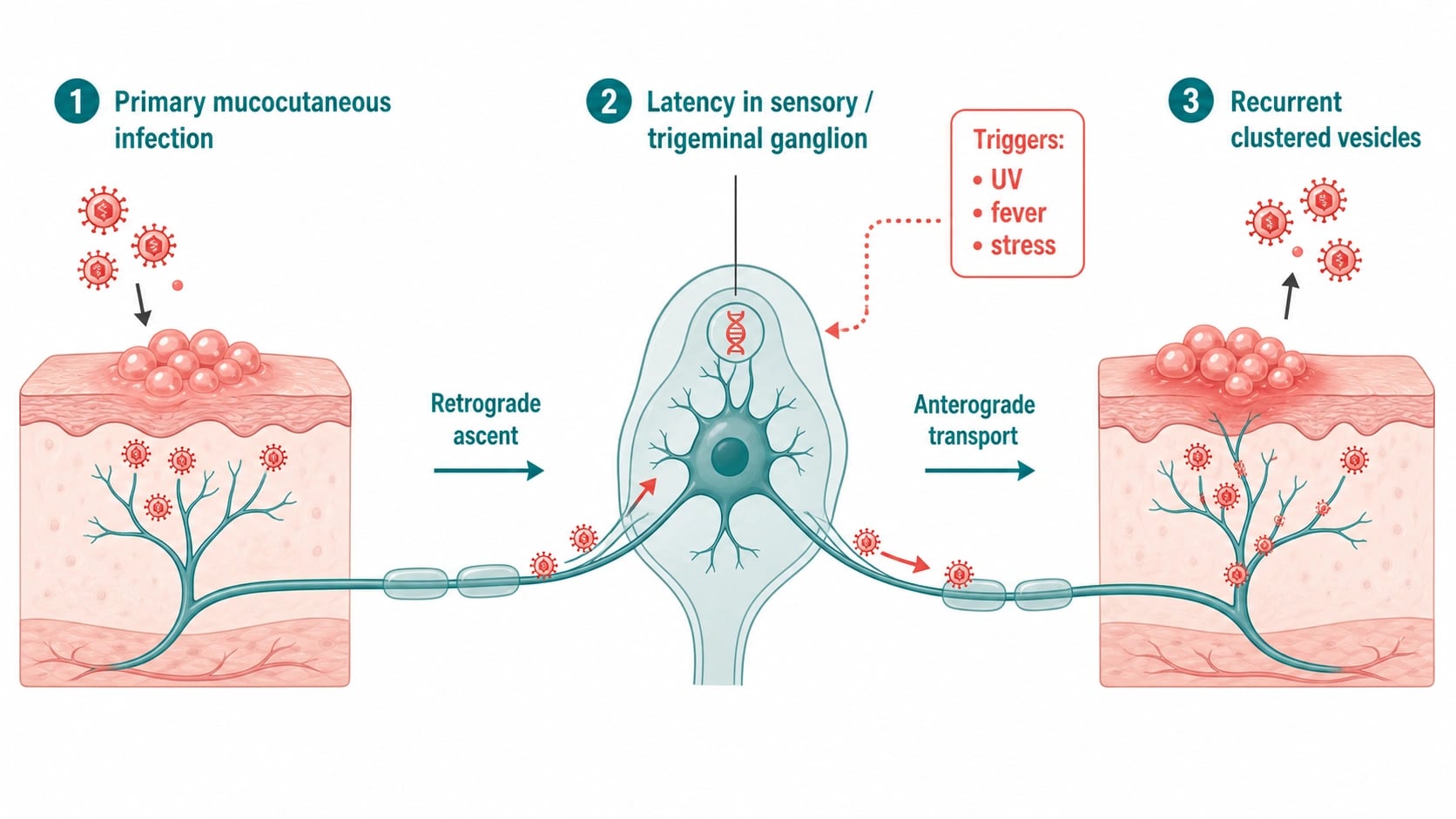
Why the cell-wall class (echinocandins) is so well tolerated
Because β-1,3-glucan does not exist in mammalian cells, the echinocandins have no mammalian target — they are the cleanest antifungals in the ICU. The trade-offs: (1) IV-only formulation (no oral), (2) poor lung penetration limits use in primary Candida pneumonia (rare in practice), and (3) no activity against Cryptococcus (which has a different cell-wall composition) or the Mucorales.[10]
Pharmacology by class — dosing, metabolism, and the dose-adjustments that matter
| Agent | Spectrum | Route | Metabolism / dose-adjust | ICU caveat |
|---|
| Agent | Spectrum | Route | Metabolism / dose-adjust | ICU caveat |
|---|---|---|---|---|
| Fluconazole | Candida albicans and many non-albicans; Cryptococcus. No mould cover (no Aspergillus, no Mucorales) | PO/IV | Hepatic; renally excreted — reduce in CKD/AKI | Excellent CSF penetration; urine levels high (good for Candida UTI). Intrinsically inactive vs C. krusei and many C. glabrata |
| Voriconazole | First-line invasive aspergillosis; Fusarium, Scedosporium | PO/IV | CYP2C19 (polymorphic) + CYP3A4; nonlinear PK; TDM mandatory | Visual disturbances; hepatotoxicity; photosensitivity/skin cancer; NOT for mucormycosis |
| Posaconazole | Mucorales (mucormycosis); broadest azole — Aspergillus, Fusarium, Candida | PO (DR tablet)/IV | Hepatic; no renal dose adjustment | The prophylaxis azole in neutropenia/GVHD. Use DR tablet or IV (suspension absorption unreliable in fasted/mucositis). The salvage in mucormycosis |
| Isavuconazole | Aspergillus + mucormycosis; broad | PO/IV | Hepatic; predictable linear PK — no TDM usually needed | SHORTENS the QT (unique among antifungals — safe in long-QT). Fewer CYP interactions than voriconazole |
| Itraconazole | Dermatophytes, mild Aspergillus, histoplasmosis, sporotrichosis | PO (capsule/solution)/IV | Hepatic; CYP3A4 substrate & inhibitor; negative inotrope | Avoid in heart failure (IV in particular). Erratic absorption — monitor trough |
| Agent | Loading dose | Maintenance | Hepatic dose-adjust | Excretion |
|---|
| Agent | Loading dose | Maintenance | Hepatic dose-adjust | Excretion |
|---|---|---|---|---|
| Caspofungin | 70 mg IV | 50 mg IV q24h | Reduce to 35 mg q24h in moderate Child-Pugh B; avoid in severe | Spontaneous chemical degradation + (minor) hepatic |
| Micafungin | 100 mg (200 mg if >40 kg) | 50 mg IV q24h (100 mg if >40 kg) | No adjustment in mild/moderate hepatic impairment; caution in severe | Predominantly hepatic (non-CYP) |
| Anidulafungin | 200 mg | 100 mg IV q24h | No adjustment in any hepatic impairment | Non-enzymatic chemical degradation — the only echinocandin safe in hepatic failure without dose change |
The three echinocandins are clinically near-equivalent for candidaemia. The trivial distinctions an examiner wants: anidulafungin is the only one that is not hepatically metabolised (chemical degradation — no hepatic adjustment at all), and micafungin is the only one with the highest Candida biofilm activity and the longest half-life. All three are IV only and none requires renal dose adjustment.[10]
| Formulation | Nephrotoxicity | Infusion reactions | Indication the form is preferred for | Relative cost |
|---|
| Formulation | Nephrotoxicity | Infusion reactions | Indication the form is preferred for | Relative cost |
|---|---|---|---|---|
| Deoxycholate (AmBD) | High — dose-related AKI in ~25–35% | Marked (fever, rigors) | When cost is the only constraint; bladder irrigation for fungal UTI | Cheap |
| Liposomal (L-AmB, AmBisome) | Low (~9% AKI) | Minimal | The default for invasive fungal infection in ICU; high doses (5–10 mg/kg) for mucormycosis | Expensive |
| Lipid complex (ABLC) | Low–moderate | Less than AmBD, more than AmBisome | Broad invasive infection when AmBisome unavailable | Moderate |
The headline: liposomal amphotericin B (AmBisome) is now the standard formulation for invasive fungal infection in the ICU. The deoxycholate form is nephrotoxic enough to be a self-fulfilling cause of AKI in a septic patient; the lipid formulations were specifically engineered to deliver amphotericin to the fungus while sparing the kidney tubule.[1]
Indications by pathogen — the 'right drug for the right mould'
Candida — echinocandin first-line; step down to fluconazole
The 2016 IDSA candidiasis guideline designated the echinocandins as the first-line empirical and definitive therapy for candidaemia in the non-neutropenic ICU patient — displacing fluconazole from that position because of (1) the rising prevalence of fluconazole-resistant C. glabrata and C. krusei and (2) the Candida biofilm that coats central venous catheters (the echinocandins penetrate biofilm; fluconazole does not).[10]
ICU candidaemia pathway — empiric echinocandin → step-down fluconazole
- Draw blood cultures before any antifungal, then start an echinocandin (caspofungin 70 mg loading then 50 mg q24h, OR micafungin 100 mg q24h, OR anidulafungin 200 mg then 100 mg q24h) within 1 hour of suspected invasive candidiasis in the septic ICU patient.[10]
- Remove the central venous catheter on day 1 if any candidal line-infection is plausible (the biofilm is not sterilisable in situ). Send the catheter tip for culture. Source control is as important as the drug.
- Identify the species (blood culture or β-D-glucan-supported diagnosis). If C. albicans / parapsilosis / tropicalis with fluconazole-susceptible → step-down to oral fluconazole 400 mg q24h once the patient is afebrile, culture-negative, and eating (typically day 5–7).
- If C. glabrata or C. krusei → continue the echinocandin for the full course; consider step-down to high-dose voriconazole or posaconazole only if susceptibility confirmed (fluconazole is unreliable).
- Perform a dilated eye exam ( Candida endophthalmitis) within the first week — candidal seeding to the choroid/retina occurs in 9–15% of candidaemias and changes duration and the need for intravitreal therapy.
- Duration: 14 days from the first negative blood culture (no shorter) for uncomplicated candidaemia with source control. Extend for endophthalmitis, endocarditis, osteomyelitis, or persistent fungaemia.
- Repeat blood cultures every 48–72 h until clear. Persistent candidaemia >72 h on an echinocandin prompts: (i) echo for endocarditis, (ii) CT abdomen for hepatosplenic candidiasis, (iii) source-control review, (iv) consider switching to L-AmB if biofilm/echinocandin breakthrough.
Aspergillus — voriconazole (or isavuconazole) first-line
Invasive pulmonary aspergillosis (IPA) — classically the neutropenic / lung-transplant / post-influenza / post-COVID patient with angioinvasive disease (haemoptysis, pleuritic pain, the halo sign on CT) — is treated first-line with voriconazole or isavuconazole. The Herbrecht 2002 trial established voriconazole as superior to amphotericin B deoxycholate (response 53% vs 32%, survival benefit), and it remained first-line in the 2016 IDSA aspergillosis guideline.[1][11]
The SECURE non-inferiority trial (Maertens 2016) established isavuconazole as non-inferior to voriconazole for invasive mould disease (predominantly aspergillosis), with fewer hepatotoxic and dermatologic adverse events and the unique advantage of shortening rather than prolonging the QT — so isavuconazole is the agent of choice in the patient on other QT-prolonging drugs or with baseline long-QT.[3]
| Feature | Voriconazole | Isavuconazole |
|---|
| Feature | Voriconazole | Isavuconazole |
|---|---|---|
| Mechanism | 14-α-demethylase inhibitor | 14-α-demethylase inhibitor |
| First-line for IPA | Yes (Herbrecht 2002 — historically the standard) | Yes (SECURE 2016 — non-inferior to vori) |
| Spectrum | Aspergillus, Fusarium, Scedosporium | Aspergillus, Mucorales, Fusarium (broad) |
| TDM required? | Yes — target trough 1–5.5 mg/L (variable CYP2C19 PK) | Usually no — predictable linear PK |
| QT effect | Prolongs (risk of torsades) | Shortens (unique — safe in long-QT) |
| CYP3A4 interactions | Many — strong inhibitor | Fewer than vori/posa |
| Visual disturbances | Common (~20–30%, reversible) | Rare |
| Skin cancer / photosensitivity | Yes (squamous — sun protection) | No |
| Hepatotoxicity | Yes (LFT monitor) | Yes (less than vori) |
| Mucormycosis | No | Yes (VITAL trial) |
Voriconazole therapeutic drug monitoring (TDM) in invasive aspergillosis
- Start voriconazole IV 6 mg/kg q12h × 2 doses, then 4 mg/kg q12h; switch to PO 200 mg q12h when eating. Genotype CYP2C19 if available (poor metabolisers need lower doses; ~15–20% of Asians are poor metabolisers).[11]
- Draw the first trough at day 4–7 (steady state). Target trough 1–5.5 mg/L (most labs use 1–5.5; some centres target 2–6 for invasive disease).
- If subtherapeutic (<1): increase dose by 25–50% and recheck. If supratherapeutic (>5.5–6): reduce by 25% and recheck. Subtherapeutic voriconazole predicts treatment failure; supratherapeutic predicts neurotoxicity (encephalopathy) and hepatotoxicity.
- Recheck at any dose change (after ~5 days to reach new steady state) and weekly thereafter for ICU stays.
- Watch the LFTs and the vision. 'Starburst'/photophobia/colour disturbance is common and reversible — warn the patient, do not stop. Stop or reduce if LFT >5× ULN or encephalopathy.
- Conversion to isavuconazole if: poor tolerance, CYP interaction burden unacceptable, baseline long-QT, repeated supratherapeutic troughs, or breakthrough mucormycosis.
Mucorales (mucormycosis) — amphotericin + surgical debridement
The Mucorales (Rhizopus, Mucor, Lichtheimia) cause the angioinvasive rhino-orbito-cerebral and pulmonary mucormycosis classically seen in diabetic ketoacidosis, neutropenia, post-transplant, deferoxamine therapy, and now post-COVID with or without steroid exposure. They are intrinsically resistant to all azoles except posaconazole and isavuconazole — voriconazole and fluconazole have zero activity. The iron-chelator pathway (rhizoferrin-mediated iron uptake) is the molecular basis of the Mucorales' angioinvasion and its predilection for acidosis.[1]
ICU mucormycosis pathway — the 'triple therapy' (drug + surgery + reverse risk)
- Diagnose aggressively. Urgent tissue biopsy for histopathology and culture — the Mucorales have broad, ribbon-like, non-septate hyphae branching at right angles (vs the narrow, septate, acute-angle branching of Aspergillus). Galactomannan and β-D-glucan are negative in mucormycosis — a critical negative.
- Start high-dose liposomal amphotericin B 5–10 mg/kg/day IV immediately (the lipid formulation because deoxycholate at this dose is unacceptable). Higher doses (≥7.5 mg/kg) are used for CNS/orbital disease.[1]
- Urgent surgical debridement. Mucormycosis is not curable with drug alone — extensive, often disfiguring surgical debridement of necrotic tissue is essential and is the single biggest determinant of survival.
- Reverse the underlying risk. Aggressive DKA correction; wean or stop corticosteroids where feasible; hold deferoxamine (it is a siderophore for Mucorales); consider iron chelation with deferiprone (not deferoxamine).
- Add salvage therapy if refractory or extensive. Options: posaconazole (DR tablet or IV, target trough 1–2 mg/L) or isavuconazole (approved by the VITAL trial with a 35% response at day 42).[4]
- Reassess daily with imaging and bedside examination — extension into the orbit, brain, or palatal mucosa demands wider debridement. Mortality remains 40–60% even with optimal therapy.
Cryptococcus — amphotericin + flucytosine induction, then fluconazole
Cryptococcal meningitis (classically in advanced HIV/AIDS with CD4 <100, organ transplant, or idiopathic) is treated with the three-phase strategy: a 2-week fungicidal induction (amphotericin B + flucytosine), a consolidation with high-dose fluconazole, and a maintenance (fluconazole until immune reconstitution). The Brouwer 2004 Lancet trial and the 2018 ACTA trial (Molloy NEJM) established that the combination of amphotericin + flucytosine is fungicidal and clears CSF faster than amphotericin alone — the foundation of the IDSA induction regimen.[12][14][15]
Cryptococcal meningitis — induction / consolidation / maintenance
- Induction (2 weeks): Liposomal amphotericin B 3–4 mg/kg/day IV PLUS flucytosine 25 mg/kg PO q6h (renal-adjusted). The combination is fungicidal and halves the 2-week CSF sterilisation failure rate vs amphotericin alone.[14]
- Manage raised intracranial pressure — therapeutic lumbar punctures daily until CSF pressure <20 cmH₂O (and normal opening pressure); consider a lumbar drain or ventriculostomy for refractory cases. Raised ICP is the proximate cause of death in cryptococcal meningitis.
- Monitor for flucytosine toxicity — check the FBC every 48–72 h (bone-marrow suppression: leukopenia, thrombocytopenia) and the flucytosine level if available (target peak 25–100 mg/L). Reduce in renal impairment.
- Consolidation (8 weeks): Switch to fluconazole 400–800 mg/day PO/IV (after 2 weeks of induction with documented improvement). Itraconazole or voriconazole if fluconazole intolerant.
- Maintenance (until immune recovery): Fluconazole 200 mg/day for at least 1 year in HIV (until CD4 >100 × 6 months on ART) and indefinitely in some solid-organ transplant scenarios.
- Watch for immune reconstitution inflammatory syndrome (IRIS). Symptomatic worsening after ART initiation/transplant immunosuppression wean — consider corticosteroids for severe IRIS (paradoxical CSF inflammation without viable organisms).
The other ICU moulds — when to suspect, what to use
| Organism | Host / scenario | Drug of choice | Notes |
|---|
| Organism | Host / scenario | Drug of choice | Notes |
|---|---|---|---|
| Fusarium | Neutropenia, skin lesions with positive blood culture (disseminated) | Voriconazole or posaconazole | Uniquely among moulds, disseminates via bloodstream (positive blood culture) — high mortality; amphotericin second-line |
| Scedosporium apiospermum | Near-drowning, pre-existing lung cavities | Voriconazole | Resistant to amphotericin; surgical debridement critical |
| Lomentospora (Scedosporium) prolificans | Severely immunocompromised | Combination voriconazole + terbinafine | Intrinsically resistant to almost everything; mortality >80% |
| Histoplasma / Blastomyces / Coccidioides (endemic mycoses) | Returning traveller, solid-organ transplant, biologic therapy | Liposomal amphotericin B (severe) → itraconazole (step-down) | Disseminated disease needs L-AmB; mild disease itraconazole |
| Pneumocystis jirovecii | Steroids, HIV, transplant | TMP-SMX ± steroids | NOT treated with antifungals (the organism lacks ergosterol); echinocandins have no role |
Empirical antifungal therapy in the ICU — when to 'just start it'
Neutropenic fever that persists despite 4–7 days of broad antibacterials
The persistent neutropenic fever scenario (febrile neutropenia not responding to antibiotics, profound neutropenia <0.5 × 10⁹/L expected >7–10 days, high-risk haematologic malignancy or stem-cell transplant) is the classic indication for empirical antifungal therapy. Liposomal amphotericin B is the historical comparator; an echinocandin or mould-active azole (posaconazole, voriconazole) is a reasonable alternative depending on prior prophylaxis and suspected breakthrough. Caspofungin has been shown non-inferior and better-tolerated than liposomal amphotericin for empirical therapy in this setting.[1]
Non-neutropenic ICU sepsis — the 'pre-emptive' Candida score
In the general ICU patient without neutropenia, blind empirical antifungal therapy is not recommended. Instead, use a pre-emptive strategy based on risk stratification (the Candida score — surgery, multifocal colonisation, TPN, severe sepsis; or β-D-glucan positivity with a compatible clinical picture) to decide. The principle: treat proven or highly-probable invasive candidiasis, not the colonised patient.[10]
Prophylaxis — the two high-risk populations
| Population | Agent | Duration | Evidence |
|---|
| Population | Agent | Duration | Evidence |
|---|---|---|---|
| Acute myeloid leukaemia / myelodysplasia induction chemotherapy (neutropenia expected >7–10 days) | Posaconazole 300 mg PO DR daily (or IV) | Through neutropenia, until engraftment | Cornely 2007 NEJM — posaconazole reduced proven/probable invasive fungal infection vs fluconazole/itraconazole (2% vs 8%) and improved overall survival[5] |
| GVHD after HSCT (acute or extensive chronic) | Posaconazole 200 mg PO TID | Through GVHD treatment (until day +75 to +100) | Ullmann 2007 NEJM — posaconazole reduced invasive fungal infection (5% vs 9%) vs fluconazole; fewer aspergillosis cases[6] |
| Solid-organ transplant, lung | Voriconazole or posaconazole | 3–6 months (per protocol) | Per local protocol; voriconazole common for lung (Aspergillus risk) |
| HIV with CD4 <100 and cryptococcal antigenaemia | Fluconazole 200 mg/day | Until ART-induced immune recovery | Suppresses cryptococcosis (pre-emptive, not universal) |
Posaconazole displaced fluconazole as the prophylaxis agent of choice in neutropenia and GVHD because it covers the Mucorales (which fluconazole does not) — the two NEJM trials by Cornely (neutropenia) and Ullmann (GVHD) showed both a reduction in invasive fungal infection and a survival signal, a rare endpoint-driven win in antifungal prophylaxis.[5][6]
The major trials — what they proved, what they changed
Herbrecht 2002 (NEJM) — voriconazole vs amphotericin B for primary invasive aspergillosis
Design
Randomised, open-label, multicentre non-inferiority trial; 277 patients with proven/probable invasive aspergillosis
Intervention
Voriconazole IV→PO vs amphotericin B deoxycholate, with protocol-specified switches to other licensed antifungals permitted
Primary outcome
Satisfactory response at 12 weeks: **voriconazole 53% vs amphotericin 32%** (difference +21%). Survival at 12 weeks: **vori 71% vs AmB 58%**
What it changed
Voriconazole became the **first-line agent for invasive aspergillosis**, displacing amphotericin B as the historical standard. This remained true in the 2016 IDSA aspergillosis guideline.
Maertens 2016 (SECURE, Lancet) — isavuconazole non-inferior to voriconazole for invasive mould disease
Design
Phase 3, randomised, double-blind, double-dummy non-inferiority trial; 516 patients with invasive mould disease (predominantly invasive aspergillosis)
Intervention
Isavuconazole IV→PO vs voriconazole IV→PO
Primary outcome
All-cause mortality to day 42: **isavuconazole 18.7% vs voriconazole 20.1%** (treatment difference -1.0%, 95% CI -7.8 to 5.7) — **non-inferior**
Safety
Isavuconazole had **fewer hepatobiliary and dermatologic adverse events** (less photosensitivity/skin cancer) than voriconazole; no visual disturbances
What it changed
Isavuconazole became a first-line alternative to voriconazole for invasive aspergillosis, with the additional advantage of a **broad spectrum including Mucorales** and **shortening the QT**.
Marty 2016 (VITAL, Lancet Infect Dis) — isavuconazole for mucormycosis (single-arm + case-control)
Design
Single-arm open-label trial of isavuconazole 200 mg q8h × 6 doses then 200 mg q24h in 37 patients with mucormycosis; matched case-control against a contemporary amphotericin-treated cohort (FungiScope)
Primary outcome
All-cause mortality at day 84: **isavuconazole 35%**; case-control analysis showed **no significant difference** vs amphotericin-based therapy
What it changed
Isavuconazole gained an **indication for mucormycosis** — an oral/IV alternative to high-dose liposomal amphotericin + posaconazole salvage in the renal-impaired or intolerant patient.
Mora-Duarte 2002 (NEJM) — caspofungin vs amphotericin B for invasive candidiasis
Design
Randomised, double-blind, non-inferiority trial; 224 patients with invasive candidiasis (mostly candidaemia)
Intervention
Caspofungin 70 mg then 50 mg q24h vs amphotericin B deoxycholate
Primary outcome
Modified-intention-to-treat response: **caspofungin 73% vs amphotericin 62%** (non-inferior; trend to superiority). Caspofungin had **less nephrotoxicity and infusion reactions**
What it changed
Established echinocandins as effective and better-tolerated than amphotericin for invasive candidiasis — the foundation of the 2016 IDSA shift to echinocandin-first.
Kuse 2007 (Lancet) — micafungin vs liposomal amphotericin B for candidaemia
Design
Phase III randomised, double-blind non-inferiority trial; 531 patients with candidaemia/invasive candidiasis
Intervention
Micafungin 100 mg/day vs liposomal amphotericin B 3 mg/kg/day
Primary outcome
Treatment success: **micafungin 74% vs L-AmB 70%** (non-inferior). Less nephrotoxicity with micafungin
What it changed
Confirmed that an echinocandin is non-inferior to lipid amphotericin for candidaemia with a better safety profile — reinforcing echinocandin-first.
Reboli 2007 (NEJM) — anidulafungin vs fluconazole for invasive candidiasis
Design
Randomised, double-blind non-inferiority trial; 245 patients with invasive candidiasis/candidaemia
Intervention
Anidulafungin 200 mg then 100 mg/day vs fluconazole 800 mg then 400 mg/day
Primary outcome
Global response at end of IV therapy: **anidulafungin 75% vs fluconazole 57%** (non-inferior and superior in per-protocol); advantage greatest in *C. glabrata*
What it changed
Reinforced echinocandin superiority over fluconazole for invasive candidiasis, particularly relevant as *C. glabrata* prevalence rose.
Pappas 2007 (CID) — micafungin vs caspofungin for candidaemia
Design
Randomised, double-blind non-inferiority trial; 595 patients with candidaemia/invasive candidiasis
Intervention
Micafungin 100 mg/day (or 150 mg if >40 kg) vs caspofungin 70 mg then 50 mg/day
Primary outcome
Treatment success: **micafungin 74% vs caspofungin 72%** (non-inferior). Both well tolerated
What it changed
Established the **clinical equivalence** of the three echinocandins for candidaemia — choice can be made on cost, formulary, or hepatic function.
Brouwer 2004 (Lancet) — combination antifungal therapy for HIV-associated cryptococcal meningitis
Design
Randomised, three-arm trial; 64 HIV-positive Thai patients with first episode of cryptococcal meningitis
Intervention
Amphotericin B + fluconazole, amphotericin + flucytosine, or amphotericin alone for 14 days
Primary outcome
**Early fungicidal activity** (rate of CSF clearance): both combinations fungicidal; amphotericin + flucytosine fastest. CSF sterilisation at 2 weeks best with combination
What it changed
Established **amphotericin + flucytosine as the gold-standard induction** for cryptococcal meningitis, later refined by the 2018 ACTA trial.
Molloy 2018 (ACTA, NEJM) — antifungal combinations for cryptococcal meningitis in Africa
Design
Two randomised, multicentre, open-label trials (Cryptococcal Meningitis ACTA); 569 patients in HIV-associated cryptococcal meningitis
Intervention
Arm A: 1-week amphotericin + flucytosine vs 1-week amphotericin + fluconazole vs 2-week amphotericin + fluconazole. Arm B: 2-week flucytosine + fluconazole vs 1-week amphotericin + flucytosine
Primary outcome
**1-week amphotericin + flucytosine superior** in mortality (24% vs 35% at 4 weeks) and the fastest CSF clearance. Flucytosine + fluconazole oral induction was non-inferior to 2-week amphotericin + fluconazole
What it changed
Shortened induction to **1 week of amphotericin + flucytosine** — a major advance in resource-limited settings, reducing amphotericin exposure and its toxicity.
Cornely 2007 (NEJM) — posaconazole prophylaxis in neutropenia (AML/MDS induction)
Design
Randomised, open-label trial; 602 patients receiving chemotherapy for AML or MDS with expected neutropenia
Intervention
Posaconazole 200 mg PO TID vs fluconazole or itraconazole, throughout neutropenia
Primary outcome
Fewer proven/probable invasive fungal infections: **posaconazole 2% vs fluconazole/itraconazole 8%** (P=0.001); notably fewer aspergillosis cases
Survival
**Significantly improved overall survival** in the posaconazole arm — one of the few prophylaxis trials to show a survival benefit
What it changed
Posaconazole became **first-line prophylaxis** in AML/MDS induction and HSCT with GVHD, displacing fluconazole (which has no Mucorales cover).
Ullmann 2007 (NEJM) — posaconazole prophylaxis in severe GVHD
Design
Randomised, double-blind trial; 600 patients with severe acute or extensive-chronic GVHD after HSCT
Intervention
Posaconazole 200 mg PO TID vs fluconazole 400 mg/day, for up to 16 weeks
Primary outcome
Fewer proven/probable invasive fungal infections: **posaconazole 5.3% vs fluconazole 9%**; fewer aspergillosis cases
What it changed
Established posaconazole as the prophylaxis of choice during severe GVHD (Aspergillus and Mucorales cover).
The adverse effects in depth — the ICU toxicities that change the drug
Amphotericin B nephrotoxicity — prevent, do not treat
Amphotericin B nephrotoxicity is dose-related and mediated by direct renal tubular injury (the drug reaches distal tubular cells, forms pores in their membranes which contain cholesterol — the off-target basis of the toxicity) → afferent vasoconstriction, tubular dysfunction, distal renal tubular acidosis with renal potassium and magnesium wasting, and a non-anion-gap metabolic acidosis. The creatinine rises over days; the potassium and magnesium fall faster.[1]
Preventing amphotericin B nephrotoxicity in the ICU
- Use the LIPID formulation (liposomal amphotericin — AmBisome) as the default. Nephrotoxicity falls from ~25–35% with deoxycholate to ~9% with AmBisome at conventional doses.[1]
- Sodium loading — 1 L normal saline over 30 min before each dose (the 'saline pre-load'); the distal tubule sodium delivery mitigates the amphotericin-induced vasoconstriction.
- Replace potassium and magnesium aggressively — these fall on day 1 and are a limiting toxicity. Oral and IV replacement; expect to need both.
- Monitor creatinine, potassium, magnesium daily. Hold or reduce if creatinine >2× baseline; supplement K/Mg even if 'normal' (the trend matters).
- Avoid concomitant nephrotoxins — hold NSAIDs, aminoglycosides, IV contrast, ACEi/ARB where possible. The combination of amphotericin + calcineurin inhibitor (tacrolimus/ciclosporin) in the transplant patient is a near-certain AKI.
- Manage the infusion reaction — premedicate with paracetamol, an antihistamine, and (for repeated rigors) hydrocortisone 25–50 mg or meperidine 25 mg. Slow the infusion over 2–4 h. The reactions are worst in the first week and may wane.
The azole triad — hepatotoxicity, QT, CYP3A4
The azoles share three ICU-relevant adverse effects that drive both choice and monitoring. Hepatotoxicity is the most common (transaminase rise in 5–15%, rare severe hepatitis): monitor LFTs every 1–2 weeks. QT prolongation is dose-dependent and additive with other QT drugs (antiarrhythmics, ondansetron, macrolides, methadone) — isavuconazole is the exception, it shortens the QT and is preferred in the long-QT patient. CYP3A4 inhibition is the most dangerous in the polypharmacy ICU patient: voriconazole and itraconazole are the strongest CYP3A4 inhibitors, posaconazole intermediate, fluconazole weaker but dose-dependent, isavuconazole a moderate inhibitor.[1]
| Drug | With strong azole inhibitor (vori/posa/itra) | With isavuconazole | Action |
|---|
| Drug | With strong azole inhibitor (vori/posa/itra) | With isavuconazole | Action |
|---|---|---|---|
| Tacrolimus / ciclosporin | ↑ 2–4× (toxicity — AKI, neurotoxicity) | ↑ moderately | Reduce dose 50–75%, check levels daily |
| Sirolimus | Contraindicated with voriconazole (huge ↑) | ↑ moderately | Avoid; halve dose + levels if used |
| Warfarin | Markedly ↑ INR | ↑ moderately | Halve warfarin; check INR q48h |
| Statins (simvastatin, atorvastatin) | ↑ statin → rhabdomyolysis | ↑ | Switch statin or hold |
| Midazolam / fentanyl | ↑ sedation (prolonged effect) | ↑ | Reduce infusion; sedation hold |
| Vinca alkaloids (vincristine) | ↑ neurotoxicity | ↑ | Reduce vincristine in ALL/lymphoma |
| Calcium-channel blockers | Hypotension, bradycardia | ↑ | Reduce; watch BP/HR |
| Sulfonylureas | Hypoglycaemia | ↑ | Monitor glucose |
Exam practice
SAQ — Postoperative candidaemia with septic shock in a non-neutropenic ICU patient
10 minutes · 10 marks
A 65-year-old man is day 7 in ICU after an emergency Hartmann procedure for perforated diverticulitis. He is on total parenteral nutrition via a triple-lumen central venous catheter and has received meropenem 1 g IV tds for 5 days. He is now in septic shock: BP 92/55 on noradrenaline 0.35 mcg/kg/min, HR 118, T 39.1°C, lactate 3.8. (1→3)-β-D-glucan is 480 pg/mL (positive). Two of two peripheral blood cultures drawn yesterday grow Candida species, later speciated as Candida glabrata. Creatinine 145 (baseline 95).
SAQ — Invasive pulmonary aspergillosis in a neutropenic haematology patient
10 minutes · 10 marks
A 54-year-old man with acute myeloid leukaemia is day +18 post-induction chemotherapy. Absolute neutrophil count 0.1 × 10⁹/L (profound neutropenia). He presents with pleuritic chest pain, small-volume haemoptysis, and fever 39.2°C despite 6 days of empirical meropenem. He is on concurrent ondansetron, methadone (for chronic pain), and tacrolimus (for GVHD prophylaxis). HR 112, SpO₂ 93% on 4 L nasal spec, BP 105/65. CT chest shows multiple pulmonary nodules with surrounding ground-glass halos and a wedge-shaped infiltrate in the right upper lobe. Serum galactomannan index 5.2 (positive, cut-off 0.5). ECG shows QTc 470 ms.
16 exam-exhaustive pearls on antifungals in the ICU
Additional red flags and pitfalls
The complete exam answer
[1]References
- [1]Herbrecht R, Denning DW, Patterson TF, Bennett JE, Greene RE, Oestmann JW, Kern WV, Marr KA, Ribaud P, Lortholary O, Sylvester R, Rubin RH, Wingard JR, Stark P, Durand C, Caillot D, Thiel E, Chandrasekar PH, Hodges MR, Schlamm HT, Troke PF, de Pauw B, Invasive Fungal Infections Group of the European Organisation for Research and Treatment of Cancer and the Global Aspergillus Study Group Voriconazole versus amphotericin B for primary therapy of invasive aspergillosis N Engl J Med, 2002.PMID 12167683
- [2]Mora-Duarte J, Betts R, Rotstein C, Colombo AL, Thompson-Moya L, Smietana J, Lupinacci R, Sable C, Kartsonis N, Perfect J, Caspofungin Invasive Candidiasis Study Group Comparison of caspofungin and amphotericin B for invasive candidiasis N Engl J Med, 2002.PMID 12490683
- [3]Maertens JA, Raad II, Marr KA, Patterson TF, Kontoyiannis DP, Cornely OA, Bow EJ, Rahav G, Neofytos D, Aoun M, Baddley JW, Giladi M, Heinz WJ, Schuler U, Heckmann K, Bassetti M, Kocak Z, Sheppard DC, Mattiuzzi G, Segreti A, Tissot F, Haider S, Lass-Flörl C, Nucci M, Vehreschild MJ, Cordonnier C, Pagano L, Engelich G, Hamed K, Ostrosky-Zeichner L, SECURITY Study Group Isavuconazole versus voriconazole for primary treatment of invasive mould disease caused by Aspergillus and other filamentous fungi (SECURE): a phase 3, randomised-controlled, non-inferiority trial Lancet, 2016.PMID 26684607
- [4]Marty FM, Ostrosky-Zeichner L, Cornely OA, Mullane KM, Perfect JR, Thompson GR, Alangaden GJ, Brown JM, Fredricks DN, Heinz WJ, Herbrecht R, Klimko N, Klyasova G, Maertens JA, Melinkeri SR, Raad I, Selleslag D, Shah PM, Schwartz S, Vehreschild JJ, Young JAH, Chau I, Lorigan P, Vergidis P, Gheorghe A, Djørrup R, Hodges MR, Wollensack C, Lee M, Maher R, O'Reilly T, Van Winkel S, Wilson D, VITAL and FungiScope Mucormycosis Investigators Isavuconazole treatment for mucormycosis: a single-arm open-label trial and case-control analysis Lancet Infect Dis, 2016.PMID 26969258
- [5]Cornely OA, Maertens J, Winston DJ, Perfect J, Ullmann AJ, Walsh TJ, Helfgott D, Holowiecki J, Stockelberg D, Goh YT, Shini M, Curcio O, Sharp S, Lortholary O, First Posaconazole vs. fluconazole or itraconazole prophylaxis in patients with neutropenia N Engl J Med, 2007.PMID 17251531
- [6]Ullmann AJ, Lipton JH, Vesole DH, Chandrasekar P, Langston A, Tarantolo SR, Greinix H, Morais de Azevedo W, Reddy V, Boparai N, Pedicone L, Patino H, Durrant S, Second Posaconazole or fluconazole for prophylaxis in severe graft-versus-host disease N Engl J Med, 2007.PMID 17251530
- [7]Kuse ER, Chetchotisakd P, da Cunha CA, Ruhnke M, Barrios C, Raghunadharao D, Sekhon JS, Freire A, Ramasubramanian V, Demeyer I, Nucci M, Leelarasamee A, Jacobs F, Decruyenaere J, Pittet D, Ullmann AJ, Shu D, Gardiner D, Mistry N, Lomas-Taylor J, Mica Micafungin versus liposomal amphotericin B for candidaemia and invasive candidosis: a phase III randomised double-blind trial Lancet, 2007.PMID 17482982
- [8]Reboli AC, Rotstein C, Pappas PG, Chapman SW, Kett DH, Kumar D, Betts R, Wible M, Goldstein BP, Schranz J, Krause DS, Walsh TJ, Anidulafungin Study Group Anidulafungin versus fluconazole for invasive candidiasis N Engl J Med, 2007.PMID 17568028
- [9]Pappas PG, Rotstein CF, Betts RF, Nucci M, Talwar D, De Waele JJ, Vazquez JA, Dupont BF, Horn DL, Ostrosky-Zeichner L, Reboli AC, Suh B, Digumarti R, Wu C, Kovanda LL, Arnold LJ, Buell DN, Micafungin versus Caspofungin in Candidemia Micafungin versus caspofungin for treatment of candidemia and other forms of invasive candidiasis Clin Infect Dis, 2007.PMID 17806055
- [10]Pappas PG, Kauffman CA, Andes DR, Clancy CJ, Marr KA, Ostrosky-Zeichner L, Reboli AC, Schuster MG, Vazquez JA, Walsh TJ, Zaoutis TE, Sobel JD Clinical Practice Guideline for the Management of Candidiasis: 2016 Update by the Infectious Diseases Society of America Clin Infect Dis, 2016.PMID 26679628
- [11]Patterson TF, Thompson GR, Denning DW, Fishman JA, Hadley S, Herbrecht R, Kontoyiannis DP, Marr KA, Morrison VA, Nguyen MH, Segal BH, Steinbach WJ, Stevens DA, Walsh TJ, Wingard JR, Young JAH, Bennett JE Practice Guidelines for the Diagnosis and Management of Aspergillosis: 2016 Update by the Infectious Diseases Society of America Clin Infect Dis, 2016.PMID 27365388
- [12]Saag MS, Graybill RJ, Larsen RA, Pappas PG, Perfect JR, Powderly WG, Sobel JD, Dismukes WE, Mycoses Study Group Cryptococcal Subproject Practice guidelines for the management of cryptococcal disease. Infectious Diseases Society of America Clin Infect Dis, 2000.PMID 10770733
- [13]Rex JH, Bennett JE, Sugar AM, Pappas PG, van der Horst CM, Edwards JE, Washburn RG, Scheld WM, Karchmer AW, Dine AP, Levenson MJ, Webb CD, National Institute of Allergy and Infectious Diseases Mycoses Study Group and the Candidemia Study Group A randomized trial comparing fluconazole with amphotericin B for the treatment of candidemia in patients without neutropenia. Candidemia Study Group and the National Institute N Engl J Med, 1994.PMID 7935701
- [14]Brouwer AE, Rajanuwong A, Chierakul W, Griffin GE, Larsen RA, White NJ, Harrison TS Combination antifungal therapies for HIV-associated cryptococcal meningitis: a randomised trial Lancet, 2004.PMID 15172774
- [15]Molloy SF, Kanyama C, Heyderman RS, Loyse A, Kouanfack C, Chanda D, Mfinanga S, Temfack E, Pakker J, Lalloo DG, Wande BG, Ndiaye D, Mossoro C, Oliver Q, Lestari BJ, Boullé C, Ssozi J, Tugume L, Bahr NC, Vubil A, Dzikulu R, Darras F, Taylor S, Gosi P, Chouta D, Lmoh M, Gana NP, Rutsa C, Kalima TN, Nfotchang-Ngwas A, Aka DP, Tansar A, Lekollou S, Amewu N, Govender NP, Jackson A, Bicanic T, Lortholary O, Jaffar S, Harrison TS, Brouwer AE, Beardsley J, Meya DB, Nalwoga D, Ssebambulidde K, Abassi M, Musubire AK, Rhein J, Boulware DR, ASTRO-CMAT CryptoDex and Acta Trial Teams Antifungal Combinations for Treatment of Cryptococcal Meningitis in Africa N Engl J Med, 2018.PMID 29539274