ICU · Infection / pharmacology
Antivirals — Aciclovir, Oseltamivir & the Anti-COVID Agents
Also known as Antiviral · Aciclovir · Acyclovir · Valaciclovir · Ganciclovir · Valganciclovir · Foscarnet · Cidofovir · Oseltamivir · Tamiflu · Zanamivir · Peramivir · Baloxavir · Neuraminidase inhibitor · Remdesivir · Paxlovid · Nirmatrelvir · Molnupiravir · Ribavirin · Antiretroviral · ART
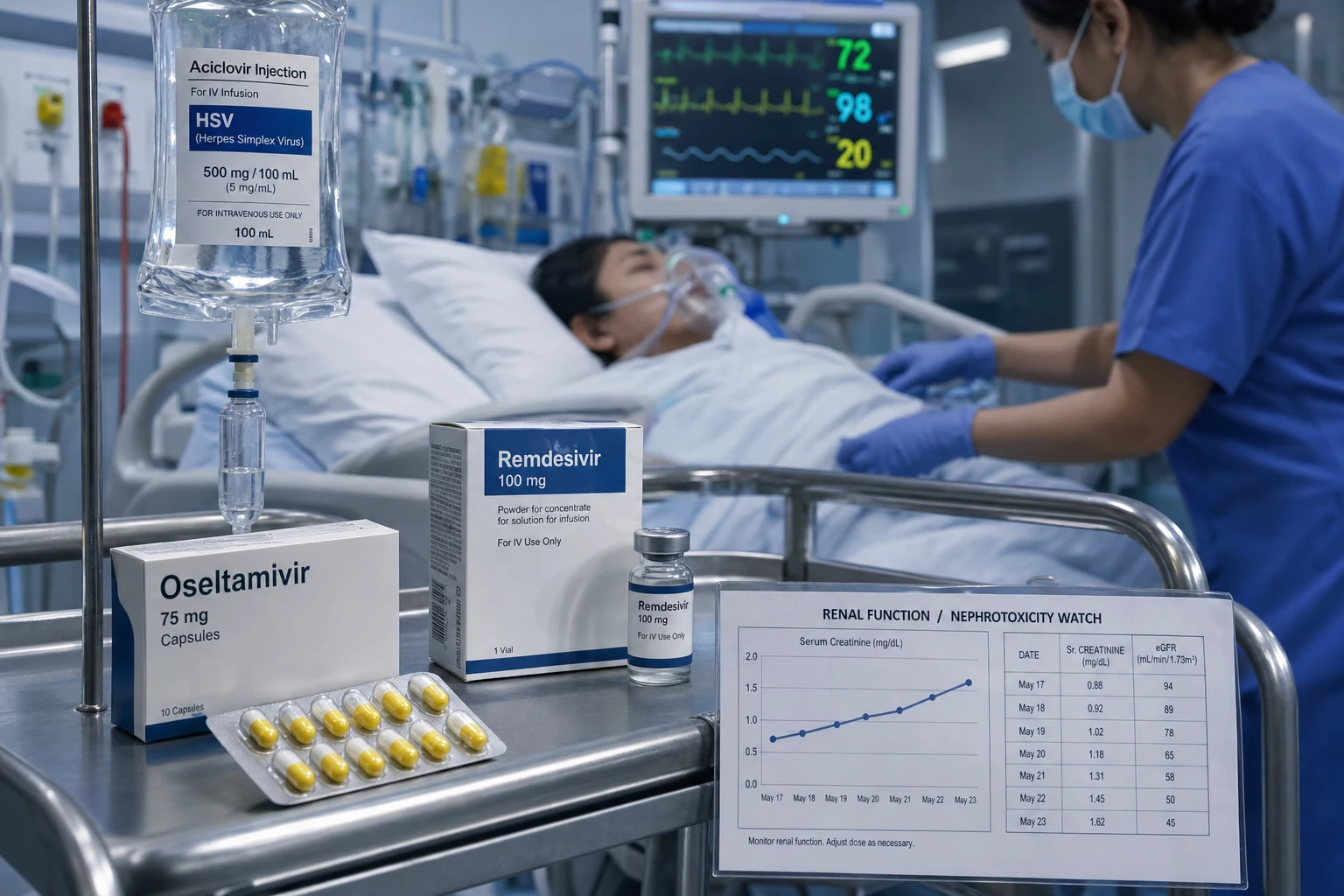
The antivirals in the ICU target the specific viral enzymes. The five ICU-relevant groups: the anti-herpes (the aciclovir — the HSV and the VZV; the DNA polymerase via the thymidine kinase; the NEPHROtoxicity crystal — the hydrate; the HSV encephalitis 10 mg per kg TDS for the 14 to 21 days; the ganciclovir the CMV with the bone-marrow; the foscarnet or the cidofovir the resistant with the nephrotoxic), the anti-CMV (the ganciclovir / the valganciclovir first-line for the transplant and the immunocompromised; the foscarnet and the cidofovir for the resistant or the leucopenic), the anti-influenza (the oseltamivir — the neuraminidase inhibitor; the influenza A and B; the within 48 h of the onset, the severe regardless; the reduces the duration and the complications; the prophylaxis; the zanamivir inhaled, the peramivir IV, the baloxavir the cap-dependent endonuclease), the anti-SARS-CoV-2 (the remdesivir — the RNA polymerase, the severe COVID; the Paxlovid — the nirmatrelvir or the ritonavir protease inhibitor, the early high-risk; the molnupiravir), and the anti-HIV / the ART (the combination antiretroviral therapy — the two NRTIs plus an integrase inhibitor; the ICU the drug-interaction burden, the lactic acidosis, the IRIS, the abacavir hypersensitivity). The renal dosing the critical (the aciclovir, the ganciclovir, the oseltamivir all renally cleared).
On this page & tools
Your progress
Saved locally on this device.
8 MCQs with explanations
Target exams
Overview & definition
The antivirals in the ICU target the specific viral enzymes. The three ICU-relevant groups: the anti-herpes (the aciclovir, the ganciclovir), the anti-influenza (the oseltamivir), and the anti-COVID (the remdesivir, the Paxlovid). The aciclovir is the time-critical for the suspected HSV encephalitis; the oseltamivir for the influenza (the within 48 hours).[1]
The anti-herpes (aciclovir, ganciclovir)
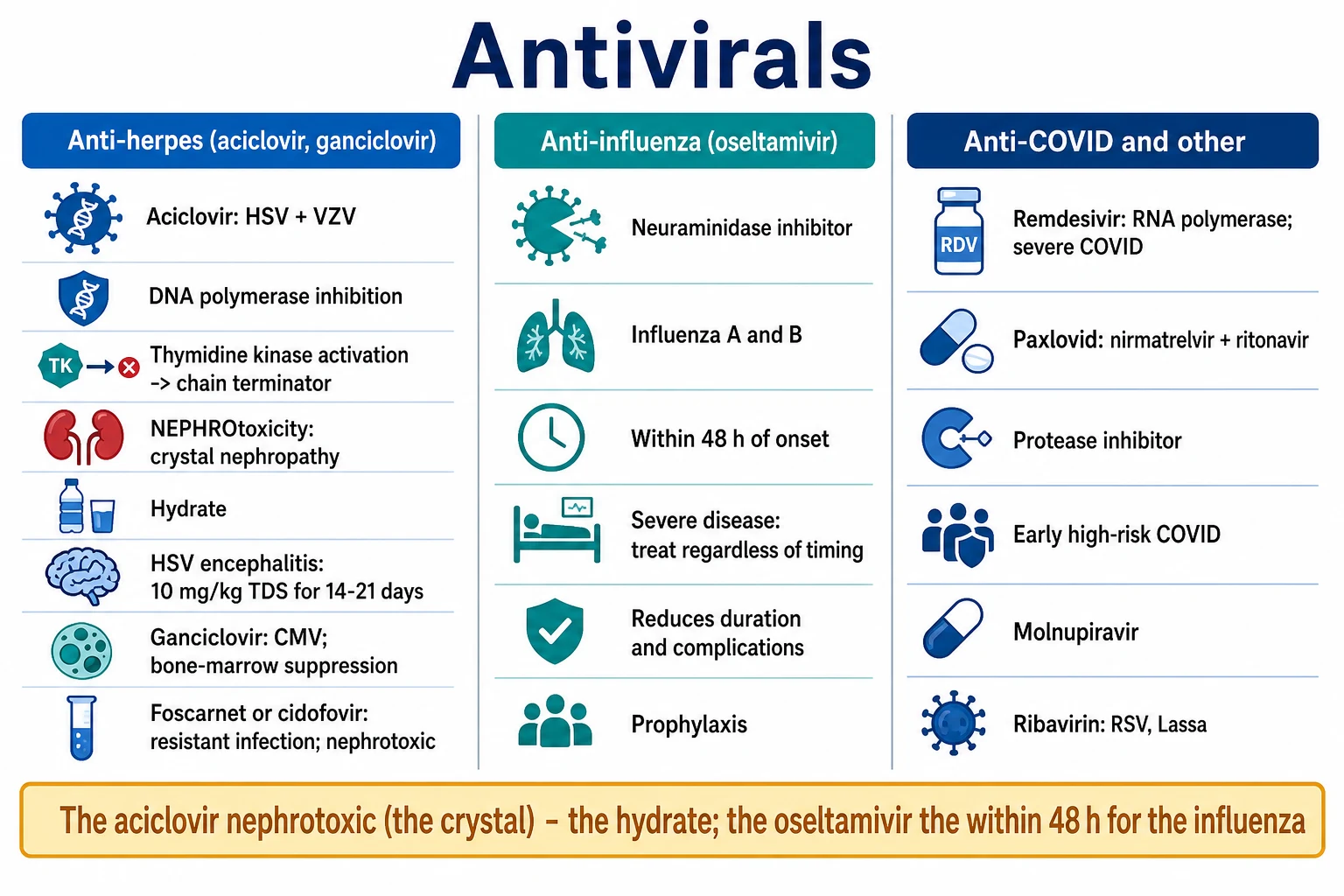
- The aciclovir (the acyclovir) — the HSV, the VZV. The mechanism: the phosphorylated by the viral thymidine kinase → the aciclovir triphosphate → the inhibits the viral DNA polymerase (the chain terminator). The selective for the infected cells (the viral thymidine kinase).[1]
- The indications — the HSV encephalitis (the 10 mg per kg IV TDS for the 14 to 21 days), the disseminated HSV, the VZV (the chickenpox, the shingles), the eczema herpeticum. The valaciclovir (the prodrug) the better the oral bioavailability.[1]
- The adverse — the nephrotoxicity (the crystal nephropathy — the aciclovir crystals in the renal tubules; the hydrate well, the slow the infusion, the dose-adjust the renal); the CNS effects (the confusion, the tremor, the hallucinations at the high dose), the hepatitis.[1]
- The ganciclovir / the valganciclovir — the CMV (the immunocompromised, the transplant). The bone-marrow toxicity (the neutropenia, the thrombocytopenia — the monitor the CBC).[1]
- The foscarnet, the cidofovir — the for the resistant HSV/CMV (the aciclovir-resistant). The nephrotoxic (the pre-hydrate, the renal-adjusted).[1]
The anti-influenza (oseltamivir)
- The mechanism — the neuraminidase inhibitor → the prevent the viral release from the infected cell. The influenza A and B.[1]
- The indications — the influenza (the within 48 hours of the symptom onset for the maximum benefit; the severe or the complicated influenza regardless of the onset; the prophylaxis in the high-risk contacts).[1]
- The benefit — the reduces the duration (the by about 1 day) and the complications (the pneumonia, the hospitalisation, the mortality in the severe).[1]
- The adverse — the nausea, the vomiting; the neuropsychiatric (the rare — the self-harm reports in the adolescents, the caution).[1]
- The other neuraminidase inhibitors — the zanamivir (the inhaled), the peramivir (the IV). The baloxavir (the cap-dependent endonuclease inhibitor, the oral).[1]
The anti-COVID and the other
- The remdesivir — the RNA polymerase inhibitor; the for the severe COVID (the reduces the time to the recovery). The IV. The hepatitis (the monitor the LFTs).[1]
- The Paxlovid (the nirmatrelvir or the ritonavir) — the oral protease inhibitor (the 3CL); the for the early mild-to-moderate COVID in the high-risk (the within 5 days of the onset). The ritonavir the boosts the nirmatrelvir → the many the CYP3A4 interactions (the review the medication list — the statins, the antiarrhythmics, the anticoagulants, the immunosuppressants).[1]
- The molnupiravir — the oral RNA polymerase inhibitor; the for the early COVID (the lower the efficacy than the Paxlovid).[1]
- The ribavirin — the aerosolised for the RSV (the infants); the Lassa fever, the hantavirus; the hep C (the historical). The teratogenic (the pregnancy contra-indication).[1]
Red flags
Classification — the antiviral classes by viral target
Knowing which viral enzyme or structure each class attacks is the organising principle for the antivirals, because it predicts spectrum (which virus), selectivity (and hence toxicity), and the resistance pathway. Mammalian cells share almost none of these viral targets — which is precisely why antivirals can be selective and well tolerated, and also why each class is narrow (a drug against the HSV DNA polymerase has no effect on the influenza neuraminidase).[1]
| Class | Representative agents | Viral target | Effect | Hallmark toxicity / caveat |
|---|
| Class | Representative agents | Viral target | Effect | Hallmark toxicity / caveat |
|---|---|---|---|---|
| Nucleoside analogue (anti-herpes) | Aciclovir, valaciclovir | Viral DNA polymerase (after phosphorylation by viral thymidine kinase → chain terminator; lacks 3'-OH) | Virucidal for HSV/VZV | Crystal nephropathy; CNS effects at high dose |
| Nucleoside analogue (anti-CMV) | Ganciclovir, valganciclovir | Viral DNA polymerase (after phosphorylation by CMV UL97 kinase → triphosphate chain terminator) | Virustatic for CMV | Bone-marrow suppression (neutropenia, thrombocytopenia); teratogenic |
| Pyrophosphate analogue | Foscarnet | DNA polymerase directly (binds pyrophosphate site — no phosphorylation required) | Virustatic HSV/CMV/HBV | Nephrotoxicity + electrolyte wasting (ionised hypocalcaemia → seizures); penile/genital ulcers |
| Nucleotide analogue | Cidofovir | DNA polymerase (already a monophosphate — bypasses the viral kinase entirely) | Virustatic CMV/HSV/adenovirus | Severe nephrotoxicity (mandates probenecid + saline); uveitis; neutropenia |
| Neuraminidase inhibitor | Oseltamivir, zanamivir, peramivir | Viral neuraminidase (cleaves sialic acid, prevents viral release) | Virustatic influenza A/B | Nausea/vomiting; rare neuropsychiatric; zanamivir → bronchospasm |
| Cap-dependent endonuclease inhibitor | Baloxavir marboxil | Viral cap-dependent endonuclease (blocks mRNA 'cap-snatching') | Virustatic influenza A/B | Diarrhoea; rapid resistance (PA I38T substitution) |
| RNA polymerase inhibitor | Remdesivir | Viral RNA-dependent RNA polymerase (chain terminator; delayed termination) | Virustatic SARS-CoV-2 | Transaminase rise; rare bradycardia in neonates |
| 3CL protease inhibitor (boosted) | Nirmatrelvir / ritonavir | Viral 3CL (Mpro) protease (blocks polyprotein cleavage → no replication) | Virustatic SARS-CoV-2 | CYP3A4 interactions (ritonavir boosting); dysgeusia |
| M2 ion-channel inhibitor | Amantadine, rimantadine | Viral M2 ion channel (blocks uncoating) | Influenza A only | Near-universal resistance — not used clinically |
| RNA mutagen | Molnupiravir | Viral RNA polymerase (lethal mutagenesis — introduces copy errors) | Virustatic SARS-CoV-2 | Teratogenic; low efficacy vs Paxlovid |
| Nucleoside analogue (broad) | Ribavirin | IMP dehydrogenase + RNA polymerase (multiple mechanisms) | RSV, Lassa, HCV (historical) | Teratogenic (pregnancy contraindication); haemolytic anaemia |
The clinical headline: aciclovir and ganciclovir look similar on paper (both nucleoside analogues that become chain terminators after viral-kinase phosphorylation) but differ in which kinase does the first phosphorylation — aciclovir uses the HSV/VZV thymidine kinase (so is active only in herpes-infected cells, zero activity against CMV), while ganciclovir needs the CMV UL97 kinase (so is active against CMV but relatively weak against HSV/VZV). Foscarnet and cidofovir are the kinase-independent escape drugs — they do not need any viral phosphorylation, which is why they retain activity against thymidine-kinase-deficient (acyclovir-resistant) HSV and UL97-mutant (ganciclovir-resistant) CMV.[1]
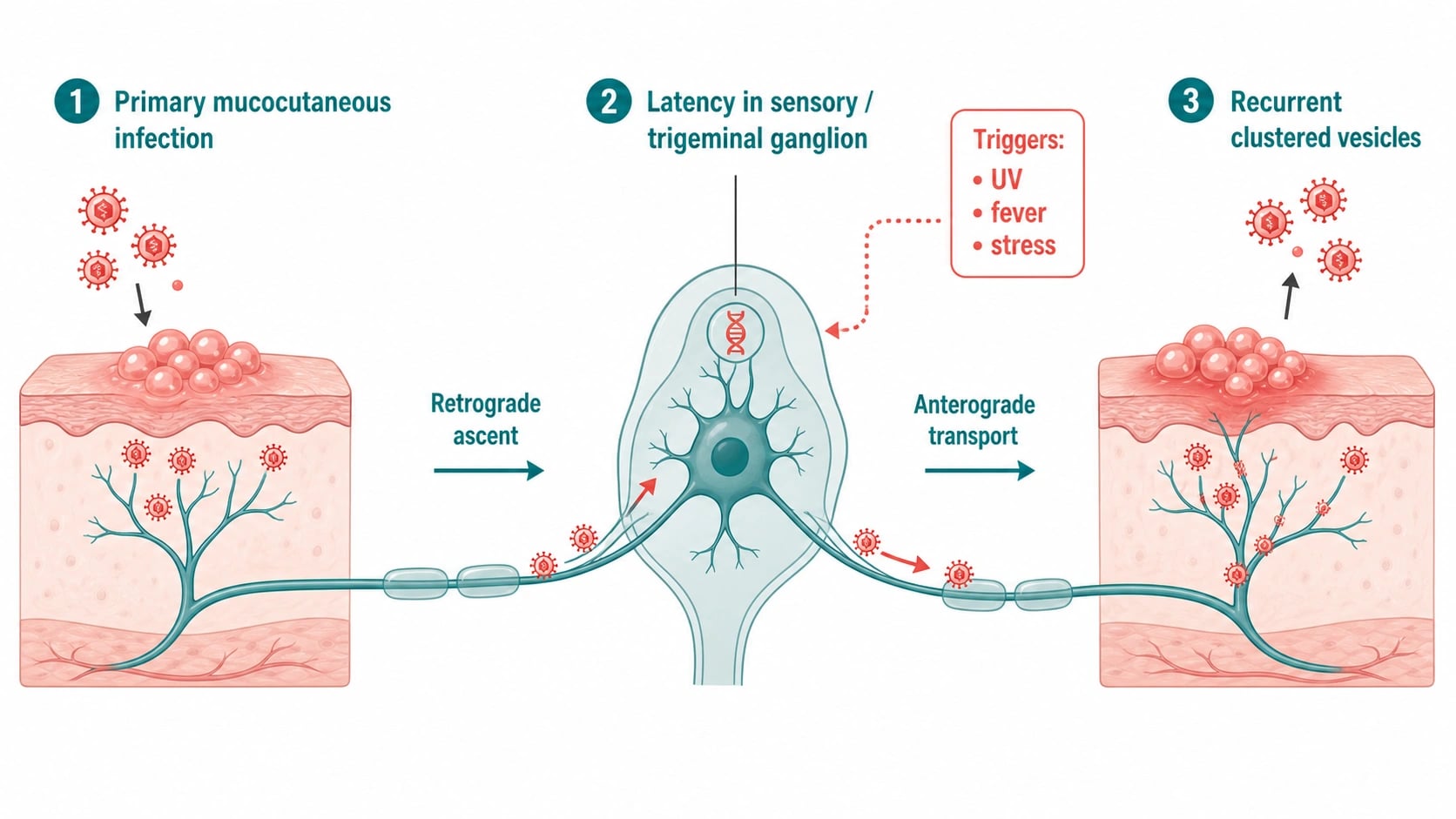
The anti-herpes agents in depth — aciclovir, valaciclovir, ganciclovir, foscarnet, cidofovir
Aciclovir — the prototype 'selectively activated' antiviral
Aciclovir is an acyclic guanosine analogue that is essentially inert until it enters a herpesvirus-infected cell. The first phosphorylation — the rate-limiting and selectivity-conferring step — is performed by the viral thymidine kinase (in HSV-1, HSV-2, VZV) and has ~200–1000× the affinity for aciclovir compared with the host cellular kinases. Two further phosphorylations by cellular kinases yield aciclovir triphosphate, which is (i) a competitive inhibitor of the viral DNA polymerase and (ii) an obligate chain terminator — aciclovir lacks the 3'-hydroxyl group, so once incorporated into the growing DNA strand no further nucleotides can be added. The viral DNA polymerase is itself ~30× more readily inhibited than the host α-DNA polymerase, completing the triple selectivity (kinase activation, polymerase affinity, chain termination).[1]
The weakness of this strategy is its dependence on the viral thymidine kinase — loss-of-function mutations in the thymidine kinase gene (the commonest aciclovir-resistance mechanism, seen in immunocompromised patients with chronic HSV/VZV exposure) render aciclovir (and valaciclovir, its prodrug) completely inactive. This is where foscarnet and cidofovir — which bypass the kinase — become essential.[1]
The Whitley 1986 NEJM trial established aciclovir as superior to vidarabine for HSV encephalitis (mortality 19% vs 50%, full recovery 38% vs 14%) — and the 10 mg/kg IV TDS × 14–21 day regimen it defined remains the standard forty years later.[1]
Valaciclovir — the prodrug that solves the bioavailability problem
Aciclovir has poor and variable oral bioavailability (~15–30%), requiring frequent high doses for any serious herpes infection. Valaciclovir is the L-valyl ester prodrug; intestinal and hepatic esterases convert it to aciclovir on first pass, raising oral bioavailability to ~54% (3–5× the parent drug). This allows oral therapy for the HSV, VZV, and herpes zoster indications that previously demanded IV aciclovir — including herpes zoster (1 g PO TDS × 7 days), recurrent genital HSV (500 mg PO BD), and herpes labialis suppression (500 mg PO OD). In the ICU, valaciclovir is the step-down agent once the patient is eating after a course of IV aciclovir. The adverse-effect and renal-dosing profile is identical to aciclovir.[1]
Ganciclovir and valganciclovir — the CMV workhorses
Ganciclovir is a close structural analogue of aciclovir with a single extra hydroxymethyl group on the acyclic side chain — that single carbon atom is what gives ganciclovir activity against CMV (which aciclovir essentially lacks). The first phosphorylation is performed by the CMV UL97 protein kinase (not the thymidine kinase of HSV) → ganciclovir triphosphate → competitive inhibitor and (slower) chain terminator of the CMV DNA polymerase. Ganciclovir triphosphate persists in CMV-infected cells for many hours (long intracellular half-life), allowing once-daily maintenance dosing.[1]
The 1993 Goodrich trial in allogeneic marrow-transplant recipients established ganciclovir prophylaxis as effective prevention of CMV disease, and ganciclovir has been the backbone of CMV management in transplant and advanced HIV ever since.[2] The oral prodrug valganciclovir (900 mg PO = 5 mg/kg IV ganciclovir) achieves equivalent systemic exposure and is the cornerstone of pre-emptive and prophylactic CMV therapy in solid-organ and stem-cell transplant. The 2002 Martin NEJM trial established valganciclovir 900 mg PO BD as non-inferior to IV ganciclovir for the induction of CMV retinitis in AIDS — a landmark in oral therapy of severe CMV disease.[3] In the HAART era the need for long-term maintenance CMV therapy has fallen — once immune reconstitution (CD4 >100 sustained on ART) occurs, secondary prophylaxis can be stopped; the comparison of regimens in this population informed the modern step-down approach.[13]
The signature toxicity is bone-marrow suppression — dose-related neutropenia (up to 40% in some series) and thrombocytopenia, which limits use in the already-cytopenic transplant or chemotherapy patient. Check the FBC at least twice weekly during induction. Ganciclovir is also teratogenic and carcinogenic in animals — contraception is required during and after therapy. Resistance emerges via UL97 mutations (the commonest) and UL54 (DNA polymerase) mutations, especially in prolonged exposure — at which point foscarnet (which needs no phosphorylation) is the escape drug.[1]
Foscarnet — the kinase-independent escape drug
Foscarnet is a pyrophosphate analogue that binds directly to the pyrophosphate-binding site of the viral DNA polymerase — it does not require any phosphorylation, viral or cellular. This is the basis of its unique value: it is active against thymidine-kinase-deficient aciclovir-resistant HSV/VZV and UL97-mutant ganciclovir-resistant CMV, the situations where the nucleoside analogues fail.[1]
The cost is toxicity. Foscarnet causes (i) dose-related nephrotoxicity — acute tubular necrosis in ~30% without vigorous saline hydration; (ii) electrolyte wasting — the drug chelates ionised calcium, magnesium, potassium; the fall in ionised calcium precipitates seizures, tetany, and arrhythmia even when the total calcium looks normal; and (iii) penile and genital ulceration from the high urinary concentration of the drug (a reversible and often-overlooked adverse effect). Mandatory: pre- and post-dose saline, daily electrolyte monitoring with aggressive repletion (often IV calcium and magnesium), and adequate urine output.[1]
Cidofovir — the nucleotide analogue that skips every kinase
Cidofovir is a cytidine nucleotide analogue that already carries the first phosphate group — it is a pre-formed monophosphate, and so bypasses both the viral thymidine kinase/UL97 and any dependence on activation. Cellular kinases phosphorylate it to the active diphosphate (the functional equivalent of a triphosphate for a nucleotide). Cidofovir is active against CMV (including ganciclovir-resistant), HSV (including aciclovir-resistant), adenovirus, polyomavirus (BK), and poxviruses — a uniquely broad spectrum.[1][4]
The price is severe nephrotoxicity — cidofovir accumulates in proximal tubular cells via the organic anion transporter and causes dose-related, sometimes irreversible tubular injury. Every dose must be preceded by oral probenecid (blocks tubular uptake) and intravenous saline hydration, and the drug is contraindicated if the baseline creatinine is elevated or there is significant proteinuria. In the modern ICU, cidofovir is a niche drug — used for refractory adenovirus, BK nephropathy in renal transplant, or CMV resistant to both ganciclovir and foscarnet.[4]
| Agent | Activation | Standard adult dose | Key toxicity | ICU caveat |
|---|
| Agent | Activation | Standard adult dose | Key toxicity | ICU caveat |
|---|---|---|---|---|
| Aciclovir | Viral thymidine kinase (HSV/VZV) | Mucocutaneous HSV 5 mg/kg IV TDS × 7 d; HSV encephalitis 10 mg/kg IV TDS × 14–21 d; VZV 10 mg/kg IV TDS × 7–10 d | Crystal nephropathy; CNS at high dose | Slow infusion (≥1 h, longer at high dose); aggressive renal dose-adjustment |
| Valaciclovir | Esterase → aciclovir, then viral TK | Herpes zoster 1 g PO TDS × 7 d; HSV suppression 500 mg PO OD–BD | As aciclovir | Step-down from IV aciclovir; same renal adjustment |
| Ganciclovir | CMV UL97 kinase → triphosphate | Induction 5 mg/kg IV BD × 14–21 d; maintenance 5 mg/kg IV OD × 5 d/wk or 6 mg/kg OD × 5 d/wk | Bone-marrow (neutropenia ~30–40%, thrombocytopenia); teratogen | FBC twice weekly; avoid with concurrent marrow-toxic drugs |
| Valganciclovir | Esterase → ganciclovir, then UL97 | Induction 900 mg PO BD × 21 d; maintenance 900 mg PO OD | As ganciclovir | Oral equivalent of IV ganciclovir; renal dose-adjust (eGFR <60) |
| Foscarnet | None (direct polymerase binding) | Induction 60 mg/kg IV q8h (or 90 mg/kg BD) × 14–21 d; maintenance 90–120 mg/kg OD | AKI; ionised hypocalcaemia → seizures; genital ulcers | Saline pre/post-load; daily ionised Ca/Mg/K; never with other nephrotoxins |
| Cidofovir | None (pre-formed monophosphate) | 5 mg/kg IV weekly × 2, then fortnightly | Severe nephrotoxicity (proximal tubule); uveitis; neutropenia | Mandatory oral probenecid + saline; contraindicated if Cr ↑ or proteinuria |
Suspected HSV encephalitis in the ICU — empiric aciclovir, do not wait for PCR
- Start aciclovir 10 mg/kg IV TDS within 1 hour of suspicion. Suspect HSV encephalitis in any patient with fever + altered mental status + (especially) temporal-lobe features (behavioural change, aphasia, focal seizures) — classic MRI shows T2 hyperintensity in the temporal lobe. Untreated mortality is ~70%.[1]
- Send CSF for HSV-1/HSV-2 PCR (97–98% sensitive after day 2–3) PLUS routine CSF (cells, protein, glucose, bacterial culture, enterovirus/VZV PCR if appropriate). A normal CSF does not exclude early HSV encephalitis.
- Slow the infusion over ≥1 h (longer at the 10 mg/kg dose) and hydrate with 1 L normal saline before/around each dose to prevent crystal nephropathy. Check weight (use ideal body weight in obesity) and renal function.
- Renal dose-adjust from the start. If CrCl is reduced, consult the dosing table and lengthen the interval — the 10 mg/kg dose is maintained but the frequency falls (e.g. q24–48h at CrCl 25–50, after haemodialysis in ESRD).
- Re-assess at 48–72 h. If the CSF PCR is positive (or remains clinically convincing with negative early PCR) — continue the full 14–21 day course (shorter risks relapse, which carries a worse prognosis). If a clear alternative diagnosis emerges AND HSV PCR is negative on a day-3+ sample, stop.
- Repeat LP if clinical recovery is incomplete at day 14 — a persistently positive PCR at day 14–21 extends therapy to 21+ days. Mortality with aciclovir is 19% at 6 months (Whitley 1986).[1]
- If deterioration continues despite confirmed HSV and adequate aciclovir — suspect aciclovir-resistant HSV (thymidine-kinase mutant, classically in immunocompromised) → switch to foscarnet.
Aciclovir renal dosing in the ICU — the commonest prescribing error
- Calculate CrCl (Cockcroft-Gault) before each course and re-check renal function daily in the ICU — aciclovir is renally cleared and concentrates in the tubule.
- Standard encephalitis dose 10 mg/kg IV: CrCl >50 → q8h; CrCl 25–50 → q12h; CrCl 10–25 → q24h; CrCl <10 / anuric → 5 mg/kg after each haemodialysis (it is removed by HD).
- Mucocutaneous dose 5 mg/kg IV: halve the frequency similarly as CrCl falls.
- Slow EVERY infusion to ≥1 h (≥2 h for the 10 mg/kg encephalitis dose) — rapid bolus dramatically increases crystal precipitation.
- Hydrate — aim for urine output >100 mL/h during the course if cardiac function permits; IV normal saline reduces tubular crystal concentration.
- Watch for crystalluria (urine microscopy shows needle crystals) and a rising creatinine after 2–4 days — the AKI is usually reversible on stopping/hydrating, but severe cases may need temporary RRT.
- Reduce the dose in the elderly and the dehydrated even with 'normal' creatinine — small, sarcopenic patients have overestimated CrCl.
The anti-CMV strategy — prophylaxis vs pre-emptive therapy in the transplant ICU
CMV is the single most important viral infection after solid-organ and stem-cell transplant — it causes direct end-organ disease (CMV pneumonitis, colitis, hepatitis, retinitis, encephalitis), drives rejection/graft-vs-host disease, and produces the CMV syndrome (fever + leukopenia + thrombocytopenia + hepatitis). Two prevention strategies dominate transplant practice and frequently appear in the exam:[1]
- Universal prophylaxis — give valganciclovir (or IV ganciclovir) to every at-risk transplant recipient for a fixed period (3–6 months for solid-organ, 100 days for stem-cell). The Goodrich 1993 trial established the principle in marrow transplant.[2] The risk: late-onset CMV disease after prophylaxis stops (no immune priming), and drug-induced myelosuppression.
- Pre-emptive therapy — monitor the patient with weekly CMV PCR (or antigenaemia) and start therapy only when viraemia crosses a threshold. Avoids unnecessary drug exposure but demands reliable, rapid virology support.
The highest-risk combination is a CMV D+/R− mismatched transplant (seropositive donor, seronegative recipient) — the donor organ transmits a primary CMV infection into an immunologically naïve recipient. These patients receive the most aggressive prophylaxis.[1]
ICU management of established CMV disease (tissue-invasive or viraemic syndrome)
- Confirm tissue-invasive disease (biopsy with CMV inclusions/immunostaining — colon, lung, retina) OR a CMV syndrome (fever, leukopenia, thrombocytopenia + high-level viraemia) in a transplant/immunocompromised host. Quantitative CMV PCR on plasma tracks response.
- Induction: ganciclovir 5 mg/kg IV BD for 14–21 days (valganciclovir 900 mg PO BD is acceptable if the gut works and disease is non-life-threatening — Martin 2002 NEJM equivalence).[3]
- Monitor the FBC twice weekly — ganciclovir neutropenia (the dose-limiting toxicity) may force a dose reduction, use of G-CSF, or a switch to foscarnet. Monitor renal function and renal-adjust.
- Continue induction until clinical resolution AND viraemia has fallen below a defined threshold (typically undetectable or a 2-log fall on two consecutive samples). Switching to maintenance too early is the commonest cause of relapse.
- Maintenance / secondary prophylaxis: valganciclovir 900 mg PO OD for 1–3 months (longer if intense immunosuppression continues) — to prevent relapse while immune reconstitution catches up.
- If ganciclovir-resistant CMV (rising PCR on adequate dose, UL97 mutation on genotype): switch to foscarnet 60 mg/kg IV q8h (renal-adjusted, with saline hydration and electrolyte monitoring). Cidofovir is third-line.
- Reduce immunosuppression where feasible (the single most important adjunct — antiviral alone rarely controls CMV in the face of heavy immunosuppression). In steroid-refractory GVHD or rejection flares this may not be possible; liaison with transplant team is essential.
The anti-influenza agents in depth — oseltamivir, zanamivir, peramivir, baloxavir
Neuraminidase inhibitors — oseltamivir, zanamivir, peramivir
The influenza neuraminidase cleaves sialic-acid residues on the host cell surface — without this cleavage the newly assembled virions remain tethered to the (now-defunct) producer cell and to each other in clumps, so the infection cannot spread. Inhibiting the neuraminidase (oseltamivir, zanamivir, peramivir) therefore blocks viral release rather than viral entry or replication. Activity covers both influenza A and influenza B; resistance (historically H275Y in influenza A H1N1) is uncommon with circulating strains.[1][14]
Oseltamivir is the oral workhorse — ethyl-ester prodrug converted by hepatic esterases to the active oseltamivir carboxylate, bioavailability ~80%, with renal clearance driving the dose-adjustment. The Treanor 2000 JAMA RCT established its efficacy in uncomplicated influenza (reduced symptom duration by ~1 day), and the 2015 Dobson Lancet meta-analysis confirmed ~1-day symptom reduction plus halving of lower-respiratory-tract complications needing antibiotics.[5][7]
The 2014 Muthuri Lancet Respir Med individual-patient-data meta-analysis of 29,234 patients hospitalised with 2009 pandemic H1N1 influenza is the key ICU-relevant evidence: neuraminidase inhibitor treatment compared with no treatment was associated with a mortality reduction (OR ~0.81 overall, and OR 0.48 — a halving of mortality — when started within 48 h of symptom onset). This is the evidence underpinning the recommendation to treat severe/ICU influenza regardless of the time since onset.[6]
Zanamivir is the inhaled formulation (Dry Powder Inhaler, 10 mg = two inhalations) — useful in pregnancy (minimal systemic exposure) and in oseltamivir-resistant influenza, but contraindicated in underlying airways disease (asthma/COPD) because the lactose powder vehicle can precipitate bronchospasm. Peramivir is the IV formulation (single 600 mg dose over 30 min) — useful in the intubated ICU patient with gut failure, though efficacy vs a 5-day oseltamivir course is debated in severe disease.[1][14]
Baloxavir — the cap-dependent endonuclease inhibitor
Baloxavir marboxil is the first-in-class inhibitor of the influenza cap-dependent endonuclease — the viral enzyme that performs 'cap-snatching' (stealing host mRNA caps to prime viral mRNA transcription). It is given as a single oral weight-based dose (40 mg for 40–80 kg, 80 mg for >80 kg). The CAPSTONE-1 trial (Hayden 2018 NEJM) showed baloxavir was at least as effective as oseltamivir at reducing symptom duration and more rapidly reduced viral shedding.[8]
The principal caveat is resistance — the PA gene I38T/M substitution arises in ~10% of treated patients (more in children and immunocompromised), confers reduced susceptibility to baloxavir, and is transmissible. Baloxavir is therefore not first-line in the immunocompromised ICU patient. A combined baloxavir-oseltamivir regimen is being studied for severe influenza.[8]
The obsolete M2 inhibitors
Amantadine and rimantadine (adamantanes) block the influenza A M2 ion channel, preventing viral uncoating. Their clinical use has ended — near-universal high-level resistance in circulating influenza A (since ~2005–2009) means they have no current role in treatment or prophylaxis. Examiners still ask about the mechanism (M2 channel) because it is the textbook example of an ion-channel-targeting antiviral, but the answer to "when would you use it?" is "never".[1]
| Agent | Class / target | Route & dose | Renal adjustment | ICU caveat |
|---|
| Agent | Class / target | Route & dose | Renal adjustment | ICU caveat |
|---|---|---|---|---|
| Oseltamivir | Neuraminidase inhibitor | Treatment: 75 mg PO BD × 5 d (longer in severe ICU); prophylaxis: 75 mg PO OD × 7–10 d | CrCl 30–60 → 75 mg OD; CrCl 10–30 → 75 mg every 48 h; HD → 75 mg after each session | Severe/ICU influenza — give regardless of onset time (Muthuri 2014). Pregnancy-safe. Empiric with suspected flu in ICU |
| Zanamivir | Neuraminidase inhibitor | 10 mg (2 inhalations) inhaled BD × 5 d | No adjustment (renal) | Avoid in asthma/COPD (bronchospasm from lactose vehicle). Useful in pregnancy and oseltamivir-resistance |
| Peramivir | Neuraminidase inhibitor | 600 mg IV single dose over 30 min | CrCl 30–50 → 200 mg; CrCl 10–30 → 100 mg | IV single dose — useful in intubated patient / gut failure |
| Baloxavir marboxil | Cap-dependent endonuclease inhibitor | Single PO dose (40 mg if 40–80 kg; 80 mg if >80 kg) | Not recommended if CrCl <30 | Rapid resistance (PA I38T) — avoid in immunocompromised |
| Amantadine / rimantadine | M2 ion-channel inhibitor | (Obsolete) | — | Near-universal resistance — not used |
Severe influenza in the ICU — empiric oseltamivir, do not wait for PCR
- Start oseltamivir 75 mg PO/NG BD (or 150 mg BD in severe ICU disease) within 1 hour of suspicion — do NOT wait for respiratory-virus PCR. The Muthuri 2014 mortality signal is strongest when started within 48 h of symptom onset, but extends to later treatment in severe disease.[6]
- Confirm with nasopharyngeal / lower-respiratory-tract PCR for influenza A/B (and SARS-CoV-2, RSV). If PCR is negative AND influenza epidemiologically unlikely, stop.
- If gut failure / malabsorption (septic ileus, post-operative, nasogastric not reliable) — give peramivir 600 mg IV as a single dose (or IV zanamivir where available). Absorption of oseltamivir in critically ill patients is unreliable.
- Pregnant, immunocompromised, or oseltamivir-resistant strain — oseltamivir is the default in pregnancy (safe, no teratogenicity); zanamivir is the alternative (negligible systemic exposure). Combine with a second agent if H275Y resistance suspected.
- Renal dose-adjust oseltamivir and peramivir — zanamivir needs no adjustment.
- Continue for 5 days in uncomplicated disease, longer (up to 10 days) in immunocompromised or persistently PCR-positive severe ICU disease. Immunocompromised hosts shed virus for weeks and drive resistance — extend therapy and re-swab.
- Prophylax exposed high-risk contacts and ward staff (75 mg OD × 7–10 days from last exposure) — nosocomial influenza outbreaks are a recognised ICU hazard.
The anti-SARS-CoV-2 agents — remdesivir, nirmatrelvir/ritonavir, molnupiravir
The COVID-19 pandemic produced three FDA/MHRA/TGA-licensed antivirals with sharply different indications: an IV agent for the hospitalised/hypoxic patient (remdesivir) and two oral agents for early outpatient therapy in the high-risk non-hospitalised patient (Paxlovid, molnupiravir). Knowing which one fits which patient is the core exam question. [1]
Remdesivir — the IV RNA-polymerase inhibitor for hypoxic COVID
Remdesivir is an intravenous adenosine triphosphate analogue that, after intracellular activation, is incorporated by the SARS-CoV-2 RNA-dependent RNA polymerase and causes delayed chain termination (it terminates a few bases downstream of incorporation rather than immediately, which is mechanistically interesting but clinically moot).[1]
The pivotal ACTT-1 trial (Beigel 2020 NEJM) randomised 1062 hospitalised COVID-19 patients to remdesivir vs placebo: remdesivir shortened median time to recovery from 15 to 10 days, with the benefit concentrated in patients on low-flow supplemental oxygen (time to recovery 11 vs 15 days) — patients already intubated or on no oxygen derived less benefit.[9] The much larger pragmatic WHO Solidarity trial (2022 final report) found no mortality reduction with remdesivir across the heterogeneous hospitalised population, leaving a genuine evidence tension that examiners probe.[10]
Current practice: remdesivir is recommended for hospitalised COVID-19 patients requiring supplemental oxygen (especially low-flow), but is not routinely recommended for intubated/ECMO patients (where the data are weakest) and is unnecessary for patients not needing oxygen. Dose: 200 mg IV on day 1, then 100 mg IV OD for 4 days (total 5 days), extendable. Adverse effects: transaminase rise (monitor LFTs, hold if ALT >5× ULN), rare bradycardia in neonates. Renal adjustment: avoid if eGFR <30 in many formularies (though recent guidance is relaxing).[9][10]
Nirmatrelvir/ritonavir (Paxlovid) — the boosted 3CL protease inhibitor
Nirmatrelvir is an oral inhibitor of the SARS-CoV-2 3CL (Mpro) protease — the main viral protease that cleaves the replicase polyproteins into functional units. Ritonavir (a ritonavir-boosted antiretroviral familiar from HIV therapy) is co-administered not for any anti-SARS-CoV-2 effect but to inhibit CYP3A4-mediated metabolism of nirmatrelvir, sustaining therapeutic nirmatrelvir levels with twice-daily dosing.[11]
The EPIC-HR trial (Hammond 2022 NEJM) randomised 2246 unvaccinated high-risk non-hospitalised adults within 5 days of symptom onset to Paxlovid vs placebo: 89% relative reduction in COVID-related hospitalisation or death at 28 days (0.77% vs 7.01%) with no signal of excess adverse events. This is the strongest efficacy of any COVID-19 oral antiviral.[11]
The dosing is nirmatrelvir 300 mg (two 150 mg tablets) plus ritonavir 100 mg, PO BD for 5 days, started within 5–7 days of symptom onset. Halve the nirmatrelvir dose (150 mg/100 mg BD) if eGFR is 30–60; contraindicated if eGFR <30. The defining ICU problem is CYP3A4 drug interactions (see below) — the ritonavir component inhibits CYP3A4 profoundly for the 5-day course, raising levels of dozens of common ICU drugs. A second phenomenon, COVID-19 rebound (recurrence of symptoms and/or positive antigen 2–8 days after completing Paxlovid), is well-described and generally mild; it does not reflect resistance and re-treatment is occasionally considered in high-risk hosts.[11]
Molnupiravir — the mutagen, last-resort oral
Molnupiravir is an oral ribonucleoside analogue that, after metabolic activation, is incorporated by the viral RNA polymerase and causes lethal mutagenesis — it induces catastrophic copy errors (transition mutations) that exceed the virus's error-correcting capacity, driving the viral population into 'error catastrophe'. The MOVe-OUT trial (Jayk Bernal 2022 NEJM) showed a ~30% relative reduction in hospitalisation/death when given early to high-risk unvaccinated adults — markedly less than Paxlovid's 89%.[12]
Concerns about teratogenicity (it is a mutagen) and theoretical escape-mutation risk have restricted its use: avoid in pregnancy (and for both sexes, contraception for 3 months post-treatment), and use only when Paxlovid is contraindicated (e.g. intolerable CYP3A4 interactions) or unavailable, and remdesivir is impractical. Dose: 800 mg PO BD × 5 days.[12]
| Agent | Indication | Dose | Contraindications / caveats | Efficacy |
|---|
| Agent | Indication | Dose | Contraindications / caveats | Efficacy |
|---|---|---|---|---|
| Remdesivir | Hospitalised + supplemental oxygen (esp. low-flow) | 200 mg IV day 1, then 100 mg IV OD × 4 d (total 5 d) | ALT >5× ULN; historically eGFR <30 (relaxing); drug-induced bradycardia in neonates | ACTT-1: recovery 10 vs 15 d; Solidarity: no mortality benefit[9][10] |
| Nirmatrelvir/ritonavir (Paxlovid) | Early (≤5–7 d), high-risk, NON-hospitalised, mild–moderate COVID | 300 mg/100 mg PO BD × 5 d | eGFR <30; CYP3A4 drug-interaction burden (the dominant problem) | EPIC-HR: 89% reduction in hospital/death[11] |
| Molnupiravir | Early high-risk non-hospitalised — only if Paxlovid CI/unavailable | 800 mg PO BD × 5 d | Pregnancy (teratogen); not <18 y | MOVE-OUT: ~30% reduction (inferior to Paxlovid)[12] |
Choosing the COVID-19 antiviral in the ICU — match the drug to the disease phase
- Hospitalised, needing supplemental low-flow oxygen, within ~10 days of symptoms → remdesivir 200 mg IV day 1 then 100 mg OD × 4 d (extend to 10 d if not improving). Add corticosteroids (dexamethasone) if oxygen-requiring; add immunomodulation (tocilizumab/baricitinib) if rapidly escalating oxygen.
- Hospitalised, intubated/ECMO → remdesivir is less clearly beneficial (ACTT-1 signal weak, Solidarity neutral). Discuss with ID; do not delay other proven ICU therapy for it.
- Hospitalised but NOT needing oxygen → no antiviral indicated (no demonstrated benefit; discharge with a Paxlovid course if high-risk and within the window).
- Non-hospitalised, early (≤5 d), high-risk (age >65, immunocompromised, comorbidities) → Paxlovid first-line (89% reduction in hospital/death).[11]
- If Paxlovid contraindicated (eGFR <30, intolerable CYP3A4 interactions — tacrolimus, amiodarone, certain statins, etc.) and within 7 d of symptoms → remdesivir IV day 1–3 (an outpatient 3-dose course is licensed) OR molnupiravir (last resort, exclude pregnancy).
- Pregnant → remdesivir is the preferred agent (no teratogenicity signal); avoid Paxlovid if interactions unmanageable; molnupiravir contraindicated.
- Immunocompromised with persistent shedding → extended remdesivir courses (10 d) or combination regimens (discuss with ID — these patients drive variant emergence).
The anti-HIV agents and combination ART — the ICU principles
Antiretroviral therapy (ART) has transformed HIV into a chronic, manageable disease, and the ICU encounter is rarely about starting ART — it is about managing the critically ill HIV patient on ART, or about post-exposure prophylaxis (PEP) after a needlestick. The modern first-line regimen is two nucleos(t)ide reverse-transcriptase inhibitors (NRTIs) plus an integrase strand-transfer inhibitor (INSTI) — typically tenofovir + emtricitabine + bictegravir (or dolutegravir) as a single-tablet once-daily combination. This combination-ART principle (≥3 active agents from ≥2 classes) is the cornerstone of durable viral suppression and resistance prevention.[1]
| Class | Representative agents | Target | ICU-relevant toxicity / caveat |
|---|
| Class | Representative agents | Target | ICU-relevant toxicity / caveat |
|---|---|---|---|
| NRTIs (nucleoside/nucleotide reverse-transcriptase inhibitors) | Tenofovir (TDF/TAF), emtricitabine, lamivudine, abacavir, zidovudine, stavudine | Viral reverse transcriptase (chain terminator) | Tenofovir → nephrotoxicity (Fanconi-like proximal tubulopathy), bone loss; abacavir → HLA-B*5701 hypersensitivity; stavudine/zidovudine → mitochondrial toxicity: lactic acidosis, lipodystrophy, myopathy |
| NNRTIs (non-nucleoside RTIs) | Efavirenz, nevirapine, rilpivirine, doravirine | Reverse transcriptase (allosteric) | Efavirenz → CNS (insomnia, vivid dreams, depression); CYP3A4 interactions |
| INSTIs (integrase strand-transfer inhibitors) | Dolutegravir, bictegravir, raltegravir, elvitegravir (boosted) | Viral integrase (blocks proviral DNA integration) | First-line class; weight gain; elvitegravir/cobicistat → CYP3A4 interactions; rare hepatotoxicity |
| PIs (protease inhibitors) | Darunavir, atazanavir, lopinavir — boosted with ritonavir or cobicistat | Viral protease | CYP3A4 inhibition (huge interaction burden); metabolic syndrome; nephrolithiasis (atazanavir); hyperbilirubinaemia |
| Entry / fusion inhibitors | Enfuvirtide (fusion), maraviroc (CCR5 antagonist) | Viral entry / co-receptor | Maraviroc only if CCR5-tropic virus; injection-site reactions (enfuvirtide) |
The critically ill HIV patient in the ICU — the four ICU-specific problems
- Continue ART wherever possible — stopping ART risks virological failure, resistance selection, and (if CD4 low) opportunistic infection. Discuss with the HIV team before stopping; if gut absorption is unreliable, ask about IV formulations (zidovudine, enfuvirtide, raltegravir can be given IV/SC).
- Beware the drug-interaction burden — boosted PIs (darunavir/ritonavir, lopinavir/ritonavir) and elvitegravir/cobicistat are powerful CYP3A4 inhibitors, with the same interaction profile as Paxlovid (statins, antiarrhythmics, anticoagulants, calcineurin inhibitors, opioids, benzodiazepines). The ICU drug chart must be reconciled on admission and daily.
- Recognise the NRTI toxicities in the deteriorating patient — tenofovir nephrotoxicity (proximal tubulopathy: glycosuria with normal plasma glucose, hypophosphataemia, rising creatinine — distinguish from septic AKI); lactic acidosis / hepatic steatosis from mitochondrial toxicity (especially stavudine, didanosine, zidovudine — present with rising lactate, hepatomegaly, abdominal pain; mortality is high); abacavir hypersensitivity (fever, rash, GI/respiratory symptoms — never re-challenge; screen HLA-B*5701 before starting).
- Time ART initiation in the treatment-naïve ICU patient — for an AIDS-defining opportunistic infection, ART is generally started within 2 weeks of opportunistic-infection diagnosis (not day 1), with two important exceptions: defer ART in TB meningitis (high IRIS mortality) and in cryptococcal meningitis (IRIS risk — start at 2–4 weeks depending on pressure/clinical course). Early ART reduces mortality in most OI; the risk is immune reconstitution inflammatory syndrome (IRIS).
Renal dosing and therapeutic drug monitoring — the ICU-specific considerations
Renal impairment is the single most important dosing modifier for the antivirals in the ICU. Most of the anti-herpes and anti-influenza agents are renally cleared and accumulate rapidly in AKI; several are themselves nephrotoxic (aciclovir crystals, foscarnet tubular injury, cidofovir proximal-tubule damage, tenofovir Fanconi syndrome), creating a self-reinforcing cycle. Therapeutic drug monitoring (TDM), by contrast, has a much smaller role than in antifungal or antibacterial therapy — most antivirals have predictable pharmacokinetics, with ganciclovir in the neonate/transplant the principal exception.[1]
| Agent | CrCl >50 | CrCl 30–50 | CrCl 10–30 | Dialysis (ESRD) |
|---|
| Agent | CrCl >50 | CrCl 30–50 | CrCl 10–30 | Dialysis (ESRD) |
|---|---|---|---|---|
| Aciclovir (encephalitis 10 mg/kg) | q8h | q12h | q24h | 5 mg/kg after each HD session |
| Aciclovir (mucocutaneous 5 mg/kg) | q8h | q8–12h | q24h | 2.5 mg/kg after each HD |
| Valaciclovir (VZV 1 g) | TDS | TDS | OD | 500 mg after each HD |
| Ganciclovir (induction 5 mg/kg) | BD | OD | 2.5 mg/kg OD | 1.25 mg/kg after each HD |
| Valganciclovir (induction 900 mg) | BD | 450 mg BD | 450 mg OD | Avoid (use IV ganciclovir) |
| Foscarnet | Standard (per weight) | Reduce per nomogram | Reduce further | Not recommended (HD removes drug) |
| Oseltamivir (75 mg) | BD | OD | 75 mg every 48 h | 75 mg after each HD |
| Remdesivir | Standard | Standard | Historically avoid (<30); relaxing | Limited data |
| Nirmatrelvir/ritonavir | 300/100 BD | 150/100 BD | Contraindicated | Contraindicated |
Antiviral therapeutic drug monitoring in the ICU — when it matters
- Aciclovir — TDM not routine. Clinical monitoring of renal function and neurological status suffices. In a non-resolving HSV encephalitis, suspect resistance (request genotyping) rather than measure levels.
- Ganciclovir — TDM is used in neonatal congenital CMV and occasionally in transplant recipients with refractory or relapsing CMV to confirm adequate exposure (target AUC 40–50 mg·h/L). In the standard adult ICU course it is not measured — clinical and virological response (PCR) drive dosing.
- Foscarnet — no TDM; driven by renal function and electrolytes.
- Oseltamivir / baloxavir — no TDM; clinical/PCR response drives duration.
- Remdesivir — no TDM; LFT monitoring.
- Paxlovid — no TDM; the drug interaction reconciliation is the monitoring equivalent.
- Antiretrovirals — TDM is used selectively for atazanavir, lopinavir, efavirenz, nevirapine in special situations (hepatic failure, pregnancy, paediatrics, suspected non-adherence or toxicity), but not routinely for the modern integrase-inhibitor first-line regimens.
The major trials — what they proved, what they changed
Whitley 1986 (NEJM) — vidarabine vs acyclovir for HSV encephalitis
Design
Multicentre randomised blinded trial; biopsy-confirmed HSV encephalitis
Intervention
Acyclovir 10 mg/kg IV q8h × 10 days vs vidarabine 15 mg/kg/day × 10 days
Primary outcome
Mortality at 6 months: **acyclovir 19% vs vidarabine 50%**. Full recovery 38% vs 14%
What it changed
Established **acyclovir as the standard for HSV encephalitis**, and the **10 mg/kg q8h (TDS) dose × 14–21 days** that remains the world standard four decades later. Untreated HSV encephalitis has ~70% mortality — empiric acyclovir for any suspected case is now non-negotiable.
Goodrich 1993 (Ann Intern Med) — ganciclovir prophylaxis for CMV after allogeneic marrow transplant
Design
Randomised double-blind placebo-controlled trial; allogeneic BMT recipients with CMV excretion
Intervention
Ganciclovir 5 mg/kg IV BD × 14 d then 5 mg/kg/day × 5 d/wk × 12 wks vs placebo, after CMV detection
Primary outcome
**Reduced CMV disease** (3% vs 43% placebo) and improved survival — established **pre-emptive ganciclovir** as the paradigm for CMV prevention in transplant
What it changed
Ganciclovir became the cornerstone of CMV management after transplant; the principle of treating on virological detection (pre-emptive) was established here.
Martin 2002 (NEJM) — valganciclovir as induction for CMV retinitis in AIDS
Design
Randomised non-inferiority trial; 127 AIDS patients with newly diagnosed peripheral CMV retinitis
Intervention
Valganciclovir 900 mg PO BD × 21 d (induction) then 900 mg OD (maintenance) vs IV ganciclovir 5 mg/kg BD × 21 d then OD
Primary outcome
**Time to progression of retinitis equivalent** (oral valganciclovir non-inferior to IV ganciclovir); plasma ganciclovir exposure matched
What it changed
Established **oral valganciclovir 900 mg BD** as a substitute for IV ganciclovir induction — a major advance in CMV therapy, displacing long-term IV access for transplant/AIDS patients.
Lalezari 1998 (JAIDS) — IV cidofovir for relapsing CMV retinitis in AIDS
Design
Randomised controlled trial; AIDS patients with relapsing CMV retinitis
Intervention
IV cidofovir 5 mg/kg every other week (with probenecid + saline) vs deferred therapy
Primary outcome
**Delayed time to retinitis progression** — established cidofovir as a third-line option for CMV resistant to ganciclovir and foscarnet
What it changed
Provided a kinase-independent (broad) option for refractory CMV/HSV/adenovirus, at the cost of mandatory probenecid + saline to mitigate the severe nephrotoxicity.
Treanor 2000 (JAMA) — oseltamivir for acute influenza
Design
Randomised double-blind placebo-controlled trial; 629 adults with febrile influenza within 36 h of onset
Intervention
Oseltamivir 75 mg PO BD × 5 d vs placebo
Primary outcome
**Reduced symptom duration by ~1.3 days** (influenza-confirmed); reduced secondary complications and antibiotic use
What it changed
Established oseltamivir as the oral neuraminidase inhibitor for uncomplicated influenza — the foundation of the modern 'within 48 h' recommendation.
Muthuri 2014 (Lancet Respir Med) — neuraminidase inhibitors and mortality in severe pandemic H1N1 influenza
Design
Individual-patient-data meta-analysis of 78 studies; **29,234 patients** hospitalised worldwide with 2009 pandemic H1N1 influenza
Intervention
Neuraminidase inhibitor treatment (mostly oseltamivir) vs no treatment
Primary outcome
**Reduced mortality** (adjusted OR ~0.81 overall); when **started within 48 h of symptom onset, OR ~0.48 (a halving of mortality)**. Children also benefited
What it changed
The cornerstone evidence for **treating severe / ICU influenza with oseltamivir regardless of time since onset** (the within-48 h benefit is strongest, but extends to later treatment in severe disease). This is the ICU-defining influenza trial.
Dobson 2015 (Lancet) — oseltamivir meta-analysis of RCTs
Design
Meta-analysis of all randomised controlled trials of oseltamivir in adults with influenza (including previously-unpublished data)
Intervention
Oseltamivir 75 mg PO BD × 5 d vs placebo
Primary outcome
Reduced symptom duration by ~1 day; halved hospitalisation; reduced lower-respiratory complications requiring antibiotics; modest nausea/vomiting
What it changed
Reaffirmed oseltamivir's benefit (after the 2014 Cochrane controversy); clarified the symptom-shortening and complication-reducing benefit in uncomplicated influenza.
Hayden 2018 (NEJM CAPSTONE-1) — baloxavir marboxil for uncomplicated influenza
Design
Randomised double-blind placebo- and active-controlled trial; 1436 adults/adolescents with acute influenza within 48 h
Intervention
Single-dose baloxavir (40/80 mg) vs oseltamivir 75 mg BD × 5 d vs placebo
Primary outcome
Baloxavir reduced symptom duration similarly to oseltamivir (~1 day shorter than placebo) and **reduced viral shedding sooner** than oseltamivir
Caveat
**PA I38T resistance** emerged in ~10% of baloxavir-treated patients (higher in children)
What it changed
Introduced the **cap-dependent endonuclease inhibitor class** as a single-dose oral option for influenza — useful when adherence is hard, but resistance limits use in the immunocompromised.
Beigel 2020 (NEJM ACTT-1) — remdesivir for hospitalised COVID-19
Design
Randomised double-blind placebo-controlled multinational trial; 1062 hospitalised COVID-19 patients
Intervention
Remdesivir 200 mg IV day 1 then 100 mg OD × 9 d (10-d total) vs placebo
Primary outcome
**Median time to recovery 10 days (remdesivir) vs 15 days (placebo)** — benefit concentrated in patients on **low-flow oxygen** (recovery 11 vs 15 d)
Mortality
Trend to lower 29-day mortality (6.7% vs 11.9%); not statistically significant in the primary analysis
What it changed
First antiviral to show benefit in hospitalised COVID-19 — the foundation of remdesivir use in oxygen-requiring (especially low-flow) patients.
WHO Solidarity 2022 (Lancet) — remdesivir and other repurposed drugs for hospitalised COVID-19
Design
Massive pragmatic multinational randomised trial; **4051 remdesivir vs 4044 control** across 30+ countries
Intervention
Remdesivir vs no antiviral (with concomitant corticosteroid use common)
Primary outcome
**No significant mortality reduction** with remdesivir (in-hospital, OR ~0.95; 28-d subdistribution) across the heterogeneous hospitalised population — including intubated patients
What it changed
Created the evidence tension with ACTT-1: remdesivir reduces time to recovery (especially in low-flow oxygen) but **does not** convincingly reduce mortality in unselected hospitalised patients — current practice reserves it for the oxygen-requiring, not-yet-critically-ill patient.
Hammond 2022 (NEJM EPIC-HR) — oral nirmatrelvir/ritonavir (Paxlovid) for early COVID-19
Design
Randomised double-blind placebo-controlled trial; 2246 **unvaccinated** high-risk adults within 5 d of symptom onset
Intervention
Nirmatrelvir 300 mg + ritonavir 100 mg PO BD × 5 d vs placebo
Primary outcome
**89% relative reduction** in COVID-related hospitalisation or death by day 28 (0.77% vs 7.01%); 7 deaths in placebo vs 0 in Paxlovid
What it changed
Established **Paxlovid as the most effective oral COVID-19 antiviral** for the early high-risk patient — first-line ahead of molnupiravir. CYP3A4 interaction management is the price of ritonavir boosting.
Jayk Bernal 2022 (NEJM MOVE-OUT) — molnupiravir for early COVID-19
Design
Randomised double-blind placebo-controlled trial; 1433 unvaccinated high-risk adults within 5 d of symptom onset
Intervention
Molnupiravir 800 mg PO BD × 5 d vs placebo
Primary outcome
**~30% relative reduction** in hospitalisation/death by day 29 (6.8% vs 9.7%) — markedly inferior to Paxlovid's 89%
Caveat
Teratogenicity concern; not used in pregnancy; **inferior to Paxlovid** so reserved for when Paxlovid is contraindicated (eGFR <30, unmanageable CYP3A4 interactions)
What it changed
Last-resort oral antiviral for early COVID-19 in high-risk patients where Paxlovid and remdesivir are not usable.
Additional red flags and pitfalls
Exam practice
SAQ — Severe influenza A (H1N1) pneumonia with ARDS
10 minutes · 10 marks
A 54-year-old woman (75 kg) presents in mid-winter with a 4-day history of fever, myalgia, sore throat and dry cough, now with rapidly progressive dyspnoea. RR 32, SpO₂ 88% on a 15 L non-rebreather mask, BP 95/60, HR 124. Nasopharyngeal PCR is positive for influenza A H1N1. Chest radiograph shows bilateral interstitial infiltrates; arterial blood gas on 15 L NRBM: pH 7.28, PaO₂ 56 mmHg, PaCO₂ 34 mmHg, lactate 3.1 mmol/L. Creatinine 145 µmol/L (baseline 80). She is intubated for ARDS (P/F ~150) and transferred to the ICU.
SAQ — CMV pneumonitis in a bilateral lung transplant recipient
10 minutes · 10 marks
A 58-year-old man (80 kg), day 60 post bilateral lung transplant (CMV donor-positive / recipient-negative — D+/R− mismatch), on tacrolimus, mycophenolate mofetil and prednisolone, presents with fever, dyspnoea, dry cough and myalgia over one week. RR 28, SpO₂ 90% on 6 L nasal cannulae. CXR shows bilateral ground-glass infiltrates. Bronchoalveolar lavage reveals CMV inclusion-bearing cells on cytology with BAL CMV PCR 250,000 IU/mL; plasma CMV PCR 85,000 IU/mL. WCC 2.8, neutrophils 1.4, platelets 110. Creatinine 130 µmol/L (baseline 105).
16 exam-exhaustive pearls on antivirals in the ICU
The complete exam answer
[1]References
- [1]Whitley RJ, Alford CA, Hirsch MS, Schooley RT, Luby JP, Aoki FY, Hanley D, Nahmias AJ, Soong SJ Vidarabine versus acyclovir therapy in herpes simplex encephalitis N Engl J Med, 1986.PMID 3001520
- [2]Goodrich JM, Bowden RA, Fisher L, Keller C, Schoch G, Meyers JD Ganciclovir prophylaxis to prevent cytomegalovirus disease after allogeneic marrow transplant Ann Intern Med, 1993.PMID 8380242
- [3]Martin DF, Sierra-Madero J, Walmsley S, Wolitz RA, Macey K, Georgiou P, Rovzar M, Robinson S, Stempien MJ, Valganciclovir Study Group A controlled trial of valganciclovir as induction therapy for cytomegalovirus retinitis N Engl J Med, 2002.PMID 11948271
- [4]Lalezari JP, Holland GN, Kramer F, McKinley GF, Kemper CA, Ives DV, Hardy R, Youle MM, Walmsley S, Lalezari J, Squires K, Safrin S, Matheron S, Hewan-Lowe K, Tross S, Robinson P, De Jesus P, Northfelt D, Stevens R, Jaffe HS Randomized, controlled study of the safety and efficacy of intravenous cidofovir for the treatment of relapsing cytomegalovirus retinitis in patients with AIDS J Acquir Immune Defic Syndr Hum Retrovirol, 1998.PMID 9525435
- [5]Treanor JJ, Hayden FG, Vrooman PS, Barbarash R, Bettis R, Riff D, Singh N, Kinnersley N, Ward P, Mills RG, US Oral Neuraminidase Study Group Efficacy and safety of the oral neuraminidase inhibitor oseltamivir in treating acute influenza: a randomized controlled trial. US Oral Neuraminidase Study Group JAMA, 2000.PMID 10697061
- [6]Muthuri SG, Venkatesan S, Myles PR, Leonardi-Bee J, Al Khuwaitir TS, Al Mamun A, Anovadiya AP, Azziz-Baumgartner E, Báez C, Bassetti M, Beovic B, Bertisch B, Bonmarin I, Bugrysheva I, Cao Q, Castelot MM, Cao Q, Castelot MM, CDC-VNICE Investigation Team, Nguyen-Van-Tam JS, PRIDE Consortium Investigators Effectiveness of neuraminidase inhibitors in reducing mortality in patients admitted to hospital with influenza A H1N1pdm09 virus infection: a meta-analysis of individual participant data Lancet Respir Med, 2014.PMID 24815805
- [7]Dobson J, Whitley RJ, Pocock S, Monto AS Oseltamivir treatment for influenza in adults: a meta-analysis of randomised controlled trials Lancet, 2015.PMID 25640810
- [8]Hayden FG, Sugaya N, Hirotsu N, Lee N, de Jong MD, Hurt AC, Ishida T, Sekino H, Yamada K, Portsmouth S, Kawaguchi K, Sato A, Shionogi Baloxavir Marboxil Investigators Group Baloxavir Marboxil for Uncomplicated Influenza in Adults and Adolescents N Engl J Med, 2018.PMID 30184455
- [9]Beigel JH, Tomashek KM, Dodd LE, Mehta AK, Zingman BS, Kalil AC, Hohmann E, Chu HY, Luetkemeyer A, Kline S, Lopez de Castilla D, Finberg RW, Dierberg K, Tapson V, Hsieh L, Patterson TF, Paredes R, Sweeney DA, Short WR, Touloumi G, Lye DC, Ohmagari N, Oh MD, Ruiz-Palacios GM, Benfield T, Fätkenheuer G, Kortepeter MG, Atmar RL, Creech CB, Lundgren J, Babiker AG, Pett S, Neaton JD, Burgess TH, Bonnett T, Green M, Makowski M, Osinusi A, Nayak S, Lane HC, ACTT-1 Study Group Members Remdesivir for the Treatment of Covid-19 - Final Report N Engl J Med, 2020.PMID 32445440
- [10]WHO Solidarity Trial Consortium Remdesivir and three other drugs for hospitalised patients with COVID-19: final results of the WHO Solidarity randomised trial and updated meta-analyses Lancet, 2022.PMID 35512728
- [11]Hammond J, Leister-Tebbe H, Gardner A, Abreu P, Bao W, Wisemandle W, Baniecki M, Hendrick VM, Damle B, Simón-Campos A, Pypstra R, Rusnak JM, EPIC-HR Investigators Oral Nirmatrelvir for High-Risk, Nonhospitalized Adults with Covid-19 N Engl J Med, 2022.PMID 35172054
- [12]Jayk Bernal A, Gomes da Silva MM, Musungaie DB, Kovalchuk E, Gonzalez A, Delos Reyes V, Martín-Quirós A, Caraco Y, Williams-Diaz A, Brown ML, Du J, Pedley A, Assaid C, Grobler J, Plummer H, Kukhanova M, Group MOVe-OUT Study Molnupiravir for Oral Treatment of Covid-19 in Nonhospitalized Patients N Engl J Med, 2022.PMID 34914868
- [13]Jabs DA, Ahuja A, Van Natta M, Dunn JP, Yeh S, Studies of the Ocular Complications of AIDS Research Group Comparison of treatment regimens for cytomegalovirus retinitis in patients with AIDS in the era of highly active antiretroviral therapy Ophthalmology, 2013.PMID 23419804
- [14]Nguyen-Van-Tam JS, Venkatesan S, Muthuri SG, Myles PR Neuraminidase inhibitors: who, when, where? Clin Microbiol Infect, 2015.PMID 25703253