ICU · Infection / pharmacology
Glycopeptides & Lipopeptides — Vancomycin, Teicoplanin, Daptomycin
Also known as Glycopeptide · Vancomycin · Teicoplanin · Daptomycin · Lipopeptide · Red man syndrome · AUC over MIC · MRSA · VRE · D-alanyl-D-alanine
The glycopeptides (the vancomycin, the teicoplanin) and the lipopeptides (the daptomycin) are the Gram-positive cover — the MRSA, the MRSE, the ampicillin-resistant enterococcus, and the VRE. The glycopeptides bind the D-alanyl-D-alanine terminus, the inhibit the cell-wall synthesis; the vancomycin is the AUC-over-MIC guided (the 400 to 600) and the oral route for the C. difficile. The adverse: the red-man syndrome (the histamine, NOT the allergy, the slow the infusion), the nephrotoxicity (the vanco-plus-the-pip-tazo AKI), the ototoxicity. The daptomycin (the lipopeptide) depolarises the cell membrane (the calcium-dependent); the Gram-positive including the VRE; the INACTIVATED by the pulmonary surfactant (NOT for the pneumonia — the vancomycin for the MRSA pneumonia); the myopathy (the CPK monitoring, the stop the statin); the eosinophilic pneumonia (the rare). The teicoplanin — the once-daily, the less nephro and the less red-man than the vancomycin.
On this page & tools
Your progress
Saved locally on this device.
8 MCQs with explanations
Target exams
Overview & definition
The glycopeptides (the vancomycin, the teicoplanin) and the lipopeptides (the daptomycin) are the Gram-positive cover — the MRSA, the MRSE, the ampicillin-resistant enterococcus, and the VRE. No the Gram-negative cover (the too large to cross the porins). The vancomycin is the ICU workhorse for the serious Gram-positive; the daptomycin for the VRE and the vancomycin-intolerant. The two critical ICU points: (1) the vancomycin-plus-the-piperacillin-tazobactam AKI (the 'VANCO-ZOSYN' synergy) and (2) the daptomycin NOT for the pneumonia (the surfactant inactivation).[1]
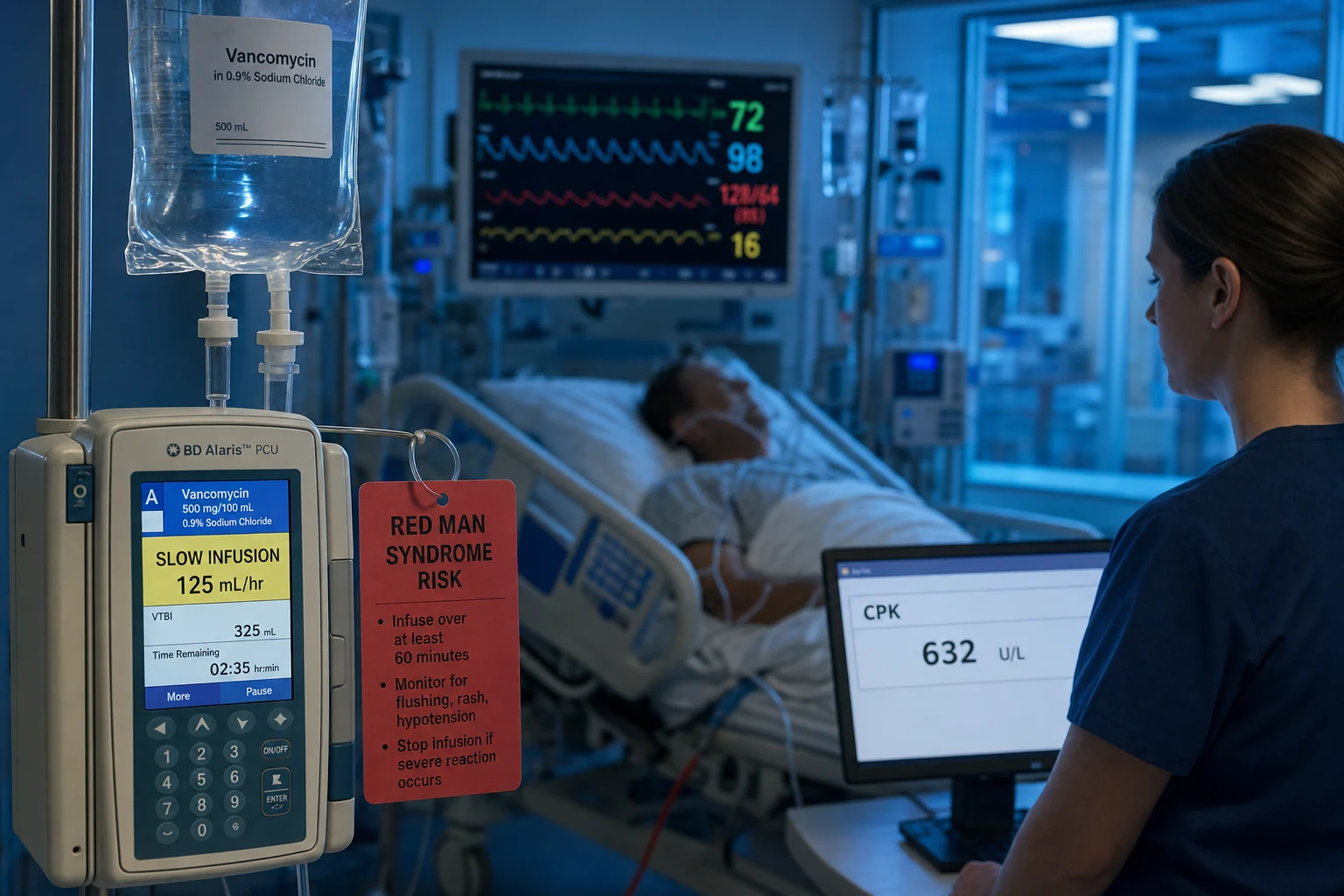
The glycopeptides (vancomycin, teicoplanin)
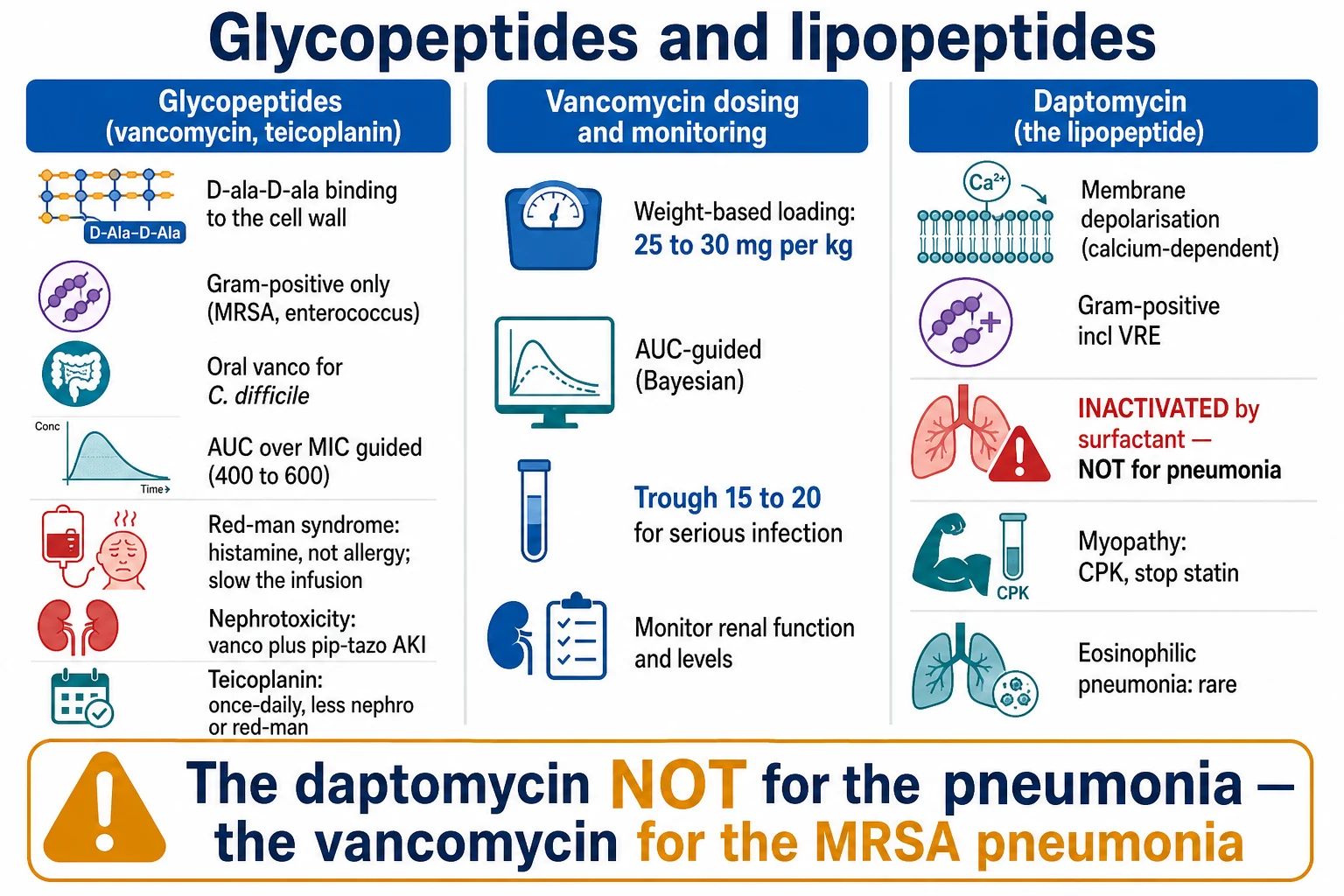
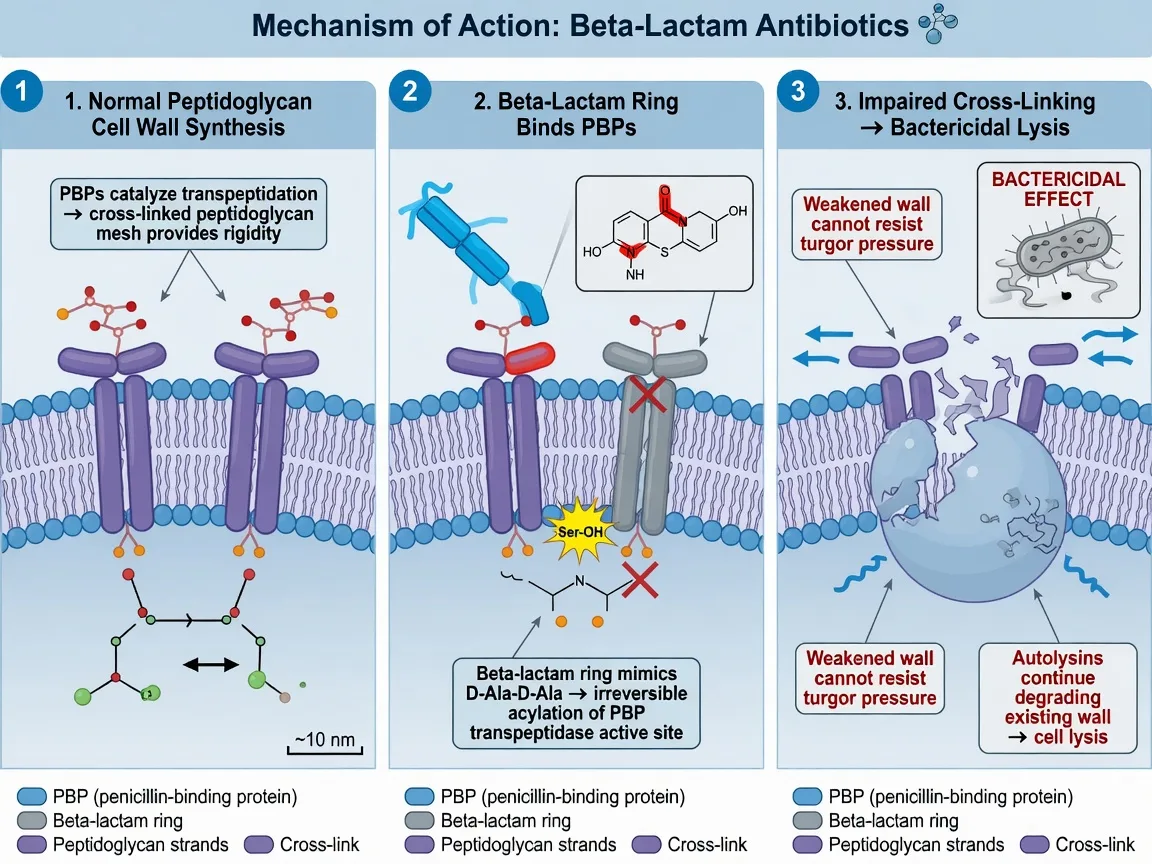
- The mechanism — the bind the D-alanyl-D-alanine terminus of the cell-wall precursor → the inhibit the peptidoglycan cross-linking → the cell-wall lysis. The Gram-positive only (the too large to cross the Gram-negative porins).[1]
- The vancomycin:[1]
- The indications — the MRSA, the empirical serious Gram-positive (the line sepsis, the cellulitis, the endocarditis, the meningitis), the C. difficile (the ORAL route — the not absorbed, the colonic lumen). The prophylaxis for the penicillin-allergic.[1]
- The dosing — the weight-based loading 25 to 30 mg per kg, then the 15 to 20 mg per kg; the AUC-over-MIC-guided (the target 400 to 600 for the MRSA) by the modern Bayesian software. The trough historically 15 to 20 for the serious.[1]
- The adverse — the red-man syndrome (the histamine release from the RAPID infusion — NOT the IgE allergy; the slow the infusion, the antihistamine, the NOT the contra-indication), the nephrotoxicity (the especially with the piperacillin-tazobactam — the 'VANCO-ZOSYN' AKI synergy), the ototoxicity, the thrombocytopenia, the neutropenia.[1]
- The teicoplanin — the similar to the vancomycin; the once-daily; the less the red-man and the less the nephrotoxicity. The for the MRSA, the line sepsis, the prophylaxis.[1]
The lipopeptides (daptomycin)
- The mechanism — the lipopeptide inserts into the bacterial cell membrane → the calcium-dependent depolarisation → the cell death. The bactericidal. The Gram-positive including the VRE (the vancomycin-resistant enterococcus — the some strains).[1]
- The NOT for the pneumonia — the daptomycin is INACTIVATED by the pulmonary surfactant → the ineffective in the lungs. The MRSA pneumonia uses the vancomycin or the linezolid. The do NOT use the daptomycin for the pneumonia (the common exam point).[1]
- The indications — the MRSA bacteraemia, the complicated skin and the soft-tissue, the VRE, the vancomycin-intolerant.[1]
- The dosing — the weight-based, the once-daily. The CPK monitoring.[1]
- The adverse — the myopathy (the rising CPK; the stop the statin — the synergistic myopathy; the rhabdomyolysis in the severe), the eosinophilic pneumonia (the rare, the cough, the eosinophilia, the stopping the drug).[1]
Red flags
Pharmacology — mechanism at the molecular level
The glycopeptides (vancomycin, teicoplanin) and the lipoglycopeptides (telavancin, oritavancin, dalbavancin) share a common ancestor: a heptapeptide core that binds the D-alanyl-D-alanine (D-Ala-D-Ala) terminus of the peptidoglycan precursor (the pentapeptide of NAM-NAG). By locking onto this terminus they sterically block the transglycosylase and transpeptidase cross-linking steps → the cell wall cannot be assembled → osmotic lysis. They are time-dependent killers, but — critically for the exam — their killing is concentration-INDEPENDENT; the driver of efficacy is the time above MIC / total exposure (AUC), not a high peak.[1]
| Agent | Class | D-Ala-D-Ala binding | Extra action | Cell-entry barrier |
|---|---|---|---|---|
| Vancomycin | Glycopeptide | Yes (tight) | None | Too large for Gram-negative porin |
| Teicoplanin | Glycopeptide (lipophilic tail) | Yes | Lipid anchoring of membrane | Gram-positive only |
| Daptomycin | Lipopeptide | No | Membrane depolarisation (Ca-dependent) | Gram-positive only |
| Telavancin | Lipoglycopeptide | Yes | Membrane disruption + lipopolysaccharide | Gram-positive only |
| Oritavancin | Lipoglycopeptide | Yes (D-Ala-D-Lac too) | Membrane + transglycosylase | Gram-positive only |
| Dalbavancin | Lipoglycopeptide | Yes | — | Gram-positive only |
- Bactericidal vs bacteriOSTATIC — the enterococcus trap. Vancomycin is bactericidal against staphylococci but only bacteriOSTATIC against enterococci (it arrests growth without killing). This is why enterococcal endocarditis needs a cell-wall-active agent (vancomycin/ampicillin) PLUS an aminoglycoside (gentamicin/streptomycin) for synergistic killing — a single agent cannot sterilise the vegetation. Daptomycin, by contrast, is bactericidal against both (membrane disruption is lethal), which is why it has displaced vancomycin for many enterococcal infections.[4]
- Why no Gram-negative cover? The glycopeptide molecule (~1.5 kDa) is too bulky to traverse the Gram-negative outer-membrane porins. Daptomycin also fails: Gram-negatives exclude it AND its target is the Gram-positive membrane composition. None of these agents treats Gram-negative or atypical infection.
- The vanA resistance mechanism (how VRE arises). The vanA gene cluster replaces the terminal D-Ala with D-lactate (D-Ala-D-Lac), removing the critical hydrogen bond that vancomycin needs to grip the terminus → affinity drops ~1000-fold → resistance. Oritavancin (and to a degree teicoplanin in some strains) retains activity because its hydrophobic side chain anchors the membrane and the dimerisation of drug molecules restores binding — the basis of oritavancin's activity against some VanA enterococci.[1]
Vancomycin — pharmacokinetics and the loading dose
- Distribution — Vd ~0.5–0.9 L/kg (increases in sepsis/capillary leak, so levels run LOW in early septic shock — the classic cause of under-dosing). Protein binding ~30–55%. Penetrates bone, joint, lung, and peritoneum adequately; poor CSF penetration (~1–5% of serum) unless meninges are inflamed — for MRSA meningitis use IV vancomycin + rifampicin or linezolid (excellent CSF).[1]
- Elimination — >80–90% renal, unchanged, by glomerular filtration. Half-life ~6 h with normal renal function, but markedly prolonged in AKI/dialysis (up to 7–9 days). A single missed dose rarely matters; the danger is accumulation → nephrotoxicity in renal failure if the interval is not extended.
- The weight-based loading dose. Give 25–30 mg/kg lean/actual body weight IV (over 60–90 min) as the FIRST dose for serious suspected MRSA infection (sepsis, pneumonia, bacteraemia). Septic-shock patients have an expanded Vd and a high clearance — without a loading dose they spend the first 24–48 h subtherapeutic. Do NOT wait for a level before the second dose; give the loading dose, then start the maintenance schedule and check the first level around the 4th dose (steady state, ~24–48 h).[1]
- Continuous infusion. An alternative to intermittent dosing: load 25–30 mg/kg, then run 25–35 mg/kg/24 h to a trough-equivalent of 15–20 mg/L (or AUC target). VANKAT and VLATE trials showed non-inferior efficacy and a possible small reduction in nephrotoxicity; the practical barrier is dedicated lumen and pump. Useful in ICU where titration is frequent and AKI risk is high.
Vancomycin therapeutic drug monitoring — the AUC/MIC era
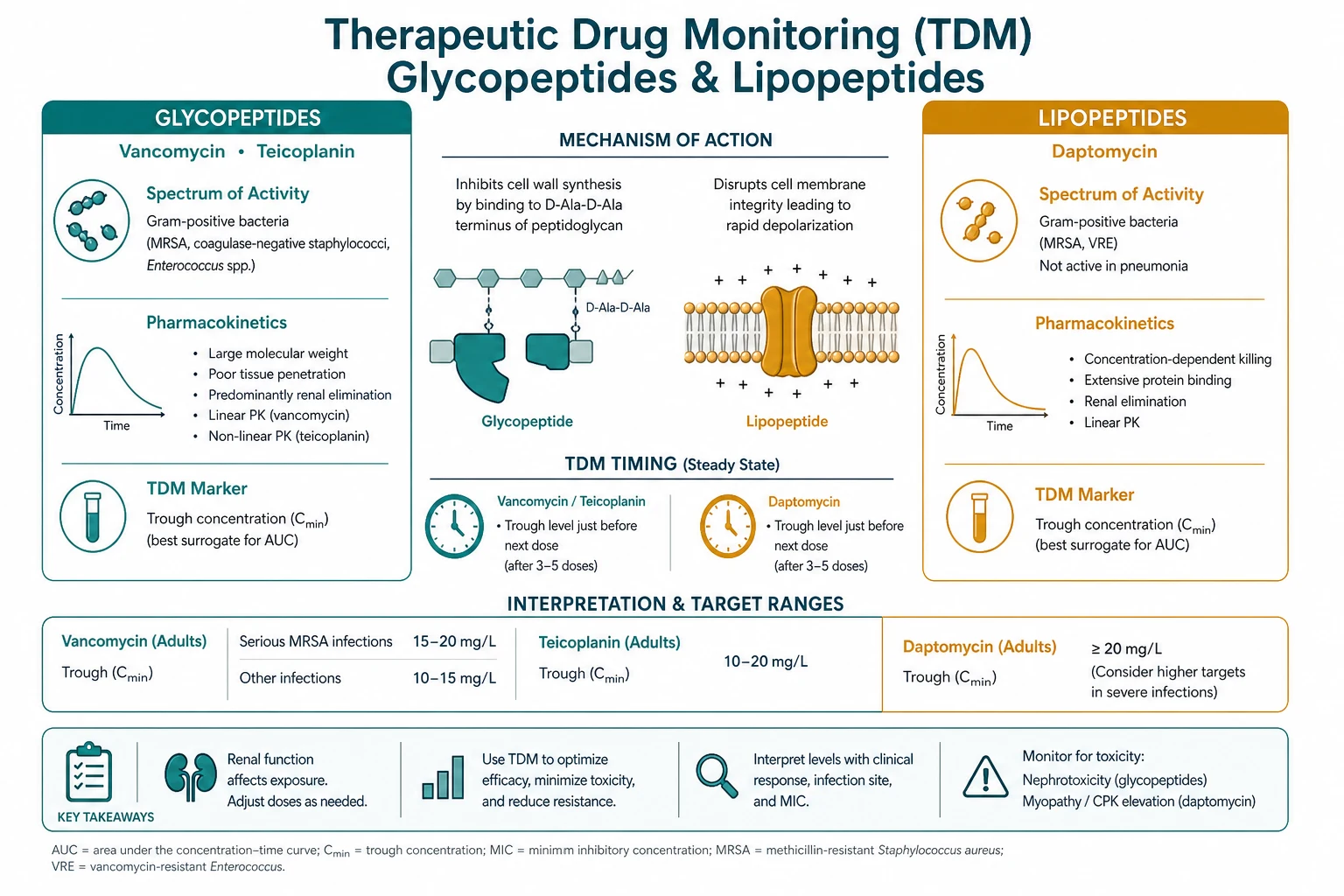
The 2020 vancomycin consensus guideline (ASHP/IDSA/SIDP/PIDS) formally retired trough-only monitoring for serious MRSA infection and adopted the AUC/MIC ratio of 400–600 (assuming a broth-microdilution MIC of 1 mg/L) as the target that best balances efficacy against nephrotoxicity.[1]
Trough monitoring vs AUC/MIC monitoring — why the guideline shifted
| Parameter | Trough-only (legacy) | AUC/MIC (2020 guideline) |
|---|---|---|
| Target | Trough 15–20 mg/L for serious infection | AUC24/MIC 400–600 |
| Basis | Crude surrogate for AUC | True PK/PD exposure index |
| Accuracy | Overestimates AUC (a trough of 20 can mean AUC >600 → nephrotoxic) | Directly measures 24-h exposure |
| Nephrotoxicity | Higher (troughs >20 mg/L independently predict AKI) | Lower when AUC kept <600 |
| How obtained | One pre-dose sample | Bayesian software (1–2 levels fed into a population model) or two-level trapezoidal AUC |
| When to use | Acceptable fallback if no Bayesian tooling | Preferred for all serious MRSA infection |
| Practical surrogate | — | A trough of 15–17 mg/L approximates AUC ~400–600 at MIC 1 |
- Bayesian (model-informed precision dosing). Modern ICU practice feeds one or two measured levels into Bayesian software (e.g., InsightRX, DoseMeRx, Precipio) that combines a population PK model with the patient's covariates (weight, renal function, age, dialysis) to estimate the individual AUC and recommend the next dose. This needs fewer levels than two-point trapezoidal AUC, tolerates non-steady-state samples, and is the guideline-endorsed method where available.[1][2]
- The trough is not dead. When no Bayesian tool exists, a trough 15–20 mg/L remains a pragmatic surrogate for serious infection (bacteraemia, endocarditis, meningitis, pneumonia). For non-severe SSTI, a trough 10–15 mg/L suffices. The danger of trough-only is at the top of the range: a trough of 20 mg/L can mask an AUC >600 that is silently injuring the kidney.
- The ICU position paper. The ESICM/ESCMID/IATDMCT/ISAC antimicrobial TDM position paper recommends routine TDM for vancomycin and teicoplanin (and beta-lactams, aminoglycosides, linezolid) in critically ill patients — because augmented renal clearance, capillary leak, ECMO, CRRT, and burns all derange the predicted dose-response in ways that fixed dosing cannot track.[2]
- Renal/dialysis dosing. In AKI or intermittent haemodialysis, vancomycin is given by level-guided interval extension (e.g., 1 g every 48–96 h) rather than dose reduction — because the half-life stretches to days. On CRRT, the dose depends on the effluent rate (~15–25 mg/kg q24–48h, level-guided). On ECMO there is no significant sequestration of vancomycin (unlike lipophilic drugs).[2]
Vancomycin TDM algorithm in ICU (AUC-guided)
- Give a weight-based LOADING dose 25–30 mg/kg actual body weight IV over 60–90 min for any serious suspected MRSA infection. Do not withhold the loading dose for a 'normal renal function' patient — the loading dose is about Vd, not clearance.[1]
- Choose a maintenance regimen. Typical: 15–20 mg/kg q8–12h, guided by age/weight/renal function. Aim for a 24-h AUC/MIC of 400–600 (MIC assumed 1 mg/L unless the lab reports otherwise).
- Draw the first level around the 4th dose (steady state, ~24–48 h). For AUC: a peak 2 h post-infusion + a trough pre-next-dose, fed into Bayesian software. For trough-only: a single pre-dose trough, target 15–20 mg/L.
- Adjust to target. If AUC <400 → increase dose or shorten interval (under-exposure = treatment failure, MRSA bacteraemia mortality rises). If AUC >600 → decrease dose or lengthen interval (over-exposure = nephrotoxicity).
- Re-check at least weekly and after any change in renal function, weight, vasopressor status, CRRT, or fluid balance. Augmented renal clearance (young, septic, burns, trauma) is the silent cause of unexpectedly low levels.
- If the MIC is >1.5 mg/L (MIC creep) the achievable AUC/MIC 400 may be unreachable safely → switch from vancomycin to daptomycin (bacteraemia/endocarditis) or linezolid (pneumonia). Do not chase a vancomycin trough that the organism's MIC makes futile.[5]
Red man syndrome — histamine release, NOT allergy
- Mechanism. Vancomycin (and, to a much lesser degree, teicoplanin and ciprofloxacin) directly stimulates mast-cell degranulation → histamine release. This is a direct effect of the drug molecule on the mast cell — NOT IgE-mediated, NOT complement-mediated, and NOT dose-cumulative. It is RATE-related: the faster the infusion, the more histamine.[1]
- Clinical picture. Erythema and pruritus of the face, neck, upper trunk (the 'red man') ± hypotension, sometimes during or shortly after a rapid infusion. Onset within minutes of starting the infusion; resolves within 30–60 min of slowing/stopping.
- Management — slow the infusion, do NOT stop the drug. (1) Reduce the rate; infuse over ≥60 min (longer — 90–120 min — for doses >1 g). (2) Premedicate with H1 ± H2 antihistamine (e.g., diphenhydramine 25–50 mg IV) for the next doses. (3) Re-start at a slower rate. Future vancomycin is safe — this is not a contraindication.
- Distinguish from true IgE-mediated anaphylaxis (rare): urticaria, bronchospasm/wheeze, angio-oedema, hypotension that is severe/persistent, eosinophilia; occurs at any infusion rate; may need adrenaline. True IgE allergy is a contraindication — desensitisation or an alternative agent (teicoplanin, daptomycin, linezolid) is required.
Red man syndrome vs true IgE-mediated vancomycin anaphylaxis
| Feature | Red man syndrome | IgE-mediated anaphylaxis |
|---|---|---|
| Mechanism | Direct mast-cell histamine release | IgE-mediated mast-cell/basophil degranulation |
| Trigger | RAPID infusion rate (rate-related) | The drug itself (any rate) |
| Features | Flushing, pruritus of face/neck/trunk; mild hypotension | Urticaria, bronchospasm, angio-oedema, severe/persistent hypotension |
| Timing | During/immediately after rapid infusion | Variable; can be delayed |
| Test | None specific (clinical) | Trypase raised; skin testing positive |
| Management | Slow the infusion, H1 ± H2 antihistamine; continue drug | Stop drug; adrenaline; avoid future vancomycin; desensitise/switch |
| Future vancomycin | Safe (slow infusion) | Contraindicated |
Vancomycin nephrotoxicity and the VANCO-ZOSYN interaction
Vancomycin nephrotoxicity is proximal-tubular (oxidative stress, mitochondrial injury) with a contribution of acute interstitial nephritis. Risk rises with prolonged therapy (>7 days), high trough/AUC, concurrent nephrotoxins (aminoglycosides, amphotericin, contrast, loop diuretics), ICU admission, vasopressors, and pre-existing renal impairment.[3]
The VANCO-ZOSYN interaction — vancomycin + piperacillin-tazobactam (VANCO+PTZ) — is the single most examined drug-drug AKI in ICU. The 2017 systematic review and meta-analysis (14 observational studies, 3549 patients) found VANCO+PTZ associated with a roughly 3-fold higher odds of AKI vs vancomycin without PTZ (adjusted OR 3.11, 95% CI 1.77–5.47).[3]
The crucial ICU nuance (exam-exhaustive): the signal was strong when the study population was predominantly non-ICU (aOR 3.04, 95% CI 1.49–6.22) but lost statistical significance when ≥50% of patients were ICU-based (aOR 2.83, 95% CI 0.74–10.85, wide CI). Several ICU-specific cohorts (Hammond 2016; Buckley 2018) found no significant difference between VANCO+PTZ and VANCO+cefepime after propensity adjustment — ICU patients have so many competing AKI drivers (sepsis, shock, contrast, other nephrotoxins) that the β-lactam choice may be a smaller contributor than in ward patients. The pragmatic position: the combination is acceptable for empiric septic-shock cover, but prefer vancomycin + cefepime where the Gram-negative cover allows, monitor creatinine daily, and de-escalate at 48–72 h.[3]
Vancomycin + piperacillin-tazobactam vs vancomycin + cefepime — the ICU AKI choice
| Parameter | VANCO + piperacillin-tazobactam | VANCO + cefepime |
|---|---|---|
| Gram-positive (MRSA) | Vancomycin | Vancomycin |
| Anti-pseudomonal | Piperacillin (covers ESBL-fragile, anaerobes) | Cefepime (4th-gen cephalosporin) |
| Anaerobic cover | Yes (good — tazobactam + pip) | Limited (add metronidazole for intra-abdominal) |
| AKI signal | ↑ (meta-analysis aOR ~3; ICU-specific signal weaker) | Lower |
| When to choose | Mixed aerobic/anaerobic (intra-abdominal, necrotising fasciitis), neutropenic sepsis, where broad anaerobic cover needed | Empiric sepsis in ICU where nephrotoxicity is the priority; add metronidazole if anaerobes suspected |
Hammond 2017 (Clin Infect Dis) — Systematic review and meta-analysis of AKI with concomitant vancomycin and piperacillin-tazobactam
Design
Systematic review and meta-analysis of 14 observational studies, 3549 patients (PROSPERO CRD42016041646)
Comparison
Vancomycin + piperacillin-tazobactam vs vancomycin without piperacillin-tazobactam (various comparators incl. cefepime)
Primary result
Concomitant VANCO+PTZ associated with AKI: unadjusted OR 3.12 (95% CI 2.04–4.78); adjusted OR 3.11 (95% CI 1.77–5.47)
ICU subgroup caveat
Significant when <50% of patients were ICU-based (aOR 3.04, 95% CI 1.49–6.22) but NOT significant when ≥50% ICU-based (aOR 2.83, 95% CI 0.74–10.85)
Clinical bottom line
VANCO+PTZ roughly triples AKI odds overall; the ICU-specific signal is weaker (competing AKI drivers). Pragmatic ICU position: prefer vancomycin + cefepime where cover allows, monitor creatinine daily, de-escalate early.
Oral vancomycin for Clostridioides difficile
- Oral vancomycin is NOT absorbed (<5%) — it stays in the colonic lumen where C. difficile toxigenesis occurs. This is why the IV route does NOT treat C. difficile (IV vancomycin does not reach the gut lumen) and oral vancomycin does NOT treat MRSA bacteraemia.[1]
- Dosing — 125 mg PO QID for 10 days (initial non-severe/severe episode); 500 mg PO QID + vancomycin retention enema for fulminant colitis (with IV metronidazole). A pulse-taper regimen (e.g., 125 mg QID × 10d, then tapered/qod over weeks) is used for recurrent disease.
- Fidaxomicin is now guideline-preferred over vancomycin for an initial non-severe/severe episode because of lower recurrence (it spares the gut microbiome); vancomycin remains first-line for fulminant CDI where fidaxomicin's slower response is a disadvantage.
Teicoplanin — the once-daily glycopeptide
Teicoplanin shares vancomycin's D-Ala-D-Ala mechanism and Gram-positive spectrum (MRSA, MRSE, ampicillin-resistant enterococcus, penicillin-allergic prophylaxis) but differs pharmacokinetically: a large lipophilic side chain prolongs its half-life to ~70–100 h, enabling once-daily dosing after a loading regimen.[1][2]
- Dosing. Load 6 mg/kg q12h for the first 24 h (3 doses), then 6–12 mg/kg once daily. For endocarditis, bacteraemia, bone/joint, and ICU sepsis use the higher 12 mg/kg once-daily maintenance (teicoplanin under-dosing is the common reason for failure). No renal dose adjustment for the first 4 days, then interval-extension guided by levels.
- TDM — less needed, but required for serious infection. For most indications (prophylaxis, SSTI, line sepsis) routine TDM is NOT required — a key practical and exam advantage over vancomycin. For endocarditis, bacteraemia, osteomyelitis, ICU sepsis, renal failure, target a trough 15–30 mg/L (some advocate >20 mg/L for deep-seated infection) because tissue penetration is the failure mode.[2]
- Adverse-effect advantage. Teicoplanin causes far less red-man syndrome (rare) and is less nephrotoxic than vancomycin — it is the preferred glycopeptide where vancomycin was not tolerated, or where once-daily dosing/low-TDM is advantageous. It is widely used in the UK, Europe, Australia and Asia but is not approved in the USA.
- Skin test cross-reactivity note. Teicoplanin is sometimes given to patients with a vancomycin red-man history (and vice-versa is safe). True IgE cross-reactivity between the two is uncommon.
Vancomycin vs teicoplanin — the two glycopeptides
| Feature | Vancomycin | Teicoplanin |
|---|---|---|
| Mechanism | Binds D-Ala-D-Ala (cell wall) | Binds D-Ala-D-Ala (cell wall) |
| Half-life | ~6 h (renal) | ~70–100 h |
| Dosing | q8–12h (intermittent) or continuous; loading 25–30 mg/kg | q12h × 3 doses, then once daily 6–12 mg/kg |
| TDM | Required (AUC/MIC 400–600; or trough 15–20) | Not required for most; trough 15–30 for deep-seated/ICU |
| Red-man syndrome | Common with rapid infusion | Rare |
| Nephrotoxicity | Higher (esp. with PTZ) | Lower |
| IV to oral switch for C. difficile | Yes (oral, non-absorbed) | Possible but vancomycin standard |
| Availability | Worldwide | UK/EU/Aus/Asia; not USA |
Daptomycin — the lipopeptide
Mechanism
- Calcium-dependent oligomerisation. In the presence of physiological calcium, daptomycin oligomerises and inserts its lipid tail into the Gram-positive cytoplasmic membrane, forming an ion-conducting oligomer → rapid potassium efflux → membrane depolarisation → arrest of DNA/RNA/protein synthesis → cell death. This is bactericidal (membrane disruption is lethal) — against BOTH staphylococci AND enterococci, an advantage over the bacteriOSTATIC glycopeptide activity against enterococci.[4]
- Spectrum. Gram-positive aerobes and anaerobes: MRSA, MRSE, penicillin-susceptible and resistant streptococci, Enterococcus faecium and faecalis (including many VanA/VanB VRE), Corynebacterium jeikeium. No Gram-negative, no atypical cover.
- Why NOT for pneumonia — surfactant inactivation. Pulmonary surfactant contains phospholipids that bind and inactivate daptomycin in the alveolus, abolishing its activity in lung tissue. Daptomycin must NEVER be used for MRSA pneumonia (empiric or definitive). For MRSA pneumonia use vancomycin or linezolid. This is one of the most frequently tested ICU pharmacology facts.[4][5]
Indications and syndrome-specific dosing
| Syndrome | Dose (IV once daily) | Notes |
|---|---|---|
| Complicated skin/soft-tissue (cSSTI) | 4 mg/kg | 7–14 days; non-inferior to vancomycin/semi-synthetic penicillin |
| S. aureus bacteraemia | 6 mg/kg | Non-inferior to vancomycin ± low-dose gentamicin (Fowler 2006); avoid right-sided endocarditis septic-embolisation caveat |
| Endocarditis (incl. MRSE) | 6 mg/kg | Right-sided S. aureus endocarditis: daptomycin reasonable; left-sided requires synergy/ortho input |
| VRE (E. faecium) | 8–12 mg/kg | Enterococcus needs HIGHER doses than Staph; some use 10–12 mg/kg for bacteraemia |
| Bone/joint (osteomyelitis) | 6 mg/kg | Prolonged (6 wk) |
- Obesity. Dose on total body weight for <120 kg; for >120 kg some use a capped dose. Daptomycin Vd is ~0.1 L/kg (small, confined to plasma/extravascular) so weight-based dosing is reliable.
- Renal dosing. CrCl <30 → extend interval to once every 48 h (dose unchanged). On intermittent haemodialysis, dose after dialysis q48h. [1]
Adverse effects
- Myopathy / rhabdomyolysis — the CPK problem. Daptomycin causes a dose/duration-related skeletal-muscle injury (CPK rise → myalgia/weakness →, in severe cases, rhabdomyolysis with myoglobinuric AKI). Check CPK weekly (twice weekly if symptoms or renal impairment, or with prolonged therapy), hold concurrent statins (additive myopathy), and stop daptomycin if CPK >1000 U/L with symptoms or >5× ULN. Use the lower-dose 4 mg/kg regimen if possible; the 6 mg/kg+ regimens carry higher risk.[4]
- Eosinophilic pneumonia — rare but distinctive. A subacute eosinophilic pneumonitis occurring after >2 weeks of therapy (cough, dyspnoea, fever, eosinophilia, new infiltrates) — resolves on stopping; distinguish from infectious pneumonia. This is NOT the surfactant-inactivation failure (that is immediate pharmacology); eosinophilic pneumonia is an immune hypersensitivity.
- Other. Transient CPK rise (asymptomatic) is common and not a reason to stop unless it climbs. Falsely prolonged PT/INR (interference with recombinant thromboplastin reagents) — a lab artifact.
Daptomycin CPK monitoring in ICU
- Baseline CPK before starting daptomycin (especially in renal impairment, elderly, or those on statins).[4]
- Hold the statin for the duration of daptomycin therapy (synergistic myopathy); restart on completion.
- Check CPK weekly (twice weekly if symptoms of myalgia/weakness, if CrCl <30, or therapy >14 days).
- If CPK rises >5× ULN or >1000 U/L WITH symptoms (or >10× ULN without symptoms) → STOP daptomycin, switch to linezolid/teicoplanin, hydrate, check renal function for pigment nephropathy.
- Educate the patient to report muscle pain/weakness/dark urine immediately.
Fowler 2006 (NEJM) — Daptomycin vs standard therapy for S. aureus bacteraemia and endocarditis
Design
Randomised, open-label trial; 246 patients with S. aureus bacteraemia ± endocarditis
Intervention
Daptomycin 6 mg/kg IV q24h vs standard therapy (initial anti-staphylococcal penicillin or vancomycin ± low-dose gentamicin for the first 4 days)
Primary outcome
Treatment success at 42 days: daptomycin 44.2% vs standard 42.2% (met non-inferiority margin). Outcomes comparable for MRSA and MSSA bacteraemia; daptomycin had less nephrotoxicity than the vancomycin/gentamicin arm
Key caveat
Daptomycin failed in patients with known or emerging left-sided endocarditis and was associated with treatment failure when persistent bacteraemia >5 days occurred; non-inferior but NOT superior. Established daptomycin as the alternative to vancomycin for MRSA bacteraemia/endocarditis (especially with MIC creep or vancomycin intolerance)
MRSA bacteraemia and endocarditis — choosing the agent
MRSA bacteraemia pathway — from empiric to definitive
- Draw blood cultures before antibiotics, then start empiric MRSA cover with vancomycin 25–30 mg/kg loading then AUC-guided within 1 h of recognition. Add a beta-lactam for Gram-negative cover as the syndrome dictates.[5]
- Confirm the organism and MIC. If MRSA with vancomycin MIC ≤1 mg/L → continue vancomycin (the standard of care). If MIC >1.5–2 mg/L (MIC creep) → switch to daptomycin (bacteraemia/endocarditis) — chasing an AUC/MIC of 400 against an MIC of 2 is futile and nephrotoxic.[5]
- Look for and remove the source. Remove infected lines (catheter-related bacteraemia), drain abscesses, debride hardware infection. Source control is as important as the antibiotic.
- Perform echocardiography — transthoracic first; transoesophageal if TTE negative and suspicion high (endocarditis, prosthetic valve, persistent bacteraemia >3 days). Persistent bacteraemia >3 days on appropriate therapy → reassess source, endocarditis, metastatic foci.
- Duration. Uncomplicated catheter-related bacteraemia (fever/ bacteraemia resolves <3 days, no endocarditis, no metastatic focus, removable source): ≥14 days from first negative culture. Complicated / endocarditis / prosthetic material / osteomyelitis: ≥6 weeks.
- When to switch off vancomycin. Vancomycin failure (persistent bacteraemia), MIC creep, vancomycin intolerance (anaphylaxis), or deep-seated infection with poor vancomycin penetration → daptomycin (bacteraemia/endocarditis) or linezolid (pneumonia). NEVER daptomycin for pneumonia.[5]
- The IDSA MRSA guideline (Liu 2011, CID) remains the framework for these decisions, supplemented by the 2020 vancomycin TDM guidance for dosing. Adjuncts (unproven/controversial): high-dose intravenous immunoglobulin and rifampicin for prosthetic-device infection.[5]
VRE — vancomycin-resistant enterococcus
- Almost always E. faecium with vanA or vanB. First, distinguish colonisation from infection — most VRE isolated in ICU (urine, wound, screening swab) is colonisation and does NOT require treatment. Treat only true infection (bacteraemia, endocarditis, deep-seated).[1]
- Bacteraemia/endocarditis — the two main options:
- Daptomycin 8–10 mg/kg IV q24h (Enterococcus needs a HIGHER dose than Staph; some use 10–12 mg/kg) — bactericidal. The first-line for many units.
- Linezolid 600 mg IV/PO q12h — if susceptible; excellent oral bioavailability; bacteriOSTATIC. Watch thrombocytopenia (>14 days), serotonin syndrome (SSRIs/MAOIs), lactic acidosis, peripheral/optic neuropathy.
- Ampicillin high-dose (2 g IV q4h) if the isolate is susceptible (many E. faecium are resistant via PBP5); add an aminoglycoside (gentamicin/streptomycin, if high-level synergy screen permits) for endocarditis synergy.[1]
- Duration. Bacteraemia 7–14 days; endocarditis ≥6 weeks. Source control (remove infected lines) is central.
The lipoglycopeptides — telavancin, oritavancin, dalbavancin
All three are semi-synthetic vancomycin derivatives with an added lipophilic side chain that anchors the drug to the bacterial membrane, improving potency and — dramatically — prolonging the half-life, enabling single-dose or once-weekly outpatient therapy for acute bacterial skin and skin-structure infections (ABSSSI). They retain vancomycin's D-Ala-D-Ala mechanism and add a degree of membrane disruption; some (oritavancin) retain activity against VanA enterococci.[6][7][8]
The three lipoglycopeptides — at a glance
| Feature | Telavancin | Oritavancin | Dalbavancin |
|---|---|---|---|
| Spectrum highlight | MRSA; some VRE; HAP/VAP licensed | MRSA; some VanA VRE | MRSA; streptococci; some VRE |
| Half-life | ~8 h | ~245 h (~10 days) | ~346 h (~14 days) |
| Dosing | 10 mg/kg IV q24h | Single 1200 mg IV dose | 1500 mg single dose OR 1000 mg + 500 mg one week later |
| Licensed use | ABSSSI; HAP/VAP (incl. MRSA VAP) | Single-dose ABSSSI | Once-weekly ABSSSI |
| Key adverse | Taste disturbance; QT prolongation; teratogen (pregnancy category); renal adjustment | Infusion reaction; OCP-interaction (free drug >5d); nausea | Nausea, headache; diarrhoea |
| Renal adjustment | Yes (CrCl <30) | No | No |
| ICU relevance | HAP/VAP alternative to vancomycin; renal/QT caveats | Outpatient step-down after ICU stability | Outpatient step-down after ICU stability |
- Telavancin is the only lipoglycopeptide licensed for hospital-acquired/ventilator-associated pneumonia, on the basis of the ATTAIN trials (non-inferior to vancomycin for Gram-positive HAP/VAP). Practical caveats limit ICU use: QT prolongation (caution with other QT drugs — azoles, macrolides, antiarrhythmics), teratogenicity (avoid in pregnancy), and renal dose adjustment (CrCl <30).[8]
- Oritavancin is the single-dose therapy for ABSSSI (the SOLO trials) — one 1200 mg IV infusion and the course is complete. This transforms outpatient cellulitis management but the ICU relevance is as a step-down option once the patient is stable enough for discharge. It retains some activity against VanA enterococci (membrane anchoring) and inhibits transglycosylase directly.[6]
- Dalbavancin is the once-weekly option (DISCOVER trials) — 1500 mg single dose, or 1000 mg followed by 500 mg at day 8. Like oritavancin, it is an ABSSSI agent whose ICU role is streamlining/discharge therapy rather than acute resuscitation.[7]
Corey 2014 — SOLO I/II (NEJM) — single-dose oritavancin for acute bacterial skin infection
Design
Two double-blind, randomised non-inferiority trials (SOLO I and II); ~1987 patients with acute bacterial skin and skin-structure infection
Intervention
Single 1200 mg IV dose of oritavancin vs 7–10 days of IV vancomycin (with ceftriaxone/aztreonam switch allowed)
Primary outcome
Early clinical response (cessation of spread + fever resolution at 48–72 h): oritavancin non-inferior to vancomycin in both trials
Clinical bottom line
A SINGLE dose of oritavancin is non-inferior to 7–10 days of vancomycin for ABSSSI. Enables a complete course in one infusion — transforms outpatient cellulitis management and streamlines ICU-to-discharge care.
Boucher 2014 — DISCOVER 1/2 (NEJM) — once-weekly dalbavancin for skin infection
Design
Two double-blind, double-dummy, randomised non-inferiority trials (DISCOVER 1 and 2); ~1312 patients with ABSSSI
Intervention
Two-dose dalbavancin (1000 mg IV then 500 mg at day 8) vs daily vancomycin (switch to linezolid allowed)
Primary outcome
Early clinical response at 48–72 h: dalbavancin non-inferior to vancomycin–linezolid in both trials
Clinical bottom line
A two-dose (one-weekly) regimen of dalbavancin is non-inferior to daily standard therapy for ABSSSI. ~14-day half-life allows once-weekly dosing — an outpatient step-down / early-discharge enabler.
SaqBlocks — fellowship exam practice
SAQ — Vancomycin AUC monitoring in MRSA bacteraemia with MIC creep and VANCO-ZOSYN nephrotoxicity
10 minutes · 10 marks
A 68-year-old man (weight 85 kg) is admitted to ICU with septic shock from a catheter-related MRSA bacteraemia. He was loaded with vancomycin 25 mg/kg and is on maintenance 1.5 g IV q12h plus piperacillin-tazobactam 4.5 g q6h for empiric Gram-negative cover. The MRSA vancomycin MIC is reported as 1.5 mg/L. Creatinine has risen from 95 to 168 micromol/L over 48 hours. You are asked to advise on therapeutic drug monitoring and antibiotic strategy.
SAQ — Daptomycin for vancomycin-resistant Enterococcus faecium: mechanism and rhabdomyolysis
10 minutes · 10 marks
A 72-year-old woman (weight 60 kg), day 21 post liver transplant, is admitted with septic shock. Blood cultures grow vancomycin-resistant Enterococcus faecium (vanA positive; vancomycin MIC greater than 256, daptomycin MIC 2 mg/L). She is started on daptomycin 8 mg/kg IV once daily. Her home medications include atorvastatin 40 mg daily. Baseline CPK is 180 U/L, creatinine 110 micromol/L. On day 7 she reports proximal muscle aching and dark urine; CPK is 4200 U/L.
Clinical pearls — high-yield CICM/FFICM/EDIC points
Additional red flags
[1]References
- [1]Rybak MJ, Le J, Lodise TP, Levine DP, Bradley JS, Liu C, Mueller BA, Pai MP, Wong-Beringer A, Rotschafer JC, Rodvold KA, Maples HD, Lomaestro BM Executive Summary: Therapeutic Monitoring of Vancomycin for Serious Methicillin-Resistant Staphylococcus aureus Infections: A Revised Consensus Guideline and Review of the American Society of Health-System Pharmacists, the Infectious Diseases Society of America, the Pediatric Infectious Diseases Society, and the Society of Infectious Diseases Pharmacists Pharmacotherapy, 2020.PMID 32227354
- [2]Abdul-Aziz MH, Alffenaar JC, Bassetti M, Bracht H, Dimopoulos G, Marriott D, Neely MN, Paiva JA, Pea F, Sjovall F, Timsit JF, Udy AA, Wicha SG, Zeitlinger M, De Waele JJ, Roberts JA Antimicrobial therapeutic drug monitoring in critically ill adult patients: a Position Paper() Intensive Care Med, 2020.PMID 32383061
- [3]Hammond DA, Smith MN, Li C, Hayes SM, Lusardi K, Bookstaver PB Systematic Review and Meta-Analysis of Acute Kidney Injury Associated with Concomitant Vancomycin and Piperacillin/tazobactam Clin Infect Dis, 2017.PMID 27940946
- [4]Fowler VG Jr, Boucher HW, Corey GR, Abrutyn E, Karchmer AW, Rupp ME, Levine DP, Chambers HF, Tally FP, Vigliani GA, Cabell CH, Link AS, DeMeyer I, Filler SG, Zervos M, Cook P, Parsonnet J, Bernstein JM, Price CS, Forrest GN, Fatkenheuer G, Gareca M, Rehm SJ, Brodt HR, Tice A, Cosgrove SE, S. aureus Endocarditis and Bacteremia Study Group Daptomycin versus standard therapy for bacteremia and endocarditis caused by Staphylococcus aureus N Engl J Med, 2006.PMID 16914701
- [5]Liu C, Bayer A, Cosgrove SE, Daum RS, Fridkin SK, Gorwitz RJ, Kaplan SL, Karchmer AW, Levine DP, Murray BE, J Rybak M, Talan DA, Chambers HF, Infectious Diseases Society of America Clinical practice guidelines by the infectious diseases society of america for the treatment of methicillin-resistant Staphylococcus aureus infections in adults and children Clin Infect Dis, 2011.PMID 21208910
- [6]Corey GR, Kabler H, Mehra P, Gupta S, Overcash JS, Porwal AG, Giordano P, Lucasti C, Perez A, Good S, Jiang H, Moeck G, O'Riordan W, SOLO I Investigators Single-dose oritavancin in the treatment of acute bacterial skin infections N Engl J Med, 2014.PMID 24897083
- [7]Boucher HW, Wilcox M, Talbot GH, Puttagunta S, Bassetti M, Dorth L, Daly A, Bensaci M, Seltzer E, Krause D, Sivapalasingam S, DISCOVER 1 and DISCOVER 2 Investigators Once-weekly dalbavancin versus daily conventional therapy for skin infection N Engl J Med, 2014.PMID 24897082
- [8]Rubinstein E, Stryjewski ME, Barriere SL Clinical utility of telavancin for treatment of hospital-acquired pneumonia: focus on non-ventilator-associated pneumonia Infect Drug Resist, 2014.PMID 24876786