MedVellum
MCQsExamsAtlas
DashboardPricing
MBBS / Core medicine✳Dermatology✳ICU Fellowship (CICM)✳Anaesthesia✳Emergency Medicine✳Psychiatry Fellowship✳Paediatrics Fellowship✳Physician Medicine✳MCQs✳SAQs✳Vivas✳OSCE✳Evidence-first✳MBBS / Core medicine✳Dermatology✳ICU Fellowship (CICM)✳Anaesthesia✳Emergency Medicine✳Psychiatry Fellowship✳Paediatrics Fellowship✳Physician Medicine✳MCQs✳SAQs✳Vivas✳OSCE✳Evidence-first✳

MedVellum.

The folio

Exam-exhaustive medical education across every specialty — evidence-graded topics, engraved plates, and practice in every written and oral format. Educational content only — not medical advice.

llms.txt · psychiatry LLM catalog · sitemap

Atlas

  • Specialty atlas
  • MBBS / Core medicine
  • Dermatology
  • ICU Fellowship (CICM)
  • Anaesthesia
  • Emergency Medicine
  • Psychiatry Fellowship
  • Paediatrics Fellowship
  • Physician Medicine

Study & account

  • MCQ practice
  • Practice alias
  • Exam tools
  • Dashboard
  • Pricing
  • Sign in

© 2026 MedVellum. For education only — not a substitute for clinical judgement.

Folio edition · Set in Instrument Serif & Archivo

ICU TopicsCardiovascular

ICU · Cardiovascular

Hypertensive emergency and crisis

Also known as Hypertensive emergency · Malignant hypertension · Hypertensive encephalopathy · Pre-eclampsia and eclampsia · Phaeochromocytoma crisis

Hypertensive emergency = severe BP elevation (typically 180/120) with ACUTE end-organ damage (encephalopathy, stroke, MI, pulmonary oedema, aortic dissection, AKI, pre-eclampsia/eclampsia). Requires IMMEDIATE IV treatment in ICU (arterial line, titratable agents). Goal: reduce MAP by 10-20% in first hour, then to 160/100 within 2-6h. Do NOT reduce BP too rapidly — risk of hypoperfusion (especially brain — cerebral autoregulation is shifted right in chronic HTN). Agents: labetalol (versatile — most emergencies), nicardipine (smooth, titratable), nitroprusside (rapid but cyanide toxicity risk), nitroglycerin (ACS/pulmonary oedema). SPECIAL CASES: aortic dissection = rapid reduction (SBP to 100-120), pre-eclampsia = magnesium sulphate + labetalol/hydralazine, phaeochromocytoma = ALPHA-blockade before beta-blockade.

high14 referencesUpdated 30 June 2026
On this page & tools

Your progress

Saved locally on this device.

Target exams

CICMFFICMEDIC

Red flags

Do NOT reduce BP too rapidly in chronic hypertension — cerebral autoregulation is shifted right. Rapid reduction → cerebral hypoperfusion → ischaemic strokeAortic dissection = exception to slow reduction — rapid reduction to SBP 100-120 is requiredPhaeochromocytoma: ALPHA-blockade (phenoxybenzamine) BEFORE beta-blockade — beta-blocker first causes unopposed alpha stimulation → hypertensive crisisEclampsia: give magnesium sulphate FIRST (seizure prevention/treatment), then BP control

Your progress

Saved locally on this device.

Target exams

CICMFFICMEDIC

Red flags

Do NOT reduce BP too rapidly in chronic hypertension — cerebral autoregulation is shifted right. Rapid reduction → cerebral hypoperfusion → ischaemic strokeAortic dissection = exception to slow reduction — rapid reduction to SBP 100-120 is requiredPhaeochromocytoma: ALPHA-blockade (phenoxybenzamine) BEFORE beta-blockade — beta-blocker first causes unopposed alpha stimulation → hypertensive crisisEclampsia: give magnesium sulphate FIRST (seizure prevention/treatment), then BP control

In one line

Hypertensive emergency = severe BP (>180/120) + ACUTE end-organ damage. Reduce MAP by 10-20% in first hour, then to 160/100 over 2-6h. Do NOT reduce too rapidly (cerebral autoregulation shifted right in chronic HTN → hypoperfusion). Agent choice by indication: labetalol (most emergencies), nicardipine (smooth titration), nitroprusside (rapid — cyanide risk), nitroglycerin (ACS/pulmonary oedema). SPECIAL CASES: aortic dissection = rapid reduction (SBP 100-120, beta-blocker FIRST); pre-eclampsia/eclampsia = magnesium sulphate FIRST + labetalol/hydralazine; phaeochromocytoma = ALPHA-blockade before beta-blockade (unopposed alpha stimulation).

[1]
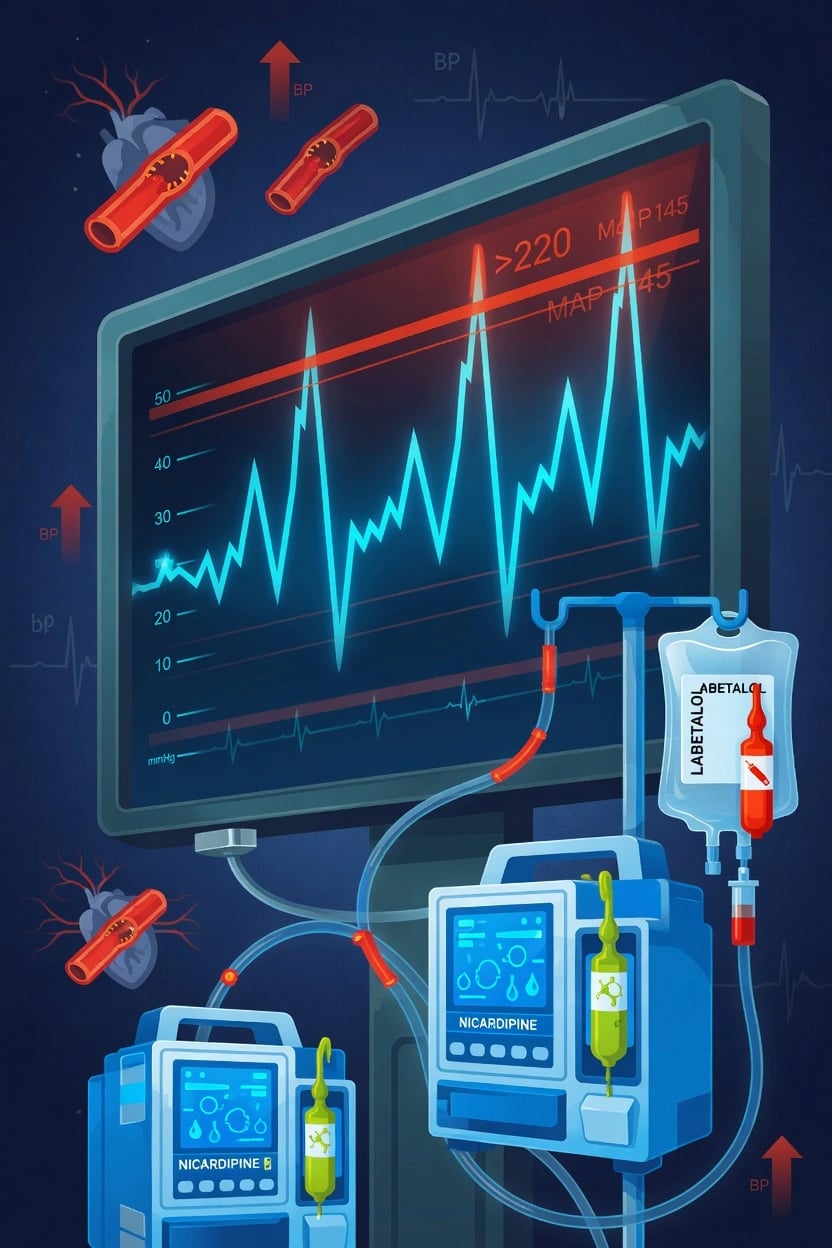
Cinematic ICU scene of an arterial-line monitor showing a severe blood pressure of 220 over 130, an intravenous labetalol and nicardipine infusion running, clinical-blue lighting, no faces, no text
FigureThe hypertensive emergency — the severe BP with the acute end-organ damage. Reduce the MAP by the 10-20 per cent in the first hour; the cerebral autoregulation is the right-shifted in the chronic — the too-rapid reduction the causes the ischaemic stroke.

Hypertensive emergency vs urgency

Hypertensive EMERGENCY

Acute end-organ damage

  • Severe BP + evidence of acute target organ damage
  • Examples: hypertensive encephalopathy, stroke, MI, pulmonary oedema, aortic dissection, AKI, eclampsia
  • Requires IMMEDIATE IV treatment in ICU (arterial line, titratable agents)
  • Goal: reduce MAP by 10-20% in first hour, then 160/100 over 2-6h
  • Admit to ICU/HDU

Hypertensive URGENCY

No acute end-organ damage

  • Severe BP but NO evidence of acute target organ damage
  • Asymptomatic or mild headache only
  • Treatment: oral agents (e.g., amlodipine 10 mg, captopril 25 mg)
  • Goal: gradual reduction over 24-48 hours
  • Do NOT use rapid-acting agents (sublingual nifedipine — causes precipitous fall)
  • Can discharge with close follow-up
[1] [2]

BP reduction targets

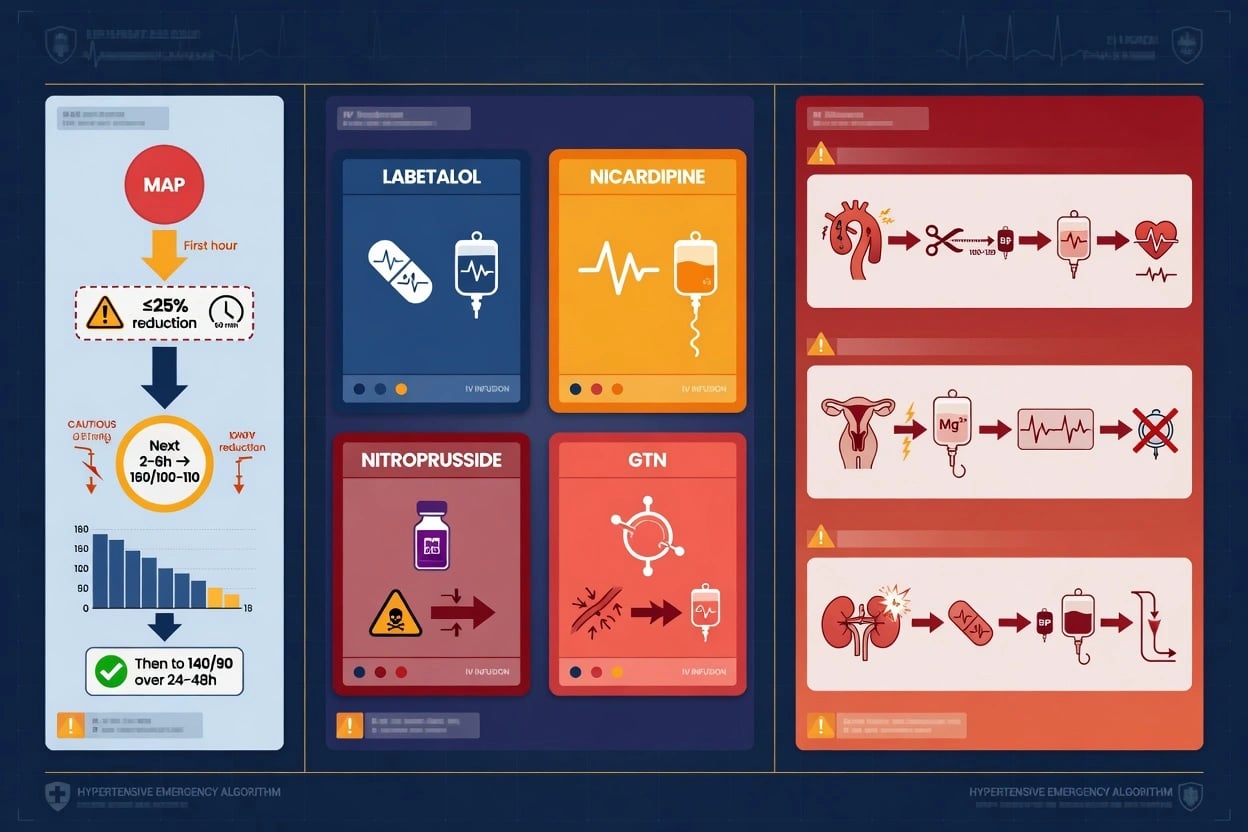
Educational management schematic for hypertensive emergency showing cautious first-hour MAP reduction, IV agent choice tiles, and special pathways for dissection eclampsia and phaeochromocytoma
FigureManagement — most emergencies: lower MAP by no more than 25% in the first hour. Agent and target change for dissection (beta-blocker first, SBP 100–120), eclampsia (magnesium first), and phaeochromocytoma (alpha before beta).

Cerebral autoregulation and BP reduction

In normotensive individuals, cerebral blood flow is maintained constant between MAP 60-150 mmHg (autoregulation). In chronic hypertension, the autoregulation curve shifts to the RIGHT — the brain requires a higher MAP to maintain perfusion. If you reduce BP too rapidly, the brain falls below its autoregulatory threshold → cerebral hypoperfusion → ischaemic stroke. [1]

Reduction targets (most emergencies):[11][12]

  • First hour: reduce MAP by 10-20% (NOT to normal) — updated AHA 2024 ceiling is no more than 25%
  • Next 2-6 hours: reduce to 160/100 mmHg
  • Next 24-48 hours: gradually normalise

EXCEPTIONS (more aggressive reduction):

  • Aortic dissection: SBP to 100-120 immediately (beta-blocker FIRST)
  • Acute pulmonary oedema: reduce preload/afterload rapidly
  • ACS: reduce BP to reduce myocardial O2 demand
[1]

AHA 2024 — no more than 25% reduction in the first hour

The American Heart Association scientific statement on acute-care BP management updates the older "10-20%" rule: for most hypertensive emergencies, lower MAP by no more than 25% within the first hour, then gradually toward 160/100 over the next 2-6 h, and normalise over 24-48 h.[2] The 25% figure is a CEILING, not a goal — for encephalopathic or cerebrovascular emergencies aim for the more conservative 10-15% end. The principle is unchanged: the chronic hypertensive brain cannot tolerate sudden normotension because the autoregulation curve is right-shifted.

IV antihypertensive agents

Labetalol

Alpha + beta-blocker — versatile

  • IV: 20 mg bolus, then 20-80 mg every 10 min (max 300 mg), or infusion 1-2 mg/min
  • Onset: 2-5 min, duration: 2-4 h
  • Advantages: versatile (most emergencies), maintains uteroplacental blood flow (safe in pregnancy)
  • Good for: hypertensive encephalopathy, pre-eclampsia, aortic dissection, post-stroke
  • Avoid in: severe asthma, heart block, bradycardia

Nicardipine

Calcium channel blocker — smooth

  • IV infusion: 5 mg/h, titrate by 2.5 mg/h every 5 min (max 15 mg/h)
  • Onset: 5-15 min, duration: 4-6 h (after stopping)
  • Advantages: smooth titration, minimal negative inotropy, no CNS depression
  • Good for: most hypertensive emergencies (especially renal impairment, stroke)
  • Avoid in: advanced heart failure (negative inotropy at high doses)

Sodium nitroprusside

Potent vasodilator — rapid

  • IV infusion: 0.3-3 mcg/kg/min (max 10 mcg/kg/min)
  • Onset: seconds, duration: 1-2 min (ultra-short acting)
  • Advantages: rapid onset/offset, titratable
  • Good for: hypertensive crisis requiring immediate BP control
  • Risks: CYANIDE TOXICITY (metabolised to cyanide — especially with renal failure or prolonged infusion >48h), increased ICP, coronary steal

Nitroglycerin

Venodilator — preload reduction

  • IV infusion: 5-200 mcg/min
  • Onset: 2-5 min
  • Advantages: coronary vasodilation (anti-ischaemic), preload reduction
  • Good for: ACS, acute pulmonary oedema
  • Less potent arteriolar dilator than nitroprusside (not first-line for pure BP crises)
[1]

Additional IV antihypertensive agents

Clevidipine

Ultrashort DHP calcium channel blocker

  • IV infusion: 1-2 mg/h, double every 90 sec (max 32 mg/h)
  • Onset: 2-4 min, duration: 5-15 min (rapidly ester-cleaved by blood/tissue esterases — NOT renal or hepatic)
  • Advantages: extremely tight titration (think "BP thermostat"), near-zero context-sensitive half-time, no renal/hepatic accumulation
  • Good for: perioperative/postoperative hypertension, most emergencies where rapid titration and rapid offset are wanted
  • ECLIPSE trials: non-inferior to nitroprusside/nitroglycerin/nicardipine in cardiac surgery with better safety profile; VELOCITY: effective in acute severe HTN where oral agents failed
  • Avoid in: SOYA/EGG allergy (lipid emulsion), defective lipid metabolism, severe aortic stenosis

Esmolol

Ultrashort cardioselective beta-1 blocker

  • IV: loading 500 mcg/kg over 1 min, then 50-200 mcg/kg/min infusion
  • Onset: 1-2 min, duration: 10-20 min (RBC esterase metabolism)
  • Advantages: ultra-short acting — if HR/BP overshoots, just stop the infusion; ideal for aortic dissection where HR control is mandatory
  • Good for: AORTIC DISSECTION (first-line with vasodilator), perioperative HTN, aortic aneurysm, thyrotoxic crisis
  • Avoid in: decompensated heart failure, severe bronchospasm, advanced heart block, cocaine/sympathomimetic toxicity

Fenoldopam

Dopamine-1 receptor agonist

  • IV infusion: 0.1-0.3 mcg/kg/min, titrate every 15 min (max 1.6 mcg/kg/min)
  • Onset: 5-10 min, duration: 10-15 min
  • Advantages: UNIQUE — maintains/increases renal blood flow, promotes natriuresis; the only IV antihypertensive with intrinsic renal-protective profile
  • Good for: hypertensive emergency WITH acute kidney injury, scleroderma renal crisis, post-operative renal transplant HTN
  • Caution: raises intra-ocular pressure (avoid in glaucoma), reflex tachycardia, headache/flushing common

Hydralazine

Direct arteriolar vasodilator

  • IV: 5-10 mg slow push every 20-30 min (max 20 mg/dose)
  • Onset: 10-20 min, duration: 3-6 h (UNPREDICTABLE and PROLONGED — hard to titrate)
  • Advantages: safe in pregnancy (first-line in pre-eclampsia with labetalol)
  • Good for: pregnancy/pre-eclampsia (alternative to labetalol)
  • Avoid in: coronary disease/CAD (reflex tachycardia increases myocardial O2 demand), aortic dissection, high-output states

Enalaprilat

IV ACE inhibitor

  • IV: 1.25-5 mg every 6 h
  • Onset: 15-30 min, duration: 6-12 h (PROLONGED, NOT titratable)
  • Advantages: afterload reduction, useful in scleroderma renal crisis (with ACE inhibitor orally long-term)
  • Good for: scleroderma renal crisis
  • Avoid in: bilateral renal artery stenosis (AKI), pregnancy, acute MI (early), hyperkalaemia

Urapidil

Alpha-1 blocker + 5-HT1A agonist

  • IV: 10-25 mg slow bolus, or infusion 5-40 mg/h
  • Onset: 3-5 min, duration: 4-6 h
  • Advantages: NO reflex tachycardia (central 5-HT1A effect), no increase in ICP, no coronary steal
  • Good for: pre-eclampsia/eclampsia, hypertensive emergencies with raised ICP or stroke (favoured in European/ANZ neurocritical care)
  • Avoid in: aortic stenosis, AV shunt (uncommonly used)

Drug selection by indication

Hypertensive encephalopathy / ischaemic stroke

  • FIRST-LINE: nicardipine or labetalol infusion
  • AVOID: nitroprusside (raises ICP, causes coronary steal), sublingual nifedipine, hydralazine (reflex tachy)
  • Target: reduce by no more than 15-25% in first hour; do NOT normalise

Intracerebral haemorrhage (ICH)

  • FIRST-LINE: nicardipine infusion (drug of choice — smooth, titratable, evidence-based in ATACH-2/INTERACT2)
  • Alternative: labetalol, urapidil
  • Target: SBP to 140 mmHg (130-150) — INTERACT2 showed improved functional outcome; ATACH2 showed no benefit (and more AKI) below 110-140 vs <140

Aortic dissection

  • FIRST-LINE: BETA-BLOCKER first (esmolol or labetalol) to HR 60-80, THEN vasodilator (nicardipine/clevidipine)
  • NEVER give vasodilator alone first — reflex tachycardia increases dP/dt and propagates the dissection
  • Target: SBP 100-120, HR <60-80 (the exception to the slow-reduction rule)

Acute coronary syndromes / MI

  • FIRST-LINE: nitroglycerin (coronary vasodilation, reduces preload/myocardial O2 demand) + beta-blocker
  • AVOID: hydralazine (reflex tachycardia), nitroprusside (coronary steal)
  • Target: reduce to normotension; lower myocardial O2 demand

Acute pulmonary oedema

  • FIRST-LINE: nitroglycerin (preload reduction) ± loop diuretic; NP/MV vasodilation
  • ALSO: non-invasive ventilation (CPAP/BiPAP) — drops preload/afterload within minutes
  • AVOID: labetalol/hydralazine/beta-blockers if low-output; beta-blocker contraindicated in acute decompensated HF

Pre-eclampsia / eclampsia

  • FIRST-LINE: magnesium sulphate (seizure prophylaxis) + labetalol or hydralazine or nifedipine
  • CONTRAINDICATED: ACE inhibitors, ARBs, direct renin inhibitors, nitroprusside
  • Target: SBP <160 / DBP <110 (prevent maternal stroke)

Phaeochromocytoma crisis

  • FIRST-LINE: IV phentolamine (alpha-blocker); add nicardipine/clevidipine
  • BETA-BLOCKER only AFTER adequate alpha-blockade (unopposed alpha → crisis)
  • AVOID: labetalol as sole agent (alpha:beta ratio 1:7 — beta dominance paradoxically worsens hypertension)

Sympathomimetic / cocaine toxicity

  • FIRST-LINE: benzodiazepines (first-line for cocaine — calm sympathetic surge) + nicardipine/phentolamine
  • CONTROVERSIAL: mixed alpha/beta-blockers (labetalol, carvedilol) increasingly accepted; pure beta-blockers traditionally avoided for unopposed alpha
  • AVOID: pure beta-blockers (propranolol) — unopposed alpha stimulation

Acute kidney injury / renal emergency

  • FIRST-LINE: nicardipine (hepatic clearance) or fenoldopam (renal-protective D1 agonist)
  • AVOID: nitroprusside (thiocyanate/cyanide accumulation in renal failure), ACE inhibitors in bilateral RAS

Perioperative / post-CABG / post-vascular

  • FIRST-LINE: clevidipine (ultrashort, titratable) or nicardipine or esmolol
  • ECLIPSE: clevidipine non-inferior to comparators with favourable safety in cardiac surgery
  • AVOID: prolonged-acting agents (hydralazine, enalaprilat) — hard to reverse if bleeding

Sodium nitroprusside — cyanide and thiocyanate toxicity

Each molecule of nitroprusside releases 5 cyanide ions, which are normally metabolised by the liver (rhodanese) to thiocyanate and renally excreted. Toxicity is dose- and duration-dependent:[1]

  • CYANIDE TOXICITY (hours): tissue hypoxia despite adequate PaO2 (cyanide poisoning of cytochrome c oxidase → cellular hypoxia), metabolic acidosis with rising lactate, venous hyperoxaemia (high SvO2 — tissue cannot extract O2). Risk factors: dose >4 mcg/kg/min, infusion >24-48 h, hepatic dysfunction, malnutrition.
  • THIOCYANATE TOXICITY (days, renal failure): confusion, seizures, hyperreflexia, tinnitus, miosis. Risk: renal failure, infusion >3 days.
  • TREATMENT: stop nitroprusside; give sodium thiosulphate (sulphur donor for rhodanese) and/or hydroxocobalamin (binds cyanide to form cyanocobalamin); supportive care (100% O2, correct acidosis).
  • PREVENTION: avoid nitroprusside in renal failure/hepatic failure, cap infusion duration, monitor lactate/acid-base. In modern practice nicardipine/clevidipine have largely replaced nitroprusside as first-line for most emergencies.
[1]

Specific scenarios

Hypertensive encephalopathy

Hypertensive encephalopathy management

1

Recognise

Severe headache, nausea, vomiting, visual disturbance, confusion, seizures, coma. Fundoscopy: papilloedema, retinal haemorrhages. MRI brain: posterior reversible encephalopathy syndrome (PRES) — white matter oedema in parieto-occipital regions. Caused by failure of cerebral autoregulation → breakthrough hyperperfusion → vasogenic oedema.

2

Reduce BP carefully

IV labetalol (20 mg bolus every 10 min) or nicardipine infusion (5 mg/h). Reduce MAP by 10-20% in first hour. Do NOT reduce below 160/100 in first 2-6 hours (risk of cerebral hypoperfusion). Avoid nitroprusside (increases ICP). Monitor neurological status continuously.

3

Treat seizures

IV benzodiazepines (lorazepam 4 mg or diazepam 10 mg) for acute seizure control. Then IV phenytoin or levetiracetam for maintenance. Seizures resolve once BP controlled.

[1]

Pre-eclampsia and eclampsia

Pre-eclampsia/eclampsia management

Pre-eclampsia = new hypertension (BP >140/90) + proteinuria or end-organ dysfunction after 20 weeks gestation. Eclampsia = pre-eclampsia + seizures. [1]

Management priorities:

  1. MAGNESIUM SULPHATE FIRST — for seizure prevention and treatment (NOT an antihypertensive). Loading: 4-6 g IV over 20 min. Maintenance: 1-2 g/h infusion. Monitor: reflexes, respiratory rate, urine output. Antidote: calcium gluconate 10% 10 mL IV if toxicity. The Magpie Trial (n=10 141) established magnesium as the standard of care — halving the risk of eclampsia.[13]
  2. BP control: labetalol (20-40 mg IV every 10 min) or hydralazine (5 mg IV every 20 min). Target: <160/110 (prevent stroke). Do NOT use ACE inhibitors, ARBs, nitroprusside (contraindicated in pregnancy).[4]
  3. Delivery — definitive treatment. Expedite delivery once stabilised.[3]

Phaeochromocytoma crisis

Phaeochromocytoma crisis — ALPHA-blockade BEFORE beta-blockade

Phaeochromocytoma secretes catecholamines (adrenaline, noradrenaline). Presenting with episodic hypertension, headache, sweating, palpitations. [1]

CRITICAL MANAGEMENT RULE: give ALPHA-blocker FIRST (phenoxybenzamine — irreversible, non-competitive alpha-blocker, 10 mg BD orally titrated up) BEFORE any beta-blocker. [1]

If you give a beta-blocker first (e.g., labetalol, propranolol), it blocks beta-2 mediated vasodilation, leaving UNOPPOSED ALPHA-1 vasoconstriction → catastrophic hypertension → stroke, MI, aortic dissection. [1]

Once alpha-blockade achieved (usually 10-14 days pre-op), add beta-blocker for tachycardia. Surgical resection after adequate blockade.[6]

Aortic dissection (see dedicated topic)

Special case — rapid BP reduction required:

  • Beta-blocker FIRST (esmolol/labetalol) to reduce HR to 60-80 and dP/dt
  • Then vasodilator (nicardipine/nitroprusside) to reduce SBP to 100-120
  • This is the EXCEPTION to the "slow reduction" rule — rapid reduction is needed to prevent dissection extension[5]

Aortic dissection — detailed management

Aortic dissection BP control (the exception to the slow-reduction rule)

1

Reduce shear force FIRST

The proximal aim is to REDUCE dP/dt (the rate of pressure rise) and aortic SHEAR FORCE — the force propagating the false lumen. Give a BETA-BLOCKER FIRST: esmolol 500 mcg/kg IV over 1 min then 50-200 mcg/kg/min, OR labetalol 20 mg IV boluses. Target HR 60-80 bpm BEFORE touching the vasodilator.

2

Then lower SBP

Once rate-controlled, add a vasodilator — nicardipine 5 mg/h, clevidipine 1-2 mg/h, or (if unavailable) nitroprusside 0.3-3 mcg/kg/min. Target SBP 100-120 mmHg. Titrate to the lowest SBP that preserves urine output and organ perfusion.

3

Why beta-blocker first?

Vasodilator alone → reflex tachycardia → rising dP/dt → propagates the dissection. ALWAYS blunt the heart rate response before dropping the pressure. This is the single most examined point in dissection physiology.

4

Pain control & surgical referral

Adequate analgesia (opioid) reduces sympathetic surge. Type A dissection = immediate cardiothoracic surgery; Type B (uncomplicated) = medical management ± thoracic endovascular repair (TEVAR) if complicated (rupture, malperfusion, refractory pain/HTN).<Cite id="5" />

Intracerebral haemorrhage (ICH)

Acute ICH — BP target SBP ~140 mmHg (INTERACT2 / ATACH2 era)

Acute ICH is the most common life-threatening hypertensive emergency in the ICU. Haematoma EXPANSION in the first few hours (driven by the exposed BP) is the strongest modifiable predictor of poor outcome — hence the rationale for early BP lowering. [1]

  • INTERACT2 (2013): randomised 2839 patients with ICH (SBP 150-220) to intensive (SBP <140 within 1 h) vs guideline (SBP <180). Intensive lowering did NOT significantly reduce death/major disability (OR 0.86, P=0.06) but improved functional outcome on ordinal analysis and was SAFE.[7]
  • ATACH2 (2016): randomised 1000 patients to SBP 110-139 vs 140-179 within 4.5 h. STOPPED EARLY — more aggressive lowering (<140) did NOT improve outcome and significantly increased renal adverse events (9.0% vs 4.0%).[8]
  • AHA/ASA 2022 ICH guideline synthesis: for SBP 150-220, acutely lower to SBP 140 mmHg (range 130-150); do NOT drop below 130 (no benefit, possible harm).[14]

Acute ICH management protocol

1

Confirm & target

Non-contrast CT to confirm ICH and exclude ischaemic stroke (where aggressive BP lowering is harmful). Eligible if SBP 150-220, no GCS concern for raised ICP. Target SBP ~140 mmHg within 1 h. Avoid drops below 130 (ATACH2 — AKI, no benefit).

2

Drug of choice

IV NICARDIPINE infusion (5 mg/h, titrate every 5 min) — preferred for smooth, predictable titration and used in both INTERACT2 and ATACH2. Alternatives: labetalol infusion, clevidipine, urapidil. AVOID nitroprusside (raises ICP, cerebral vasodilation), hydralazine (unpredictable, reflex tachy).

3

Monitor

Arterial line for beat-to-beat BP. Serial GCS and pupillary exam. Watch for neurological deterioration — if GCS drops after BP reduction, suspect perichaematomal ischaemia and allow BP to rise. Reimage if deterioration.

4

Reverse coagulopathy

Stop and reverse anticoagulation (warfarin → vitamin K + PCC/FFP; DOAC → specific antidote per agent; antiplatelet → consider platelets only per guideline). ICH on anticoagulation has higher haematoma expansion and mandates even tighter BP.

[14]

INTERACT2 — the trial that changed ICH practice

N Engl J Med 2013

PMID 23713578

Randomised 2839 patients with spontaneous ICH (SBP 150-220) within 6 h to intensive BP lowering (target SBP <140, achieved within 1 h) vs guideline standard (SBP <180). Result: non-significant trend to lower death/major disability (OR 0.86, 95% CI 0.72-1.03, P=0.06) but significantly better ordinal functional outcome (modified Rankin shift OR 0.87, P=0.04); no increase in serious adverse events. Take-home: rapid SBP lowering to <140 is SAFE and PROBABLY beneficial — became the basis for ICH guidelines worldwide.[7]

ATACH-2 — too aggressive is not better

N Engl J Med 2016

PMID 27276234

Randomised 1000 patients with ICH (SBP >180) within 4.5 h to very intensive (SBP 110-139) vs standard (140-179) BP lowering with IV nicardipine. STOPPED EARLY for futility — no difference in death/disability (38.7% vs 37.7%). SIGNIFICANTLY MORE renal adverse events in the intensive arm (9.0% vs 4.0%, P=0.002). Take-home: lowering SBP below 140 (to 110-139) adds NO benefit and harms the kidneys — target ~140, not lower.[8]

Acute pulmonary oedema (cardiogenic)

Hypertensive acute pulmonary oedema — preload & afterload reduction

1

Sit up + high-flow O2 + NIV

Sit upright. Oxygen to keep SpO2 >94%. NON-INVASIVE VENTILATION (CPAP/BiPAP) is first-line and transformative — positive intrathoracic pressure drops LV preload (and afterload) and forces interstitial fluid back into capillaries, often improving dyspnoea and oxygenation within minutes and reducing need for intubation.

2

Vasodilator + diuretic

IV NITROGLYCERIN (start 5-10 mcg/min, titrate to 200 mcg/min) — venodilation drops preload; at higher doses arteriolar dilation drops afterload. PLUS IV FUROSEMIDE (40-80 mg) — preload reduction via venodilation precedes the diuretic effect. For pure BP crises with pulmonary oedema, nitroprusside or clevidipine are alternatives.

3

AVOID beta-blockers & negative inotropes

Acute decompensated heart failure with pulmonary oedema may have low cardiac output hidden by high BP — beta-blockade can precipitate cardiogenic shock. Only introduce beta-blockade once stabilised and euvolaemic.

4

Identify the trigger

ACS (→ dual antiplatelet + reperfusion), AF with RVR (→ rate control), hypertensive emergency alone, renal failure, medication non-adherence, valvular failure. Treat the trigger, not just the number.

[1]

Acute coronary syndromes (ACS / MI)

ACS with hypertensive emergency

Hypertension in ACS increases myocardial O2 demand (afterload) and worsens the supply-demand mismatch driving ischaemia. [1]

  • Agent of choice: IV nitroglycerin (coronary vasodilation + preload/afterload reduction) PLUS a cardioselective beta-blocker (esmolol or metoprolol) — beta-blockade lowers rate-pressure product and infarct size.
  • Target: reduce SBP to <140 mmHg and abolish ischaemic pain; do NOT reduce so far that coronary perfusion (diastolic pressure) is compromised (avoid SBP <100).
  • AVOID: nitroprusside (coronary steal — diverts flow away from ischaemic subendocardium), hydralazine (reflex tachycardia increases demand), sublingual nifedipine (precipitous fall → reflex sympathetic surge).
  • Concomitant therapy: dual antiplatelet, anticoagulation, reperfusion (PCI if STEMI), statin. BP control complements — does not replace — definitive ACS therapy.
[1]

Cocaine and sympathomimetic toxicity

Cocaine/sympathomimetic crisis — benzos FIRST, mind the unopposed-alpha trap

Cocaine, amphetamines, MDMA, and high-dose pseudoephedrine produce a hyperadrenergic state: severe hypertension, tachycardia, vasoconstriction, agitation, hyperthermia, and risk of MI, seizure, intracranial haemorrhage, and aortic dissection. [1]

  • FIRST-LINE: IV benzodiazepines (diazepam 10-20 mg IV, lorazepam 2-4 mg IV, repeat). Benzos calm the CNS sympathetic surge — often the BP falls substantially with sedation alone.
  • SECOND-LINE if BP remains high: nicardipine or clevidipine infusion, or phentolamine (alpha-blocker) for pure alpha-mediated vasoconstriction.
  • THE UNOPPOSED-ALPHA CONTROVERSY: traditional teaching warns against ANY beta-blocker in cocaine toxicity (unopposed alpha → vasoconstriction → worse outcomes — the "unopposed alpha" trap). Newer data and the 2023 AHA/ACC cocaine-use guidance accept labetalol and carvedilol (mixed alpha/beta blockers) as relatively safe, but PURE beta-blockers (propranolol, atenolol) remain best AVOIDED in the acute phase.
  • Avoid: pure beta-blockers, nitroprusside if possible (coronary steal), hydralazine (reflex tachy).
[1]

Perioperative and post-operative hypertension

Post-operative hypertension — clevidipine/nicardipine shine

Common after cardiac surgery (CABG, valve), carotid endarterectomy, vascular surgery, and major abdominal surgery. Triggers: pain, emergence from anaesthesia, sympathetic surge, rewarming, intravascular volume shifts. [1]

  • Agent of choice: clevidipine (ultrashort, titratable to the minute, ester metabolism) or nicardipine. The ECLIPSE trials showed clevidipine non-inferior to nitroprusside/nitroglycerin/nicardipine in cardiac surgery with better mortality/safety.[9]
  • Beta-blockers: esmolol (ultrashort) is ideal where heart rate and BP both need control; continue pre-operative beta-blocker to avoid withdrawal.
  • Avoid: prolonged agents (hydralazine, enalaprilat) — hard to reverse if surgical bleeding or haemodynamic collapse; sublingual nifedipine (precipitous fall); nitroprusside if renal dysfunction.
  • Carotid endarterectomy: post-op HTN is dangerous — risks hyperperfusion syndrome (ipsilateral headache, seizures, ICH) and neck haematoma (airway compromise). Tight SBP control 100-160 with clevidipine/nicardipine.

Catecholamine excess states (a unifying framework)

The catecholamine excess states — same physiology, different sources

Phaeochromocytoma, cocaine/amphetamine toxicity, clonidine/centrally-acting alpha-2 withdrawal, MAOI-tyramine interaction, and thyroid storm all share a final common pathway: excess sympathetically mediated vasoconstriction and tachycardia. The management principles converge: [1]

  1. Block alpha-1 mediated vasoconstriction FIRST (phentolamine IV acutely; phenoxybenzamine orally for phaeo; benzodiazepines for cocaine).
  2. Add beta-blockade ONLY after alpha-blockade is established (else unopposed alpha → crisis).
  3. Avoid pure beta-blockers alone, mixed agents with beta-dominant ratios in unblocked patients (labetalol 1:7), and indirect sympathomimetics (ephedrine, pseudoephedrine in MAOI patients).
  4. Clonidine withdrawal specifically: restart clonidine (orally or patch) — this is a CURATIVE manoeuvre, not an antihypertensive escalation. Characterised by rebound hypertension, agitation, tachycardia, diaphoresis — mimics phaeo.
[1]

ICU monitoring and the arterial line

Monitoring the hypertensive emergency in ICU

  • Arterial line: MANDATORY for accurate, beat-to-beat BP. Cuff pressures are unreliable at extremes, with arrhythmia, in shock, or obesity. The arterial line also allows repeated ABG and avoids the lag of titration cycles.
  • ECG monitoring: continuous — detect ACS (ST changes), arrhythmia (labetalol-induced bradycardia, reflex tachy from vasodilators).
  • Urinary catheter: hourly urine output — a sensitive marker of organ perfusion (target >0.5 mL/kg/h); mandatory if using fenoldopam, in AKI, or in ICH.
  • GCS / neurological observations: hourly during titration, especially in encephalopathy, ICH, or stroke. A falling GCS after BP reduction = perilesional hypoperfusion → allow BP to rise.
  • Fluid balance, serum creatinine, lactate: rising lactate/creatinine during nitroprusside = cyanide/thiocyanate toxicity; rising lactate during treatment = tissue hypoperfusion from over-aggressive reduction.
  • Central line: not mandatory unless needing vasopressor/inotrope, central venous oximetry, or difficult peripheral access.
[1]

Diagnostic workup — find the cause

Secondary cause workup (do once stabilised, not before)

~5-10% of hypertensive emergencies have an identifiable secondary cause. Work up once the acute crisis is controlled — do NOT delay resuscitation for investigation. [1]

  1. RENAL: U&E, creatinine (baseline + trend), urinalysis (protein, blood), renal ultrasound (size discrepancy → RAS; small kidneys → CKD; hydronephrosis → obstruction).
  2. RENAL ARTERY STENOSIS: CT or MR renal angiography (especially if bruit, flash pulmonary oedema, AKI on ACEi, >30% creatinine rise on ACEi).
  3. PHAEOCHROMOCYTOMIA: 24-h urinary fractionated metanephrines OR plasma free metanephrines (high sensitivity); follow with CT/MRI localisation then MIBG or FDG-PET.
  4. PRIMARY ALDOSTERONISM: aldosterone:renin ratio (with correction for hypokalaemia and withdrawing interfering antihypertensives); confirm with saline suppression or fludrocortisone suppression test.
  5. CUSHING: 24-h urinary free cortisol, 1-mg overnight dexamethasone suppression, late-night salivary cortisol.
  6. RENAL PARENCHYMAL: proteinuria, eGFR, renal biopsy if nephritic.
  7. DRUGS / TOXINS: urine drug screen (cocaine, amphetamines), detailed history (NSAIDs, steroids, oral contraceptives, erythropoietin, liquorice, calcineurin inhibitors, VEGF inhibitors, herbal/supplements).
  8. COARCTATION: 4-limb BP (lower-limb BP < upper), CT/MR aortography in young patients.
  9. OBSTRUCTIVE SLEEP APNOEA: screen (STOP-BANG, Epworth) — commonest contributor to resistant hypertension.
  10. TARGET-ORGAN DAMAGE: echocardiogram (LVH, diastolic dysfunction), fundoscopy (Keith-Wagener-Barker grading), 12-lead ECG (LVH/strain).
[1]

Pathophysiology deep-dive — cerebral autoregulation and PRES

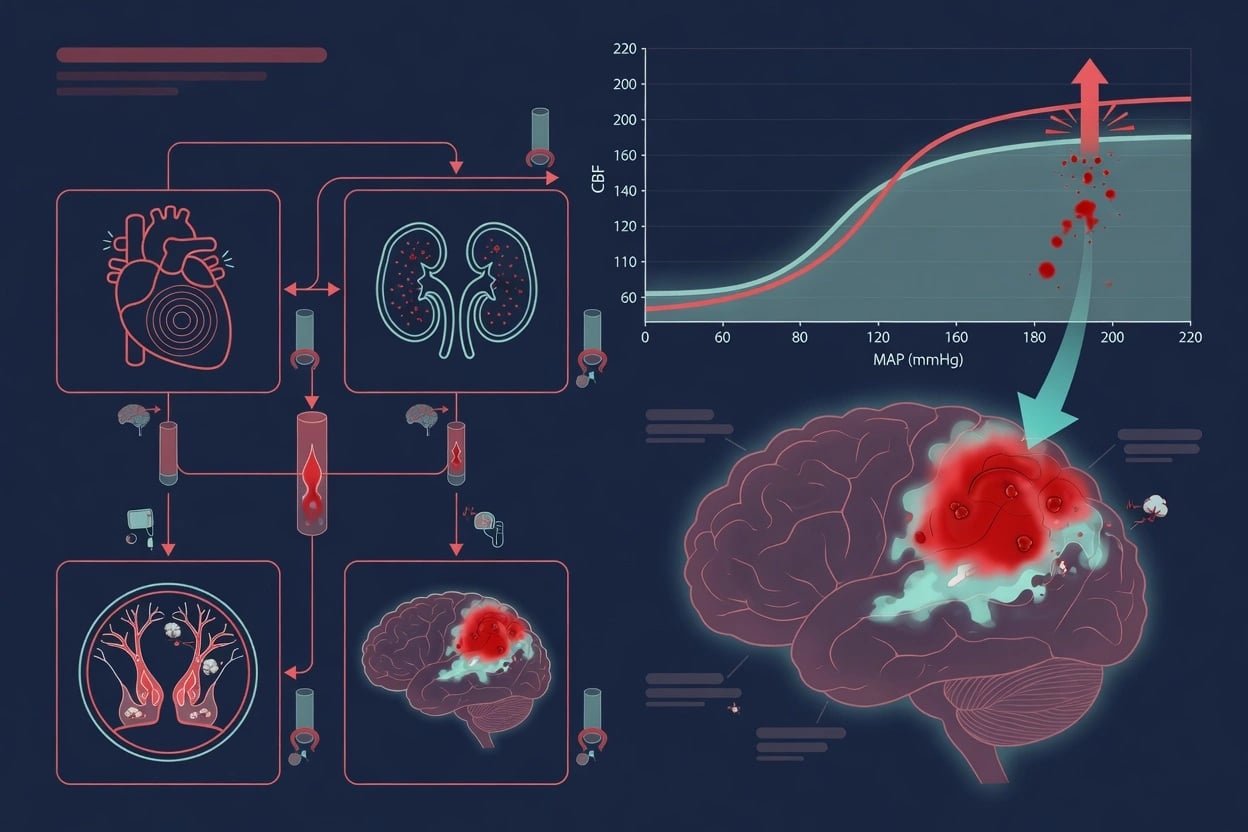
Educational schematic of right-shifted cerebral autoregulation in chronic hypertension with breakthrough hyperperfusion and multi-organ end-organ injury icons
FigurePathophysiology — chronic hypertension shifts cerebral autoregulation right; extreme MAP causes breakthrough hyperperfusion and PRES, while over-rapid reduction causes hypoperfusion stroke.

Why hypertension injures the brain — the breakthrough hyperperfusion model

In health, cerebral blood flow is held constant across MAP 60-150 mmHg by myogenic and metabolic autoregulation of the resistance arterioles. In chronic hypertension, smooth-muscle hypertrophy and vascular remodelling SHIFT the autoregulation curve to the right — the brain tolerates higher pressures but loses protection at the low end (hypotension is poorly tolerated). [1]

At extreme pressures, the autoregulatory ceiling is exceeded → forced vasodilation of previously-constricted arterioles → breakthrough hyperperfusion → breakdown of the blood-brain barrier → vasogenic oedema. This preferentially affects the posterior circulation (parieto-occipital) because its sympathetic innervation is sparser and less protective — hence posterior reversible encephalopathy syndrome (PRES). Clinical correlate: visual disturbance, headache, seizures, altered consciousness; MRI shows T2/FLAIR hyperintensity in parieto-occipital white matter, typically reversible with BP control. [1]

The same mechanism explains why RAPID BP NORMALISATION IS DANGEROUS — the right-shifted brain cannot autoregulate below its (elevated) lower limit → cerebral hypoperfusion → ischaemic stroke. Hence the 25%-first-hour ceiling.

[1]

Avoid these common errors

Common errors in hypertensive emergency management

  1. Sublingual nifedipine — causes unpredictable, precipitous BP fall → stroke/MI. NEVER use. BANNED in most guidelines.
  2. Rapid normalisation of BP — in chronic hypertension, cerebral autoregulation is shifted right. Reducing to "normal" BP causes cerebral hypoperfusion. Reduce by 10-20% first hour only.
  3. Beta-blocker before alpha-blocker in phaeochromocytoma — unopposed alpha stimulation → catastrophic hypertension. Always alpha-block FIRST.
  4. Nitroprusside in high ICP — nitroprusside increases cerebral blood flow → increases ICP. Avoid in raised ICP/stroke.
  5. ACE inhibitors in acute setting — slow onset, risk of AKI in bilateral renal artery stenosis. Use IV agents instead.
  6. Forgetting magnesium in eclampsia — magnesium prevents/treats seizures. BP control alone does not prevent eclampsia.
  7. Failing to look for the cause — always investigate for secondary causes (renal artery stenosis, phaeochromocytoma, primary hyperaldosteronism, CKD, drugs — cocaine, NSAIDs, steroids).
[1]

ICU and exam pearls — high-yield facts

16 high-yield pearls for the ICU hypertensive emergency

  1. Cerebral autoregulation is right-shifted in chronic HTN — the brain tolerates high BP but NOT sudden normalisation. The 25%-first-hour rule exists because of this single fact. State it in every answer.
  2. The BP NUMBER alone never defines an emergency — a smoker at 230/130 with papilloedema and a headache is an emergency; the same number in an asymptomatic chronic hypertensive on no meds is URGENCY. End-organ damage is the dividing line.
  3. Aortic dissection is the only emergency where you LOWER BP AGGRESSIVELY (SBP 100-120) AND you MUST give a beta-blocker FIRST to drop dP/dt before any vasodilator. Vasodilator alone → reflex tachycardia → propagation.
  4. Labetalol is alpha:beta 1:7 — useful in pregnancy and most emergencies, but in unblocked phaeochromocytoma the beta-dominant ratio can paradoxically WORSEN hypertension via unopposed alpha. Never rely on labetalol alone for phaeo.
  5. Nicardipine is the drug of choice for ICH and most stroke-related emergencies — smooth, titratable, evidence-based (INTERACT2/ATACH2 used it). It has hepatic clearance, so it is safe in renal failure.
  6. Clevidipine is the "BP thermostat" — ultrashort DHP (ester metabolism), titratable to the minute, no renal/hepatic accumulation. Ideal perioperatively and where rapid on/off matters. Contraindicated in egg/soya allergy (lipid emulsion).
  7. Esmolol is the beta-blocker of choice for aortic dissection — ultrashort (RBC esterase); if HR drops too far, just stop the infusion. Pair with nicardipine for the SBP 100-120 target.
  8. Nitroprusside = cyanide: 5 cyanide ions per molecule. Suspect toxicity with rising lactate + metabolic acidosis + venous hyperoxaemia (high SvO2). Treat with sodium thiosulphate ± hydroxocobalamin. Largely superseded by nicardipine/clevidipine.
  9. Nitroglycerin for ACS and pulmonary oedema — coronary vasodilation + preload reduction. It is a WEAK arteriolar dilator, so it is NOT first-line for pure BP crises (use nicardipine instead).
  10. Hydralazine is pregnancy-friendly but BAD in CAD — unpredictable onset (10-20 min), prolonged duration (3-6 h), reflex tachycardia. Avoid in coronary disease, dissection, and any state where tachycardia is dangerous.
  11. Fenoldopam is the renal-friendly vasodilator — D1 agonist that maintains renal blood flow and natriuresis; the ONLY IV antihypertensive with intrinsic renal-protective profile. Avoid in glaucoma (raises IOP).
  12. Magnesium sulphate in eclampsia is for SEIZURES, not BP — it prevents and treats eclamptic seizures; it has minimal BP-lowering effect. BP control is separate (labetalol/hydralazine/nifedipine to SBP <160/DBP <110). Antidote to mag toxicity: calcium gluconate.
  13. Phenoxybenzamine before beta-blocker in phaeo — irreversible non-competitive alpha-blockade; start ~10-14 days pre-op, titrate until orthostatic, THEN add beta-blocker for tachycardia. Premature beta-blockade → unopposed alpha → crisis.
  14. Sublingual nifedipine is BANNED — unpredictable, precipitous BP fall → stroke/MI. This is the single most-tested drug-error in hypertensive crisis. State NEVER in any answer.
  15. Clonidine withdrawal mimics phaeochromocytoma — rebound HTN, agitation, tachycardia, diaphoresis. The CURE is to restart clonidine (oral or patch), not to escalate antihypertensives. Always take a withdrawal history.
  16. An arterial line is mandatory for any titrated infusion — cuff pressures lag and are unreliable at extremes, in arrhythmia, and in shock. Beat-to-beat BP prevents overshoot/undershoot and reduces the time to target.
  17. PRES (posterior reversible encephalopathy syndrome) — the radiological correlate of hypertensive encephalopathy: parieto-occipital T2/FLAIR hyperintensity. Reversible with BP control. Posterior predominance because sympathetic innervation of the posterior circulation is sparser.
  18. Lower BP does NOT always mean better — ATACH2 showed that dropping SBP below 140 (to 110-139) in ICH added NO benefit and INCREASED AKI. Target ~140, not lower. "Lower is better" is a dangerous reflex.
[1]

Drug-selection pearls — match the agent to the scenario

  • Encephalopathy / ischaemic stroke → nicardipine or labetalol; AVOID nitroprusside (raises ICP).
  • ICH → nicardipine (drug of choice); target SBP ~140.
  • Aortic dissection → esmolol (beta-blocker) FIRST, then nicardipine; SBP 100-120, HR <80.
  • ACS / MI → nitroglycerin + beta-blocker; AVOID nitroprusside (coronary steal).
  • Pulmonary oedema → nitroglycerin + furosemide + NIV; AVOID beta-blocker (acute).
  • Pre-eclampsia/eclampsia → magnesium + labetalol or hydralazine; AVOID ACEi/ARB/nitroprusside.
  • Phaeochromocytoma → phentolamine (IV) / phenoxybenzamine (oral) FIRST, then beta-blocker.
  • Cocaine → benzodiazepines FIRST, then nicardipine/phentolamine; AVOID pure beta-blockers.
  • AKI / renal crisis → nicardipine or fenoldopam; AVOID nitroprusside (thiocyanate).
  • Perioperative → clevidipine or nicardipine (ultrashort, titratable).
[1]

Prognosis

Hypertensive emergency outcomes

<5%
Mortality with prompt treatment
ICU management
>90%
Mortality untreated
Within months
~5%
Eclampsia mortality
With magnesium + delivery
10-20%
MAP reduction first hour
Safe target for most
[1]

Evidence and targets — INTERACT2 / ATACH2 / ATACH era

<140
ICH SBP target (mmHg)
INTERACT2 / AHA 2022
7%
Better ordinal mRS
INTERACT2 — intensive lowering
9.0%
AKI with SBP 110-139
ATACH2 — too aggressive
100-120
Aortic dissection SBP
Plus HR <80 bpm
<160/110
Pre-eclampsia target
Prevent maternal stroke
[7] [8] [14]

Exam practice

SAQ — Hypertensive emergency

10 minutes · 10 marks

A 58-year-old man presents with severe headache, visual disturbance, and confusion. BP 230/140. HR 95. Fundoscopy shows papilloedema and flame haemorrhages. ECG shows LVH with strain. Creatinine 180. No chest pain. CT brain shows no haemorrhage.

[1]

SAQ — Acute intracerebral haemorrhage

10 minutes · 10 marks

A 66-year-old woman is admitted 90 minutes after sudden left hemiparesis and headache. GCS 13. BP 192/108 (MAP 136). CT brain shows a 25 mL right basal ganglia haemorrhage with no midline shift and no intraventricular extension. She is not on anticoagulation.

[1]

SAQ — Suspected aortic dissection

10 minutes · 10 marks

A 71-year-old man presents with sudden, tearing chest pain radiating to the back between the scapulae. BP 210/115 (right arm), 165/95 (left arm). HR 118 sinus. Wide mediastinum on chest X-ray. CT angiogram confirms a Type A aortic dissection.

[1]

Red flags

Critical hypertensive emergency points

  • Do NOT reduce BP too rapidly in chronic hypertension — cerebral autoregulation is shifted right. Rapid reduction → ischaemic stroke. Reduce MAP by 10-20% in first hour.[1]
  • Aortic dissection is the EXCEPTION — rapid reduction to SBP 100-120 required (beta-blocker FIRST).[5]
  • Phaeochromocytoma: ALPHA-blockade BEFORE beta-blockade — unopposed alpha stimulation causes catastrophic hypertension.[6]
  • NEVER use sublingual nifedipine — unpredictable, precipitous BP fall → stroke/MI.[2]
  • Eclampsia: give magnesium sulphate FIRST (seizure prevention/treatment), then BP control with labetalol/hydralazine.[3]
  • Nitroprusside increases ICP — avoid in raised ICP/stroke. Also risk of cyanide toxicity with renal failure or prolonged use.
  • Always look for the cause — secondary hypertension is more likely in young patients, resistant hypertension, or episodic hypertension.

References

  1. [1]Lip GYH, Banner N, Dalton G, et al. Management of hypertensive crisis: British and Irish Hypertension Society Position document J Hum Hypertens, 2023.PMID 36418425
  2. [2]Peixoto AJ,wan S, Sperati HS, et al. The Management of Elevated Blood Pressure in the Acute Care Setting: A Scientific Statement From the American Heart Association Hypertension, 2024.PMID 38804130
  3. [3]Townsend RR, Chobanian AV, et al. Postpartum preeclampsia or eclampsia: defining its place and management among the hypertensive disorders of pregnancy Am J Obstet Gynecol, 2022.PMID 35177218
  4. [4]Foo FL, et al. Effectiveness of nifedipine, labetalol, and hydralazine as emergency antihypertension in severe preeclampsia: a randomized control trial F1000Res, 2022.PMID 37273965
  5. [5]Liu J, et al. Emergency Department Blood Pressure Management in Type B Aortic Dissection: An Analysis with Machine Learning West J Emerg Med, 2025.PMID 40561988
  6. [6]Chen Y, et al. Prolonged alpha-blockade and doxazosin are associated with hypertensive crisis in pheochromocytoma surgery Front Endocrinol (Lausanne), 2025.PMID 41573200
  7. [7]Anderson CS, Heeley E, Huang Y, et al. Rapid blood-pressure lowering in patients with acute intracerebral hemorrhage N Engl J Med, 2013.PMID 23713578
  8. [8]Qureshi AI, Palesch YY, Barsan WG, et al. Intensive Blood-Pressure Lowering in Patients with Acute Cerebral Hemorrhage N Engl J Med, 2016.PMID 27276234
  9. [9]Aronson S, Dyke CM, Stierer KA, et al. The ECLIPSE trials: comparative studies of clevidipine to nitroglycerin, sodium nitroprusside, and nicardipine for acute hypertension treatment in cardiac surgery patients Anesth Analg, 2008.PMID 18806012
  10. [10]Peacock WF, Angeles JE, Soto KM, et al. Parenteral clevidipine for the acute control of blood pressure in the critically ill patient: a review Ther Clin Risk Manag, 2009.PMID 19707278
  11. [11]Whelton PK, Carey RM, Aronow WS, et al. 2017 ACC/AHA/AAPA/ABC/ACPM/AGS/APhA/ASH/ASPC/NMA/PCNA Guideline for the Prevention, Detection, Evaluation, and Management of High Blood Pressure in Adults: A Report of the American College of Cardiology/American Heart Association Task Force on Clinical Practice Guidelines Hypertension, 2018.PMID 29133356
  12. [12]Mancia G, Kreutz R, Brunstrom M, et al. 2023 ESH Guidelines for the management of arterial hypertension The Task Force for the management of arterial hypertension of the European Society of Hypertension: Endorsed by the International Society of Hypertension (ISH) and the European Renal Association (ERA) J Hypertens, 2023.PMID 37345492
  13. [13]Altman D, Carroli G, Duley L, et al. Do women with pre-eclampsia, and their babies, benefit from magnesium sulphate? The Magpie Trial: a randomised placebo-controlled trial Lancet, 2002.PMID 12057549
  14. [14]Greenberg SM, Ziai WC, Cordonnier C, et al. 2022 Guideline for the Management of Patients With Spontaneous Intracerebral Hemorrhage: A Guideline From the American Heart Association/American Stroke Association Stroke, 2022.PMID 35579034