ICU · cardiovascular
Acute hypertensive emergency — comprehensive ICU management (hypertensive encephalopathy, ICH, dissection, pre-eclampsia, phaeochromocytoma, cocaine)
Also known as Hypertensive emergency · Hypertensive crisis · Malignant hypertension · Hypertensive encephalopathy · Hypertensive urgency · Pre-eclampsia and eclampsia · Phaeochromocytoma crisis · Cocaine-induced hypertensive crisis · Cerebral autoregulation · PRES (posterior reversible encephalopathy syndrome) · INTERACT2 · STAT registry · Sublingual nifedipine (avoid)
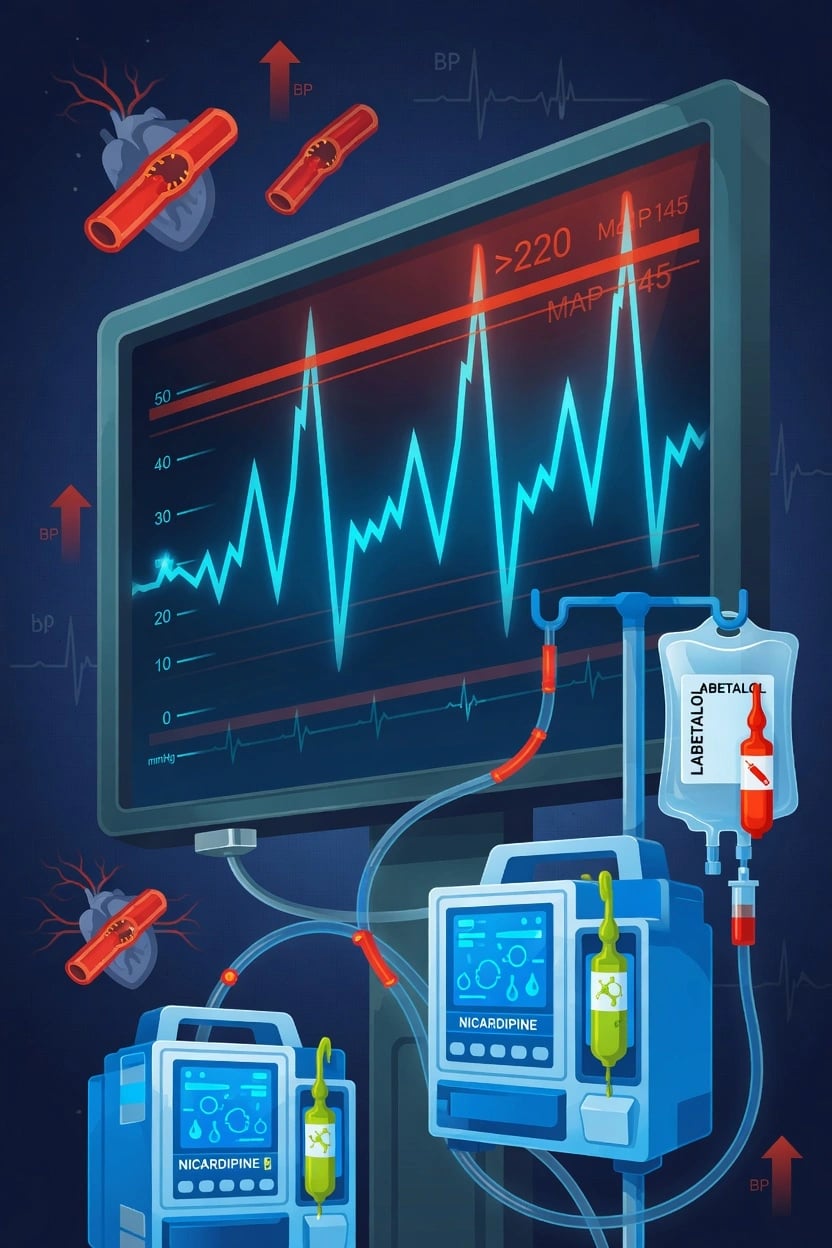
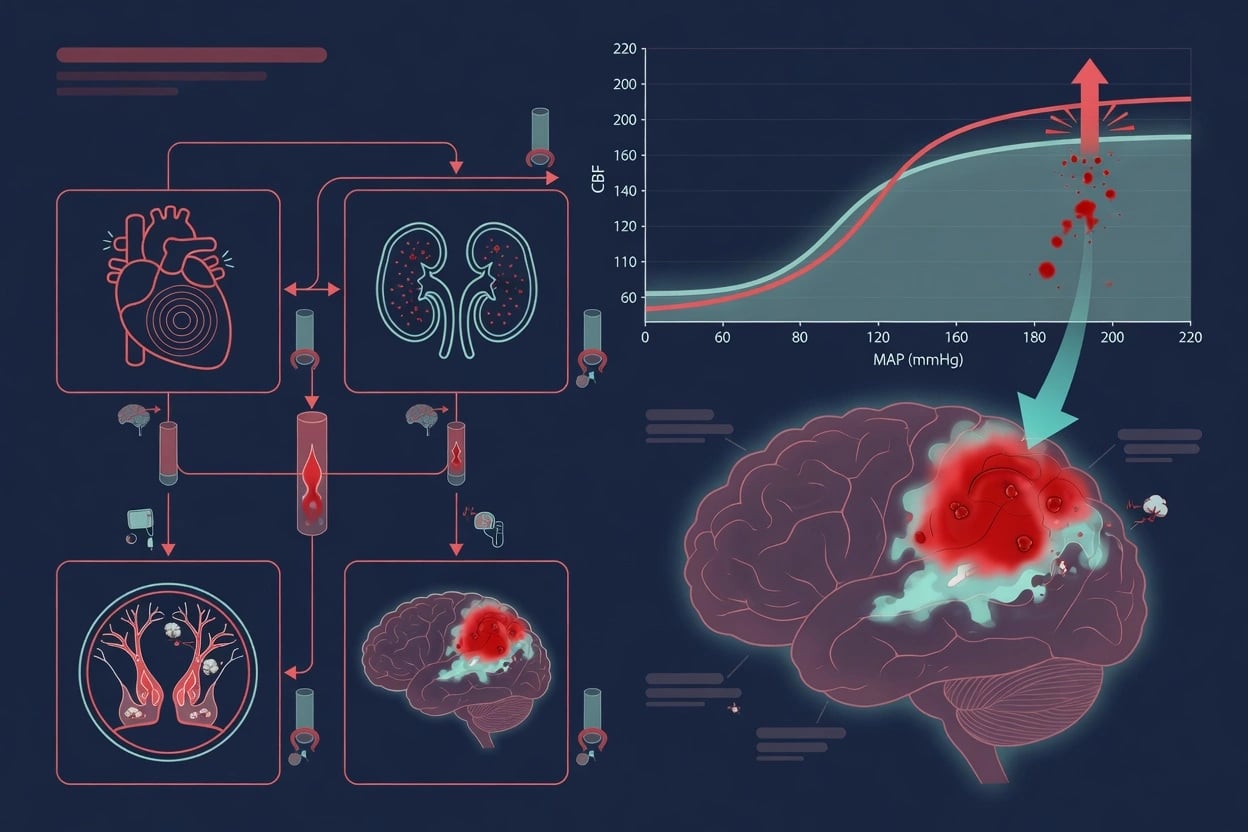
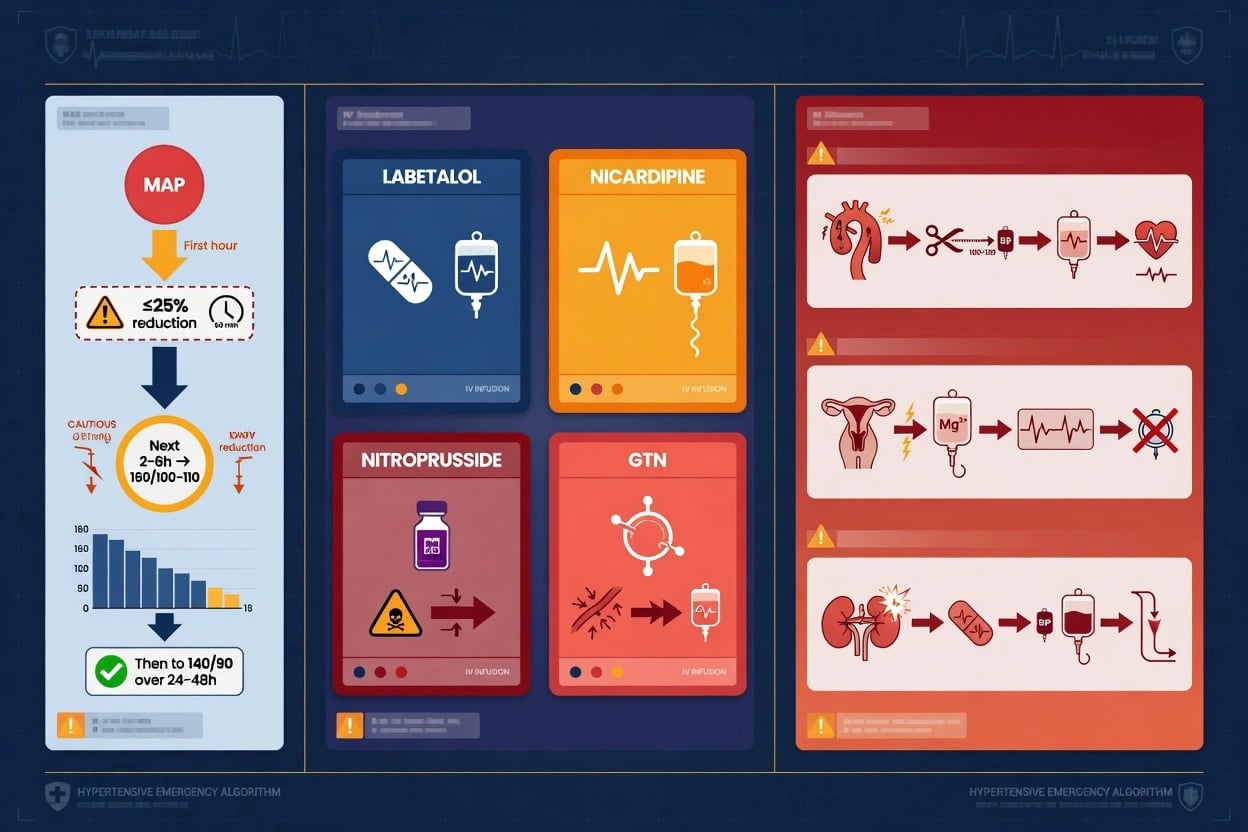
Hypertensive emergency = a severe elevation of blood pressure (typically SBP 180 and/or DBP 120 mmHg) accompanied by ACUTE ongoing target-organ damage (cerebral — encephalopathy, intracerebral haemorrhage, ischaemic stroke; cardiac — acute coronary syndrome, acute pulmonary oedema, aortic dissection; renal — acute kidney injury with proteinuria/microangiopathy; retina — papilloedema and flame haemorrhages; pregnancy — pre-eclampsia/eclampsia). It is distinguished from hypertensive URGENCY (severe BP but NO acute end-organ damage), which is managed with ORAL agents over 24-48 h. The central pathophysiological principle is the cerebral autoregulation curve: in chronic hypertension the curve shifts to the RIGHT, so the brain depends on a higher mean arterial pressure (MAP) to maintain perfusion. Reducing BP too rapidly or to 'normal' values drops cerebral blood flow below the autoregulatory threshold and causes ISCHAEMIC stroke — hence the safe target for most emergencies is a 10-20% MAP reduction in the first hour, then gradual reduction to ~160/100 mmHg over 2-6 h. EXCEPTIONS requiring aggressive, immediate reduction are aortic dissection (SBP to 100-120 mmHg, beta-blocker FIRST to lower dP/dt) and ischaemic stroke pending thrombolysis decision. MANAGEMENT is in ICU/HDU with an arterial line and a titratable IV agent; drug selection is dictated by the SPECIFIC emergency: labetalol (alpha + beta-blocker, versatile, safe in pregnancy and post-stroke), nicardipine (smooth titratable calcium-channel blocker, the preferred agent for most), clevidipine (ultra-short-acting dihydropyridine), nitroglycerin (ACS and pulmonary oedema), esmolol (aortic dissection — titratable beta-blockade), hydralazine (pregnancy), phentolamine (phaeochromocytoma — alpha-blockade), and fenoldopam (renal-protective). AVOID sodium nitroprusside where possible (cyanide/thiocyanate toxicity, increases intracranial pressure, coronary steal) and NEVER give sublingual nifedipine (unpredictable precipitous fall - stroke/MI). SPECIAL CASES: intracerebral haemorrhage - lower SBP to 140 mmHg (INTERACT2 — intensive lowering to 140 improved functional outcome); pre-eclampsia/eclampsia - MAGNESIUM SULPHATE FIRST for seizure prevention/treatment, then labetalol/hydralazine; phaeochromocytoma - ALPHA-blockade (phentolamine/phenoxybenzamine) BEFORE any beta-blocker (unopposed alpha-1 stimulation - catastrophic hypertension); cocaine-induced - BENZODIAZEPINES first (calm sympathetic surge), avoid pure beta-blockers (unopposed alpha).
On this page & tools
Your progress
Saved locally on this device.
Target exams
Red flags
Overview and definition
A hypertensive emergency is a severe elevation of blood pressure associated with acute, ongoing target-organ damage — a state in which the rate and magnitude of the pressure rise (or the vascular injury it produces) threatens the brain, heart, great vessels, kidneys, retina, or the gravid uterus within hours. The numerical threshold most often quoted is SBP >180 mmHg and/or DBP >120 mmHg, but the absolute number is far less important than the evidence of acute end-organ injury: a patient with a SBP of 230 and papilloedema, confusion and a rising creatinine has an emergency, while an asymptomatic patient with the same pressure has urgency. The distinction is the single most important triage decision and dictates whether therapy is intravenous and immediate (emergency) or oral and gradual (urgency).[1][2]
Hypertensive emergencies account for roughly 1-2% of all emergency department hypertension presentations and carry an in-hospital mortality that, even with optimal care, approaches 5-10% in contemporary series — driven largely by the underlying emergency (aortic dissection, pulmonary oedema, intracerebral haemorrhage) rather than the pressure itself. The Studying the Treatment of Acute hyperTension (STAT) registry captured the real-world practice patterns and outcomes of >2,500 patients with acute severe hypertension treated with IV agents in US emergency departments and ICUs, and it established several uncomfortable truths: the median time to BP target was longer than guideline recommendations, the initial BP reduction was frequently excessive (a known cause of end-organ hypoperfusion), and agents were often chosen by habit rather than by the specific indication.[6]
The pathophysiological thread running through every hypertensive emergency is loss of pressure-dependent vascular homeostasis. Chronic hypertension remodels resistance vessels (hypertrophy of the medial smooth muscle, reduced lumen-to-wall ratio), which protects the distal arterioles from high pressure but at a cost: the cerebral (and renal) autoregulation curve shifts to the right. The brain, which in a normotensive person holds cerebral blood flow constant between MAP ~60 and 150 mmHg, now requires a higher MAP to maintain perfusion; below this higher floor, perfusion falls steeply. This is the indispensable physiological reason that blood pressure must be lowered gradually and never to 'normal' in the acute setting — a rapid drop to a textbook 120/80 in a chronically hypertensive brain produces iatrogenic cerebral ischaemia and stroke.[4]
Hypertensive emergency vs urgency — the triage decision
Hypertensive EMERGENCY vs URGENCY — the distinction that dictates everything
| Feature | Hypertensive EMERGENCY | Hypertensive URGENCY |
|---|---|---|
| Definition | Severe BP + ACUTE ongoing target-organ damage | Severe BP WITHOUT acute end-organ damage |
| Typical BP | SBP >180 and/or DBP >120 (often much higher) | SBP >180 and/or DBP >120 |
| Clinical features | Encephalopathy, stroke, ACS, pulmonary oedema, aortic dissection, AKI, papilloedema, eclampsia | Asymptomatic, or mild headache/epistaxis/anxiety only |
| Setting | ICU/HDU; arterial line; titratable IV agent | Emergency department observation / outpatient |
| Therapy | Immediate IV antihypertensive infusion, titrated | Oral agents (amlodipine, captopril, doxazosin); reduce over 24-48 h |
| BP target | Reduce MAP by 10-20% in first hour, then to 160/100 over 2-6 h (exceptions below) | Gradual reduction to baseline over 24-48 h |
| Danger of rapid reduction | Yes — hypoperfusion of brain/heart/kidney | Yes — precipitous fall -> ischaemia |
| Prognosis | Significant morbidity/mortality; depends on the emergency | Low short-term mortality; high long-term CV risk if untreated |
The clinical error of treating urgency like an emergency — rushing in with sublingual nifedipine or an aggressive IV infusion — is as dangerous as treating an emergency like an urgency. Asymptomatic severe hypertension is not an emergency: the asymptomatic patient is managed with oral agents, an arrangement for close follow-up, and reinstitution/uptitration of chronic therapy. The red flags that convert an asymptomatic high pressure into an emergency are the target-organ syndromes listed below.[1][2]
Cerebral autoregulation — the central principle
[1]This single concept — the shifted, breached, then re-protected autoregulation curve — governs the timing, the depth, and the rate of every BP reduction in a hypertensive emergency. The deliberate, controlled 10-20% reduction is not a conservative gesture; it is the precise physiological target that restores autoregulation without crossing into ischaemia. [1]
Blood pressure reduction targets
The BP target is scenario-specific, but the default for most neurological and renal emergencies follows the staged, gradual principle.[1][2]
BP reduction targets by clinical scenario
| Scenario | First hour | Next 2-6 h | Rationale / evidence |
|---|---|---|---|
| Most emergencies (default) | Reduce MAP by 10-20% | Gradually to ~160/100 mmHg | Protect the rightward-shifted autoregulation curve; avoid hypoperfusion.[4] |
| Hypertensive encephalopathy | Reduce MAP by 10-20-25% | To ~160/100 over 2-6 h | Restore autoregulation, relieve PRES; watch GCS for over-shoot |
| Acute intracerebral haemorrhage | SBP to 140 mmHg (within 1 h, if achievable) | Maintain SBP 130-150 | INTERACT2: intensive lowering (SBP <140) improved functional outcome vs <180; ATACH2 confirmed safety of 130-150.[5] |
| Acute ischaemic stroke (not for thrombolysis) | Do NOT lower unless >220/120 or other emergency | Permissive hypertension | Cerebral perfusion depends on collateral flow |
| Acute ischaemic stroke (for thrombolysis) | Lower to <185/110 before thrombolysis | Maintain <180/105 for 24 h | thrombolysis eligibility requirement |
| Aortic dissection (EXCEPTION) | SBP to 100-120 mmHg rapidly; HR 60-80 | Maintain 100-120 | Reduce dP/dt to halt propagation; beta-blocker FIRST |
| Pre-eclampsia / eclampsia | SBP <160 / DBP <110 | Maintain | Prevent stroke (the maternal killer); magnesium FIRST |
| ACS / acute pulmonary oedema | Prompt reduction to relieve ischaemia/congestion | Titrate to symptoms | Nitroglycerin preferred; do not drop coronary perfusion |
| Phaeochromocytoma crisis | Controlled reduction after alpha-blockade | Titrate | Alpha-blockade first to avoid unopposed alpha stimulation |
Recognition and the immediate ICU response
Stepwise ICU management of a hypertensive emergency
- RECOGNISE AND TRIAGE (the first 5-10 minutes). (a) Establish that this is a true EMERGENCY (severe BP + acute end-organ damage) and not urgency — the answer dictates IV vs oral therapy. (b) Identify the SPECIFIC emergency, because drug selection and the BP target are scenario-driven. The syndromes to actively seek: hypertensive encephalopathy (headache, visual disturbance, confusion, seizures, papilloedema), intracerebral haemorrhage (focal deficit, reduced GCS), ischaemic stroke, ACS (chest pain, ECG changes, troponin), acute pulmonary oedema, aortic dissection (tearing chest/back pain, pulse/BP differential), severe AKI/microangiopathy, and (in pregnancy) pre-eclampsia/eclampsia. (c) Place the patient in ICU/HDU with continuous cardiac monitoring and large-bore IV access.[2]
- ESTABLISH ACCURATE BLOOD PRESSURE MEASUREMENT. (a) Insert an ARTERIAL LINE — cuff pressures are unreliable at extremes and during rapid titration. (b) Confirm the reading in both arms (a >20 mmHg systolic differential suggests aortic dissection or subclavian stenosis). (c) Treat the patient, not the number: a confused, fluid-depleted patient with a SBP of 220 may have a true MAP far lower than it appears, and aggressive vasodilation will precipitate collapse.[2]
- RAPID FOCUSED ASSESSMENT. (a) Neurological: GCS, pupils, focal deficits, fundoscopy (papilloedema, flame haemorrhages — Keith-Wagener-Barker grade IV retinopathy). (b) Cardiovascular: heart sounds, murmurs (new aortic regurgitant murmur in dissection), pulse and BP in all four limbs, JVP, lung fields (pulmonary oedema), abdominal bruit (renal artery stenosis). (c) Investigations: 12-lead ECG (ischaemia, LVH with strain), chest X-ray (mediastinal widening in dissection, pulmonary oedema), urine dipstick (proteinuria, haematuria — malignant hypertension), FBC (microangiopathic haemolytic anaemia — schistocytes), U&E/creatinine (AKI), troponin, lactate, and a pregnancy test in any woman of reproductive age. (d) Cross-sectional imaging dictated by the syndrome: CT brain for any neurological emergency, CT angiography of the chest for suspected dissection.[1]
- START A TITRATABLE IV AGENT — CHOSEN BY THE SPECIFIC EMERGENCY. (a) Default versatile agents: labetalol (alpha + beta-blocker) or nicardipine (dihydropyridine calcium-channel blocker). (b) Both are given by infusion, titrated every 5-15 minutes against an arterial-line BP and a defined target. (c) AVOID oral/sublingual agents, and AVOID sodium nitroprusside except in exceptional circumstances (cyanide toxicity, raises ICP). (d) Drug-specific guidance is in the tables below.[2][6]
- REDUCE BP GRADUALLY TO THE SCENARIO-SPECIFIC TARGET. (a) For most emergencies, reduce MAP by 10-20% in the first hour, then gradually to ~160/100 over 2-6 h. (b) Do NOT normalise. (c) EXCEPTIONS — aortic dissection (rapid reduction to SBP 100-120, beta-blocker first), intracerebral haemorrhage (SBP to 140 within 1 h per INTERACT2), and pre-eclampsia/eclampsia (SBP <160 / DBP <110, magnesium first). (d) Continuously reassess the patient: a falling GCS during BP reduction means you have crossed below the autoregulatory floor — allow the pressure to rise.[4][5]
- IDENTIFY AND TREAT THE PRECIPITANT AND THE CAUSE. (a) Common precipitants: medication non-adherence (the single commonest cause), cocaine/amphetamines, NSAIDs/steroids/erythropoietin, oral contraceptives, clonidine withdrawal, renovascular disease, CKD, and (in pregnancy) pre-eclampsia. (b) Screen for SECONDARY hypertension in every patient — plasma metanephrines (phaeochromocytoma), aldosterone:renin ratio (primary hyperaldosteronism), renal artery Doppler/CT angiography (renovascular disease), urinary drug screen. (c) Plan transition from IV to oral therapy once the patient is stable and the target maintained for 6-12 h; resume and optimise the chronic antihypertensive regimen.
- MONITOR AND PREVENT COMPLICATIONS. (a) Continuous arterial-line BP, hourly GCS and urine output, serial creatinine/electrolytes, and cardiac monitoring. (b) Watch for over-shoot hypotension (cerebral/cardiac ischaemia, AKI) — the commonest iatrogenic harm, often from too-aggressive titration. (c) Watch for rebound hypertension if an infusion is stopped abruptly. (d) Address volume status — many patients are volume-depleted from pressure natriuresis and benefit from cautious fluid; vasodilating an empty patient causes collapse.
IV antihypertensive agents
IV antihypertensive agents — pharmacology, indications, and pitfalls
| Agent | Class / mechanism | Dosing | Onset / duration | Best indications | Key cautions |
|---|---|---|---|---|---|
| Labetalol | Combined alpha-1 (non-selective) + non-selective beta-blocker (alpha:beta ~1:7 IV) | Bolus 10-20 mg over 2 min, repeat q10 min (max 300 mg); or infusion 1-2 mg/min (up to 8 mg/min) | 2-5 min / 2-4 h | The VERSATILE default: encephalopathy, pregnancy (pre-eclampsia), post-stroke, aortic dissection (with esmolol), post-operative | Avoid in severe asthma/COPD, heart block, bradycardia, severe LV failure; reduces heart rate (helpful in dissection) |
| Nicardipine | Dihydropyridine calcium-channel blocker (arteriolar vasodilator) | Infusion 5 mg/h, titrate by 2.5 mg/h q5 min (max 15 mg/h) | 5-15 min / 4-6 h (post-cessation) | SMOOTH, TITRATABLE — the preferred agent for most; renal impairment, stroke, post-operative | Caution in advanced heart failure (negative inotropy at high dose); phlebitis at peripheral line |
| Clevidipine | Ultra-short-acting dihydropyridine CCB (arteriolar) | Infusion 1-2 mg/h, double q90 sec (max 32 mg/h) | 1-2 min / 5-15 min | Ultra-short acting, exquisite titratability; perioperative, acute severe HTN (VELOCITY trial) | Lipid emulsion — contraindicated in egg/soy allergy, defective lipid metabolism; costs |
| Esmolol | Ultra-short cardioselective beta-1 blocker | Bolus 500 mcg/kg, infusion 50-300 mcg/kg/min | 1-2 min / 10-20 min | AORTIC DISSECTION (titratable beta-blockade to HR 60-80, FIRST, before vasodilation) | Asthma, heart block, bradycardia; hypotension |
| Nitroglycerin (GTN) | Venodilator (preload) + mild arteriolar (afterload); coronary vasodilator | Infusion 5-200 mcg/min | 2-5 min / 5-10 min | ACUTE CORONARY SYNDROME, acute pulmonary oedema (hypertensive ADHF) | Hypotension; headache; tachyphylaxis; weak arteriolar dilator — not first-line for pure BP crises; PDE-5 interaction |
| Hydralazine | Direct arteriolar smooth-muscle relaxant | Bolus 5-10 mg IV q20-30 min; or infusion 0.5-10 mg/h | 10-20 min / 3-6 h (unpredictable) | PREGNANCY (pre-eclampsia/eclampsia) — safe, long used | Reflex tachycardia; increases intracranial pressure; unpredictable onset/duration — hard to titrate; lupus-like syndrome (chronic) |
| Sodium nitroprusside | Potent arterial + venous vasodilator (NO donor) | Infusion 0.3-3 mcg/kg/min (max 10 mcg/kg/min) | Seconds / 1-2 min | Historically the 'gold standard'; now AVOIDED — reserve for refractory cases | CYANIDE/THIOCYANATE TOXICITY (esp. renal failure, prolonged infusion >48 h, high dose); INCREASES ICP; coronary steal; raises mortality signals |
| Fenoldopam | Selective dopamine-1 (DA-1) receptor agonist (arteriolar + renal vasodilator, natriuretic) | Infusion 0.1-1.6 mcg/kg/min | 5-10 min / 10-15 min | Renal-protective profile; useful in AKI/pre-renal impairment; post-operative | Reflex tachycardia; headache; intraocular pressure rise (avoid glaucoma); expensive |
| Phentolamine | Non-selective alpha-1/alpha-2 antagonist | Bolus 1-5 mg IV, repeat; infusion 0.2-0.5 mg/min | 1-2 min / 10-30 min | PHAEOCHROMOCYTOMA crisis (the definitive alpha-blocker) | Reflex tachycardia; flush; nasal stuffiness; must follow with beta-blocker once alpha-blockade established |
Drug selection by specific emergency
The choice of agent is dictated by the target organ and the scenario, not by habit. The STAT registry documented that agents were frequently chosen for convenience, contributing to over-rapid or inappropriate reductions; modern practice is deliberately scenario-driven.[6]
Scenario → preferred agent(s) → target — the bedside prescription
| Emergency | Preferred IV agent(s) | BP target (first hour) | Avoid |
|---|---|---|---|
| Hypertensive encephalopathy | Nicardipine OR labetalol | MAP -10-20% (to ~160/100 over 2-6 h) | Nitroprusside (raises ICP); rapid normalisation |
| Acute intracerebral haemorrhage | Nicardipine (preferred); labetalol | SBP to 140 mmHg (INTERACT2) | Nitroprusside; over-rapid drop below 130 (ATACH2 harm signal) |
| Acute ischaemic stroke (no thrombolysis) | None unless SBP >220/120 — then labetalol/nicardipine cautiously | Permissive hypertension | Aggressive reduction (worsens infarct) |
| Acute ischaemic stroke (thrombolysis) | Labetalol or nicardipine | <185/110 before, <180/105 after | Nitroprusside |
| Aortic dissection | ESMOLOL (or labetalol) FIRST → then nicardipine/nitroprusside | SBP 100-120, HR 60-80 | Vasodilator BEFORE beta-blockade (reflex tachycardia, increased dP/dt, propagation) |
| ACS / hypertensive pulmonary oedema | Nitroglycerin (+ low-dose loop diuretic); labetalol | Prompt reduction to relieve ischaemia | Nitroprusside (coronary steal); pure beta-blocker in acute LV failure |
| Pre-eclampsia / eclampsia | Labetalol or hydralazine; magnesium FIRST | SBP <160 / DBP <110 | ACE inhibitors (fetotoxic); nitroprusside; sublingual nifedipine |
| Phaeochromocytoma crisis | PHENTOLAMINE (alpha-blockade) FIRST → then beta-blocker | Controlled reduction | Beta-blocker BEFORE alpha-blockade (unopposed alpha) |
| Cocaine / sympathomimetic crisis | BENZODIAZEPINES first → then phentolamine/nicardipine | Gradual reduction | PURE beta-blockers (unopposed alpha); labetalol debated |
| Acute kidney injury / malignant HTN | Nicardipine, labetalol, fenoldopam | MAP -10-20%, gradual | Diuretics unless volume-overloaded; ACE inhibitors acutely |
| Post-operative / perioperative | Clevidipine, nicardipine | Per surgical target | Avoid long-acting oral agents in fasted patient |
Specific emergencies in depth
Hypertensive encephalopathy and PRES
Hypertensive encephalopathy presents with severe headache, nausea, vomiting, visual disturbance, confusion, seizures, and progression to coma. Fundoscopy shows papilloedema and retinal flame haemorrhages. The mechanism is breakthrough of the (rightward-shifted) cerebral autoregulation ceiling: at extreme pressures, cerebral resistance vessels are forced open, producing hyperperfusion, blood-brain-barrier disruption, and vasogenic oedema. The MRI signature is posterior reversible encephalopathy syndrome (PRES) — T2/FLAIR white-matter oedema in the parieto-occipital regions, which (true to its name) reverses with controlled BP reduction. Management is nicardipine or labetalol to reduce MAP by 10-20% in the first hour; avoid nitroprusside (raises ICP); treat seizures with IV benzodiazepines then levetiracetam/phenytoin. Symptoms typically resolve within 24-48 h of BP control — failure to improve demands re-imaging for stroke or haemorrhage.[2][4]
Acute intracerebral haemorrhage (INTERACT2)
In spontaneous intracerebral haemorrhage the haematoma expands in the first hours, driven by the arterial pressure, and haematoma growth is the strongest predictor of death and disability. The INTERACT2 trial (Anderson, NEJM 2013, 2,839 patients) randomised ICH patients (SBP 150-220) within 6 h to intensive BP lowering (target SBP <140 within 1 h) versus standard (SBP <180). Intensive lowering did not significantly reduce the primary outcome of death or major disability (52% vs 55.6%; odds ratio 0.87, P=0.06), but it DID produce a statistically significant shift in ordinal modified Rankin scores favouring better functional outcome, with no increase in serious adverse events — establishing SBP ~140 mmHg as the target. The subsequent ATACH2 trial refined this: lowering to 110-139 vs 140-179 showed no benefit and more renal adverse events, so the safe target band is SBP 130-150 mmHg, achieved within 1 h using nicardipine (preferred) or labetalol. The earlier dogma ('reduce by 15-20%, never to normal, for fear of the perihaematomal ischaemic penumbra') is now superseded by the trial evidence, but the principle of controlled (not precipitous) reduction remains.[5]
Acute ischaemic stroke
In acute ischaemic stroke, the ischaemic penumbra is perfusion-dependent; collateral flow relies on systemic pressure, so permissive hypertension is the default — do NOT lower the BP unless it exceeds 220/120 mmHg, or unless the patient is receiving thrombolysis (in which case lower to <185/110 beforehand and maintain <180/105 for 24 h). Use labetalol or nicardipine cautiously. Avoid nitroprusside (increases ICP, may worsen cerebral oedema). [1]
Aortic dissection — the rapid-reduction exception
Aortic dissection is the prototypical exception to the gradual-reduction rule: propagation of the dissection flap is driven by the rate of rise of arterial pressure (dP/dt), so the immediate goal is to reduce both the pressure and the impulse. The sequence is critical — beta-blockade FIRST (esmolol or labetalol) to lower heart rate to 60-80/min and blunt dP/dt, THEN an arteriolar vasodilator (nicardipine, or nitroprusside in refractory cases) to bring SBP to 100-120 mmHg. Giving a vasodilator without prior beta-blockade causes reflex tachycardia and an increased dP/dt that can extend the dissection — a classic and lethal error. This topic is covered in full in the dedicated aortic dissection module, but the BP principle belongs here. [1]
Acute coronary syndrome and hypertensive pulmonary oedema
In ACS the goals are to reduce myocardial oxygen demand (afterload and preload), relieve ischaemia, and unload the failing ventricle. Nitroglycerin is the agent of choice (coronary vasodilation + preload reduction + afterload reduction), combined with a low-dose loop diuretic and standard anti-ischaemic therapy. In hypertensive acute pulmonary oedema (the warm-wet hypertensive phenotype), nitroglycerin, NIV, and a loop diuretic are combined; nicardipine or clevidipine are alternatives. Avoid nitroprusside (coronary steal) and avoid pure beta-blockade in acute LV failure. [1]
Pre-eclampsia and eclampsia
[1]Phaeochromocytoma crisis — alpha before beta
[1]Cocaine and sympathomimetic-induced crisis
Cocaine and amphetamines provoke a surge of sympathetic outflow (noradrenaline, dopamine, and serotonin), producing hypertension, tachycardia, vasoconstriction, agitation, and a risk of ACS, aortic dissection, and stroke. First-line therapy is BENZODIAZEPINES (diazepam/lorazepam), which calm the central sympathetic surge and lower BP and heart rate. Avoid pure beta-blockers — they leave alpha-mediated vasoconstriction unopposed (the same mechanism as in phaeochromocytoma) and may worsen hypertension and coronary vasoconstriction; the literature (and modern guidelines) recommend a benzodiazepine first, then a vasodilator (nitroglycerin for chest pain/ischaemia, phentolamine for refractory hypertension, nicardipine as an alternative). Labetalol (mixed alpha + beta) is debated and generally avoided in pure cocaine toxicity. [1]
Errors to avoid — the classic pitfalls
Evidence — the Cochrane review
The Cochrane systematic review by Perez, Musini and Wright (2008) — the most rigorous appraisal of the evidence base for drug therapy in hypertensive emergencies — concluded that there is a striking paucity of high-quality randomised trial evidence comparing one IV antihypertensive against another, or against placebo, for the outcome of mortality or major morbidity. The trials are small, short, open-label, and almost universally powered only for BP reduction (a surrogate), not for patient-centred outcomes. The practical consequence is that drug selection is driven by the specific emergency, the agent's pharmacology, and patient comorbidity — not by evidence of one drug's superiority over another. This is why a scenario-driven approach (the table above) rather than a 'one drug for all' habit is the standard.[3]
Clinical pearls
Red flags
Prognosis
Hypertensive emergency — the landmark trials, registries, and outcomes
2017 ACC/AHA Hypertension Guideline (Whelton, JACC 2018): redefined hypertension (SBP >=130 or DBP >=80), reframed staging, and codified the emergency/urgency distinction and the staged, scenario-driven BP-reduction targets.[1] ESC Council on Hypertension position document (van den Born, EHJ-CVP 2019): the contemporary European consensus on hypertensive emergencies — definitions, specific syndromes, agent pharmacology, and scenario-driven drug selection.[2] Cochrane review (Perez, Musini, Wright, 2008): the rigorous systematic review demonstrating the thin evidence base for IV antihypertensive choice in emergencies; no agent proven superior for mortality/morbidity.[3] Immink (Circulation 2004): the seminal demonstration that cerebral autoregulation is impaired/shifted in malignant hypertension — the physiological basis for gradual, sub-normalisation BP reduction.[4] INTERACT2 (Anderson, NEJM 2013): 2,839 ICH patients; intensive SBP lowering to <140 within 1 h produced a significant ordinal shift to better functional outcome, no excess harm — target SBP 130-150.[5] STAT registry (Katz/Gore/Amin, Am Heart J 2009): >2,500 patients with acute severe hypertension treated with IV agents; documented real-world time-to-target, over-rapid reduction, and habit-driven agent choice — the case for scenario-driven therapy.[6]
Hypertensive emergency — outcomes and key numbers
Outcomes. With prompt, scenario-driven ICU management the in-hospital mortality of hypertensive emergency is roughly 5-10%, driven by the underlying syndrome (highest in aortic dissection, massive ICH, and pulmonary oedema) rather than the pressure itself. Long-term cardiovascular morbidity is high, and recurrence is common if the precipitant is not addressed and the chronic regimen not re-established. The strongest modifiable protections are accurate triage (emergency vs urgency), a controlled scenario-specific BP target, an appropriately chosen titratable IV agent, identification and treatment of the cause, and a structured transition to effective oral therapy with close follow-up. The STAT registry's lessons — that real-world practice too often delivers over-rapid reduction and habit-driven agent choice — remain the clearest argument for disciplined, protocol-driven care.[1][2][6]
Examiner densify anchors
SAQ — Severe hypertension with chest pain radiating to the back
12 minutes · 10 marks
A 58-year-old man with chronic hypertension presents with tearing interscapular pain, SBP 220 mmHg, unequal arm BPs, and a widened mediastinum on CXR. GCS 15. Creatinine is mildly elevated. You are asked to control his blood pressure in ICU.
Practical ICU checklist (densify)
Bedside densify checklist
- Confirm diagnosis thresholds with numbers the examiner expects.
- Name the first therapy and the absolute contraindication.
- State monitoring frequency and escalation triggers.
- Cite one landmark paper/guideline and one limitation of the evidence.
- Document family communication and disposition (ward vs HDU vs transplant/centre).
References
- [1]Whelton PK, Carey RM, Aronow WS, et al. 2017 ACC/AHA/AAPA/ABC/ACPM/AGS/APhA/ASH/ASPC/NMA/PCNA Guideline for the Prevention, Detection, Evaluation, and Management of High Blood Pressure in Adults: A Report of the American College of Cardiology/American Heart Association Task Force on Clinical Practice Guidelines J Am Coll Cardiol, 2018.PMID 29146535
- [2]van den Born BH, Lip GYH, Brguljan-Hitij J, et al. ESC Council on hypertension position document on the management of hypertensive emergencies Eur Heart J Cardiovasc Pharmacother, 2019.PMID 30165588
- [3]Perez MI, Musini VM, Wright JM. Pharmacological interventions for hypertensive emergencies Cochrane Database Syst Rev, 2008.PMID 18254026
- [4]Immink RV, van den Born BJ, van Montfrans GA, Koopmans RP, Karemaker JM, van Lieshout JJ. Impaired cerebral autoregulation in patients with malignant hypertension Circulation, 2004.PMID 15466625
- [5]Anderson CS, Heeley E, Huang Y, et al.; INTERACT2 Investigators. Rapid blood-pressure lowering in patients with acute intracerebral hemorrhage N Engl J Med, 2013.PMID 23713578
- [6]Katz JN, Gore JM, Amin A, Anderson FA Jr, Dasta JF, Fleming JL, Pollack CV Jr; STAT Investigators. Practice patterns, outcomes, and end-organ dysfunction for patients with acute severe hypertension: the Studying the Treatment of Acute hyperTension (STAT) registry Am Heart J, 2009.PMID 19781420