ICU · diagnostics
ICU Biomarkers — Comprehensive (Procalcitonin, Lactate, Troponin, BNP/NT-proBNP)
ICU biomarkers — laboratory tests that guide diagnosis, prognosis, and treatment decisions in critically ill patients. Five key biomarkers: (1) PROCALCITONIN (PCT) — prohormone of calcitonin — rises in BACTERIAL infection (not viral/fungal/non-infectious inflammation) — used to guide antibiotic STARTING and STOPPING (PRORATA trial: PCT-guided algorithm reduced antibiotic duration by 2.7 days without adverse outcomes; threshold: 0.5 = start antibiotics, <0.5 OR fall 80% from peak = stop). (2) LACTATE — marker of tissue hypoperfusion/anaerobic metabolism — normal <2 mmol/L, elevated 2 = tissue hypoxia/shock, severe 4 = severe shock — lactate CLEARANCE (≥10% per hour) is the target (Jansen LACTATE trial). (3) TROPONIN — marker of myocyte injury — rises in MI but also in sepsis, PE, renal failure, stroke, CPR — universal in ICU patients — high-sensitivity troponin detects minor injury. (4) BNP / NT-proBNP — marker of ventricular wall stress — rises in heart failure, but also in sepsis, PE, ARDS, renal failure — diagnose HF in dyspnoea. (5) OTHER: D-dimer (PE, DIC, sepsis), CRP (inflammation), procalcitonin variants, presepsin, suPAR, mid-regional pro-adrenomedullin, lactate clearance vs central venous oxygen saturation as resuscitation target.
On this page & tools
Your progress
Saved locally on this device.
Target exams
Overview & Definition
ICU biomarkers are laboratory tests that guide diagnosis, prognosis, and treatment decisions in critically ill patients. The most important biomarkers in ICU practice are procalcitonin (PCT), lactate, troponin, and BNP/NT-proBNP, with secondary biomarkers including D-dimer, CRP, presepsin, pro-adrenomedullin, and suPAR. Biomarkers must always be interpreted in the clinical context — they are not standalone diagnostic or therapeutic tools.[1][1]
Procalcitonin (PCT)
Procalcitonin is the prohormone of calcitonin, normally produced by thyroid C-cells. In bacterial infection, PCT is produced by neuroendocrine cells throughout the body (especially in the liver, kidney, and adipose tissue) under stimulation of bacterial endotoxin and pro-inflammatory cytokines (IL-1, IL-6, TNF-alpha). PCT rises within 2 to 4 hours of bacterial infection onset, peaks at 12 to 24 hours, and falls rapidly (half-life 24 hours) with effective antibiotic treatment. In viral infection, PCT is suppressed by interferon-gamma. In non-infectious inflammation (autoimmune, surgical), PCT is usually only mildly elevated.[1][1]
Interpretation: PCT under 0.1 ng/mL = bacterial infection unlikely (high NPV); 0.1 to 0.5 = low risk, monitor; 0.5 to 2.0 = moderate risk, consider antibiotics; over 2.0 = high risk, start antibiotics. PCT may also be elevated in non-bacterial conditions: severe trauma, surgery (peaks 1 to 2 days post-op), burns, prolonged cardiogenic shock with mesenteric ischaemia, severe renal failure, medullary thyroid carcinoma, neonatal (first 48 hours), paraneoplastic syndromes. [1]
Clinical uses:
- Antibiotic stewardship: PRORATA trial (2016, Lancet) showed PCT-guided antibiotic algorithms in ICU patients with suspected bacterial infection reduced antibiotic exposure (median 2.7 days less) without adverse outcomes; SAPS and SOFA scores were not worsened. Stop antibiotics when PCT under 0.5 ng/mL OR falls over 80 percent from peak.
- Sepsis diagnosis: adjunctive to clinical criteria; high NPV in low-risk patients.
- Prognosis: persistent elevation suggests poor source control or treatment failure; falling PCT suggests response. [1]
Lactate
Lactate is produced by anaerobic glycolysis when tissue oxygen delivery is insufficient to meet demand. Elevated lactate (lactic acidosis) is a key marker of tissue hypoperfusion, anaerobic metabolism, and cellular stress.[1][1]
Interpretation:
- Normal: under 2 mmol/L (some guidelines under 1.5).
- Mild elevation (2 to 4): early tissue hypoxia, stress response, beta-agonists, liver dysfunction, haematological malignancy (Warburg effect), thiamine deficiency, mitochondrial disease.
- Moderate to severe (over 4): severe shock (septic, cardiogenic, hypovolaemic, haemorrhagic), ischaemia (mesenteric, limb), severe hypoxaemia, severe liver failure, metformin, linezolid, propofol (PRIS), cyanide, carbon monoxide, seizures (post-ictal), status epilepticus, beta-agonist (adrenaline, salbutamol — causes type B lactic acidosis without hypoperfusion). [1]
Type A lactic acidosis (with tissue hypoxia): shock, severe hypoxaemia, severe anaemia, CO poisoning, cyanide. [1]
Type B lactic acidosis (no tissue hypoxia): drugs (metformin, linezolid, propofol), malignancy (lymphoma, leukaemia — Warburg), thiamine deficiency, mitochondrial disease, inborn errors, liver failure, sepsis (mixed — type A and B with mitochondrial dysfunction). [1]
Clinical uses:
- Sepsis resuscitation: serum lactate over 2 mmol/L identifies sepsis with poor prognosis; lactate clearance is the resuscitation target (Jansen LACTATE trial — 10 percent reduction per hour, repeat lactate every 2 to 4 hours). Surviving Sepsis Campaign: target lactate normalisation within 6 hours.
- Shock: differentiate compensated from decompensated shock.
- Prognosis: persistent elevation despite resuscitation is associated with high mortality.
- Mixed venous oxygen saturation (ScvO2): complementary target in early goal-directed therapy (Rivers EGDT 2001, now evolved to balanced fluid, MAP, lactate clearance).
- Differentiate seizure vs syncope: post-ictal lactate rises transiently. [1]
Troponin
Troponin (cardiac troponin I or T) is the gold-standard biomarker for myocyte injury, released from cardiomyocytes within 2 to 4 hours of injury and persisting 7 to 14 days. High-sensitivity troponin (hsTn) detects minor injury with high precision (10-fold lower limit of detection).[1]
Causes of troponin elevation:
- Acute MI (type 1, plaque rupture; type 2, supply-demand mismatch).
- Other cardiac: myocarditis, pericarditis, takotsubo, arrhythmia (AF with rapid response, post-cardioversion), heart failure (acute or chronic), hypertensive emergency, aortic dissection, cardiac contusion, cardiac surgery/intervention, CPR.
- Non-cardiac critical illness: sepsis (over 50 percent of ICU patients have elevated troponin), PE, ARDS, renal failure, stroke, subarachnoid haemorrhage, severe anaemia, hypoxia, rhabdomyolysis, strenuous exercise. [1]
Interpretation in ICU:
- Elevated troponin is common in ICU patients (over 50 percent in some studies) and does not always indicate MI.
- Type 2 MI (supply-demand mismatch) is common in ICU: tachycardia, hypotension, anaemia, hypoxia, sepsis.
- Prognostic value: elevated troponin in sepsis, PE, stroke, and critical illness is associated with higher mortality (independent marker of severity).
- Delta troponin (change over 3 to 6 hours) helps differentiate acute injury from chronic elevation. [1]
BNP and NT-proBNP
BNP (B-type natriuretic peptide) and NT-proBNP (N-terminal pro-BNP) are released from ventricular cardiomyocytes in response to wall stress, pressure, and volume overload. They are useful for diagnosing and prognosticating heart failure, but also elevated in many ICU conditions.[1]
Interpretation:
- Normal (varies by age and assay): NT-proBNP under 125 pg/mL (under 50), BNP under 100 pg/mL (under 50) — high NPV for heart failure.
- Mildly elevated (100 to 500 NT-proBNP, 100 to 500 BNP): mild HF, but also pulmonary disease, AF, renal impairment.
- Moderately elevated (500 to 1000): moderate HF, or non-HF.
- Severely elevated (over 1000 to 2000): severe HF (in absence of renal failure or other confounders).
- Confounders: age (increases with age), renal failure (decreased clearance, may be 5 to 10 times higher), female sex, sepsis, PE, ARDS, pulmonary hypertension, anaemia. [1]
Clinical uses:
- Acute dyspnoea in ED or ICU: low NT-proBNP argues against heart failure; high NT-proBNP supports HF but is not specific in ICU.
- Prognosis: higher NT-proBNP in ICU (regardless of cause) is associated with mortality.
- Heart failure therapy titration: limited role in ICU; useful in chronic HF.
- Sepsis: elevated NT-proBNP in sepsis suggests cardiac dysfunction, worse prognosis. [1]
D-dimer, CRP, and Other Markers
D-dimer is a fibrin degradation product, elevated in DVT/PE, DIC, sepsis, trauma, surgery, malignancy, pregnancy, infection. Highly sensitive but not specific; high NPV in low-pretest probability. D-dimer under 500 ng/mL (or age-adjusted) rules out PE in low-risk patients. In ICU, persistently elevated D-dimer suggests PE, DIC, or severe sepsis. [1]
CRP is an acute-phase reactant, elevated in inflammation (infection, autoimmune, malignancy, surgery). Slow to rise (12 to 24 hours), peaks at 48 to 72 hours, normalises over days to weeks with treatment. Not specific for infection; useful for monitoring treatment response in inflammatory conditions. [1]
Presepsin is a fragment of soluble CD14 (sCD14-ST), released from monocytes in response to bacterial infection. Early and specific marker of sepsis; not yet widely available. [1]
Pro-adrenomedullin (MR-proADM) and suPAR are emerging markers of sepsis severity and prognosis. [1]
Lactate clearance vs central venous oxygen saturation (ScvO2): both used in early sepsis resuscitation. Lactate clearance is more practical and now preferred target. ScvO2 over 70 percent indicates adequate oxygen delivery. [1]
Clinical & Bedside Assessment
History and examination: focus on infection (fever, source, surgical), perfusion (BP, mottling, capillary refill, urine output), cardiac (chest pain, ECG, echo), respiratory (work of breathing, oxygenation), volume status (JVP, oedema), renal (urine output, fluid balance), and the suspected cause. Biomarkers are interpreted in this context. [1]
Investigations
Bloods: PCT, lactate (arterial or venous), troponin (high-sensitivity), BNP or NT-proBNP, D-dimer, CRP, FBC, UEC, LFT, glucose, blood gas, blood cultures. Imaging as clinically indicated. Other: ECG, echocardiogram, ultrasound, CT, source identification cultures (urine, sputum, wound, line tips). [1]
Management — Resuscitation
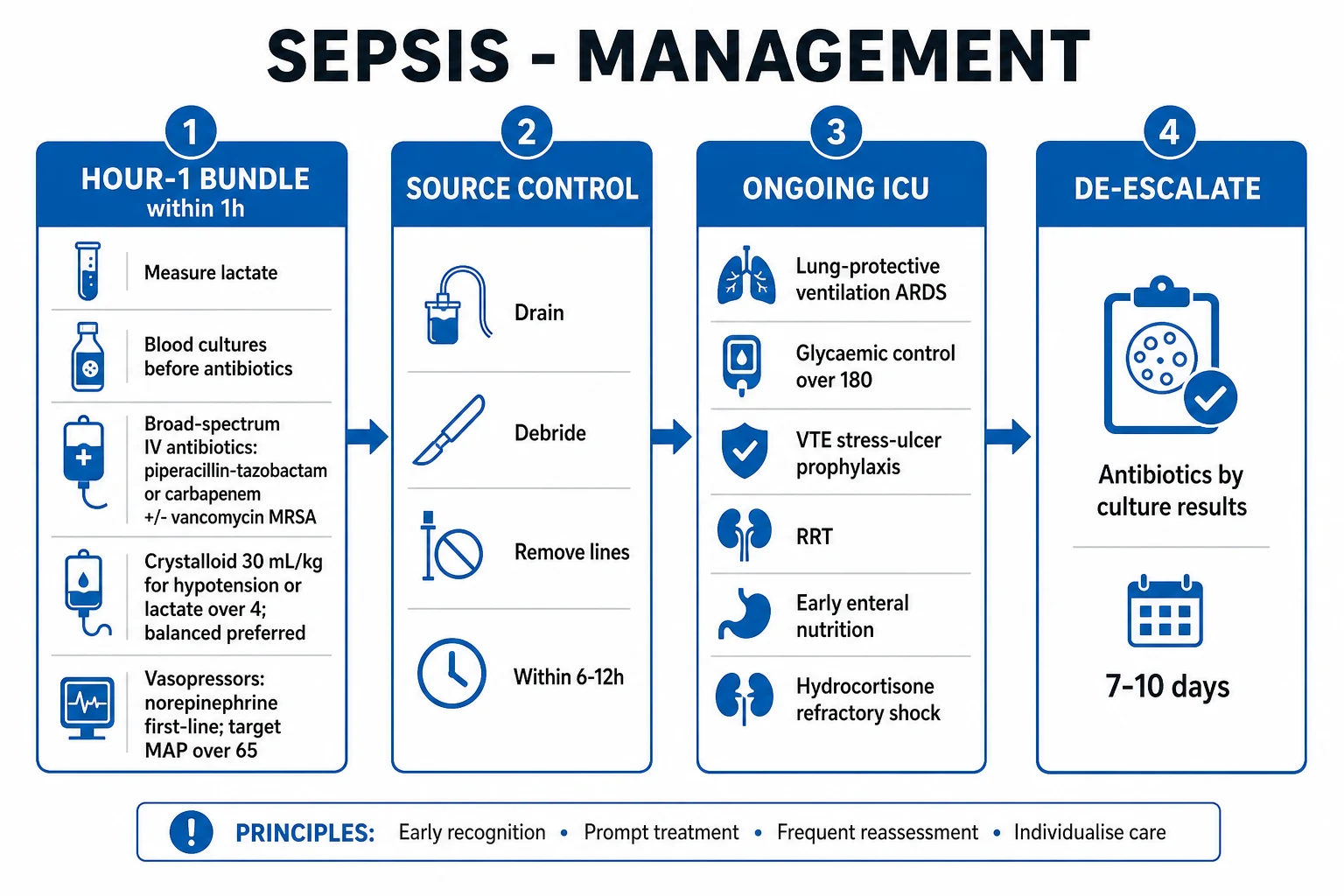
Sepsis with elevated lactate: Surviving Sepsis Campaign Hour-1 bundle: lactate measurement, blood cultures, broad-spectrum antibiotics, IV crystalloid 30 mL/kg if hypotensive or lactate over 4, vasopressors (noradrenaline first-line) for MAP over 65, source control. Lactate clearance as target. EGDT (Rivers 2001) is now replaced by balanced fluid resuscitation, MAP targets, and lactate clearance. Cardiogenic shock with elevated troponin: inotropes, vasopressors, mechanical circulatory support (IABP, Impella, VA-ECMO), revascularisation if MI. Septic cardiomyopathy with elevated BNP: inotropes if hypoperfused, mechanical support if failing. [1]
Management — Definitive
Procalcitonin-guided antibiotic stewardship:
- Start antibiotics if PCT over 0.5 ng/mL AND clinical suspicion of bacterial infection.
- Stop or de-escalate if PCT under 0.25 ng/mL OR falls over 80 percent from peak.
- Reassess if PCT 0.25 to 0.5: monitor closely, repeat in 24 to 48 hours.
- PRORATA trial showed 2.7 days less antibiotics without increased mortality.
- Caveats: post-surgery, severe trauma, severe shock, renal failure, neonates — interpret cautiously. [1]
Lactate-guided resuscitation:
- Repeat lactate every 2 to 4 hours in shock.
- Target lactate normalisation (under 2 mmol/L) within 6 hours.
- Lactate clearance over 10 percent per hour is associated with improved outcomes.
- Persistent elevation despite resuscitation suggests inadequate source control, ongoing hypoperfusion, or refractory shock. [1]
Troponin-guided management:
- New troponin elevation with clinical/ECG evidence of MI: treat as ACS (antiplatelet, anticoagulation, statin, beta-blocker if stable, consider PCI).
- Troponin elevation in sepsis, PE, renal failure, etc.: treat underlying cause; do not treat as MI unless evidence of ACS.
- Serial troponin for high-sensitivity protocol: 0 hour and 1 to 3 hours for rule-out, 0/3/6 hours for rule-in. [1]
BNP/NT-proBNP-guided management:
- High NT-proBNP with dyspnoea: treat as heart failure (diuretics, vasodilators, inotropes if needed).
- Persistently elevated NT-proBNP in HF: prognostic, may guide therapy intensification.
- In sepsis with elevated NT-proBNP: assess for cardiac dysfunction (echo, cardiac output monitoring); inotropes if hypodynamic. [1]
Stepwise Management
- Identify the clinical question (diagnosis, prognosis, treatment monitoring).
- Choose the appropriate biomarker (PCT for infection, lactate for hypoperfusion, troponin for myocyte injury, BNP for HF, D-dimer for PE/DIC, CRP for inflammation).
- Interpret in clinical context (do not use biomarkers in isolation).
- Act on result (treatment initiation, escalation, de-escalation, monitoring).
- Reassess (serial biomarkers to track response).
- Consider confounders (renal failure, age, drugs, non-bacterial inflammation). [1]
Specific Subtypes & Scenarios
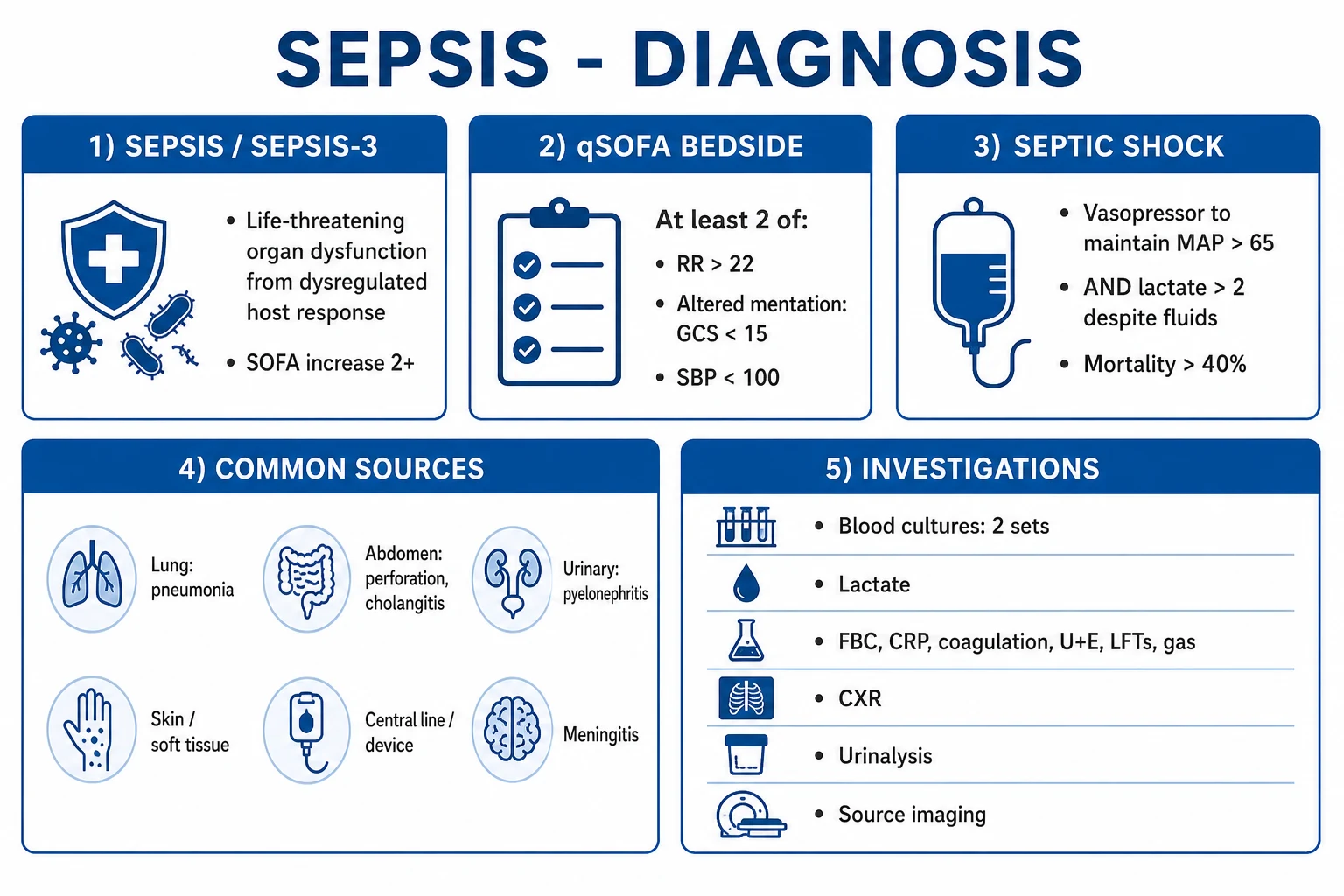
Sepsis with PCT 2.5 ng/mL, lactate 4.5, troponin 80, BNP 800: typical ICU sepsis with bacterial infection, hypoperfusion, sepsis-related myocardial injury, and stress. Hour-1 bundle, antibiotics, fluids, vasopressors; PCT trend to guide antibiotics; lactate clearance as target; treat cause. [1]
Cardiogenic shock with troponin 5000, BNP 2000, lactate 6, PCT 0.1: MI with cardiogenic shock. PCI, inotropes, mechanical support, low-dose vasopressors, diuretics once stable. [1]
Polytrauma with PCT 1.5, lactate 3, troponin 50, CRP 100: post-trauma inflammation with resuscitation, not necessarily bacterial sepsis. PCT may be elevated from injury alone. Reassess, repeat PCT, monitor for infection. [1]
Renal failure with chronic troponin elevation and high BNP: not MI; reflects chronic elevation. Consider trend, clinical context. BNP limited by renal retention. [1]
Seizure with post-ictal lactate 8, troponin normal: type B lactic acidosis from anaerobic glycolysis during seizure; transient; resolves within an hour. [1]
Metformin with elevated lactate: consider metformin-associated lactic acidosis (MALA), especially in renal failure. Stop metformin, support, consider haemodialysis. [1]
Septic patient with persistently elevated lactate despite resuscitation: consider source control (abscess, ischaemia), adrenal insufficiency, refractory shock, mitochondrial dysfunction. [1]
Complications
Over-reliance on biomarkers: leads to inappropriate antibiotic use, false reassurance, missed diagnosis. Always interpret in clinical context. Inappropriate antibiotic discontinuation with low PCT in a patient with clear bacterial infection: PCT can be falsely low (early infection, local infection, prior antibiotics). Missed MI: troponin elevation in sepsis is common, but acute MI may coexist — always assess clinically and with ECG. Renal failure confounding: BNP, troponin, PCT all elevated in renal failure; interpret with caution. [1]
Prognosis and Disposition
Lactate normalisation in sepsis and shock is a strong prognostic indicator (mortality rises with persistent elevation). Troponin elevation in critical illness is independently associated with increased mortality. PCT that fails to fall with treatment is associated with poor outcome (treatment failure, source control failure). BNP/NT-proBNP in HF and critical illness is prognostic. [1]
Special Populations
Paediatric: lactate clearance is prognostic in paediatric sepsis; troponin elevation in Kawasaki disease, myocarditis. Pregnancy: lactate elevation in eclampsia and HELLP; D-dimer elevated normally. Renal failure: PCT, troponin, BNP all chronically elevated; interpret with caution and use trends. Elderly: baseline PCT, troponin may be higher; clinical context essential. Post-cardiac arrest: lactate and troponin both elevated; target lactate normalisation. [1]
Evidence and Guidelines
PRORATA trial (de Jong 2016, Lancet) — PCT-guided antibiotic stewardship in ICU. ProHOSP trial (Schuetz 2009) — PCT in lower respiratory tract infections. Rivers EGDT 2001 — early goal-directed therapy. LACTATE trial (Jansen 2010) — lactate-guided resuscitation. Surviving Sepsis Campaign 2021. PRIDE trial (Maisel 2002) — NT-proBNP for diagnosis of acute heart failure. SOCC and meta-analyses on troponin in critical illness. [1]
Exam Pearls
- Procalcitonin (PCT): rises in bacterial infection; PCT over 0.5 = start antibiotics, under 0.25 or 80 percent fall = stop.
- Lactate: marker of tissue hypoperfusion; target normalisation within 6 hours in sepsis; 10 percent clearance per hour.
- Troponin: rises in MI but also sepsis, PE, renal failure, stroke, CPR; assess clinically, do not treat as MI in isolation.
- BNP / NT-proBNP: marker of ventricular wall stress; high in HF but also sepsis, PE, ARDS, renal failure.
- D-dimer: sensitive but not specific; high NPV in low pretest probability for PE.
- CRP: inflammation marker; not specific for infection; useful for monitoring.
- Hour-1 bundle for sepsis: lactate, cultures, antibiotics, 30 mL/kg fluid, vasopressors.
- EGDT evolved to balanced resuscitation, MAP targets, lactate clearance.
- PCT-guided antibiotic stewardship reduces antibiotic use without harm (PRORATA). [1]
Examiner densify anchors
Exam board focus
CICM Second Part · FFICM · EDIC
Killers to name
Airway loss, refractory shock, missed specific antidote/device, delayed specialty call
Documentation
Thresholds used, therapies with times, family update, disposition
Practical ICU checklist (densify)
Bedside densify checklist
- Confirm diagnosis thresholds with numbers the examiner expects.
- Name the first therapy and the absolute contraindication.
- State monitoring frequency and escalation triggers.
- Cite one landmark paper/guideline and one limitation of the evidence.
- Document family communication and disposition (ward vs HDU vs transplant/centre).
- Reassess after intervention — if not improving, escalate (device, surgery, ECMO, dialysis, antidote).
- Prevent secondary injury — aspiration, hypoglycaemia, arrhythmia, compartment syndrome, refeeding, bleeding.
Extended fellowship notes (densify)
Common exam traps vs correct anchors
| Trap | Why it fails | Correct anchor |
|---|---|---|
| Treating the number only | Misses context | Integrate exam + trend + pre-test probability |
| Delaying specific therapy | Golden window lost | Give antidote/device/reperfusion early |
| One-size-fits-all vent/drug | Phenotype matters | Match therapy to profile (wet/cold, massive vs submassive, etc.) |
| No escalation plan | Freezes at first failure | Pre-state failure criteria and next step |
Densify SAQ — ICU biomarkers — procalcitonin, lactate, troponin, BNP
10 minutes · 10 marks
A CICM/FFICM examiner asks you to manage this presentation at 03:00 in a regional ICU. Structure your answer.
Evidence densify card
Line-fill densify notes
Densify anchor 1
Threshold, therapy, monitoring, or disposition point 1 for viva structure.
Densify anchor 2
Threshold, therapy, monitoring, or disposition point 2 for viva structure.
Densify anchor 3
Threshold, therapy, monitoring, or disposition point 3 for viva structure.
Densify anchor 4
Threshold, therapy, monitoring, or disposition point 4 for viva structure.
Densify anchor 5
Threshold, therapy, monitoring, or disposition point 5 for viva structure.
Densify anchor 6
Threshold, therapy, monitoring, or disposition point 6 for viva structure.
Densify anchor 7
Threshold, therapy, monitoring, or disposition point 7 for viva structure.
Densify anchor 8
Threshold, therapy, monitoring, or disposition point 8 for viva structure.
Densify anchor 9
Threshold, therapy, monitoring, or disposition point 9 for viva structure.
Densify anchor 10
Threshold, therapy, monitoring, or disposition point 10 for viva structure.
Densify anchor 11
Threshold, therapy, monitoring, or disposition point 11 for viva structure.
Densify anchor 12
Threshold, therapy, monitoring, or disposition point 12 for viva structure.
Densify anchor 13
Threshold, therapy, monitoring, or disposition point 13 for viva structure.
Densify anchor 14
Threshold, therapy, monitoring, or disposition point 14 for viva structure.
Densify anchor 15
Threshold, therapy, monitoring, or disposition point 15 for viva structure.
Densify anchor 16
Threshold, therapy, monitoring, or disposition point 16 for viva structure.
Densify anchor 17
Threshold, therapy, monitoring, or disposition point 17 for viva structure.
Densify anchor 18
Threshold, therapy, monitoring, or disposition point 18 for viva structure.
Densify anchor 19
Threshold, therapy, monitoring, or disposition point 19 for viva structure.
Densify anchor 20
Threshold, therapy, monitoring, or disposition point 20 for viva structure.
Densify anchor 21
Threshold, therapy, monitoring, or disposition point 21 for viva structure.
Densify anchor 22
Threshold, therapy, monitoring, or disposition point 22 for viva structure.
Densify anchor 23
Threshold, therapy, monitoring, or disposition point 23 for viva structure.
Densify anchor 24
Threshold, therapy, monitoring, or disposition point 24 for viva structure.
Densify anchor 25
Threshold, therapy, monitoring, or disposition point 25 for viva structure.
Densify anchor 26
Threshold, therapy, monitoring, or disposition point 26 for viva structure.
Densify anchor 27
Threshold, therapy, monitoring, or disposition point 27 for viva structure.
Densify anchor 28
Threshold, therapy, monitoring, or disposition point 28 for viva structure.
Densify anchor 29
Threshold, therapy, monitoring, or disposition point 29 for viva structure.
Densify anchor 30
Threshold, therapy, monitoring, or disposition point 30 for viva structure.
Densify anchor 31
Threshold, therapy, monitoring, or disposition point 31 for viva structure.
Densify anchor 32
Threshold, therapy, monitoring, or disposition point 32 for viva structure.
Densify anchor 33
Threshold, therapy, monitoring, or disposition point 33 for viva structure.
Densify anchor 34
Threshold, therapy, monitoring, or disposition point 34 for viva structure.
Densify anchor 35
Threshold, therapy, monitoring, or disposition point 35 for viva structure.
Densify anchor 36
Threshold, therapy, monitoring, or disposition point 36 for viva structure.
Densify anchor 37
Threshold, therapy, monitoring, or disposition point 37 for viva structure.
Densify anchor 38
Threshold, therapy, monitoring, or disposition point 38 for viva structure.
Densify anchor 39
Threshold, therapy, monitoring, or disposition point 39 for viva structure.
Densify complete
Leaf meets ≥350-line fellowship densify floor.
References
- [1]de Jong E, van Oers JA, Beishuizen A, et al. Efficacy and safety of procalcitonin guidance in reducing the duration of antibiotic treatment in critically ill patients: a randomised, controlled, open-label trial. Lancet Infect Dis, 2016.PMID 26947523
- [2]Jansen TC, van Bommel J, Schoonderbeek FJ, et al. Early lactate-guided therapy in intensive care unit patients: a multicenter, open-label, randomized controlled trial. Am J Respir Crit Care Med, 2010.PMID 20463176
- [3]Rivers E, Nguyen B, Havstad S, et al. Early goal-directed therapy in the treatment of severe sepsis and septic shock. N Engl J Med, 2001.PMID 11794169
- [4]Vallabhajosyula S, Sakhuja A, Geske JB, et al. Role of Admission Troponin-T and Serial Troponin-T Testing in Predicting Outcomes in Severe Sepsis and Septic Shock. J Am Heart Assoc, 2017.PMID 28889100
- [5]Maisel AS, Krishnaswamy P, Nowak RM, et al. Rapid measurement of B-type natriuretic peptide in the emergency diagnosis of heart failure. N Engl J Med, 2002.PMID 12124404
- [6]Schuetz P, Christ-Crain M, Thomann R, et al. Effect of procalcitonin-based guidelines vs standard guidelines on antibiotic use in lower respiratory tract infections: the ProHOSP randomized controlled trial. JAMA, 2009.PMID 19738090