ICU · Endocrine & metabolic emergencies
Endocrine & Metabolic Derangements of Critical Illness
Also known as Metabolic response to critical illness · Stress hyperglycaemia · Sick euthyroid syndrome · Low T3 syndrome · Critical illness-related corticosteroid insufficiency · CIRCI · Anabolic failure · ICU-acquired weakness
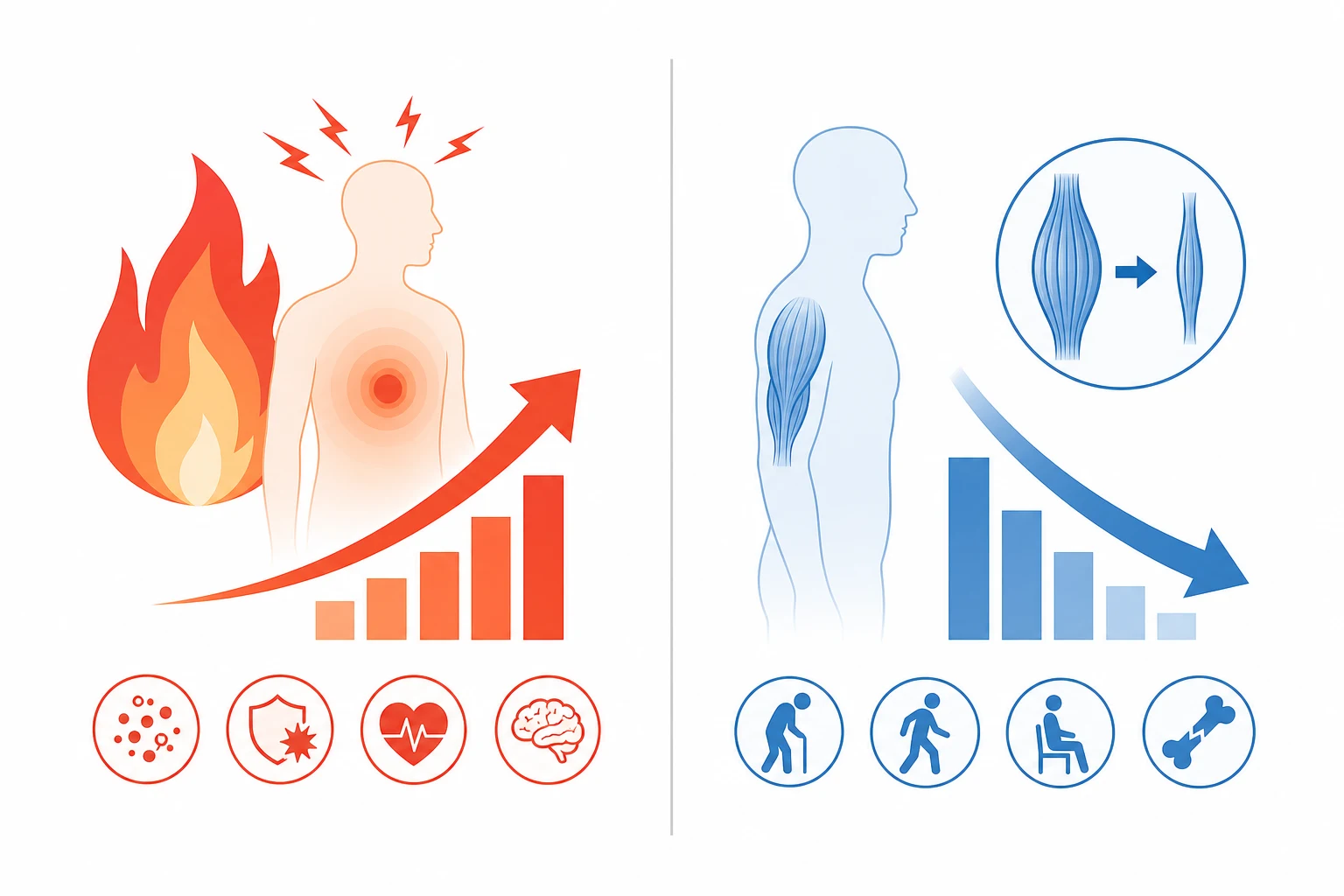
The endocrine the metabolic the response to the critical the illness — the the biphasic (the acute the adaptive the stress the response → the chronic the maladaptive the persistent). The acute: the counter-regulatory the hormones (the cortisol, the catecholamines, the glucagon, the GH), the insulin the resistance (the stress the hyperglycaemia), the hypercatabolism. The chronic: the suppressed the axes (the sick the euthyroid / the low-T3, the hypogonadism, the CIRCI), the anabolic the failure, the muscle the wasting. The moderate the glycaemic the control (the NICE-SUGAR); the hydrocortisone for the refractory the septic the shock; the sick the euthyroid the no the replacement. The rarer the ICU the endocrinopathies — the insulinoma (the spontaneous the hypoglycaemia), the VIPoma (the secretory the diarrhoea, the hypokalaemia), the carcinoid / the carcinoid the crisis, the calcitonin in the thyroid the C-cell (the medullary the carcinoma). The hyperglycaemic the emergencies (the DKA / the HHS) the summarised — the detail in the sibling.
On this page & tools
Your progress
Saved locally on this device.
Target exams
Overview & definition
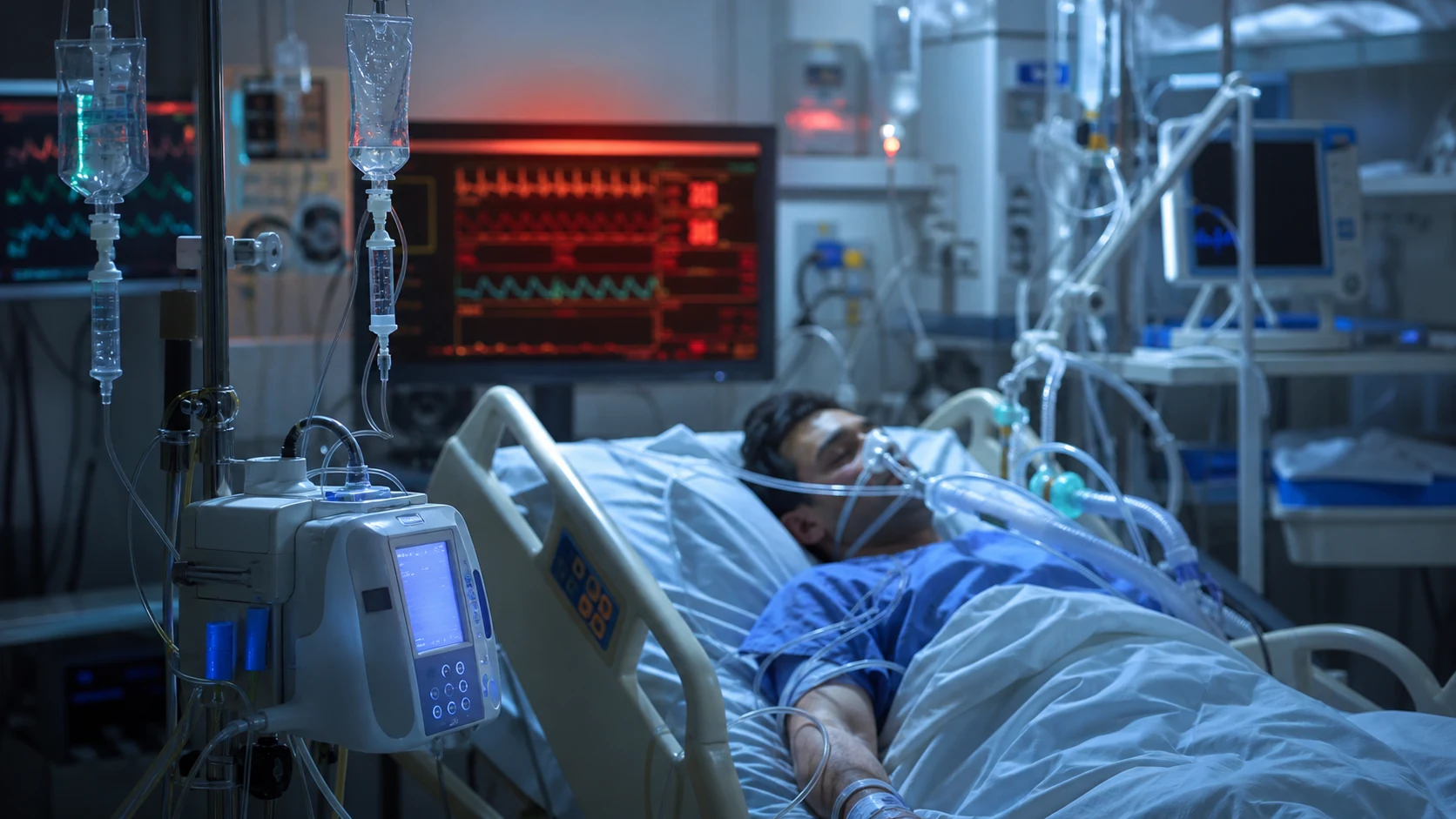
The critical the illness the triggers the profound the endocrine the metabolic the changes — the "the endocrine the response to the critical the illness". The biphasic: the acute (the hours to the days) the adaptive the stress the response, and the chronic (the days to the weeks) the maladaptive the persistent. The recognition the of the specific the derangements (the stress the hyperglycaemia, the CIRCI, the sick the euthyroid, the anabolic the failure) the guides the targeted the management.[1][2][1]
The biphasic the response
The acute (the hours to the days) — the adaptive
The acute the stress the response the aims to the mobilise the substrate + the maintain the perfusion:[1][2][1]
- The counter-regulatory the hormones the surge — the cortisol, the catecholamines, the glucagon, the growth the hormone — the mobilise the glucose, the fatty the acids, the amino the acids.
- The peripheral the insulin the resistance (the cytokine the TNF, the IL-1, the catecholamine) → the stress the hyperglycaemia (the adaptive the to the feed the brain / the wound / the immune).[1][1]
- The hypercatabolism (the muscle the breakdown — the amino the acids the for the gluconeogenesis + the acute-phase the proteins), the negative the nitrogen the balance.
- The acute-phase the response (the CRP the rises, the albumin the falls).
The chronic (the days to the weeks) — the maladaptive
The persistent the critical the illness the shifts the to the suppressed the axes + the anabolic the failure:[2][1]
- The sick the euthyroid / the low-T3 the syndrome — the low the T3, the high the reverse-T3, the normal / the low the TSH (the hypothalamic the suppression). The NOT the hypothyroid; the no the replacement (the treat the underlying).[1][1]
- The hypogonadism — the low the testosterone (the men); the low the oestrogen (the women). The anabolic the failure.
- The CIRCI (the critical-illness-related the corticosteroid the insufficiency) — the relative the (the cortisol the inappropriately the low the for the stress; the ACTH the stimulation the blunted). The hydrocortisone the for the refractory the septic the shock.[3]
- The GH the resistance + the IGF-1 the low → the anabolic the failure.
- The anabolic the failure, the muscle the wasting, the ICU-acquired the weakness (the critical-illness the polyneuropathy / the myopathy, the sarcopenia).[2][1]
The stress
the hyperglycaemia + the glycaemic the control [1]
The stress the hyperglycaemia (the insulin the resistance + the gluconeogenesis) the common the ICU. The historical the tight the control (the Leuven — the 4.4 to the 6.1) the harmful (the hypoglycaemia). The moderate (the NICE-SUGAR — the 4.5 to the 10, the target the 6 to the 10): the avoid the hypoglycaemia (the brain the injury) AND the severe the hyperglycaemia (the infection, the osmotic).[2][1]
- The insulin the infusion (the titrated, the protocolised); the monitor the glucose the 1 to 2-hourly.
- The avoid the tight (the NICE-SUGAR the 6.8 vs the 8.5 — the moderate the better the outcome).
- The special the contexts (the diabetes — the higher the target; the steroid the — the high).[1][1]
The pathophysiology — the why the of the stress the hyperglycaemia
The stress the hyperglycaemia the NOT the simply the "the diabetes the unmasked". The three the mechanisms the converge:[8][7]
- The insulin the resistance — the cytokine (the TNF-α, the IL-1, the IL-6) the + the catecholamines the suppress the GLUT-4 the translocation + the insulin the receptor the signalling. The peripheral the uptake the impaired.
- The hepatic the gluconeogenesis the augmented — the cortisol, the glucagon, the catecholamines the drive the substrate (the lactate, the alanine, the glycerol) the through the gluconeogenic the pathway. The insulin the unable the to the suppress.
- The β-cell the dysfunction — the cytokine the mediated; the first-phase the insulin the release the blunted.
The result the adaptive the in the acute (the feed the brain, the wound, the immune) BUT the maladaptive the if the severe (the osmotic the diuresis, the infection the risk, the oxidative the stress, the fluid the shifts, the fluid the electrolyte). The moderate the control the best.[2][8]
The NICE-SUGAR the vs the Leuven — the target
The two the pivotal the trials the the examiner the expects the to the compare. The Leuven (the tight) the initially the positive (the surgical the ICU) the then the harmful (the NICE-SUGAR). The NICE-SUGAR (the moderate) the settled the question.[4][5]
The Leuven — the van den Berghe 2001 (NEJM 345:1359) — the tight the control
- The design: the single-centre (the surgical the ICU), the 1,548 the adults. The tight (the 4.4 to the 6.1 mmol/L) the vs the conventional (the 10 to the 11).
- The result: the reduced the ICU the mortality (the 4.6 % vs the 8.0 %) — the especially the long-stay the (> 5 days). The less the infection, the less the renal the failure, the less the blood the transfusion.
- The problem: the single-centre; the surgical; the ~80 % the early the enteral the feed (the high the hypoglycaemia the risk the if the feed the stops). The NOT the reproducible the in the medical / the mixed the ICUs.[5]
- The harm the signal: the severe the hypoglycaemia the (< 2.2 mmol/L) the 5-fold the higher the tight the arm — the brain the injury, the arrhythmia, the death.
The NICE-SUGAR — the Finfer 2009 (NEJM 360:1283) — the moderate the control
- The design: the multicentre (the 42 the ICUs, the mostly the Australasia), the 6,104 the adults. The intensive (the 4.5 to the 6.0 mmol/L) the vs the conventional (the target the ≤ the 10, the 8 to the 10 the common).
- The result: the HIGHER the 90-day the mortality the intensive the arm (the 27.5 % vs the 24.9 %; OR 1.14, p=0.02). The moderate the target the better.
- The harm: the severe the hypoglycaemia the (< 2.2 mmol/L) the 6.8-fold the higher the intensive (6.8 % vs the 0.5 %).
- The CONCLUSION: the moderate the target (the 6 to the 10 mmol/L) the standard the of the care.[4]
The tight (the Leuven) the vs the moderate (the NICE-SUGAR) — the glycaemic the targets
| The feature | The tight (the Leuven) | The moderate (the NICE-SUGAR) |
|---|---|---|
| The target | 4.4 to 6.1 mmol/L | 6 to 10 mmol/L (the goal ≤ 10) |
| The mortality | The reduced (the single-centre, the surgical) | The moderate the BETTER (the multicentre) |
| The severe the hypoglycaemia the (< 2.2) | The 5-fold the higher | The lower |
| The setting the reproducible | The NO (the single-centre) | The YES (the 42 the ICUs) |
| The recommendation | The AVOID (the NICE-SUGAR) | The STANDARD (the SSC 2021) |
The glycaemic the control the protocol (the NICE-SUGAR the target 6 to the 10)
- The set the target — the 6 to the 10 mmol/L (the lower the if the previously the well-controlled the diabetes; the HIGHER the if the cerebral the injury — the avoid the hypoglycaemia, the glucose the substrate the for the injured the brain).
- The initiate — the insulin the infusion (the 50 U the Actrapid the in the 50 mL the saline), the titrated the to the protocol. The glucose the 1 to 2-hourly the until the stable, the then the 4-hourly.
- The AVOID the tight — the no the < the 4.5 (the brain the injury — the hypoglycaemia, the neuroglycopenia).
- The AVOID the severe the hyperglycaemia — the no the > the 12 (the osmotic the diuresis, the infection, the oxidative the stress, the fluid the shifts).
- The special the contexts — the steroid (the higher the target, the double the insulin), the enteral the feed the interrupted (the reduce the insulin, the avoid the hypoglycaemia), the renal the failure (the longer the half-life — the titrate the slowly).
- The transition — the convert the to the subcutaneous the when the stable + the eating; the overlap the long-acting (the basal) the BEFORE the stop the infusion (the avoid the gap the hyperglycaemia).[7][2]
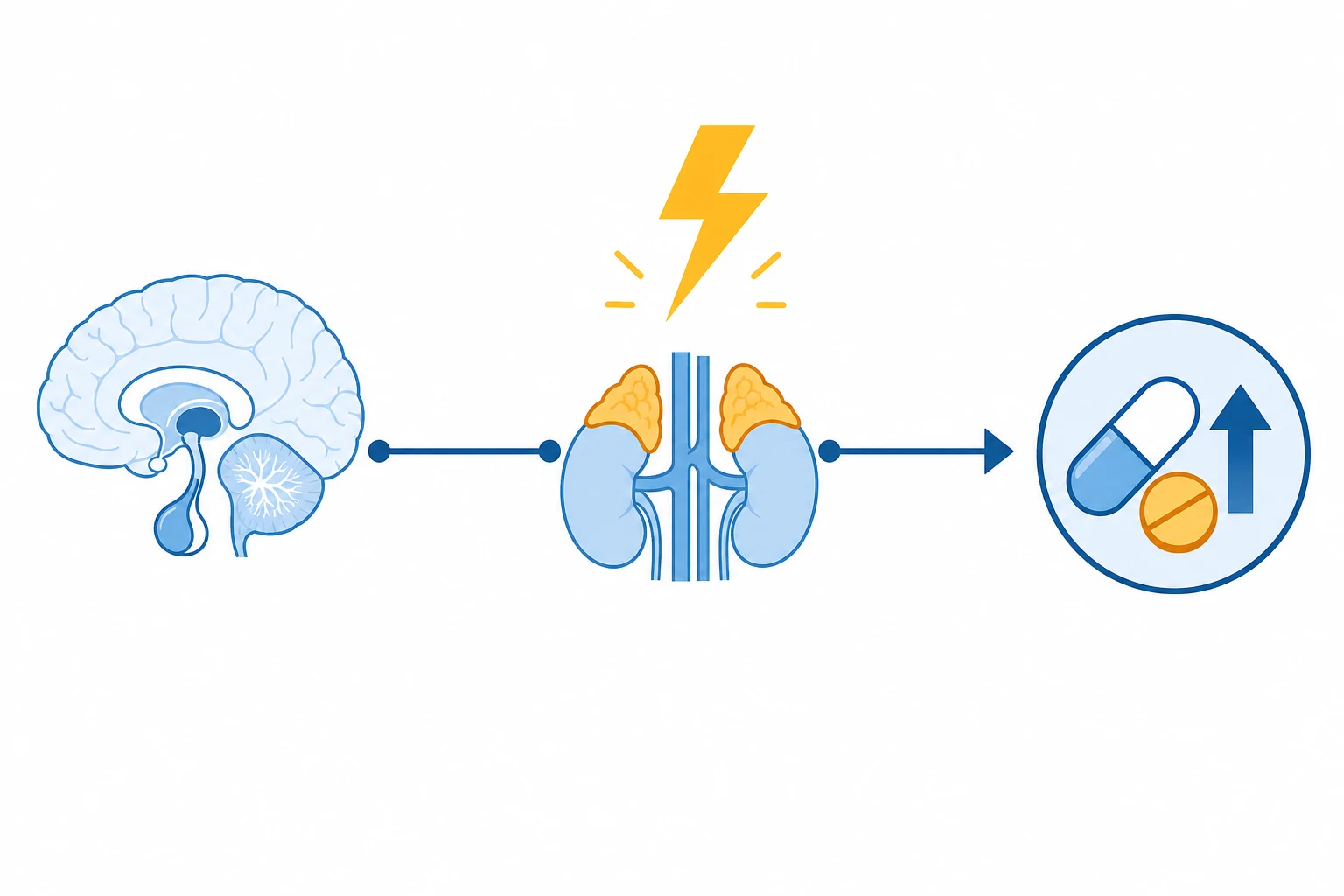
The CIRCI + the hydrocortisone
The critical-illness-related the corticosteroid the insufficiency (the CIRCI) — the relative (the cortisol the inappropriately the low for the stress; the ACTH the stimulation the blunted). The common (the severe the sepsis, the ARDS).[3][1]
- The diagnosis the controversial (the random the cortisol the low; the ACTH the stimulation the blunted; the no the consensus the threshold).
- The treatment the empirical — the hydrocortisone the 200 mg/day for the refractory the septic the shock (the vasopressor-dependent). The not the routine (the ADRENAL / the APROCCHSS — the trial the mixed; the reduce the vasopressor the duration).[3]
- The no the long the course (the taper; the avoid the ICU-acquired the weakness / the hyperglycaemia).[1]
The CIRCI — the relative, the NOT the absolute
The CIRCI the relative (the cortisol the inappropriately the low the for the severity the of the stress) the NOT the absolute the Addison's. The three the mechanisms the converge:[3][1]
- The HPA the axis the suppression — the cytokine (the TNF-α, the IL-1, the IL-6) the depress the hypothalamus, the pituitary, the adrenal the steroidogenesis. The etomidate (the 11β-hydroxylase the inhibitor) the even the single the induction the dose the suppresses the cortisol the for the 24 to 48 h — the AVOID the in the sepsis.
- The tissue the glucocorticoid the resistance — the upregulation the of the inactive the β-isoform the of the receptor (the GRβ); the p38 the MAPK / the JNK the phosphorylation the inactivates the receptor. The "normal" the plasma the cortisol the does the NOT the exclude the CIRCI.
- The altered the metabolism — the CBG the falls (the total the cortisol the misleading), the 2-oxo-reductase the accelerates the inactivation (the chronic).
The CIRCI (the relative) the vs the Addison's (the absolute)
| The feature | The CIRCI (the relative) | The Addison's (the absolute) |
|---|---|---|
| The mechanism | The HPA the suppressed, the tissue the resistance, the altered the metabolism | The adrenal the destruction (the autoimmune, the TB, the bilateral the haemorrhage) |
| The duration | The TRANSIENT (the critical the illness) | The PERMANENT (the lifelong the steroid) |
| The cortisol | The variable — the may the be "normal" the but the inadequate the for the demand | The very the low (the < the 100 nmol/L) |
| The ACTH | The inappropriately the low the for the cortisol (the pituitary the suppressed) | The HIGH (the unrestrained) |
| The hyperpigmentation | The NO | The YES (the ACTH) |
| The hyperkalaemia | The uncommon (the relative) | The YES (the mineralocorticoid the lack) |
| The hydrocortisone | The 200 mg/day the temporary (the refractory the septic the shock) | The lifelong the + the fludrocortisone |
The empirical the CIRCI the treatment (the SSC 2021 — the DO the NOT the test)
- The resuscitate the FIRST — the fluids (the 30 mL/kg), the noradrenaline (the titrated the to the MAP the ≥ the 65), the source the control, the antibiotics.
- The IF the shock the REFRACTORY (the ongoing the vasopressor the despite the above) → the CIRCI the likely. The DO the NOT the ACTH the test (the SSC 2021 the against the routine).
- The START the hydrocortisone — the 200 mg/day (the 50 mg the IV the QDS, the OR the continuous the infusion). The add the fludrocortisone the 50 mcg the PO/NG the daily (the APROCCHSS).
- The assess the response — the vasopressor the dose the decreasing, the haemodynamics the improving, the lactate the clearing (the 24 to the 48 h).
- The STOP the when the vasopressors the weaned — the no the taper the needed (the CORTICUS); the APROCCHSS the tapered the over the 7 days (the conservative).
- The MONITOR — the hyperglycaemia (the insulin), the infection (the superinfection), the weakness (the ICU-acquired), the GI the bleed (the PPI).[3][1]
The ADRENAL — the Venkatesh 2018 (NEJM 378:797) — the hydrocortisone the alone
- The design: the 3,658 the septic the shock (the within the 24 h). The hydrocortisone the 200 mg/day the continuous the vs the placebo.
- The 90-day the mortality: the 27.9 % the vs the 28.8 % (the NS) — the NO the mortality the benefit.
- The benefit: the faster the shock the reversal (the 3 vs the 4 days the off the vasopressors); the faster the ventilation the wean.
- The harm: the more the superinfection / the bacteraemia.
- The CONCLUSION: the hydrocortisone the for the shock the reversal, the NOT the mortality.[3]
The APROCCHSS — the Annane 2018 (NEJM 378:809) — the hydrocortisone the + the fludrocortisone
- The design: the 1,241 the SEVERE the septic the shock (the SOFA the ≥ the 8 the OR the shock the index the > the 0.8 the > the 6 h). The hydrocortisone the 200 mg/day the + the fludrocortisone the 50 mcg/day the vs the placebo.
- The 90-day the mortality: the 43.0 % the vs the 48.8 % (the RR 0.89, p=0.03) — the REDUCED.
- Why the positive (vs the ADRENAL): the SICKER the patients; the FLUDROCORTISONE (the mineralocorticoid); the no the ACTH the test.
- The CONCLUSION: the add the fludrocortisone the in the severe the refractory the septic the shock.[3]
The CORTICUS — the Sprung 2008 (NEJM 358:111) — the hydrocortisone, the broad
- The design: the 499 the septic the shock (the broad, the less the sick, the within the 72 h). The hydrocortisone the 50 mg the q6h the vs the placebo.
- The mortality: the NO the difference (the ACTH the non-responders the 29 % vs the 31 %) — the failed the to the confirm the Annane the 2002.
- The benefit: the faster the shock the reversal.
- The KEY: the no the rebound the on the abrupt the stop (the no the taper the needed).[3]
The sick the euthyroid + the other
- The sick the euthyroid / the low-T3 — the treat the underlying (the no the thyroid the replacement — the no the benefit; the may the harm). The resolve with the recovery.[1][1]
- The vitamin D the deficiency (the common the ICU — the supplement; the no the clear the outcome the benefit).
- The the electrolyte (the Mg, the phosphate [the refeeding], the Ca — the shifts).[1]
- The the anabolic the failure / the ICU-acquired the weakness — the early the mobilisation, the nutrition (the protein the 1.5 to the 2 g/kg/day), the minimise the sedation + the steroids.[2][1]
The sick the euthyroid — the pathophysiology the + the interpretation
The sick the euthyroid the syndrome (the non-thyroidal the illness the syndrome, the NTIS) the the adaptive the down-regulation the of the thyroid the axis the in the response the to the critical the illness. The conserve the energy (the basal the metabolic the rate the falls), the mobilise the resources.[6][1]
The biphasic the pattern:[6]
- The acute (the early) — the low the T3 (the impaired the 5'-deiodinase the → the less the T4→T3; the high the rT3). The TSH the normal. The acute-phase the cytokine (the TNF, the IL-1) the + the cortisol the + the drugs (the amiodarone, the steroids, the contrast) the inhibit the deiodinase.
- The chronic (the late) — the low the T3 the AND the low the T4 (the thyroid the production the falls; the binding the protein the falls). The TSH the low / the normal (the hypothalamic the suppression). The mimics the central the hypothyroid — the but the NOT the hypothyroid.
The sick the euthyroid the vs the true the hypothyroid — the distinguish
| The test | The sick the euthyroid (the NTIS) | The primary the hypothyroid | The central the hypothyroid |
|---|---|---|---|
| The TSH | The normal / the low (the hypothalamic) | The HIGH (the unrestrained) | The low / the inappropriately the normal |
| The free the T3 | The LOW (the hallmark) | The low (the late) | The low |
| The free the T4 | The normal (the early) the / the low (the late) | The LOW | The LOW |
| The reverse the T3 | The HIGH (the diagnostic the if the measured) | The low | The low |
| The cortisol | The high (the stress) | The normal | The low (the pan-hypopituitarism) |
| The treatment | The treat the UNDERLYING (the no the thyroid the hormone) | The levothyroxine the lifelong | The levothyroxine (the + the hydrocortisone the FIRST) |
The thyroid the function the interpretation the in the ICU
- The DON'T the test the routinely — the sick the euthyroid the common (the 70 % the ICU); the results the confusing; the NOT the hypothyroid; the NO the replacement.
- The IF the test — the TSH the + the free the T4 the + the free the T3. The reverse the T3 (the diagnostic the but the rarely the available).
- The sick the euthyroid the pattern — the low the T3, the high the rT3, the normal / the low the TSH, the normal the free the T4. The TREAT the underlying.
- The TRUE the hypothyroid the — the SUSPECT the if: the TSH the > the 20 (the primary); the free the T4 the low; the precipitant (the withdrawal, the infection, the cold). The myxoedema the coma — the IV the levothyroxine the + the hydrocortisone the FIRST (the rule the out the co-existing the adrenal the insufficiency).
- The CENTRAL the hypothyroid the — the SUSPECT the if: the TSH the low / the normal the + the free the T4 the low the + the pituitary the pathology (the mass, the apoplexy, the Sheehan). The hydrocortisone the FIRST (the rule the out the adrenal), the THEN the levothyroxine.
- The NO the thyroid the replacement the in the sick the euthyroid — the trials (the TRUST, the 2017) the no the benefit; the may the harm (the excess the cardiac the workload).[6][1]
The hyperglycaemic the emergencies — the DKA the + the HHS (the summary — the detail the in the sibling)
The DKA (the diabetic the ketoacidosis) the + the HHS (the hyperosmolar the hyperglycaemic the state) the the two the hyperglycaemic the emergencies the — the absolute the insulin the deficiency (the DKA) the vs the relative the (the HHS). The detail the in the sibling the files; the summary the here.[2][7]
The DKA the vs the HHS — the distinguishing
| The feature | The DKA | The HHS |
|---|---|---|
| The glucose | The > the 11 the (typically the 20-30) | The > the 33 |
| The ketones (the 3-β-OHB) | The HIGH (the > the 3) | The minimal / the absent |
| The pH | The LOW (the < the 7.30) | The normal |
| The bicarbonate | The LOW (the < the 15) | The normal |
| The osmolality | The variable (the mild the ↑) | The HIGH (the > the 320) |
| The dehydration | The moderate | The SEVERE (the 6 to the 9 L) |
| The onset | The hours | The days |
| The precipitant | The T1DM, the infection, the omission, the MI | The T2DM the elderly, the infection, the thiazide |
| The treatment | The fluids, the insulin (the FRIII the 0.1 U/kg/h), the K+, the treat the cause | The fluids (the SLOWER — the osmotic the demyelination), the insulin the cautious (the 0.05) |
The less-common the ICU the endocrinopathies — the tumours the + the crises
The endocrine the tumours the uncommon the BUT the present the to the ICU the in the two the ways — the CRISIS (the hormone the excess — the carcinoid the crisis, the insulinoma the hypoglycaemia) the OR the perioperative (the resection). The recognition the + the specific the management the essential.[9][11][12]
The insulinoma — the spontaneous the hypoglycaemia
The insulinoma the the rare (the 1 to 4 the per the million the per the year) the pancreatic the β-cell the neuroendocrine the tumour. The presents the with the Whipple's the triad (the fasting the hypoglycaemia, the symptoms, the relief the with the glucose). The MISSED the as the "the seizure" the / the "the psychiatric" the / the "the drunk".[9][8]
The ICU the context: the severe the hypoglycaemia (the < the 2.5 mmol/L), the seizure, the coma, the perioperative (the enucleation / the distal the pancreatectomy).[9]
The causes the of the spontaneous the hypoglycaemia the in the ICU — the distinguish
| The cause | The insulin | The C-peptide | The β-OHB | The other |
|---|---|---|---|---|
| The insulinoma | The INAPPROPRIATELY the HIGH | The HIGH (the endogenous) | The LOW (the insulin the suppresses the ketogenesis) | The 72-h the fast the + the symptoms |
| The exogenous the insulin | The HIGH | The LOW (the suppressed) | The LOW | The injection the marks; the anti-insulin the Ab the negative |
| The sulfonylurea | The HIGH | The HIGH | The LOW | The positive the sulfonylurea the screen (the urine / the blood) |
| The adrenal the insufficiency | The low | The low | The HIGH | The cortisol the LOW; the hypotension; the hyponatraemia |
| The sepsis / the liver the failure | The low | The low | The variable | The obvious the cause; the lactate the high |
The insulinoma — the hypoglycaemia the management the in the ICU
- The ABCDE — the airway the protected (the seizure, the coma); the IV the access; the glucose the check the NOW (the bedside the + the lab).
- The CORRECT — the 50 mL the IV the 50 % the dextrose (the OR the 100 mL the 10 % the if the central); the OR the glucagon the 1 mg the IM/SC (the CAVEAT — the glucagon the stimulates the insulin the → the rebound; the AVOID the if the possible). The repeat the 15 min.
- The INFUSION — the 10 % the dextrose (the 100 mL/h the titrate the to the glucose the 6 to the 8); the AVOID the too the tight (the risk the if the feed the interrupted).
- The PREVENT — the diazoxide (the 300 mg the PO the daily — the opens the K-ATP the channel, the inhibits the insulin the release); the octreotide (the 100 mcg the SC the tds — the inhibits the insulin the secretion). The steroid the + the glucagon the if the refractory.
- The DIAGNOSE — the supervised the 72-h the fast (the insulin the + the C-peptide the + the β-OHB the + the sulfonylurea the screen the AT the time the of the hypoglycaemia). The imaging — the CT the / the MRI the / the EUS (the localise). The NOT the biopsy (the risk).
- The DEFINITIVE — the surgical the resection (the enucleation). The preoperative the the diazoxide the / the octreotide the to the prevent the intraoperative the hypoglycaemia.[9]
The VIPoma — the Verner-Morrison the syndrome
The VIPoma the the rare the pancreatic the neuroendocrine the tumour (the 1 the per the million the per the year) the secreting the vasoactive the intestinal the peptide (the VIP). The WDHA the syndrome — the Watery the Diarrhoea, the Hypokalaemia, the Achlorhydria. The secretory the diarrhoea the FASTING the + the > the 1 L/day; the profound the hypokalaemia (the 5 to the 20 mmol/day the stool the K the loss); the metabolic the acidosis (the diarrhoea) the + the hypercalcaemia (the VIP the bone the resorption).[10]
The ICU the context: the severe the hypokalaemia, the dehydration, the renal the failure (the AKI the from the volume the depletion), the perioperative.[10]
The VIPoma — the ICU the management
- The AGGRESSIVE the resuscitation — the fluids (the crystalloid, the 3 to 5 L/day), the K+ (the 200 to the 400 mmol/day — the replete the huge the stool the loss), the Mg the + the PO4. The monitor the U&E the 4 to 6-hourly.
- The CONTROL the diarrhoea — the octreotide (the 100 to 500 mcg the SC the tds the OR the continuous the infusion the 50 to 100 mcg/h — the inhibits the VIP the release). The loperamide the / the codeine the adjunct.
- The CORRECT the acidosis — the bicarbonate the if the severe (the pH the < the 7.20) the AND the hypokalaemia the corrected the FIRST (the alkalinise the → the K the INTO the cell → the worsen).
- The DIAGNOSE — the serum the VIP (the high — the > the 75 pmol/L); the CT the / the MRI (the localise — the pancreatic the body/tail, the 60 % the metastatic the liver the at the presentation).
- The DEFINITIVE — the surgical the resection the + the octreotide the perioperative.[10][11]
The carcinoid the syndrome the + the carcinoid the crisis
The carcinoid the tumours the the neuroendocrine the tumours (the well-differentiated) the arising the from the enterochromaffin the cells. The syndrome (the flushing, the diarrhoea, the bronchospasm, the RIGHT the heart the disease the [the carcinoid the heart]) the occurs the ONLY the if the LIVER the metastases (the serotonin the otherwise the metabolised the by the liver the first-pass).[11][12]
The carcinoid the CRISIS — the life-threatening the hormone the surge (the flushing, the haemodynamic the instability — the hypertension the OR the hypotension, the bronchospasm, the diarrhoea, the altered the mental the state) the triggered the by the anaesthesia, the surgery, the biopsy, the chemoembolisation, the stress. The PREVENTABLE the with the octreotide.[11]
The carcinoid the syndrome the vs the other the flush the syndromes
| The feature | The carcinoid | The mastocytosis | The menopause | The phaeochromocytoma |
|---|---|---|---|---|
| The flush | The episodic, the dry, the upper-body (the drenching the in the severe) | The urticaria the pigmentosa the + the Darier | The night, the sweating | The paroxysmal, the SWEATING, the hypertension |
| The diarrhoea | The secretory, the fasting | The variable | The NO | The NO |
| The bronchospasm | The YES (the wheeze) | The NO | The NO | The NO |
| The heart | The RIGHT the (the tricuspid, the pulmonary) | The NO | The NO | The catecholamine the cardiomyopathy |
| The biochemical | The urinary the 5-HIAA (the HIGH) | The serum the tryptase (the HIGH) | The FSH / LH (the high) | The 24-h the metanephrines (the HIGH) |
The carcinoid the crisis — the PREVENTION the + the management
- The PRE-PROCEDURE the cover (the carcinoid the syndrome the + the anaesthesia / the surgery / the embolisation) — the octreotide the 50 to the 100 mcg the SC the tds the for the 2 weeks the preop; the IV the octreotide the infusion the 50 to the 100 mcg/h the DURING the procedure. The AVOID the catecholamines (the noradrenaline, the adrenaline — the may the trigger the surge); the use the vasopressin the / the phenylephrine the if the needed.
- The IF the crisis — the IV the octreotide the 50 to the 100 mcg the bolus (the repeat the q10min), the THEN the infusion the 50 mcg/h. The methylene the blue (the refractory the vasoplegia — the NO-mediated). The fluids the + the vasopressors (the vasopressin the preferred).
- The bronchospasm — the octreotide (the first); the nebulised the salbutamol; the AVOID the adrenaline.
- The DEBULK — the surgical the resection the / the embolisation; the octreotide the LAR (the monthly) the maintenance; the telotristat (the 250 mg the tds — the tryptophan the hydroxylase the inhibitor — the reduce the serotonin the synthesis).[11][12]
The calcitonin the + the thyroid the C-cell (the medullary the thyroid the carcinoma)
The calcitonin the secreted the by the parafollicular the C-cells (the neural-crest the origin) the of the thyroid. The medullary the thyroid the carcinoma (the MTC) the the C-cell the tumour — the 1 to 2 % the of the thyroid the malignancy; the 25 % the familial (the MEN the 2 — the RET the proto-oncogene). The calcitonin the the tumour the marker (the sensitive the + the specific).[13][14]
The ICU the context: the rare the BUT — the calcitonin the CRISIS (the hypocalcaemia the post the thyroidectomy the if the not the anticipated), the MEN the 2 the with the phaeochromocytoma (the rule the OUT the before the thyroid the surgery — the hypertensive the crisis), the diarrhoea (the calcitonin the / the prostaglandin — the advanced the disease).[13]
The MTC the + the calcitonin — the ICU the considerations
- The BEFORE the thyroid the surgery — the rule the OUT the the phaeochromocytoma (the MEN the 2) — the 24-h the metanephrines; the treat the FIRST (the alpha-blockade) the OR the hypertensive the crisis the intraoperatively.
- The calcitonin the level — the pre-operative (the staging, the baseline); the post-operative (the cure — the undetectable the at the 6 weeks).
- The calcitonin the screening — the basal (the pentagastrin the stimulation the obsolete the in the most); the prophylactic the thyroidectomy the if the RET the mutation (the MEN the 2A — the under the 5; the MEN the 2B — the infancy).[13][14]
- The advanced the disease — the vandetanib the / the cabozantinib (the tyrosine-kinase the inhibitor — the RET); the diarrhoea (the loperamide, the octreotide).
Prognosis
The endocrine the metabolic the derangements the resolve with the recovery (the underlying). The persistent (the chronic) → the ICU-acquired the weakness, the prolonged the rehabilitation, the mortality the higher. The moderate the glycaemic the control + the targeted the hydrocortisone the better the outcome.[2][1][1]
Exam practice
SAQ — Abnormal thyroid function tests on day 2 after cardiac surgery
10 minutes · 10 marks
A 68-year-old man is on ICU day 2 after an uncomplicated three-vessel CABG on cardiopulmonary bypass. He is also in new-onset atrial fibrillation, for which amiodarone was started in theatre, and received iodinated contrast for a coronary angiogram. He is sedated, intubated, haemodynamically stable on low-dose noradrenaline, temperature 37.4. Routine bloods are unremarkable except that the registrar also sent thyroid function tests, which return as: TSH 0.4 mU/L (reference 0.4-4.0), free T3 2.1 pmol/L (3.5-6.0), free T4 14 pmol/L (10-20). The registrar documents possible hypothyroidism and asks whether to start levothyroxine.
SAQ — Refractory vasoplegic shock after etomidate induction
10 minutes · 10 marks
A 58-year-old man is in ICU on day 6 after an emergency laparotomy for a perforated viscus and faecal peritonitis. He is now intubated and ventilated for ARDS. His rapid sequence induction in theatre used etomidate 0.3 mg/kg and suxamethonium. He has received 30 mL/kg crystalloid, broad-spectrum antibiotics, and has an open abdomen. He remains cool and mottled: noradrenaline 0.6 mcg/kg/min plus vasopressin 0.03 U/min, MAP 58, lactate 4.6 mmol/L, urine output 20 mL/h. Sodium 130, potassium 4.8, glucose 9.4. A baseline cortisol drawn at intubation is 340 nmol/L. The registrar plans a 250 mcg ACTH (cosyntropin) stimulation test before deciding on steroids.
Clinical pearls
Red flags
References
- [1]Singer P, et al. Metabolic response to the stress of critical illness Br J Anaesth, 2014.PMID 24970271
- [2]Plummer MP, et al. The metabolic response to stress in critical illness: updated review on the pathophysiological mechanisms, consequences, and therapeutic implications Ann Intensive Care, 2025.PMID 41139771
- [3]Jung Y, et al. Sepsis and Adrenal Insufficiency J Intensive Care Med, 2023.PMID 37365820
- [4]Finfer S, Chittock DR, Su SY, et al. (NICE-SUGAR Study Investigators) Intensive versus conventional glucose control in critically ill patients N Engl J Med, 2009.PMID 19318384
- [5]van den Berghe G, Wouters P, Weekers F, et al. Intensive insulin therapy in critically ill patients N Engl J Med, 2001.PMID 11794168
- [6]Fliers E, Bianco AC, Langouche L, Visser TJ Thyroid function in critically ill patients Lancet Diabetes Endocrinol, 2015.PMID 26071885
- [7]Korytkowski MT, Muniyappa R, Antinori-Lent K, et al. Management of Hyperglycemia in Hospitalized Adult Patients in Non-Critical Care Settings: An Endocrine Society Clinical Practice Guideline J Clin Endocrinol Metab, 2022.PMID 35690958
- [8]Li XH, et al. Predicting 28-day all-cause mortality in patients admitted to intensive care units with pre-existing chronic heart failure using the stress hyperglycemia ratio: a machine learning-driven retrospective cohort analysis Cardiovasc Diabetol, 2025.PMID 39780223
- [9]Okabayashi T, Shima Y, Sumiyoshi S, et al. Diagnosis and management of insulinoma World J Gastroenterol, 2013.PMID 23430217
- [10]Una Cidon E, Abo Alhaija R, Sedano AI, et al. Vasoactive intestinal peptide secreting tumour: An overview World J Gastrointest Oncol, 2022.PMID 35582098
- [11]Ito T, Lee L, Jensen RT Perspectives on the current pharmacotherapeutic strategies for management of functional neuroendocrine tumor syndromes Expert Opin Pharmacother, 2021.PMID 33131345
- [12]Sultana Q, Hajji A, Al Ahmar M, et al. A Comprehensive Review on Neuroendocrine Neoplasms: Presentation, Pathophysiology and Management J Clin Med, 2023.PMID 37568540
- [13]Pelizzo MR, et al. Medullary thyroid carcinoma Expert Rev Anticancer Ther, 2023.PMID 37646181
- [14]Trimboli P, et al. Diagnostic tests for medullary thyroid carcinoma: an umbrella review Endocrine, 2023.PMID 36877452