ICU · Endocrine & metabolic emergencies
Pheochromocytoma Crisis
Also known as Pheochromocytoma · Paraganglioma · Catecholamine crisis · Phenoxybenzamine · Alpha before beta · Metanephrines · Metyrosine
The pheochromocytoma the crisis — the catecholamine-secreting the tumour (the adrenal the medulla / the paraganglioma) → the massive the catecholamine the surge → the severe the hypertension, the cardiomyopathy (the Takotsubo), the pulmonary the oedema, the multi-organ. The classic the triad (the headache, the sweating, the palpitations). The alpha-blockade the FIRST (the before the beta — the unopposed the alpha), the metanephrines the screen, the metyrosine, the surgical the resection (the after the 1 to 2 weeks the alpha the prep). The trigger the avoidance (the metoclopramide, the anaesthesia, the biopsy).
On this page & tools
Your progress
Saved locally on this device.
Target exams
Overview & definition
The pheochromocytoma (the catecholamine-secreting the tumour — the adrenal the medulla, the 90 per cent; the extra-adrenal the paraganglioma, the 10 per cent) → the crisis (the massive the catecholamine the surge). The classic the triad (the paroxysmal the headache, the sweating, the palpitations) + the hypertension. The mortality the high if the unrecognised (the cardiomyopathy, the pulmonary the oedema, the intracranial the haemorrhage, the multi-organ).[1][1]
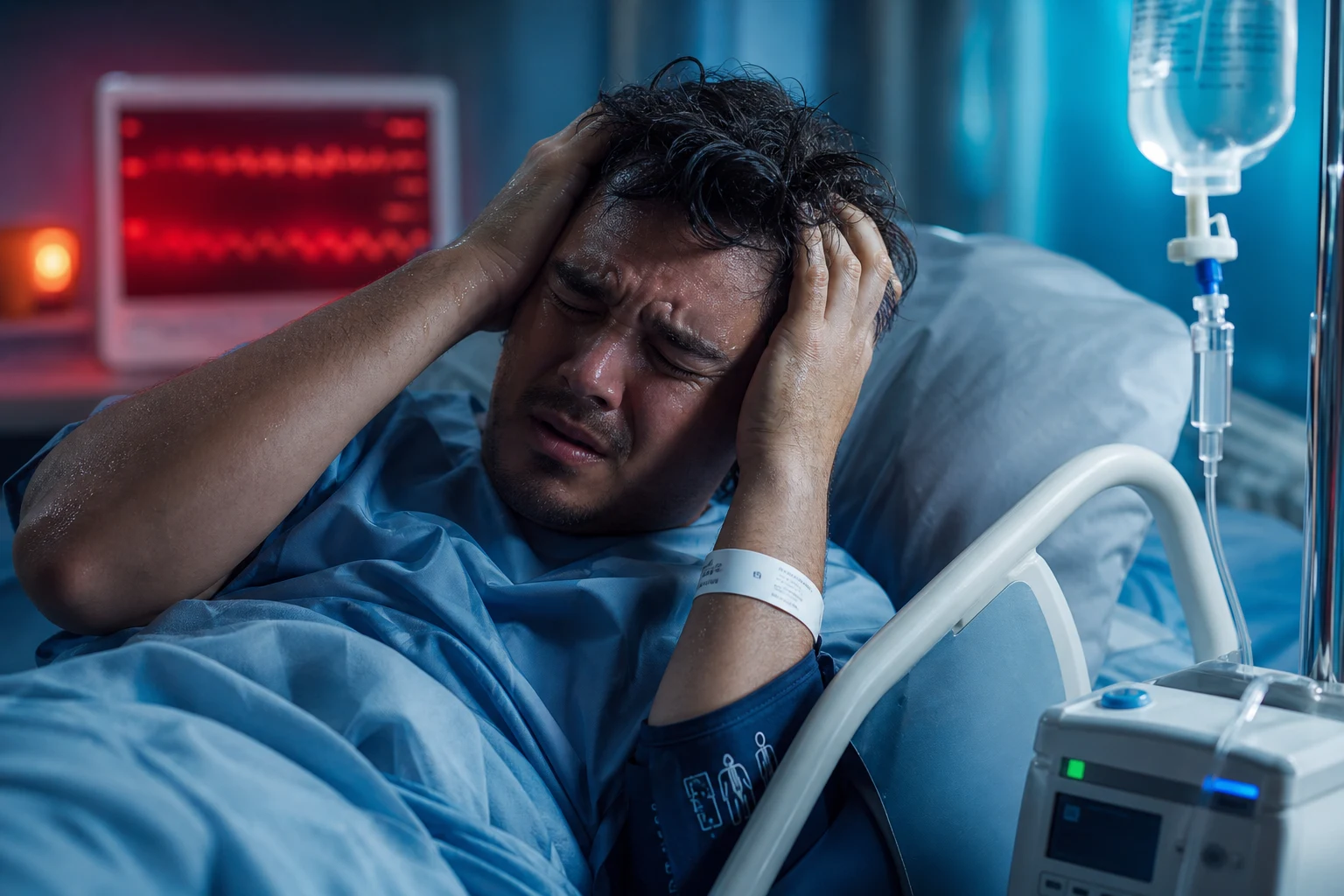
The clinical
The catecholamine the excess the produces the:[1][1]
- The hypertension — the paroxysmal (the episodic the spikes — the classic) OR the sustained. The severe; the refractory. The orthostatic the hypotension (the volume the depletion).
- The classic the triad — the headache, the sweating, the palpitations (the tachycardia). The paroxysmal.[1]
- The pallor, the anxiety (the adrenaline the surge).
- The cardiomyopathy (the catecholamine — the Takotsubo, the dilated), the acute the pulmonary the oedema, the arrhythmia (the AF, the VT).
- The hyperglycaemia (the catecholamine), the hypercalcaemia (the MEN the 2), the polycythaemia (the ectopic the erythropoietin).[1][1]
The crisis the triggers — the anaesthesia, the surgery, the biopsy (the needle), the drugs (the metoclopramide, the contrast, the MAOIs, the TCAs, the decongestants, the naloxone), the labour, the trauma, the micturition (the bladder the paraganglioma).[1][1]
The diagnosis
- The plasma / the urine the free the metanephrines (the normetanephrine + the metanephrine) — the sensitive the screen (the catecholamine-O-methyl-transferase the in the tumour → the metanephrines the continuous; the catecholamines the episodic the misleading).[1]
- The imaging the localise — the CT (the adrenal the mass), the MIBG (the functional), the 68Ga-DOTATATE the PET (the highest the sensitivity), the MRI.[1]
- The genetics — the MEN the 2, the VHL, the NF1, the hereditary the paraganglioma (the SDHx).[1]
The treatment
1. The alpha-blockade the FIRST.[1][2][1]
- The phenoxybenzamine (the irreversible, the non-selective the alpha; the oral the 10 mg the BD the titrate, OR the IV) — the traditional; the long the onset, the post-operative the hypotension (the irreversible).[2]
- The doxazosin / the terazosin (the selective the alpha-1; the reversible; the preferred by the some the modern the practice).[2]
- The titrate the to the normotension, the no the orthostasis, the nasal the congestion (the sign the of the adequate the alpha). The 1 to 2 weeks the pre-operative.[2][1]
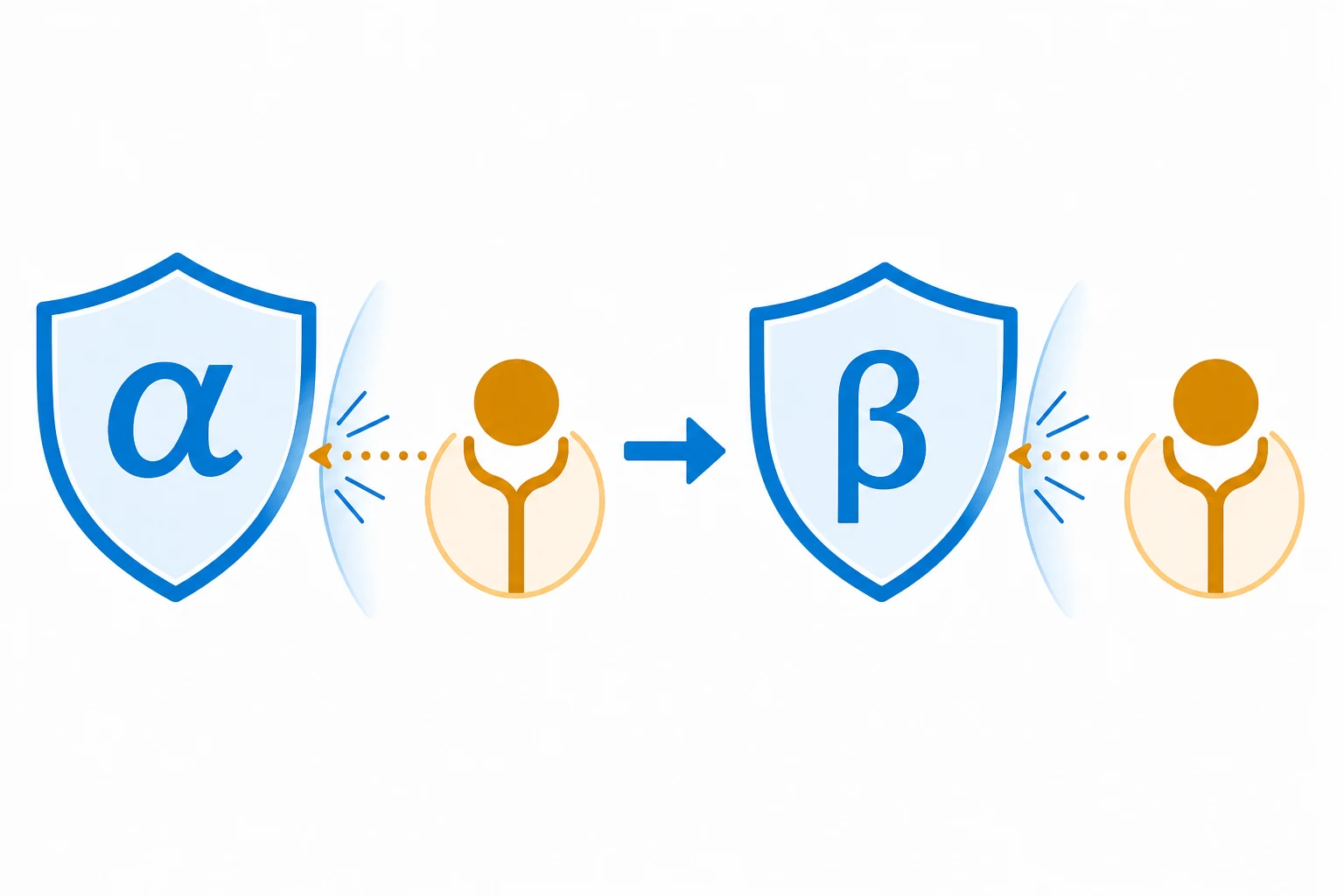
2. The beta-blocker the ONLY the AFTER the alpha.[1]
- The beta-blocker the AFTER the alpha (the beta the 2 to 3 days the after) — the propranolol, the metoprolol. The the NEVER the beta the alone (the unopposed the alpha → the worsened the vasoconstriction, the hypertensive the crisis).[1]
- The for the tachycardia, the AF, the angina.[1]
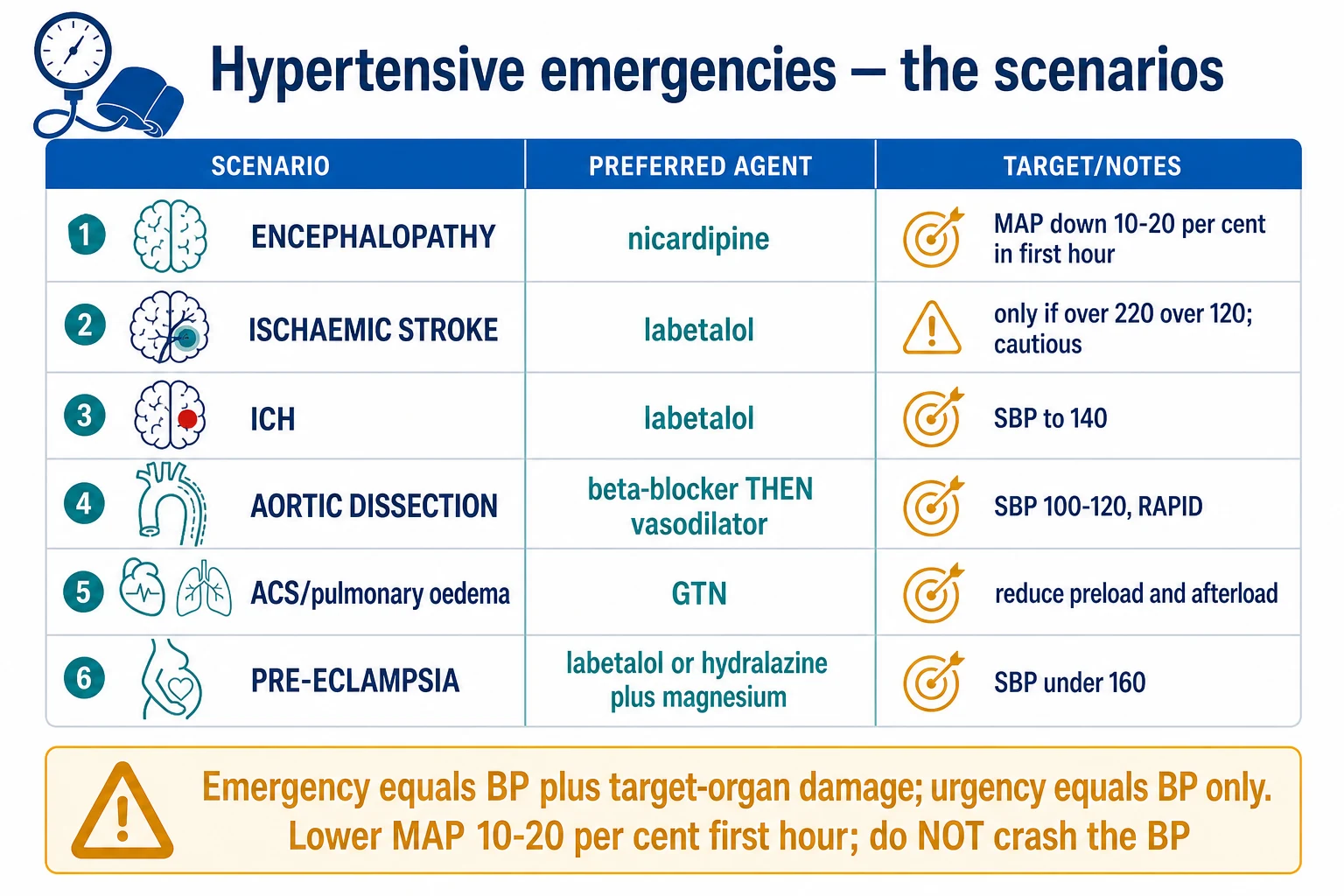
3. The crisis the hypertensive.[1][1]
- The IV the phentolamine (the alpha-1, the short-acting), the nitroprusside, the nicardipine (the CCB), the magnesium (the adjunct). The titrate the to the BP. The NO the beta the alone.[1]
- The volume the resuscitation (the volume the depleted — the catecholamine the vasoconstriction).[1]
4. The metyrosine (the catecholamine the synthesis the inhibitor — the tyrosine the hydroxylase) — the refractory, the pre-operative the prep, the inoperable.[3]
5. The trigger the avoidance.[1][1]
- The AVOID the metoclopramide (the dopamine the antagonism → the catecholamine the release), the histamine-releasing (the morphine, the tubocurarine), the indirect-acting the sympathomimetics. The cautious the opioids (the fentanyl, the remifentanil).[1]
- The careful the anaesthesia (the intubation the surge → the lidocaine, the depth, the avoid the ketamine, the avoid the ephedrine).[1]
6. The definitive — the surgical the resection. The AFTER the 1 to 2 weeks the alpha the prep (+ the beta). The laparoscopic (the small the tumour). The careful the anaesthesia (the handling → the catecholamine the surge; the resection → the sudden the hypotension — the volume, the noradrenaline).[1][1]
Prognosis
The pheochromocytoma the crisis the survivable with the alpha-first the management; the mortality the high if the unrecognised (the cardiomyopathy, the pulmonary the oedema, the intracranial the haemorrhage). The surgical the resection the curative (the benign the 90 per cent). The metastatic the 10 per cent (the lifelong the surveillance).[1][3][1]
Red flags
The catecholamine excess — the pathophysiology
The the adrenal the medulla the chromaffin the cell the tumour (the PHEO the adrenal the 90 per cent; the PARAGANGLIOMA the extra-adrenal the 10 per cent — the sympathetic the chain, the organ of the Zuckerkandl, the bladder) the secretes the the catecholamines (the noradrenaline the predominant; the adrenaline the in the some; the dopamine the in the rare).[4][1]
- The noradrenaline (the norepinephrine) — the α-1 the vasoconstriction → the hypertension; the β-1 the tachycardia; the predominant the hormone the in the most the tumours. The methylation the to the adrenaline the requires the PNMT the enzyme (the adrenal the medulla — the cortisol-induced).
- The adrenaline (the epinephrine) — the β-1 the tachycardia + the β-2 the vasodilatation (the paradoxical the hypotension, the orthostatic) → the episodic the panic, the tremor, the sweating, the hyperglycaemia; the more the common the in the adrenal the tumours + the MEN the 2.
- The dopamine — the predominant the in the rare; the paraganglioma; the the metastatic (the SDHB); the paradoxical the (the dopamine the vasodilator the at the low the dose); the marker the of the malignant the disease.[4]
The the metanephrines the advantage — the tumour the COMT (the catechol-O-methyl-transferase) the continuously the converts the catecholamines the to the metanephrines (the normetanephrine + the metanephrine) the independent the of the catecholamine the surge → the the stable, the continuous, the reliable the marker (the catecholamines the episodic → the false-negative). This is the reason the plasma / the urine the free the metanephrines the first-line (the catecholamines the abandoned).[4][5]
Pheochromocytoma vs paraganglioma vs carcinoid crisis vs thyroid storm — the four catecholamine-surge syndromes
| Feature | Pheochromocytoma / paraganglioma | Carcinoid crisis | Thyroid storm | Cocaine / amphetamine |
|---|---|---|---|---|
| The mediator | Noradrenaline > adrenaline > dopamine (the tumour the secretes the directly) | Serotonin, histamine, kallikrein | T3/T4 + β-adrenergic hypersensitivity | Synaptic the noradrenaline / dopamine / serotonin |
| The BP | The paroxysmal the SEVERE the hypertension (the spike — the crisis); the orthostatic the hypotension | Fluctuating; the hypotension the prominent (the carcinoid the crisis) | The systolic the hypertension; the wide the pulse the pressure | The hypertension; the paroxysmal |
| The heart the rate | The tachycardia (the reflex; the AF; the Takotsubo) | The tachycardia (the valvular the in the late) | The AF the common; the severe the tachycardia | The tachycardia; the VT |
| The flush / the sweat | The SWEATING the drenching; the PALLOR (the α-1); the flush the rare | The episodic the DRY the upper-body the flush (the carcinoid) | The warm the moist the skin; the sweating | The sweating; the tremor |
| The GI | The constipation (the α-1); the diarrhoea (the VIP-like) | The watery the diarrhoea; the cramping | The diarrhoea (the hypermotility) | The mesenteric the vasoconstriction |
| The clue | The paroxysmal the + the triad (the headache, the sweat, the palpitations) + the weight the LOSS (the hypermetabolic) | The known the carcinoid the syndrome; the procedure the trigger; the right the heart | The known the hyperthyroid; the precipitant the (the surgery, the infection); the GOITRE; the high the T4/T3 | The history; the pupils the dilated; the tox the screen |
| The first-line the drug | α-blockade the FIRST (the phenoxybenzamine / the doxazosin); the IV the phentolamine the crisis | Octreotide (the somatostatin the analogue); the IV the octreotide the crisis | Beta-blocker the FIRST (the propranolol — the β-block the AND the T4-T3 conversion); the PTU / the methimazole | The benzodiazepine the FIRST; the nitrate / the phentolamine; the AVOID the beta the alone (the unopposed α) |
The classic the clinical the features — the by the system (the exam the answer the matrix)
| System | The feature | The mechanism |
|---|---|---|
| The cardiovascular | The paroxysmal / the sustained the hypertension (the classic); the orthostatic the hypotension; the AF; the cardiomyopathy (the Takotsubo / the dilated); the ACS; the pulmonary the oedema | The α-1 the vasoconstriction; the volume the depletion (the β-the-mediated); the catecholamine the cardiotoxicity |
| The neurological | The severe the headache (the paroxysmal); the anxiety; the panic; the tremor; the stroke (the intracranial the haemorrhage); the seizure; the SAH the mimic | The cerebral the vasoconstriction; the surge; the hypertensive the encephalopathy |
| The metabolic / the endocrine | The hyperglycaemia (the insulin the resistance, the glycogenolysis); the hypercalcaemia (the MEN the 2 — the hyperparathyroidism; the ectopic the PTHrP); the polycythaemia (the ectopic the erythropoietin); the weight the loss | The catecholamine the metabolic; the MEN the 2 the association |
| The skin | The drenching the sweating; the pallor (the α-1) | The α-1 the vasoconstriction; the thermoregulatory |
| The GI | The nausea; the vomiting; the constipation (the α-1); the abdominal the pain; the ischaemic the colitis (rare) | The α-1 the gut; the mesenteric the vasoconstriction |
| The renal | The AKI (the hypertension; the nephrosclerosis); the volume the depletion | The renovascular; the osmotic |
| The haematology | The polycythaemia; the rare the thrombocytopenia (the dilutional) | The erythropoietin; the splenic the sequestration |
The hypertensive the crisis the precipitants — the by the category (the exam the + the ICU the avoid)
| Category | The trigger | The mechanism |
|---|---|---|
| The anaesthesia / the procedure | The induction; the intubation; the surgical the handling the of the tumour; the biopsy (the needle); the angiography | The mechanical the manipulation → the direct the catecholamine the release |
| The contrast the media | The iodinated the CT the contrast; the catheter the angiography (the contrast) | The direct the tumour the stimulation (the historical the high the osmolality — the modern the low-osmolar the safer but the still the caution) |
| The dopamine the antagonists | Metoclopramide; the droperidol; the prochlorperazine; the promethazine; the haloperidol (the high the dose) | The dopamine the blockade → the unopposed the α-1; the direct the tumour the catecholamine the release |
| The tricyclics / the SNRIs | The amitriptyline; the imipramine; the nortriptyline; the venlafaxine | The norepinephrine the reuptake the inhibition → the synaptic the noradrenaline the accumulation |
| The MAOI + the tyramine (the cheese the reaction) | The aged the cheese; the red the wine; the fermented the sausage; the fava the beans; the Marmite; the pickled the herring | The MAOI the blocks the gut the MAO → the tyramine the reaches the circulation → the noradrenaline the surge the from the adrenergic the neuron |
| The sympathomimetics | The decongestants (the pseudoephedrine, the phenylephrine); the cocaine; the amphetamine; the ephedrine; the ketamine | The direct / the indirect the α-1 the agonism |
| The histamine the releasers | Morphine; the tubocurarine; the atracurium (the high the dose); the vancomycin (the rapid) | The histamine → the tumour the H1/H2 the stimulation → the catecholamine the release |
| The opiate the partial / the antagonist | Naloxone (the rare); the pentazocine | The withdrawal the of the endogenous the opioid the tone |
| The physiological | The labour / the delivery; the exercise; the micturition (the bladder the paraganglioma); the defaecation; the stress; the cold | The mechanical / the autonomic |
| The drugs the of the note (the AVOID the list) | The glucagon (the historical the tumour the stimulation); the metyrapone; the thyrotropin; the phenothiazines; the succinylcholine | The direct the catecholamine the release |
The diagnosis — the gold the standard the workup
The the biochemical the FIRST (the screen), the the imaging the SECOND (the localise), the the genetics the THIRD (the hereditary the in the 30 to 40 per cent — the ALL the patients the tested).[4][5]
The biochemical the tests — the plasma the metanephrines the FIRST-LINE (the Endocrine the Society 2014)
| Test | The sensitivity | The specificity | The role | The caveat |
|---|---|---|---|---|
| The plasma the free the metanephrines | 96 to 100 % | 85 to 89 % | The gold the standard the screen — the first-line (the Endocrine the Society 2014) | The false-positive (the SSRI / SNRI; the caffeine; the paracetamol; the physical the stress; the posture; the seated the collection → the sympathetic the surge) |
| The 24-h the urinary the fractionated the metanephrines | 87 to 94 % | 95 % | The high the specificity → the the confirmatory (the false-positive the screen) | The complete the collection; the acidified the container; the creatinine the measured (the completeness) |
| The 24-h the urinary the catecholamines (the noradrenaline / the adrenaline / the dopamine) | The 80 % | The 80 % | The AVOID the alone (the episodic → the false-negative); the historical | The misleading (the episodic) |
| The plasma the catecholamines | The poor | The poor | The AVOID (the episodic) | The misleading |
| The clonidine the suppression the test | The useful the for the borderline the elevation | The high (the fails the to the suppress the in the tumour) | The borderline / the false-positive the workup | The clonidine the 0.3 mg PO; the catecholamines the 0 / the 3 h (the fail = the no the suppression) |
The pre-analytical the errors the avoid[4][7]
- The patient the supine + the rested the 20 to 30 min the BEFORE the draw (the seated → the sympathetic the surge → the false-positive).
- The AVOID the 12 h the BEFORE: the caffeine; the nicotine; the alcohol; the strenuous the exercise; the paracetamol; the decongestants (the pseudoephedrine); the tricyclics (the false-positive — the decongest).
- The CAUTION: the MAOI (the hypertensive the crisis the on the tyramine); the labetalol (the assay the interference — the SYMMETRICAL the false-positive the of the normetanephrine + the metanephrine).
- The diet: the AVOID the 12 h the BEFORE: the avocado; the banana; the coffee; the tea; the chocolate; the citrus; the smoked the meat (the catecholamine-rich the / the vanillylmandelic the acid the confounder) — the historical (the modern the LC-MS / MS the less the affected the but the still the recommend).
The imaging — the CT the FIRST, the functional the SECOND (the localise the + the confirm the metastatic)
| Modality | Sensitivity | Specificity | The role |
|---|---|---|---|
| The CT the adrenal the protocol (the non-contrast + the contrast; the Hounsfield; the washout) | 90 to 95 % | The moderate | The first-line the localise — the adrenal the mass ≥ the 1 cm; the HU > the 10 the non-contrast → the biochemical; the the AVOID the biopsy (the haemorrhage / the crisis the risk) |
| The MRI (the T2 the hyperintense — the the light-bulb the sign) | 93 % | The moderate | The second-line; the the pregnancy (the no the radiation); the small the paraganglioma (the skull the base, the neck) |
| The 123I-MIBG the scintigraphy | 77 to 90 % | 95 to 100 % | The selective — the SSTR2-negative; the the BEFORE the 131I-MIBG the therapy (the metastatic); the high the specificity |
| The 68Ga-DOTATATE the PET / CT | 95 to 100 % | 89 to 100 % | The highest the sensitivity — the small the paraganglioma; the SDHB; the metastatic; the the BEFORE the 177Lu-DOTATATE the PRRT (the metastatic). The superior the to the MIBG (the meta-analysis).[8] |
| The 18F-FDOPA the PET / CT | 80 to 90 % | 90 % | The second-line the functional; the SDHB the negative |
| The 18F-FDG the PET / CT | 74 to 88 % | 75 % | The metastatic; the SDHB (the highly the FDG-avid); the prognostic |
The hereditary the syndromes — the 30 to 40 per cent the of the PHEO the hereditary (the ALL the genetic the testing)
| Syndrome | The gene | The phenotype | The PHEO / PGGL the risk | The screening |
|---|---|---|---|---|
| MEN the 2A | RET (the 634 the codon) | The MTC (the 100 %); the PHEO (the 50 %); the primary the hyperparathyroidism | The PHEO the bilateral the in the 50 to 70 % | The metanephrines the annual the 5 y; the prophylactic the thyroidectomy (the children) — the ATA the 2015[10] |
| MEN the 2B | RET (the 918 the codon — the most the aggressive) | The MTC (the 100 %, the infancy); the PHEO; the marfanoid; the mucosal the neuromas; the ganglioneuromatosis | The PHEO; the metastatic the MTC the lethal | The prophylactic the thyroidectomy the infancy; the metanephrines the annual |
| Von the Hippel-Lindau (VHL) | VHL | The renal the cell; the haemangioblastoma (the CNS / the retina); the PHEO; the pancreatic the neuroendocrine | The PHEO the noradrenaline the predominant; the bilateral; the rarely the metastatic | The metanephrines the annual; the MRI the CNS / the abdomen |
| Neurofibromatosis the type 1 (NF1) | NF1 | The café-au-lait; the neurofibromas; the optic the glioma; the PHEO (the 5 per cent) | The PHEO (the 5 per cent) — the duodenal the somatostatinoma the association | The metanephrines the if the hypertensive |
| The hereditary the paraganglioma the syndrome (the most the common the hereditary) | SDHB, SDHD, SDHC, SDHA, SDHAF2 (the mitochondrial the complex the II) | The paraganglioma (the head / the neck; the thoracic / the abdominal); the PHEO; the renal the cell (the SDHB); the the metastatic (the SDHB — the 30 to 40 per cent) | The SDHB the high the metastatic the risk | The metanephrines; the 68Ga-DOTATATE the PET (the SDHB); the lifelong |
| TMEM127 / MAX / FH (the rarer) | TMEM127 (the mTOR); MAX (the MYC); FH (the fumarate) | The PHEO (the bilateral; the adrenal the predominant); the MAX the bilateral; the FH the aggressive | The PHEO (the bilateral); the MAX the hereditary | The metanephrines; the MRI; the genetic the counselling |
The rule — the ALL the patients the with the PHEO / the PGGL the get the the germline the genetic the testing (the 30 to 40 per cent the hereditary; the 11 to 13 the susceptibility the genes).[5] The reasons:
- The hereditary the surveillance (the family the screening; the MTC; the RCC; the haemangioblastoma).
- The metastatic the risk the stratification (the SDHB the highest).
- The bilateral / the multifocal the anticipation (the bilateral-sparing the surgery).
- The activity-directed the therapy (the MIBG / the DOTATATE the PRRT; the specific).
The adrenal the incidentaloma — the pathway
The the adrenal the incidentaloma (the mass ≥ the 1 cm the discovered the incidentally) — the the rule the OUT the PHEO (the ALL the patients the get the metanephrines the regardless the of the imaging the appearance — the 5 to 7 per cent the of the incidentaloma the are the PHEO; the 25 per cent the of the PHEO the present the as the incidentaloma).[7]
The adrenal incidentaloma workup — the ESE 2016 guideline
1. The biochemical the ALL the patients (the PHEO + the cortisol + the aldosterone)
The plasma the free the metanephrines (or the 24-h the urinary the fractionated the metanephrines) — the rule the OUT the PHEO the in the ALL. The 1-mg the overnight the dexamethasone the suppression the test (the cortisol < the 50 nmol/L the normal — the autonomous the cortisol the secretion the if > the 50). The aldosterone / the renin the ratio the if the hypertensive + the hypokalaemic. Do NOT skip the metanephrines even if the imaging looks benign — the small lipid-rich PHEO exists.
2. The imaging the characterise (the HU + the washout + the size + the T2)
The non-contrast the CT: the Hounsfield the Units (HU) < the 10 the + the homogeneous + the small (< the 4 cm) → the benign the adenoma the likely. The HU > the 10 the heterogeneous the / the T2 the hyperintense / the necrotic / the large (> the 4 cm) → the indeterminate. The CT the contrast the washout the (> the 60 % the absolute) → the adenoma. The PHEO the HU the 40 to 50 + the slow the washout + the T2 the LIGHT-BULB the bright.
3. The benign the adenoma (the myelolipoma, the cyst, the small the homogeneous the HU < the 10) → the NO the biopsy
The myelolipoma (the fat the density) — the radiological; the NO the follow-up the if the typical. The HU < the 10 the < the 4 cm the non-functioning → the single the follow-up the CT the at the 12 months (the size the unchanged → the stop). The repeat the biochemistry the at the 5 years (the ESE 2016 the optional).
4. The indeterminate / the suspicious → the functional the imaging the (the 68Ga-DOTATATE the preferred)
If the HU > the 10 the AND the metanephrines the equivocal → the 68Ga-DOTATATE the PET / CT (the most the sensitive). The 18F-FDG the PET the for the metastatic / the SDHB. The CT the chest / the abdomen / the pelvis the for the staging. The MRI the for the pelvic the paraganglioma (the bladder) + the pregnancy. NEVER biopsy a PHEO-suspicious lesion — rupture, haemorrhage, hypertensive crisis.
5. The surgical the referral the (the > the 4 cm the OR the functional the OR the growing the OR the indeterminate the suspicious)
The surgical the resection the after the alpha the prep (the 7 to 14 days). The laparoscopic the partial the adrenalectomy (the hereditary — the bilateral-sparing). The unilateral the for the sporadic. The post-op the metanephrines the day the 1 to 2 (the cure); the surveillance the lifelong (the hereditary; the metastatic the risk the 10 per cent).
The preoperative the alpha-blockade — the 7 to 14 the days
The the alpha the FIRST (the phenoxybenzamine the 7 to 14 days the BEFORE) + the the beta the ONLY the AFTER the alpha the established (the day the 2 to 3) + the the volume the replete + the the last the 2 to 3 days the high-salt the + the fluid (the orthostasis the correct). The the NEVER the beta the before the alpha (the unopposed the alpha → the catastrophe).[4][6][1]
The preoperative the alpha the + the beta the prep — the 7 to 14 the days (the standard)
1. The ALPHA-blockade the FIRST (the day the 1) — the phenoxybenzamine the OR the doxazosin
The phenoxybenzamine the 10 mg the PO the BD the titrate (the 20 to 100 mg / day; the maximum the 1 mg / kg / day) — the irreversible the non-selective the alpha; the nasal the congestion the sign the of the adequate. The doxazosin the 2 to 8 mg / day (the selective the α-1; the reversible; the modern the preferred by the some — the PRESCRIPT). The 7 to 14 days.
2. The beta-blocker the AFTER the alpha (the day the 2 to 3) — the for the tachycardia the > the 100
The propranolol the 40 mg the PO the TDS the OR the metoprolol the 25 to 50 mg the BD. The NEVER the beta the ALONE the BEFORE the alpha — the unopposed the α-1 the vasoconstriction → the hypertensive the crisis the + the pulmonary the oedema. The alpha the established the 2 to 3 days the FIRST.
3. The volume the repletion (the last the 2 to 3 days) — the high-salt the + the fluid
The catecholamine the vasoconstriction → the volume the contracted → the orthostasis the on the alpha. The high-salt the diet the + the liberal the oral the fluid (the 3 to 4 L / day) — the restore the intravascular the volume; the prevent the post-resection the hypotension.
4. The metyrosine the adjunct (the refractory / the large / the high the metanephrines) — the day the -14 the onward
The metyrosine the 250 mg the QID the titrate the to the 4 g / day — the tyrosine the hydroxylase the inhibition (the catecholamine the synthesis). The refractory; the large; the > the 10 x the ULN the metanephrines; the MEN the 2; the bilateral. The adverse: the sedation; the extrapyramidal; the depression; the crystalluria.
5. The Hb / the Hct (the restore the normovolaemia; the Hct the drop the = the haemoconcentration the resolved)
The post-alpha the Hct the drops the as the plasma the volume the expands (the haemoconcentration the from the catecholamine the resolved). The trend; the stable; the BP the controlled; the NO the orthostatic the > the 20 / the 10. The ready the for the surgery.
Phenoxybenzamine vs doxazosin vs metyrosine vs calcium-channel blocker — the preoperative the options (the PRESCRIPT)
| Drug | The class | The onset | The advantages | The disadvantages |
|---|---|---|---|---|
| Phenoxybenzamine | The irreversible the non-selective the α | The slow (the days) | The traditional; the complete; the deep the block; the prolonged | The the post-operative the hypotension (the irreversible — the 24 to 48 h); the reflex the tachycardia; the nasal the congestion |
| Doxazosin / the terazosin | The selective the α-1; the reversible | The rapid | The reversible → the less the post-op the hypotension; the once / the twice the daily; the modern the preferred (the PRESCRIPT) | The shorter the half-life; the less the complete the block |
| Metyrosine | The tyrosine the hydroxylase the inhibitor (the synthesis) | The slow (the days) | The for the refractory; the large the tumour; the high the metanephrines; the inoperable | The CNS the sedation; the extrapyramidal; the crystalluria; the depression |
| Calcium the channel the blocker (the nicardipine, the amlodipine) | The vasodilator | The rapid | The monotherapy the in the MILD; the + the alpha the in the severe; the well-tolerated; the NO the reflex the tachycardia | The less the complete the block; the not the monotherapy the in the moderate / the severe |
| Magnesium the sulphate (the adjunct / the intra-op) | The direct the vasodilator + the catecholamine the release the inhibition | The rapid the IV | The intra-op the infusion; the adjunct; the anti-arrhythmic | The respiratory; the hypotension; the monitor the levels |
The ICU the crisis the management — the acute the hypertensive the emergency
The the IV the titratable the vasodilator the FIRST (the phentolamine, the nitroprusside, the clevidipine, the nicardipine) + the the beta the AFTER the alpha the established (the labetalol — the alpha:beta the 1:7 — the for the tachycardia) + the the magnesium the adjunct + the the volume the replete. The the NEVER the beta the alone.[1][1][9]
The ICU the crisis the protocol (the paroxysmal the spike the > the 180 / the 110 the OR the end-organ)
1. The AVOID the trigger (the STOP the metoclopramide, the contrast, the morphine)
Identify + remove the precipitant (the dopamine antagonist, the contrast, the histamine releaser). The ondansetron the safe (the 5-HT3). The fentanyl / remifentanil the safe (the no histamine). The non-histamine-releasing the muscle the relaxant (the rocuronium, the vecuronium). The arterial the line the for the beat-to-beat the BP. The 2 the large-bore the IV.
2. The IV the titratable the vasodilator (the phentolamine the FIRST the choice)
The phentolamine the 1 to 5 mg the IV the bolus (the repeat the 2 to 5 min) → the infusion the 0.5 to 1 mg / min. The short-acting the competitive the α-blocker. The ALTERNATIVE: the sodium the nitroprusside the 0.25 to 3 µg / kg / min (the ultra-short the titratable — the cyanide the toxicity > the 4 µg / kg / min the prolonged). The ALTERNATIVE: the clevidipine the 1 to 16 mg / h (the ultra-short the dihydropyridine — the ester the hydrolysis). The nicardipine the 5 to 15 mg / h.
3. The beta-blocker the ONLY the AFTER the alpha the established (the labetalol / the esmolol)
The labetalol the 10 to 20 mg the IV the slow (the α:β the 1:7 — the some the alpha + the beta). The esmolol the 50 to 200 µg / kg / min (the ultra-short — the cardioselective). The propranolol the 1 mg the IV the slow. The NEVER the beta the alone (the unopposed the α). The for the tachycardia the > the 120 / the AF the control / the angina.
4. The magnesium the sulphate the adjunct (the 2 to 4 g the IV the then the 1 to 2 g / h)
The direct the vasodilator + the catecholamine the release the inhibition + the anti-arrhythmic. The magnesium the sulphate the 2 to 4 g the IV the over the 10 min the THEN the 1 to 2 g / h the infusion. The monitor the reflexes (the areflexia = the toxicity); the monitor the respiratory. The especially the useful the in the pregnancy (the pre-eclampsia the overlap).<Cite id="9" />
5. The volume the resuscitation (the 1 to 2 L the crystalloid the over the 2 to 4 h)
The catecholamine the vasoconstriction → the volume the contracted → the worsens the on the vasodilator. The 0.9 % the saline / the Hartmann the 1 to 2 L the over the 2 to 4 h (the cautious the CHF). The Hct the drop the = the haemoconcentration the resolved. The post-spike the hypotension the common the (the catecholamine the falls the abruptly).
6. The treat the complications (the ACS, the pulmonary the oedema, the Takotsubo, the encephalopathy)
The ACS: the nitrate (the GTN); the AVOID the beta the alone. The pulmonary the oedema: the nitrate + the furosemide; the AVOID the morphine (the histamine) — the fentanyl. The Takotsubo: the supportive (the LV the support; the IABP; the ECMO the severe); the resolves the over the weeks. The encephalopathy: the BP the control; the seizure the (the benzodiazepine; the levetiracetam).
7. The definitive — the alpha the prep the THEN the surgical the resection (the after the 7 to 14 days)
The phenoxybenzamine the + the beta the 7 to 14 days. The laparoscopic the adrenalectomy (the small). The open the (the large, the invasive). The post-resection the hypotension — the volume + the noradrenaline (the transient; the alpha the wears the off). The post-op the metanephrines the day the 1 to 2 (the cure the confirm).
The ICU the antihypertensives the in the pheo the crisis — the titratable the vasodilators
| Drug | The dose | The onset | The mechanism | The pros / the cons |
|---|---|---|---|---|
| Phentolamine | The 1 to 5 mg the IV the bolus → the 0.5 to 1 mg / min the infusion | The 1 to 2 min | The competitive the α-1 + the α-2 | The FIRST the choice; the short-acting; the tachycardia; the flush |
| Sodium the nitroprusside | The 0.25 to 3 µg / kg / min the infusion | The seconds | The NO the donor (the cGMP) | The ultra-short; the titratable; the cyanide the toxicity (> the 4 µg / kg / min the prolonged) |
| Nicardipine | The 5 to 15 mg / h the infusion | The 5 to 15 min | The dihydropyridine the CCB (the arteriolar) | The titratable; the reflex the tachycardia the mild |
| Clevidipine | The 1 to 16 mg / h the infusion | The 2 to 4 min | The dihydropyridine (the arteriolar) — the ester the hydrolysis | The ultra-short; the lipid (the egg / the soy the allergy); the hypertriglyceridaemia |
| Labetalol | The 10 to 20 mg the IV the slow the (the repeat) → the 1 to 8 mg / min | The 5 to 10 min | The α:β the 1:7 (the α-1 + the non-selective the β) | The some the alpha + the beta — the NOT the alone the for the crisis (the α:β the insufficient) |
| Esmolol | The 50 to 200 µg / kg / min | The seconds | The β-1 the selective (the ester the hydrolysis) | The ultra-short; the cardioselective; the AFTER the alpha |
| Magnesium the sulphate | The 2 to 4 g the IV the over the 10 min → the 1 to 2 g / h | The minutes | The direct the vasodilator + the catecholamine the release the inhibition | The adjunct; the anti-arrhythmic; the pregnancy; the areflexia the toxicity |
The drugs the AVOID the in the PHEO (the precipitate the crisis)
| Drug the class | The examples | The mechanism |
|---|---|---|
| The dopamine the antagonists | Metoclopramide; the prochlorperazine; the droperidol; the promethazine | The dopamine the blockade → the unopposed α + the direct the tumour the release |
| The histamine the releasers | Morphine; the tubocurarine; the atracurium (the high the dose); the vancomycin (the rapid) | The histamine → the tumour the H1/H2 → the catecholamine the release |
| The indirect the sympathomimetics | Ephedrine; the pseudoephedrine; the phenylephrine; the cocaine; the amphetamine | The synaptic the noradrenaline the surge |
| The ketamine | The ketamine | The sympathetic the surge |
| The TCAs / the SNRIs | The amitriptyline; the venlafaxine | The noradrenaline the reuptake |
| The glucagon (the historical) | The glucagon | The direct the tumour the stimulation |
| The contrast the media (the iodinated) | The high-osmolality | The direct the tumour the stimulation |
| The succinylcholine | The succinylcholine | The fasciculation → the tumour the manipulation |
| The β-blocker the alone (the before the alpha) | The propranolol / the metoprolol / the esmolol | The unopposed the α-1 → the catastrophe |
The intra-operative — the hemodynamic the swings
The intra-operative the hemodynamic the management (the tumour the handling → the surge; the resection → the crash)
1. The deep the anaesthesia the + the arterial the line the + the 2 the large-bore the IV
The pre-oxygenation; the fentanyl / the sufentanil / the remifentanil (the no the histamine). The propofol (the careful — the vasodilation); the etomidate (the careful — the adrenal the suppression; the single the dose the OK). The AVOID the ketamine / the ephedrine. The rocuronium / the vecuronium (the no the histamine). The cuffed the ETT; the deep; the lidocaine the 1 mg / kg the IV the before the intubation (the blunt the surge).
2. The tumour the handling → the catecholamine the surge — the phentolamine / the nitroprusside / the clevidipine
The surgeon the manipulates the tumour → the massive the catecholamine the release → the BP the spike (the 200 / the 120). The TELL the surgeon the STOP. The phentolamine the 1 to 5 mg the IV the bolus (the repeat). The sodium the nitroprusside the infusion (the titratable). The clevidipine the infusion. The magnesium the infusion (the adjunct). The deepen the anaesthesia. The AVOID the beta the alone.
3. The venous the ligation / the resection → the sudden the crash — the volume + the noradrenaline
The venous the drainage the ligated → the catecholamine the source the gone → the BP the crashes (the alpha the blocked the + the catecholamine the gone → the profound the vasoplegia). The STOP the phentolamine / the nitroprusside. The volume the bolus (the 500 mL the crystalloid the repeat). The noradrenaline the infusion (the first-line the post-resection). The adrenaline the (the if the severe). The vasopressin (the refractory). The transient — the alpha the wears the off the over the 24 to 48 h.
4. The post-op — the HDU / the ICU; the metanephrines the day the 1 to 2 (the cure); the cortisol (the bilateral — the adrenal the insufficiency)
The HDU / the ICU the 24 h (the swings; the hypotension; the hypoglycaemia — the catecholamine the falls → the insulin the unrestrained). The metanephrines the day the 1 to 2 (the undetectable = the cure). The cortisol the AM (the bilateral-sparing → the partial; the unilateral → the normal). The genetic the counselling (the 30 to 40 % the hereditary). The surveillance the lifelong (the metastatic the 10 %).
The special the populations
The pregnancy the + the PHEO
The the unrecognised the PHEO the in the pregnancy the maternal the mortality the 40 to 50 % (the historically — the improved the with the diagnosis); the foetal the 40 to 56 %. The diagnose (the plasma the metanephrines — the safe the in the pregnancy); the MRI the localise (the no the radiation). The alpha-blockade the phenoxybenzamine (the crosses — the monitor the neonate); the beta (the propranolol — the foetal the bradycardia / the IUGR). The surgery the 2nd the trimester (the laparoscopic; the early). The caesarean the section the if the late (the 3rd the trimester — the resection the postpartum). The AVOID the vaginal the delivery (the Valsalva the → the crisis). The magnesium the sulphate the for the crisis (the pregnancy-safe — the pre-eclampsia the overlap).[4]
The Takotsubo the cardiomyopathy the (the PHEO-induced)
The the catecholamine the cardiomyopathy (the Takotsubo — the apical the ballooning; the mid-ventricular; the basal) the in the 8 to 11 % the of the PHEO (the underestimated). The mechanism: the direct the catecholamine the toxicity + the microvascular the spasm + the myocarditis. The clinical: the ACS the mimic (the troponin the raised; the ECG the changes); the acute the pulmonary the oedema; the cardiogenic the shock; the VT / the VF. The echo: the apical the akinesis (the classic); the basal the hyperkinesis. The management: the alpha-blockade the FIRST (the phentolamine the IV the crisis); the beta the AFTER; the LV the support (the IABP; the Impella; the ECMO the severe); the AVOID the catecholamine the inotropes (the worsen). The resolves the over the 3 to 6 weeks (the resection the + the time).[1][1]
The landmark the trials the + the guidelines
Lenders et al. 2014 — Endocrine Society guideline: pheochromocytoma / paraganglioma (JCEM, PMID 24893135)
Source
J Clin Endocrinol Metab 2014;99(6):1915-1942 — the international Endocrine Society clinical practice guideline (cosponsored by AAES and ENSAT), still the global biochemical-diagnostic backbone
What it established
The plasma free METANEPHRINES (or 24-h urinary fractionated metanephrines) the FIRST-LINE biochemical screen — the catecholamines abandoned (episodic; false-negative). The tumour COMT converts catecholamines to metanephrines CONTINUOUSLY → the stable marker. CT the first-line localise; MRI the pregnancy; 123I-MIBG selective; 68Ga-DOTATATE the highest sensitivity (SDHB; metastatic). ALL patients get genetic testing (30-40 % hereditary; 11-13 genes). Surgical resection after 7-14 days alpha prep (+ beta). NEVER beta before alpha.
Clinical bottom line
The endocrinology authority underpinning all ICU pheo practice: metanephrines not catecholamines; alpha first; all patients genetic; the tumour makes metanephrines continuously (the biochemical insight that transformed the diagnosis).
PRESCRIPT — Buitenwerf et al. 2020 (JCEM, PMID 31714582)
Source
J Clin Endocrinol Metab 2020;105(7):e2588-e2595 — multicentre randomised open-label trial (Netherlands, n=80 patients undergoing pheochromocytoma resection)
Design
Phenoxybenzamine (irreversible non-selective α) 10 days preop vs doxazosin (selective α-1, reversible) vs placebo — randomised to assess efficacy of alpha-blockade on intraoperative hemodynamic control (primary outcome: number of BP excursions > 30 % of baseline).
What it established
Phenoxybenzamine and doxazosin BOTH reduced intraoperative hypertensive excursions compared with no alpha-blockade (and placebo). Doxazosin had less postoperative hypotension (the reversible block). NO difference in mortality or major complications between groups — the trial argues that EITHER agent is acceptable; phenoxybenzamine is no longer the mandatory default.
Clinical bottom line
Supports the modern shift: phenoxybenzamine no longer the ONLY acceptable alpha-blocker. Doxazosin is a reasonable alternative — especially when post-resection hypotension is a concern (reversible). Alpha-blockade itself, not the specific drug, is the rule.
Taïeb et al. 2023 — International consensus guideline: PHEO/PGGL in genetic predisposition (Lancet Diabetes Endocrinol, PMID 37011647)
Source
Lancet Diabetes Endocrinol 2023;11(5):345-361 — the modern international consensus (PheoPara Cancer Foundation, ENSAT, AAES) — extends Lenders 2014 into the genomic era
What it established
Confirms germline genetic testing in ALL patients (30-40 % hereditary). Stratifies by gene: SDHB the highest metastatic risk (30-40 %); MAX the bilateral; MEN2 the MTC + PHEO; VHL the RCC + PHEO. Recommends lifelong surveillance for ALL hereditary carriers (metanephrines annually; 68Ga-DOTATATE for SDHB). Endorses 68Ga-DOTATATE PET/CT as the highest-sensitivity functional imaging.
Clinical bottom line
The 2023 update that brought pheochromocytoma management into the precision-genomic era: germline testing universal, gene-directed surveillance, DOTATATE PET for SDHB. Use this in the viva to demonstrate currency beyond Lenders 2014.
Fassnacht et al. 2016 — ESE guideline: adrenal incidentaloma (Eur J Endocrinol, PMID 27390021)
Source
Eur J Endocrinol 2016;175(2):G1-G34 — European Society of Endocrinology Clinical Practice Guideline (in collaboration with ENSAT), the global standard for adrenal incidentaloma workup
What it established
ALL patients with an adrenal incidentaloma (≥ 1 cm) get biochemistry: (1) plasma free metanephrines or 24-h urinary fractionated metanephrines to rule out PHEO — REGARDLESS of imaging appearance (5-7 % of incidentalomas are PHEO; 25 % of PHEO present as incidentaloma); (2) 1-mg overnight dexamethasone suppression (cortisol < 50 nmol/L normal); (3) aldosterone/renin ratio if hypertensive/hypokalaemic. Imaging by HU < 10 + homogeneous + < 4 cm = benign; HU > 10 = indeterminate → functional imaging (68Ga-DOTATATE preferred). NEVER biopsy a PHEO-suspicious lesion.
Clinical bottom line
The metanephrines screen is universal in the incidentaloma workup — even the lipid-rich small lesion. The ICU patient with an adrenal 'incidental' mass on the admission CT must have the metanephrines sent before any biopsy or contrast.
Han et al. 2019 — 68Ga-DOTATATE PET/CT meta-analysis (J Nucl Med, PMID 30030341)
Source
J Nucl Med 2019;60(3):369-375 — systematic review and meta-analysis of 68Ga-DOTA-conjugated somatostatin receptor-targeting peptide PET in detection of PHEO/PGGL (pooled across multiple cohorts)
What it established
68Ga-DOTATATE PET/CT pooled sensitivity 93 %, specificity 90 % for PHEO/PGGL — SUPERIOR to 123I-MIBG scintigraphy (sensitivity ~77-90 %) for staging, metastatic disease, and SDHB-associated paraganglioma. The highest-sensitivity functional imaging modality, and the gateway to 177Lu-DOTATATE PRRT in metastatic disease.
Clinical bottom line
DOTATATE PET is the modern functional imaging standard for PHEO/PGGL — especially SDHB, metastatic, recurrent, and extra-adrenal disease. Use it to localise the DOTATATE-avid lesion when CT is indeterminate or when planning PRRT.
Wells et al. 2015 — Revised ATA guideline: medullary thyroid carcinoma / MEN 2 (Thyroid, PMID 25810047)
Source
Thyroid 2015;25(6):567-610 — the American Thyroid Association revised guideline for management of MTC, integrating the RET genotype into timing of prophylactic thyroidectomy and screening for PHEO
What it established
Risk-stratifies RET mutations into four levels (A-D) by age of MTC onset and aggressiveness. Codon 918 (MEN 2B) the highest-risk — prophylactic thyroidectomy in INFANCY; codon 634 (MEN 2A) — under 5 years. CRITICAL ICU POINT: rule out PHEO BEFORE any thyroid/MTC surgery in MEN 2 — send metanephrines; alpha-blockade FIRST; resect PHEO before MTC to avoid intraoperative hypertensive crisis.
Clinical bottom line
In MEN 2 the PHEO is resected BEFORE the MTC — the metanephrines screen is mandatory before thyroid surgery. The ICU question is always: 'in a patient with known MTC and new hypertension, what do you check?' — plasma free metanephrines.
Lord & Augoustides 2012 — Perioperative PHEO management (J Cardiothorac Vasc Anesth, PMID 22361482)
Source
J Cardiothorac Vasc Anesth 2012;26(3):526-532 — review article re-evaluating magnesium sulphate, clevidipine, and vasopressin in the modern perioperative management of pheochromocytoma
What it established
Re-affirms magnesium sulphate as a high-value adjunct (direct vasodilator + inhibits catecholamine release + anti-arrhythmic), clevidipine as an ultra-short titratable alternative to nitroprusside for intraoperative BP control, and vasopressin as a useful agent for post-resection vasoplegia (distinct mechanism — not catecholamine-mediated, so the alpha-blockade does not blunt it).
Clinical bottom line
The perioperative pharmacology reference: magnesium for surge attenuation + clevidipine/nitroprusside for titratable BP control during tumour handling + vasopressin for post-resection vasoplegia. Cite this in the viva when asked about intraoperative haemodynamic swings.
The high-yield the exam the pearls — the CICM / the FFICM / the EDIC
The additional the red the flags
The one-paragraph the exam the answer (the comprehensive)
Exam practice — SAQs
SAQ — Phaeochromocytoma crisis with catecholamine storm precipitated by metoclopramide
10 minutes · 10 marks
A 48-year-old woman is admitted to ICU with a one-hour history of thunderclap headache, drenching sweats, palpitations and crushing central chest pain. BP 240/130 mmHg, HR 148 in atrial fibrillation with rapid ventricular response, RR 32, SpO2 92 percent on 15 L via non-rebreather. She presented earlier with abdominal pain and was given IV metoclopramide 10 mg for nausea 30 minutes ago. ECG shows AF with lateral ST depression and troponin is elevated at 850 ng/L. A CT abdomen performed for her abdominal pain shows a 5 cm left adrenal mass with HU 45 and slow washout. She is agitated, diaphoretic and pale, with a longstanding history of difficult-to-control hypertension.
SAQ — Pre-operative alpha-blockade and peri-operative haemodynamic planning for elective adrenalectomy
10 minutes · 10 marks
A 52-year-old man (weight 80 kg) with a biochemically confirmed left adrenal pheochromocytoma (plasma normetanephrine 8 nmol/L, approximately 12 times the upper limit of normal) is referred to ICU for optimisation before laparoscopic adrenalectomy in three weeks. BP 168/96 mmHg seated, HR 108, with an orthostatic systolic BP drop of 22 mmHg on standing. He is volume-contracted. The surgeon asks you to outline the pre-operative preparation and the peri-operative haemodynamic plan.
References
- [1]Prete A, et al. Pheochromocytoma Crisis in the Emergency Department Cureus, 2021.PMID 33833909
- [2]Boutagy NE, et al. Phenoxybenzamine is no longer the standard agent used for alpha blockade before adrenalectomy for pheochromocytoma: A national study of 552 patients Surgery, 2023.PMID 36167697
- [3]Perry RR, Keiser HR, et al. Metyrosine and pheochromocytoma Arch Intern Med, 1997.PMID 9129550
- [4]Lenders JW, Duh QY, Eisenhofer G, et al. Pheochromocytoma and paraganglioma: an endocrine society clinical practice guideline J Clin Endocrinol Metab, 2014.PMID 24893135
- [5]Taïeb D, Wanna GB, Ahmad M, et al. Clinical consensus guideline on the management of phaeochromocytoma and paraganglioma in patients harbouring germline SDHD pathogenic variants Lancet Diabetes Endocrinol, 2023.PMID 37011647
- [6]Buitenwerf E, Osinga TE, Timmers HJLM, et al. Efficacy of α-Blockers on Hemodynamic Control during Pheochromocytoma Resection: A Randomized Controlled Trial J Clin Endocrinol Metab, 2020.PMID 31714582
- [7]Fassnacht M, Arlt W, Bancos I, et al. Management of adrenal incidentalomas: European Society of Endocrinology Clinical Practice Guideline in collaboration with the European Network for the Study of Adrenal Tumors Eur J Endocrinol, 2016.PMID 27390021
- [8]Han S, Suh CH, Woo S, et al. Performance of (68)Ga-DOTA-Conjugated Somatostatin Receptor-Targeting Peptide PET in Detection of Pheochromocytoma and Paraganglioma: A Systematic Review and Metaanalysis J Nucl Med, 2019.PMID 30030341
- [9]Lord MS, Augoustides JG. Perioperative management of pheochromocytoma: focus on magnesium, clevidipine, and vasopressin J Cardiothorac Vasc Anesth, 2012.PMID 22361482
- [10]Wells SA Jr, Asa SL, Dralle H, et al. Revised American Thyroid Association guidelines for the management of medullary thyroid carcinoma Thyroid, 2015.PMID 25810047