ICU · Endocrine & metabolic emergencies
SIADH & Diabetes Insipidus
Also known as Syndrome of inappropriate antidiuretic hormone · SIADH · Diabetes insipidus · Central diabetes insipidus · Nephrogenic diabetes insipidus · Desmopressin · DDAVP · Osmotic demyelination
The two ends of the ADH (the vasopressin) the dysfunction — the SIADH (the excess the ADH → the water the retention → the euvolaemic the hyponatraemia) and the diabetes the insipidus (the ADH the deficiency [the central] or the resistance [the nephrogenic] → the water the loss → the hypernatraemia). The SIADH: the fluid the restriction, the hypertonic the saline (the cautious — the osmotic the demyelination), the vaptans. The DI: the desmopressin (the central), the treat the cause + the thiazide (the nephrogenic).
On this page & tools
Your progress
Saved locally on this device.
Target exams
Overview & definition
The two ends of the ADH (the vasopressin) the dysfunction — the SIADH (the excess the ADH → the water the retention → the euvolaemic the hyponatraemia) and the diabetes the insipidus (the ADH the deficiency [the central] or the resistance [the nephrogenic] → the water the loss → the hypernatraemia). The opposite the water-balance the disorders; the ICU the common.[1][1]
The SIADH
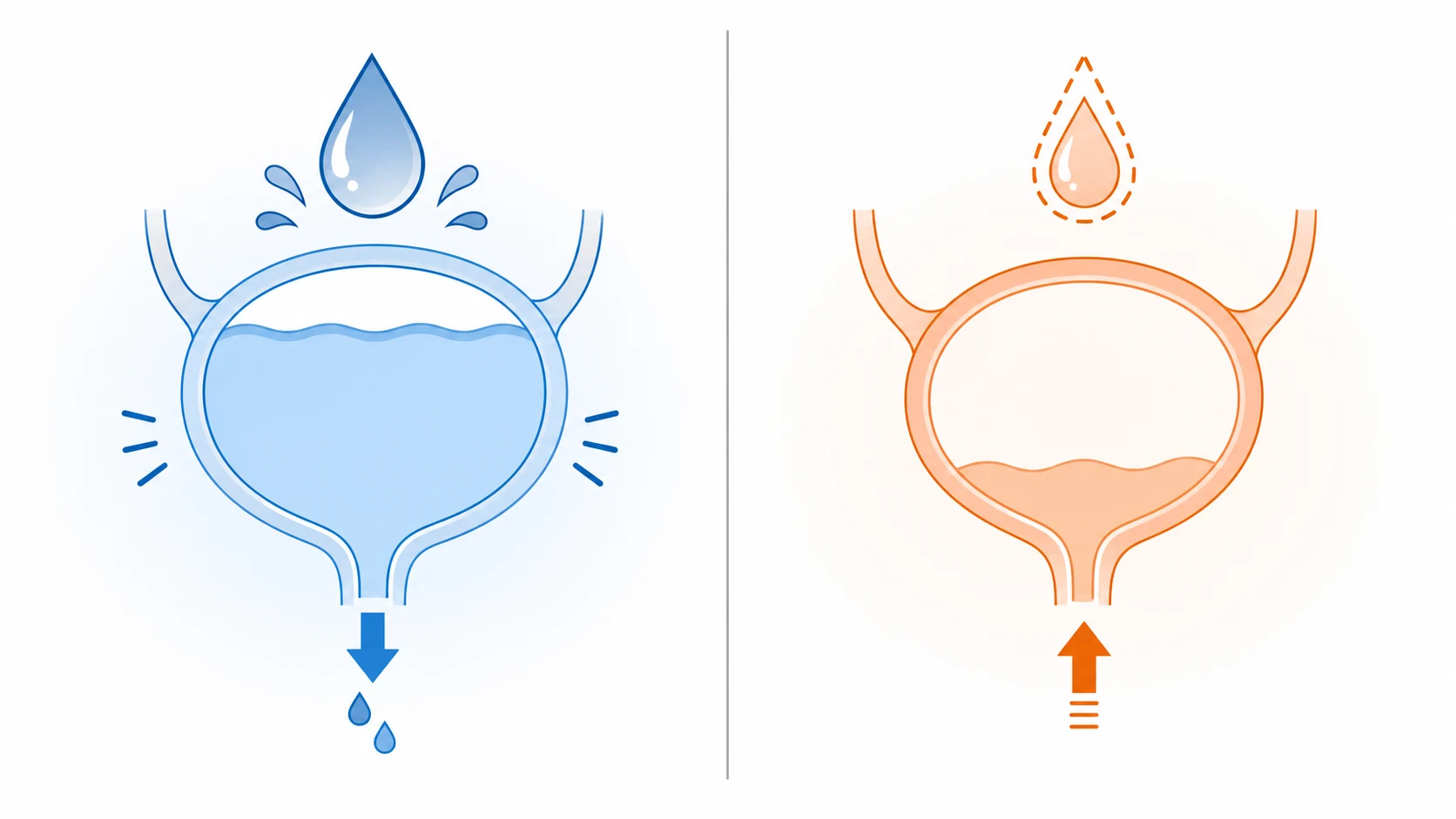
The SIADH (the syndrome of inappropriate the antidiuretic the hormone) — the excess the ADH → the impaired the free-water the excretion → the water the retention → the dilutional the hyponatraemia, the euvolaemic.[1][1]
The diagnostic the criteria.[1][1]
- The hyponatraemia (the hypo-osmolar — the low the plasma the osmolality the below the 275).
- The inappropriately the concentrated the urine (the osmolality the above the 100 — the often the high; the not the maximally the dilute).
- The euvolaemic (the no the oedema, the no the dehydration).
- The the ongoing the sodium the excretion (the urine the Na the above the 40 — the normal the intake).
- The exclude the other the causes (the renal, the adrenal the insufficiency, the hypothyroid, the diuretics, the heart the failure, the cirrhosis).
The causes. The ectopic the ADH (the small-cell the lung the cancer — the classic), the CNS (the SAH, the stroke, the meningitis, the TBI, the tumour), the drugs (the SSRIs, the carbamazepine, the vincristine, the cyclophosphamide, the MDMA), the pulmonary (the pneumonia, the mechanical the ventilation).[1][1]
The clinical. The hyponatraemia the symptoms (the headache, the nausea, the confusion, the seizures, the coma — the worse the lower + the faster the fall). The euvolaemic.[1]
- The mild — the fluid the restriction (the 800 to 1000 mL/day), the salt the tablets.
- The moderate-to-severe — the hypertonic the saline (the 3 per cent) the cautious (the raise the Na the 4 to 6 the first the hours if the symptomatic, then the below the 8 to 10 the mmol/24 h — the avoid the osmotic the demyelination the syndrome / the central the pontine the myelinolysis).[1]
- The severe the symptomatic (the seizures, the coma) — the hypertonic the saline the 100 mL the bolus (the repeat) for the rapid the partial the correction (the 4 to 6 the mmol), then the slow.
- The vaptans (the vasopressin the receptor the antagonists — the tolvaptan, the conivaptan) — the aquaretic; the cautious (the over-correction).
- The treat the cause (the stop the offending the drug, the treat the pneumonia, the cancer).[1]
The diabetes the insipidus
The DI — the ADH the deficiency (the central) or the resistance (the nephrogenic) → the impaired the water the reabsorption → the polyuria, the dilute the urine, the hypernatraemia, the dehydration.[2][3]
- The central (the neurohypophyseal) — the ADH the deficiency. The causes: the TBI (the post-traumatic — the often the tri-phasic), the pituitary the surgery (the post-operative), the tumour, the Sheehan, the infiltrative, the idiopathic. The the tri-phasic the response (the TBI / the surgery): the phase 1 the DI (the posterior the pituitary the shock — the days), the phase 2 the SIADH (the released the ADH — the days to the weeks), the phase 3 the permanent the DI.[2][1]
- The nephrogenic — the ADH the resistance. The causes: the lithium (the commonest the acquired), the hypercalcaemia, the hypokalaemia, the congenital (the V2 the receptor / the aquaporin), the osmotic the diuresis (the DKA / the HHS — the "the osmotic" the DI — the glucosuria).[3]
The clinical. The polyuria (the above the 3 L/day — the dilute the urine, the osmolality the low the despite the high the serum), the polydipsia (the thirst — the if the alert), the hypernatraemia, the dehydration. The brain-death the donor the DI (the common the ICU).[2][1]
The diagnosis. The the water the deprivation the test + the the desmopressin the challenge (the central the responds — the urine the osmolality the rises the after the desmopressin; the nephrogenic the no). The serum the osmolality the high + the urine the osmolality the low.[2][3]
- The central — the desmopressin (the DDAVP) (the oral / the IV / the intranasal). The responsive.
- The nephrogenic — the treat the cause (the stop the lithium, the correct the Ca / the K); the low-solute the diet; the thiazide (the paradoxical — the volume the contraction → the proximal the reabsorption); the indomethacin (the prostaglandin the inhibition → the enhances the ADH).
- The ICU — the replace the urine the output (the hypotonic the fluid), the free the water (the enteral / the D5W); the brain-death the donor the desmopressin + the vasopressin.[1]
Prognosis
The SIADH the depends the cause (the cancer the poor; the drug / the pneumonia the reversible). The DI the central the desmopressin-responsive; the nephrogenic the treat the cause. The over-rapid the correction the SIADH → the osmotic the demyelination (the irreversible).[1][2][1]
Red flags
Pathophysiology in depth — the ADH axis
Arginine vasopressin (AVP / ADH) is synthesised in the supraoptic and paraventricular nuclei of the hypothalamus and transported axonally to the posterior pituitary for storage. Release is governed by two inputs: osmoreceptors in the organum vasculosum of the lamina terminalis (threshold ≈ 280–285 mOsm/kg, exquisitely sensitive — a 1% rise in osmolality triggers release) and baroreceptors in the carotid sinus and aortic arch (a 5–10% drop in effective circulating volume overrides osmotic inhibition and releases ADH). AVP then acts on V2 receptors (basolateral Gs-coupled) in the renal collecting duct → cAMP → aquaporin-2 channels insert into the apical membrane → water is reabsorbed down the medullary osmotic gradient → urine concentrates and plasma dilutes.[5][13]
SIADH is a state of autonomous or dysregulated ADH action independent of osmotic and haemodynamic stimuli — the kidney reabsorbs free water inappropriately, plasma becomes hypo-osmolar, yet the urine stays inappropriately concentrated. The retained water expands total body water by ~3–4 L; the mild volume expansion activates natriuresis (via ANP/BNP and the aldosterone escape), so the patient is euvolaemic, not oedematous, but excretes sodium in the urine (urine Na⁺ typically >40 mmol/L).[1][5]
Diabetes insipidus is the mirror image: either no ADH reaches the kidney (central) or the kidney cannot respond (nephrogenic). The collecting duct stays water-impermeable → large volume of maximally dilute urine (osmolality often <100 mOsm/kg, specific gravity <1.005) → free-water loss → progressive hypernatraemia and hypertonic dehydration, corrected only if thirst is intact and water access is maintained.[2][11]
ADH axis — the normal state, SIADH, and DI at a glance
| Parameter | Normal | SIADH (euvolaemic hypoNa⁺) | Central DI | Nephrogenic DI |
|---|---|---|---|---|
| Plasma ADH/copeptin | Appropriate to osmolality | Inappropriately high (or in NSIAD: normal–high action, undetectable peptide) | Low / undetectable | Normal or high (kidney unresponsive) |
| Serum Na⁺ / osmolality | Normal | Low (euvolaemic) | High (dehydrated) | High (dehydrated) |
| Urine osmolality | Matches plasma need | Inappropriately high (>100, often >300) | Low (<100–200) | Low (<100–200, often maximally dilute) |
| Urine Na⁺ | Variable | >40 mmol/L (euvolaemic natriuresis) | Variable (low if dehydrated) | Variable |
| Volume status | Euvolaemic | Euvolaemic (no oedema) | Hypovolaemic (if no access to water) | Hypovolaemic (if no access to water) |
| Response to desmopressin | — | Urine further concentrates (avoid — worsens hypoNa⁺) | Urine concentrates promptly | No response (diagnostic) |
SIADH — the comprehensive cause list
The causes cluster into four buckets. The single highest-yield exam association is small-cell lung cancer secreting ectopic ADH; in the ICU, the commonest reversible causes are drugs and pulmonary/ CNS disease.[1][5]
Causes of SIADH — the four buckets, with ICU-relevant detail
| Bucket | Specific causes | ICU / exam point |
|---|---|---|
| Malignancy (ectopic ADH) | Small-cell lung cancer (classic, ~75% of ectopic), head & neck SCC, lymphoma, leukaemia, mesothelioma, thymoma, pancreatic & duodenal carcinoma, prostate | Screen for SCLC in any smoker with unexplained euvolaemic hyponatraemia — CT chest ± bronchoscopy. Ectopic ADH from the tumour resolves with chemotherapy / resection. |
| CNS disease | SAH, traumatic brain injury, subdural haematoma, stroke (ischaemic & haemorrhagic), meningitis / encephalitis, brain abscess, tumour, MS, Guillain-Barré syndrome, acute intermittent porphyria, hydrocephalus | The "cerebral salt wasting" differential in SAH is critical — both are hypoNa⁺ with high urine Na⁺, but CSW is hypovolaemic (needs volume, not restriction). |
| Drugs | SSRIs (most common drug cause — especially in the elderly), carbamazepine/oxcarbazepine, MDMA (marked, rapid — release of ADH + enhanced thirst + water intake), vincristine, cyclophosphamide, antipsychotics (phenothiazines, haloperidol), MAOIs, TCAs, NSAIDs (potentiate ADH), desmopressin / oxytocin (exogenous vasopressin), 3,4-MDMA, MDMA analogues | Stop the offending drug first — most drug-induced SIADH resolves in days. SSRIs: risk highest in the first 2 weeks and in the elderly. |
| Pulmonary disease | Pneumonia (bacterial, atypical, viral — including severe influenza & COVID-19), COPD exacerbation, asthma, bronchiectasis, positive-pressure ventilation (esp. PEEP), PTB, legionella (classic association) | Resolve the pneumonia and the SIADH usually resolves with it. PEEP reduces venous return → ADH release. |
| (Special) Hereditary | Nephrogenic syndrome of inappropriate antidiuresis (NSIAD) — activating mutation of the V2 receptor (R137C) → constitutive water reabsorption; presents in infants (usually male, X-linked) with severe hypoNa⁺, undetectable ADH | Suspect in a male infant with recurrent severe hypoNa⁺ seizures and a family history; managed with fluid restriction ± urea. |
| (Physiological mimics — NOT SIADH) | Pain, nausea, stress, post-operative state, hypoglycaemia — all release ADH appropriately | Treat the stimulus (analgesia, antiemetic); do not label as SIADH and over-restrict. |
The diagnostic workup of hyponatraemia — a stepwise ICU approach
Hyponatraemia is the commonest electrolyte disorder in hospitalised patients (~15–30%). The ICU approach is volume status first, then urine osmolality and urine sodium, because SIADH is a diagnosis of euvolaemia and exclusion.[5][6]
Diagnosing the cause of hyponatraemia — the ICU algorithm
- CONFIRM true (hypotonic) hyponatraemia: Check simultaneous serum osmolality. Hypotonic (<275 mOsm/kg) is the common and dangerous group. Isotonic (275–295) = pseudohyponatraemia (lipids/proteins) or hypertonic (hyperglycaemia — correct Na⁺ by +2.4 mmol/L per 5.6 mmol/L glucose above 5.6). Pseudohyponatraemia needs no treatment of the sodium itself.
- ASSESS VOLUME STATUS (clinical — the pivotal branch point): JVP, skin turgor, mucous membranes, oedema, BP, postural drop, lactate.
- Hypovolaemic (dehydrated): renal loss (diuretics — especially thiazides, osmotic diuresis, mineralocorticoid deficiency / adrenal insufficiency) vs extrarenal (vomiting, diarrhoea, burns, third-spacing, pancreatitis). Urine Na⁺ <20 = extrarenal; >40 = renal.
- Hypervolaemic (oedematous): heart failure, cirrhosis, nephrotic syndrome, renal failure — "effective arterial blood volume" low → ADH high → dilutional hypoNa⁺.
- Euvolaemic: SIADH, primary polydipsia, low solute intake (beer potomania, "tea-and-toast"), adrenal insufficiency, hypothyroidism, post-operative reset osmostat.
- IF EUVOLAEMIC — confirm SIADH criteria: (a) hypo-osmolar hyponatraemia; (b) urine osmolality inappropriately concentrated (>100 mOsm/kg) — a dilute urine (<100) points instead to primary polydipsia or low solute; (c) urine Na⁺ >40 mmol/L on a normal diet; (d) clinically euvolaemic; (e) normal adrenal (short Synacthen / morning cortisol) and normal thyroid function — these MUST be excluded before labelling SIADH; (f) no recent diuretic use.
- ORDER THE TARGETED WORKUP: serum osmolality, urine osmolality, urine Na⁺ & K⁺ (calculate urine:serum electrolyte ratio — if >1, suggests free-water retention responsive to restriction), serum glucose, cortisol + ACTH or Synacthen, TSH, urate (low in SIADH), lipid profile. Copeptin (stable AVP surrogate) if available — modern preferred discriminator (see below).
- SEARCH FOR THE CAUSE: drug history (SSRIs, carbamazepine, MDMA, chemotherapy), chest X-ray / CT chest (small-cell lung cancer, pneumonia), CT/MRI brain (TBI, SAH, tumour), and review for symptoms of malignancy (weight loss, haemoptysis, smoker).
- DO NOT label as SIADH until adrenal insufficiency and hypothyroidism are excluded — cortisol deficiency raises ADH and mimics SIADH perfectly; giving fluid restriction to a patient in adrenal crisis is dangerous (they are actually hypovolaemic and need parenteral hydrocortisone). This is the single most common diagnostic error.
Severe symptomatic SIADH — hypertonic saline protocol
The feared emergency is severe symptomatic hyponatraemia (Na⁺ usually <120–125 with seizures, coma, or impending herniation) — this needs rapid partial correction with 3% hypertonic saline. The goal is to raise Na⁺ by 4–6 mmol/L in the first 4–6 hours (enough to clear life-threatening cerebral oedema), then slow to ≤8–10 mmol/L in any 24-hour period to avoid osmotic demyelination.[5][7]
Hypertonic saline for severe symptomatic hyponatraemia (Na⁺ <120 with seizures/coma)
- RECOGNISE the emergency: Seizure, coma, signs of raised ICP (falling GCS, bradycardia + hypertension, abnormal pupils), or rapidly falling Na⁺. Do NOT wait for the cause — give 3% saline empirically.
- GIVE A 100 mL BOLUS of 3% NaCl over 10 minutes (≈ 514 mmol/L Na⁺; each 100 mL raises serum Na⁺ by ~1–2 mmol/L acutely). Repeat the 100 mL bolus up to 3 times (total 300 mL) until seizures stop / symptoms improve. Recheck Na⁺ after each bolus. This bolus approach (over the older continuous infusion) is safer — it is self-limited and the Na⁺ rise is predictable.
- THEN START A CONTROLLED INFUSION of 3% NaCl at 0.5–1 mL/kg/h (or use the Adrogué–Madiás formula: ΔNa⁺ per 1 L infused = [infusate Na⁺ + K⁺ − serum Na⁺] / [total body water + 1]). For 3% saline in a 70 kg man: ΔNa⁺ ≈ (513 − 115) / (42 + 1) ≈ +9 mmol/L per litre — so infuse slowly and check hourly.
- SET A HARD CORRECTION CEILING: ≤10 mmol/L in 24 h (aim 6–8). If Na⁺ corrects faster than target → STOP hypertonic saline, give free water (D5W 3 mL/kg or 250–500 mL bolus) ± DDAVP 1–2 µg IV (yes — desmopressin to prevent over-correction, by locking in renal water reabsorption). DDAVP to "re-lower" over-correction is an accepted rescue.
- MONITOR: serum Na⁺ every 1–2 hours during active correction; continuous cardiac monitoring; strict urine output (a spontaneous aquaresis after the stimulus resolves — e.g. SSRI washout — can over-correct by 2 mmol/L/hour → have DDAVP ready).
- TRANSITION TO MAINTENANCE: once Na⁺ is >120 and symptoms resolved, switch to fluid restriction ± oral salt ± urea / tolvaptan for slow continued correction. Treat the underlying cause (stop SSRI, treat pneumonia, resect tumour).
Adjuncts to fluid restriction — vaptans, urea, salt, loop diuretics
For chronic / moderately symptomatic SIADH where restriction alone fails, several adjuncts exist. Each has a distinct risk profile; the vaptans carry the most over-correction risk and urea the least.[4][12][13]
SIADH adjuncts beyond fluid restriction — the ICU comparison
| Agent | Mechanism | Dose | Onset / role | Key risks / caveats |
|---|---|---|---|---|
| Fluid restriction (first line) | Reduces intake; the dilutional driver | 800–1000 mL/day (all fluids — IV + oral + in meds) | Slow, 24–72 h | Fails when urine:serum electrolyte ratio >1 or urine osmolality >500 (the kidney can't suppress). Low solute diet helps (reduces obligate solute excretion). |
| Oral salt tablets / NaCl | Adds solute → obligate water excretion; mildly hypertonic | 6–9 g/day (split), with meals | Hours–days | Oedema, GI upset, hypernatraemia if over-restricting water. Avoid in heart failure. |
| Loop diuretic (frusemide) | Promotes free-water (more than Na⁺) loss; raises aquaresis when combined with salt | 20–40 mg oral/IV, titrate to urine output | Hours | Hypokalaemia, volume depletion, over-correction. Useful in the hypervolaemic-look-alike and the "over-restricted but not responding" patient. |
| Urea | Osmotic diuretic — obligate solute excretion → aquaresis without affecting ADH axis | 15–60 g/day oral (dissolved in water/juice) | 24–48 h | Preferred long-term by many units — minimal over-correction risk, cheap, no liver toxicity. Bitter taste, dyspepsia. Soupart 2012: as effective as vaptans with fewer over-correction events. |
| Tolvaptan (V2 antagonist, "vaptan") | Blocks renal V2 receptor → aquaresis, raises Na⁺ | 15 mg PO, titrate to 60 mg, in hospital only | 4–8 h (within 24 h) | Over-correction (rapid aquaresis), thirst, hepatotoxicity (FDA black-box — avoid in liver disease), expensive. NOT for severe symptomatic (use 3% saline). Monitor Na⁺ q6h. |
| Conivaptan (V1a/V2 antagonist, IV) | Dual block — V2 aquaresis + V1a vasodilation | 20 mg loading then 0.2–0.4 mg/kg/day infusion | 4–8 h | IV access only, infusion-site reactions, hypotension (V1a). Limited ICU role. |
| Demeclocycline (largely abandoned) | Induces nephrogenic DI (blocks ADH action) | 600–1200 mg/day | 3–7 days (slow) | Nephrotoxicity (especially in cirrhosis), photosensitivity, hepatotoxicity. Largely superseded by vaptans and urea. Avoid in hepatic failure. |
| Hypertonic (3%) saline | See protocol above — for severe symptomatic only | Bolus / controlled infusion | Minutes–hours | Osmotic demyelination if over-corrected; reserved for the emergency. |
Diabetes insipidus — central vs nephrogenic, in detail
DI in the ICU is dominated by post-pituitary-surgery and TBI (central) and lithium (nephrogenic), plus the brain-dead organ donor. Both share the biochemical triad of hypernatraemia + dilute urine + high serum osmolality, but the management diverges sharply on whether desmopressin will work.[2][9][10]
Central vs nephrogenic diabetes insipidus — the full comparison
| Feature | Central (cranial, neurohypophyseal) DI | Nephrogenic DI |
|---|---|---|
| Defect | Deficient ADH release from posterior pituitary | Collecting duct unresponsive to ADH (V2 receptor or aquaporin-2) |
| Commonest ICU causes | TBI (often tri-phasic), transsphenoidal / pituitary surgery, tumour (craniopharyngioma, metastasis), Sheehan syndrome, infiltration (sarcoid, histiocytosis, IgG4), idiopathic, autoimmune (anti-AVP cell), stroke, meningitis, raised ICP, brain death | Lithium (commonest acquired — ~20% of long-term users, often irreversible), hypercalcaemia, hypokalaemia, osmotic diuresis (DKA/HHS glucosuria, mannitol, urea from high-protein feeding), congenital (V2 receptor X-linked recessive, aquaporin-2 autosomal), drugs (demeclocycline, foscarnet, cidofovir, ofloxacin, ifosfamide, amphotericin B), sickle cell, post-obstructive, amyloidosis |
| Plasma ADH/copeptin | Low / inappropriately low | Normal or high |
| Response to desmopressin (DDAVP) | Prompt — urine osmolality doubles within 1–2 h | None — diagnostic |
| First-line treatment | Desmopressin (DDAVP) — oral 0.1–0.2 mg, intranasal 10–40 µg, or IV/SC 1–4 µg | Treat the cause (stop lithium, correct Ca²⁺/K⁺); low-solute diet + thiazide ± amiloride ± NSAID/indomethacin |
| Thiazide paradox | Not needed | Thiazides reduce polyuria in NDI by inducing mild volume contraction → increased proximal Na⁺/water reabsorption → less delivered to the defective collecting duct |
| Amiloride (NDI-specific) | Not used | Blocks lithium entry via ENaC into the principal cell — drug-of-choice in lithium NDI (preserves renal function); 5–10 mg/day |
| Urine output | Often massive (5–15 L/day) if untreated | Variable; often 3–6 L/day |
| Urine osmolality | <200 (often <100) mOsm/kg | <200 (often <100) mOsm/kg — "floor" |
Copeptin — the modern discriminator
The traditional water deprivation + desmopressin challenge is slow (4–8 h), uncomfortable, and unreliable in the sedated ICU patient. Copeptin — the C-terminal fragment of proAVP, released stoichiometrically with AVP and stable in the tube — has transformed the workup. The hypertonic saline-stimulated copeptin cut-off (49 pmol/L) distinguishes central DI (low) from nephrogenic DI and primary polydipsia (high) with >95% sensitivity and specificity, without prolonged water deprivation (Fenske 2018). A basal copeptin <2.6 pmol/L strongly suggests central DI (and predicts desmopressin response).[8][9]
The tri-phasic response after TBI / pituitary surgery — anticipate it
- Phase 1 — DI (days 0–5): axonal shock → no ADH release → polyuria, dilute urine, hypernatraemia. Give DDAVP + replace urine output with hypotonic fluid.
- Phase 2 — SIADH (days 5–14): the necrosing posterior pituitary releases stored ADH → water retention → hyponatraemia. Stop DDAVP, fluid-restrict, watch Na⁺ daily — over-aggressive DDAVP here causes dangerous hyponatraemia.
- Phase 3 — permanent (or partial) DI (weeks–permanent): the remaining tissue is insufficient → lifelong central DI. Restart DDAVP.[2][1]
The triphasic pattern occurs in ~a third of post-pituitary-surgery patients; even those with a monophasic DI course need Na⁺ monitoring for at least 2 weeks to catch the SIADH phase. [1]
Brain-dead organ donor DI — the ICU protocol
Up to 80% of brain-dead donors develop central DI as the posterior pituitary infarcts. Uncontrolled hypernatraemia worsens graft function (especially liver and kidney), so tight Na⁺ control (target 135–155 mmol/L) is a core donor-management goal alongside haemodynamic support.[1][1]
Brain-dead donor DI — the ICU management protocol
- DIAGNOSE EARLY: polyuria (>2.5–3 mL/kg/h) + dilute urine (osmolality <200 or specific gravity <1.005) + rising serum Na⁺ (>145) + rising serum osmolality (>300). Check hourly urine output and q4–6h Na⁺.
- REPLACE URINE OUTPUT ml-for-ml with hypotonic fluid — D5W, 0.45% saline, or enteral water via NG. Avoid normal saline for free-water replacement (it worsens hypernatraemia). The aim is net-zero water balance.
- GIVE VASOPRESSIN (not desmopressin alone): titrated vasopressin infusion 0.5–4 U/h provides both the V1a haemodynamic support (these donors are often vasoplegic) and V2 anti-diuretic action — the donor-care vasopressor of choice. Add DDAVP 1–4 µg IV q6–8h or intranasal 10–40 µg if urine output remains high despite vasopressin.
- TARGET Na⁺ 140–150 and serum osmolality 290–310. Correct slowly (≤0.5 mmol/L/h, ≤10–12/day) — rapid swings also injure the grafts.
- MONITOR: hourly urine output (titrate fluids and DDAVP to keep <3 mL/kg/h), q4h Na⁺, glucose (DDAVP can rarely cause hyponatraemia if over-replaced), and core temperature (hypothermia reduces AVP clearance).
- COORDINATE WITH TRANSPLANT: stable Na⁺ and haemodynamics directly improve graft yield — communicate trends to the retrieval team.
Osmotic demyelination syndrome — the irreversible complication
Osmotic demyelination syndrome (ODS / central pontine myelinolysis) is the catastrophic consequence of over-rapid correction of chronic hyponatraemia. When plasma Na⁺ has been low for >48 h, brain astrocytes shed osmolyles (myo-inositol, taurine, glutamate) to defend cell volume against hypo-osmolar oedema. Rapid Na⁺ correction then creates an osmotic gradient that shrinks astrocytes, triggers oligodendrocyte apoptosis, and demyelinates the basis pontis (and, in 10% of cases, extrapontine sites: basal ganglia, thalamus, cerebellum).[7][5]
The classic course: the patient's hyponatraemic symptoms improve as Na⁺ rises, then 2–6 days later develop a spastic quadriparesis, pseudobulbar palsy (dysarthria, dysphagia), locked-in syndrome, seizures, and coma. MRI (T2/FLAIR hyperintensity in the central pons, often sparing the corticospinal tracts) confirms but lags clinical signs by days — a normal early MRI does not exclude ODS. Mortality is high; survivors are often profoundly disabled. Risk is highest when Na⁺ is <105–110, hypokalaemia, alcoholism, malnutrition, cirrhosis, and hepatic transplant — in these groups, cap correction even lower (≤4–6 mmol/24 h).[7][5]
The key defence is the correction ceiling: keep the rise ≤8–10 mmol/L per 24 h (≤4–6 if very high risk); use DDAVP + D5W to actively re-lower if over-corrected. Sterns 1986 (NEJM) first described the syndrome after rapid correction; it remains the seminal reference.[7]
Trial cards — the evidence base
Schrier et al. 2006 — SALT-1 and SALT-2: tolvaptan for euvolaemic and hypervolaemic hyponatraemia (NEJM, PMID 17105757)
Source
N Engl J Med 2006;355:2099-2112 — two randomised, double-blind, placebo-controlled trials (n=448 combined) of oral tolvaptan in SIADH, heart failure, and cirrhosis with hyponatraemia.
Design
Tolvaptan 15 mg/day titrated to 30/60 mg vs placebo for 30 days, with sodium re-checked at 4 days; primary endpoint was the change in serum Na⁺ AUC over 4 days and at day 30.
What it established
Tolvaptan raised Na⁺ by a mean of ~6–7 mmol/L over 4 days vs ~1 mmol/L placebo; the effect was consistent across SIADH, heart failure, and cirrhosis subgroups. The first RCT proof that a V2-receptor antagonist (aquaretic) corrects dilutional hyponatraemia — established the vaptan drug class.
Limitations / safety
Thirst, dry mouth, and frequent urination common. Over-correction (>12 mmol/24 h) occurred in ~6% — driving the modern in-hospital-only, q6h-monitoring rule. No mortality benefit (and EVEREST later showed none in heart failure). Subsequent FDA black-box on hepatic toxicity from polycystic kidney-disease dosing.
Clinical bottom line
The pharmacological proof of concept for vaptans. Use tolvaptan for **chronic, mildly symptomatic** SIADH refractory to restriction — never as first-line, never in severe symptomatic (where 3% saline is mandatory), always in hospital with Na⁺ checks.
Fenske et al. 2018 — the copeptin-based direct test for diabetes insipidus (NEJM, PMID 30067922)
Source
N Engl J Med 2018;379:428-439 — a multicentre prospective diagnostic study (n=156) comparing the hypertonic-saline-stimulated copeptin cut-off against the indirect water-deprivation test plus desmopressin response (the reference standard).
What it established
A **stimulated copeptin cut-off of 49 pmol/L** distinguished central DI (below) from nephrogenic DI and primary polydipsia (above) with sensitivity ~93% and specificity ~100% — i.e. the test essentially replaces the cumbersome, error-prone water-deprivation test. Basal copeptin <2.6 pmol/L also strongly predicts central DI.
Limitations
Requires a controlled 3% saline infusion and rapid copeptin assay (not universally available); less studied in critical illness, sepsis, and stress (where copeptin is constitutively elevated).
Clinical bottom line
Where copeptin is available, it is the new first-line discriminator — sparing the ICU patient an 8-hour water deprivation test. A high stimulated copeptin with dilute urine = nephrogenic DI; a low one = central DI (give desmopressin).
Soupart et al. 2012 — urea vs vaptans for long-term SIADH (CJASN, PMID 22403276)
Source
Clin J Am Soc Nephrol 2012;7:742-748 — a retrospective single-centre comparison of long-term urea (n=12) vs vaptans in patients with chronic SIADH.
What it established
Urea (15–60 g/day) corrected Na⁺ to normal range in all, with **fewer over-correction events and at a fraction of the cost** of vaptans. No liver toxicity. Effect was durable over years.
Limitations
Small, retrospective, single-centre, no randomisation; tolerability limited by bitter taste and dyspepsia (mitigated by dissolving in flavoured fluid).
Clinical bottom line
Many European SIADH centres now prefer urea over vaptans for chronic SIADH on safety, efficacy, and cost grounds — particularly relevant in the elderly and in those with concurrent liver disease where vaptans are contraindicated.
Sterns et al. 1986 — osmotic demyelination after rapid correction of hyponatraemia (NEJM, PMID 3713747)
Source
N Engl J Med 1986;314:1535-1542 — the landmark clinical–radiological–pathological series that established the causal link between the **rate** of Na⁺ correction and central pontine myelinolysis.
What it established
Patients whose chronic hyponatraemia was corrected at >12 mmol/L/24 h developed irreversible pontine and extrapontine myelinolysis (quadriparesis, pseudobulbar palsy, coma). The series codified the modern ceiling on correction rate (≤8–10 mmol/L per 24 h, and lower in high-risk groups).
Clinical bottom line
The single most influential paper on the **safe correction of hyponatraemia** — every hypertonic-saline protocol and every ceiling rule traces to it. The reason we tolerate mild residual hyponatraemia rather than chase a 'normal' number quickly.
Clinical pearls — the high-yield points
[1]More red flags
Management at a glance — the two ends

SIADH vs DI — the bedside decision matrix
| Question | SIADH | DI |
|---|---|---|
| Sodium | Low (hypoNa⁺) | High (hyperNa⁺) |
| Volume | Euvolaemic | Hypovolaemic (if no water access) |
| Urine | Concentrated, low volume | Dilute, high volume |
| First move | Restrict water; 3% saline if severe symptomatic | Replace water (D5W / enteral) + DDAVP (central) |
| Drug | Urea / tolvaptan / loop + salt (chronic) | Desmopressin (central); amiloride + thiazide (nephrogenic) |
| Danger of treatment | Over-correction → osmotic demyelination | Over-treatment (DDAVP) → hyponatraemia; under-replacement → hyperNa⁺ |
| Key exclusion | Adrenal insufficiency, hypothyroidism, diuretics | Osmotic diuresis (glucose, mannitol, urea) |
| Copeptin | Inappropriately high (or normal in NSIAD action) | Low (central); normal/high (nephrogenic) |
Exam vignettes
Mnemonics
SIADHSIADH criteria — 'I HEAR SAD'
DIDI causes — 'CNS Drugs' (central) and 'LOW SALT' (nephrogenic)
12Correction ceiling — '8 or less, lives bless; 12 or more, lockjaw for'
Prognosis — refined
SIADH prognosis tracks the underlying cause. Drug-induced (SSRI, carbamazepine, MDMA) and pneumonia-related cases are largely reversible within days of stopping the drug or treating the infection. Small-cell lung cancer-associated SIADH carries the cancer's prognosis (median survival months) but the hyponatraemia often improves with chemotherapy; symptomatically, even modest Na⁺ correction (to >125) improves neurocognition and quality of life. Idiopathic / reset osmostat is benign and chronic. The iatrogenic prognosis — osmotic demyelination from over-rapid correction — is the avoidable catastrophe: mortality up to 50%, with most survivors left with major disability.[1][5][7]
DI prognosis: central DI is desmopressin-responsive and, when due to reversible causes (post-op triphasic, drug), may resolve; permanent cases are well-managed on lifelong DDAVP with normal life expectancy provided thirst remains intact. Nephrogenic DI from lithium may be irreversible even after drug cessation (chronic cases progress to CKD); early amiloride and lithium withdrawal offer the best chance of recovery. Brain-dead donor DI directly affects graft yield — tight Na⁺ control is a measurable marker of donor-care quality.[2][10]
Summary — the one-paragraph exam answer (expanded)
Exam-style short-answer questions
SAQ — Severe symptomatic SIADH with seizures requiring hypertonic saline
10 minutes · 10 marks
A 64-year-old woman with small-cell lung cancer is brought to the emergency department after a generalised tonic-clonic seizure. She is post-ictal, GCS 11 (E3V3M5). Na⁺ 108 mmol/L, K⁺ 3.6, serum osmolality 248 mOsm/kg, urine osmolality 418 mOsm/kg, urine Na⁺ 64 mmol/L. Clinically euvolaemic. Morning cortisol 520 nmol/L, TSH normal. Not on diuretics. BP 124/76, HR 92, glucose 6.2. The Na⁺ was 122 two weeks ago on admission for chemotherapy.
SAQ — Cerebral salt wasting versus diabetes insipidus after subarachnoid haemorrhage
10 minutes · 10 marks
A 54-year-old woman is day 5 on the neuro-ICU after an aneurysmal subarachnoid haemorrhage (Hunt & Hess III) clipped on day 1. Her sodium was 138 on admission. Today it is 122 mmol/L; urine output has risen from 2.0 to 4.2 L/day, urine osmolality 480 mOsm/kg, urine Na⁺ 92 mmol/L, serum osmolality 256 mOsm/kg. She is on nimodipine; central venous pressure is 2 cmH₂O, she looks clinically dry, HR 104, BP 96/58. The registrar has labelled this SIADH and started fluid restriction.
References
- [1]Refardt J, et al. Syndrome of Inappropriate Antidiuresis: From Pathophysiology to Management Endocr Rev, 2023.PMID 36974717
- [2]Lopez-Garcia E, et al. Central and nephrogenic diabetes insipidus: updates on diagnosis and management Front Endocrinol (Lausanne), 2024.PMID 39845881
- [3]Liamis G, et al. Diagnosis and management of diabetes insipidus for the internist: an update J Intern Med, 2021.PMID 33713498
- [4]Schrier RW, Gross P, Gheorghiade M, et al. Tolvaptan, a selective oral vasopressin V2-receptor antagonist, for hyponatremia N Engl J Med, 2006.PMID 17105757
- [5]Sterns RH. Disorders of plasma sodium N Engl J Med, 2015.PMID 25806924
- [6]Spasovski G, Vanholder R, Allolio B, et al. Clinical practice guideline on diagnosis and treatment of hyponatraemia Nephrol Dial Transplant, 2014.PMID 24569496
- [7]Sterns RH, Riggs JE, Schochet SS Jr. Osmotic demyelination syndrome following correction of hyponatremia N Engl J Med, 1986.PMID 3713747
- [8]Fenske W, Refardt J, Chifu I, et al. A Copeptin-Based Approach in the Diagnosis of Diabetes Insipidus N Engl J Med, 2018.PMID 30067922
- [9]Christ-Crain M, Bichet DG, Fenske WK, et al. Diabetes Insipidus: New Concepts for Diagnosis Neuroendocrinology, 2020.PMID 31986514
- [10]Bockenhauer D, Bichet DG. Pathophysiology, diagnosis and management of nephrogenic diabetes insipidus Nat Rev Nephrol, 2015.PMID 26077742
- [11]Adrogue HJ, Madias NE. Hypernatremia N Engl J Med, 2000.PMID 10816188
- [12]Soupart A, Coffernils M, Couturier B, et al. Efficacy and tolerance of urea compared with vaptans for long-term treatment of patients with SIADH Clin J Am Soc Nephrol, 2012.PMID 22403276
- [13]Verbalis JG, Goldsmith SR, Greenberg A, et al. Disorders of water metabolism: diabetes insipidus and the syndrome of inappropriate antidiuretic hormone secretion Handb Clin Neurol, 2014.PMID 25248578
- [14]Vandergheynst F, Brachet C, Heinrichs C, Decaux G. Long-term treatment of hyponatremic patients with nephrogenic syndrome of inappropriate antidiuresis: personal experience and review of published case reports Nephron Clin Pract, 2012.PMID 22722264