ICU · Endocrine
Thyroid emergencies: thyroid storm and myxoedema coma
Also known as Thyroid storm (thyrotoxic crisis) · Myxoedema coma · Burch-Wartofsky score · Amiodarone-induced thyrotoxicosis
Thyroid emergencies are rare but life-threatening. THYROID STORM is the extreme manifestation of thyrotoxicosis: hyperthermia (40C), tachycardia/atrial fibrillation, heart failure, altered mental status, precipitating event. Mortality 10-30%. Management: 1) beta-blocker (propranolol — blocks T4-to-T3 conversion), 2) thionamide (PTU preferred — blocks synthesis AND peripheral conversion), 3) iodine (Lugol’s — blocks release — give AFTER thionamide), 4) steroids (hydrocortisone — blocks conversion + covers adrenal insufficiency), 5) treat precipitant + cooling. MYXOEDEMA COMA is severe hypothyroidism: hypothermia, bradycardia, hyponatraemia, decreased GCS, hypoventilation. Mortality 20-60%. Management: IV levothyroxine (T4) ± liothyronine (T3), hydrocortisone, passive rewarming (NOT active — arrhythmia risk), supportive care.
On this page & tools
Your progress
Saved locally on this device.
Target exams
Red flags
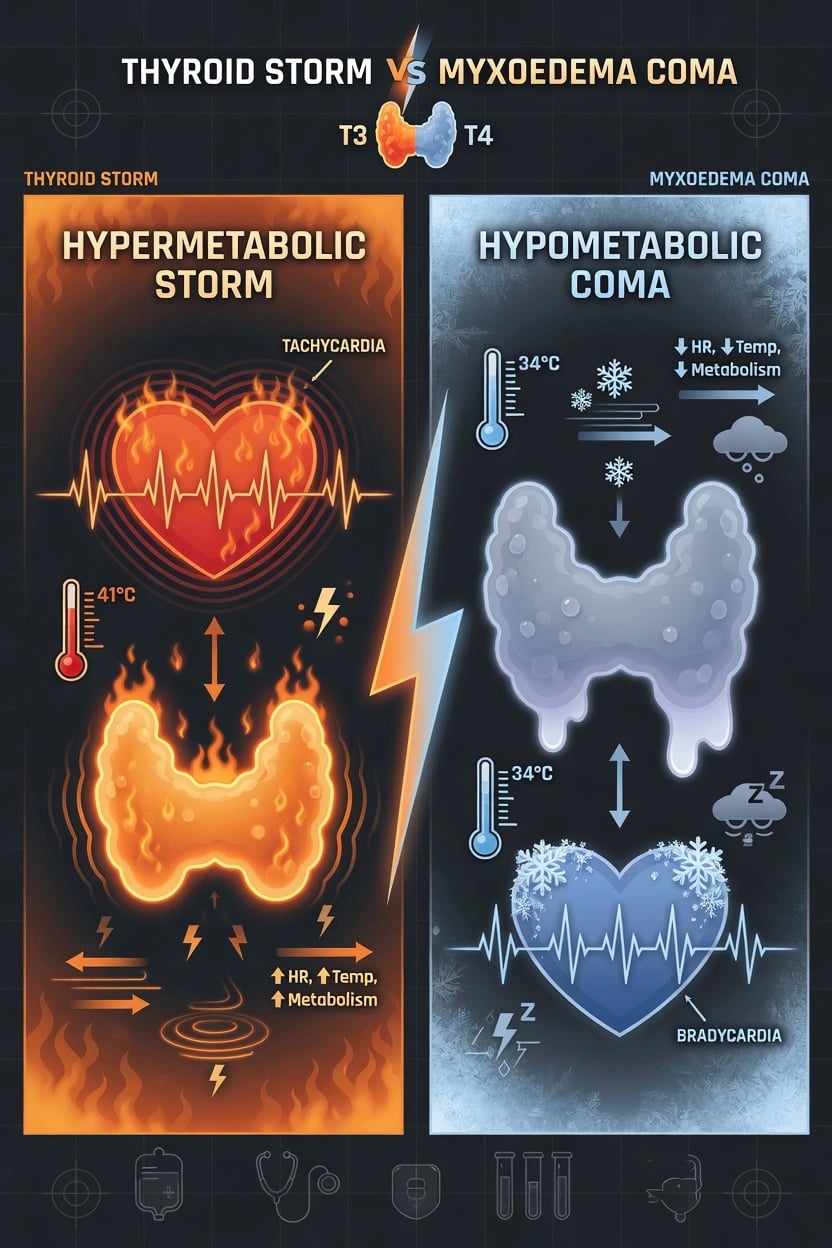
Pathophysiology — why thyroid emergencies happen
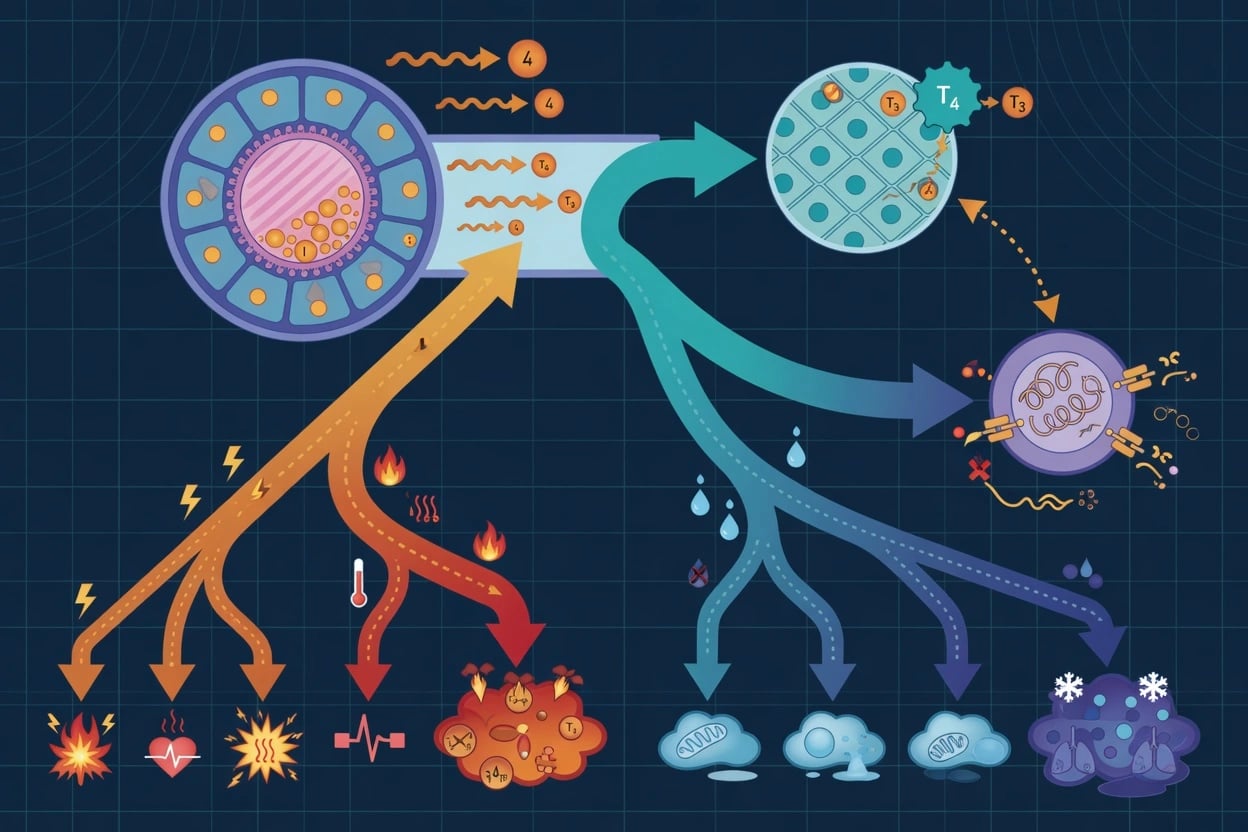
Thyroid hormone action
Cellular level
- T3 enters the cell via membrane transporters (MCT8, OATP1A2) and binds nuclear receptors (TRα, TRβ)
- Receptor-ligand complex binds thyroid response elements → upregulates Na+/K+ ATPase, β-adrenergic receptors, mitochondrial biogenesis
- Net effect: ↑ basal metabolic rate, ↑ oxygen consumption, ↑ thermogenesis, ↑ heart rate and contractility, ↑ gut motility
- T4 is a prohormone — converted to active T3 by 5’-deiodinase (D1, D2) in liver, kidney, peripheral tissues
In storm
Hormone overload
- Massive surge of T3/T4 overwhelms cellular machinery — adrenergic receptor density upregulated → sympathetic overdrive
- Hyperthermia: ↑ thermogenesis outstrips heat dissipation
- Cardiac: tachycardia + AF + high-output failure → later low-output/cardiogenic shock
- Hepatic: congestion + glycogen depletion + jaundice (poor prognostic marker)
- CNS: agitation → delirium → coma (exact mechanism unclear — likely receptor-mediated)
In coma
Hormone deficiency
- Profound ↓ metabolic rate → ↓ heat production (hypothermia), ↓ CO2 production but more importantly ↓ ventilatory drive (hypercapnia)
- Bradycardia + ↓ contractility → hypotension; pericardial effusions common (1 in 4)
- Impaired renal free water clearance + inappropriate ADH → dilutional hyponatraemia
- Ileus from gut smooth muscle hypofunction → pseudo-obstruction, impaired drug absorption
Thyroid storm
Clinical features and diagnosis
Burch-Wartofsky score for thyroid storm (click to explore)
Score >=45
Thyroid storm highly likely. TREAT IMMEDIATELY — do NOT wait for TFTs. Start: beta-blocker, thionamide, iodine (after thionamide), steroids, cooling. Monitor in ICU.
Burch-Wartofsky Point Scale (BWPS) — the five domains
Thermoregulatory
Body temperature
- 36.5–37.5 °C = 5 pts; 37.6–38.5 = 10; 38.6–39.5 = 15; 39.6–40.5 = 20; ≥40.6 = 25
- Hyperthermia is one of the most heavily weighted single features
- Temperature must be measured core/axillary consistently
CNS dysfunction
Neurological
- Absent = 0; Mild (agitation) = 10; Moderate (delirium, psychosis, lethargy) = 20; Severe (seizure, coma) = 30
- Coma carries the highest single-domain score
GI-hepatic
GI / liver
- Absent = 0; Nausea/vomiting/diarrhoea/abdo pain = 10; Unexplained jaundice = 20
- Jaundice is a poor prognostic marker (hepatic congestion)
Cardiovascular
HR + AF + CCF
- HR 99–109 = 5; 110–119 = 10; 120–129 = 15; 130–139 = 20; ≥140 = 25
- AF: absent = 0; present = 10
- CCF: absent = 0; mild (pedal oedema) = 5; moderate (bibasal crackles) = 10; severe (pulmonary oedema) = 15
Precipitant
History
- Negative = 0; Positive = 10
- Look for infection, surgery, RAI, iodine load, drug withdrawal, trauma, DKA, parturition
Precipitating factors [1]
[1]Management — the "4 B’s + cooling"
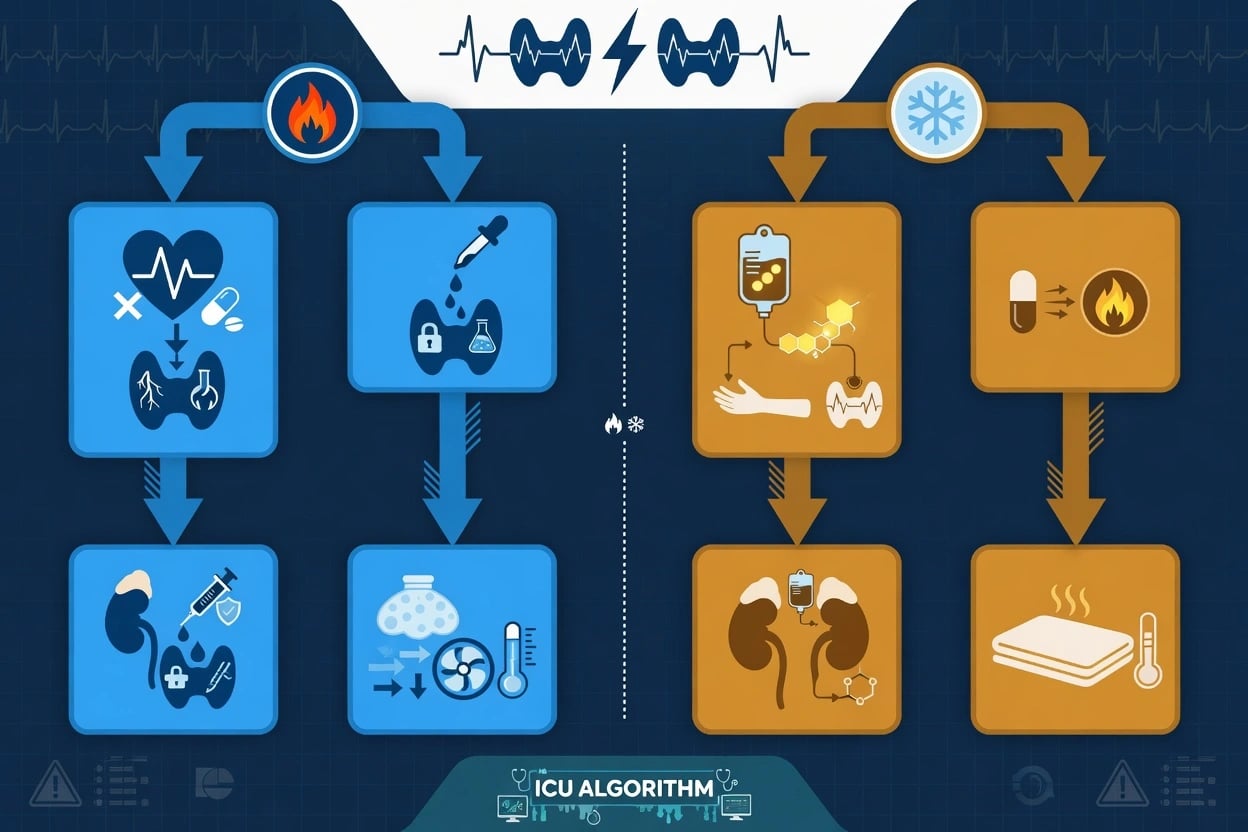
Thyroid storm treatment protocol
1. Beta-blocker (block sympathetic effects)
Propranolol 60-80 mg orally every 4h, or 1-2 mg IV slowly every 15 min (max 10 mg). PROPRANOLOL preferred because it ALSO blocks peripheral T4-to-T3 conversion (at high doses). Esmolol infusion alternative if rapid titration needed (loading 500 mcg/kg, then 50-100 mcg/kg/min). CAUTION: avoid in severe asthma — use diltiazem instead (but less effective). Target HR <100.
2. Block synthesis (thionamide)
Propylthiouracil (PTU) 500 mg loading dose, then 250 mg every 4h. PTU preferred over carbimazole/methimazole because it blocks BOTH synthesis AND peripheral T4-to-T3 conversion (carbimazole only blocks synthesis). If patient vomiting: give via NG tube or rectally. PTU has hepatotoxicity risk — switch to carbimazole once stable.
3. Block release (iodine) — 1 HOUR AFTER thionamide
Lugol’s iodine 8-12 drops orally every 6h, OR potassium iodide (SSKI) 5 drops every 6h, OR ipodate 500 mg daily. Mechanism: Wolff-Chaikoff effect — high iodine acutely blocks hormone release. CRITICAL: give AT LEAST 1 HOUR AFTER thionamide — otherwise iodine provides substrate for new hormone synthesis (Jod-Basedow phenomenon).
4. Block peripheral conversion (steroids)
Hydrocortisone 100 mg IV every 8h (or dexamethasone 2 mg every 6h). Steroids block T4-to-T3 conversion AND treat coexisting adrenal insufficiency (common in autoimmune thyroid disease — Schmidt syndrome). Taper over several days as storm resolves.
5. Cooling and supportive care
Active cooling: cooling blankets, ice packs, paracetamol (NOT aspirin — displaces T4 from binding globulin). Treat precipitant (antibiotics for infection). Monitor: continuous cardiac monitoring, urine output, temperature. Avoid salicylates. If heart failure: diuretics. Plasmapheresis may be needed in refractory cases.
Detailed clinical features of thyroid storm
Cardiovascular (cardinal)
Often first organ system to decompensate
- Sinus tachycardia is universal; AF in 10-40% (often with rapid ventricular response)
- High-output state early → later low-output / cardiogenic shock
- Congestive heart failure (tachycardia-mediated cardiomyopathy + AF)
- Pulmonary oedema, pleural effusions
- Angina / ischaemia from increased myocardial O2 demand
- Hypertension early → hypotension late (cardiogenic shock = ominous)
CNS
Severity marker
- Agitation, restlessness, emotional lability (early)
- Confusion, delirium, psychosis
- Lethargy → obtundation → coma (severe disease)
- Seizures (~ 20% in severe cases)
- Coma is a diagnostic criterion and a poor prognostic marker
Thermoregulatory
Hallmark feature
- Hyperthermia — often 39-41 °C; >40 °C is a major red flag
- Sweating, heat intolerance (sympathetic overdrive)
- Distinguishes storm from simple thyrotoxicosis (where patient is euthermic)
- Markedly elevated temperature refractory to antipyretics is characteristic
GI-hepatic
Often overlooked
- Nausea, vomiting, abdominal pain
- Diarrhoea (increased gut motility)
- Jaundice — ominous; reflects hepatic congestion + hepatocyte injury
- Hepatomegaly, deranged LFTs
- Unexplained jaundice in a thyrotoxic patient = think storm
Other
Metabolic / musculoskeletal
- Hypokalaemia (periodic paralysis — particularly in Asian males)
- Hyperglycaemia / glucose intolerance (glycogenolysis)
- Weight loss despite increased appetite
- Proximal myopathy, muscle wasting
- Increased lactate from ↑ metabolic rate
The four-block pharmacology — drug, dose, mechanism
Block 1: β-blocker
Propranolol 60-80 mg PO q4h OR 1-2 mg IV q15min (max 10 mg)
- Mechanism: competitive β1/β2 blockade → ↓ HR, ↓ contractility, ↓ sympathetic drive
- PROPRANOLOL ALSO inhibits peripheral T4→T3 conversion at higher doses (the unique advantage)
- Alternative: esmolol infusion (loading 500 mcg/kg, then 50-100 mcg/kg/min) for rapid titration in unstable patients
- Cardioselective agents (metoprolol, atenolol) — useful but DO NOT block T4→T3 conversion
- CAUTION: contraindicated in severe asthma/bronchospasm — use diltiazem (rate control only, less effective)
- Target HR <100 bpm
Block 2: Thionamide
PTU 500 mg loading then 250 mg q4h (or carbimazole 60-80 mg/day)
- PTU: blocks thyroid peroxidase (TPO) AND peripheral T4→T3 conversion (D1 deiodinase) — preferred in storm
- Carbimazole / methimazole: 10-20x more potent than PTU; blocks TPO only; longer half-life (once-daily dosing)
- Onset: hours (blocks new synthesis — no effect on pre-formed hormone)
- Side effects: PTU hepatotoxicity (black-box warning — fulminant hepatic necrosis); carbimazole = agranulocytosis, cholestasis
- Route: oral or via NG; PTU also rectally (suppository) — case reports of use when IV/oral impossible
- Switch from PTU → carbimazole once storm resolves (safer long-term)
Block 3: Iodine (release)
Lugol’s iodine 8-12 drops PO q6h OR SSKI 5 drops q6h (give ≥1 h AFTER thionamide)
- Mechanism: Wolff-Chaikoff effect — pharmacological doses of iodine acutely inhibit hormone release AND synthesis
- MUST be given at least 1 hour after thionamide — otherwise iodine provides fresh substrate for hormone synthesis (Jod-Basedow)
- Alternative: ipodate / iopanoic acid (oral cholecystographic agents) 500-1000 mg/day — also blocks T4→T3 conversion
- Use in combination with thionamide only; do not use as monotherapy
- Taper after 4-6 weeks (escape from Wolff-Chaikoff occurs)
Block 4: Steroids
Hydrocortisone 100 mg IV q8h (or dexamethasone 2 mg q6h)
- Mechanism: blocks peripheral T4→T3 conversion (additive with PTU and propranolol)
- Covers coexisting primary or relative adrenal insufficiency (common — increased cortisol clearance in thyrotoxicosis)
- Hydrocortisone preferred (mineralocorticoid activity); dexamethasone alternative (longer-acting, no mineralocorticoid)
- Taper over several days to weeks as storm resolves
- ALWAYS given empirically — do not wait for cortisol level
Rescue / adjunctive therapies for refractory thyroid storm
Plasmapheresis / plasma exchange
Removes circulating hormone
- Thyroid hormones are protein-bound — TPE effectively removes them from plasma
- Indicated for storm refractory to conventional therapy, large pre-formed hormone load, severe cardiogenic shock, hepatic failure
- Typically 1-3 sessions; bridge to definitive therapy (RAI, surgery)
- May transiently remove antithyroid drugs — adjust dosing
Cholestyramine
Enterohepatic recycling block
- Bile acid resin → binds thyroid hormones in gut, interrupting enterohepatic circulation
- Dose: 4 g PO QID with water — adjunct to standard therapy
- Onset over days; well tolerated
- Reduces T4/T3 levels by 30-50% in studies
Lithium carbonate
Inhibits release
- Inhibits hormone release from the thyroid (similar mechanism to iodine, but independent of iodine pathway)
- Use when iodine contraindicated or pre-treatment for surgery
- Dose: 300 mg PO q6h, target lithium level 0.6-1.0 mmol/L
- Monitor: lithium levels (narrow therapeutic window), renal function
Cholecystographic agents (ipodate, iopanoic acid)
Blocks release + conversion
- Iodine-rich contrast agents that also inhibit T4→T3 conversion
- 500-1000 mg/day PO
- Limited availability; useful when iodine alone insufficient
Definitive therapy
Once stabilised
- Radioactive iodine (RAI) ablation — once storm controlled (6+ months after contrast if used)
- Total/near-total thyroidectomy — after 4-6 weeks iodine preparation (Lugol’s); for severe cases, pregnant patients, those refusing RAI
- Do not attempt definitive therapy during active storm — stabilise first
Amiodarone-induced thyrotoxicosis
Type 1 (iodine-induced)
Excess hormone synthesis
- Underlying thyroid disease (multinodular goitre, Graves)
- Iodine load from amiodarone triggers hormone overproduction
- Treatment: thionamides (carbimazole/PTU) — high doses needed
- May need perchlorate (blocks iodine uptake)
Type 2 (destructive)
Release of stored hormone
- Normal thyroid — amiodarone causes destructive thyroiditis
- Pre-formed hormone leaks from damaged follicles
- Self-limiting (stores depleted in weeks-months)
- Treatment: steroids (prednisolone 40-60 mg daily)
- May be preceded by subclinical hypothyroidism phase
Myxoedema coma
Clinical features
Myxoedema coma — hypothyroid
Opposite of thyroid storm
- Hypothermia (<35C, may be as low as 24C)
- Bradycardia, hypotension
- Decreased GCS → coma
- Hypoventilation (hypercapnic respiratory failure)
- Hyponatraemia (dilutional — impaired free water clearance)
- Hypoglycaemia
- Ileus (constipation, pseudo-obstruction)
- Precipitated by: infection, cold exposure, sedatives, trauma
Precipitants of myxoedema coma
Infection (#1)
Most common precipitant
- Pneumonia, UTI, cellulitis, sepsis
- Blunted immune response and reduced febrile response may mask infection
- Always send cultures + start empiric antibiotics
Cold exposure
Especially elderly
- Hypothermia in winter months, inadequate heating
- Impaired thermogenesis from low metabolic rate
Drugs / sedatives
Reduced metabolism
- Opioids, benzodiazepines, anaesthetics — prolonged half-life, profound CNS depression
- Amiodarone (iodine load → Wolff-Chaikoff or destructive thyroiditis)
- Lithium (inhibits hormone release)
- Phenytoin, rifampicin (accelerate T4 metabolism)
Withdrawal / non-adherence
Stopped levothyroxine
- Common cause — patients stop replacement therapy (cost, side effects, confusion)
Other
Cardiovascular / metabolic
- Myocardial infarction, stroke
- GI bleed, surgery, trauma
- Cerebellar / pituitary dysfunction (central hypothyroidism)
Management
Myxoedema coma treatment protocol
1. Thyroid hormone replacement
IV levothyroxine (T4) 200-400 mcg loading dose, then 50-100 mcg daily. Some advocate adding liothyronine (T3) 10 mcg IV every 8h (T3 is the active hormone — faster onset). CAUTION: T3 has higher arrhythmia risk (especially in elderly/cardiac disease). Most patients respond to T4 alone.
2. Hydrocortisone
100 mg IV every 8h. Coexisting adrenal insufficiency is common (Schmidt syndrome — autoimmune polyglandular failure). Giving thyroid hormone increases cortisol clearance — if adrenal insufficient, thyroid replacement alone can precipitate adrenal crisis. Always give hydrocortisone until cortisol level confirmed normal.
3. Passive rewarming ONLY
Do NOT use active external warming (heating blankets, hot baths) — causes peripheral vasodilation → cardiovascular collapse. Use ordinary blankets and warm room temperature. Allow slow passive rewarming (0.5-1C/h). The core temperature will rise as thyroid hormone takes effect.
4. Supportive care
Hypoventilation: may need NIV or intubation (avoid sedatives — prolonged metabolism). Hyponatraemia: fluid restriction, hypertonic saline if severe (Na <120 with seizures). Hypoglycaemia: IV dextrose. Hypothermia: passive rewarming. Infection: treat empirically with antibiotics (infection is the most common precipitant). Ileus: nasogastric tube.
5. Identify and treat precipitant
Infection (#1 — send cultures, start empiric antibiotics). Drug withdrawal (stopped taking levothyroxine). Cold exposure. Sedative use (benzodiazepines, opioids). Trauma/surgery. MI/stroke. Without treating the precipitant, mortality remains high.
Myxoedema coma — drug therapy detail
IV Levothyroxine (T4)
200-500 mcg loading then 50-100 mcg daily
- Loading dose repletes peripheral pool (T4 has large volume of distribution — protein-bound)
- IV route preferred: oral absorption unreliable (ileus, reduced GI motility)
- Onset: 6-12 h for haemodynamic improvement, 24-48 h for mental state
- Reduce dose in elderly / ischaemic heart disease (arrhythmia risk)
- Once daily after loading; can transition to oral once ileus resolves
IV Liothyronine (T3)
10-20 mcg q4-8h initially, taper
- Active hormone — bypasses the (impaired) peripheral T4→T3 conversion
- Faster onset (4-6 h) — useful when rapid effect needed
- HIGHER arrhythmia / ischaemia risk than T4 (higher tissue T3 levels)
- Reserved for: severe cardiovascular instability, suspected impaired conversion, very severe disease
- Combination T4 + T3 regimen used by some experts; many use T4 alone
Hydrocortisone
100 mg IV q8h
- Given empirically BEFORE or WITH thyroid hormone — never after
- Coexisting primary or central adrenal insufficiency is common (Schmidt syndrome)
- Thyroid replacement ↑ cortisol clearance → can precipitate adrenal crisis if adrenal insufficient
- Taper once cortisol level confirmed normal and storm resolved
Monitoring and complications
Monitoring during treatment — what to check and how often
Continuous
Bedside
- ECG (arrhythmia — AF in storm, ventricular ectopy with T3 in coma)
- SpO2 / capnography (hypoventilation in coma)
- Arterial line (BP instability in both)
- Core temperature (hyper- or hypothermia)
- Urine output (renal function)
- GCS / neuro obs
4-6 hourly
Lab
- TFTs (T3, T4, TSH) — track response to therapy
- U&Es (Na+, K+), glucose, LFTs
- Cortisol (after 24 h on hydrocortisone)
- CK (rhabdomyolysis in coma), troponin (if cardiac involvement)
- ABG / venous lactate
Daily
Imaging / clinical
- CXR (heart failure, effusions, pneumonia)
- Echocardiography (LV function, pericardial effusion)
- cultures, septic workup
Complications to anticipate
In storm
Storm-specific
- Cardiogenic shock / multi-organ failure
- AF with RVR, ventricular arrhythmia
- Hepatic failure (jaundice + coagulopathy — ominous)
- Sepsis (precipitant or secondary)
- CNS: stroke, seizures, residual cognitive impairment
In coma
Coma-specific
- Refractory shock / asystole (especially with rapid rewarming)
- Respiratory failure requiring prolonged ventilation
- Rhabdomyolysis → AKI
- Hypoglycaemia, adrenal crisis (if steroids withheld)
- VTE (immobility + hyperviscosity)
- Aspiration pneumonia (reduced GCS + ileus)
Comparison
Thyroid storm vs myxoedema coma
Exam practice
SAQ — Thyroid storm
10 minutes · 10 marks
A 55-year-old woman with known Graves disease is admitted with fever 39.5C, agitation, confusion, and palpitations. HR 155 (atrial fibrillation), BP 160/90, RR 28. She was diagnosed with pneumonia 3 days ago and stopped her carbimazole 2 weeks ago. Burch-Wartofsky score is 50.
Key trials and guidelines
Burch & Wartofsky 1993 — original BWPS (Endocrinol Metab Clin North Am)
- Design: narrative review / expert opinion
- What it established: the Burch-Wartofsky Point Scale — a 5-domain bedside score (thermoregulatory, CNS, GI-hepatic, cardiovascular, precipitant) to standardise the clinical diagnosis of thyroid storm. Thresholds: ≥45 highly suggestive, 25-44 impending, <25 unlikely.
- Why it matters: transformed storm from a retrospective / diagnosis-of-exclusion label into a prospectively identifiable, treatable crisis — clinicians can score at the bedside within minutes and start empiric therapy without waiting for TFTs.
- Limitations: high sensitivity, moderate specificity — uncomplicated thyrotoxicosis with fever can score ≥45. No single test definitively confirms storm.
- Bottom line: the exam-defining reference — every thyroid storm guideline and exam question is built on the BWPS. Know the thresholds (≥45, 25-44, <25) and the five domains.
Satoh / JTA & JES 2016 — Japan Thyroid Association guidelines for thyroid storm (PMID 27746415)
- Design: national guideline (Japan — highest incidence of storm worldwide)
- What it established: standardised diagnostic criteria (JTA TS1/TS2/TS3 based on clinical features + TFTs) and a tiered treatment protocol. Endorsed thionamide (PTU preferred in storm) → iodine (≥1 h after thionamide) → corticosteroid → β-blocker. Defined indications for plasma exchange, cholestyramine, and lithium.
- Why it matters: the only nationally endorsed thyroid storm guideline; provides a structured diagnostic AND therapeutic framework, complementing the BWPS.
- Limitations: Japanese population; lower generalisability to iodine-deficient regions.
- Bottom line: the authoritative treatment algorithm — memorise the four-block order and the rescue therapies.
Bartalena et al. 2018 — ETA guidelines for amiodarone-associated thyrotoxicosis (PMID 29594056)
- Design: European Thyroid Association guideline
- What it established: distinguished Type 1 (iodine-induced synthesis — treat with thionamides ± perchlorate) from Type 2 (destructive thyroiditis — treat with corticosteroids). Provided diagnostic flow using thyroid ultrasound, colour Doppler, and IL-6 (where available).
- Why it matters: amiodarone thyrotoxicosis affects ~3% of patients on amiodarone (iodine load 6 mg/day per 200 mg dose) — recognition of the two subtypes is essential because the treatments diverge.
- Limitations: mixed/injective forms common (~30%) — combination therapy often used empirically.
- Bottom line: the exam asks the distinction — Type 1 synthesis → thionamide; Type 2 destructive → steroid.
Jonklaas et al. 2014 — ATA guidelines for hypothyroidism treatment (Thyroid 24:1670)
- Design: ATA Task Force guideline
- What it established: standardised myxoedema coma management — IV levothyroxine 200-500 mcg loading then 50-100 mcg daily with IV hydrocortisone 100 mg q8h before or with T4. Recommended IV T4 first-line (impaired oral absorption in ileus); IV T3 reserved for severe cardiovascular instability or suspected impaired conversion.
- Why it matters: empiric hydrocortisone for ALL myxoedema coma patients; levothyroxine increases cortisol clearance → adrenal crisis risk; rapid active rewarming is dangerous (rewarming shock). Established the IV loading-dose approach.
- Limitations: based largely on expert opinion and case series (no RCTs — disease is rare).
- Bottom line: the reference for every myxoedema coma question — triple therapy (IV T4 + hydrocortisone + supportive) and "no rapid warming".
Acharya et al. 2025 — Thyroid Emergencies narrative review (PMID 40553957)
- Design: contemporary narrative review
- What it established: synthesised modern evidence on diagnosis (BWPS + JTA criteria) and the four-block therapy; reaffirmed plasmapheresis, cholestyramine, and lithium as rescue options. Highlighted the role of coexisting adrenal insufficiency in both conditions.
- Why it matters: up-to-date (2025) synthesis reflecting current ED and ICU practice — useful for exam answers and viva justification.
- Bottom line: read this for the modern integrated approach to both thyroid storm and myxoedema coma.
Clinical pearls
Red flags
References
- [1]Acharya A, Modugno F, Farra N, et al. Thyroid Emergencies: A Narrative Review Endocr Pract, 2025.PMID 40553957
- [2]Satoh T, Isozaki O, Suzuki A, et al. 2016 Guidelines for the management of thyroid storm from The Japan Thyroid Association and Japan Endocrine Society (First edition) Endocr J, 2016.PMID 27746415
- [3]Kaplan MM, et al. Diagnostic criteria and scoring systems for thyroid storm: An evaluation of their utility - comparative review Medicine (Baltimore), 2024.PMID 38552097
- [4]Bartalena L, Bogazzi F, Chiovato L, et al. 2018 European Thyroid Association (ETA) Guidelines for the Management of Amiodarone-Associated Thyroid Dysfunction Eur Thyroid J, 2018.PMID 29594056
- [5]Patil N, Ravi R, Bhandary K, et al. Hypothyroidism: Diagnosis and Treatment Am Fam Physician, 2021.PMID 33983002
- [6]Oerline M, Saengsuda Y, et al. Rectal thionamide administration in the setting of thyroid storm: a case report and review of the literature Endocrinol Diabetes Metab Case Rep, 2024.PMID 39230042
- [7]Various authors. [Thyroid Storm and Myxedema Coma] Dtsch Med Wochenschr, 2025.PMID 40690932