ICU · endocrine
Acute Thyroid Storm and Myxoedema Coma — Comprehensive Thyroid Emergencies
Also known as Thyroid storm · Thyrotoxic crisis · Thyrotoxic storm · Burch-Wartofsky Point Scale · Myxoedema coma · Myxedema coma · Decompensated hypothyroidism · Propylthiouracil (PTU) · Carbimazole · Wolff-Chaikoff effect · Jod-Basedow phenomenon · Lugol's iodine · IV levothyroxine · Liothyronine (T3)
Thyroid storm and myxoedema coma are the two life-threatening decompensated thyroid emergencies at opposite ends of the thyroid hormone spectrum. Thyroid storm (thyrotoxic crisis) = decompensated hyperthyroidism characterised by hyperthermia (often 40°C, disproportionate to infection), severe tachycardia or atrial fibrillation disproportionate to the fever, altered mental status (agitation, delirium, coma), high-output cardiac failure, and prominent GI symptoms (nausea, vomiting, diarrhoea, jaundice); diagnosis is clinical using the Burch-Wartofsky Point Scale (BWPS score of ≥45 highly suggestive, 25-44 impending storm), as TFT results take days and the syndrome must be treated empirically. Common precipitants include infection (1), surgery, trauma, radioiodine therapy, withdrawal of antithyroid drugs, amiodarone, iodinated contrast, DKA, and parturition. Management of thyroid storm follows the 'four blocks' paradigm: (1) BLOCK SYNTHESIS — thionamide (propylthiouracil/PTU preferred 500-1000 mg loading then 250 mg q4h, or carbimazole/methimazole 60-80 mg/day; PTU preferred in storm because it ALSO blocks peripheral T4→T3 conversion via type 1 deiodinase inhibition); (2) BLOCK RELEASE — inorganic iodine (Lugol's 8 drops q6h or SSKI 5 drops q6h or sodium ipodate) given at least 1 hour AFTER the thionamide, never before — iodine given first provides substrate for new hormone synthesis and worsens the storm (Wolff-Chaikoff effect requires prior synthesis blockade); (3) BLOCK T4→T3 CONVERSION — PTU, propranolol, hydrocortisone 100 mg IV q8h, and cholestyramine 4 g qid (blocks enterohepatic recirculation of thyroid hormone); (4) BLOCK ADRENERGIC ENTRY INTO CELLS — beta-blocker (propranolol 60-80 mg PO q4h or 1-2 mg IV, also blocks T4→T3; esmolol infusion if heart failure or asthma; diltiazem if beta-blocker contraindicated); plus SUPPORTIVE care (active cooling — paracetamol NOT aspirin which displaces T4 from binding proteins, IV fluids, treat the precipitant, ICU monitoring). Myxoedema coma = decompensated severe hypothyroidism characterised by hypothermia (often <35°C, may be as low as 24°C), bradycardia, hypoventilation with hypercapnic respiratory failure, dilutional hyponatraemia, hypoglycaemia, ileus, and coma/seizures; management is IV levothyroxine (200-500 mcg loading then 50-100 mcg daily IV, as oral absorption is impaired by ileus) with or without cautious IV liothyronine/T3, IV hydrocortisone 100 mg q8h (ALWAYS given — coexisting adrenal insufficiency is common and levothyroxine increases cortisol clearance precipitating adrenal crisis), slow passive rewarming (rapid warming causes vasodilatory shock), correction of hyponatraemia and hypoglycaemia, and ventilatory support. Mortality of thyroid storm is 10-30% and myxoedema coma 20-60% despite treatment.
On this page & tools
Your progress
Saved locally on this device.
Target exams
Red flags
Overview
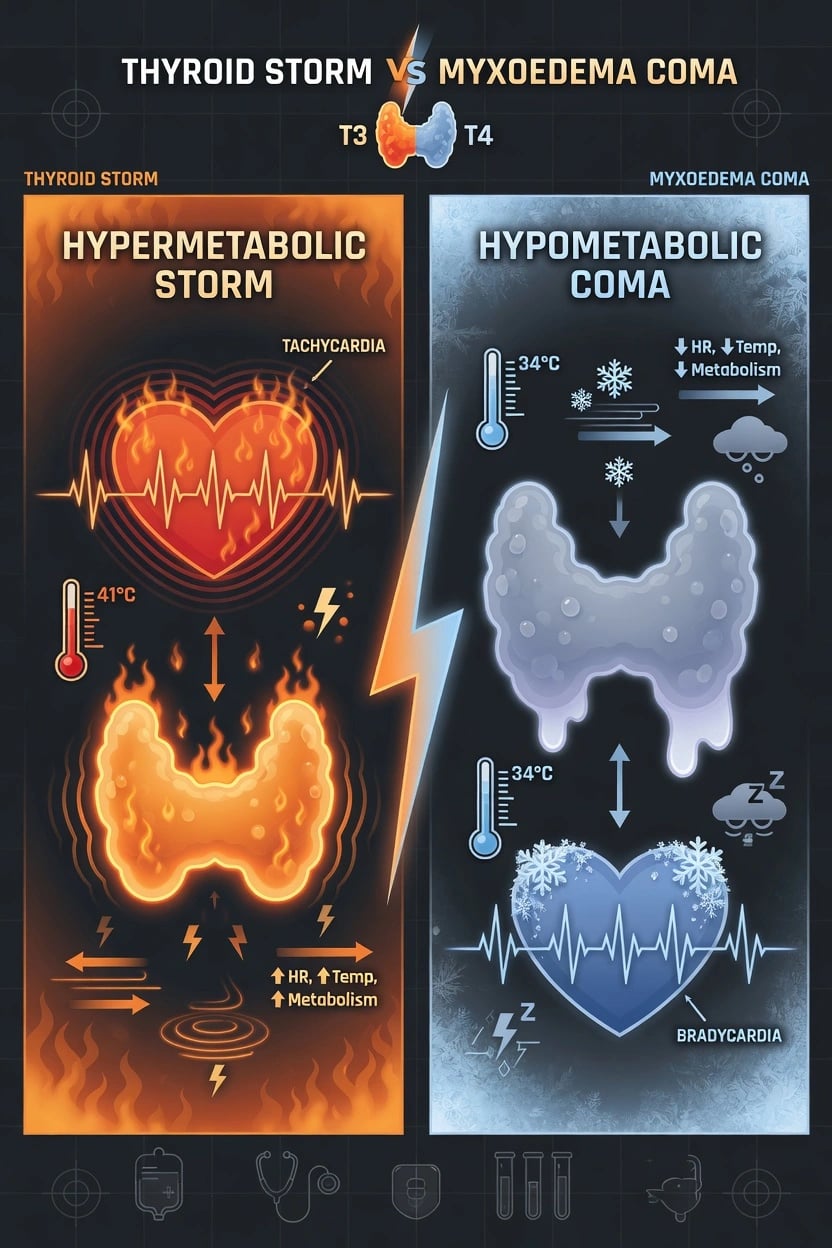
These are the two thyroid emergencies that every CICM/FFICM/EDIC candidate must recognise and manage empirically — the intensivist cannot wait for thyroid function tests to return. The unifying insight is that both are decompensated extremes of thyroid hormone activity: the thyroid storm is a hypermetabolic crisis driven by a massive surge of circulating T3/T4 (the patient is "too hot, too fast"), while myxoedema coma is a hypometabolic collapse from profound hormone deficiency (the patient is "too cold, too slow"). Both are triggered by an acute stressor superimposed on chronic thyroid disease, both carry high mortality (storm 10-30%, myxoedema 20-60%), and both demand the intensivist know the sequence of drug administration — most critically, that iodine must follow the thionamide in storm, and hydrocortisone must precede levothyroxine in myxoedema.[4][6]
Pathophysiology — the two ends of the thyroid hormone spectrum
Thyroid storm — the hyperthyroid decompensation
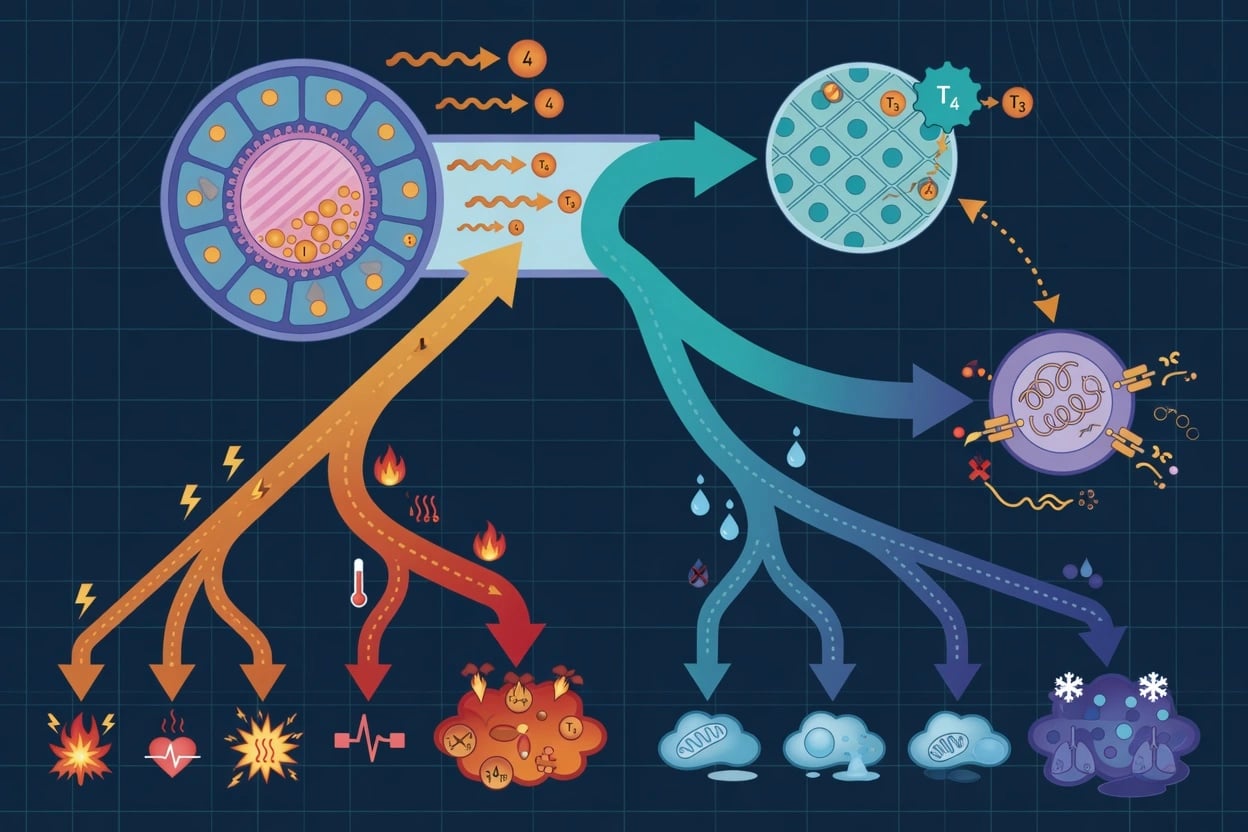
Thyroid storm is not simply "very high thyroid hormone levels" — biochemical thyrotoxicosis alone does not constitute storm. Rather, storm is the acute decompensation of thyrotoxicosis in which the body's compensatory mechanisms fail, producing a hypermetabolic crisis affecting every organ system. The pathophysiology involves a sudden increase in the fraction of free thyroid hormone (from increased hormone release or decreased binding-protein binding) combined with heightened adrenergic receptor sensitivity to catecholamines. Thyroid hormone upregulates beta-adrenergic receptors and amplifies catecholamine signalling at the post-receptor level, which explains why the clinical picture is dominated by adrenergic features (tachycardia, tremor, anxiety, fever) and why beta-blockade is so dramatically effective.[4][6]
The precipitating event (infection, surgery, trauma, radioiodine, iodine load, withdrawal of antithyroid drugs, DKA, parturition, stroke) triggers a surge of catecholamines and cytokines that either increases thyroid hormone release (radioiodine, vigorous thyroid palpation, surgery) or decreases binding-protein binding (trauma, sepsis → fall in TBG → free fraction rises). The result is a flood of T3 and T4 to the tissues. T3 is the biologically active hormone (T4 is largely a prohormone converted peripherally to T3 by type 1 and type 2 deiodinases); this conversion is the pharmacological target of PTU, propranolol, and glucocorticoids.[1][6]
The multisystem failure in thyroid storm reflects the universal metabolic effects of thyroid hormone: thermoregulatory dysfunction (uncoupling of oxidative phosphorylation → heat generation without ATP → hyperthermia), cardiovascular collapse (tachyarrhythmias, high-output failure progressing to low-output shock), CNS dysfunction (agitation → delirium → coma, the sine qua non that distinguishes storm from uncomplicated thyrotoxicosis), GI-hepatic dysfunction (increased gut motility → diarrhoea; hepatic dysfunction from cardiac failure and direct hormone toxicity → transaminitis, jaundice), and adrenal exhaustion (accelerated cortisol clearance → relative adrenal insufficiency, which is why hydrocortisone is universally given).[4]
Myxoedema coma — the hypothyroid decompensation
Myxoedema coma is the end-stage of untreated or undertreated hypothyroidism — not merely low thyroid hormone, but a hypometabolic collapse of every organ system. The pathophysiology is the mirror image of storm: the absence of thyroid hormone produces a generalised slowing of metabolism. The key pathophysiological features are: decreased thermogenesis (hypothermia, often profound), decreased myocardial contractility and heart rate (bradycardia, low-output state, pericardial effusion), decreased respiratory drive and ventilatory mechanics (hypoventilation → hypercapnia → CO2 narcosis → coma, the true cause of "coma" in myxoedema coma), decreased renal free water clearance (inappropriate ADH secretion → dilutional hyponatraemia), decreased gut motility (ileus, which impairs oral drug absorption and necessitates IV therapy), and decreased hepatic gluconeogenesis (hypoglycaemia).[3][5]
The "myxoedema" refers to the mucopolysaccharide (glycosaminoglycan) infiltration of the dermis and other tissues, producing the characteristic non-pitting oedema, coarse features, macroglossia, and thickened skin. The term "coma" is somewhat of a misnomer — it describes a spectrum of depressed consciousness from lethargy through stupor to deep coma, and the depressed conscious state is driven primarily by hypercapnia and hyponatraemia rather than by the hormone deficiency alone.[3]
Thyroid storm vs myxoedema coma — pathophysiology and clinical features
| Feature | Thyroid storm (hyperthyroid) | Myxoedema coma (hypothyroid) |
|---|---|---|
| Thyroid hormone state | Massive excess (free T3/T4 surge) | Profound deficiency |
| Metabolic rate | Hypermetabolic (↑↑) | Hypometabolic (↓↓) |
| Temperature | Hyperthermia (often >40°C, "fever out of proportion") | Hypothermia (often <35°C, may be <30°C) |
| Heart rate | Tachycardia / atrial fibrillation (disproportionate to fever) | Bradycardia (sinus brady, may be <40) |
| Blood pressure | High initially → shock as decompensates | Low / normal (low-output state) |
| Mental status | Agitation → delirium → coma | Lethargy → stupor → coma (± seizures) |
| Respiration | Tachypnoea (may be alkalotic) | Hypoventilation → hypercapnia → CO2 narcosis |
| GI | Nausea, vomiting, diarrhoea, jaundice (↑ motility, hepatic dysfunction) | Ileus, constipation (↓ motility; impairs oral drug absorption) |
| Sodium | Usually normal | Hyponatraemia (dilutional, from inappropriate ADH) |
| Glucose | Normal or high (hypermetabolic) | Hypoglycaemia (↓ gluconeogenesis) |
| Skin | Warm, moist, diaphoretic | Cold, dry, pale, non-pitting oedema (myxoedema) |
| Reflexes | Brisk/hyperactive | Delayed relaxation of reflexes (prolonged relaxation phase) |
| Cardiac output | High-output initially → high-output then low-output failure | Low-output (↑ SVR, ↓ contractility, ± pericardial effusion) |
| Onset | Acute (hours) over chronic thyrotoxicosis | Insidious (days to weeks) over chronic hypothyroidism |
| Mortality | 10-30% | 20-60% |
Thyroid storm — recognition and the Burch-Wartofsky score
The single most important principle in thyroid storm is that it is a clinical diagnosis — thyroid function tests (TSH, free T4, free T3) take days to return, and the mortality of untreated storm approaches 100%. The intensivist must recognise the syndrome at the bedside, score it, and treat empirically while awaiting confirmatory TFTs.[1][4]
The Burch-Wartofsky Point Scale (BWPS), developed by Burch and Wartofsky in 1993, is the standard bedside diagnostic tool. It scores five domains: thermoregulatory dysfunction (temperature), central nervous system dysfunction, gastrointestinal-hepatic dysfunction, cardiovascular dysfunction (heart rate and presence of atrial fibrillation), and precipitant history (evidence of a trigger). A score of ≥45 is highly suggestive of thyroid storm, 25-44 indicates impending (impending) storm, and <25 makes storm unlikely.[1]
The Burch-Wartofsky Point Scale (BWPS) — the bedside scoring tool
| Parameter | Score | Score | Score | Score |
|---|---|---|---|---|
| Temperature (°C) | 37.2-37.7 (5) | 37.8-38.2 (10) | 38.3-38.8 (15) | 38.9-39.3 (20) |
| 39.4-39.9 (25) | ≥40.0 (30) | |||
| Tachycardia (bpm) | 90-109 (5) | 110-119 (10) | 120-129 (15) | 130-139 (20) |
| ≥140 (25) | ||||
| Atrial fibrillation | Absent (0) | Present (10) | ||
| Congestive heart failure | Absent (0) | Mild (pedal oedema) (5) | Moderate (bibasal crackles) (10) | Severe (pulmonary oedema) (15) |
| CNS dysfunction | Absent (0) | Mild (agitation) (10) | Moderate (delirium, psychosis, extreme lethargy) (20) | Severe (seizure, coma) (30) |
| Precipitant event | Absent (0) | Present (10) | ||
| GI-hepatic dysfunction | Absent (0) | Moderate (diarrhoea, nausea, vomiting, abdominal pain) (10) | Severe (unexplained jaundice) (20) |
Interpretation: BWPS ≥45 → highly suggestive of thyroid storm (treat immediately); BWPS 25-44 → impending storm (treat); BWPS <25 → storm unlikely. The score is designed to be applied at the bedside within minutes and to trigger empiric treatment without waiting for TFTs.[1][4]
Thyroid storm — precipitants
Thyroid storm is virtually always triggered by an acute event superimposed on pre-existing, often untreated or partially treated, thyrotoxicosis (most commonly Graves' disease). Identifying and treating the precipitant is one of the "supportive" pillars of management, and the precipitant often determines outcome.[4][6]
Precipitants of thyroid storm — and what to do about each
| Precipitant | Mechanism | Frequency | Management implication |
|---|---|---|---|
| Infection (#1) | Catecholamine/cytokine surge; ↓ TBG binding → ↑ free T4 | 20-40% | Cultures, empiric antibiotics, source control |
| Surgery (esp. thyroid, non-cardiac) | Direct thyroid manipulation → hormone release; surgical stress | Common historically (now rare with pre-op blockade) | Pre-operatively render euthyroid; beta-blockade pre-op |
| Trauma | Stress response; tissue injury | Variable | Recognise in trauma patient with goitre |
| Radioiodine (¹³¹I) therapy | Radiation thyroiditis → hormone release | 5-10% (days to weeks post-treatment) | Pretreat high-risk patients with thionamide; beware post-RAI flare |
| Withdrawal of antithyroid drugs | Loss of synthesis blockade | Common | Non-adherence; ensure continuity of therapy |
| Amiodarone | Iodine load (each molecule has 2 iodine atoms); destructive thyroiditis | 5-10% of amiodarone patients | Check TFTs before/ during amiodarone; distinguish type 1 vs type 2 |
| Iodinated contrast | Iodine load (Jod-Basedow) | Variable | Caution in underlying Graves/toxic nodule |
| DKA / hyperglycaemic crisis | Stress; acidosis | Variable | Treat DKA concurrently |
| Parturition / postpartum | Hormonal shifts; immune rebound | Variable | Postpartum thyroiditis; pre-eclampsia mimic |
| Stroke / CNS event | Stress response | <5% | Neuroprotection concurrent with storm treatment |
| Vigorous thyroid palpation | Mechanical hormone release | Rare | Avoid vigorous thyroid examination in thyrotoxic patient |
| Pulmonary embolism / MI | Stress; catecholamine surge | Variable | Concurrent cardiological/respiratory management |
Thyroid storm — management: the four blocks + supportive
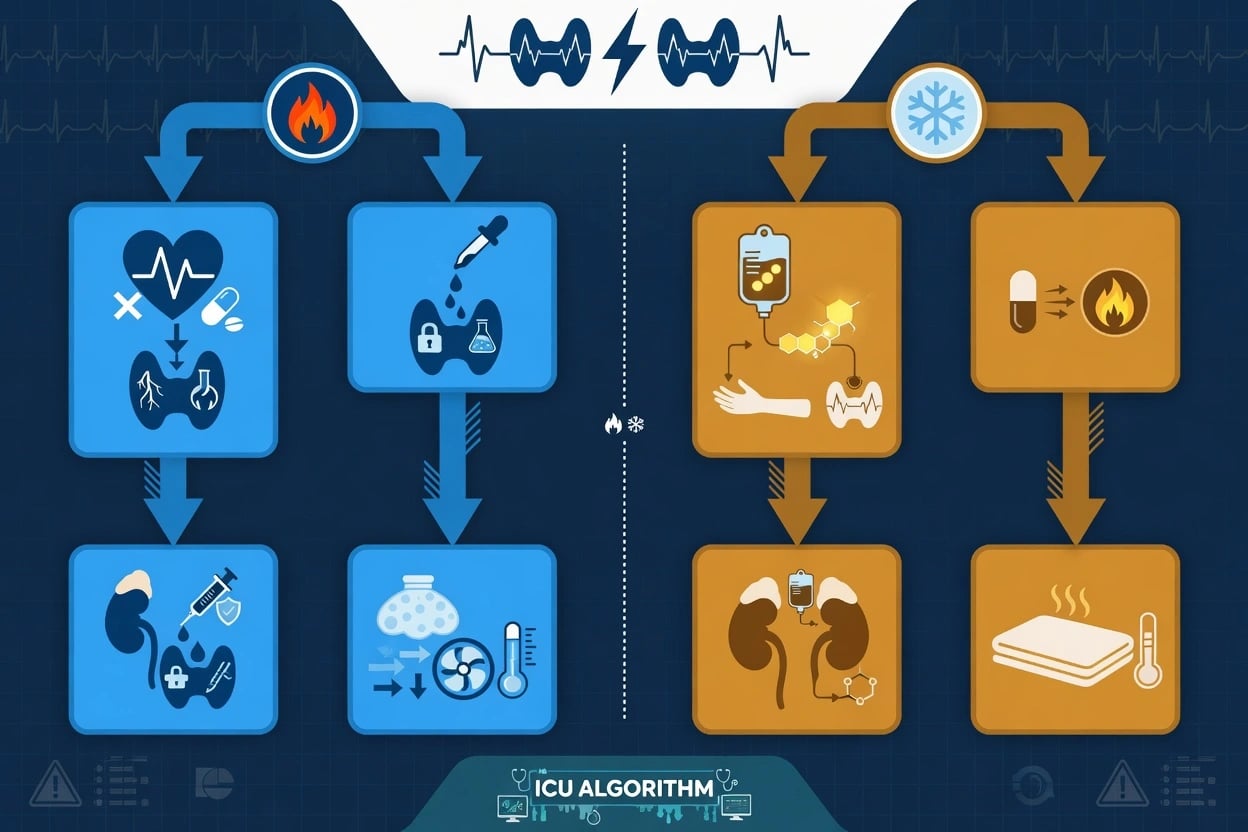
The management of thyroid storm is a time-critical, multi-modal pharmacological assault targeting four distinct steps in thyroid hormone physiology, plus supportive ICU care. The order of drug administration is critical and is the most examined aspect. The mnemonic is the "four blocks": block synthesis, block release, block conversion, block adrenergic effects.[2][4]
Thyroid storm management protocol — the four blocks + supportive (in order)
-
BLOCK SYNTHESIS — give the thionamide FIRST (PTU preferred). Propylthiouracil (PTU) 500-1000 mg loading dose orally or via NG, then 250 mg every 4 hours (total 1.5-2 g/day). PTU is preferred over carbimazole/methimazole in thyroid storm because PTU additionally inhibits type 1 deiodinase, blocking peripheral T4→T3 conversion (the more biologically active hormone). Carbimazole/methimazole (60-80 mg/day in divided doses) is an alternative and is preferred for maintenance therapy (once-daily dosing, lower hepatotoxicity), but does NOT block T4→T3 conversion. The thionamide MUST be given first to block new hormone synthesis before iodine is administered (otherwise iodine provides substrate for new hormone — Jod-Basedow).[2][4]
-
BLOCK RELEASE — give inorganic iodine at least 1 HOUR AFTER the thionamide. Lugol's solution (5% iodine, 10% potassium iodide) 8 drops (≈0.5 mL) orally every 6 hours, OR saturated solution of potassium iodide (SSKI) 5 drops every 6 hours, OR sodium ipodate (iopanoic acid) 0.5-1 g/day (also blocks T4→T3). The iodine MUST be given at least 1 hour AFTER the thionamide — this is the cardinal sequencing rule. Iodine blocks hormone release from the gland via the Wolff-Chaikoff effect (acute inhibition of hormone release and organification), but only if new hormone synthesis has been blocked first. Iodine given before the thionamide provides substrate for new hormone synthesis → Jod-Basedow phenomenon → worsens the storm. Continue iodine for 3-7 days then taper.[1][4]
-
BLOCK T4→T3 CONVERSION — corticosteroid + beta-blocker + cholestyramine. Hydrocortisone 100 mg IV every 8 hours (blocks T4→T3 conversion, treats the relative adrenal insufficiency that accompanies storm, and reduces TSH-driven hormone release). The beta-blocker (propranolol — step 4) also inhibits peripheral T4→T3 conversion at higher doses. Cholestyramine 4 g orally four times daily blocks the enterohepatic recirculation of thyroid hormone (T4 and T3 are conjugated in the liver, excreted in bile, and reabsorbed — cholestyramine interrupts this loop, accelerating hormone elimination). This is a useful adjunct in severe/resistant storm.[2][4]
-
BLOCK ADRENERGIC EFFECTS / CELLULAR ENTRY — beta-blocker (propranolol). Propranolol 60-80 mg orally every 4 hours OR 1-2 mg IV every 15 minutes (titrate to heart rate <100). Propranolol is the beta-blocker of choice because it BOTH blocks the adrenergic symptoms (tachycardia, tremor, anxiety) AND inhibits peripheral T4→T3 conversion (at doses >160 mg/day). If heart failure: use short-acting esmolol (loading 500 mcg/kg/min for 1 min then 50-100 mcg/kg/min infusion) or landiolol — titratable, rapidly reversible if the patient decompensates, as high-output failure may depend on sympathetic drive. If asthma (absolute contraindication to propranolol): use diltiazem (rate control without bronchospasm) or a cardioselective agent cautiously. Monitor for hypotension.[2][4]
-
SUPPORTIVE CARE — cooling, fluids, treat the precipitant, ICU. Active cooling: paracetamol (acetaminophen) 1 g — NEVER aspirin/salicylates (they displace T4 from thyroxine-binding globulin → free T4 rises → storm worsens); external cooling with ice packs, cooling blankets, and cold IV fluids; avoid shivering (generates heat). IV fluids: aggressive — patients are volume-depleted from diaphoresis, vomiting, diarrhoea, and insensible losses from fever; add dextrose (hypermetabolic state → glycogen depletion → hypoglycaemia). Treat the precipitant: cultures and empiric antibiotics (infection is #1), manage DKA, cardiac support for MI/AF. ICU monitoring: continuous cardiac monitoring (arrhythmias), arterial line, temperature, urine output. VTE prophylaxis. Consider plasmapheresis or charcoal haemoperfusion in refractory storm (removes circulating T4/T3) — a last resort.[4][5]
The four blocks of thyroid storm therapy — drug, dose, and mechanism
| Block | Drug | Dose | Mechanism | Key caveat |
|---|---|---|---|---|
| 1. Block synthesis | PTU (preferred) or carbimazole/methimazole | PTU 500-1000 mg load then 250 mg q4h PO/NG; carbimazole 60-80 mg/day | Inhibits thyroid peroxidase → blocks organification and coupling of iodotyrosines → stops new T3/T4 synthesis. PTU also blocks type 1 deiodinase (T4→T3). | Give FIRST (before iodine). PTU preferred in storm (T4→T3 block) but higher hepatotoxicity — switch to carbimazole once storm resolves. |
| 2. Block release | Inorganic iodine (Lugol's, SSKI, ipodate) | Lugol's 8 drops q6h PO; SSKI 5 drops q6h; sodium ipodate 0.5-1 g/day | Wolff-Chaikoff effect — acute inhibition of hormone release from the gland (also blocks organification). | Give ≥1 hour AFTER thionamide. If given first → Jod-Basedow (substrate for new hormone) → worsens storm. |
| 3. Block T4→T3 conversion | Hydrocortisone (also PTU, propranolol, cholestyramine) | Hydrocortisone 100 mg IV q8h; cholestyramine 4 g qid PO | Glucocorticoids inhibit type 1 deiodinase (T4→T3). Also treat relative adrenal insufficiency. Cholestyramine blocks enterohepatic hormone recirculation. | Hydrocortisone given to ALL storm patients. Taper as storm resolves. |
| 4. Block adrenergic / cellular entry | Propranolol (or esmolol/diltiazem) | Propranolol 60-80 mg PO q4h or 1-2 mg IV q15min (titrate to HR <100); esmolol 50-100 mcg/kg/min IV | Beta-blockade of adrenergic symptoms; propranolol also blocks T4→T3 conversion at high dose. | Esmolol if heart failure/asthma (titratable, short-acting). Avoid propranolol in asthma. |
Thionamides compared — PTU vs carbimazole/methimazole
| Feature | PTU (propylthiouracil) | Carbimazole / methimazole |
|---|---|---|
| Mechanism | Blocks thyroid peroxidase (synthesis) AND type 1 deiodinase (T4→T3) | Blocks thyroid peroxidase (synthesis) ONLY |
| Preferred in storm? | YES — blocks T4→T3 conversion | No (but used if PTU unavailable) |
| Preferred for maintenance? | No (hepatotoxicity, TID dosing) | YES — once daily, lower hepatotoxicity |
| Dose in storm | 500-1000 mg load then 250 mg q4h (1.5-2 g/day) | 60-80 mg/day in divided doses |
| Onset | Rapid (hours) | Slower (days) for full effect |
| Major toxicity | Fulminant hepatotoxicity (black box warning), ANCA vasculitis | Agranulocytosis (less hepatotoxic), cholestasis |
| In pregnancy | Preferred in FIRST trimester (methimazole teratogenic — aplasia cutis, choanal atresia) | Preferred in 2nd/3rd trimester |
| Switch | Switch to carbimazole once storm resolves | — |
Thyroid storm — refractory disease and rescue therapies
Most thyroid storms respond to the four-block regimen within 24-72 hours. However, a minority are refractory — persistent hyperthermia, tachyarrhythmia, and altered mental status despite maximal medical therapy. In these cases, decontamination and removal of circulating thyroid hormone become necessary.[4][5]
Rescue therapies for refractory thyroid storm
| Therapy | Mechanism | Indication | Notes |
|---|---|---|---|
| Cholestyramine 4 g PO qid | Binds thyroid hormone in the gut lumen → blocks enterohepatic recirculation → accelerates elimination | Adjunct in moderate-severe storm; safe | Onset over 24-48 h; continue 2-4 weeks |
| Plasmapheresis / plasma exchange | Physically removes circulating T4/T3 (and TBG-bound hormone) | Refractory storm; storm needing urgent surgery; contraindication to thionamides (agranulocytosis, hepatotoxicity) | Temporary effect (hours); T4/T3 rebound after session; bridge to definitive therapy |
| Charcoal haemoperfusion / haemodialysis | Adsorbs/removes circulating hormone | Last resort, refractory storm | Limited evidence; T4 is highly protein-bound so clearance is limited |
| Lithium carbonate 300 mg q6h | Inhibits hormone release (like iodine, but does not provide substrate) | Iodine allergy; amiodarone-induced | Narrow therapeutic window; toxicity monitoring |
| Potassium perchlorate 250 mg q6h | Blocks iodine uptake by the gland | Type 1 amiodarone-induced; adjunct | Aplastic anaemia risk (rare) |
| Definitive therapy — thyroidectomy | Removes the source | After stabilisation (48-72 h of medical blockade) | Requires pre-operative preparation with thionamide + iodine + beta-blocker |
Myxoedema coma — recognition
Myxoedema coma is even more frequently missed than thyroid storm, because its features (hypothermia, bradycardia, hyponatraemia, obtundation) are non-specific and overlap with sepsis, drug overdose, and other causes of collapse in the elderly. The diagnosis requires a high index of suspicion in any patient presenting with the triad of hypothermia + altered mental status + hypoventilation, especially with a history of thyroid disease, prior thyroidectomy, or radioactive iodine. As with storm, treatment is empiric and must not await TFT results.[3][5]
The clinical features reflect the universal hypometabolism: hypothermia (often <35°C; may be profound, <30°C, the "myxoedema strip"), bradycardia (sinus bradycardia or bradyarrhythmia), hypoventilation (shallow, slow breathing → hypercapnia → respiratory acidosis → CO2 narcosis → coma), dilutional hyponatraemia (from inappropriate ADH secretion and impaired free water clearance), hypoglycaemia (decreased gluconeogenesis), ileus (constipation, abdominal distension, which impairs oral drug absorption), and the characteristic cutaneous features (cold, dry, pale skin; periorbital non-pitting oedema; macroglossia; coarse hair; delayed relaxation of deep tendon reflexes — the "hung-up" reflex).[3][5]
Myxoedema coma — diagnostic criteria and clinical features
| Domain | Finding | Mechanism |
|---|---|---|
| Thermoregulation | Hypothermia (<35°C; may be <30°C) | ↓ Basal metabolic rate, ↓ thermogenesis |
| Cardiovascular | Bradycardia, low-output state, ± pericardial effusion, ± QT prolongation | ↓ β-adrenergic signalling, ↓ contractility, ↑ SVR |
| Respiratory | Hypoventilation → hypercapnia → CO2 narcosis | ↓ Central respiratory drive, ↓ respiratory muscle strength, ± pleural effusion, obesity-hypoventilation overlap |
| Neurological | Lethargy → stupor → coma; ± seizures | Hypercapnia + hyponatraemia + direct cerebral hypothyroidism; ↑ CSF protein |
| Fluid/electrolyte | Dilutional hyponatraemia (often 120-130); ± hypoglycaemia | Inappropriate ADH (↓ free water clearance); ↓ gluconeogenesis |
| GI | Ileus (constipation, gastric stasis; impaired oral drug absorption); ± ascites | ↓ Gut motility |
| Dermatological | Cold, dry, pale skin; non-pitting myxoedema (periorbital); macroglossia; coarse, brittle hair | Glycosaminoglycan (mucopolysaccharide) deposition in dermis |
| Neuromuscular | Delayed relaxation of reflexes ("hung-up" reflexes); muscle pseudohypertrophy | ↓ Conduction velocity, ↓ muscle relaxation rate |
| Haematological | ± Anaemia (normocytic or macrocytic), ↑ CK | ↓ Erythropoiesis; ↑ muscle membrane permeability |
Myxoedema coma — precipitants
Like thyroid storm, myxoedema coma is precipitated by an acute stressor superimposed on chronic hypothyroidism. The precipitant must be identified and treated concurrently with thyroid hormone replacement, as it often determines outcome.[3]
Precipitants of myxoedema coma
| Precipitant | Mechanism | Notes |
|---|---|---|
| Cold exposure | ↓ Thermogenesis below compensatory threshold | Classic; winter presentation; elderly |
| Infection (#1) | Stress; ↓ metabolic reserve | Pneumonia, UTI, sepsis; blunted febrile response → miss infection |
| Sedatives / opiates / anaesthetics | ↓ CNS and respiratory drive → hypoventilation → hypercapnia → coma | Avoid in hypothyroid patient; reduced drug clearance |
| Missed levothyroxine | Progressive hormone depletion | Non-adherence; supply interruption; absorption failure (GI surgery, coeliac, drug interactions — PPIs, iron, calcium) |
| Acute MI / heart failure | ↓ Cardiac reserve | Bradycardia, low-output; may be misattributed to hypothyroid cardiomyopathy |
| GI bleed / stroke / trauma | Stress | Variable |
| Medications — lithium, amiodarone (type 2), interferon | Direct thyroid suppression/inflammation | Check TFTs in patients on these drugs |
Myxoedema coma — management
The management of myxoedema coma is a triple therapy: IV thyroid hormone replacement + IV hydrocortisone (always) + supportive care (ventilation, slow rewarming, electrolyte correction). The route, dose, and sequencing are the most examined aspects.[3]
Myxoedema coma management protocol — the triple therapy + supportive
-
IV HYDROXYCORTISONE 100 mg IV q8h — GIVE FIRST OR WITH LEVOTHYROXINE. Coexisting adrenal insufficiency is common (autoimmune polyglandular failure [Schmidt syndrome], or secondary hypopituitarism). Critically, levothyroxine increases cortisol clearance and can precipitate acute adrenal crisis if given without steroid cover. Therefore hydrocortisone is given empirically to every myxoedema coma patient, before or concurrently with levothyroxine. Do NOT wait for a cortisol level or short Synacthen test — treat empirically and investigate later. Taper once the patient is stable and adrenal insufficiency is excluded.[3][5]
-
IV LEVOTHYROXINE (T4) — loading dose then maintenance. 200-500 mcg IV loading dose, followed by 50-100 mcg IV daily. The IV route is essential because the oral route is unreliable (ileus and impaired absorption in myxoedema coma). The large loading dose rapidly repletes the extracellular T4 pool (the volume of distribution of T4 is large, ~10 L/kg). With or without IV liothyronine (T3): some protocols add IV liothyronine 10-20 mcg every 4-6 hours (T3 is the active hormone and bypasses the impaired T4→T3 conversion). However, T3 carries a higher risk of arrhythmia and angina (especially in the elderly and those with cardiac disease), so it should be used cautiously and with cardiac monitoring. The 2014 ATA Guidelines (Jonklaas) recommend IV T4 alone as first-line, reserving T3 for cases with severe cardiovascular instability or suspected impaired conversion.[3]
-
SLOW PASSIVE REWARMING — DO NOT WARM RAPIDLY. Use passive rewarming with blankets only — allow the patient to rewarm slowly as the metabolic rate recovers with thyroid hormone replacement. Rapid active rewarming causes peripheral vasodilation → profound "rewarming shock" (the vasoconstricted periphery dilates, pooling blood → hypotension → cardiovascular collapse). This is a critical and frequently examined principle. Active external warming (forced-air warmers, warm baths) is CONTRAINDICATED in the acute phase.[3][5]
-
VENTILATORY SUPPORT — for hypercapnic respiratory failure. Hypoventilation is a primary cause of death in myxoedema coma (hypercapnia → CO2 narcosis → coma → respiratory arrest). Assess with arterial blood gas; if PaCO2 is elevated or the patient is obtunded (GCS <8), intubate and ventilate (non-invasive ventilation is rarely tolerated in the obtunded patient). The ventilatory depression may persist for days after starting thyroid hormone (the metabolic recovery is gradual), so anticipate prolonged ventilation. Set ventilator to correct hypercapnia slowly (permissive hypercapnia is acceptable; rapid correction risks alkalaemia and decreased cerebral blood flow).[3][5]
-
CORRECT HYPONATRAEMIA AND HYPOGLYCAEMIA + TREAT PRECIPITANT + AVOID SEDATIVES. Hyponatraemia is usually dilutional (inappropriate ADH); treat with free water restriction (1000-1500 mL/day) and, if severe (<120) or seizing, hypertonic 3% saline cautiously (avoid rapid correction — osmotic demyelination risk; target rise <8-10 mmol/L/24 h). Hypoglycaemia: give IV dextrose. Treat the precipitant: cultures and empiric antibiotics (infection is #1; the blunted febrile response means infection is easily missed — treat empirically), manage MI, stop offending drugs. AVOID sedatives and opiates (depress respiration and CNS further; reduced clearance in hypothyroidism → prolonged effect). VTE prophylaxis (immobility). ICU monitoring: continuous cardiac monitoring (arrhythmias from levothyroxine), arterial line, temperature, urine output, glucose, sodium q6-12h.[3][5]
Myxoedema coma therapy — drug, dose, and rationale
| Therapy | Dose | Rationale | Key caveat |
|---|---|---|---|
| IV hydrocortisone (FIRST or with T4) | 100 mg IV q8h | Treats coexisting adrenal insufficiency; prevents levothyroxine-induced adrenal crisis | Give to ALL patients empirically; do not wait for cortisol level |
| IV levothyroxine (T4) | 200-500 mcg loading, then 50-100 mcg IV daily | Repletes T4 pool; IV route overcomes impaired oral absorption (ileus) | Onset gradual (hours-days for full metabolic effect); monitor for arrhythmia |
| IV liothyronine (T3) (± adjunct) | 10-20 mcg IV q4-6h | Active hormone; bypasses impaired T4→T3 conversion; faster onset | Higher arrhythmia/angina risk — cautious in elderly/cardiac; cardiac monitoring |
| Passive rewarming | Blankets only | Slow rewarming as metabolism recovers | NO active warming — rapid warming → rewarming shock |
| Ventilatory support | Intubation + ventilation if hypercapnic/obtunded | Treats hypercapnic respiratory failure | May need prolonged ventilation (gradual metabolic recovery) |
| Hyponatraemia correction | Free water restriction; 3% saline if severe/seizing | Corrects dilutional hyponatraemia | Slow correction (<8-10 mmol/L/24h) — osmotic demyelination risk |
| Hypoglycaemia correction | IV dextrose | Corrects ↓ gluconeogenesis | Monitor glucose |
| Treat precipitant | Antibiotics (empiric), manage MI, stop drugs | Infection #1; blunted febrile response | Cultures before antibiotics |
| VTE prophylaxis | LMWH | Immobility, hypothermia | Standard |
Complications and monitoring
Complications of thyroid storm and myxoedema coma — anticipate and manage
| Complication | In storm or myxoedema? | Cause | Management |
|---|---|---|---|
| High-output → low-output cardiac failure | Storm | Tachyarrhythmia, volume overload | Diuretics, esmolol (cautiously), inotropes if low-output |
| Atrial fibrillation with rapid ventricular response | Storm | Adrenergic surge | Beta-blockade (propranolol/esmolol), rate control, anticoagulate (CHA2DS2-VASc) |
| Hepatic dysfunction / jaundice | Storm | Cardiac failure + direct hormone toxicity | Supportive; treat the storm |
| Hypercapnic respiratory failure | Myxoedema | ↓ Respiratory drive, ↓ muscle strength | Intubation + ventilation; may be prolonged |
| Hyponatraemic encephalopathy / seizures | Myxoedema | Inappropriate ADH, dilutional | Free water restriction; 3% saline if severe/seizing (slow correction) |
| Hypoglycaemia | Myxoedema | ↓ Gluconeogenesis | IV dextrose; monitor glucose |
| Adrenal crisis | Myxoedema (and storm) | Coexisting adrenal insufficiency; levothyroxine-induced | Hydrocortisone 100 mg IV q8h (always given) |
| Rewarming shock | Myxoedema | Rapid active rewarming → vasodilation | Avoid rapid warming; passive rewarming only |
| Arrhythmia/angina from levothyroxine | Myxoedema | Rapid hormone replacement | Cautious T3 use; cardiac monitoring; reduce dose if elderly/cardiac |
| Thionamide agranulocytosis | Storm (treatment) | PTU/carbimazole | Check FBC; stop drug; broad-spectrum antibiotics if febrile |
| Thionamide hepatotoxicity | Storm (treatment) | PTU (worse than carbimazole) | Check LFTs; switch to carbimazole; stop if fulminant |
| Hypothermia-related arrhythmia | Myxoedema | Severe hypothermia (<30°C) | Slow rewarming; correct electrolytes; avoid catheters/manipulation |
Monitoring during treatment — what to check and how often
| Parameter | Thyroid storm | Myxoedema coma | Frequency |
|---|---|---|---|
| Temperature | Every 1 h (target ↓) | Every 1 h (target ↑ slowly) | Hourly |
| Heart rate / rhythm | Continuous (target HR <100) | Continuous (may ↓ with brady) | Continuous |
| Blood pressure | Continuous (arterial line) | Continuous (arterial line) | Continuous |
| GCS / mental status | Every 1-2 h | Every 1-2 h | Hourly initially |
| Glucose | Every 2-4 h | Every 2-4 h | 2-4 h |
| Sodium | Daily | Every 6-12 h (correct slowly) | 6-12 h (myxoedema) |
| ABG (PaCO2) | If tachypnoeic | Every 2-4 h (hypercapnia monitoring) | 2-4 h (myxoedema) |
| FBC (agranulocytosis) | On thionamide — if febrile | — | If febrile |
| LFTs | Daily (hepatotoxicity) | Daily | Daily |
| TFTs (TSH, free T4/T3) | At baseline, then weekly | At baseline, then weekly | Weekly |
| Cortisol / Synacthen | — | At baseline (before hydrocortisone if possible) | Once |
Exam practice — SAQ
SAQ — Thyroid storm after infection
10 minutes · 10 marks
A 48-year-old woman with Graves disease presents with fever 40.2°C, AF at 160/min, agitation, diarrhoea and jaundice after pneumonia. BWPS is 70. TFTs are pending.
Clinical pearls
Red flags
Prognosis
Prognosis of thyroid storm and myxoedema coma — outcomes and prognostic factors
| Factor | Outcome | Notes |
|---|---|---|
| Thyroid storm overall mortality | 10-30% despite treatment | Lower (10%) with prompt recognition and the four-block regimen; approaches 100% if untreated. Mortality driven by the precipitant (sepsis, MI) and multi-organ failure. |
| Myxoedema coma overall mortality | 20-60% | Higher than storm — elderly, comorbidities, delayed diagnosis. Mortality driven by the precipitant, hypercapnic respiratory failure, and cardiovascular collapse. |
| Advanced age | Worse in both | Elderly tolerate the metabolic extremes poorly. |
| Comorbidities (cardiac, renal) | Worse in both | Reduce physiological reserve. |
| Altered mental status at presentation (coma) | Worse in both | Marker of severity; in myxoedema, driven by hypercapnia/hyponatraemia. |
| Time to treatment | Earlier = better | Storm: empiric treatment at BWPS ≥45. Myxoedema: do not await TFTs. |
| Hypothermia severity (myxoedema) | Worse with lower temperature | Temperature <30°C associated with markedly higher mortality. |
| Precipitant severity | Sepsis/MI worse | The precipitant often determines outcome; treat it concurrently. |
| Reversibility | Both fully reversible with correct treatment | No residual organ damage if treated promptly; underlying thyroid disease needs long-term management. |
Key trials and evidence
Burch & Wartofsky 1993 — Life-threatening thyrotoxicosis: Thyroid storm (the Burch-Wartofsky Point Scale) (PMID 8325286)
Source
Endocrinology and Metabolism Clinics of North America 1993;22(2):263-277 — the seminal review that introduced the Burch-Wartofsky Point Scale (BWPS), still the global standard bedside diagnostic tool
What it established
The BWPS — a point score across five domains (thermoregulatory dysfunction, CNS dysfunction, GI-hepatic dysfunction, cardiovascular dysfunction [heart rate + atrial fibrillation + heart failure], and precipitant history). Score ≥45 highly suggestive of thyroid storm; 25-44 impending; <25 unlikely. Standardised the clinical diagnosis of a syndrome that has no single diagnostic test.
Key contribution
Provided the framework for EMPIRIC treatment — clinicians could score at the bedside within minutes and initiate the four-block therapy without waiting for TFT results (which take days). This transformed storm from a retrospective/diagnosis-of-exclusion to a prospectively identifiable, treatable crisis.
Clinical bottom line
The exam-defining reference — every thyroid storm guideline and question is built on the BWPS. Know the score thresholds (≥45, 25-44, <25) and the domains.
Ross et al. 2016 — ATA Guidelines for Diagnosis and Management of Hyperthyroidism and Thyrotoxicosis (PMID 27521067)
Source
Thyroid 2016;26(10):1343-1421 — the American Thyroid Association Task Force guidelines, 124 evidence-based recommendations covering all causes of thyrotoxicosis
What it established
Standardised the management of thyroid storm: thionamide (PTU preferred in storm) → iodine (≥1 h after thionamide) → corticosteroid (hydrocortisone 100 mg q8h) → beta-blocker (propranolol, esmolol if cardiac). Endorsed the BWPS for diagnosis. Defined amiodarone-induced thyrotoxicosis Types 1 and 2 and their distinct management.
Key contribution
Confirmed that thyroid storm is a clinical diagnosis (BWPS), that PTU is preferred in storm (T4→T3 block) but carbimazole for maintenance (lower hepatotoxicity), and that all storm patients should receive hydrocortisone. Recommended cholestyramine and plasmapheresis as adjuncts for refractory disease.
Clinical bottom line
The current global authority on thyrotoxicosis management — the four-block protocol for thyroid storm is drawn from these guidelines.
Jonklaas et al. 2014 — ATA Guidelines for Treatment of Hypothyroidism (PMID 25266247)
Source
Thyroid 2014;24(12):1670-1751 — the American Thyroid Association Task Force on Thyroid Hormone Replacement guidelines
What it established
Standardised the management of myxoedema coma: IV levothyroxine (200-500 mcg loading then 50-100 mcg daily) with IV hydrocortisone (100 mg q8h) before or with levothyroxine. Recommended IV T4 as first-line (reserving IV T3 for severe cardiovascular instability or suspected impaired conversion). Emphasised the IV route (impaired oral absorption in ileus) and slow passive rewarming.
Key contribution
Confirmed that empiric hydrocortisone is given to ALL myxoedema coma patients (coexisting adrenal insufficiency), that levothyroxine increases cortisol clearance (adrenal crisis risk), and that rapid active rewarming is dangerous (rewarming shock). Established the IV loading-dose approach.
Clinical bottom line
The reference for every myxoedema coma question — the triple therapy (IV T4 + hydrocortisone + supportive) and the 'no rapid warming' rule.
References
- [1]Burch HB, Wartofsky L. Life-threatening thyrotoxicosis. Thyroid storm Endocrinol Metab Clin North Am, 1993.PMID 8325286
- [2]Ross DS, Burch HB, Cooper DS, Greenlee MC, Laurberg P, Maia AL, et al. 2016 American Thyroid Association Guidelines for Diagnosis and Management of Hyperthyroidism and Other Causes of Thyrotoxicosis Thyroid, 2016.PMID 27521067
- [3]Jonklaas J, Bianco AC, Bauer AJ, Burman KD, Cappola AR, Celi FS, et al. Guidelines for the treatment of hypothyroidism: prepared by the american thyroid association task force on thyroid hormone replacement Thyroid, 2014.PMID 25266247
- [4]Chiha M, Samarasinghe S, Kabaker AS. Thyroid storm: an updated review J Intensive Care Med, 2015.PMID 23920160
- [5]Ylli D, Klubo-Gwiezdzinska J, Wartofsky L. Thyroid emergencies Pol Arch Intern Med, 2019.PMID 31237256
- [6]De Leo S, Lee SY, Braverman LE. Hyperthyroidism Lancet, 2016.PMID 27038492