ICU · environmental
Acute Drowning & Near-Drowning — Comprehensive ICU Management
Also known as Drowning · Non-fatal drowning · Fatal drowning · Submersion injury · Immersion injury · Secondary drowning (obsolete) · Near-drowning (obsolete) · Dry drowning (obsolete) · Wet drowning (obsolete) · Asphyxial cardiac arrest from submersion
Drowning is the process of experiencing respiratory impairment from submersion or immersion in liquid — a uniform definition adopted by the World Health Organization in 2005 that abolishes the obsolete terms 'near-drowning', 'dry drowning', 'wet drowning', 'secondary drowning' and 'active/passive drowning'. ALL submersion or immersion events are now called DROWNING, classified only by outcome as fatal or non-fatal drowning. The pathophysiological sequence is breath-holding and panic followed by laryngospasm, then aspiration of a SMALL volume of water (the 'dry versus wet drowning' distinction is obsolete because most victims aspirate fluid and the volume aspirated is too small to cause electrolyte or volume disturbance), leading to surfactant washout, atelectasis, ventilation-perfusion mismatch, non-cardiogenic pulmonary oedema and ARDS, with progressive HYPOXIA producing bradycardic asystolic cardiac arrest and hypoxic-ischaemic brain injury. The intensivist's priorities are (1) RESCUE with immediate resuscitation — start CPR without delay, giving rescue breaths or bag-mask ventilation first because this is an asphyxial arrest; drowning victims often have prolonged hypoxia yet achieve return of spontaneous circulation with good-quality CPR even after more than 30 minutes submerged, especially in cold water; (2) OXYGENATE and VENTILATE with high-flow oxygen and positive-pressure ventilation — most need PEEP for aspiration pneumonitis, surfactant dysfunction and pulmonary oedema, with lung-protective ventilation (tidal volume 6 mL/kg, plateau pressure under 30 cmH2O) for the ARDS-pattern lung injury; (3) TARGETED TEMPERATURE MANAGEMENT at 32 to 36 degrees C for 24 hours in comatose post-arrest patients, because drowning is a form of cardiac arrest and the same post-cardiac-arrest guidelines apply; (4) treat CO-EXISTING injuries — cervical spine immobilisation particularly after diving accidents, and concurrent hypothermia from cold-water exposure (rewarm, but follow 'not dead until warm and dead'). Prognostication is guarded by the duration of submersion, the presence of return of spontaneous circulation, the Glasgow Coma Scale, and serum potassium on presentation.
On this page & tools
Your progress
Saved locally on this device.
7 MCQs with explanations
Target exams
Red flags
Overview & definition
Drowning is a leading cause of accidental death worldwide and, in children and young adults in Australia and New Zealand, a prominent cause of preventable mortality and hypoxic brain injury. The intensivist is usually dealing with one of two presentations: a cardiac-arrest drowning victim in whom the question is whether to continue prolonged resuscitation (cold-water submersion changes the calculus profoundly), or a conscious or sedated post-drowning patient with hypoxic brain injury and an ARDS-pattern lung injury requiring lung-protective ventilation, neuroprotection and prognostication. The single most important conceptual shift in the last two decades — enshrined in the 2005 WHO redefinition and reflected in every modern resuscitation guideline — is that drowning is ONE process with ONE name, classified only by outcome. Abandoning the old taxonomy ('near-drowning' for survival beyond 24 hours, 'dry' versus 'wet', 'salt' versus 'fresh', 'secondary drowning') removes contradictory terminology that muddled research, reporting and treatment.[2][5][6]
The 2005 WHO redefinition — terminology that is OBSOLETE
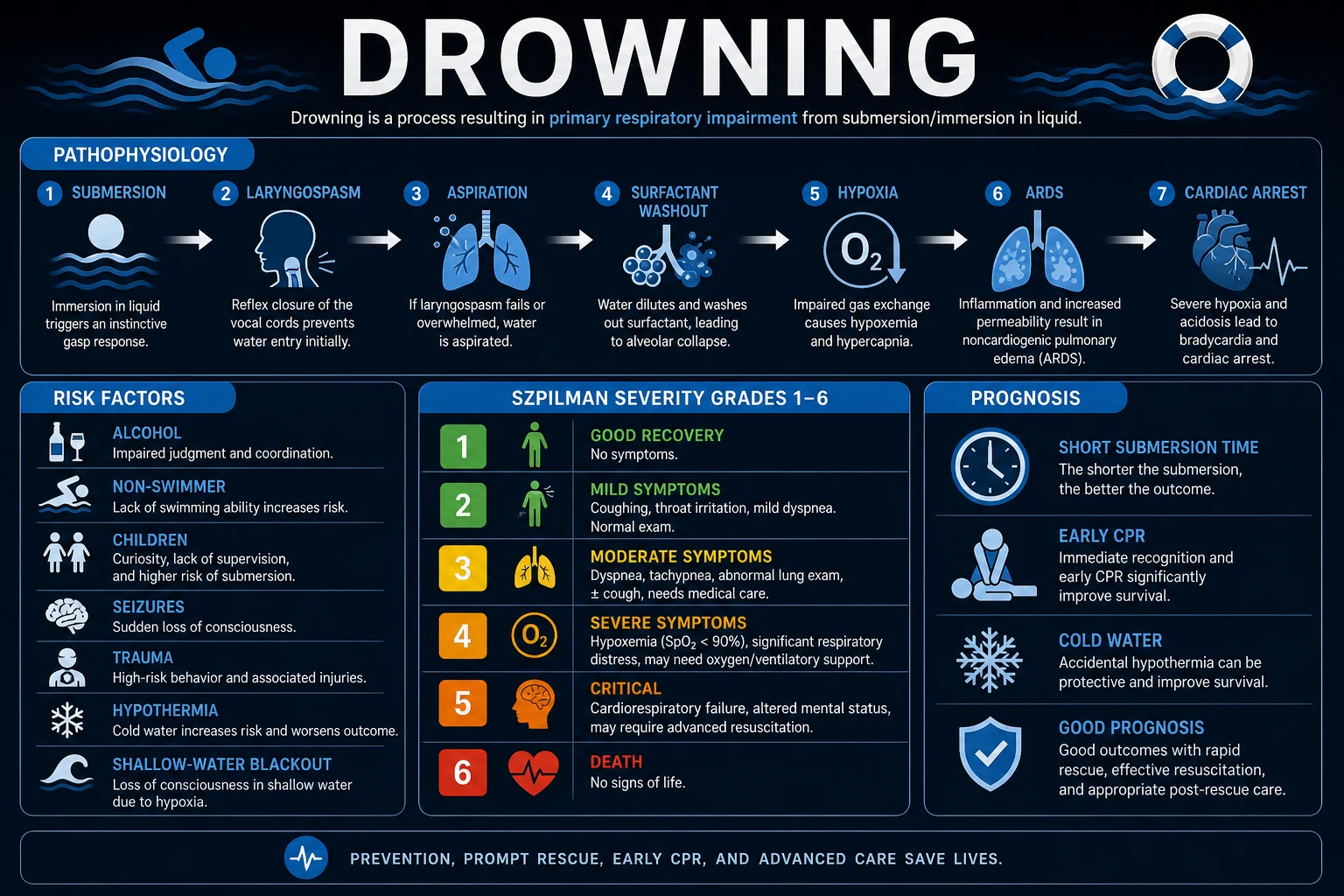
The terminology revolution began with the 2003 Utstein-style consensus (Idris and colleagues), which standardised reporting, and was consolidated by van Beeck and colleagues in the 2005 WHO Bulletin. The committee deliberately abolished a list of imprecise modifiers because they implied different pathophysiology that does not exist, and because they fragmented surveillance data.[1][2]
Obsolete drowning terminology — what to say instead
| Obsolete term | What it meant | Why it is abolished | Correct modern term |
|---|---|---|---|
| Near-drowning | Survival for 24 h after submersion | Outcome-based time cut-off is arbitrary; implies a different disease | Non-fatal drowning (with or without morbidity) |
| Dry drowning | No water aspirated (laryngospasm) | Autopsy and animal data show most victims aspirate fluid; distinction is not actionable | Drowning |
| Wet drowning | Water aspirated into lungs | Aspiration is the norm, not a subtype; volume aspirated is small | Drowning |
| Salt-water / fresh-water drowning | Different osmotic effects on blood | Aspirated volume is too small to change serum electrolytes or haematocrit | Drowning |
| Secondary drowning | Delayed pulmonary oedema hours later | Delayed oedema is part of the same surfactant/inflammatory injury, not a separate event | Drowning (observe all symptomatic patients) |
| Active / passive / silent drowning | Distinction by behaviour | No pathophysiological or management implication | Drowning |
Pathophysiology — the drowning cascade
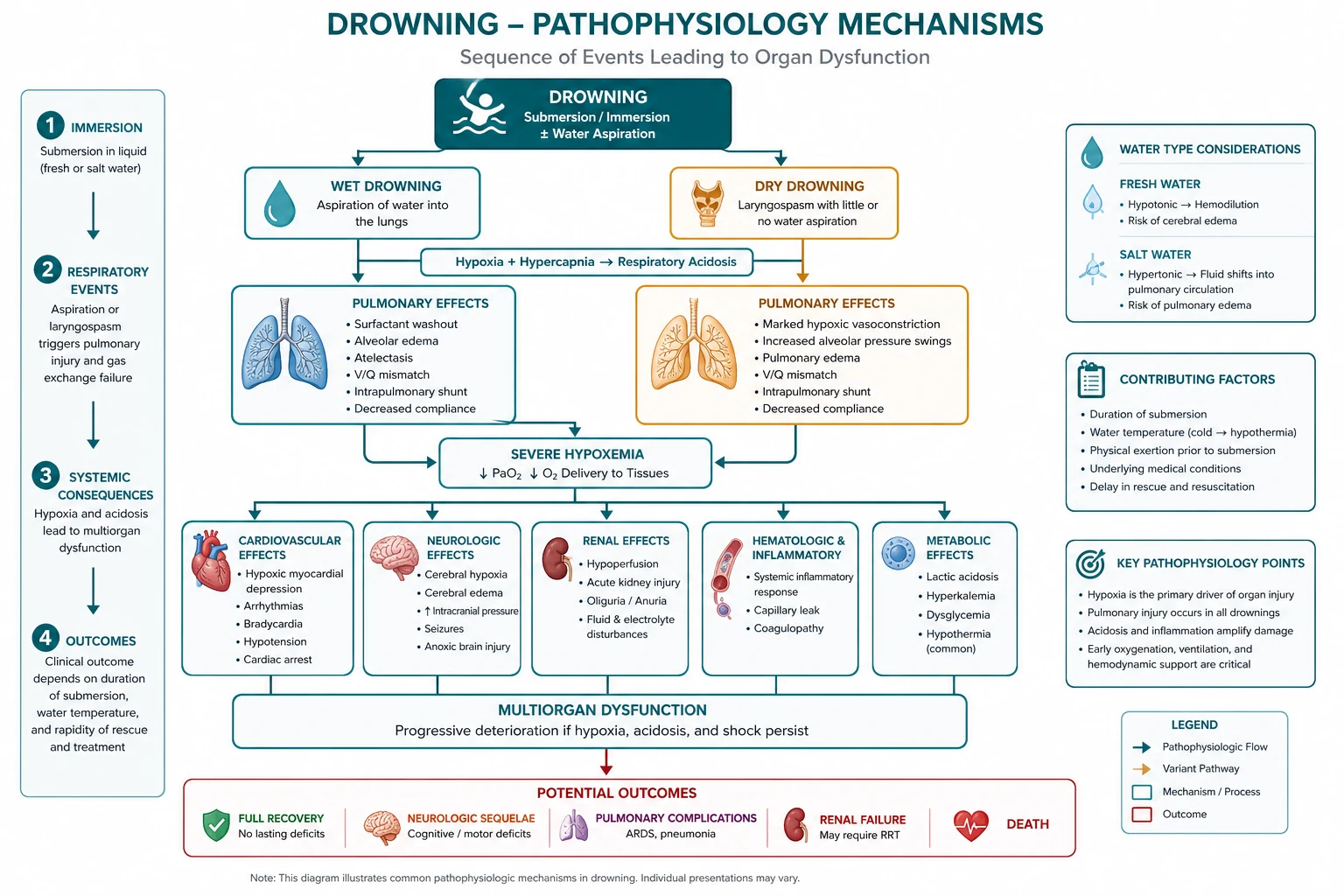
Drowning is fundamentally a hypoxic event driven by respiratory failure, and every downstream consequence (cardiac arrest, brain injury, multi-organ failure) is secondary to hypoxia and ischaemia. Understanding the cascade explains why ventilation is the first intervention and why fluid and electrolyte manipulation is irrelevant.[4]
- 1. Breath-holding and panic. The conscious victim holds their breath, often with panic and an instinctive struggle. Voluntary apnoea and small aspiration events raise arterial carbon dioxide and lower oxygen.
- 2. Laryngospasm. Contact of water with the larynx triggers reflex closure of the vocal cords, producing a period in which little water enters the lungs — the historical basis of the obsolete 'dry drowning'. Laryngospasm cannot be sustained; it breaks as hypoxia deepens.
- 3. Aspiration of fluid. Once laryngospasm relaxes, the victim gasps and aspirates water. Critically, the volume aspirated is small — typically 1 to 4 mL per kilogram. This is far below the volumes that would meaningfully alter serum sodium (salt water), serum potassium or haematocrit, which is why the salt-versus-fresh and dry-versus-wet debates are obsolete.[4]
- 4. Surfactant dysfunction, atelectasis and ARDS-pattern injury. Aspirated water (fresh or salt) washes out and denatures surfactant, reduces surface tension stability, and produces widespread alveolar collapse, ventilation-perfusion mismatch, intrapulmonary shunt and non-cardiogenic pulmonary oedema. Contaminants (particulate matter, bacteria, vomitus) add a chemical or infective pneumonitis. The result is an ARDS-pattern lung injury that is often apparent within hours and worsens over the first day.[4]
- 5. Hypoxia, bradycardia and asystolic arrest. Progressive hypoxia produces bradycardia, pulseless electrical activity and finally asystole (occasionally ventricular fibrillation, more often if there is underlying cardiac disease, hypothermia or a primary arrhythmia such as long-QT-related swimming-triggered events). Drowning is therefore an asphyxial arrest, not a primary cardiac arrest.
- 6. Hypoxic-ischaemic brain injury. The brain is the organ that determines outcome. Duration of cerebral hypoxia and the quality of post-return-of-spontaneous-circulation care (oxygenation, perfusion, temperature, glucose, seizure control) govern the neurological result. This is why targeted temperature management applies.[3]
The pathophysiological cascade and its treatment implication
| Stage | Event | Consequence | First-line treatment implication |
|---|---|---|---|
| 1 | Breath-holding, panic | Rising CO2, falling O2 | Remove from water, give oxygen |
| 2 | Laryngospasm | Transient protection, then breakthrough | Restore ventilation urgently |
| 3 | Aspiration of small volume of water | Surfactant washout, contamination | PEEP, lung-protective ventilation; NOT fluid restriction or diuresis |
| 4 | Surfactant dysfunction, atelectasis, V/Q mismatch, oedema | Severe shunt, hypoxaemia | PEEP to recruit alveoli; high FiO2; consider prone ventilation |
| 5 | Hypoxia, bradycardia, asystolic arrest | Cardiac arrest (asphyxial) | Rescue breaths FIRST, then compressions; prolonged CPR in cold water |
| 6 | Hypoxic-ischaemic brain injury | Determines neurological outcome | TTM 32 to 36 degrees C for 24 h; normoglycaemia, normocapnia, seizure control |
Why ventilation comes FIRST — the asphyxial arrest principle
Because drowning produces a respiratory arrest that progresses to cardiac arrest, the primary defect is failure of oxygen delivery to the blood. Chest compressions without oxygenation circulate deoxygenated blood and cannot reverse the process. This is the central reason that the resuscitation of drowning differs from a primary witnessed cardiac arrest in which compression-only CPR may be acceptable.[3]
Primary cardiac arrest versus drowning (asphyxial) arrest
| Feature | Primary cardiac arrest (e.g. VF) | Drowning (asphyxial) arrest |
|---|---|---|
| Initial problem | Electrical / pump failure | Respiratory failure, hypoxia |
| Initial rhythm | VF / VT common | Asystole or PEA (bradycardic) |
| Blood oxygen at arrest | Often still adequate initially | Already severely depleted |
| Compression-only CPR | Acceptable for witnessed adult arrest | NOT acceptable — rescue breaths essential |
| Sequence | Compressions first (C-A-B) | Ventilation prioritised — give 5 rescue breaths, then 30:2 |
| Defibrillation | Early, central to survival | Only if shockable rhythm; secondary to oxygenation |
| Prognostic modifier | Bystander CPR, defibrillation time | Submersion time, water temperature, bystander CPR |
The practical rule for the drowning arrest: as soon as the victim is on a firm surface give 5 initial rescue breaths, then continue cardiopulmonary resuscitation at a 30:2 ratio of compressions to ventilations. If an automated external defibrillator is available, attach it, but do not interrupt ventilation — the rhythm is usually non-shockable until oxygenation improves.[3][6]
Rescue and resuscitation — the first minutes
Acute drowning — rescue and the first minutes in the emergency department or ICU
-
RECOGNISE THE DROWNING and ensure rescuer safety — the rescuer must not become a second victim. Note the mechanism (diving, surf, boating, seizure, immersion hypothermia), the estimated submersion time and the water temperature. Cold-water submersion is a strong reason to prolong resuscitation. [1]
-
REMOVE FROM WATER WITH CERVICAL SPINE PRECAUTIONS IF INDICATED — immobilise the cervical spine for diving accidents, boating trauma, surf injuries, water-slide accidents or unwitnessed trauma. Routine spinal immobilisation is NOT required for simple unwitnessed shallow-water immersion. [1]
-
OPEN THE AIRWAY AND START VENTILATION FIRST — clear the airway of vomitus or debris by suction. Give 5 rescue breaths (or bag-mask ventilation with high-flow oxygen as soon as equipment arrives). Do NOT perform the Heimlich manoeuvre or abdominal thrusts — they delay ventilation and risk aspiration. [1]
-
CHECK FOR PULSE AND BEGIN CPR IF PULSELESS — if no central pulse within 10 seconds, start chest compressions at 100 to 120 per minute, depth 5 to 6 cm, with a 30:2 compression-to-ventilation ratio. Attach a defibrillator; deliver a shock only if a shockable rhythm is present. Obtain intravenous or intraosseous access and give adrenaline per the cardiac-arrest protocol. [1]
-
CONTINUE PROLONGED CPR IN COLD-WATER DROWNING — 'NOT DEAD UNTIL WARM AND DEAD'. Maintain high-quality CPR for extended periods; consider mechanical compression devices and extracorporeal cardiopulmonary resuscitation (ECPR) for the hypothermic arrested drowning victim. Termination of resuscitation rules for normothermic primary cardiac arrest do NOT apply to cold-water drowning. [1]
-
ACHIEVE RETURN OF SPONTANEOUS CIRCULATION AND SECURE THE AIRWAY — once perfusion returns, intubate the comatose patient, confirm tube placement with waveform capnography, and titrate ventilation to normocapnia (PaCO2 35 to 45 mmHg). Send bloods including arterial blood gas, lactate, electrolytes, glucose, troponin and blood cultures. [1]
-
TRANSPORT TO A DEFINITIVE CARE CENTRE — transfer to an intensive care unit with capability for lung-protective ventilation, targeted temperature management and, where indicated, extracorporeal life support. Do not abandon resuscitation in the field solely because of a long down-time in a cold-water drowning.
Oxygenation and ventilation in ICU — PEEP and lung-protective ventilation
The post-arrest or symptomatic drowning patient typically has a stiff, oedematous, poorly compliant lung from surfactant dysfunction, aspiration and inflammation — functionally an ARDS-pattern injury. The respiratory strategy mirrors ARDS: recruit collapsed alveoli with positive end-expiratory pressure, oxygenate, and ventilate protectively to avoid further volutrauma and barotrauma.[4]
- High-flow oxygen initially, then titrate FiO2 down to the lowest value that keeps arterial oxygen saturation at 92 to 96 per cent (or 94 to 98 per cent in pregnancy and specific contexts), avoiding both hypoxia and hyperoxia.
- Positive end-expiratory pressure (PEEP) is the cornerstone — it recruits collapsed alveoli, restores functional residual capacity, improves ventilation-perfusion matching and reduces shunt. Start at 5 to 10 cmH2O and titrate upward, balancing oxygenation against haemodynamic compromise and the risk of pneumothorax (particularly after aspiration of particulate matter).
- Lung-protective ventilation — tidal volume 6 mL per kilogram predicted body weight, plateau pressure under 30 cmH2O, permissive hypercapnia if needed. This is the same strategy as for ARDS and is appropriate given the ARDS-pattern pathology of the drowning lung.
- Adjuncts for refractory hypoxaemia — recruitment manoeuvres, prone ventilation (which improves oxygenation and mortality in moderate-to-severe ARDS), inhaled pulmonary vasodilators (nitric oxide) as a bridge, and extracorporeal membrane oxygenation for refractory hypoxaemia or hypercapnia.
- Airway froth — pulmonary oedema often produces copious pink or white froth. Do NOT repeatedly suction to dryness; the froth clears as oxygenation and PEEP improve. Continuous suction can injure the airway and interrupt ventilation. [1]
Respiratory support in drowning — escalating by severity
| Severity (Szpilman classification) | Clinical features | Respiratory support |
|---|---|---|
| Grade 1 — asymptomatic | Normal examination, normal oxygen saturation | Observe 6 to 8 h; oxygen only if saturation falls |
| Grade 2 — mild | Cough, basal crackles, oxygen saturation normal on room air | Supplemental oxygen, observe |
| Grade 3 — moderate | Pulmonary oedema on auscultation, oxygen saturation low on room air | High-flow oxygen, consider non-invasive ventilation or intubation |
| Grade 4 — severe | Acute pulmonary oedema, hypoxaemia, may be conscious | Intubate, mechanical ventilation with PEEP, lung-protective ventilation |
| Grade 5 — respiratory arrest, pulse present | Apnoeic, pulse present | Immediate bag-mask then intubation, mechanical ventilation |
| Grade 6 — cardiopulmonary arrest | No pulse, no breathing | Full CPR, ventilation first, then compressions; prolonged CPR if cold |
Targeted temperature management — drowning IS a cardiac arrest
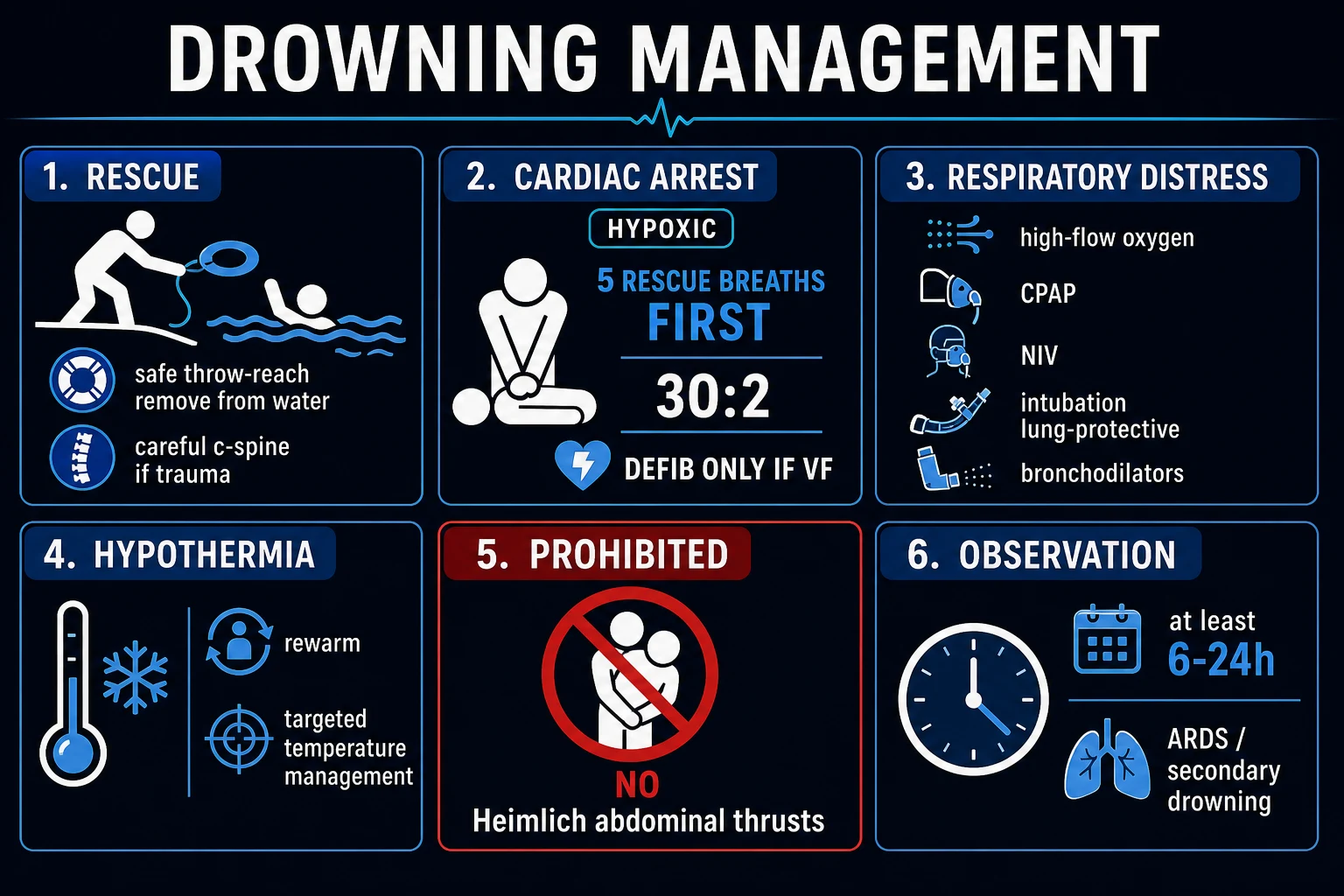
Because the mechanism of death in drowning is hypoxic cardiac arrest, the comatose post-arrest drowning patient should receive exactly the same post-resuscitation neuroprotective care as any other cardiac arrest survivor. The 2010 AHA special-situations guidance is explicit on this point.[3]
- Targeted temperature management (TTM) at 32 to 36 degrees C for 24 hours in any adult or child who remains comatose (no purposeful response to verbal commands) after return of spontaneous circulation. Choose a single target within that range and maintain it tightly; either 33 degrees C or 36 degrees C is acceptable per current post-cardiac-arrest guidelines.
- Avoid fever for 72 hours after arrest — pyrexia worsens neurological injury; treat with antipyretics and cooling devices.
- Normoglycaemia — avoid both hypoglycaemia and hyperglycaemia; moderate glucose control (for example 6 to 10 mmol per litre) is reasonable.
- Normocapnia — ventilate to PaCO2 35 to 45 mmHg; avoid prophylactic hyperventilation (which causes cerebral vasoconstriction) except as a temporising measure for impending herniation.
- Seizure detection and control — treat clinical and electrographic seizures aggressively; consider continuous electroencephalography in the comatose patient.
- Concurrent hypothermia from immersion — distinguish THERAPEUTIC hypothermia (intended, controlled) from ACCIDENTAL hypothermia (the cold-water exposure that brought the patient in). Rewarm accidental hypothermia to at least 30 to 32 degrees C before declaring futility, and then transition to controlled TTM at the chosen target. [1]
Accidental hypothermia versus therapeutic hypothermia in drowning
| Feature | Accidental hypothermia (the immersion) | Therapeutic hypothermia (TTM) |
|---|---|---|
| Cause | Cold-water exposure lowering core temperature | Intentional cooling post-arrest |
| Direction | Rewarm toward 32 to 34 degrees C, then decide | Hold at chosen target (32 to 36 degrees C) for 24 h |
| Prognostic role | PROTECTIVE — lower cerebral metabolic rate; reason to prolong CPR | Neuroprotective — part of post-arrest bundle |
| Risk | Arrhythmia below 30 degrees C (ventricular fibrillation) | Shivering, infection, electrolyte shift, bradycardia |
| Key principle | 'Not dead until warm and dead' | Standard post-cardiac-arrest TTM applies |
Co-existing injuries — cervical spine, hypothermia and trauma
The intensivist must not be so focused on the lung and the brain that the co-existing injuries of drowning are missed. Three are particularly important: cervical spine injury, accidental hypothermia, and traumatic injury from the mechanism.[3][4]
- Cervical spine injury — dive into shallow water, surf-board and watercraft impact, and boating trauma can produce cervical fracture and dislocation. Immobilise the cervical spine during rescue, extraction and intubation in any diving, boating or unwitnessed trauma mechanism. Routine immobilisation is NOT needed for simple shallow-water immersion without a diving or trauma history. The proportion of drowning victims with spinal injury is low overall (under 0.5 per cent) but much higher in diving accidents.
- Accidental hypothermia — cold water cools the body rapidly. Measure core temperature (oesophageal, bladder or rectal). Severe hypothermia (under 30 degrees C) risks ventricular fibrillation and warrants careful handling, rewarming and, if arrest occurs, extracorporeal rewarming. Remember that hypothermia is also PROTECTIVE — the cold brain tolerates hypoxia far longer than the warm brain.
- Traumatic injury — boating and watercraft accidents, falls from height into water, and surf injuries can produce head injury, chest and abdominal trauma, and long-bone fractures. Assess and manage per standard trauma principles once the airway, breathing and circulation are secure.
- Immersion-related syndromes — prolonged immersion can produce immersion pulmonary oedema in divers and swimmers (even without aspiration), and cold-water immersion can trigger the mammalian diving reflex, particularly in children, contributing to the occasionally remarkable preservation of neurological function after prolonged cold submersion.
- Decompression sickness and gas embolism — consider in breath-hold or compressed-gas diving presentations with neurological symptoms; manage with 100 per cent oxygen and hyperbaric referral where appropriate. [1]
What NOT to do — the obsolete and harmful interventions
Several traditional interventions are now known to be useless or actively harmful and should be explicitly avoided. Examiners test these.[3][4][5]
Interventions to AVOID in drowning
| Intervention | Why it is wrong | What to do instead |
|---|---|---|
| Heimlich manoeuvre / abdominal thrusts | Water is in the lungs, not the stomach; delays CPR, risks aspiration of gastric contents, may cause visceral injury | Suction only solid upper-airway obstruction; start rescue breaths |
| Compression-only CPR | Drowning is asphyxial — blood is already desaturated | Give 5 rescue breaths then 30:2 CPR |
| Prophylactic antibiotics | Initial lung injury is chemical pneumonitis, not infection; cultures guide therapy | Send cultures; treat only if infection develops |
| Prophylactic corticosteroids | No benefit for pulmonary or neurological injury | Standard supportive care; no steroids |
| Fluid restriction or aggressive diuresis | Aspirated volume is small; oedema is hydrostatic/inflammatory | Treat hypoxia with PEEP; fluid-balance to perfusion |
| Salt-water versus fresh-water fluid logic | Electrolyte shifts are negligible at real aspirated volumes | Treat the patient, not the water type |
| Early termination of CPR in cold-water drowning | Hypothermia protects the brain; prolonged CPR can succeed | Continue until warm and dead, or validated futility criteria met |
| Suctioning froth to dryness | Damages airway, interrupts ventilation | Suction to keep tube patent; let PEEP resolve the oedema |
Prognostication — good and poor predictors
Prognostication in drowning is built on a small number of robust clinical variables available at or soon after presentation. The Szpilman stratification and the Utstein-style drowning dataset codify these. Two aphorisms dominate: 'not dead until warm and dead' (cold-water hypothermia is protective) and 'time submerged is the single most important predictor'.[1][4]
Prognostic factors in drowning
| Predictor | Direction | Detail |
|---|---|---|
| Submersion time | Longer is worse | Submersion over 25 min associated with very poor outcome; under 5 min favourable |
| Return of spontaneous circulation | ROSC good; no ROSC poor | Sustained ROSC before hospital arrival is strongly favourable; asystole unresponsive to prolonged CPR is poor (unless hypothermic) |
| Glasgow Coma Scale | Persistently low is poor | GCS under 6 or absent motor response at 24 h (off sedation) is a poor sign; purposeful response is favourable |
| Serum potassium at presentation | Hyperkalaemia poor | Potassium over 8 mmol/L on presentation in arrested drowning is strongly associated with death |
| Water temperature | Cold is protective | Cold water lowers cerebral metabolic rate; remarkable recoveries after prolonged cold submersion, especially in children |
| Bystander CPR | Favourable | Early bystander CPR improves survival and neurological outcome |
| Age | Young favourable | Children, especially young children, tolerate prolonged hypoxia better than adults |
| Need for continued CPR at hospital | Poor | Ongoing CPR on hospital arrival portends poor outcome in normothermic drowning |
| Initial rhythm | Shockable better | Ventricular fibrillation is uncommon but more amenable than asystole or PEA |
| Core temperature | Moderate hypothermia favourable | Accidental hypothermia on arrival may reflect the protective effect; deep hypothermia risks arrhythmia but also neuroprotection |
Red flags
Clinical pearls
Prognosis
Outcomes and outcome modifiers in drowning
| Scenario | Expected outcome | Modifier |
|---|---|---|
| Brief submersion, immediate bystander CPR, ROSC at scene | Good — often full neurological recovery | Young age and cold water further improve the outlook |
| Prolonged cold-water submersion with arrest | Variable — complete recovery possible after tens of minutes | Rewarming and extracorporeal support improve the chance of good outcome |
| Submersion over 25 minutes, warm water, no ROSC | Very poor — death or severe hypoxic brain injury | Presentation potassium over 8 mmol/L supports futility |
| Comatose at 24 h, no purposeful response off sedation | Poor neurological outcome | Bilateral absence of N20 somatosensory evoked potentials and malignant EEG patterns add prognostic weight |
| Symptomatic non-arrest drowning (grades 2 to 4) | Usually good with supportive care | Lung injury can progress to ARDS over the first day |
| Asymptomatic at 6 to 8 h, normal saturation and examination | Excellent — safe to discharge | Provide safety and return-precaution advice |
Key trials and evidence
Szpilman, Bierens, Handley, Orlowski 2012 — Drowning (NEJM review) (PMID 22646632)
Source
New England Journal of Medicine — Current Concepts review
Authors
Szpilman D, Bierens JJLM, Handley AJ, Orlowski JP
Scope
Comprehensive review of epidemiology, pathophysiology, rescue, resuscitation and in-hospital management of drowning
Key concepts
Unified WHO definition; asphyxial arrest with ventilation-first CPR; small aspirated volumes render salt/fresh and dry/wet distinctions obsolete; ARDS-pattern lung injury managed with PEEP and lung-protective ventilation; TTM for comatose post-arrest patients
Clinical tool
Szpilman 6-grade drowning severity classification (1 asymptomatic to 6 cardiopulmonary arrest) guiding level of respiratory support
Key finding
Submersion time, age and water temperature are the dominant determinants of outcome; cold water is protective
Clinical bottom line
The standard reference review — treat the hypoxia first, ventilate early, use PEEP, apply post-arrest TTM, and abandon obsolete terminology and ineffective interventions
van Beeck, Branche, Szpilman, Modell, Bierens 2005 — A new definition of drowning (WHO Bulletin) (PMID 16302042)
Source
Bulletin of the World Health Organization — international consensus statement
Purpose
To establish a uniform, internationally accepted definition and outcome taxonomy for drowning to enable surveillance, research and prevention
Definition
Drowning is the process of experiencing respiratory impairment from submersion or immersion in liquid
Outcome taxonomy
Fatal or non-fatal drowning, with non-fatal subdivided into morbidity or no morbidity
Terminology abolished
Near-drowning, dry and wet drowning, salt-water and fresh-water drowning, secondary drowning, active, passive and silent drowning
Key finding
A single definition and outcome taxonomy adopted by WHO, ILCOR and the International Life Saving Federation, transforming surveillance and reporting
Clinical bottom line
Every submersion event is DROWNING; classify by outcome only; abandon the obsolete modifiers in practice, research and exam answers
Szpilman, Webber, Quan, Bierens et al 2014 — Creating a drowning chain of survival (PMID 24911403)
Source
Resuscitation — consensus advisory statement (International Life Saving Federation and ILCOR-aligned)
Purpose
To define a simple, universal chain of survival for drowning spanning prevention through post-resuscitation care
Chain links
Prevent drowning, recognise distress, provide flotation, remove from water, and provide care as needed — culminating in on-scene resuscitation and definitive hospital care
Key emphasis
Rescue and rescue-breath-first CPR must start at the scene; the chain's earlier links (prevention, supervision, barriers) determine how much hypoxic injury reaches hospital
Key finding
A standardised chain that integrates public-health prevention with pre-hospital and in-hospital resuscitation, applicable in high- and low-to-middle-income settings
Clinical bottom line
The intensivist is the final link; outcomes depend on the strength of the whole chain, especially early bystander ventilation and CPR
Exam practice — SAQ
SAQ — Cold-water drowning cardiac arrest
10 minutes · 10 marks
A 12-year-old is pulled from a frozen lake after ~20 minutes submersion. Bystander CPR ongoing. ED: asystole, core temperature 28 °C, K 5.6 mmol/L, pupils fixed.
References
- [1]Idris AH, Berg RA, Bierens J, Bossaert L, Branche CM, Gabrielli A, et al. Recommended guidelines for uniform reporting of data from drowning: the Utstein style Resuscitation, 2003.PMID 14580734
- [2]van Beeck EF, Branche CM, Szpilman D, Modell JH, Bierens JJLM. A new definition of drowning: towards documentation and prevention of a global public health problem Bull World Health Organ, 2005.PMID 16302042
- [3]Vanden Hoek TL, Morrison LJ, Shuster M, Donnino M, Sinz E, Lavonas EJ, et al. Part 12: cardiac arrest in special situations: 2010 American Heart Association Guidelines for Cardiopulmonary Resuscitation and Emergency Cardiovascular Care Circulation, 2010.PMID 20956228
- [4]Szpilman D, Bierens JJLM, Handley AJ, Orlowski JP. Drowning N Engl J Med, 2012.PMID 22646632
- [5]Jones P, Moran K, Webber J. Drowning terminology: not what it used to be N Z Med J, 2013.PMID 24317001
- [6]Szpilman D, Webber J, Quan L, Bierens J, Morizot-Leite L, Langendorfer SJ, Beerman S, Lofgren B. Creating a drowning chain of survival Resuscitation, 2014.PMID 24911403