MedVellum
MCQsExamsAtlas
DashboardPricing
MBBS / Core medicine✳Dermatology✳ICU Fellowship (CICM)✳Anaesthesia✳Emergency Medicine✳Psychiatry Fellowship✳Paediatrics Fellowship✳Physician Medicine✳MCQs✳SAQs✳Vivas✳OSCE✳Evidence-first✳MBBS / Core medicine✳Dermatology✳ICU Fellowship (CICM)✳Anaesthesia✳Emergency Medicine✳Psychiatry Fellowship✳Paediatrics Fellowship✳Physician Medicine✳MCQs✳SAQs✳Vivas✳OSCE✳Evidence-first✳

MedVellum.

The folio

Exam-exhaustive medical education across every specialty — evidence-graded topics, engraved plates, and practice in every written and oral format. Educational content only — not medical advice.

llms.txt · psychiatry LLM catalog · sitemap

Atlas

  • Specialty atlas
  • MBBS / Core medicine
  • Dermatology
  • ICU Fellowship (CICM)
  • Anaesthesia
  • Emergency Medicine
  • Psychiatry Fellowship
  • Paediatrics Fellowship
  • Physician Medicine

Study & account

  • MCQ practice
  • Practice alias
  • Exam tools
  • Dashboard
  • Pricing
  • Sign in

© 2026 MedVellum. For education only — not a substitute for clinical judgement.

Folio edition · Set in Instrument Serif & Archivo

ICU TopicsEthics and quality

ICU · Ethics and quality

ICU diaries: patient recall, recovery, and post-intensive care syndrome

Also known as ICU diaries · Patient diaries · Intensive care diaries · ICU recall · Recovery diaries · Patient-centred ICU care

ICU diaries are written records (by staff and family) of the patient's ICU stay, given to the patient after discharge to help fill memory gaps (delirium amnesia), process the experience, and aid psychological recovery. Patients typically have NO or FRAGMENTED recall of ICU (delirium, sedation) — and what they DO remember is often frightening (hallucinations, delusions). ICU diaries REDUCE PTSD (some studies — BACKUP trial), improve quality of life, and help patients/families make sense of the experience. Diary content: daily entries in plain language (what happened, why interventions were done, visits from family, milestones — extubation, sitting out, first words). Started in Scandinavia (1990s), adopted across Europe and increasingly in ANZ. Should be paired with ICU follow-up clinic.

low20 referencesUpdated 1 July 2026
On this page & tools

Your progress

Saved locally on this device.

Target exams

CICMFFICMEDIC

Red flags

Up to 50-70% of ICU survivors have no factual recall of ICU stayFrightening memories (hallucinations/delusions during delirium) drive PTSD (20%)ICU diaries may reduce PTSD symptoms and improve recovery (BACKUP trial mixed)Diaries should be written in plain language, given WITH follow-up explanation

Your progress

Saved locally on this device.

Target exams

CICMFFICMEDIC

Red flags

Up to 50-70% of ICU survivors have no factual recall of ICU stayFrightening memories (hallucinations/delusions during delirium) drive PTSD (20%)ICU diaries may reduce PTSD symptoms and improve recovery (BACKUP trial mixed)Diaries should be written in plain language, given WITH follow-up explanation
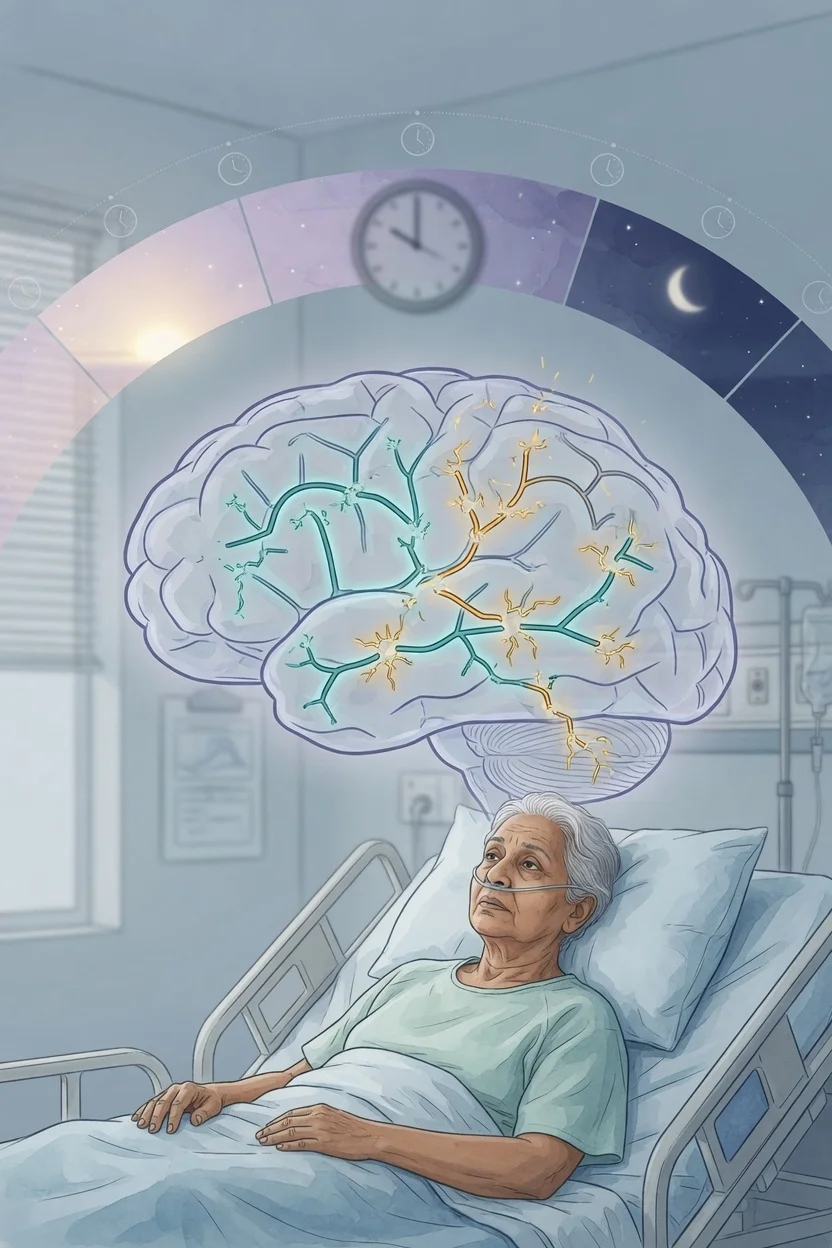
Cinematic ICU scene of an ICU diary book beside a recovering patient's bed, written in by nurses and family, a follow-up clinic in soft lighting, clinical-blue lighting with warm tones, medical educational, no faces, no text
FigureThe ICU diary — the day-by-day account of the ICU stay, written by the nurses and the family. It fills the amnesia, humanises the experience, and reduces the post-traumatic stress of the survivor. The diary is offered at the follow-up clinic, where the patient reconstructs the narrative of the critical illness.

Diaries vs delusional memory

Fragmented, delusional ICU memories drive PTSD risk; a contemporaneous diary offers a factual timeline survivors and families can re-integrate during recovery and follow-up.[1][8]

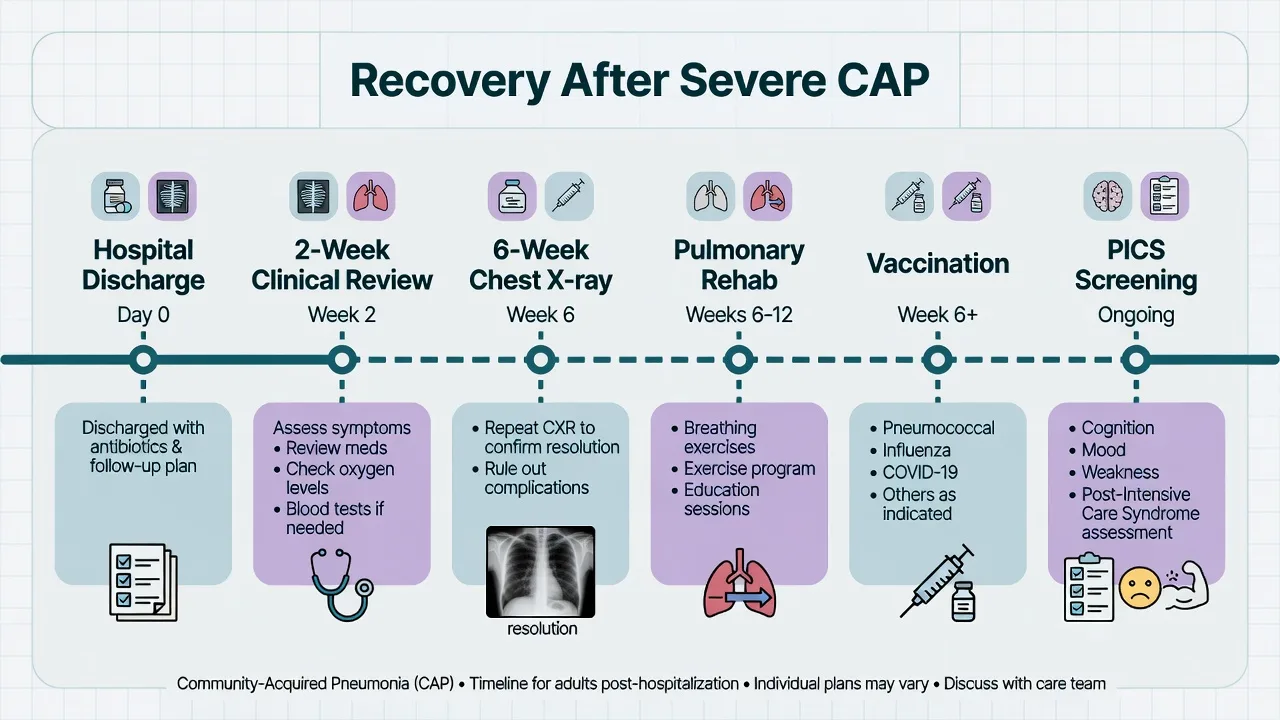
PICS recovery timeline cognitive mental physical domains
FigurePICS spans cognitive, mental health, and physical domains — diaries target memory and meaning-making.
Family and staff writing ICU diary during critical illness
FigureStaff and family entries create a coherent narrative survivors can review with follow-up teams.

In one line

ICU diaries are written day-by-day accounts (by staff + family) of a patient's ICU stay, given to them after discharge to fill memory gaps and aid psychological recovery. Why: 50-70% of survivors have NO factual recall of ICU; frightening delirium memories (hallucinations) drive PTSD (20%). Diaries reduce PTSD (Jones 2010 RCT; BACKUP mixed) and improve quality of life. Content: plain-language daily entries (events, interventions explained, family visits, milestones). Given WITH explanation at ICU follow-up clinic (2-8 weeks) — diaries alone may distress. Paired with follow-up clinic for best effect.

[1]

ICU recall: what patients remember vs reality

What patient recallsRealityPsychological impact
Nothing (50-70%)Entire ICU stay (sedation, delirium)Confusion, gaps in memory, difficulty accepting illness
Frightening hallucinationsDelirium (medical — infection, sedatives)PTSD (flashbacks, nightmares), paranoia
'I was kidnapped/tortured'Care (restraints, lines, suctioning)Trauma, mistrust of healthcare
Persecutory delusionsAltered perception (delirium)Anxiety, depression, avoidance
Fragmented real memoriesReal events (procedures, alarms)Distress at recalling invasive interventions
Accurate factual recall (minority)Real eventsLess distress (understanding helps)
[1]

ICU diary implementation

  1. IDENTIFY ELIGIBLE PATIENTS — Diaries benefit patients with PROLONGED ICU stay (>48-72h), severe illness (sepsis, ARDS, ventilation), delirium, or those are likely to have fragmented recall. Most ICUs offer to ALL long-stay patients. Obtain consent (family/substitute decision-maker if patient lacks capacity)
  2. WRITE DAILY ENTRIES — Staff (nurses, doctors, allied health) and family write entries. Content: (a) Date and time. (b) What happened today (events — procedures, tests). (c) Why interventions were done (in plain language — 'we put a breathing tube in to help your lungs rest'). (d) Family visits (who visited, photos). (e) Milestones (extubation, first words, sat out of bed). (f) Reassurance ('you were safe, we were watching you closely'). Tone: warm, factual, non-judgmental
  3. INCLUDE PHOTOGRAPHS (with consent) — Photos help patients visualise and contextualise (e.g., photo of them sitting out of bed — they may not believe they were that sick). Obtain consent. Avoid distressing images (during invasive procedures, when heavily sedated/unpresentable)
  4. STORE SECURELY — Diary kept at bedside during ICU stay (in folder). Treated as part of medical record (confidential). Given to patient on discharge (or at follow-up clinic)
  5. GIVE TO PATIENT WITH EXPLANATION — BEST at ICU follow-up clinic (2-8 weeks) — where staff can sit with patient, explain entries, answer questions, contextualise memories. Giving diary WITHOUT explanation may DISTRESS (confronting images/events). Walk through diary together
  6. FOLLOW-UP AND SUPPORT — At clinic: screen for PTSD (IES), depression (PHQ-9), offer psychological referral. Patient can share diary with family/GP. Re-offer follow-up if distress. Encourage patient to write their OWN reflections in diary (aids processing)
[1]

SAQ — ICU diaries for PTSD prevention

10 minutes · 10 marks

A 58-year-old woman is admitted to ICU with severe ARDS from pandemic influenza, requiring 14 days of invasive mechanical ventilation and deep sedation. She developed persistent delirium with vivid persecutory hallucinations. At her ICU follow-up clinic 8 weeks after discharge, she describes being 'tortured by staff' and avoids sleeping for fear of nightmares. Her Impact of Event Scale-Revised (IES-R) score is elevated. The clinical lead asks you to design a unit-wide diary programme to reduce post-ICU PTSD.

[1]

SAQ — Post-intensive care syndrome (PICS)

10 minutes · 10 marks

A 66-year-old man was admitted to ICU 3 months ago with septic shock from a urinary source, requiring 9 days of ventilation and vasopressor support. He had delirium for 7 days. He now attends the ICU follow-up clinic complaining of 'brain fog', difficulty walking upstairs, low mood, and has not returned to work as an accountant. His wife reports he is irritable and withdrawn, and she herself feels exhausted and tearful.

Clinical pearls [1]

High-yield ICU diaries and patient recall points for CICM/FFICM exam

  1. Patients have POOR recall of ICU — this is normal. 50-70% of ICU survivors (especially prolonged stay, ventilation, delirium) have NO factual memory of their ICU stay. MECHANISM: (a) Sedation (midazolam, propofol — amnestic). (b) Delirium (altered consciousness — fragmented encoding). (c) Critical illness itself (encephalopathy — impaired memory formation). PATIENTS ARE OFTEN DISTRESSED by the memory gap — 'I don't know what happened to me.' Diaries fill this gap — providing a coherent narrative of events.[3]
  2. What patients DO remember is often terrifying. Delirium produces VIVID hallucinations and delusions that patients remember as REAL: (a) Persecutory ('staff were trying to kill me'). (b) Paranoid ('I was in prison'). (c) Frightening (monsters, drowning, being buried alive). (d) These are experienced as GENUINE memories (brain encoded them during delirium). PROBLEM: patients can't distinguish delirium hallucinations from reality → these memories drive PTSD (20% of ICU survivors). DIARIES help by providing the FACTUAL account (contradicting the hallucination) — 'you were in hospital, you were safe, this is what really happened.'[2]
  3. Jones 2010 RCT — diaries reduce PTSD. RCT (Critical Care Medicine): ICU patients + diaries vs no diaries. RESULT: diary group had LOWER PTSD symptoms (IES score) at 3 months. MECHANISM: diary fills memory gaps, provides factual account (corrects delirium hallucinations), allows processing of trauma. Subsequent studies (Peris 2019) confirmed benefit. BACKUP trial (2020) — mixed results (some centres benefit, others not) — benefit may depend on HOW diary is delivered (with follow-up explanation vs handed over cold).[2]
  4. BACKUP trial — nuance on diary benefit. BACKUP (2020, AJRCCM): multicentre RCT — diaries vs no diaries for PICS prevention. RESULT: NO significant difference in primary outcome (new PTSD) at 3 months. BUT: benefit in subgroups (younger, severe delirium, those who READ the diary). INTERPRETATION: diaries alone may be insufficient — need PAIRING with follow-up clinic + psychological support. Diaries are a TOOL, not a standalone intervention. Current consensus: diaries are RECOMMENDED (NICE, ESICM) as part of post-ICU rehabilitation, but benefit requires active follow-up.[4]
  5. Diary content — what to write. (1) FORMAT: dated daily entries (or more frequent if eventful). (2) LANGUAGE: plain, jargon-free (patient and family are not medical). (3) CONTENT: (a) EVENTS of the day (tests, procedures, changes). (b) WHY interventions were done ('we put in a breathing tube because your lungs needed help'). (c) FAMILY visits (who, when, photos). (d) MILESTONES (extubation, first words, sat out of bed, walked). (e) REASSURANCE ('you were safe, we cared for you 1:1, your family was here'). (4) TONE: warm, empathetic, factual, non-judgmental. (5) WHAT NOT TO WRITE: critical comments about patient/family, sensitive information (not relevant to recovery), distressing details without context.[5]
  6. Photographs — powerful but sensitive. PHOTOS help patients: (a) SEE they were ill (some patients minimise the experience — 'it wasn't that bad' — photos validate). (b) VISUALISE events (sitting out of bed, family visiting — concrete memories). (c) PROCESS trauma (seeing themselves safe, cared for). CONSENT: obtain from family during ICU stay. AVOID: photos during invasive procedures (intubation, CPR), when patient is heavily sedated/unpresentable (undignified). CHOICE: patient can choose NOT to view photos (give control). Always offer at follow-up, with staff member present to explain.[5]
  7. Family involvement — dual benefit. Families BENEFIT from writing in diaries: (a) PROCESS their own trauma (family members develop PTSD, depression — PICS-Family). (b) Feel USEFUL (contributing to care when patient is unconscious). (c) Stay CONNECTED (visiting, writing — maintain bond). (d) RECORD their perspective (family see things staff miss — patient's personality, preferences). Families also benefit from READING diary later (they may have missed events, or their own memories are fragmented from stress). Family-centred care: involve families as partners.[3]
  8. When to give the diary — timing matters. (1) NOT in ICU (patient still ill, delirious — can't process). (2) NOT on ward discharge (still recovering — may overwhelm). (3) BEST at ICU FOLLOW-UP CLINIC (2-8 weeks post-discharge): (a) Patient is stronger, ready to process. (b) Staff available to EXPLAIN entries, answer questions, provide context. (c) Psychological support available if distress. (d) Patient can engage actively (ask questions, share feelings). (4) GIVING DIARY 'COLD' (mailed, or handed without explanation): may DISTRESS (confronting images, unexplained events). (5) If no follow-up clinic: give diary on ward when patient ready (alert staff to explain).[2]
  9. ICU follow-up clinic — essential companion. Diaries work BEST when paired with structured follow-up: (1) SCREEN for PICS: cognitive (MoCA), psychological (PHQ-9 depression, IES PTSD, GAD-7 anxiety), physical (6MWT, hand-grip). (2) ADDRESS: rehabilitation (physio, OT), medication review, psychological support (CBT, medications). (3) REVIEW diary: staff member sits with patient, walks through entries, answers questions, contextualises memories. (4) FAMILY support: screen family for PICS-Family (caregiver burden, PTSD, depression). (5) REFER to specialists as needed (neuropsychology, psychiatry, respiratory rehab).[4]
  10. Diaries for bereaved families — a different purpose. If patient DIES in ICU: the diary becomes a MEMORIAL for the family. (1) Provides RECORD of the patient's last days (family may not have been present for all events). (2) Helps family UNDERSTAND what happened (process the death, find meaning). (3) REDUCES family PTSD and complicated grief (some evidence — Anderson 2017). (4) Should be offered to ALL bereaved families (not just long-stay). (5) May include letters from staff, photos (with consent). HANDLED SENSITIVELY — give after death, with bereavement support.[5]
  11. Cultural and linguistic considerations. (1) LANGUAGE: write diary in PATIENT'S preferred language (translate if needed — staff or family can translate). (2) CULTURE: be sensitive to cultural beliefs about illness, death, medical interventions (some cultures have specific beliefs about delirium, spirits, afterlife — diary should respect). (3) LITERACY: if patient has low literacy — use photos, simple language, or audio (recorded diary). (4) ACCESS: diaries should be accessible to all (not just English-speaking, educated patients — equity).[6]
  12. ANZ context — growing adoption. (1) ULLMAN (2019, Australian Critical Care): surveyed ANZ ICUs — ~30% have diary programmes, growing. (2) BARRIERS: staff time, funding, cultural acceptance (some clinicians see as 'not medical'). (3) FACILITATORS: nursing leadership, patient advocacy, evidence (PTSD reduction), integration with follow-up clinics. (4) CICM/ACCCM: support post-ICU rehabilitation — diaries are part of holistic care. (5) EXAM POINT: ICU diaries may appear as a QUALITY/PATIENT-CENTRED CARE question in CICM/FFICM — know the evidence (Jones RCT, BACKUP), rationale (memory gaps, PTSD), and implementation (staff + family write, follow-up clinic to deliver).[6]
  13. Diaries and delirium prevention — secondary benefit. Writing in the diary DURING ICU stay (by staff/family) may help PREVENT or reduce delirium: (a) Family presence at bedside (orienting patient, familiar voice). (b) Diary entries can be READ TO the patient (orientation — 'today is Tuesday, you are in hospital, you had pneumonia, you are getting better'). (c) Re-orientation: explaining tubes, alarms ('this machine is helping you breathe, it will beep sometimes'). (d) Part of the ABCDEF bundle (Family engagement). Evidence is observational but biologically plausible.[1]
  14. Limitations and criticisms of diaries. (1) BACKUP trial negative for PRIMARY outcome — diaries alone may be insufficient. (2) STAFF TIME: writing daily entries for every patient is labour-intensive (competing with clinical care). (3) DISTRESS: some patients find diaries distressing (confronting images, unexplained events — if given without support). (4) EQUITY: may not reach all patients (language, literacy, those who don't attend follow-up). (5) PRIVACY: diary contains personal medical info — must be stored securely, given to patient only. (6) NOT A PANACEA: diaries are one tool — must be part of comprehensive post-ICU rehabilitation (follow-up, screening, psychological support).[4]

Red flags

Critical ICU diaries and recall red flags

  • 50-70% of survivors have NO factual recall of ICU — memory gaps are normal.[3]
  • Frightening delirium hallucinations drive PTSD (20%) — diaries provide factual correction.[2]
  • Jones 2010 RCT: diaries reduce PTSD; BACKUP 2020: mixed (benefit needs follow-up).[2]
  • Diaries should be given WITH explanation at follow-up clinic — not 'cold' (may distress).[4]
  • Bereaved families: diary as memorial — reduces complicated grief (offer to all).[5]
  • PICS-Family: relatives also develop PTSD/depression — diaries help family too.[3]

Prognosis

ICU diaries evidence and outcomes

Recall: 50-70% of ICU survivors have no factual memory; fragmented/frightening memories (delirium) common (Jones 2001). Jones 2010 RCT (CCM): diaries reduced PTSD symptoms (IES) at 3 months (35% vs 50% in no-diary group). Peris 2019: diaries associated with lower PTSD and depression at 12 months. BACKUP trial (2020, AJRCCM): multicentre RCT — NO significant difference in new PTSD at 3 months. Subgroup benefit (younger, severe delirium, read diary). Interpretation: diaries need active follow-up, not standalone. Egerod 2018: diaries improve quality of life and family satisfaction; benefit relatives (reduced anxiety). Limitations: BACKUP negative — benefit not universal; implementation matters (follow-up clinic, explanation, psychological support). Current guidelines: NICE (CG83 — rehabilitation after critical illness), ESICM — recommend diaries as part of post-ICU follow-up. Not universally funded in ANZ.

[1]

Post-intensive care syndrome (PICS)

What is PICS?

Post-intensive care syndrome (PICS) is the umbrella term for new OR worsening impairments in physical, cognitive, or mental health that persist after critical illness and ICU discharge. Defined at the 2010 Society of Critical Care Medicine stakeholders' conference (Needham 2012). Prevalence is staggering: at 1 year, 50-70% of survivors have at least one PICS domain affected; cognitive impairment alone affects ~30-40% at 12 months (BRAIN-ICU). PICS is the SINGLE BIGGEST determinant of long-term quality of life after ICU — bigger than the index illness itself. PICS-Family (PICS-F) is the parallel syndrome in relatives (caregiver burden, anxiety, depression, PTSD). Diaries, follow-up clinics, and rehabilitation TARGET PICS.[11]

PICS domains — what to screen for and tools

DomainManifestationsPrevalence at 1 yrScreening tool
Cognitive (ICU-acquired)Memory loss, executive dysfunction, reduced attention, slow processing speed, visuospatial deficits~30-40% (BRAIN-ICU) — often improves over 12 mo but can persist yearsMoCA, MMSE, Trail-Making Test A/B, Cogstate
Mental healthPTSD (15-25%), depression (30%), anxiety (40%), panic, flashbacks, nightmaresPTSD ~20%; depression ~30%IES-R (PTSD), PHQ-9 (depression), HADS, GAD-7
Physical (ICU-acquired weakness)Myopathy, neuropathy (CIM/CIP/CINM), fatigue, breathlessness, reduced 6MWT, poor functional statusUp to 50% of prolonged-stay survivorsMRC sum-score, hand-grip dynamometry, 6MWT, Barthel
PICS-Family (in relatives)Caregiver burden, depression, anxiety, PTSD, social isolation, financial strain30-50% of family caregivers; up to 1/3 PTSDZarit Burden Interview, HADS, IES-R, PHQ-9
[1]

PICS — high-yield exam content for CICM/FFICM

  1. PICS is defined as NEW or WORSENED impairment in physical/cognitive/mental health after critical illness. Coined by SCCM in 2010 (published Needham 2012, CCM) at a stakeholders' conference. It is the long shadow of critical illness — patients SURVIVE the ICU but are left disabled. Definition is INCLUSIVE: any new impairment in any domain counts. PICS is not a single disease — it is a syndrome complex reflecting cumulative injury (sedation, delirium, immobility, inflammation, sleep deprivation). Exam point: be able to LIST the three domains (physical, cognitive, mental health) PLUS PICS-Family.[11]
  2. Cognitive impairment is the most under-recognised PICS domain. BRAIN-ICU (Pandharipande 2013, NEJM): medical and surgical ICU patients with respiratory failure/shock/sepsis — 26% had cognition at 12 months similar to traumatic brain injury (moderate), 34% similar to mild cognitive (Alzheimer's) impairment. RISK FACTORS: longer delirium duration (each additional day = worse cognition), hypoxia, hypotension, hypoglycaemia, sepsis, older age, pre-existing cognitive impairment. Of note, COGNITIVE deficits were LARGELY UNRELATED to sedation — driven by delirium and illness severity. Cognitive recovery is slow and often incomplete — many still impaired at 3-5 years.[9]
  3. ICU-acquired weakness (ICUAW) — physical PICS. Three overlapping pathologies: (a) Critical illness myopathy (CIM) — myosin loss, muscle membrane inexcitability. (b) Critical illness polyneuropathy (CIP) — axonal sensory-motor neuropathy. (c) Critical illness myopathy + neuropathy (CINM) — combined. DIAGNOSIS: MRC sum-score <48 (out of 60), or reduced hand-grip dynamometry. PREVALENCE: 25-50% of prolonged-stay, mechanically-ventilated patients; up to 67% in sepsis/ARDS. PREDICTORS: immobility, hyperglycaemia, severe sepsis/MODS, steroids, neuromuscular blockers, prolonged ventilation. CONSEQUENCE: prolonged ventilation, poor 6MWT, inability to return to work. PREVENTION = ABCDEF bundle (early mobilisation central).[13]
  4. PICS-Family (PICS-F) — relatives suffer too. Relatives develop anxiety (40-70%), depression (30-50%), PTSD (15-35%), caregiver burden, and complicated grief (especially after death). RISK FACTORS: being a female spouse, low social support, watching invasive procedures, being decision-maker for end-of-life. Cameron 2006 (CCM): ARDS caregivers had depression/anxiety at 1 year driven by caregiver burden — patients' recovery was a reciprocal stress. INTERVENTIONS: family presence at ICU rounds, family meetings, diaries (family benefits from writing AND reading), formal bereavement support, peer support groups. EXAM POINT: always mention PICS-F alongside PICS.[14][15]
  5. Functional recovery is slow — and often incomplete. Herridge's ARDS cohort (NEJM 2003, with 5-year follow-up 2011): at 3 months most were severely disabled; by 1 year 6-minute walk distance was ~65% predicted; even at 5 YEARS mean walk distance was still ~76% predicted, and many never returned to work. Younger patients recovered more; older patients plateaued early. TAKE-HOME: recovery takes MONTHS to YEARS — patients need ongoing rehabilitation, not just acute care. Set expectations honestly: 'most people improve over a year, but some limitations may persist.'[11]
  6. Return to work is the patient-centred outcome. Across studies, only 50-70% of previously-employed ICU survivors return to work at 1 year; many return part-time or to less demanding roles. PREDICTORS of non-return: older age, pre-existing comorbidity, ICUAW, cognitive impairment, depression, low pre-admission employment. Rehabilitation, pacing advice, employer liaison, and cognitive rehab all help. This is a high-yield 'patient-centred outcome' answer in long-answer CICM questions.[11]

Patient recall — fragmented, factual, delusional

Four kinds of ICU recall and their PTSD risk

Recall typeWhat the patient describesPrevalencePTSD risk
No factual recall'I don't remember anything between admission and waking up on the ward'~50-70% (esp. prolonged stay, deep sedation, delirium)LOW-MODERATE (but the GAP itself causes confusion/distrust)
Fragmented factual recallDisconnected real memories — pain, suctioning, a face, an alarm, a voiceCommonMODERATE (intrusive images, incomplete narrative)
Factual recall (vivid, coherent)Clear real memories of events, procedures, conversationsMinority (~10-25%)LOWEST (understanding confers control; reality is reassuring)
Delusional recall (hallucinations/delusions)'They were trying to kill me', 'I was in prison', monsters, being buried alive, conspiraciesVery common during delirium (~70-80% of delirious patients)HIGHEST — delusional memories independently PREDICT PTSD
[1]

Recall, delirium memories, and PTSD — the mechanism

  1. Delusional memories are the strongest single predictor of post-ICU PTSD. Jones 2001 (CCM) — landmark study: patients' ICU memories were classified as (a) factual, (b) delusional, (c) no memory. RESULT: patients with DELUSIONAL memories (not factual, not amnesia) developed the highest rates of PTSD-related symptoms at 2 months. Factual recall was PROTECTIVE. Mechanism: the brain ENCODES delirium hallucinations as genuine episodic memories; the patient cannot distinguish them from reality → trauma persists after discharge. CAPGRAS delusion (believing loved ones are impostors) is a classic post-ICU delusion (Jones 1999). EXAM POINT: 'delusional recall predicts PTSD' is one of the highest-yield ICU recall facts.[7][20]
  2. The diary's job is to OVERWRITE delusional memories with factual narrative. A patient who 'remembers' staff trying to kill them is given a diary entry: 'Today you were very sick. We sedated you so the breathing tube could rest your lungs. Your daughter Sarah visited and held your hand. You pulled at your lines because you were confused (delirium) — we gently restrained your hands for your safety.' The diary provides a COHERENT, BENIGN explanation that competes with — and over time replaces — the persecutory delusion. This is the cognitive-behavioural mechanism by which diaries reduce PTSD (Jones 2010 RCT).[8]
  3. No recall is not benign — the memory GAP is itself distressing. Patients with complete amnesia describe: 'I lost three weeks of my life', "I don't know what happened to me", distrust ("they won't tell me what they did"). The absence of a coherent narrative is disorienting and undermines trust in clinicians. Diaries fill the gap — give the patient a continuous autobiographical record. Patients consistently report diaries are VALUABLE even when they have NO independent recall (the diary IS their memory).[18]
  4. Recall evolves over time — patients may 'recover' memories weeks to months later. Fragmented memories often resurface after discharge (triggered by smell, sound, a TV programme). Some are FACTUAL (real events) — others are DELUSIONAL (delirium hallucinations). The diary helps the patient and clinician sort out which is which at the follow-up clinic. CAUTION: do NOT dismiss a patient's memory as 'just a hallucination' — explore it, validate the FEELING ('that sounds terrifying'), then offer the factual account from the diary.[18]
  5. PTSD after ICU is common (15-25%) and under-diagnosed. Manifests as: intrusive flashbacks to ICU ('memories' of being smothered, restrained, drowning), nightmares, hypervigilance, avoidance of hospitals/medical care (sometimes life-threatening refusal of necessary care), emotional numbing, hyperarousal. SCREEN at follow-up with the Impact of Event Scale-Revised (IES-R) or PTSD Checklist (PCL-5). Treat with trauma-focused CBT (first-line), EMDR, and SSRI (sertraline/paroxetine) if severe. Svenningsen 2015: delirium duration independently predicted PTSD symptoms — preventing delirium is preventing PTSD.[16]
  6. Delirium is the COMMON ANCESTOR of PICS cognitive, mental health, AND delusional recall. Longer delirium duration → worse cognition (BRAIN-ICU), more PTSD (Svenningsen 2015), more delusional memories (Jones 2001). PREVENTING DELIRIUM (ABCDEF bundle: Assess pain, Both SAT/SBT, Choice of sedation, Delirium monitoring, Early mobility, Family engagement) is the single most effective upstream intervention for ALL of PICS. The PADIS 2018 guidelines enshrine this bundle. Diaries slot into the 'F' — Family engagement — and have a small orienting benefit while the patient is still in ICU.[12][9]

ICU diaries — content, implementation, evidence

Writing a high-quality diary entry (per entry checklist)

  1. DATE AND TIME — anchor the entry in time ('Tuesday 4 March, evening shift'). Patients use this to reconstruct chronology.
  2. WHAT HAPPENED TODAY — major events in plain language ('you had a scan of your lungs', 'we turned the breathing machine down a little', 'you opened your eyes and squeezed my hand').
  3. WHY INTERVENTIONS WERE DONE — this is the most therapeutic part: "we put a tube into your throat because your lungs were too tired to breathe on their own — it was breathing for you while you rested'. Answer the patient's future question 'why was that thing in me?"
  4. HOW THE PATIENT WAS / REASSURANCE — 'you seemed comfortable', 'we kept you warm', 'we watched you one-to-one all night', 'you were never alone'. Counter the persecutory narrative.
  5. FAMILY / LIFE TOUCHPOINTS — 'your wife Mary visited and showed you photos of the grandchildren', 'your son called'. Connect the patient to life outside.
  6. MILESTONES — 'today you sat on the edge of the bed for the first time', 'the breathing tube came out', 'you said your first word'. Build a recovery narrative.
  7. PHOTO (with consent) — one or two per week; patient presentable; never during invasive procedures.
  8. SIGN OFF — first name of writer ('nurse Jo') so the patient knows who cared for them.
[1]

Diary evidence and practicalities

  1. Jones 2010 RCT (Critical Care, PMID 20843344) — the pivotal diary trial. 352 patients across 12 UK ICUs: diary + session vs usual care. RESULT: significantly LOWER new-onset PTSD at 3 months in the diary group (primary outcome positive). Effect size modest but clinically meaningful. This is the trial most often cited as evidence FOR diaries. Note: existing descriptions of 'Jones 2010 CCM' sometimes misattribute the journal — the RCT was published in Critical Care, not Critical Care Medicine.[8]
  2. BACKUP trial (2020, AJRCCM) — the cautionary trial. Multicentre French RCT of diaries + briefing vs no diary. RESULT: NO significant difference in the PRIMARY outcome (new PTSD at 3 months). BUT pre-specified subgroup analyses showed benefit in: patients with delirium, patients who READ the diary, and younger patients. INTERPRETATION: the diary is necessary but not sufficient — the EFFECT comes from the diary being READ and DISCUSSED at follow-up. A diary mailed without explanation does not work. This has driven the consensus: diaries must be paired with a follow-up clinic.[4]
  3. Diaries are cheap, low-risk, and patient-valued. COST: a notebook + staff time (estimated 5-10 min/entry). SAFETY: no serious adverse events reported in trials; main risk is transient distress on reading (managed by clinician presence). PATIENT VALUE: in qualitative studies (Aitken 2017), patients describe the diary as 'precious', 'my memory', 'proof I was really sick'. Even where the PTSD trial signal is mixed, patients almost universally want and value the diary — this is sufficient justification for many units.[18]
  4. Family members gain as much from diaries as patients. Families WRITE (process trauma, contribute, stay connected) and READ (fill their own memory gaps from the stressful ICU period). Garrouste-Orgeas 2018: family members reported diaries helped them understand, find meaning, and reduce their own anxiety. For BEREAVED families, the diary is a memorial that reduces complicated grief. Always offer diaries to families of patients who die.[3]
  5. ANZ adoption is growing but patchy. Castillo 2020 (Aust Crit Care) and Ullman surveys: ~30% of ANZ ICUs have a diary programme, hindered by staff time, funding, and clinician scepticism. CICM's Statement on Care and Support provides a framework; not yet universally funded. FACILITATORS: nursing leadership, integration with the follow-up clinic, and patient testimony. EXAM POINT for CICM: be able to discuss diaries as part of post-ICU rehabilitation, cite Jones 2010 (positive) and BACKUP 2020 (mixed), and place diaries within the ABCDEF bundle (F = family).[19][17]
  6. Diaries also aid re-orientation DURING the ICU stay. Reading the diary aloud to a delirious patient ('today is Wednesday, you are in Royal Melbourne Hospital, you had pneumonia, you are getting stronger each day, your family visits daily') provides gentle reality anchoring. This is part of the 'Family engagement' (F) domain of the ABCDEF/PADIS bundle. The evidence is observational but biologically plausible (reduces delirium duration → reduces PICS).[1]
  7. Diary pitfalls and what NOT to write. AVOID: (a) critical or judgmental comments ('the patient was difficult/aggressive'); (b) sensitive information not relevant to recovery; (c) distressing detail without context ("you arrested and we did CPR for 20 minutes' — frame as 'you were very sick but we were able to bring you back"); (d) anything you would not want the patient to read. PRIVACY: the diary is part of the medical record while the patient is in ICU — store securely; share only with the patient and those they consent to. Never read another patient's diary.[5]

Rehabilitation — early mobilisation, cognitive, psychological

Why rehabilitation must START IN THE ICU

The old model — 'rest in bed until strong enough to mobilise' — CAUSES harm: muscle loss (~2-3% per bed-rest day in critical illness), contractures, pressure injuries, deconditioning, ICUAW, and cognitive decline. Modern ICU rehabilitation STARTS IN THE ICU, embedded in the ABCDEF bundle (PADIS 2018), and continues for MONTHS through ward rehab, outpatient rehab, and the ICU follow-up clinic. Three streams: (1) PHYSICAL (early mobilisation, physiotherapy, OT), (2) COGNITIVE (cognitive rehab, re-orientation, addressing delirium), (3) PSYCHOLOGICAL (CBT, anxiety/depression/PTSD treatment, diaries). All three must be addressed or recovery stalls in any one domain.[12]

ICU Mobility Scale — staging early mobilisation

ScoreActivityExample
0Nothing (passive only)Passive range-of-motion by physio in bed
1In-bed activities, sitting on edge of bed (with assistance)Sitting over edge of bed, hoisted
2Passively moved to chair (no active effort)Hoist-transfer to chair
3Sitting over edge of bed (actively)Sits independently >10 min
4Standing (with assistance)Weight-bearing, stepping on spot
5Marching on spotActive stepping with hoist/gait belt
6Walking with assistanceWalks with 2+ helpers / frame
7Walking independently (with or without gait aid)Walks unaided or with stick
[1]

Safe early mobilisation of the ventilated patient (TEAM-style protocol)

  1. SCREEN FOR SAFETY before every session — review: (a) respiratory stability (FiO2 ≤0.6, PEEP ≤10, SpO2 >90%, no escalating ventilator); (b) cardiovascular stability (MAP ≥60, no new/increasing vasopressors, HR 40-130, no active arrhythmia/ischaemia); (c) neurological (RASS ≥-2 — too sedated = unsafe/unproductive); (d) no unstable fractures, active bleeding, undrained pneumothorax, raised ICP. If unsafe — defer, document, revisit next day.
  2. PLAN THE SESSION — set a MOBILITY GOAL one level above baseline (e.g., score 2 → aim for 3). Involve the WHOLE team: physio, nurse, doctor, and (where able) family. For intubated patients, ensure ventilator circuit secure, ET tube secure, lines/tubes managed (one nurse dedicated to lines), vasopressors on a reliable pump.
  3. DELIVER THE SESSION — warm up (passive/active-assisted ROM), progress to the goal level, monitor continuously (HR, SpO2, work of breathing, patient distress). STOP criteria: SpO2 <88%, MAP <55 or >120, HR <40 or >140, new arrhythmia, respiratory distress, patient refusal/severe distress. Document tolerance and any adverse events (rare when screening is rigorous).
  4. PROGRESS DAILY — aim to ADVANCE one ICU Mobility Scale level every 1-3 days. Combine with seated edge-of-bed activities, ADLs with OT, inspiratory muscle training if weaning. Hodgson 2016 TEAM pilot (CCM) showed early goal-directed mobilisation in invasively ventilated patients is FEASIBLE and SAFE, with a signal toward more mobilisation and no excess harm — informing the larger TEAM trial.[13]
  5. DOCUMENT AND HANDOVER — record ICU Mobility Scale score, duration, adverse events, barriers. Hand over to next shift and to ward team on discharge. Continuity of rehab across ICU → ward → outpatient is essential; breaks undo progress.

Rehabilitation — physical, cognitive, psychological

  1. Early mobilisation is safe in most invasively ventilated patients. The TEAM pilot (Hodgson 2016, CCM) and multiple cohort studies show that structured mobilisation — including in patients ON vasopressors, WITH an endotracheal tube — is feasible with low adverse event rates (<1% serious events when properly screened). CONTRAINDICATIONS are FEWER than historically taught: active ischaemia, unstable fractures, uncontrolled raised ICP, massive haemorrhage. Most 'too sick to mobilise' decisions reflect habit, not physiology. Aim for mobilisation WITHIN 24-72h of meeting safety criteria.[13]
  2. The ABCDEF bundle is the operational framework for PICS prevention. (A) Assess and manage pain. (B) Both spontaneous awakening trials (SAT) and spontaneous breathing trials (SBT). (C) Choice of analgesia and sedation (prefer opioids + dexmedetomidine/propofol; minimise benzodiazepines — deliriogenic). (D) Delirium assessment (CAM-ICU/ICU-DSC) and management. (E) Early mobility. (F) Family engagement and empowerment (includes the DIARY). Bundle FIDELITY (all six done daily) is associated with better survival, more delirium-free days, less coma, and more mobilisation — the PADIS 2018 guideline is built around it. Diaries are part of 'F'.[12]
  3. Minimise benzodiazepines — they are deliriogenic. Midazolam and lorazepam are independently associated with longer delirium duration (and thus worse cognition, more PTSD, more delusional recall). PADIS 2018: prefer dexmedetomidine or propofol for sedation; reserve benzodiazepines for specific indications (alcohol/benzodiazepine withdrawal, status epilepticus, procedural sedation). Target light sedation (RASS -1 to 0) wherever possible. This single change reduces delirium → reduces PICS → reduces the burden the diary later has to address.[12]
  4. Cognitive rehabilitation starts in the ICU. Strategies: (a) delirium prevention/treatment (the biggest cognitive lever); (b) re-orientation (clock, calendar, whiteboard, family photos, diary read aloud); (c) restore sleep-wake cycle (lights off at night, eye masks, minimise night-time interruptions); (d) engaging cognitive activity once able (cards, puzzles, conversation). Post-discharge, structured cognitive rehabilitation (computerised or therapist-led) shows modest benefit for ICU-acquired cognitive impairment, though evidence is still maturing.[9]
  5. Psychological rehabilitation — treat the trauma. Three tiers: (a) UNIVERSAL — diaries, follow-up clinic contact, psychoeducation ('PTSD/depression are common and treatable after ICU'). (b) TARGETED — trauma-focused CBT for those with PTSD symptoms; behavioural activation/CBT for depression; pacing/graded return to activity for fatigue. (c) SPECIALIST — psychiatry referral for severe/refractory PTSD, depression, or psychotic phenomena (e.g., persistent delusional recall). START in the follow-up clinic, not after months of untreated symptoms — earlier treatment has better outcomes.[16]
  6. Nutrition and metabolic rehabilitation underpin physical recovery. Critical illness causes catabolism (muscle loss despite feeding), hyperglycaemia, micronutrient deficiency, and (in chronic critical illness) the 'persistent inflammation-immunosuppression-catabolism syndrome' (PICS-in-the-old-nomenclature — distinct from post-intensive care syndrome). Adequate protein (1.5-2.5 g/kg/day), glucose control (avoid both hypo- and hyperglycaemia — both worsen ICUAW and cognition), and rehabilitation together rebuild strength. Refeeding syndrome risk in malnourished patients — monitor phosphate, magnesium, potassium.[11]
  7. ICU-acquired weakness takes MONTHS to recover — set expectations. CIM/CIP/CINM recovery is slow: measurable improvement over 6-12 months, but ~30-50% have residual weakness at 1 year and some never fully recover. Predictors of poor recovery: severe weakness at ICU discharge, older age, comorbidity, prolonged immobility. Patients need ongoing physiotherapy, progressive resistance training once able, and realistic goal-setting. A supportive employer and graded return to work are central to functional recovery.[13]

ICU follow-up clinics

What is an ICU follow-up clinic?

An ICU follow-up (recovery) clinic is a structured outpatient review — typically at 2-3 months post-ICU discharge (sometimes a 1-week phone call + 2-3 month clinic + 6-12 month review) — run by ICU clinicians (medical, nursing, allied health) to screen for and manage PICS. The clinic is the natural place to deliver and explain the diary, screen cognition (MoCA), mood (PHQ-9, GAD-7), PTSD (IES-R), physical function (6MWT, hand-grip), and caregiver burden (PICS-F). Recommended by NICE CG83 (rehabilitation after critical illness) and increasingly by ESICM/SCCM. NOT universally funded in ANZ — access is a major equity issue.[11]

Structure of a model ICU follow-up clinic visit

  1. PRE-CLINIC — patient sent questionnaires (IES-R, PHQ-9, GAD-7, EQ-5D) to complete at home; results reviewed before the visit to flag needs. Send the diary if not yet given.
  2. REVIEW THE ICU ADMISSION — walk through what happened (use the diary as the scaffold); explain investigations, treatments, why the patient was so sick; answer 'why don't I remember?' Reassure that amnesia/fragmented recall/frightening memories are NORMAL.
  3. SCREEN FOR PICS — physical (MRC, hand-grip, 6MWT, breathlessness (mMRC), ADLs (Barthel)); cognitive (MoCA, Trails); mental health (PHQ-9, GAD-7, IES-R — review pre-visit scores); sleep; sexuality (often ignored, highly valued by patients).
  4. SCREEN PICS-FAMILY — invite the relative; assess caregiver burden (Zarit), their mood (PHQ-9), PTSD (IES-R); acknowledge their experience; offer support/bereavement if the patient has died.
  5. ADDRESS IDENTIFIED NEEDS — physiotherapy/OT referral for ICUAW/deconditioning; psychology/psychiatry for PTSD/depression/anxiety; cognitive rehab / neuropsychology for cognitive impairment; respiratory rehab for breathlessness; sleep service; peer support; financial/return-to-work advice.
  6. MEDICATION REVIEW — deprescribe ICU-acquired polypharmacy (PPIs, laxatives, hypnotics started in ICU and never stopped); reconcile with pre-ICU regimen.
  7. PLAN ONGOING CARE — further clinic review (e.g., 6 months), GP summary letter, patient-reported outcome tracking. Signpost recovery resources (ICUSteps, patient charities).
  8. RE-OFFER — patients who decline or do not attend should be re-offered; psychological distress itself reduces clinic attendance.
[1]

Follow-up clinic — evidence and implementation

  1. The diary belongs AT the follow-up clinic, not handed over cold. BACKUP (2020) and Jones 2010 both indicate the BENEFIT of diaries comes when they are READ and EXPLAINED. The follow-up clinic is the structured moment to do this: the patient is well enough to engage, a clinician can contextualise frightening entries ('yes, you were on a breathing machine — here is why'), correct misattributions ('that memory of staff hurting you was during delirium — you were safe'), and screen for distress. Mailing a diary without support is closer to no intervention.[4][8]
  2. Follow-up clinics reduce psychological morbidity — moderate evidence. Nurse-led ICU follow-up with structured rehabilitation (Schandl/Jensen lineage of trials and the NICE CG83 framework) shows modest reductions in PTSD/depression symptoms and improved self-efficacy, though RCT evidence is mixed (some trials neutral). Consensus: clinics are RECOMMENDED because (a) they are the only systematic way to detect PICS, (b) patients value them highly, (c) they enable targeted rehabilitation. EXAM POINT: cite NICE CG83 as the guideline basis.[11]
  3. Most PICS goes UNDETECTED without the clinic. Patients are discharged from hospital with NO PICS assessment; cognitive impairment, depression, and PTSD smoulder, eroding relationships, employment, and quality of life. The follow-up clinic is the SCREENING gateway. Even where a full clinic is not funded, a PHONE CALL at 2-4 weeks with questionnaire mailing captures many needs and is cheap. Equity: PICS does not spare patients without access to a clinic — advocate for service development.[11]
  4. Telehealth follow-up widens access. Post-COVID, virtual ICU follow-up clinics expanded rapidly — video review of diary, questionnaires administered online, referral pathways intact. Equivalent outcomes to in-person for screening in early data; in-person remains valuable for physical assessment (hand-grip, 6MWT) and complex psychological work. Hybrid models are now standard in many networks.[19]
  5. The follow-up clinic is also a data-collection engine. Patient-reported outcome measures (PROMs) collected at clinic feed back into unit quality improvement — tracking PICS prevalence, recovery trajectories, and intervention effects. This turns survivorship from anecdote into measurable quality. Units should report PICS outcomes alongside survival as a marker of ICU quality.[11]

Red flags

Critical recall, PICS, and recovery red flags

  • Delusional ICU recall is the strongest predictor of post-ICU PTSD — always ask about frightening 'memories'.[7]
  • 50-70% have no factual ICU recall; 30-40% have cognitive impairment at 1 year (BRAIN-ICU) — amnesia/impairment are NORMAL, not the patient's fault.[9]
  • Up to 50-70% of survivors have at least one PICS domain at 1 year — physical, cognitive, OR mental health.[11]
  • ICU-acquired weakness affects 25-50% of ventilated patients — screen with MRC sum-score (<48); prevent with ABCDEF bundle.[13]
  • PTSD in 15-25% of survivors — screen with IES-R at follow-up; treat with trauma-focused CBT.[16]
  • PICS-Family: 30-50% of relatives have depression/anxiety; up to 1/3 PTSD — screen caregivers too.[14]
  • Handing over a diary WITHOUT explanation can distress — deliver at the follow-up clinic with clinician present.[4]
  • BACKUP (2020) NEGATIVE for primary PTSD outcome — diaries need active follow-up, not standalone.[4]
  • Most early mobilisation is SAFE in ventilated patients — contraindications are fewer than historically taught.[13]
  • Recovery takes MONTHS to YEARS — set honest expectations; many never fully return to baseline.[11]
  • Follow-up clinics are NOT universally funded in ANZ — access inequity; advocate for service development.[19]

Prognosis

PICS, recall, and rehabilitation — landmark trials

Jones 2001 (CCM, PMID 11373423): classified ICU recall (factual / delusional / none). DELUSIONAL recall independently predicted PTSD-related symptoms at 2 months — the foundational observation linking delirium memories to PTSD.[7] Jones 2010 (Critical Care, PMID 20843344): multicentre UK RCT of diaries vs no diaries — LOWER new-onset PTSD at 3 months in the diary group. The pivotal positive diary trial.[8] BACKUP 2020 (AJRCCM, PMID 32278174): multicentre French RCT — NO significant difference in primary PTSD outcome at 3 months; subgroup benefit (delirium, read diary, younger). Diaries need active follow-up.[4] BRAIN-ICU 2013 (NEJM, PMID 24088092): Pandharipande. 26% of survivors had cognitive impairment at 12 months comparable to moderate TBI; 34% similar to mild Alzheimer's. Delirium duration was the strongest predictor.[9] Iwashyna 2010 (JAMA, PMID 20978258): severe sepsis survivors had ~3× the rate of new moderate-severe cognitive impairment at 3 years vs matched controls — sepsis as a brain insult.[10] Svenningsen 2015 (BioMed Res Int, PMID 26557708): delirium duration independently predicted PTSD symptoms after ICU — mechanistic link between delirium, delusional recall, and PTSD.[16] Cameron 2006 (CCM, PMID 16374160): ARDS caregivers had high rates of depression/anxiety at 1 year — seminal PICS-Family data.[14] Hodgson 2016 TEAM pilot (CCM, PMID 26968024): early goal-directed mobilisation in ventilated patients is FEASIBLE and SAFE; informs the larger TEAM programme.[13] Needham 2012 (CCM, PMID 21946660): SCCM stakeholders' conference — DEFINED PICS and set the rehabilitation and follow-up research agenda.[11] PADIS 2018 (CCM, PMID 30113379): Devlin. Clinical practice guidelines embedding the ABCDEF bundle for prevention/management of pain, agitation/sedation, delirium, immobility, and sleep — the operational framework for PICS prevention.[12]

Examiner densify anchors

CICM/FFICM densify — ICU diaries & PICS

Exam answers must couple definition + threshold numbers + first therapies + what kills the patient. Cite landmark evidence and state the common wrong answer explicitly.[1]

PICS prevalence (approx.)

~50–70% multi-domain burden among prolonged-stay survivors at 1 year

PTSD after ICU (order of magnitude)

~20% range in many cohorts — diaries aim to reduce pathological memory processing

[1]

Practical ICU checklist (densify)

Bedside densify checklist

  1. Confirm diagnosis thresholds with numbers the examiner expects.
  2. Name the first therapy and the absolute contraindication.
  3. State monitoring frequency and escalation triggers.
  4. Cite one landmark paper/guideline and one limitation of the evidence.
  5. Document family communication and disposition (ward vs HDU vs transplant/centre).
[1]

One-line viva closer

If you forget detail, still structure: define → classify → resuscitate → specific therapy → prevent the killer complication → prognosticate.

[1]

Practical ICU checklist (densify)

Bedside densify checklist

  1. Confirm diagnosis thresholds with numbers the examiner expects.
  2. Name the first therapy and the absolute contraindication.
  3. State monitoring frequency and escalation triggers.
  4. Cite one landmark paper/guideline and one limitation of the evidence.
  5. Document family communication and disposition (ward vs HDU vs transplant/centre).
[1]

One-line viva closer

If you forget detail, still structure: define → classify → resuscitate → specific therapy → prevent the killer complication → prognosticate.

[1]

References

  1. [1]Ullman AJ, et al. The Effect of ICU Diaries on Psychological Outcomes and Quality of Life of Survivors of Critical Illness and Their Relatives: A Systematic Review and Meta-Analysis. Critical care medicine, 2019.PMID 30431494
  2. [2]Jones C, Bäckman CG, Griffiths RD Intensive care diaries reduce new onset post traumatic stress disorder following critical illness: a randomised, controlled trial. Critical care, 2010.PMID 20843344
  3. [3]Garrouste-Orgeas M, et al. Writing in and reading ICU diaries: qualitative study of families' experience in the ICU. PloS one, 2014.PMID 25329581
  4. [4]Garrouste-Orgeas M, et al. Effect of an ICU Diary on Posttraumatic Stress Disorder Symptoms Among Patients Receiving Mechanical Ventilation: A Randomized Clinical Trial. JAMA, 2019.PMID 31310299
  5. [5]Egerod I, et al. The effect of diaries written by relatives for intensive care patients on posttraumatic stress (DRIP study): protocol for a randomized controlled trial and mixed methods study. BMC nursing, 2018.PMID 30127664
  6. [6]Nair R, Mitchell M, Keogh S The extent and application of patient diaries in Australian intensive care units: a national survey. Australian critical care, 2015.PMID 25458069
  7. [7]Jones C, Griffiths RD, Humphris G, Skirrow PM Memory, delusions, and the development of acute posttraumatic stress disorder-related symptoms after intensive care. Critical care medicine, 2001.PMID 11373423
  8. [8]Jones C, Bäckman CG, Griffiths RD Intensive care diaries reduce new onset post traumatic stress disorder following critical illness: a randomised, controlled trial. Critical care, 2010.PMID 20843344
  9. [9]Pandharipande PP, Girard TD, Jackson JC Long-term cognitive impairment after critical illness (BRAIN-ICU). New England journal of medicine, 2013.PMID 24088092
  10. [10]Iwashyna TJ, Ely EW, Smith DM, Langa KM Long-term cognitive impairment and functional disability among survivors of severe sepsis. JAMA, 2010.PMID 20978258
  11. [11]Needham DM, Davidson J, Cohen H Improving long-term outcomes after discharge from intensive care unit: report from a stakeholders' conference. Critical care medicine, 2012.PMID 21946660
  12. [12]Devlin JW, Skrobik Y, Gélinas C Clinical practice guidelines for the prevention and management of pain, agitation/sedation, delirium, immobility, and sleep disruption (PADIS) in adult patients in the ICU. Critical care medicine, 2018.PMID 30113379
  13. [13]Hodgson CL, Bailey M, Bellomo R A binational multicenter pilot feasibility randomized controlled trial of early goal-directed mobilization in the ICU. Critical care medicine, 2016.PMID 26968024
  14. [14]Cameron JI, Herridge MS, Tansey CM Well-being in informal caregivers of survivors of acute respiratory distress syndrome. Critical care medicine, 2006.PMID 16374160
  15. [15]Czerwonka AI, Herridge MS, Schmitz G Changing support needs of survivors of complex critical illness and their family caregivers: a mixed-methods study. Journal of critical care, 2015.PMID 25466314
  16. [16]Svenningsen H, Egerod I, Videbech P Symptoms of posttraumatic stress after intensive care delirium. BioMed research international, 2015.PMID 26557708
  17. [17]Ullman AJ, Kenardy JA, Brown R Remembering the unforgettable: trialing ICU diaries in North America. Critical care medicine, 2018.PMID 30444810
  18. [18]Aitken LM, Rattray J, Hull A Perspectives of patients and family members regarding psychological support using intensive care unit diaries. Journal of critical care, 2017.PMID 28011420
  19. [19]Castillo MI, Mitchell M, Aitken LM, et al. Feasibility and acceptability of conducting a partially randomised controlled trial examining interventions to improve psychological health after discharge from the intensive care unit. Australian critical care, 2020.PMID 32113735
  20. [20]Jones C, Griffiths RD, Humphris G Disturbed memory and amnesia related to intensive care. Memory (Hove, England), 2000.PMID 10829125