MedVellum
MCQsExamsAtlas
DashboardPricing
MBBS / Core medicine✳Dermatology✳ICU Fellowship (CICM)✳Anaesthesia✳Emergency Medicine✳Psychiatry Fellowship✳Paediatrics Fellowship✳Physician Medicine✳MCQs✳SAQs✳Vivas✳OSCE✳Evidence-first✳MBBS / Core medicine✳Dermatology✳ICU Fellowship (CICM)✳Anaesthesia✳Emergency Medicine✳Psychiatry Fellowship✳Paediatrics Fellowship✳Physician Medicine✳MCQs✳SAQs✳Vivas✳OSCE✳Evidence-first✳

MedVellum.

The folio

Exam-exhaustive medical education across every specialty — evidence-graded topics, engraved plates, and practice in every written and oral format. Educational content only — not medical advice.

llms.txt · psychiatry LLM catalog · sitemap

Atlas

  • Specialty atlas
  • MBBS / Core medicine
  • Dermatology
  • ICU Fellowship (CICM)
  • Anaesthesia
  • Emergency Medicine
  • Psychiatry Fellowship
  • Paediatrics Fellowship
  • Physician Medicine

Study & account

  • MCQ practice
  • Practice alias
  • Exam tools
  • Dashboard
  • Pricing
  • Sign in

© 2026 MedVellum. For education only — not a substitute for clinical judgement.

Folio edition · Set in Instrument Serif & Archivo

ICU TopicsEthics and quality

ICU · Ethics and quality

ICU discharge planning and transition of care: failures, criteria, and systems

Also known as ICU discharge planning · Transition of care · ICU step-down · Readmission · Post-ICU syndrome · ICU follow-up clinic · SBARR handover · Medication reconciliation

ICU discharge is a high-risk transition — one of the most dangerous handovers in hospital medicine. Premature discharge → readmission (5-10% within 48-72h) and 2-3x higher mortality; delayed discharge → ICU bed-blocking, increased cost, nosocomial infection, ICU-acquired weakness, and prolonged delirium. READMISSION RISK FACTORS: respiratory (RR high, PaO2/FiO2 <300, NIV at discharge, inability to clear secretions), cardiovascular (vasopressor/inotrope dependency, new arrhythmia, myocardial ischaemia), neurological (GCS <14, uncontrolled agitation, active delirium, seizures), laboratory (albumin <25 g/L, lactate 2 mmol/L, acute kidney injury), and OPERATIONAL (after-hours/night discharge 18:00-06:00 → 2-6x readmission and mortality in ANZ data — Gantner 2014, Tobin 2006, Pilcher 2007; weekend discharge; bed-pressure-driven discharge). STRUCTURED DISCHARGE PLANNING rests on five pillars: (1) OBJECTIVE READINESS CRITERIA — resolving organ failure, stable haemodynamics (MAP65 without escalating vasopressors, low-dose inotrope acceptable), adequate ventilation (SpO292% on FiO2<=0.4, RR<25, no NIV or stable on chronic NIV), neurologically appropriate (GCS13 or baseline, delirium controlled). (2) PHARMACIST-LED MEDICATION RECONCILIATION — stop ICU-only drugs (sedatives, NMBA), restart held home meds (beta-blockers, statins, anticonvulsants — adjust for recovering renal/hepatic function), correct durations (antibiotics, steroid taper), avoid indefinite gastric prophylaxis. (3) STRUCTURED HANDOVER — SBARR (Situation, Background, Assessment, Recommendation, Read-back) or ISBAR, written + verbal, with explicit acceptance of care by the receiving team. (4) TIMING — discharge in daytime (ideally before 16:00, before 18:00 at latest), avoid night discharge; if unavoidable, enhanced handover + document rationale. (5) POST-DISCHARGE FOLLOW-UP — ICU follow-up clinic at 2-8 weeks to screen for POST-INTENSIVE CARE SYNDROME (PICS): cognitive impairment (memory, executive function, attention — affects ~30-40%, persists at 1yr in 25%), psychological morbidity (depression 30%, PTSD 20%, anxiety 40% — combined physical/cognitive/mental health impairment affects 50-70% at 1 year), and physical weakness (ICU-acquired weakness CIP/CIM 25-50%). PREVENTION of PICS: ABCDEF bundle (Assess pain, Both spontaneous awakening/breathing trials, Choice of analgesia/sedation, Delirium monitoring, Early mobility, Family engagement) — Pun 2019 ICU Liberation Collaborative (15,000+ patients) showed lower mortality, more coma-/delirium-free days, and higher discharge home. FAMILY morbidity (PICS-Family) is also common — depression, anxiety, PTSD, caregiver burden.

medium15 referencesUpdated 4 July 2026
On this page & tools

Your progress

Saved locally on this device.

Target exams

CICMFFICMEDIC

Red flags

ICU readmission rate 5-10% — associated with 2-3x mortality increaseNight/after-hours discharge → 2-6x higher readmission risk and mortality (ANZ data)Patients on vasopressors/NIV at discharge → high readmission riskPost-ICU syndrome (PICS) affects 50-70% of survivors at 1yr — cognitive, psychological, physicalMedication reconciliation errors common at discharge — pharmacist-led reduces 70-80%PICS-Family: caregivers also develop depression, anxiety, PTSD, complicated griefPremature discharge (before physiological stability) doubles mortality and length of stayDysphagia post-extubation in 40-60% — aspiration risk if not screened before feedingContinuing stress-ulcer prophylaxis and VTE prophylaxis beyond indication → harm

Your progress

Saved locally on this device.

Target exams

CICMFFICMEDIC

Red flags

ICU readmission rate 5-10% — associated with 2-3x mortality increaseNight/after-hours discharge → 2-6x higher readmission risk and mortality (ANZ data)Patients on vasopressors/NIV at discharge → high readmission riskPost-ICU syndrome (PICS) affects 50-70% of survivors at 1yr — cognitive, psychological, physicalMedication reconciliation errors common at discharge — pharmacist-led reduces 70-80%PICS-Family: caregivers also develop depression, anxiety, PTSD, complicated griefPremature discharge (before physiological stability) doubles mortality and length of stayDysphagia post-extubation in 40-60% — aspiration risk if not screened before feedingContinuing stress-ulcer prophylaxis and VTE prophylaxis beyond indication → harm
Cinematic ICU scene of a structured ICU discharge handover with a checklist on a clipboard, a patient being transferred to the ward with monitoring and a discharge summary, clinical-blue lighting, medical educational, no faces, no text
FigureThe ICU discharge — the transition of the care, not the end of it. The discharge before the readiness is the readmission and the death; the criteria are the stable airway, the stable haemodynamics, the resolving organ failures. The structured handover, the written summary, and the ward review within the 24 hours reduce the failure to rescue.
SBARR medication reconciliation ICU to ward handover
FigureSBARR + medication reconciliation + daytime discharge when possible.

In one line

ICU discharge is a high-risk transition: premature → readmission (5-10%, 2-3x mortality); delayed → cost/infection/ICU-acquired weakness. Discharge criteria (physiological stability): resolving organ failure, stable haemodynamics (no vasopressor or low-dose inotrope only, MAP>65), adequate ventilation (SpO2>92% on FiO2<=0.4, RR<25, no NIV or stable on chronic NIV), neurologically appropriate (GCS>13 or baseline, delirium controlled, no uncontrolled seizures). Structured handover: SBARR (Situation, Background, Assessment, Recommendation, Read-back) or ISBAR, written + verbal, with explicit acceptance by receiving team. Pharmacist-led medication reconciliation: stop ICU-only drugs, restart held home meds, correct doses for recovering organ function. Avoid night/after-hours discharge (2-6x readmission/mortality in ANZ data). Post-discharge: ICU follow-up clinic at 2-8 weeks, screen for PICS (cognitive ~30-40%, depression 30%, PTSD 20%, ICU-acquired weakness 25-50% — combined impairment in 50-70% at 1yr), screen family for PICS-Family, early rehabilitation, swallow screening before oral intake.

[1]

Premature vs delayed ICU discharge

DimensionPremature discharge (too early)Delayed discharge (too late)
Incidence5-10% readmitted within 48-72h~20% of ICU stay is 'low-cost monitoring' days
ConsequencesReadmission, mortality 2-3x higher, longer re-stayBed-block (denying admission to others), cost, nosocomial infection, ICU-acquired weakness, delirium
Risk factorsVasopressors/NIV at discharge, high lactate, night discharge, confusionUnclear discharge criteria, poor handover, ward bed unavailable
PreventionObjective discharge criteria, structured handover, avoid night dischargeDaily readiness review, step-down/HDU, early discharge planning
[1]

ICU discharge readiness criteria by organ system (physiological stability)

SystemSAFE for ward dischargeUNSAFE — keep in ICU / step-down
AirwaySelf-maintaining, no recent re-intubation risk, able to protect airwayRecent extubation with stridor, facial/cervical swelling, copious secretions, untrained tracheostomy
BreathingSpO2>92% on FiO2<=0.4, RR<25, no NIV (or stable on chronic home NIV), effective coughPaO2/FiO2<300, RR>25, new/escalating NIV or CPAP, unable to clear secretions, high PEEP requirement
CirculationMAP>65 without escalating vasopressors (low-dose inotrope acceptable), no active arrhythmia, Hb stableNoradrenaline >0.05 mcg/kg/min or escalating, new arrhythmia, active myocardial ischaemia, lactate >2 mmol/L
NeurologyGCS>13 or baseline, delirium controlled, no uncontrolled seizures, pain controlledGCS<13 (unexplained), active delirium/agitation, uncontrolled seizures, uncontrolled raised ICP
Renal/metabolicRenal function stable/improving, K+ 3.5-5.5, glucose controlled, no rapidly evolving crisisAKI needing RRT or worsening, K+<3.0 or >6.0, active DKA/HHS, Ca2+ derangement
Infection/sourceSource controlled, appropriate antibiotics prescribed, afebrile or defervescingUndrained source, fever with no working diagnosis, escalating inotrope in septic shock
GIT/nutritionTolerating enteral nutrition or oral intake (post swallow screen), no active upper GI bleedIleus with abdominal compartment pressures, active GI bleeding, refeeding risk unaddressed
[1]

SBARR vs ISBAR handover frameworks

ElementSBARR (situation, background, assessment, recommendation, read-back)ISBAR (introduction, situation, background, assessment, recommendation)
OriginUS Navy nuclear submarine → adapted by healthcare (AHRQ, TeamSTEPPS)UK NHS National Patient Safety Agency; widely used in Australia/ANZ and UK
DifferenceAdds explicit Read-back (closed-loop communication) — receiver repeats critical orders/doses back to senderAdds explicit Introduction (who you are, role) at the start — sets context for receiver
Best forHigh-risk drug doses, critical results, escalation calls (read-back prevents the '7.5 vs 75' errors)Bedside handover at shift change, ICU-to-ward transfer, phone handover to a new clinician
ICU dischargeUse SBARR when handing over actively unstable borderline patients or complex medication regimensUse ISBAR for the structured ICU→ward discharge handover (introduces teams, sets scene)
Common pitfall'Read-back' skipped because receiver assumes they heard correctly'Introduction' skipped when caller knows receiver — context lost if receiver unfamiliar
[1]

Structured ICU discharge process (five pillars)

  1. READINESS ASSESSMENT (objective physiological stability) — Daily review (morning ward round): is organ failure RESOLVING (not fully resolved)? Haemodynamics STABLE (no vasopressor, or low-dose inotrope only — MAP>65 without escalating support, lactate <2)? Ventilation ADEQUATE (SpO2>92% on FiO2<=0.4, RR<25, no NIV or stable on chronic home NIV, effective cough)? Neurology APPROPRIATE (GCS>13 or baseline, delirium controlled, no uncontrolled seizures, pain controlled)? Renal/metabolic stable or improving? Infection source-controlled? If YES to all → proceed. If NO to any — unstable, keep in ICU or step-down.[1] }
  2. MEDICATION RECONCILIATION (pharmacist-led) — (a) Reconcile ICU meds with ward orders and pre-admission home meds. (b) STOP ICU-only meds (sedatives — propofol/midazolam; NMBA; vasopressors if weaned; prochlorperazine if over-sedating). (c) RESTART held home meds (beta-blockers — prevents rebound tachycardia/MI; statins; anticonvulsants; anticoagulants/antiplatelets — adjust for bleeding risk and recovering renal/hepatic function). (d) CORRECT DURATION: antibiotics (finish course — document stop date), steroids (taper if prolonged course). (e) DOSE ADJUSTMENT for recovering organ function (vancomycin, gabapentin, opioids, LMWH — all renally cleared). (f) AVOID continuing stress-ulcer prophylaxis (PPI/H2 blocker) and VTE prophylaxis beyond indication — reassess daily. Pharmacist-led reconciliation reduces errors 70-80%.[2] }
  3. HANDOVER (SBARR or ISBAR) — WRITTEN + VERBAL, delivered WITH the patient (not days later). Content: (a) Introduction/Situation — who, diagnosis, current status. (b) Background — admission course, procedures, complications, baseline function. (c) Assessment — active issues, organ-system status, pending results (cultures, biopsies, echo). (d) Recommendation — medications (new/changed/held), follow-up needs (specialty review, ICU clinic 2-8 weeks), goals of care, ceiling of treatment. (e) Read-back (SBARR) — receiver repeats critical doses/orders back. Allow questions. RECEIVING team EXPLICITLY accepts care.[2] }
  4. WRITTEN DISCHARGE PLAN — (a) Summary: admission diagnosis, key interventions, complications, current status. (b) Medication list (accurate, reconciled, with stop dates). (c) Pending investigations (cultures, biopsies, imaging). (d) Follow-up: specialty referrals, ICU follow-up clinic (2-8 weeks). (e) Rehabilitation plan (mobility, swallowing — swallow screen before oral intake, cognitive). (f) Goals of care / advance directive / ceiling of treatment (re-validate, document). (g) Family education: plain-language summary, warning signs (fever, breathlessness, confusion, new bleeding), recovery expectations (mobility recovery takes months; weakness is normal early), support resources.
  5. TIMING (avoid night/after-hours discharge) — Discharge during DAYTIME (ideally before 16:00, before 18:00 at latest). AVOID night discharge (18:00-06:00) — 2-6x higher readmission/mortality (Gantner 2014 ANZ; Tobin 2006; Pilcher 2007). If discharge must occur at night (rare — only for overwhelming bed pressure): enhanced handover, senior review, accept and document the higher risk, and arrange early ward review next morning. Discharge before a weekend carries similar elevated risk (reduced ward staffing, fewer senior reviews).[3] [6] }
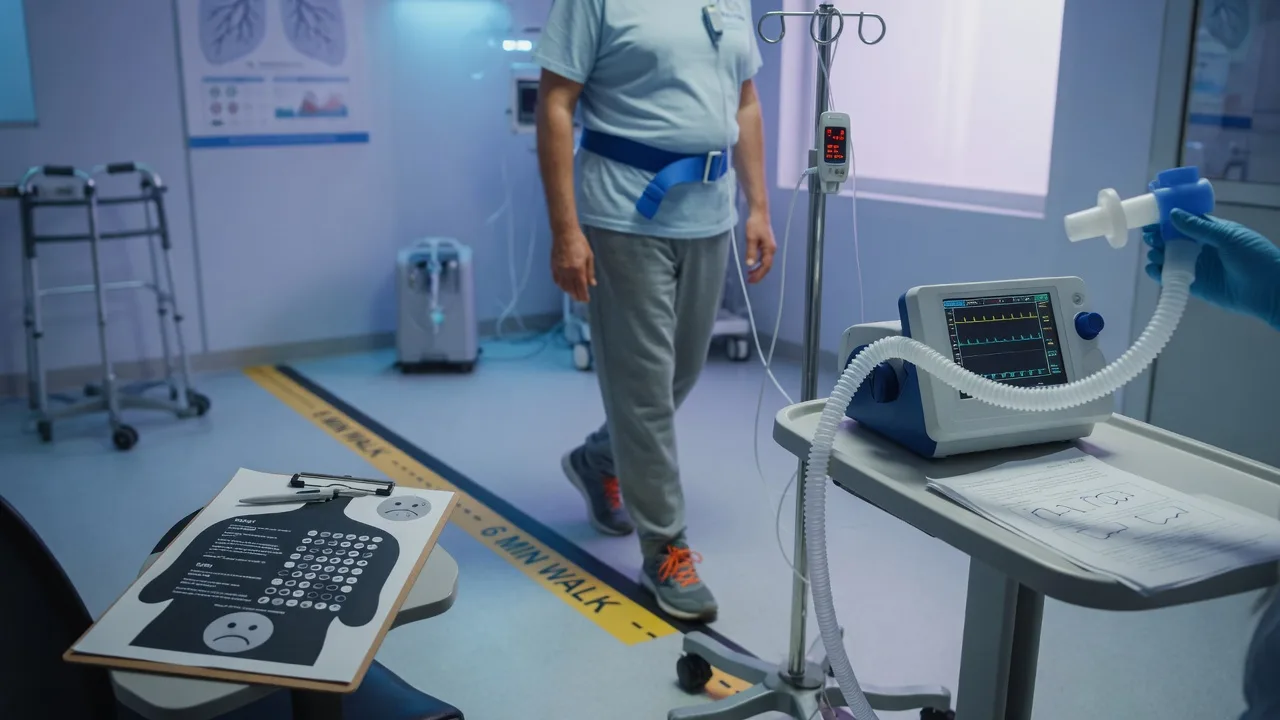
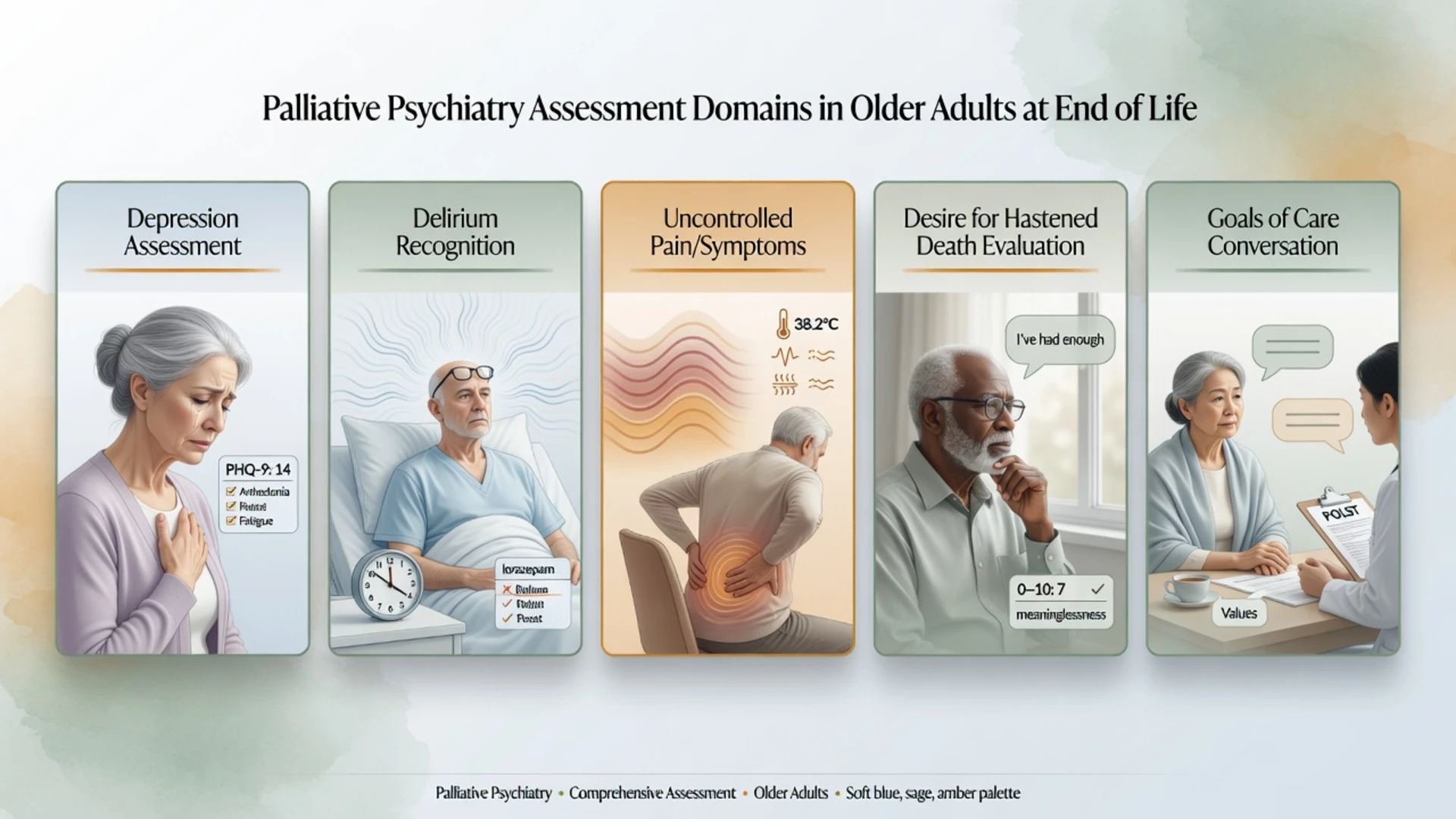
  6. POST-DISCHARGE FOLLOW-UP — (a) ICU FOLLOW-UP CLINIC at 2-8 weeks (or earlier for high-risk): screen for PICS — cognitive (MoCA/MAC), depression (PHQ-9), PTSD (IES/IES-R), anxiety (GAD-7), physical (6-minute walk test, hand-grip strength, MRC sumscore for ICU-acquired weakness). (b) Rehabilitation referral (physiotherapy, occupational therapy, speech therapy for swallow/voice post-extubation/tracheostomy). (c) Family/caregiver support — screen for PICS-Family (caregiver burden, depression, anxiety, PTSD). (d) Re-admission pathway clear if deterioration — document ceiling of treatment and who to call. (e) Coordinate with GP — written summary to GP within 24-48h.[4] [13] }

SBARR handover script — ICU to ward (use the actual words)

  1. S — SITUATION — 'I'm Dr X, ICU registrar. This is Mr J, bed 4B. He's being transferred to your ward. He's a 68-year-old admitted 6 days ago with severe community-acquired pneumonia and septic shock. He's now stable for ward care — off vasopressors for 48h, extubated 3 days ago, on nasal specs 2 L/min with SpO2 95%. He's afebrile, RR 18, MAP 78 off all pressors.'
  2. B — BACKGROUND — 'Past history: T2DM, hypertension, ex-smoker (40 pack-years), mild CKD (baseline creatinine 120). On admission: RR 32, SpO2 86% RA, BP 78/40, lactate 4.2. Intubated on day 1 for 3 days. Vasopressors (noradrenaline max 0.3 mcg/kg/min) for 2 days. Treated with ceftriaxone + azithromycin, switched to amoxicillin-clavulanate on day 4. Cultures: sputum grew Streptococcus pneumoniae, sensitive. Creatinine peaked at 220, now 145.'
  3. A — ASSESSMENT — 'Active issues: (1) recovering AKI — creatinine trending down, no RRT needed. (2) ICU-acquired weakness — MRC 48/60, needs ongoing physio. (3) Mild dysphagia on bedside swallow screen — on thickened fluids, speech therapy reviewing. (4) Delirium resolved — CAM negative, sleeping at night. (5) Hospital-acquired pneumonia screen negative. PENDING: repeat CXR tomorrow, repeat creatinine daily.'
  4. R — RECOMMENDATION — 'Medications: continue amoxicillin-clavulanate 1.2 g IV BD until day 7 (stop date — tomorrow). Restart metformin 500 mg BD (was held — renal function recovering). Restart atorvastatin 40 mg nocte. VTE prophylaxis: enoxaparin 40 mg SC daily (reduce to 20 mg if creatinine rises above 200). STOP: PPI at discharge (no indication — was stress-ulcer prophylaxis). Observations: 4-hourly, early warning score, MET review if RR>25 or SpO2<92% on room air. ICU follow-up clinic booked at 4 weeks.'
  5. R — READ-BACK (closed-loop) — 'Can you read back the antibiotic, the enoxaparin dose, and the MET criteria?' — Receiving nurse/doctor repeats: 'Amoxicillin-clavulanate 1.2 g IV BD, stop tomorrow. Enoxaparin 40 mg daily, reduce to 20 mg if creatinine >200. MET review if RR>25 or SpO2<92% on room air.' Sender confirms or corrects. Then receiver EXPLICITLY accepts care: 'I accept handover of Mr J.'[2] }

Why ICU discharge is dangerous — pathophysiology and epidemiology of readmission
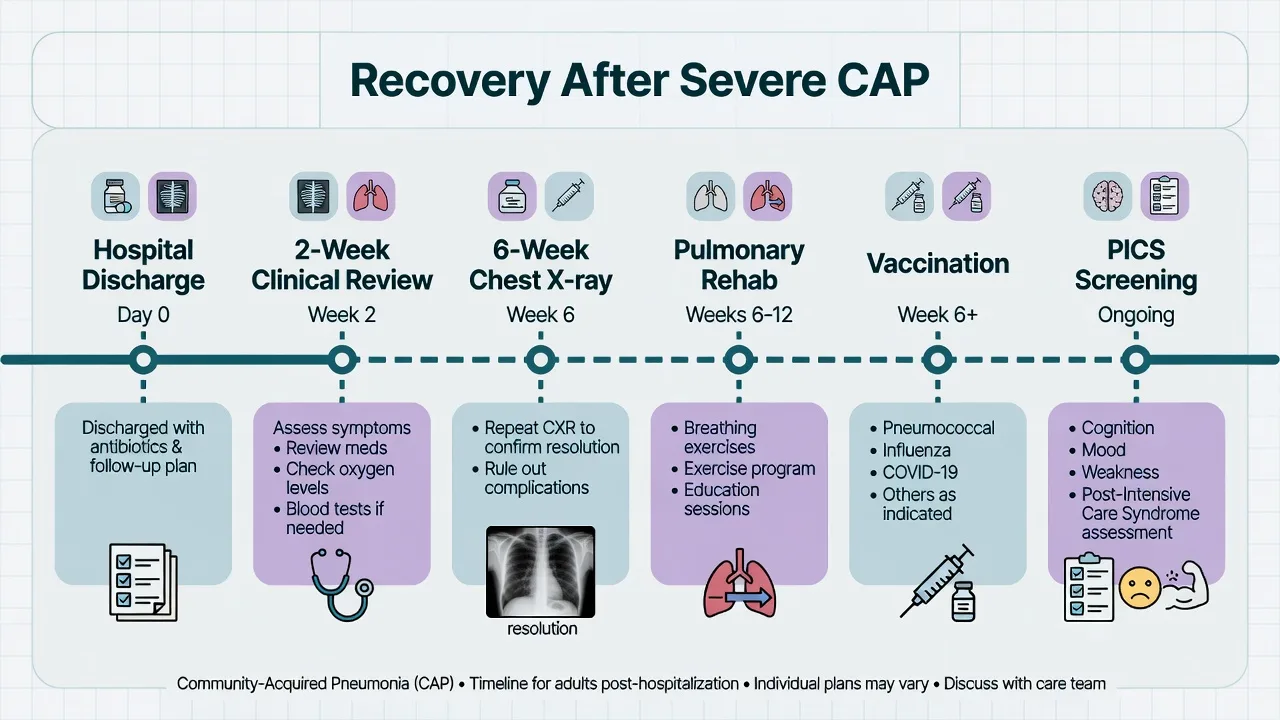
Post-ICU transition risks readmission PICS timeline
FigureUnsafe discharge multiplies readmission and PICS burden — physiology first, then systems.

Night discharge kills

Multiple ANZ datasets associate after-hours ICU discharge with higher readmission and mortality — treat timing as a safety intervention, not a bed game alone.[3][6]

ICU discharge is the moment a patient who has been monitored second-to-second, with a 1:1 or 1:2 nurse and immediate physician access, is moved to a ward with a 1:4 (or worse) nurse ratio and review every 4-8 hours. The physiological reserve that protected them in ICU is removed at the exact moment they still have sub-clinical instability. Three mechanisms drive post-discharge deterioration: [1]

1. Sub-clinical organ dysfunction unmasked. A patient may look stable on ICU monitoring but have occult respiratory fatigue (RR rising toward 25 only on exertion), borderline perfusion (lactate 1.8-2.0, not yet 'abnormal'), or myocardial ischaemia only evident on continuous ECG. Ward observation (4-hourly, not continuous) misses the deterioration that ICU monitoring would have caught early. [1]

2. Loss of the ICU safety net. ICU provides (a) continuous monitoring, (b) immediate clinician access, (c) rapid response teams built into the model, (d) pharmacist at the bedside. The ward provides episodic monitoring and slower escalation. The 'transition gap' — the first 12-24h on the ward — is when most preventable readmissions occur. [1]

3. Iatrogenic harm from the transition itself. Moving the patient (physical stress, lines dislodged), the handover (information loss — 30-60% of critical information is lost in unstructured handover), and medication reconciliation errors (continuing ICU-only drugs, omitting restarted home meds) all create new risk precisely at the moment of lowest vigilance. [1]

Epidemiology of readmission. ICU readmission rate is 5-10% (benchmark <5%).[1] Readmitted patients have 2-3x higher mortality, longer re-ICU stay, and higher cost. Most readmissions occur within 48-72h of discharge, indicating that the index discharge was premature — the patient was never truly stable. Cooper (1999) established ICU readmission as a hospital performance measure; subsequent ANZICS data (Pilcher 2007, Gantner 2014) showed that after-hours discharge independently predicts mortality even after adjusting for illness severity.[3] [6] The most validated modifiable risk factors are: vasopressor or NIV dependency at discharge, high lactate, active delirium/GCS<14, hypoalbuminaemia, and the operational factor of night/weekend discharge.[7]

Exam practice

SAQ — ICU discharge readiness criteria and handover

10 minutes · 10 marks

A 68-year-old man was admitted 6 days ago with severe community-acquired pneumonia and septic shock. He was intubated for 3 days and received noradrenaline (max 0.3 mcg/kg/min) for 2 days. He is now extubated, on nasal specs 2 L/min with SpO2 95%, RR 18, afebrile, MAP 78 off all vasopressors for 48 h, GCS 15, CAM-negative, with a bedside swallow screen showing mild dysphagia (thickened fluids). Creatinine peaked at 220, now 145 (baseline 120). Sputum grew Streptococcus pneumoniae. The ward bed manager is asking for ICU discharge at 19:00 because of a retrieval incoming.

[1]

SAQ — Post-intensive care syndrome (PICS) at the recovery clinic

10 minutes · 10 marks

A 58-year-old previously independent office manager was admitted to ICU 10 weeks ago with severe ARDS from influenza pneumonitis. She required 9 days of mechanical ventilation (peak PEEP 14, proning cycles), developed delirium for 6 days, and received CRRT for 5 days. She is now at home and attends the ICU follow-up clinic. She reports she cannot walk to the shops without stopping, forgets conversations, feels tearful and on edge, has not returned to work, and has nightmares about being trapped. Her husband says she is "not the same person."

Clinical pearls

High-yield ICU discharge planning points for CICM/FFICM exam

  1. ICU readmission is common and dangerous. Rate: 5-10% of patients readmitted within 48-72h. CONSEQUENCE: readmitted patients have 2-3x higher mortality, longer re-ICU stay, higher cost. RISK FACTORS (most validated): respiratory (PaO2/FiO2 <300, RR>25, NIV at discharge), cardiovascular (high vasopressor dose/inotrope, arrhythmia, MI), neurological (GCS<14, confusion/agitation, active delirium), laboratory (albumin <25, lactate >2, renal dysfunction), and OPERATIONAL (night discharge, weekend, bed pressure).[1] }
  2. Night/after-hours discharge is the key MODIFIABLE risk factor. Discharging between 18:00-06:00 → 2-6x higher risk of readmission AND mortality. ANZ EVIDENCE: Tobin (Med J Aust 2006) first showed after-hours discharge independently predicted in-hospital mortality; Pilcher (Anaesth Intensive Care 2007, ANZICS-CORE) confirmed increased readmission and death; Gantner (Intensive Care Med 2014) extended this to 2005-2012 ANZ data — after-hours discharge associated with ~7% higher absolute in-hospital mortality than daytime discharge. REASONS: (a) Reduced ward staffing at night (fewer nurses, no pharmacist, reduced medical cover). (b) Less comprehensive handover (rushed due to bed pressure). (c) Patient physiologically more vulnerable immediately post-ICU (stress of move). (d) Ward less able to detect deterioration at night. MITIGATION: discharge during daytime (ideally <16:00); if night discharge unavoidable → enhanced handover + senior review + document rationale (bed pressure is NOT a clinical indication).[6] [7] [3] }
  3. Premature discharge = discharging before physiological stability. DEFINITION: discharge when organ failure is still active/unstable. PREDICTORS of prematurity: (a) Still on vasopressors (even low-dose — noradrenaline >0.05 mcg/kg/min = high risk). (b) NIV/CPAP at discharge (ward may not be able to manage — escalating NIV is a readmission warning). (c) Uncontrolled agitation/seizures/active delirium. (d) High lactate (>2 mmol/L — tissue hypoperfusion). (e) New arrhythmia. (f) Hypoalbuminaemia (<25 g/L — marker of chronicity/catabolism). The readmission rate of premature discharges is far higher than for stable discharges; readmitted patients have worse outcomes than those never discharged prematurely.[3] }
  4. Post-intensive care syndrome (PICS) — the hidden morbidity (50-70% at 1 year). Affects the majority of ICU survivors who had prolonged stay. DOMAINS: (1) COGNITIVE: impaired memory, executive function, attention — affects 30-40%, persists at 1 year in ~25%, severity similar to moderate traumatic brain injury in ~1/3. Girard (Lancet Respir Med 2018) showed the PHENOTYPE of delirium (comatose/hypoactive worse than hyperactive) predicts later cognitive impairment severity. (2) PSYCHOLOGICAL: depression (30%), PTSD (20%), anxiety (40%). (3) PHYSICAL: ICU-acquired weakness (CIP/CIM — 25-50%), decreased mobility, breathlessness, sexual dysfunction, sleep disturbance. COMBINED impairment in any domain affects 50-70% of survivors at 1 year. RISK FACTORS: sepsis, prolonged ventilation, deep sedation, delirium (especially prolonged/hypoactive), immobility, hypoglycaemia, hypoxaemia. PREVENTION: ABCDEF bundle (see pearl 15). DETECTION: ICU follow-up clinic at 2-8 weeks — screen with MoCA (cognition), PHQ-9 (depression), IES-R (PTSD), GAD-7 (anxiety), 6-minute walk test and MRC sumscore (physical).[4] [9] [13] }
  5. ICU follow-up clinics — evidence mixed but recommended for high-risk survivors. STRUCTURE: clinic at 2-8 weeks post-ICU, run by ICU staff + multidisciplinary team (physio, OT, psychologist, pharmacist, dietitian). SCREEN for PICS, address rehabilitation, repeat medication reconciliation, provide psychological support, set recovery goals. EVIDENCE: Cuthbertson (BMJ 2009, PRaCTICaL trial) — nurse-led follow-up RCT — NO mortality or quality-of-life benefit at 12 months; this dampened enthusiasm. BUT subsequent studies suggest benefit in subgroups (prolonged ventilation, severe ARDS, sepsis) and PTSD reduction in some programmes. NICE (UK, CG83), SCCM (Thriving After ICU), and ESICM all RECOMMEND structured follow-up for high-risk survivors despite mixed trial-level evidence — because the morbidity (PICS) is so prevalent that even modest benefit matters at population level.[5] [13] }
  6. Discharge criteria should be OBJECTIVE and applied daily. Many ICUs use STRUCTURED checklists. KEY DOMAINS (see Compare table): (1) AIRWAY: self-maintaining, no recent intubation risk (resolve swelling, secretions). (2) BREATHING: SpO2>92% on FiO2<=0.4, RR<25, no NIV or stable on home NIV, able to clear secretions (effective cough). (3) CIRCULATION: MAP>65 without escalating vasopressors (low-dose inotrope acceptable), no active arrhythmia, Hb stable, lactate <2. (4) NEUROLOGY: GCS>13 or baseline, delirium controlled (CAM-negative), no uncontrolled seizures. (5) METABOLIC: no rapidly evolving crisis (DKA, Ca2+ derangement), renal function stable/improving, K+ 3.5-5.5. (6) INFECTION: source-controlled, appropriate antibiotics prescribed, defervescing. (7) GIT/NUTRITION: tolerating enteral route, swallow screen passed if post-extubation.[1] }
  7. Step-down units (HDU) bridge ICU and ward. INDICATIONS: (a) Patients not quite ready for ward (single organ support — e.g., NIV, low-dose vasopressor, close neuro observations). (b) Chronic critical illness (tracheostomy, prolonged wean). (c) Post-major surgery (high-risk). BENEFIT: lower cost than ICU, closer monitoring than ward, reduces premature ward discharge (a major cause of readmission). LIMITATION: not all hospitals have HDU; even with HDU, some patients need ICU. The hospital's step-down capability should be KNOWN to the intensivist before discharge decisions — discharging to a ward that cannot deliver the required monitoring level is effectively a premature discharge.[1] }
  8. Medication reconciliation at ICU discharge — critical error point. COMMON ERRORS: (a) Continuing ICU-only meds on ward (sedatives — propofol/midazolam; prochlorperazine; NMBA not turned off) → over-sedation, respiratory depression. (b) Omitting RESTARTED home meds (beta-blocker stopped in ICU, not prescribed on ward → rebound tachycardia/MI; statin; anticoagulant/antiplatelet — especially after a bleeding event where the bleeding risk has now resolved). (c) Wrong dose (renal/hepatic not adjusted for improving function — vancomycin, gabapentin, opioids, LMWH accumulation). (d) Duplicate therapy (two PPIs, two antiplatelets, dual anticoagulation). (e) OMISSION of VTE prophylaxis or stress-ulcer prophylaxis where still indicated. (f) Continuing gastric prophylaxis INDEFINITELY (PPI started as stress-ulcer prophylaxis — reassess at discharge; stop unless genuine indication — long-term PPI → C. difficile, fracture, B12/Mg deficiency). PHARMACIST-LED reconciliation at discharge reduces errors 70-80%; Ceschi (JAMA Netw Open 2021) showed medication reconciliation at admission reduced 30-day returns to hospital.[2] }
  9. Handover failures cause readmission — SBARR/ISBAR fixes most of them. COMMON FAILURES: (a) Incomplete (omitting pending cultures, unresolved issues, ceiling of treatment). (b) Illegible/unwritten (verbal-only handover — receiver forgets 30-60% of critical information within minutes). (c) No questions allowed (receiving team unclear but doesn't ask — 'authority gradient'). (d) Discharge summary delayed (arrives days after patient — ward team blind). (e) No read-back of critical doses/orders (the '7.5 vs 75 mg' error). SOLUTION: STRUCTURED handover (SBARR or ISBAR — see Compare table), WRITTEN summary delivered WITH patient, ALLOW questions, EXPLICIT acceptance of care by receiving team ('I accept handover of Mr J'). SBARR's read-back element is the single highest-yield addition for high-risk drug doses and critical results.[2] }
  10. Family preparation is part of discharge (and prevents PICS-Family). ICU → ward is stressful for families. PROVIDE: (a) Written summary in plain language (diagnosis, what happened, what to expect). (b) Warning signs to report (fever, breathlessness, new confusion, new bleeding, reduced urine output). (c) Rehabilitation expectations (mobility recovery takes months; weakness is normal early; cognitive recovery may take 6-12 months). (d) Psychological support — family is at risk of PICS-FAMILY (depression, anxiety, PTSD, complicated grief especially if bereaved; caregiver burden of looking after a survivor with new disability). (e) Contact for follow-up (ICU clinic, GP). FAMILY education improves satisfaction, reduces re-presentation, and addresses PICS-Family which affects 30-50% of caregivers of long-stay patients.[4] [15] }
  11. Goals of care and ceiling of treatment MUST be clear at discharge. (1) Document: is patient for FULL treatment (readmit to ICU if deteriorate), or for WARD-BASED care (no readmission — palliative/limited)? (2) If changing goals (e.g., after prolonged ICU stay with poor prognosis, or patient preference after informed discussion) — discuss with patient/family BEFORE discharge and document. (3) Advance care planning: document patient preferences, substitute decision-maker. (4) If palliative: ensure symptom control, community palliative care referral, anticipated medications for end-of-life symptoms. UNCLEAR goals at discharge → either inappropriate readmission (a patient who should have been for ward-based comfort care) or inappropriate withholding of ICU (a patient who would have wanted full treatment). Re-validate goals at every transition.[13] }
  12. Early rehabilitation improves outcomes — start in ICU, continue after discharge. Schweickert (Lancet 2009, RCT) showed EARLY physical and occupational therapy in mechanically ventilated patients (vs standard care) → patients returned to independent functional status more often (59% vs 35%) and had shorter duration of delirium and more ICU mobilisation days. EARLY MOBILISATION (within ICU — as soon as stable, even while intubated): reduces ICU-acquired weakness, improves functional outcomes at discharge, reduces ICU/hospital stay. AFTER ICU DISCHARGE: continue physiotherapy, occupational therapy, speech therapy (swallow/voice). PROBLEM: rehabilitation is often UNDER-RESOURCED on wards. SOLUTION: written rehabilitation plan at discharge, referral to community rehab, ICU follow-up clinic to re-screen functional needs at 2-8 weeks.[8] [4] }
  13. Tracheostomy discharge — special planning required. If patient discharged with TRACHEOSTOMY: (a) Ensure ward staff TRAINED (suction, inner cannula change, emergency — decannulation, blocked tube, tracheostomy fire if using diathermy). (b) Equipment available on ward (suction, spare tubes — same size and one smaller, decannulation kit, cuff syringe, humidification). (c) Multidisciplinary plan (speech therapy for swallow/decannulation; ENT/anaesthetics for tube management). (d) Criteria for decannulation before discharge where feasible (cuff down, tolerating speaking valve, effective cough, no aspiration on swallow assessment — FEES/blue dye). (e) Family education and emergency plan. TRACH patients need HDU or specialist tracheostomy ward — not a general ward with untrained staff. The National Tracheostomy Safety Project (UK) resources should inform local protocols.[1] }
  14. Measuring and improving discharge quality. (1) AUDIT: ICU readmission rate (benchmark <5%), readmission mortality, night/after-hours discharge rate (% of discharges 18:00-06:00), time from 'fit for discharge' to actual discharge (bed-block metric), handover completeness. (2) FEEDBACK to staff (monthly dashboard). (3) QI PROJECTS (PDSA cycles): (a) Structured handover (SBARR) implementation. (b) Discharge checklist. (c) Pharmacist-led reconciliation embedded in discharge process. (d) Reduce night discharges (bed management — morning discharge rounds, predicted discharge list). (e) ICU follow-up clinic establishment. (f) Standardised discharge summary template. MEASURE → FEEDBACK → IMPROVE cycle. CICM/ANZICS report ICU readmission as a key quality indicator.[2] }
  15. The ABCDEF bundle prevents PICS — start it in ICU, the effects persist to discharge. ABCDEF = Assess/prevent/manage pain; Both spontaneous awakening trials (SAT) and spontaneous breathing trials (SBT); Choice of analgesia and sedation (prioritise analgesia, minimise sedation); Delirium assess/prevent/manage (CAM-ICU, treat cause, avoid benzodiazepines); Early mobility (within ICU, even while intubated); Family engagement and empowerment. EVIDENCE: Barnes-Daly (Crit Care Med 2017, 6,064 patients) — bundle adherence associated with higher survival and more days free of coma/delirium. Pun (Crit Care Med 2019, ICU Liberation Collaborative, 15,000+ patients) — higher bundle compliance → lower mortality, more coma-/delirium-free days, higher likelihood of discharge home (vs to a facility/death). Devlin (Crit Care Med 2018, PADIS guidelines) codified these as standard. The bundle is the single best-evidenced PREVENTION of PICS — its effects carry through to the post-discharge period.[10] [11] [12] [14] }
  16. Dysphagia after extubation — screen before the first oral intake. Post-extubation dysphagia affects 40-60% of prolonged-intubation patients (intubated >=48 h) — caused by vocal cord injury, laryngeal oedema, neuromuscular weakness (CIP/CIM), deconditioning, and residual delirium. CLINICAL: cough/choking on water, wet voice, pooling, aspiration pneumonia. MANAGEMENT: do NOT feed orally until bedside swallow screen (e.g., 3-oz water swallow test, GUSS) performed; if fail → keep NPO, speech therapy referral for formal assessment (FEES — fibreoptic endoscopic evaluation of swallowing, or VFSS — videofluoroscopic swallow study). Aspiration pneumonia post-extubation is a common, preventable cause of readmission and mortality. Include swallow screening in the discharge checklist for any recently-extubated or post-tracheostomy patient.[4] }
  17. Sleep, sexual function, and 'taboo' post-ICU sequelae — ask, don't wait. Survivors rarely volunteer these: (1) SLEEP DISTURBANCE — 50-70% at 3 months; insomnia, fragmented sleep, nightmares (PTSD). (2) SEXUAL DYSFUNCTION — impotence, loss of libido, dyspareunia; affects up to 60%, under-recognised, multifactorial (vascular, neurological, hormonal, psychological, drug-related). (3) FINANCIAL TOXICITY — loss of income, medical costs, caregiver burden of leaving work. (4) COGNITIVE FATIGUE — return-to-work failure (only ~50-70% return to work at 1 year, often to reduced duties). ICU follow-up clinic should ASK about these explicitly — they are highly prevalent, distressing, and often treatable. Survivor priorities (Dinglas, Thorax 2018) emphasise functional recovery and return to meaningful life over mortality as the outcome that matters to them.[15] }
  18. Chronic critical illness and the 'revolving door' patient. A subset of patients develop CHRONIC CRITICAL ILLNESS (CCI) — prolonged ICU stay (weeks), tracheostomy, persistent organ dysfunction, often with ICU-acquired weakness and recurrent infections. These patients cycle in and out of ICU (multiple readmissions) — each readmission carries the 2-3x mortality penalty. CCI patients need: (a) Realistic goals-of-care discussion (prognosis is poor — 1-year mortality ~50%). (b) Step-down or long-term weaning facility if available. (c) Early palliative care involvement. (d) Family education about trajectory. (e) Consistent treating team (avoid discontinuity). Discharging a CCI patient prematurely (because the bed is needed) and having them bounce back is both harmful to them and a system failure. The decision to offer a ceiling of treatment (no further ICU readmission) is appropriate for some — but must be made explicitly with patient/family, not by drift.[13] }
  19. VTE and stress-ulcer prophylaxis — reassess at discharge, don't auto-continue. (1) VTE PROPHYLAXIS: ICU patients almost universally receive LMWH. At discharge — REASSESS: still immobile/post-op/recent major bleed → continue; ambulant and bleeding risk now high → stop. Duration: most medical patients — until discharge; orthopaedic/surgical — per specialty guideline (often 4-6 weeks). (2) STRESS-ULCER PROPHYLAXIS (PPI/H2 blocker): indicated in ICU for mechanical ventilation >48h, coagulopathy, history of GI bleed, major burns, neurotrauma. At ICU DISCHARGE — STOP unless genuine ongoing indication (e.g., active peptic ulcer, severe reflux, on dual antiplatelet/anticoagulation). Indefinite PPI → C. difficile, fractures, B12/magnesium deficiency, pneumonia. Auto-continuing these is a classic medication reconciliation error.[2] }
  20. CRRT-to-ward transition and dialysis planning. If patient was on CRRT in ICU: (a) Confirm CRRT successfully stopped and renal function adequate (or plan for intermittent HD/PD). (b) If transition to intermittent HD needed — nephrology referral BEFORE ICU discharge, vascular access (femoral line → internal jugular tunneled/fistula) planned. (c) Drug dosing changes between CRRT and intermittent HD — pharmacist to re-prescribe. (d) Electrolyte and fluid management plan for ward (target weight, K+ restriction if needed). (e) Reassess VTE prophylaxis (recent CRRT line — bleeding vs thrombosis risk). Discharging a patient home on a planned dialysis pathway requires coordination between ICU, nephrology, ward, and community dialysis unit — start early.[2] }
  21. "Discharge before weekend" is its own risk factor. Like night discharge, weekend discharge carries elevated risk — reduced senior medical cover, fewer allied health staff (physio, OT, pharmacist, speech therapy), slower investigation turnaround. If possible, defer elective discharges that would land on a Saturday/Sunday to Monday morning. If unavoidable (clinical/social reasons), arrange explicit senior review over the weekend and ensure rehabilitation/therapy resumes on Monday. The "Friday afternoon discharge" is a notorious failure point — handover is rushed, weekend cover is thin, and Monday review is far away.[7] }
  22. ICU diaries and the recovery narrative. Pair discharge planning with ICU DIARY handover (if your unit uses diaries). 50-70% of survivors have NO factual recall of ICU; frightening delirium hallucinations drive PTSD. The diary, given WITH explanation at the ICU follow-up clinic (2-8 weeks), provides a coherent factual narrative that reduces PTSD symptoms (Jones 2010 RCT; BACKUP mixed). The diary is part of the transition of care — not a separate 'nice-to-have'. Start the diary in ICU, hand it over at follow-up, walk through it with the patient. This complements the ABCDEF bundle's 'F' (family engagement) and the PICS screening at follow-up.[4] }

Red flags

Critical ICU discharge red flags

  • Readmission rate 5-10% — associated with 2-3x mortality increase (benchmark <5%).[1] }
  • Night/after-hours discharge (18:00-06:00) → 2-6x higher readmission/mortality — avoid if possible (ANZ data: Tobin 2006, Pilcher 2007, Gantner 2014).[6] [7] [3] }
  • Vasopressors/NIV at discharge → high-risk, reconsider or use HDU.[3] }
  • Post-ICU syndrome (PICS) affects 50-70% of survivors at 1yr — screen at follow-up (cognitive, depression PHQ-9, PTSD IES-R, physical 6MWT/MRC).[4] [9] }
  • PICS-Family: caregivers develop depression, anxiety, PTSD, caregiver burden — screen and support families too.[15] }
  • Medication reconciliation errors common at discharge — pharmacist-led reduces 70-80%; watch for omitted home meds and indefinite gastric prophylaxis.[2] }
  • Goals of care/ceiling of treatment unclear at discharge → inappropriate readmission or inappropriate withholding.[13] }
  • Dysphagia post-extubation in 40-60% — aspiration risk if not screened before oral intake.[4] }
  • Premature discharge (before physiological stability — lactate >2, vasopressor, active delirium, GCS<13) doubles mortality.[3] }
  • Friday afternoon / weekend discharge carries elevated risk (reduced senior and allied-health cover).[7] }
  • Handover without read-back → critical-dose errors (e.g., 7.5 vs 75 mg); use SBARR for high-risk regimens.[2] }
  • Tracheostomy discharged to untrained ward → blocked-tube/decannulation emergency risk; needs HDU or specialist trach ward.[1] }

Prognosis

ICU discharge planning evidence and outcomes

Readmission rate: 5-10% of ICU discharges (benchmark <5%). Associated with 2-3x mortality. Cooper 1999 (Med Care) established readmission as a hospital performance measure.[1] } Night/after-hours discharge: ANZ data — Tobin (Med J Aust 2006) first showed after-hours discharge independently associated with mortality; Pilcher (Anaesth Intensive Care 2007, ANZICS-CORE) showed increased readmission and death; Gantner (Intensive Care Med 2014) extended to 2005-2012 — after-hours discharge associated with ~7% higher absolute in-hospital mortality. Avoid if possible.[6] [7] [3] } Medication reconciliation: pharmacist-led reduces errors 70-80% at discharge. Ceschi (JAMA Netw Open 2021) — reconciliation at admission reduced 30-day returns to hospital.[2] } Early mobilisation: Schweickert (Lancet 2009) — early PT/OT in mechanically ventilated patients → 59% vs 35% return to independent function, shorter delirium, more ICU mobilisation days.[8] } ABCDEF bundle: Barnes-Daly (Crit Care Med 2017, 6,064 patients) — bundle adherence → higher survival, more coma-/delirium-free days. Pun (Crit Care Med 2019, ICU Liberation Collaborative, 15,000+ patients) — higher compliance → lower mortality, more delirium-free days, higher discharge home. Devlin (Crit Care Med 2018, PADIS) — codified as guideline standard.[10] [11] [12] [14] } Delirium → cognition: Girard (Lancet Respir Med 2018) — delirium phenotype during critical illness predicts severity of long-term cognitive impairment (comatose/hypoactive worse).[9] } Post-ICU syndrome (PICS): 50-70% of survivors at 1yr — cognitive (~30-40%), depression (30%), PTSD (20%), ICU-acquired weakness (25-50%). Elliott (Crit Care Med 2014) — stakeholders meeting framed PICS scope; SCCM consensus (Mikkelsen, Crit Care Med 2020) on prediction/identification of long-term impairments.[4] [13] } ICU follow-up clinics: Cuthbertson (BMJ 2009, PRaCTICaL) — nurse-led follow-up RCT — NO mortality/QoL benefit at 12 months (dampened enthusiasm); subsequent subgroup benefit (prolonged ventilation, ARDS, sepsis). NICE (CG83) and SCCM RECOMMEND follow-up for high-risk survivors despite mixed trial evidence.[5] } Survivor priorities: Dinglas (Thorax 2018) — survivors/families rank functional recovery and return to meaningful life above mortality as the outcome that matters.[15] } ABCDEF bundle is the best-evidenced PICS prevention — effects carry through to the post-discharge period; start it in ICU, do not defer to the ward.

Examiner densify anchors

CICM/FFICM densify — ICU discharge planning

Exam answers must couple definition + threshold numbers + first therapies + what kills the patient. Cite landmark evidence and state the common wrong answer explicitly.[1]

Readmission order of magnitude

~5–10% of ICU discharges; linked to higher mortality

After-hours discharge signal

Independent association with death/readmission in ANZ observational series

[1]

Practical ICU checklist (densify)

Bedside densify checklist

  1. Confirm diagnosis thresholds with numbers the examiner expects.
  2. Name the first therapy and the absolute contraindication.
  3. State monitoring frequency and escalation triggers.
  4. Cite one landmark paper/guideline and one limitation of the evidence.
  5. Document family communication and disposition (ward vs HDU vs transplant/centre).
[1]

One-line viva closer

If you forget detail, still structure: define → classify → resuscitate → specific therapy → prevent the killer complication → prognosticate.

[1]

Practical ICU checklist (densify)

Bedside densify checklist

  1. Confirm diagnosis thresholds with numbers the examiner expects.
  2. Name the first therapy and the absolute contraindication.
  3. State monitoring frequency and escalation triggers.
  4. Cite one landmark paper/guideline and one limitation of the evidence.
  5. Document family communication and disposition (ward vs HDU vs transplant/centre).
[1]

One-line viva closer

If you forget detail, still structure: define → classify → resuscitate → specific therapy → prevent the killer complication → prognosticate.

[1]

Practical ICU checklist (densify)

Bedside densify checklist

  1. Confirm diagnosis thresholds with numbers the examiner expects.
  2. Name the first therapy and the absolute contraindication.
  3. State monitoring frequency and escalation triggers.
  4. Cite one landmark paper/guideline and one limitation of the evidence.
  5. Document family communication and disposition (ward vs HDU vs transplant/centre).
[1]

One-line viva closer

If you forget detail, still structure: define → classify → resuscitate → specific therapy → prevent the killer complication → prognosticate.

[1]

References

  1. [1]Cooper GS, Sirio CA, Rotondi AJ, et al. Are readmissions to the intensive care unit a useful measure of hospital performance? Med Care, 1999.PMID 10213020
  2. [2]Ceschi A, Noseda R, Kammer M, et al. Effect of Medication Reconciliation at Hospital Admission on 30-Day Returns to Hospital: A Randomized Clinical Trial JAMA Netw Open, 2021.PMID 34529065
  3. [3]Pilcher DV, Duke GJ, George C, Bailey MJ, Cooper DJ; ANZICS Centre for Outcome and Resource Evaluation. After-hours discharge from intensive care increases the risk of readmission and death Anaesth Intensive Care, 2007.PMID 18020063
  4. [4]Elliott D, Davidson JE, Harvey MA, et al. Exploring the scope of post-intensive care syndrome therapy and care: engagement of non-critical care providers and survivors in a second stakeholders meeting Crit Care Med, 2014.PMID 25083984
  5. [5]Cuthbertson BH, Rattray J, Campbell MK, et al. The PRaCTICaL study of nurse led, intensive care follow-up programmes for improving long term outcomes from critical illness: a pragmatic randomised controlled trial BMJ, 2009.PMID 19837741
  6. [6]Gantner D, Farley K, Bailey M, et al. Mortality related to after-hours discharge from intensive care in Australia and New Zealand, 2005-2012 Intensive Care Med, 2014.PMID 25118868
  7. [7]Tobin AE, Santamaria JD. After-hours discharges from intensive care are associated with increased mortality Med J Aust, 2006.PMID 16584367
  8. [8]Schweickert WD, Pohlman MC, Pohlman AS, et al. Early physical and occupational therapy in mechanically ventilated, critically ill patients: a randomised controlled trial Lancet, 2009.PMID 19446324
  9. [9]Girard TD, Thompson JL, Pandharipande PP, et al. Clinical phenotypes of delirium during critical illness and severity of subsequent long-term cognitive impairment: a prospective cohort study Lancet Respir Med, 2018.PMID 29508705
  10. [10]Pun BT, Balas MC, Barnes-Daly MA, et al. Caring for Critically Ill Patients with the ABCDEF Bundle: Results of the ICU Liberation Collaborative in Over 15,000 Adults Crit Care Med, 2019.PMID 30339549
  11. [11]Barnes-Daly MA, Phillips G, Ely EW, et al. Improving Hospital Survival and Reducing Brain Dysfunction at Seven California Community Hospitals: Implementing PAD Guidelines Via the ABCDEF Bundle in 6,064 Patients Crit Care Med, 2017.PMID 27861180
  12. [12]Devlin JW, Skrobik Y, Gelinas C, et al. Clinical Practice Guidelines for the Prevention and Management of Pain, Agitation/Sedation, Delirium, Immobility, and Sleep Disruption in Adult Patients in the ICU Crit Care Med, 2018.PMID 30113379
  13. [13]Mikkelsen ME, Still M, Anderson BJ, et al. Society of Critical Care Medicine's International Consensus Conference on Prediction and Identification of Long-Term Impairments After Critical Illness Crit Care Med, 2020.PMID 32947467
  14. [14]Stollings JL, Devlin JW, Pun BT, et al. Implementing the ABCDEF Bundle: Top 8 Questions Asked During the ICU Liberation ABCDEF Bundle Improvement Collaborative Crit Care Nurse, 2019.PMID 30710035
  15. [15]Dinglas VD, Chessare CM, Davis WE, et al. Perspectives of survivors, families and researchers on key outcomes for research in acute respiratory failure Thorax, 2018.PMID 28756400