ICU · Ethics
End-of-life care and palliative care in the ICU
Also known as End-of-life care · Palliative care in ICU · Withdrawal of life-sustaining therapy (WLST) · Treatment limitation orders (TLO) · Comfort care · Goals-of-care conversation · Shared decision-making · Withholding vs withdrawing life-sustaining treatment
End-of-life care is a core ICU competency. ~20% of ICU deaths involve withdrawal of life-sustaining therapy (WLST); up to 50% of ICU deaths involve some form of treatment limitation. Principles: (1) shared decision-making with patient/surrogate/multidisciplinary team grounded in the four ethical principles — autonomy, beneficence, non-maleficence, justice, (2) clear communication about prognosis and goals using a structured framework (SPIKES for bad news, Ask-Tell-Ask for goals), (3) treatment limitation orders (TLO) that specify what treatments are and are not appropriate, (4) symptom-focused comfort care. CRUCIAL ETHICAL PRINCIPLE: withholding and withdrawing life-sustaining treatment are ETHICALLY EQUIVALENT — there is no moral difference between not starting a treatment and stopping one that has been shown to be futile; the decision rests on whether the treatment benefits the patient, not on whether it has been started. WLST process: family meeting → agree on futility/goals → document TLO → withdraw interventions in appropriate order → symptom-focused comfort care (opioids for dyspnoea/pain, benzodiazepines for agitation, anticholinergics for secretions). Organ donation discussion must be conducted SEPARATELY from EOL decisions by a TRAINED REQUESTOR.
On this page & tools
Your progress
Saved locally on this device.
Target exams
Red flags

Ethical frameworks — the four principles
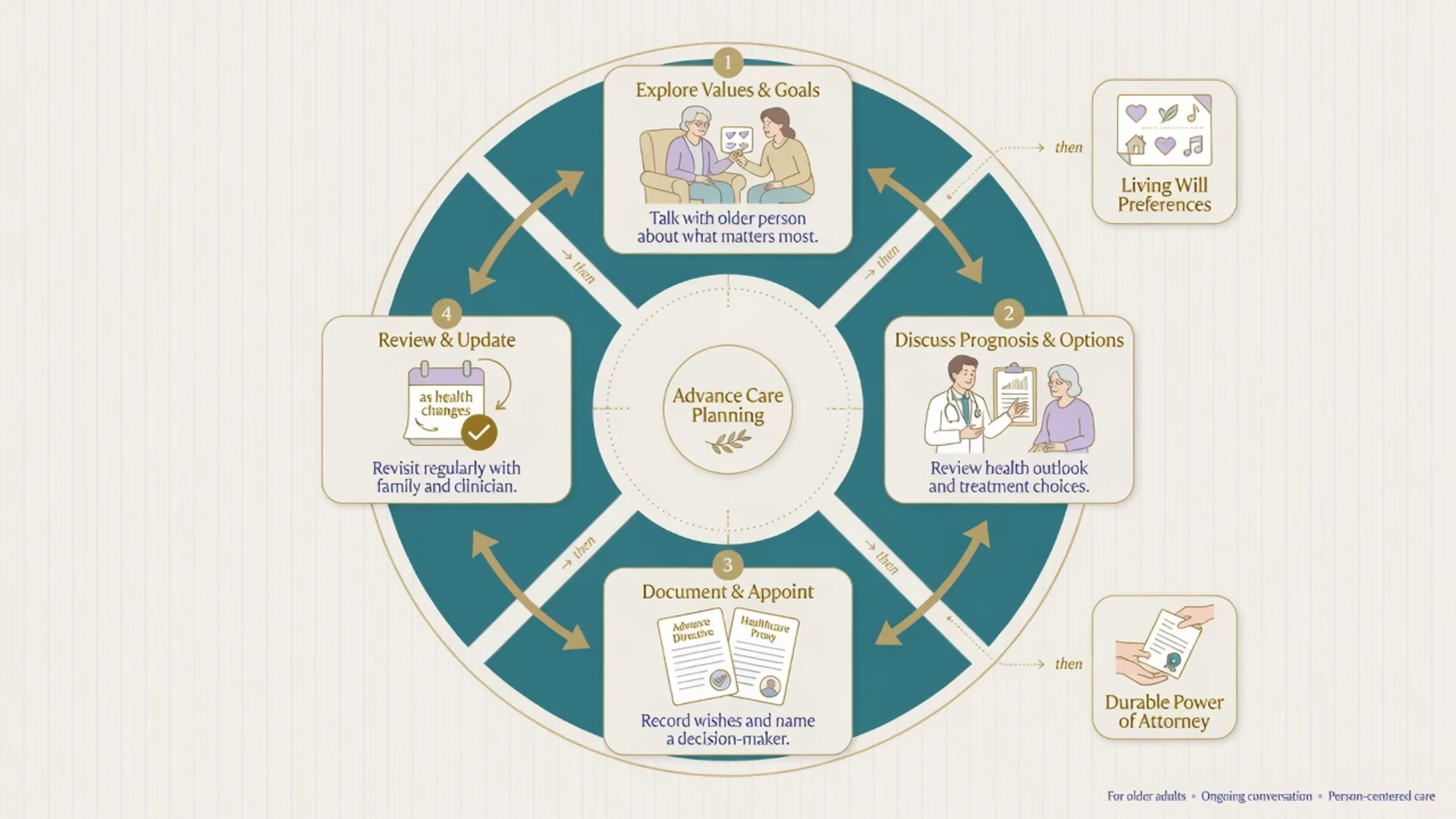
The four principles of biomedical ethics (Beauchamp & Childress)
| Principle | Definition | Application to ICU end-of-life care |
|---|---|---|
| Autonomy | Self-determination — competent patients have the right to accept or refuse any treatment | Respect valid advance directives; assess decision-making capacity; let a capacitous patient refuse life-saving treatment (even if death results) |
| Beneficence | Act in the patient's best interests — promote welfare | Provide treatments that offer realistic benefit; relieve suffering (analgesia, symptom control); do not impose non-beneficial treatment |
| Non-maleficence | "First, do no harm" — avoid causing harm | Avoid burdensome futile treatment (prolonged ventilation, CPR with no prospect of benefit); minimise pain and distress during WLST |
| Justice | Fair, equitable distribution of resources and treatment | Apply triage principles; do not allocate scarce ICU resources to patients who cannot benefit when others can |
Withholding vs withdrawing life-sustaining therapy — they are ETHICALLY EQUIVALENT
| Feature | Withholding | Withdrawing |
|---|---|---|
| Definition | NOT starting a treatment that would be futile/non-beneficial | Stopping a treatment already in progress that is futile/non-beneficial |
| Ethical status | Ethically and legally EQUIVALENT to withdrawing — supported by all major statements (ATS, SCCM, ANZICS, ESICM) | Ethically and legally EQUIVALENT to withholding |
| Moral reasoning | The decision rests on whether the treatment BENEFITS the patient — not on whether it has been started. A treatment that cannot benefit is not obligatory to start; equally, it is not obligatory to continue | Once a trial of treatment has shown it is non-beneficial, continuing it is not ethically required — it is no different from never having started |
| Common misconception | Staff often feel comfortable withholding but uncomfortable withdrawing — this is a COGNITIVE BIAS, not an ethical distinction | Staff often (wrongly) feel withdrawal "causes" death — but death is from the underlying disease; the treatment was only postponing it |
| Practice point | Both require the same process: shared decision-making, documentation, family communication, symptom control | Both require the same process — withdrawal may be MORE comfortable for the patient and family because it allows a planned, supported, attended death |
| Key exam point | There is NO ethical, legal, or moral distinction between withholding and withdrawing. The distinction staff draw is a psychological artefact. The correct test: does this treatment offer a realistic prospect of benefit to this patient? If not → it is not obligatory, whether or not it has been started. |
WLST vs euthanasia vs physician-assisted dying — critical distinction
| Feature | WLST (withdrawing/withholding) | Euthanasia / physician-assisted dying |
|---|---|---|
| Act | Stopping/removing a treatment that is non-beneficial; allowing the underlying disease to take its natural course | Active intervention whose INTENTION is to cause death (lethal injection / lethal prescription) |
| Intention | Relieve suffering, respect autonomy; foresee (but do not intend) that death follows | Intend death |
| Cause of death | The underlying disease | The lethal agent administered |
| Legal status (ANZ/UK/Europe) | Lawful, standard practice everywhere | Euthanasia lawful only in specific jurisdictions (Netherlands, Belgium, Canada MAID, parts of Australia) under strict criteria |
| Doctrine of double effect | Justifies proportionate opioid/sedative doses for symptom relief even if respiratory depression is foreseen — INTENT is comfort | Not applicable — death is the intended outcome |
| Exam distinction | "If I withdraw the ventilator, the disease kills the patient; if I give a lethal injection, I kill the patient." |
SPIKES protocol — delivering bad news / goals-of-care discussion
SPIKES protocol for delivering bad news and conducting a goals-of-care discussion
- S — SETTING — Arrange a private, quiet room. Sit down (never deliver bad news standing or in a corridor). Minimise interruptions (phone to senior colleague, bleeps held). Ensure the right people are present: senior clinician, bedside nurse, the patient (if able) and/or key family/surrogate, interpreter if needed, allied health / social work / spiritual care as appropriate. Introduce everyone. Manage time — allow at least 30–45 minutes, do not rush. Turn off the monitor alarms if in the room (or move to a quiet side room).
- P — PERCEPTION — Find out what the patient/family already understands before giving information. Ask: "What is your understanding of what is happening?" / "What have the doctors told you so far?" This reveals their starting point, misconceptions, denial, and language level — calibrate your explanation to match. Do NOT assume they know the diagnosis or prognosis.
- I — INVITATION — Ask how much information they want. "Are you the sort of person who wants to know all the details, or would you prefer a summary?" / "How much do you want to be involved in the decisions?" Respect cultural variation — some families prefer information delivered to a senior family member who then communicates to the wider family. Consent to the conversation before launching into it.
- K — KNOWLEDGE — Give a WARNING SHOT first ("I'm afraid I have some difficult news"), then deliver the information in small, digestible chunks. Use plain language, no jargon. State the prognosis honestly but compassionately: "I'm worried that [name] is dying despite everything we are doing." Pause frequently — allow silence (it is therapeutic, not awkward). Acknowledge uncertainty ("we cannot predict exactly how long, but we are talking about days to weeks, not months"). Avoid false reassurance and avoid removing all hope — reframe hope around comfort, dignity, and being with family.
- E — EMOTION — Respond to emotion with EMPATHY, not information. Do not jump to solutions. Use NURSE statements: Name the emotion ("This must be very frightening"), Understand ("I can see this is overwhelming"), Respect ("You have cared for him so well"), Support ("We will not abandon you — we will focus on keeping him comfortable"), Explore ("Tell me more about what worries you most"). Tolerate silence, tears, anger. Do not say "I know how you feel" — you do not.
- S — STRATEGY / SUMMARY — Summarise what has been discussed and agree a plan: "So we agree we will stop the antibiotics and the dialysis, keep the ventilator for now, focus on comfort, and meet again tomorrow." Ask for questions. Document the discussion in the medical record (who was present, what was discussed, what was decided). Arrange follow-up — never leave a family without a next contact point. Set the next meeting even if just to review.
Goals-of-care conversation tools
| Tool | Use | Key elements |
|---|---|---|
| SPIKES | Delivering bad news | Setting, Perception, Invitation, Knowledge, Emotion, Strategy |
| Ask-Tell-Ask | Information exchange | Ask what they know → Tell (chunked) → Ask what they understood (teach-back) |
| NURSE | Responding to emotion | Name, Understand, Respect, Support, Explore |
| Serious Illness Conversation Guide (Ariadne Labs) | Structured goals-of-care | Understanding, prognosis, goals, fears/worries, trade-offs, family |
| VALUE | Family-centred communication | Value statements, Acknowledge emotions, Listen, Understand, Elicit questions |
| FAMLI (ICU family meeting) | ICU-specific framework | Family meeting structure for shared decision-making |
Decision-making capacity assessment
How to assess decision-making capacity (Appelbaum criteria)
- ESTABLISH THE THRESHOLD — capacity is DECISION-SPECIFIC, not global — A patient may have capacity to consent to a blood transfusion but not to withdraw dialysis. Capacity is assessed for a SPECIFIC decision at a SPECIFIC time. It is NOT all-or-nothing. Do NOT assume incapacity from age, intubation, sedation, psychiatric history, or the fact that the patient disagrees with the team. Capacity can FLUCTUATE (delirium, metabolic state) — re-assess when the patient is at their best (e.g. after dialysis, when sedation is off, in the morning).
- ELEMENT 1 — COMMUNICATE A CHOICE — Can the patient express a consistent preference? (Inconsistency due to confusion/delirium = lack of capacity for that decision.) Even a non-verbal patient (blink, squeeze) can communicate.
- ELEMENT 2 — UNDERSTAND THE INFORMATION — Does the patient understand: (a) the diagnosis and prognosis, (b) the treatment(s) proposed AND the option of no treatment / comfort care, (c) the likely benefits AND burdens/risks of each option? Test with teach-back: "Can you tell me in your own words what we have discussed?"
- ELEMENT 3 — APPRECIATE THE SITUATION AND ITS CONSEQUENCES — Does the patient grasp that this applies to THEM (not abstract), and the likely outcomes including death? A patient who denies they are ill ("the doctors are wrong, I am fine") lacks appreciation even if they can parrot back the facts.
- ELEMENT 4 — REASON ABOUT THE OPTIONS — Can the patient weigh the options using a relatively consistent logic (even if you disagree with the conclusion)? The conclusion need not be "rational" by your standards, but the reasoning must not be dominated by delusion or fixed false belief.
- DOCUMENT AND ESCALATE — Document the assessment (the four elements, the specific decision, who assessed, when). If capacity is in doubt, get a second opinion (psychiatry / senior clinician). If incapacity is established → invoke the advance directive / substituted decision-maker (see below). NOTE: capacity is not the same as competence (a legal term determined by a court); clinicians assess capacity every day at the bedside.
Capacity vs competence vs substituted judgement vs best interests
| Term | Definition | Who determines |
|---|---|---|
| Capacity | Clinical ability to make a specific decision (4 elements above) — may fluctuate | Treating clinician(s) at the bedside |
| Competence | Legal status — determined by law/court | Court / statute |
| Substituted judgement | Surrogate decides "what the PATIENT would have wanted" based on known values/wishes/prior statements | Substituted decision-maker (SDM) |
| Best interests | When patient's wishes unknown — decide based on what a reasonable person would want, weighing benefits/burdens | SDM + treating team (and/or tribunal/court) |
| Advance directive | Document recording the patient's prior wishes (valid when patient had capacity) — guides SDM and team | Patient (when capacitous) |
Advance directives and substituted decision-maker (SDM)
Types of advance directives and substitute decision-makers
| Instrument | What it is | Legal status (ANZ/UK) |
|---|---|---|
| Advance directive / living will | Written statement of future treatment preferences made when capacitous — e.g. "I do not want mechanical ventilation if I am in persistent vegetative state" | Legally binding in many jurisdictions (e.g. UK Mental Capacity Act Advance Decision to Refuse Treatment; Australian state Advance Care Directives) — must be respected if valid and applicable |
| Advance statement of wishes | Broader statement of values, priorities, what matters most (not treatment-specific) — guides SDM | Not legally binding but should inform decisions |
| Appointment of SDM / healthcare proxy / enduring guardian / lasting power of attorney (health) | Legal appointment of a person to make healthcare decisions when the patient lacks capacity | Legally binding — SDM is the decision-maker once activated |
| Goals-of-care form / resuscitation plan | Clinical document (e.g. Australian Resuscitation Plan, UK DNACPR / ReSPECT) recording agreed limits — completed WITH patient/SDM | Clinical record — applies across settings |
| Statutory hierarchy (no formal SDM appointed) | If no formal SDM, a statutory hierarchy applies (e.g. spouse → adult child → parent → sibling) | Jurisdiction-specific statute |
If the patient lacks capacity — how to make the decision
- CONFIRM LACK OF CAPACITY — Assess formally (above); document. Check for reversible causes (delirium, sedation, hypoxia, metabolic) and treat/reassess — capacity may return.
- CHECK FOR A VALID ADVANCE DIRECTIVE — If a valid, applicable advance directive refusing the proposed treatment exists, it must be respected (legally binding). If it requests a treatment that is clinically non-beneficial, it informs but does not compel futile treatment.
- IDENTIFY THE SUBSTITUTED DECISION-MAKER (SDM) — Formal appointment (enduring guardian / healthcare proxy) > statutory hierarchy (spouse, adult child, parent, sibling). Identify and contact them. If no SDM and the decision is major, escalate to guardianship tribunal / court.
- SUPPORT THE SDM TO MAKE THE DECISION — Use the SDM to apply SUBSTITUTED JUDGEMENT ("what would the patient have wanted, based on their known values, beliefs, and prior statements?"). Avoid burdening the SDM with "what do you want us to do?" — frame as "help us understand what [name] would want." If the patient's wishes are unknown, fall back to BEST INTERESTS (weigh benefits vs burdens of continued treatment).
- RESOLVE CONFLICT — If the SDM's decision appears to conflict with the patient's known wishes or best interests: (a) explore the reasons, (b) provide time, (c) involve palliative care, ethics committee, spiritual care, (d) seek a second clinical opinion, (e) escalate to guardianship tribunal/court as a last resort. Document everything. NEVER unilaterally withdraw against SDM wishes without due process (legal/ethical risk).
- DOCUMENT AND COMMUNICATE — Record: capacity assessment, advance directive (if any), SDM identity and relationship, the discussion, the basis of the decision (substituted judgement vs best interests), and the agreed TLO. Communicate to all team members and across settings (ward, ambulance, ED).
Decision-making process — overall structure
End-of-life decision-making in ICU — overall structure
- ASSESS PROGNOSIS — Review: diagnosis, trajectory, response to treatment, comorbidities, baseline functional status, quality of life. Use validated scores (APACHE, SOFA) as adjuncts — they describe populations, not individuals. Consider: is the treatment futile? Is the burden disproportionate to benefit? Consult palliative care early. The question is NOT "will the patient die?" but "is the treatment providing meaningful benefit, or only prolonging the dying process?"
- FAMILY MEETING — STRUCTURED COMMUNICATION — Arrange a family meeting with senior clinician + nurse + relevant specialists + SDM/patient. Use SPIKES (above). Discuss: prognosis (honest but compassionate), treatment options (including comfort care), patient values/wishes (advance directive?). Ask: "What would the patient want?" Allow time for questions and silence. Use NURSE for emotional responses.
- SHARED DECISION-MAKING — Patient (autonomy, if capacity) or surrogate (substituted judgement / best interests, if no capacity). Document the decision-making process and the basis (substituted judgement vs best interests). If disagreement: second opinion, ethics committee consultation, mediation, and only as last resort the courts.
- DOCUMENT TREATMENT LIMITATION ORDER (TLO) — Clearly document in the medical record what treatments are and are not appropriate. Specify: (1) not for CPR / DNAR, (2) not for escalation (intubation, RRT, vasopressors, further antibiotics), (3) active comfort measures. Use the institutional goals-of-care / resuscitation plan form. Communicate TLO to ALL team members (nursing, medical, allied health, covering night team). Ensure TLO is visible and accessible (bedside, electronic record, transfer documents).
- IMPLEMENT COMFORT-FOCUSED CARE — Shift from cure-oriented to comfort-oriented care: (1) Symptom control — opioids for pain/dyspnoea (morphine 2.5–5 mg SC/IV PRN or infusion), benzodiazepines for agitation (midazolam 2.5–5 mg SC/IV PRN or infusion). (2) Stop non-beneficial interventions — routine blood tests, monitoring, non-beneficial antibiotics, RRT. (3) Continue comfort measures — mouth care, positioning, pressure area care, bowel/bladder care. (4) Family support — unrestricted visiting, spiritual care, bereavement support.
- PLAN AND CONDUCT WLST (IF AGREED) — See structured withdrawal pathway below. Timing, who is present, symptom protocol, extubation technique.
- ORGAN DONATION DISCUSSION (SEPARATE, BY TRAINED REQUESTOR) — After the WLST decision is made and the family has had time to process, raise organ donation SEPARATELY (not in the same conversation). Refer to the donation specialist / transplant coordinator who conducts the request using a structured approach. Decoupling donation from EOL reduces conflict of interest and improves consent rates.
- BEREAVEMENT FOLLOW-UP — Offer a bereavement meeting / call / letter at 4–8 weeks. ICU follow-up clinic. Screen for complicated grief. Support staff (debrief after difficult deaths).
WLST — structured withdrawal pathway
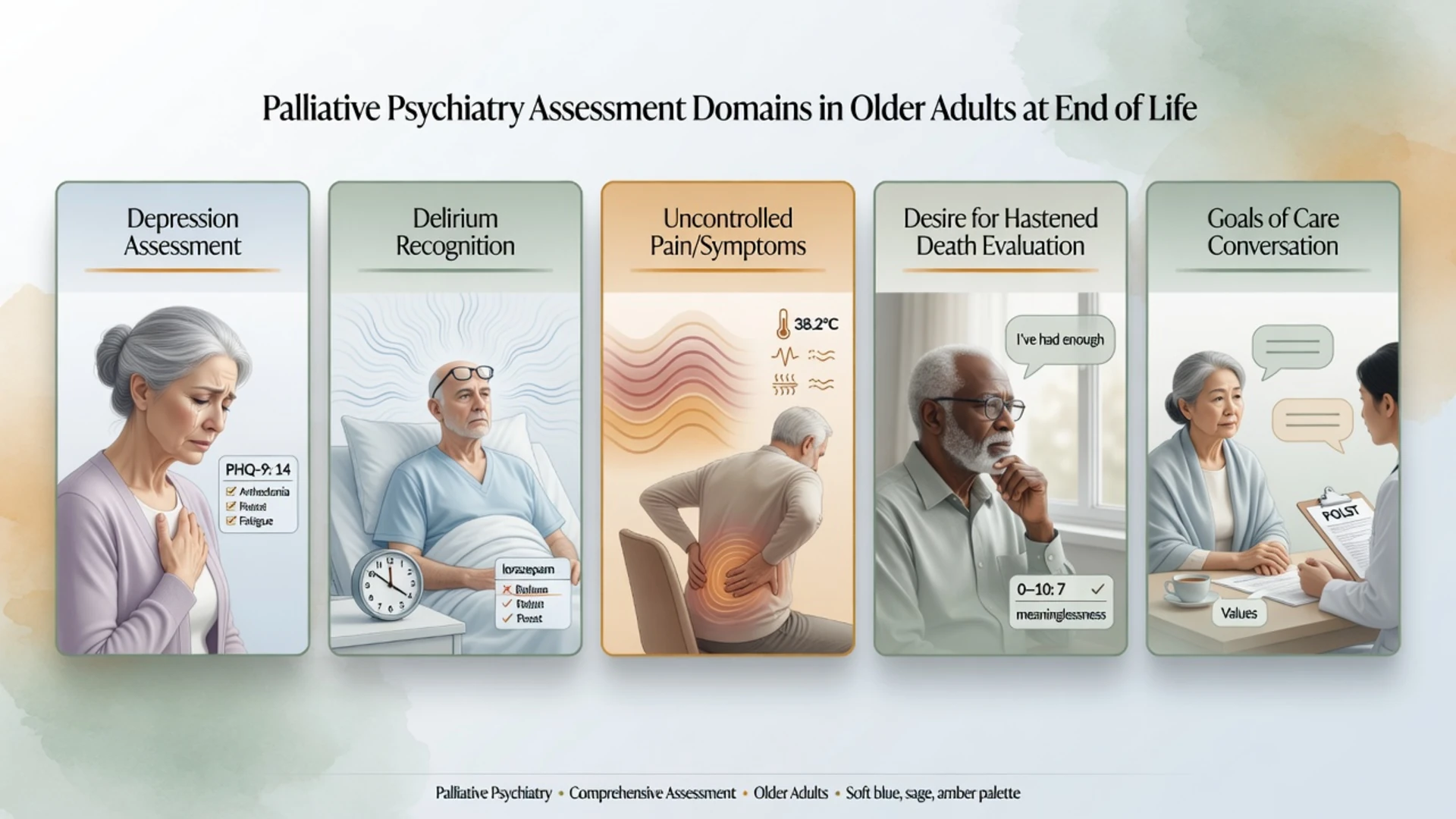
Structured withdrawal of life-sustaining therapy — the practical protocol
- PREPARE — PATIENT, FAMILY, TEAM, ENVIRONMENT — (a) Confirm the decision is documented and agreed (TLO in place, consent from patient/SDM). (b) Explain to the family what will happen, in what order, and what they will see (breathing pattern changes, colour changes, time frame). (c) Offer them the choice to be present — most families want to be. (d) Offer religious/spiritual support. (e) Move to a private room or draw curtains; reduce noise; adjust lighting. (f) Brief the team (nurse, junior doctor, the requesting clinician). (g) Have a clear senior clinician present to lead. (h) Discuss organ donation BEFORE withdrawal if DCDD (donation after circulatory determination of death) is being considered — this changes the timing and location.
- PRE-EMPTIVE SYMPTOM CONTROL — GIVE BEFORE WITHDRAWING — NEVER withdraw first then chase symptoms. Pre-load analgesia and anxiolysis so the patient is comfortable throughout. If the patient is already sedated, deepen to a comfortable level. Goal: the patient is peaceful and free of distress; family see a calm, comfortable patient. This is the single most important quality marker of a good death in the ICU.
- PAIN: morphine infusion 1–5 mg/hr (or fentanyl 25–200 mcg/hr if renal impairment) + PRN bolus 2.5–5 mg. Titrate to comfort (pain scale, grimacing, vital signs).
- DYSPNOEA / AIR HUNGER: opioid (morphine 2.5–5 mg IV PRN, or infusion) — relieves the sensation of breathlessness independent of analgesia.
- AGITATION / ANXIETY / DELIRIUM: midazolam infusion 1–5 mg/hr (or lorazepam), + PRN bolus 2.5–5 mg. Titrate to calm.
- SECRETIONS ("death rattle"): glycopyrrolate 200–400 mcg SC/IV (preferred — does not cross blood-brain barrier, less delirium than hyoscine) OR hyoscine butylbromide 20 mg SC. Give EARLY — anticholinergics do not clear existing secretions, only prevent new ones (start before secretions become distressing). Reposition patient (lateral, head down slightly); oropharyngeal suction (gentle).
- NAUSEA / terminal restlessness: haloperidol 0.5–2 mg SC/IV.
- WITHDRAW IN APPROPRIATE ORDER — Least beneficial/most burdensome first, most fundamental support last:
- (a) Stop non-beneficial treatments — routine blood tests, monitoring (de-escalate alarms, remove arterial line if family wishes), non-beneficial antibiotics, artificial nutrition/fluids (controversial — small sips/ice chips if conscious and wants them).
- (b) Stop renal replacement therapy — coordinate timing; ensure comfort.
- (c) Reduce and stop vasopressors — may cause hypotension; patient is sedated and comfortable; pre-load opioids.
- (d) Withdraw mechanical ventilation — reduce FiO₂ to room air; reduce PEEP; extubate (remove the endotracheal tube). Two approaches: terminal extubation (remove tube entirely — patient breathes room air or low-flow O₂ for comfort; risks stridor, secretions, agonal breathing visible to family) vs terminal weaning (gradually reduce ventilator support, tube left in — slower, masks airway reflexes). Choose based on anticipated airway patency, family preference, and whether the patient is expected to die quickly. Apply face mask or nasal prongs (low-flow O₂) for comfort if dyspnoea. Continue opioids/benzodiazepines throughout and after.
- SUPPORT FAMILY THROUGH THE DYING PROCESS — Family may stay during WLST and dying. Explain what they will see: (a) breathing pattern changes — Cheyne-Stokes respiration, gaps, agonal gasps (these are REFLEX brainstem breathing, NOT distress or suffocation — reassure family); (b) colour changes — mottling of extremities, pallor, cyanosis; (c) secretions — noisy breathing ("death rattle") from loss of swallow — reassure it does not distress the patient (they are unconscious); (d) time frame — minutes to hours (occasionally days); (e) reassure the patient is comfortable (sedated). Provide privacy. Continue to titrate symptom medication. Stay present — do not abandon the family.
- CONFIRM DEATH AND CARE AFTER DEATH — Confirm absence of circulation and respiration (5 min observation, ECG asystole if monitored). Inform family with sensitivity. Offer them time with the deceased. Provide bereavement information, death certificate, follow-up. Support staff (debrief). For DCDD pathway, follow the rapid protocol for organ retrieval.
Symptom management during WLST — drug reference
| Symptom | First-line drug | Dose | Notes |
|---|---|---|---|
| Pain | Morphine | 2.5–5 mg IV/SC bolus PRN; infusion 1–5 mg/hr | Fentanyl if renal failure (no active metabolites) |
| Dyspnoea | Morphine | 2.5–5 mg IV PRN; infusion as above | Reduces breathlessness independent of analgesia; relieves "air hunger" |
| Agitation / anxiety | Midazolam | 2.5–5 mg IV/SC PRN; infusion 1–5 mg/hr | Lorazepam alternative; levomepromazine for refractory agitation |
| Delirium / terminal restlessness | Haloperidol | 0.5–2 mg SC/IV PRN | Or olanzapine; benzodiazepine if alcohol/benzo withdrawal |
| Secretions (death rattle) | Glycopyrrolate | 200–400 mcg SC/IV q4–6h | Preferred — does not cross BBB (less delirium). Give BEFORE secretions form (prophylactic, not reactive) |
| Secretions (alternative) | Hyoscine butylbromide | 20 mg SC q4–6h | Crosses BBB less than hyoscine hydrobromide; hydrobromide causes sedation |
| Nausea | Haloperidol / metoclopramide | As above | Ondansetron if needed |
| Nerve pain / bone pain | Gabapentin / ketamine infusion | As indicated | Discuss with palliative care |
Terminal extubation vs terminal weaning
| Feature | Terminal extubation | Terminal weaning |
|---|---|---|
| Technique | Remove ETT completely; patient breathes room air or low-flow O₂ via mask | Reduce ventilator support gradually (FiO₂, PEEP, rate); ETT left in place |
| Speed | Quicker — death usually within minutes to 1 hr | Slower — may take hours |
| Family experience | Patient visibly breathes independently then stops; can be distressing if stridor/secretions | Smoother; airway reflexes masked |
| Airway | Risk of stridor, oral secretions if airway not patent | Airway protected by ETT |
| When preferred | Anticipated death soon; patient unlikely to breathe meaningfully; family understand what they will see | Anticipated longer process; concern about airway patency; family prefer gradual |
| Both are acceptable | Either is ethically equivalent — choice based on patient factors and family preference |
The doctrine of double effect — justifying symptom-focused sedation
Doctrine of double effect — analgesia during WLST
| Element | Application |
|---|---|
| The act itself is morally good or neutral | Giving an opioid to relieve pain/dyspnoea is good |
| The good effect is intended, the bad effect is foreseen but NOT intended | Comfort is intended; respiratory depression (and possible hastening of death) is foreseen but not the aim |
| The good effect is not achieved THROUGH the bad effect | Comfort comes from the analgesic/anxiolytic effect, not from the death |
| The bad effect is proportionate | The dose is proportionate to the symptom — you give enough to relieve suffering, no more |
| Practical implication | Titrate opioids/benzodiazepines to OBSERVABLE signs of comfort (relaxed face, no grimacing, calm breathing, acceptable pain score). There is NO maximum dose — give what is needed to relieve suffering. Studies show opioids/sedatives at doses used for symptom relief do NOT significantly hasten death. |
| The trap to avoid | Giving a large bolus "to finish things off" is EUTHANASIA, not symptom control — intent matters. Likewise, refusing adequate analgesia "in case it hastens death" leaves the patient to suffer — this is ALSO unethical. |
Organ donation — decoupled from EOL decisions
Organ donation discussion — must be separate from EOL decision
- TIMING — AFTER the WLST decision, SEPARATELY — The decision to withdraw/limit treatment is made FIRST, based purely on the patient's best interests (futility, autonomy, goals). Organ donation is raised AFTER this decision is settled, in a SEPARATE conversation. This "decoupling" prevents any perception (by family or staff) that treatment is being withdrawn in order to procure organs — a serious conflict of interest that undermines trust.
- WHO RAISES IT — A TRAINED REQUESTOR — Organ donation should be discussed by a trained donation specialist / transplant coordinator / organ donation nurse, NOT the treating ICU team (where possible). Trained requestors have higher consent rates and reduce family distress. The treating team's role is to identify suitability and refer.
- IDENTIFY SUITABILITY — Two pathways: (a) DBD (donation after brain death) — if brain death is likely (severe catastrophic brain injury — TBI, SAH, anoxic brain injury); continue ventilation, confirm brain death, then organ retrieval. (b) DCDD (donation after circulatory determination of death, formerly DCD / non-heart-beating) — for patients being withdrawn: withdraw in theatre/ICU, confirm death by circulatory criteria (5 min asystole), then rapid retrieval. Strict time limits (warm ischaemia) apply.
- CONDUCT THE REQUEST — STRUCTURED — (a) The trained requestor meets the family. (b) Reviews the patient's wishes (donor register?). (c) Explains the process honestly including DCDD time constraints. (d) Addresses concerns (body disfigurement, funeral timing, cost, religious considerations). (e) Documents consent. (f) If consented, coordinates the withdrawal/retrieval pathway. If declined, respect the decision graciously — it does not affect care.
- DO NOT COUPLE DONATION WITH EOL DECISIONS — The treating team must never imply or state that withdrawal is occurring in order to donate. If a family asks, be honest: the decision to withdraw is based on the patient's best interests; donation is a separate opportunity. Document the separation of decisions clearly.
- RELIGIOUS AND CULTURAL CONSIDERATIONS — Most major religions permit/encourage organ donation; some have specific requirements. Involve spiritual/religious care. Be aware of cultural variation in attitudes to bodily integrity after death.
Exam practice — SAQs
SAQ — Withdrawal of life-sustaining therapy after hypoxic brain injury
10 minutes · 10 marks
A 78-year-old retired teacher is in ICU 72 hours after an out-of-hospital PEA cardiac arrest with an estimated 25-minute downtime before ROSC. Targeted temperature management at 36 C has been completed and sedation has been off for 48 hours. He remains mechanically ventilated (FiO2 0.5, PEEP 8) on minimal noradrenaline 0.05 mcg/kg/min. Examination: GCS 4 (E1V1M2), no motor response to painful stimuli, preserved brainstem reflexes, no cough or gag. EEG shows severe generalised slowing with no epileptiform activity; MRI brain shows extensive cortical and deep grey-matter diffusion restriction consistent with severe anoxic brain injury. His wife, who is his legally appointed enduring guardian, attends a family meeting with their three adult children. She produces a signed advance directive in which he refused life-sustaining treatment if meaningful neurological recovery was unlikely, and states he had repeatedly told her he would never wish to live dependent and uncommunicative. The family is unanimous in requesting withdrawal of life-sustaining therapy. You are the ICU consultant leading the meeting.
SAQ — Symptom management in the dying ICU patient and counselling the family
10 minutes · 10 marks
A 69-year-old woman with metastatic pancreatic cancer is admitted to ICU with hospital-acquired pneumonia and type 1 respiratory failure. After a structured goals-of-care discussion with her and her husband, a treatment limitation order is agreed: not for intubation, not for renal replacement therapy, not for CPR, with active comfort care. She is on low-flow oxygen via nasal spec, morphine 5 mg SC q2h PRN and midazolam 2.5 mg SC q3h PRN. Over the next 18 hours she becomes less responsive and develops Cheyne-Stokes breathing with intermittent agonal gasps, increasingly noisy rattling respirations, and episodes of grimacing and restlessness despite PRN doses being given. Her husband is at the bedside and is visibly distressed, asking you whether she is suffering and whether you can do something to make her comfortable. You are reviewing her at the bedside.
Clinical pearls
[1]Red flags
Prognosis and evidence
End-of-life care evidence and outcomes
ETHICUS study (Sprung, JAMA 2003): ~20% of ICU deaths in Europe involve WLST; wide variation — Northern Europe withdraws more (autonomy-driven), Southern Europe less (family/culture). SCCM/ATS consensus (Truog, CCM 2021): WLST is standard, ethically valid practice; withholding and withdrawing are ethically equivalent; symptom-focused sedation is justified by the doctrine of double effect. SPIKES (Baile, The Oncologist 2000): validated six-step protocol for delivering bad news; reduces family/caregiver distress; now standard across critical care and oncology. Appelbaum capacity criteria (NEJM 2007): four-element framework (communicate choice, understand, appreciate, reason) — the bedside standard for capacity assessment. Shared decision-making (Kon, CCM 2016 — ACCM/ATS policy): emphasises SDM as the ethical standard for ICU treatment decisions; moves away from both paternalism and pure autonomy models. Glycopyrrolate vs hyoscine (JPSM 2017): glycopyrrolate is non-inferior for death rattle and causes less central side-effects (does not cross BBB) — preferred. ANZICS Statement on Care and Decision-Making at the End of Life for the Critically Ill: the ANZ consensus framework — shared decision-making, proportionality, treatment limitation as standard, donation decoupled. Outcomes: family satisfaction with EOL care predicts bereavement adjustment; structured family meetings and palliative care input reduce unwanted aggressive care and ICU length of stay without increasing mortality. Palliative care integration (ICU "bundle"): early palliative care consultation + structured family meetings improves quality of dying, reduces non-beneficial treatment, and supports family — increasingly recommended for all ICU patients at high mortality risk.
References
- [1]Sprung CL, et al. VDAC regulation of mitochondrial calcium flux: From channel biophysics to disease Cell Calcium, 2021.PMID 33529977
- [2]Truog RD, et al. Notum palmitoleoyl-protein carboxylesterase regulates Fas cell surface death receptor-mediated apoptosis via the Wnt signaling pathway in colon adenocarcinoma Bioengineered, 2021.PMID 34402722
- [3]Baile WF, Buckman R, Lenzi R, et al. Eccrine poroma of the heel Int J Dermatol, 2000.PMID 10944091
- [4]Appelbaum PS. GM-CSF autoantibodies and neutrophil dysfunction in pulmonary alveolar proteinosis N Engl J Med, 2007.PMID 17287477
- [5]Curtis JR, Vincent JL. Facile fabrication and mechanistic understanding of a transparent reversible superhydrophobic - superhydrophilic surface Sci Rep, 2018.PMID 30575778
- [6]Kon AA, Davidson JE, Morrison W, et al. Polychlorinated dibenzo-p-dioxins/furans (PCDD/Fs), polychlorinated biphenyls (PCBs), and polybrominated diphenyl ethers (PBDEs) in breast milk from Zhejiang, China Environ Int, 2012.PMID 21575990
- [7]Blanc-Audra F, et al. Calcium: A predictor of interventional treatment failure across all fields of cardiovascular medicine Int J Cardiol, 2017.PMID 28096040
- [8]Lanken PN, Ahluwalia N, Kaszniak A, et al. Biological actions of lipoic acid associated with sulfane sulfur metabolism Pharmacol Rep, 2008.PMID 18443384
- [9]Beauchamp TL, Childress JF. In Bacillus subtilis DegU-P is a positive regulator of the osmotic response Curr Microbiol, 1998.PMID 9806973