ICU · Ethics
Geriatric critical care: the elderly ICU patient
Also known as Elderly ICU · Geriatric ICU · Frailty in ICU · Older critical care patient · Age and critical illness
Geriatric critical care: patients aged 65-80 in ICU. Physiological changes of ageing: reduced organ reserve (cardiac, renal, respiratory), altered pharmacokinetics (decreased renal clearance, increased body fat, decreased albumin), polypharmacy, frailty, comorbidities. Key principles: (1) FRAILTY (not age alone) predicts outcomes better than chronological age. (2) Polypharmacy — review all medications, deprescribe. (3) Delirium — extremely common in elderly ICU, worsens outcomes. (4) Iatrogenic complications (infections, bleeding, falls). (5) Goals of care discussions — realistic prognosis, quality of life. (6) Early mobilisation — prevents deconditioning. (7) Nutrition — sarcopenia. Outcomes: higher mortality, longer recovery, more disability, post-intensive care syndrome.
On this page & tools
Your progress
Saved locally on this device.
Target exams
Red flags
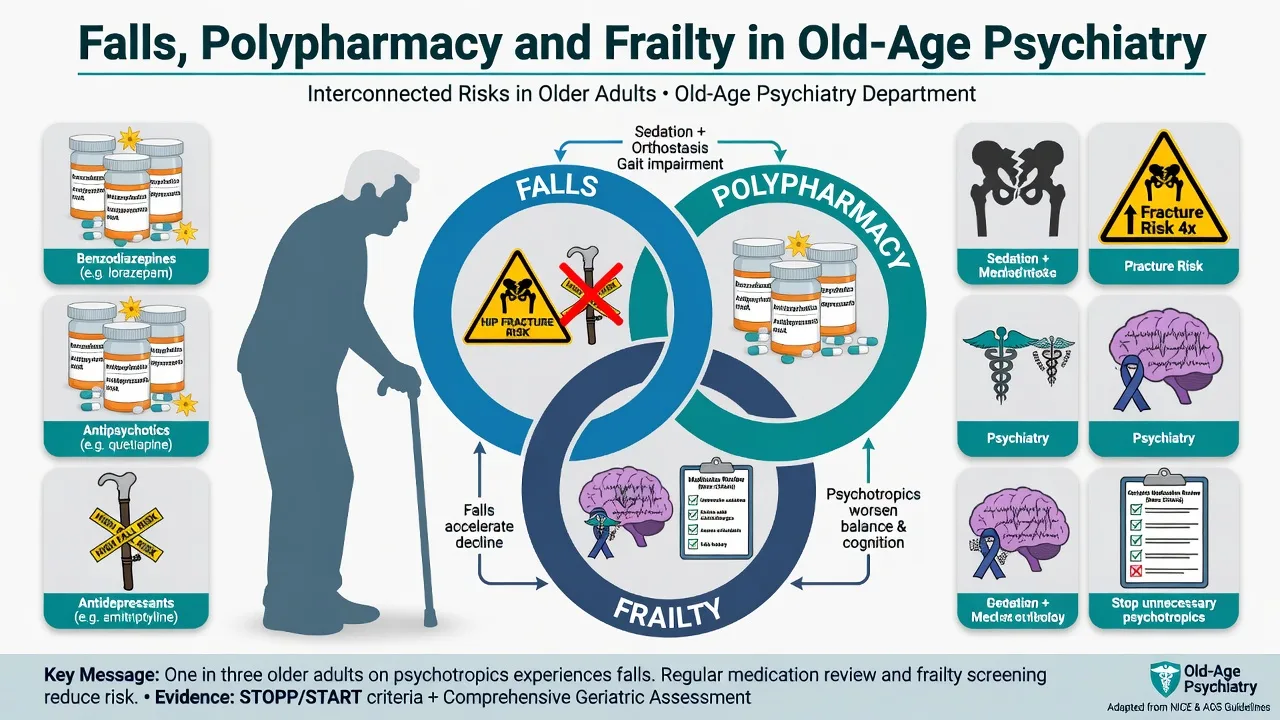
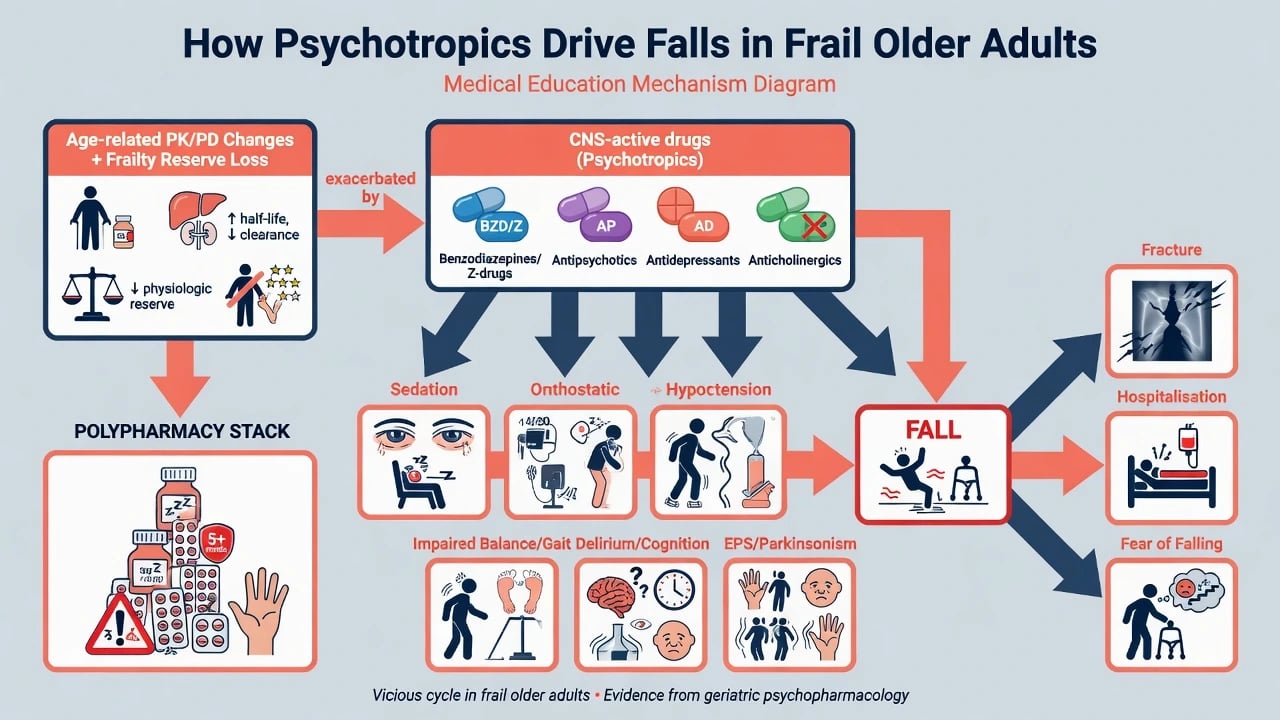
ICU management of the elderly patient
- Assess frailty — Clinical Frailty Scale (1-9). Frailty (≥5) predicts mortality, functional decline, institutionalisation BETTER than age or APACHE
- Medication review — deprescribe unnecessary drugs, adjust doses for renal/hepatic function, avoid Beers criteria drugs (deliriogenic, anticholinergic), reduce polypharmacy
- Prevent delirium — minimise sedation (propofol, dexmedetomidine), promote sleep-wake cycle, orient, family at bedside, glasses/hearing aids, early mobilisation, treat pain, avoid restraints
- Early mobilisation — start day 1-2 if possible, even passive if ventilated. Prevents deconditioning, pressure ulcers, DVT. Physiotherapy, occupational therapy
- Nutrition — assess for sarcopenia/malnutrition, early enteral nutrition, protein 1.2-1.5 g/kg/day, monitor for refeeding
- Goals of care discussion — realistic prognosis, quality of life, advance care planning, involve family, consider palliative care, respect advance directives
- Discharge planning — rehabilitation, community support, follow-up ICU clinic. Plan for post-intensive care syndrome (cognitive, physical, psychological)
Exam practice — SAQs
SAQ — Frailty as a predictor of ICU outcomes in an elderly septic patient
10 minutes · 10 marks
An 82-year-old woman is admitted to ICU with urosepsis complicated by E. coli bacteraemia. She has hypertension, type 2 diabetes, and osteoarthritis. Her daughter reports that before admission she used a walking frame to leave the house, needed help with shopping, housework and managing her finances, and had two falls in the last six months. She takes metformin 500 mg bd, gliclazide 80 mg mane, amlodipine 10 mg daily, and oxycodone PRN. On examination: T 38.6 degrees C, HR 124, BP 84/48 on noradrenaline 0.25 mcg/kg/min, RR 28, SpO2 92 percent on 15 L via non-rebreather mask, GCS 13, lactate 4.8 mmol/L, creatinine 230 (baseline 95), Hb 88, INR 1.5. The registrar asks how you would assess and explain her prognosis.
SAQ — Preventing and managing delirium in the elderly ventilated ICU patient
10 minutes · 10 marks
A 78-year-old man is intubated and ventilated on day 3 of his admission for severe community-acquired pneumonia (P/F 180). He is sedated with a propofol infusion at 3 mcg/kg/min and receives PRN morphine for the endotracheal tube. He has taken temazepam 20 mg nocte for 20 years for insomnia. His RASS has fluctuated between -2 and +1; CAM-ICU became positive on day 3. Overnight he pulled at his central line. His daughter reports mild cognitive impairment diagnosed last year. The consultant asks you to lead a delirium prevention and management plan.
SAQ — Frailty assessment tools and the tracheostomy decision
10 minutes · 10 marks
An 84-year-old man is on day 4 of ICU after an emergency Hartmann procedure for a perforated sigmoid diverticulum. He remains intubated and ventilated (P/F 280, FIO2 0.35, PEEP 5) with a slow ventilatory wean. He has ischaemic heart disease, COPD, and stage 3 CKD. His wife reports that before admission he walked slowly with a stick, needed help with shopping and managing finances, had given up gardening, and had lost 5 kg over six months without trying. The surgical team asks whether a tracheostomy would be appropriate. The consultant asks you to perform and interpret a frailty assessment.
SAQ — Polypharmacy and deprescribing in the elderly ICU patient
10 minutes · 10 marks
A 79-year-old woman weighing 52 kg is admitted to ICU after a fall at home with a fractured neck of femur. She is in acute on chronic kidney injury (creatinine 280, baseline 130) with a lactate of 2.4 and new confusion. Her GP medication list totals 12 agents: amlodipine 10 mg, doxazosin 4 mg, furosemide 40 mg bd, indapamide 1.5 mg, ibuprofen 400 mg tds PRN, glibenclamide 10 mg mane, metformin 1 g bd, aspirin 100 mg, atorvastatin 40 mg, temazepam 20 mg nocte, oxybutynin 5 mg bd, and a proton-pump inhibitor. Her serum albumin is 28 g/L. The consultant asks you to perform a medication review and deprescribing plan.
Clinical pearls
Red flags
Prognosis
Long-term outcomes in elderly ICU survivors (Bagshaw 2019)
Multicentre cohort of ICU patients aged ≥80:
- ICU mortality: 15-25% (higher than younger 10-15%)
- Hospital mortality: 25-35%
- 1-year mortality: 40-50%
- Functional status at 1 year (survivors): 30-40% had new functional dependence, 20-30% institutionalised
- Cognitive function at 1 year: 40% had cognitive impairment (memory, executive)
- Quality of life: reduced (PICS — cognitive, physical, psychological) [1]
Frailty (CFS ≥5): doubled mortality, tripled institutionalisation rate. STRONGER predictor than age, APACHE, or comorbidity index. Delirium duration: each additional day of delirium → 10% increased risk of long-term cognitive impairment.
Physiological changes of ageing
The defining feature of geriatric critical care is loss of physiological reserve — the capacity of organ systems to up-regulate function under stress. Reserve is consumed by age-related changes (intrinsic ageing) and by lifelong disease burden. A "fit" 80-year-old and a "frail" 80-year-old differ far more in reserve than in years lived. Understanding each domain lets the intensivist anticipate failure points before they occur. [1]
Pharmacology in the elderly ICU patient
Pharmacokinetic changes of ageing — and what to do about them
Distribution
Body composition shifts
- Total body water ↓ 10-15% and lean mass ↓ → LOWER volume of distribution (Vd) for water-soluble drugs (digoxin, lithium) → higher peak concentration.
- Body fat ↑ → HIGHER Vd for lipophilic drugs (midazolam, diazepam, fentanyl, amiodarone, propofol) → prolonged half-life, accumulation, delayed wake-up.
- Plasma albumin ↓ (esp. with inflammation) → more FREE drug for highly-bound agents (warfarin, phenytoin, midazolam) → toxicity at "normal" dose.
Metabolism
Liver mass & blood flow ↓
- Phase I (oxidation/reduction via CYP450) ↓ ~1%/yr → slower conversion of prodrugs and clearance of midazolam, fentanyl, many statins.
- Phase II (conjugation) relatively PRESERVED → lorazepam (glucuronidated) preferred over midazolam when a benzodiazepine is unavoidable, though both are deliriogenic.
- First-pass effect reduced → higher bioavailability of oral drugs (propranolol, verapamil, morphine).
Elimination
GFR ↓ even with "normal" creatinine
- Renal clearance of water-soluble drugs ↓ → accumulation of enoxaparin, gabapentin, pregabalin, vancomycin, digoxin, atenolol, lithium, water-soluble β-lactams.
- Use cystatin C-based eGFR or Cockcroft–Gault for dosing; many elderly need 25-50% dose reduction and/or extended dosing intervals.
- Therapeutic drug monitoring (vancomycin, aminoglycosides, antiepileptics, digoxin) is under-used and high-yield.
Pharmacodynamics
Receptor sensitivity ↑
- Increased sensitivity to CNS depressants (opioids, benzodiazepines, anaesthetics) — "start low, go slow".
- Blunted β-receptor response → less tachycardia for a given insult; less haemodynamic compensation.
- Increased sensitivity to anticholinergics → frank delirium at doses a younger patient tolerates.
Polypharmacy and deprescribing
Polypharmacy (concurrent use of ≥5 medications) affects 50-90% of ICU patients aged ≥65 and is an independent risk factor for delirium, falls, AKI, bleeding, and mortality. ICU admission — when every drug is reviewed and reconciled — is the single best deprescribing opportunity in a patient's trajectory. [1]
[1]Beers Criteria 2023 — highest-yield PIMs to STOP in the elderly ICU patient
CNS / sedatives
Delirium drivers
- Benzodiazepines (lorazepam, diazepam, alprazolam) — deliriogenic, falls, prolonged sedation; avoid for sleep.
- First-generation antihistamines (diphenhydramine, promethazine) — strong anticholinergic; the canonical delirium trigger.
- Z-drugs (zolpidem, zopiclone) — delirium, falls, fractures.
- Sleep aids: promote sleep-wake with environment, not sedatives.
Anticholinergic burden
Cumulative & insidious
- Oxybutynin, solifenacin, tricyclics, cyclobenzaprine — high anticholinergic load → delirium, urinary retention, constipation.
- Quantify burden (Anticholinergic Burden Scale); aim to reduce total load, not just one drug.
Cardiovascular & endocrine
High-risk in acute illness
- NSAIDs (ibuprofen, diclofenac) — AKI, heart failure, GI bleed; avoid.
- Long-acting sulphonylureas (glibenclamide) — prolonged hypoglycaemia; STOP in ICU.
- Digoxin >0.125 mg/day — toxicity.
- Peripheral α-1 blockers (doxazosin) for hypertension — orthostatic hypotension, falls.
GI & renal
Bleeding & injury risk
- Proton-pump inhibitors used >8 weeks without indication — C. difficile, fractures, B12/Mg deficiency; reassess need daily.
- Aspirin for primary prevention in >70 years — bleeding risk outweighs benefit (still continue for secondary prevention).
Delirium in the elderly ICU patient
Delirium is an acute, fluctuating disturbance of attention and awareness. It is the most common neuropsychiatric complication of critical illness in older adults, occurring in 50-80% of ventilated elderly patients and 20-50% of non-ventilated. It is NOT benign: each additional day of delirium independently predicts longer stay, higher 6- and 12-month mortality, and long-term cognitive impairment equivalent to traumatic brain injury or mild Alzheimer disease. [1]
Risk factors for ICU delirium — and which are modifiable
Pre-existing (fixed)
Stratify risk
- Older age, baseline cognitive impairment, frailty, multimorbidity.
- History of depression/alcohol use, visual/hearing impairment.
- Genetic: ApoE4 allele (associative).
Acute illness (partly fixed)
Treat the cause
- Sepsis, hypoxia, metabolic derangement (Na, glucose, uraemia, hepatic).
- Surgery/anaesthesia, pain, sleep deprivation.
- Infection (esp. urinary, respiratory), constipation, urinary retention.
Iatrogenic (MODIFIABLE)
The targets of prevention
- Sedatives — benzodiazepines are the strongest modifiable risk (each day of midazolam ↑ delirium).
- Anticholinergics, opioids (esp. piperidine derivatives), corticosteroids.
- Immobilisation, restraints, lack of daylight/sleep, ICU noise at night.
- Indwelling catheters (precipitate infection and restrain mobility).
Prevention — the multicomponent / ABCDEF bundle
- Assess and manage pain — scheduled analgesia first; opioids are not the only tool (paracetamol, regional blocks). Overtreated pain and undertreated pain BOTH cause delirium.
- Both spontaneous awakening trials (SAT) and spontaneous breathing trials (SBT) daily — reduce ventilator days and sedation exposure. Coordinate so SAT precedes SBT.
- Choice of analgesia and sedation — prefer analgesia-first, propofol or dexmedetomidine over benzodiazepines. Target light sedation (RASS 0 to −1) whenever possible.
- Delirium — assess, prevent, manage — screen with CAM-ICU each shift; treat the cause (infection, hypoxia, metabolic, retention, pain) BEFORE reaching for antipsychotics.
- Early mobility and exercise — passive → active → sitting → standing → walking from day 1-2; reduces delirium days and ICU-acquired weakness.
- Family engagement and empowerment — orient frequently, family at bedside, sleep hygiene (lights off, earplugs/eye mask, cluster care), restore vision/hearing (glasses, hearing aids, amplifier). [1]
Adapt non-pharmacological multicomponent care from the Hospital Elder Life Program (HELP): orientation, therapeutic activities, hydration, sleep enhancement, mobility, hearing/vision aids, feeding support. [11][12]
Does drug treatment of delirium work? The evidence
Antipsychotics do NOT improve outcomes in ICU delirium (MIND-USA). A randomised, placebo-controlled trial of haloperidol and ziprasidone vs placebo in 566 ICU patients with acute respiratory failure and delirium found no difference in days alive without delirium or coma at 14 days. [10]
Implication: antipsychotics are NOT first-line, NOT prophylactic. Reserve for distressing hyperactive delirium that threatens the patient (e.g. pulling at lines, extubation risk) AFTER non-pharmacological measures and pain/cause correction. Use the lowest dose for the shortest time; monitor QTc. [1]
Dexmedetomidine reduces agitation and ventilator time (DEXCOM). In agitated delirium (predominantly mechanical-ventilation patients), adding dexmedetomidine to standard care increased ventilator-free hours at 7 days (median 145 h vs 128 h) and reduced delirium — supporting α-2 agonist use as a sedation-sparing, delirium-reducing agent rather than escalating GABAergic sedation. [15]
Frailty assessment — beyond the Clinical Frailty Scale
The Clinical Frailty Scale (Rockwood, above) is a 9-point clinical judgement of overall function and is the tool validated most widely in ICU. Two complementary concepts are useful in the exam answer: [1]
Two lenses on frailty — phenotype vs deficit accumulation
Phenotypic (Fried)
Physical frailty
- Three or more of: unintentional weight loss, exhaustion, low grip strength, slow walking speed, low physical activity.
- Captures sarcopenia-driven physical decline.
- Hard to measure in the sedated/ventilated patient — relies on pre-illness history from family.
Deficit accumulation (Rockwood/Frailty Index)
Cumulative morbidity
- Proportion of ~30-70 health deficits (comorbidities, function, cognition) present.
- Frailty Index >0.25 = frail; >0.4 = very frail.
- Granular and predictive; the CFS is its bedside surrogate.
Clinical Frailty Scale (CFS)
Bedside 1-9
- A 1-9 pictorial judgment of function in the TWO WEEKS before acute illness.
- Validated in >1 million patients; the ICU standard.
- Pitfall: do NOT score the acute illness itself — score the pre-morbid baseline; base on collateral, not the patient in front of you.
Post-intensive care syndrome (PICS) and the elderly
PICS is the triad of new or worsened cognitive impairment, psychiatric illness (depression, anxiety, PTSD), and physical weakness/ICU-acquired weakness that persists after critical illness. In older adults it is more frequent, more severe, and more likely to be permanent because reserve is already depleted. [1]
Glycaemic control in the elderly ICU patient
Both hyper- and hypoglycaemia are harmful, and the elderly are the most vulnerable to the cognitive and cardiovascular consequences of hypoglycaemia. Moderation — not normalisation — is the goal. [1]
Nutrition and sarcopenia
Older patients enter critical illness with depleted lean mass (sarcopenia) and micronutrient reserves; critical illness accelerates catabolism, compounding the deficit. Refeeding risk is real after even brief starvation. [1]
[1]Pressure injury, skin and continence
Elderly skin is thin (loss of dermal collagen), perfusion is marginal, and immobility plus incontinence make pressure injury almost inevitable without active prevention. A stage 3-4 ulcer doubles mortality and prolongs stay. [1]
Pressure-injury and skin bundle for the elderly
- Risk-assess on admission (Braden or Waterlow) and reassess with any change.
- Reposition every 2 hours (or continuous low-pressure/air mattress if unable).
- Protect skin — barrier creams for incontinence; keep clean and dry; manage diarrhoea aggressively.
- Optimise nutrition (protein, zinc, vitamin C) and hydration.
- Minimise devices — remove catheters, drains, and lines the moment they are unneeded (each is a pressure point and infection portal).
- Inspect high-risk areas daily — sacrum, heels, occiput, under devices (NIV masks, ETT ties, braces).
Goals-of-care and family meetings
For many elderly patients the most important decision in ICU is not how aggressively to treat, but for how long, and toward what goal. A well-run goals-of-care conversation reduces non-beneficial treatment, improves family satisfaction, and is itself a marker of high-quality care. [1]
Elements of an effective goals-of-care conversation
Before
Prepare
- Review the chart: age, frailty (CFS), comorbidities, trajectory, prior advance directives, GP records.
- Gather the right people: senior clinician, nurse, the patient if they have capacity, the substitute decision-maker/family, and (where appropriate) palliative care.
- Find a private space, allow enough time, silence phones.
During
The conversation
- Ask what the patient understands and what matters most to them ("What would be a good outcome? What would be unacceptable?").
- Give a prognostic frame honestly: "I am worried she may not survive this / may not return to her previous self." Use best-case/worst-case/most-likely language, not percentages alone.
- Explore values explicitly: independence, being at home, not being a burden, prolonging life at all costs.
- Align: "Given what you have told me, here is what we can offer that fits those goals..."
- Make a recommendation — clinicians who avoid recommending cause more distress. Avoid passive "what do you want us to do?" framing.
After
Document and follow through
- Document the discussion, the agreed plan, and any treatment limitations (AND/OR a resuscitation decision) in the chart.
- Communicate to the whole team and the GP.
- Set a time to review — goals of care are dynamic, not one-off.
- Offer palliative care and spiritual support; arrange follow-up for the family (post-ICU clinics, bereavement services).
Management summary — the geriatric ICU checklist
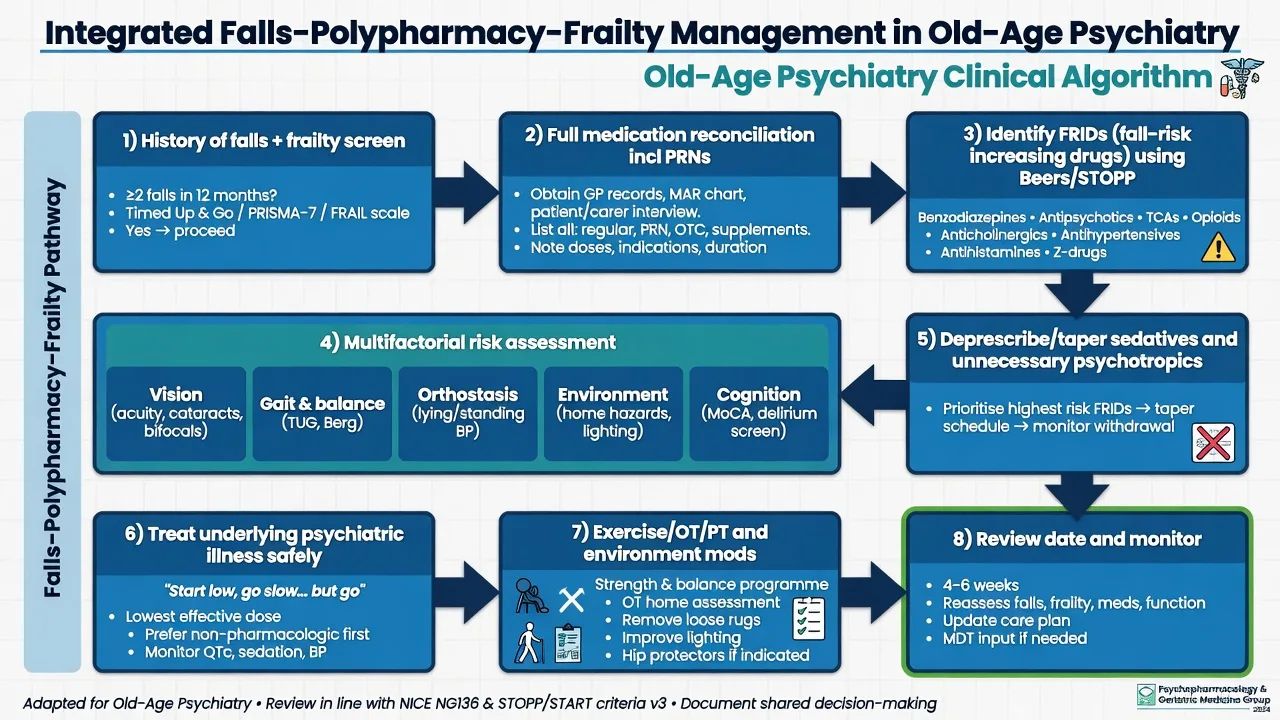
Daily geriatric ICU checklist (the geriatric 'bundle')
- Frailty (CFS) documented in the chart; reflected in the goals-of-care plan.
- Medication review at every round — deprescribe per Beers/STOPP; dose-adjust for current CrCl; reconcile on admission and discharge.
- PADIS triad every shift — pain (CPOT), sedation (RASS target 0 to −1), delirium (CAM-ICU). Treat pain and the cause before any antipsychotic.
- ABCDEF bundle running — SAT/SBT daily, dexmedetomidine/propofol over benzodiazepines, mobility progressed, family engaged, sleep protected.
- Glucose 7.8-10.0 mmol/L; hold oral hypoglycaemics; hypoglycaemia treated as emergency.
- Nutrition advancing to target protein 1.2-1.5 g/kg/day; refeeding monitored; vitamin D repleted.
- Pressure, skin, continence — reposition, devices minimised, barrier care.
- Renal function reviewed daily — avoid nephrotoxins, dose-adjust, consider RRT early if failing.
- Mobilise — passive day 1, active as able; physiotherapy and occupational therapy engaged.
- Family communication — predictable updates; structured goals-of-care meeting within 72 h for high-frailty/high-severity patients.
- Plan for PICS and discharge — rehabilitation, post-ICU clinic, cognitive screening, caregiver support.
Additional high-yield clinical pearls
Red flags — additional
References
- [1]Rockwood K, Song X, MacKnight C, et al. A global clinical measure of fitness and frailty in elderly people CMAJ, 2005.PMID 16129869
- [2]Ferrante LE, Vallet H, Ho JQ, Brummel NE, et al. Challenges and strategies in the care of older adults across the continuum of intensive and post-intensive care medicine Intensive Care Med, 2026.PMID 41428207
- [3]Pandharipande PP, Girard TD, Jackson JC, et al. Long-term cognitive impairment after critical illness N Engl J Med, 2013.PMID 24088092
- [4]Ely EW, Inouye SK, Bernard GR, et al. Delirium in mechanically ventilated patients: validity and reliability of the confusion assessment method for the intensive care unit (CAM-ICU) JAMA, 2001.PMID 11730446
- [5]Heyland DK, Garland A, Bagshaw SM, et al. Recovery after critical illness in patients aged 80 years or older: a multi-center prospective observational cohort study Intensive Care Med, 2015.PMID 26306719
- [6]Bruno RR, Wernly B, Bagshaw SM, et al. The Clinical Frailty Scale for mortality prediction of old acutely admitted intensive care patients: a meta-analysis of individual patient-level data Ann Intensive Care, 2023.PMID 37133796
- [7]Ferrante LE, Chaudhuri D, et al. Society of Critical Care Medicine Guidelines on Caring for Older Adults in the ICU Crit Care Med, 2026.PMID 41860322
- [8]Fernando SM, McIsaac DI, Rochwerg B, Bagshaw SM, et al. Frailty and invasive mechanical ventilation: association with outcomes, extubation failure, and tracheostomy Intensive Care Med, 2019.PMID 31595352
- [9]Devlin JW, Skrobik Y, Gelinas C, Needham DM, et al. Clinical Practice Guidelines for the Prevention and Management of Pain, Agitation/Sedation, Delirium, Immobility, and Sleep Disruption in Adult Patients in the ICU Crit Care Med, 2018.PMID 30113379
- [10]Mart MF, Boehm LM, Kiehl AL, et al. Long-term outcomes after treatment of delirium during critical illness with antipsychotics (MIND-USA): a randomised, placebo-controlled, phase 3 trial Lancet Respir Med, 2024.PMID 38701817
- [11]Inouye SK, Bogardus ST, Baker DI, et al. The Hospital Elder Life Program: a model of care to prevent cognitive and functional decline in older hospitalized patients. Hospital Elder Life Program J Am Geriatr Soc, 2000.PMID 11129764
- [12]Marra A, Ely EW, Pandharipande PP, et al. The ABCDEF Bundle in Critical Care Crit Care Clin, 2017.PMID 28284292
- [13]Adigbli DK, Hammond NE, Finfer S, et al. Managing blood glucose in the intensive care unit Intensive Care Med, 2025.PMID 39714614
- [14]NICE-SUGAR Study Investigators, Finfer S, et al. Intensive versus conventional glucose control in critically ill patients N Engl J Med, 2009.PMID 19318384
- [15]Reade MC, Eastwood GM, Bellomo R, et al. Effect of Dexmedetomidine Added to Standard Care on Ventilator-Free Time in Patients With Agitated Delirium: A Randomized Clinical Trial JAMA, 2016.PMID 26975647
- [16]American Geriatrics Society Beers Criteria Update Expert Panel. American Geriatrics Society 2023 updated AGS Beers Criteria® for potentially inappropriate medication use in older adults J Am Geriatr Soc, 2023.PMID 37139824
- [17]Fernando SM, McIsaac DI, Perry JJ, Bagshaw SM, et al. Frailty and Associated Outcomes and Resource Utilization Among Older ICU Patients With Suspected Infection Crit Care Med, 2019.PMID 31135504
- [18]Muscedere J, Bagshaw SM, Kho M, et al. Frailty, Outcomes, Recovery and Care Steps of Critically Ill Patients (FORECAST): a prospective, multi-centre, cohort study Intensive Care Med, 2024.PMID 38748266