ICU · Gastroenterology
Acute liver failure: King's College criteria, transplant, and liver support
Also known as Acute liver failure · ALF · Fulminant hepatic failure · King's College Criteria · Liver transplant criteria · MARS therapy
Acute liver failure (ALF): severe liver injury with encephalopathy + coagulopathy (INR 1.5) within 26 weeks, without pre-existing liver disease. Causes: paracetamol overdose (1 in UK/Australia), drug-induced (idiosyncratic), viral hepatitis, mushroom (Amanita), Wilson's, ischaemic, pregnancy-related. King's College Criteria (KCC): predict mortality → guide transplant decision. Paracetamol: pH <7.3 OR (INR 6.5 + creatinine 300 + grade 3-4 encephalopathy). Non-paracetamol: INR 6.5 alone OR 3 of (age <10 or 40, cause: non-A/non-B/drug/halothane, jaundice 7 days before encephalopathy, INR 3.5). Treatment: ICU support (manage complications: cerebral oedema, coagulopathy, AKI, sepsis), N-acetylcysteine (all causes), emergency liver transplant (definitive), liver support devices (MARS — bridge to transplant).
On this page & tools
Your progress
Saved locally on this device.
Target exams
Red flags

Paracetamol vs non-paracetamol ALF — King's College Criteria
| Feature | Paracetamol ALF | Non-paracetamol ALF |
|---|---|---|
| Time to encephalopathy | Hours-days (rapid) | Days-weeks (slower) |
| Most common cause | Overdose (#1 in UK/Australia) | Drug-induced (idiosyncratic), viral, Wilson's |
| KCC criteria | pH <7.3 OR (all 3: INR >6.5 + creatinine >300 + grade 3-4 encephalopathy) | INR >6.5 ALONE OR (3 of 4: age <10/>40, non-A/non-B/drug cause, jaundice >7d before enceph, INR >3.5) |
| Prognosis without transplant | If KCC met: >80% mortality | If KCC met: >80% mortality |
| Prognosis without transplant (KCC not met) | ~20-40% mortality | ~30-50% mortality |
| Response to NAC | Excellent (if given early) | Moderate (benefits all ALF) |
Management of acute liver failure in ICU
- Identify cause — paracetamol levels, drug history, viral serology (HAV, HBV, HCV, HEV), Wilson's (ceruloplasmin, slit-lamp), autoimmune (ANA, ASMA), pregnancy (AFLP, HELLP), mushroom (history), ischaemic (cardiac arrest, shock). Paracetamol is most common and most treatable
- Start N-acetylcysteine (NAC) — ALL causes (not just paracetamol). Dose: 150 mg/kg over 1h, then 50 mg/kg over 4h, then 100 mg/kg over 16h (or continuous infusion 100 mg/kg/24h). Evidence: improves outcomes in ALL ALF (not just paracetamol — antioxidant, microcirculatory, anti-inflammatory effects)
- Assess King's College Criteria — calculate early and serially (update as labs change). If KCC MET: urgent transplant referral
- Manage complications:
- Cerebral oedema/raised ICP: head elevation 30°, normocapnia, osmotherapy (mannitol/hypertonic saline), avoid over-sedation, ICP monitoring if grade 3-4 encephalopathy
- Coagulopathy: INR is prognostic (don't routinely correct unless bleeding — may mask KCC). Vitamin K 10 mg IV. FFP/cryoprecipitate only if bleeding
- Hypoglycaemia: 10% dextrose infusion (monitor glucose hourly — hepatic glycogen depleted)
- AKI: renal replacement therapy (CVVH preferred — haemodynamic stability). Avoid nephrotoxins
- Infection: surveillance cultures, broad-spectrum if sepsis (high infection risk)
- Circulation: hyperdynamic (low SVR) — maintain MAP ≥65 with noradrenaline
- Liver transplant — if KCC met and suitable candidate. Emergency listing. 1-year survival: 80-90% (transplanted) vs <20% (KCC met, not transplanted)
- Liver support devices (MARS) — bridge to transplant or recovery. Not proven to improve survival alone. May buy time
Exam practice
SAQ — Paracetamol-induced ALF meeting King\'s College criteria
10 minutes · 10 marks
A 24-year-old woman is brought to the ED approximately 50 hours after a staggered paracetamol overdose (self-reported ~25 g). She is drowsy (GCS 12), jaundiced with asterixis. Arterial blood gas after 1 L crystalloid: pH 7.18, lactate 6.6 mmol/L, HCO3- 11. INR 7.9, creatinine 314 umol/L, ALT 9800 IU/L, glucose 2.6 mmol/L. Paracetamol level 18 mg/L (taken at ~50 h). N-acetylcysteine was started on arrival. BP 96/52, HR 112.
Clinical pearls
Red flags
Prognosis
King's College Criteria and ALF outcomes (ALFSG data)
US Acute Liver Failure Study Group (Lee, Bernal):
- Overall ALF mortality without transplant: 30-40%
- Paracetamol ALF: better prognosis (20-30% mortality — NAC effective)
- Non-paracetamol ALF: worse prognosis (40-60% mortality without transplant)
- KCC met, no transplant: >80% mortality
- KCC met, transplanted: 80-90% 1-year survival
- Spontaneous survival (KCC not met): 60-80% (liver regenerates) [1]
NAC for all ALF (ALFSG, 2009): improved transplant-free survival in non-paracetamol ALF (especially early encephalopathy). MARS (RELIEF trial, 2019): did not improve transplant-free survival. May bridge to transplant/recovery. Cerebral oedema: leading cause of death (20-25% of ALF deaths). Worse with: grade 4 encephalopathy, hyperammonaemia, young age, renal failure.
Definition and classification
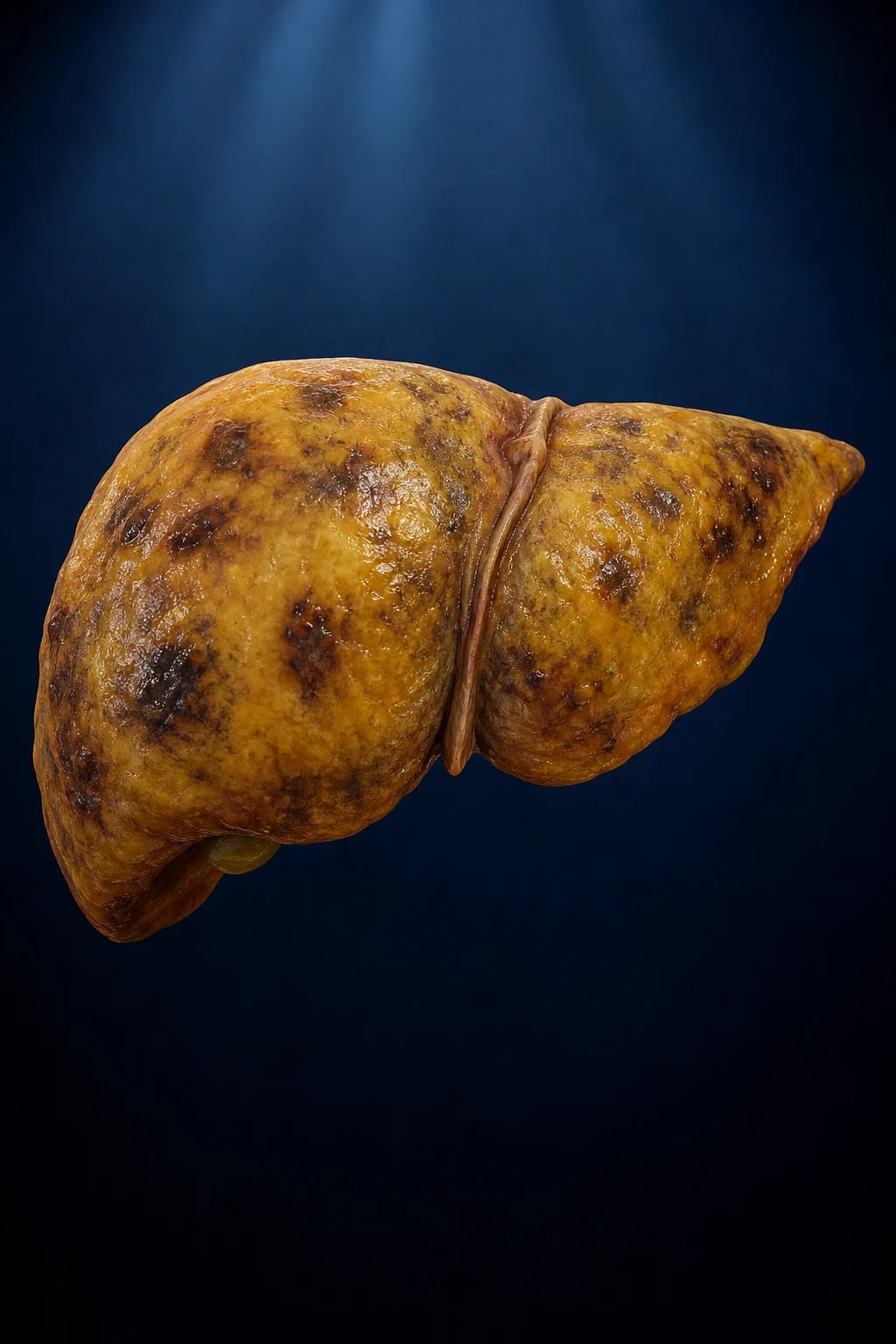
O'Grady classification — time from jaundice to encephalopathy
| Subtype | Onset (jaundice → encephalopathy | Typical causes | Cerebral oedema | Prognosis (no transplant) |
|---|---|---|---|---|
| Hyperacute | <7 days | Paracetamol, ischaemic/hepatitic (shock liver), Amanita mushroom | Common & severe (up to 70%) | Best survival (~50-60%) |
| Acute | 8-28 days | Hepatitis B, drug-induced (idiosyncratic), autoimmune | Common (50-60%) | Intermediate (~30-40% survival) |
| Subacute | 29 days-12 weeks (5-26 wk) | Non-A non-B hepatitis, drug-induced, Wilson's | Less common | Worst survival (~10-20%) |
| Late-onset / subfulminant | 8-24 weeks | Drug-induced, seronegative | Uncommon | Poor — slow, often needs transplant |
Counter-intuitive point: hyperacute ALF has the worst biochemistry (highest INR, worst acidosis) but the BEST survival, because the cause is often reversible (paracetamol) and the liver regenerates. Subacute ALF looks "less sick" biochemically but has the worst prognosis because the injury is established and relentless.[7] }
Aetiology — comprehensive differential
Causes of ALF with first-line diagnostic tests
| Cause | Frequency (West) | Key diagnostic tests | Specific treatment |
|---|---|---|---|
| Paracetamol (acetaminophen) | #1 (UK/ANZ/US — ~40-50%) | Serum paracetamol level + Rumack-Matthew nomogram; AST often >10,000 | NAC (definitive) |
| Drug-induced (idiosyncratic) | 10-15% | Drug history (antibiotics, antiepileptics, NSAIDs, herbal); eosinophilia; lymphocyte transformation | Stop drug, NAC, supportive |
| Viral hepatitis | 5-10% (higher in Asia) | HAV-IgM, HBsAg/HBc-IgM, anti-HEV, HSV/EBV/CMV serology + PCR | Antiviral if HSV (acyclovir), HBV (nucleoside analogue) |
| Ischaemic hepatitis ("shock liver") | 5-10% | Cardiac arrest / severe shock history; ALT/LDH very high, recovers in days | Treat underlying; haemodynamic support |
| Wilson's disease | 2-5% (young patients) | Ceruloplasmin <200 mg/L, urinary Cu >1000 μg/24h, Kayser-Fleischer rings, Coombs-negative haemolysis | Transplant (definitive); chelation too slow |
| Autoimmune | 5-10% | ANA, ASMA, anti-LKM, IgG; biopsy if feasible | Corticosteroids (prednisolone 1 mg/kg) |
| Pregnancy-related (AFLP/HELLP) | <5% (3rd trimester / postpartum) | HELLP: haemolysis, AST↑, platelets <100; AFLP: Swansea criteria, hypoglycaemia, DIC | Delivery (definitive) + supportive |
| Mushroom poisoning (Amanita phalloides) | Rare (seasonal) | History of wild mushroom ingestion 6-24h before GI symptoms | NAC + silibinin + penicillin G |
| Malignant infiltration | <1% | CT imaging, peripheral blood film, LDH↑; biopsy | Treat malignancy; poor prognosis |
| Heat stroke / malignant hyperthermia | Rare | History (exertional heat, anaesthetic) | Cooling, dantrolene, supportive |
| Indeterminate ("seronegative") | 10-20% | Diagnosis of exclusion | NAC, supportive; transplant |
Geographic variation matters for the exam:[12] }
- UK / Australia / North America: paracetamol is the leading cause (~46% in the ALFSG).
- Developing countries / Asia: viral hepatitis (HEV, HBV, HAV) dominates; paracetamol is less common.
- India: hepatitis E (often superimposed on chronic HBV) is the commonest cause in pregnant women.
King's College Criteria — in detail
Applying the King's College Criteria step-by-step
- Confirm it is ALF — encephalopathy + INR ≥1.5, within 26 weeks, no known chronic liver disease (careful: decompensated Wilson's or autoimmune may mimic chronic disease — the patient may not know they had it).
- Stratify by aetiology — is it paracetamol-induced or non-paracetamol? The criteria differ entirely. Misclassification (e.g. staggered paracetamol treated as non-paracetamol) leads to error.
- Calculate PARACETAMOL KCC — meets if arterial pH <7.3 (after fluid resuscitation) OR all three of: INR >6.5 (PT >100 s), creatinine >300 μmol/L, grade III-IV encephalopathy.[7] }
- Calculate NON-PARACETAMOL KCC — meets if INR >6.5 (PT >100 s) alone, OR three of the following five: (a) age <10 or >40 years, (b) aetiology: non-A non-B hepatitis, drug-induced, or halothane, (c) duration of jaundice before encephalopathy >7 days, (d) INR >3.5 (PT >50 s), (e) ... (note: classic criteria cite INR >6.5 alone OR three of the listed adverse features).
- Reassess serially — KCC must be re-calculated every few hours as pH, INR, creatinine, and encephalopathy grade change. A patient who does not meet criteria on day 1 may meet them on day 2.
- If KCC MET → urgent transplant centre referral. Time-critical: median time to death once KCC met is short. Discuss with transplant unit before all criteria are met if the trajectory is adverse.
- If KCC NOT met → continue maximal medical therapy + serial reassessment. Many paracetamol patients meeting only pH <7.3 recover with NAC and supportive care.
Prognostic criteria for transplant in ALF — comparison
| Criterion | Population | Threshold | Sensitivity | Specificity | Notes |
|---|---|---|---|---|---|
| King's College (paracetamol) | Paracetamol ALF | pH <7.3 OR (INR >6.5 + Cr >300 + grade III-IV enceph) | ~55-70% | ~85-95% | Most widely used worldwide |
| King's College (non-paracetamol) | Non-paracetamol ALF | INR >6.5 OR 3 of 5 adverse features | ~70-80% | ~75-90% | Lower sensitivity is the weakness |
| Clichy criteria (France) | HBV-related ALF | Factor V <20% (age <30) or <30% (age >30) + grade III-IV enceph | ~60-80% | ~70-85% | Requires factor V assay (less available) |
| MELD / MELD-Na | Chronic + acute | Score >30-35 | variable | variable | Better for ACLF; less validated in pure ALF |
| Arterial lactate | Paracetamol ALF | Lactate >3.5 (early) or >3.0 (after fluid) mmol/L | additive | additive | Useful adjunct to KCC (improves sensitivity) |
| Phosphate | Paracetamol ALF | Phosphate >1.2 mmol/L (day 2-3) | adjunct | adjunct | Marker of impaired hepatic regeneration |
Key practical point: No single criterion is perfect. The KCC have high specificity (~90%) but only moderate sensitivity (~70%) — i.e. they identify patients who will die without transplant, but miss some. Combining KCC with arterial lactate improves sensitivity.[7] } Centres increasingly combine KCC with clinical trajectory (rising INR, worsening acidosis, falling factor V) rather than relying on a single threshold.
N-acetylcysteine (NAC) — detailed dosing and rationale
NAC administration in ALF
- Give to ALL ALF patients — do not wait for aetiology. Paracetamol: NAC replenishes glutathione → detoxifies NAPQI. Non-paracetamol: antioxidant, anti-inflammatory, and microcirculatory effects improve transplant-free survival (ALFSG RCT, Lee 2009).[8] }
- Paracetamol ALF — traditional 3-bag regimen (UK/Australia): 150 mg/kg in 200 mL 5% dextrose over 1 h (loading), then 50 mg/kg over 4 h, then 100 mg/kg over 16 h (total 300 mg/kg over 21 h). Modify in hepatic failure? — no dose reduction needed (hepatic metabolism not required).
- Paracetamol ALF — alternative: 20-h continuous infusion (100 mg/kg loading over 1 h is wrong; correct is 200 mg/kg loading in some protocols — confirm local policy). Many units now use a weight-based continuous infusion (e.g. 6.25 mg/kg/h after loading) to reduce dosing errors and adverse effects.
- Paracetamol ALF — when to STOP NAC: continue beyond 21 h until INR <2.0 (some use <1.5) AND clinically improving AND ALT falling. In massive overdose with persistent INR >6.5, continue NAC until transplant or recovery.
- Non-paracetamol ALF: typically 100 mg/kg over 16-24 h, or the standard regimen. The ALFSG used 150 mg/kg loading then 12.5 mg/kg/h to 100 h. Continue while encephalopathy/coagulopathy present (often 3-5 days).
- Adverse effects and management: anaphylactoid reaction (urticaria, bronchospasm, hypotension) in ~10-20% with the rapid 1-h loading dose — slow or stop infusion, give antihistamine, restart at lower rate once settled (NOT a true allergy; not a reason to abandon NAC). Nausea/vomiting — antiemetic. Higher rate in asthmatics and those <70 kg.
- Pregnancy: NAC is safe in pregnancy (no teratogenicity) and indications are the same — paracetamol overdose in pregnancy is especially toxic (overdose + foetal glutathione depletion).
NAC in paracetamol vs non-paracetamol ALF
| Feature | Paracetamol ALF | Non-paracetamol ALF |
|---|---|---|
| Mechanism | Replenishes glutathione → detoxifies NAPQI | Antioxidant; restores microcirculation; anti-inflammatory |
| Evidence | Definitive (reduces hepatotoxicity if given <8 h) | ALFSG RCT (Lee 2009): improved transplant-free survival, esp. grade I-II encephalopathy[8] } |
| Timing | Best <8 h post-ingestion; beneficial even late | Give early; benefit greatest with mild-moderate encephalopathy |
| Duration | Until INR <2.0 + clinical improvement | 3-5 days typically (or until coagulopathy/encephalopathy resolves) |
| Risk if withheld | Preventable progression to ALF/death | Loss of proven survival benefit |
Cerebral oedema and raised intracranial pressure
Managing cerebral oedema / raised ICP in ALF
- Recognise the at-risk patient: cerebral oedema complicates grade III-IV encephalopathy (60-80% of grade IV) and is rare in grade I-II. Risk rises with arterial ammonia >150-200 μmol/L (independent predictor of intracranial hypertension and mortality).[11] } }
- Nursing and environment: head of bed elevated 30° and neutral neck position (to optimise venous drainage); minimise stimuli (suctioning, turning); maintain normothermia (avoid fever → cerebral metabolic demand); normocapnia (PaCO₂ 35-40), avoid hypoxia.
- Sedation: propofol or midazolam (also lowers cerebral metabolic rate); avoid excessive sedation that obscures neurological exam. Intubate for grade III-IV encephalopathy (airway protection + ICP control).
- First-line osmotherapy — hypertonic saline (3%): goal serum Na⁺ 145-155 mmol/L. Effective, haemodynamically neutral, preferred in many centres over mannitol (which causes hypovolaemia in oliguric patients).
- Mannitol 0.5 g/kg bolus — alternative first-line if serum osmolality <320 mOsm/kg and patient not oliguric. May repeat if monitored (watch for AKI/hyperosmolality). Contraindicated in oliguria/anuria.
- Renal replacement therapy (CVVH/CVVHDF): removes ammonia, manages fluid, corrects acidosis, treats hypernatraemia from hypertonic saline. Continuous mode preferred (haemodynamic stability + gradual solute shifts).
- Temperature control — mild hypothermia (32-34°C): may reduce ICP but did NOT improve survival in the only RCT; consider as salvage for refractory intracranial hypertension. Avoid hyperthermia.
- Induction/maintenance of barbiturate coma (thiopentone): for refractory raised ICP — reduces cerebral metabolic rate and ICP; hypotension is the limiting side effect (need vasopressors).
- Indomethacin (rarely): cerebral vasoconstriction; salvage only.
- ICP monitoring — selective use: consider in listed transplant candidates with grade III-IV encephalopathy where the result will change management. Bleeding risk (coagulopathy) must be weighed; epidural > intraparenchymal in some centres due to lower bleeding risk. Target CPP ≥60 mmHg.[9] } }
Osmotic agents for raised ICP in ALF
| Agent | Dose | Advantages | Cautions |
|---|---|---|---|
| Hypertonic saline 3% | 250 mL bolus or infusion titrated to Na⁺ 145-155 | Haemodynamically neutral; sustained effect | Hypernatraemia, hyperchloraemic acidosis; central line |
| Mannitol 20% | 0.25-1 g/kg IV bolus (repeat if osmol <320) | Rapid; effective | Osmotic diuresis (danger in oliguria); AKI; rebound |
| Hypertonic saline 23.4% | 30-60 mL IV (salvage) | Powerful for herniation | Central line; arrhythmia; extravasation injury |
| Thiopentone | Loading 5-10 mg/kg, infusion 1-5 mg/kg/h | Reduces cerebral metabolic rate/ICP | Hypotension; prolonged half-life; immunosuppression |
Coagulopathy in ALF — principles of management
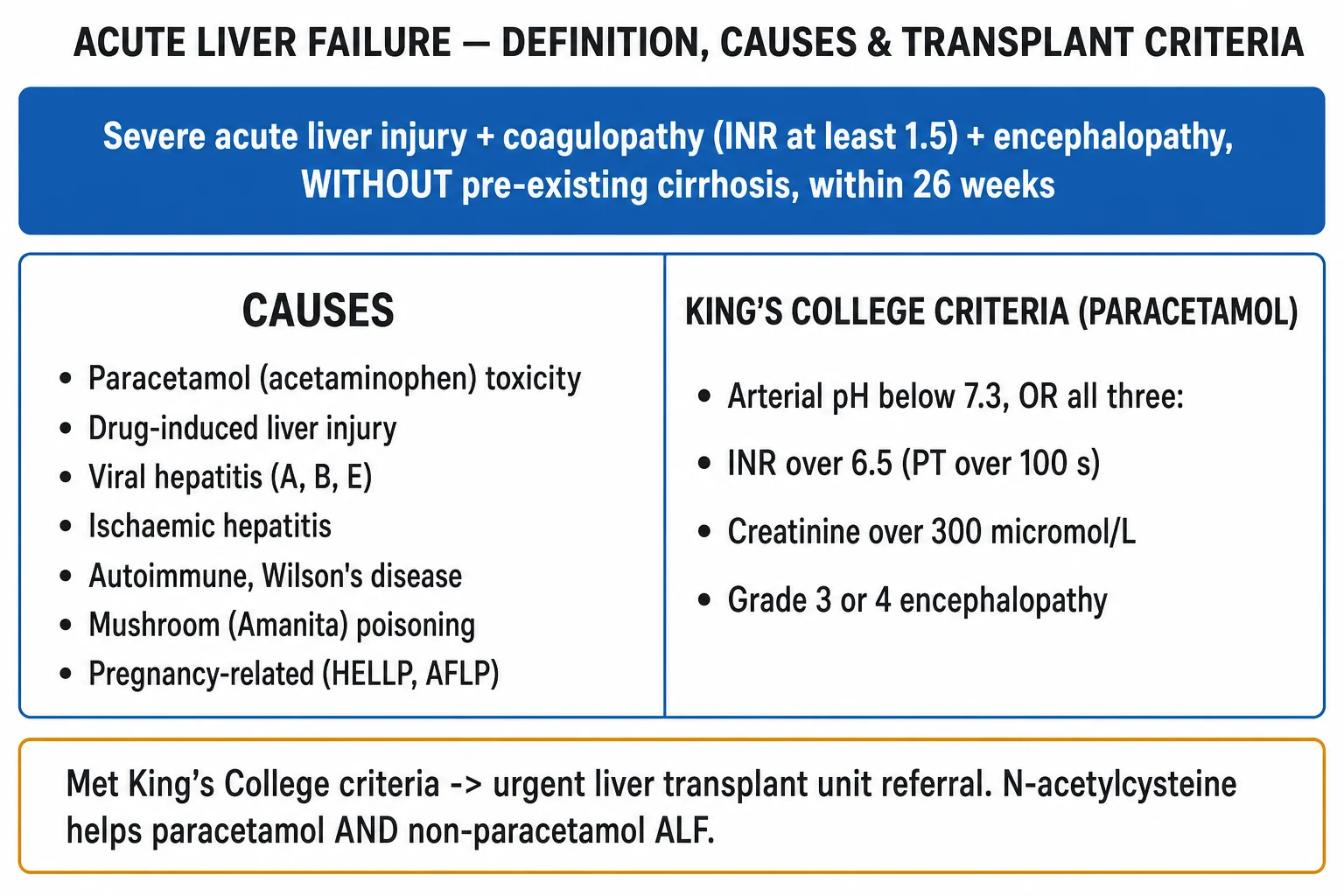
When to correct coagulopathy in ALF
- Do NOT routinely correct INR. Correcting INR with FFP masks the King's College Criteria (the most important prognostic marker) and risks volume overload / transfusion reactions.
- Correct coagulopathy when: (a) active bleeding, (b) before invasive procedures (central line, ICP bolt, arterial line — use TEG/ROTEM guidance if available), (c) before liver transplant (per transplant unit protocol).
- Vitamin K 10 mg IV slow — give to all ALF patients (corrects any vitamin K deficiency from cholestasis/poor intake; cheap, safe, does not mask INR meaningfully in true ALF).
- FFP — only if bleeding or procedure; 10-15 mL/kg; helps factor levels but short-lived (factor V and II take time to recover). Cryoprecipitate if fibrinogen <1.5 g/L.
- Platelets — transfuse if <10-20 ×10⁹/L (prophylactic) or <50 before a procedure. Thrombopoietin agonists not established in ALF.
- Tranexamic acid — controversial; consider only for active bleeding unresponsive to standard measures.
- Recombinant activated factor VII (rFVIIa) — historical use to allow procedures/ICP monitors without large volume; not routine (thrombosis risk, cost, variable effect).
Renal failure and renal replacement therapy
AKI in ALF — mechanisms and approach
| Mechanism | Features | Management implication |
|---|---|---|
| Pre-renal (hypovolaemia/low SVR) | Common; responds to fluid challenge | Trial of fluid, vasopressors; avoid nephrotoxins |
| ATN (acute tubular necrosis) | Paracetamol directly nephrotoxic; sepsis; prolonged hypotension | Usually recovers over weeks; CVVH as bridge |
| Hepatorenal syndrome (HRS-AKI) | Less common in ALF than in cirrhosis; functional | Terlipressin + albumin trial |
| Direct nephrotoxicity | Paracetamol (NAPQI), Amanita, drugs | Avoid further toxins; NAC for paracetamol |
Renal replacement therapy (RRT): continuous (CVVH/CVVHDF) preferred over intermittent haemodialysis in ALF — avoids rapid solute/fluid shifts that worsen cerebral oedema and haemodynamic instability. RRT also removes ammonia (a cerebral oedema driver). Do not delay RRT in oliguric hyperammonaemic patients.[12] }
Liver transplant — eligibility, logistics, outcomes
Liver transplant in ALF — practical decision framework
| Question | Answer |
|---|---|
| When to refer | Early — to a transplant centre before KCC met if trajectory is adverse. Discuss with transplant unit early. |
| Indication | KCC met (or equivalent criteria) + no absolute contraindication |
| Absolute contraindications | Uncontrolled sepsis; irreversible brain injury (herniation / anoxic); severe cardiopulmonary comorbidity; uncontrolled extrahepatic malignancy; active substance misuse precluding adherence; severe psychiatric disease |
| Relative contraindications | Age, frailty, multi-organ failure, uncontrolled infection, high vasopressor requirements, pH <7.0 with multi-organ failure |
| Listing priority | Highest urgency (super-urgent) — ALF patients are prioritised on national transplant lists |
| Donor types | Deceased donor (orthotopic, whole or split), living donor (right lobe), ABO-incompatible (selected) |
| 1-year survival | 80-90% (transplanted); <20% if KCC met and not transplanted |
| Futility | Withdraw organ offer if: fixed pupils, unresponsive cerebral oedema, INR falling but patient brain-dead, uncontrolled sepsis at time of organ offer |
Adjunctive and liver-support therapies
Liver-support and adjunctive therapies — evidence summary
| Therapy | Mechanism | Evidence | Role |
|---|---|---|---|
| High-volume plasma exchange (HVP) | Removes inflammatory mediators, toxins; replaces deficient factors | RCT (Larsen 2016): improved transplant-free survival[10] } | Used in some UK/European centres as bridge; gaining acceptance |
| MARS (albumin dialysis) | Removes protein-bound toxins (bilirubin, bile acids) | RELIEF RCT (2019): no survival benefit; improves encephalopathy/bilirubin | Bridge to transplant in selected; not standard of care |
| Prometheus (fractionated plasma separation) | Similar to MARS | No survival benefit shown | Bridge in selected |
| Hepatocyte transplantation | Infused hepatocytes provide temporary function | Experimental; small series | Investigational bridge |
| Bioartificial liver (ELAD) | Extracorporeal human hepatocytes | No survival benefit to date | Investigational |
| Lactulose / rifaximin | Reduce ammonia absorption / production | Limited/no proven benefit in ALF (unlike cirrhosis); may worsen dehydration | Not routinely recommended |
| Branch-chain amino acids | Reduce aromatic amino acids | No proven benefit | Not routine |
High-volume plasma exchange — Larsen 2016 (the recent positive trial)
Larsen FS, Schmidt LE, Bernsmeier C, et al. High-volume plasma exchange in patients with acute liver failure: an open randomised controlled trial. J Hepatol 2016;64:69-78. PMID 26325537. [1]
- Design: Multicentre open RCT; ALF patients (n=183) randomised to standard medical therapy ± high-volume plasma exchange (8-12 L exchange over 3 days).
- Result: HVP improved transplant-free survival at 28 days (HR for survival benefit). Benefit appeared to be via removal of inflammatory mediators (improved haemodynamics, lower vasopressor needs).
- Caveats: Open-label; survival benefit in non-transplanted group; need to be at a centre that can deliver HVP.
- Take-home: HVP is the first liver-support intervention with positive survival data in ALF and is increasingly used as a bridge to transplant/recovery in Europe.[10] }
NAC for non-paracetamol ALF — ALFSG (Lee 2009)
Lee WM, Hynan LS, Rossaro L, et al. Intravenous N-acetylcysteine improves transplant-free survival in early-stage non-acetaminophen acute liver failure. Gastroenterology 2009;137:856-864. PMID 19524577. [1]
- Design: Double-blind placebo-controlled RCT; 173 non-paracetamol ALF patients randomised to NAC vs placebo.
- Result: NAC improved transplant-free survival at 3 weeks (primary) and 1 year. Benefit was greatest in patients with grade I-II encephalopathy (early disease); no benefit in grade III-IV (too advanced).
- Secondary: improved encephalopathy and subgroup benefit — but did NOT improve overall survival once transplanted patients included.
- Take-home: Give NAC early to ALL ALF patients, including non-paracetamol — especially before deep encephalopathy develops.[8] }
ICP monitoring in ALF — Karvellas 2014 (ALFSG retrospective)
Karvellas CJ, Fix OK, Battenhouse H, et al. Outcomes and complications of intracranial pressure monitoring in acute liver failure: a retrospective multicenter analysis. Crit Care Med 2014;42:1157-1167. PMID 24351370. [1]
- Design: Retrospective multicentre ALFSG cohort; 730 ALF patients, 83 had ICP monitoring.
- Result: ICP monitor insertion had an intracranial bleeding rate of ~10% (clinically significant in ~3-4%). ICP-monitored patients had higher illness severity (selection bias). ICP monitoring did not clearly improve survival.
- Take-home: ICP monitoring is selective — reserved for transplant candidates where the result changes management; bleeding risk is real but lower than historically feared; epidural catheters may bleed less than intraparenchymal bolts.[9] }
Additional clinical pearls
Additional red flags
Exam-format quick contrasts
ALF vs ACLF vs decompensated cirrhosis — high-yield contrasts
| Feature | Acute liver failure (ALF) | Acute-on-chronic liver failure (ACLF) | Acute decompensation of cirrhosis |
|---|---|---|---|
| Background | No known chronic liver disease | Known cirrhosis | Known cirrhosis |
| Timeframe | <26 weeks | Acute deterioration over <4 weeks | Variable |
| Encephalopathy | Defining feature | Common | Common |
| Coagulopathy | Defining (INR ≥1.5) | Common | Variable |
| Cerebral oedema | Common (grade III-IV) | Less common | Rare |
| Prognostic score | King's College Criteria | CLIF-C ACLF, MELD | MELD, Child-Pugh |
| Transplant criterion | KCC | Case-by-case, futility-informed | MELD-based allocation |
| Reversibility | Often reversible (liver regenerates) | Partial | Often progressive |
Paracetamol ALF vs idiosyncratic drug ALF — bedside distinctions
| Feature | Paracetamol ALF | Idiosyncratic drug ALF |
|---|---|---|
| Onset | Days (24-72 h post-overdose) | Weeks-months after starting drug |
| Pattern | Massive AST (>1000, often >10,000) + high INR + acidosis | Variable; eosinophilia, rash may precede |
| Diagnosis | History + paracetamol level (often undetectable late) | Drug history; rule-out other causes |
| Specific therapy | NAC (definitive) | Stop drug; NAC (adjunct); steroids if autoimmune overlap |
| Recovery | Rapid if NAC given; liver regenerates in days-weeks | Slower; may be progressive |
| Mortality without transplant | ~20-30% (KCC-negative) | ~40-60% |
KCC pH criterion vs the three-feature cluster (paracetamol ALF)
| Parameter | pH <7.3 (alone) | INR >6.5 + Cr >300 + grade III-IV |
|---|---|---|
| What it reflects | Tissue hypoperfusion / anaerobic metabolism | Synthetic failure + renal failure + neuro failure |
| Sensitivity | Higher (catches more) | Lower |
| Specificity | Lower | Higher |
| Action if met alone | Recheck after adequate fluid resuscitation; if persistent, refer for transplant | Refer for transplant |
| Caveat | Lactic acidosis from NAC infusion can lower pH transiently — interpret in context | All three must be present simultaneously |
King's College Criteria — original derivation (O'Grady 1989)
O'Grady JG, Alexander GJ, Hayllar KM, Williams R. Early indicators of prognosis in fulminant hepatic failure. Gastroenterology 1989;97:439-445. PMID 2490426. [1]
- Design: Prospective cohort of >500 patients with fulminant hepatic failure (paracetamol and non-paracetamol) at King's College Hospital, London.
- Result: Identified a small set of variables (pH, INR, creatinine, age, aetiology, time to encephalopathy) that predicted mortality with >90% specificity. Formed the King's College Criteria.
- Legacy: The KCC are the most widely used and validated criteria for transplant referral in ALF worldwide, repeatedly externally validated, and remain the basis of super-urgent transplant listing in the UK and many other systems.
- Limitation: Moderate sensitivity (~70%) means some patients who need transplant are missed — hence the move to combine KCC with lactate, ammonia, and trajectory.[7] }
References
- [1]Bernal W, et al. Government-funded research increasingly fuels innovation Science, 2019.PMID 31221848
- [2]O'Grady JG, et al. Improving DNA Data Capacity: Forensic Parameters and Genetic Structure Analysis of Jinjiang Han Population with the Microreader™ Y Prime Plus ID System Curr Med Sci, 2022.PMID 35403953
- [3]Lee WM, et al. Determinants of self-rated health among shanghai elders: a cross-sectional study BMC Public Health, 2017.PMID 29029627
- [4]Struecker B, et al. Can sand nourishment material affect dune vegetation through nutrient addition? Sci Total Environ, 2020.PMID 32278174
- [5]Kortsalioudaki C, et al. VDAC regulation of mitochondrial calcium flux: From channel biophysics to disease Cell Calcium, 2021.PMID 33529977
- [6]Houlihan DD, et al. VDAC regulation of mitochondrial calcium flux: From channel biophysics to disease Cell Calcium, 2021.PMID 33529977
- [7]O'Grady JG, Alexander GJ, Hayllar KM, Williams R Early indicators of prognosis in fulminant hepatic failure Gastroenterology, 1989.PMID 2490426
- [8]Lee WM, Hynan LS, Rossaro L, et al Intravenous N-acetylcysteine improves transplant-free survival in early stage non-acetaminophen acute liver failure Gastroenterology, 2009.PMID 19524577
- [9]Karvellas CJ, Fix OK, Battenhouse H, et al Outcomes and complications of intracranial pressure monitoring in acute liver failure: a retrospective cohort study Crit Care Med, 2014.PMID 24351370
- [10]Larsen FS, Schmidt LE, Bernsmeier C, et al High-volume plasma exchange in patients with acute liver failure: An open randomised controlled trial J Hepatol, 2016.PMID 26325537
- [11]Bernal W, Hall C, Karvellas CJ, et al Arterial ammonia and clinical risk factors for encephalopathy and intracranial hypertension in acute liver failure Hepatology, 2007.PMID 17685471
- [12]Bernal W, Wendon J Acute liver failure N Engl J Med, 2014.PMID 24645957