ICU · gi-nutrition
Acute Liver Failure — Comprehensive (King's College Criteria, Cerebral Oedema, NAC, Transplantation)
Also known as Acute liver failure · ALF · Fulminant hepatic failure · Fulminant hepatitis · King's College criteria · Cerebral oedema in liver failure · N-acetylcysteine (NAC) · Amanita phalloides poisoning · Acute fatty liver of pregnancy · Emergency liver transplantation
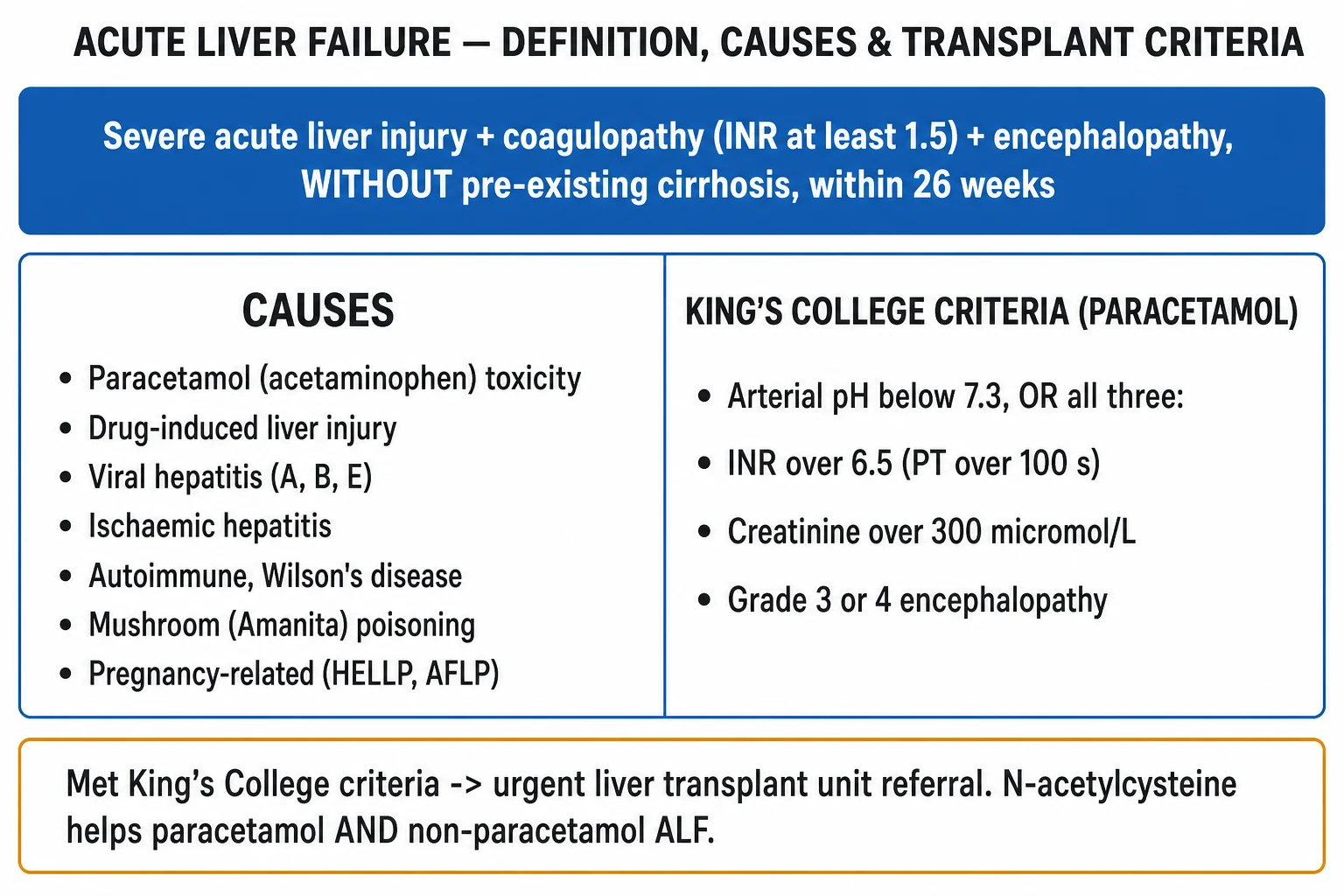
Acute liver failure (ALF) = severe acute liver injury with ENCEPHALOPATHY + COAGULOPATHY (INR =1.5) within 26 weeks of symptom onset, in a patient WITHOUT pre-existing liver disease. It is a rare (incidence <10/million/year), dynamic, life-threatening syndrome whose outcome depends entirely on the cause, the speed of organ support, and the timeliness of liver-transplant referral. AETIOLOGY is the single biggest determinant of survival: PARACETAMOL overdose is the 1 cause in the UK and Australia (~40-50% of cases, mostly intentional but increasingly 'staggered'/therapeutic misadventure in the elderly); other causes are DRUG-INDUCED liver injury (DILI — isoniazid, valproate, halothane, nitrofurantoin, flavocoxid, herbal/dietary supplements), VIRAL hepatitis (hepatitis A, B [± hepatitis D superinfection], E — especially in pregnancy and immunosuppression; HSV, EBV, CMV in the immunocompromised), ISCHAEMIC hepatitis ('shock liver' following cardiac arrest or prolonged hypotension), AUTOIMMUNE hepatitis, WILSON'S disease (young patient + Coombs-negative haemolytic anaemia + low ceruloplasmin + Kayser-Fleischer rings), PREGNANCY-RELATED (acute fatty liver of pregnancy — AFLP; HELLP syndrome — third trimester/postpartum; definitive treatment is DELIVERY), MUSHROOM poisoning (Amanita phalloides — history of wild-mushroom ingestion 24-48h earlier; antidotes penicillin G + silibinin + NAC), heat stroke/malignant hyperthermia, and INDETERMINATE (~20%). The fellowship-level intensivist must master FIVE management pillars: (1) IDENTIFY AND TREAT THE CAUSE (NAC for paracetamol — and increasingly NAC for ALL causes; antivirals for viral hepatitis; corticosteroids for autoimmune; chelation for Wilson's; penicillin/silibinin for Amanita; delivery for AFLP/HELLP); (2) CEREBRAL OEDEMA — the 1 killer — ammonia crosses the blood-brain barrier, is metabolised in astrocytes to glutamine, which accumulates osmotically and causes astrocyte swelling, oedema, raised intracranial pressure and uncal herniation; high-grade (grade 3-4) encephalopathy and arterial ammonia 150 umol/L identify the at-risk brain; management = head of bed 30 degrees neutral, hypertonic saline to keep serum sodium 145-155 mmol/L, mannitol 0.5 g/kg (if ICP monitored or signs of herniation, provided serum osmolality <320), AVOID hypotension/hypoxia/hypercapnia, prophylactic intubation at grade 3, and consider hypothermia/induced coma (barbiturates) for refractory intracranial hypertension; (3) KING'S COLLEGE CRITERIA (O'Grady 1989) — the most widely used transplant-referral trigger; for PARACETAMOL ALF: arterial pH <7.25 (after fluid resuscitation, regardless of grade) OR all three of INR 6.5 + creatinine 300 umol/L + grade 3-4 encephalopathy; for NON-PARACETAMOL ALF: INR 6.5 alone OR at least 3 of (INR 3.5 + age <10 or 40 + cause non-A/non-B or drug-induced + jaundice-to-encephalopathy interval 7 days + bilirubin 300 umol/L); lactate (>3.5 at 4h or 3.0 at 12h after resuscitation) and MELD add sensitivity; (4) SUPPORT failing organs — ventilation at grade 3-4 encephalopathy (and to control PaCO2 for cerebral perfusion), noradrenaline for vasoplegic shock, CRRT (continuous, not intermittent — avoids dialysis-disequilibrium-driven ICP rise) for AKI, 10% dextrose for the universal hypoglycaemia; and (5) SURVEIL AND PREVENT INFECTION (50-80% develop bacterial infection — a leading cause of death — daily surveillance cultures, low threshold for broad-spectrum antibiotics, and antifungal cover in high-grade encephalopathy). Two critical 'do-NOT' rules: do NOT correct the INR with fresh-frozen plasma unless the patient is bleeding or undergoing a procedure — the INR is a PROGNOSTIC marker (it is the backbone of the King's College criteria) and the 'rebalanced haemostasis' of ALF means the INR does not reflect bleeding risk (viscoelastic TEG/ROTEM does); and do NOT forget that NAC benefits non-paracetamol ALF too (Lee 2009 RCT — improved transplant-free survival in early-grade, non-paracetamol ALF), so many units now give NAC to ALL ALF. Emergency liver transplantation is the definitive therapy for those who meet King's College criteria: without it mortality exceeds 80%, with it 1-year survival is approximately 80%. The intensivist's job is to REFER EARLY (transplant logistics take time), to support the brain and other organs as a BRIDGE, and to recognise the ABSOLUTE contraindications (uncontrolled sepsis, irreversible brain injury from sustained ICP 30/CPP <40, severe comorbidity, active substance misuse, uncontrolled psychiatric illness) that make transplant futile. Overall ALF mortality without transplant is 30-50% (better for paracetamol and ischaemic causes, worse for Wilson's, drug-induced, and indeterminate causes).
On this page & tools
Your progress
Saved locally on this device.
Target exams
Red flags
Overview

Acute liver failure is among the most demanding diagnoses in intensive care medicine. It is at once a hepatic emergency (massive hepatocyte necrosis with loss of synthetic, metabolic and detoxifying function), a neurological emergency (ammonia-driven cerebral oedema and impending herniation), a haematological paradox (a high INR that does not mean what it normally means), and a logistical race against time to arrange emergency transplantation. The CICM/FFICM/EDIC candidate must be able to (a) recognise ALF and its likely cause within the first hour, (b) initiate cause-specific and organ-supportive therapy, (c) apply the King's College criteria to trigger transplant referral, and (d) manage cerebral oedema — the dominant cause of death. This topic covers the full fellowship-exhaustive syllabus: definition and classification, aetiology, the pathophysiology and management of cerebral oedema, the King's College criteria, NAC for all causes, the coagulopathy 'rebalanced haemostasis' concept, infection, renal and metabolic support, and the logistics and contraindications of emergency transplantation.[2][4]
Definition and classification
ALF is defined as severe acute liver injury with encephalopathy and coagulopathy (INR >=1.5) occurring within 26 weeks of the onset of symptoms, in a patient without pre-existing liver disease (and without cirrhosis). The 26-week cut-off distinguishes ALF from acute-on-chronic liver failure (ACLF); the absence of encephalopathy distinguishes it from severe acute liver injury (which has coagulopathy but no encephalopathy and carries a far better prognosis). The original Trey and Davidson (1968) term 'fulminant hepatic failure' has been superseded, but the O'Grady (King's College) time-based subclassification remains useful because the interval between jaundice and encephalopathy predicts both the cause and the outcome.[1][4]
O'Grady (King's College) time-based classification of ALF
| Category | Jaundice-to-encephalopathy interval | Typical cause | Cerebral oedema risk | Prognosis (without transplant) |
|---|---|---|---|---|
| Hyperacute | <7 days | Paracetamol, ischaemic ('shock liver'), Amanita | High (but rapidly evolving) | Best (~survival often possible without transplant) |
| Acute | 8-28 days | Viral hepatitis (A, B), drug-induced (DILI) | Moderate-high | Intermediate |
| Subacute | 29 days - 12 weeks | Non-A/non-B viral, indeterminate, Wilson's (sometimes), autoimmune | Lower (brain adapts) but multi-organ failure dominates | Worst (survival without transplant rare) |
The paradox the candidate must articulate: hyperacute ALF (paracetamol) carries the highest risk of cerebral oedema yet the best overall survival, because the liver is architecturally intact and regenerates once the toxin is cleared; subacute ALF causes less cerebral oedema (the brain has time to adapt osmotically) but far worse survival, because the relentless hepatocyte loss and portal hypertension make spontaneous recovery unlikely. This is why the King's College criteria differ for paracetamol (hyperacute, pH-driven) and non-paracetamol (often subacute, INR-driven) causes.[4]
Aetiology — the single biggest determinant of survival
Identifying the cause is not academic: it determines the specific antidote, the trajectory of the illness, and the urgency of transplant referral. Paracetamol is the #1 cause in the UK and Australia (~40-50% of ALF); in the United States the Acute Liver Failure Study Group (ALFSG) similarly reports paracetamol as the leading single cause (~40-50%), with drug-induced liver injury (DILI), indeterminate, and viral causes following.[2][5]
Causes of ALF — frequency, mechanism, and cause-specific ICU action
| Cause | Frequency | Mechanism / clue | Specific ICU action |
|---|---|---|---|
| Paracetamol | #1 (40-50%) | CYP2E1 -> NAPQI -> glutathione depletion -> centrilobular (zone 3) necrosis. Intentional or 'staggered' overdose; therapeutic misadventure in elderly/malnourished/alcoholic | NAC (regardless of time since ingestion); activated charcoal if <4h; check paracetamol level + nomogram |
| Drug-induced liver injury (DILI) | ~10-15% | Idiosyncratic: isoniazid, sodium valproate, halothane, nitrofurantoin, phenytoin, sulfonamides, statins, flavocoxid, herbal/dietary supplements | Stop the offending drug; NAC; corticosteroids if eosinophilia/ autoimmune features |
| Viral hepatitis | ~5-10% | HAV (IgM anti-HAV), HBV (HBsAg + anti-HBc IgM; +/- HDV), HEV (travel, pregnancy, immunosuppressed); HSV/EBV/CMV in immunocompromised/pregnant | Antivirals: entecavir/tenofovir (HBV), aciclovir (HSV — high index of suspicion in immunosuppressed) |
| Ischaemic ('shock liver') | ~5-10% | Cardiac arrest / prolonged hypotension -> centrilobular necrosis; AST/ALT >1000 (often >5000) falling rapidly once perfusion restored | Treat the underlying circulatory insult; liver usually recovers if perfusion restored |
| Autoimmune hepatitis | ~5% | ANA/ASMA anti-LKM positive; high IgG; biopsy if uncertain | Corticosteroids (prednisolone 40-60 mg or IV methylprednisolone) |
| Wilson's disease | ~2-5% | ATP7B defect -> copper accumulation; young patient + Coombs-negative haemolytic anaemia + low ceruloplasmin + Kayser-Fleischer rings + high urinary copper + low ALP relative to bilirubin | Chelation (D-penicillamine); almost always needs transplant |
| Pregnancy-related | <2% | AFLP (Swansea criteria; third trimester) and HELLP; definitive trigger is the fetus | DELIVER the baby (definitive); supportive care; usually resolves post-partum |
| Mushroom (Amanita phalloides) | rare | Wild-mushroom ingestion 24-48h before GI symptoms -> amatoxin -> hepatic necrosis | Penicillin G (1 MU/kg/day) + silibinin (milk thistle) + NAC; consider transplant |
| Indeterminate | ~15-20% | No cause identified despite full workup | Supportive care; NAC; transplant if criteria met; worst non-paracetamol prognosis |
The two intensive-care imperatives in the cause-finding phase are (1) always send a paracetamol level even when the history is denied — paracetamol is common, treatable, and has a specific antidote; and (2) recognise Wilson's disease in the young patient with ALF and a Coombs-negative haemolytic anaemia, because it almost never recovers without transplantation and the index of suspicion must be high.[2][6]
Pathophysiology of cerebral oedema — the #1 killer
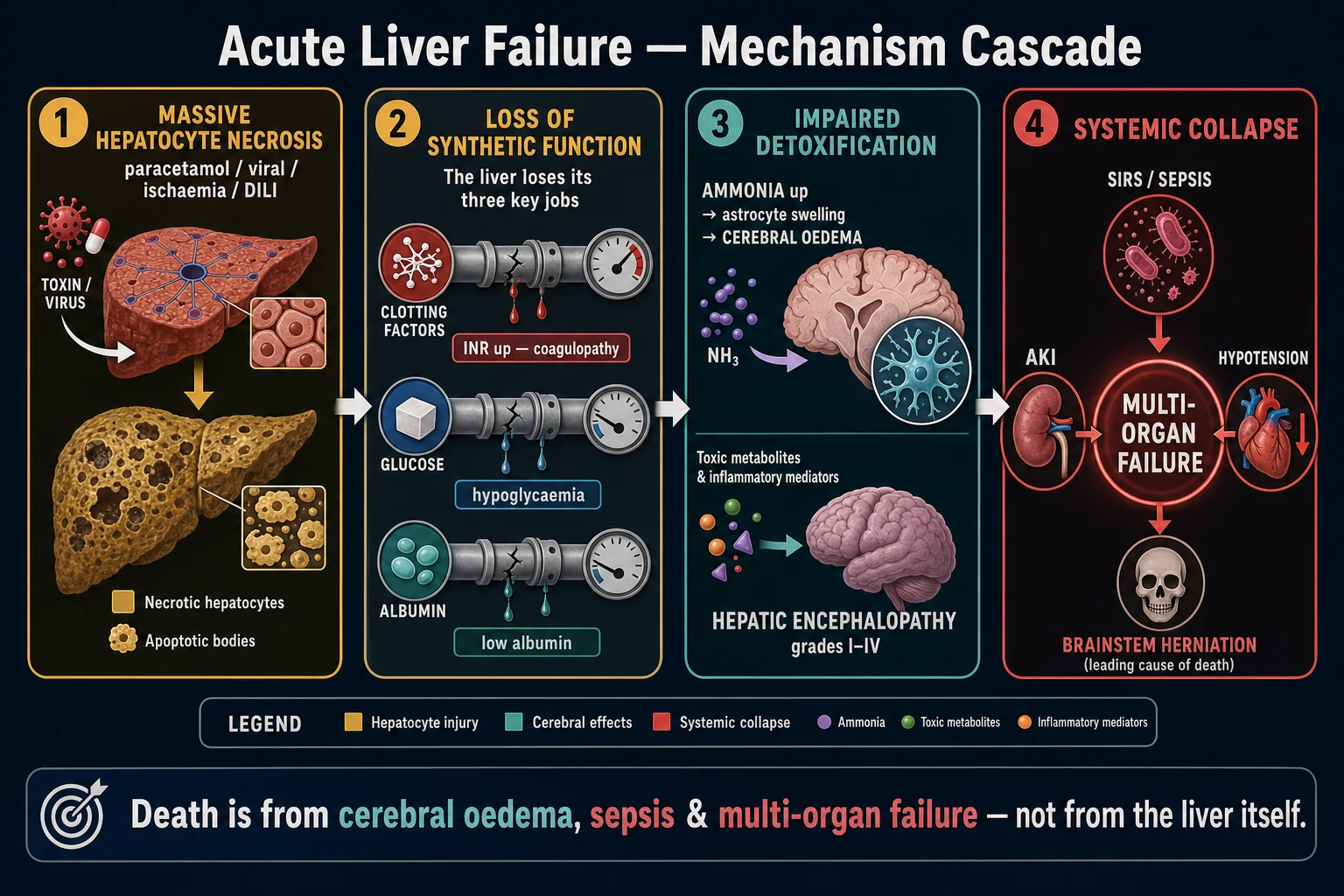
Cerebral oedema with raised intracranial pressure (ICP) is the dominant cause of death in ALF, occurring in up to 75-80% of patients who progress to grade 4 encephalopathy. Understanding the mechanism is the key to rational management.[2][4]
Ammonia -> glutamine -> astrocyte swelling -> herniation — the mechanistic cascade
- AMMONIA ACCUMULATION — ammonia is produced in the gut (bacterial metabolism of urea/protein) and normally cleared by the liver's urea cycle. In ALF the failing liver cannot convert ammonia to urea, so arterial ammonia rises.
- BLOOD-BRAIN BARRIER CROSSING — ammonia (as NH3) diffuses readily across the BBB into the brain, where it is taken up almost exclusively by astrocytes.
- ASTROCYTE GLUTAMINE SYNTHETASE — astrocytes express glutamine synthetase, which condenses ammonia with glutamate to form glutamine (this is the brain's only ammonia-detoxification pathway).
- OSMOTIC ASTROCYTE SWELLING — glutamine accumulates intracellularly, acts as an osmole, draws in water, and causes astrocyte swelling (cytotoxic oedema). The system normally adapts by releasing osmolytes (myo-inositol), but this adaptation is overwhelmed in acute (especially hyperacute) ALF.
- CEREBRAL OEDEMA -> RAISED ICP -> HERNIATION — the swollen brain, in a rigid calvarium, raises ICP; uncal herniation compresses the brainstem -> Cushing's triad (hypertension, bradycardia, irregular respiration — a late, pre-terminal sign) -> death.
The two clinical risk-stratification markers the candidate must know: (a) encephalopathy grade — cerebral oedema is rare below grade 3 and common at grade 3-4; and (b) arterial ammonia — a level >150 umol/L identifies patients at high risk of cerebral oedema and herniation, and a rising trend is ominous (venous ammonia is less reliable due to muscle metabolism). Ammonia is both the principal neurotoxin and a prognostic marker.[2][4]
West Haven grading of hepatic encephalopathy in ALF
| Grade | Mental state | Clinical signs | Cerebral oedema risk | Management implication |
|---|---|---|---|---|
| I | Mild confusion, euphoria/anxiety, shortened attention, sleep reversal | +/- asterixis | Very low | Ward/HDU; treat cause |
| II | Lethargy, disorientation, personality change | Asterixis present | Low | ICU; anticipate deterioration |
| III | Somnolent but rousable, marked confusion, gross disorientation | Asterixis may be lost | High — start cerebral-oedema prophylaxis | Intubate/ventilate; head 30 deg; hypertonic saline; consider ICP monitor |
| IV | Coma (unresponsive to verbal stimuli) | Decerebrate/decorticate posturing; Cushing's triad if herniating | Very high | Full neuroprotection; ICP monitor; transplant or die |
First-hour ICU assessment
First-hour ICU assessment of suspected acute liver failure
- CONFIRM THE DIAGNOSIS — acute liver injury (AST/ALT typically >1000, though Wilson's/ischaemic may differ) + coagulopathy (INR >=1.5) + encephalopathy (any grade), within 26 weeks, no pre-existing liver disease. Distinguish from ACLF (chronic disease present) and from severe acute hepatitis (coagulopathy but no encephalopathy). Send FBC, U&E, LFTs, glucose, lactate, ammonia (arterial), INR, fibrinogen, blood gas (arterial pH), blood cultures, paracetamol level, and a full cause screen.
- GRADE THE ENCEPHALOPATHY — West Haven grade I-IV (table above). This single assessment dictates the level of monitoring, the threshold for intubation and ICP monitoring, and the urgency of transplant referral. Grade >=3 = ICU with neuroprotective measures.
- IDENTIFY THE CAUSE (parallel to resuscitation) — paracetamol level + history; viral serology (HAV IgM, HBsAg, anti-HBc IgM, anti-HDV, HEV IgM/RNA, HSV/EBV/CMV PCR in immunosuppressed); autoimmune (ANA, ASMA, anti-LKM, IgG); Wilson's (ceruloplasmin, 24h urinary copper, slit-lamp for Kayser-Fleischer rings, Coombs test); pregnancy test (AFLP/HELLP); Amanita (dietary history); ischaemic (recent arrest/shock). Imaging (ultrasound/CT) to exclude Budd-Chiari, biliary obstruction, and (later) hepatic necrosis extent.
- RESUSCITATE AND SUPPORT ORGANS — secure the airway (intubate at grade 3 encephalopathy for airway protection and PaCO2 control); establish monitoring (arterial line, central access); correct hypoglycaemia (10% dextrose); maintain MAP >=65 (noradrenaline for vasoplegia); start CRRT for AKI; identify and treat sepsis.
- START NAC — give NAC to ALL suspected ALF immediately while the cause is being established (do not wait for the paracetamol level). NAC is cheap, safe, and benefits both paracetamol and non-paracetamol ALF.
- APPLY THE KING'S COLLEGE CRITERIA EARLY AND REPEATEDLY — calculate on admission and re-check at intervals (the criteria are dynamic). If met -> urgent liver-transplant referral (criteria trigger referral; the transplant centre makes the final decision).
- COMMENCE CEREBRAL-OEDEMA PROPHYLAXIS if grade >=2-3 — head of bed 30 degrees neutral; hypertonic saline to target Na 145-155; avoid hypotension/hypoxia/hypercapnia; plan for ICP monitoring at grade 3-4.
N-acetylcysteine (NAC) — for paracetamol AND for ALL ALF
NAC is the single most important cause-specific therapy in ALF. Its role has expanded from 'the paracetamol antidote' to 'a therapy for all ALF', and the CICM/FFICM candidate must know both the paracetamol and the non-paracetamol evidence.[3][4]
For paracetamol ALF, NAC replenishes hepatic glutathione, which detoxifies the toxic metabolite NAPQI. The modern dogma is to give it regardless of the time since ingestion — even established ALF with hepatocyte injury benefits (NAC has anti-inflammatory and antioxidant effects beyond glutathione repletion, and improves microcirculation). The historic '8-hour window' applies to prevention of hepatotoxicity (using the Rumack-Matthew nomogram), not to treatment of established ALF. Activated charcoal is adjunctive if given within 1-4 hours of ingestion and does not preclude NAC. The standard IV regimen is 150 mg/kg over 1 hour (loading), then 50 mg/kg over 4 hours, then 100 mg/kg over 16 hours (total 300 mg/kg over 21 hours); many units now use a simplified 200 mg/kg over 4 h then 100 mg/kg over 16 h regimen, or continue NAC until the INR is improving. [1]
For non-paracetamol ALF, the Lee 2009 RCT (US ALFSG) randomised 173 patients with non-acetaminophen ALF to IV NAC vs placebo. Overall survival was not significantly different, but transplant-free survival was significantly better with NAC (40% vs 27%), driven entirely by a benefit in patients with grade I-II (early) encephalopathy (transplant-free survival 52% vs 30%); patients with advanced coma (grade III-IV) did not benefit. The practical consequence: many units now give NAC to all ALF regardless of cause, particularly early-grade disease, because it is safe, cheap, and may improve transplant-free survival.[3]
NAC in ALF — paracetamol vs non-paracetamol
| Question | Paracetamol ALF | Non-paracetamol ALF |
|---|---|---|
| Mechanism of benefit | Replenishes glutathione -> detoxifies NAPQI; antioxidant; improves microcirculation | Antioxidant; free-radical scavenging; improves oxygen delivery/microcirculation |
| Timing | Give regardless of time since ingestion (even >24h benefits established ALF) | Give early (benefit confined to grade I-II encephalopathy) |
| Evidence | Standard of care; reduces mortality (Keays 1991 RCT; cohort data) | Lee 2009 RCT: improved transplant-free survival (40% vs 27%), benefit only in early-grade |
| Recommendation | NAC for ALL paracetamol ALF | NAC for all non-paracetamol ALF, especially grade I-II (EASL and many units) |
Cerebral oedema management — neuroprotection in ALF
Because cerebral oedema is the #1 killer, neuroprotective management is central to ALF intensive care. The strategy combines prevention of secondary brain injury, osmotherapy, sedation and ventilation, and ICP monitoring in high-grade encephalopathy.[2][4][6]
Cerebral oedema management in ALF — the neuroprotective bundle
- HEAD POSITION — head of bed elevated 30 degrees and in a neutral position (promotes jugular venous outflow and lowers ICP). Avoid tight endotracheal-tape ties and neck flexion that impede venous drainage.
- MAINTAIN CEREBRAL PERFUSION — the brain of an ALF patient loses autoregulation, so cerebral blood flow becomes pressure-passive. Maintain MAP >=65 mmHg (noradrenaline) and target CPP (MAP - ICP) 60-70 mmHg if ICP monitored. AVOID hypotension (worsens cerebral ischaemia), hypoxia (PaO2 <60), and hypercapnia (PaCO2 >45 -> cerebral vasodilation -> raised ICP). Target normocapnia (PaCO2 35-40).
- HYPERTONIC SALINE — induce and maintain mild hypernatraemia (serum Na 145-155 mmol/L) with 30% hypertonic saline boluses or infusion. Hypernatraemia draws water osmotically out of the swollen brain. This is supported by an RCT (Murphy 2004) showing hypertonic saline (target Na 145-155) reduced ICP and improved survival in high-grade encephalopathy.
- MANNITOL — 0.5 g/kg bolus (20% solution) for acutely raised ICP or signs of herniation, provided serum osmolality is <320 mOsm/kg and renal function allows excretion (mannitol is a filtered osmole and accumulates in AKI). Re-measure osmolality before repeat doses. Mannitol is reserved for confirmed/suspected intracranial hypertension; routine prophylactic mannitol is not recommended.
- SEDATION AND VENTILATION — prophylactically intubate and ventilate at grade 3 encephalopathy (airway protection + control of PaCO2 + facilitation of procedures/transfer). Use a short-acting agent that allows neurological assessment: propofol (preferred — short half-life, reduces cerebral metabolic rate) but watch for propofol infusion syndrome (lactate, acidosis, arrhythmia) on prolonged high-dose infusion; midazolam accumulates in liver failure (avoid if possible). Fentanyl for analgesia. Avoid excessive stimulation/suctioning (raises ICP).
- ICP MONITORING — consider an intracranial pressure monitor (parenchymal or epidural) in grade 3-4 encephalopathy, particularly if listed for transplant, to guide osmotherapy and detect herniation. The benefit is debated (the risk of intracranial bleeding must be weighed against the 'rebalanced' coagulopathy), but it guides CPP-targeted therapy and the decision to proceed to transplant. Epidural monitors carry the lowest bleeding risk.
- REFRACTORY INTRACRANIAL HYPERTENSION — if ICP remains >20-25 despite the above: barbiturate coma (thiopentone — reduces cerebral metabolic rate and ICP), moderate induced hypothermia (32-34 degC), and induced hypernatraemia to >155. These are bridge-to-transplant measures. A sustained ICP >30 mmHg or CPP <40 for >2 hours suggests irreversible brain injury and is generally a contraindication to transplant (futility).
Osmotherapy in ALF cerebral oedema — hypertonic saline vs mannitol
| Agent | Mechanism | Dose / target | When | Cautions |
|---|---|---|---|---|
| Hypertonic saline (30%) | Osmotic gradient draws water out of brain; induces mild hypernatraemia | Bolus or infusion to Na 145-155 mmol/L | First-line for prophylaxis in grade >=2-3 encephalopathy; sustained throughout | Hypernatraemia, volume overload, central-line (irritant peripherally) |
| Mannitol (20%) | Filtered osmole -> osmotic diuresis -> reduces brain water | 0.5 g/kg bolus | Acutely raised ICP / signs of herniation; if osmolality <320 and kidneys excreting | Contraindicated in AKI/anuria (accumulates -> rebound hyperosmolality); check osmolality before each dose |
King's College criteria — the transplant-referral trigger
The King's College criteria (O'Grady 1989), derived from 588 patients and validated prospectively, remain the most widely used and most examined prognostic criteria for transplant referral in ALF. They predict mortality without transplant (sensitivity ~70%, specificity ~90% overall; higher specificity for paracetamol). The criteria are cause-specific and should be applied repeatedly as the patient evolves.[1][4]
King's College criteria for emergency liver transplantation in ALF
| Cause | Criteria (meet ANY ONE criterion -> refer for transplant) |
|---|---|
| Paracetamol | Arterial pH <7.25 (after adequate fluid resuscitation, regardless of grade/encephalopathy) OR ALL THREE of: INR >6.5 + creatinine >300 umol/L + grade 3-4 encephalopathy |
| Non-paracetamol | INR >6.5 alone OR at least 3 of 5: INR >3.5 + age <10 or >40 + cause non-A/non-B viral or drug-induced + jaundice-to-encephalopathy interval >7 days + bilirubin >300 umol/L |
| Wilson's disease | A combination of INR and bilirubin (e.g. INR and bilirubin combined score; INR >3.5 with Wilson's ALF) — Wilson's ALF almost always meets criteria and almost always needs transplant |
| Additions (increase sensitivity) | Arterial lactate >3.5 mmol/L at 4h (early, post-resuscitation) or >3.0 mmol/L at 12h; MELD score (high MELD predicts poor outcome); phosphate >1.2 mmol/L at 48-96h |
The clinical use of the criteria: they are a referral trigger, not an operating decision. Meeting the criteria means urgent contact with a liver-transplant centre for assessment, workup (including psychosocial), and listing. Because organ procurement, workup, and inter-hospital transfer all take time, the intensivist must apply the criteria early and often, and refer before the patient has irremediable brain injury or uncontrolled sepsis (which become absolute contraindications). The criteria are most powerful for paracetamol (high specificity — a patient meeting them is very likely to die without transplant) and less sensitive for non-paracetamol causes (which is why lactate, phosphate, and MELD are used as adjuncts).[1][5]
Coagulopathy — 'rebalanced haemostasis' and the prognostic INR
The coagulopathy of ALF is the source of two of the most common and most examinable errors in management. The intensivist must understand the concept of rebalanced haemostasis and must not chase the INR.[2][4]
In ALF the liver fails to synthesise both procoagulant factors (II, V, VII, IX, X, fibrinogen) and anticoagulant proteins (protein C, protein S, antithrombin). Both arms of the haemostatic system fall together, so the net bleeding tendency is much less than the (prolonged) INR suggests — this is 'rebalanced haemostasis'. The INR measures only the procoagulant (extrinsic) pathway and so overestimates bleeding risk. Viscoelastic testing (TEG/ROTEM) gives a far better picture of the actual haemostatic balance and should guide transfusion. [1]
The coagulopathy of ALF — what to do and what NOT to do
| Principle | Rationale |
|---|---|
| The INR is PROGNOSTIC, not a bleeding-risk marker | The INR is the backbone of the King's College criteria (it quantifies liver synthetic failure). Correcting it removes the prognostic information and does not reduce bleeding. |
| Do NOT give FFP/platelets to correct a high INR in a non-bleeding patient | FFP adds volume (worsens cerebral oedema/ICP), may 'fuel' the failing liver, and does not reflect true bleeding risk. Prophylactic correction does not prevent bleeding. |
| Transfuse ONLY if bleeding or before an invasive procedure (e.g. ICP monitor) | Give vitamin K (10 mg IV — corrects any vitamin K deficiency), FFP, platelets, cryoprecipitate (for fibrinogen <1.5 g/L) guided by TEG/ROTEM. |
| Give DVT prophylaxis (LMWH) despite the high INR | ALF patients are prothrombotic ('rebalanced' haemostasis + low antithrombin/protein C + sepsis + immobility); the INR does not protect them. |
| Use TEG/ROTEM to assess true haemostasis | Far superior to the INR/platelet count in ALF; guides rational product use. |
The single most important examinable point: the INR in ALF is a marker of liver synthetic failure (and hence prognosis/transplant need), not a marker of bleeding risk. Routine correction with FFP is harmful and obscures the King's College criteria. Transfuse only for active bleeding or before procedures.[4]
Infection surveillance and prophylaxis
Infection develops in 50-80% of ALF patients and is a leading cause of death, both directly (sepsis) and indirectly (infection often triggers encephalopathy deterioration and is a contraindication to transplant). The predisposition is multifactorial: reticuloendothelial (Kupffer cell) dysfunction, impaired neutrophil function, reduced complement/opsonins, gut bacterial translocation (portal hypertension + disrupted mucosal barrier), and invasive devices (central lines, urinary catheters, endotracheal tubes).[2][4]
Surveillance and empiric therapy: perform daily surveillance cultures (blood, urine, sputum, line sites); maintain a low threshold for starting broad-spectrum antibiotics (e.g. piperacillin-tazobactam or a third-generation cephalosporin) for any new fever, leucocytosis, acidosis, or unexplained haemodynamic/encephalopathy deterioration — because the inflammatory response may be blunted and the threshold to treat is low. Add antifungal cover (e.g. fluconazole, echinocandin) in high-grade encephalopathy, prolonged broad-spectrum antibiotics, renal replacement therapy, or repeated infection — fungal (Candida) infection is common and under-recognised. Whether to give prophylactic antibiotics/antifungals routinely is debated (some units do in high-grade encephalopathy); the EASL guidance favours a low threshold for treatment rather than blanket prophylaxis. Infection control (line care, ventilator bundle, hand hygiene) is fundamental.[6]
Organ support — circulation, respiration, renal, metabolic
ALF produces a characteristic multi-organ failure pattern that the intensivist must support as a bridge to transplant or recovery.[2][4]
System-by-system organ support in ALF
| System | Problem | ICU management |
|---|---|---|
| Neurological | Cerebral oedema / raised ICP (#1 killer) | Neuroprotective bundle (above): head 30 deg, hypertonic saline Na 145-155, mannitol, intubate at grade 3, ICP monitoring, avoid hypotension/hypoxia/hypercapnia |
| Cardiovascular | Initially hyperdynamic (low SVR, vasoplegia — resembles sepsis); later shock | Noradrenaline first-line (target MAP >=65 to maintain CPP); vasopressin adjunct; correct hypovolaemia cautiously (avoid worsening cerebral oedema); monitor lactate |
| Respiratory | Aspiration risk (encephalopathy); ARDS from SIRS; atelectasis | Intubate at grade 3; lung-protective ventilation if ARDS (Vt 6 mL/kg PBW, plateau <30); control PaCO2 for ICP |
| Renal | AKI common (hepatorenal physiology, ATN from hypoperfusion/nephrotoxins, paracetamol nephrotoxicity) | CRRT (continuous — preferred over intermittent haemodialysis because it avoids rapid solute shifts -> dialysis disequilibrium -> raised ICP); avoid nephrotoxins; optimise perfusion |
| Metabolic — glucose | Hypoglycaemia universal (liver cannot gluconeogenise; impaired insulin clearance) | 10% dextrose infusion; check glucose hourly; keep glucose 4-7 mmol/L. Worsening encephalopathy may be hypoglycaemia, not liver failure — ALWAYS check glucose. |
| Metabolic — acid-base | Metabolic acidosis (lactic, renal); respiratory alkalosis (hyperventilation/ammonia) | Treat cause; CRRT for acidosis; arterial pH is a King's criterion (paracetamol) |
| Haematology | Coagulopathy (rebalanced); thrombocytopenia | Vitamin K; transfuse ONLY if bleeding/procedure; DVT prophylaxis; TEG/ROTEM-guided |
| Gastrointestinal | Stress ulceration; poor nutrition | Stress-ulcer prophylaxis (PPI); early enteral nutrition where feasible |
The renal point deserves emphasis: continuous renal replacement therapy (CRRT) is strongly preferred over intermittent haemodialysis in ALF with cerebral oedema, because the rapid solute and osmolality shifts of IHD can precipitate dialysis disequilibrium and raise ICP. CRRT provides smooth, haemodynamically tolerant solute clearance. Paracetamol is itself nephrotoxic (acute tubular necrosis), and AKI is an independent predictor of poor outcome and a component of the King's College criteria.[2]
Emergency liver transplantation — definitive therapy
Emergency liver transplantation is the definitive treatment for ALF that meets the King's College criteria. Without transplant, such patients have mortality >80%; with transplant, 1-year survival is approximately 80%. The intensivist's responsibilities are to refer early, bridge safely, and recognise contraindications.[4][5]
Referral and logistics: King's College criteria (or equivalent) trigger urgent referral to a liver-transplant centre. If the patient is in a non-transplant hospital, transfer early — the workup (imaging to exclude chronic disease, psychosocial assessment, blood-grouping, organ procurement, listing, and transport) takes many hours, and the window between meeting criteria and developing irreversible brain injury or sepsis may be narrow. ALF is given the highest transplant priority (e.g. 'Status 1' in the US; super-urgent listing in the UK/Australia) because of its rapidly fatal course.[5]
Contraindications to emergency liver transplantation in ALF
| Type | Examples |
|---|---|
| Absolute | Irreversible brain injury (sustained ICP >30 mmHg or CPP <40 for >2 hours); uncontrolled sepsis with multi-organ failure; severe cardiopulmonary comorbidity precluding major surgery; uncontrolled malignancy |
| Relative | Active substance misuse / uncontrolled psychiatric illness (raises post-transplant non-adherence risk); age with frailty; refractory shock requiring escalating vasopressors; late presentation with multi-organ failure |
The futility decision is among the hardest in intensive care: a patient may meet King's College criteria (justifying transplant) yet develop an absolute contraindication (uncontrolled intracranial hypertension with brainstem injury) that makes transplant pointless. Conversely, a patient who is recovering (INR falling, encephalopathy improving) may be delisted. Artificial liver support (MARS — Molecular Adsorbent Recirculating System; albumin dialysis) can remove protein-bound toxins (bilirubin, ammonia) and is used as a bridge to transplant or recovery, but the RELIEF trial (2013) showed no survival benefit — it is not a substitute for transplant.[2][4]
Clinical pearls
Red flags
Prognosis
Outcomes and prognostic factors in acute liver failure
| Factor | Outcome | Notes |
|---|---|---|
| Overall ALF mortality (no transplant) | 30-50% | Driven by cerebral oedema, sepsis, multi-organ failure |
| Paracetamol ALF (no transplant) | ~20-30% mortality | Best prognosis — liver regenerates once toxin cleared |
| Ischaemic ('shock liver') | Good if perfusion restored | AST/ALT falls rapidly; usually reversible |
| Viral / drug-induced / Wilson's / indeterminate | 50-80% mortality without transplant | Worst prognosis — transplant usually needed |
| With emergency transplant | ~20% mortality; ~80% 1-year survival | Definitive therapy for King's College criteria |
| Cerebral oedema (grade 4) | Up to 75-80% develop; leading cause of death | Head 30 deg, hypertonic saline, mannitol, ICP monitoring |
| Predictors of poor outcome | High-grade encephalopathy, ammonia >150, high INR, pH <7.25, AKI, infection, Wilson's/indeterminate cause | King's criteria, lactate, MELD combine these |
| Recovery | Full recovery if survives — liver regenerates | No chronic liver disease (unlike cirrhosis) |
ALF mortality follows two patterns: early deaths (first days) from cerebral oedema/herniation, refractory shock, and overwhelming SIRS; and late deaths (after the first week) from sepsis and multi-organ failure. Modern intensive care — early NAC, disciplined neuroprotection, CRRT, infection surveillance, and timely emergency transplantation — has reduced overall mortality from >80% (historical) to ~30-50% without transplant and ~20% with transplant. The cause remains the single biggest determinant: paracetamol and ischaemic causes can recover spontaneously; Wilson's, drug-induced, and indeterminate causes usually need transplant. The intensivist's central tasks are to identify the cause, support the brain and other organs as a bridge, apply the King's College criteria early, and refer for transplant before irreversible brain injury or uncontrolled sepsis supervene.[4][5]
Key trials and evidence
O'Grady 1989 — King's College Criteria (Gastroenterology; PMID 2490426)
Source
Retrospective analysis of 588 patients with ALF (1973-1985), validated prospectively in 175 patients (1986-1987), King's College London
Objective
Identify early prognostic indicators to select patients for liver transplantation
Paracetamol criteria
Arterial pH <7.30 (now <7.25), OR all three of (INR/PT >100 s + creatinine >300 umol/L + grade 3-4 encephalopathy)
Non-paracetamol criteria
INR/PT >100 s (now INR >6.5) alone, OR >=3 of (INR/PT >50 s + age <10/>40 + non-A/non-B or drug cause + jaundice-to-encephalopathy >7 days + bilirubin >300 umol/L)
Key finding
Cause-specific variables predict mortality without transplant with high specificity (~90%) -> the most widely used transplant-referral criteria worldwide
Clinical bottom line
Apply the King's College criteria on admission AND repeatedly; meeting them triggers urgent transplant referral
Lee 2009 — NAC for non-paracetamol ALF (Gastroenterology; PMID 19465010)
Source
Multicentre double-blind RCT, US ALFSG; 173 patients with non-acetaminophen ALF, grade I-II or III-IV encephalopathy
Intervention
IV N-acetylcysteine vs placebo
Overall survival (3 weeks)
70% NAC vs 66% placebo (1-sided P=0.28) — not significant
Transplant-free survival
40% NAC vs 27% placebo (1-sided P=0.043) — SIGNIFICANT
Subgroup (grade I-II encephalopathy)
Transplant-free survival 52% NAC vs 30% placebo (P=0.010) — benefit confined to early disease; no benefit in grade III-IV
Clinical bottom line
NAC improves transplant-free survival in early-stage (grade I-II) non-paracetamol ALF -> give NAC to ALL ALF, especially early-grade disease
US ALFSG — Outcomes of ALF listed for transplant (Liver Transplantation 2022/23; PMID 35980605)
Source
Multicentre prospective cohort, US Acute Liver Failure Study Group; patients with ALF listed for emergency liver transplantation
Objective
Define outcomes and predictors of death without transplant in ALF patients listed for emergency liver transplantation
Key findings
Significant proportion die or develop contraindications while listed; predictors of death-without-transplant include older age, non-paracetamol aetiology, vasopressor requirement, and severity of encephalopathy; transplantation substantially improves survival
Clinical bottom line
Early listing and rapid access to a graft are critical — listed ALF patients remain at high risk of death from cerebral oedema and sepsis before a graft becomes available; refer early
Short answer questions
Acute liver failure — first-hour ICU and transplant referral
10 minutes · 10 marks
A 28-year-old is admitted with hyperacute liver failure after a paracetamol overdose. GCS 12, INR 4.2, arterial pH 7.22, creatinine 280 µmol/L, ammonia 140 µmol/L. Outline your immediate ICU priorities and when you would refer for emergency liver transplantation.
References
- [1]O'Grady JG, Alexander GJ, Hayllar KM, Williams R Early indicators of prognosis in fulminant hepatic failure Gastroenterology, 1989.PMID 2490426
- [2]Bernal W, Auzinger G, Dhawan A, Wendon J Acute liver failure Lancet, 2010.PMID 20638564
- [3]Lee WM, Hynan LS, Rossaro L, et al. The molecular mechanism of aminoguanidine-mediated reduction on the brain edema after surgical brain injury in rats Brain Res, 2009.PMID 19465010
- [4]Bernal W, Wendon J Acute liver failure N Engl J Med, 2013.PMID 24369077
- [5]Karvellas CJ, Leventhal TM, Rakela JL, et al. Outcomes of patients with acute liver failure listed for liver transplantation: A multicenter prospective cohort analysis Liver Transpl, 2023.PMID 35980605
- [6]European Association for the Study of the Liver (Wendon J, et al.) EASL Clinical Practical Guidelines on the management of acute (fulminant) liver failure J Hepatol, 2017.PMID 28417882