ICU · GI/Nutrition
Acute-on-chronic liver failure (ACLF)
Also known as Acute-on-chronic liver failure (ACLF) · CLIF-C score · APASL ACLF · Liver transplant for ACLF · CANONIC criteria · CLIF-C OF score · Cirrhosis with organ failure
ACLF is acute decompensation of known cirrhosis with organ failure(s) and high 28-day mortality. Different from simple cirrhosis decompensation — ACLF has systemic inflammation, organ failure, and distinct prognosis. Precipitants: infection (1), alcohol, GI bleed, drugs, viral hepatitis. CLIF-C OF score grades organ failure (liver, kidney, brain, coagulation, circulation, lung). 28-day mortality: ACLF grade 1 ~22%, grade 2 ~32%, grade 3 ~77%. Treatment: manage precipitant, organ support, early liver transplant referral (best outcomes in ACLF grade 1-2). NAC may improve outcomes. Do NOT use steroids. Terlipressin for hepatorenal syndrome.
On this page & tools
Your progress
Saved locally on this device.
Target exams
Red flags

What ACLF is — and what it is NOT
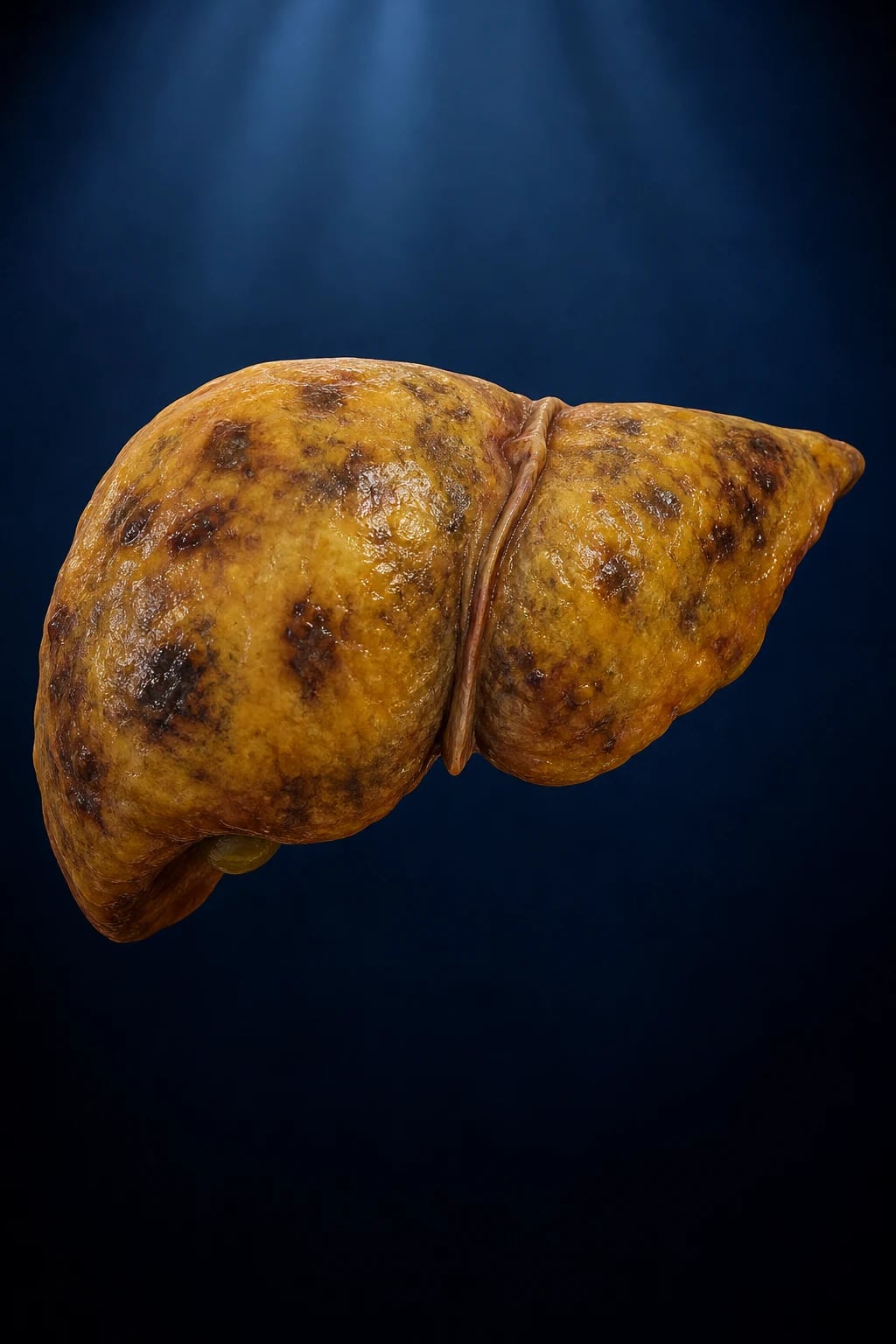
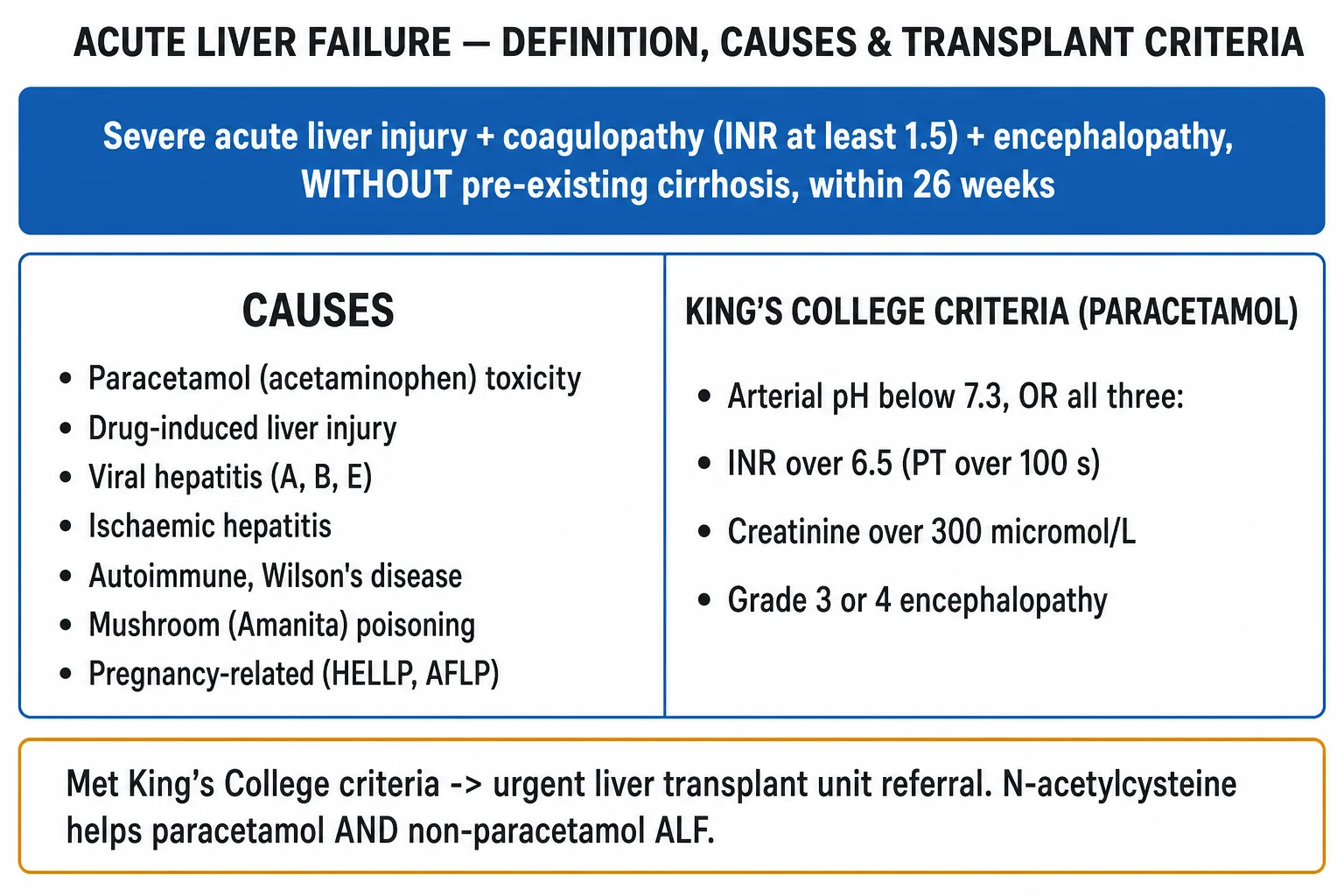
ACLF vs acute decompensation (AD) vs acute liver failure (ALF) — do not conflate
| Feature | ACLF | Acute decompensation (AD) | Acute liver failure (ALF) |
|---|---|---|---|
| Underlying liver | Known chronic liver disease / cirrhosis | Known cirrhosis | No pre-existing liver disease |
| Time course | 2-4 weeks (acute deterioration) | Days-weeks | <26 weeks (often days) |
| Hallmark | Organ failure(s) + systemic inflammation | Single complication (ascites, HE, bleed) | Encephalopathy + coagulopathy |
| INR / coagulopathy | Often high (organ failure marker) | Variable | High (definition) |
| 28-day mortality | Grade-dependent (22-77%) | Lower (~5-20%) | Grade-dependent (King's College) |
| Reversibility | Potentially reversible; transplant works | Usually reversible with treatment of trigger | Potentially reversible; transplant in selected |
| Relevant score | CLIF-C OF / CLIF-C ACLF | Child-Pugh / MELD-Na | King's College / MELD |
| Steroids | No (harm) | No | No (except autoimmune) |
| NAC | Possibly beneficial | Not indicated | Beneficial in early non-acetaminophen ALF |
EASL (APASL-convergent) vs APASL definitions of ACLF — the two traditions
| Feature | EASL (European) / CANONIC | APASL (Asian-Pacific) |
|---|---|---|
| Baseline | Cirrhosis (any cause) | Chronic hepatitis / cirrhosis (often HBV) |
| Trigger | Bacterial infection, GI bleed, alcohol #1 | Viral flare, hepatitis (HBV reactivation), DILI #1 |
| Defining feature | Organ failure (CLIF-C OF) | Liver failure + coagulopathy + jaundice within 4 weeks |
| Brain failure required? | No | No (HE is a later complication) |
| Scores | CLIF-C OF, CLIF-C ACLF | APASL ACLF research consortium (AARC) score |
| Convergence | Kyoto Consensus (2025) unified the definitions — ACLF = acute hepatic decompensation manifesting as jaundice + coagulopathy + encephalopathy and/or extrahepatic organ failure within 4 weeks | — |
Diagnosis
[1] [2]CLIF-C OF score — the full 6-organ, 3-tier scoring grid (use the worst value in 24 h)
| Organ system | Score 1 (no failure) | Score 2 (subtle/moderate) | Score 3 = ORGAN FAILURE |
|---|---|---|---|
| Liver (bilirubin, μmol/L / mg/dL) | <32 / <1.9 | 32–? / 1.9–? (≈6-12 mg/dL) | >12 mg/dL (≈204 μmol/L) |
| Kidney (creatinine, μmol/L / mg/dL) | <133 / <1.5 | 133–169 / 1.5–1.9 (≈1.9-3.5) | 3.5–4.9 mg/dL or RRT (≈>169, dialysis) |
| Brain (West Haven HE grade) | 0 (none) | I–II | III–IV |
| Coagulation (INR) | <2.0 | 2.0–2.5 | >2.5 |
| Circulation (MAP) | >70 mmHg | <70 on vasopressors | Vasopressors (noradrenaline/terlipressin) |
| Respiratory (PaO2/FiO2) | >300 | 200–300 | <200 (or SpO2/FiO2 <214) |
Scoring tip: A single CLIF-C OF value of 3 = one organ failure. ACLF grade is then derived from the number of organ failures plus the kidney-modifier rule (see Diagnosis box). The total CLIF-C OF (sum of 6 scores, 6–18) correlates with mortality but the grade is what drives transplant decisions. [1]
CLIF-C ACLF score — the prognostic score that adds age and WCC
[4] [1]ACLF mortality by grade
CLIF-C ACLFs cut-offs (recalculated at 48 h)
Precipitating factors
Precipitants of ACLF — frequency, mechanism, and targeted treatment
| Precipitant | Frequency | Mechanism | First action |
|---|---|---|---|
| Bacterial infection (#1) | ~30-50% | Sepsis → systemic inflammation → multi-organ vasodilation; bacterial translocation | Blood + ascitic + urine cultures; diagnostic paracentesis (rule out SBP); empiric broad-spectrum antibiotics |
| Alcohol (binge / severe alcohol-associated hepatitis) | ~20-30% | Direct hepatotoxicity + cytokine storm (TNF-α); superimposed AH | Cessation; calculate Maddrey score; consider prednisolone if Maddrey ≥32 (see alcohol section) |
| GI bleed (variceal) | ~10-20% | Hypovolaemia + bacterial translocation from blood in gut → infection, HE | Resuscitate (restrictive), terlipressin + ceftriaxone, endoscopy <12 h |
| Hepatotoxic drugs / DILI | Variable | Idiosyncratic or dose-related (NSAIDs, paracetamol, some Abx, herbals) | Stop all non-essential drugs; review LFTs; NAC if paracetamol-related |
| Viral hepatitis flare (HBV reactivation) | Common in HBV-endemic regions | Immune-mediated hepatocyte necrosis | HBV DNA; start nucleos(t)ide analogue (entecavir/tenofovir) |
| Portal vein thrombosis | Variable | Ischaemic insult to already-compromised liver; mesenteric congestion | Doppler US / CT; anticoagulation if cirrhosis is compensated and varices treated |
| Surgery / invasive procedure | Variable | Anaesthetic/inflammatory stress; nosocomial infection | Avoid non-essential surgery; optimise first |
| No precipitant identified | ~40-50% | "Idiopathic" ACLF — same inflammatory phenotype | Treat the organ failure; do not delay for exhaustive hunt |
Organ failure assessment — the six systems
Per-organ assessment and support in ACLF
Liver (bilirubin, INR, ammonia)
Failing liver = bilirubin >12 mg/dL or INR >2.5. There is no specific therapy to "support" the failing liver beyond removing the insult and transplant. Avoid hepatotoxic drugs. Lactulose/rifaximin for HE; ammonia-lowering does not improve mortality but treats the brain. Consider NAC. The only definitive treatment is the graft.
Kidney (creatinine, urine output, sodium)
Distinguish HRS-AKI (urine Na <10, no response to fluid challenge, normal sediment) from ATN (granular casts, FeNa >2%, fixed dilute urine). HRS is REVERSIBLE — terlipressin + albumin (CONFIRM trial). Avoid nephrotoxins (NSAIDs, aminoglycosides, IV contrast where possible). RRT for refractory hyperkalaemia, acidosis, fluid overload, or uraemia.
Brain (West Haven grade, ammonia)
Grade I-II: sleep reversal, mild confusion. Grade III-IV: somnolent to coma (consider intubation for airway). Treat with lactulose (target 2-3 soft stools/day) + rifaximin 550 mg BD. Search for precipitant (infection, bleed, electrolytes, sedatives). Rule out raised ICP only if ALF overlap (cerebral oedema uncommon in pure ACLF).
Coagulation (INR, platelets, fibrinogen, TEG/ROTEM)
Cirrhosis = REBALANCED haemostasis (low procoagulants AND low anticoagulants). INR overestimates bleeding risk and underestimates thrombosis. Do NOT prophylactically correct INR with FFP before procedures — use viscoelastic testing (TEG/ROTEM) to guide. Transfuse platelets/fibrinogen only if actively bleeding or viscoelastic indices abnormal.
Circulation (MAP, lactate, vasopressors)
Cirrhotic vasodilatory shock: noradrenaline is first-line (α and β). Terlipressin is second-line/adjunct (splanchnic vasoconstriction, also treats HRS). Target MAP >65, lactate trending down, mottling score improving. Albumin for intravascular filling (beware pulmonary oedema — 20% human albumin, bolus 5 g/kg if no AKI fluid overload).
Respiratory (SpO2, PaO2/FiO2, ABG)
Hepatopulmonary syndrome, portopulmonary hypertension, ARDS, or pulmonary oedema from over-resuscitation can all coexist. Use lung-protective ventilation (Vt 6 mL/kg PBW, plateau <30) if intubated. High flow nasal cannula / NIV for moderate hypoxaemia; intubate early if HE grade III-IV with aspiration risk.
Management
ACLF management protocol
Identify and treat precipitant
Infection (#1 — cultures, ascitic tap, antibiotics if SBP suspected), alcohol cessation, treat GI bleed, stop hepatotoxic drugs, treat viral hepatitis. The precipitant drives the systemic inflammatory response — treating it is the foundation of management.
Organ support
Brain: treat hepatic encephalopathy (lactulose, rifaximin). Kidney: treat HRS (terlipressin + albumin), RRT if refractory. Circulation: noradrenaline for septic shock. Lungs: lung-protective ventilation if ARDS. Coagulation: do NOT routinely correct INR (marker of liver function, not bleeding risk). Blood glucose: 6-10 mmol/L.
N-acetylcysteine (NAC)
May improve outcomes in ACLF (reduces oxidative stress, improves microcirculation). Give to all ACLF patients (same dose as paracetamol toxicity: 150 mg/kg loading, then infusion). Low risk, potential benefit. Evidence is emerging.
Do NOT give steroids
Corticosteroids have NO role in ACLF. They increase infection risk without improving outcomes. The inflammatory response in ACLF is maladaptive but suppressing it with steroids is harmful.
Early liver transplant referral
Liver transplant is the BEST treatment for ACLF (especially grade 1-2). Good outcomes — ACLF patients transplanted within 30 days have similar survival to elective transplant. Grade 3: controversial (high post-transplant mortality) but may be considered in selected patients. REFER EARLY — do not wait for maximal deterioration.
Palliative care
For patients who are not transplant candidates and have ACLF grade 3 with multi-organ failure: consider palliative approach. ACLF grade 3 has 77% 28-day mortality. Discuss goals of care with patient and family.
Hepatorenal syndrome (HRS-AKI) — the reversible kidney failure
HRS-AKI diagnosis and treatment cascade
Diagnose AKI first (ICA criteria)
HRS-AKI = cirrhosis with ascites + AKI (↑ creatinine ≥26.5 μmol/L within 48 h OR ≥1.5-2× baseline) + NO response to 48 h diuretic withdrawal + albumin 1 g/kg/day (max 100 g) + NO shock, no nephrotoxins, no structural kidney disease (normal urine sediment, normal US).
Distinguish HRS from ATN — it changes everything
HRS: urine Na <10, FeNa <1%, no casts, improves with vasoconstrictor + albumin (functional, pre-renal-type). ATN: urine Na >30, FeNa >2%, granular casts, does NOT respond to terlipressin (structural damage). Treat HRS before it progresses to ATN — terlipressin fails once ATN is established.
First-line vasoconstrictor
Terlipressin + albumin (CONFIRM trial): terlipressin 1-2 mg IV Q4-6H (or continuous infusion starting 2 mg/day, titrate to 12 mg/day) + albumin 20% 20-40 g/day. Target: MAP ≥65 AND creatinine falling. Monitor for ischaemia (digits, bowel, coronary) and fluid overload. Mean time to reversal ~5 days.
When terlipressin fails or is contraindicated
Noradrenaline is an effective alternative (ICU setting, central line). Norepinephrine + albumin has comparable HRS reversal rates. Midodrine + octreotide is inferior — reserve for ward/step-down where terlipressin unavailable. RRT (CVVH/IHD) is a bridge to transplant, not curative.
List for transplant if HRS recurs or persists
HRS recurrence is common after vasoconstrictor withdrawal. Sustained reversal predicts post-transplant survival; persistent HRS at transplant still acceptable. Simultaneous liver-kidney transplant if dialysis >8-12 weeks.
Terlipressin vs noradrenaline for HRS-AKI — the two vasoconstrictors
| Feature | Terlipressin | Noradrenaline |
|---|---|---|
| Class | Vasopressin V1 analogue (long-acting) | α (and β) adrenergic agonist |
| Mechanism | Splanchnic vasoconstriction → ↑ effective circulating volume → ↑ renal perfusion | Systemic vasoconstriction + ↑ cardiac output → ↑ MAP → ↑ renal perfusion |
| Route / setting | IV bolus or infusion; ward or ICU | Continuous infusion, central line; ICU only |
| HRS reversal rate | ~32-40% (CONFIRM) | ~50% (meta-analyses, comparable to terlipressin) |
| Key adverse effects | Ischaemia (digits, mesenteric, coronary), hyponatraemia, fluid overload (the CONFIRM safety concern — monitor closely) | Peripheral/digital ischaemia, tachyarrhythmia, extravasation necrosis |
| Contraindications | Limb/mesenteric ischaemia, recent MI, uncontrolled infection | None specific to cirrhosis |
| Practical pearl | Continue until creatinine <1.5 or max 14 days; taper to avoid rebound | First-line in intubated ICU patients; easier to titrate |
Spontaneous bacterial peritonitis (SBP) — the classic precipitant
SBP recognition and management (the albumin imperative)
Diagnostic paracentesis in EVERY cirrhotic with ascites + ACLF
SBP = ascitic PMN ≥250 cells/mm³ (culture may be negative — "culture-negative neutrocytic ascites" is still SBP). Send cell count AND culture (in blood culture bottles) before antibiotics.
Empiric antibiotics
Cefotaxime 2 g IV BD or ceftriaxone 1 g IV daily for 5-7 days. Re-tap at 48 h: if PMN fall <25%, switch antibiotic (consider vancomycin + carbapenem for resistant organisms).
ALBUMIN — the mortality-reducing step (Sort 1999)
Give 20% albumin: 1.5 g/kg within 6 h of diagnosis AND 1 g/kg on day 3. Albumin reduces HRS (29% → 9%), renal impairment, and MORTALITY (NNT ~4-5). This is the most evidence-supported single intervention in SBP.
Secondary prophylaxis
Norfloxacin 400 mg OD (or ciprofloxacin) indefinitely after an SBP episode; consider primary prophylaxis if ascitic protein <15 g/L with advanced cirrhosis.
Nutrition — enteral first, do not starve the malnourished cirrhotic
[1]Enteral vs parenteral nutrition in ACLF
| Feature | Enteral (preferred) | Parenteral (if enteral fails) |
|---|---|---|
| Gut barrier | Preserved — ↓ bacterial translocation, ↓ infection | Gut atrophy → ↑ translocation |
| HE impact | BCAA formulas may improve grade | Standard AA mixes poorly tolerated (aromatic AAs) |
| Access | NG / NJ; risk of variceal erosion (low with fine-bore) | Central line (infection, thrombosis) |
| Refeeding risk | Present — monitor phosphate | Higher — slower ramp |
| When to use | Default for ALL ACLF patients who cannot meet needs orally | Ileus, obstruction, upper GI bleed with no access, failed EN |
Coagulopathy — the rebalanced haemostasis trap
[1]Alcohol-associated hepatitis in the ACLF context — the steroid decision
[9] [1]NAC and the "adjuncts" debate
[6] [1]Key trials
CANONIC (Moreau 2013)
Gastroenterology
Prospective observational study of 1343 patients with acute decompensation of cirrhosis across 29 European liver units; defined ACLF using the CLIF-C OF score.
Key finding
Identified ACLF as a distinct syndrome with a characteristic pattern of organ failure and 28-day mortality rising sharply with grade (no ACLF ~5%, grade 1 ~22%, grade 2 ~32%, grade 3 ~77%). Established the operational definition and grading used worldwide.
Practice change
ACLF became a recognised entity with a graded prognosis — the foundation for transplant triage and all subsequent ACLF trials.
CONFIRM (Wong 2021)
NEJM
RCT of terlipressin + albumin vs placebo + albumin in 300 patients with HRS-1 and cirrhosis (the largest HRS RCT).
Key finding
Terlipressin significantly increased HRS reversal (32% vs 17%) and improved kidney function; BUT survival by day 90 was not significantly different and there was a higher rate of respiratory failure (fatal in some) in the terlipressin arm — mostly driven by fluid overload.
Practice change
Terlipressin confirmed as effective vasoconstrictor for HRS-AKI, but with a clear safety signal: monitor fluid status rigorously, avoid in volume-overloaded patients, and prefer noradrenaline in ICU patients at risk of pulmonary oedema.
STOPAH (Thursz 2015)
NEJM
2×2 factorial RCT of prednisolone vs pentoxifylline vs double placebo in 1103 patients with severe alcoholic hepatitis (the largest AH trial).
Key finding
Prednisolone produced a non-significant 28-day mortality reduction (no benefit at 90 days or 1 year); pentoxifylline no benefit. Infection rates similar; steroids did not appear to harm, but benefit was modest and short-lived.
Practice change
Prednisolone remains standard for severe AAH (mDF ≥32) with no contraindication, but MUST be reassessed at day 7 (Lille score) — stop if non-responder. Pentoxifylline largely abandoned.
ANSWER (Caraceni 2018)
Lancet
Open-label RCT of long-term human albumin (40 g twice weekly for 18 months) + standard care vs standard care alone in 440 patients with decompensated cirrhosis.
Key finding
Albumin reduced 18-month mortality (77% vs 66% survival) and the incidence of SBP, HRS, and type 1 HRS. Benefit attributed to albumin’s oncotic, antioxidant, and endothelial-stabilising effects.
Practice change
Supports judicious long-term albumin in selected decompensated cirrhosis; less applicable to the acute ICU ACLF resuscitation phase, where albumin is bolus-based for SBP/HRS.
Sort albumin in SBP (1999)
NEJM
RCT of cefotaxime + IV albumin (1.5 g/kg day 1, 1 g/kg day 3) vs cefotaxime alone in 126 cirrhotics with SBP.
Key finding
Albumin halved renal impairment (10% vs 33%) and reduced in-hospital mortality (10% vs 29%) — the only SBP intervention with a proven mortality benefit beyond antibiotics.
Practice change
Albumin 1.5 g/kg then 1 g/kg became mandatory adjunct in SBP — the single most-tested supportive therapy in ACLF.
NAC in non-acetaminophen ALF (Lee 2009)
Gastroenterology
RCT of IV NAC vs placebo in 173 patients with non-acetaminophen acute liver failure (early grade I-II vs late III-IV).
Key finding
Improved transplant-free survival in early-stage (I-II) non-acetaminophen ALF (52% vs 30%); no benefit in late-stage. Benefit greatest in drug-induced and cryptogenic ALF.
Practice change
NAC is now given to early-stage non-acetaminophen ALF. Often extrapolated to ACLF in practice, though ACLF-specific RCT evidence is weaker — frame it as "low-risk adjunct, not standard of care".
Prognosis
Liver transplant outcomes in ACLF
Prognostic scores in ACLF — which and when
SAQ — ACLF precipitated by SBP with HRS-AKI and coagulopathy
10 minutes · 10 marks
A 58-year-old man with alcohol-related cirrhosis (Child-Pugh C, MELD-Na 28, known oesophageal varices on nadolol) is admitted to ICU with 36 hours of fever (38.9 degrees C), abdominal pain and worsening confusion. He is intubated for airway protection (GCS 8 — E2 V2 M4), on noradrenaline 0.18 mcg/kg/min for MAP 65, SpO2 96 percent on FiO2 0.35, HR 118, T 38.6. Examination shows tense ascites, icteric sclerae, asterixis and bilateral wheeze. Bloods: WCC 18.4, Hb 96, platelets 62 x 10^9/L, INR 2.8, bilirubin 248 umol/L, albumin 22 g/L, creatinine 186 umol/L (baseline 95, doubled in 24 h), urea 14.2, Na 128, K 4.6, lactate 3.4 mmol/L, arterial ammonia 142 umol/L. Ascitic tap shows PMN 740 cells/mm^3. Blood cultures and ascitic culture are pending. He has not opened bowels for 2 days and is on lactulose 30 mL TDS from the ward.
SAQ — EASL-CLIF scoring, grading and the CLIF-C ACLF prognostic score
10 minutes · 10 marks
A 64-year-old man with hepatitis-C cirrhosis (Child-Pugh B, MELD-Na 19) presents with new ascites, jaundice and a creatinine that has risen from 95 to 168 umol/L over 48 hours. He is alert but drowsy (GCS 13, asterixis present, West Haven grade II). He is haemodynamically stable off vasopressors (MAP 78, HR 88, SpO2 95% room air). Bloods: bilirubin 122 umol/L (7.1 mg/dL), INR 1.9, albumin 26 g/L, Na 132, K 4.1, WCC 11.2, creatinine 168 umol/L, urea 9.4, lactate 1.6. Urine Na 8 mmol/L, FeNa 0.4 percent, urine microscopy bland, renal ultrasound normal. He is not on diuretics. He received 1 g/kg albumin 24 h ago with no creatinine improvement. He is being considered for terlipressin.
Clinical pearls
Pitfalls and mnemonics
Common ACLF pitfalls — what examiners love to catch
| Pitfall | The trap | The correct approach |
|---|---|---|
| "Correct the INR" | Giving FFP before paracentesis/endoscopy "because INR is 2.5" | INR does not predict bleeding; use TEG/ROTEM; transfuse only if viscoelastic indices abnormal and bleeding |
| "Restrict protein for HE" | Halting protein to "lower ammonia" | Protein restriction is harmful — give 1.2-1.5 g/kg; sarcopenia worsens HE |
| "Steroids for the inflammation" | Giving methylprednisolone for ACLF shock | Steroids are NOT indicated in ACLF; only prednisolone for biopsy-confirmed AAH (mDF ≥32, no sepsis) |
| "Fluid challenge with saline" | Large crystalloid boluses for "low BP" | Cirrhotics vasodilate and leak — prefer albumin 20%; crystalloid → oedema, dilutional hyponatraemia |
| "Stop nutrition to rest the gut" | NPO for GI bleed / procedures indefinitely | Restart enteral early; the catabolic cirrhotic cannot tolerate starvation |
| "Terlipressin always" | Defaulting to terlipressin in volume-overloaded patient | Watch CONFIRM safety signal — respiratory failure; prefer noradrenaline if overloaded/intubated |
| "PPI for stress prophylaxis" | Continuing PPI indefinitely | PPI increases SBP/infection — stop once the acute indication resolves |
Red flags
Exam-style rapid recall
References
- [1]EASL Clinical Practice Guidelines. EASL Clinical Practice Guidelines on acute-on-chronic liver failure J Hepatol, 2023.PMID 37364789
- [2]Sarin SK, Choudhury AK, Sharma MK, et al. Acute-on-chronic liver failure (ACLF): the 'Kyoto Consensus'-steps from Asia Hepatol Int, 2025.PMID 39961976
- [3]Moreau R, Jalan R, Gines P, et al. Acute-on-chronic liver failure is a distinct syndrome that develops in patients with acute decompensation of cirrhosis Gastroenterology, 2013.PMID 23474284
- [4]Jalan R, Saliba F, Pavesi M, et al. Development and validation of a prognostic score to predict mortality in patients with acute-on-chronic liver failure J Hepatol, 2014.PMID 24950482
- [5]Wong F, Pappas SC, Curry MP, et al. Terlipressin plus Albumin for the Treatment of Type 1 Hepatorenal Syndrome N Engl J Med, 2021.PMID 33657294
- [6]Lee WM, Hynan LS, Rossaro L, et al. Intravenous N-acetylcysteine improves transplant-free survival in early stage non-acetaminophen acute liver failure Gastroenterology, 2009.PMID 19524577
- [7]Sort P, Navasa M, Arroyo V, et al. Effect of intravenous albumin on renal impairment and mortality in patients with cirrhosis and spontaneous bacterial peritonitis N Engl J Med, 1999.PMID 10432325
- [8]Caraceni P, Riggio O, Angeli P, et al. Long-term albumin administration in decompensated cirrhosis (ANSWER): an open-label randomised trial Lancet, 2018.PMID 29861076
- [9]Thursz MR, Richardson P, Allison M, et al. Prednisolone or pentoxifylline for alcoholic hepatitis N Engl J Med, 2015.PMID 25901427