ICU · GI & nutrition
Acute pancreatitis: ERAS and early enteral nutrition
Also known as Nutrition in acute pancreatitis · Early feeding in pancreatitis · NPO vs early enteral nutrition · ERAS in pancreatitis · Nasogastric vs nasojejunal feeding in pancreatitis · Total parenteral nutrition in pancreatitis · Pancreatic rest · Gut mucosal integrity in critical illness
Nutritional management of acute pancreatitis has undergone one of the most complete paradigm reversals in modern critical care: the dogma of prolonged NPO ('resting the pancreas'), taught for most of the 20th century, has been REPLACED by early enteral nutrition (EN) commenced within 24-48 hours. Multiple meta-analyses and the ACG, IAP/APA, and AGA guidelines now recommend early oral or NG feeding as the standard of care. Mechanism: EN maintains gut mucosal integrity and the gut-associated lymphoid tissue, prevents bacterial translocation and infected pancreatic necrosis, and attenuates the systemic inflammatory response — benefits that intravenous nutrition cannot reproduce. Route: oral first (mild disease); nasogastric (NG) is the preferred tube route because non-inferiority RCTs (Singh/Eatock) show NG is non-inferior to nasojejunal (NJ) and is cheaper, easier, and faster to place. NJ is reserved for NG failure or severe gastroparesis. The 'pancreatic rest' concept — that NJ feeding 'spares' the pancreas — is physiologically DISPROVEN. Composition: standard polymeric formula; elemental formula confers NO benefit. Total parenteral nutrition (TPN): reserved for the small minority in whom EN is contraindicated (prolonged ileus, bowel obstruction, complex fistula, severe mesenteric ischaemia) or fails after 5-7 days; early TPN INCREASES catheter-related bloodstream infection, hyperglycaemia, cost, and — per EPaNIC — may itself worsen outcome. Probiotics must NOT be given prophylactically: PROPATRIA showed a near-threefold increase in mortality and 9 cases of bowel ischaemia. Metabolic support: tight glycaemic control (6-10 mmol/L), correct hypocalcaemia/hypomagnesaemia, and give thiamine before the first feed in alcohol-related disease to prevent Wernicke and refeeding syndrome. WATERFALL supports moderate goal-directed lactated Ringer resuscitation over aggressive boluses.
On this page & tools
Your progress
Saved locally on this device.
Target exams
Red flags
Overview — the single most-tested nutrition reversal in intensive care
Nutritional management of acute pancreatitis (AP) is one of the highest-yield, most frequently examined topics in the CICM, FFICM, and EDICM examinations because it represents a clean, evidence-driven reversal of a deeply entrenched dogma. For most of the 20th century, patients with AP were kept strictly nil per os (NPO) for days to weeks on the reasoning that feeding would stimulate exocrine pancreatic secretion, worsen autodigestion, and propagate the disease — the so-called 'pancreatic rest' hypothesis. Modern evidence has comprehensively refuted this. Early enteral nutrition (EN) commenced within 24-48 hours of admission is now the global standard of care, endorsed by the ACG, IAP/APA, AGA, and ESPEN guidelines.[1][2][8]
The mechanism is intuitive once understood, and examiners reward it: critical illness and starvation cause rapid villous atrophy and disruption of tight junctions in the gut epithelium, allowing bacterial translocation across the gut mucosa. The translocating organisms seed the sterile pancreatic and peripancreatic necrosis, converting it from sterile to infected necrosis — the single most important determinant of mortality in severe AP. EN trophically feeds the enterocytes (whose preferred fuel is glutamine) and colonocytes (whose preferred fuel is short-chain fatty acids from fibre fermentation), maintains gut-associated lymphoid tissue (GALT), and supports the secretory IgA barrier. Parenteral nutrition delivers identical macronutrients intravenously but completely bypasses this gut-trophic effect — which is why EN, and not PN, reduces infective complications.[9][13]
[1] [1]The historical paradigm shift — from 'pancreatic rest' to early EN
Understanding WHY practice changed is itself an exam favourite, because it tests whether the candidate grasps mechanism rather than rote recommendation. The reversal spans four decades.[1][8]
The NPO era (pre-2000)
"Rest the pancreas"
- DOGMA: feeding stimulates exocrine pancreatic enzyme secretion -> worsens autodigestion -> worsens pancreatitis; therefore NPO for days-weeks until pain resolved and enzymes normalised
- Patients routinely received total parenteral nutrition (TPN) for prolonged periods as "nutrition while the pancreas rests"
- Rationale was biologically PLAUSIBLE but NEVER evidence-based — extrapolated from animal secretory studies and untested clinical assumption
- Outcome: prolonged hospitalisation, gut mucosal atrophy, bacterial translocation, and — as later shown — INCREASED infected necrosis and mortality
The turning point (1990s-2000s)
NJ feeding introduced
- Recognition that STARVATION itself harms the gut: enterocyte and colonocyte atrophy, loss of tight junctions, bacterial translocation
- Introduction of nasojejunal (NJ, post-pyloric) feeding on the (later disproven) reasoning that bypassing the duodenum would spare pancreatic stimulation
- RCTs (Eatock, McClave, Kalfarentzos) demonstrated that EN was SAFE and BETTER than TPN — infection and mortality fell
- Shifted the question from "whether to feed" to "how early, by which route, and with what composition"
The current era (2010-present)
Early EN, oral/NG first
- EARLY EN within 24-48h is the global standard (ACG, IAP/APA, AGA, ESPEN) — for MILD, MODERATE and SEVERE disease
- NG feeding shown NON-INFERIOR to NJ (Eatock 2005; Singh 2012 non-inferiority RCT; meta-analyses) — and easier, cheaper, faster to place
- Immediate/early ORAL feeding shown safe and beneficial in mild AP (Petrov 2013; Ajaboori 2020) — most mild patients never need a tube
- TPN relegated to a RESCUE therapy for EN failure after 5-7 days; probiotics abandoned after PROPATRIA harm
Evidence for early EN
The evidence base for early EN is among the most robust in ICU nutrition. The Cochrane review by Al-Omran and the network meta-analysis by Hsieh both demonstrate consistent reductions in infective complications, multi-organ failure, and mortality with EN versus PN, without any signal of harm.[9][13]
Early EN (within 48h)
Preferred
- Reduces: infectious complications (pneumonia, bacteraemia, infected necrosis), multi-organ failure, surgical interventions, mortality, length of stay
- Mechanism: maintains gut mucosal integrity (prevents bacterial translocation), maintains immune function, reduces systemic inflammation, preserves gut-associated lymphoid tissue
- Route: oral (if tolerating) or NG (most patients). Start at 10-20 mL/h, advance by 25 mL/h every 12-24h
- Most patients (even severe pancreatitis) tolerate NG feeding — do NOT assume intolerance
NPO ("rest the pancreas")
OUTDATED
- Historical rationale: reduce pancreatic enzyme secretion → reduce autodigestion
- Evidence: NO benefit from prolonged NPO. In fact HARMFUL: gut mucosal atrophy, bacterial translocation, increased infection, increased mortality
- Some patients may need short period of NPO (hours, not days) for: severe ileus, vomiting, planned ERCP/procedure
- Even with severe pancreatitis: start EN within 48h. The gut is working — use it.
Parenteral nutrition
Last resort
- Indicated ONLY if: EN is contraindicated (bowel obstruction, severe mesenteric ischaemia) or insufficient after 5-7 days of attempted EN
- EPaNIC trial (Casaer 2011): early PN (within 48h) was ASSOCIATED with more infection, longer ventilation, longer ICU stay than late PN (day 8) — prefer waiting
- Risks: catheter-related bloodstream infection, hyperglycaemia, liver dysfunction (cholestasis), increased cost
- If PN needed: continue attempting EN simultaneously (trophic EN — small amount to maintain gut integrity)
Meta-analytic evidence at a glance
Why enteral nutrition works — the gut barrier in acute pancreatitis
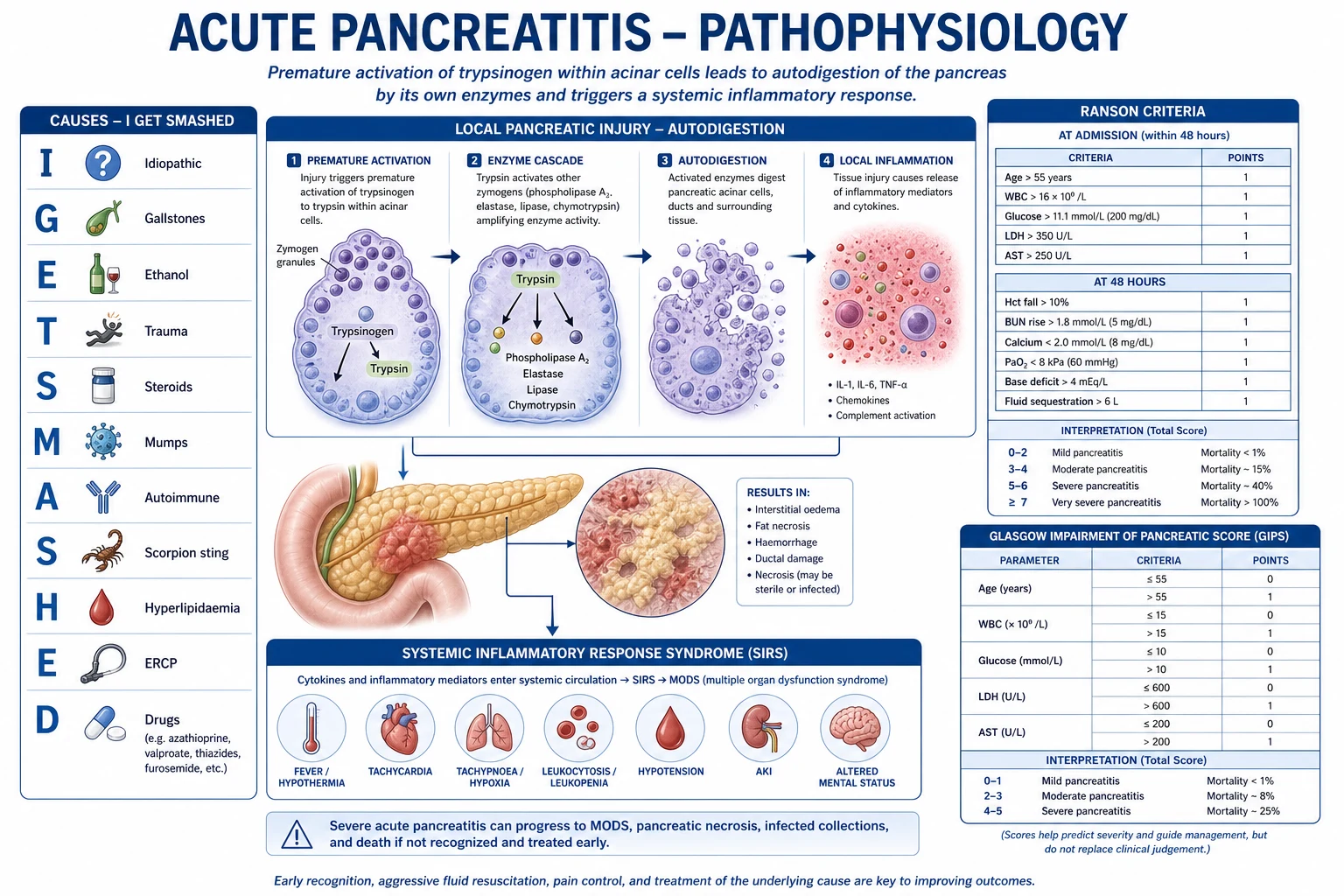
This is the mechanism every fellowship candidate must articulate, because it links nutrition to the dominant cause of death (infected necrosis) and explains every downstream recommendation.[9][13]
- Villous atrophy and tight-junction disruption. Within 3-5 days of starvation, the small-intestinal villi shorten, the crypts shallow, and the intercellular tight junctions (zonula occludens) widen. The gut becomes "leaky". In AP, splanchnic hypoperfusion, cytokines (TNF-alpha, IL-6), and oxidative stress accelerate this process independently of starvation.
- Bacterial translocation. The widened junctions and atrophied mucosa permit enteric Gram-negatives and anaerobes to cross the epithelium into the mesenteric lymph nodes, portal blood, and systemic circulation. These organisms seed the sterile pancreatic and peripancreatic necrosis, converting it to infected necrosis — the event that approximately doubles mortality in severe AP.
- Loss of GALT and secretory IgA. The gut-associated lymphoid tissue (Peyer's patches, lamina propria lymphocytes) atrophies without intraluminal antigen and short-chain fatty acids. Secretory IgA — the first-line mucosal immune defence — falls, compounding the infective risk.
- The trophic effect of luminal nutrition. Enterocytes preferentially metabolise glutamine, and colonocytes metabolise butyrate and other short-chain fatty acids produced by bacterial fermentation of dietary fibre. Only luminal (enteral) substrate delivers these fuels; intravenous nutrition cannot. Even small "trophic" volumes (10-30 mL/h) preserve mucosal architecture.
- Attenuation of the systemic inflammatory response. EN reduces the magnitude of the cytokine cascade and the stress hormone response compared with PN, translating into less multi-organ dysfunction. [1]
Mechanistic cascade — how starvation converts sterile to infected necrosis
1. Splanchnic hypoperfusion + starvation
AP-induced mesenteric vasoconstriction and NPO combine to starve the enterocytes/colonocytes of their preferred fuels (glutamine, butyrate).
2. Villous atrophy + tight-junction widening
Within 3-5 days: shortened villi, shallow crypts, disrupted zonula occludens -> increased gut permeability.
3. Bacterial translocation
Enteric Gram-negatives and anaerobes cross the compromised mucosa to mesenteric nodes, portal circulation, and peripancreatic collections.
4. Infected necrosis
Translocated organisms seed the sterile pancreatic/peripancreatic necrosis -> infected necrosis. This is the pivotal event that approximately DOUBLES mortality in severe AP.
5. Multi-organ dysfunction and death
Infected necrosis drives sepsis, ARDS, and MODS. PREVENT steps 2-4 with EARLY EN within 24-48h — feed the gut, prevent the translocation, prevent the seeding.
Route of feeding: oral → nasogastric → nasojejunal — a stepwise, practical ladder
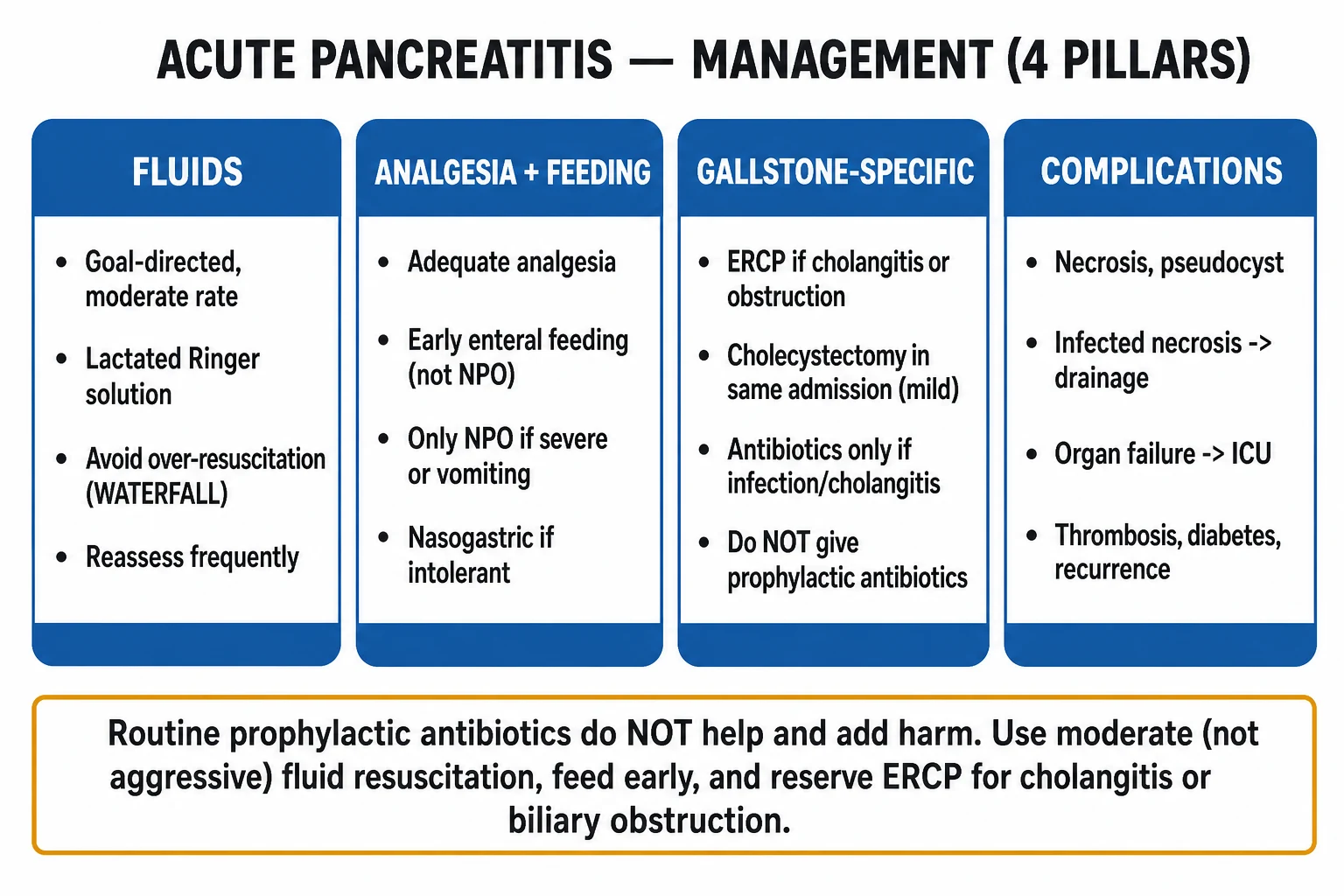
The route ladder is a near-certain exam question. The headline: oral first, then NG, then NJ as rescue only. There is no role for routine NJ as first-line, and there is no mortality or infection benefit to NJ over NG.[1][5][6]
Oral (immediate / early)
First line — mild disease
- MILD AP: most patients tolerate immediate or early (within 24h) oral intake. Petrov 2013 and Ajaboori 2020 RCTs show early oral feeding shortens hospital stay WITHOUT increasing relapse or intolerance
- Advance as tolerated: clear liquids -> soft low-fat solid diet. A hungry patient with resolving pain and falling enzymes should be FED, not starved
- Abort oral feed only for vomiting, severe pain on feeding, or recurrent ileus; otherwise continue and advance
- No requirement to wait for enzyme normalisation before feeding — clinical recovery guides intake
Nasogastric (NG)
Preferred tube route
- Preferred when oral intake not feasible (severe disease, vomiting, predicted prolonged stay). NG is NON-INFERIOR to NJ (Eatock 2005; Singh 2012 non-inferiority RCT; Zhu 2016 meta-analysis)
- Easier, cheaper, faster, and safer to place at the bedside than NJ — no endoscopy or fluoroscopy needed; lower tube-displacement and malposition rates
- Start at 10-20 mL/h, advance by ~25 mL/h every 12-24h toward goal. Use prokinetics (metoclopramide 10 mg IV Q8H ± erythromycin 200 mg IV BD) if gastric residuals are high
- Do NOT stop feed automatically for a gastric residual volume <500 mL in the absence of clinical intolerance (distension, vomiting, aspirate >2x feed volume)
Nasojejunal (NJ / post-pyloric)
Rescue only
- Reserved for NG FAILURE: persistent high gastric residuals despite prokinetics, severe gastroparesis, gastric outlet obstruction, or intractable vomiting
- Placement requires endoscopy or fluoroscopy (or skilled bedside electromagnetic guidance) — slower, costlier, with higher displacement/malposition than NG
- The 'pancreatic rest' rationale (NJ spares the pancreas by bypassing duodenal CCK) is DISPROVEN — NJ and NG stimulate pancreatic secretion comparably and produce identical clinical outcomes
- NJ is NOT a first-line choice and confers NO mortality or infection advantage over NG
Gastrostomy / jejunostomy
Rarely needed
- PEG/PEJ or surgical jejunostomy reserved for the small minority needing prolonged (>4 weeks) tube feeding — e.g., persistent fistula, prolonged gastric ileus, or post-necrosectomy
- Not part of the acute (first 1-2 weeks) management algorithm
The non-inferiority evidence — NG equals NJ
Diet composition — polymeric, not elemental
A common but outdated belief is that AP requires an elemental or semi-elemental (peptide-based) formula to "minimise pancreatic digestive work". The evidence does not support this.[1][9]
Standard polymeric formula
Default
- Standard intact-protein polymeric enteral formula is the DEFAULT and confers NO disadvantage versus elemental formula
- The gut absorbs polymeric formula normally; pancreatic enzyme output is more than sufficient for digestion even in severe AP
- Cheaper, more widely available, and better tolerated (elementary formulae are hyperosmolar and frequently cause diarrhoea)
- No fat restriction required in the standard formula — lipid absorption is not clinically significantly impaired in AP
Elemental / semi-elemental
No advantage
- Peptide-based / elemental formulae confer NO benefit over polymeric formula in AP — confirmed in multiple trials and meta-analyses
- More expensive, hyperosmolar, and associated with MORE diarrhoea
- Reserve for specific malabsorption states (e.g., established pancreatic exocrine insufficiency, high-output fistula) — NOT routine AP
Oral diet advancement
Mild disease
- Mild AP: start ORAL intake early. Traditional ladder: clear liquids -> full liquids -> soft low-fat solid diet, advancing over 1-3 days as tolerated
- Recent RCTs (Ajaboori 2020; others) show an IMMEDIATE soft low-fat diet from day 1 is tolerated as well as the staged liquid-first approach in mild AP — a shorter hospital stay without increased intolerance
- The patient's appetite and pain response are the best guides; do not wait for enzyme normalisation
Specialised additives
Context-specific
- Glutamine: the preferred enterocyte fuel; considered in prolonged critical illness but not routine in AP
- Immune-modulating formulae (arginine, glutamine, omega-3, nucleotides): no consistent outcome benefit in AP — not recommended routinely
- Fibre (soluble): supports colonocyte short-chain fatty acid production; standard polymeric with or without fibre is acceptable
Jejunal feeding rationale — and why it does NOT 'rest' the pancreas
Examiners love this because it separates rote knowledge from physiological understanding.[5][6]
The original rationale for NJ (post-pyloric) feeding was that delivering substrate distal to the duodenum would avoid triggering cholecystokinin (CCK) and secretin release from duodenal I-cells and S-cells, thereby minimising pancreatic exocrine (enzyme and bicarbonate) secretion and "resting" the pancreas. Human secretory studies and the clinical RCTs have disproven this for two reasons: [1]
- Stimulation persists regardless of route. Both gastric and jejunal feeding stimulate some pancreatic secretion, because nutrient in the jejunum still releases enteral hormones (CCK-releasing peptide, secretin, GLP-1) and activates the cephalic, gastric, and intestinal phases of secretion. The absolute difference in enzyme output between NG and NJ feeding is small.
- The residual secretion is clinically irrelevant. Even the stimulated secretion is insufficient to worsen autodigestion — which is why NG and NJ feeding produce identical clinical outcomes (Eatock 2005; Singh 2012; meta-analyses). [1]
The legitimate role of NJ is therefore mechanical, not secretory: it bypasses the stomach when the stomach is the problem (gastroparesis, high gastric residuals, gastric outlet obstruction). NJ is a rescue for gastric failure, not a strategy to spare the pancreas. [1]
Decision pathway — oral, NG, or NJ?
1. Can the patient eat?
Mild-moderate AP with resolving pain and appetite -> start EARLY ORAL intake (clear liquids -> soft low-fat diet, or immediate soft diet per recent RCTs). Most mild patients never need a tube.
2. If not, start NG feeding early
Severe disease, vomiting, or predicted prolonged stay -> NG feeding commenced within 24-48h at 10-20 mL/h, advancing by ~25 mL/h every 12-24h toward goal. NG is non-inferior to NJ and easier/cheaper to place.
3. Add a prokinetic if needed
High gastric residuals -> metoclopramide 10 mg IV Q8H ± erythromycin 200 mg IV BD. Do NOT stop feed automatically for GRV <500 mL without clinical intolerance.
4. NJ only if NG fails
Persistent high residuals despite prokinetics, severe gastroparesis, gastric outlet obstruction, or intractable vomiting -> convert to NJ (post-pyloric). NJ bypasses the STOMACH, not the pancreas.
5. TPN only if EN fails or is contraindicated
After 5-7 days of unsuccessful EN, or absolute EN contraindication (obstruction, ischaemia, complex fistula) -> add TPN. Continue trophic EN alongside PN where possible.
Total parenteral nutrition (TPN) — indications, risks, and timing
TPN has been relegated from the default to a rescue therapy. The indications are narrow and the risks — particularly catheter-related bloodstream infection (CRBSI), hyperglycaemia, and hepatobiliary dysfunction — are substantial. Two ICU trials transform the timing question.[1][10][11]
Indications for TPN
Narrow
- ABSOLUTE: EN contraindicated — prolonged ileus (>5-7 days), bowel obstruction, severe mesenteric ischaemia, high-output enterocutaneous fistula, complex abdominal sepsis with failure of source control
- RELATIVE: EN insufficient to meet targets after 5-7 days of attempted feeding in a malnourished or catabolic patient
- NEVER first-line: do NOT start TPN in the first 5 days if EN is feasible — early PN confers no benefit and definite harm (EPaNIC)
- If PN is started, continue TROPHIC EN (10-30 mL/h) alongside it to preserve gut mucosal integrity wherever any luminal access is possible
Risks of TPN
Substantial
- CATHETER-RELATED BLOODSTREAM INFECTION (CRBSI) — the most-cited excess infective complication vs EN; mandates strict line care and prompt removal when no longer needed
- HYPERGLYCAEMIA — PN dextrose drives insulin resistance and infection risk; requires tight glycaemic control (6-10 mmol/L) and TGC-Fast style glucose management
- HEPATOBILIARY DYSFUNCTION — intrahepatic cholestasis ("TPN cholestasis"), steatosis, and acalculous cholecystitis with prolonged use
- REFEEDING SYNDROME — if started too aggressively in the malnourished/alcoholic patient; start low (10-15 kcal/kg/day), give thiamine first, monitor and replace phosphate/Mg/K
- COST and complexity — central access, compounding, metabolic monitoring
Timing of TPN — EPaNIC
Late > early
- EPaNIC (Casaer 2011, NEJM): in critically ill adults, LATE PN (initiated on day 8 if oral/EN still insufficient) was SUPERIOR to EARLY PN (supplementation from day 3) — less infection, faster recovery, shorter ICU/hospital stay, fewer ventilator-days
- TGC-Fast (Gunst 2023, NEJM): confirmed that tight glucose control WITHOUT early PN is the better strategy
- CLINICAL BOTTOM LINE: do NOT supplement with PN in the first week if EN is partially tolerated; wait until day 5-7 of insufficient EN before adding PN
Permissive underfeeding — the calorie target question
Permissive underfeeding
Week 1
- PermiT trial (Arabi 2011) and indirect-calorimetry studies: in the first week of critical illness, permissive underfeeding (60-70% of target calories) with full protein is at least as good as — and possibly better than — full caloric feeding
- Avoids overfeeding-related hyperglycaemia, fatty liver, and ventilator dependence
- Deliver FULL PROTEIN (1.2-1.5 g/kg/day) even while calories are restricted — nitrogen balance matters more than caloric balance in the acute phase
- Advance toward full caloric target over the second week as tolerated
Target calories
Indirect calorimetry
- Where available, INDIRECT CALORIMETRY is the gold standard for setting the caloric target (validated predictive equations overestimate by 10-60%)
- Rough estimate in its absence: 25 kcal/kg/day target, starting at 10-15 kcal/kg/day in the first days
- Reassess regularly — the target rises as the patient moves from acute to recovery phase
Metabolic support in acute pancreatitis
AP is a catabolic, systemic inflammatory state. Several metabolic derangements coexist and each is examinable.[1][11]
Glycaemic control
Tight but not aggressive glucose control. The TARGET is 6-10 mmol/L (moderate control) — avoiding both hyperglycaemia (drives infection, wound failure, immune dysfunction) and hypoglycaemia (the chief danger of intensive insulin protocols, and independently associated with mortality). The TGC-Fast trial (Gunst 2023) reinforces that glucose control is best achieved WITHOUT early PN, because PN dextrose is a major driver of hyperglycaemia. Use an insulin infusion if needed; reassess with each feed-rate change. [1]
Calcium, magnesium, and phosphate
- Hypocalcaemia is common in severe AP (saponification of calcium by fatty acids in necrotic fat, hypoalbuminaemia, and concurrent hypomagnesaemia impairing PTH release). Correct ionised calcium; treat symptomatic/hyper-reflexic hypocalcaemia with IV calcium gluconate.
- Hypomagnesaemia — correct to restore PTH efficacy and prevent arrhythmia; hypomagnesaemia itself perpetuates hypocalcaemia and hypokalaemia.
- Hypophosphataemia — particularly relevant with refeeding; monitor and replace to avoid respiratory-muscle weakness and weaning failure.
Thiamine and alcohol-related disease
Alcohol is a leading cause of AP. The alcoholic patient is thiamine-depleted, and carbohydrate feeding (EN or PN) precipitates Wernicke encephalopathy (ataxia, nystagmus, ophthalmoplegia, confusion) and worsens the refeeding syndrome. Give thiamine 200-300 mg IV/oral BEFORE the first feed and continue daily for at least the first week. NEVER give carbohydrate (feed or dextrose) without thiamine in the at-risk patient. [1]
Other metabolic considerations
- Trace elements and vitamins — standard multivitamin/trace-element supplementation in all patients on EN or PN.
- Lipid handling — most standard formulae contain manageable lipid loads; triglyceride-induced pancreatitis (hypertriglyceridaemia >11 mmol/L) is a distinct entity managed with insulin/heparin, plasmapheresis, and a low-fat/medium-chain-triglyceride diet — not relevant to routine AP nutrition.
- Electrolytes (Na, K) — correct in parallel; severe disturbances compound ileus and arrhythmia. [1]
Probiotics — PROPATRIA and the end of prophylactic probiotics
This is one of the highest-yield and most safety-critical facts in pancreatitis nutrition. Do NOT give prophylactic probiotics.[4]
The PROPATRIA trial (Besselink, Lancet 2008) randomised 298 patients with predicted severe AP to a multispecies probiotic preparation vs placebo, hoping to reduce infective complications by modulating gut flora. The result was the opposite of benefit: [1]
- NO reduction in infectious complications.
- INCREASED mortality: 16% (24/152) in the probiotic group vs 6% (9/144) in placebo (p=0.01).
- 9 cases of bowel ischaemia in the probiotic group (4 fatal), versus none in placebo. The mechanism is thought to involve probiotic-induced increased splanchnic oxygen demand in an already underperfused gut, producing mesenteric ischaemia. [1]
Subsequent meta-analyses (including the Hsieh network meta-analysis) have confirmed the harm signal and the absence of benefit. Probiotic prophylaxis is contraindicated in acute pancreatitis and is explicitly advised against by current guidelines. [1]
PROPATRIA (Besselink, Lancet 2008)
Lancet 2008
Multicentre double-blind RCT, 298 patients with predicted severe AP — multispecies probiotic vs placebo, to prevent infectious complications
Key finding
NO reduction in infectious complications. INCREASED mortality: 16% probiotic vs 6% placebo (p=0.01). 9 cases of bowel ischaemia in probiotic group (4 died), NONE in placebo.
Practice change
Probiotic prophylaxis is CONTRAINDICATED in acute pancreatitis — never prescribe
Trial evidence — the landmark studies
The following trials underpin every recommendation in this topic. Each is examined at fellowship level.[1][4][5][6][7][8][9][10][11][14]
Eatock 2005 — NG vs NJ (Am J Gastroenterol)
Am J Gastroenterol 2005
RCT, 50 patients with severe AP — early NG vs NJ feeding
Key finding
NG feeding was tolerated and SAFE; no significant difference in pain, complications, or outcome vs NJ. Established NG as a feasible first-line tube route
Practice change
NG is an acceptable first-line tube route in severe AP — not all patients need NJ
Singh 2012 — NG vs NJ non-inferiority (Pancreas)
Pancreas 2012
Non-inferiority RCT, 31 patients with severe AP — NG vs NJ feeding
Key finding
NG non-inferior to NJ for tolerance and outcome. NG cheaper, easier, and faster to place
Practice change
NG confirmed non-inferior to NJ — NG is the DEFAULT tube route; NJ reserved for NG failure
Petrov 2013 — early NG vs NPO (Clin Nutr)
Clin Nutr 2013
RCT, mild-moderate AP — early NG tube feeding vs NPO
Key finding
Early NG feeding reduced length of stay without increasing relapse or feed intolerance
Practice change
Early oral/NG feeding is safe and beneficial even in mild-moderate AP — abandon prolonged NPO
Ajaboori 2020 — immediate oral feeding (Nutrition)
Nutrition 2020
RCT, mild AP — immediate oral feeding vs traditional staged (clear liquid first) refeeding
Key finding
Immediate soft low-fat diet from day 1 tolerated as well as staged approach; shorter hospital stay, no increase in intolerance
Practice change
Immediate oral diet is acceptable in mild AP — no need for the staged liquid-first ladder in every patient
Vaughn 2017 — early vs delayed feeding SR (Ann Intern Med)
Ann Intern Med 2017
Systematic review of RCTs — early (<48h) vs delayed feeding in AP
Key finding
Early feeding reduced length of stay and did NOT increase adverse events, feed intolerance, or symptom exacerbation
Practice change
Reinforced early EN within 48h as standard across the severity spectrum
Al-Omran 2010 — Cochrane EN vs PN
Cochrane Database Syst Rev 2010
Cochrane systematic review of RCTs — enteral vs parenteral nutrition in AP
Key finding
EN REDUCED mortality, infective complications, surgical intervention, and length of stay vs PN; no increase in intolerance
Practice change
EN is the standard of care; PN reserved for EN failure/contraindication
Hsieh 2019 — network meta-analysis (PLoS One)
PLoS One 2019
Systematic review with network meta-analysis of RCTs — infection rate by nutritional therapy in AP (oral, NG, NJ, PN)
Key finding
EN (any route) ranked best for reducing infection; NG and NJ equivalent; PN worst. Confirms route is less important than route-family (enteral vs parenteral)
Practice change
Reinforces EN-first, NG-default; definitively removes any infection advantage for NJ over NG
EPaNIC (Casaer, NEJM 2011)
N Engl J Med 2011
Multicentre RCT, 4640 critically ill adults — early PN (supplement from day 3) vs late PN (day 8) when EN insufficient
Key finding
LATE PN superior: fewer infections, fewer ventilator-days, shorter ICU/hospital stay, faster recovery. Early PN was harmful
Practice change
Do NOT supplement with PN in the first 5-7 days if any EN is tolerated — wait until day 5-7 of insufficient EN
TGC-Fast (Gunst, NEJM 2023)
N Engl J Med 2023
Multicentre RCT in critically ill adults — tight glucose control WITHOUT early PN vs standard care
Key finding
Tight glucose control without early PN was the optimal metabolic strategy; early PN and hyperglycaemia are independent harms
Practice change
Glycaemic control is best achieved WITHOUT early PN; reinforce moderate (6-10 mmol/L) glucose targets
PermiT (Arabi, Am J Clin Nutr 2011)
Am J Clin Nutr 2011
RCT, critically ill adults — permissive underfeeding (60-70% calories, full protein) vs standard (full caloric) feeding
Key finding
Permissive underfeeding was non-inferior for outcomes and may be superior; full protein preserved nitrogen balance
Practice change
In week 1, deliver full protein but permissive (60-70%) calories — avoid overfeeding
WATERFALL (de-Madaria, NEJM 2022)
N Engl J Med 2022
Multicentre RCT, 249 AP patients — aggressive (20 mL/kg bolus then 3 mL/kg/h) vs moderate (1.5 mL/kg/h) lactated Ringer resuscitation
Key finding
No difference in pancreatitis complications; aggressive group had SIGNIFICANTLY MORE fluid overload (20.5% vs 6.3%)
Practice change
Moderate goal-directed lactated Ringer resuscitation preferred over aggressive boluses
ACG 2024 / IAP 2025 guidelines
Am J Gastroenterol 2024; Pancreatology 2025
International consensus guidelines (American College of Gastroenterology; International Association of Pancreatology)
Key finding
Both mandate early EN within 24-48h (oral or NG); NJ reserved for NG failure; TPN reserved for EN failure after 5-7 days; probiotics contraindicated
Practice change
Codifies early-EN-first as global standard of care
SAQ — Early enteral nutrition: route and timing in severe pancreatitis
10 minutes · 10 marks
A 62-year-old man (BMI 28) is admitted to ICU with severe gallstone pancreatitis (BISAP 4, APACHE II 13, serum lipase 2400 U/L, contrast CT at day 3 shows 30% necrosis). He is haemodynamically stable on no vasopressors, breathing spontaneously on 4 L nasal oxygen with SpO2 96%, urine output 60 mL/h, and is alert with resolving pain and a normal bowel examination. He has vomited twice and says he is not yet hungry. The team has kept him NPO for 48 hours pending evaluation and asks whether to start oral, NG, NJ, or TPN today.
SAQ — Refeeding syndrome and PROPATRIA in pancreatitis nutrition
10 minutes · 10 marks
A 51-year-old homeless man with chronic alcohol dependence (estimated 200 g/day, last intake 4 days ago) is admitted to ICU with severe alcohol-related acute pancreatitis (BISAP 4, lipase 2200, contrast CT shows 25% necrosis). He is malnourished (BMI 18, weight 54 kg), drowsy but rousable. Baseline biochemistry on admission: phosphate 0.62 mmol/L, magnesium 0.48 mmol/L, potassium 3.1 mmol/L, sodium 132, albumin 19 g/L, glucose 5.8 mmol/L, ALT 220, AST 310, GGT 480. The team plans to start full-strength NG enteral feed at 50 mL/h. Separately, the gastroenterology registrar suggests adding probiotic capsules to reduce the risk of infected necrosis.
Clinical pearls
Red flags
Mnemonic — "FEED the GUT"
FEED the GUT — the pancreatitis nutrition algorithm
The four nutrition decisions — ROUTE
Practical feeding protocol
Bedside protocol — early enteral nutrition in acute pancreatitis
Step 0 — Assess refeeding risk and electrolytes
Before ANY feed: check BMI, recent intake, alcohol history, baseline phosphate/Mg/K/Ca. Give thiamine 200-300 mg IV/oral FIRST in the alcoholic/malnourished. Correct hypocalcaemia/hypomagnesaemia/hypophosphataemia.
Step 1 — Start early oral intake (mild disease)
Mild-moderate AP with resolving pain and appetite: start oral within 24h — immediate soft low-fat diet or clear liquids -> soft diet over 1-3 days. Advance as tolerated. Most mild patients need no tube.
Step 2 — NG feeding (moderate-severe or unable to eat)
Commence NG within 24-48h. Start 10-20 mL/h standard polymeric formula. Advance by ~25 mL/h every 12-24h toward goal (25 kcal/kg/day, or 60-70% in week 1 per permissive underfeeding) with FULL protein 1.2-1.5 g/kg/day.
Step 3 — Manage intolerance
High gastric residuals or distension: add metoclopramide 10 mg IV Q8H ± erythromycin 200 mg IV BD. Do NOT stop feed automatically for GRV <500 mL without clinical intolerance (vomiting, distension, aspirate >2x feed volume).
Step 4 — Escalate to NJ only if NG fails
Persistent intolerance despite prokinetics, severe gastroparesis, or gastric outlet obstruction -> convert to NJ (post-pyloric). NJ bypasses the STOMACH, not the pancreas. Confirm position radiologically.
Step 5 — Add TPN only if EN fails after 5-7 days
After 5-7 days of insufficient EN, OR absolute EN contraindication (obstruction, ischaemia, high-output fistula) -> add TPN. Continue trophic EN (10-30 mL/h) alongside where possible. Strict central-line care to prevent CRBSI.
Step 6 — Metabolic monitoring
Glucose 6-10 mmol/L (insulin infusion if needed — do not use early PN to meet calories). Daily phosphate/Mg/K/Ca in first week. Monitor for refeeding syndrome (first 5-7 days). NEVER probiotics (PROPATRIA).
Step 7 — Transition to oral and oral refeeding ladder
As pain resolves, enzymes fall, and appetite returns: transition from tube to oral. Clear liquids -> full liquids -> soft low-fat solid diet, advancing over 1-3 days (or immediate soft diet per recent RCTs). Plan cholecystectomy for gallstone aetiology to prevent recurrence.
Special situations
Severe necrotising pancreatitis
The more severe the disease, the MORE important early EN becomes — infected necrosis is the dominant cause of death, and EN is the intervention that prevents it. Even in necrotising AP with ileus, attempt NG or NJ feeding early; trophic EN (10-30 mL/h) is acceptable if full target is not tolerated. TPN is reserved for the patient who truly cannot tolerate any luminal feed after 5-7 days.[1][9]
Post-necrosectomy / step-up drainage
After endoscopic or percutaneous step-up intervention for infected necrosis, resume EN as soon as feasible — the gut usually tolerates it. A persistent pancreatic fistula may necessitate NJ feeding or, rarely, prolonged PN; manage in concert with the pancreatic surgical/endoscopic team.[1]
Pregnancy-related acute pancreatitis (often gallstone)
Early EN applies equally; the fetus depends on maternal nutrition. Manage in conjunction with obstetrics and plan postpartum cholecystectomy. NJ may be preferred if severe gastroparesis of pregnancy is present, but NG/oral remains first-line.[1]
Hypertriglyceridaemia-induced pancreatitis
A distinct entity (triglycerides typically >11 mmol/L). Nutrition strategy: low-fat diet with medium-chain triglycerides; acute management includes insulin/heparin infusion, plasmapheresis, and treatment of the underlying lipid disorder (genetic, diabetes, alcohol, drugs). Standard AP nutrition principles otherwise apply.[1]
Summary — the ten things to take to the exam
The headlines
Memorise verbatim
- 1. Early EN within 24-48h — NOT NPO (ACG/IAP/APA/AGA standard of care)
- 2. Route ladder: oral -> NG -> NJ (rescue) -> TPN (rescue). NG is non-inferior to NJ and easier/cheaper (Eatock; Singh)
- 3. Standard polymeric formula — elemental has NO advantage
- 4. TPN only if EN contraindicated or fails after 5-7 days — early PN is HARMFUL (EPaNIC, TGC-Fast)
- 5. NEVER probiotics — PROPATRIA tripled mortality and caused fatal bowel ischaemia
The physiology
Understand the why
- 6. EN maintains gut mucosal integrity and GALT, preventing bacterial translocation and infected necrosis
- 7. The "pancreatic rest" hypothesis is disproven — NJ does not spare the pancreas
- 8. Glycaemic target 6-10 mmol/L — moderate control, no early PN
- 9. Thiamine before carbohydrate in alcohol-related disease (Wernicke + refeeding prevention)
- 10. Permissive underfeeding (60-70% calories, full protein) in week 1 (PermiT); goal-directed lactated Ringer resuscitation (WATERFALL)
References
- [1]Tenner S, Vege SS, Sheth SG, et al. American College of Gastroenterology Guidelines: Management of Acute Pancreatitis Am J Gastroenterol, 2024.PMID 38857482
- [2]IAP/APA/EPC/IPC/JPS Working Group. International Association of Pancreatology Revised Guidelines on Acute Pancreatitis 2025: Supported and Endorsed by the American Pancreatic Association, European Pancreatic Club, Indian Pancreas Club, and Japan Pancreas Society Pancreatology, 2025.PMID 40651900
- [3]de-Madaria E, Buxbaum JL, Maisonneuve P, et al.; WATERFALL trial. Aggressive or Moderate Fluid Resuscitation in Acute Pancreatitis N Engl J Med, 2022.PMID 36103415
- [4]Besselink MG, van Santvoort HC, Buskens E, et al.; Dutch Acute Pancreatitis Study Group. PROPATRIA. Probiotic prophylaxis in predicted severe acute pancreatitis: a randomised, double-blind, placebo-controlled trial Lancet, 2008.PMID 18279948
- [5]Eatock FC, Chong P, Menezes N, et al. A randomized study of early nasogastric versus nasojejunal feeding in severe acute pancreatitis Am J Gastroenterol, 2005.PMID 15667504
- [6]Singh N, Sharma B, Sharma M, et al. Evaluation of early enteral feeding through nasogastric and nasojejunal tube in severe acute pancreatitis: a noninferiority randomized controlled trial Pancreas, 2012.PMID 21775915
- [7]Petrov MS, McIlroy K, Grayson L, et al. Early nasogastric tube feeding versus nil per os in mild to moderate acute pancreatitis: a randomized controlled trial Clin Nutr, 2013.PMID 23340042
- [8]Vaughn VM, Shuster D, Rogers MAM, et al. Early Versus Delayed Feeding in Patients With Acute Pancreatitis: A Systematic Review Ann Intern Med, 2017.PMID 28505667
- [9]Al-Omran M, Albalawi ZH, Tashkandi MF, Brox AC. Enteral versus parenteral nutrition for acute pancreatitis Cochrane Database Syst Rev, 2010.PMID 20091534
- [10]Casaer MP, Mesotten D, Hermans G, et al.; EPaNIC. Early versus late parenteral nutrition in critically ill adults N Engl J Med, 2011.PMID 21714640
- [11]Gunst J, Debaveye Y, Casaer MP, et al.; TGC-Fast. Tight Blood-Glucose Control without Early Parenteral Nutrition in the ICU N Engl J Med, 2023.PMID 37754283
- [12]Arabi YM, Tamim HM, Dhar GS, et al.; PermiT. Permissive underfeeding and intensive insulin therapy in critically ill patients: a randomized controlled trial Am J Clin Nutr, 2011.PMID 21270385
- [13]Hsieh PH, Su HY, Lin CY, et al. Infection rate among nutritional therapies for acute pancreatitis: A systematic review with network meta-analysis of randomized controlled trials PLoS One, 2019.PMID 31291306
- [14]Ajaboori H, Shimosegawa T, Kono H, et al. Efficacy and safety of immediate oral intake in patients with mild acute pancreatitis: A randomized controlled trial Nutrition, 2020.PMID 32200266