ICU · gi-nutrition
Stress Ulcer Prophylaxis (SUP) — Comprehensive ICU Management
Also known as Stress ulcer prophylaxis · SUP · Stress-related mucosal disease · SRMD · Stress ulceration · PPI prophylaxis · SUP-ICU trial · REVISE trial
Stress ulcer prophylaxis (SUP) — prevention of stress-related mucosal disease (SRMD) in critically ill patients. SRMD occurs within 24-48h of ICU admission in 75-100% of mechanically ventilated patients (subclinical erosions on endoscopy) but CLINICALLY SIGNIFICANT bleeding is rare (0.1-4%). SUP indications: mechanically ventilated 48h (1), coagulopathy (INR 1.5 or platelets <50), shock (any type), severe burns 30% TBSA, neurological injury (GCS <10), sepsis, high-dose steroids (250 mg/day hydrocortisone). Drugs: PPI first-line (pantoprazole 40 mg IV/PO daily — preferred over H2 blockers — more potent acid suppression). H2 blockers (ranitidine — RECALLED globally due to NDMA contamination — do NOT use; famotidine alternative). Sucralfate (mucosal protectant — less effective than PPI but lower C. difficile/pneumonia risk). SUP-ICU trial (2018): PPI vs placebo — PPI reduced clinically significant GI bleeding (2.5% vs 4.2%) but did NOT reduce 90-day mortality. REVISE trial (2024): updated evidence — PPI reduces GI bleeding without increasing mortality or infections. Risks of SUP: C. difficile infection (1.5x increased risk with PPI), ventilator-associated pneumonia (gastric pH elevation → bacterial overgrowth → microaspiration), microbiome disruption, drug interactions (PPIs inhibit CYP2C19 → clopidogrel reduced efficacy). When to STOP: patient eating, extubated, haemodynamically stable — review SUP indication DAILY — stop when no longer needed.
On this page & tools
Your progress
Saved locally on this device.
Target exams
Red flags
Overview
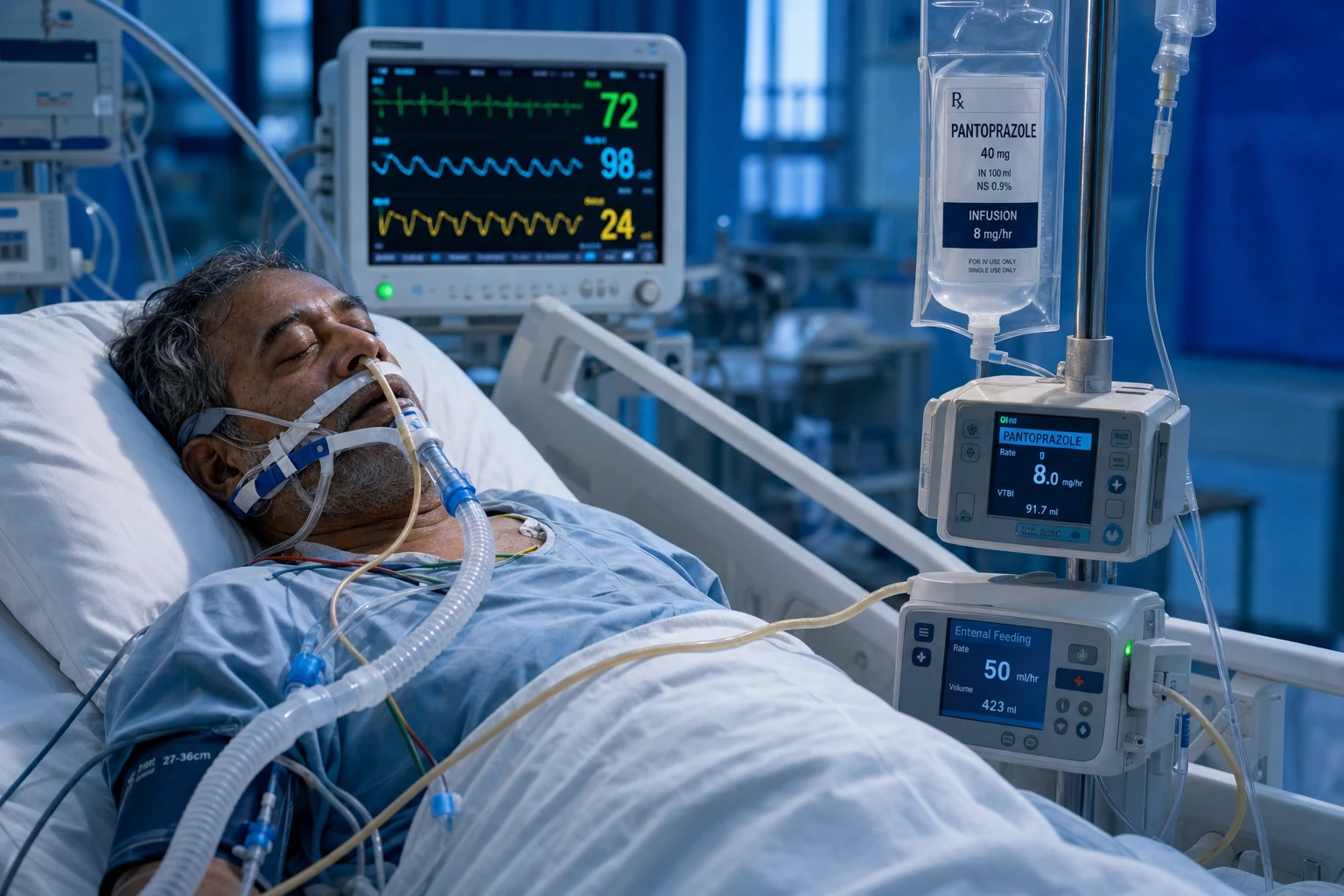
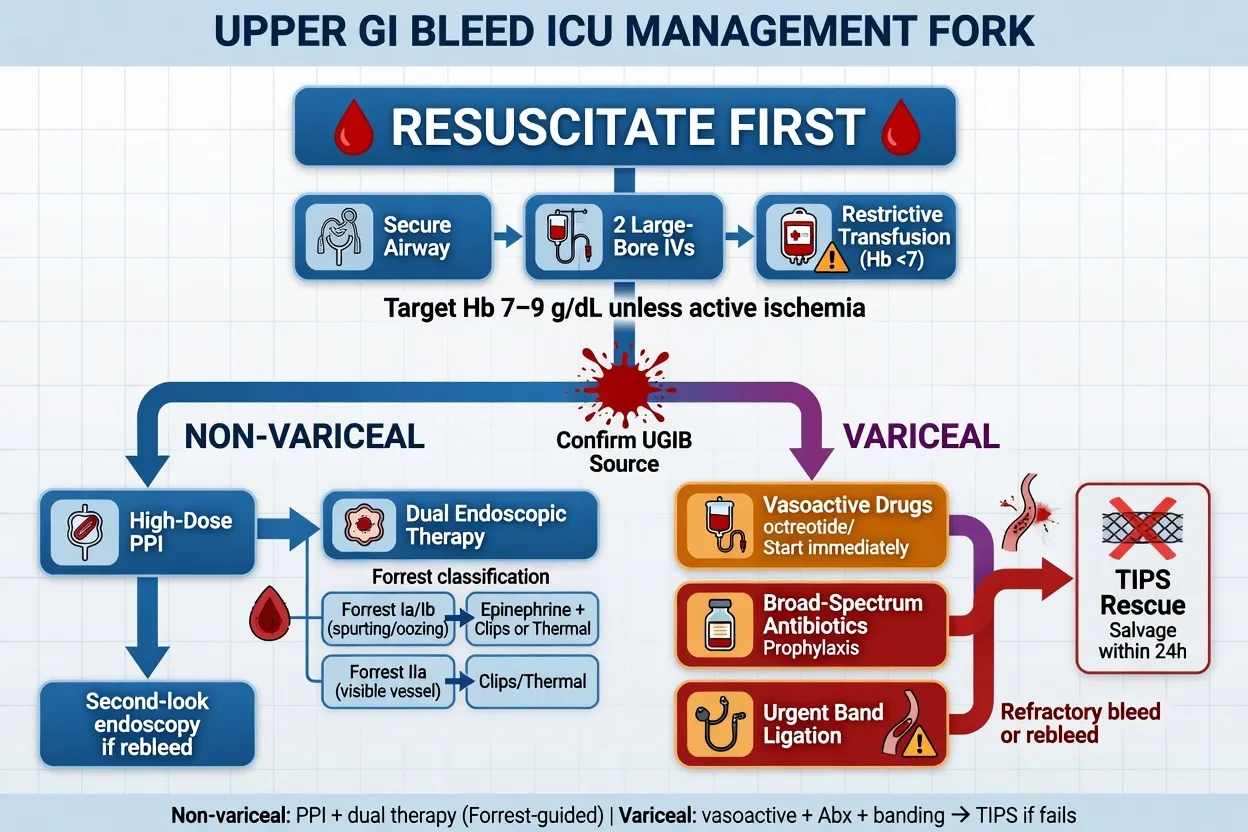
Who needs SUP? — the evidence-based indications
SUP indications — SCCM 2017 guidelines
| Indication | Mechanism | Relative risk of bleeding | Evidence |
|---|---|---|---|
| Mechanical ventilation >48h | #1 risk factor — mucosal ischaemia from splanchnic hypoperfusion + bile acid reflux + reduced mucus production | 3-4x increased | Strong recommendation — all ventilated >48h should receive SUP |
| Coagulopathy (INR >1.5 OR platelets <50 × 10^9/L OR PTT >2x normal) | Impaired haemostasis → minor mucosal erosions progress to clinically significant bleeding | 4-15x increased | Strong recommendation |
| Shock (any type — septic, haemorrhagic, cardiogenic) | Splanchnic hypoperfusion → mucosal ischaemia → erosion | 3-5x increased | Strong recommendation |
| Severe burns >30% TBSA | Systemic inflammatory response + gastric acid hypersecretion + splanchnic hypoperfusion (Curling ulcer) | 5-10x increased | Strong recommendation |
| Neurological injury (GCS <10, TBI, spinal cord injury) | Cushing ulcer — vagal stimulation from raised ICP → gastric acid hypersecretion | 3-5x increased | Conditional recommendation |
| High-dose steroids (>250 mg/day hydrocortisone equivalent for >48h) | Steroids impair mucosal defence (reduce mucus + bicarbonate production) + impair healing | 2-3x increased (controversial — steroids alone may NOT be sufficient indication) | Conditional recommendation |
| Major surgery (prolonged, complex — e.g., cardiac surgery, transplantation) | Splanchnic hypoperfusion + inflammatory response | 2-3x increased | Conditional recommendation |
| NOT indicated | Patients without the above risk factors (e.g., admitted for observation, minor overdose, stable post-operative) | — | SUP provides NO benefit and INCREASES C. difficile/pneumonia risk — do NOT give SUP routinely to ALL ICU patients |
Drug comparison — PPI vs H2 blocker vs sucralfate
SUP drug comparison
| Drug | Dose | Mechanism | Advantages | Disadvantages | Evidence |
|---|---|---|---|---|---|
| Pantoprazole (PREFERRED PPI) | 40 mg IV/PO daily | Irreversible H+/K+ ATPase (proton pump) inhibitor → near-complete acid suppression for >24h | Most potent acid suppression, once daily, IV and PO available, LEAST CYP2C19 inhibition (safe with clopidogrel) | C. difficile risk, drug-drug interactions, cost (IV) | SUP-ICU: reduced bleeding vs placebo. PREFERRED agent |
| Omeprazole | 20-40 mg PO daily | Same as pantoprazole | Widely available, inexpensive | STRONG CYP2C19 inhibition → reduces clopidogrel efficacy → AVOID in patients on dual antiplatelet therapy | Effective but AVOID with clopidogrel |
| Esomeprazole | 20-40 mg IV/PO daily | Same as pantoprazole | IV formulation available | Moderate CYP2C19 inhibition | Alternative to pantoprazole |
| Famotidine (H2 blocker) | 20 mg IV BD or 40 mg PO daily | Reversible H2 receptor antagonist → reduces histamine-mediated acid secretion | Less expensive, no CYP2C19 interaction (safe with clopidogrel), lower C. difficile risk than PPI | LESS effective than PPI (doesn't block all acid pathways — only histamine-mediated), tolerance develops (tachyphylaxis after 7 days) | Acceptable alternative to PPI |
| Ranitidine | — | Same as famotidine | — | GLOBALLY RECALLED — NDMA contamination (potential carcinogen) — DO NOT USE | Withdrawn from market |
| Sucralfate | 1 g PO/NG QID | Forms protective gel over ulcer base + stimulates mucosal defence (prostaglandins, mucus) | NO acid suppression → LESS C. difficile and pneumonia risk, NO drug interactions | QID dosing (inconvenient), less effective than PPI, interferes with enteral absorption of other drugs (binds them) | Consider if PPI contraindicated (C. difficile risk) |
Exam practice — SAQ
Stress ulcer prophylaxis SAQ
10 minutes · 10 marks
A 68-year-old is intubated for septic shock (noradrenaline 0.3 µg/kg/min), coagulopathic (INR 1.9, platelets 70), and not yet enterally fed. Outline your approach to stress ulcer prophylaxis, agent choice, and when you would stop therapy.
Clinical pearls [1]
Red flags
Prognosis
SUP outcomes — the evidence
| Outcome | PPI | Placebo | Notes |
|---|---|---|---|
| Clinically significant GI bleeding | 2.5% | 4.2% | SUP-ICU trial — significant reduction (NNT=59) |
| 90-day mortality | 31% | 31% | No difference — bleeding is too rare to affect mortality |
| C. difficile infection | 1.5x increased | Baseline | Dose-dependent — minimise duration |
| Ventilator-associated pneumonia | Possible 1.2x increased | Baseline | Controversial — gastric pH elevation → bacterial overgrowth |
| Overall benefit | Prevents rare but serious GI bleeding | — | For SELECTED high-risk patients only — not all ICU patients |
Key trials and evidence
SUP-ICU trial — PPI vs placebo (PMID 30419403)
Study design
Randomised, placebo-controlled — 3,298 ICU patients in 9 countries
Population
Adult ICU patients with at least one risk factor for stress ulcer bleeding
Intervention
Pantoprazole 40 mg IV daily vs placebo
Primary outcome
90-day mortality: 31% (PPI) vs 31% (placebo) — NO significant difference
Secondary outcome
Clinically significant GI bleeding: 2.5% (PPI) vs 4.2% (placebo) — significant reduction
Key finding
PPI reduces GI bleeding but does NOT reduce mortality — bleeding is too rare to move the mortality needle
Key finding
No significant difference in C. difficile, pneumonia, or myocardial ischaemia between groups
Clinical bottom line
SUP with PPI prevents a rare but serious complication (GI bleeding) in high-risk ICU patients — without reducing overall mortality. Give to patients WITH indications — stop when indication resolves
REVISE trial — updated PPI evidence (PMID 38261048)
Source
JAMA 2024 — updated evidence on pantoprazole for SUP
Key finding
Pantoprazole reduces clinically significant GI bleeding — confirms SUP-ICU findings
Key finding
No increased mortality or infections (C. difficile, pneumonia) with pantoprazole
Clinical bottom line
Reassures that PPIs are SAFE and EFFECTIVE for SUP in appropriately selected patients — the benefits outweigh the risks when used correctly
Pathophysiology of stress-related mucosal disease (SRMD)
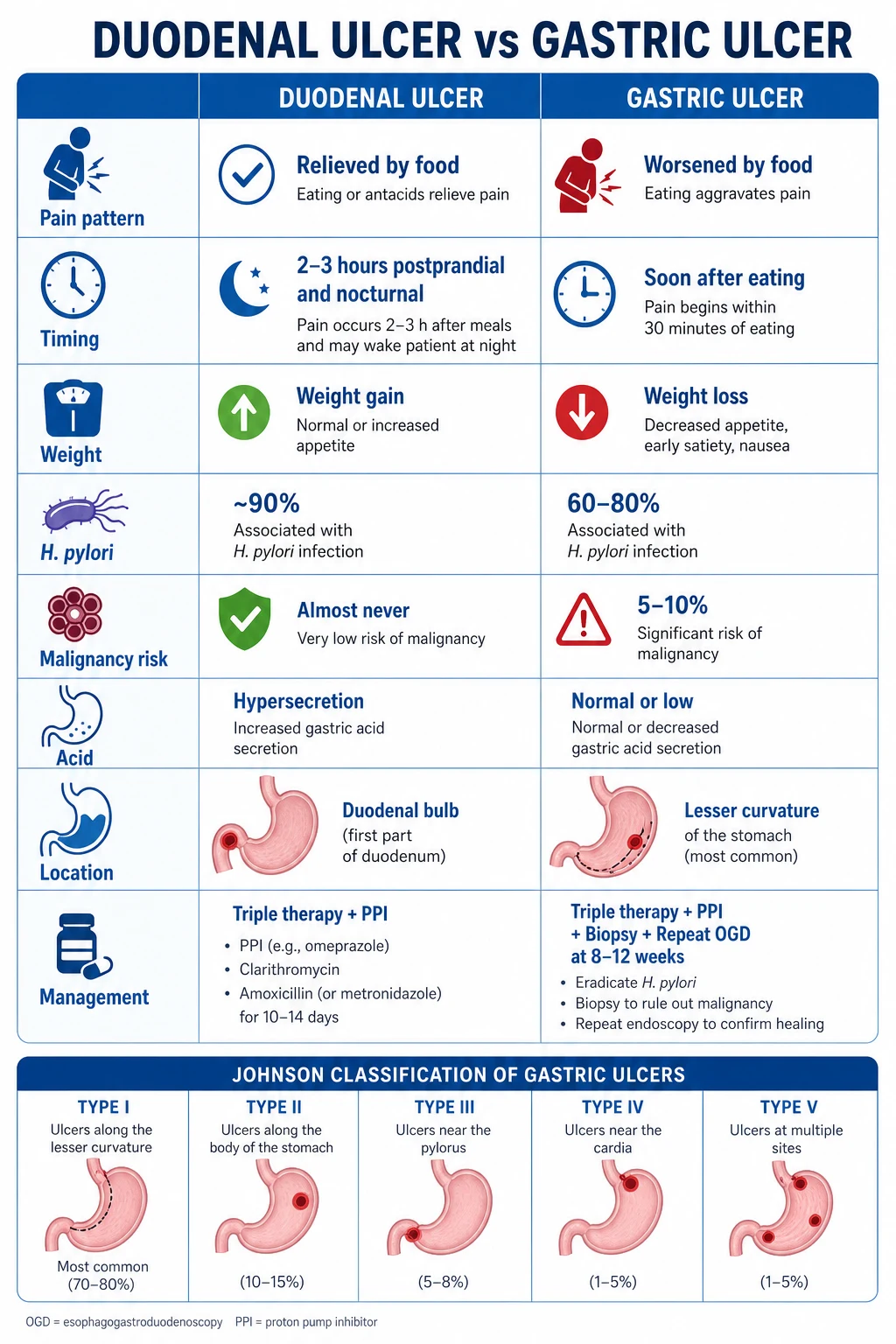
Stress-related mucosal disease is the rapid, ischaemia-driven breakdown of the gastric (and proximal duodenal) mucosal barrier that follows critical illness. Within 24-72 hours of an ICU insult, endoscopy reveals superficial erosions in 75-100% of mechanically ventilated patients — yet only a minority (0.1-4%) progress to clinically significant bleeding. Understanding the cascade matters because every risk factor and every prophylactic agent acts at a specific point in it. [1]
The mucosal defence system — what fails
The gastric mucosa defends itself against a luminal pH of 1-2 through four interlocking mechanisms: [1]
- The mucus–bicarbonate barrier. Surface foveolar mucus cells secrete a viscoelastic mucus gel (~0.2-0.6 mm thick) overlying an unstirred layer of secreted bicarbonate. This holds the surface epithelial pH near 7 despite a luminal pH of 1-2 — a gradient of ~6 pH units across a fraction of a millimetre.
- Epithelial restitution and renewal. Damaged surface cells migrate to cover defects ('restitution') within minutes; the gastric surface epithelium fully renews every 2-5 days — one of the fastest in the body. This demands a healthy mucosal blood supply.
- Mucosal blood flow. A rich submucosal microcirculation washes away back-diffused acid and delivers bicarbonate, oxygen and nutrients. Nitric oxide (NO) is the principal tonic vasodilator maintaining this flow; its loss during ischaemia–reperfusion worsens injury.
- Prostaglandins (PGE2, PGI2). The master regulators: they stimulate mucus and bicarbonate secretion, increase mucosal blood flow, and inhibit acid secretion. Anything that depletes prostaglandins (NSAIDs via COX inhibition) compromises the barrier. [1]
The SRMD cascade — splanchnic hypoperfusion is the trigger
Pathophysiological cascade of stress-related mucosal disease
Splanchnic hypoperfusion
Critical illness (shock, sepsis, mechanical ventilation with high intrathoracic pressure, major trauma) triggers sympathetic-driven splanchnic vasoconstriction. The gut is the first organ to shed blood flow in shock ("the canary of the abdomen") — mesenteric oxygen delivery falls disproportionately to systemic flow.
Mucosal ischaemia
Reduced mucosal blood flow starves the surface epithelium of oxygen and bicarbonate. ATP depletion impairs the Na+/K+ ATPase → intracellular acidosis → mitochondrial dysfunction. NO-mediated vasodilatation is lost; the protective mucus–bicarbonate gradient collapses.
Acid back-diffusion
With the barrier compromised, luminal H+ diffuses back INTO the epithelial cell (it should be moving into the lumen). Intracellular pH plummets. The mucus gel that should be impermeable to H+ becomes leaky.
Epithelial cell death and erosion
Intracellular acidosis activates lysosomal enzymes, generates reactive oxygen species on reperfusion, and triggers apoptosis/necrosis of surface cells. Shallow erosions form — they do NOT initially breach the muscularis mucosae (hence "superficial").
Ulceration and bleeding
If the insult continues, erosions deepen into the submucosa where arterioles lie. Erosion into a submucosal vessel = clinically significant bleeding. Concurrent coagulopathy or thrombocytopenia converts a trivial ooze into a life-threatening haemorrhage — which is why coagulopathy multiplies bleeding risk 4-15x.
Why the fundus and body? — the acid-secreting mucosa bears the brunt
SRMD lesions cluster in the gastric fundus and body — the parietal-cell mass that secretes acid. Two reasons: (1) this mucosa is bathed in the highest concentration of back-diffusing H+; (2) the energy demand of the proton pump makes these cells exquisitely sensitive to ischaemia. The antrum (mucus-secreting, non-acidic) and the duodenum are relatively spared — the opposite distribution to chronic PUD (duodenum/antrum). [1]
SRMD versus peptic ulcer disease — a recurring exam comparison
Stress-related mucosal disease (SRMD) vs peptic ulcer disease (PUD)
| Feature | SRMD (stress ulceration) | PUD (peptic ulcer) |
|---|---|---|
| Setting | Acute critical illness (ICU, shock, burns, TBI) | Chronic outpatient disease |
| Onset | Within 24-72h of insult | Over weeks–months–years |
| Number | Multiple (often dozens) | Single, or few |
| Depth | Superficial erosion (mucosa/submucosa — rarely through muscularis mucosae) | Deep (through muscularis mucosae into submucosa/muscularis propria) |
| Site | Gastric fundus and body (acid-secreting mucosa) | Duodenal bulb or gastric antrum |
| Pathogenesis | Splanchnic hypoperfusion → ischaemia → acid back-diffusion | Helicobacter pylori (~90% duodenal), NSAIDs, hypersecretory states (Zollinger-Ellison) |
| Pain | Usually painless until bleeding | Epigastric pain, classically relieved (duodenal) or worsened (gastric) by food |
| Perforation | Rare (lesions are superficial) | Recognised complication (deep ulcer) |
| Bleeding | Clinically significant in 0.1-4% of ICU patients | Common presentation |
| Role of acid | Normal/low acid — barrier FAILURE is the problem | Acid-driven injury to an exposed site |
| Response to acid suppression | Yes — removing H+ stops back-diffusion injury | Yes — but needs H. pylori eradication / NSAID cessation for cure |
| Resolution | Resolves as the patient recovers from critical illness | Chronic / relapsing without eradication |
Named syndromes — Curling and Cushing
- Curling ulcer — acute gastric/duodenal ulceration after severe burns (>30% TBSA). Mechanism: hypovolaemia → splanchnic vasoconstriction + reduced plasma volume → mucosal ischaemia; also gastric acid hypersecretion. Classically associated with duodenal ulcers that may perforate.
- Cushing ulcer — gastro-duodenal ulceration after severe neurological injury (TBI, raised ICP, spinal cord injury). Mechanism: raised ICP → direct vagal nucleus stimulation → MASSIVE gastric acid hypersecretion (unlike typical SRMD, acid hypersecretion is the primary driver). Higher risk of perforation than other SRMD.[3]
PPI pharmacology in depth
Proton pump inhibitors are the first-line SUP agent, recommended by the SCCM 2017 guideline on the basis of superior acid suppression versus H2 blockers and favourable bleeding-reduction evidence (SUP-ICU, REVISE). A working knowledge of their pharmacology is frequently examined. [1]
Mechanism — irreversible covalent inhibition
PPIs are pro-drugs (weak bases, pKa ~4) that are inactive at systemic pH. They accumulate in the highly acidic secretory canaliculus of the activated parietal cell, where they are protonated, trapped, and rearranged into a reactive sulfenamide. The sulfenamide forms a covalent disulfide bond with cysteine residues (Cys-813, Cys-892) on the alpha-subunit of the H+/K+-ATPase (the "proton pump") — irreversibly inactivating that pump molecule. Inhibition persists for the lifespan of the enzyme (~24h, until the parietal cell synthesises and inserts new pumps), which explains why: [1]
- The duration of action (>24h) far exceeds the plasma half-life (~1-1.5h).
- Once-daily dosing suffices for prophylaxis.
- Full acid suppression requires 3-5 days of oral dosing to reach steady state (only actively secreting pumps bind the drug; the full population is recruited over days).
- For rapid suppression (active bleeding), an IV bolus delivers drug directly to the canaliculus — onset within ~1h. [1]
Onset, duration and the agent-by-agent profile
PPI pharmacology — onset, duration, interactions
| Agent | IV onset | PO full effect | Duration | CYP2C19 inhibition | Clopidogrel-safe? | Dose (SUP) |
|---|---|---|---|---|---|---|
| Pantoprazole | ~1h | 3-5 days | >24h | Minimal (partly renally cleared) | YES — preferred | 40 mg IV/PO daily |
| Esomeprazole | ~1h | 3-5 days | >24h | Moderate | Acceptable (not first-line) | 20-40 mg IV/PO daily |
| Omeprazole | — | 3-5 days | >24h | Strong | NO — avoid | 20-40 mg PO daily |
| Rabeprazole | — | 3-5 days | >24h | Minimal | Yes | 20 mg PO daily |
| Lansoprazole | — | 3-5 days | >24h | Moderate | Acceptable | 30 mg PO daily |
Drug interactions — the CYP2C19 axis
PPIs are metabolised by hepatic CYP2C19 to varying degrees (omeprazole strongest inhibitor; pantoprazole weakest). Clinically important interactions: [1]
- Clopidogrel (the cardinal one). Clopidogrel is a prodrug needing CYP2C19 (and CYP3A4) to form the active thiol metabolite. Omeprazole reduces active metabolite exposure by ~40% and was associated with increased major adverse cardiac events in observational data (the COGENT RCT showed no significant difference but a concerning trend; regulators still warn). Recommendation: do NOT combine omeprazole and clopidogrel — use pantoprazole.
- Warfarin. Omeprazole/esomeprazole can raise INR (CYP2C19 + CYP2C9 overlap) — monitor INR.
- Phenytoin, diazepam, SSRIs — CYP2C19 substrates; levels may rise with omeprazole.
- Methotrexate (high-dose) — PPIs may reduce renal clearance, increasing toxicity (case reports).
- Clozapine, digoxin — minor; monitor.[3]
Why IV ≈ PO for prophylaxis (but IV for active bleeding)
IV and oral pantoprazole 40 mg achieve equivalent acid suppression at steady state because both ultimately require recruitment of actively secreting pumps. The IV route is preferred only when the enteral route is unavailable (intubation with ileus, active UGIB, post-operative nil-by-mouth). Transition to oral as soon as enteral absorption is reliable — IV confers no extra efficacy at steady state and is markedly more expensive. The IV bolus + infusion regimen (80 mg + 8 mg/h) used for active bleeding exists to overcome the 3-5-day lag to full suppression by rapidly loading the system. [1]
Enteral nutrition — the best natural stress ulcer prophylaxis
Enteral feeding is the single most effective physiological (non-pharmacological) SUP — and it is free of the harms of acid suppression. The SCCM guideline and observational data (including SUP-ICU sub-studies) consistently show that patients tolerating enteral nutrition at target rate have substantially lower rates of clinically significant stress ulcer bleeding. [1]
Mechanisms of mucosal protection by feed
- Buffering of gastric acid. Protein and amino acids in feed directly neutralise luminal H+, raising intragastric pH and reducing the H+ available for back-diffusion through an injured barrier.
- Stimulation of mucus and bicarbonate secretion. Luminal nutrients trigger gastroduodenal hormones (gastrin, secretin) and trophic peptides (epidermal growth factor, transforming growth factor-alpha) that stimulate mucus/bicarbonate output and accelerate epithelial renewal.
- Trophic support of the enterocyte. Enterocytes and colonocytes are fuelled preferentially by glutamine (small bowel) and short-chain fatty acids (colon, from fibre). Starved mucosa atrophies, tight junctions loosen, and bacterial translocation rises — feed prevents this.
- Splanchnic blood flow. Feeding increases splanchnic perfusion (post-prandial hyperaemia), counteracting the vasoconstriction that triggers SRMD.
- Attenuation of the stress response. Early enteral nutrition modulates the systemic inflammatory response and supports immune function, indirectly reducing mucosal injury. [1]
Evidence and practical implications
Patients on full enteral feeds have markedly lower clinically significant bleeding than those who are starved or on trophic feeds. This is the second reason (after resuscitation) to start enteral nutrition early (within 24-48h). It does NOT mean a fed, extubated, stable patient needs a PPI — it means that when an SUP indication exists (e.g., still ventilated, still coagulopathic), enteral nutrition augments pharmacological prophylaxis, and often allows the PPI to be de-escalated sooner once full feeds are established and the primary indication (e.g., shock) resolves. [1]
Can enteral nutrition REPLACE pharmacological SUP?
Not yet. Despite strong observational signals, no RCT has shown that full enteral feeding alone is non-inferior to a PPI in the highest-risk groups (coagulopathy + ventilation). Current practice: continue the PPI while the indication persists, prioritise enteral feeding, and stop the PPI once the indication resolves — feed then becomes the ongoing natural prophylaxis. The question of whether feeds alone suffice in moderate-risk patients is an active area of trial design.[1][3]
When to STOP stress ulcer prophylaxis — daily review and de-escalation
Overtreatment is the dominant real-world error: the PPI started on day 1 for a valid indication (ventilated + coagulopathic) is still running on day 14 in a patient who has been extubated, eating, and stable for a week. Each unnecessary day compounds the dose- and duration-dependent risks of C. difficile infection, pneumonia, drug interactions, and (if it persists onto the ward) the chronic harms of long-term PPI use. Daily review is mandatory. [1]
The daily four-question check
On every ward round, for every patient on SUP, ask: [1]
- Airway/ventilation — Still intubated / anticipated reintubation? If extubated and unlikely to be reintubated within 48h → indication weakening.
- Coagulopathy — Platelets >50 × 10^9/L AND INR <1.5 AND no active bleeding on therapeutic anticoagulation? If resolved → indication weakening.
- Haemodynamics — Off all vasopressors for >24h, lactate normal, no ongoing shock? If stable → indication weakening.
- Nutrition — Tolerating enteral feed at >50% target, or eating? If yes → physiological SUP established. [1]
When all four are favourable, STOP the PPI. Do not taper — PPIs need no wean for short ICU courses (rebound hypersecretion is a phenomenon of chronic use >8 weeks; for short ICU courses it is negligible). Document the stop on the ICU discharge summary explicitly — never let "continue PPI" propagate by default. [1]
IV-to-oral transition
SUP de-escalation and IV-to-PO transition
Daily indication review
Each ward round: confirm (1) still ventilated >48h or imminently so, (2) ongoing coagulopathy, (3) ongoing shock, (4) other valid indication. If NONE remains → STOP the PPI today.
Route optimisation
If enteral absorption is reliable (tolerating NG/PO medications, no ileus, no active UGIB) → switch IV pantoprazole 40 mg to PO pantoprazole 40 mg once daily. IV and PO are bioequivalent at steady state — this is purely a route/cost change, not a dose change.
Reassess at ICU discharge
Before transfer to the ward: is there ANY remaining indication? Most ICU patients do NOT need ongoing SUP. Stop, and explicitly write "SUP stopped — indication resolved" on the discharge summary.
Ward review within 48h
On the ward, re-evaluate within 48h. If the patient is eating normally and stable, ensure no PPI is newly (re)started. Break the chain that turns a 3-day ICU PPI into a 3-year outpatient prescription.
Avoid rebound confusion
For short ICU courses (<2 weeks), abrupt cessation is safe — rebound acid hypersecretion is negligible. Do NOT taper. (Tapering is reserved for chronic outpatient PPI use >8 weeks.)
Stress ulcer BLEEDING — when prophylaxis fails
Clinically significant stress ulcer bleeding (overt GI bleeding with haemodynamic compromise, a drop in Hb ≥20 g/L, or requiring transfusion/intervention) is rare (0.1-4%) but serious when it occurs. Management mirrors that of any acute upper GI bleed, with two differences: (1) vasoactive drugs (terlipressin/octreotide) are not indicated (no portal hypertension); (2) high-dose IV PPI infusion is central. [1]
Management of clinically significant stress ulcer bleeding
Resuscitate (ABC)
Airway (consider intubation if ongoing haematemesis / reduced GCS — aspiration risk). Two large-bore (14-16G) cannulae. Crystalloid bolus then blood. RESTRICTIVE transfusion: Hb threshold 70 g/L (80 g/L if ischaemic heart disease). Avoid over-transfusion — raises splanchnic pressure and may worsen bleeding. Crossmatch 4 units. Send FBC, coagulation, U&E, LFTs, lactate, group-and-save/crossmatch.
High-dose IV PPI — immediately
Pantoprazole 80 mg IV bolus then 8 mg/h infusion for 72h (the regimen validated in non-variceal UGIB trials). For a patient already on a PPI for SUP, this is still the dose — escalate, do not simply continue 40 mg/day. Onset within ~1h.
Correct coagulopathy and thrombocytopenia
Stress ulcer bleeding is amplified by deranged haemostasis. Target: INR <1.5, platelets >50 × 10^9/L. Give FFP, platelets, vitamin K (if warfarin), prothrombin complex concentrate (if life-threatening on warfarin/DOAC), and hold/reverse anticoagulants. Avoid over-correction of INR with FFP in the absence of bleeding.
Upper GI endoscopy within 24h
After resuscitation and PPI loading. Aim: identify source, apply haemostasis — adrenaline (epinephrine) injection + mechanical (clips) or thermal (heater probe/argon plasma) coagulation for visible vessels/active bleed. Most stress ulcer bleeding stops with single endoscopic therapy. Do NOT delay resuscitation for endoscopy.
Refractory bleeding — escalate
If endoscopic haemostasis fails or bleeding recurs: (1) repeat endoscopy, (2) interventional radiology — mesenteric angiography with embolisation of the feeding artery (gastroduodenal/left gastric), (3) surgery (under-running or wedge resection) as last resort — high mortality in the critically ill.
Transfusion and supportive care
Maintain Hb >70 g/L, correct ionised calcium (citrate from transfusion → hypocalcaemia), keep the patient warm and coagulopathy-free (the lethal triad — hypothermia, acidosis, coagulopathy — worsens bleeding). Re-evaluate SUP strategy once bleeding controlled — the patient now clearly meets an indication.
Definitions — what counts as "clinically significant"
The SUP-ICU / REVISE definition: overt GI bleeding (haematemesis, melaena, coffee-ground aspirate or blood via NG, or blood per rectum) PLUS one of: (a) drop in Hb ≥20 g/L within 24h, (b) haemodynamic compromise related to the bleed, or (c) need for ≥2 units of blood transfusion. "Coffee-ground" aspirate or guaiac-positive stool alone do NOT meet the bar — they are clinically insignificant. This definition matters: it is the endpoint the major trials used, and it is the threshold for escalation. [1]
Additional red flags
Key facts and memory aids
[1] [1]Additional key trials and evidence
Cook et al., NEJM 1994 — sucralfate vs ranitidine in ventilated patients (PMID 8114864)
Study design
Multicentre randomised double-blind trial — 1,200 mechanically ventilated patients
Population
Adults expected to require mechanical ventilation for >48h across multiple Canadian/Australian ICUs
Intervention
Sucralfate 1 g NG QID (no acid suppression) vs ranitidine 150 mg NG BD (H2 blocker)
Primary outcome
Clinically significant GI bleeding: 3.8% (sucralfate) vs 1.6% (ranitidine) — ranitidine reduced bleeding (p=0.02)
Key finding
No significant difference in the primary combined endpoint (death, pneumonia, bleeding). A pre-specified analysis suggested MORE pneumonia with ranitidine (19.5% vs 14.9%), seeding decades of debate about whether raising gastric pH causes ventilator-associated pneumonia
Legacy
The foundational trial that (a) established the VAP-vs-acid-suppression debate and (b) made H2 blockers and sucralfate the comparators for every subsequent SUP trial, including SUP-ICU and REVISE
Clinical bottom line
Ranitidine (H2 blocker) reduced stress bleeding versus sucralfate but with a possible pneumonia signal — a trade-off later resolved in favour of PPIs, which are more effective acid suppressors
Alhazzani et al., Cochrane 2017-2018 — SUP network meta-analysis (PMID 30586755)
Source
Cochrane systematic review and network meta-analysis underpinning the SCCM 2017 guideline
Question
Which SUP agent (PPI vs H2 blocker vs sucralfate vs placebo) best reduces clinically significant GI bleeding, and at what cost in infections?
Key finding
PPIs ranked highest for reducing clinically significant GI bleeding (vs placebo and vs H2 blockers). H2 blockers superior to sucralfate and to placebo
Key finding
No convincing increase in mortality, pneumonia or C. difficile with PPIs at the meta-analytic level — though individual studies (e.g. Barletta 2019) flag a CDI signal that is dose- and duration-dependent
Clinical bottom line
Provides the evidence base for the SCCM recommendation that PPIs are the preferred SUP agent for ICU patients WITH an indication — and that SUP should NOT be given to patients without an indication
Summary — the ten things to take to the exam
- SRMD = ischaemia-driven superficial gastric erosions (fundus/body); clinically significant bleeding is rare (0.1-4%) but real.
- Indications (SCCM): ventilation >48h, coagulopathy, shock, burns >30%, neuro injury. Steroids alone insufficient.
- Drug: pantoprazole 40 mg IV/PO daily — preferred (clopidogrel-safe; no renal dose adjustment).
- Ranitidine recalled (NDMA) — use famotidine or PPI.
- SUP-ICU: reduces bleeding, not mortality. REVISE: confirms safety/efficacy.
- Enteral nutrition is the best natural SUP — feed early; it augments pharmacological prophylaxis.
- Stop daily when extubated + eating + stable + coagulopathy resolved. No taper needed for short courses.
- IV ≈ PO at steady state; use IV bolus + infusion (80 mg + 8 mg/h) only for active bleeding.
- C. difficile and pneumonia are the principal SUP harms — minimise by correct selection and prompt cessation.
- SRMD vs PUD: superficial/multiple/fundus vs deep/solitary/duodenum-antrum. Curling (burns) vs Cushing (brain).[1][2][3][7][8]
References
- [1]Young PJ, et al. Hepatitis C virus genotype diversity and distribution among methadone maintenance treatment patients in Jiangsu, China Drug Alcohol Depend, 2019.PMID 30419403
- [2]Vasile VC, et al. E-Cigarettes and FDA Nicotine Cap-Reply JAMA, 2024.PMID 38261048
- [3]Alhazzani W, et al. Hydrophilic Interaction Chromatography Hyphenated with Mass Spectrometry: A Powerful Analytical Tool for the Comparison of Originator and Biosimilar Therapeutic Monoclonal Antibodies at the Middle-up Level of Analysis Anal Chem, 2017.PMID 28208257
- [4]Krag M, et al. The effects of collateral meridian therapy for knee osteoarthritis pain management: a pilot study J Manipulative Physiol Ther, 2013.PMID 23380214
- [5]Barletta JF, et al. Application of fungal fluorescent staining in oral candidiasis: diagnostic analysis of 228 specimens BMC Microbiol, 2019.PMID 31088370
- [6]Lewis JR, et al. Assessment of Welfare in Zoo Animals: Towards Optimum Quality of Life Animals (Basel), 2018.PMID 29973560
- [7]Cook DJ, et al. Inherited cardiomyopathies N Engl J Med, 1994.PMID 8114864
- [8]Alhazzani W, et al. Impella Support for Acute Myocardial Infarction Complicated by Cardiogenic Shock Circulation, 2019.PMID 30586755