MedVellum
MCQsExamsAtlas
DashboardPricing
MBBS / Core medicine✳Dermatology✳ICU Fellowship (CICM)✳Anaesthesia✳Emergency Medicine✳Psychiatry Fellowship✳Paediatrics Fellowship✳Physician Medicine✳MCQs✳SAQs✳Vivas✳OSCE✳Evidence-first✳MBBS / Core medicine✳Dermatology✳ICU Fellowship (CICM)✳Anaesthesia✳Emergency Medicine✳Psychiatry Fellowship✳Paediatrics Fellowship✳Physician Medicine✳MCQs✳SAQs✳Vivas✳OSCE✳Evidence-first✳

MedVellum.

The folio

Exam-exhaustive medical education across every specialty — evidence-graded topics, engraved plates, and practice in every written and oral format. Educational content only — not medical advice.

llms.txt · psychiatry LLM catalog · sitemap

Atlas

  • Specialty atlas
  • MBBS / Core medicine
  • Dermatology
  • ICU Fellowship (CICM)
  • Anaesthesia
  • Emergency Medicine
  • Psychiatry Fellowship
  • Paediatrics Fellowship
  • Physician Medicine

Study & account

  • MCQ practice
  • Practice alias
  • Exam tools
  • Dashboard
  • Pricing
  • Sign in

© 2026 MedVellum. For education only — not a substitute for clinical judgement.

Folio edition · Set in Instrument Serif & Archivo

ICU TopicsInfectious diseases

ICU · Infectious diseases

Fulminant Clostridioides difficile colitis: surgery, fidaxomicin, and bezlotoxumab

Also known as Fulminant C. difficile · C. difficile colitis · Pseudomembranous colitis · Toxic megacolon C. diff · Fidaxomicin · Bezlotoxumab

Clostridioides difficile infection (CDI) ranges from mild diarrhoea to FULMINANT colitis (toxic megacolon, perforation, septic shock). FULMINANT CDI: severe colitis with hypotension, ileus, megacolon (6 cm on imaging), perforation, or septic shock — mortality 30-50%. RISK FACTORS: age 65, antibiotics (broad-spectrum — clindamycin, fluoroquinolones, cephalosporins), PPIs, chemotherapy, IBD, recent hospitalisation. DIAGNOSIS: stool toxin (GDH + toxin EIA, or nucleic acid amplification), flexible sigmoidoscopy (pseudomembranes — if ileus precludes stool). TREATMENT: (1) INITIAL: fidaxomicin 200 mg PO BD x 10 days (preferred — MODIFY trial — lower recurrence) or vancomycin 125 mg PO QID x 10 days. (2) FULMINANT: vancomycin 500 mg PO/NG QID + IV metronidazole 500 mg TID + vancomycin enema (if ileus). (3) SURGERY: subtotal colectomy for perforation, refractory toxic megacolon, worsening sepsis despite 5+ days medical therapy. (4) BEZLOTOXUMAB (monoclonal anti-toxin B — MODIFY II — reduces recurrence in high-risk). (5) RECURRENCE: fidaxomicin, vancomycin taper, faecal microbiota transplant (FMT).

high6 referencesUpdated 1 July 2026
On this page & tools

Your progress

Saved locally on this device.

Target exams

CICMFFICMEDIC

Red flags

Fulminant CDI: hypotension, ileus, megacolon (>6 cm), perforation, septic shock — mortality 30-50%Fidaxomicin preferred over vancomycin for initial (lower recurrence — MODIFY trial)Subtotal colectomy for perforation, refractory megacolon, worsening sepsis despite therapyVancomycin PO (NOT IV — IV vancomycin doesn't reach gut) + IV metronidazole for fulminant

Your progress

Saved locally on this device.

Target exams

CICMFFICMEDIC

Red flags

Fulminant CDI: hypotension, ileus, megacolon (>6 cm), perforation, septic shock — mortality 30-50%Fidaxomicin preferred over vancomycin for initial (lower recurrence — MODIFY trial)Subtotal colectomy for perforation, refractory megacolon, worsening sepsis despite therapyVancomycin PO (NOT IV — IV vancomycin doesn't reach gut) + IV metronidazole for fulminant
ICU scene showing an abdominal CT with a markedly thickened colon and megacolon, oral vancomycin and IV metronidazole running, a surgical consent form, and a whiteboard with Neal criteria (WBC and lactate), clinical-blue lighting
FigureFulminant C. difficile — oral vancomycin 500 mg (PO/NG, NOT IV) plus IV metronidazole; vancomycin enema if ileus. Neal criteria (WBC >=50 or lactate >=5) predict high medical-therapy mortality and mandate early subtotal colectomy before irreversible shock.
[1]
Pathophysiology of fulminant C. difficile colitis: toxins A and B, pseudomembranes, ileus paradox, toxic megacolon and perforation pathway, educational medical illustration
FigureToxin-mediated colitis — luminal disease. Ileus can silence diarrhoea while disease worsens; toxic megacolon and perforation drive surgical timing.
Management of fulminant CDI: high-dose enteral vancomycin plus IV metronidazole, rectal vancomycin if ileus, early surgical consult for subtotal colectomy, infection control, educational flowchart
FigureFulminant CDI: vancomycin PO/NG ± enema + IV metronidazole; early surgery for perforation, refractory shock, or Neal-type deterioration.

In one line

Fulminant C. difficile colitis = severe colitis with hypotension/ileus/megacolon/perforation/shock — mortality 30-50%. Treatment: (1) Vancomycin 500 mg PO/NG QID + IV metronidazole 500 mg TID (vancomycin enema if ileus). (2) Surgery (subtotal colectomy) for perforation, refractory toxic megacolon, worsening sepsis despite medical therapy. (3) Bezlotoxumab (anti-toxin B — reduces recurrence). (4) Initial non-fulminant: fidaxomicin 200 mg PO BD (preferred — lower recurrence, MODIFY trial) or vancomycin 125 mg PO QID. (5) Recurrence: fidaxomicin, vancomycin taper, faecal microbiota transplant (FMT). Vancomycin must be PO (NOT IV — IV doesn't reach gut).

[4]
[2] [3]

SAQ — fulminant C. difficile colitis

SAQ — Fulminant C. difficile colitis: medical and surgical management

10 minutes · 10 marks

A 72-year-old woman is day 8 of ceftriaxone for a urinary tract infection. She has had profuse watery diarrhoea for 3 days and now presents confused, hypotensive (MAP 52 mmHg), tachycardic (HR 128) and with a distended, diffusely tender abdomen. WBC 38 x10^9/L, lactate 6.2 mmol/L, creatinine 210 micromol/L, albumin 22 g/L. AXR shows a dilated transverse colon to 7.5 cm with thumbprinting. Stool is positive for C. difficile toxin.

[4]

SAQ — Recurrent C. difficile: fidaxomicin, bezlotoxumab and faecal microbiota transplant

10 minutes · 10 marks

A 68-year-old man has had three episodes of C. difficile infection in 4 months (initial episode plus two recurrences), each treated with vancomycin. He has just completed a course and is clinically stable. He asks about further preventive options.

[2]

Clinical pearls

High-yield fulminant C. difficile points for CICM/FFICM exam

  1. Vancomycin must be PO (oral) — NOT IV. (1) C. difficile lives in the COLON (lumen) — the infection is in the gut lumen, not in tissues or blood. (2) PO vancomycin: NOT absorbed systemically (stays in gut lumen) -> reaches HIGH concentrations in COLON -> kills C. difficile. (3) IV vancomycin: excreted by kidney -> does NOT reach the colon (no effect on C. difficile). (4) EXCEPTION: IV vancomycin is used for systemic MRSA — NOT for CDI (different indication). (5) COMMON ERROR: giving IV vancomycin for CDI (if patient can't take PO) — WRONG. Instead: vancomycin via NG, OR vancomycin enema (per rectum), OR fidaxomicin PO. (6) ALSO: IV metronidazole DOES reach colonic tissue (systemic absorption + secretion into gut) -> effective adjunct for fulminant CDI.[1] }
  2. Fidaxomicin vs vancomycin — MODIFY trial. (1) FIDAXOMICIN: (a) Narrow-spectrum (kills C. difficile, preserves gut flora). (b) Higher cost. (c) LOWER RECURRENCE (the key advantage — 12-15% vs 25% for vancomycin). (d) MODIFY trial (2018, Lancet ID) + EXTEND (extended-pulse): fidaxomicin non-inferior for cure + lower recurrence. (2) VANCOMYCIN: (a) Cheaper. (b) Effective for cure. (c) Higher recurrence (25%). (3) CURRENT GUIDELINES (IDSA/SHEA 2018): fidaxomicin PREFERRED (if available/affordable) for initial + first recurrence; vancomycin acceptable alternative. (4) FOR FULMINANT: vancomycin 500 mg PO/NG QID (higher dose) + IV metronidazole (fidaxomicin has less data for fulminant).[2] }
  3. Ileus paradox — worsening may mean less diarrhoea. (1) In CDI, the typical symptom is PROFUSE DIARRHOEA. (2) But in FULMINANT CDI, the colon may become PARALYSED (ILEUS) -> STOPPED passing stool -> paradoxically LESS diarrhoea -> clinicians reassured (wrongly). (3) WHAT'S HAPPENING: the severe inflammation -> toxic megacolon -> colon stops contracting -> stool + toxin retained -> WORSENING toxicity (absorbed) + megacolon (risk of perforation). (4) CLINICAL: in a patient with CDI who STOPS having diarrhoea but is deteriorating (rising lactate, WBC, hypotension, distended abdomen) -> think ILEUS + TOXIC MEGACOLON (worsening, not improving). (5) IMAGING: AXR/CT — megacolon (>6 cm) + ileus (no gas in rectum, dilated loops). (6) MANAGEMENT: vancomycin via NG (if can't take PO) + enema (deliver directly to colon) + IV metronidazole + surgery consultation.[4] }
  4. Neal criteria — predict need for surgery. (1) NEAL (2014, Annals of Surgery): in fulminant CDI, predictors of mortality (and need for surgery): (a) WBC ≥50 ×10⁹/L. (b) LACTATE ≥5 mmol/L. (2) Patients meeting EITHER criterion: VERY HIGH mortality (50-70%) with MEDICAL therapy alone -> consider EARLY surgery (subtotal colectomy). (3) TIMING: EARLY surgery (before irreversible shock) improves survival. (4) PROCEDURE: SUBTOTAL COLECTOMY with end ileostomy (removes most of the colon — where C. difficile is). (5) NOT segmental colectomy (leaves colon -> recurrence). (6) MORTALITY of surgery: high (30-50%) but better than medical therapy in fulminant (which is 50-70% in this subgroup).[4] }
  5. Bezlotoxumab — anti-toxin B monoclonal. (1) MECHANISM: monoclonal antibody against TOXIN B (the main virulence factor of C. difficile — causes colonic damage + inflammation). (2) GIVEN: SINGLE IV dose (10 mg/kg) — WITH standard antibiotic (not instead of). (3) MODIFY I/II trials (2017, NEJM): bezlotoxumab REDUCED RECURRENCE (from 28% to 17%) — especially in HIGH-RISK: (a) Age ≥65. (b) Severe CDI. (c) Immunocompromised. (d) Previous recurrence. (4) DOESN'T cure the initial episode (needs antibiotic) — but REDUCES RECURRENCE. (5) SIDE EFFECTS: infusion reaction, heart failure (worsening — controversial — be cautious in heart failure). (6) USE: for HIGH-RISK patients (recurrent, elderly, severe) — given WITH antibiotic. (7) ACTOTOXUMAB (anti-toxin A) — was also studied but less effective than bezlotoxumab (toxin B is more important).[3] }
  6. Faecal microbiota transplant (FMT) — for recurrent CDI. (1) MECHANISM: restore healthy gut microbiota (from donor stool) -> outcompetes C. difficile -> resolves infection. (2) INDICATION: MULTIPLE RECURRENCES (≥2-3 recurrences despite antibiotic). (3) ADMINISTRATION: via colonoscopy, nasoduodenal tube, capsule (PO). (4) EFFECTIVENESS: 80-90% cure (for recurrent CDI — much higher than antibiotics). (5) TRIALS: van Nood 2013 (NEJM) — FMT 94% cure vs vancomycin 31%. (6) SAFETY: generally safe (some transmission concerns — screen donor for pathogens). (7) EMERGING: use for SEVERE/refractory (not just recurrent) — some evidence. (8) LIMITATION: acceptability (some patients reluctant), availability (donor program needed), regulatory (TGA/FDA — evolving). (9) NOT first-line — for recurrent (after fidaxomicin/vancomycin failed).[6] }
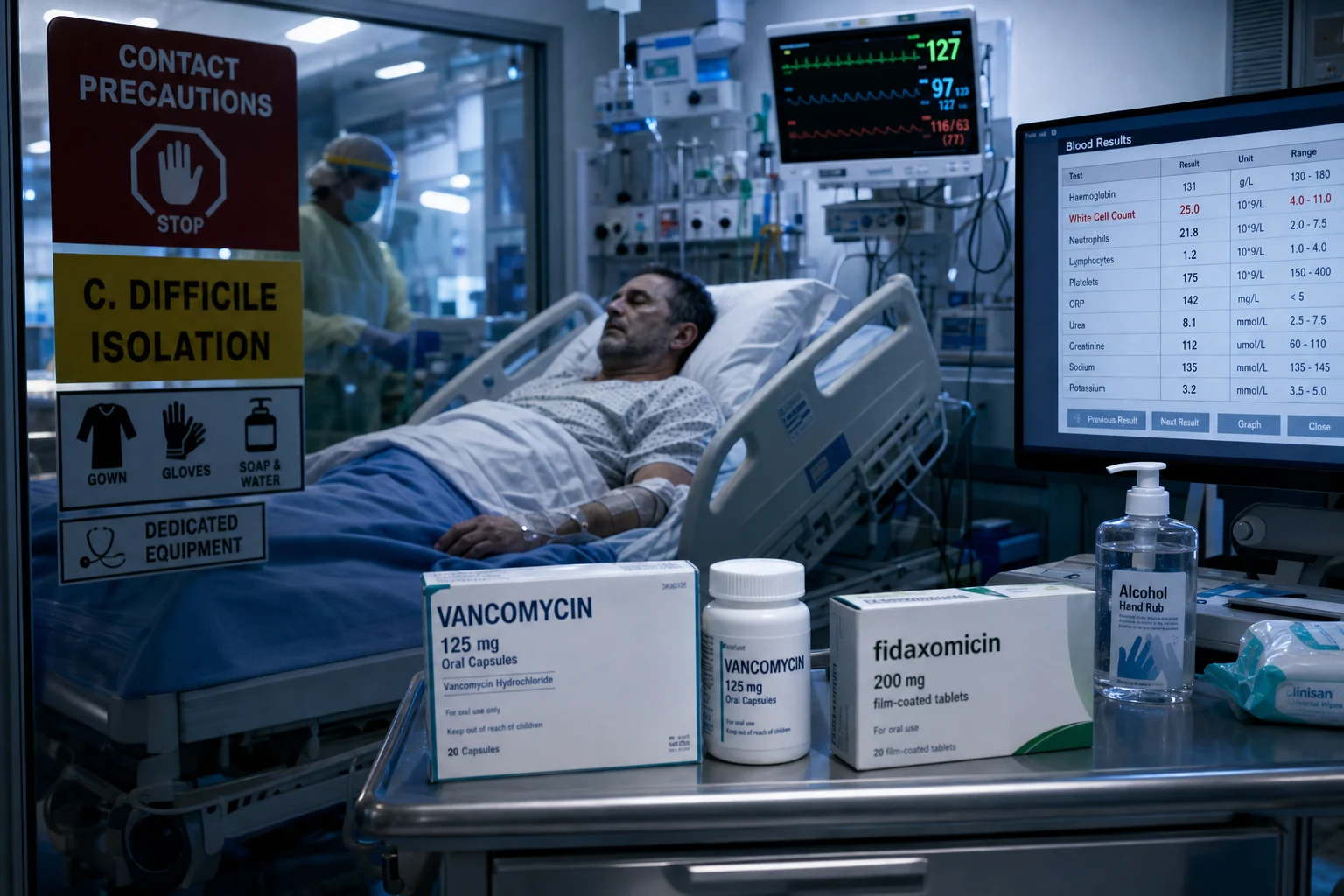
  7. C. difficile spores — soap and water, not alcohol gel. (1) C. difficile forms SPORES (dormant, resistant forms) that survive on surfaces for months. (2) ALCOHOL-BASED HAND GEL: does NOT kill spores (alcohol doesn't penetrate spore coat). (3) SOAP AND WATER (mechanical washing): physically removes spores from hands. (4) CLINICAL: for C. difficile, use SOAP AND WATER (not alcohol gel) for hand hygiene. (5) ALSO: BLEACH (hypochlorite) for environmental cleaning (kills spores). (6) ISOLATION: contact precautions (gown, gloves) for suspected/confirmed CDI — in SINGLE ROOM. (7) DURATION: until 48h after diarrhoea stops (or per policy). (8) COMMON ERROR: using alcohol gel (standard hand hygiene in most hospitals) — INEFFECTIVE for C. difficile spores.[5] }
  8. Risk factors — know the precipitants. (1) ANTIBIOTICS (the #1 risk — disrupt gut flora -> C. difficile overgrowth): (a) HIGHEST risk: CLINDAMYCIN (classic), FLUOROQUINOLONES (ciprofloxacin, levofloxacin), CEPHALOSPORINS (2nd/3rd gen), BROAD-SPECTRUM penicillins. (b) LOWER risk: aminoglycosides, vancomycin (IV), metronidazole, doxycycline. (c) Risk proportional to SPECTRUM + DURATION. (2) AGE >65 (gut microbiota less diverse, immune senescence). (3) PROTON PUMP INHIBITORS (reduce gastric acid -> more spores survive to colon). (4) CHEMOTHERAPY/IMMUNOSUPPRESSION (mucosal damage, immune compromise). (5) IBD (inflammatory bowel disease — already inflamed colon, on immunosuppression). (6) RECENT HOSPITALISATION/HEALTHCARE EXPOSURE (nosocomial acquisition). (7) GASTROINTESTINAL SURGERY. (8) TUBE FEEDING. PREVENTION: antibiotic stewardship (reduce unnecessary antibiotics), PPI review (stop if not needed), infection control.[1] }
  9. Diagnosis — toxin vs NAAT. (1) STOOL TESTING (on diarrhoeal stool — not formed): (a) GDH (glutamate dehydrogenase — C. difficile antigen — sensitive but not specific). (b) TOXIN A/B EIA (detects toxins — specific but less sensitive). (c) NAAT (nucleic acid amplification — PCR — detects toxin gene — highly sensitive but doesn't distinguish colonisation vs active disease). (2) ALGORITHM (IDSA): (a) MULTI-STEP: GDH + toxin EIA (if discordant -> NAAT confirm). OR (b) NAAT alone (if available — but may over-diagnose colonisation). (3) FLEXIBLE SIGMOIDOSCOPY: pseudomembranes (yellow plaques on mucosa) — DIAGNOSTIC (but invasive — use if ileus precludes stool or diagnosis uncertain). (4) IMAGING (CT): colonic wall thickening, 'accordion sign' (mucosal oedema + oral contrast trapping), ascites, megacolon. (5) COMMON ERROR: testing FORMED stool (C. difficile doesn't cause formed stool — testing formed stool = colonisation, not infection). ONLY test DIARRHOEAL stool.[1] }
  10. Recurrent CDI — management pathway. (1) RECURRENCE RATE: ~20-25% after initial vancomycin; 12-15% after fidaxomicin. (2) RISK FACTORS: age >65, continued antibiotics, PPI, severe initial, immunocompromise. (3) FIRST RECURRENCE: (a) If initial was VANCOMYCIN -> FIDAXOMICIN (or vancomycin taper). (b) If initial was FIDAXOMICIN -> fidaxomicin again (or vancomycin taper). (4) SECOND RECURRENCE: VANCOMYCIN TAPER (125 mg QID x 10-14 days, then taper over weeks — pulsed dosing). OR fidaxomicin. (5) THIRD+ RECURRENCE: FAECAL MICROBIOTA TRANSPLANT (FMT) — 80-90% cure. (6) BEZLOTOXUMAB (with antibiotic) for any recurrence in high-risk. (7) ADDRESS: stop inciting antibiotics/PPIs (if possible). (8) PREVENT: antibiotic stewardship, bezlotoxumab (high-risk), FMT (multiple recurrences).[6] }
  11. Surgical approach — subtotal colectomy. (1) INDICATIONS (life-saving): (a) PERFORATION (free air — emergency). (b) REFRACTORY toxic megacolon (not improving despite 5+ days medical). (c) WORSENING sepsis despite therapy (rising lactate, shock). (d) NEAL criteria (WBC ≥50, lactate ≥5). (2) PROCEDURE: SUBTOTAL COLECTOMY with end ileostomy. (a) Remove MOST of the colon (ascending, transverse, descending, sigmoid) — leave rectum. (b) End ileostomy (stoma) — bowel brought out through abdominal wall. (c) NOT segmental (leaves too much colon -> recurrence). (3) TIMING: EARLY (before irreversible shock) improves survival. (4) MORTALITY: high (30-50%) — but these are the sickest patients (medical therapy mortality 50-70%). (5) POST-OP: ileostomy care, nutrition, monitor for complications (anastomotic leak if reversal later, stoma issues). (6) REVERSAL: possible later (ileorectal anastomosis) — if patient recovers + no recurrence.[4] }
  12. IBD + C. difficile — dangerous combination. (1) IBD patients (ulcerative colitis, Crohn's) are at HIGHER RISK of CDI (immunosuppression, frequent antibiotics, hospitalisation, inflamed colon). (2) CDI in IBD may TRIGGER A FLARE (worsening colitis — hard to distinguish from IBD flare). (3) TESTING: ALWAYS test IBD patients with diarrhoea flare for C. difficile (treat both if positive). (4) MANAGEMENT: treat CDI (vancomycin/fidaxomicin) + IBD flare (steroids — if needed, despite CDI — balance risk). (5) COLECTOMY: may be needed (for refractory — IBD flare + CDI -> severe colitis). (6) MORTALITY: higher than CDI alone (comorbidities + immunosuppression). (7) PREVENTION: antibiotic stewardship in IBD, careful immunosuppression.[5] }
  13. Community-acquired CDI — increasing. (1) Traditionally: CDI was NOSOCOMIAL (hospital-acquired — from healthcare exposure). (2) INCREASINGLY: COMMUNITY-ACQUIRED CDI (no recent hospitalisation) — from: (a) Antibiotics in community (primary care). (b) Food/water contamination (zoonotic — animals, agricultural). (c) Asymptomatic carriers (shed spores). (3) CLINICAL: consider CDI in any patient with unexplained diarrhoea + recent antibiotics (even if not hospitalised). (4) TESTING: stool toxin for any diarrhoea + risk factors (antibiotics, age >65, PPI). (5) EPIDEMIOLOGY: hypervirulent strain (BI/NAP1/027 — produces more toxin A + B, more resistant to fluoroquinolones) caused outbreaks — higher mortality. (6) PUBLIC HEALTH: surveillance, antibiotic stewardship (community + hospital), infection control.[5] }
  14. Antibiotic stewardship — the key to prevention. (1) ANTIBIOTICS are the #1 cause of CDI (disrupt gut flora -> C. difficile overgrowth). (2) STEWARDSHIP: (a) AVOID UNNECESSARY antibiotics (viral infections don't need antibiotics). (b) Use NARROW-SPECTRUM (when possible — avoid broad-spectrum that disrupts more flora). (c) SHORTEST effective duration (prolonged courses -> more disruption). (d) DE-ESCALATE (when cultures available — narrow from broad empiric). (e) PCT-GUIDED (procalcitonin — stop when PCT low — PRORATA). (3) EVIDENCE: stewardship programs reduce CDI rates by 30-50% (antibiotic reduction -> less CDI). (4) ALSO: PPI review (stop unnecessary PPIs -> less CDI), infection control (isolation, soap+water, bleach). (5) PUBLIC HEALTH: coordinated surveillance + stewardship across hospitals + community.[1] }

Red flags

Critical fulminant C. difficile red flags

  • Vancomycin must be PO/NG (NOT IV — IV doesn't reach gut).[1] }
  • Fulminant: hypotension + ileus + megacolon + shock → vancomycin 500 mg PO/NG QID + IV metronidazole + enema.[4] }
  • Ileus paradox: LESS diarrhoea but deteriorating → toxic megacolon (worse, not better).[4] }
  • Neal criteria: WBC ≥50 OR lactate ≥5 → high mortality → consider EARLY surgery.[4] }
  • Fidaxomicin preferred for initial (lower recurrence, MODIFY) — vancomycin for fulminant (higher dose).[2] }
  • Bezlotoxumab reduces recurrence (anti-toxin B — for high-risk).[3] }
  • Soap and water for hand hygiene (alcohol gel doesn't kill spores).[5] }
  • Surgery (subtotal colectomy) for perforation/refractory/worsening despite therapy.[4] }

Prognosis

Fulminant C. difficile evidence and outcomes

[3]

Pathophysiology — toxins A/B and the inflammatory cascade

C. difficile toxins A and B — mechanism of fulminant colitis

  1. Two large glucosylating toxins drive disease. (1) TOXIN A (TcdA, 308 kDa enterotoxin) and TOXIN B (TcdB, 270 kDa cytotoxin) are the principal virulence factors. (2) BOTH are glucosyltransferases that inactivate the Rho/Rac/Cdc42 GTPase family inside colonocytes. (3) Consequences: (a) breakdown of the actin cytoskeleton -> cell rounding, loss of tight junctions -> increased permeability, fluid leak (diarrhoea); (b) release of inflammatory cytokines (IL-8, IL-1β, TNF-α) -> neutrophil recruitment -> crypt microabscesses, pseudomembranes; (c) mitochondrial dysfunction, cell death, mucosal ulceration. (4) TOXIN B is the more potent cytotoxin in human disease (animal models historically over-emphasised toxin A). (5) Bezlotoxumab targets toxin B; actoxumab targeted toxin A (failed as monotherapy, additive with bezlotoxumab). (6) NON-TOXIGENIC strains (tcdA/tcdB negative) cause colonisation, NOT colitis — they are even explored as a therapeutic probiotic (SER-109, Veillonella).
  2. Binary toxin (CDT) in hypervirulent strains. (1) BI/NAP1/027 strains additionally produce ACTIN-specific ADP-ribosylating binary toxin (CDT) from a separate chromosomal locus (cdtA/cdtB). (2) CDT depolymerises actin -> microtubule-based protrusions increase C. difficile adherence. (3) Clinical contribution is debated but strains with CDT plus hyper-toxin production (tcdC deletion, upregulated PaLoc) cause more severe disease. (4) NAP1/027 has increased sporulation, germination efficiency, and resistance to fluoroquinolones — explains rapid global spread in the 2000s. (5) Despite this, the modern (post-2015) decline in 027 prevalence in Europe/North America suggests aminoglycoside-type fitness costs and competing strains (e.g., 106, 244) replacing it.
  3. PaLoc — the pathogenicity locus. (1) Toxin genes (tcdA, tcdB) plus regulators (tcdR positive, tcdC negative, tcdE holin) lie on the 19.6 kb pathogenicity locus (PaLoc). (2) tcdC is a NEGATIVE regulator — a deletion/stop codon in NAP1/027 removes this brake -> uncontrolled toxin expression -> 16-20× higher toxin A and B. (3) tcdR is the sigma factor driving transcription. (4) Toxin release occurs during stationary phase and cell autolysis — late exponential growth.
[3]

Pathophysiology — spores, germination and the colonic microbiome

Spore biology and the case for FMT

  1. Spore lifecycle drives recurrence. (1) C. difficile forms metabolically dormant endospores that resist heat (80°C), alcohol, desiccation, and most disinfectants for months on surfaces. (2) Spores germinate in the ileum in response to PRIMARY bile acids (taurocholate) — whose levels rise when the colonic microbiome is depleted by antibiotics. (3) Healthy colon microbiota CONVERT primary to SECONDARY bile acids (deoxycholate, lithocholate) which INHIBIT C. difficile growth — the key mechanism of colonisation resistance. (4) Antibiotics deplete the secondary-bile-acid-producing flora -> germination permitted -> CDI. (5) FMT works by RESTORING this bile-acid metabolism + bacteriocin-producing species (e.g., Clostridium scindens) -> colonisation resistance. (6) This explains why narrow-spectrum fidaxomicin (less microbiome disruption) has LOWER recurrence than vancomycin, and why SER-109 (spore-based microbiome therapeutic) reduces recurrence after antibiotic cure. (7) BEZLOTOXUMAB does NOT restore flora (just neutralises toxin) — recurrence still possible; FMT restores the underlying ecology.
  2. Asymptomatic colonisation vs active disease. (1) ~3-5% of healthy adults and 20-50% of long-term-care residents are ASYMPTOMATIC CARRIERS (spore-formers in stool, no toxin production at significant level). (2) Carriers have HIGHER risk of progression if exposed to antibiotics. (3) DON'T routinely test formed stool (only unformed — Bristol 5-7) — colonisation yields a positive NAAT without disease. (4) DON'T do 'test of cure' — toxin may remain positive for weeks after cure; clinical resolution is the endpoint. (5) In high-risk ICU patients, decolonisation is not routinely recommended but source control (antibiotic stewardship) is paramount.
[2]

AGA / IDSA / ESCMID severity criteria compared

[4]

AGA 2021 — practical severity thresholds

  1. AGA reinforces a tiered approach. (1) For SEVERE CDI use fidaxomicin FIRST-LINE; vancomycin 125 mg QID is acceptable where fidaxomicin unavailable. (2) For FULMINANT: vancomycin 500 mg PO/NG QID + IV metronidazole 500 mg TID; consider fidaxomicin as the oral component (some ESCMID experts prefer fidaxomicin even in fulminant given better outcomes data). (3) ADD bezlotoxumab 10 mg/kg IV single dose for high recurrence risk (age ≥65, severe, immunocompromised, prior recurrence). (4) Surgical consultation EARLY (don't wait for Neal criteria to manifest in extremis). (5) Vancomycin retention enema (500 mg in 100 mL saline PR QID) when ileus precludes oral/NG delivery. (6) Tigecycline 50 mg IV BD (loading 100 mg) is an adjunctive option in refractory fulminant CDI — small studies suggest benefit; not a substitute for surgery when indications present. (7) Avoid loperamide (antiperistaltic -> retains toxin -> worsens megacolon). (8) Discontinue inciting antibiotic AND proton pump inhibitor when feasible.
[4]

Pharmacology — fidaxomicin, vancomycin, metronidazole, bezlotoxumab

[2]

Fidaxomicin pharmacology — why narrow is better

  1. Fidaxomicin (Dificlir/Dificid) — narrow-spectrum macrocyclic. (1) MECHANISM: inhibits bacterial RNA polymerase (sigma-A subunit) — distinct from rifamycins (different binding site). (2) NARROW SPECTRUM: potent against C. difficile (MIC ~0.06-0.5), Clostridium perfringens; minimal activity vs Enterobacteriaceae, Bacteroides, commensal Gram-positives — SPARES the colonic microbiome. (3) PHARMACOKINETICS: minimal systemic absorption (~200 ng/mL); biliary excretion -> high faecal concentrations (1000× MIC) — exactly where C. difficile lives. (4) High cost historically ($3500 AUD per course); now on PBS authority listing for an initial or first recurrence of CDI in Australia. (5) Half-life of fidaxomicin and its active metabolite OP-1118 ~8-10 h faecally. (6) EXTEND trial (Cornely 2018, Lancet ID): extended-pulse fidaxomicin 200 mg once daily on days 1, 3, 5, 7, 9, 11, 13, 15 — non-inferior sustained clinical response at 12 weeks vs standard BD; halves recurrence vs vancomycin. (7) MODIFY I/II stratified analysis: fidaxomicin effective across NAP1/027 and non-NAP1 strains. (8) Caution: minimal data in pregnancy (Category B3); no significant drug interactions. (9) Resistance: rare — MIC creep not clinically significant to date.
  2. Vancomycin oral — pharmacology pitfalls. (1) Oral vancomycin is NOT absorbed from intact GI tract (achieving high colonic luminal concentrations). (2) In severe colitis with mucosal disruption, some systemic absorption CAN occur — especially in pseudomembranous colitis with deep ulcers; consider monitoring troughs if patient also on IV vancomycin for MRSA. (3) Generic capsules 125/250 mg; the pharmacy-compounded intravenous solution (500 mg vial in 25 mL water) can be given orally/NG to reduce cost — but BITTER and there is a real risk of inadvertent IV administration of the IV vial (never give IV vial formulation intravenously). (4) PR (rectal) administration as retention enema 500 mg in 100 mL normal saline QID for ileus. (5) Reduced-susceptibility C. difficile strains are emerging (vancomycin MIC ≥2 mg/L) — significance debated but correlates with worse outcomes in some studies. (6) RECURRENCE mechanism: vancomycin is bacteriostatic on spores (spores survive) AND disrupts microbiome (removes colonisation resistance) -> 25% recurrence.
[2]

Bezlotoxumab — when and when NOT to give

  1. Bezlotoxumab (Zinplava) — anti-toxin B monoclonal. (1) MECHANISM: binds and neutralises toxin B (does NOT bind toxin A — actoxumab is the partner antibody). (2) PHARMACOKINETICS: single IV infusion 10 mg/kg over 60 min; half-life ~19 days — sustained systemic neutralisation for 12 weeks post-dose. (3) MODIFY I/II (2017, NEJM, Wilcox): n=2655; bezlotoxumab vs placebo, both with standard antibiotic (vancomycin or fidaxomicin). Recurrence at 12 weeks: 28% placebo → 17% bezlotoxumab (relative reduction ~40%). Sustained cure rate ~80% vs 67%. (4) GREATEST BENEFIT in high-risk subgroups: age ≥65 (recurrence 27% → 14%), immunocompromised, multiple prior CDI, severe CDI (Zar score ≥2). (5) HEART FAILURE WARNING: in patients with a history of congestive heart failure, bezlotoxumab was associated with increased mortality at 12 months (19.5% vs 12.5%) — AVOID in NYHA III/IV heart failure. The mechanism is unclear (possibly volume load or sicker baseline). (6) DON'T give to patients with a single mild episode and no risk factors — low absolute benefit, small HF signal. (7) DON'T give as sole therapy — must be co-administered with fidaxomicin/vancomycin. (8) Australian PBS authority listing; UK NICE TA800 (2022) recommended for high-risk recurrence.
[3]

Surgery — subtotal colectomy vs loop ileostomy with colonic lavage

[4] [4]

Surgical decision-making in fulminant CDI

  1. Timing is everything — operate EARLY, not late. (1) Mortality of subtotal colectomy RISES dramatically once the patient has refractory vasopressor-dependent septic shock with multi-organ failure (mortality >70%). (2) Mortality when surgery is performed BEFORE refractory shock is much lower (~14-25%). (3) The 'golden window' is narrow — the patient who looks sick but is still reversible. (4) Common ICU error: 'wait one more day' on medical therapy -> patient deteriorates beyond surgical salvage. (5) Use NEAL criteria as a TRIGGER to involve surgery EARLY (WBC ≥50 OR lactate ≥5), not as a threshold at which you call surgery for the first time. (6) Continuous multi-disciplinary discussion: intensivist, infectious diseases, colorectal surgery, gastroenterology.
  2. Why subtotal colectomy (not segmental)? (1) C. difficile Pseudomembranous inflammation typically involves the ENTIRE colon (pancolitis) — even if imaging shows segmental thickening. (2) Segmental colectomy leaves behind inflamed mucosa with C. difficile -> recurrence, progression, repeat surgery. (3) Subtotal colectomy removes virtually all colonic mucosa harboring C. difficile; the rectum (which has less disease usually) is preserved as a Hartmann's pouch. (4) End ileostomy is created; many patients later have an ileorectal anastomosis (functional, though frequent loose stools). (5) Loop ileostomy + lavage (Kato) is a COLON-PRESERVING alternative that has shifted the paradigm in some centres — useful exam answer.
  3. Pre- and post-colectomy considerations. (1) Pre-op: optimise physiology as much as possible without delaying surgery (resuscitation, vasopressors, antibiotics, correct electrolytes — especially K+ for arrhythmia risk). (2) Anaesthesia: full stomach, septic, vasopressor-dependent — rapid sequence with arterial line, large-bore IV access, anticipate cardiovascular collapse on induction. (3) Post-op: septic shock management continues; ileostomy output can be HIGH (1-2 L/day) — replace with isotonic crystalloid, monitor Mg/K; cholestyramine, loperamide, codeine to slow output if needed. (4) Stoma nursing education. (5) Nutritional support (enteral if possible). (6) Recurrent CDI after colectomy is RARE but possible (rectal stump) — treat with vancomycin enema. (7) Long-term quality of life after subtotal colectomy for CDI is acceptable in survivors — return to independence in ~60%.
[2]

Special populations — IBD, neutropenia, pregnancy, post-transplant

Special populations with fulminant CDI

  1. IBD + CDI — a dangerous synergy. (1) Patients with ulcerative colitis or Crohn's colitis have ~3-fold higher risk of CDI (immunosuppression, frequent antibiotics, healthcare exposure, already-inflamed mucosa). (2) CDI can TRIGGER a colitis flare and is hard to distinguish clinically — bloody diarrhoea, abdominal pain, raised inflammatory markers occur in both. (3) ALWAYS test IBD patients with a diarrhoea flare for C. difficile toxin (don't assume it's just a flare). (4) MANAGEMENT: treat CDI first (fidaxomicin preferred, less microbiome disruption, lower recurrence); add IBD-directed therapy (steroids, biologics) if flare persists — do NOT withhold necessary immunosuppression in active IBD, but balance carefully. (5) Bezlotoxumab is reasonable for recurrence prevention. (6) Colectomy is the endpoint for refractory fulminant disease — same indications as non-IBD, but IBD patients may already be on the surgical pathway. (7) Recurrence rates higher in IBD (~30-40%). (8) Post-colectomy, an ileal pouch-anal anastomosis (IPAA) can develop 'pouchitis' that may include C. difficile — test and treat.
  2. Neutropenic / haematology / stem-cell transplant patients. (1) Severe CDI in neutropenia: blunted inflammatory response — WBC may NOT rise (paradoxically low WBC despite fulminant disease). (2) Thresholds for surgery may need to be LOWER (rely on lactate, vasopressors, imaging — not WBC). (3) Risk of typhlitis (neutropenic enterocolitis) and C. difficile overlap — both possible simultaneously. (4) Avoid loperamide (risk of toxic megacolon). (5) Bezlotoxumab useful (immunocompromised — high recurrence). (6) Fidaxomicin preferred (less microbiome disruption in patients about to receive more chemotherapy). (7) Co-ordinate with haematology — chemotherapy may need to be held.
  3. Pregnancy and post-partum. (1) CDI in pregnancy is RARE but increasing (community-acquired, antibiotic exposure for peripartum infections, GBS prophylaxis). (2) Pregnancy itself does not change CDI severity criteria — apply standard thresholds. (3) Fidaxomicin (Category B3 — limited human data; animal studies reassuring). (4) Oral vancomycin — generally considered safe in pregnancy (long track record). (5) IV metronidazole — avoid in first trimester where possible (theoretical teratogenicity); may be used if benefit outweighs. (6) Bezlotoxumab — no adequate human pregnancy data; reserve for life-threatening disease in high-risk. (7) FMT — limited data in pregnancy; not first-line. (8) Surgery if fulminant — pregnancy is not a contraindication to life-saving colectomy.
  4. Solid organ transplant recipients. (1) Kidney, liver, lung transplant patients have very high CDI incidence (immunosuppression, frequent antibiotics, hospital exposure, PPIs). (2) Higher mortality (10-25%) and recurrence (30-40%) than non-transplant. (3) Fidaxomicin preferred (less interaction with calcineurin inhibitors; lower recurrence). (4) Bezlotoxumab for recurrence prevention (be mindful of HF in cardiac transplant). (5) Reduce immunosuppression if feasible in fulminant disease (balance rejection risk). (6) FMT — case series show efficacy; donor screening rigorous given immunosuppression. (7) Drug interactions: vancomycin PO does NOT interact; fidaxomicin minimal; avoid macrolides/fluoroquinolones which interact with calcineurin inhibitors.
[6]

Diagnostics deep dive

[4]

Diagnostic pitfalls

  1. Don't be fooled by negative tests in fulminant disease. (1) In ileus there may be little stool to send — test any liquid stool; if ileus precludes stool, sigmoidoscopy or empirical therapy. (2) Toxin EIA sensitivity is ~63-94% — a NEGATIVE toxin in a high-suspicion patient does NOT exclude CDI (request NAAT or treat empirically). (3) GDH+/toxin- can be (a) colonisation, or (b) low-level disease — correlate clinically; treat if symptomatic + high-risk. (4) NAAT+ in an asymptomatic patient is colonisation, not disease — DON'T treat. (5) Pseudomembranes on endoscopy are diagnostic but NOT always present (especially in early or treated disease). (6) After treatment, toxin may remain positive for weeks — DON'T do test-of-cure. (7) In fulminant colitis, empirical therapy (vancomycin 500 mg PO/NG + IV metronidazole) should NEVER be delayed pending test results.
[4]

Faecal microbiota transplant (FMT) — details and modern approaches

FMT in CDI — evidence, technique, and new microbiome therapeutics

  1. FMT — efficacy for multiple recurrences. (1) MECHANISM: restores diverse colonic microbiota (esp. secondary bile-acid producers, bacteriocin-secreting species) → colonisation resistance → C. difficile cannot establish. (2) INDICATION: multiple recurrences (≥2-3) refractory to antibiotic taper; selected severe/refractory fulminant cases. (3) EFFICACY: ~85-90% cure after single infusion; 95% after second. (4) TRIALS: van Nood 2013 (NEJM): FMT 94% vs vancomycin 31%; Cammarota 2015 (Lancet ID) duodenal infusion 86%; Youngster 2014 capsule 70-90%. (5) ROUTES: colonoscopic (highest delivery, allows visualisation of pseudomembranes), nasoduodenal/jejunal (lower delivery, aspiration risk), capsule (convenient, slightly lower efficacy per dose), retention enema (rarely used as sole route).
  2. Safety and regulatory evolution. (1) Generally safe; minor adverse events: bloating, transient fever, abdominal cramping. (2) SERIOUS (RARE): pathogen transmission (ESBL E. coli, multi-drug-resistant organisms) — led to FDA safety alerts 2019 (one death from ESBL bacteraemia from donor stool). (3) DONOR SCREENING now rigorous: serology (HIV, HBV, HCV, syphilis), stool (C. difficile, Salmonella, Shigella, Campylobacter, E. coli O157, ova/cysts/parasites, MDR organisms, SARS-CoV-2). (4) EXCLUDE: recent antibiotics, GI comorbidity, obesity, metabolic syndrome, atopy, immunocompromise (donor). (5) In Australia: donor stool products (e.g., BiomeBank 'Bios穗' / 'BIOMICTRA') regulated by TGA as a biological; capsule products emerging. (6) NOT recommended as first-line for initial episode; for multiple recurrences.
  3. Defined microbial consortiums (next-generation). (1) Goal: standardised, reproducible alternative to FMT. (2) RBX2660 (Rebyota, Ferring) — FDA approved 2022 for recurrence prevention after antibiotic course; rectal administration. (3) VOWST/SER-109 (Seres/Versantis) — oral spore consortium; FDA approved 2023; recurrence at 8 weeks 12% vs 40% placebo. (4) Future: strain-defined therapies with predictable efficacy and no donor variability. (5) CICM exam awareness: recognise FMT and emerging 'microbiome therapeutics' as a category.
[6]

ICU considerations — septic shock, AKI, electrolyte, nutrition

ICU management pearls in fulminant CDI

  1. Septic shock from CDI — manage per Surviving Sepsis. (1) Source: colonic mucosal inflammation + translocation -> bacteraemia with gut organisms (Bacteroides, Enterobacteriaceae, Enterococcus). (2) BLOOD CULTURES before antibiotics where possible; broad-spectrum cover (piperacillin-tazobactam) for translocating organisms PLUS anti-CDI agent. (3) Avoid fluoroquinolones/clindamycin (may worsen CDI). (4) Lactate clearance, MAP ≥65, ScvO₂, central venous guidance per Sepsis Hour-1 bundle. (5) Noradrenaline first-line; vasopressin second; consider corticosteroids (hydrocortisone 200 mg/day) for refractory shock (RECOVER, ADRENAL — no specific CDI data). (6) Source control = anti-CDI therapy + surgery when indicated; failure to source-control is the most common reason for refractory shock.
  2. Acute kidney injury. (1) Multifactorial: hypovolaemia (diarrhoea), sepsis (vasodilation, AKI), abdominal compartment syndrome (megacolon raises intra-abdominal pressure → renal venous congestion), nephrotoxic antibiotics (vancomycin IV — if also given for MRSA). (2) Manage: resuscitate, monitor intra-abdominal pressure (>20 mmHg = concerning; >25 = decompressive laparotomy), renal-dose adjustment for fidaxomicin NOT needed (minimal absorption); vancomycin oral no systemic; metronidazole reduce in severe hepatic dysfunction. (3) CRRT if indicated; in severe colitis, CRRT can cause subtle haemodynamic instability affecting gut perfusion — balance.
  3. Electrolyte disturbance. (1) Hypokalaemia, hypomagnesaemia, hypophosphataemia from diarrhoea + sepsis + refeeding. (2) HYPOKALAEMIA causes ileus -> worsens toxic megacolon (vicious cycle) — replace aggressively (K+ 20-40 mmol/h IV via central line in severe; monitor). (3) Correct Mg first (K+ won't correct without Mg repletion). (4) HypoNa from GI loss, SIADH (if post-op), hyperglycaemia from stress/sepsis. (5) Monitor ionised calcium, phosphate, magnesium daily.
  4. Nutrition. (1) ENTERAL preferred — maintains gut barrier, immune function, microbiome (where re-establishing). (2) Ileus may require NJ or temporary TPN. (3) Avoid long fasts (mucosal atrophy, bacterial translocation). (4) Early enteral nutrition (within 48 h) in line with ICU nutrition guidelines. (5) REFRESH: in malnourished patients on prolonged antibiotics, refeeding syndrome (phosphate drop) — monitor and replace. (6) Post-colectomy: ileostomy output may be high; fluid + electrolyte replacement; thicken output with loperamide/codeine/cholestyramine.
  5. VTE prophylaxis. (1) Severe inflammation + immobility + central lines -> very high VTE risk in fulminant CDI. (2) Standard LMWH (enoxaparin 40 mg SC daily — renal dose-adjust); hold pre-op. (3) Mechanical prophylaxis (TEDS, IPC) as adjunct. (4) Be aware of HITT if prolonged heparin exposure. (5) Pre-operative filter if contraindication to anticoagulation.
  6. Stress ulcer prophylaxis — the PPI dilemma. (1) PPIs are a RISK FACTOR for CDI (reduce gastric acid -> more spores survive). (2) But fulminant CDI patients in ICU often meet SUPRA criteria (mechanical ventilation >48 h, coagulopathy, shock, sepsis) for stress ulcer prophylaxis. (3) PRACTICAL: use HISTAMINE-2 BLOCKER (e.g., famotidine, ranitidine where available) where SUPRA criteria met; avoid PPI unless clearly indicated; review and STOP PPIs that were outpatient/long-term if feasible. (4) Sucralfate alternative (no acid suppression, GI side effects). (5) Re-evaluate daily — discontinue when enteral nutrition established (reduces stress ulcer risk).
[4]

Infection control and prevention

[6]

Prevention bundles and antibiotic stewardship

  1. Antimicrobial stewardship (AMS) is the cornerstone of CDI prevention. (1) Highest-yield CDI prevention intervention across all studies. (2) Targets: (a) avoid unnecessary antibiotics for viral URTI/asymptomatic bacteriuria; (b) narrow-spectrum (avoid carbapenems, 3rd/4th-gen cephalosporins, fluoroquinolones where narrow possible); (c) shortest effective duration; (d) procalcitonin-guided stopping (PRORATA, ProACT — modest benefit); (e) intravenous-to-oral switch protocols; (f) pharmacist-led review and de-escalation. (3) AMS programs reduce CDI by 30-50% (national UK 'Start Smart then Focus', Australian Commission AURA). (4) AVOID clindamycin, fluoroquinolones, 3rd/4th-gen cephalosporins where possible — these carry the highest CDI risk.
  2. Environmental control and the spore problem. (1) C. difficile spores survive on surfaces for MONTHS (less in dry, more in moist environments). (2) Common reservoirs: toilets, bedpans, commodes, call bells, bed rails, BP cuffs, stethoscopes, computer keyboards, smartphones. (3) Bleach (sodium hypochlorite 1000-5000 ppm) is sporicidal; quaternary ammonium compounds are NOT. (4) Hydrogen peroxide vapour / UV-C for terminal cleaning of CDI rooms. (5) Lidded bedpan washers; dedicated clinical waste stream. (6) Patient bathing with chlorhexidine — limited efficacy for CDI (spores not killed by chlorhexidine); better for MRSA/VRE prevention.
  3. Vaccine development. (1) Multiple C. difficile toxin vaccines in trials (Pfizer Cdiffense, Sanofi Pasteur); none yet approved (large phase III trials failed to meet primary endpoints; ongoing development). (2) Concept: induce anti-toxin antibodies → mimic the natural protection of bezlotoxumab. (3) Currently: NOT a clinical tool.
[3]

Prognosis and outcomes

Outcomes and prognostic factors in fulminant CDI

[3]
[4]

Pitfalls and high-yield exam rapid-recall

Rapid-recall pearls for CICM/FFICM/EDIC

  1. Toxin A (enterotoxin), Toxin B (cytotoxin) — both glucosylate Rho GTPase. Bezlotoxumab neutralises toxin B; actoxumab (anti-A) no longer developed.
  2. Hypervirulent strain: BI/NAP1/027 — tcdC deletion → 16-20× toxin production; binary toxin (CDT); fluoroquinolone-resistant; high sporulation. Mention in exam answers.
  3. AGA severity markers: WBC ≥15, creatinine >1.5 mg/dL, albumin <3 g/dL, fever. Fulminant: hypotension, ileus, megacolon (>6 cm), perforation, peritonitis, shock.
  4. Initial CDI treatment: FIDAXOMICIN 200 mg PO BD x 10 days (preferred — lower recurrence). Alternative: vancomycin 125 mg PO QID. Metronidazole only if alternatives unavailable.
  5. Fulminant CDI treatment: VANCOMYCIN 500 mg PO/NG QID + IV METRONIDAZOLE 500 mg TID + (ileus) VANCOMYCIN ENEMA 500 mg PR QID. Fidaxomicin PO/NG is acceptable in some guidelines.
  6. Surgical triggers (Neal): WBC ≥50 OR lactate ≥5 — early subtotal colectomy (mortality 30-50%, better than medical 50-70%). Kato loop ileostomy + lavage: ~19% mortality in selected centres.
  7. Vancomycin MUST be PO/NG/PR — IV vancomycin does NOT reach the colon. Common exam trap.
  8. Ileus paradox: less diarrhoea but deteriorating → toxic megacolon (worse, not better). Always image in deteriorating CDI.
  9. Bezlotoxumab 10 mg/kg single IV — reduces recurrence 28% → 17%. Avoid in NYHA III/IV heart failure. High-risk groups: age ≥65, immunocompromised, severe, prior CDI.
  10. FMT 85-90% cure for multiple recurrences (≥2-3). Routes: colonoscopy, capsule, nasoduodenal. Screen donors rigorously (post-2019 FDA alert re ESBL bacteraemia).
  11. Hand hygiene: SOAP AND WATER (alcohol gel doesn't kill spores). Bleach for surfaces.
  12. Stop inciting antibiotics + PPIs; avoid loperamide (antiperistaltic → worsens megacolon).
  13. Risk-factor antibiotics (high-yield): clindamycin, fluoroquinolones, 3rd/4th-gen cephalosporins, broad-spectrum penicillins. Low risk: aminoglycosides, IV vancomycin, metronidazole, doxycycline.
  14. Pregnancy: vancomycin PO preferred (long safety record); metronidazole avoid 1st trimester; bezlotoxumab reserved for life-threatening high-risk.
  15. Neutropenia: blunted WBC response — don't rely on WBC; use lactate, vasopressors, imaging to assess severity.
  16. IBD + CDI: always test IBD flares for C. difficile; treat CDI first; balance IBD flare therapy.
  17. Don't test of cure (toxin persists positive for weeks); don't test formed stool; don't test asymptomatic patients.
  18. Recurrent CDI: 1st — fidaxomicin or vancomycin taper; ≥2 — FMT ± bezlotoxumab.
  19. Antibiotic stewardship reduces CDI by 30-50% — single most effective prevention intervention.
  20. Acid suppression: prefer H2RA over PPI for stress ulcer prophylaxis in CDI; review and stop outpatient PPIs.
[3]

Additional high-stakes red flags in fulminant CDI

  • CT 'accordion sign' + colonic wall thickening + ascites: severe colitis, consider surgical source control.
  • Intra-abdominal pressure >20 mmHg: abdominal compartment syndrome complicating megacolon — decompressive laparotomy.
  • Free gas on AXR/CT: perforation — emergency subtotal colectomy.
  • WBC ≥50 OR lactate ≥5 (Neal criteria): high mortality — involve surgery EARLY.
  • Patient with IBD flare + C. difficile toxin positive: treat both, consider colectomy if refractory.
  • Pseudomembranous colitis on endoscopy but toxin EIA negative: NAAT confirmation; treat empirically.
  • Asymptomatic NAAT+ in ICU: colonisation, not disease — DON'T treat (treat only symptomatic disease).
  • Bezlotoxumab in NYHA III/IV heart failure: avoid (mortality signal in MODIFY).
  • Vancomycin IV given for CDI (because patient 'cannot take PO'): wrong — use PO/NG/PR vancomycin OR fidaxomicin PO/NG + IV metronidazole.
  • Recurrent CDI in transplant recipient on calcineurin inhibitor: fidaxomicin preferred (no interaction); bezlotoxumab for prevention.
  • Loperamide for CDI diarrhoea: AVOID (worsens toxic megacolon).
  • Outpatient PPI continued during fulminant CDI: STOP if not essential (PPIs increase CDI risk/recurrence).
[3]

Landmark trials and guidelines — at a glance

[2]

References

  1. [1]Johnson S, Lavergne V, Skinner AM, et al. Clinical Practice Guideline by the Infectious Diseases Society of America (IDSA) and Society for Healthcare Epidemiology of America (SHEA): 2021 Focused Update Guidelines on Management of Clostridioides difficile Infection in Adults. Clinical infectious diseases : an official publication of the Infectious Diseases Society of America, 2021.PMID 34164674
  2. [2]Guery B, Menichetti F, Anttila VJ, et al. Extended-pulsed fidaxomicin versus vancomycin for Clostridium difficile infection in patients 60 years and older (EXTEND): a randomised, controlled, open-label, phase 3b/4 trial. The Lancet. Infectious diseases, 2018.PMID 29273269
  3. [3]Goldstein EJC, Citron DM, Gerding DN, et al. Bezlotoxumab for the Prevention of Recurrent Clostridioides difficile Infection: 12-Month Observational Data From the Randomized Phase III Trial, MODIFY II. Clinical infectious diseases : an official publication of the Infectious Diseases Society of America, 2020.PMID 31883370
  4. [4]Singh A, Clark S The outcome of surgery in fulminant Clostridium difficile colitis. Colorectal disease : the official journal of the Association of Coloproctology of Great Britain and Ireland, 2006.PMID 16784480
  5. [5]Bauer MP, Kuijper EJ, van Dissel JT, et al. European Society of Clinical Microbiology and Infectious Diseases (ESCMID): treatment guidance document for Clostridium difficile infection (CDI). Clinical microbiology and infection : the official publication of the European Society of Clinical Microbiology and Infectious Diseases, 2009.PMID 19929973
  6. [6]Shaukat A, Drekonja DM, Huang Y, et al. Efficacy and Safety of Fecal Microbiota Transplant for Prevention of Recurrent Clostridioides difficile Infection. Clinical infectious diseases : an official publication of the Infectious Diseases Society of America, 2025.PMID 40260582