ICU · Infectious Diseases
Neutropenic sepsis (febrile neutropenia)
Also known as Febrile neutropenia · Neutropenic sepsis · Neutropenic fever · Chemotherapy-induced neutropenia · MASCC risk index · Anti-pseudomonal coverage · Neutropenic enterocolitis · Typhlitis
Neutropenic sepsis is a MEDICAL EMERGENCY in patients with neutrophil count <0.5 x10^9/L (or <1.0 with expected fall to nadir) PLUS fever >38.3C single reading OR two readings >38.0C one hour apart (or hypothermia <36C with septic signs). Occurs 7-14 days after cytotoxic chemotherapy (the neutrophil nadir), most often in haematological malignancy and stem-cell transplant. Mortality 5-10% overall, rising to 30-50% with septic shock. Management: blood cultures from all sites + empiric broad-spectrum ANTI-PSEUDOMONAL beta-lactam WITHIN 1 HOUR (piperacillin-tazobactam, or cefepime/ceftazidime, or meropenem). Add vancomycin if central line infection, severe mucositis, haemodynamic instability, or known MRSA. G-CSF for high-risk (prolonged profound neutropenia, documented fungal infection, organ failure). Do NOT wait for cultures — give antibiotics IMMEDIATELY; the 1-hour rule is absolute (analogous to STEMI door-to-balloon). NEVER use ceftriaxone (no Pseudomonas cover). Common organisms: Gram-negative bacilli (E. coli, Klebsiella, Pseudomonas — highest mortality), Gram-positive cocci (coagulase-negative staph, Staph aureus, viridans streptococci via mucositis), fungal (Candida, Aspergillus if persistent fever >4-7 days).
On this page & tools
Your progress
Saved locally on this device.
Target exams
Red flags

Definition and clinical presentation
Neutropenic sepsis (febrile neutropenia) is defined by the conjunction of a quantitative neutrophil defect and a fever that signals infection in a host who cannot mount a localised inflammatory response. The IDSA/ASCO definition used worldwide:[1][2]
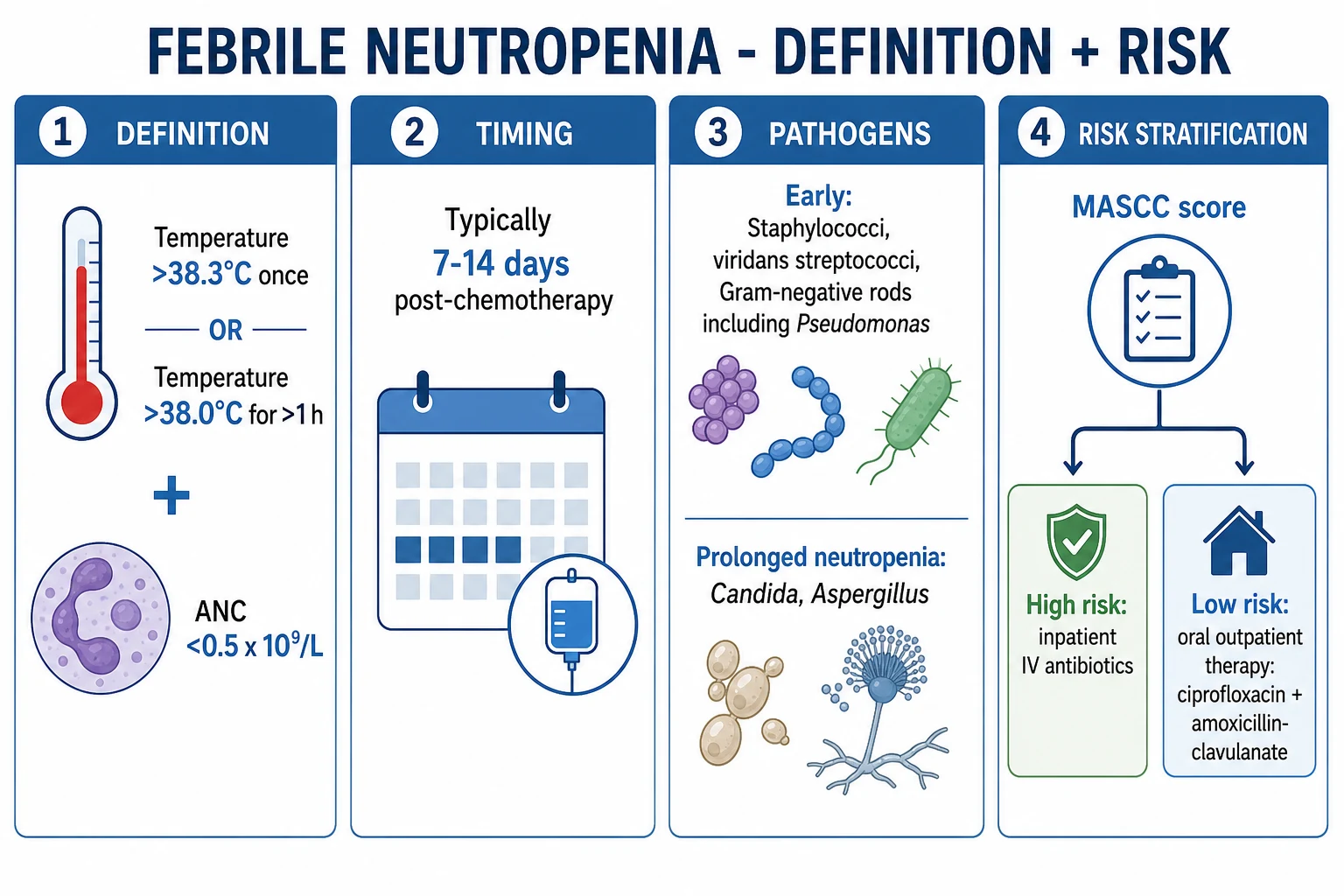
- Neutropenia: absolute neutrophil count (ANC) <0.5 × 10^9/L, OR <1.0 × 10^9/L with an expected decline to <0.5 over the next 48 hours (the "falling" count — common in the first week after induction chemotherapy).
- Fever: a single oral temperature >38.3C (101F), OR two readings >38.0C (100.4F) one hour apart.
- Accept the diagnosis equally in the hypothermic patient: temperature <36C with clinical signs of sepsis (hypotension, tachycardia, altered perfusion) is an equally ominous presentation, particularly in the elderly and in gram-negative bacteraemia. [1]
The typical patient presents 7-14 days after cytotoxic chemotherapy — the neutrophil nadir. Highest-risk settings: acute leukaemia induction (7+3 cytarabine/anthracycline), high-dose cytarabine, stem-cell transplant conditioning and the pre-engraftment phase, solid tumours on dose-intensive regimens (sarcoma, small-cell lung cancer), and any patient on the anti-CD33, anti-CD20, or BCL-2 inhibitor pathways combined with cytotoxics.[1][4]
Critical point — the neutropenic host cannot localise infection. There are no neutrophils to form abscesses, generate pus, or produce the classical signs of inflammation. A lobar pneumonia may show no consolidation on CXR and no purulent sputum; a perianal abscess may show no fluctuance or erythema; cellulitis may look deceptively mild. Fever may be the ONLY sign. The threshold to treat is therefore any fever in any neutropenic patient — never attribute it to "tumour fever," "drug fever," or "blood-product reaction" until infection has been assumed and treated.[1]
Definition
Medical emergency
- Neutrophil count <0.5 x10^9/L (or <1.0 and falling to nadir)
- PLUS: fever >38.3C single reading, OR two readings >38.0C one hour apart
- Or: hypothermia <36C with signs of sepsis
- Typically occurs 7-14 days after chemotherapy (neutrophil nadir)
- Fever may be the ONLY sign — neutropenic host cannot localise infection (no pus, no abscess, no localising signs)
Risk factors
For neutropenic sepsis
- Recent cytotoxic chemotherapy (especially for haematological malignancy)
- Bone marrow / stem cell transplant (especially pre-engraftment phase)
- Expected neutropenia >7 days (profound risk if >10-14 days)
- Profound neutropenia (ANC <0.1) — highest mortality
- Mucositis (breach in mucosal barrier — Strep viridans entry)
- Central venous catheter (catheter-related bloodstream infection)
- Comorbidities: COPD, diabetes, renal/liver impairment, age >60
- Prior fungal infection; no anti-mould prophylaxis
Why neutropenia is uniquely dangerous — the 1-hour rule
Neutrophils perform three jobs nothing else replaces: phagocytosis of extracellular bacteria and fungi, abscess formation (walling off infection locally), and oxidative killing via the myeloperoxidase–NADPH oxidase burst. Without them, bacteria are NOT contained locally — they enter the bloodstream within hours and progress to bacteraemia → septic shock → death far faster than in an immunocompetent host. A normal host tolerates hours of untreated bacteraemia; the neutropenic host does not. This single biological fact is why the 1-hour antibiotic rule exists and is absolute — it is the infectious-diseases equivalent of the STEMI door-to-balloon target.[1][2]
Common organisms — the pathogen map
The single most useful framework: the type of immune defect dictates the expected pathogen. In chemotherapy-induced neutropenia the dominant defect is loss of neutrophil function plus breach of the mucosal barrier (mucositis) plus an indwelling central venous catheter — so the immediate threats are Gram-negative bacilli (especially Pseudomonas) and Gram-positive cocci, with fungi emerging as neutropenia prolongs.[1][4]
Gram-negative bacilli
The immediate killer
- Pseudomonas aeruginosa — MOST DANGEROUS (mortality 20-40% in bacteraemia; ecthyma gangrenosum)
- Escherichia coli — commonest single isolate in many series
- Klebsiella pneumoniae, Enterobacter cloacae, Serratia (Enterobacterales)
- Sources: gut translocation (mucositis), central line, urinary tract, respiratory
- Anti-PSEUDOMONAL cover is mandatory — ceftriaxone does NOT cover Pseudomonas
Gram-positive cocci
Now the majority of isolates
- Coagulase-negative staphylococci (skin flora, catheter-related) — commonest blood isolate overall
- Staphylococcus aureus (incl. MRSA) — high virulence; line and skin source
- Viridans streptococci — from mucositis; can cause septic shock + ARDS ("viridans shock syndrome")
- Enterococcus (incl. VRE) — gut flora; line source
- Gram-positives rose with widespread central-line use; vancomycin added for specific indications
Fungi
If persistent fever >4-7 days
- Candida spp. — hepatosplenic (chronic disseminated), bloodstream; fluconazole resistance in glabrata/krusei
- Aspergillus fumigatus — angioinvasive; halo sign on CT; haemoptysis; galactomannan positive
- Mucorales (mucormycosis) — galactomannan AND beta-D-glucan BOTH negative; needs debridement + L-AmB
- Risk rises steeply with neutropenia >10-14 days, prolonged steroids, prior fungal infection
Other / atypical
Context-dependent
- Respiratory viruses — RSV, influenza, parainfluenza, adenovirus (HSCT, winter)
- HSV/VZV reactivation — mucocutaneous, oesophagitis, hepatitis, pneumonitis
- CMV — post-HSCT day 30-100 (T-cell defect); pre-emptive PCR monitoring
- Pneumocystis jirovecii — steroid use, calcineurin inhibitors; co-trimoxazole prophylaxis
- Clostridioides difficile — neutropenic enterocolitis overlap; check toxin if diarrhoea
The Pseudomonas problem
Pseudomonas aeruginosa deserves its own emphasis because it is the single most lethal organism in neutropenic sepsis (mortality 20-40% in bacteraemia, up to 50% with shock). It is intrinsically virulent — elastase, proteases, exotoxin A, and a Type III secretion system (ExoS, ExoU) cause tissue destruction and immune evasion — and rapidly develops resistance (AmpC inducible beta-lactamase, efflux pumps, biofilm on catheters). Two classical skin signs every fellow should recognise:[1]
- Ecthyma gangrenosum — Pseudomonas vasculitis producing a haemorrhagic/necrotic ulcer with an erythematous halo from septicaemic spread; classically axilla, groin, or perianal.
- Green pus / sweet grape-like odour at a wound or catheter site — pyocyanin and pyoverdine pigments. [1]
This is why anti-Pseudomonal cover is non-negotiable: piperacillin-tazobactam, cefepime, ceftazidime, or meropenem. Ceftriaxone has NO activity against Pseudomonas and must NEVER be used as empiric therapy in neutropenic sepsis. [1]
Risk stratification — the MASCC risk index
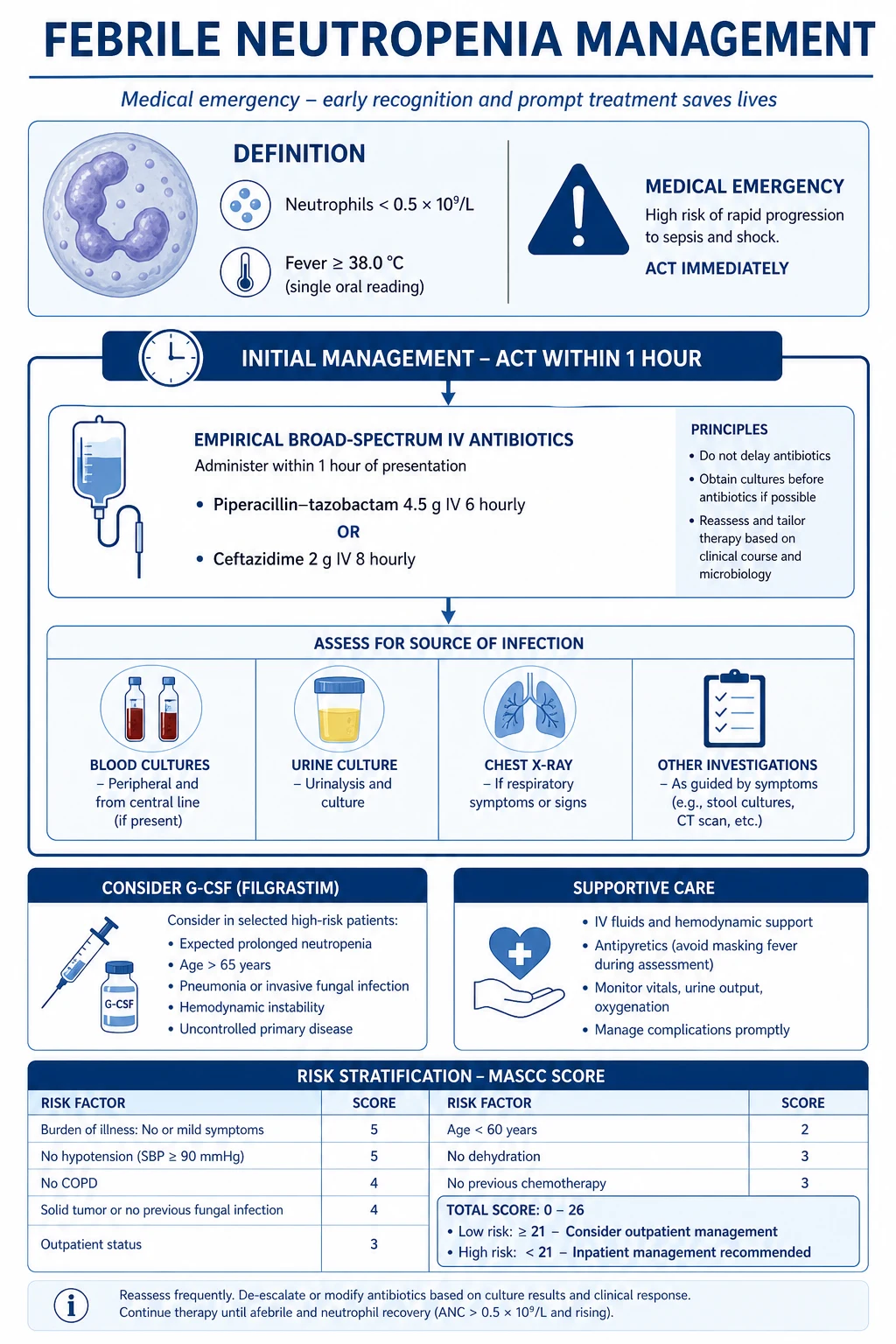
Not all febrile neutropenia requires ICU. The Multinational Association of Supportive Care in Cancer (MASCC) risk index was validated prospectively in over 1,000 episodes to predict low-risk status (fever resolution without serious medical complications). It uses seven weighted bedside variables; maximum score 26. A score ≥21 identifies a low-risk patient with sensitivity ~91% and specificity ~68%.[3][2]
MASCC Risk Index — component scoring (maximum 26)
| Factor (points if present) | Points | Rationale |
|---|---|---|
| Burden of illness: no or mild symptoms | 5 | Single most heavily weighted item; "looks well" → uncomplicated course. Severe/moribund → 0 → automatically high-risk |
| No hypotension (SBP >90 mmHg) | 5 | Hypotension = early septic shock — strongest predictor of death |
| No chronic obstructive pulmonary disease | 4 | COPD = frailty + lung that cannot tolerate pneumonia |
| Solid tumour OR no prior fungal infection | 4 | Haematological malignancy = deeper, longer neutropenia + fungal reservoir |
| No dehydration | 3 | Dehydration signals severity and worsens perfusion |
| Outpatient at onset of fever | 3 | Inpatient onset = hospital pathogens (resistant gram-negatives, VRE) |
| Age <60 years | 2 | Age ≥60 independently increases mortality (less reserve) |
| TOTAL ≥21 | LOW RISK | May consider oral antibiotics (ciprofloxacin + amoxicillin-clavulanate) + outpatient |
| TOTAL <21 | HIGH RISK | IV anti-pseudomonal beta-lactam + admission ± ICU |
How to use it: add the points. ≥21 = low risk (consider oral antibiotics ± outpatient with close review). <21 = high risk (IV antibiotics, admission, monitor for shock). In practice EVERY patient sick enough for ICU is high-risk regardless of score — the MASCC index's real exam use is to justify safely stepping a stable ward patient DOWN to oral therapy, never to withhold ICU admission.[3]
Caveats: (1) Calculate the score AFTER the 1-hour antibiotic dose — never let scoring delay antibiotics. (2) Validated for adults with solid tumours or haematological cancer, not for non-malignant neutropenia (drug-induced agranulocytosis, aplastic anaemia). (3) The Clinical Index of Stable Febrile Neutropenia (CISNE) is an alternative validated in solid tumours (ECOG, COPD, chronic cardiovascular disease, mucositis, monocytes <200, bilirubin/AST elevation); a CISNE score ≥1 predicts serious complications.[13]
High-risk features mandating IV therapy and admission
High-risk features
Always IV + admit
- Expected neutropenia >7 days (especially >10-14 days)
- Profound neutropenia ANC <0.1 or expected nadir <0.1
- Haemodynamic instability / hypotension / septic shock
- Comorbidities: COPD, diabetes, renal or liver impairment
- Inpatient at onset of fever
- Severe mucositis (Strep viridans shock risk)
- Suspected central line infection; pneumonia; perianal infection; typhlitis
- Neurological change, dehydration, inability to tolerate oral therapy
- MASCC <21 (or CISNE ≥1)
Low-risk criteria
May consider oral + outpatient
- MASCC ≥21 AND clinically stable
- Expected neutropenia <7 days, ANC ≥0.1
- No focal infection, no comorbidity, no dehydration
- Outpatient at onset; reliable, close follow-up available
- Afebrile and stable at 24-48 hours of observation
- Oral regimen: ciprofloxacin + amoxicillin-clavulanate (levofloxacin alternative)
- Reassess at 24-48 h; admit if fever persists, deteriorates, or culture positive
Management — the 1-hour protocol
Neutropenic sepsis protocol — the first six hours
1. RECOGNISE — antibiotics within 1 HOUR
ANY cancer patient on chemotherapy (or within 3-4 weeks) with fever (>38.3C single OR >38.0C ×2 one hour apart) + neutrophils <0.5 (or <1.0 and falling) = NEUTROPENIC SEPSIS. Do NOT attribute fever to tumour/drug/blood-product fever until infection excluded. The 1-hour door-to-needle target is absolute — analogous to STEMI. Do NOT wait for cultures, WCC printout, or consultant review.
2. RESUSCITATE (if septic) — Surviving Sepsis Hour-1 bundle
Oxygen for hypoxia; crystalloid 30 mL/kg bolus for hypotension or lactate ≥2 mmol/L; noradrenaline first-line vasopressor to MAP ≥65 (central access early); lactate normalisation. Standard SSC bundle — but with modified empiric antibiotic choice (MUST cover Pseudomonas). Consider intubation early for the fatiguing septic patient.
3. CULTURES — before antibiotics IF possible, never >1 hour delay
Blood cultures: TWO peripheral sets PLUS one set from EACH lumen of any central venous catheter. Paired peripheral/line cultures allow DIFFERENTIAL TIME TO POSITIVITY to localise a line source (line-positive ≥2 h before peripheral suggests CRBSI). Add: urine culture, sputum culture, stool + C. difficile toxin (if diarrhoea), throat/viral swabs, respiratory viral PCR. Draw cultures BEFORE antibiotics if it does not delay the 1-hour target — but if unstable, give antibiotics IMMEDIATELY.
4. EMPIRIC ANTI-PSEUDOMONAL BETA-LACTAM within 1 hour
FIRST-LINE: piperacillin-tazobactam 4.5 g IV q6h (covers Pseudomonas, anaerobes, many gram-positives). ALTERNATIVES: cefepime 2 g IV q8h OR ceftazidime 2 g IV q8h (anti-pseudomonal cephalosporins); meropenem 1 g IV q8h (reserved for known ESBL/CRE colonisation, severe sepsis, or fluoroquinolone prophylaxis failure). NEVER: ceftriaxone (no Pseudomonas cover), vancomycin alone (no gram-negative cover), fluoroquinolone monotherapy (resistance).
5. ADD VANCOMYCIN for specific indications
Add vancomycin 15-20 mg/kg IV q8-12h (trough 15-20) if: (a) suspected central line infection (tenderness, erythema, exit-site pus); (b) severe mucositis (Strep viridans risk); (c) haemodynamic instability (broaden cover); (d) known MRSA colonisation; (e) catheter in situ >7 days; (f) pneumonia. NOT routinely — vancomycin does not cover gram-negatives and adds nephrotoxicity. Linezolid/daptomycin alternatives if vancomycin allergy/renal failure.
6. SOURCE IDENTIFICATION — while antibiotics run
Examine: oral mucosa (mucositis), perianal area (perirectal abscess — DO NOT do digital rectal exam in neutropenia), central line site, skin (ecthyma gangrenosum, cellulitis), chest. CXR (pneumonia — but may be absent early). CT chest/abdomen/pelvis if persistent fever or localising symptoms (pneumonia, sinusitis, typhlitis, perirectal abscess, hepatosplenic lesions = fungal). Consider sinus CT (fungal sinusitis). Send lactate, FBC, U&E, LFTs, CRP, coagulation, group-and-hold.
7. MONITOR and reassess at 48-72 hours
Continuous ECG, SpO2, arterial BP if septic. 4-hourly: temperature, FBC (neutrophil trend), U&E, LFTs, CRP, lactate (clearance = response). AT 48-72 H: (a) fever resolved + cultures negative → continue antibiotics until neutrophil recovery (>0.5) or 72 h afebrile (whichever longer); (b) fever resolved + cultures positive → targeted antibiotics organism-specific duration; (c) fever PERSISTENT >72 h + cultures negative → ADD EMPIRIC ANTIFUNGAL + re-image.
8. EMPIRIC ANTIFUNGAL if fever persists >4-7 days
Persistent fever despite broad-spectrum antibiotics in a high-risk neutropenic patient = invasive fungal infection until proven otherwise. Add empiric antifungal: echinocandin (caspofungin 70 mg day 1 then 50 mg/day) — preferred if Candida suspected or renal impairment; OR liposomal amphotericin B 3 mg/kg/day — broader (covers Aspergillus + Mucorales) but nephrotoxic. Send serum galactomannan (Aspergillus) and (1→3)-beta-D-glucan (pan-fungal); CT chest for halo sign. If Aspergillus documented → switch to voriconazole/isavuconazole (mould-active azole).
9. G-CSF for selected high-risk patients
Filgrastim 5 mcg/kg/day SC or pegfilgrastim 6 mg SC single dose. NOT routine — does not reduce mortality in established neutropenic sepsis (Bohlius/Kuderer meta-analyses). Consider for: expected prolonged neutropenia >7-10 days, profound neutropenia <0.1, documented invasive fungal infection, pneumonia, hypotension, multi-organ failure. Primary prophylaxis reserved for regimens with expected febrile-neutropenia rate ≥20%.
10. CENTRAL LINE management
Remove the central venous catheter if: tunnel infection, port-pocket abscess, septic thrombophlebitis, persistent bacteraemia >72 h despite appropriate antibiotics, or specific organisms (S. aureus, Pseudomonas, Candida, atypical mycobacteria). Do NOT remove for a single positive culture that clears quickly, or for coagulase-negative staph (can often salvage with antibiotics + antibiotic-lock therapy).
Empiric antibiotic choice — anti-pseudomonal agents compared
Empiric anti-pseudomonal beta-lactams — choose and defend
| Agent | Dose | Coverage | When to choose | Caveats |
|---|---|---|---|---|
| Piperacillin-tazobactam (first-line) | 4.5 g IV q6h (extended infusion 4 h improves PK/PD) | Pseudomonas, Enterobacterales, anaerobes, many gram-positives | Default first-line; mucositis/typhlitis (anaerobes); line + gut source | False-positive galactomannan (historical); note: PENCILLO study questioned monotherapy in shock |
| Cefepime | 2 g IV q8h | Pseudomonas, Enterobacterales; reasonable gram-positive | Penicillin allergy (cross-reactivity low); neutropenic fever | Neurotoxicity (encephalopathy, myoclonus) in renal failure — adjust dose; inducible AmpC |
| Ceftazidime | 2 g IV q8h | Pseudomonas, Enterobacterales | Anti-pseudomonal cephalosporin alternative | Weak gram-positive cover; inducible AmpC in Enterobacter; add gram-positive cover if line source |
| Meropenem | 1 g IV q8h (2 g if meningitis/resistant) | BROADEST — Pseudomonas, ESBL, anaerobes, gram-positives | Known ESBL/CRE colonisation; fluoroquinolone prophylaxis failure; severe sepsis | Promotes resistance (carbapenemase selection); seizure risk in renal failure; reserve as stewardship |
| Vancomycin (ADD-ON, never alone) | 15-20 mg/kg IV q8-12h; trough 15-20 | MRSA, coag-neg staph, Strep viridans, enterococcus | Line infection, mucositis, shock, MRSA colonisation, catheter >7 days | Nephrotoxicity (worse with piperacillin-tazobactam — VANCOMYCIN controversy); monitor trough/AUC |
| Metronidazole (ADD-ON) | 500 mg IV q8h | Anaerobes | Add if typhlitis/perianal abscess and using cefepime/ceftazidime (poor anaerobic cover) | Redundant with piperacillin-tazobactam or meropenem (already cover anaerobes) |
The cardinal rule: an anti-pseudomonal beta-lactam MUST be the backbone. NEVER ceftriaxone (no Pseudomonas activity → untreated Pseudomonas → rapidly progressive bacteraemia → septic shock → death). NEVER vancomycin alone (no gram-negative cover). NEVER fluoroquinolone monotherapy (resistance, inadequate in the sick patient).[1][2]
Empiric antifungal strategy for persistent fever (day 4-7)
If fever persists beyond 72-96 hours of appropriate broad-spectrum antibacterials in a high-risk neutropenic patient, the working diagnosis shifts to invasive fungal infection (IFI). The probability rises steeply with neutropenia duration: by day 14 of profound neutropenia, over 50% of persistently febrile patients have evidence of mould or yeast disease.[5][6]
Persistent-fever antifungal decision pathway (days 3-7+)
DAY 3-4 — re-investigate
Re-examine; repeat blood, urine and line cultures. Send serum galactomannan (Aspergillus) and (1→3)-beta-D-glucan (pan-fungal). Perform high-resolution CT chest (+ CT sinuses/abdomen guided by symptoms). Look for: halo sign, nodules, reversed-halo (mould); hepatosplenic lesions (chronic disseminated candidiasis); sinus opacification (mucormycosis/Aspergillus).
DAY 4-7 — add empiric antifungal (two valid strategies)
ECHINOCANDIN (caspofungin 70 mg day 1 → 50 mg/day; micafungin 100 mg/day; anidulafungin 200 mg → 100 mg/day) — first-line if concern is primarily Candida, renal impairment, or as diagnostic-driven holding; excellent Candida cover, low toxicity, weak mould activity. LIPID AMPHOTERICIN B (3 mg/kg/day) — default if already on mould-active azole and breakthrough suspected, or mucormycosis in the differential; broader (Aspergillus + Mucorales + Candida) but nephrotoxic. NOT adequate alone if galactomannan positive.
If Aspergillus documented — switch to mould-active azole
Voriconazole 6 mg/kg BD ×2 then 4 mg/kg BD (first-line since Herbrecht 2002 NEJM — survival benefit vs amphotericin); OR isavuconazole 200 mg q8h ×6 then 200 mg/day. Requires therapeutic drug monitoring (voriconazole trough 1-5 mg/L) and CYP2C19 polymorphism/interaction checks. Treat for ≥6-12 weeks.
DAY 7+ — pre-emptive / diagnostic-driven (modern preferred)
Rather than blanket empirical therapy, escalate antifungal therapy ONLY if there is microbiological or radiological evidence of IFI (galactomannan positive, beta-D-glucan positive, new CT lesion). Broncho-alveolar lavage for galactomannan + culture if a new pulmonary infiltrate appears. Reduces unnecessary exposure and resistance.
Continue antifungal until
Neutrophil recovery (>0.5 × 10^9/L), afebrile ≥48 h, AND any documented fungal infection treated to complete response. Confirmed IFI continues for weeks-months (voriconazole ≥6-12 weeks for invasive aspergillosis), often long after discharge.
Galactomannan vs beta-D-glucan — interpretation
| Test | Detects | Sensitivity | Specificity | False positives | False negatives | Cut-off |
|---|---|---|---|---|---|---|
| Galactomannan (serum/BAL) | Aspergillus cell-wall galactofuranose | ~70-80% (higher in BAL) | ~85-90% | Piperacillin-tazobactam (historical), amoxicillin-clavulanate, gut translocation, Bifidobacterium (paeds) | Mucorales (no galactomannan — distinguishing feature); prior antifungal | Serum ODI ≥0.5; BAL ODI ≥1.0 |
| (1→3)-beta-D-glucan | Pan-fungal (Aspergillus, Candida, Pneumocystis, Fusarium) | ~75-80% | ~80% | Dialysis membranes, IVIG, albumin, gauze | Mucorales and Cryptococcus (do NOT make beta-D-glucan) | ≥80 pg/mL (Fungitell) |
Key exam point: positive galactomannan + compatible CT (halo/nodule) = treat for invasive pulmonary aspergillosis with voriconazole/isavuconazole. Positive beta-D-glucan with negative galactomannan suggests Candida or Pneumocystis. Mucormycosis is BOTH negative (no galactomannan, no beta-D-glucan) — diagnosis is tissue biopsy showing broad, ribbon-like, non-septate hyphae with right-angle branching; treat with surgical debridement + liposomal amphotericin B 5-10 mg/kg/day and consider isavuconazole.[5]
Echinocandin
caspofungin, micafungin, anidulafungin
- Inhibits beta-1,3-glucan synthase (fungal cell wall)
- Excellent Candida cover (incl. fluconazole-resistant glabrata/krusei); weak/no mould activity
- Low toxicity: mild LFT rise, histamine infusion reaction
- Safe in renal failure (no dose adjustment for most)
- First-line empiric for persistent fever with low mould suspicion
Liposomal amphotericin B
broadest antifungal
- Binds ergosterol → pore in fungal cell membrane
- Broad: most Candida, Aspergillus, Mucorales, endemic fungi
- Toxicity: infusion reactions, hypokalaemia, hypomagnesaemia, nephrotoxicity, anaemia
- Additive nephrotoxicity with calcineurin inhibitors, contrast, aminoglycosides
- Preferred when Mucorales suspected or breakthrough on azole
G-CSF — the controversy
G-CSF (filgrastim 5 mcg/kg/day SC; pegfilgrastim 6 mg SC once per cycle; lenograstim) stimulates myeloid progenitor proliferation, shortening the neutropenic nadir. The evidence and the ASCO position:[9]
FOR — use it (selectively)
- Prophylactic use with high-risk regimens reduces febrile-neutropenia incidence by ~50% (recommended when expected FN rate ≥20%)
- Shortens hospital stay by ~1-2 days and IV antibiotic duration
- Therapeutic benefit suggested in sicker patients: pneumonia, typhlitis, organ failure, documented fungal infection
- May enable maintaining chemotherapy dose-intensity in curative-intent therapy
- Useful to mobilise stem cells for harvest pre-HSCT
AGAINST — not routine
- Does NOT reduce infection-related or all-cause mortality in pooled IPD meta-analysis (Bohlius 2008; Kuderer 2007)
- Cost: filgrastim ~USD 100-300/day; pegfilgrastim ~USD 3000/dose
- Adverse effects: Sweet syndrome, vasculitis, interstitial pneumonitis, splenic rupture, sickle-cell flare
- Can transiently worsen respiratory failure (capillary leak) with pre-existing pneumonia/ARDS
- Theoretical stimulation of myeloid leukaemia clones (no proven clinical signal)
ASCO 2015 guidance on WHEN to use G-CSF:[9]
- Primary prophylaxis (with the first cycle) — when expected febrile-neutropenia risk ≥20% (high-risk regimens, age >65 with extensive disease, prior chemo/radiation, poor performance status, pre-existing neutropenia, renal/liver dysfunction, HIV).
- Secondary prophylaxis — after a documented prior febrile-neutropenia episode, to maintain dose-intensity in curative therapy.
- Therapeutic use in established neutropenic sepsis — NOT routine; consider for high-risk features (prolonged neutropenia >7-10 days, documented fungal infection, organ failure).
Bottom line for the exam: "G-CSF is NOT routine in established neutropenic sepsis — it reduces hospital days and febrile episodes but does NOT reduce mortality; reserve it for high-risk patients with expected prolonged neutropenia, documented fungal infection, or organ failure."[9][11]
Special clinical scenarios
Stem cell transplant (HSCT) — infectious threats by phase
Infectious threats after haematopoietic stem cell transplant — by phase
| Phase | Time after HSCT | Dominant defect | Dominant pathogens | Prophylaxis |
|---|---|---|---|---|
| Pre-engraftment | Days 0-30 | Profound neutropenia + mucositis + ablative conditioning | Gram-negatives (Pseudomonas), gram-positives (Strep viridans, coag-neg staph), Candida, HSV reactivation, respiratory viruses | Anti-pseudomonal cover; fluconazole or posaconazole; aciclovir (HSV+); co-trimoxazole from engraftment |
| Early post-engraftment | Days 30-100 | Delayed T-cell reconstitution; acute GVHD (steroids!) | CMV reactivation (pre-emptive PCR); adenovirus; PJP; Aspergillus (esp. GVHD/steroids); BK virus (haemorrhagic cystitis) | Co-trimoxazole (PJP); weekly CMV PCR; posaconazole (GVHD); valganciclovir pre-emptive |
| Late post-engraftment | >Day 100 | Chronic GVHD; prolonged T/B-cell defect; hypogammaglobulinaemia | Encapsulated bacteria (S. pneumoniae, H. influenzae); VZV; EBV (PTLD); late CMV; PJP | Co-trimoxazole long-term; IVIG if hypogammaglobulinaemia; re-vaccination from 6 months |
CMV = reactivation driven by T-cell depletion; monitor with quantitative PCR weekly day 30-100; pre-emptive valganciclovir 900 mg BD when threshold reached. Adenovirus can cause fulminant hepatitis, pneumonitis, haemorrhagic colitis — treat with cidofovir/brincidofovir. BK virus causes haemorrhagic cystitis (supportive).[4]
CAR-T cell therapy and cytokine release syndrome (CRS)
Chimeric antigen receptor T-cell therapy (tisagenlecleucel, axicabtagene ciloleucel, lisocabtagene maraleucel, idecabtagene vicleucel, ciltacabtagene autoleucel) causes prolonged cytopenias (weeks-months) PLUS a cytokine-driven inflammatory syndrome that mimics and coexists with neutropenic sepsis. CRS grading (ASTCT consensus):[12]
- Grade 1 — fever + no hypotension + no hypoxia (looks like simple febrile neutropenia).
- Grade 2 — fever + hypotension responding to fluids OR oxygen requirement <40%.
- Grade 3 — fever + hypotension needing one vasopressor OR oxygen ≥40%.
- Grade 4 — life-threatening: multiple vasopressors (excluding vasopressin) OR positive-pressure ventilation. [1]
The trap: CRS Grade 1 is indistinguishable from early neutropenic sepsis at presentation. Therefore ALL CAR-T patients with fever get the full 1-hour neutropenic-sepsis workup + empirical anti-pseudomonal antibiotics — THEN assess for CRS. Do not attribute fever to "expected CRS" until infection is excluded or concomitantly treated. Tocilizumab (anti-IL-6 receptor) for CRS grade ≥2; steroids for refractory CRS/ICANS (but steroids MUST be given with concurrent antibiotics — they mask infection). Note: tocilizumab does not reliably mask bacterial fever, so it can be given alongside antibiotics.[12]
Neutropenic enterocolitis (typhlitis)
Right lower quadrant pain + diarrhoea (±blood) + neutropenia = typhlitis — necrotising enterocolitis of the caecum (and often terminal ileum), classically after cytarabine/anthracycline induction. CT abdomen shows caecal wall thickening, peri-caecal fat stranding, ± pneumatosis. Management: broad-spectrum antibiotics with anaerobic cover (piperacillin-tazobactam or meropenem already covers this; add metronidazole if using cefepime/ceftazidime), bowel rest, nasogastric decompression, G-CSF, aggressive fluid/electrolyte support. Surgery for perforation, uncontrolled bleeding, or deterioration. Avoid digital rectal exam (perforation/bleeding risk).[1]
Strep viridans shock syndrome
Severe mucositis (high-dose cytarabine, anthracyclines, HSCT conditioning) lets oral viridans streptococci enter the bloodstream → bacteraemia → septic shock + ARDS within hours ("viridans shock syndrome"), often with acute respiratory failure and a rash. Some strains are penicillin-resistant. Add vancomycin to empirical therapy when mucositis is severe; maintain oral hygiene and chlorhexidine mouthwash. Mortality can reach 10-25% despite appropriate therapy.[1]
Antimicrobial prophylaxis
Prophylaxis is dictated by the expected depth and duration of neutropenia and the specific immune defect.[4]
Prophylaxis by pathogen — drug, dose, indication
| Pathogen | Drug & dose | Indication | Caveat |
|---|---|---|---|
| Pneumocystis (PJP) | Co-trimoxazole 960 mg PO daily (or DS three times weekly); alternatives dapsone, atovaquone, inhaled pentamidine | Steroids ≥20 mg ≥4 weeks; HSCT; ALL; alemtuzumab; fludarabine; calcineurin inhibitors | Hold during high-dose methotrexate; also covers Toxoplasma, Nocardia, many pneumococci |
| Aspergillus (mould) | Posaconazole 300 mg day 1 BD then daily; isavuconazole; voriconazole | AML/MDS induction; GVHD on steroids; prolonged neutropenia >10-14 days | Fluconazole does NOT cover moulds; monitor LFTs, QT |
| Candida | Fluconazole 400 mg daily (or posaconazole/micafungin high-risk) | AML induction; HSCT pre-engraftment; prolonged neutropenia | Fluconazole unreliable for C. glabrata/krusei |
| HSV/VZV | Aciclovir 400 mg PO BD (HSV) / 800 mg daily (VZV); valaciclovir | HSCT if HSV+ serology; heavily immunosuppressed | Near-universal in HSV+ HSCT during conditioning/engraftment |
| CMV | Letermovir 480 mg daily (HSCT prophylaxis); valganciclovir pre-emptive when PCR+ | HSCT (D+/R− mismatch); alemtuzumab | Valganciclovir/ganciclovir treat active CMV but cause marrow toxicity |
| Bacterial (FN prophylaxis) | Levofloxacin 500 mg daily or ciprofloxacin 500 mg BD | AML induction; HSCT pre-engraftment; FN rate ≥20% | Drives fluoroquinolone resistance; check local antibiogram |
Vaccination timing after HSCT: re-vaccination starts ~6 months post-transplant (3 months if no GVHD/immunosuppression) because graft immune memory is "reset". Sequence: PCV first (conjugate primes T-cell memory), then PPSV23 eight weeks later; inactivated influenza from 6 months annually; live vaccines (MMR, VZV) deferred ≥24 months if no GVHD/immunosuppression.[4]
SAQ — febrile neutropenia with shock and persistent-fever antifungal strategy
SAQ — Febrile neutropenia with septic shock (Pseudomonas bacteraemia)
10 minutes · 10 marks
A 52-year-old woman with relapsed multiple myeloma is day 9 after high-dose melphalan conditioning and autologous stem cell transplant. She presents to HDU with fever 39.6C, rigors and confusion, and a 2 cm haemorrhagic necrotic ulcer with an erythematous halo in the right axilla. Neutrophils 0.05 x10^9/L, platelets 18, lactate 4.8 mmol/L, MAP 52 mmHg, HR 128, RR 30, SpO2 92% on room air. She has a tunnelled central venous catheter and is on levofloxacin and aciclovir prophylaxis. Blood cultures from a peripheral site and from each line lumen have just been drawn.
SAQ — Persistent fever in prolonged neutropenia: empiric antifungal strategy
10 minutes · 10 marks
A 64-year-old man with newly diagnosed AML is day 16 of 7+3 induction (cytarabine and daunorubicin). His ANC has been below 0.1 x10^9/L since day 7. He has been febrile (38.5-39.4C) for the last 5 days despite meropenem 1 g q8h and vancomycin, both at appropriate doses. He is on fluconazole 400 mg daily prophylaxis. He now complains of left facial pain and epistaxis. Examination reveals a black necrotic eschar on the left inferior turbinate and a left palatal ulcer. He has newly diagnosed diabetes (HbA1c 9.4%) with recent DKA. CT sinuses shows opacification with bony destruction of the hard palate; CT chest shows a pleural-based wedge-shaped infiltrate. Serum galactomannan index 0.3; (1-3)-beta-D-glucan less than 31 pg/mL. MAP 88 mmHg, lactate 1.4 mmol/L.
Clinical pearls
Red flags
Prognosis
Neutropenic sepsis outcomes
| Factor | Mortality | Notes |
|---|---|---|
| Overall (all febrile neutropenia) | 5-10% | Improved with early antibiotics + better supportive care |
| With septic shock | 30-50% | Strongest predictor of mortality |
| Pseudomonas aeruginosa bacteraemia | 20-40% | Most dangerous pathogen |
| MASCC low-risk (≥21) | <5% | Can be managed as outpatient |
| MASCC high-risk (<21) | 10-20% | Requires IV antibiotics ± ICU |
| Duration of neutropenia >14 days | 20-30% | Prolonged neutropenia → higher fungal risk + mortality |
| Invasive aspergillosis | 30-50% | Improved with voriconazole (Herbrecht 2002) |
| Mucormycosis | 50-80% | Requires urgent debridement + L-AmB |
Key trials and evidence
IDSA 2011 Guideline — antimicrobial agents in neutropenic patients with cancer (PMID 21258094)
Source
Freifeld AG, Bow EJ, Sepkowitz KA, et al. Clinical Infectious Diseases 2011;52(2):e56-93 — IDSA clinical practice guideline
Key principle 1
Empiric anti-pseudomonal beta-lactam within 1 hour — piperacillin-tazobactam, cefepime, ceftazidime, or meropenem all acceptable
Key principle 2
Add vancomycin only for specific indications (line infection, mucositis, shock, MRSA, severe pneumonia) — NOT routine
Key principle 3
Low-risk patients (MASCC) may receive oral antibiotics (ciprofloxacin + amoxicillin-clavulanate)
Clinical bottom line
The foundational IDSA guideline for empiric therapy in febrile neutropenia — defines the anti-pseudomonal backbone and selective vancomycin use
ASCO/IDSA 2018 — outpatient management of fever and neutropenia (PMID 29461916)
Source
Taplitz RA, Kennedy EB, Bow EJ, et al. Journal of Clinical Oncology 2018;36(14):1443-1453 — joint ASCO/IDSA update
Key principle
Clinical evaluation (MASCC/CISNE risk index) identifies low-risk patients suitable for outpatient oral therapy
Risk stratification
MASCC ≥21 or CISNE 0 with close follow-up → oral ciprofloxacin + amoxicillin-clavulanate; high-risk → inpatient IV
Clinical bottom line
Modern risk-adapted pathway allowing safe outpatient management of carefully selected low-risk febrile neutropenia
Herbrecht 2002 NEJM — voriconazole vs amphotericin B for invasive aspergillosis (PMID 12167683)
Source
New England Journal of Medicine 2002;347:408-415 — definitive randomised trial in primary invasive aspergillosis
Design
Randomised open-label: voriconazole vs amphotericin B deoxycholate, then other licensed antifungal
Population
277 patients with definite/probable invasive aspergillosis (largely haematological malignancy, neutropenia, HSCT)
Key result
Successful outcome: voriconazole 52.8% vs amphotericin 31.6% (p<0.001); 12-week survival 70.8% vs 57.9%
Clinical bottom line
Voriconazole became FIRST-LINE therapy for invasive aspergillosis — established the mould-active azole era
Walsh 2004 NEJM — caspofungin vs liposomal amphotericin B for empirical antifungal therapy (PMID 15459300)
Source
Walsh TJ, Teppler H, Donowitz GR, et al. New England Journal of Medicine 2004;351:1391-1402
Design
Randomised double-blind non-inferiority: caspofungin vs liposomal amphotericin B in persistent febrile neutropenia
Population
1,095 patients with febrile neutropenia persisting >96 h on broad-spectrum antibiotics
Key result
Caspofungin non-inferior overall, with FEWER breakthrough fungal infections and less nephrotoxicity/infusion toxicity
Clinical bottom line
Validated the echinocandin as a low-toxicity empirical antifungal for persistent febrile neutropenia
Kuderer 2007 JCO — systematic review of primary G-CSF prophylaxis (PMID 17634496)
Source
Kuderer NM, Dale DC, Crawford J, Lyman GH. Journal of Clinical Oncology 2007;25(21):3158-3167
Design
Systematic review of 17 randomised trials (n > 3,000) of primary prophylactic G-CSF in chemotherapy
Key result
G-CSF prophylaxis reduced febrile neutropenia by ~46% and early (infection-related) mortality by ~40% in the overall cohort
Clinical bottom line
Underpins ASCO guidance: primary G-CSF prophylaxis for regimens with expected febrile-neutropenia rate ≥20% — but benefit is prophylactic, not therapeutic in established sepsis
Smith 2015 JCO — ASCO guideline update on WBC growth factors (PMID 26169616)
Source
Smith TJ, Bohlke K, Lyman GH, et al. Journal of Clinical Oncology 2015;33(28):3199-3212
Recommendation
Primary prophylaxis when expected febrile-neutropenia risk ≥20% (regimen, age >65, extensive disease, prior chemo/radiation, poor performance status, pre-existing neutropenia, renal/liver dysfunction, HIV)
Special cases
Secondary prophylaxis to maintain dose-intensity in curative therapy; therapeutic G-CSF not routine
Clinical bottom line
The current ASCO standard for G-CSF use — selective, risk-stratified, primarily prophylactic
Lee 2014 Blood — cytokine release syndrome consensus (PMID 24876563)
Source
Lee DW, Gardner R, Porter DL, et al. Blood 2014;124:188-195 — ASTCT consensus grading and management
Key contribution
Standardised CRS grading (1-4 by fever/hypotension/hypoxia) and the tocilizumab/corticosteroid escalation pathway adopted worldwide
Clinical bottom line
The reference for managing CAR-T CRS in ICU — tocilizumab for grade ≥2, steroids for refractory CRS/ICANS, always with concurrent antibiotics for the neutropenic fever that mimics it
Viva / SAQ — worked example
SAQ — Neutropenic sepsis with invasive pulmonary aspergillosis
10 minutes · 10 marks
A 58-year-old man with newly diagnosed AML is day 12 after induction chemotherapy (7+3 cytarabine + daunorubicin). He presents with fever 39.2C and rigors. Neutrophils 0.1 x10^9/L (expected to fall further), platelets 22, MAP 78 mmHg, HR 112, RR 24, SpO2 95% on room air, lactate 2.6 mmol/L. He has a tunnelled central venous catheter and has been on posaconazole and levofloxacin prophylaxis. Blood cultures are being drawn.
Summary — the exam one-liners
- Neutrophils <0.5 plus fever >38.3 = neutropenic sepsis → empiric anti-pseudomonal beta-lactam within one hour (piperacillin-tazobactam first-line; meropenem if prophylaxis/resistance). NEVER ceftriaxone.[1]
- Pseudomonas is the #1 killer — anti-pseudomonal cover is mandatory and non-negotiable.[1]
- Add vancomycin ONLY for: line infection, mucositis, shock, MRSA, catheter >7 days, pneumonia.[2]
- Persistent fever >4-7 days = invasive fungal infection — add caspofungin or liposomal amphotericin B; check galactomannan + beta-D-glucan + CT chest.[5][8]
- MASCC ≥21 = low risk (oral + possible outpatient); <21 = high risk (IV + admit). Every ICU patient is high-risk regardless of score.[3]
- G-CSF does NOT reduce mortality in established neutropenic sepsis — reserve for prolonged profound neutropenia, documented fungal infection, organ failure.[9][11]
- Remove the central line for persistent bacteraemia >72 h or S. aureus / Pseudomonas / Candida / atypical mycobacteria.[1]
- CAR-T fever = neutropenic sepsis until proven otherwise — run the 1-hour pathway first, then assess for CRS.[12]
References
- [1]Freifeld AG, Bow EJ, Sepkowitz KA, Boeckh MJ, et al. Clinical practice guideline for the use of antimicrobial agents in neutropenic patients with cancer: 2010 update by the infectious diseases society of america Clin Infect Dis, 2011.PMID 21258094
- [2]Taplitz RA, Kennedy EB, Bow EJ, Crews J, et al. Outpatient Management of Fever and Neutropenia in Adults Treated for Malignancy: American Society of Clinical Oncology and Infectious Diseases Society of America Clinical Practice Guideline Update J Clin Oncol, 2018.PMID 29461916
- [3]Klastersky J, Paesmans M. The Multinational Association for Supportive Care in Cancer (MASCC) risk index score: 10 years of use for identifying low-risk febrile neutropenic cancer patients Support Care Cancer, 2013.PMID 23443617
- [4]Flowers CR, Seidenfeld J, Bow EJ, Karten C, et al. Antimicrobial prophylaxis and outpatient management of fever and neutropenia in adults treated for malignancy: American Society of Clinical Oncology clinical practice guideline J Clin Oncol, 2013.PMID 23319691
- [5]Patterson TF, Thompson GR 3rd, Denning DW, Fishman JA, et al. Practice Guidelines for the Diagnosis and Management of Aspergillosis: 2016 Update by the Infectious Diseases Society of America Clin Infect Dis, 2016.PMID 27365388
- [6]Pappas PG, Kauffman CA, Andes DR, Clancy CJ, et al. Clinical Practice Guideline for the Management of Candidiasis: 2016 Update by the Infectious Diseases Society of America Clin Infect Dis, 2016.PMID 26679628
- [7]Herbrecht R, Denning DW, Patterson TF, Bennett JE, et al. Voriconazole versus amphotericin B for primary therapy of invasive aspergillosis N Engl J Med, 2002.PMID 12167683
- [8]Walsh TJ, Teppler H, Donowitz GR, Maertens JA, et al. Caspofungin versus liposomal amphotericin B for empirical antifungal therapy in patients with persistent fever and neutropenia N Engl J Med, 2004.PMID 15459300
- [9]Smith TJ, Bohlke K, Lyman GH, Carson KR, et al. Recommendations for the Use of WBC Growth Factors: American Society of Clinical Oncology Clinical Practice Guideline Update J Clin Oncol, 2015.PMID 26169616
- [10]Bohlius J, Herbst C, Reiser M, Schwarzer G, et al. Granulopoiesis-stimulating factors to prevent adverse effects in the treatment of malignant lymphoma Cochrane Database Syst Rev, 2008.PMID 18843642
- [11]Kuderer NM, Dale DC, Crawford J, Lyman GH. Impact of primary prophylaxis with granulocyte colony-stimulating factor on febrile neutropenia and mortality in adult cancer patients receiving chemotherapy: a systematic review J Clin Oncol, 2007.PMID 17634496
- [12]Lee DW, Gardner R, Porter DL, Louis CU, et al. Current concepts in the diagnosis and management of cytokine release syndrome Blood, 2014.PMID 24876563
- [13]Carmona-Bayonas A, Jimenez-Fonseca P, Virizuela Echaburu J, Antonio M, et al. Prediction of serious complications in patients with seemingly stable febrile neutropenia: validation of the Clinical Index of Stable Febrile Neutropenia in a prospective cohort of patients from the FINITE study J Clin Oncol, 2015.PMID 25559804