ICU · Infectious Diseases
Severe falciparum malaria in the ICU
Also known as Severe malaria · Falciparum malaria · Cerebral malaria · Artesunate
Severe falciparum malaria is a medical emergency caused by Plasmodium falciparum, which accounts for over 90% of global malaria mortality. WHO criteria for severe malaria: cerebral malaria (impaired consciousness, GCS <11, seizures, coma), prostration, multiple convulsions, acidosis (pH <7.25 or lactate >5 mmol/L), hypoglycaemia (<2.2 mmol/L), severe malarial anaemia (Hb <50 g/L), renal impairment (creatinine >265 umol/L), ARDS/pulmonary oedema, jaundice (bilirubin >50 umol/L), hyperparasitaemia (>2% or >100,000/uL in non-immune, >10% in semi-immune), haemoglobinuria (blackwater fever), shock (algid malaria), DIC. Diagnosis: thick film (high sensitivity — screening), thin film (species ID + parasitaemia quantification), rapid diagnostic test (RDT — HRP2/aldolase). Treatment: IV artesunate 2.4 mg/kg at 0, 12, 24h then daily — superior to quinine (SEAQUAMAT trial: 35% mortality reduction). Treat complications: hypoglycaemia, ARDS, AKI, seizures. Avoid quinine where possible (hypoglycaemia, QT prolongation, tinnitus/cinchonism).
On this page & tools
Your progress
Saved locally on this device.
Target exams
Red flags
Plasmodium species
The five species that infect humans differ markedly in virulence, relapse pattern, and clinical severity. P. falciparum is the dominant cause of severe disease and death. [1]
P. falciparum
Most severe — >90% of deaths
- Highest pathogenicity — cytoadherence and sequestration cause end-organ failure
- No relapse (no hepatic hypnozoites), but recrudescence possible if inadequately treated
- Predominant in sub-Saharan Africa; the principal cause of cerebral malaria
- High parasitaemia common; infected RBCs adhere to vascular endothelium (brain, kidney, placenta)
- 48-hour fever cycle (tertian) but often irregular in severe disease
P. vivax
Relapsing — hypnozoites
- Hypnozoite dormant liver stage — causes relapse weeks to years later
- Requires primaquine/tafenoquine for radical cure (screen G6PD first)
- Generally milder but severe vivax increasingly recognised (ARDS, severe anaemia, AKI)
- Predominant in Asia and Latin America; prefers young reticulocytes
P. ovale
Relapsing
- Hypnozoite stage — relapses possible; requires primaquine radical cure
- Milder disease; morphologically similar to vivax
- Two subspecies: curtisi (classic) and wallikeri
P. malariae
Chronic — quartan
- 72-hour fever cycle (quartan); low parasitaemia, chronic infection for decades
- Associated with immune-complex membranous nephropathy (quartan malarial nephrotic syndrome)
- Rarely causes severe acute disease
P. knowlesi
Severe — SE Asia (zoonotic)
- Macaque parasite in Southeast Asia (Malaysia, Borneo); 24-hour cycle (quotidian)
- Can reach very high parasitaemia rapidly — severe disease and death well described
- Misidentified as P. malariae on microscopy (similar band forms) — molecular PCR confirms
- Treat as for severe falciparum (IV artesunate)
WHO severe malaria criteria
Severe malaria is defined by clinical and laboratory markers of end-organ dysfunction, almost always due to P. falciparum (occasionally knowlesi, rarely vivax). The presence of ANY ONE criterion mandates parenteral artesunate. [1]
Cerebral/neurological
Impaired consciousness
- Cerebral malaria: impaired consciousness or unrousable coma (Blantyre/GCS <11) persisting >30 min after a seizure
- Multiple convulsions (≥2 in 24h)
- Prostration (generalised weakness — unable to sit, stand, or walk without assistance)
Metabolic/circulatory
Acidosis, hypoglycaemia, shock
- Acidosis: pH <7.25 or bicarbonate <15 mmol/L (best single prognostic marker)
- Hyperlactataemia: lactate >5 mmol/L
- Hypoglycaemia: glucose <2.2 mmol/L (common, recurrent, worsened by quinine)
- Shock (algid malaria): SBP <90 (adults) with cold extremities — often co-infected with Gram-negative bacteria
Organ failure
Kidney, lung, blood
- Severe malarial anaemia: Hb <50 g/L (children) or <70 g/L (adults); parasitaemia <10,000/uL may coexist
- Acute kidney injury: creatinine >265 umol/L or urine output <0.5 mL/kg/h
- ARDS / pulmonary oedema (more common in non-immune adults, pregnancy, and P. knowlesi)
- Jaundice: bilirubin >50 umol/L (malarial hepatitis)
- DIC / abnormal bleeding
Parasitological
Parasite burden
- Hyperparasitaemia: >2% (>100,000/uL) in non-immune adults; >10% in semi-immune (endemic-area residents)
- Haemoglobinuria (blackwater fever): dark urine from intravascular haemolysis
- >5% of parasitised RBCs are mature trophozoites/schizonts (peripheral schizontaemia — marker of deep sequestration)
Pathophysiology
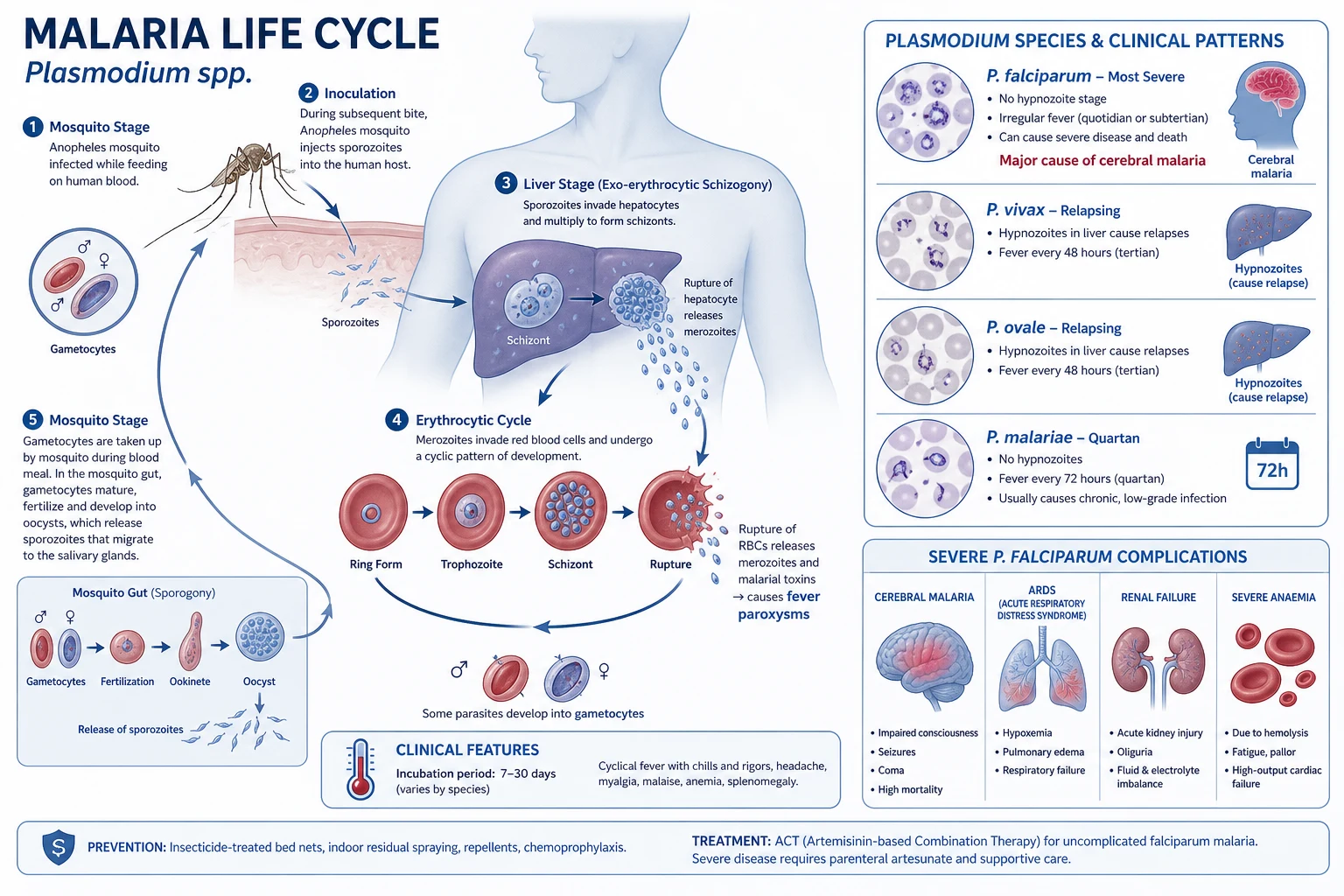
Understanding why P. falciparum uniquely causes severe disease is high-yield exam territory. [1]
The life cycle begins when an infected female Anopheles mosquito injects sporozoites during a blood meal. Sporozoites reach the liver within 30 minutes and invade hepatocytes (pre-erythrocytic schizogony, 5-7 days, asymptomatic). Each infected hepatocyte releases thousands of merozoites, which infect RBCs (erythrocytic cycle). Within the RBC the parasite matures through ring → trophozoite → schizont; schizont rupture releases 8-32 new merozoites, causing the fever paroxysm. [1]
The defining virulence feature of P. falciparum is cytoadherence: parasite protein PfEMP-1 (encoded by var genes) is exported to the RBC surface and binds endothelial receptors (ICAM-1, EPCR, chondroitin sulphate A in the placenta). This sequesters mature forms in the microvasculature of the brain, kidney, placenta, and other organs, causing:
- Microvascular obstruction → impaired perfusion, lactic acidosis
- Endothelial activation & dysfunction → leak, oedema (ARDS), DIC
- Ringed haemorrhages and petechiae (cerebral malaria — Dürck's granulomas) [1]
Systemic inflammation (cytokine storm — TNF, IFN-γ, IL-6) amplifies organ injury. Haemolysis (both parasitised and uninfected RBCs) drives anaemia; haemoglobin released into plasma spills into urine (blackwater fever) and scavenges nitric oxide, contributing to pulmonary and renal dysfunction. Hypoglycaemia arises from parasite glucose consumption, hepatic dysfunction, and quinine-induced hyperinsulinaemia. [1]
Diagnosis
Diagnostic approach to suspected severe malaria
1. Thick blood film — SCREENING (highest sensitivity)
A drop of blood is lysed, concentrating parasites. Sensitivity ~5-50 parasites/uL (vs ~100-200/uL for thin film). Used to detect infection (yes/no) but CANNOT identify species or quantify parasitaemia because RBCs are lysed. Collect before treatment if possible, but do NOT delay artesunate.
2. Thin blood film — SPECIES + QUANTIFICATION
RBCs preserved; morphology allows species identification (P. falciparum = high ring forms, banana-shaped gametocytes; P. vivax/ovale = enlarged Schüffner-stippled RBCs; P. malariae = band forms). Quantify parasitaemia: % infected RBCs among 200-500 RBCs, OR parasites/uL. Report % and stage (rings vs trophozoites vs schizonts — schizontaemia signals severity).
3. Rapid diagnostic test (RDT) — antigen detection
Immunochromatographic card detects parasite antigen. HRP-2 is specific for P. falciparum (persists for weeks — false positive after recent infection). Aldolase/LDH (pLDH) detects all species and allows species grouping. Sensitivity ~95% for P. falciparum at >100-200 parasites/uL. Limitations: false negative in low parasitaemia or prozone effect; HRP-2 gene deletions (hrp2/3) cause false negatives in parts of Africa. RDT cannot quantify parasitaemia or assess treatment response.
4. PCR (molecular) — reference standard
Most sensitive and specific; distinguishes species (essential for suspected P. knowlesi, misidentified as malariae on microscopy) and detects mixed infections. Slow and costly — not for acute decision-making, but valuable for confirmation and epidemiology.
5. Adjunctive tests
Lactate (prognosis — >5 mmol/L = severe), glucose (hypoglycaemia), blood count (anaemia, thrombocytopenia — platelets <150 is almost universal), creatinine/electrolytes, coagulation, bilirubin/AST/ALT, venous gas (acidosis), blood cultures (algid malaria often has concomitant bacteraemia — Gram-negatives, especially non-typhoidal Salmonella in children). Lumbar puncture if coma to exclude meningitis (but cerebral malaria does not cause a true meningitic CSF). Imaging if focal signs or to exclude alternative diagnoses.
Thick film
Screening / sensitivity
- Highest sensitivity (~5-50 parasites/uL)
- RBCs lysed — parasite morphology lost
- Detects infection; cannot speciate or quantify
- Skilled microscopist required — quality-dependent
Thin film
Species + parasitaemia
- RBCs preserved — morphology allows species ID
- Quantifies parasitaemia (% infected RBCs or parasites/uL)
- Identifies parasite stage (ring vs trophozoite vs schizont)
- Lower sensitivity (~100-200 parasites/uL)
RDT (HRP-2/pLDH)
Antigen detection
- Rapid (15-20 min), minimal equipment, field-deployable
- HRP-2 specific to falciparum; pLDH detects all species
- HRP-2 persists weeks — cannot assess treatment response
- False negatives: low parasitaemia, hrp2/3 gene deletions, prozone
PCR
Reference standard
- Highest sensitivity and specificity
- Confirms species (essential for knowlesi) and mixed infections
- Slow, costly — not for acute decisions
- Useful for confirmation, genotyping, surveillance
Treatment
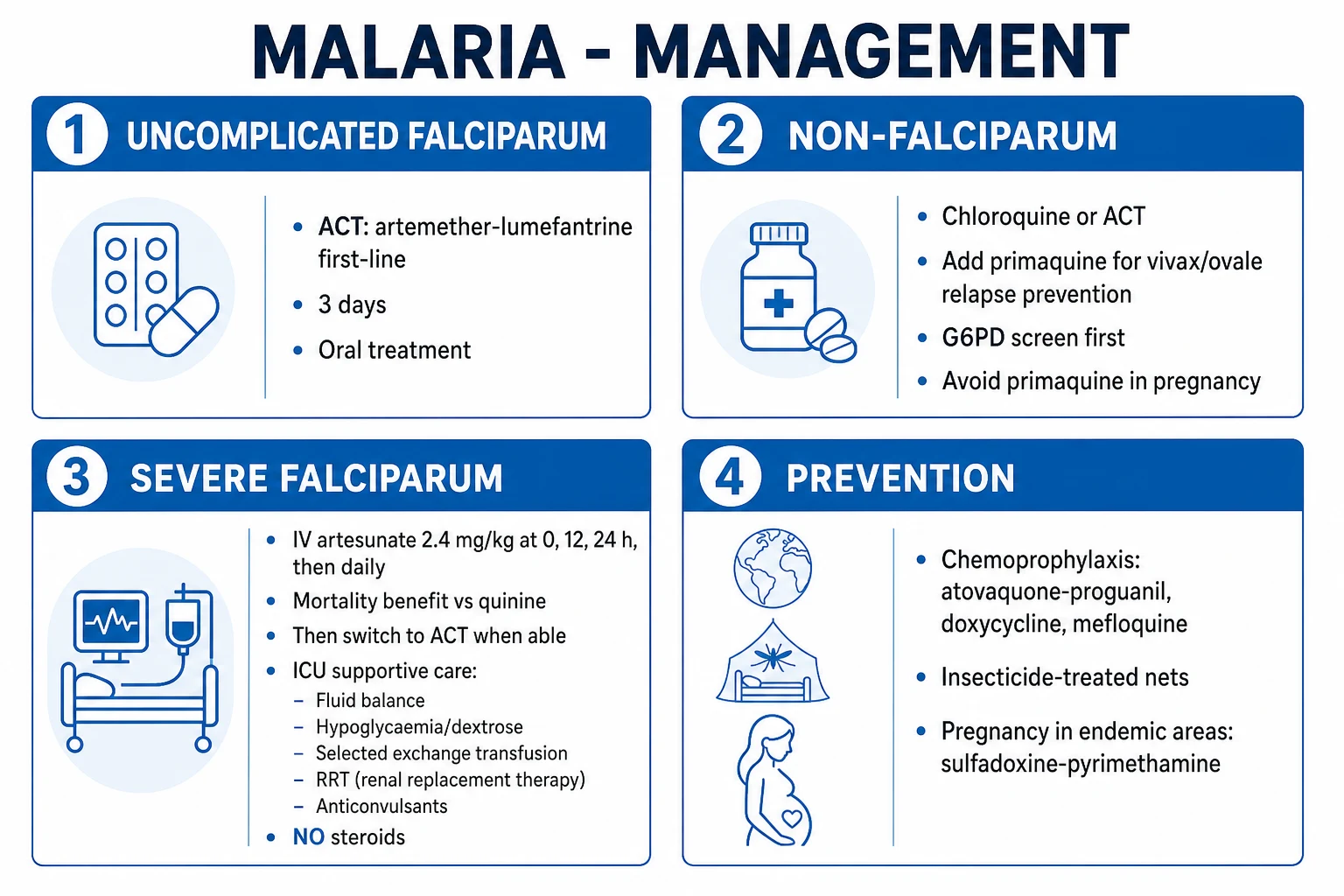
IV artesunate — first-line (SEAQUAMAT and AQUAMAT)
Severe malaria treatment protocol
1. IV artesunate (FIRST-LINE) — give immediately
Artesunate 2.4 mg/kg IV at 0, 12, and 24 hours, then once daily until oral therapy tolerated. Can be given IM if IV access difficult. SEAQUAMAT (Asia, adults, n=1461): artesunate reduced mortality by 35% vs quinine (15% vs 22%, p=0.0002). AQUAMAT (Africa, children, n=5425): 22.5% relative mortality reduction. Faster parasite clearance, fewer side effects than quinine (no hyperinsulinaemic hypoglycaemia, no QT prolongation, no tinnitus). Switch to a full oral ACT (artemether-lumefantrine or artesunate-amodiaquine) once patient tolerates oral AND parasitaemia <1%.
2. Quinine — if artesunate genuinely unavailable
Quinine 20 mg/kg IV loading over 4h, then 10 mg/kg every 8h (max 1.8 g loading). Halve maintenance dose after 48h if severe hepatic/renal failure persists. Side effects: HYPOGLYCAEMIA (insulin secretion — check glucose hourly), cinchonism (tinnitus, deafness, nausea, flushing), QT prolongation and arrhythmias. NEVER give quinine as an IV bolus (cardiac arrest risk). Less effective than artesunate and more dangerous — use only if artesunate unobtainable. Concurrently give doxycycline or clindamycin (quinine is not partner-drug-paired).
3. Supportive ICU care
(1) Cerebral malaria: intubate if GCS <8 or unable to protect airway. Treat seizures with benzodiazepines then phenytoin/levetiracetam. Maintain head of bed 30°, normocapnia, normoglycaemia. Do NOT routinely give steroids, mannitol, or anticonvulsant prophylaxis — all shown ineffective or harmful. (2) Hypoglycaemia: 50% dextrose IV bolus then 10% dextrose infusion; monitor hourly. (3) AKI: RRT if indicated (CRRT preferred — haemodynamically unstable). (4) ARDS: lung-protective ventilation (6 mL/kg, plateau <30 cmH2O), conservative fluids. (5) Anaemia: transfuse to Hb >70 g/L (>80-90 in pregnancy/ARDS). (6) Acidosis: improve perfusion and oxygenation; do NOT give bicarbonate routinely. (7) Concomitant bacteraemia — empiric broad-spectrum antibiotics in algid malaria or any shock.
4. Monitor parasitaemia
Thick and thin blood films every 12-24h. With artesunate, parasitaemia should fall by ~90% within 48h (parasite reduction ratio ~10^4 per asexual cycle). Persisting high parasitaemia suggests resistance or alternative diagnosis. Note: gametocytes may persist and even rise after treatment — they do not cause disease and do not indicate treatment failure. Continue IV artesunate until parasitaemia <1% AND patient tolerating oral therapy.
5. Do NOT routinely:
(1) Exchange transfusion — meta-analysis and observational data show no survival benefit; risk of transfusion reactions, line sepsis, citrate toxicity, fluid overload. (2) Steroids — harmful (dexamethasone trial showed worse outcomes and prolonged coma). (3) Mannitol — no proven benefit for cerebral oedema in malaria. (4) Heparin — no proven benefit for DIC. (5) Anticonvulsant prophylaxis (phenobarbital) — no proven benefit; high-dose phenobarbital in children increased mortality via respiratory depression.
Exchange transfusion — what the evidence says
Historically, exchange (whole-blood or RBC) transfusion was recommended for parasitaemia >10% on the rationale that rapid reduction of parasite burden and removal of parasitised RBCs and cytokines would improve outcome. A 2002 meta-analysis (Riddle et al) and a 2013 systematic review (Tan et al) both failed to show a survival benefit after adjusting for disease severity; exchange transfusion was associated with longer hospital stay and transfusion-related complications (ARDS, line sepsis, citrate-induced hypocalcaemia, viral transmission). Current WHO and IDSA guidance does not recommend routine exchange transfusion. Some units still consider it an extraordinary measure for parasitaemia >30% with deteriorating organ failure unresponsive to artesunate, but this is not evidence-based. The priority is prompt artesunate plus meticulous supportive care. [1]
SEAQUAMAT — the pivotal artesunate trial (Dondorp 2005)
Multinational, randomised, open-label trial; n=1461 adults and children with severe falciparum malaria across Bangladesh, Myanmar, India, and Indonesia
Population: Severe falciparum malaria (any WHO criterion)
Comparator: IV quinine
Key finding
Mortality 15% (artesunate) vs 22% (quinine) — a 35% relative reduction (absolute risk reduction 7%; p=0.0002). Benefit consistent across subgroups, age, and severity. Fewer hypoglycaemic episodes and post-randomisation convulsions with artesunate.
AQUAMAT — artesunate in African children (Dondorp 2010)
Multicentre, randomised, open-label trial; n=5425 African children <15 years across 9 countries
Population: Severe falciparum malaria in children
Comparator: IV quinine
Key finding
Mortality 9.7% (artesunate) vs 11.1% (quinine) — 22.5% relative reduction (p=0.04). Confirmed SEAQUAMAT in the highest-burden population. Estimated ~96,000 childhood deaths averted annually in Africa with artesunate adoption.
Pharmacology comparison
Artesunate
First-line
- Dose: 2.4 mg/kg IV/IM at 0, 12, 24h then daily
- Mechanism: artemisinin — alkylates parasite proteins, disrupts haem detoxification; active against ring AND mature stages
- Onset: very rapid parasite clearance (PCT ~24-48h)
- Side effects: post-artemisinin delayed haemolysis (PADH) 1-3 weeks post-treatment; otherwise well tolerated
- No QT effect, no cinchonism, no hyperinsulinaemia
Quinine
Second-line
- Dose: 20 mg/kg IV load over 4h, then 10 mg/kg every 8h
- Mechanism: inhibits parasite haem polymerisation; acts on mature trophozoite stage only
- Onset: slower parasite clearance than artesunate
- Side effects: HYPOGLYCAEMIA (insulin secretion), cinchonism (tinnitus, deafness, nausea, flushing), QT prolongation, arrhythmias, hypotension on rapid infusion
- Narrow therapeutic index; needs cardiac monitoring
Artemether / artemotil
IM alternatives
- IM only; less predictable absorption than IV artesunate
- Use when IV access impossible and artesunate unavailable
- Same delayed-haemolysis risk as artesunate
Complications and their management
Cerebral malaria
Defined as unrousable coma (Blantyre Coma Score <3 or GCS <11) in a patient with peripheral P. falciparum parasitaemia after exclusion of other causes of encephalopathy (meningitis, hypoglycaemia, post-ictal state, drug/toxin). Pathology shows sequestered parasitised RBCs in cerebral capillaries, ring haemorrhages, and Dürck granulomas. Mortality 15-25%; survivors (especially children) may have cognitive and neurodevelopmental sequelae (epilepsy, motor deficits, behavioural disorders). [1]
Management: airway protection (intubate if GCS <8), treat seizures aggressively (benzodiazepines → phenytoin/levetiracetam), avoid hyperthermia, maintain normoglycaemia and normocapnia. Do NOT give steroids, mannitol, or prophylactic phenobarbital — all ineffective or harmful in trials. Treat the underlying parasitaemia with artesunate. [1]
Hypoglycaemia
Common (up to 30% in severe disease) and recurrent. Mechanisms: parasite glucose consumption, hepatic gluconeogenesis failure, and (with quinine) hyperinsulinaemia. Artesunate lowers this risk but hypoglycaemia still occurs. Monitor glucose hourly for the first 24-48h. Treat: IV 50% dextrose bolus then 10% dextrose infusion. Always check glucose in ANY deteriorating or comatose malaria patient. [1]
Acute kidney injury
Occurs in up to a third of non-immune adults. Mechanisms: microvascular obstruction, haemolysis-induced pigment nephropathy, hypovolaemia, rhabdomyolysis. Indications for RRT are the usual ones (refractory hyperkalaemia, acidosis, uraemia, fluid overload). CRRT is preferred given haemodynamic instability. Renal recovery is usually complete over weeks in survivors. [1]
ARDS / pulmonary oedema
More common in non-immune adults, pregnant women, and P. knowlesi. Develops rapidly — often after rehydration. May be due to capillary leak, cytokine-mediated lung injury, and fluid overload. Manage with lung-protective ventilation (tidal volume 6 mL/kg PBW, plateau pressure <30 cmH2O), PEEP titrated to oxygenation, conservative fluid strategy, and prone positioning for severe hypoxaemia. Mortality in ventilated severe malaria with ARDS is high. [1]
Severe anaemia
Hb <50 g/L (children) or <70 g/L (adults) results from haemolysis of both parasitised and uninfected RBCs, splenic clearance, and dyserythropoiesis. Transuse to maintain Hb >70 g/L (>80-90 in pregnancy or ARDS). Beware transfusion-associated circulatory overload. Parasitaemia may paradoxically be low — the uninfected RBCs are being destroyed. [1]
Blackwater fever
Intravascular haemolysis producing haemoglobinuria (dark "Coca-Cola" urine). Classically associated with quinine in G6PD-deficient patients; now also seen post-artemisinin. Associated with acute kidney injury. Supportive care, transfusion for severe anaemia, RRT if needed. [1]
Algid malaria (shock)
Septic-shock-like picture with hypotension, cold peripheries, and impaired perfusion. Often associated with Gram-negative bacteraemia (especially non-typhoidal Salmonella in African children). Manage as septic shock: fluids, vasopressors (noradrenaline), empiric broad-spectrum antibiotics, blood cultures. Also consider adrenal insufficiency (rare). [1]
Post-artemisinin delayed haemolysis (PADH)
A characteristic syndrome occurring 1-3 weeks (classically day 7-28) after artesunate treatment, even after parasite clearance. Mechanism: pitting of artemisinin-damaged ("once-infected") RBCs by the spleen, with delayed clearance causing extravascular haemolysis. Defined by the Arguin case definition: haemolysis (drop in Hb, ↑LDH, ↓haptoglobin) occurring >7 days after artesunate, in a patient who had initially improved. More common in non-immune travellers (high baseline Hb). All patients treated with artesunate should have Hb checked at day 7, 14, 21, and 28 after discharge. Most cases are self-limiting but transfusion may be needed. [1]
Special situations
Pregnancy
Pregnant women (especially primigravidae) have depressed cell-mediated immunity to malaria and increased susceptibility to severe disease. Severe malaria in pregnancy has high maternal mortality (ARDS, hypoglycaemia, severe anaemia, pulmonary oedema) and fetal loss. IV artesunate is the treatment of choice in all trimesters (quinine is safe but inferior and causes hypoglycaemia). Quinine is safe in all trimesters but the concurrent hypoglycaemia risk is amplified by pregnancy. Avoid mefloquine in the first trimester. Monitor fetal wellbeing; deliver only for obstetric indications. Artesunate is safe in breastfeeding. [1]
Splenectomy and hyposplenism
Hyposplenic or asplenic patients (sickle cell disease with autosplenectomy, post-splenectomy, coeliac disease) are at dramatically increased risk of overwhelming infection — not only with encapsulated bacteria but with severe malaria, babesiosis, and Capnocytophaga. Severe malaria in such patients runs a fulminant course. [1]
Returning traveller
Any febrile traveller returning from an endemic area (sub-Saharan Africa, parts of Asia, Amazon basin, Oceania) within the previous 3-12 months has malaria until proven otherwise. The incubation period is usually 7-30 days but can extend to months with prophylaxis or relapsing species (vivax/ovale). Take a travel history (specific regions, prophylaxis adherence, mosquito exposure). Send thick/thin films and RDT STAT; do NOT delay artesunate if severe features are present. [1]
SAQ — Cerebral malaria and severe falciparum complications
SAQ — Cerebral falciparum malaria in a returning traveller
10 minutes · 10 marks
A 34-year-old non-immune man returns from a 3-week trip to Ghana, having taken incomplete malaria prophylaxis. He presents 12 days after return with fever, confusion and two generalised seizures. GCS 9, temperature 39.2C, BP 100/60, HR 110, RR 26, SpO2 92% on room air, blood glucose 2.0 mmol/L. Thick blood film shows heavy parasitaemia (8%). Bilirubin 85 micromol/L, creatinine 220 micromol/L, lactate 6.5 mmol/L, platelets 22 x10^9/L. CT brain is unremarkable.
SAQ — Severe malaria with ARDS and blackwater fever
10 minutes · 10 marks
A 42-year-old woman with falciparum malaria (3% parasitaemia) is receiving IV artesunate. On day 2 of admission she develops acute severe dyspnoea, RR 38, SpO2 86% on 15 L non-rebreather, with bilateral alveolar infiltrates. She requires intubation. Her urine has turned dark red-brown ('Coca-Cola' urine), Hb has dropped from 105 to 62 g/L, creatinine has risen to 340 micromol/L, and she is oliguric.
Clinical pearls
Red flags
Approach to the deteriorating patient
When a patient with treated malaria deteriorates, work through a structured differential: [1]
Deteriorating treated malaria — differential
1. Treatment failure?
Re-check parasitaemia (thin film, 12-24h). Failure to clear by ~90% at 48h raises: (a) artemisinin resistance (delayed parasite clearance — emerging in Greater Mekong), (b) wrong drug/dose, (c) wrong diagnosis. Consider consulting a tropical medicine unit.
2. Hypoglycaemia?
ALWAYS check point-of-care glucose first. Recurrent hypoglycaemia is the single most common reversible cause of deterioration, especially on quinine. Treat with IV dextrose and continue monitoring.
3. Volume status / ARDS?
Pulmonary oedema and ARDS can develop rapidly after fluid resuscitation. Assess with POCUS (B-lines, IVC, LV function). Liberal fluids worsen ARDS — use a conservative strategy, vasopressors over fluids if shocked.
4. Concomitant infection?
Bacteraemia (Gram-negative, non-typhoidal Salmonella), hospital-acquired pneumonia, line sepsis. Blood cultures, empiric antibiotics, review lines.
5. Electrolyte/metabolic?
Acute kidney injury (K+, acidosis), hyponatraemia (SIADH vs cerebral salt wasting), hypocalcaemia (after exchange transfusion citrate), lactic acidosis. Correct per standard ICU protocols.
6. Alternative diagnosis?
Meningoencephalitis (do LP if no contraindication), other tropical infection (dengue, typhoid, rickettsia, leptospirosis), drug reaction, intracranial event. Severe malaria does not exclude another diagnosis.
Key takeaways
- Severe malaria is almost always P. falciparum (occasionally knowlesi) and is defined by WHO end-organ-failure criteria — any one mandates parenteral artesunate.
- IV artesunate 2.4 mg/kg at 0, 12, 24h then daily is first-line (SEAQUAMAT + AQUAMAT). Quinine is second-line and more dangerous.
- Diagnose with thick film (sensitivity), thin film (species + parasitaemia), and RDT (rapid antigen) — PCR for confirmation.
- Do NOT routinely exchange transfuse, give steroids, mannitol, heparin, or prophylactic anticonvulsants.
- Monitor glucose hourly, parasitaemia every 12-24h, and Hb weekly for a month after discharge (PADH).
- Treat complications — hypoglycaemia, AKI (RRT), ARDS (lung-protective ventilation), anaemia (transfusion), seizures, bacteraemia (antibiotics). [1]
References
- [1]Dondorp A, Nosten F, Stepniewska K, Day N, White N. Artesunate versus quinine for treatment of severe falciparum malaria: a randomised trial Lancet, 2005.PMID 16125588
- [2]Dondorp AM, Fanello CI, Hendriksen IC, et al. Artesunate versus quinine in the treatment of severe falciparum malaria in African children (AQUAMAT): an open-label, randomised trial Lancet, 2010.PMID 21062666
- [3]White NJ, Pukrittayakamee S, Hien TT, et al. Malaria Lancet, 2014.PMID 23953767
- [4]Rosenthal PJ. Artesunate for the treatment of severe falciparum malaria N Engl J Med, 2008.PMID 18434652
- [5]Arguin PM, Casanova JM, Stokes S, et al. Case definition: postartemisinin delayed hemolysis Blood, 2014.PMID 25013158
- [6]Riddle MS, Jackson JL, Sanders JW, Blazes DL. Exchange transfusion as an adjunct therapy in severe Plasmodium falciparum malaria: a meta-analysis Clin Infect Dis, 2002.PMID 11941545
- [7]Tan KR, Wiegand RE, Arguin PM. Exchange transfusion for severe malaria: evidence base and literature review Clin Infect Dis, 2013.PMID 23800940
- [8]Dondorp AM, Fanello CI, Hendriksen IC, Gomes E, et al. The treatment of severe malaria Trans R Soc Trop Med Hyg, 2007.PMID 17434195
- [9]Schiess N, Villringer K, Mbandi SK, et al. Pathophysiology and neurologic sequelae of cerebral malaria Malar J, 2020.PMID 32703204