ICU · Infectious Diseases
Tetanus and botulism in the ICU
Also known as Tetanus · Botulism · Tetanospasmin · Botulinum toxin · Human tetanus immune globulin (HTIG) · Heptavalent botulinum antitoxin (HBAT)
Tetanus and botulism are rare but life-threatening toxin-mediated diseases caused by neurotoxins of Clostridium tetani and Clostridium botulinum respectively — two organisms that evolved strikingly opposite toxins from a shared ancestry. TETANUS: C. tetani exotoxin (tetanospasmin) travels by retrograde axonal transport to the spinal cord and brainstem, where it cleaves synaptobrevin (VAMP) and blocks release of the inhibitory neurotransmitters GABA and glycine → unopposed motor-neuron firing → severe muscle spasms (trismus/lockjaw, risus sardonicus, opisthotonus) and life-threatening autonomic instability. Management: HTIG (human tetanus immune globulin) 3000-6000 IU IM to neutralise unbound toxin, surgical wound debridement to stop further toxin production, metronidazole IV to eradicate C. tetani, high-dose benzodiazepines (diazepam/midazolam) and magnesium sulphate for spasm and autonomic control, ICU admission for airway protection, mechanical ventilation, and cardiovascular support. BOTULISM: C. botulinum toxin (also a synaptobrevin/SNAP-25/syntaxin-cleaving zinc-endopeptidase) blocks acetylcholine release at the neuromuscular junction → symmetric DESCENDING flaccid paralysis beginning with cranial-nerve palsies (diplopia, dysphagia, ptosis, dysarthria) with preserved sensorium and no fever, progressing to respiratory failure. Management: botulinum antitoxin (heptavalent HBAT for adults and children, human BIG-IV for infants), supportive care with NIV or intubation and prolonged ventilation (weeks-to-months), and source removal (wound debridement for wound botulism). Both demand ICU admission, meticulous supportive care, and an understanding of toxin pathophysiology that is heavily examined in the CICM/FFICM/EDIC vivas.
On this page & tools
Your progress
Saved locally on this device.
Target exams
Red flags

Clinical pearls
Red flags
Pathophysiology — two clostridia, one ancestral toxin, opposite syndromes
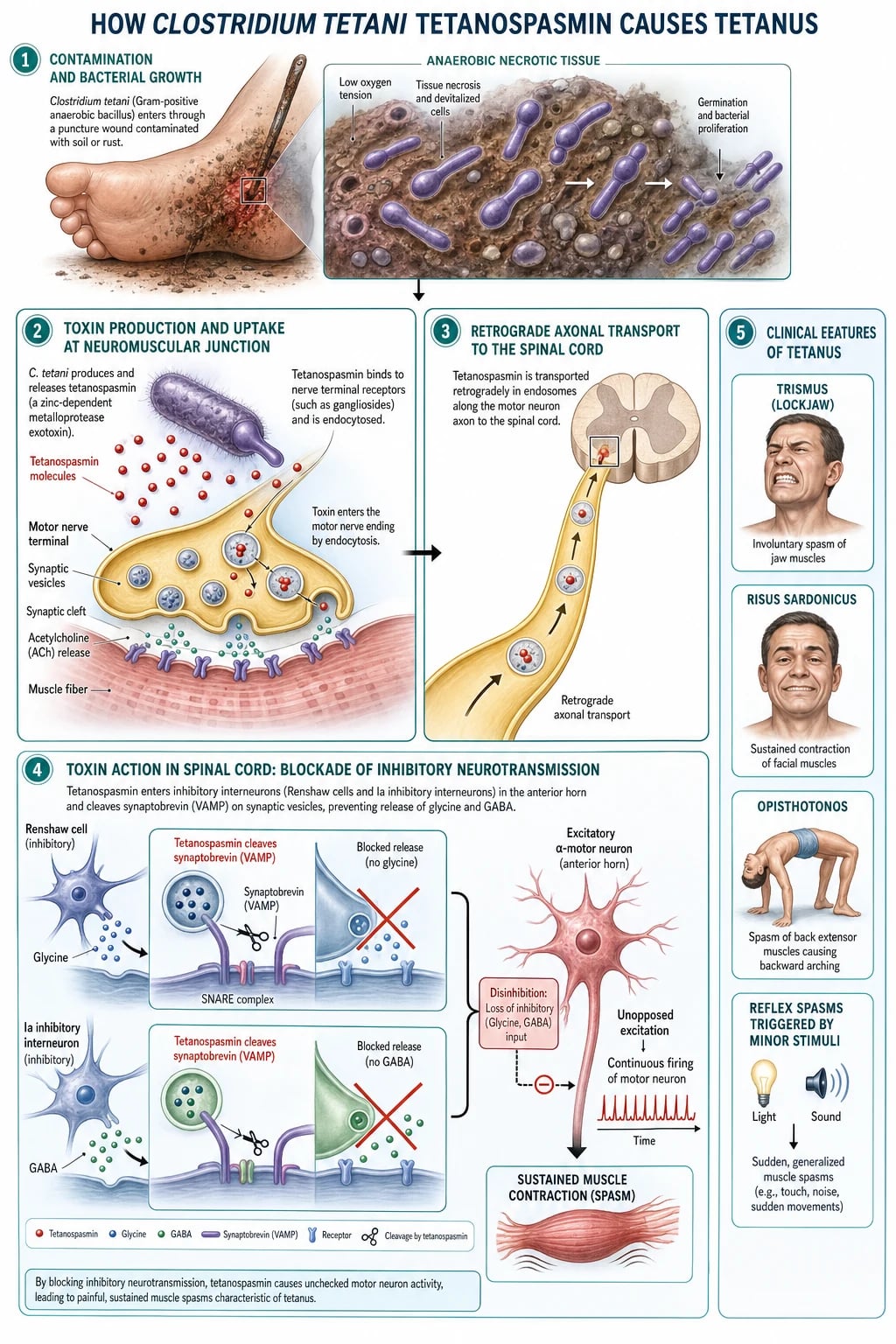
Tetanus and botulism are best understood together because their toxins share a remarkable evolutionary history. Clostridium tetani and Clostridium botulinum are both Gram-positive, spore-forming, strictly anaerobic soil organisms, and both produce a ~150 kDa zinc-dependent endopeptidase neurotoxin (tetanospasmin and botulinum toxin respectively) that is, at the molecular level, a near-identical enzyme.[1][3] Both toxins are synthesised as a single inactive polypeptide that is nicked by a bacterial or host protease into a heavy chain (~100 kDa, the binding/translocation domain) and a light chain (~50 kDa, the catalytic zinc-endopeptidase domain), linked by a disulphide bond. Both bind to neuronal membranes, are internalised by receptor-mediated endocytosis, and translocate the light chain into the neuronal cytosol where it cleaves a SNARE protein and permanently abolishes synaptic vesicle exocytosis. The entire exam-relevant clinical difference between tetanus and botulism flows from three points of divergence: which neuron they enter, where they travel, and which SNARE substrate they preferentially cleave.[1][3]
Tetanospasmin — retrograde transport to the inhibitory interneuron
C. tetani spores enter through a break in the skin (often a trivial or forgotten wound — splinter, abrasion, IV injection site, umbilical stump in neonatal tetanus), germinate in the low-redox, necrotic, devitalised tissue environment, multiply and release tetanospasmin at the wound. The toxin binds presynaptic membranes of lower motor neurons at the neuromuscular junction, is internalised and — uniquely — undergoes retrograde axonal transport up the motor nerve to the soma in the spinal cord (or brainstem, for cranial-nerve motor neurons).[1] From the motor-neuron soma it crosses the synapse into inhibitory interneurons (Renshaw cells and other glycinergic/GABAergic interneurons) by trans-synaptic spread. There the light chain cleaves synaptobrevin (VAMP, vesicle-associated membrane protein), a SNARE protein essential for the fusion of synaptic vesicles containing the inhibitory neurotransmitters glycine (predominantly in the spinal cord) and GABA (predominantly in the brainstem).[1]
The consequence is the loss of the normal inhibitory "brake" on the alpha motor neuron: motor-neuron firing becomes unopposed, producing sustained, simultaneous agonist-and-antagonist muscle contraction — the tetanic spasm. Because the toxin acts centrally on inhibitory tone rather than peripherally at the NMJ, the paralysis is spastic (not flaccid) and spasms are stimulus-sensitive (a sudden noise, a draft, or a touch triggers a paroxysm). When brainstem inhibitory circuits are affected, autonomic instability supervenes: loss of GABAergic inhibition of the sympathetic and parasympathetic brainstem centres produces labile hypertension and hypotension, tachy- and bradyarrhythmias, and sudden asystole — the leading cause of death in severe tetanus.[1][4]
A second, smaller fraction of tetanospasmin reaches the brain by haematogenous spread and is taken up by cranial-nerve motor neurons there; this "ascending" component accounts for cephalic tetanus (cranial-nerve palsies — especially CN VII — followed by generalised tetanus, classically from chronic otitis media or head wounds).[1]
Botulinum toxin — stayed at the neuromuscular junction
C. botulinum toxin reaches the host by one of several routes — pre-formed toxin ingested (foodborne), spores ingested that germinate in the gut (infant botulism, adult intestinal colonisation), spores contaminating a wound that germinate in vivo (wound botulism), or toxin injected (iatrogenic, inhalational).[3][9] Absorbed toxin circulates haematogenously and binds presynaptic membranes of peripheral cholinergic neurons — most importantly the lower motor neuron at the neuromuscular junction, but also autonomic ganglia and parasympathetic nerve endings (parotid, bowel, pupil). It is internalised by receptor-mediated endocytosis and, crucially, does NOT undergo retrograde axonal transport to the CNS.[3] It stays in the peripheral nerve terminal, where the light chain cleaves one of three SNARE proteins depending on serotype — SNAP-25 (types A, C, E), syntaxin (type C), or synaptobrevin/VAMP (types B, D, F, G). Cleavage of any SNARE abolishes acetylcholine-containing vesicle fusion, so the NMJ is silenced — producing flaccid paralysis.[3][9]
Because cranial-nerve motor terminals are reached first (shorter circulation distance, smaller motor units, high cholinergic density), cranial-nerve palsies precede limb weakness: ptosis, diplopia, blurred vision, dysphagia, dysarthria, dry mouth, dilated pupils (parasympathetic block). Paralysis then descends symmetrically — bulbar → upper limbs → respiratory muscles → lower limbs. Sensorium is preserved throughout because the CNS is never reached, and there is no fever unless a complicating infection supervenes. Recovery requires the sprouting of new axonal nerve terminals at the NMJ, a process that takes weeks to months — hence the prolonged ventilator dependence.[3][2]
Tetanospasmin vs botulinum toxin — the same enzyme, opposite destinations
| Feature | Tetanospasmin (C. tetani) | Botulinum toxin (C. botulinum) |
|---|---|---|
| Site of action | CNS — spinal cord & brainstem inhibitory interneurons | Periphery — NMJ & autonomic cholinergic synapses |
| Axonal transport | Retrograde up motor nerve to spinal cord, then trans-synaptic to inhibitory interneuron | None — stays in peripheral nerve terminal |
| SNARE substrate | Synaptobrevin (VAMP) | SNAP-25 (A, C, E), syntaxin (C), synaptobrevin (B, D, F, G) |
| Neurotransmitter blocked | Inhibitory (glycine, GABA) | Excitatory (acetylcholine) |
| Net effect on motor neuron | Loss of inhibition → unopposed firing → spasticity / spasm | Loss of stimulation → silence → flaccid paralysis |
| Direction of paralysis | Upward from wound (local → generalised); cephalic form descends from cranial nerves | Downward from cranial nerves |
| Autonomic features | Sympathetic overactivity (late) — labile BP, arrhythmia | Parasympathetic underactivity (early) — dry mouth, constipation, dilated pupils, urinary retention |
| Sensorium | Preserved (spasms exhaust the patient) | Preserved (the examiner's tell) |
| Reversibility | Functional — new inhibitory synapses form over weeks | Functional — new NMJ terminals sprout over weeks-months |
This single table is the highest-yield piece of pathophysiology for the viva: the candidate who can explain why the same enzyme produces spasm in one disease and flaccidity in the other demonstrates a mechanistic rather than rote understanding. The mnemonic "tetanus blocks the brake, botulism blocks the accelerator" captures it: tetanospasmin removes inhibition (so the motor neuron fires uncontrollably); botulinum toxin removes excitation (so the NMJ falls silent).[1][3]
Clinical features in depth — recognising the two syndromes
Tetanus — the syndrome of stimulus-sensitive spasm
Tetanus has an incubation period (inoculation to first symptom) that is one of the most important prognostic variables in medicine: the shorter the incubation, the heavier the toxin load and the more severe the disease. An incubation of less than 4 days carries very high mortality; greater than 14 days is usually mild. A second prognostic interval is the period of onset (first symptom to first generalized spasm), which behaves the same way — a period of onset under 48 hours predicts severe disease.[1]
The illness progresses through recognisable stages. The prodrome is non-specific — malaise, low-grade fever, sore throat, and the pathognomonic early sign of trismus (lockjaw — masseter spasm preventing mouth opening). Trismus is the presenting complaint in over half of cases and should always prompt consideration of tetanus in an unvaccinated patient with a wound. Within 24-72 hours the full syndrome appears:[1][4]
- Risus sardonicus — the "sardonic smile" produced by sustained contraction of the facial muscles (especially orbicularis oris and zygomaticus), producing a grimace that looks like dark amusement. It is a fixed facial expression, not a volitional smile.
- Opisthotonus — extreme hyperextension of the trunk and neck (the body arches so that only the occiput and heels touch the bed), from sustained contraction of the paraspinal muscles. Opisthotonus is one of the most dramatic physical signs in medicine and is associated with severe disease.
- Generalised spasms — paroxysmal, simultaneous contraction of agonist and antagonist muscle groups, lasting seconds to minutes and provoked by any stimulus (noise, light, touch, a draft, the act of nursing care). Spasms may be severe enough to cause long-bone fractures, rhabdomyolysis and respiratory arrest (diaphragm and laryngeal spasm). Between spasms there is sustained muscle rigidity (board-like abdomen, persistent back arching).
- Dysphagia and laryngospasm — from pharyngeal and laryngeal muscle spasm; causes drooling, aspiration risk, and may produce sudden complete airway obstruction.
- Autonomic instability — typically appears several days into the illness (the "autonomic storm") and lasts 1-2 weeks. It manifests as labile hypertension alternating with hypotension, sinus tachycardia with intermittent profound bradycardia and asystole, fever, sweating, peripheral vasoconstriction, and sudden cardiac death. Autonomic instability is the leading cause of death in patients who survive the first few days of severe tetanus.[1][4]
Local tetanus is a milder form with spasms confined to muscles near the wound and a lower mortality. Cephalic tetanus (from head/neck wounds, chronic otitis media) presents with cranial-nerve palsies — most often CN VII — followed within days by generalised tetanus; it is frequently misdiagnosed as stroke initially. Neonatal tetanus follows contamination of the umbilical stump in infants of unvaccinated mothers (failure of sterile cord care or animal dung application); it presents at 3-14 days of life with refusal to feed, trismus, rigidity, and spasms, and carries a mortality above 50% in resource-limited settings.[1]
Botulism — the syndrome of descending flaccid paralysis with a clear mind
Botulism is a purely motor and autonomic illness: consciousness, sensation, and cognition are entirely spared throughout. The hallmark is the symmetric, descending, flaccid paralysis beginning with the cranial nerves, in a patient who is alert, afebrile, and has no sensory deficit. The clinical picture depends on the syndrome.[2][3]
Foodborne botulism begins 12-36 hours (range 6 hours-8 days) after ingestion of pre-formed toxin in improperly preserved food — home-canned vegetables, fermented fish, preserved meats, bottled garlic in oil. The earliest symptoms are often gastrointestinal and autonomic (nausea, vomiting, abdominal cramps, dry mouth, constipation, urinary retention) from toxin action on autonomic cholinergic terminals, followed within hours by the cranial nerve constellation: blurred vision, diplopia, ptosis, photophobia, dysarthria, dysphagia, and a nasal voice. The pupils are typically dilated and sluggishly reactive (parasympathetic block). Paralysis then descends symmetrically to the neck (head droop), upper limbs, respiratory muscles, and finally lower limbs. Deep tendon reflexes become depressed as paralysis deepens. The speed of progression and the eventual depth of weakness are variable; respiratory failure may develop over hours or over several days.[2][3]
Wound botulism occurs when C. botulinum spores contaminate a wound, germinate, and produce toxin in vivo. It is now overwhelmingly a disease of injection drug users, particularly those injecting black-tar heroin subcutaneously ("skin-popping") — the contaminated drug introduces spores into devitalised tissue.[14] Wound botulism has a longer incubation (4-14 days), no GI prodrome (toxin made in the wound, not ingested), and may be accompanied by a visible abscess or cellulitis at an injection site. The neurological syndrome is identical to foodborne disease. Every injection drug user presenting with diplopia, ptosis, dysphagia, or descending weakness has wound botulism until proven otherwise — and the injection-site abscess must be found and debrided.[14]
Infant botulism ("floppy baby syndrome") is the most common form in the developed world. Spores (classically from honey, but also from soil/dust) are ingested, germinate in the immature infant gut (low gastric acidity, absent competitive flora), and produce toxin in vivo. Onset is at 2 weeks-12 months of age with constipation (the forgotten first symptom), poor feeding, weak cry, hypotonia ("floppy infant"), loss of head control, descending weakness, and in severe cases sudden infant death from diaphragmatic paralysis. The face is expressionless, the suck is weak, the pupils may be dilated.[12][11]
Iatrogenic botulism follows therapeutic or cosmetic injection of botulinum toxin (excessive dose, wrong muscle, systemic spread); it produces a milder, localised weakness with some systemic features. Inhalational botulism is the bioterrorism form — aerosolised toxin causing descending paralysis without a wound or food source, with a large point-source outbreak.[3]
Diagnostic approach — clinical diagnosis in a disease with no bedside test
Tetanus and botulism are clinical diagnoses. There is no rapid confirmatory laboratory test that should delay treatment. Tetanus has no specific test at all — it is a diagnosis of exclusion based on the characteristic syndrome and a suggestive epidemiology (wound, unvaccinated status). Botulism can be confirmed retrospectively by mouse bioassay (the gold standard — patient serum injected into mice with and without typing antitoxin) and by detection of toxin in serum, stool, wound, or food via the public-health reference laboratory, but these results take days and never guide the acute decision.[2][3]
Diagnostic approach to suspected tetanus
- RECOGNISE THE SYNDROME — trismus/risus sardonicus/opisthotonus + stimulus-sensitive spasms + a wound or unvaccinated status = tetanus until proven otherwise. The single most important epidemiological question: "When did you last have a tetanus booster?" — lapsed (>10 years) or never vaccinated plus a wound is tetanus until excluded
- SEARCH FOR AND DEBRIDE THE WOUND — a portal of entry is found in most cases (extremity laceration, abrasion, IV injection site, chronic ulcer, otitis media in cephalic tetanus, postpartum uterine infection, umbilical stump in neonates). Debride necrotic tissue to reduce the anaerobic bacterial load and toxin production; swab and send for culture (C. tetani is hard to culture and may not be isolated)
- EXCLUDE MIMICS — strychnine poisoning (faster onset, normal tone between spasms, normal sensorium, recovers in hours-days), dystonic reaction (responsive to benztropine/benzodiazepine, no trismus pattern), peritonsillar abscess/retropharyngeal abscess (trismus with fever, sore throat; imaging), rabies (hydrophobia, brainstem encephalitis, animal bite), hypocalcaemic tetany (Chvostek/Trousseau signs, low ionised calcium), meningitis/encephalitis (altered sensorium, fever, CSF), status epilepticus (unconscious during and between seizures, EEG)
- GRADE SEVERITY to plan ICU/ventilation: Ablett grade I (mild, mild trismus, no spasms), grade II (moderate, moderate trismus, brief spasms triggered by stimulus, mild autonomic signs), grade III (severe — severe trismus, prolonged spasms, marked autonomic instability, respiratory compromise → mandatory ICU + ventilation), grade IV (very severe — severe spasms with respiratory arrest, profound autonomic instability, often needing paralysis and full cardiovascular support)
- BLOODS AND MONITORING — FBC, U&E, CK (rhabdomyolysis from spasms), troponin, coagulation, blood gases; ECG monitoring (arrhythmia is the leading cause of death); arterial line; check tetanus antitoxin antibody titre if available (supports the diagnosis and confirms the immune failure)
- GIVE HTIG AND START TREATMENT EMPIRICALLY — do NOT wait for any confirmatory result; treatment is clinical and the consequence of delay is death
Diagnostic approach to suspected botulism
- RECOGNISE THE SYNDROME — symmetric descending flaccid paralysis starting with cranial nerves (ptosis, diplopia, dysphagia, dysarthria) + clear sensorium + no fever + pupils dilated/sluggish = botulism until proven otherwise. Identify the syndrome: foodborne (home-canned food, multiple cases), wound (black-tar heroin injection), infant (<12 months, constipation then floppiness), iatrogenic (recent botox injection)
- CONTACT THE PUBLIC-HEALTH / REFERENCE LABORATORY AND ANTITOXIN SUPPLIER IMMEDIATELY — botulinum antitoxin is held centrally (in the US by CDC via state health departments; in the UK by Public Health England Colindale; in Australia by state public-health units). Diagnosis, antitoxin release, and epidemiological investigation (food/source identification, exposed contacts) proceed in parallel — do not sequence them
- COLLECT SPECIMENS BEFORE GIVING ANTITOXIN if possible — serum (≥10 mL, before antitoxin neutralises circulating toxin), stool, wound swab/pus, and suspect food. Send for mouse bioassay (gold standard, days) and PCR/ELISA. C. botulinum culture and toxin detection from stool/wound supports the diagnosis
- EXCLUDE MIMICS — Guillain-Barré syndrome (ascending, areflexia, CSF albuminocytological dissociation, EMG demyelination), myasthenia gravis (fluctuating, ocular-dominant, positive AChR antibody, increment/fatigue on repetitive nerve stimulation — botulism decrements), tick paralysis (ascending, attached tick found on scalp — remove it), Lambert-Eaton (proximal weakness that improves with use, small-cell lung cancer), periodic paralysis (episodic, ± potassium abnormality), brainstem stroke (asymmetric, altered sensorium, MRI), diphtheritic polyneuropathy (recent pharyngitis, ascending, palatal paralysis), organophosphate/carbamate poisoning (cholinergic crisis — pupils SMALL, copious secretions, bradycardia — the opposite pupil finding)
- ASSESS RESPIRATORY FUNCTION VIGOROUSLY AND REPEATEDLY — serial bedside spirometry (FVC, NIF, MIP). The threshold for ICU is a FVC <15-20 mL/kg, NIF < -30 cmH2O, or a falling trend — intubate BEFORE respiratory arrest, because cranial-nerve weakness makes extubation and NIV failure dangerous. A 30% fall in FVC predicts imminent failure
- IDENTIFY AND REMOVE THE SOURCE — wound botulism: find and surgically debride the injection-site abscess; foodborne: identify and recall the food, trace exposed contacts (who may need antitoxin prophylaxis); infant: stop honey, supportive care, give BIG-IV
Differential diagnosis — the "acute flaccid paralysis" and "acute spasm" matrices
The two presentations of these diseases — acute flaccid paralysis (botulism) and acute generalised spasm with preserved consciousness (tetanus) — each have a tight differential that the examiner will probe. The single most discriminating features are the direction of paralysis, the pupil size and reactivity, the presence/absence of fever and sensory findings, and the CSF.[2][9]
Differential of descending flaccid paralysis — distinguishing botulism from its mimics
| Condition | Direction | Pupils | Sensation / Sensorium | Fever | Reflexes | Key discriminator |
|---|---|---|---|---|---|---|
| Botulism | Descending (cranial first) | Dilated, sluggish / fixed | Normal / Alert | Absent | Depressed → absent | Symmetric descending, clear sensorium, autonomic (dry mouth, constipation, urinary retention); wound or food source |
| Guillain-Barré syndrome (AIDP) | Ascending (legs first) | Normal (rarely sluggish in Miller-Fisher) | May have paraesthesia / Alert | Absent | Absent | Ascending; CSF albuminocytological dissociation; EMG demyelination; often post-infectious |
| Miller-Fisher variant of GBS | Descending (ophthalmoplegia, ataxia, areflexia) | Often dilated | Alert; ataxia | Absent | Absent | Triad of ophthalmoplegia + ataxia + areflexia; anti-GQ1b antibody positive |
| Myasthenia gravis (myasthenic crisis) | Variable, ocular-dominant, fluctuates | Normal | Normal / Alert | Absent | Normal | Fatigability; positive AChR/MuSK antibody; EMG: decrement, reverses with edrophonium; no autonomic failure |
| Lambert-Eaton (LEMS) | Proximal, improves transiently with use | Variable / dry mouth | Normal / Alert | Absent | Depressed, facilitates | Paraneoplastic (small-cell lung cancer); EMG: low-amplitude CMAP that increments with exercise; autonomic features overlap botulism |
| Tick paralysis | Ascending | Normal | Normal / Alert | Absent | Depressed → absent | Attached tick (usually on scalp — search!); resolves on tick removal; child often |
| Periodic paralysis | Episodic, proximal > distal | Normal | Normal / Alert | Absent | Depressed in attack | ± potassium abnormality (hypo/hyperkalaemic); attacks minutes-days; family history |
| Brainstem stroke (locked-in) | Brainstem cranial nerves (asymmetric) | Variable (anisocoria, Horner) | Locked-in: conscious, vertical gaze spared | Variable | Variable | Asymmetric; MRI brainstem lesion; stroke risk factors; NOT a peripheral process |
| Diphtheritic polyneuropathy | Ascending, palatal paralysis early | Variable | Alert | Usually absent (post-pharyngitis) | Depressed | Recent membranous pharyngitis; culture/PCR positive; myocarditis; unvaccinated |
| Organophosphate / carbamate poisoning | Variable, cholinergic | Pinpoint (miotic) | Confused → coma | Variable | Variable | Cholinergic crisis: salivation, lacrimation, urination, defecation, bradycardia, fasciculations; LOW or normal AchE — opposite pupil to botulism |
The pupil is the highest-yield single discriminator at the bedside: botulism (parasympathetic block) gives dilated or fixed pupils; organophosphate poisoning (cholinergic excess) gives pinpoint pupils; GBS, myasthenia and tick paralysis spare the pupils. A patient with descending flaccid paralysis and dilated pupils that do not react, who is fully alert and afebrile, has botulism until proven otherwise.[2][3]
Differential of acute generalised spasm with preserved consciousness — distinguishing tetanus from its mimics
| Condition | Onset | Tone between spasms | Sensorium | Trigger pattern | Key discriminator |
|---|---|---|---|---|---|
| Tetanus | Days (incubation) | Increased (rigid) — board-like abdomen, opisthotonus | Alert, exhausted | Stimulus-evoked AND spontaneous; sustained | Trismus/risus sardonicus/opisthotonus; wound; unvaccinated; weeks-long course |
| Strychnine poisoning | Minutes-hours | Normal between spasms | Alert between spasms | Stimulus-evoked only | Rodenticide/herbal exposure; recovery in hours-days; NO risus sardonicus pattern of face at rest; toxicology positive |
| Dystonic reaction (drug-induced) | Hours | Variable | Alert | Not stimulus-evoked | Recent antipsychotic/antiemetic (metoclopramide, prochlorperazine); oculogyric crisis, torticollis; reverses with benztropine / diphenhydramine |
| Tetany (hypocalcaemia, alkalosis) | Variable | Normal or mildly increased | Alert | Carpopedal, Chvostek/Trousseau | Low ionised Ca (or alkalosis, hyperventilation); resolves with calcium; hand (carpal spasm) > jaw |
| Rabies (furious form) | Days-weeks | Variable | Encephalitic, fluctuating | Aerophobia, hydrophobia | Animal bite; brainstem encephalitis; CSF/MRI brain changes; ultimately coma |
| Meningitis / encephalitis | Hours-days | Variable | Altered / obtunded | Not stimulus-evoked | Fever, headache, meningism, CSF pleocytosis; EEG abnormal |
| Status epilepticus | Hours | Variable | Unconscious during and between | Not stimulus-evoked | EEG seizure; no clear inter-spasm consciousness |
| Stiff-person syndrome | Chronic (months) | Increased, fluctuating | Alert | Stress, startle | Autoimmune (anti-GAD); chronic relapsing; no wound/incubation pattern |
The discriminating pair for tetanus is the sustained rigidity between spasms (unlike strychnine, which has normal tone between attacks) and the chronic waxing-waning course over weeks (unlike strychnine, which resolves in days). A patient with trismus, opisthotonus, board-like abdomen, preserved consciousness, and stimulus-evoked spasms has tetanus; the question is then only about severity and the source.[1]
Management — the source-control-plus-toxin-neutralisation-plus-support paradigm
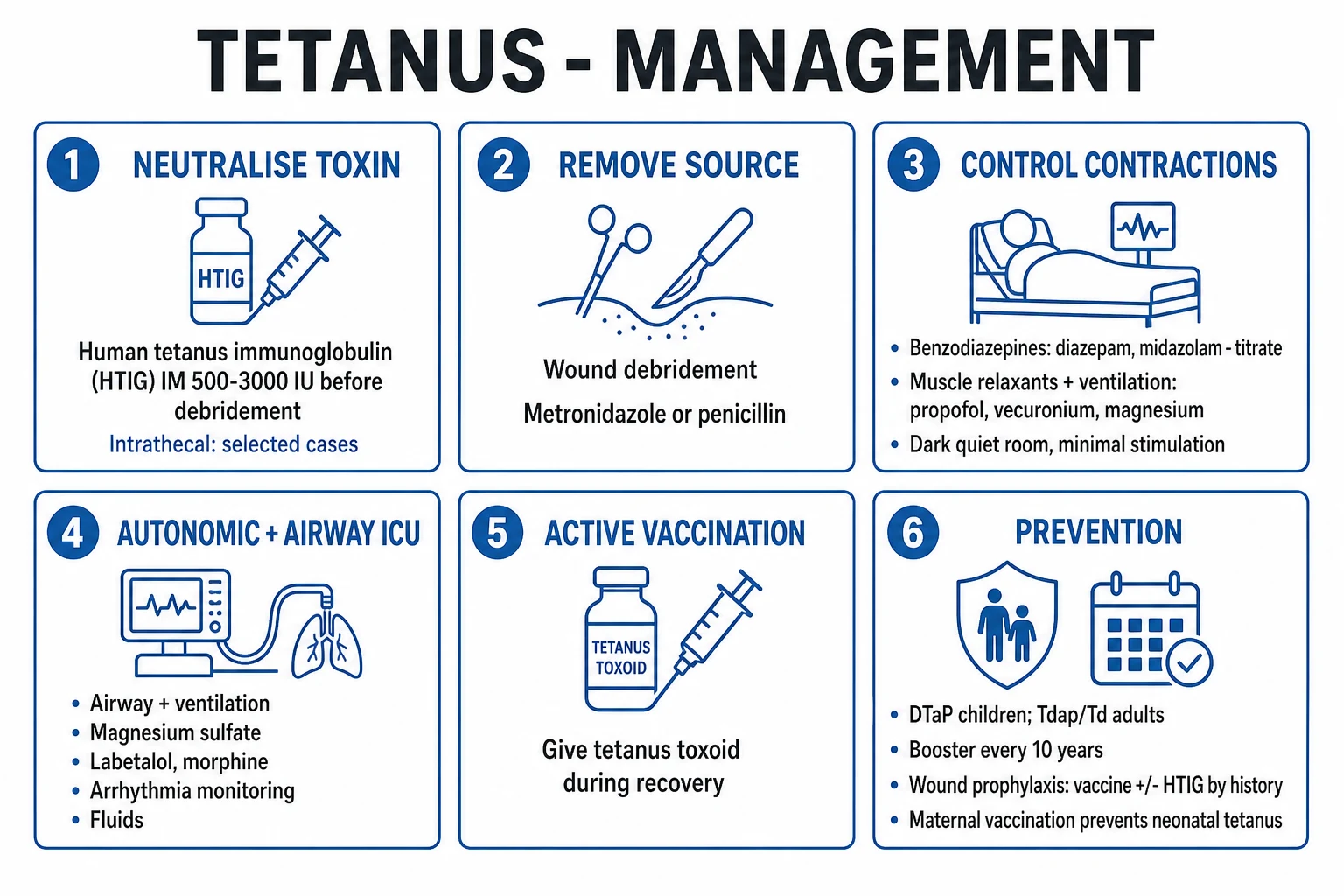
Neither tetanus nor botulism has a treatment that reverses the toxin once it is intraneuronal. Therapy therefore has three aims: (1) neutralise the toxin that is still circulating and unbound (HTIG, botulinum antitoxin) before it reaches its target, (2) stop further toxin production (debride the wound, eradicate the organism) and (3) support the patient through the weeks of fixed neurological deficit (airway, ventilation, autonomic control, spasm control, nutrition, thromboprophylaxis, decubitus care). The order matters: antitoxin/HTIG must be given early, because once the toxin has bound and entered the neuron it is inaccessible to antibody.[1][3]
Tetanus — the acute management pathway
Acute management of tetanus — the first 6 hours
- RECOGNISE AND GRADE — clinical diagnosis (no confirmatory test). Grade by Ablett to triage ICU and ventilation: grades III-IV need ICU, mechanical ventilation, and often paralysis. Notify ICU, anaesthetics, infectious diseases
- AIRWAY FIRST — laryngospasm and respiratory-muscle spasm can kill within minutes. Have succinylcholine/rocuronium and intubation equipment at the bedside. Severe (grade III-IV) tetanus: intubate early (often via nasotracheal or awake fibreoptic technique if trismus severe) and perform an elective tracheostomy within 24-48 h — prolonged ventilation is the rule and tracheostomy reduces laryngeal injury and facilitates nursing and pulmonary toilet
- NEUTRALISE UNBOUND TOXIN — HTIG — human tetanus immune globulin 3000-6000 IU IM (single dose, into the deltoid opposite the vaccination site) neutralises circulating unbound tetanospasmin. It does NOT reverse established disease (toxin already intraneuronal is inaccessible). Give EARLY. The IM route is standard; intrathecal HTIG has been studied in two meta-analyses showing a modest reduction in severity and duration but remains controversial and is not universally available[7][8]
- ERADICATE C. TETANI AND DEBRIDE THE WOUND — surgical exploration and debridement of the wound to remove necrotic tissue and establish aerobic conditions (the organism is a strict anaerobe). Metronidazole 500 mg IV q6h (or 1 g IV q12h) for 7-10 days is the antibiotic of choice (better than penicillin, which is a GABA antagonist and can theoretically worsen spasms). Alternative: doxycycline or macrolide. Antimicrobials kill the organism but do NOT neutralise pre-formed toxin — HTIG and debridement do that
- CONTROL SPASMS — benzodiazepines are first-line — diazepam 10-40 mg IV (or 0.1-0.3 mg/kg) repeated titrated to spasm control, or midazolam infusion 0.1-0.3 mg/kg/h. Benzodiazepines are GABA-A agonists and directly counter the loss of inhibitory tone. Very large cumulative doses (hundreds of mg/day) are often needed; propylene glycol toxicity (from diazepam vehicle) is a reason to switch to midazolam infusion. Add propofol, phenobarbitone or volatile anaesthetic (isoflurane) for refractory spasms
- MAGNESIUM SULPHATE for spasms AND autonomic instability — load 40-80 mg/kg over 30 min then infuse 1-3 g/h (adult), titrated to a serum magnesium of 2-4 mmol/L and to clinical effect (loss of patellar reflex warns of toxicity; monitor respiratory effort). Magnesium inhibits catecholamine release (controls autonomic storm), blocks NMDA (reduces spasm trigger), and reduces presynaptic ACh release (mild neuromuscular block). Attygalle & Rodrigo showed magnesium can avert the need for ventilation in many moderate cases[5][6]
- MANAGE AUTONOMIC INSTABILITY (the leading cause of death) — magnesium infusion is the backbone. Add morphine infusion (0.5-1 mg/kg/h — suppresses sympathetic outflow and is sedating) and labetalol or clonidine/moxonidine/dexmedetomidine for hypertension and tachycardia. Avoid long-acting beta-blockers alone (unopposed alpha can precipitate catastrophic hypertension or sudden death from vagal episodes — labetalol covers both). Atropine or isoprenaline for bradycardia; temporary pacing for asystole. Central arterial and venous monitoring; continuous ECG
- PARALYSE AND VENTILATE for refractory severe disease — if spasms cannot be controlled with sedation + magnesium, neuromuscular blockade with vecuronium/cisatracurium infusion + mechanical ventilation is required; this is the management of grade IV tetanus. Use train-of-four monitoring; the patient is sedated and analgesed (fentanyl/morphine) — never paralyse a conscious patient
- ACTIVE IMMUNISATION (the cure does not immunise) — recovery from tetanus does NOT produce protective immunity (the toxin is potent at doses too low to trigger an antibody response). Give tetanus toxoid-containing vaccine (DTaP/Tdap) at the time of presentation (in the opposite deltoid to the HTIG), and complete a full primary course — the patient WILL get tetanus again otherwise
- GENERAL ICU SUPPORT — enteral feeding (via NG/NJ) early — the hypermetabolic, catabolic state is profound; VTE prophylaxis (LMWH); pressure-area care (spasms cause shearing); DVT and decubitus prevention; gastric protection; bowel regime; physiotherapy; avoid unnecessary stimuli (dark, quiet room, minimal handling); treat rhabdomyolysis (IV fluids, monitor CK and renal function); treat secondary infection (pneumonia, line infection). Expected duration 4-6 weeks in severe cases
Tetanus drug therapy — agent, role, dose and rationale
| Agent | Class / mechanism | Role in tetanus | Adult dose | Key points |
|---|---|---|---|---|
| HTIG (human tetanus immune globulin) | Pooled human IgG anti-tetanospasmin | Neutralise circulating unbound toxin — give EARLY | 3000-6000 IU IM single dose (opposite deltoid to vaccine) | Does NOT reverse established disease; IM standard, intrathecal controversial[7][8] |
| Metronidazole | Nitroimidazole; DNA breakage | Eradicate C. tetani | 500 mg IV q6h or 1 g IV q12h × 7-10 d | Preferred over penicillin (penicillin is GABA antagonist → may worsen spasms) |
| Doxycycline / macrolide | Protein-synthesis inhibitor | Alternative if metronidazole contraindicated | Doxycycline 100 mg IV q12h | Second-line |
| Diazepam | Benzodiazepine; GABA-A agonist | First-line spasm control — directly restores inhibition | 10-40 mg IV, repeated; up to hundreds of mg/day | Watch propylene-glycol toxicity (vehicle) — switch to midazolam |
| Midazolam | Benzodiazepine; GABA-A agonist | Spasm control as infusion | 0.1-0.3 mg/kg/h infusion | Water-soluble, no propylene glycol — preferred for prolonged use |
| Magnesium sulphate | NMDA block; catecholamine release block; presynaptic ACh reduction | Spasm control AND autonomic stability — cornerstone | Load 40-80 mg/kg, then 1-3 g/h; target Mg 2-4 mmol/L | Monitor reflexes, respiratory effort, renal function; can avert ventilation[5][6] |
| Propofol | GABA-A agonist; NMDA antagonist | Adjunct for refractory spasms / sedation | Infusion per sedation protocol | Propofol infusion syndrome with prolonged high doses |
| Phenobarbitone / thiopentone | Barbiturate; GABA-A | Refractory spasms | Per anaesthetic guidance | Prolonged half-life; hypotension |
| Vecuronium / cisatracurium | Non-depolarising NMBA | Paralyse for refractory grade IV disease | Infusion, train-of-four guided | MUST sedate + analgese — never paralyse a conscious patient |
| Morphine | Opioid; sympathetic suppression | Autonomic storm + analgesia + sedation | 0.5-1 mg/kg/h infusion | Reduces catecholamine surges |
| Labetalol | Alpha + beta blocker | Hypertension/tachycardia of autonomic storm | IV infusion titrated | Avoid pure beta-blocker (unopposed alpha → hypertensive crisis / sudden death) |
| Clonidine / dexmedetomidine | Central alpha-2 agonist | Sympatholysis for autonomic storm | Infusion | Bradycardia, hypotension; dexmedetomidine allows arousable sedation |
| Tetanus toxoid vaccine (DTaP/Tdap) | Active immunisation | Cure does not confer immunity — must vaccinate | IM, opposite deltoid to HTIG; full primary course | Give at presentation; complete series |
Botulism — the acute management pathway
Acute management of botulism — the first 6 hours
- RECOGNISE AND PROTECT THE AIRWAY — descending flaccid paralysis with cranial-nerve involvement threatens the airway (bulbar weakness → aspiration, diaphragm weakness → respiratory failure). Have low threshold for early intubation. Serial bedside spirometry (FVC, NIF/MIP) every 2-4 h: intubate when FVC <15-20 mL/kg or NIF < -30 cmH2O or falling trend — do NOT wait for hypercapnia or desaturation, which are late signs. Elective intubation is safer than emergency intubation in a patient with bulbar palsy
- GIVE BOTULINUM ANTITOXIN IMMEDIATELY — phone the public-health authority NOW — in adults and children >1 year, the heptavalent botulinum antitoxin (HBAT) covers toxin types A-G. It is equine-derived: risk of hypersensitivity/anaphylaxis, so have adrenaline, antihistamine, and corticosteroid ready; skin-test or give by slow graded infusion per protocol. Antitoxin only neutralises circulating unbound toxin — it does not reverse established paralysis — so give it EARLY, even before mouse-bioassay confirmation (clinical suspicion is sufficient). The 2017 Yu cohort showed HBAT is safe and associated with shorter illness and lower mortality when given early[3][13][10]
- INFANT BOTULISM — give BIG-IV (Botulism Immune Globulin Intravenous, BabyBIG) — human-derived immune globulin specifically for infant botulism types A and B. The 2006 Arnon NEJM RCT showed BIG-IV reduced mean hospital stay from 5.7 to 2.6 weeks and mean mechanical-ventilation duration from 5.7 to 1.8 weeks. Dose 50 mg/kg IV single infusion. Do NOT give equine antitoxin to infants (high anaphylaxis risk)[11][12]
- REMOVE THE SOURCE:
- Wound botulism: surgically explore and debride the injection-site abscess; send tissue/pus for C. botulinum culture and toxin; irrigate; give antibiotics (penicillin G + metronidazole) — antibiotics are adjunctive, source control is primary[14]
- Foodborne: identify and recall the contaminated food; trace and contact others who may have eaten it — asymptomatic exposed contacts should be observed and given antitoxin if any symptoms develop; notify public health
- Infant: stop honey exposure; supportive care; BIG-IV
- AVOID AMINOGYLICOSIDES AND OTHER NMJ-BLOCKING AGENTS — gentamicin, tobramycin, magnesium, calcium-channel blockers, neuromuscular blockers, and certain anaesthetics potentiate botulinum toxin's NMJ block and can precipitate sudden respiratory failure. Avoid if at all possible; if antibiotics are needed, prefer penicillin/metronidazole
- SUPPORTIVE CARE — the treatment of botulism is supportive — there is no antidote to intraneuronal toxin; recovery depends on axonal terminal sprouting (weeks-months). Anticipate prolonged ICU stay:
- Mechanical ventilation — often required for weeks-months; tracheostomy once prolonged course is clear (typically 2-3 weeks in)
- Nutrition — enteral feeding (NG/NJ/PEG); paralytic ileus is common early (autonomic block) and may need PN temporarily
- Autonomic support — hypotension from autonomic failure (IV fluids, careful vasopressors); urinary retention (catheter); constipation (laxatives); dry eye (lubricants); ileus
- DVT prophylaxis, pressure care, physiotherapy, rehabilitation
- Monitor for and treat secondary infection (VAP, line infection)
- ANTICHOLINESTERASES AND 3,4-DIAMINOPYRIDINE HAVE NO ACUTE ROLE — pyridostigmine/neostigmine do not reverse the SNARE cleavage (the vesicle cannot fuse regardless of AChE activity) and may worsen autonomic features; 3,4-DAP has limited evidence. Do not delay antitoxin for them
- DE-ESCALATE AS RECOVERY OCCURS — wean ventilation as FVC/NIF recover; decannulate tracheostomy when bulbar and respiratory strength return; rehabilitation for deconditioning. Full recovery is the rule over weeks-months
Botulism drug therapy — agent, role, dose and rationale
| Agent | Type / mechanism | Role in botulism | Dose | Key points |
|---|---|---|---|---|
| Heptavalent botulinum antitoxin (HBAT) | Equine F(ab')2 / IgG; types A-G | Neutralise circulating toxin — adults & children >1 y; give EARLY | Per protocol (slow IV infusion after skin test / graded) | Equine → hypersensitivity/anaphylaxis risk; have adrenaline ready. Only neutralises UNBOUND toxin[3][13] |
| BIG-IV (BabyBIG) | Human immune globulin; types A & B | Infant botulism only (<1 y) | 50 mg/kg IV single infusion | Arnon 2006 RCT: halved hospital + ventilation duration[11][12] |
| Penicillin G + metronidazole | Antibiotics (wound botulism adjunct) | Eradicate C. botulinum in wound; reduce toxin production | Pen G 2.4 g IV q4h; metronidazole 500 mg IV q6h | Adjunct to surgical debridement; avoid aminoglycosides (potentiate NMJ block) |
| Magnesium, calcium-channel blockers, aminoglycosides, NMBAs | NMJ-potentiating agents | AVOID — worsen paralysis | — | Can precipitate sudden respiratory failure in botulism |
| Pyridostigmine / neostigmine | Acetylcholinesterase inhibitor | NO acute role (does not reverse SNARE cleavage) | — | May worsen autonomic features; not recommended |
Key trials and evidence
Yen & Thwaites 2019 Lancet — the definitive tetanus review (PMID 30935736)
Source
Lancet 2019;393:1659-1667 — the contemporary authoritative clinical review of tetanus
Key contribution
Synthesises the pathophysiology (retrograde transport, synaptobrevin cleavage, loss of glycinergic/GABAergic inhibition), the prognostic value of incubation period and period of onset, the Ablett severity grading, and the modern management algorithm (HTIG, metronidazole, wound debridement, benzodiazepines, magnesium sulphate, mechanical ventilation, autonomic support)
Clinical bottom line
The single reference for the CICM/FFICM tetanus viva: tetanus is entirely preventable by vaccination yet persists in the unvaccinated; management is neutralisation of unbound toxin (HTIG), eradication of the organism (metronidazole + debridement), control of spasms (benzodiazepines ± magnesium), support of the airway and autonomic system, and active immunisation — because recovery does not confer immunity
Arnon 2001 JAMA — botulinum toxin as a biological weapon (PMID 11209178)
Source
JAMA 2001;285:1059-1070 — the consensus bioterrorism working-group review
Key contribution
Defines the clinical syndromes of botulism (foodborne, wound, infant, inhalational), the pathophysiology (SNARE cleavage, descending flaccid paralysis with preserved sensorium), the diagnostic approach (clinical, confirmed by mouse bioassay), and the management (heptavalent equine antitoxin, prolonged supportive ventilation, public-health response)
Clinical bottom line
The exam-standard botulism reference: symmetric descending flaccid paralysis with cranial-nerve onset, clear sensorium, afebrile, dilated pupils; treat with antitoxin (neutralises only circulating toxin) and supportive ventilation for weeks-to-months; a large point-source outbreak of flaccid paralysis suggests inhalational bioterrorism
Attygalle & Rodrigo 2002 Anaesthesia — magnesium as first-line tetanus therapy (PMID 12133096)
Source
Anaesthesia 2002;57:811-817 — prospective observational study of 40 tetanus patients
Population
40 consecutive patients with severe tetanus (Ablett grade II-IV) treated with magnesium sulphate as the primary agent for spasm and autonomic control
Key result
Magnesium controlled spasms and cardiovascular instability in the majority; 32 of 40 patients did not require mechanical ventilation and 36 did not need sedation with neuromuscular blockade; serum magnesium 2-4 mmol/L was the therapeutic target
Clinical bottom line
Established magnesium sulphate as a first-line agent in severe tetanus — controlling both spasms AND autonomic instability by inhibiting catecholamine release and NMDA, and in many cases averting the need for mechanical ventilation. The backbone of modern autonomic-storm management
Attygalle & Rodrigo 1997 Anaesthesia — magnesium to avoid ventilation in severe tetanus (PMID 9370837)
Source
Anaesthesia 1997;52:956-972 — the seminal magnesium-tetanus paper
Key question
Can magnesium sulphate control spasms in severe tetanus sufficiently to avoid sedation and artificial ventilation?
Key result
Demonstrated that magnesium infusion titrated to clinical effect and serum level (2-4 mmol/L) abolished spontaneous spasms and stabilised the cardiovascular system in severe tetanus, with loss of patellar reflex the bedside sign of impending toxicity
Clinical bottom line
The mechanistic and dose-finding foundation for magnesium in tetanus: a single agent that addresses both the spasm and the autonomic storm, with a clear bedside toxicity monitor (patellar reflex)
Kabura 2006 Trop Med Int Health — intrathecal vs IM antitetanus immunoglobulin meta-analysis (PMID 16827708)
Source
Tropical Medicine & International Health 2006;11:1075-1081 — meta-analysis of intrathecal HTIG
Design
Meta-analysis of trials comparing intrathecal versus intramuscular human antitetanus immunoglobulin or equine antitoxin
Key result
Intrathecal administration showed a modest benefit in disease severity and duration compared with IM, but the trials were heterogeneous and small; the benefit was not consistent across all endpoints
Clinical bottom line
Intrathecal HTIG is a reasonable consideration where available but is not standard of care; IM HTIG 3000-6000 IU remains the widely accepted route. The controversy is exam-worthy — acknowledge both meta-analyses (Abrutyn 1991 JAMA, Kabura 2006)
Arnon 2006 NEJM — BIG-IV for infant botulism (PMID 16452558)
Source
New England Journal of Medicine 2006;354:462-471 — the pivotal randomised trial of human botulism immune globulin for infant botulism
Design
Randomised, double-blind, placebo-controlled trial of human botulism immune globulin intravenous (BIG-IV) in infants with type A or B botulism
Key result
BIG-IV reduced mean total hospital stay from 5.7 weeks to 2.6 weeks and mean mechanical-ventilation duration from 5.7 weeks to 1.8 weeks; significant reduction in tube-feed duration
Clinical bottom line
Established BIG-IV (BabyBIG) 50 mg/kg as the standard of care for infant botulism type A/B — the only disease-modifying therapy in botulism with RCT evidence. Give early; available through state health departments / the infant botulism treatment and prevention programme
Yu 2017 Clin Infect Dis — safety and outcomes with heptavalent botulinum antitoxin (PMID 29293928)
Source
Clinical Infectious Diseases 2017;66:S57-S64 — the largest real-world cohort of the new equine-derived HBAT
Design
Retrospective cohort of all patients treated with the new heptavalent botulinum antitoxin (HBAT, A-G) through the US CDC programme, 2013-2017
Key result
HBAT was safe (low rate of adverse events, mainly mild hypersensitivity); earlier administration was associated with shorter illness duration and lower mortality. Adverse events were less frequent than with the older bivalent product
Clinical bottom line
Confirms the safety and the time-sensitivity of HBAT — give it on clinical suspicion, do NOT wait for bioassay confirmation, and do not be deterred by the equine-derived hypersensitivity risk (manageable with graded infusion and a hypersensitivity kit)
Chalk 2019 Cochrane — medical treatment for botulism (PMID 30993666)
Source
Cochrane Database of Systematic Reviews 2019;CD007813 — the systematic review of botulism pharmacotherapy
Key finding
Only one RCT met inclusion criteria (Arnon 2006 BIG-IV for infant botulism); no randomised evidence exists for antitoxin in adult foodborne or wound botulism. Antitoxin is recommended on biological plausibility (neutralises circulating toxin) and observational data showing earlier administration is associated with better outcomes
Clinical bottom line
Acknowledge in the viva that the evidence base for adult botulism antitoxin is observational, not randomised — but the biological rationale (unbound toxin is the only reversible component) and the time-sensitivity of outcome justify empirical early antitoxin on clinical suspicion
Middaugh 2021 Front Public Health — wound botulism from black-tar heroin (PMID 34976915)
Source
Frontiers in Public Health 2021;9:764040 — outbreak report of wound botulism among people who inject black-tar heroin
Observation
Cluster of wound botulism cases among people injecting black-tar heroin subcutaneously ('skin-popping'); presentations with cranial-nerve palsies and descending paralysis; injection-site abscesses harbouring C. botulinum
Clinical bottom line
Establishes the modern epidemiology of wound botulism — it is now overwhelmingly a disease of injection drug use (black-tar heroin). Every person who injects drugs presenting with diplopia, ptosis, dysphagia, or any descending weakness has wound botulism until proven otherwise; find and debride the injection-site abscess and give antitoxin
Additional clinical pearls — toxin biology, autonomic management and exam technique
Red flags — when tetanus and botulism are at their most dangerous
Viva / SAQ — worked example
SAQ — Severe tetanus with autonomic instability
10 minutes · 10 marks
A 62-year-old undocumented farm worker with no documented vaccinations presents 5 days after stepping on a rusty nail, with 24 hours of jaw stiffness, back pain, and difficulty swallowing. On examination he is alert but sweaty, with trismus (cannot separate his teeth), risus sardonicus, opisthotonus, and a board-like abdomen. A noise triggers a 30-second generalised spasm with desaturation to 88%. Observations during spasm: HR 148, BP 198/110; between spasms HR 52, BP 88/50. Temperature 37.9 °C. A puncture wound with surrounding necrosis is present on his right heel. FVC 28 mL/kg.
Summary — the exam one-liners
- Tetanus and botulism are caused by two clostridial zinc-endopeptidases that share an enzyme but produce opposite syndromes: tetanospasmin blocks INHIBITION centrally (spasm); botulinum toxin blocks EXCITATION peripherally (flaccidity).
- Tetanus = trismus + risus sardonicus + opisthotonus + stimulus-evoked spasms + autonomic instability, in an unvaccinated patient with a wound. Short incubation = severe.
- Tetanus management = HTIG 3000-6000 IU IM (neutralise unbound toxin) + wound debridement + metronidazole (NOT penicillin — GABA antagonist) + diazepam/midazolam + magnesium sulphate (spasms AND autonomic storm) + early tracheostomy + active immunisation (recovery does NOT immunise).
- Botulism = symmetric DESCENDING flaccid paralysis from cranial nerves, clear sensorium, afebrile, dilated pupils, parasympathetic underactivity (dry mouth, constipation, urinary retention).
- Botulism management = heptavalent botulinum antitoxin HBAT (or BIG-IV for infants) EARLY — it only neutralises circulating toxin + early intubation (FVC <15-20 mL/kg) + source removal (debride wound, recall food) + prolonged ventilation (weeks-months) + avoid aminoglycosides.
- Both toxins only act on UNBOUND circulating toxin — give HTIG/antitoxin early; intraneuronal toxin is irreversible and recovery depends on slow synaptic/NMJ regeneration.
- Autonomic instability is the leading cause of death in tetanus — magnesium + morphine + labetalol; never a pure beta-blocker.
- Botulism vs GBS: botulism DESCENDS with dilated pupils and normal CSF; GBS ASCENDS with normal pupils and CSF albuminocytological dissociation.
- Black-tar heroin + descending paralysis = wound botulism; debride the abscess, give antitoxin, avoid aminoglycosides, notify public health.
- Both are notifiable — a single case of tetanus signals vaccine failure; botulism signals a food/drug source requiring a public-health investigation in parallel with treatment. [1]
References
- [1]Yen LM, Thwaites CL. Tetanus Lancet, 2019.PMID 30935736
- [2]Lonati D, Schicchi A, Crevani M, et al. Foodborne Botulism: Clinical Diagnosis and Medical Treatment Toxins (Basel), 2020.PMID 32784744
- [3]Arnon SS, Schechter R, Inglesby TV, et al. Botulinum toxin as a biological weapon: medical and public health management JAMA, 2001.PMID 11209178
- [4]Attygalle D, Rodrigo N. New trends in the management of tetanus Expert Rev Anti Infect Ther, 2004.PMID 15482173
- [5]Attygalle D, Rodrigo N. Magnesium as first line therapy in the management of tetanus: a prospective study of 40 patients Anaesthesia, 2002.PMID 12133096
- [6]Attygalle D, Rodrigo N. Magnesium sulphate for control of spasms in severe tetanus. Can we avoid sedation and artificial ventilation? Anaesthesia, 1997.PMID 9370837
- [7]Kabura L, Ilibagiza D, Menten J, Van den Ende J. Intrathecal vs. intramuscular administration of human antitetanus immunoglobulin or equine tetanus antitoxin in the treatment of tetanus: a meta-analysis Trop Med Int Health, 2006.PMID 16827708
- [8]Abrutyn E, Berlin JA. Intrathecal therapy in tetanus. A meta-analysis JAMA, 1991.PMID 1833565
- [9]Sobel J. Botulism Clin Infect Dis, 2005.PMID 16163636
- [10]Chalk CH, Benstead TJ, Pound JD, et al. Medical treatment for botulism Cochrane Database Syst Rev, 2019.PMID 30993666
- [11]Arnon SS, Schechter R, Maslanka SE, Jewell NP, Hatheway CL. Human botulism immune globulin for the treatment of infant botulism N Engl J Med, 2006.PMID 16452558
- [12]Rosow LK, Strober JB. Infant botulism: review and clinical update Pediatr Neurol, 2015.PMID 25882077
- [13]Yu PA, Lin NH, Mahon BE, et al. Safety and Improved Clinical Outcomes in Patients Treated With New Equine-Derived Heptavalent Botulinum Antitoxin Clin Infect Dis, 2017.PMID 29293928
- [14]Middaugh N, Edwards L, Chatham-Stephens K, et al. Wound Botulism Among Persons Who Inject Black Tar Heroin in New Mexico, 2016 Front Public Health, 2021.PMID 34976915
- [15]Kruszon-Moran DM, McQuillan GM, Chu SY. Tetanus and diphtheria immunity among females in the United States: are recommendations being followed? Am J Obstet Gynecol, 2004.PMID 15118644