ICU · Infectious
Antimicrobial resistance in ICU: ESBL, CRE, MRSA, VRE management
Also known as VRE · MDR-GNB · Carbapenemase · KPC · NDM · OXA-48 · CTX-M · Antibiotic stewardship
Antimicrobial resistance (AMR) in ICU: resistant organisms limit antibiotic options, increase mortality. KEY organisms: (1) ESBL (Extended-Spectrum Beta-Lactamase) — E. coli, Klebsiella — resistant to penicillins, cephalosporins. Treat: carbapenem (meropenem). (2) CRE (Carbapenem-Resistant Enterobacteriaceae) — resistant to carbapenems. Treat: polymyxin/colistin, ceftazidime-avibactam, meropenem-vaborbactam. (3) MRSA — resistant to beta-lactams. Treat: vancomycin, linezolid, daptomycin. (4) VRE (Vancomycin-Resistant Enterococcus) — treat: linezolid, daptomycin. Prevention: antibiotic stewardship, infection control, surveillance, isolation. CRE mortality 40-50%.
On this page & tools
Your progress
Saved locally on this device.
Target exams
Red flags

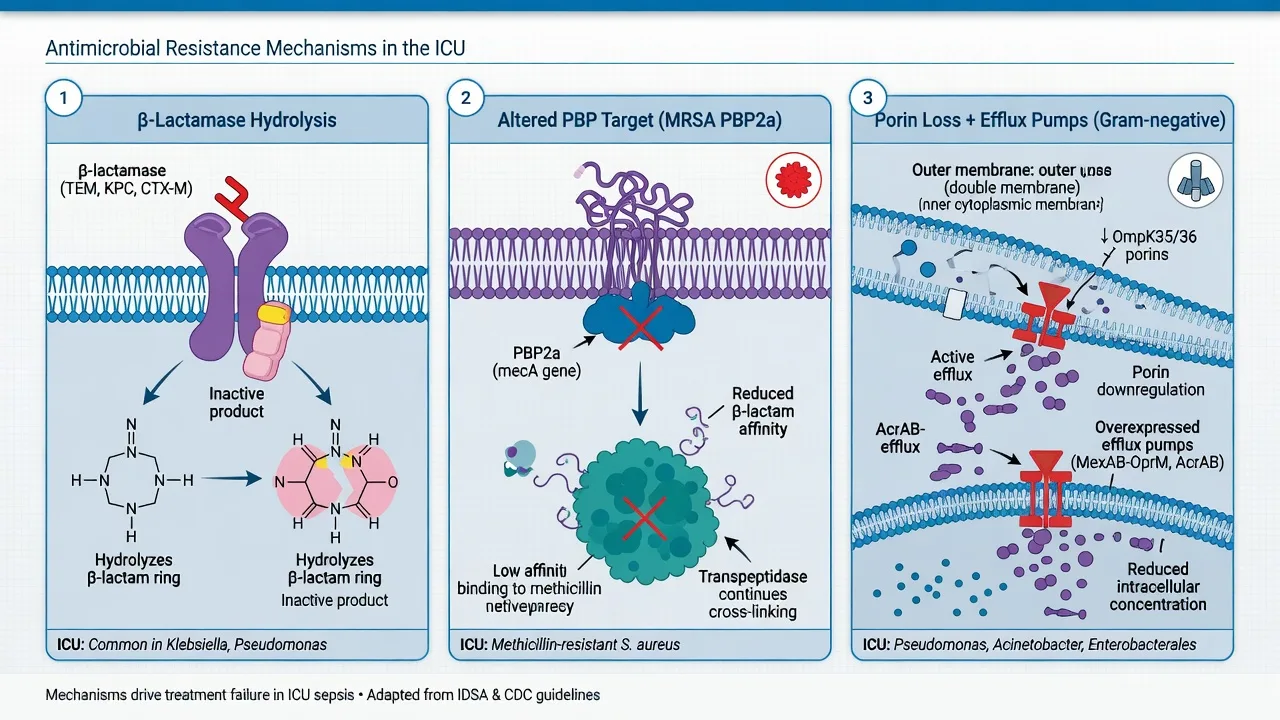
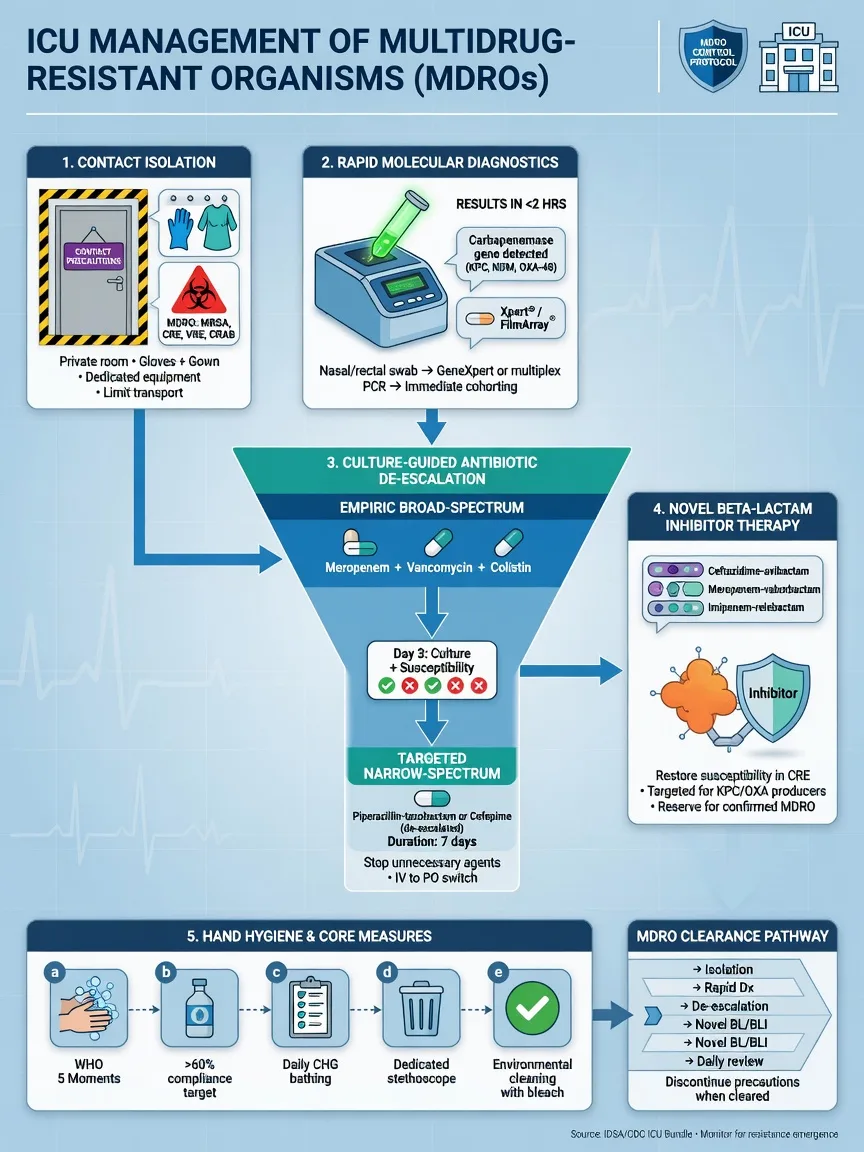
Key resistant organisms in ICU
| Organism | Resistant to | Treatment | Mortality |
|---|---|---|---|
| ESBL (E. coli, Klebsiella) | Penicillins, cephalosporins | Carbapenem (meropenem) | 15-30% (bacteraemic) |
| CRE (KPC, NDM, OXA-48) | Carbapenems + most others | Colistin, ceftazidime-avibactam, meropenem-vaborbactam | 40-50% |
| MRSA | Beta-lactams (penicillins, cephalosporins, carbapenems) | Vancomycin, linezolid, daptomycin | 15-25% (bacteraemic) |
| VRE | Vancomycin | Linezolid, daptomycin | 20-30% (bacteraemic) |
| MDR Pseudomonas | Multiple classes | Colistin, ceftolozane-tazobactam, ceftazidime-avibactam | 20-40% |
| Candida auris | Multiple antifungals | Echinocandin (often resistant — check susceptibility) | 30-60% |
Approach to suspected resistant infection in ICU
- Assess risk factors for resistance — previous antibiotic exposure, hospitalisation (>5 days), healthcare-associated, known colonisation, transfer from another facility/country, immunocompromised, indwelling devices
- Start EMPIRIC broad-spectrum — cover likely organisms + local resistance patterns. If high risk: meropenem + vancomycin ± aminoglycoside/colistin. Within 1h for sepsis
- Send cultures BEFORE antibiotics (if possible) — blood, urine, sputum, wound, line tips. Include: molecular (PCR for resistance genes), susceptibility testing
- Review at 48-72h — when cultures available. DE-ESCALATE: narrow to specific organism. STOP if no infection
- Infection control — isolate (contact precautions for MDR organisms). Hand hygiene. Cohorting. Environmental cleaning. Notify public health (CRE — reportable)
- Duration — shortest effective course (4-7 days for most). PCT-guided (stop when <0.5 or falls ≥80%)
ESBL — Extended-Spectrum Beta-Lactamases
Extended-Spectrum Beta-Lactamases (ESBLs) are enzymes produced by gram-negative bacteria that hydrolyse the oxyimino-cephalosporins (cefotaxime, ceftriaxone, ceftazidime) and the aminopenicillins, conferring broad resistance. They are Ambler class A (and some class D) serine beta-lactamases, inhibited in vitro by clavulanic acid. The hallmark organisms are Escherichia coli and Klebsiella pneumoniae, though ESBL genes spread readily via plasmids to other Enterobacteriaceae (Proteus, Enterobacter, Serratia) and even non-fermenters. The genes are usually carried on large conjugative plasmids that co-harbour resistance determinants for aminoglycosides, fluoroquinolones and cotrimoxazole, so the host strain is frequently multidrug-resistant and leaves only the carbapenems as reliably active.[2] }
ESBL enzyme families — TEM, SHV and the dominant CTX-M
| Family | Origin / characteristic | Hydrolyses | Epidemiology |
|---|---|---|---|
| CTX-M (now dominant worldwide) | cefotoxaMase — high activity vs cefotaxime | Cefotaxime > ceftazidime; oxyimino-cephalosporins | Global epidemic since 2000s; CTX-M-15 and CTX-M-14 most prevalent; community E. coli (UTI, bacteraemia) |
| TEM (extended-spectrum mutants) | Temoneira; single/few AA substitutions extend spectrum | Cefotaxime, ceftazidime, pip-tazo variable | Historic; declining relative to CTX-M |
| SHV (extended-spectrum mutants) | Sulphydryl variant; mainly Klebsiella | Cefotaxime, ceftazidime | Klebsiella spp., nosocomial |
| PER, VEB, GES | Less common ESBLs | Cephalosporins, some carbapenems (GES) | Regional (Middle East, Asia) |
CTX-M has displaced TEM/SHV as the globally dominant ESBL — driven by successful clones (E. coli ST131) and broad plasmid dissemination. CTX-M-15 is the single most prevalent ESBL worldwide and the engine behind the rise of community-acquired ESBL E. coli infections (urinary tract, pyelonephritis, bacteraemia, intra-abdominal).[2] }
Clinical consequence — the inoculum effect. Even when an ESBL-producer tests susceptible to a cephalosporin in vitro, the high bacterial inoculum at a deep infection site (pneumonia, abscess, bacteraemia) overwhelms the enzyme's inhibition, leading to clinical failure. Cephalosporins and piptazo are therefore NOT recommended for serious ESBL infections regardless of susceptibility — a carbapenem is preferred. MERINO confirmed this for piptazo in bacteraemia.[7] }
ESBL infection management in the ICU
- Recognise the likelihood — ceftriaxone-resistant E. coli or Klebsiella on preliminary susceptibility; UTI/bacteraemia with recent healthcare or antibiotic exposure; travel to high-prevalence region
- Empiric therapy for severe/septic presentation — carbapenem (meropenem 1 g q8h or ertapenem 1 g OD for stable, non-Pseudomonas cover). Add vancomycin/linezolid if MRSA risk
- Source control — drain abscess, remove infected lines, relieve obstruction (often the driver of refractory ESBL bacteraemia)
- Confirm susceptibility — await full carbapenem MIC; ESBL strains usually remain carbapenem-susceptible
- De-escalation options — for uncomplicated cystitis: nitrofurantoin, cotrimoxazole (if susceptible) may suffice. For pyelo/bacteraemia/abdo: keep carbapenem. Oral step-down to cotrimoxazole/ciprofloxacin possible once susceptibilities and clinical response confirmed
- Duration — 7 days for uncomplicated bacteraemia; longer for persistent source or endovascular infection. PCT guidance safe for stopping
CRE — Carbapenem-Resistant Enterobacteriaceae
Carbapenem-Resistant Enterobacteriaceae (CRE) are the most urgent AMR threat in critical care — mortality of confirmed bacteraemia approaches 40–50%. Resistance is overwhelmingly driven by carbapenemases, mobile beta-lactamases that hydrolyse virtually all beta-lactams including the carbapenems. The Ambler classification sorts them by molecular class, and class dictates treatment: this is the single most important concept for CRE.[3] }
Carbapenemase classes (Ambler) — what they are and what kills them
| Enzyme | Ambler class | Typical species | Geographic epicentre | Avibactam? | Vaborbactam? | Aztreonam? |
|---|---|---|---|---|---|---|
| KPC (K. pneumoniae carbapenemase) | A (serine) | Klebsiella, E. coli | USA, Italy, Greece, Israel, global spread | ✅ Active | ✅ Active | ❌ (hydrolysed) |
| NDM (New Delhi metallo-β-lactamase) | B (metallo) | K. pneumoniae, E. coli, Acinetobacter | South Asia, Balkans, global | ❌ Inactive | ❌ Inactive | ✅ Not hydrolysed — combine with avibactam |
| VIM (Verona integron-encoded MBL) | B (metallo) | Pseudomonas, Klebsiella, E. coli | Greece, Mediterranean | ❌ | ❌ | ✅ (use with avibactam) |
| IMP (imipenemase MBL) | B (metallo) | Pseudomonas, Acinetobacter, Enterobacteriaceae | Japan, SE Asia | ❌ | ❌ | ✅ (use with avibactam) |
| OXA-48-like | D (serine) | K. pneumoniae, E. coli | Turkey, North Africa, Europe | ✅ Active | ❌ Weak | ❌ (hydrolysed) |
The key therapeutic rule: serine carbapenemases (KPC, OXA-48) are targeted by novel BL/BLI combinations (ceftaz-avibactam, mero-vaborbactam), while metallo-β-lactamases (NDM, VIM, IMP) are NOT — they require colistin, tigecycline, or the aztreonam-avibactam combination (aztreonam is intrinsically stable to MBLs because it is a monobactam, and avibactam protects it from co-produced ESBLs/AmpC).[13] }
Novel beta-lactam / beta-lactamase inhibitor combinations for CRE and MDR-GNB
| Agent | Active against | NOT active against | Key use |
|---|---|---|---|
| Ceftazidime-avibactam | Class A (KPC, ESBL, CTX-M), class C (AmpC), some class D (OXA-48) | Class B MBLs (NDM, VIM, IMP) | KPC & OXA-48 CRE; MDR Pseudomonas |
| Meropenem-vaborbactam | Class A (KPC, ESBL, AmpC) | MBLs, OXA-48 | KPC CRE (cUTI, HAP/VAP, bacteraemia) |
| Imipenem-relebactam | Class A (KPC), class C (AmpC) | MBLs, OXA-48 | KPC CRE; MDR Pseudomonas |
| Ceftolozane-tazobactam | Pseudomonas (potent); some ESBL | KPC, MBLs, OXA-48 | MDR/XDR Pseudomonas (not CRE) |
| Aztreonam-avibactam | MBLs (NDM, VIM, IMP) + co-produced ESBL/AmpC | OXA-48 (variable), Acinetobacter | NDM/VIM/IMP CRE — the preferred agent |
| Cefiderocol | Siderophore cephalosporin; broad incl. MBLs, Acinetobacter, Stenotrophomonas | Some KPC variants | MBL CRE, carbapenem-resistant Acinetobacter |
CRE treatment algorithm — define the carbapenemase, then treat
- Confirm CRE and send carbapenemase typing (PCR or phenotypic: Carba NP, mCIM) — results take hours (PCR) to days; start empirically
- Empiric therapy (severe infection / septic shock) — combination therapy while awaiting mechanism: e.g. ceftazidime-avibactam (covers KPC + OXA-48) PLUS an aminoglycoside (gentamicin/tobramycin/amikacin per susceptibility) or polymyxin; add tigecycline for source (intra-abdominal) coverage. If local NDM prevalence high: add aztreonam (MBL cover) — consider aztreonam + ceftaz-avibactam upfront
- KPC confirmed → ceftazidime-avibactam 2.5 g q8h (extended infusion) OR meropenem-vaborbactam 4 g q8h — both preferred over colistin (lower mortality, less nephrotoxicity). Monotherapy acceptable if susceptible and source-controlled
- OXA-48 confirmed → ceftazidime-avibactam (the only reliable BL/BLI; vaborbactam/relebactam do NOT cover OXA-48)
- NDM / VIM / IMP confirmed → aztreonam 2 g q8h + ceftazidime-avibactam (avibactam protects aztreonam from co-produced ESBL/AmpC). Alternatives: cefiderocol, colistin + meropenem + aminoglycoside combination
- Risk-stratify with INCREMENT-CPE score (see below) to decide mono- vs combination therapy
- Source control + remove infected lines — paramount; without it antibiotics usually fail
- Duration — 7–14 days; longer for undrained source, endovascular, or immunocompromise
The INCREMENT-CPE score (Gutiérrez-Gutiérrez, Mayo Clin Proc 2016) risk-stratifies mortality in carbapenemase-producing Enterobacteriaceae bacteraemia and guides whether combination therapy is needed. High score (>8) → mortality 50%+ and combination therapy (≥2 active agents) improves survival; low score (≤7) → monotherapy of an active agent is sufficient.[10] }
Combination vs monotherapy. AIDA (Paul, Lancet Infect Dis 2018) found colistin-meropenem combination was NOT superior to colistin monotherapy for carbapenem-resistant gram-negative infections overall. However, INCREMENT and meta-analyses suggest combination therapy benefits the sickest (high-severity, high-INCREMENT-score) patients. Plazomicin (CARE, McKinnell NEJM 2019) showed a numerally lower mortality than colistin in CRE bacteraemia — a treatment option when active. The modern trend: use a novel BL/BLI as monotherapy when susceptibility allows; reserve combination for shock, high-inoculum, or no active single agent.[11] }[12] }
MRSA — Methicillin-Resistant Staphylococcus aureus
MRSA is resistant to all beta-lactam antibiotics (penicillins, cephalosporins, carbapenems) via the mecA (or mecC) gene encoding a low-affinity penicillin-binding protein (PBP2a / PBP2') that cannot be inhibited by beta-lactam ring binding. Resistance is therefore all-or-nothing across the entire beta-lactam class. ICUs see both healthcare-associated (HA-MRSA) and community (CA-MRSA) strains; CA-MRSA (USA300) carries Panton-Valentine leukocidin and causes necrotising pneumonia and skin/soft-tissue infection. The mecA PCR (nasal) is the standard colonisation screen; a negative nasal PCR has high negative predictive value for MRSA pneumonia and supports withholding empiric MRSA cover.[5] }
Anti-MRSA antibiotics compared
| Agent | Mechanism | Lung penetration | Key toxicity / caveat | Best for |
|---|---|---|---|---|
| Vancomycin | Glycopeptide — cell wall | Moderate | Nephrotoxicity (esp. with piperacillin-tazobactam); AUC₂₄ 400–600 target | First-line MRSA bacteraemia, endocarditis, osteo; pneumonia |
| Linezolid | Oxazolidinone — 50S ribosome | Excellent (epithelial lining fluid > serum) | Thrombocytopenia >14 d, serotonin syndrome (serotonergic drugs), peripheral/optic neuropathy (long courses) | MRSA pneumonia (ZEPHyR — superior to vanco); VRE |
| Daptomycin | Lipopeptide — membrane depolarisation | Poor | Inactivated by pulmonary surfactant — NEVER for pneumonia; myopathy (monitor CK); statin interaction; eosinophilic pneumonia (rare) | MRSA bacteraemia/endocarditis, skin/soft-tissue; VRE |
| Ceftaroline | 5th-gen cephalosporin — PBP2a binding | Good | Generally well tolerated; low seizure risk vs other cephalosporins | MRSA pneumonia/skin; the only beta-lactam active vs MRSA |
| Teicoplanin | Glycopeptide (long half-life) | Moderate | Hypersensitivity; less nephrotoxic than vanco | MRSA (where available); once-daily dosing |
| Clindamycin | Lincosamide — 50S | Good | C. difficile; inducible resistance (D-test) — do not use if positive | CA-MRSA skin/soft-tissue; toxin suppression in TSS |
| TMP-SMX / doxycycline | Folate / 30S | Good | Skin reactions, hyperkalaemia (TMP); photosensitivity | Oral step-down; CA-MRSA SSTI |
Vancomycin monitoring: trough vs AUC₂₄ (2020 consensus)
| Parameter | Old (trough-only) | Current (AUC-guided) |
|---|---|---|
| Target | Trough 15–20 mg/L | AUC₂₄ 400–600 mg·h/L |
| Method | Pre-dose trough | Bayesian dosing (2 timed levels) or trough-only Bayesian |
| Why change | Trough is a poor surrogate; high troughs ↑ nephrotoxicity without better efficacy | AUC best correlates with efficacy (≥400) AND limits nephrotoxicity (<600) |
| Nephrotoxicity | Higher at trough >20, especially with concurrent piptazo | Lower with AUC-guided dosing |
| In MRSA bacteraemia | Trough 15–20 | AUC₂₄ 400–600 (minimum 400); aim for higher end in severe/endocarditis |
| Recommended since | — | Rybak 2020 consensus (AJHP) — AUC over trough |
The 2020 IDSA/ASHP/etc consensus (Rybak) recommends AUC₂₄ 400–600 mg·h/L for serious MRSA infection, with Bayesian-guided monitoring preferred over trough-only dosing. AUC monitoring reduces nephrotoxicity without compromising efficacy — particularly relevant in the ICU where vanco-piptazo co-administration markedly raises AKI risk.[9] }
Vancomycin AUC₂₄-guided dosing in ICU
- Choose target AUC₂₄ — 400–600 mg·h/L (lower end for uncomplicated; 500–600 for bacteraemia/endocarditis)
- Load — 20–35 mg/kg actual body weight (round to nearest 250 mg) for severe infection; gives rapid therapeutic exposure
- Maintenance — 15–20 mg/kg q8–12h (interval by renal function); use extended infusion if high MIC
- First levels — draw 2 post-dose levels (e.g. 2–4 h and 6–12 h after first dose) within first 24–48 h; OR a trough + Bayesian software
- Calculate AUC via Bayesian calculator / pharmacist; adjust dose to keep AUC₂₄ in 400–600
- Recheck — every 2–3 days (more often if renal changing, AKI, on CRRT); re-draw levels after every dose change or significant creatinine change
- De-escalate / stop — when MRSA excluded (negative cultures / negative mecA PCR) or clinical cure achieved
- Beware interactions — concurrent piperacillin-tazobactam dramatically increases vanco-AKI; consider alternative (cefepime) if possible. Loop diuretics, amphotericin, IV contrast also additive
ZEPHyR trial (Wunderink, Clin Infect Dis 2012). In the largest RCT of definite MRSA nosocomial pneumonia, linezolid was superior to vancomycin for clinical cure at end of study and showed a trend to lower 60-day mortality. Linezolid's superior epithelial lining fluid penetration and the difficulty achieving adequate vancomycin AUC in infected lung drive this benefit. Linezolid is therefore preferred for MRSA HAP/VAP; vancomycin remains first-line for MRSA bacteraemia/endocarditis where linezolid should NOT be used (linezolid is bacteriostatic and inferior in bacteraemia).[8] }
Ceftaroline is the only beta-lactam active against MRSA (binds PBP2a) and an option for MRSA CAP/HAP and skin infection, but is NOT a first-line agent for MRSA bacteraemia/endocarditis.[15] }
VRE — Vancomycin-Resistant Enterococci
Vancomycin-resistant enterococci (overwhelmingly Enterococcus faecium) acquire resistance via the vanA (high-level, inducible, transferable — vancomycin MIC ≥32 and also teicoplanin-resistant) or vanB (variable-level, often teicoplanin-susceptible) operons. These replace the normal D-Ala-D-Ala peptidoglycan terminus with D-Ala-D-Lac, eliminating vancomycin's binding target. vanA/VRE spread clonally and via plasmids within ICUs — risk factors mirror CRE (broad-spectrum antibiotic exposure, long stay, haemodialysis, neutropenia, transplant, central venous catheter).[4] }
VRE (E. faecium) treatment options
| Agent | Dose | Notes |
|---|---|---|
| Daptomycin | 8–10 mg/kg q24h (higher than the 6 mg/kg S. aureus dose) | First-line for VRE bacteraemia; bactericidal; monitor CK; NOT for pneumonia (surfactant inactivation); combine with amp/cph for refractory bacteraemia (daptomycin MIC creep — 'seesaw effect') |
| Linezolid | 600 mg q12h (IV/PO) | BacteriOSTATIC; good tissue/oral bioavailability (100%); works for pneumonia; thrombocytopenia >14 days (check FBC); serotonin syndrome risk |
| Ampicillin (if susceptible, ~10–20% of VRE-faecium) | 2 g q4h high-dose ± gentamicin/sulbactam | Only if ampicillin-susceptible; many VRE are AmpC/ESBL co-resistant |
| Quinupristin-dalfopristin | 7.5 mg/kg q8h | E. faecium only (not E. faecalis); infusion pain, arthralgia, myalgia; CYP3A4 interactions; rarely used now |
| Tigecycline | 100 mg load → 50 mg q12h | Bacteriostatic; poor serum levels — NOT for bacteraemia; tissue/intra-abdominal source |
| Daptomycin + β-lactam synergy | daptomycin + ceftriaxone/ampicillin | For refractory/high-inoculum VRE bacteraemia; 'seesaw' lowers daptomycin MIC |
Antimicrobial stewardship in the ICU
Antimicrobial stewardship — the coordinated set of interventions to optimise antibiotic use — is the single most effective lever to slow AMR emergence, reduce C. difficile and drug adverse events, and shorten ICU stay. The ICU is the highest-antibiotic-density environment in the hospital (50–70% of patients receive antibiotics at any time), so stewardship impact is greatest here.[6] }
Core elements (the 'antibiotic time-out'). Every ICU antibiotic prescription should trigger an explicit stop / narrow / continue / switch decision at 48–72 hours (the 'antibiotic time-out'). The bundle: (1) empiric broad-spectrum within 1 h of sepsis recognition, (2) cultures before antibiotics when feasible, (3) daily review with pharmacist/microbiology, (4) de-escalate on susceptibility, (5) IV-to-oral switch when responding, (6) shortest effective duration (PCT-guided — stop at PCT <0.5 ng/mL or ≥80% fall), (7) avoid redundant/double anaerobic cover, (8) dose optimisation — extended/continuous infusion of beta-lactams, therapeutic drug monitoring (vancomycin AUC, aminoglycosides).[6] }
ICU antimicrobial stewardship bundle (daily bedside)
- Allergy review — confirm true beta-lactam allergy vs intolerances; unlock cefepime/piperacillin where crossover risk is low
- Empiric therapy — local antibiogram-guided; cover likely organism + resistance risk; within 1 h of septic shock recognition
- Cultures first — blood (≥2 sets), urine, sputum, wound, line tips; send before antibiotics if feasible without delaying >45 min
- 48–72 h antibiotic time-out — does the patient still have infection? Which organism? What susceptibilities? → STOP, NARROW, or CONTINUE
- De-escalation — meropenem → ceftriaxone; vancomycin → flucloxacillin; piptazo → amoxicillin-clavulanate once organism known
- IV-to-oral switch — when afebrile, improving, GI tract functional (bioavailability: linezolid, fluoroquinolones, cotrimoxazole, fluconazole ≥90%)
- Dose optimisation — extended infusion beta-lactams; AUC vanco; once-daily aminoglycoside; renally adjust (and re-adjust on CRRT/HDF)
- Duration — 7 days for most; PCT-guided; longer only for endocarditis, undrained abscess, S. aureus bacteraemia, neutropenia, fungaemia
- Audit & feedback — monthly antibiogram, resistance trends, DOT/DDD metrics; pharmacist-led review
- Infection prevention integration — hand hygiene, contact precautions, decolonisation, catheter-care bundles — stewardship and prevention are inseparable
SAQ — Carbapenem-resistant Enterobacteriaceae bacteraemia and MRSA pneumonia
SAQ — Carbapenem-resistant Klebsiella pneumoniae bacteraemia
10 minutes · 10 marks
A 67-year-old man is transferred to your ICU from an overseas hospital (recently admitted in Greece) with hospital-acquired pneumonia and septic shock. He is on noradrenaline 0.4 mcg/kg/min, ventilated, lactate 5.2. Blood cultures grow Klebsiella pneumoniae resistant to all beta-lactams including carbapenems, with a positive modified Hodge test. The isolate is resistant to meropenem (MIC 32), susceptible to colistin and tigecycline, and ceftazidime-avibactam susceptibility is pending. He has an INCREMENT-CPE score of 8.
SAQ — MRSA ventilator-associated pneumonia and vancomycin AUC monitoring
10 minutes · 10 marks
A 72-year-old man is ventilated in ICU on day 9 for severe CAP. He develops a new fever, purulent ET aspirate, rising WCC and new infiltrates — ventilator-associated pneumonia. BAL grows MRSA with vancomycin MIC 1.5 mg/L. He is also receiving piperacillin-tazobactam for a concomitant Gram-negative infection. His creatinine has risen from 90 to 160 micromol/L.
Clinical pearls
Red flags
Prognosis
MERINO trial (Harris 2018, JAMA) — meropenem vs piperacillin-tazobactam for ESBL bacteraemia
RCT: 378 patients with ESBL-producing E. coli or Klebsiella bacteraemia. Meropenem vs piperacillin-tazobactam.
- Primary outcome (30-day mortality): meropenem 4% vs piptazo 12% (p=0.37 — not statistically significant, but CLINICALLY important — piptazo failed more often)
- Trial STOPPED EARLY: piptazo arm had MORE treatment failures (clinical/ microbiological failure)
- CONCLUSION: Meropenem PREFERRED for ESBL bacteraemia. Piperacillin-tazobactam may fail (inoculum effect — despite in vitro susceptibility) [1]
CRE outcomes: mortality 40-50% (even with colistin). Ceftazidime-avibactam (for KPC): mortality 20-30% (better than colistin). MRSA bacteraemia: mortality 15-25% (with appropriate therapy). Vancomycin MIC creep (>1.5) → worse outcomes (consider alternative — daptomycin, linezolid).
INCREMENT-CPE score (Gutiérrez-Gutiérrez 2016, Mayo Clin Proc) — mortality prediction in CRE bacteraemia
Multicentre cohort: 437 patients with carbapenemase-producing Enterobacteriaceae bloodstream infection.
- Variables: Pitt bacteraemia score (severity), source of bacteraemia (respiratory worst), Charlson comorbidity index, solid-organ/haematopoietic transplant, prior colonisation, inappropriate empiric therapy
- Strata: low risk (score ≤7) vs high risk (>8) — mortality splits ~20% vs 50%+
- Use: identifies patients who benefit from combination therapy (≥2 in-vitro active agents) vs those for whom active monotherapy suffices
- Take-home: a decision aid for mono- vs combination therapy in CRE bacteraemia — high score → escalate to combination
ZEPHyR trial (Wunderink 2012, Clin Infect Dis) — linezolid vs vancomycin for MRSA nosocomial pneumonia
RCT: 1,225 patients with definite MRSA nosocomial pneumonia. Linezolid 600 mg q12h vs vancomycin 15 mg/kg q12h (trough 15–20).
- Primary outcome (per-protocol clinical cure at end of study): linezolid 58% vs vancomycin 47% (p=0.042 — statistically significant)
- 60-day mortality: no significant difference, but trend favouring linezolid
- Conclusion: Linezolid superior to vancomycin for MRSA HAP/VAP — driven by superior epithelial lining fluid penetration and difficulty achieving adequate vancomycin AUC in infected lung
- Practice: linezolid preferred for definite MRSA pneumonia; vancomycin remains first-line for MRSA bacteraemia/endocarditis where linezolid (bacteriostatic) is inferior
AIDA trial (Paul 2018, Lancet Infect Dis) — colistin monotherapy vs combination for carbapenem-resistant GN
RCT: 406 patients with carbapenem-resistant gram-negative infections (mostly Acinetobacter, Klebsiella). Colistin alone vs colistin + meropenem.
- Primary outcome (14-day clinical success): no difference between arms
- Mortality: no difference (colistin 43% vs combination 45%)
- Nephrotoxicity: no significant difference
- Conclusion: adding meropenem to colistin did NOT improve outcomes for carbapenem-resistant gram-negatives overall
- Modern context: does NOT invalidate combination therapy — sickest patients (high INCREMENT-CPE) and those with a single active agent may still benefit; modern novel BL/BLIs (ceftaz-avibactam, mero-vaborbactam, cefiderocol) as monotherapy are preferred when active
CARE trial (McKinnell 2019, NEJM) — plazomicin vs colistin for CRE
RCT (Bayesian adaptive): 39 patients with CRE bacteraemia. Plazomicin (next-gen aminoglycoside) vs colistin (both ± meropenem or tigecycline).
- Primary outcome: lower 28-day mortality with plazomicin vs colistin (numerically; small trial)
- Nephrotoxicity: less with plazomicin
- Conclusion: plazomicin is an option for CRE bacteraemia — particularly as a second active agent in combination; less nephrotoxic than colistin
SHIELD trial (Kaye 2018, JAMA) — meropenem-vaborbactam for complicated UTI
RCT: 506 patients with cUTI (including acute pyelonephritis). Meropenem-vaborbactam vs piperacillin-tazobactam.
- Primary outcome: meropenem-vaborbactam non-inferior for clinical cure / microbial eradication
- CRE subset: effective against KPC-producing Enterobacteriaceae
- Context: established efficacy of mero-vaborbactam; observational data support survival benefit vs best-available therapy in KPC bacteraemia/HAP
- Inactive against: NDM, OXA-48 (vaborbactam covers class A KPC + ESBL/AmpC only)
Vancomycin AUC consensus (Rybak 2020, AJHP) — therapeutic monitoring for serious MRSA infection
Joint consensus (IDSA, ASHP, SIDP, PIDS): revised vancomycin dosing and monitoring for serious MRSA infection.
- Target AUC₂₄: 400–600 mg·h/L (replaces trough-only 15–20 mg/L)
- Bayesian-guided monitoring preferred over trough-only dosing
- Why: AUC best correlates with efficacy (≥400) and reduces nephrotoxicity (<600); high troughs drive AKI without better kill
- Loading dose 20–35 mg/kg for severe infection; recheck with Bayesian software using 2 timed levels
- Caveat: concurrent piperacillin-tazobactam markedly increases vanco-AKI — consider cefepime
AMR mortality and treatment at a glance — exam summary
| Organism / scenario | Best therapy | Mortality (untreated/inadequate → appropriate) | Exam anchor |
|---|---|---|---|
| ESBL E. coli/Klebsiella bacteraemia | Carbapenem (meropenem) | 12% (piptazo, MERINO) → 4% (meropenem) | MERINO |
| KPC CRE bacteraemia | Ceftaz-avibactam OR meropenem-vaborbactam | 40–50% (colistin) → 20–30% (BL/BLI) | INCREMENT-CPE |
| NDM/VIM/IMP CRE bacteraemia | Aztreonam + ceftaz-avibactam OR cefiderocol | 40–50% | IDSA 2024 |
| OXA-48 CRE | Ceftazidime-avibactam | 30–40% | IDSA 2024 |
| MRSA HAP/VAP | Linezolid > vancomycin | 15–25% | ZEPHyR |
| MRSA bacteraemia/endocarditis | Vancomycin (AUC 400–600) ± daptomycin | 15–25% | Rybak 2020 |
| VRE (E. faecium) bacteraemia | Daptomycin 8–10 mg/kg or linezolid | 20–30% | — |
| MDR Pseudomonas | Ceftolozane-tazobactam or colistin | 20–40% | — |
| Candida auris | Echinocandin (if susceptible); ampho B | 30–60% | WHO priority |
References
- [1]Tacconelli E, Carrara E, Savoldi A, et al. Discovery, research, and development of new antibiotics: the WHO priority list of antibiotic-resistant bacteria and tuberculosis Lancet Infect Dis, 2018.PMID 29276051
- [2]Rodríguez-Baño J, Gutiérrez-Gutiérrez B, Machuca I, Pascual A. Treatment of Infections Caused by Extended-Spectrum-Beta-Lactamase-, AmpC-, and Carbapenemase-Producing Enterobacteriaceae Clin Microbiol Rev, 2018.PMID 29444952
- [3]Tzouvelekis LS, Markogiannakis A, Piperaki E, Souli M, Daikos GL. Treating infections caused by carbapenemase-producing Enterobacteriaceae Clin Microbiol Infect, 2014.PMID 24890393
- [4]Holmes AH, Moore LSP, Sundsfjord A, et al. Understanding the mechanisms and drivers of antimicrobial resistance Lancet, 2016.PMID 26603922
- [5]Rhee C, Kadri SS, Dekker JP, et al. Prevalence of Antibiotic-Resistant Pathogens in Culture-Proven Sepsis and Outcomes Associated With Inadequate and Broad-Spectrum Empiric Antibiotic Use JAMA Netw Open, 2020.PMID 32297949
- [6]Timsit JF, Bassetti M, Cremer O, et al. Rationalizing antimicrobial therapy in the ICU: a narrative review Intensive Care Med, 2019.PMID 30659311
- [7]Harris PNA, Tambyah PA, Lye DC, et al. Effect of Piperacillin-Tazobactam vs Meropenem on 30-Day Mortality for Patients With E coli or Klebsiella pneumoniae Bloodstream Infection and Ceftriaxone Resistance: A Randomized Clinical Trial JAMA, 2018.PMID 30208454
- [8]Wunderink RG, Niederman MS, Kollef MH, et al. Linezolid in methicillin-resistant Staphylococcus aureus nosocomial pneumonia: a randomized, controlled study Clin Infect Dis, 2012.PMID 22247123
- [9]Rybak MJ, Le J, Lodise TP, et al. Therapeutic monitoring of vancomycin for serious methicillin-resistant Staphylococcus aureus infections: A revised consensus guideline and review by the American Society of Health-System Pharmacists, the Infectious Diseases Society of America, the Pediatric Infectious Diseases Society, and the Society of Infectious Diseases Pharmacists Am J Health Syst Pharm, 2020.PMID 32191793
- [10]Gutiérrez-Gutiérrez B, Pérez-Galera S, Salamanca E, et al. A Predictive Model of Mortality in Patients With Bloodstream Infections due to Carbapenemase-Producing Enterobacteriaceae Mayo Clin Proc, 2016.PMID 27712635
- [11]McKinnell JA, Dwyer JP, Talbot GH, et al. Plazomicin for Infections Caused by Carbapenem-Resistant Enterobacteriaceae N Engl J Med, 2019.PMID 30786196
- [12]Paul M, Carrara E, Retamar P, Tångdén T, et al. Colistin alone versus colistin plus meropenem for treatment of severe infections caused by carbapenem-resistant Gram-negative bacteria: an open-label, randomised controlled trial Lancet Infect Dis, 2018.PMID 29456043
- [13]Tamma PD, Aitken SL, Bonomo RA, Mathers AJ, van Duin D, Clancy CJ. Infectious Diseases Society of America 2024 Guidance on the Treatment of Antimicrobial-Resistant Gram-Negative Infections Clin Infect Dis, 2024.PMID 39108079
- [14]Kaye KS, Bhowmick T, Metallidis S, et al. Effect of Meropenem-Vaborbactam vs Piperacillin-Tazobactam on Clinical Cure or Improvement and Microbial Eradication in Complicated Urinary Tract Infection: The TANGO I Randomized Clinical Trial JAMA, 2018.PMID 29486041
- [15]Duplessis C, Crum-Cianflone NF. Ceftaroline: A New Cephalosporin with Activity against Methicillin-Resistant Staphylococcus aureus (MRSA) Clin Med Rev Ther, 2011.PMID 21785568