ICU · Neurocritical Care
Meningitis and encephalitis in the ICU
Also known as Bacterial meningitis · Viral encephalitis · Herpes simplex encephalitis (HSE) · Empiric meningitis treatment · CSF analysis
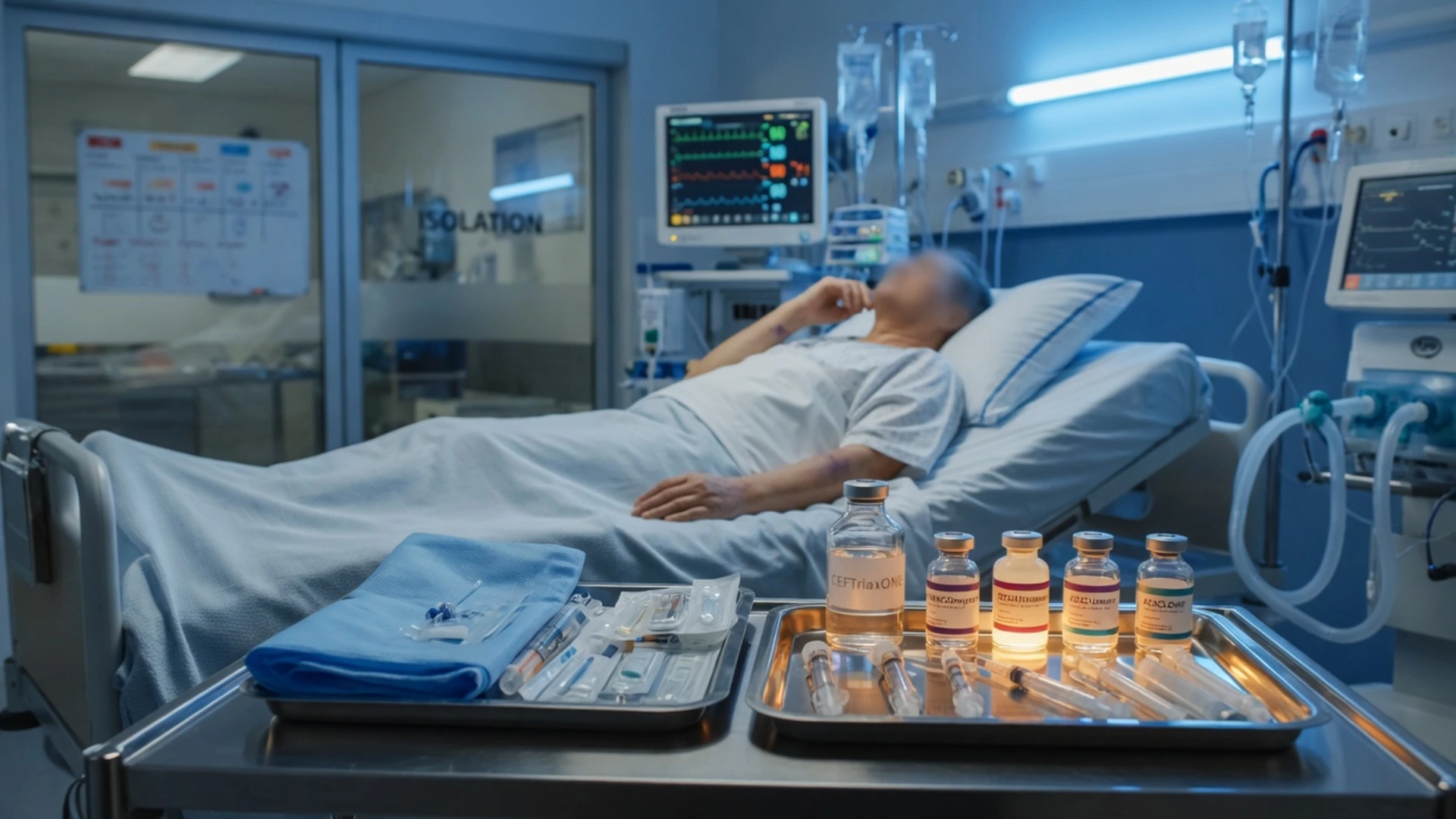
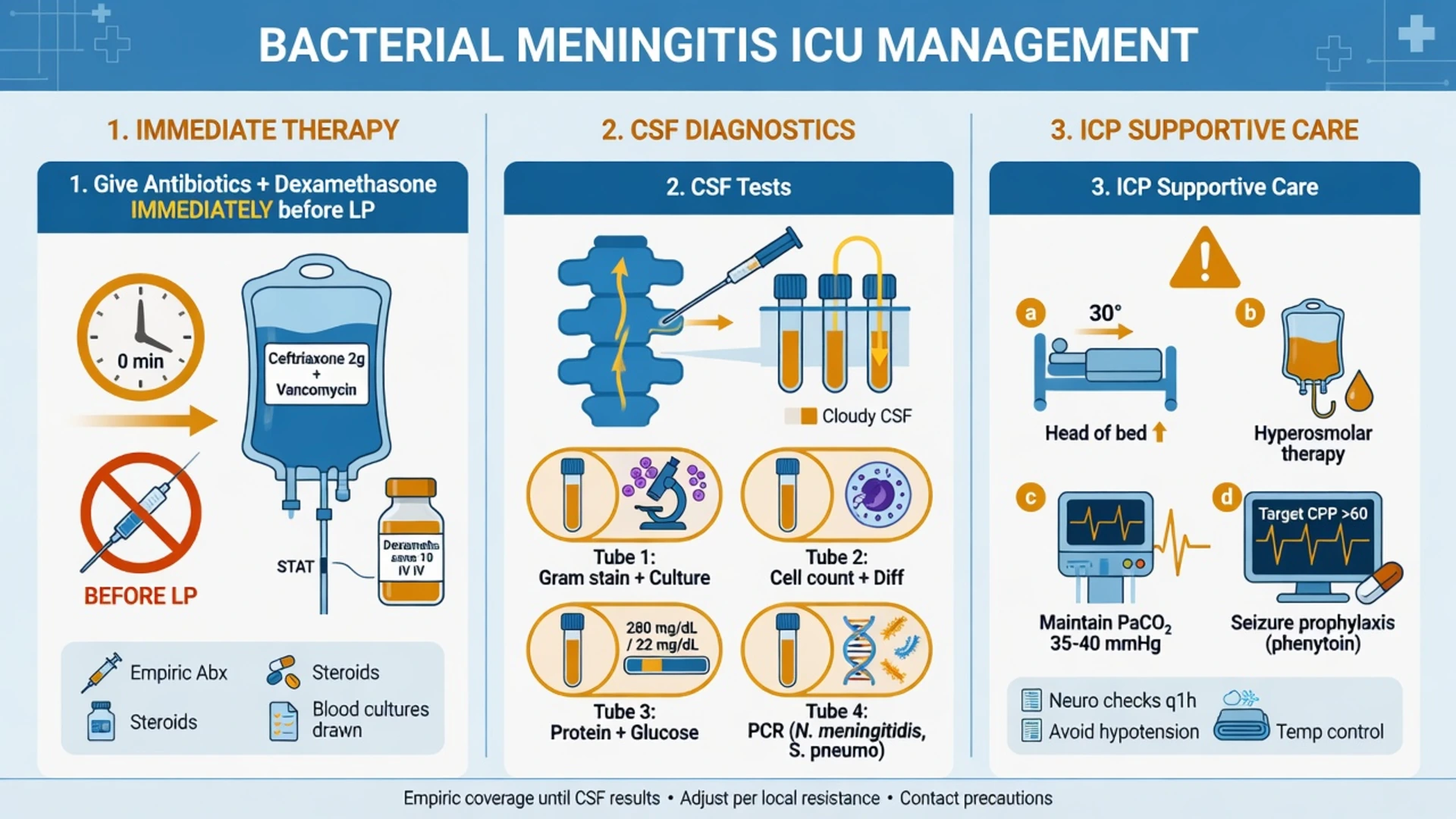
Bacterial meningitis and viral encephalitis are neurological emergencies. Bacterial meningitis: fever, headache, neck stiffness, altered mental status. Empiric antibiotics IMMEDIATELY (before LP if signs of raised ICP): ceftriaxone 2g IV + vancomycin + dexamethasone (before or with first antibiotic dose). Viral encephalitis: HSV is the most common treatable cause — acyclovir 10 mg/kg IV TDS while waiting for PCR. LP: send CSF for cell count, differential, protein, glucose, Gram stain, culture, viral PCR (HSV, VZV, enterovirus). NEVER delay antibiotics for LP or CT. Dexamethasone reduces mortality in pneumococcal meningitis (give before or with first antibiotic dose).
On this page & tools
Your progress
Saved locally on this device.
Target exams
Red flags
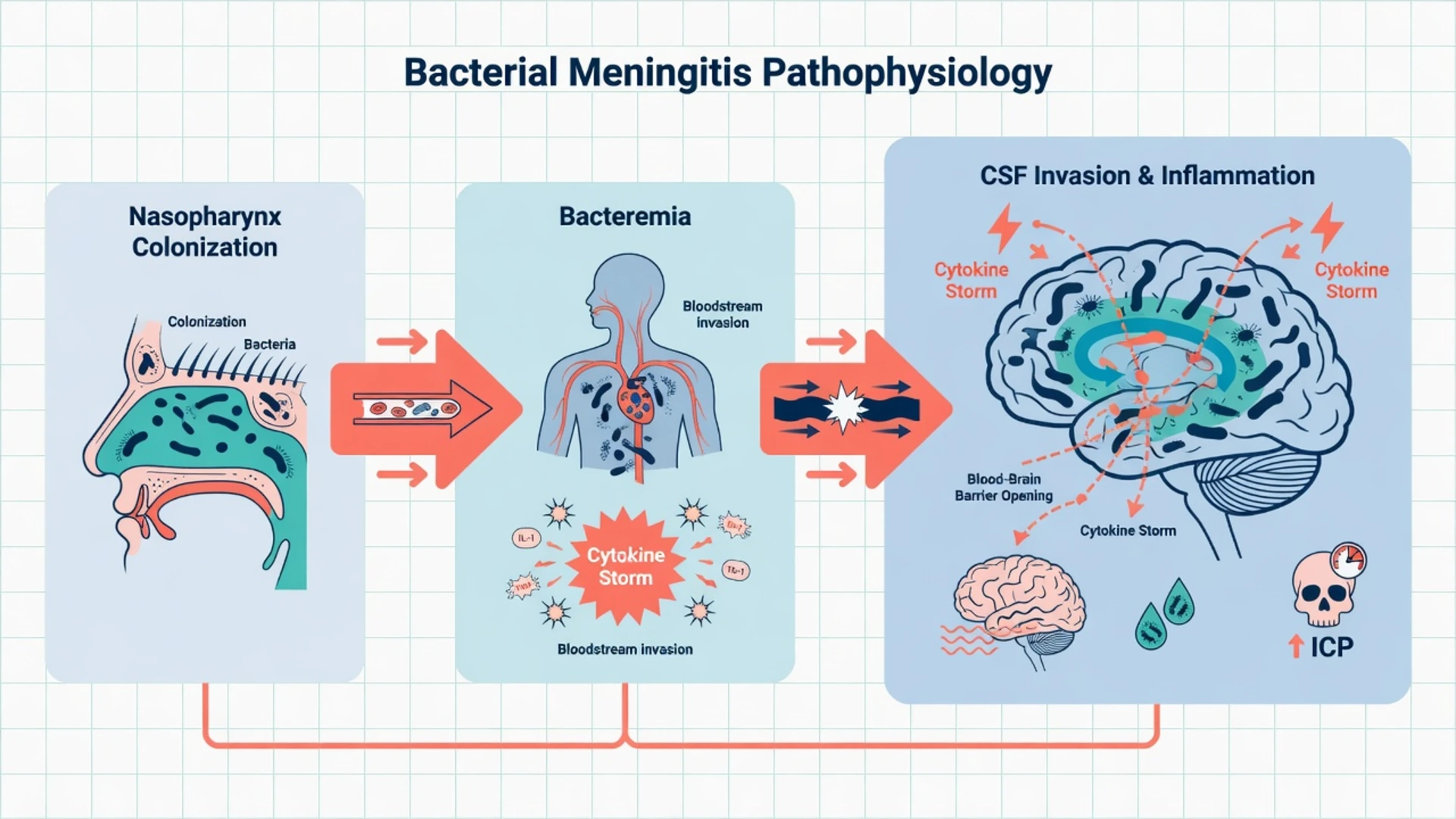
Pathophysiology
Clinical presentation and triage
Bacterial meningitis
Meningeal syndrome
- Classic triad: fever + neck stiffness + altered mental status — present in ~95% but all three in only ~44%
- Headache (severe, >90%), photophobia, nausea/vomiting
- Kernig sign (resistance to knee extension with hip flexed) and Brudzinski sign (neck flexion elicits hip/knee flexion) — specific but insensitive (~5-50%)
- Petechial/purpuric rash (meningococcaemia): progression over hours = medical emergency
- Seizures in ~15-30%, focal neurology in ~20-30%, coma in 5-10% at presentation
Viral encephalitis
Encephalopathic syndrome
- Triad: fever + headache + altered mental status (encephalopathy dominates over meningismus)
- Behavioural change, confusion, dysphasia/aphasia (temporal lobe — HSV)
- Seizures more common than in meningitis (~40-60% in HSV), often focal
- Movement disorders, ataxia, cranial nerve deficits depending on virus
- Herpes zoster rash (VZV), vesicles (HSV), enteroviral hand-foot-mouth = aetiological clues
Red flags for rapid deterioration
Mass effect / shock
- Rapidly progressive purpuric rash + shock = meningococcaemia (mortality up to 40%)
- Rapidly falling GCS, Cushing reflex (hypertension + bradycardia), pupillary asymmetry = impending herniation
- Seizure at onset: increases odds of structural lesion — CT before LP
- Immunocompromised host: may have blunted fever/meningismus, atypical organisms (Listeria, Cryptococcus)
Bacterial meningitis
Microbiology
Common pathogens
By age
- Adults: Streptococcus pneumoniae (#1), Neisseria meningitidis (#2)
- Listeria monocytogenes: age >50, immunocompromised, pregnancy — add ampicillin
- Haemophilus influenzae: unvaccinated, post-neurosurgery
- Nosocomial: Staphylococcus aureus, coagulase-negative staph, Gram-negative bacilli
CSF findings — bacterial
Classic pattern
- White cells: HIGH (100-10,000), NEUTROPHIL-predominant
- Protein: elevated (>0.5 g/L, often >1.0)
- Glucose: LOW (<2.2 mmol/L or CSF:serum ratio <0.4)
- Gram stain: positive in 60-90% (identifies organism)
- Opening pressure: elevated (>20 cm H2O)
Empiric antibiotic regimen
Bacterial meningitis treatment protocol
Dexamethasone 10 mg IV — BEFORE or WITH first antibiotic
Give dexamethasone 10 mg IV every 6 hours x 4 days. MUST be given before or with the first antibiotic dose — benefit is lost if given after antibiotics. Mechanism: reduces inflammatory cascade from bacterial lysis (especially pneumococcal). Cochrane: reduces mortality and neurological sequelae in pneumococcal meningitis. Continue only if proven S. pneumoniae.<Cite id="3" />
Empiric antibiotics — IMMEDIATELY
Ceftriaxone 2g IV BD + vancomycin (loading 25-30 mg/kg, then 15-20 mg/kg BD, target trough 15-20). Add ampicillin 2g IV Q4H if Listeria risk (age >50, immunocompromised, pregnancy). Add acyclovir 10 mg/kg IV TDS if encephalitis features. Do NOT wait for LP or CT — give empiric therapy first.
CT before LP if high risk
Perform CT before LP ONLY if: immunocompromised (HIV, immunosuppression), new-onset seizures, papilloedema, decreased GCS, focal neurological deficit, or recent neurosurgery. If CT needed, give antibiotics FIRST, then CT, then LP. Do NOT delay antibiotics for imaging.
Lumbar puncture
Send CSF for: opening pressure, cell count + differential, protein, glucose (paired with serum glucose), Gram stain, bacterial culture, viral PCR (HSV-1/2, VZV, enterovirus). Hold samples for additional testing if needed. If LP cannot be performed (anticoagulated, coagulopathy, unstable), treat empirically and LP later.
Targeted therapy based on organism
S. pneumoniae: ceftriaxone + vancomycin (14 days). N. meningitidis: ceftriaxone alone (7 days). Listeria: ampicillin + gentamicin (21 days). H. influenzae: ceftriaxone (7 days). De-escalate based on culture results.
Organism-specific targeted therapy
Streptococcus pneumoniae
Gram-positive diplococcus
- #1 cause in adults; >50% of community-acquired bacterial meningitis
- Risk: otitis/sinusitis, pneumonia, asplenia, complement deficiency, cochlear implant
- Penicillin/cephalosporin resistance common — empirically add vancomycin
- Targeted: ceftriaxone 2g IV BD (+ vancomycin if MIC high); duration 10-14 days
- Adjunctive dexamethasone proven to reduce mortality — continue 4 days
- Mortality 20-30%; highest of the common pathogens
Neisseria meningitidis
Gram-negative diplococcus
- Young adults, military barracks, university halls; complement/terminal pathway deficiency
- Petechial/purpuric rash, rapid septic shock (Waterhouse-Friderichsen, adrenal haemorrhage)
- Targeted: ceftriaxone 2g IV BD (or penicillin G if susceptible); duration 7 days
- Mortality ~10%; morbidity from limb loss/sequelae in survivors of meningococcaemia
- Chemoprophylaxis of close contacts: ciprofloxacin 500mg PO stat or rifampicin 600mg BD x 2 days
- Notifiable disease; notify public health within 24 h
Listeria monocytogenes
Gram-positive bacillus
- Risk: age >50, pregnancy, alcoholism, malignancy, immunosuppression, iron overload, cell-mediated defects
- Rhombencephalitis (cranial nerve palsies, cerebellar signs) is characteristic
- NOT susceptible to cephalosporins — must add ampicillin (or trimethoprim-sulfamethoxazole)
- Targeted: ampicillin 2g IV Q4H + gentamicin (synergy, stop after 1 week); duration 21 days
- Mortality 20-30%; always cover empirically if any risk factor present
Nosocomial / post-neurosurgical
Different spectrum
- Staphylococcus aureus, coagulase-negative staph (shunt/external ventricular drain)
- Gram-negative bacilli including Pseudomonas, Acinetobacter, Enterobacteriaceae
- Empiric: vancomycin + an anti-pseudomonal beta-lactam (ceftazidime, cefepime, meropenem)
- Intraventricular/intrathecal therapy considered for MDR organisms or shunt infection
- Remove infected hardware (EVD/shunt) wherever possible; cerebrospinal fluid cell count trend guides duration
- See IDSA 2017 healthcare-associated ventriculitis and meningitis guidelines
Rapid molecular diagnostics
Viral encephalitis
Herpes simplex encephalitis (HSE)
CSF findings comparison
Bacterial
Neutrophilic
- WBC: high (100-10,000), neutrophil-predominant
- Protein: high (>0.5 g/L)
- Glucose: low (<2.2 mmol/L or ratio <0.4)
- Gram stain: often positive
Viral
Lymphocytic
- WBC: moderate (10-500), lymphocyte-predominant
- Protein: mildly elevated (0.5-1.0 g/L)
- Glucose: normal or mildly low
- PCR: positive for HSV, VZV, enterovirus
Acyclovir is the defining therapy — the evidence
Acyclovir vs vidarabine in herpes simplex encephalitis (Skoldenberg, Lancet 1984)
RCT: 53 consecutive Swedish patients with biopsy-proven HSE
Population: Herpes simplex encephalitis (brain-biopsy confirmed)
Key finding
Acyclovir reduced 6-month mortality (19% vs 50%) and improved functional outcome. Confirmed the NIAID CASG trial results. Established acyclovir as standard of care and made brain biopsy obsolete as a diagnostic requirement.
Practice change
Empiric acyclovir 10 mg/kg IV TDS for 14-21 days in any patient with suspected viral encephalitis — start before PCR confirmation. Untreated HSE mortality exceeds 70%.
Other viral causes of encephalitis
HSV-1
Sporadic, year-round
- Most common sporadic cause worldwide; temporal lobe predilection
- Acyclovir responsive — treat empirically in any suspected encephalitis
- CSF: lymphocytic pleocytosis, ± red cells (haemorrhagic), mildly raised protein
- MRI: T2/FLAIR hyperintensity in medial temporal/frontal operculum; bilateral in ~10%
- EEG: periodic lateralised epileptiform discharges (PLEDs) over temporal lobe
Varicella zoster (VZV)
Reactivation
- Shingles rash may precede; can occur without rash (zoster sine herpete)
- Vasculopathy causing stroke (especially in immunocompromised) as well as encephalitis
- Treat with acyclovir 10-15 mg/kg IV TDS; add corticosteroids for vasculopathy in selected cases
- Large-vessel vasculitis = a leading mimic of ischaemic stroke in younger patients
Enterovirus & parechovirus
Seasonal, paediatric
- Summer-autumn; commonest cause of viral meningitis; can cause encephalitis (esp. EV71)
- Neonatal enterovirus/parechovirus: sepsis-like, hepatitis, myocarditis
- PCR on CSF; supportive care (no specific antiviral; IVIG considered in neonates)
Arboviruses (mosquito/tick)
Geographic & seasonal
- Japanese encephalitis (Asia/Pacific), West Nile (Americas, Eastern Europe), Murray Valley encephalitis (Australia), tick-borne encephalitis (Eurasia), Powassan
- Travel and exposure history is essential; many are notifiable
- MRI often affects basal ganglia, thalamus, brainstem (typical of arbovirus)
- Most have no specific antiviral — supportive care ± IVIG/immune modulators under study
Other / autoimmune
Consider & treat separately
- CMV (immunocompromised — ganciclovir/foscarnet), EBV, HHV-6 (post-HSCT), measles (SSPE)
- Autoimmune encephalitides (anti-NMDAR, anti-LGI1, anti-GABAa/b) — frequently missed; check neuronal surface antibodies
- Anti-NMDAR: psychiatric prodrome, dyskinesias, autonomic instability, hypoventilation — first-line immunotherapy (steroids, IVIG, plasma exchange, rituximab)
- Granerod et al: ~50% of encephalitis in high-income cohorts remains idiopathic despite extensive testing
Diagnostic algorithm in suspected encephalitis
Encephalitis work-up — parallel, not serial
Resuscitate + empiric therapy
ABC; intubate if GCS <8 or uncontrolled seizures. Give ceftriaxone + vancomycin + ampicillin (Listeria) + ACYCLOVIR 10 mg/kg IV TDS immediately. Dexamethasone if bacterial features dominate. Do NOT wait for imaging or LP.
CT brain (then LP)
CT first if any high-risk feature (immunocompromised, new seizure, papilloedema, GCS <10, focal deficit, prolonged coma, recent neurosurgery). Blood cultures in parallel. Then lumbar puncture unless contraindicated by coagulopathy or mass effect.
CSF panel
Opening pressure, cell count + differential, protein, paired glucose, Gram stain, bacterial culture. Viral PCR (HSV-1/2, VZV, enterovirus) ± multiplex panel. Hold CSF for additional PCRs (arbovirus, autoantibody) and consider Cryptococcus antigen if immunocompromised.
MRI brain (preferred) + EEG
MRI with contrast: temporal/frontal T2/FLAIR hyperintensity and restricted diffusion = HSE; basal ganglia/thalamus = arbovirus; leptomeningeal enhancement = bacterial. EEG: PLEDs/lateralised periodic discharges over temporal lobe strongly support HSE; continuous EEG if unexplained coma to exclude non-convulsive status.
Directed + adjunct investigations
Bloods: FBC, U&E, LFTs, glucose, coagulation, blood cultures, HIV, syphilis. Meningococcal/pneumococcal PCR on blood if LP delayed. Repeat CSF at 24-72 h if first HSV-PCR negative but suspicion persists. Autoimmune encephalitis antibodies if CSF is lymphocytic and PCR-negative.
Reassess therapy daily
Stop acyclovir only after a NEGATIVE CSF HSV-PCR (preferably repeated), exclusion of alternative diagnoses, and clinical improvement. De-escalate antibiotics to targeted therapy once organism known. Plan for audiology referral (hearing loss in up to a third of pneumococcal meningitis).
Adjunctive dexamethasone
Dexamethasone in bacterial meningitis (de Gans, NEJM 2002)
RCT: 301 adults with bacterial meningitis
Population: Suspected bacterial meningitis
Key finding
Dexamethasone reduced unfavourable outcome (15% vs 25%, p=0.03) and mortality (7% vs 15%). Benefit GREATEST in pneumococcal meningitis. No benefit if given AFTER antibiotics.
Practice change
Give dexamethasone 10 mg IV BEFORE or WITH first antibiotic dose in suspected bacterial meningitis. Continue 4 days if pneumococcal confirmed.
Adjunctive and supportive therapy in the ICU
Beyond antibiotics — the ICU bundle
Airway and ventilation
Intubate for GCS <8, loss of airway reflexes, uncontrolled seizures, or refractory shock. Target normoxia and normocapnia (PaCO2 35-40 mmHg) — avoid prophylactic hyperventilation (causes cerebral vasoconstriction and ischaemia).
Haemodynamics and cerebral perfusion
Maintain MAP to keep cerebral perfusion pressure (CPP) >60 mmHg; vasopressors (noradrenaline) as needed. Avoid hypotension — an independent predictor of death. Treat fever with paracetamol/cooling; fever worsens neurological outcome.
Sodium and fluids
Avoid hyponatraemia (commonly SIADH or cerebral salt wasting). Hypertonic saline (3% / 5%) serves dual purpose: osmotherapy for raised ICP AND sodium correction. Use balanced crystalloids; avoid hypotonic fluids.
Glucose control
Treat hyperglycaemia (target 6-10 mmol/L). Both hypo- and hyperglycaemia worsen brain injury. Avoid tight control that risks hypoglycaemia.
Venous thromboembolism prophylaxis
Mechanical prophylaxis initially; add chemical prophylaxis once any intracranial bleeding or coagulopathy has resolved (typically 24-48 h). Meningitis is a pro-thrombotic state.
Pressure-area, nutrition, bowel, gastric prophylaxis
Early enteral nutrition within 24-48 h. Stress ulcer prophylaxis (PPI) if mechanically ventilated or coagulopathic. DVT, VAP, and catheter bundles apply.
Raised ICP management in CNS infection
Seizures and status epilepticus
Meningococcal septic shock
Meningococcaemia — when the rash is the emergency
Recognise within minutes
Petechial/purpuric rash + fever ± meningitis ± shock. Rapid progression over hours. Septic shock with adrenal haemorrhage (Waterhouse-Friderichsen) and purpura fulminans (DIC with skin/limb necrosis) define the most lethal phenotype.
Empiric antibiotics immediately
Ceftriaxone 2g IV (or benzylpenicillin if isolate known susceptible). Do NOT delay for LP, blood cultures, or imaging — draw cultures then give antibiotics within the hour.
Resuscitate per Surviving Sepsis
30 mL/kg crystalloid bolus for hypotension/lactate >2; noradrenaline (± vasopressin) for fluid-refractory shock. In meningococcaemia, large fluid volumes (often >60 mL/kg) and multiple vasopressors are typical — watch for pulmonary oedema, consider early intubation.
Adjuncts in refractory shock
Consider **stress-dose hydrocortisone** (200 mg/day) for suspected adrenal insufficiency (Waterhouse-Friderichsen — check cortisol/ACTH). Activated protein C is no longer used. Plasma exchange and ECMO have been used in refractory purpura fulminans/shock at specialist centres.
Coagulopathy and limb salvage
Treat DIC with blood product support (FFP, cryoprecipitate, platelets). Surgical/vascular review for compartment syndrome or limb ischaemia — fasciotomy/amputation may be needed. Microvascular thrombosis drives digital/auto-amputation.
Public health
Notify immediately. Chemoprophylaxis for household/kissing contacts within 24 h: ciprofloxacin 500 mg PO stat (or rifampicin 600 mg BD x 2 d; ceftriaxone 250 mg IM in pregnancy). Healthcare worker prophylaxis only if intimate airway exposure.
Prognostic factors
Adverse (pre-ICU/at presentation)
Predict death & disability
- Age >60, immunocompromised, pre-existing comorbidity
- Pneumococcal aetiology (vs meningococcal); septic shock at presentation
- Reduced Glasgow Coma Scale (<10 / coma); seizures at onset; focal signs
- Very high or very low CSF white cell count (impaired host response)
- Positive blood culture, hypoglycorrhachia, low CSF leucocyte response to high bacterial load
- Time to antibiotics > a few hours; hypotension during transport/admission
Favourable
Better outcome
- Young, previously well; meningococcal or viral (HSV treated early)
- Alert at presentation (GCS >12), no seizures
- Rapid administration of antibiotics + dexamethasone
- Normalisation of inflammatory markers and CSF within 48-72 h
- No structural complication on imaging
Long-term sequelae
Survivor morbidity
- Sensorineural hearing loss (10-30% of pneumococcal); early audiology referral
- Cognitive impairment, memory disturbance, executive dysfunction
- Epilepsy (post-stroke or post-encephalitis); focal deficits from infarct
- Behavioural/psychiatric change (esp. HSE — Klüver-Bucy features)
- Cranial neuropathy (especially CN VIII), post-concussive-type symptoms
Special populations
Pregnancy
Different risk profile
- Increased risk of LISTERIA and GBS; lower threshold to add ampicillin/penicillin
- Physiological changes: increased plasma volume, reduced albumin (drug dosing)
- Avoid doxycycline and tetracyclines; ceftriaxone, ampicillin, acyclovir are safe
- Fetal risk from maternal fever and shock; fetal monitoring once mother stabilised
- Prevent neonatal GBS disease: intrapartum penicillin if maternal colonisation
Immunocompromised
Broaden the differential
- Add Listeria cover (ampicillin ± gentamicin); consider Cryptococcus (India ink, CrAg) and TB
- Blunted inflammatory response: CSF may be acellular — do not be reassured by normal CSF
- Viral causes: CMV (ganciclovir/foscarnet), HHV-6, EBV, JC virus (PML), VZV
- Consider immune reconstitution inflammatory syndrome (IRIS) after ART or steroid taper
The elderly (>65)
Atypical presentation
- Listeria and S. pneumoniae predominate; always add ampicillin
- May present with confusion alone, no fever, no neck stiffness
- Higher rates of comorbidity, drug interactions, and poor outcome
- Lower threshold for CT (comorbid cerebrovascular disease) before LP
Neurosurgical / CSF shunt
Different organisms
- Coagulase-negative staph, S. aureus, Propionibacterium acnes, Gram-negatives
- Empiric vancomycin + anti-pseudomonal beta-lactam (ceftazidime/cefepime/meropenem)
- Remove/externalise infected shunt or EVD; intrathecal/intraventricular therapy if MDR
- CSF cell count trend, not a single value, guides duration; reimplant after sterilisation
Exam practice
SAQ — Bacterial meningitis
10 minutes · 10 marks
A 45-year-old man presents with fever 39C, severe headache, photophobia, and neck stiffness. GCS 12 (confused). BP 110/65. No focal neurology. No papilloedema on fundoscopy. No recent surgery. Not immunocompromised.
SAQ — Herpes simplex encephalitis
10 minutes · 10 marks
A 58-year-old woman is brought to the ED confused and febrile (38.7C). Her partner reports two days of headache, behavioural change (she tried to eat soap), and a witnessed generalised tonic-clonic seizure one hour ago. GCS 11 (E3 V3 M5). No neck stiffness. No rash. CT brain unremarkable.
Clinical pearls
Red flags
References
- [1]van de Beek D, Brouwer MC, Koedel U, Leib SL, de Gans J. Community-acquired bacterial meningitis Lancet, 2021.PMID 34303412
- [2]Venkatesan A, Tunkel AR, Bloch KC, et al. Case definitions, diagnostic algorithms, and priorities in encephalitis: consensus statement of the international encephalitis consortium Clin Infect Dis, 2013.PMID 23861361
- [3]Brouwer MC, McIntyre P, Prasad K, van de Beek D. Corticosteroids for acute bacterial meningitis Cochrane Database Syst Rev, 2015.PMID 26362566
- [4]Hasbun R. Viral meningitis and encephalitis: an update Curr Opin Infect Dis, 2023.PMID 37093042
- [5]Brouwer MC, Tunkel AR, van de Beek D. Epidemiology, diagnosis, and antimicrobial treatment of acute bacterial meningitis Clin Microbiol Rev, 2010.PMID 20610819
- [6]de Gans J, van de Beek D. Dexamethasone in adults with bacterial meningitis N Engl J Med, 2002.PMID 12432041
- [7]Skoldenberg B, Forsgren M, Alestig K, et al. Acyclovir versus vidarabine in herpes simplex encephalitis. Randomised multicentre study in consecutive Swedish patients Lancet, 1984.PMID 6148470
- [8]Granerod J, Ambrose HE, Davies NW, et al. Causes of encephalitis and differences in their clinical presentations in England: a multicentre, population-based prospective study Lancet Infect Dis, 2010.PMID 20952256
- [9]Tunkel AR, Hasbun R, Bhimraj A, et al. 2017 Infectious Diseases Society of America's Clinical Practice Guidelines for Healthcare-Associated Ventriculitis and Meningitis Clin Infect Dis, 2017.PMID 28203777
- [10]van de Beek D, Brouwer MC, Hasbun R. Community-acquired bacterial meningitis Nat Rev Dis Primers, 2016.PMID 27808261
- [11]Auburtin M, Porcher R, Bruneel F, et al. Pneumococcal meningitis in the intensive care unit: prognostic factors of clinical outcome in a series of 80 cases Am J Respir Crit Care Med, 2002.PMID 11874820
- [12]Weisfelt M, van de Beek D, Spanjaard L, de Gans J. Clinical features, complications, and outcome in adults with pneumococcal meningitis: a prospective case series Lancet Neurol, 2006.PMID 16426988
- [13]Zoons E, Weisfelt M, de Gans J, et al. Seizures in adults with bacterial meningitis Neurology, 2008.PMID 18305232
- [14]Adriani KS, Brouwer MC, van der Ende A, van de Beek D. Bacterial meningitis in pregnancy: report of six cases and review of the literature Clin Microbiol Infect, 2012.PMID 21375656