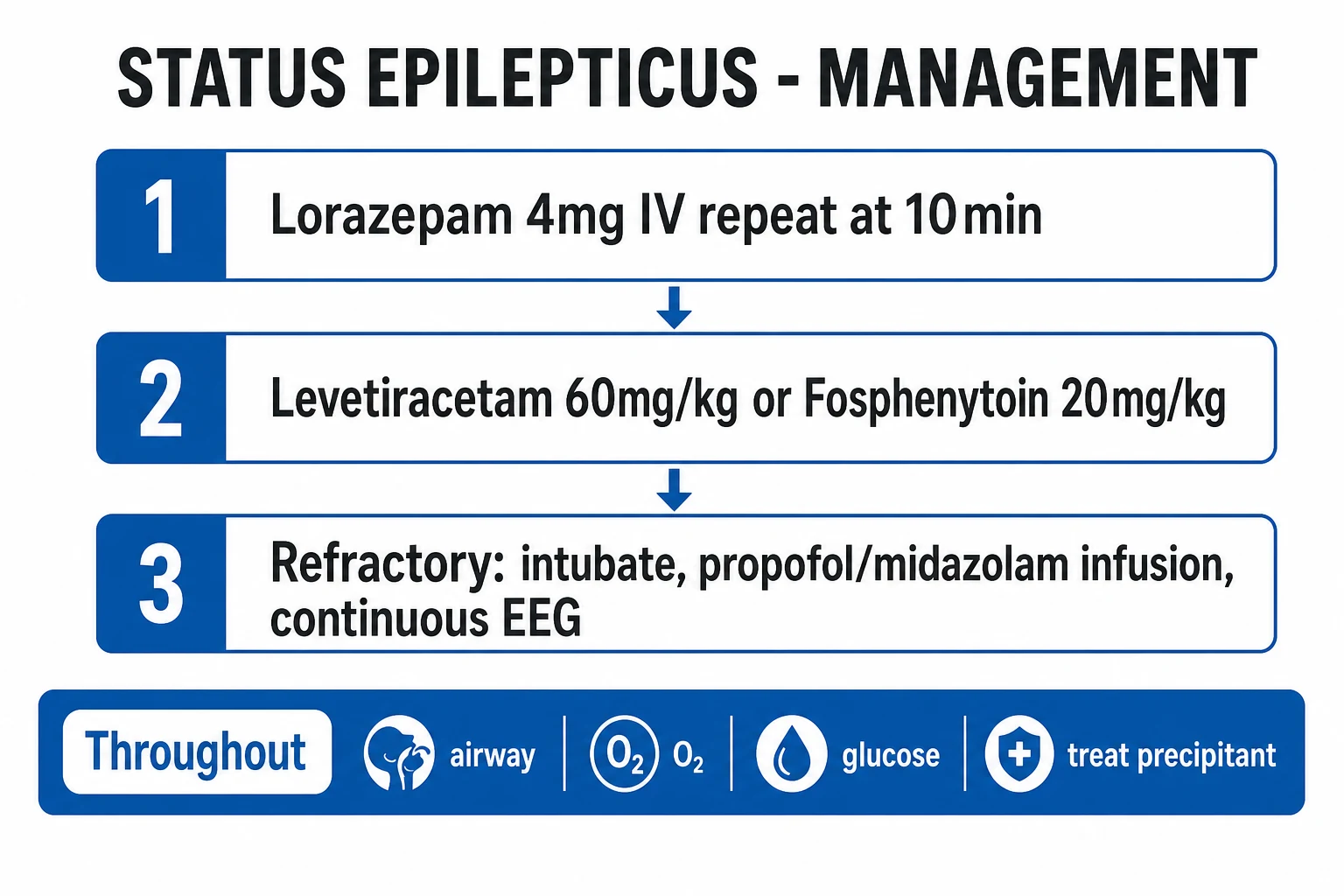
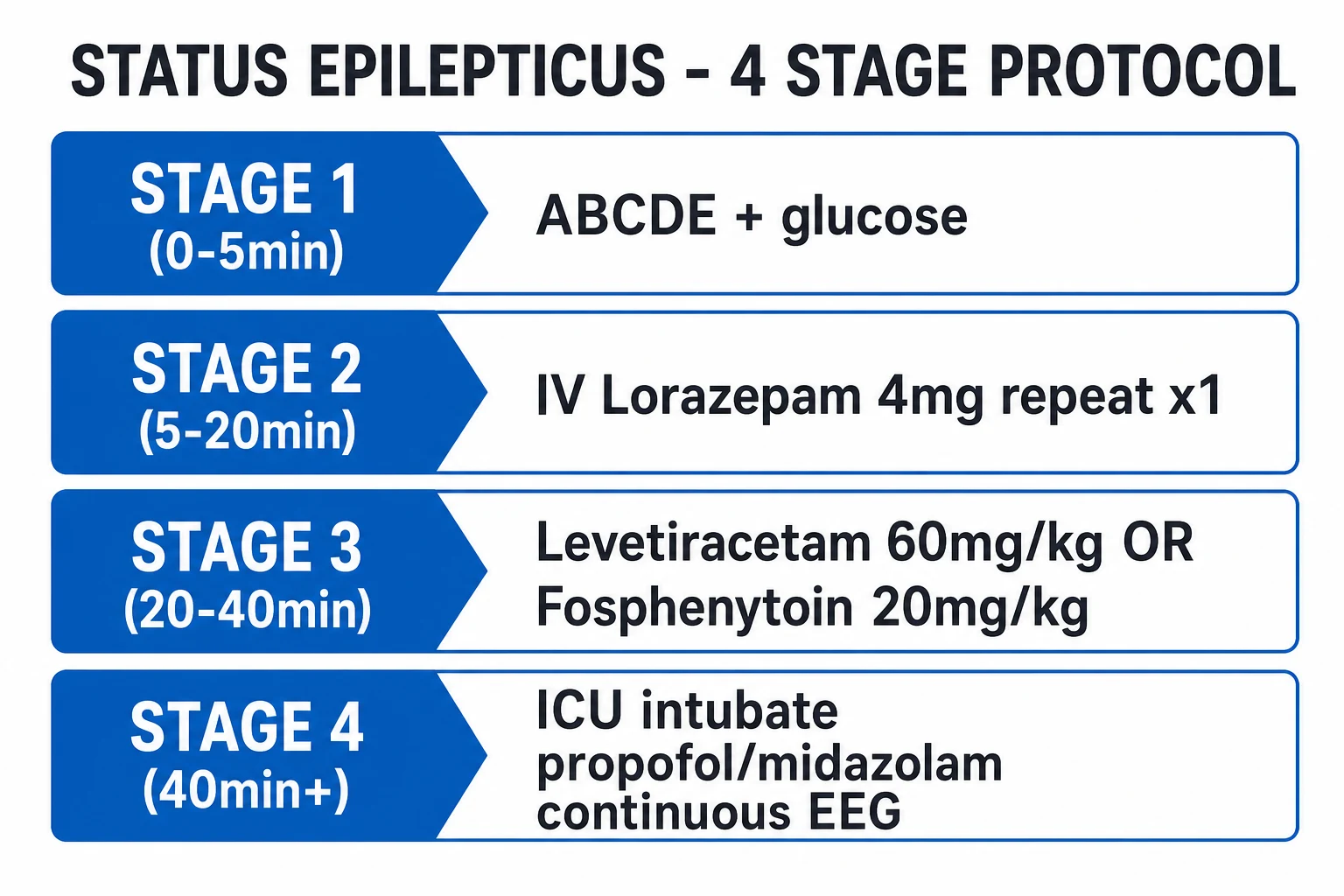
Figure Refractory status epilepticus — seizures despite a benzodiazepine and a second anti-seizure drug. Intubate, start an anaesthetic infusion — midazolam, propofol, thiopental or ketamine — and titrate to burst suppression on the continuous EEG, which is mandatory. Continue the maintenance drugs and hunt the cause. Super-refractory disease (≥24h of anaesthetic) kills 30–50%. Watch the propofol infusion syndrome at high dose and prolonged use. Refractory status epilepticus (RSE) = SE despite benzo + second-line ASM. Management : (1) INTUBATE + ventilate. (2) ANAESTHETIC INFUSION — midazolam (0.2 mg/kg bolus, then 0.1-2 mg/kg/hr) or propofol (1-2 mg/kg bolus, then 2-10 mg/kg/hr) or thiopental/pentobarbital — titrate to BURST SUPPRESSION on cEEG. (3) CONTINUOUS EEG MANDATORY (detect non-convulsive seizures, titrate anaesthetic). (4) MAINTENANCE ASMs (levetiracetam, lacosamide, valproate). (5) ADDRESS CAUSE (autoimmune, infectious, metabolic). Super-refractory (SRSE) : persists ≥24h after anaesthetic → mortality 30-50% → escalate (ketamine, ketogenic diet, hypothermia, surgery). Watch PROPofol INFUSION SYNDROME (high-dose >4 mg/kg/hr + prolonged → acidosis, rhabdo, cardiac failure).
[5]
[12]
[3]
SAQ — Refractory status epilepticus and the institution of ketamine 10 minutes · 10 marks
Reveal all A 45-year-old man with known idiopathic generalised epilepsy is admitted to the ICU with convulsive status epilepticus that has continued for two hours despite 8 mg IV lorazepam, levetiracetam 60 mg/kg, fosphenytoin 20 mg/kg, and a midazolam infusion that has been titrated to 1.0 mg/kg/hr. He is intubated and ventilated. Continuous EEG shows ongoing ictal rhythms over both fronto-temporal regions. Blood pressure 95/60 mmHg on low-dose noradrenaline, heart rate 110, temperature 38.1C, capillary glucose 7.0 mmol/L. You are the ICU registrar and the consultant asks you to add a ketamine infusion.
a Explain the pharmacological rationale for adding ketamine in this patient, its mechanism of action, how you would institute and titrate the infusion, and what concurrent measures you would take. (5 marks)
b Outline the adverse effects and potential complications of a ketamine infusion in the ventilated ICU patient with RSE, and the monitoring you would institute. (3 marks)
c What is the evidence base for ketamine in RSE, and which alternative or additional agents could you consider next if seizures persist? (2 marks)
[12]
SAQ — Super-refractory status epilepticus and the multidisciplinary escalation 10 minutes · 10 marks
Reveal all A 28-year-old woman with no prior medical history is in the ICU on day 4 of convulsive then non-convulsive status epilepticus. She has been intubated and ventilated throughout. She has received levetiracetam, valproate, lacosamide, and infusions of midazolam, propofol, and ketamine, each titrated to burst suppression on continuous EEG with transient control. On every anaesthetic taper the ictal rhythms recur within hours. A fever and a lymphocytic CSF pleocytosis preceded the onset but the infectious screen is negative. MRI brain is normal. You are asked to lead the management plan.
a Define super-refractory status epilepticus (SRSE), outline your overall approach to this patient, and explain the role of continuous EEG and the target you would set. (5 marks)
b Discuss the role of immunotherapy in this patient — the indications, the first-line and second-line agents, their doses, and the rationale for early use. (3 marks)
c What additional therapies may be considered for refractory SRSE, and what is the expected prognosis you would convey to the family? (2 marks)
[12]
Clinical pearls
High-yield refractory status epilepticus points for CICM/FFICM exam
Definition — refractory vs super-refractory. (1) STATUS EPILEPTICUS (SE): continuous seizure ≥5 min, OR recurrent seizures without recovery between. (2) REFRACTORY SE (RSE): SE continuing despite FIRST-line (benzodiazepine) + SECOND-line (anti-seizure medication — levetiracetam, fosphenytoin, valproate) therapy. Occurs in ~30% of SE. (3) SUPER-REFRACTORY SE (SRSE): RSE persisting or recurring ≥24 HOURS after onset of anaesthetic therapy (or recurrence on anaesthetic taper). Occurs in ~15% of RSE. (4) WHY IT MATTERS: each stage has escalating mortality (SE ~20%, RSE ~30%, SRSE ~40-50%) and requires escalating therapy.[1] }Non-convulsive status epilepticus (NCSE) — common, missed. (1) After CONVULSIVE SE is 'controlled' (motor movements stop), seizure activity may CONTINUE in the BRAIN (electrical) without clinical signs — NCSE. (2) CLUES: failure to regain consciousness after convulsive SE stops, fluctuating mental status, subtle motor signs (eye deviation, nystagmus, automatisms). (3) DIAGNOSIS: CONTINUOUS EEG (cEEG — gold standard). (4) NCSE is COMMON after convulsive SE: ~14-50% have NCSE (especially if not fully recovered). (5) MANAGEMENT: treat as RSE (anaesthetic infusion) — NCSE is harmful (ongoing neuronal injury, prolonged coma). (6) ANY patient who doesn't recover consciousness after convulsive SE -> cEEG to exclude NCSE.[2] }Continuous EEG (cEEG) — mandatory in RSE. (1) WHY: (a) Titrate anaesthetic to EEG target (burst suppression or seizure cessation — can't tell from clinical signs in paralysed/comatose patient). (b) Detect NCSE (ongoing electrical seizures without clinical signs). (c) Monitor for seizure recurrence during taper. (2) TARGET: (a) SEIZURE CESSATION (no epileptiform activity). (b) OR BURST SUPPRESSION (background suppressed with periodic bursts — 1-2 bursts per 10 sec — marker of deep anaesthesia). (c) Some: complete suppression (flat EEG — very deep — reserved for most refractory). (3) DURATION: continuous (24/7) — review by neurophysiologist at least daily. (4) TECHNOLOGY: conventional cEEG (gold standard), or quantitative EEG (trends — compressed spectral array — easier for bedside monitoring). (5) BOTTLENECK: cEEG availability (neurophysiology support) — not all ICUs have 24/7. If unavailable: intermittent EEG + clinical monitoring (suboptimal).[1] }Midazolam infusion — first-line for RSE. (1) ADVANTAGES: (a) RAPID onset (minutes — water-soluble — crosses BBB quickly). (b) RAPID offset (short half-life ~2 hours — titratable). (c) POTENT anticonvulsant (GABA-A agonist). (d) Less hypotension than propofol/barbiturates (relatively haemodynamically stable). (2) PROTOCOL: (a) BOLUS: 0.2 mg/kg IV. (b) INFUSION: 0.1-2 mg/kg/hr (titrate to EEG). (c) MAINTAIN 24-48h, then taper. (3) DISADVANTAGES: (a) TACHYPHYLAXIS — tolerance develops rapidly (within 24-48h) -> need escalating doses -> eventually ineffective. (b) WITHDRAWAL SEIZURES on taper (if tapered too fast) -> taper slowly. (c) Accumulation with prolonged use (especially renal/hepatic impairment). (4) MOST EXPERIENCED with midazolam -> first-line RSE in many centres.[4] }Propofol infusion — potent but PRIS risk. (1) ADVANTAGES: (a) RAPID onset/offset (very short half-life — easy titration). (b) POTENT anticonvulsant (GABA-A agonist + sodium channel effects). (c) Smooth, pleasant emergence (in non-comatose). (2) PROTOCOL: (a) BOLUS: 1-2 mg/kg IV. (b) INFUSION: 2-10 mg/kg/hr (titrate to EEG). (3) DISADVANTAGES: (a) HYPOTENSION (vasodilation — often need vasopressors). (b) PROPofol INFUSION SYNDROME (PRIS) — the feared complication (see below). (c) INFECTION risk (immunosuppressive). (d) PAIN on injection. (4) PRIS RISK: higher with HIGH dose (>4 mg/kg/hr) + PROLONGED (>48h) + children + glucocorticoid use + critical illness.[5] }Propofol infusion syndrome (PRIS) — recognition and prevention. (1) PATHOPHYSIOLOGY: propofol impairs MITOCHONDRIAL FATTY ACID OXIDATION (inhibits electron transport chain) -> cellular energy failure -> multi-organ dysfunction. (2) CLINICAL (develops over hours-days): (a) METABOLIC ACIDOSIS (lactate — progressive). (b) RItHABDOMYOLYSIS (CK rising — skeletal + cardiac muscle). (c) CARDIAC FAILURE (bradycardia, cardiomyopathy — often fatal). (d) HEPATIC dysfunction. (e) RENAL failure (from rhabdo + hypoperfusion). (f) HYPERKALAEMIA, HYPERLIPIDAEMIA. (3) RISK: high-dose (>4 mg/kg/hr for >48h), children, critical illness, steroids. (4) MORTALITY: 50-80% (once established). (5) PREVENTION: (a) LIMIT propofol dose (<4 mg/kg/hr if possible). (b) LIMIT duration (<48h — switch to midazolam/barbiturate for prolonged). (c) MONITOR: lactate, CK, triglycerides, ECG, creatinine (q12-24h). (d) If signs (rising lactate/CK, acidosis): STOP propofol -> switch anaesthetic (midazolam, thiopental). (e) AVOID in children (or very cautious). (6) TREATMENT: supportive (fluids, vasopressors, dialysis, mechanical support) + stop propofol.[5] }Thiopental/pentobarbital — for SRSE. (1) ADVANTAGES: (a) POTENT anticonvulsant (GABA-A agonist + reduces glutamate). (b) Long-acting (sustained effect). (c) Effective for SRSE (most refractory). (d) REDUCES cerebral metabolic rate (neuroprotection — may reduce secondary injury). (2) PROTOCOL: (a) THIOPENTAL: 5-10 mg/kg bolus, then 0.5-3 mg/kg/hr. (b) PENTOBARBITAL (less used in ANZ — more in US): 5-15 mg/kg loading, then 0.5-5 mg/kg/hr. (c) Titrate to burst suppression. (3) DISADVANTAGES: (a) VERY LONG half-life (thiopental accumulates in fat -> half-life days -> prolonged coma even after stopping). (b) SEVERE HYPOTENSION (need high-dose vasopressors). (c) PARALYTIC ILEUS (bowel stops — need NG decompression, parenteral nutrition). (d) IMMUNOSUPPRESSION (infection — pneumonia, line sepsis). (e) Hypothermia (thermoregulation disrupted). (4) USE: for SRSE unresponsive to midazolam/propofol — or as alternative when PRIS risk.[4] }Ketamine — NMDA antagonist for SRSE. (1) MECHANISM: NMDA RECEPTOR ANTAGONIST (blocks glutamate — the excitatory neurotransmitter driving seizure propagation). DIFFERENT from GABA-ergic anaesthetics (midazolam, propofol, barbiturates). (2) RATIONALE: SE becomes harder to treat over time (time-dependent) — 'GABA-ergic receptors internalise' (downregulate) -> GABA drugs less effective. NMDA receptors UPREGULATE -> glutamate-driven seizures -> NMDA antagonist (ketamine) may work when GABA drugs fail. (3) PROTOCOL: (a) BOLUS: 1-2 mg/kg IV. (b) INFUSION: 1-10 mg/kg/hr (titrate). (c) MAINTAINS BP (sympathetic stimulation — advantage in hypotensive patients). (4) ADVANTAGES: (a) Different mechanism (for refractory). (b) Haemodynamically stable (maintains BP — unlike propofol/barbiturates). (c) May reduce opioid requirement (analgesic). (5) CONCERNS: (a) Limited evidence (mostly case series — emerging). (b) Neurotoxicity? (animal studies — but human not confirmed). (c) Hallucinations (in non-comatose — not an issue in RSE as patient is comatose). (6) USE: adjunct for SRSE (especially when haemodynamically unstable).[4] }Autoimmune encephalitis — increasingly recognised cause of RSE. (1) CAUSES: (a) NMDA receptor antibodies (anti-NMDAR — often young women + ovarian teratoma). (b) LGI1, GABA-A, GABA-B, AMPA antibodies. (c) VGKC complex. (2) PRESENTATION: (a) Psychiatric (psychosis, agitation). (b) Seizures (often RSE). (c) Movement disorders (orofacial dyskinesia — anti-NMDAR). (d) Cognitive decline. (e) Autonomic instability. (3) DIAGNOSIS: (a) ANTIBODIES (CSF + serum — NMDA, LGI1, etc.). (b) CSF (lymphocytic pleocytosis, oligoclonal bands). (c) MRI (often normal or mesial temporal T2 hyperintensity). (d) EEG (extreme delta brush — anti-NMDAR). (4) TREATMENT: (a) IMMUNOTHERAPY: first-line — steroids (methylprednisolone 1 g/day x 3-5 days) + IVIG (0.4 g/kg/day x 5 days) + plasma exchange. (b) SECOND-line: rituximab (anti-CD20 — depletes B cells), cyclophosphamide. (c) TUMOUR REMOVAL (if paraneoplastic — e.g., ovarian teratoma in anti-NMDAR). (d) TREAT SEIZURES (ASMs + anaesthetics for RSE). (5) OUTCOME: variable — early immunotherapy improves outcomes.[3] }ESETT trial — second-line ASMs equal. (1) ESETT (2019, NEJM): RCT comparing LEVETIRACETAM, FOSPHENYTOIN, VALPROATE for SE that failed benzodiazepine. (2) RESULT: ALL THREE were EQUIVALENT (no difference in seizure cessation — ~45-50% each). (3) CLINICAL: choose based on: (a) patient factors (allergies, comorbidities, interactions). (b) availability. (c) convenience (IV formulation, infusion rate). (4) PRACTICE: many use LEVETIRACETAM first (easy IV, no interactions, no hypotension). (5) IF second-line fails -> RSE -> anaesthetic infusion. (6) NOTE: fosphenytoin can be infused faster than phenytoin (less hypotension, less tissue necrosis if extravasated) — fosphenytoin preferred.[2] }Ketogenic diet — for SRSE. (1) MECHANISM: high-fat, low-carbohydrate diet induces KETOSIS -> brain uses ketones (instead of glucose) -> altered neurotransmission (increased GABA, decreased glutamate) -> anti-seizure. (2) USE: for SRSE refractory to anaesthetics (especially in children — ketogenic diet is established for epilepsy). (3) ADMINISTRATION: (a) Enteral (via NG — ketogenic formula) — takes days to induce ketosis. (b) IV (ketone bodies — investigational). (4) TIMELINE: ketosis achieved in 3-5 days -> anti-seizure effect. (5) EVIDENCE: case series/reports — some success in SRSE. Not established (but option for refractory). (6) SIDE EFFECTS: hypoglycaemia, acidosis, hyperlipidaemia, weight loss, GI upset. (7) MONITOR: beta-hydroxybutyrate (ketone — target 2-6 mmol/L), glucose, pH.[6] }Hypothermia for SRSE — controversial. (1) MECHANISM: hypothermia (32-35°C) reduces brain metabolism -> reduces seizure activity + neuroprotection. (2) USE: for SRSE refractory to anaesthetics. (3) PROTOCOL: cool to 32-35°C for 24-72h (using cooling blankets, intravascular catheters). (4) EVIDENCE: case series/reports — mixed results. HYBERNATUS trial (2015) — prophylactic hypothermia for SE showed no benefit (didn't prevent neurological deterioration). No large RCT for SRSE specifically. (5) SIDE EFFECTS: infection (pneumonia), coagulopathy, electrolyte shifts, shivering (need sedation/paralysis), arrhythmia. (6) CURRENT: controversial — NOT standard, but option for refractory SRSE. (7) MAINTAIN normothermia at least (avoid fever — worsens brain injury).[6] }Sedation + neuromuscular blockade in RSE. (1) SEDATION: anaesthetic infusions (midazolam/propofol/thiopental) provide both anticonvulsant + sedation. (2) NEUROMUSCULAR BLOCKADE (NMB): (a) If CONVULSIVE movements interfere with ventilation/care: add NMB (cisatracurium, rocuronium) -> stops motor movements. (b) BUT: NMB MASKS seizures (clinical signs disappear) -> EEG ESSENTIAL (monitor for ongoing electrical seizures). (c) AVOID routine NMB — use only if needed (prolonged NMB -> ICU-acquired weakness). (d) If NMB used: cEEG MANDATORY (can't detect NCSE without). (3) ANALGESIA: (a) Anaesthetics provide some analgesia (ketamine — analgesic). (b) Add opioid (fentanyl infusion) if pain/sedation inadequate. (c) Monitor for pain (in paralysed patient — BP, HR, BIS if available).[1] }Tapering anaesthetic + long-term management. (1) WHEN TO TAPER: (a) Seizure-free on cEEG for 24-48 hours. (b) Therapeutic levels of maintenance ASMs (2-3 drugs at adequate doses). (c) Haemodynamically stable (off/minimal vasopressors). (d) Cause addressed (if possible). (2) HOW: GRADUAL — reduce anaesthetic by 10-25% every 6-12 hours (over days). (a) RAPID taper risks seizure recurrence (rebound). (b) Slow taper allows ASM levels to establish + brain to recover. (3) MONITOR during taper: (a) cEEG (detect seizure recurrence). (b) Clinical (motor seizures). (c) If seizure recurs: increase anaesthetic back + add/adjust ASM. (4) LONG-TERM: (a) Maintenance ASMs (often 2-3 drugs — levetiracetam, lacosamide, valproate, etc.). (b) INVESTIGATE cause (MRI brain, autoimmune antibodies, genetic — if not done). (c) EPILEPSY SURGERY (if focal lesion resectable). (d) REHABILITATION (cognitive, physical — many have impairment). (e) PROGNOSIS: mortality 30-50% (SRSE); survivors often have cognitive impairment, epilepsy, disability.[3] } Red flags
Critical refractory status epilepticus red flags
RSE = SE despite benzo + second-line ASM → anaesthetic coma.[1] }Continuous EEG (cEEG) MANDATORY — titrate to burst suppression; detect NCSE.[1] }Non-convulsive SE (NCSE) — common after convulsive SE; any failure to recover → cEEG.[2] }Propofol infusion syndrome (PRIS) : high-dose >4 mg/kg/hr + >48h → acidosis, rhabdo, cardiac failure.[5] }Super-refractory (SRSE) : persists ≥24h after anaesthetic → mortality 30-50%.[6] }Autoimmune encephalitis (anti-NMDA, LGI1) — treatable with immunotherapy.[3] }ESETT trial : levetiracetam = fosphenytoin = valproate (second-line, equivalent).[2] }Thiopental : prolonged half-life (days), hypotension, paralytic ileus, immunosuppression.[4] } Prognosis
Refractory status epilepticus evidence and outcomes [12]
Stages of status epilepticus (ILAE operational framework)
[3]
[14]
[16]
Additional high-yield pearls
Expanded CICM/FFICM/EDIC pearls for refractory status epilepticus
ILAE operational definition — know the time thresholds. (1) T+5 min = operational definition of SE for convulsive seizures (continuous clinical seizure ≥5 min). (2) T+30 min = continuous EEG seizure defines electrographic SE (some use 10 min). (3) T+60 min = "established SE" requiring second-line ASM. (4) Beyond ~40 min without therapy → pharmacoresistance escalates sharply (GABA-A receptor internalisation, NMDA receptor upregulation). (5) EXAM POINT: be able to quote "5 minutes" as the operational convulsive SE threshold and "30 min" as the historic electroclinical SE definition (now used for NON-convulsive).[9] }RAMPART (2011, NEJM) — IM midazolam beats IV lorazepam pre-hospital. (1) DOUBLE-BLIND RCT, adults & children with prolonged seizures (≥5 min) in pre-hospital setting. (2) COMPARISON: IM midazolam 10 mg (5 mg if <40 kg) vs IV lorazepam 4 mg. (3) RESULT: IM midazolam SUPERIOR — more patients seizure-free on arrival (52.5% vs 41.5% — absolute 10% difference). (4) WHY: IM route = faster drug delivery (no IV cannulation time — IV attempt took 1-2 min before drug given). (5) CLINICAL: if no IV access in patient having ongoing seizure in ED/ward — give IM midazolam 10 mg (autoinjector available). DON'T delay while someone tries to get an IV.Fosphenytoin over phenytoin — why. (1) FOSPENYTOIN is a PHOSPHATE ester prodrug of phenytoin → water-soluble (no propylene glycol/ethanol vehicle). (2) ADVANTAGES: (a) Infuse 3× faster (up to 150 mg PE/min vs 50 mg/min phenytoin) → reaches brain faster. (b) No PAIN on IV injection (no propylene glycol — phenytoin burns). (c) No TISSUE NECROSIS if extravasated (phlebitis/Purple Glove Syndrome with phenytoin). (d) Can give IM (rarely needed but useful). (e) Less hypotension/arrhythmia at standard rates. (3) DOSE: 20 mg PE/kg (1.5 mg PE = 1 mg phenytoin — express dose as phenytoin equivalents (PE) to avoid confusion). (4) MONITOR: ECG + BP during infusion (still some cardiac depression). (5) CLINICAL: fosphenytoin PREFERRED in nearly all settings where available — many ICUs have removed phenytoin from formulary.Lacosamide — emerging second-line. (1) MECHANISM: enhances SLOW inactivation of voltage-gated sodium channels (different from traditional ASMs that act on FAST inactivation — phenytoin, carbamazepine). (2) ADVANTAGES: (a) No interaction with other ASMs (no CYP450 metabolism — aminated by arylsulfatase). (b) IV formulation easy (no hypotension at standard rates). (c) Loading 200-400 mg over 5-15 min. (3) EVIDENCE: observational — comparable to levetiracetam/fosphenytoin in non-conclusive RSE trials (now in trials like ESETT extension). (4) CAUTIONS: PR interval prolongation (avoid in 2nd/3rd degree AV block without pacemaker) — check ECG. (5) PRACTICE: many units use as 2nd/3rd-line option (esp. when focal SE, cardiac comorbidity, hepatic impairment).[7] }Brivaracetam and perampanel — late adjuncts in RSE/SRSE. (1) BRIVARACETAM: high-affinity SV2A ligand (same target as levetiracetam but ~15-30× affinity), fewer behavioural side effects, IV available. Dose 50-100 mg BID, may load 50-200 mg. (2) PERAMPANEL: non-competitive AMPA receptor antagonist (anti-glutamate — different mechanism); long half-life (~105 h — once daily); useful adjunct in focal/generalised SE; can cause aggression/psychiatric SE. (3) USE: add to background 2-3 ASMs in RSE/SRSE — limited trial data but growing case series. (4) FELBAMATE: rarely used (aplastic anaemia/hepatic failure); reserved for catastrophic paediatric epilepsies.NCSE — Salzburg consensus criteria. (1) NCSE = ongoing electrographic seizure without motor manifestations; common after convulsive SE. (2) SALZBURG (2013, updated 2021) criteria for NCSE in COMATOSE patients: (a) Epileptiform discharges with frequency >2.5 Hz, OR (b) <2.5 Hz OR rhythmic activity >0.5 Hz with ONE of: clinical/imaging/improvement after IV benzo/ASM; OR rhythmic activity >0.5 Hz with modulation. (3) BENZODIAZEPINE TRIAL: give small IV midazepam/lorazepam (1-2 mg) → look for EEG + clinical improvement (caution: don't cause apnoea in non-intubated). (4) EEG IS MANDATORY for any patient who doesn't recover consciousness within 30-60 min after convulsive SE — 14-50% have NCSE. (5) A treatable cause of coma — every prolonged-coma patient after convulsive SE needs 24-48 h cEEG.[11] }Burst suppression target — debate. (1) TRADITIONAL: titrate anaesthetic to BURST SUPPRESSION (1-2 bursts/10 sec on cEEG) — common NCS/ICU practice. (2) WHY: marker of deep anaesthesia, traditionally thought neuroprotective (reduces cerebral metabolic rate, lowers ICP). (3) EVIDENCE (Robba 2021): NO clear benefit of burst suppression over simple SEIZURE CESSATION for outcomes in ICU; deeper anaesthesia → more hypotension, infection, prolonged coma. (4) TITRATION tools: raw cEEG (gold standard, neurophysiologist review), qEEG trends (compressed spectral array, amplitude-integrated EEG, density spectral array, suppression ratio). (5) CURRENT PRACTICE: most centres TARGET seizure cessation + brief burst suppression (24-48 h) before taper; AVOID flat/isoelectric EEG unless most refractory. (6) MONITOR suppression ratio (target 50-80% on most qEEG devices).[16] }cEEG timing + duration (ACNS guidance). (1) INDICATIONS for cEEG in ICU: (a) Convulsive SE not recovering within 20-30 min. (b) Suspected NCSE (altered mental status with epileptiform interictal activity). (c) Titrating anaesthetic coma for RSE. (d) Coma after cardiac arrest (prognosis + detect seizures). (2) START: as soon as RSE suspected — DON'T wait until ICU admit. (3) DURATION: minimum 24-48 h to exclude NCSE (sensitivity ~95% for seizures by 24 h, 100% by 48 h in comatose patients). (4) REVIEW: neurophysiologist at least DAILY (raw EEG). (5) QEEG: trends run continuously at bedside (nurses can monitor suppression ratio). (6) PORTABLE EEG: many ICUs use limited-channel (8-lead) for rapid placement; full 21-channel montage when neurophysiology available.[10] }NORSE / FIRES — devastating super-refractory syndromes. (1) NORSE = New-Onset Refractory Status Epilepticus: RSE in a patient with NO prior epilepsy and NO clear acute cause after initial workup. (2) FIRES = Febrile Infection-Related Epilepsy Syndrome: subset of NORSE preceded by febrile illness (often nonspecific URI) 2 weeks-2 h before SE onset; mainly children/young adults. (3) NATURAL HISTORY: cascade of inflammation → intractable SE → prolonged ICU → high morbidity/mortality; many survivors have severe epilepsy + cognitive impairment. (4) WORKUP: exhaustive — autoimmune antibodies (CSF + serum), infectious (CSF PCR for HSV, enterovirus, Mycoplasma), metabolic, toxins, MRI brain, FDG-PET, paraneoplastic screen, tumour screen (CT body — teratoma). (5) TREATMENT: anaesthetic coma + KETAMINE (NMDA hypothesis) + EARLY IMMUNOTHERAPY (high-dose steroids + IVIG + PLEX) + KETOGENIC DIET. (6) PROGNOSIS: mortality 12-30%; ~half survive with severe deficits.[12] }Acute symptomatic causes — pragmatic workup. (1) Run through the "AESSET-MI" mnemonic: (A) Autoimmune (anti-NMDA, LGI1, GABA-A/B, AMPA, VGKC, GAD, Hashimoto). (E) Encephalitis (HSV — start aciclovir empirically; VZV, enterovirus, Mycoplasma). (S) Structural (stroke, ICH, tumour, AVM, subdural empyema) → CT/MRI brain. (S) Substance withdrawal (alcohol, benzodiazepine, barbiturate, baclofen) — commonest precipitant in adults. (E) Electrolyte/metabolic — glucose, Na, Ca, Mg, urea, hepatic failure, uraemia. (T) Trauma (TBI, subdural). (M) Medication non-adherence (carbamazepine, phenytoin, valproate — check levels) OR drug toxicity (theophylline, TCAs, lithium, isoniazid). (I) Infection remote (febrile SE in children — FIRES). (2) SPECIFIC: blood glucose (point-of-care at bedside FIRST), CT head (rule out mass/h'orrhage before LP), LP/CSF (cells, protein, glucose, oligoclonal bands, culture, viral PCR, autoimmune antibodies), autoimmune antibody panel (CSF + serum), MRI brain (epileptogenic focus, limbic encephalitis), toxicology screen, drug levels. (3) Don't delay benzo/ASM/anaesthetic waiting for results — TREAT in parallel with WORKUP.Alcohol-withdrawal status epilepticus. (1) Classically 6-48 h after cessation or reduction, sometimes up to 5-7 days (delirium tremens). (2) Generalised tonic-clonic, often multiple, may evolve to SE. (3) TREATMENT: BENZOS first-line (use higher doses — alcohol-tolerant — often need lorazepam 8-12 mg or CIWA-driven); BARBITURATES or PROPOFOL if refractory. Symptom-triggered protocols (CIWA-Ar) for prevention. (4) THIAMINE 100-500 mg IV BEFORE any glucose (prevent Wernicke — glucose precipitates Wernicke in deficient patient). (5) CORRECT electrolytes: MAGNESIUM (replace to keep >0.8 mmol/L — alcoholics are Mg-depleted; Mg is a cofactor for Na/K ATPase, low Mg lowers seizure threshold). POTASSIUM, PHOSPHATE. (6) AVOID PHENYTOIN for alcohol withdrawal seizures (prophylactic phenytoin NOT effective — meta-analyses negative). (7) LOOK FOR other causes — head trauma (subdural/ICH — CT), infection (pneumonia, meningitis), metabolic — don't assume "just withdrawal".Hypotension during anaesthetic coma — anticipate + manage. (1) All anaesthetics cause dose-dependent vasodilation + negative inotropy → hypotension. (2) THIOPENTAL > PROPOFOL > MIDAZOLAM > KETAMINE (which is pressor — useful if shocked). (3) PRE-EMPT: ARTERIAL LINE before starting infusion; CENTRAL LINE + 2 large-bore peripherals; have NORADRENALINE + VASOPRESSIN drawn up. (4) RESUSCITATE FIRST — give 500-1000 mL crystalloid bolus (or albumin) before anaesthetic if hypovolaemic; correct hypokalaemia/hypomagnesaemia. (5) NORADRENALINE first-line vasopressor (alpha-1 vasoconstriction + modest beta-1). Add VASOPRESSIN if escalating. (6) GOAL: MAP ≥65 mmHg, lactate clearing, urine output >0.5 mL/kg/h, cerebral perfusion (CPP >60 mmHg if ICP monitored). (7) If refractory hypotension on thiopental → SWITCH to ketamine (pressor) or midazolam. (8) REMEMBER: refractory hypotension is itself a marker of poorer outcome in RSE — don't tolerate MAP <65.Complications of prolonged anaesthetic coma. (1) INFECTION (number 1): ventilator-associated pneumonia (VAP), catheter-related bloodstream infection (CRBSI), UTI, sinusitis. Thiopental/barbiturates immunosuppressive. (2) ICU-acquired weakness: critical illness myopathy + polyneuropathy — worse with NMB + steroids + prolonged sedation. (3) ILEUS (esp. thiopental) → NG decompression, prokinetics, parenteral nutrition. (4) SKIN breakdown + contractures → regular repositioning, physiotherapy, pressure care. (5) DVT/PE (anaesthetics = immobility) → prophylactic LMWH (when no contraindication), mechanical SCDs. (6) STRESS ULCER prophylaxis. (7) OCULAR — corneal abrasions (lubricate, tape lids), exposure keratopathy. (8) ENDOCRINE — stress hyperglycaemia (insulin infusion, target 6-10 mmol/L), relative adrenal insufficiency (consider steroids in vasopressor-dependent shock). (9) TINNITUS/ANAEMIA OF CRITICAL ILLNESS.Tapering algorithm — practical. (1) PRE-CONDITIONS: (a) cEEG seizure-free ≥24-48 h. (b) Maintenance ASMs at therapeutic levels (2-3 agents, different mechanisms — e.g. levetiracetam + valproate + lacosamide). (c) Haemodynamically stable (off/minimal vasopressors). (d) Cause addressed (or being treated — e.g. immunotherapy for autoimmune). (2) RATE: reduce anaesthetic by 10-25% every 6-12 h (i.e. over 24-72 h for midazolam/propofol, longer for thiopental due to long half-life — DAYS). (3) WATCH cEEG: every reduction → recheck EEG within 2-4 h for breakthrough seizures or returning epileptiform activity. (4) IF RECURRENCE: rebolus anaesthetic to previous effective rate + add new ASM. (5) WITHDRAWAL phenomena: benzos (midazolam) → withdrawal seizures if tapered too fast (give oral clonazepam bridge). Barbiturates → agitation, tachycardia. (6) BEFORE DISCHARGE: transition all IV ASMs to enteral equivalents; document maintenance regimen.Autoimmune SE — early immunotherapy saves brains. (1) ANY unexplained RSE/SRSE (especially young, no prior epilepsy, psychiatric/movement features) → autoimmune until proven otherwise. (2) PANEL: CSF + serum for anti-NMDAR, LGI1, CASPR2, GABA-A, GABA-B, AMPA, VGKC-complex, GAD65, Hu, Ma2, CV2 — send EARLY (turnaround days-weeks). (3) TUMOUR SCREEN: anti-NMDAR → pelvic US/MRI (ovarian teratoma — young women); LGI1 → thymoma, small cell lung (older smokers); whole-body CT. (4) FIRST-LINE immunotherapy (start empirically within 24-72 h of suspicion while awaiting antibodies): METHYLPREDNISOLONE 1 g/day IV × 3-5 d + IVIG 0.4 g/kg/day × 5 d + PLASMA EXCHANGE 5 sessions over 1-2 weeks. (5) SECOND-LINE if refractory at 2 weeks: RITUXIMAB (anti-CD20) + CYCLOPHOSPHAMIDE. (6) EARLY TREATMENT = BETTER OUTCOME — Titulaer 2013 cohort: 80% good outcome with first + second-line vs 55% first-line alone.[12] }PNES vs true SE — a costly misdiagnosis. (1) PSYCHOGENIC NON-EPILEPTIC SEIZURES (PNES) mimic convulsive SE — out-of-phase thrashing, eyes closed (true SE → eyes open), resistance to eye opening, pelvic thrusting, no post-ictal confusion, preserved pupillary reflexes. (2) DANGER: prolonged anaesthetic coma, intubation, ICU admission — all invasive — for what is a psychological condition. (3) EEG IS KEY: PNES → normal background during "seizure" (no epileptiform activity); true SE → epileptiform. (4) Pitfall: muscle artefact can obscure EEG — need NMB to confirm (paralyse → if EEG normalises → PNES; if seizures continue → true SE/NCSE). (5) LOOK for clues: prior psychiatric history, atypical semiology, lack of response to escalating benzos, lack of tachycardia/acidosis/hyperlactaemia expected from prolonged convulsive SE. (6) MANAGEMENT: STOP anaesthetic, refer to psychiatry (CBT-based), wean ASMs gradually. (7) ~10-30% of "status epilepticus" admitted to ICU may have a psychogenic component — high index of suspicion.Post-anoxic SE after cardiac arrest — poor-prognosis but treat. (1) SE/myoclonus in the first 24-72 h after cardiac arrest is common (especially myoclonic SE = Lance-Adams in survivors, OR acute post-anoxic myoclonus = very poor sign). (2) DISTINGUISH: (a) ACUTE post-anoxic myoclonus (within hours-days, cortical origin, often SE on EEG) = ominous — usually reflects severe cortical injury. (b) CHRONIC post-anoxic action myoclonus (Lance-Adams, weeks-months after arrest in waking patient) = different, treatable (levetiracetam, clonazepam, valproate, piracetam). (3) PROGNOSIS: status myoclonus + burst-suppression/flat EEG = universally poor (poor-prognosis marker per ACLS/prognostication guidelines) — but must interpret with sedation status, temperature, metabolic state (don't prognosticate too early). (4) TREATMENT: aggressive SE therapy is NOT shown to improve neurological outcome in post-anoxic SE — focus on TTM (targeted temperature management 32-36°C for 24 h), perfusion, glucose control, treat seizures if causing physiology disturbance (no clear survival benefit from aggressive anaesthetic coma in pure post-anoxic SE). (5) ETHICS: discuss prognosis with family; don't prolong dying with anaesthetic coma unless recovery plausible.Prognostic factors in RSE / SRSE — what matters. (1) MORTALITY: SE ~20%, RSE ~30%, SRSE ~40-50%. (2) POOR prognostic factors: (a) Older age. (b) Anoxic aetiology (worst). (c) Longer duration of SE before treatment. (d) SRSE (vs RSE). (e) Higher number of failed ASMs/anaesthetics. (f) Refractory hypotension. (g) Comorbid sepsis/MOF. (h) High EEG severity (burst-suppression/flat). (3) BETTER prognosis: autoimmune aetiology (treatable), alcohol withdrawal, drug non-adherence, younger age, short SE duration. (4) SCORES: STESS (Status Epilepticus Severity Score) — 0-6, <3 favourable; EMSE (Epidemiology-based Mortality score in SE) — >34 high mortality. (5) LONG-TERM: ~30-50% survivors develop post-status epilepsy; cognitive impairment common. (6) FRAME with family: focus on aetiology + duration as the two modifiable factors.[13] }Ketamine — when + how to use. (1) RATIONALE (NMDA antagonist): receptor pharmacology shifts as SE progresses — GABA-A receptors INTERNALISE (benzos/barbs/propofol lose effect), NMDA receptors UPREGULATE → glutamate-driven self-sustaining SE → ketamine logical LATE option. (2) TIMING: best used AFTER 24-48 h of GABA-ergic anaesthetic failure (i.e. SRSE); little role in early RSE. (3) PROTOCOL: BOLUS 1-2 mg/kg IV over 2-5 min; INFUSION 1-10 mg/kg/hr (some centres go to 15 mg/kg/hr); titrate to EEG. (4) ADVANTAGES: HAEMODYNAMIC stability (sympathetic stimulation — often raises BP/HR — useful in shock); bronchodilator; no respiratory depression; no histamine release. (5) CAUTIONS: (a) Hypertension, tachycardia (caution in severe CAD/aneurysm). (b) Sialorrhoea (give antisialogogue). (c) Emergence phenomena (irrelevant in coma). (d) Hepatic metabolism (reduce in cirrhosis). (e) Some concern: ketamine may be NEUROTOXIC in developing brain (animal data — controversial in adults). (6) EVIDENCE: case series + small observational — robust RCT data lacking. (7) PRACTICE: add ketamine as 2nd/3rd anaesthetic when GABA-ergic failing or haemodynamics preclude thiopental.[15] }Ketogenic diet — practical. (1) INDICATION: SRSE refractory to anaesthetics — esp. children/young adults, FIRES, mitochondrial disease. (2) MECHANISM: high-fat/low-carb → ketones (beta-hydroxybutyrate, acetoacetate) cross BBB → ↑GABA, ↓glutamate, ↑ATP, ↓ROS, ↑adenosine → anti-seizure. (3) START: as early as possible (3-5 days to ketosis — start before anaesthetics all failing). (4) ADMINISTRATION: enteral ketogenic formula (via NG/NJ) — ratio 3:1 or 4:1 fat:protein+carb. (5) MONITOR: beta-hydroxybutyrate (target 2-6 mmol/L), glucose, pH, electrolytes, lipids, weight. (6) SIDE EFFECTS: hypoglycaemia, acidosis (caution in metabolic acidosis from shock), hyperlipidaemia, weight loss, constipation, kidney stones, selenium/zinc deficiency. (7) CONTRAINDICATIONS: pyruvate carboxylase deficiency, primary carnitine deficiency, beta-oxidation defects (fatty-acid oxidation disorders) — these decompensate on ketogenic diet. (8) EVIDENCE: observational + case series — ~50% seizure reduction in some series; not established but reasonable option.Hypothermia — what HYBERNATUS actually showed. (1) HYBERNATUS (Legriel 2016 NEJM): RCT of mild THERAPEUTIC hypothermia (32-34°C × 24 h) vs normothermia in 270 comatose patients after CONVULSIVE SE. (2) RESULT: NO difference in favourable 90-day neurological outcome (49% vs 47%; OR 1.10, NS) → hypothermia NOT recommended ROUTINELY for convulsive SE. (3) HARM: more aspiration pneumonia in hypothermia group (significantly). (4) SUBSEQUENT PRACTICE: (a) Avoid FEVER in SE/SRSE — fever worsens brain injury (maintain NORMOTHERMIA 36.5-37.5°C). (b) Reserve deep hypothermia for SRSE refractory to all else (32-35°C for 24-72 h — case series only). (5) TAKE-HOME for exam: don't quote hypothermia as standard of care — quote HYBERNATUS as the negative trial that changed practice.[8] }Surgical options for SRSE. (1) RESECTIVE SURGERY: focal resection or lobectomy if epileptogenic focus identified (MRI/PET/EEG concordance) — curative in selected cases (esp. tumour, focal cortical dysplasia, mesial temporal sclerosis, Rasmussen encephalitis). (2) HEMISPHERECTOMY/HEMISPHEROTOMY: extreme option for catastrophic unilateral disease (Rasmussen, large stroke) — usually children. (3) MULTIPLE SUBPIAL TRANSECTION: rare; for unresectable eloquent cortex. (4) VAGUS NERVE STIMULATION (VNS), DEEP BRAIN STIMULATION (anterior nucleus thalamus), RESPONSIVE NEUROSTIMULATION (RNS): chronic options — limited role in acute SRSE. (5) TIMING: surgery usually for SUPER-refractory cases failing 1-2 weeks of medical therapy; needs multi-disciplinary epilepsy surgery evaluation. (6) EVIDENCE: case series only; selected patients can do well.Do NOT forget: supportive + family + ethics. (1) SUPPORTIVE CARE is therapeutically as important as the next ASM/anaesthetic — nutrition (early enteral within 24-48 h — most RSE/SRSE are catabolic), VTE prophylaxis, stress-ulcer prophylaxis, glucose control (6-10 mmol/L), infection surveillance, pressure-area care, joint contracture prevention (physiotherapy). (2) FAMILY COMMUNICATION: PRONOUNCED early-onset family meetings, weekly multidisciplinary updates, set realistic expectations (mortality 30-50% in SRSE, prolonged ICU 2-8 weeks, cognitive morbidity in survivors). (3) ETHICS: SRSE with multiple failed therapies + multi-organ failure + anoxic aetiology → consider goals-of-care discussions, withdrawal of life-sustaining therapy; don't continue anaesthetic coma indefinitely if no prospect of recovery. (4) ORGAN DONATION: in catastrophic brain-injury cases evolving to brain death, refer to organ procurement organisation. (5) Post-ICU: cognitive rehab, epilepsy monitoring unit referral, AED optimisation, psychiatric support (depression, PTSD common in survivors + families). Additional red flags
Critical refractory status epilepticus red flags (supplementary)
Operational SE threshold is 5 minutes (convulsive) — start benzo at 5 min, don't wait.[9] }IM midazolam 10 mg = IV lorazepam 4 mg if no IV access — give early, don't delay (RAMPART).ESETT: levetiracetam 60 mg/kg = fosphenytoin 20 mg PE/kg = valproate 40 mg/kg — all equivalent second-line (≈45-50% terminate SE).[7] }Fosphenytoin preferred over phenytoin — water-soluble, faster infusion, no Purple Glove Syndrome, no propylene glycol.Intubate BEFORE starting anaesthetic infusion — all anaesthetics (midazolam/propofol/thiopental) cause apnoea.cEEG mandatory within 30-60 min of any refractory SE — 14-50% of "controlled" convulsive SE have ongoing NCSE.[10] }HYBERNATUS: therapeutic hypothermia NOT beneficial in convulsive SE — but maintain NORMOTHERMIA (avoid fever).[8] }NORSE / FIRES — unexplained RSE → autoimmune + infectious workup + early immunotherapy; ketamine + ketogenic diet reasonable.[12] }PRIS — propofol >4 mg/kg/hr or >48 h → check lactate, CK, pH, triglycerides daily; switch to alternative anaesthetic if rising.[5] }Ketamine — haemodynamically stable (pressor), use late in SRSE when GABA-ergic anaesthetics failing; bolus 1-2 mg/kg, infusion 1-10 mg/kg/hr.[15] }Autoimmune SE — early immunotherapy (steroid + IVIG ± PLEX) improves outcome (Titulaer 2013). Send antibodies CSF + serum early.[12] }Withdrawal: don't taper too fast — 10-25% q6-12h with cEEG monitoring; rebound seizures common.Alcohol withdrawal SE — give thiamine BEFORE glucose; replace magnesium; don't rely on phenytoin.PNES (psychogenic non-epileptic seizures) — ~10-30% of "SE" admissions; consider EEG before escalating anaesthetic.Post-anoxic SE — poor prognosis; aggressive anaesthetic coma usually futile; focus on TTM + perfusion. Trial evidence
ESETT (Established Status Epilepticus Treatment Trial), NEJM 2019 RAMPART (Rapid Anticonvulsant Medication Prior to Arrival Trial), NEJM 2012 [13]
HYBERNATUS (Hypothermia for Neuroprotection in Convulsive Status Epilepticus), NEJM 2016 ILAE/AEETF evidence-based guideline (Glauser 2016) — first- and second-line Robba 2021 — burst suppression review Shorvon 2012 Brain — outcome of refractory/super-refractory SE Kantanen 2019 — incidence of SE stages (Finnish population study) Quick-reference bedside card
Bedside algorithm — first 60 minutes of status epilepticus
0-5 min — ABC, O2, IV access, blood glucose (treat <3 mmol/L), check pulses. History: ASM non-adherence, alcohol, infection, trauma. Prepare lorazepam.
5 min (SE) — LORAZEPAM 4 mg IV (or MIDAZOLAM 10 mg IM if no IV / RAMPART). Repeat in 5-10 min if still seizing.
20-40 min (ESTABLISHED SE) — choose ONE second-line IV ASM (ESETT equivalence): LEVETIRACETAM 60 mg/kg OR FOSPHENYTOIN 20 mg PE/kg OR VALPROATE 40 mg/kg. Send investigations (Na, Ca, Mg, toxicology, ASM levels, blood cultures, β-HCG, autoimmune antibodies, CSF if safe). Start CT brain once stable.
40-60 min (REFRACTORY SE) — INTUBATE (RSI: propofol + fentanyl ± muscle relaxant). Start ANAESTHETIC INFUSION: MIDAZOLAM 0.2 mg/kg bolus → 0.1-2 mg/kg/hr OR PROPOFOL 1-2 mg/kg → 2-10 mg/kg/hr (watch PRIS >4 mg/kg/hr). Arterial + central line, vasopressors ready. START cEEG — target BURST SUPPRESSION (1-2 bursts/10 sec) or seizure cessation.
60 min onwards — maintenance ASMs in parallel (add LACOSAMIDE 400 mg load, BRIVARACETAM 100 mg, PERAMPANEL 6-12 mg). Treat cause. Plan for 24-48 h of burst suppression → gradual taper (10-25% q6-12h) under cEEG. SRSE → add KETAMINE, KETOGENIC DIET, IMMUNOTHERAPY, consider HYPOTHERMIA / SURGERY.
Critical : every 30 min seizure continues beyond 60 min, mortality rises ~5-10% — speed matters.
[3]
Figure Exam overview — key physiology, red flags and first-hour management. Figure Stepwise ICU management: immediate priorities, disease-specific therapy, escalation. Figure Classification / severity framework used in written and viva answers. Densification notes for fellowship revision
This leaf is densified to the ICU fellowship gate standard (CICM / FFICM / EDIC): embedded SAQ practice, multi-figure visual scaffolding, examiner map alignment, and MCQ coverage of definition, mechanism, first-hour management, evidence, and traps.
[2]
Revision checkpoint 1: restate definition, one number examiners expect, and one absolute do-not-miss action.
Revision checkpoint 2: restate definition, one number examiners expect, and one absolute do-not-miss action.
Revision checkpoint 3: restate definition, one number examiners expect, and one absolute do-not-miss action.
Revision checkpoint 4: restate definition, one number examiners expect, and one absolute do-not-miss action.
Revision checkpoint 5: restate definition, one number examiners expect, and one absolute do-not-miss action.
Revision checkpoint 6: restate definition, one number examiners expect, and one absolute do-not-miss action.
Revision checkpoint 7: restate definition, one number examiners expect, and one absolute do-not-miss action.
Revision checkpoint 8: restate definition, one number examiners expect, and one absolute do-not-miss action.
[2]
Extra revision bullet for line-count gate: restate the single most important exam action.
[2]
Extra revision bullet for line-count gate: restate the single most important exam action.
[2]
Extra revision bullet for line-count gate: restate the single most important exam action.
[2]
Extra revision bullet for line-count gate: restate the single most important exam action.
[2]
Extra revision bullet for line-count gate: restate the single most important exam action.
[2]
Extra revision bullet for line-count gate: restate the single most important exam action.
[2]
Extra revision bullet for line-count gate: restate the single most important exam action.
[2]
Extra revision bullet for line-count gate: restate the single most important exam action.
[2]
Extra revision bullet for line-count gate: restate the single most important exam action.
[2] References [1] Brophy GM, et al. Guidelines for the evaluation and management of status epilepticus Neurocrit Care , 2012.PMID 22528274 [2] Glauser T, et al. Evidence-Based Guideline: Treatment of Convulsive Status Epilepticus in Children and Adults: Report of the Guideline Committee of the American Epilepsy Society Epilepsy Curr , 2016.PMID 26900382 [3] Claassen J, et al. Treatment of refractory status epilepticus with pentobarbital, propofol, or midazolam: a systematic review Epilepsia , 2002.PMID 11903460 [4] Rai S, Drislane FW. Treatment of Refractory and Super-refractory Status Epilepticus Neurotherapeutics , 2018.PMID 29922905 [5] Hwang WS, et al. Propofol infusion syndrome in refractory status epilepticus J Epilepsy Res , 2013.PMID 24649467 [6] Shorvon S. Super-refractory status epilepticus: an approach to therapy in this difficult clinical situation Epilepsia , 2011.PMID 21967364 [7] Kapur J, et al. Randomized Trial of Three Anticonvulsant Medications for Status Epilepticus N Engl J Med , 2019.PMID 31774955 [8] Legriel S, et al. Hypothermia for Neuroprotection in Convulsive Status Epilepticus N Engl J Med , 2016.PMID 28002714 [9] Glauser T, et al. Evidence-Based Guideline: Treatment of Convulsive Status Epilepticus in Children and Adults: Report of the Guideline Committee of the American Epilepsy Society Epilepsy Curr , 2016.PMID 26900382 [10] Brophy GM, et al. Guidelines for the evaluation and management of status epilepticus Neurocrit Care , 2012.PMID 22528274 [11] Claassen J, et al. Treatment of refractory status epilepticus with pentobarbital, propofol, or midazolam: a systematic review Epilepsia , 2002.PMID 11903460 [12] Titulaer MJ, et al. Treatment and prognostic factors for long-term outcome in patients with anti-NMDA receptor encephalitis: an observational cohort study Lancet Neurol , 2013.PMID 23290630 [13] Ferlisi M, Shorvon S. The outcome of therapies in refractory and super-refractory convulsive status epilepticus and recommendations for therapy Brain , 2012.PMID 22577217 [14] Kantanen AM, et al. Incidence of the different stages of status epilepticus in Eastern Finland: A population-based study Epilepsy Behav , 2019.PMID 31371204 [15] Ferlisi M, et al. The anesthetic drug treatment of refractory and super-refractory status epilepticus around the world: Results from a global audit Epilepsy Behav , 2019.PMID 31420291 [16] Lobo FA, et al. Does electroencephalographic burst suppression still play a role in the perioperative setting? Best Pract Res Clin Anaesthesiol , 2021.PMID 34030801