ICU · Neurocritical Care
Sedation, analgesia and delirium (PADIS)
Also known as PADIS guidelines · ICU delirium · CAM-ICU · ABCDEF bundle · Propofol infusion syndrome (PRIS) · Goal-directed sedation
The PADIS framework (Pain, Agitation/sedation, Delirium, Immobility, Sleep) guides ICU symptom management. Delirium affects 50-80% of ventilated ICU patients and is an independent predictor of mortality, longer ventilation, cognitive impairment. Assessment: pain (CPOT/BPS), sedation (RASS), delirium (CAM-ICU/ICDSC). Management: goal-directed light sedation (RASS -1 to 0), treat pain FIRST (analgesia-first), daily sedation interruption, ABCDEF bundle. Dexmedetomidine preferred for achieving light sedation (SPICE III: no mortality benefit but less delirium, shorter ventilation). Haloperidol does NOT improve outcomes in ICU delirium. Propofol infusion syndrome (PRIS) is a lethal complication of high-dose, prolonged propofol (4 mg/kg/h for 48h).
On this page & tools
Your progress
Saved locally on this device.
Target exams
Red flags
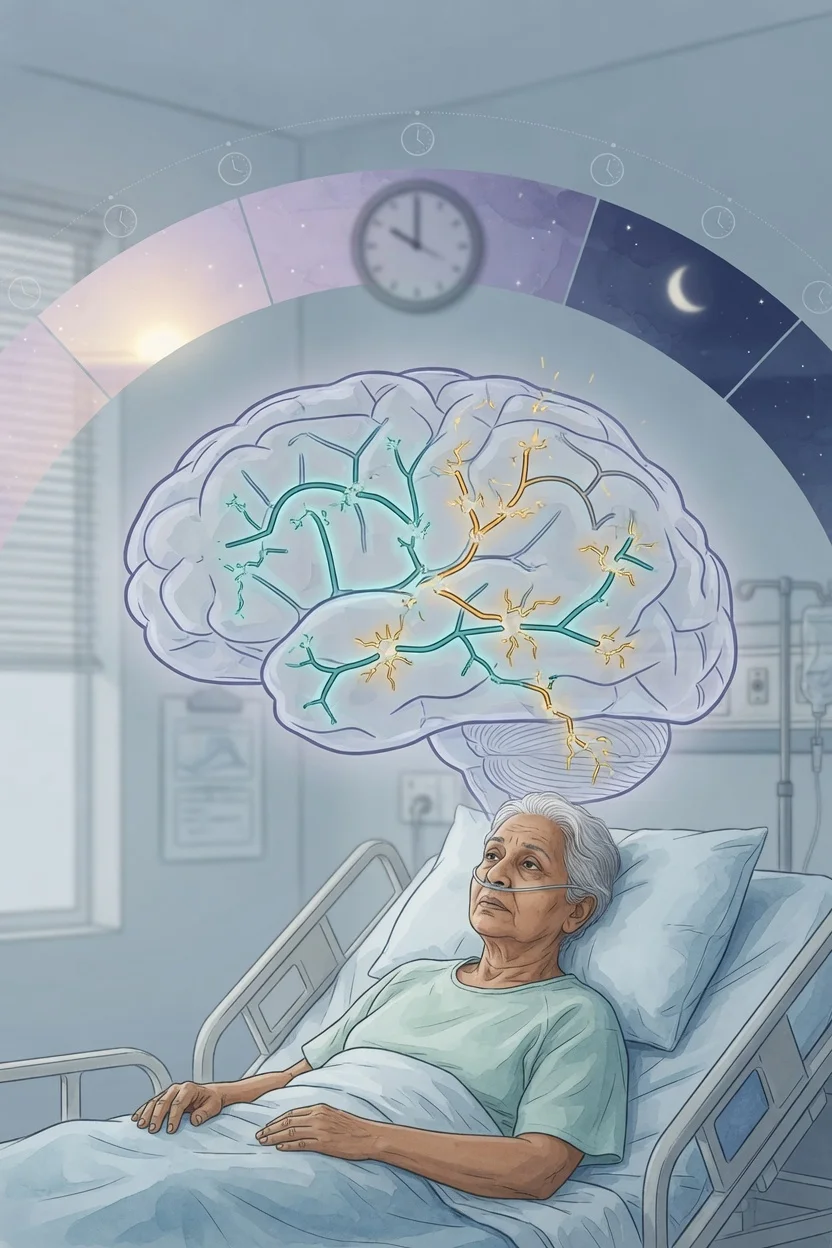
The PADIS 2018 guidelines — overview
The PADIS guidelines (Devlin et al., Critical Care Medicine 2018) are the most recent iteration of the pain/agitation/delirium framework, succeeding the original 2013 PAD guidelines. The 2018 update added Immobility (early mobilisation) and Sleep disruption as distinct domains, formalising the "I" and "S" components.[7]
PADIS 2018 — domain-by-domain recommendations
P — Pain
Routinely assess pain in ALL ICU patients (BPS, CpOT, NRS) — at least once per shift and around procedures. Use multimodal analgesia: scheduled paracetamol +/- NSAIDs (where not contraindicated), regional/neuraxial techniques where appropriate, opioid sparing. Treat procedurally-related pain (turning, line insertion, suctioning) preemptively.
A — Agitation/sedation
Use a validated tool (RASS or SAS) at least once per shift. Target LIGHT sedation (RASS -2 to 0) in most mechanically ventilated adults — only deep sedate for specific indications (severe ARDS, status epilepticus, neuromuscular blockade, ICP management). Prefer analgesia-first, dexmedetomidine or propofol; avoid benzodiazepines. Daily SAT.
D — Delirium
Routinely screen (CAM-ICU or ICDSC) in all adults. Implement multi-component non-pharmacological prevention (ABCDEF bundle). Do NOT use antipsychotics or dexmedetomidine routinely for delirium prophylaxis. Treat underlying cause first.
I — Immobility
Offer early mobilisation (active or active-assisted) to all adults in whom it is feasible — start early, even during mechanical ventilation. Use a coordinated, multidisciplinary mobility team. Assess safety/screen for contraindications before each session.
S — Sleep
Promote sleep with multicomponent strategies: minimise noise and light at night, cluster care to protect a sleep window, use earplugs/eye masks, support a day-night light cycle. Avoid benzodiazepines and polipharmacy as hypnotics.
Analgesia-first and opioid-sparing principles
The PADIS framework reframes sedation as analgesia-first: pain is assessed and treated before adding a sedative. Many "agitated" ICU patients are simply in pain or dyspnoeic. Adding sedatives to untreated pain worsens delirium and prolongs ventilation. [1]
Assessment tools
Pain assessment
Communicating patient
Self-report — gold standard
- Numeric Rating Scale (NRS) 0-10 — "rate your pain 0 to 10"
- Visual Analogue Scale (VAS)
- Assess at rest AND with movement (turning)
- Pain is the most common cause of agitation — treat pain FIRST
Non-communicating (ventilated)
Behavioural observation
- Critical-Care Pain Observation Tool (CPOT) — 0-8 score
- Behavioural Pain Scale (BPS) — 3-12 score
- 4 domains: facial expression, body movements, muscle tension, compliance with ventilator
- Score >2 (CPOT) or >5 (BPS) indicates pain — give analgesia
Multimodal analgesia — opioid-sparing strategy
Multimodal analgesia combines agents with different mechanisms to reduce opioid requirements, opioid-related adverse effects (delirium, respiratory depression, ileus, constipation), and pain scores. This is a central pillar of PADIS pain management. [1]
Non-opioid baseline
Scheduled — first-line
- Paracetamol 1 g QID (regular) — foundation of multimodal regimen
- IV/oral NSAIDs (ibuprofen, ketorolac) — avoid in AKI, GI bleed, anticoagulated
- Ketamine infusion 0.1-0.5 mg/kg/h — NMDA antagonist, opioid-sparing, useful in burns/trauma
- Lidocaine infusion 1-2 mg/kg/h — visceral/surgical pain (avoid in heart block)
Opioid
For breakthrough / visceral pain
- Fentanyl — preferred ICU opioid (haemodynamically stable, rapid onset)
- Morphine — caution in renal failure (active metabolites accumulate)
- Hydromorphone — alternative in renal impairment
- AVOID meperidine/pethidine — metabolite (normeperidine) causes seizures and delirium
- Use as bolus or short infusion; minimise prolonged high-dose infusions
Adjuvants
Specific indications
- Gabapentin/pregabalin — neuropathic pain
- Regional anaesthesia (epidural, paravertebral, fascial plane blocks) — surgical/trauma pain
- Magnesium, alpha-2 agonists (clonidine/dexmedetomidine)
- Dexmedetomidine has opioid-sparing effect via central alpha-2 activity
Sedation assessment — RASS
Richmond Agitation-Sedation Scale (RASS)
Alert and calm
Target for most ICU patients. Spontaneously pays attention.
Delirium assessment
[1]Delirium: pathophysiology and outcomes
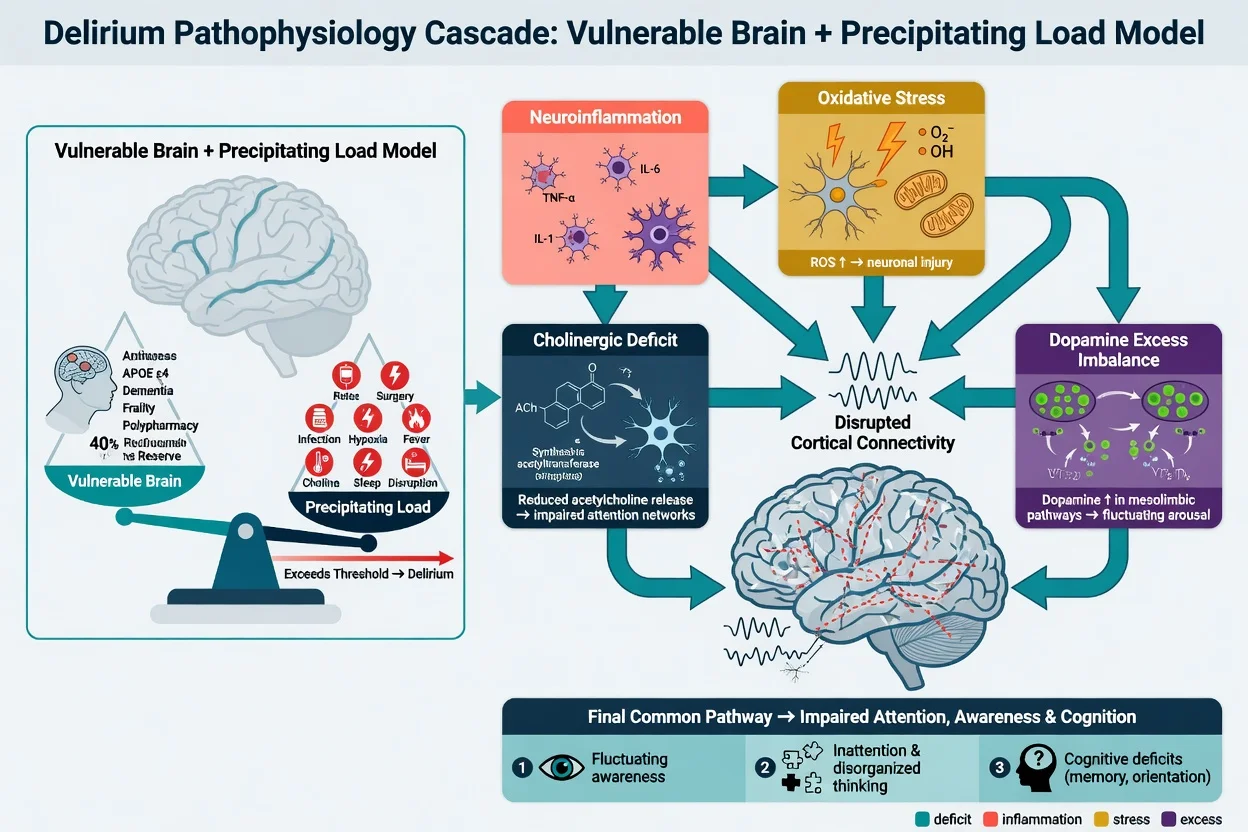
Pathophysiology
Delirium is an acute brain organ dysfunction. Key mechanisms:[2]
- Neuroinflammation: systemic inflammation (sepsis, surgery) activates microglia → cytokine cascade → neuronal dysfunction
- Neurotransmitter imbalance: acetylcholine deficiency, dopamine excess, GABA and serotonin alterations
- Vascular/cerebral hypoperfusion: hypotension, hypoxaemia, microvascular dysfunction
- Direct neurotoxicity: medications (benzodiazepines, anticholinergics), metabolic derangements [1]
Outcomes
Delirium impact on ICU outcomes
The ABCDEF bundle
ABCDEF bundle — operationalising PADIS
A — Assess, prevent, and manage pain
Use CPOT/BPS for ventilated, NRS for communicative patients. Treat pain first (analgesia-first). Regular paracetamol scheduled + opioid bolus/infusion as needed. Avoid undertreatment — pain causes agitation, tachycardia, increased O2 consumption.
B — Both spontaneous awakening trials (SAT) and spontaneous breathing trials (SBT)
Daily SAT: stop sedation to assess neurology. Safety check first (no active seizures, no agitation, no high ventilator settings). SBT: reduce ventilator support to test readiness to extubate. Pair SAT+SBT daily — reduces ventilation days and mortality.
C — Choice of analgesia and sedation
Analgesia-first approach. Prefer dexmedetomidine or propofol over benzodiazepines. Benzodiazepines (midazolam, lorazepam) are associated with more delirium and longer ICU stay. Minimise benzodiazepine use.
D — Delirium assess, prevent, manage
Assess delirium at least once per shift using CAM-ICU or ICDSC. Prevent: treat pain, minimise sedatives (especially benzodiazepines), promote sleep (reduce noise at night), mobilise early, correct electrolytes, remove catheters. Manage: treat underlying cause. Haloperidol and atypical antipsychotics do NOT improve outcomes — do NOT use routinely.
E — Early mobility and exercise
Passive range of motion from day 1. Sit on edge of bed when stable. Stand/walk when possible. Early mobilisation reduces delirium duration and ICU-acquired weakness. Requires coordinated effort from nursing, physiotherapy, and medical staff.
F — Family engagement and empowerment
Family presence in ICU. Flexible visiting hours. Family participation in rounds. Use family to reorient patient (familiar faces, photos). Reduces patient anxiety and delirium. Family input on patient baseline cognition.
Pharmacological sedation
Sedative agents compared
Propofol
General ICU sedation
- Mechanism: GABA agonist
- Onset: 1-2 min, offset: 10-15 min (rapid)
- Dose: 0.5-3 mg/kg/h infusion
- Advantages: rapid onset/offset, easy titration
- Risks: hypotension, respiratory depression, PRIS (propofol infusion syndrome)
- Watch: triglycerides (propofol is lipid emulsion — 1.1 kcal/mL)
Dexmedetomidine
Light sedation preferred
- Mechanism: alpha-2 adrenergic agonist
- Onset: 5-10 min, offset: longer than propofol
- Dose: 0.2-1.5 mcg/kg/h infusion (no bolus for sedation)
- Advantages: anxiolysis AND analgesia, minimal respiratory depression, reduces delirium, arousable sedation
- Risks: bradycardia, hypotension
- SPICE III: no mortality benefit but less delirium, earlier extubation; recent data confirm dexmedetomidine/clonidine are non-inferior to propofol for light sedation
Midazolam
Avoid — delirium risk
- Mechanism: benzodiazepine (GABA)
- Dose: 0.04-0.2 mg/kg/h
- Associated with MORE delirium and LONGER ICU stay
- Use only when other agents contraindicated or for specific indications (alcohol withdrawal, status epilepticus)
- Do NOT use as first-line ICU sedation
SPICE III trial
SPICE III (Shehabi, NEJM 2019)
Multicentre RCT: 4000 patients
Population: Critically ill, mechanically ventilated, expected to need sedation >12h
Key finding
No difference in 90-day mortality (29.1% vs 29.1%). But: less delirium, more bradycardia, earlier extubation by ~1 day.
Practice change
Dexmedetomidine is safe and achieves light sedation with less delirium and earlier extubation, but does NOT improve survival.
Propofol infusion syndrome (PRIS)
[4]Delirium management
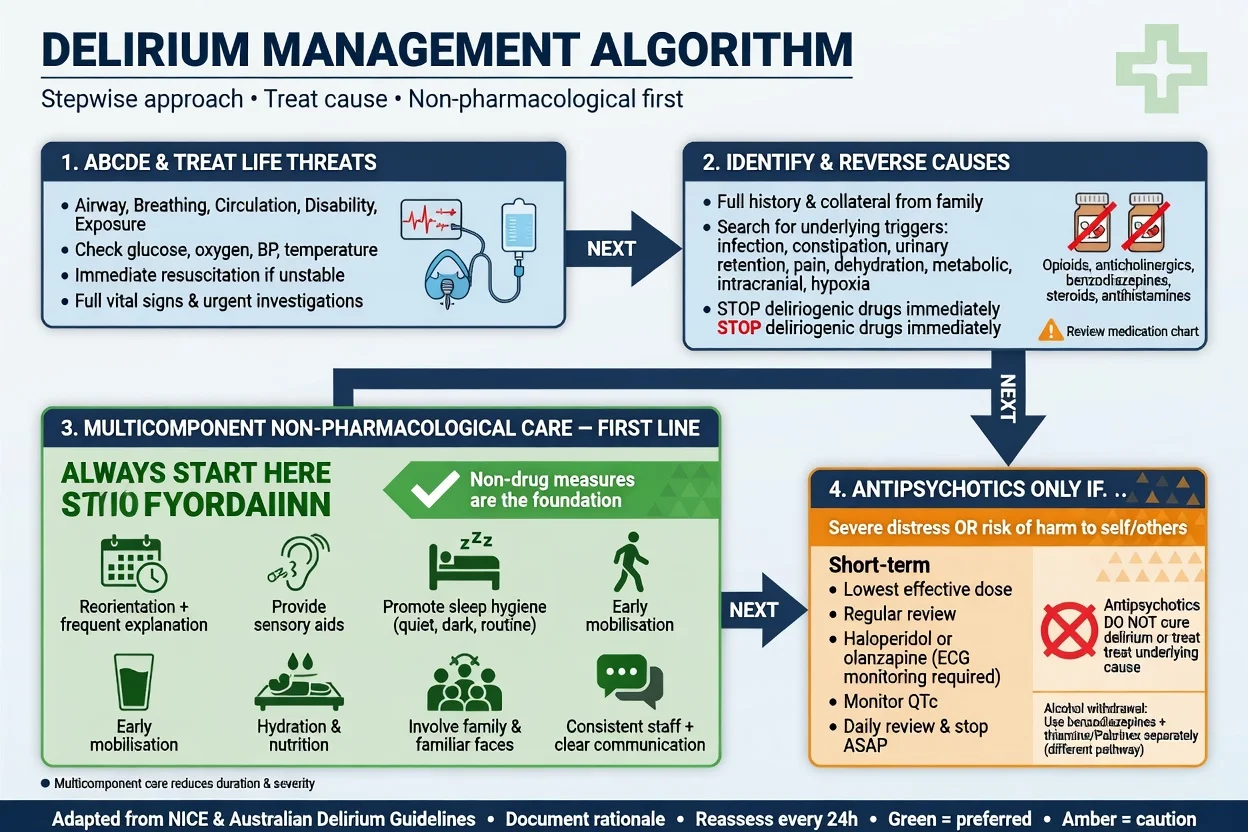
Non-pharmacological (FIRST-LINE)
Delirium prevention and management
Identify and treat underlying causes
Rule out: hypoxia, hypotension, infection (UTI, pneumonia), metabolic derangement (Na, glucose), drug withdrawal, pain, urinary retention, constipation, sleep deprivation. Delirium is a symptom of brain organ dysfunction — find and fix the cause.
Minimise sedatives — especially benzodiazepines
Benzodiazepines are the strongest pharmacological risk factor for delirium. Convert from midazolam to propofol or dexmedetomidine. Practice daily sedation interruption. Aim for lightest possible sedation (RASS -1 to 0).
Promote sleep-wake cycle
Lights off at night (minimise noise, cluster care). Blinds open during day. Melatonin may help restore circadian rhythm. Minimise nighttime interruptions (bloods, observations clustered to day shift).
Early mobilisation
Passive ROM day 1 → sit edge of bed → stand → walk. Requires coordination between nursing and physiotherapy. Reduces delirium duration and ICU-acquired weakness.
Reorientation and sensory support
Glasses and hearing aids. Clocks, calendars, familiar objects. Family presence. Verbal reorientation ("You are in hospital, you were admitted on..."). Minimise unnecessary lines/tubes.
Pharmacological — limited role
[1]MIND-USA and HOPE-ICU trials — antipsychotics ineffective for ICU delirium
MIND-USA (Girard, NEJM 2018)
Multicentre RCT: 566 patients, 16 US ICUs
Population: Critically ill adults with acute respiratory failure or shock and delirium
Key finding
No difference: haloperidol 7.9 days, ziprasidone 8.3 days, placebo 8.3 days. No difference in 90-day mortality, ventilation days, ICU LOS, or restraint use.
Practice change
Neither haloperidol nor ziprasidone improved outcomes over placebo in ICU delirium. Antipsychotics should NOT be used routinely for ICU delirium.
HOPE-ICU (Page, Lancet Respir Med 2013)
Multicentre RCT: 141 patients, 12 UK ICUs
Population: Critically ill ventilated adults within 72h of admission
Key finding
No difference in delirium-free days (haloperidol 16 days vs placebo 16 days). No difference in mortality, ventilation days, or ICU length of stay.
Practice change
Prophylactic haloperidol does NOT prevent delirium or improve outcomes in critically ill patients. Prophylactic antipsychotics are NOT recommended.
Delirium motoric subtypes
Not all delirium looks the same. Three motoric subtypes have distinct features, risk profiles, and prognoses: [1]
Hyperactive
~5-15% of cases
- Hypervigilant, agitated, restless, combative, hallucinating
- Often detected early (draws attention)
- Classically alcohol/benzodiazepine withdrawal, anticholinergic toxicity
- Best prognosis of the three subtypes (more likely to be recognised and treated)
- Pharmacological restraint (low-dose haloperidol/dexmedetomidine) only if danger to self/staff
Hypoactive
~45-65% of cases
- Lethargic, withdrawn, slow, poorly responsive, quietly confused
- Often MISSED — looks like "calm, well-sedated" patient
- WORST prognosis — highest mortality, longest hospital stay
- Common in sepsis, hepatic/renal failure, hypoxia, metabolic derangement
- CAM-ICU/ICDSC essential to detect — never assume a quiet patient is delirium-free
Mixed
~30-50% of cases
- Fluctuates between hyperactive and hypoactive features
- Most common subtype in mixed ICU populations
- Reflects the fluctuating nature of delirium (feature 1 of CAM-ICU)
- Management identical: identify and treat cause, minimise sedatives
Risk factors for ICU delirium
Delirium is multifactorial. Stratify risk on admission so prevention can be intensified in high-risk patients. [1]
Non-modifiable
Patient factors
- Age >65 years (most consistent risk factor)
- Pre-existing dementia or cognitive impairment
- History of depression or alcohol excess
- Hypertension, smoking history
- Severity of illness (APACHE II) at admission
- Prior functional dependence
Modifiable — disease
Acute illness factors
- Sepsis and systemic inflammation (cytokine-mediated neuroinflammation)
- Hypoxaemia, hypotension, metabolic derangement (Na, glucose, Ca)
- Acute renal or hepatic failure
- Infection (pneumonia, UTI, line infection)
- Sleep deprivation and disruption of circadian rhythm
- Physical restraints, urinary catheters, unnecessary lines
Modifiable — drugs
Iatrogenic factors
- BENZODIAZEPINES — strongest pharmacological risk factor (midazolam, lorazepam)
- Opioids (particularly meperidine/pethidine — avoid)
- Anticholinergics (atropine, oxybutynin, TCAs)
- Corticosteroids (high dose)
- Deep sedation (RASS -3 or less), especially in first 48h
- Prolonged mechanical ventilation
Sleep disruption in the ICU
[1]Environmental causes
Modifiable ICU factors
- Noise: alarms, conversations, equipment (often >60 dB — exceeds WHO night-time recommendation of 30 dB)
- Light: continuous artificial lighting, no day-night cycle
- Care interruptions: observations, bloods, repositioning, medications
- Mechanical ventilation: patient-ventilator dysynchrony disrupts sleep
Patient factors
Acute illness
- Pain, dyspnoea, anxiety, fever
- Systemic inflammation (cytokines disrupt sleep architecture)
- Drugs: benzodiazepines suppress REM, opioids fragment sleep, vasoactives
- Underlying comorbidity (OSA, heart failure, COPD)
Sleep promotion strategies
Sleep promotion bundle for ICU patients
Protect a nocturnal sleep window
Define a protected period (e.g., 22:00-05:00) where non-urgent care is deferred. Cluster nursing observations, blood tests, and medication rounds outside this window. Adjust ventilator checks to coincide with planned awakenings rather than disturbing sleep.
Restore the light-dark cycle
Open blinds and increase ambient light during the day. Reduce lighting at night — use dimmed spotlights rather than overhead fluorescent lights. This restores melatonin secretion and circadian rhythm.
Reduce noise
Adjust alarm thresholds to clinically appropriate minimums to reduce false alarms. Close doors where possible. Educate staff on quiet conversation at night. Consider earplugs for stable patients.
Earplugs and eye masks
Cochrane review supports earplugs and eye masks to improve sleep quality and reduce delirium incidence. Simple, cheap, low-risk intervention — offer to all suitable patients.
Pharmacological — melatonin and ramelteon
Melatonin 3-10 mg nocte may restore circadian rhythm. Ramelteon (MT1/MT2 agonist) reduced incident delirium in non-ICU patients (Hatta 2014, JAMA Psychiatry) — emerging evidence in ICU. AVOID benzodiazepines as hypnotics — they worsen delirium.
Early mobilisation (Immobility — the "I" in PADIS)
ICU-acquired weakness (ICUAW) develops within days of critical illness and is exacerbated by immobility. Early mobilisation is a core PADIS element and a key component of the ABCDEF bundle. [1]
Why early mobilisation matters
Mobilisation ladder — progressive activity
Mobilisation ladder — escalate as patient stabilises
Step 1: Passive range of motion (day 1)
Performed by physiotherapist or nurse for unconscious/paralysed patients. All major joints through full range. Maintains joint mobility and muscle length. Reduces venous stasis and pressure injury risk.
Step 2: Active-assisted and active exercise
Once patient can follow commands. Assistance with bed exercises, resistance bands. Anti-gravity movements while in bed.
Step 3: Sit over edge of bed
Haemodynamically stable, tolerating positioning. Builds trunk control and sitting balance. Important precursor to standing.
Step 4: Chair transfer and sitting out of bed
Requires adequate cardiovascular reserve (no escalating vasopressors, stable FiO2). Sit out for meals and care activities.
Step 5: Standing and marching on spot
Active physiotherapy-led. Requires extubation or stable ventilation with adequate ventilator support.
Step 6: Walking
Progressive ambulation with or without aids. Higher level of functional recovery. Often achievable before ICU discharge.
TEAM trial — early active mobilisation during mechanical ventilation
TEAM (Hodgson et al., NEJM 2022)
Multicentre RCT: 750 patients, 19 ICUs (Australia/New Zealand)
Population: Critically ill adults undergoing mechanical ventilation (within 72h)
Key finding
No difference in days alive and out of hospital at 180 days (143 days vs 145 days, P=0.78). No improvement in mortality, ventilation days, or functional outcomes. Adverse events were rare and similar between groups.
Practice change
More intensive, protocolised early active mobilisation did NOT improve outcomes over usual care in unselected ICU patients. Mobilisation remains standard care, but aggressive early protocols are not superior to usual care. Targeted mobilisation in selected patients (e.g., long-stayers) may still be beneficial.
Exam practice
SAQ — ICU sedation and delirium
10 minutes · 10 marks
A 72-year-old woman is admitted to ICU with severe community-acquired pneumonia requiring intubation. Day 3: she is on propofol 3 mg/kg/h and fentanyl 100 mcg/h. RASS -3. CAM-ICU positive (inattentive, disorganised thinking). BP 95/55, HR 88, CK 450, lactate 2.1.
SAQ — Delirium subtypes and the ABCDEF bundle
10 minutes · 10 marks
A 68-year-old man is day 7 in ICU post-laparotomy for faecal peritonitis and septic shock. He is now off vasopressors, on pressure support ventilation (FiO2 0.4). The nursing staff report he is "quiet and settled". RASS -1. CAM-ICU is positive (inattentive, fluctuating).
SAQ — Sleep, mobilisation, and the TEAM trial
10 minutes · 10 marks
A 55-year-old woman is day 4 in ICU with severe ARDS (P/F 150), ventilated on volume control with FiO2 0.6, PEEP 10. She is on dexmedetomidine 0.7 mcg/kg/h, RASS -2. Nursing staff ask about mobilising her and she reports poor sleep.
Clinical pearls
Red flags
References
- [1]Shehabi Y, Howe BD, Bellomo R, et al. Early Sedation with Dexmedetomidine in Critically Ill Patients N Engl J Med, 2019.PMID 31112380
- [2]Inoue SK, Westendorp RGJ, Saczynski JS. Delirium in critical illness: clinical manifestations, outcomes, and management Intensive Care Med, 2021.PMID 34401939
- [3]Kram BL, Kram SJ, Brooks KR. Diagnostic accuracy of the CAM-ICU and ICDSC in detecting intensive care unit delirium: A bivariate meta-analysis Int J Nurs Stud, 2021.PMID 33120134
- [4]Kam PC, Cardone D. Propofol infusion syndrome J Trauma Nurs, 2008.PMID 18820559
- [5]Huang YT, Jiang JR, Chen TJ, et al. The effect of the ABCDE/ABCDEF bundle on delirium, functional outcomes, and quality of life in critically ill patients: A systematic review and meta-analysis Int J Nurs Stud, 2023.PMID 36577261
- [6]Various authors. Dexmedetomidine- or Clonidine-Based Sedation Compared With Propofol in Critically Ill Patients: The A2B Randomized Clinical Trial JAMA, 2025.PMID 40388916
- [7]Devlin JW, Skrobik Y, Gélinas C, et al. Clinical Practice Guidelines for the Prevention and Management of Pain, Agitation/Sedation, Delirium, Immobility, and Sleep Disruption in Adult Patients in the ICU Crit Care Med, 2018.PMID 30113379
- [8]Girard TD, Exline MC, Carson SS, et al. Haloperidol and Ziprasidone for Treatment of Delirium in Critical Illness N Engl J Med, 2018.PMID 30346242
- [9]Page VJ, Ely EW, Gates S, et al. Effect of intravenous haloperidol on the duration of delirium and coma in critically ill patients (Hope-ICU): a randomised, double-blind, placebo-controlled trial Lancet Respir Med, 2013.PMID 24461612
- [10]TEAM Study Investigators, Hodgson CL, Bailey M, et al. Early Active Mobilization during Mechanical Ventilation in the ICU N Engl J Med, 2022.PMID 36286256
- [11]Hatta K, Kishi Y, Wada K, et al. Preventive effects of ramelteon on delirium: a randomized placebo-controlled trial JAMA Psychiatry, 2014.PMID 24554232
- [12]Beaucage-Charron J, Rinfret J, Coveney R, et al. Melatonin and Ramelteon for the treatment of delirium: A systematic review and meta-analysis J Psychosom Res, 2023.PMID 37150157