ICU · neurocritical-care
Acute Status Epilepticus — Comprehensive Full Management Cascade
Also known as Status epilepticus · Convulsive status epilepticus · Generalised convulsive status epilepticus · Non-convulsive status epilepticus · Refractory status epilepticus · Super-refractory status epilepticus · ESETT trial · Established status epilepticus · Anaesthetic coma for seizures · Burst suppression · Autoimmune encephalitis status epilepticus · Propofol infusion syndrome
Status epilepticus (SE) is a continuous seizure lasting more than 5 minutes, or two or more seizures without full recovery of consciousness between them. The 5-minute operational threshold (ILAE/Trinka 2015) exists because beyond it the seizure becomes self-sustaining, GABA-A receptors are internalised and trafficked away from the synaptic membrane (causing pharmacoresistance to benzodiazepines), NMDA and AMPA receptors are recruited to the membrane (perpetuating excitation), and neuronal injury begins. Management is a time-critical PHASED cascade with four stages. EARLY SE (0-5 min): abort with a benzodiazepine — IV lorazepam 4 mg (0.1 mg/kg), or IM midazolam 10 mg when no IV access (RAMPART showed IM midazolam superior to IV lorazepam when IV access absent), or IV/rectal diazepam. ESTABLISHED SE (5-30 min): second-line non-sedating AED infusion — levetiracetam 60 mg/kg (max 4.5 g), fosphenytoin 20 mg PE/kg (max 1500 mg PE) OR phenytoin 20 mg/kg, valproate 40 mg/kg. The ESETT trial (Kapur 2019, NEJM) proved all three are EQUALLY EFFECTIVE for established SE (~half stopped seizing and remained so at 60 min); levetiracetam is now widely first-choice because of ease of administration, no cardiac monitoring requirement, and the fewest acute adverse events. REFRACTORY SE (30+ min / ongoing after second-line): induce anaesthesia — intubate and start a continuous anaesthetic infusion: midazolam, propofol, thiopental/pentobarbital, or ketamine, titrated to EEG burst-suppression or seizure-suppression with continuous EEG monitoring. SUPER-REFRACTORY SE (continues or recurs 24+ h despite anaesthetic, including relapse on weaning the anaesthetic — Shorvon 2011): escalate to immunotherapy (IVIG, plasma exchange, corticosteroids, rituximab/cyclophosphamide), ketogenic diet, epilepsy surgery, hypothermia, and repetitive transcranial magnetic stimulation. Airway management is central — RSI with THIOPENTAL (3-5 mg/kg) is the classic neurointensivist choice because it is simultaneously an induction agent AND an anticonvulsant (augments GABA, suppresses seizure foci). Continuous EEG (cEEG) is MANDATORY after control of convulsive SE and should run 24-48 h after the last seizure to exclude non-convulsive status epilepticus (NCSE), which persists in roughly half of patients who 'stop shaking' clinically. ICU complications dominate morbidity: hypotension from anaesthetics (especially thiopental/pentobarbital — Claassen 2002 found 77% hypotension with pentobarbital vs 34% with midazolam/propofol), ventilator-associated pneumonia from prolonged intubation, thrombocytopenia and hyperammonaemic encephalopathy from valproate, and propofol infusion syndrome (PRIS — lactataemia, rhabdomyolysis, hepatomegaly, cardiac failure, death; keep propofol <4 mg/kg/h and <48 h where possible). Autoimmune encephalitis (anti-NMDA receptor, anti-LG1, anti-GAD) is an increasingly recognised and treatable cause of refractory and super-refractory SE, especially in young patients with no prior epilepsy — suspect it, antibody-test, and treat empirically with IVIG/PLEX plus steroids and add rituximab/cyclophosphamide for NMDA. Mortality is 15-30% overall, rising to ~40% in refractory and ~50-60% in super-refractory SE.
On this page & tools
Your progress
Saved locally on this device.
Target exams
Red flags
Overview

Status epilepticus is the most common medical neurological emergency, with an annual incidence of ~10-40 per 100,000 and a lifetime cumulative incidence approaching 1%. It carries an overall short-term mortality of 15-30% (higher in the elderly and in acute symptomatic causes), rising steeply once the condition becomes refractory (~40%) and super-refractory (~50-60%). The intensivist's role is to execute a time-locked, protocol-driven cascade in which every minute counts: a seizure that is still going at 5 minutes must be treated (not observed), a seizure still going after a benzodiazepine must receive a second-line AED, a seizure still going after that must trigger intubation and anaesthetic coma, and a seizure still going after 24 hours of anaesthesia must trigger a structured search for (and treatment of) an underlying autoimmune, toxic, infectious, or metabolic cause while escalating to third-tier therapies.[2][3]
Three conceptual anchors govern modern SE management. First, the ILAE operational definition (Trinka 2015) fixes the 5-minute threshold for convulsive SE (10 minutes for focal SE with impaired awareness, and 4-5 minutes for absence SE), with a further t1/t2 time axis: t1 (5 min) is the time at which the seizure is likely to be prolonged and should be treated; t2 (30 min) is the time beyond which long-term consequences (neuronal injury, pharmacoresistance) are likely. Second, the principle of time-dependent pharmacoresistance: the longer a seizure runs, the harder it is to stop, because GABA-A receptors (the benzodiazepine target) are progressively removed from the synapse while excitatory NMDA/AMPA receptors are inserted — so the same benzodiazepine dose that works at 2 minutes fails at 30 minutes. Third, the staged cascade itself: each line is less effective than the one before (the AES pathway showed second-line therapy works in only ~half, third-line substantially less), so the only way to win is to move briskly through the stages by the clock rather than waiting to confirm failure at each step.[6][3]
Pathophysiology
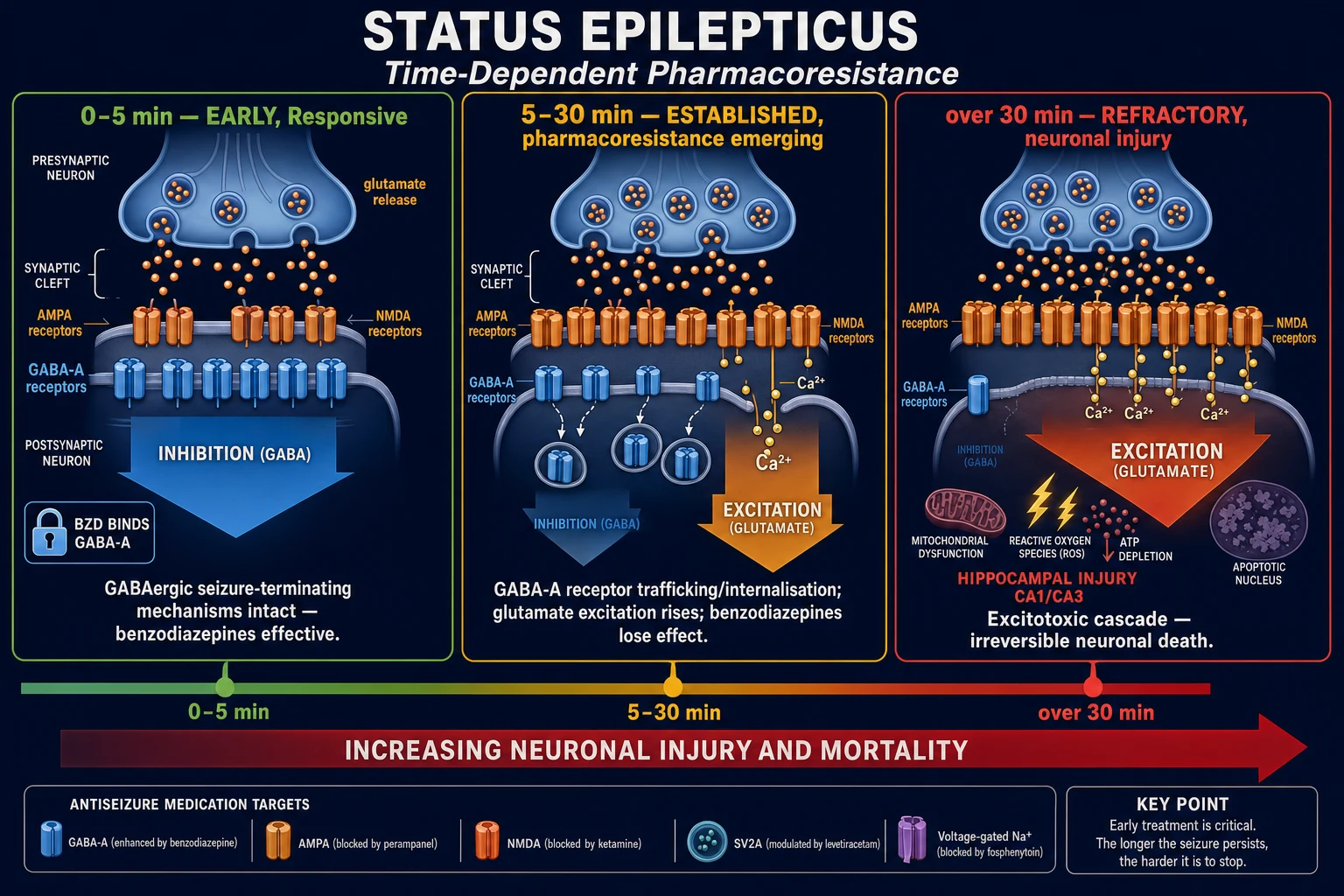
— why the 5-minute threshold matters [1]
The transition from a self-limiting seizure to self-sustaining status epilepticus is not merely a matter of duration — it is a fundamental shift in receptor biology at the synapse. Understanding this shift explains both the urgency (why we treat at 5 minutes, not 30) and the pharmacology (why benzodiazepines fail and why anaesthetics are needed). [1]
The receptor trafficking that drives time-dependent pharmacoresistance
| Mechanism | Early SE (0-5 min) | Established → Refractory SE (30+ min) |
|---|---|---|
| GABA-A receptors | Abundant at the synapse — benzodiazepines are HIGHLY effective | Internalised (clathrin-mediated endocytosis) and trafficked to the cytoplasm — fewer synaptic GABA-A receptors available, so benzodiazepines lose effect (the same dose fails) |
| NMDA / AMPA receptors | Baseline density | Recruited to the synaptic membrane — more excitatory receptors amplify glutamatergic drive and perpetuate the seizure |
| Calcium entry | Modest | Sustained Ca2+ influx → activation of proteases (calpains), lipases, and caspases → excitotoxic neuronal injury and cell death (hippocampus, cortex, thalamus vulnerable) |
| Energy failure | Intact mitochondrial function | Failure of ATP production, lactate accumulation, loss of ionic homeostasis — contributes to neuronal death |
| Drug response | Benzodiazepines terminate most seizures rapidly (within minutes) | Benzodiazepines increasingly ineffective — need higher doses (with more respiratory depression) and ultimately non-benzodiazepine (anaesthetic) agents |
| Clinical correlate | Easy to stop | Hard to stop; each successive line less effective; risk of permanent brain injury rises |
ILAE definition and classification
The 2015 ILAE Task Force (Trinka) provided the operational definition and a four-axis classification that every intensivist should know because it frames the entire management cascade and the prognosis.[6]
ILAE definition of status epilepticus — the t1/t2 operational framework
| Concept | Definition | Threshold (convulsive SE) | Clinical meaning |
|---|---|---|---|
| t1 — time to treat | The time beyond which a seizure should be treated as continuous (SE) | 5 minutes (generalised convulsive); 10 min (focal with impaired awareness / absence) | This is when you START treatment — do not wait |
| t2 — time to long-term consequences | The time beyond which the seizure is likely to cause long-term consequences (neuronal injury, pharmacoresistance, recurrence) | 30 minutes | By this point neuronal injury is occurring and benzodiazepine resistance is established |
| Status epilepticus (operational) | A continuous seizure lasting beyond t1, OR two or more discrete seizures without full recovery of consciousness between them | Seizure >5 min, or recurrent without recovery | The trigger for the cascade |
| Refractory SE | SE continuing despite first-line (benzodiazepine) AND second-line (AED) therapy — conventionally still going at ~30-60 min | ~30-60 min despite two lines | Indication for anaesthetic coma + intubation |
| Super-refractory SE | SE that continues or recurs 24 hours or more after the onset of anaesthetic therapy, including relapse on reducing or withdrawing anaesthesia | >24 h of anaesthesia | Indication for immunotherapy, ketogenic diet, surgery |
The ILAE classification also stratifies SE along four axes: (1) semiology — with or without prominent motor symptoms (convulsive vs non-convulsive being the most clinically important distinction for the intensivist); (2) aetiology — structural, genetic, infectious, metabolic, immune, unknown (SIGMIE); (3) EEG correlate — and (4) age. The with/without motor distinction is operationally vital: convulsive SE (generalised tonic-clonic) is the obvious emergency, but non-convulsive SE (NCSE) — persistent altered consciousness with subtle or no motor activity — is common, easily missed, and equally damaging if prolonged. Up to ~50% of patients who appear to stop seizing clinically have ongoing electrographic seizures; this is why continuous EEG is mandatory after controlling convulsive SE.[2][6]
The four-phase management cascade
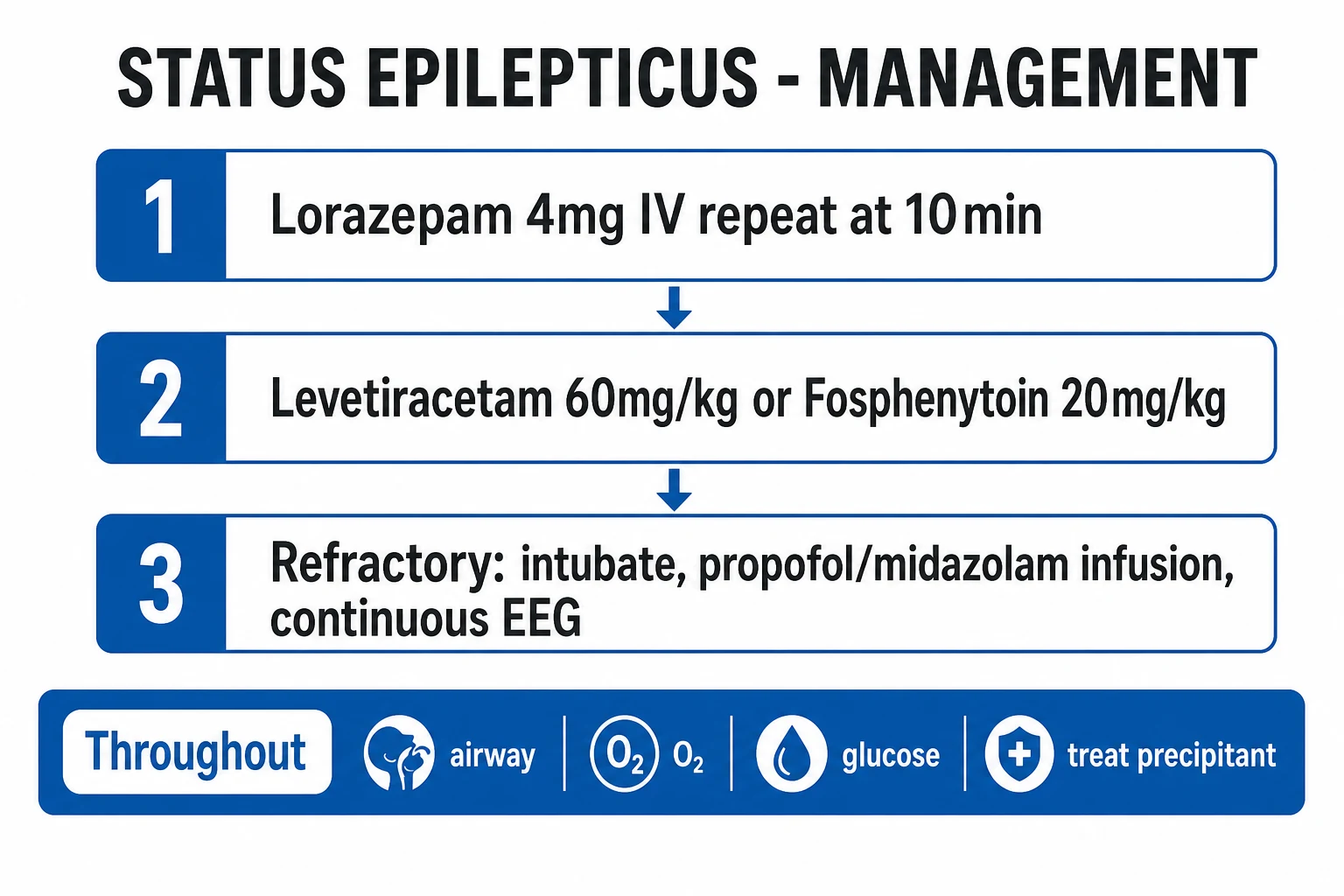
— overview [1]
The status epilepticus cascade — four phases by the clock
| Phase | Time window | First-line treatment | Setting / monitoring |
|---|---|---|---|
| 1. EARLY (pre-hospital / ED) | 0-5 min | Benzodiazepine — IV lorazepam 4 mg, IM midazolam 10 mg (no IV), IV/rectal diazepam | Bedside; ABC; check glucose; repeat benzo once if still seizing |
| 2. ESTABLISHED (ED / ICU) | 5-30 min | Second-line AED infusion — levetiracetam 60 mg/kg, fosphenytoin 20 mg PE/kg, or valproate 40 mg/kg (ESETT: all equally effective) | Cardiac monitoring (especially for fosphenytoin/valproate); prepare for airway |
| 3. REFRACTORY (ICU) | 30+ min / ongoing after 2 lines | Anaesthetic coma — intubate, start midazolam / propofol / thiopental-pentobarbital / ketamine infusion; titrate to cEEG | ICU; mechanical ventilation; continuous EEG to burst-suppression or seizure-suppression; vasopressors for anaesthetic hypotension |
| 4. SUPER-REFRACTORY (neuro-ICU) | >24 h of anaesthesia | Third-tier therapies — immunotherapy (IVIG/PLEX/steroids/rituximab), ketogenic diet, epilepsy surgery, hypothermia, rTMS, (emerging: cannabidiol, brivaracetam) | Neuro-ICU; multidisciplinary (intensivist, epileptologist, neurosurgeon, immunologist) |
The cardinal principle: move by the clock, not by waiting to confirm each step failed. A patient still seizing after 5 minutes gets a benzodiazepine; still seizing 5-10 minutes after an adequate benzodiazepine gets a second-line AED; still seizing after an adequate second-line AED gets intubated and anaesthetised. The AES evidence-based guideline (Glauser 2016) quantifies how each successive line loses efficacy, which is the entire justification for rapid escalation.[3]
Phase 1 — Early status epilepticus (0-5 min): benzodiazepines
The first-line agent in established SE is a benzodiazepine, given promptly and in adequate dose. The aim is to deliver an effective dose within the first 5-10 minutes. Under-dosing is the commonest error — give the full dose, repeat once if still seizing, then move on. [1]
Phase 1 — early status epilepticus (benzodiazepine protocol)
- SECURE ABC + BEDSIDE BASICS (0-2 min) — Airway (recovery position, suction, basic airway manoeuvres), high-flow oxygen, breathing and circulation support, IV access. Check capillary glucose immediately — hypoglycaemia is a rapidly reversible and dangerous cause; give 50 mL of 50% dextrose IV (or 5 mL/kg of 10% dextrose in children) if low. Consider thiamine 100-250 mg IV if alcohol misuse or malnutrition suspected (prevent Wernicke). Send bloods (FBC, electrolytes incl. Ca/Mg, glucose, LFTs, toxicology, AED levels if known epilepsy, blood cultures if febrile).
- BENZODIAZEPINE — choose by available route:
- IV LORAZEPAM 4 mg (0.1 mg/kg) IV — preferred first-line when IV access available. Stable in solution, longer CNS duration than diazepam (less redistribution), the established IV standard (VA Cooperative Study).
- IM MIDAZOLAM 10 mg (5 mg if <40 kg) — preferred when NO IV access (pre-hospital, difficult veins). RAMPART trial proved IM midazolam SUPERIOR to IV lorazepam when IV access had to be established (faster effective dosing).
- IV/RECTAL DIAZEPAM 10 mg IV or 0.2-0.5 mg/kg PR — acceptable alternative; diazepam redistributes rapidly (short CNS effect) so recurrence is common; rectal route useful pre-hospital/in children.
- IV CLONAZEPAM 1 mg — acceptable alternative available in some regions.
- REPEAT BENZODIAZEPINE ONCE if still seizing after 5 min — e.g. a second lorazepam 4 mg (total 0.2 mg/kg). Do NOT keep escalating benzodiazepine beyond two doses — additional benzodiazepine mainly adds respiratory depression without seizure control once SE is established.
- IF STILL SEIZING ~5-10 MIN AFTER ADEQUATE BENZODIAZEPINE → escalate to PHASE 2 (second-line AED). Do not wait 30 min.
- PREPARE FOR AIRWAY — have suction, bag-valve-mask, and intubation equipment ready; benzodiazepines and ongoing SE both depress respiration.
Phase 2 — Established status epilepticus (5-30 min): second-line AEDs
If the patient is still seizing ~5-10 minutes after an adequate benzodiazepine, give a second-line non-sedating antiepileptic drug infusion. The three evidence-supported options are levetiracetam, fosphenytoin (or phenytoin), and valproate. The ESETT trial is the definitive modern evidence that all three are equally effective.[1][3]
Second-line AEDs for established SE — the three ESETT options
| Drug | Dose (adult) | Infusion rate | Advantages | Disadvantages / cautions |
|---|---|---|---|---|
| Levetiracetam | 60 mg/kg (max 4.5 g) | Over 5-15 min (up to 100 mg/min; some give faster) | Easiest — no cardiac monitoring, no significant interactions, no hypotension, renal excretion, broad spectrum, no induction of other drugs. Fewest acute adverse events in ESETT. Increasingly first-choice | Extrapyramidal/behavioural effects (rare); reduced dose in renal failure |
| Fosphenytoin | 20 mg PE/kg (max 1500 mg PE) | Up to 150 mg PE/min | Effective, long duration, no sedation, can monitor levels | Cardiac monitoring required — risk of hypotension, bradycardia, arrhythmia (less than phenytoin but still); infusion-site reactions; nystagmus/ataxia. PHT preferred over phenytoin for tolerability and safety (water-soluble, no propylene glycol vehicle) |
| Valproate | 40 mg/kg (max 3000 mg) | Up to 10 mg/kg/min (faster in some protocols) | Effective, no sedation, no cardiac monitoring, good for idiopathic/generalised epilepsy and for prophylaxis | Thrombocytopenia, hyperammonaemic encephalopathy (check ammonia if unexplained coma), hepatotoxicity (avoid in mitochondrial/metabolic disease), TERATOGEN (avoid in women of childbearing potential) |
ESETT — Established Status Epilepticus Treatment Trial (Kapur 2019, NEJM, PMID 31774955)
Study design
Double-blind, randomised, comparative effectiveness trial — adults and children >2 years with established convulsive SE (still seizing or altered after ≥1 benzo dose, enrolled within 2 h)
Population
384 patients with established SE who had received an adequate benzodiazepine dose
Arms
Levetiracetam 60 mg/kg (max 4.5 g) vs fosphenytoin 20 mg PE/kg (max 1500 mg PE) vs valproate 40 mg/kg (max 3000 mg)
Primary outcome
Absence of clinically apparent seizures and improved responsiveness at 60 min, without additional therapy
Key finding
All three EQUALLY EFFECTIVE: levetiracetam ~47%, fosphenytoin ~45%, valproate ~46% — no significant difference. Trial stopped early for futility of finding a difference (prespecified boundary)
Safety
No significant difference in life-threatening hypotension, endotracheal intubation, or adverse events between groups; lowest rate of infusion-related events trended toward levetiracetam
Clinical bottom line
Levetiracetam, fosphenytoin, and valproate are EQUALLY effective (~half respond) for established SE. Choose by patient factors: levetiracetam for ease/no monitoring; fosphenytoin if cardiac monitoring feasible and broad structural aetiology; valproate for idiopathic/generalised epilepsy (avoid in pregnancy). The ~50% non-response rate confirms the need for rapid escalation to anaesthesia
Phase 3 — Refractory status epilepticus (30+ min): anaesthetic coma
SE continuing despite an adequate benzodiazepine AND an adequate second-line AED is refractory (RSE). The treatment is induction of anaesthesia with a continuous IV anaesthetic/anticonvulsant infusion, combined with endotracheal intubation and mechanical ventilation (anaesthetic doses cause apnoea and hypotension) and continuous EEG monitoring to guide titration. This is a defining transition from the ED cascade into ICU-level neurocritical care.[2][4]
Phase 3 — refractory status epilepticus (anaesthetic coma protocol)
- INTUBATE — rapid sequence induction with an anticonvulsant induction agent:
- THIOPENTAL 3-5 mg/kg IV — the classic neurointensivist choice: it induces anaesthesia AND is a potent anticonvulsant (augments GABA at high doses, suppresses seizure foci, helps induce burst-suppression immediately). Caution: marked vasodilation/negative inotropy → hypotension (have norepinephrine ready).
- PROPOFOL 2-3 mg/kg IV — alternative anticonvulsant induction (GABA potentiation, NMDA antagonism); fast offset but watch for hypotension and PRIS on infusion.
- Paralysis: rocuronium 1.0-1.2 mg/kg or suxamethonium 1-1.5 mg/kg (sux safe here unless contraindicated; note the paralysis will MASK motor seizures — EEG becomes essential).
- WARNING: once paralysed, clinical seizures vanish but electrographic SE may continue undetected — cEEG is mandatory from this point.
- START CONTINUOUS ANAESTHETIC INFUSION — choose one of:
- MIDAZOLAM — load 0.2 mg/kg, infusion 0.05-2 mg/kg/h. Fast titration, relatively haemodynamically stable, water-soluble; BUT tachyphylaxis develops within 24-48 h (receptors upregulate, escalating doses needed) and active metabolite accumulates in renal failure. Good first choice for short-term RSE.
- PROPOFOL — load 1-2 mg/kg, infusion 30-200 mcg/kg/min (up to ~4 mg/kg/h). Fast on/off, easy to titrate to EEG, allows neurological examination on pause. Major risk: PRIS — keep <4 mg/kg/h, use <48 h where possible, monitor lactate + CK + triglycerides. Avoid in children on long high-dose infusions.
- PENTOBARBITAL / THIOPENTAL (barbiturate coma) — load 5-15 mg/kg, infusion 0.5-5 mg/kg/h (titrate to burst-suppression). Most effective at seizure control and breakthrough prevention (Claassen 2002) but highest hypotension (77%), profound immunosuppression (VAP), paralytic ileus, and very long half-life (days, accumulation). Reserved for refractory cases where midazolam/propofol fail.
- KETAMINE — 1-2 mg/kg bolus, infusion 1-10 mg/kg/h. NMDA antagonist — targets the receptor trafficking that drives late refractory SE; preserves blood pressure (sympathetic stimulation); emerging evidence supports use in super-refractory SE. Caution: theoretical neurotoxicity/ICP effects (probably over-stated in established SE), hallucinations (irrelevant in the sedated/paralysed).
- TITRATE TO cEEG ENDPOINT — goal is either seizure suppression (abolition of electrographic seizures, often with background slowing) or, in more refractory cases, burst-suppression (bursts of activity separated by flat periods, typically 2-6 s suppression) or, maximally, suppression-burst to near-suppression. There is debate about whether burst-suppression improves outcome vs simply abolishing seizures; many units abolish seizures first and deepen to burst-suppression only if seizures recur.
- MAINTAIN ANAESTHESIA 24-48 h BEFORE ATTEMPTING WEAN — then taper the infusion slowly over 6-24 h while watching cEEG for recurrence. If seizures recur, reinduce and consider super-refractory pathway.
- MANAGE THE INEVITABLE HAEMODYNAMIC CONSEQUENCES — anaesthetic hypotension is the rule (especially pentobarbital): titrate vasopressors (norepinephrine first-line, add vasopressin/epinephrine), ensure adequate volume, use arterial line monitoring. Avoid letting MAP fall below cerebral perfusion needs (target CPP-adequate MAP, usually MAP >65-80 mmHg, higher if raised ICP).
- CONTINUE BASELINE AEDs — ensure maintenance phenytoin/levetiracetam/valproate (etc.) therapeutic levels; the anaesthetic controls the acute seizure but maintenance AEDs prevent recurrence on weaning.
- SEARCH FOR AND TREAT THE CAUSE (see below) in parallel — anaesthesia buys time but does not cure an untreated abscess, tumour, deranged sodium, or autoimmune encephalitis.
The four anaesthetic infusions for refractory SE — comparative profile
| Agent | Mechanism | Haemodynamics | Key advantage | Key disadvantage / risk |
|---|---|---|---|---|
| Midazolam | Benzodiazepine — GABA-A potentiation | Relatively stable | Fast titration, water-soluble, easy to use, less hypotension | Tachyphylaxis (24-48 h), long-acting metabolite (renal), seizures recur on weaning |
| Propofol | GABA potentiation + NMDA antagonism | Hypotension (moderate) | Very fast on/off, easy EEG titration, allows neuro exam | PRIS (lactataemia, rhabdo, cardiac failure, death) — limit dose & duration; pain on injection |
| Pentobarbital / thiopental | Barbiturate — GABA + glutamate suppression | Severe hypotension (77%) | Most effective at seizure control & preventing breakthrough; long-lasting | Hypotension requiring vasopressors, immunosuppression/VAP, ileus, very long half-life (days), hypothermia |
| Ketamine | NMDA receptor antagonist | Preserves BP (sympathetic) | Targets the NMDA upregulation of late refractory SE; preserved haemodynamics | Theoretical neurotoxicity/hallucinations; less evidence; avoid in uncontrolled raised ICP (probably safe in established SE) |
Claassen et al. — systematic review of anaesthetic treatment for refractory SE (PMID 11903460)
Study design
Systematic review of 28 studies (1970-2001) — 193 adult RSE patients refractory to ≥2 AEDs
Comparison
Continuous-infusion midazolam (n=54) vs propofol (n=33) vs pentobarbital (n=106)
Key findings
Pentobarbital: lowest treatment failure (8% vs 23%, p<0.01) and breakthrough seizures (12% vs 42%, p<0.001), but highest hypotension (77% vs 34%, p<0.001). Burst-suppression titration reduced breakthroughs but increased hypotension
Mortality
~48% overall — NOT significantly associated with agent or titration goal
Clinical bottom line
Pentobarbital (and EEG background-suppression) is more effective at seizure control but causes more hypotension with no mortality benefit — supports starting with midazolam/propofol and reserving barbiturate coma for refractory cases; RCTs needed
Airway management and RSI in status epilepticus
Airway control becomes mandatory at the transition to refractory SE (and often earlier if the benzodiazepine/AED has depressed respiration). The intensivist should plan the intubation deliberately: the induction agent can be chosen for its dual role as both anaesthetic and anticonvulsant. [1]
Airway and RSI in status epilepticus — practical protocol
- TIMING — intubate when: (a) SE is refractory and anaesthetic infusion planned (mandatory); (b) respiratory depression/hypoventilation from benzodiazepines or SE itself; (c) inability to protect airway (coma, bulbar failure); (d) refractory hypoxaemia/hypercapnia. Early elective intubation is safer than an emergency one in an arrested, hypoxic patient.
- PREPARATION — full difficult-airway assessment (LEMON), suction (seizing patients often vomit/aspirate), preoxygenation (4-6 breaths or 3 min; consider apnoeic oxygenation with nasal HFNC), ready vasopressors (anaesthetic + SE → hypotension), cEEG leads applied BEFORE induction if possible (paralysis masks seizures).
- INDUCTION AGENT — use an anticonvulsant:
- THIOPENTAL 3-5 mg/kg IV — preferred for RSI in SE: induces anaesthesia AND immediately suppresses seizure activity and contributes to burst-suppression. Marked hypotension — have norepinephrine bolus/infusion ready.
- PROPOFOL 2-3 mg/kg IV — alternative: GABAergic + anticonvulsant, fast offset; hypotension; PRIS risk only with prolonged infusion, not a single RSI dose.
- Avoid etomidate as sole agent if you can use the anticonvulsant property of thiopental/propofol (etomidate does suppress seizures but is less useful for ongoing control and causes adrenal suppression); ketamine (1-2 mg/kg) is acceptable (NMDA antagonist, preserves BP) but less conventional for RSI in SE.
- PARALYTIC — rocuronium 1.0-1.2 mg/kg (reversible with sugammadex) or suxamethonium 1-1.5 mg/kg (rapid offset; avoid in hyperkalaemia, burns, neuromuscular disease, malignant hyperthermia). Paralysis removes motor seizures — cEEG is now essential to detect ongoing electrographic SE.
- POST-INTUBATION — confirm tube placement (waveform capnography), start lung-protective ventilation (tidal volume 6-8 mL/kg ideal body weight, PEEP 5, SpO2 94-98%, PaCO2 35-45 mmHg; avoid hypoxia and hypercapnia which raise ICP and worsen brain injury), secure tube, commence anaesthetic infusion, begin vasopressor support, apply/continue cEEG.
- ANALGOSOEDATION POST-INTUBATION — the anaesthetic infusion (midazolam/propofol/pentobarbital) IS the sedation; add fentanyl/morphine for analgesia if needed. Do NOT rely on paralysis alone without adequate anaesthesia/sedation.
Continuous EEG monitoring — the mandatory neurocritical-care tool
Once a patient has been controlled for convulsive SE (especially after intubation/paralysis), the seizure is not necessarily over. Non-convulsive status epilepticus (NCSE) — ongoing electrographic seizures without overt motor activity — persists in a substantial proportion of patients who appear to have stopped seizing, and is associated with worse outcomes if untreated. Continuous EEG (cEEG) is mandatory after controlling convulsive SE.[2]
EEG monitoring in status epilepticus — what, when, why
| Issue | Recommendation |
|---|---|
| Who needs cEEG? | Any patient who does not return to baseline consciousness within 20-30 min after convulsive SE stops; any intubated/paralysed/sedated patient post-SE; suspected NCSE (fluctuating consciousness, subtle twitching, nystagmoid eye movements); all refractory/super-refractory SE |
| When to start? | As soon as possible after SE control — ideally within 1 h; in RSE, BEFORE induction of anaesthesia (so you can see what you are treating) and certainly during anaesthetic titration |
| Duration? | At least 24-48 h of cEEG after the last electrographic seizure to detect recurrence / NCSE. Longer (continuous) for super-refractory SE |
| What is the endpoint in RSE? | Titrate anaesthetic infusion to seizure suppression (no electrographic seizures) or burst-suppression (bursts separated by 2-6 s flat periods) or near-complete suppression, depending on protocol |
| Why? | (1) NCSE is common (~30-50% of patients who 'stop shaking' have ongoing electrographic seizures). (2) Paralysis masks motor seizures. (3) Ongoing electrographic SE causes neuronal injury even without convulsions. (4) Guides anaesthetic weaning (recurrence on taper) |
| Pitfalls | Artifact from movement/ventilator/ICU equipment; over-reading periodic discharges (PLEDs/LPDs, GPDs) which may or may not represent treatable SE — needs expert epileptologist interpretation |
ICU complications of status epilepticus and its treatment
The morbidity of prolonged SE comes as much from its treatment (anaesthesia, ventilation, vasopressors) as from the seizure itself. Anticipating and managing these complications is core ICU work. [1]
ICU complications of refractory/super-refractory SE and its treatment
| Complication | Cause | Prevention / management |
|---|---|---|
| Hypotension | Anaesthetic vasodilation + negative inotropy (worst with pentobarbital/thiopental; also propofol, midazolam) | Titrate vasopressors (norepinephrine ± vasopressin/epinephrine); ensure adequate volume; arterial line; balance seizure control against perfusion — do not let MAP fall below cerebral needs |
| Ventilator-associated pneumonia (VAP) | Prolonged intubation + impaired immunity (barbiturates) + aspiration during SE | Ventilator bundle (head-up 30°, oral chlorhexidine, subglottic suction, daily sedation interruption when safe, DVT/stress-ulcer prophylaxis); early empirical antibiotics for suspected infection; rapid weaning when possible |
| Propofol infusion syndrome (PRIS) | Prolonged high-dose propofol (>4-5 mg/kg/h, >48 h) — mitochondrial toxicity | Keep propofol <4 mg/kg/h, use <48 h where possible; monitor lactate, CK, triglycerides, arterial blood gas daily; suspect if lactataemia, rising CK, hepatomegaly, metabolic acidosis, arrhythmia/bradyasystole; STOP propofol, switch to midazolam/pentobarbital, supportive (may need cardiac pacing/ECMO) |
| Thrombocytopenia / hyperammonaemia | Valproate — dose-related thrombocytopenia; hyperammonaemic encephalopathy (even with normal LFT) | Check platelets; check ammonia if unexplained coma/worsening; reduce/stop valproate; carnitine supplementation for hyperammonaemia |
| Cardiac arrhythmia / hypotension (fosphenytoin) | Fosphenytoin infusion (less than phenytoin but still) | Infuse ≤150 mg PE/min with cardiac monitoring; slow/stop if hypotension or arrhythmia; fosphenytoin preferred over phenytoin (no propylene glycol vehicle, fewer infusion reactions) |
| Rhabdomyolysis | Prolonged muscle activity during convulsive SE; PRIS | Check CK; aggressive IV fluids; monitor renal function; treat as for any rhabdomyolysis |
| Aspiration pneumonitis/pneumonia | Loss of airway protection during SE, vomiting | Early airway protection; antibiotics only if clear pneumonia (not purely chemical pneumonitis) |
| Neurogenic pulmonary oedema | Sympathetic surge in SE | Supportive — oxygen, PEEP, diuresis; usually self-limiting |
| Deep vein thrombosis | Immobility, prolonged sedation | Pharmacological and mechanical prophylaxis (balance with any coagulopathy) |
| Stress ulceration; ileus (barbiturates); hyperglycaemia | Critical illness; drug effects | Stress-ulcer prophylaxis (PPI); glycaemic control (avoid hypoglycaemia and marked hyperglycaemia — both worsen brain injury); bowel care |
| Hypothermia | Barbiturate coma impairs thermoregulation | Active warming; note induced hypothermia may be a deliberate super-refractory therapy |
Aetiology — find the cause while you treat the seizure
Terminating the seizure is necessary but insufficient — SE is almost always a symptom of an underlying problem, and untreated cause predicts recurrence and death. Search systematically while executing the cascade. [1]
Causes of status epilepticus (the SIGMIE framework) — with first-pass workup
| Aetiology category | Examples | Specific workup / action |
|---|---|---|
| Structural | Stroke (ischaemic/haemorrhagic), tumour, traumatic brain injury, abscess, hippocampal sclerosis, vascular malformation | CT head (urgent, first-line — rule out haemorrhage/mass needing surgery); MRI brain (diffusion, FLAIR, susceptibility) once stable |
| Metabolic / toxic | Hypoglycaemia / hyperglycaemia (incl. non-ketotic hyperglycaemia), hyponatraemia, hypocalcaemia, hypomagnesaemia, uraemia, hepatic encephalopathy, drug withdrawal (alcohol, benzodiazepines, barbiturates), drug toxicity/overdose (TCA, theophylline, isoniazid, lithium, cocaine, amphetamines), sepsis | Capillary glucose immediately; FBC, electrolytes (Na, Ca, Mg, PO4), LFT, creatinine, glucose, toxicology screen, alcohol level, drug levels (AEDs); correct metabolic derangements; give flumazenil ONLY if iatrogenic benzo overdose (avoid — can precipitate worse SE/seizures) |
| Infectious | Meningitis, encephalitis (HSV, other viral), brain abscess, empyema, sepsis | If febrile or immunocompromised: LP (after CT) for CSF, send for bacterial/viral (incl. HSV PCR) studies; start empirical ceftriaxone + aciclovir until infection excluded; blood cultures |
| Immune / autoimmune | Anti-NMDA receptor encephalitis, anti-LGI1, anti-GAD, anti-GABA-A/B, anti-AMPAR, Hashimoto's, lupus cerebritis | Suspect in young patients, no epilepsy history, viral prodrome, psychiatric/cognitive features, movement disorder; send autoantibody panel (serum + CSF); treat empirically early (see autoimmune section); CT chest/abdomen/pelvis for occult tumour (teratoma in NMDA) |
| Genetic / chronic epilepsy | Known epilepsy with subtherapeutic AED levels / non-adherence, Dravet syndrome, progressive myoclonic epilepsies | Check AED levels; reconcile medications; address adherence; resume maintenance AEDs |
| Unknown (cryptogenic) | No cause found after workup | Often overlaps with autoimmune; pursue repeat/expanded antibody testing and MRI |
Autoimmune encephalitis — the increasingly recognised cause of refractory SE
Autoimmune encephalitis (AE) is one of the most important recent paradigm shifts in SE management: a substantial and growing fraction of refractory and super-refractory SE — particularly in young patients with no prior epilepsy — is driven by antibody-mediated neuronal inflammation, and is treatable with immunotherapy. Failing to recognise it condemns the patient to escalating anaesthesia (which cannot cure an autoimmune process) and worse outcomes. [1]
The autoimmune encephalitides that cause refractory/super-refractory SE
| Antibody | Typical presentation | Key features | Specific management |
|---|---|---|---|
| Anti-NMDA receptor | Young women, viral prodrome, then psychiatric symptoms (psychosis), seizures, dyskinesias (orofacial), autonomic instability, hypoventilation, catatonia → refractory SE | Often teratoma (ovarian) — search for and resect; characterised by extreme refractoriness and prolonged ICU course | First-line: IVIG/PLEX + methylprednisolone. Second-line (if no response in 10-14 days): rituximab ± cyclophosphamide. Tumour removal if found. Good prognosis with early aggressive immunotherapy (Titulaer 2013: early second-line immunotherapy improved outcome) |
| Anti-LGI1 (voltage-gated potassium channel complex) | Older adults, faciobrachial dystonic seizures (FBDS), hyponatraemia, cognitive decline, refractory SE | FBDS are highly characteristic; hyponatraemia is a clue; excellent response to immunotherapy | Steroids + IVIG/PLEX; often very steroid-responsive; treat the hyponatraemia |
| Anti-GAD65 | Young women (often with type 1 diabetes, thyroid autoimmunity), refractory seizures/SE, stiff-person overlap | Often partial epilepsy, limbic encephalitis; relatively steroid-resistant | Steroids + IVIG/PLEX; rituximab if refractory |
| Anti-GABA-A receptor | Severe, rapidly progressive, highly refractory SE, often with multifocal cortical involvement on MRI | Often requires prolonged anaesthesia; poor prognosis | Aggressive early immunotherapy (steroids + IVIG/PLEX ± rituximab) |
| Anti-GABA-B receptor | Limbic encephalitis, seizures; older adults | Strong small-cell lung cancer association — screen for tumour | Steroids + IVIG/PLEX; treat underlying tumour |
| Hashimoto's encephalopathy (STERoid-responsive) | Fluctuating cognition, seizures, myoclonus, elevated TPO antibodies, normal MRI often | Diagnosis of exclusion; steroid-responsive by definition | High-dose steroids — dramatic response is the rule |
Phase 4 — Super-refractory status epilepticus (>24 h of anaesthesia)
When SE persists or recurs 24 hours or more after the onset of anaesthetic therapy — including relapse when anaesthesia is weaned — the patient is in super-refractory SE (SRSE) (Shorvon 2011). Mortality is ~50-60%, ICU stays are measured in weeks, and management demands a multidisciplinary neuro-ICU team and a structured escalation through third-tier therapies, almost all supported only by observational data and expert consensus.[5]
Phase 4 — super-refractory status epilepticus (third-tier therapies)
- RE-EVALUATE THE CAUSE — exhaustively — the commonest reason a patient is 'super-refractory' is an untreated underlying cause. Revisit: occult autoimmune encephalitis (send/expand antibody panels, treat empirically — many 'cryptogenic' SRSE turn out to be autoimmune); occult infection (repeat LP, HSV/other viral PCR, consider empirically); metabolic/mitochondrial disease; toxin; tumour. Autoimmune aetiologies are dramatically over-represented in SRSE.
- OPTIMISE AND COMBINE ANAESTHETICS — combine agents with different mechanisms (e.g. midazolam + ketamine to target GABA + NMDA; add pentobarbital coma to burst-suppression). Consider ketamine infusion (NMDA antagonism targets the receptor biology of late refractory SE) and inhaled isoflurane (anaesthetic vapour via anaesthetic machine — effective but impractical long-term, with cerebral vasodilation/raised ICP).
- IMMUNOTHERAPY (empirical, even before antibody results):
- Methylprednisolone 1 g IV daily x 3-5 days (then oral taper)
- IVIG 0.4 g/kg/day x 5 days (total 2 g/kg)
- Plasma exchange 5 sessions over 1-2 weeks
- Rituximab (anti-CD20) and/or cyclophosphamide as second-line — especially for NMDA and other autoimmune aetiologies
- KETOGENIC DIET — induces ketosis (ketone bodies as alternative brain fuel; alters neurotransmission and mitochondrial function; may be GABAergic). Start enterally; takes days to achieve ketosis; effective in case series especially in children and FEPS (fever-induced refractory epileptic encephalopathy in school-age children, often SCN1A). Contraindicated in mitochondrial β-oxidation defects.
- EPILEPSY SURGERY — if a resectable focus is identified (needs expert presurgical evaluation: intracranial EEG, PET, SPECT, MRI). Focal resection, multiple subpial transection, hemispherectomy, or corpus callosotomy in selected cases.
- HYPOTHERMIA (targeted temperature management to 32-36 °C for 24-72 h) — reduces seizure burden in case series; risks include infection, coagulopathy, arrhythmia; evidence is observational.
- OTHER / EMERGING — repetitive transcranial magnetic stimulation (rTMS), vagus nerve stimulation, electroconvulsive therapy (case reports), cannabidiol, brivaracetam, magnesium, verapamil, lidocaine/lacosamide infusion. Largely anecdotal.
- LONG-TERM SUPPORTIVE ICU CARE — these patients are in ICU for weeks: VAP prophylaxis and treatment, DVT prophylaxis, nutrition (enteral preferred, watch refeeding), glycaemic control, pressure-area care, stress-ulcer prophylaxis, family communication and goal-setting. Mortality and morbidity (cognitive, epilepsy) are high; early and repeated multidisciplinary discussion (intensivist, epileptologist, neurosurgeon, immunologist, family) is essential.
Comprehensive ICU management protocol — putting the cascade together
Status epilepticus — comprehensive time-locked ICU protocol (0 to >24 h)
-
0-5 min (EARLY SE) — STABILISE + BENZODIAZEPINE:
- ABC; high-flow O2; IV access; check capillary glucose (treat hypoglycaemia); consider thiamine if at risk.
- Bloods: FBC, electrolytes (Na/Ca/Mg/PO4), glucose, LFT, creatinine, toxicology, AED levels, cultures if febrile.
- Benzodiazepine: IV lorazepam 4 mg (0.1 mg/kg) OR IM midazolam 10 mg (no IV) OR IV/PR diazepam. Repeat once after 5 min if still seizing.
- Prepare airway equipment. [1]
-
5-30 min (ESTABLISHED SE) — SECOND-LINE AED:
- Levetiracetam 60 mg/kg IV (max 4.5 g) over 5-15 min (first-choice, no monitoring) OR fosphenytoin 20 mg PE/kg (max 1500 mg PE) at ≤150 mg PE/min WITH cardiac monitoring OR valproate 40 mg/kg (max 3000 mg) (avoid pregnancy/metabolic disease; check platelets/ammonia).
- (ESETT: all equally effective — choose by patient factors.)
- Start CT planning (urgent CT head once controlled, to find cause).
- Apply cEEG if not recovering consciousness. [1]
-
30+ min (REFRACTORY SE) — ANAESTHETIC COMA + INTUBATION:
- RSI with thiopental 3-5 mg/kg (or propofol 2-3 mg/kg) + rocuronium 1.0-1.2 mg/kg (or suxamethonium).
- Start anaesthetic infusion: midazolam 0.05-2 mg/kg/h (first-line) or propofol 30-200 mcg/kg/min (keep <4 mg/kg/h, <48 h; monitor lactate/CK) or pentobarbital/thiopental to burst-suppression (if refractory; expect hypotension) ± ketamine 1-10 mg/kg/h.
- cEEG mandatory — titrate to seizure-suppression or burst-suppression.
- Vasopressor support (norepinephrine ± vasopressin); arterial line; lung-protective ventilation.
- Empirical infection treatment if febrile/immunocompromised (ceftriaxone + aciclovir); LP after CT.
- Continue maintenance AEDs; send autoimmune antibody panel if suspected (especially young/no epilepsy history). [1]
-
24-48 h — WEANING ATTEMPT:
- Maintain anaesthesia 24-48 h seizure-free on cEEG, then taper infusion slowly over 6-24 h with continuous EEG surveillance.
- If seizures recur → reinduce anaesthesia, extend wean interval, consider SRSE pathway. [1]
-
>24 h anaesthesia / relapse (SUPER-REFRACTORY SE) — THIRD-TIER:
- Re-exhaust cause (autoimmune panel, repeat LP/imaging, toxin screen, tumour screen).
- Empirical immunotherapy: methylprednisolone 1 g/day x 3-5 + IVIG 0.4 g/kg/day x 5 OR PLEX 5 sessions; add rituximab ± cyclophosphamide for NMDA/autoimmune.
- Ketogenic diet (enteral); consider epilepsy surgery evaluation; hypothermia (TTM 32-36 °C); rTMS/VNS/ECT in selected cases.
- Prolonged supportive ICU care (VAP, DVT, nutrition, glycaemic, pressure-area, family communication). [1]
-
THROUGHOUT — COMPLICATION SURVEILLANCE:
- Daily: VAP bundle, lactate + CK + triglycerides (if on propofol), platelets + ammonia (if valproate), renal/hepatic function, electrolytes, glycaemic control.
- DVT/stress-ulcer prophylaxis; early enteral nutrition; mobilise/rehabilitate as soon as feasible.
SAQ — Refractory status epilepticus cascade
10 minutes · 10 marks
A 34-year-old man continues to convulse 25 minutes after two doses of IV lorazepam and a full load of levetiracetam 60 mg/kg. SpO2 is 88% on a non-rebreather, HR 130, BP 95/55. Capillary glucose was normal on arrival.
Clinical pearls
Key trials and evidence
ESETT — Established Status Epilepticus Treatment Trial (Kapur 2019, NEJM, PMID 31774955)
Study design
Double-blind, randomised, comparative effectiveness trial; stopped early at pre-specified futility boundary
Population
Adults and children >2 years with established convulsive SE (seizing or post-ictal after adequate benzodiazepine, enrolled <2 h)
Arms
Levetiracetam 60 mg/kg (max 4.5 g) vs fosphenytoin 20 mg PE/kg (max 1500 mg PE) vs valproate 40 mg/kg (max 3000 mg), IV
Primary outcome
No clinically apparent seizures + improved responsiveness at 60 min, without additional therapy
Key finding
All three EQUALLY EFFECTIVE: levetiracetam ~47%, fosphenytoin ~45%, valproate ~46% (no significant difference)
Safety
No significant difference in hypotension, intubation, or adverse events; levetiracetam had numerically fewest infusion-related events
Clinical bottom line
Levetiracetam, fosphenytoin, and valproate are equally effective for established SE — choose by patient factors (monitoring, pregnancy, comorbidity). ~half respond, justifying rapid escalation to anaesthesia in non-responders
Glauser 2016 — AES Evidence-Based Guideline for convulsive SE (PMID 26900382)
Source
American Epilepsy Society Guideline Committee — structured review of 38 RCTs
First-line (Level A)
IM midazolam, IV lorazepam, IV diazepam, IV phenobarbital established as efficacious initial therapy; IM midazolam superior to IV lorazepam WITHOUT IV access; no difference between IV lorazepam and IV diazepam
Respiratory depression
LOWER with benzodiazepines than placebo — respiratory problems are a consequence of untreated SE (Level A)
Fosphenytoin vs phenytoin
Fosphenytoin preferred over phenytoin for tolerability (Level A)
Sequential efficacy
Second-line therapy less effective than first; third-line substantially less — the quantitative justification for rapid escalation
Clinical bottom line
Defines the three-phase treatment algorithm (stabilisation → initial therapy → second-line therapy) underpinning modern SE protocols
Claassen 2002 — systematic review of anaesthetic treatment of refractory SE (PMID 11903460)
Study design
Systematic review of 28 studies (1970-2001), 193 adult RSE patients refractory to ≥2 AEDs
Comparison
Continuous-infusion midazolam vs propofol vs pentobarbital
Key finding
Pentobarbital: lowest treatment failure (8% vs 23%) and breakthrough seizures (12% vs 42%) but highest hypotension (77% vs 34%); burst-suppression titration reduced breakthroughs but increased hypotension
Mortality
~48% overall, NOT associated with agent or titration goal
Clinical bottom line
No anaesthetic agent or EEG endpoint improves survival; pentobarbital/burst-suppression controls seizures better but at the cost of hypotension — supports starting with midazolam/propofol and reserving barbiturate coma for refractory cases
Red flags
Prognosis
Status epilepticus — outcomes by phase and aetiology
| Outcome / factor | Value / detail |
|---|---|
| Overall short-term mortality | 15-30% (higher in elderly, acute symptomatic causes, anoxic SE) |
| Refractory SE mortality | ~30-40% |
| Super-refractory SE mortality | ~50-60% (prolonged ICU stay, high complication burden) |
| Response to second-line (established SE) | ~50% cease seizing at 60 min (ESETT) — half need anaesthesia |
| Worst-prognosis aetiologies | Anoxic (post-cardiac arrest), stroke (haemorrhagic > ischaemic), CNS infection, advanced age, comorbidity |
| Better-prognosis aetiologies | Alcohol/benzodiazepine withdrawal (reversible), subtherapeutic AED levels in known epilepsy, metabolic derangements (correctable), autoimmune encephalitis (treated early) |
| Functional outcome | Many survivors have cognitive impairment, new epilepsy, and reduced quality of life; worse with longer SE duration and refractory/super-refractory course |
| Predictors of refractoriness | Longer duration before treatment, acute symptomatic cause, non-convulsive onset, abnormal imaging/EEG |
Prognostic principles: (1) Time is brain — shorter duration to treatment and to cessation predicts better outcome; the entire cascade is designed to minimise delay. (2) Aetiology is the dominant determinant of outcome — anoxic and large structural causes do poorly regardless of seizure control; alcohol withdrawal and subtherapeutic AED levels do well. (3) Refractoriness and super-refractoriness multiply mortality — by Phase 4, mortality is ~50-60% and survivors frequently have cognitive disability and chronic epilepsy. (4) Autoimmune aetiologies, treated early and aggressively, can have remarkably good outcomes — another reason to test and treat empirically. (5) Modern ICU management (protocolised cascade, cEEG, anaesthetic titration, complication prevention) has improved survival over historical series but has not abolished the high mortality of refractory and super-refractory disease.[2][4][5]
Related topics: Refractory status epilepticus — anaesthetic coma, Continuous EEG and non-convulsive status, Status epilepticus — neuromuscular, Meningitis and encephalitis — ICU, Raised ICP and TBI, Acute stroke — ICU management. [1]
References
- [1]Kapur J, Elm J, Chamberlain JM, et al.; NETT and ESETT Investigators. Randomized Trial of Three Anticonvulsant Medications for Status Epilepticus N Engl J Med, 2019.PMID 31774955
- [2]Brophy GM, Bell R, Claassen J, et al.; Neurocritical Care Society Status Epilepticus Guideline Writing Committee. Guidelines for the evaluation and management of status epilepticus Neurocrit Care, 2012.PMID 22528274
- [3]Glauser T, Shinnar S, Gloss D, et al. Evidence-Based Guideline: Treatment of Convulsive Status Epilepticus in Children and Adults: Report of the Guideline Committee of the American Epilepsy Society Epilepsy Curr, 2016.PMID 26900382
- [4]Claassen J, Hirsch LJ, Emerson RG, Mayer SA. Treatment of refractory status epilepticus with pentobarbital, propofol, or midazolam: a systematic review Epilepsia, 2002.PMID 11903460
- [5]Shorvon S. Super-refractory status epilepticus: an approach to therapy in this difficult clinical situation Epilepsia, 2011.PMID 21967364
- [6]Trinka E, Cock H, Hesdorffer D, et al. A definition and classification of status epilepticus--Report of the ILAE Task Force on Classification of Status Epilepticus Epilepsia, 2015.PMID 26336950