ICU · Neurocritical Care
Targeted temperature management after cardiac arrest
Also known as Targeted temperature management (TTM) · Therapeutic hypothermia · TTM trial · Post-cardiac arrest care
Targeted temperature management (TTM) after cardiac arrest aims to reduce neurological injury from post-cardiac arrest brain ischaemia-reperfusion. TTM1 trial (NEJM 2024): targeting 33°C for 24 hours improved neurological outcomes vs 37°C. TTM2 trial (NEJM 2021): 33°C vs 36°C showed no difference in outcomes (both acceptable). Indications: comatose adult patients after OHCA with shockable (VF/VT — strongest evidence) or non-shockable (PEA/asystole — weaker evidence) rhythm, and after IHCA. Method: surface or intravascular cooling. Target: 32-36°C for 24h, then controlled rewarming (0.25-0.5°C/h) to 37°C. Maintain normothermia (<37.5°C) for 72h. Avoid fever (worsens outcomes). Shivering must be controlled (skin counterwarming, magnesium, sedation, paralysis).
On this page & tools
Your progress
Saved locally on this device.
Target exams
Red flags
Evidence
TTM1 (2024)
33°C vs 37°C
- RCT (NEJM 2024): targeting 33°C for 24h improved functional outcome vs 37°C
- Strengthens evidence for hypothermia over normothermia
- Reverses TTM2 findings (which showed no difference between 33 and 36)
- Recommendation: target 33°C for comatose post-arrest patients
TTM2 (2021)
33°C vs 36°C
- RCT (NEJM 2021): no difference in 180-day mortality or functional outcome between 33°C and 36°C
- Conclusion: both targets are acceptable — focus on strict temperature control and fever avoidance
- 33°C had more side effects: arrhythmia, longer QT, more bleeding, hypokalaemia
- 36°C is simpler (less intense cooling, fewer complications)
- NOTE: TTM1 (2024) has since shown benefit of 33°C over 37°C — current practice varies
Management
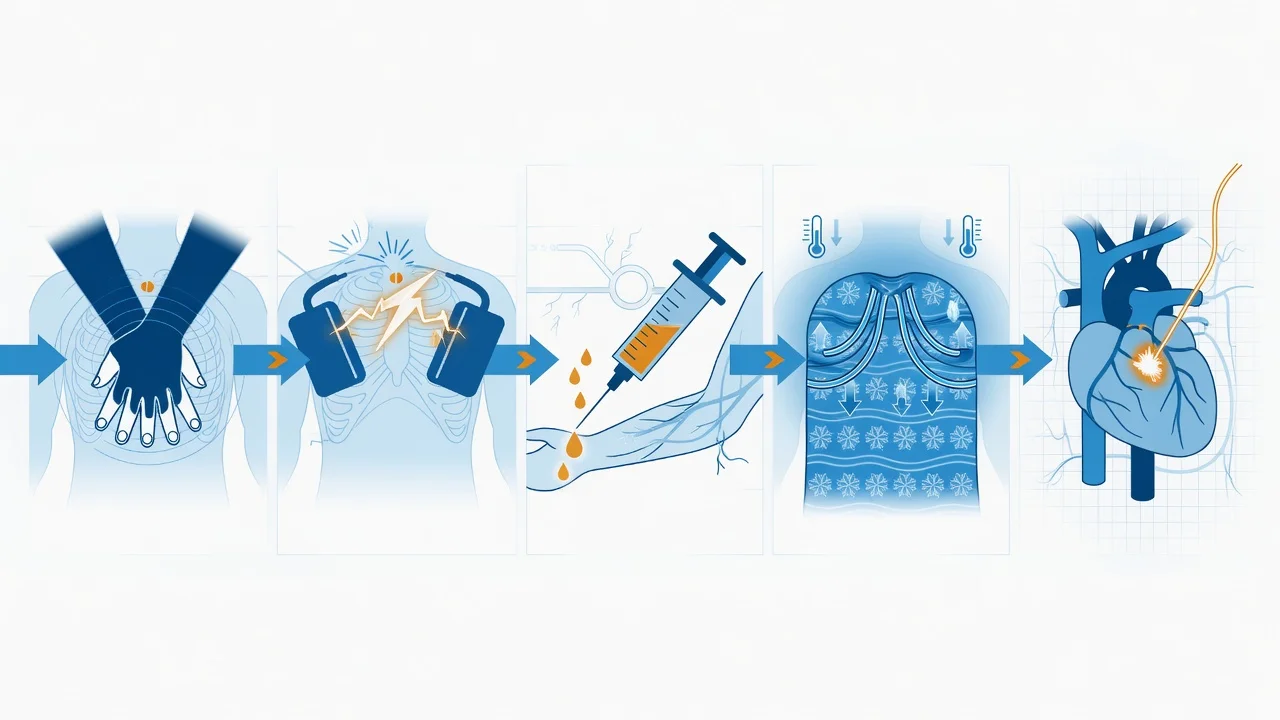
TTM protocol
Patient selection
Comatose adult patients (GCS <8, not following commands) after cardiac arrest (OHCA or IHCA). Any initial rhythm (shockable or non-shockable). Exclude: awake and following commands, DNR, irreversible brain injury, active bleeding (relative contraindication).
Cool to target (32-36°C)
Start ASAP (ideally <4h from ROSC). Target 33°C (per TTM1 2024) or 36°C (per TTM2 — both acceptable). Methods: (1) Surface cooling (cooling blankets, ice packs, Arctic Sun gel pads — most common). (2) Intravascular cooling (catheter in IVC — more precise, more expensive). (3) Cold IV fluids (4°C saline — rapid initial cooling, but do NOT use alone — adjunct only). Reach target within 2-4 hours.
Maintain target for 24 hours
Keep at 32-36°C (depending on chosen target) for 24 hours from reaching target. Monitor core temperature continuously (bladder, oesophageal, rectal). Adjust cooling device to maintain steady temperature. Depth of sedation: deep enough to prevent shivering but allow neurological assessment when rewarming.
Control shivering
Shivering generates heat and increases metabolic demand → counterproductive. Assess: Bedside Shivering Assessment Scale (BSAS). Management: (1) Skin counterwarming (forced air warming blanket — warm skin while cooling core — reduces thermoregulatory shiver response). (2) Magnesium sulphate (load to Mg >1.0). (3) Increase sedation (propofol infusion, fentanyl/morphine). (4) Paralysis (non-depolarising NMBA — rocuronium/atracurium — if refractory shivering despite above). Paralysis masks seizures — continuous EEG monitoring essential if paralysed.
Rewarm slowly
After 24h: controlled rewarming at 0.25-0.5°C/h. Do NOT rewarm rapidly (risk of seizures, hypotension, electrolyte shifts, recurrent arrhythmia). Monitor for: hyperkalaemia (potassium shifts from intracellular to extracellular during rewarming), seizures (increased metabolic rate), hypotension (vasodilation).
Avoid fever for 72h
After rewarming to 37°C: maintain normothermia (preventing fever <37.5°C) for at least 72h. Fever worsens neurological outcome after cardiac arrest. Use: antipyretics (paracetamol 1g Q6H), surface cooling (cooling blanket at 37°C). Treat shivering (as above). Monitor temperature continuously for 72h post-rewarming.
Complications of TTM
During cooling (33°C)
Side effects
- Bradycardia (common — cold heart beats slower). Usually benign. Treat if symptomatic: atropine/pacing.
- Prolonged QT → arrhythmia risk. Monitor ECG.
- Hypokalaemia, hypomagnesaemia (cold drives electrolytes intracellularly). Replace during cooling. Monitor on rewarming (hyperkalaemia risk).
- Coagulopathy (cold impairs clotting cascade and platelet function). Monitor coagulation.
- Decreased insulin sensitivity → hyperglycaemia. Adjust insulin infusion.
- Shivering (increases metabolic demand — must control).
- Immunosuppression → increased infection risk (especially pneumonia). Surveillance cultures.
SAQs — fellowship exam practice
SAQ — TTM at 36°C after VF arrest: target choice and protocol
10 minutes · 10 marks
A 62-year-old man is admitted to ICU after an out-of-hospital ventricular fibrillation cardiac arrest. Bystander CPR was commenced within 2 minutes, downtime 18 minutes, and return of spontaneous circulation was achieved after three 200 J biphasic shocks. He remains comatose (GCS 3), is intubated and ventilated, MAP 78 on noradrenaline 0.08 mcg/kg/min, core temperature 36.7°C, lactate 2.4 mmol/L. His daughter reports he takes apixaban 5 mg twice daily for atrial fibrillation and is on the transplant waiting list for a left ventricular assist device. The unit protocol was recently updated to a 36°C target following the TTM2 trial, and the registrar asks you to justify the choice and outline the protocol.
SAQ — Refractory shivering during TTM at 33°C
10 minutes · 10 marks
A 56-year-old woman is 6 hours into TTM at 33°C after a PEA out-of-hospital cardiac arrest. She is intubated and sedated with propofol 150 mcg/kg/min and fentanyl 100 mcg/h. The nurse calls you because her Bedside Shivering Assessment Scale has risen from 1 to 2-3 with generalised whole-body shivering, her core temperature has drifted from 33.1°C up to 33.8°C despite maximum surface cooling, and her creatine kinase has risen from 280 to 760 U/L. HR 96 (previously 56), MAP 70 on noradrenaline 0.18 mcg/kg/min, SpO2 96% on FiO2 0.4. She is not on a neuromuscular blocking agent.
Clinical pearls
Red flags
Detailed TTM protocol — the comprehensive ICU management
TTM targets by patient type — 2024 evidence
| Patient type | Temperature target | Duration | Evidence | Rewarming rate |
|---|---|---|---|---|
| Comatose post-cardiac arrest (shockable rhythm) | 32-36°C (TTM trial: 33C = 36C — both acceptable) | 24 hours | HACA 2002 (NEJM): hypothermia reduced mortality (NNT=6). TTM 2013 (NEJM): 33C = 36C. HYPERION 2019 (NEJM): 33C beneficial for non-shockable | 0.25-0.5°C/hr |
| Comatose post-cardiac arrest (non-shockable rhythm) | 33°C (HYPERION showed benefit) | 24 hours | HYPERION: 33C vs 37C — improved neurological outcome (10.2% vs 5.7% good CPC) | 0.25-0.5°C/hr |
| Severe TBI | NOT recommended (routine hypothermia increases mortality — BRIC trial) | — | BRIC 2023: prophylactic hypothermia INCREASED mortality in TBI. TTM for TBI is now ONLY for fever prevention | Maintain 36.5-37.5°C |
| Post-TTM normothermia | 36.5-37.5°C (AGGRESSIVELY treat any fever for 72h post-arrest) | 72h post-rewarming | Fever in first 72h = worse neurological outcome (each 1°C fever = 2x worse CPC). Treat with paracetamol + cooling + sedation ± muscle relaxation | — |
| Malignant hyperthermia | Urgently cool to <38.5°C + dantrolene | Until stable | Not TTM in the traditional sense — this is TREATMENT of hyperthermia | — |
TTM technique — devices and protocols
TTM implementation — the complete protocol
- INDICATION: All comatose adults (GCS <8 or not following commands) after ROSC from ANY cardiac arrest rhythm (shockable AND non-shockable). Exclude: awakened and following commands, GCS normal, pre-existing do-not-resuscitate
- TIMING: Start TLM AS SOON AS POSSIBLE (ideally within 4 hours of ROSC). Earlier = better (though the TTM trial showed no difference between in-hospital and out-of-hospital cooling start)
- COOLING METHOD:
- Phase 1 — Induction (rapid cooling to target): Cold IV fluids (4°C saline 20-30 mL/kg — works FAST but risk of volume overload in heart failure). Ice packs (groin, axillae, neck). Arctic Sun surface cooling device (most common). Intravascular cooling catheter (for precise control). Target: reach 33-36°C within 2-4h
- Phase 2 — Maintenance (hold at target for 24h): Surface (Arctic Sun/Bard — gel pads with circulating cold water). Intravascular (CoolLine/Icy catheter — closed-loop feedback). Target: maintain ±0.3°C of target. Closed-loop systems are MORE precise than manual
- Phase 3 — Rewarming (gradual 0.25-0.5°C/hr): Controlled rewarming over 12-24h. TOO RAPID = seizures, electrolyte shifts (K+ shift from intracellular to extracellular → hyperkalaemia), vasodilation → hypotension, shivering → increased metabolic demand. Rewarm to 36.5-37.0°C then maintain normothermia
- Phase 4 — Normothermia maintenance (72h post-rewarming): Keep 36.5-37.5°C. AGGRESSIVELY treat any fever >37.5°C (paracetamol 1g q6h + surface cooling if needed). Fever in first 72h = worse outcome
- SHIVERING MANAGEMENT (the #1 practical challenge of TTM):
- Shivering increases metabolic demand (O2 consumption 2-4x) → defeats the purpose of cooling (reduced metabolic rate)
- Bedside Shivering Assessment Scale (BSAS): 0 = no shivering, 1 = mild (neck/thorax only), 2 = moderate/generalised, 3 = severe (whole body)
- Counter-warming (FIRST LINE): warm air blanket (Bair Hugger at 43°C over the body while head/neck cooled). This SKINS the patient's thermal receptors → reduces shivering reflex WITHOUT warming the core. Simple, effective, non-pharmacological
- Sedation: propofol (doesn't prevent shivering — but reduces metabolic demand) OR dexmedetomidine (reduces shivering via alpha-2)
- Buspirone 30mg NG + meperidine 25-50mg IV (classic combination — but meperidine is not available in many countries)
- Magnesium sulfate infusion 2-4g over 1h (reduces shivering threshold)
- Neuromuscular blockade (LAST RESORT): rocuronium infusion 5-10 mcg/kg/min. Patient MUST be deeply sedated and on EEG monitoring (paralysed patient cannot show seizures). Only for severe refractory shivering
- MONITORING DURING TTM: Continuous ECG (bradycardia expected — cold heart = slower conduction). Continuous SpO2. Hourly: temperature (bladder/oesophageal/pulmonary artery — NOT rectal/axillary which lag). q4h: ABG (pH shifts with temperature — alpha-stat vs pH-stat). q6h: K+, Mg2+, glucose, CK. Daily: CT brain if neurological deterioration. Continuous EEG (48-72h — detect non-convulsive status)
- COMPLICATIONS OF TTM:
- Bradycardia (expected — cold = slower heart rate. Not harmful unless MAP falls). If MAP <65 → increase noradrenaline (NOT atropine — atropine ineffective in hypothermia)
- Hypokalaemia (K+ shifts intracellularly during cooling → K+ drops). MAINTAIN K+ 3.5-5.0 (during rewarming K+ shifts back → hyperkalaemia risk if over-replaced)
- Coagulopathy (hypothermia impairs clotting cascade — enzymes are temperature-dependent). Minor effect at 33°C — but check coagulation if bleeding
- Infection (hypothermia impairs immune function → increased infection risk). Monitor for pneumonia (common post-arrest), line infection
- Hyperglycaemia (hypothermia causes insulin resistance). Target glucose 6-10 mmol/L
- Shivering (see above)
- Pressure injuries (reduced perfusion + immobility → skin breakdown). Reposition every 2h (while maintaining head position for cerebral perfusion)
Post-arrest prognostication — integrated with TTM
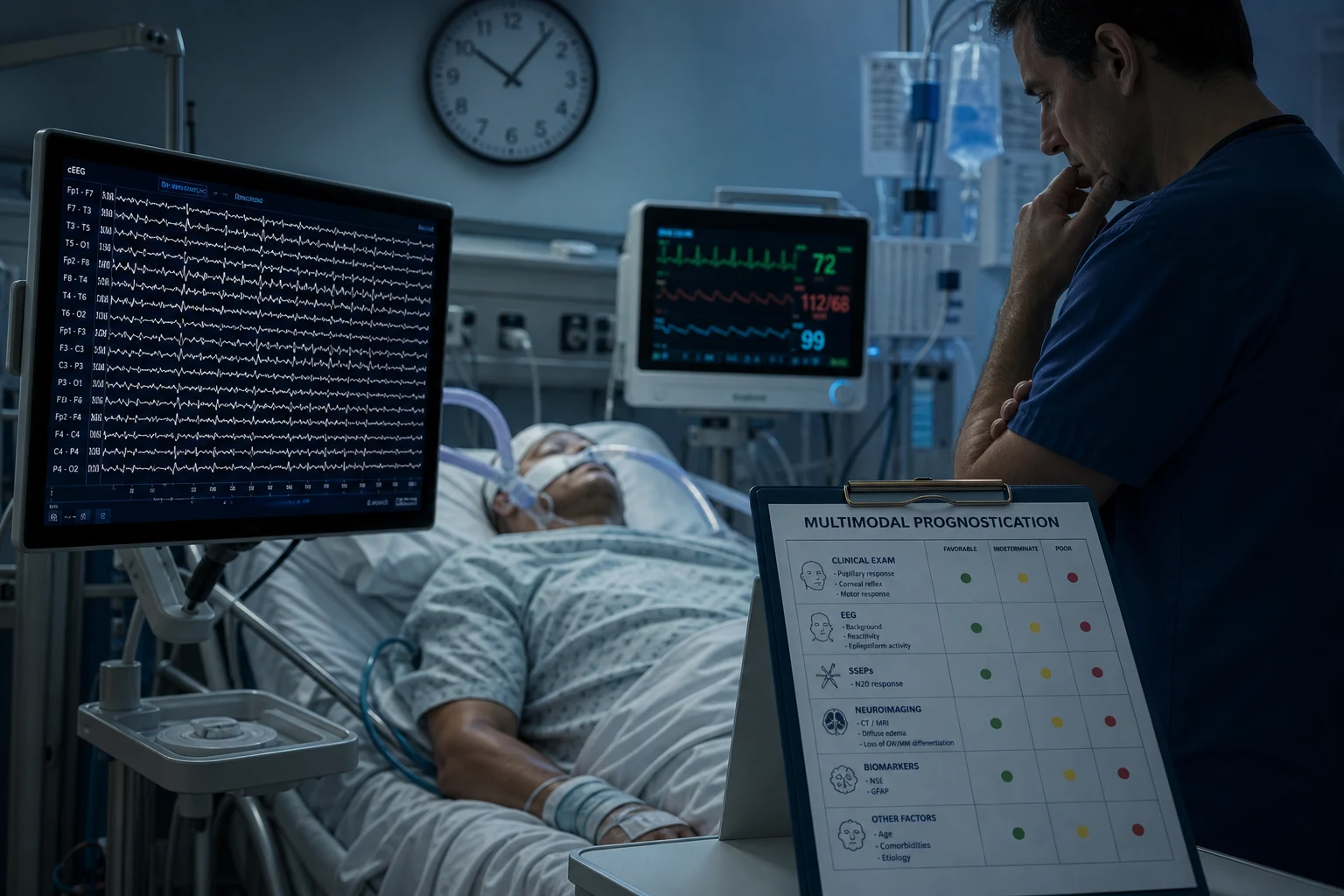
Multimodal prognostication timeline — post-TTM (delayed to >72h post-rewarming)
| Modality | Timing | Poor prognostic indicator | PPV for poor outcome |
|---|---|---|---|
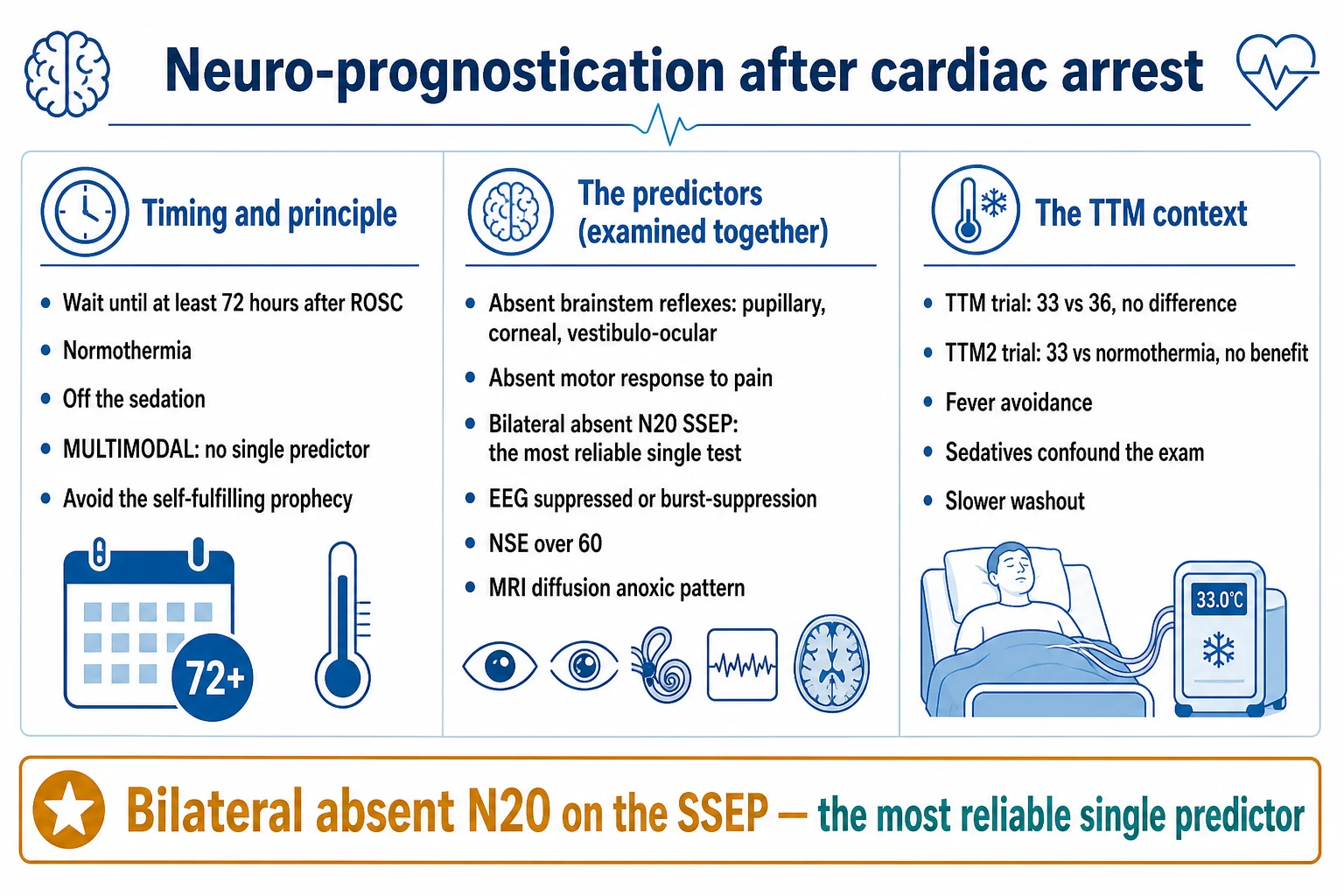
| Clinical exam | >72h post-rewarming | Absent brainstem reflexes (pupillary light, corneal, gag/cough) at >72h | >95% (if absent at 72h post-rewarming) |
| Absent motor response (extensor or no response to pain) at >72h | 90% (less specific than brainstem) | ||
| Myoclonus within 72h (NOT myoclonic status — which is different) | Controversial — not absolute | ||
| EEG | >24h post-rewarming (continuous for 24-72h) | Suppression (<10 uV) or burst-suppression | 80-90% (if persistent after sedation cleared) |
| Status epilepticus (after sedation cleared) | 80-90% | ||
| Absence of EEG reactivity (no response to stimulation) | 80-90% | ||
| SSEP (somatosensory evoked potentials) | >24h post-rewarming | Bilateral absent N20 (median nerve SSEP) | >95% (the MOST RELIABLE single predictor — not affected by sedatives or metabolic state) |
| Neuron-specific enolase (NSE) | 48-72h | >60 ng/mL | 80-90% (trend more useful than single value) |
| CT brain | 24-48h | Diffuse cerebral oedema (loss of grey-white differentiation, sulcal effacement) | 80-90% |
| MRI brain | 2-5 days | Diffuse cortical restricted diffusion (DWI) | 80-90% (but MRI is difficult in ICU patients — lines, monitors) |
TTM in specific scenarios
TTM modifications for special populations
| Population | Modification | Rationale |
|---|---|---|
| Pregnant | SAME TTM protocol as non-pregnant | TTM has NOT been shown to harm the fetus. The maternal benefit outweighs theoretical fetal risk. Monitor fetal heart rate continuously if viable |
| Paediatric | 33-36°C for 24h (same as adults). Modified cooling methods (smaller surface pads) | THAPCA trial: TTM 33C vs 36C in paediatric cardiac arrest — no difference. But TTM still recommended |
| Renal failure | Same TTM protocol. Be CAUTIOUS with cold IV fluids (volume overload) | TTM itself does NOT worsen renal function. But cold IV fluid bolus (20-30 mL/kg) may cause pulmonary oedema in renal failure — use surface cooling instead |
| Liver failure | Same TTM protocol. Monitor coagulation MORE closely | Hypothermia worsens coagulopathy — already impaired in liver failure. Check INR/fibrinogen every 6h. Give FFP/cryoprecipitate if bleeding |
| ECMO (VA-ECMO post-arrest) | ECMO circuit has built-in heat exchanger → precise temperature control. Use ECMO to deliver TTM | The MOST PRECISE TTM delivery method. Also: patients on ECMO for ECPR should receive TTM at 33-36°C |
| Neurological deterioration during TTM | CT brain to exclude haemorrhage (hTtm increases bleeding risk) + EEG for seizures + consider TTM complication (infection, electrolyte) | Deterioration during TTM = EITHER TTM complication OR ongoing neurological injury from the arrest |
Additional clinical pearls
[1]Landmark TTM trials — the evidence base
HACA 2002 (NEJM) — the trial that established therapeutic hypothermia
Design
Two concurrent multicentre RCTs published together in NEJM: the HACA Study Group (Europe, 275 patients) and Bernard (Australia, 77 patients). Comatose adults after witnessed OHCA in VF/pVT.
Intervention
33-34°C for 12-24h (surface cooling) vs normothermia
Primary outcome
HACA: good neurological outcome (CPC 1-2) at 6 months hypothermia 55% vs normothermia 39% (NNT 6). Mortality 41% vs 55% (NNT 7). Bernard: good outcome 49% vs 26%.
What it changed
Established TTM (33-34°C for 12-24h) as standard of care after VF OHCA — the first proven neuroprotective intervention in post-cardiac arrest care. Adopted into ILCOR/ERC/AHA guidelines (Class I).
TTM trial — Nielsen 2013 (NEJM) — 33°C vs 36°C: equivalence, and the end of 'the colder the better'
Design
Multinational RCT (36 ICUs, 939 comatose adults after OHCA, ALL rhythms). The largest hypothermia trial at the time.
Intervention
Target 33°C vs target 36°C for 24h, then rewarming 0.5°C/h, then normothermia <37.5°C to 72h. STRICT temperature control and protocolised fever avoidance in BOTH arms.
Primary outcome
All-cause mortality at end of trial: 33°C 50% vs 36°C 48% (HR 1.06, 95% CI 0.89-1.28 — no difference). Poor neurological outcome (CPC 3-4, mRS 4-6): 54% vs 52% (no difference).
What it changed
REPLACED HACA's narrow '33-34°C' dogma: 33°C and 36°C are EQUIVALENT for outcome. The critical insight was that STRICT temperature control + fever avoidance (not the absolute target) is what matters. TTM 2013 retired the unproven assumption that colder is better. The 36°C arm was simpler (fewer complications, less shivering, fewer electrolyte shifts, fewer arrhythmias).
HYPERION — Lascarrou 2019 (NEJM) — TTM for non-shockable rhythm (PEA/asystole)
Design
Multicentre French RCT (25 ICUs, 584 comatose adults after OHCA or IHCA with NON-shockable rhythm — PEA/asystole). The first RCT in this population.
Intervention
33°C for 24h vs 37°C (normothermia), both with fever avoidance to 72h
Primary outcome
Favourable neurological outcome (CPC 1-2) at day 90: hypothermia 10.2% vs normothermia 5.7% (OR 1.99, 95% CI 1.01-3.92). Mortality not significantly different.
What it changed
Extended TTM at 33°C to non-shockable rhythm cardiac arrest (the MAJORITY of in-hospital arrests and ~50% of OHCAs). Although absolute benefit is modest (baseline outcomes are poor), TTM at 33°C is now recommended for comatose patients after arrest of ANY rhythm.
TTM2 — Dankiewicz 2021 (NEJM) — hypothermia vs normothermia with early fever treatment
Design
Multinational RCT (14 countries, 61 centres, 1858 comatose adults after OHCA, ALL rhythms). The largest TTM trial ever conducted.
Intervention
33°C for 28h (hypothermia) vs 37.5°C (normothermia) with EARLY, AGGRESSIVE fever treatment (cooling device triggered at 37.8°C, antipyretics). Both arms received identical protocolised care.
Primary outcome
All-cause death at 180 days: hypothermia 50% vs normothermia 48% (HR 1.04, 95% CI 0.91-1.19 — no difference). Functional outcome at 180 days: no difference.
What it changed
Hypothermia at 33°C offered NO BENEFIT over well-executed normothermia with early fever treatment. The trial established that FEVER PREVENTION is the active ingredient of 'TTM' — not the hypothermia itself. TTM2 strengthened the case for routine normothermia (36.5-37.5°C) with aggressive fever avoidance as a simpler, safer, equally effective strategy. The hypothermia arm had more arrhythmias and bleeding. Current practice is split: some centres target 33°C (especially for non-shockable), others normothermia — both defensible.
Eurotherm3235 — Andrews 2015 (NEJM) — prophylactic hypothermia for raised ICP in TBI is HARMFUL
Design
Multicentre RCT (Europe, 387 adults with TBI and raised ICP). Hypothermia (33-35°C) vs standard care, both with ICP management protocol.
Intervention
Prophylactic therapeutic hypothermia to 33-35°C for >72h, then slow rewarming
Primary outcome
Favourable outcome (GOS-E) at 6 months: hypothermia 26% vs control 35% (RR for poor outcome 1.31). Trial STOPPED EARLY for harm. Hypothermia arm had MORE unfavourable outcomes and a trend to higher mortality.
What it changed
Routine prophylactic hypothermia for TBI is NOT recommended (and may be harmful). TTM in TBI is now confined to FEVER PREVENTION (maintain 36.5-37.5°C). TTM does NOT have a role in routine ICP control after TBI.
Neonatal HIE — CoolCap (Gluckman 2005) and TOBY (Azzopardi 2009)
Design
Two landmark neonatal RCTs: CoolCap (Lancet, 234 term infants with moderate-severe HIE — selective head cooling + mild body hypothermia 34-35°C for 72h) and TOBY (NEJM 2009, 325 term infants — whole-body cooling 33.5°C for 72h).
Primary outcome
CoolCap: improved survival-without-disability in MODERATE HIE (59% vs 28%, NNT ~3) — no benefit in severe (aEEG severely suppressed). TOBY: improved survival-without-neurodevelopmental-disability at 18 months (44% vs 28%, NNT 6). Benefit persisted at 6-7 years.
What it changed
Established TTM as the FIRST proven neuroprotective therapy in neonatal HIE. Standard of care: whole-body or selective head cooling 33.5-34.5°C for 72h within 6h of birth, in term infants (≥36 weeks, ≥1800 g) with moderate-severe HIE.
Indications for TTM — who qualifies
Indications and contra-indications for targeted temperature management
| Indication | Recommendation | Target | Evidence level |
|---|---|---|---|
| OHCA — shockable rhythm (VF/pVT) | RECOMMENDED (strongest evidence) | 32-36°C for 24h | High — HACA 2002 (NNT 6 for good outcome), confirmed by TTM 2013 and TTM2 2021 |
| OHCA — non-shockable rhythm (PEA/asystole) | RECOMMENDED | 33°C for 24h | Moderate — HYPERION 2019 showed benefit (10.2% vs 5.7% good CPC) |
| IHCA — any rhythm | RECOMMENDED (extrapolated) | 32-36°C for 24h | Moderate — extrapolated from OHCA data; HYPERION included some IHCA |
| All post-arrest patients (regardless of rhythm) | Avoid fever <37.5°C for ≥72h | Normothermia 36.5-37.5°C | High — TTM2 2021 normothermia arm equal to hypothermia arm |
| Comatose (GCS <8) only | Do NOT cool awake patients following commands | — | — |
| Neonatal hypoxic-ischaemic encephalopathy (HIE) | RECOMMENDED (selective head or whole-body cooling) | 33.5-34.5°C for 72h | High — CoolCap 2005, TOBY 2009 showed improved survival-without-disability |
| Traumatic brain injury (routine prophylactic) | NOT RECOMMENDED (Eurotherm3235 — harm) | Maintain normothermia | High — Eurotherm3235 2015 stopped early for worse outcomes |
| Acute liver failure / raised ICP from non-TBI | Consider (limited evidence) | 33-36°C | Low — case series only |
| Stroke (ischaemic/haemorrhagic) | NOT ROUTINELY (maintain normothermia) | 36.5-37.5°C | Moderate — multiple negative RCTs |
| Malignant infarction (cerebral oedema) | Not established (hemicraniectomy preferred) | — | — |
Contra-indications (relative) to TTM at 33°C
- Pre-arrest DNR / advance directive declining life-sustaining therapy (TTM is a bridge, not the goal)
- Active major bleeding (hypothermia impairs coagulation cascade — risk/benefit assessment; normothermia with fever avoidance is safer)
- Pre-existing severe irreversible brain injury (TTM will not reverse)
- Patient awake and following commands after ROSC — TTM is for COMATOSE patients only (do NOT cool awake patients)
- DNR status post-arrest — discuss with family; TTM may still be appropriate if family wishes to proceed
- Pregnancy is NOT a contra-indication — same TTM protocol; monitor fetal heart rate
- Shock on high-dose vasopressors is a RELATIVE (not absolute) contra-indication — cooling may worsen vasoconstriction, but many centres proceed
Cooling techniques — surface vs intravascular vs adjuncts
Comparison of TTM delivery methods
| Method | Speed of induction | Precision (maintenance) | Cost | Advantages | Disadvantages |
|---|---|---|---|---|---|
| Surface — gel pads (Arctic Sun, Blanketrol) | Moderate (1-1.5°C/h) | Good (±0.2°C with closed-loop) | Moderate | Non-invasive, widely available, easy to apply, can be used for normothermia maintenance | Large skin area covered (limits access), pressure injury risk, less precise than intravascular |
| Surface — cooling blanket/ice packs | Slow (0.5-1°C/h) | Poor (manual) | Low | Cheap, available everywhere | Labour-intensive, imprecise, shivering more common |
| Intravascular cooling catheter (CoolLine, Thermogard, Icy) | Fast (1-2°C/h) | Excellent (±0.1°C, closed-loop) | High (catheter + insertion) | Most precise, fastest rewarming control, low shivering (precise = no overshoot) | Invasive (central line), line infection/thrombosis risk, dedicated femoral/neck access, expensive, single-use catheter |
| Cold IV fluids (4°C saline 20-30 mL/kg) | Fast (1-1.5°C/h) | None (one-off) | Low | Cheap, rapid initial drop, feasible in ED/prehospital | Do NOT use alone — only an ADJUNCT during induction. Risks: volume overload (heart failure), pulmonary oedema, cooling stops once infusion ends |
| Intranasal (RhinoChill) | Fast (prehospital) | None | Moderate | Pre-hospital feasibility, brain-targeted (carotid rete cooling) | Limited evidence, intranasal trauma, not widely available |
| ECMO circuit heat exchanger (VA-ECMO for ECPR) | Excellent | Excellent (±0.1°C) | Very high | Most precise of all — integrated with circuit; first choice if patient on ECMO for ECPR | Requires ECMO cannulation and circuit — invasive, expensive, only for ECPR patients |
| Body cavity lavage (gastric/bladder/peritoneal) | Fast | Poor | Low | Theoretical | Rarely used in modern practice — invasive, cumbersome |
Closed-loop feedback systems — precision matters
Modern surface (Arctic Sun) and intravascular (Thermogard) devices use closed-loop feedback: a continuous temperature probe (bladder, oesophageal, rectal) feeds back to the device, which adjusts cooling/warming fluid temperature to maintain the target within ±0.1-0.3°C. This PREVENTS:
- Overshoot (cooling below target → arrhythmia, electrolyte shifts)
- Undershoot (drifting above target → fever, lost neuroprotection)
- Rapid fluctuations (trigger shivering)
Manual control (ice packs, simple blankets) is labour-intensive and imprecise — closed-loop devices are the modern standard. The intravascular closed-loop (e.g. Zoll Thermogard) holds ±0.1°C and is preferred when very tight control is needed (e.g. active rewarming, brittle arrhythmia risk). [1]
Shivering management — the stepwise ladder
Shivering is the #1 practical challenge of TTM. It generates heat (defeats cooling), increases metabolic demand (O2 consumption 2-4x baseline — defeats the metabolic suppression that IS the neuroprotection), increases ICP, and worsens outcome. The ladder below escalates only when the previous step fails. [1]
Stepwise shivering control during TTM (escalate only when previous step fails)
- STEP 0 — ASSESS shivering hourly (BSAS): Bedside Shivering Assessment Scale (BSAS): 0 = none, 1 = mild (neck/thorax), 2 = moderate/generalised, 3 = severe (whole body). Any score >0 → escalate. Continuously observed at the bedside by ICU nurse every 1-2h. Concurrent RASS (sedation depth) and CPOT/BPS (pain) to ensure adequate sedation-analgesia as a cause of shivering.
- STEP 1 — SKIN COUNTER-WARMING (FIRST LINE): Forced-air warming blanket (Bair Hugger / 3M) over the body at 38-43°C, applied WHILE the core is cooled. Warms cutaneous thermoreceptors → reduces thermoregulatory shiver drive WITHOUT raising core temperature. Badjatia 2009 (CCM) showed surface counter-warming REDUCES shivering and oxygen consumption (~30% reduction) during therapeutic cooling — metabolic benefit with no core warming. CHEAP, NON-PHARMACOLOGICAL, EFFECTIVE — first line in every protocol.[10]
- STEP 2 — MAGNESIUM SULFATE: Magnesium reduces the shivering threshold by ~1°C and the vasoconstriction threshold. Load 2-4 g IV over 1h, then infusion 1-2 g/h to keep Mg >1.0 mmol/L. ALSO reduces risk of arrhythmia (QTc) during hypothermia. Bonus: also acts on NMDA receptors — mild neuroprotection. Cheap, safe, effective. SIDE EFFECTS: hypotension (vasodilation), hyporeflexia, ileus — monitor BP and reflexes.
- STEP 3 — SKIN MAGNESIUM (TOPICAL): A newer adjunct: topical magnesium cream/spray applied to the skin, layered under the counter-warming blanket. Theoretical synergy with counter-warming — cutaneous warming opens skin vessels, magnesium absorbs transdermally and lowers the local shiver threshold. Limited evidence but cheap and very low risk — used in some European protocols.
- STEP 4 — DEXMEDETOMIDINE (FIRST-LINE PHARMACOLOGICAL): Alpha-2 agonist: reduces shivering threshold ~2°C without significant respiratory depression. Provides sedation, sympatholysis, analgesia-sparing. Load 1 mcg/kg over 10 min then 0.2-0.7 mcg/kg/h. Increasingly the FIRST-LINE PHARMACOLOGICAL agent in modern protocols (replacing buspirone/opioid). CAUTION: bradycardia and hypotension — additive to hypothermia-induced bradycardia; avoid loading bolus in hypothermic bradycardic patients.
- STEP 5 — BUSPIRONE ± OPIOID (classic Columbia/Badjatia protocol): Buspirone 30 mg NG/PO (5-HT1A partial agonist — lowers shiver threshold). Combined with an opioid: meperidine (pethidine) 25-50 mg IV (best-studied anti-shiver opioid — kappa receptor effect) OR fentanyl/morphine (less effective but more available). LIMITATION: meperidine unavailable in ANZ/UK (seizure/normeperidine accumulation, serotonergic concerns). Substitute: buspirone + fentanyl infusion 25-50 mcg/h.
- STEP 6 — DEEPEN SEDATION: Increase sedation depth: propofol 50-200 mcg/kg/min (DOES NOT prevent shivering but reduces metabolic demand and provides sedation) OR midazolam infusion. Ensure adequate analgesia (fentanyl/morphine/hydromorphone) — pain triggers shivering. Target RASS -4 to -5 during induction/maintenance.
- STEP 7 — NEUROMUSCULAR BLOCKADE (LAST RESORT): Continuous infusion of non-depolarising NMBA: rocuronium 5-10 mcg/kg/min OR cisatracurium 1-3 mcg/kg/min (preferred in renal/hepatic impairment — Hofmann elimination) OR vecuronium 1 mcg/kg/min. ONLY for severe refractory shivering unresponsive to all above. PREREQUISITES: (1) patient deeply sedated (RASS -5, no awareness — NMB without sedation is unethical), (2) continuous EEG monitoring (48-72h — paralysed patient cannot show clinical seizures; non-convulsive status epilepticus is the hidden killer), (3) adequate analgesia. Train-of-four monitoring (target 1-2/4 twitches). Wean off NMBA as soon as rewarming begins.[12]
The four phases of TTM — a precise technical breakdown
TTM phases — induction, maintenance, rewarming, normothermia
- PHASE 1 — INDUCTION (rapid cooling to target): Begin IMMEDIATELY after ROSC once patient comatose (GCS <8). Goal: reach target (33 or 36°C) within 2-4h. Rate 1-2°C/h. METHODS: cold IV 4°C saline 20-30 mL/kg (fastest initial drop — but ADJUNCT ONLY, never sole method; risk of pulmonary oedema in heart failure); surface gel pads (Arctic Sun at 4°C circulating water); intravascular catheter (closed-loop, fast); ice packs (groin/axillae/neck) as stop-gap. PRE-HOSPITAL cooling: paramedic-administered cold IV fluids — RCTs (Kim 2014, Berniard 2014) showed faster time-to-target but NO outcome benefit (and possible harm in some subgroups). Not recommended as routine. WATCH FOR: shivering (start counter-warming BEFORE cooling), bradycardia (cold heart), hypokalaemia (K+ shifts intracellularly at ~0.5 mmol/L per °C drop).
- PHASE 2 — MAINTENANCE (hold at target for 24-72h): Maintain target temperature ±0.3°C using closed-loop feedback device. DURATION: 24h (most common, per TTM trial and HACA) up to 72h (some units extend to 48-72h based on HYPERION protocol and neonatal HIE standard). SEDATION: deep (RASS -4 to -5) to prevent shivering and reduce metabolic demand — propofol ± fentanyl/morphine, OR midazolam if propofol contraindicated. MONITORING: continuous core temperature (bladder/oesophageal/pulmonary artery — NOT rectal/axillary which lag by 0.5-1°C); continuous ECG (bradycardia expected, watch QTc); hourly urine output; q4-6h: K+, Mg2+, glucose, ABG; continuous EEG (48-72h — non-convulsive seizures common post-arrest, especially if paralysed). SHIVERING CONTROL: BSAS hourly, escalate per ladder.
- PHASE 3 — REWARMING (gradual, controlled 0.25-0.5°C/h): After 24-72h at target: controlled rewarming at 0.25-0.5°C/h to 37°C. Total 12-24h. NEVER rapid rewarming. WHY SLOW: (a) hyperkalaemia — K+ shifts OUT of cells during rewarming (reverse of induction); if K+ was over-replaced during cooling, severe hyperkalaemia on rewarming → arrhythmia; (b) vasodilation → hypotension (increase vasopressor as needed); (c) seizures — lowered seizure threshold as brain warms; (d) cerebral oedema — rapid temperature change worsens cerebral metabolic mismatch; (e) recurrent arrhythmia. MONITORING during rewarming: continuous K+ (expect rise — do not replace K+ aggressively during cooling if value normalising); ECG (arrhythmias); MAP (vasodilation); EEG (seizures emerge). CONTINUE sedation during rewarming — wean slowly AFTER normothermia achieved.
- PHASE 4 — NORMOTHERMIA MAINTENANCE (72h post-rewarming): Once at 37°C: maintain normothermia (36.5-37.5°C) and AGGRESSIVELY treat any fever >37.5°C for ≥72h. Fever is the enemy: each 1°C of fever in first 72h post-arrest DOUBLES the odds of poor outcome (Bro-Jeppesen 2013). TOOLS: paracetamol 1g q6h (first-line antipyretic); surface cooling device (Arctic Sun at 37°C — used in normothermia mode); treat shivering (counter-warming, dexmedetomidine); treat infection (most fevers in this window are infectious — cultures, procalcitonin, antibiotics). SEDATION: wean as tolerated once at 37°C for 6-12h — to allow neurological assessment when prognostication window opens (>72h).
Neonatal hypoxic-ischaemic encephalopathy (HIE) — the other TTM indication
TTM is one of the FEW proven neuroprotective therapies in neonatal medicine. After perinatal asphyxia (HIE), cooling at 33.5-34.5°C for 72h reduces death and disability. The benefit persists to school age (TOBY 6-7 year follow-up showed improved cognition and motor function). [1]
Neonatal HIE protocol essentials (the exam answer)
- Population: term infants (≥36 weeks gestation, ≥1800 g) with moderate-severe HIE, started WITHIN 6h of birth (cooling benefit LOST if started >6h)
- Target: 33.5-34.5°C (rectal/oesophageal) for 72h (longer than adult 24h — neonatal brain is more responsive)
- Method: whole-body cooling (preferred — simpler, more uniform) OR selective head cooling (CoolCap — uses helmet, brain-targeted via scalp venous plexus)
- Rewarm: 0.5°C/h (faster than adult — neonatal physiology tolerates faster rewarming)
- Exclude: <36 weeks gestation, life expectancy <12h, major congenital anomaly, severe coagulopathy, sepsis
- Long-term outcomes: benefit persists to 6-7 years (improved cognition, motor function, school-age outcomes — TOBY follow-up)
- Adjuncts under investigation: erythropoietin, melatonin, xenon, stem cell therapy — none yet standard of care [1]
Post-arrest prognostication — the integrated 72h+ protocol
The 2021 ERC-ESICM algorithm mandates MULTIMODAL prognostication at ≥72h after ROSC (or ≥72h after rewarming if TTM used), performed ONLY when:
- Patient is normothermic (>36°C for >72h)
- Sedatives cleared (propofol: hours; midazolam: 12-24h; fentanyl: 6-12h — longer if organ failure)
- No NMBA effect (off >12h, train-of-four recovered)
- No major metabolic derangement (glucose, Na+, renal, hepatic)
- No ongoing infection / hypoxia / hypotension [1]
Multimodal prognostication algorithm — ERC-ESICM 2021
- STEP 1 — Establish clinical eligibility (≥72h post-ROSC, normothermic, off sedation): Confirm sedation has been OFF for adequate time. Document normothermia >36°C for >72h. Exclude intoxication, metabolic, infectious confounders. If confounders present → DELAY prognostication, re-assess daily.[12]
- STEP 2 — Bedside clinical examination: Brainstem reflexes (pupillary light, corneal, oculocephalic, gag/cough), motor response to pain, myoclonus. Absent pupillary AND corneal reflexes at ≥72h = POOR prognosis (high specificity, PPV ~95%). Absent or extensor motor response = poor (less specific — PPV ~75%, lower because of sedation effects). Myoclonus ≠ myoclonic status — chronic post-anoxic myoclonus (Lance-Adams) develops later in awakened patients and does NOT indicate poor prognosis.
- STEP 3 — Continuous EEG (cEEG, 24-72h): Look for: (a) suppressed background (<10 µV) or burst-suppression, (b) status epilepticus after sedation cleared, (c) absence of reactivity. Malignant patterns persisting after sedation clearance = poor prognosis (PPV 80-90%). CAVEAT: EEG is AFFECTED by sedatives (especially propofol, midazolam) — must be interpreted only after sedation cleared.
- STEP 4 — Somatosensory evoked potentials (SSEP — N20): Median nerve stimulation, recorded over somatosensory cortex. BILATERAL ABSENT N20 = POOR prognosis (PPV >95%, the MOST RELIABLE single test). SSEP is NOT affected by sedatives, NOT affected by hypothermia, NOT affected by metabolic state — making it the gold-standard objective test. Limitation: tests somatosensory pathway only — intact N20 does NOT rule out poor motor/cognitive outcome.
- STEP 5 — Biomarkers (NSE, S100B): Neuron-specific enolase (NSE) at 48-72h. ERC-ESICM 2021 threshold: >60 ng/mL = poor prognosis (with caveats — haemolysis falsely elevates NSE; trend over 24-72h more reliable than single value). S100B alternative (less widely available). Biomarkers are ANCILLARY — never sole basis for WLST.
- STEP 6 — Neuroimaging (CT/MRI): CT at 24-48h: diffuse cerebral oedema (loss of grey-white differentiation, sulcal effacement) = poor prognosis. MRI at 2-5 days: diffusion-weighted changes in cortex (laminar necrosis), basal ganglia, thalamus = poor (most sensitive imaging, but logistics make ICU MRI difficult).
- STEP 7 — INTEGRATE all modalities — never WLST on single test: Concordance of MULTIPLE modalities predicting poor outcome = high confidence. If ANY modality indeterminate → continue observation, re-assess at 5-7 days. Family discussion integrated throughout. The ERC-ESICM algorithm emphasises BAYESIAN integration: prior probability (from arrest downtime, age, comorbidity) updated by each test's likelihood ratio. WLST decision is MULTIDISCIPLINARY (intensivist + neurology + family + ethics).
Expanded clinical pearls — exam-grade depth
Additional red flags — exam-trap and patient-safety alerts
[12]References
- [1]TTM Trial Investigators. Stronger, longer, better opioid antagonists? Nalmefene is NOT a naloxone replacement Int J Drug Policy, 2024.PMID 38232438
- [2]Dankiewicz J, et al. Response to Comment on Tynjälä et al. Arterial Stiffness Predicts Mortality in Individuals With Type 1 Diabetes. Diabetes Care 2020;43:2266-2271 Diabetes Care, 2021.PMID 33741700
- [3]Hypothermia after Cardiac Arrest Study Group. Mild therapeutic hypothermia to improve the neurologic outcome after cardiac arrest N Engl J Med, 2002.PMID 11856793
- [4]Bernard SA, Gray TW, Buist MD, et al. Treatment of comatose survivors of out-of-hospital cardiac arrest with induced hypothermia N Engl J Med, 2002.PMID 11856794
- [5]Nielsen N, Wetterslev J, Cronberg T, et al. Targeted temperature management at 33°C versus 36°C after cardiac arrest N Engl J Med, 2013.PMID 24237006
- [6]Lascarrou JB, Merdji H, Le Gouge A, et al. Targeted Temperature Management for Cardiac Arrest with Nonshockable Rhythm N Engl J Med, 2019.PMID 31577396
- [7]Dankiewicz J, Cronberg T, Lilja G, et al. Hypothermia versus Normothermia after Out-of-Hospital Cardiac Arrest N Engl J Med, 2021.PMID 34133859
- [8]Gluckman PD, Wyatt JS, Azzopardi D, et al. Selective head cooling with mild systemic hypothermia after neonatal encephalopathy: multicentre randomised trial Lancet, 2005.PMID 15721471
- [9]Azzopardi DV, Strohm B, Edwards AD, et al. Moderate hypothermia to treat perinatal asphyxial encephalopathy N Engl J Med, 2009.PMID 19797281
- [10]Badjatia N, Strongilis E, Prescutti M, et al. Metabolic benefits of surface counter warming during therapeutic temperature modulation Crit Care Med, 2009.PMID 19384208
- [11]Andrews PJ, Sinclair HL, Rodriguez A, et al. Hypothermia for Intracranial Hypertension after Traumatic Brain Injury N Engl J Med, 2015.PMID 26444221
- [12]Nolan JP, Sandroni C, Bottiger BW, et al. European Resuscitation Council and European Society of Intensive Care Medicine Guidelines 2021: Post-resuscitation care Resuscitation, 2021.PMID 33773827