ICU · neurocritical-care
Tetanus and Botulism in the ICU — Comprehensive Management
Also known as Tetanus · Botulism · Lockjaw · Trismus · Opisthotonos · Tetanospasmin · Botulinum toxin · Descending flaccid paralysis · HTIG · Botulinum antitoxin
Tetanus and botulism — two neurotoxin-mediated diseases from Clostridium species requiring ICU management. TETANUS: Clostridium tetani exotoxin (tetanospasmin) travels retrograde to spinal cord → blocks inhibitory neurotransmitters (GABA, glycine) → sustained muscle contraction → TRISMUS (lockjaw), RISUS SARDONICUS (sardonic smile), OPISTHOTONOS (arched back), autonomic instability (labile BP/HR). Management: HTIG (human tetanus immunoglobulin 500 IU IM), metronidazole (eradicate C. tetani), benzodiazepines (control spasms), magnesium sulfate (control spasms + autonomic instability), ICU for airway/ventilation, wound debridement, vaccination (to prevent recurrence — natural infection does NOT confer immunity). BOTULISM: Clostridium botulinum toxin blocks acetylcholine release at NMJ (cleaves SNARE proteins) → DESCENDING FLACCID PARALYSIS (cranial nerves first — ptosis, diplopia, dysphagia, dysarthria → respiratory failure) + dilated pupils + dry mouth. Forms: foodborne (contaminated food — home-canned), wound (IV drug use — black tar heroin), infant (honey — spores germinate in immature gut), iatrogenic (cosmetic/therapeutic injection). Management: botulinum antitoxin (equine heptavalent — for foodborne/wound — does NOT reverse existing paralysis but prevents progression), supportive ventilation (prolonged — weeks-months for NMJ recovery), NO antibiotics for foodborne (may increase toxin release), penicillin/metronidazole for wound botulism. Mortality: tetanus 10-40% (higher in developing countries), botulism 5-10% (respiratory failure).
On this page & tools
Your progress
Saved locally on this device.
Target exams
Red flags
Overview
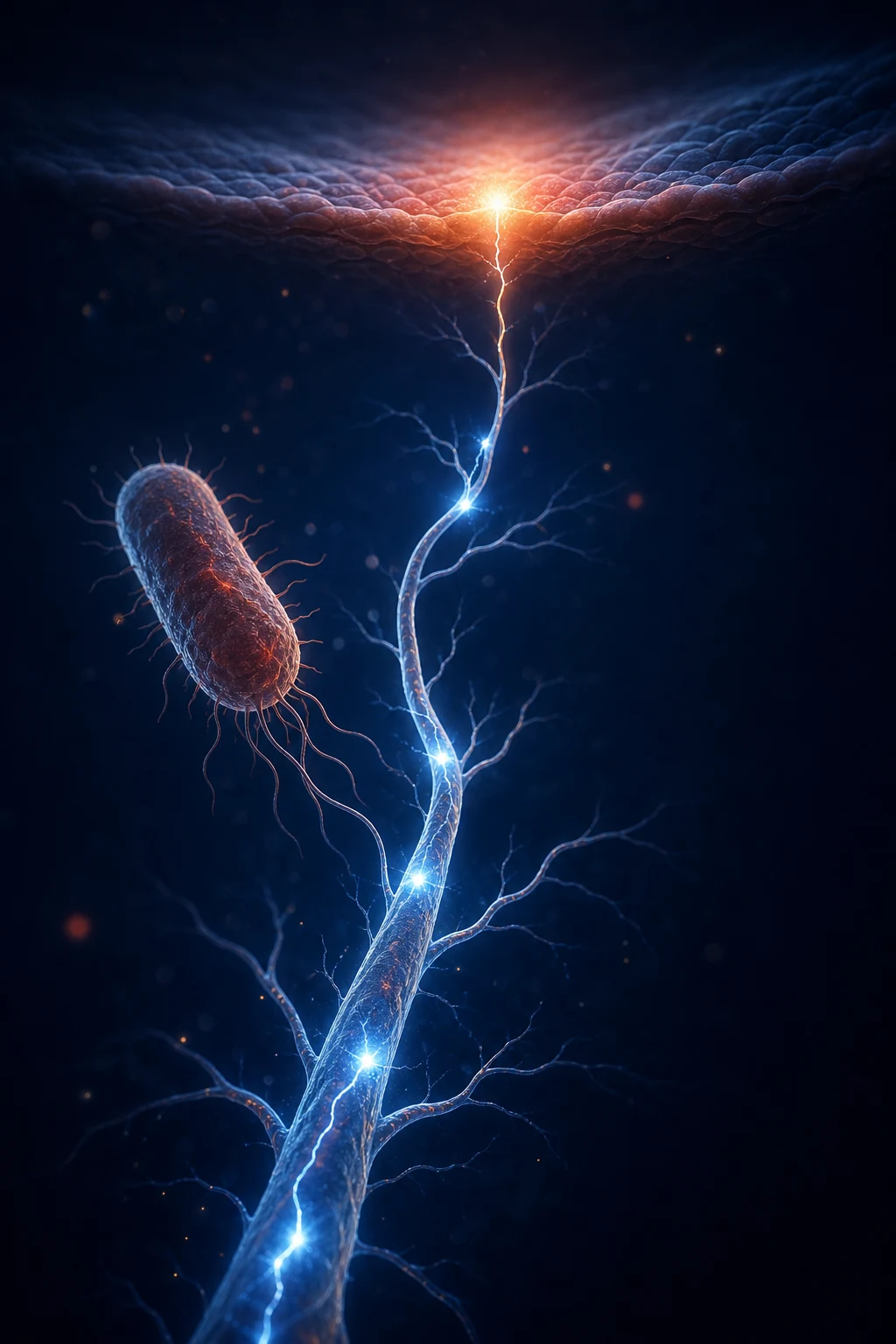
Tetanus and botulism — the key contrast
Tetanus vs botulism — neurotoxin-mediated opposites
| Feature | Tetanus | Botulism |
|---|---|---|
| Organism | Clostridium tetani | Clostridium botulinum |
| Toxin | Tetanospasmin | Botulinum toxin (A, B, E most common) |
| Toxin action | Blocks INHIBITORY neurotransmitters (GABA, glycine) in spinal cord → UNCONTROLLED EXCITATION | Blocks ACETYLCHOLINE release at NMJ → PARALYSIS (pre-synaptic blockade) |
| Clinical pattern | SUSTAINED MUSCLE CONTRACTION (spasms, rigidity) — TOO MUCH tone | FLACCID PARALYSIS — NO tone (too little) |
| Direction of spread | ASCENDING (from wound site → trunk → head) | DESCENDING (cranial nerves → respiratory → limbs) |
| Classic features | Trismus (lockjaw), risus sardonicus (sardonic smile), opisthotonos (arched back) | Ptosis, diplopia, dysphagia, dysarthria, dilated pupils, dry mouth, descending paralysis |
| Autonomic | AUTONOMIC INSTABILITY (labile BP/HR, sweating) | Anticholinergic features (dry mouth, constipation, urinary retention, dilated pupils) |
| Consciousness | PRESERVED (patient is awake during spasms — terrifying) | PRESERVED (patient is awake but paralysed — 'locked-in') |
| Sensation | PRESERVED | PRESERVED (sensory neurons unaffected) |
| ICU management | Dark quiet room, benzodiazepines, magnesium, airway, autonomic control | Ventilation (prolonged), antitoxin, airway, supportive |
| Antidote | HTIG (human tetanus immunoglobulin) — neutralises circulating toxin | Botulinum antitoxin (equine) — neutralises circulating toxin |
| Recovery time | 2-6 weeks (new synapse formation) | Weeks-months (new axonal terminal formation at NMJ) |
| Mortality | 10-40% (higher in developing countries, elderly) | 5-10% (respiratory failure) |
Pathophysiology — how two clostridial toxins produce opposite syndromes
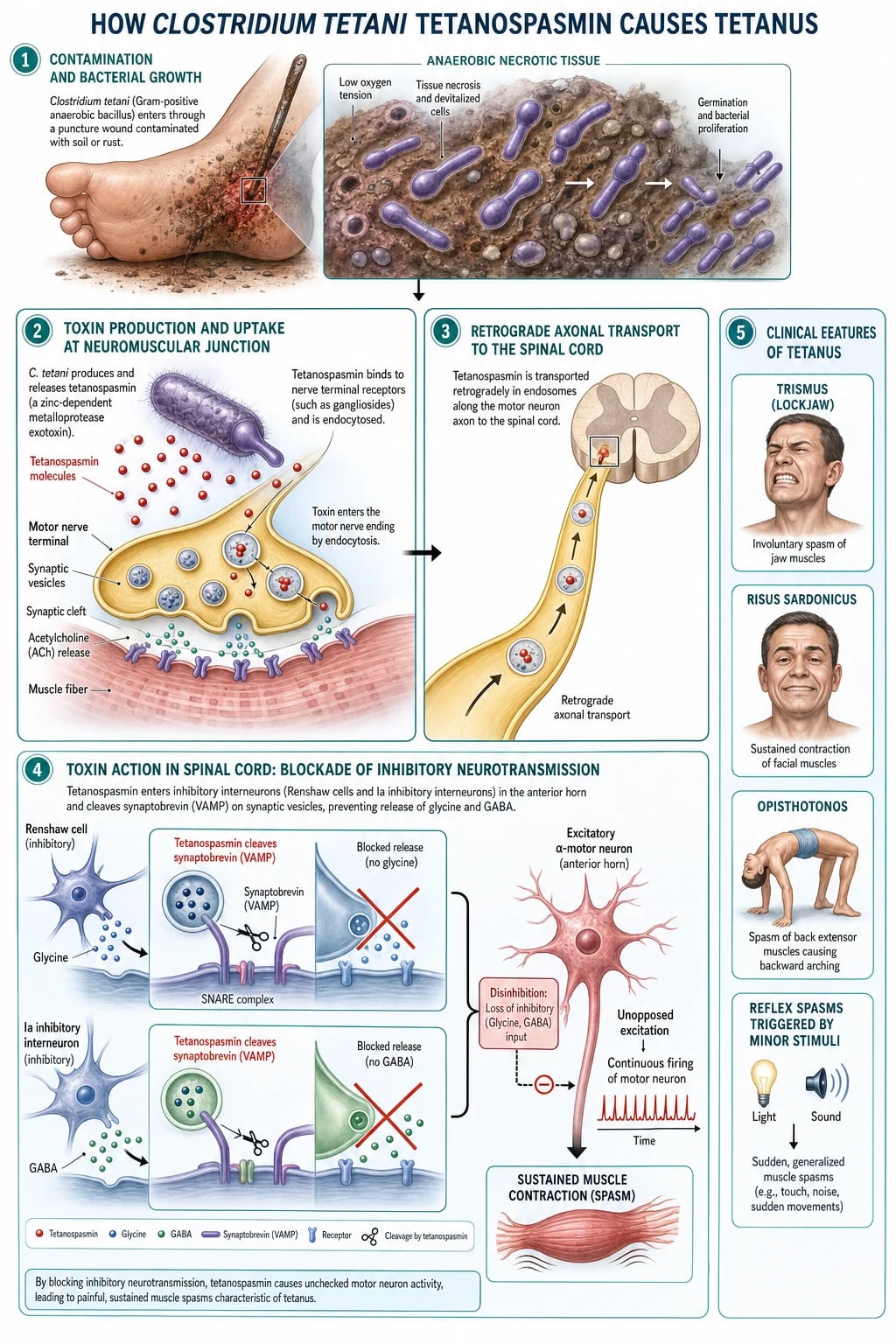
Tetanus and botulism are the perfect examination pair precisely because their toxins are STRUCTURALLY HOMOLOGOUS (both 150 kDa zinc-endopeptidase A–B toxins, both target SNARE proteins) yet their CLINICAL effects are mirror images. The difference is entirely in WHERE the toxin acts: tetanospasmin acts in the SPINAL CORD on INHIBITORY neurons, while botulinum toxin acts at the PERIPHERAL cholinergic synapse on EXCITATORY (acetylcholine) release. [1]
Tetanus — tetanospasmin and loss of presynaptic inhibition
Tetanus pathophysiology — step by step
- INOCULATION: Clostridium tetani (Gram-positive, spore-forming, obligately anaerobic bacillus) spores enter through a break in the skin. The wound is often MINOR and may have HEALED by presentation — splinter, insect bite, IV injection site, chronic ulcer, postpartum/abortion, umbilical stump (neonatal tetanus). Spores germinate ONLY in anaerobic, necrotic, low-redox tissue.
- TOXIN PRODUCTION: Germinating bacilli release tetanospasmin (teTx), a 150 kDa zinc-endopeptidase A–B toxin synthesised as a single polypeptide and proteolytically nicked into a heavy chain (binding + translocation, 100 kDa) and a light chain (catalytic zinc-endopeptidase, 50 kDa) joined by a disulphide bond.
- UPTAKE AT THE NEUROMUSCULAR JUNCTION: The heavy chain binds GD1b/GT1b gangliosides and the Niemann-Pick C1 (NPC1) receptor on the PRESYNAPTIC membrane of the ALPHA MOTOR NEURON at the NMJ. TeTx enters motor terminals — it does NOT enter sensory or autonomic fibres at this stage.
- RETROGRADE AXONAL TRANSPORT: TeTx is internalised into endocytic vesicles and transported RETROGRADELY (toward the soma in the anterior horn of the spinal cord / brainstem motor nuclei) at ~75–250 mm/day. This retrograde journey explains the ASCENDING clinical spread (wound → trunk → head) and the incubation period (days–weeks), which is proportional to the DISTANCE from the wound to the CNS — a wound on the foot has a longer incubation than one on the face.
- TRANS-SYNAPTIC TRANSFER to INHIBITORY INTERNEURONS: At the motor-neuron soma, teTx is EXPORTED across the synapse into the PRESYNAPTIC TERMINALS of the INHIBITORY INTERNEURONS that normally inhibit that motor neuron — the Renshaw cells (glycinergic recurrent inhibition in the anterior horn) and the GABAergic interneurons carrying descending supraspinal inhibition. This trans-synaptic jump is UNIQUE to tetanus; botulinum toxin does NOT cross synapses — it stays where it binds.
- CLEAVAGE OF SYNBREVIIN (VAMP-2): Inside the inhibitory interneuron's presynaptic terminal, the light chain cleaves synaptobrevin (VAMP-2) — a v-SNARE protein essential for synaptic vesicle docking and fusion with the presynaptic membrane.
- LOSS OF PRESYNAPTIC INHIBITION: With synaptobrevin cleaved, vesicles carrying glycine (from Renshaw cells) and GABA (from descending fibres) CANNOT fuse with the presynaptic membrane → no inhibitory neurotransmitter is released → the alpha motor neuron loses its "brake".
- SUSTAINED MOTOR-NEURON FIRING → SPASMS: Unopposed excitatory input drives sustained, simultaneous contraction of agonist AND antagonist muscles → the classic rigidity and reflex spasms: TRISMUS (masseters — first affected), RISUS SARDONICUS (facial muscles — the sardonic smile), OPISTHOTONOS (paraspinal extensor over-pull arcing the back). Spasms are triggered by ANY afferent input (light, sound, touch) because the inhibitory "filter" on the reflex arc is abolished.
- AUTONOMIC DYSFUNCTION: In severe disease teTx also ascends to the brainstem and reaches the intermediolateral (IML) cell column of the sympathetic chain, disinhibiting pre-ganglionic sympathetic neurons → catastrophic surges of catecholamine release → the autonomic dysfunction syndrome (labile BP/HR, sweating, salivation) that is the leading cause of death in severe, ventilated tetanus.[1][9]
Botulism — botulinum toxin and loss of cholinergic transmission
Botulinum toxin pathophysiology — step by step
- SEVEN SEROTYPES (A–G): Clostridium botulinum (and rare strains of C. butyricum, C. baratii, C. argentinense) produce seven antigenically distinct neurotoxins, types A–G. Human disease is caused almost exclusively by A, B and E (rarely F); types C, D and G are predominantly animal/veterinary. Crucially, different serotypes cleave DIFFERENT SNARE proteins — so the serotype predicts both severity AND recovery time.
- ABSORPTION: Toxin reaches the bloodstream by the route specific to the syndrome — foodborne (pre-formed toxin ingested → gut absorption), wound (spores germinate in an anaerobic wound → toxin produced in vivo → absorbed), infant (spores germinate in the immature gut → toxin produced in vivo → absorbed), iatrogenic (injected for cosmetic/therapeutic use). Circulating toxin is distributed to ALL peripheral cholinergic synapses.
- BINDING AT CHOLINERGIC TERMINALS: The heavy chain binds SV2 (synaptic vesicle glycoprotein 2) and ganglioside GT1b receptors on the PRESYNAPTIC membrane of peripheral cholinergic synapses — the neuromuscular junction (skeletal muscle), autonomic ganglia, and parasympathetic postganglionic terminals. Botulinum toxin does NOT cross the blood–brain barrier — the CNS is SPARED.
- RECEPTOR-MEDIATED ENDOCYTOSIS: The toxin-receptor complex is internalised into endocytic vesicles within the nerve terminal. The acidic endosomal pH triggers a conformational change and translocation of the light chain into the cytoplasm.
- SNARE-PROTEIN CLEAVAGE (the critical, irreversible step):
- Type A, C, E → cleave SNAP-25 (synaptosomal-associated protein, 25 kDa)
- Type B, D, F, G → cleave VAMP / synaptobrevin (vesicle-associated membrane protein)
- Type C → ALSO cleaves syntaxin (the only toxin that targets two SNARE proteins)
- BLOCK OF ACETYLCHOLINE VESICLE FUSION: Cleaved SNARE proteins cannot assemble the ternary SNARE complex needed to dock and fuse synaptic vesicles with the presynaptic membrane → acetylcholine cannot be released into the synaptic cleft.
- FLACCID PARALYSIS: Without ACh, the muscle receives no stimulatory input → flaccid paralysis. The pattern is DESCENDING because bulbar terminals are shortest and most exposed: ptosis, diplopia, dysphagia, dysarthria → respiratory muscles → limbs. Autonomic cholinergic blockade produces the anticholinergic picture (dry mouth, dilated/fixed pupils, constipation, urinary retention).
- PRESERVED SENSATION AND CONSCIOUSNESS: Sensory neurons and the CNS are NOT cholinergic NMJ terminals and the toxin does NOT enter the brain → sensation and consciousness are entirely SPARED. This is the basis of the "locked-in" presentation — awake, aware, paralysed.
- RECOVERY requires NEW axonal terminal sprouting: The cleaved SNARE protein is not re-functional, so recovery requires the motor nerve to sprout NEW terminal branches forming entirely fresh synapses — a slow regenerative process taking weeks to months (longest for type A, ~2–6 months).[2][8]
Botulinum toxin serotypes — SNARE targets and clinical correlates
| Serotype | SNARE protein cleaved | Human disease | Duration of action | Clinical pearl |
|---|---|---|---|---|
| A | SNAP-25 | Foodborne (most severe), infant, iatrogenic (cosmetic) | LONGEST (2–6 months) — used cosmetically/therapeutically | Most potent; longest recovery; commonest serotype in US infant botulism |
| B | VAMP/synaptobrevin | Foodborne, wound (IVDU), infant | Shorter (2–8 weeks) | Commonest serotype in wound botulism/black tar heroin |
| C | SNAP-25 + syntaxin | Rare in humans (mainly birds/animals) | Long | Only toxin that cleaves TWO SNARE proteins |
| D | VAMP/synaptobrevin | Extremely rare in humans | Short | Predominantly cattle/waterfowl disease |
| E | SNAP-25 | Foodborne (fish/marine — fermented aquatic products) | Short (2–4 weeks) | Cold-tolerant organism — refrigeration does NOT prevent it |
| F | VAMP/synaptobrevin | Rare foodborne/infant | Short | Rapid onset, shorter course |
| G | VAMP/synaptobrevin | Extremely rare (C. argentinense) | — | Isolated from soil; rare human isolates |
Tetanospasmin vs botulinum toxin — molecular action
| Feature | Tetanospasmin | Botulinum toxin |
|---|---|---|
| Light-chain substrate | Synaptobrevin (VAMP-2) only | SNAP-25 (A,C,E), VAMP/synaptobrevin (B,D,F,G), syntaxin (C) |
| Site of action | INHIBITORY interneurons in spinal cord/brainstem (Renshaw cells, GABAergic) | CHOLINERGIC peripheral terminals (NMJ, autonomic ganglia, parasympathetic) |
| Direction of transport | RETROGRADE axonal → crosses synapse to inhibitory interneuron | Stays at peripheral cholinergic terminal (no CNS transport) |
| Crosses BBB? | Yes (reaches brainstem/autonomic centres) | No (consciousness preserved) |
| Net effect | Loss of INHIBITION → over-excitation → SPASMS | Loss of EXCITATION (ACh) → FLACCID paralysis |
| Why opposite syndromes? | Blocks the brake (inhibitory) → foot on the gas | Blocks the accelerator (ACh) → no movement |
| Sensory involvement | None (sensory neurons unaffected) | None (sensory neurons not cholinergic NMJ) |
| Consciousness | Preserved (terrifying — aware during spasms) | Preserved (locked-in — aware but paralysed) |
Tetanus — detailed management
Tetanus ICU management protocol
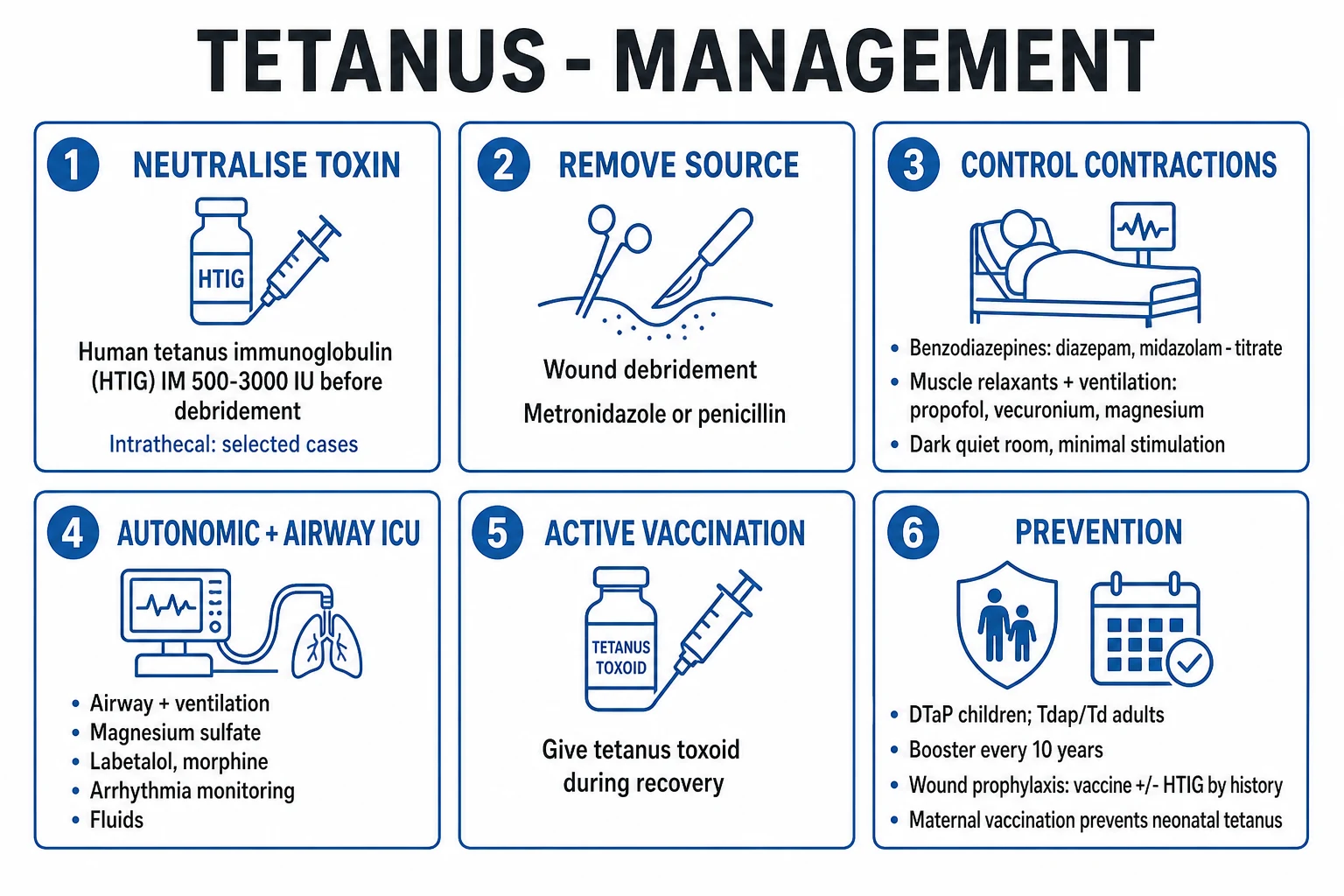
- DIAGNOSE CLINICALLY — trismus (inability to open jaw — the FIRST sign in 50-75%) + generalised muscle rigidity + spasms (triggered by stimuli — light, sound, touch) + history of wound/injury (may be minor — splinter, insect bite, IV drug use). No diagnostic test — it is a CLINICAL diagnosis. "The diagnosis is tetanus until proven otherwise in any patient with trismus."
- ISOLATE AND REDUCE STIMULI: dark, quiet room. Minimise handling. Avoid unnecessary suctioning, turning, procedures (each can trigger life-threatening spasms). Sedate adequately BEFORE any intervention.
- HTIG (human tetanus immunoglobulin) 500 IU IM — neutralises circulating tetanospasmin (does NOT reverse toxin already bound to neurons — the bound toxin will continue to cause symptoms until new synapses form over weeks — but prevents further binding). Give in a DIFFERENT site from the vaccine.
- METRONIDAZOLE 500 mg IV q6h for 7-10 days (or penicillin G) — eradicates C. tetani at the wound site → stops further toxin production. Metronidazole preferred over penicillin (penicillin is a GABA antagonist → may theoretically worsen tetanus).
- WOUND DEBRIDEMENT — remove necrotic tissue (anaerobic environment for C. tetani). Essential to eliminate the source of toxin.
- BENZODIAZEPINES — the mainstay of spasm control:
- Diazepam 10-40 mg IV (loading) then infusion 5-20 mg/hr (large doses may be needed — tetanus causes massive sympathetic output → benzodiazepine requirements are extremely high). Diazepam enhances REMAINING GABAergic transmission (the toxin blocks SOME inhibitory synapses but not all — diazepam enhances the remaining ones).
- OR midazolam infusion 0.1-0.3 mg/kg/hr (more titratable than diazepam — preferred in ICU).
- If spasms uncontrollable → propofol infusion (1-3 mg/kg/hr — GABAergic + anaesthetic) or thiopental (barbiturate — potent GABA-A agonist).
- If still refractory → neuromuscular blockade (vecuronium/rocuronium infusion — eliminates spasms by paralysing the patient — but then MUST sedate deeply as the patient is awake and aware — terror).
- MAGNESIUM SULFATE — for spasms AND autonomic instability:
- Loading: 5 g IV over 1h then infusion 2-4 g/hr (target serum Mg 2-4 mmol/L).
- Mechanism: blocks calcium channels at the NMJ (reduces acetylcholine release → reduces muscle contraction) AND at presynaptic sympathetic neurons (reduces catecholamine release → controls autonomic instability). Attygalle 2002: magnesium is effective for BOTH spasms and autonomic dysfunction in tetanus — may reduce the need for mechanical ventilation.
- Monitor: reflexes (loss of patellar reflex = Mg >3 mmol/L → reduce dose), ECG (PR prolongation, QRS widening = Mg toxicity), respiratory rate (Mg can cause respiratory depression).
- Have calcium gluconate 10 mmol available (magnesium reversal).
- AUTONOMIC INSTABILITY MANAGEMENT:
- The autonomic dysfunction is the #1 cause of death in severe tetanus (labile hypertension/brypotension + tachyarrhythmia/bradyarrhythmia + sweating).
- Magnesium (as above — reduces catecholamine release).
- Labetalol (combined alpha + beta blocker) for hypertension.
- Morphine infusion (2-10 mg/hr — suppresses sympathetic output centrally — also provides analgesia).
- Clonidine (alpha-2 agonist — reduces central sympathetic outflow).
- AVOID pure beta-blockers (esmolol, propranolol) — unopposed alpha → catastrophic hypertension (like cocaine toxicity).
- AIRWAY AND VENTILATION: early tracheostomy (prolonged ICU stay expected — 4-6 weeks — tracheostomy at day 5-7 facilitates airway management and reduces laryngospasm risk). Mechanical ventilation with paralysis if spasms are uncontrollable.
- VACCINATION (tetanus toxoid 0.5 mL IM) — NATURAL TETANUS INFECTION DOES NOT CONFER IMMUNITY (the toxin is so potent that even a lethal dose is too small to stimulate an immune response). MUST vaccinate the patient → prevents recurrence. Give in a DIFFERENT site from HTIG.
- SUPPORTIVE: DVT prophylaxis (LMWH — prolonged immobility), pressure area care (turn carefully with adequate sedation), nutrition (enteral — high caloric demand from sustained muscle contraction), psychological support (patient is AWAKE during spasms — extremely distressing — reassure, sedate adequately).
Tetanus autonomic instability — detailed ICU protocol
The autonomic dysfunction syndrome (ADS) develops 5–7 days after onset of spasms in severe tetanus, peaks around day 10–14, and is the LEADING CAUSE OF DEATH in ventilated tetanus patients (sudden cardiac arrest, malignant arrhythmia, or hypertensive crisis with intracranial/circulatory catastrophe). It reflects teTx disinhibition of the intermediolateral (IML) sympathetic column AND loss of baroreflex buffering — noradrenaline levels can reach 10× normal. Once a tetanus patient is ventilated and paralysed, the dominant threat shifts from respiratory spasm to ADS: most tetanus deaths occur in this window, frequently triggered by a nursing procedure (suctioning, turning).[3][9]
Tetanus autonomic instability — drug protocol with targets
| Drug | Class / mechanism | Dose | Target parameter | Caution |
|---|---|---|---|---|
| Magnesium sulfate | Ca²⁺ channel blockade at NMJ + presynaptic sympathetic neuron — first-line, controls BOTH spasms AND autonomic surges | Loading 40 mg/kg (≈2.5–5 g) IV over 1 h, then infusion 1–3 g/hr | Serum Mg 2–4 mmol/L; patellar reflexes PRESENT; RR >8 | Loss of reflexes = Mg >3 mmol/L → reduce; PR/QRS widening, hypotension, respiratory depression → stop + calcium gluconate 10 mmol IV |
| Morphine | Central sympathetic suppression + analgesia + anxiolysis | 0.5–3 mg/hr IV infusion (up to 10 mg/hr) | HR <100; no lacrimation/sweating; patient comfortable | Histamine release → hypotension; renally-cleared metabolites accumulate; obtunds respiration (intubated patients only) |
| Labetalol | Combined α1 + non-selective β blocker — first-line ANTIHYPERTENSIVE | Bolus 5–20 mg IV q10min, or infusion 10–120 mg/hr | MAP 70–85 mmHg | NEVER use a pure β-blocker: unopposed α → catastrophic hypertension + sudden cardiac arrest |
| Clonidine | Central α2-agonist → reduces sympathetic OUTFLOW | 0.1–0.3 µg/kg/hr IV infusion (or 0.1–0.3 mg NG/SL q8h) | HR 60–90; calm; reduced sweating | Rebound hypertension if stopped abruptly; bradycardia, sedation |
| Dexmedetomidine | Selective α2-agonist — sympatholysis + sedation (analgesic-sparing) | 0.2–0.7 µg/kg/hr (no loading in unstable patient) | RASS −1 to −2; HR 60–90 | Bradycardia, hypotension; does NOT replace benzodiazepine for spasm control |
| Esmolol / propranolol (pure β-blocker) | — | AVOID as sole agent | — | Unopposed α-mediated hypertension has caused fatal cardiovascular collapse in severe tetanus |
Step-wise autonomic instability protocol
- First-line backbone: magnesium sulfate infusion to target serum Mg 2–4 mmol/L (controls spasms AND attenuates catecholamine surges). Thwaites 2006 RCT confirmed magnesium reduces ventilation, vasopressor and benzodiazepine requirements.[7]
- Add central sympatholysis: morphine infusion ± clonidine/dexmedetomidine. These suppress sympathetic OUTFLOW rather than blocking peripheral receptors — preferred over peripheral blockers because they do not produce unopposed α-effects.
- Hypertensive surges refractory to above: add labetalol (combined α+β) titrated to MAP 70–85 mmHg. NEVER use a pure β-blocker.
- Hypotension (the paradoxical loss-of-sympathetic-tone phase, or magnesium excess): reduce magnesium, volume-resuscitate cautiously, add norepinephrine (combined α+β). AVOID pure α-agonists (phenylephrine) — they worsen reflex bradycardia.
- Bradyarrhythmias / asystole: atropine ± isoprenaline; severe sinus arrest may require transvenous pacing.
- Eliminate triggers: minimise suctioning, turning, procedures (all trigger sympathetic surges); pre-medicate with morphine/benzodiazepine before any unavoidable intervention.
- Continuous monitoring: arterial line (beat-to-beat BP), ECG with ST analysis, capnography, hourly urine output, core temperature. Most fatal events are sudden — anticipation, not reaction, is the skill.
Botulism — detailed management
Botulism ICU management protocol
- DIAGNOSE CLINICALLY: descending flaccid paralysis (cranial nerves first: ptosis, diplopia, dysphagia, dysarthria → then respiratory muscles → then limbs) + dilated/fixed pupils + dry mouth + constipation + urinary retention + normal sensation + normal consciousness + NO fever. History: home-canned food (foodborne), IV drug use (wound), honey in infant <12 months (infant). Confirm with: mouse bioassay (gold standard — serum/stool/wound → inject into mouse → mouse dies of botulism → type-specific antitoxin rescues). Takes days — treat empirically while awaiting results.
- BOTULINUM ANTITOXIN (equine heptavalent A-G):
- For foodborne and wound botulism: give antitoxin IMMEDIATELY upon clinical suspicion (do NOT wait for confirmatory testing — the antitoxin neutralises CIRCULATING toxin only — it does NOT reverse toxin already bound to NMJ → early administration prevents progression).
- Dose: one vial of heptavalent antitoxin IV (covers types A-G). May repeat based on clinical progression.
- Caution: equine origin → serum sickness and anaphylaxis (skin test or observe for 30 min post-administration).
- Does NOT reverse existing paralysis (the bound toxin must degrade naturally over weeks-months as new axonal terminals form) — but PREVENTS FURTHER binding → limits severity.
- For infant botulism: use BIG-IV or BabyBIG (human botulism immune globulin — NOT the equine antitoxin — which can cause anaphylaxis in infants).
- SUPPORTIVE VENTILATION (the MAINSTAY of management):
- The paralysis may progress to respiratory failure → monitor FVC + NIF every 4-6h (same thresholds as GBS: FVC <15 mL/kg or NIF < -30 → intubate).
- Prolonged ventilation expected (weeks-months — the NMJ must regenerate new axonal terminals — botulinum toxin cleaves SNARE proteins which must be replaced by new protein synthesis).
- Use rocuronium for RSI (botulism does NOT upregulate ACh receptors like GBS — succinylcholine is technically safe, but rocuronium is preferred for prolonged ventilation).
- Tracheostomy at day 7-14 (prolonged ventilation expected).
- WOUND BOTULISM (IV drug use — black tar heroin):
- Surgical debridement of the wound (remove the source of C. botulinum).
- Penicillin G or metronidazole (eradicate C. botulinum from the wound — reduces further toxin production).
- Continue antitoxin (neutralises circulating toxin from the wound).
- FOODBORNE BOTULISM:
- DO NOT give antibiotics (may cause bacterial lysis → RELEASE MORE TOXIN from the gut → worsen severity). Use gastric lavage + activated charcoal (if within 1-2h of ingestion — remove unabsorbed toxin).
- Give antitoxin (neutralises circulating toxin).
- MONITORING: FVC/NIF (respiratory function), pupils (dilated → may recover as NMJ regenerates), bowel sounds (paralytic ileus — may require prolonged NG feeding), ECG (can cause cardiac arrhythmia from autonomic involvement).
- RECOVERY: gradual — over weeks-months. Cranial nerve palsies recover first, then respiratory, then limbs. Full recovery expected if respiratory support maintained through the acute phase.
Wound botulism in people who inject drugs — black tar heroin
Epidemiology and source
- Wound botulism is now the commonest form of botulism in adults in the UK, western USA and parts of Europe — driven almost entirely by injection drug use, especially black tar heroin (BTH).
- BTH is a less-refined, gummy preparation produced mainly in Mexico; C. botulinum spores contaminate the heroin (or its cutting agents — dextrose, dried milk) at source. Spores survive "cooking", and germination is enhanced by the citric/ascorbic acid users dissolve the heroin with.
- Route: subcutaneous ("skin-popping") or intramuscular injection creates a necrotic, anaerobic pocket → spores germinate → toxin is produced in vivo and absorbed systemically. Intravenous injection can also cause it but provides less favourable anaerobic conditions.
- Outbreaks cluster geographically (California, Scotland, England, Norway); the serotype is almost always type A or type B.[6]
Clinical features distinguishing wound botulism
- Same descending flaccid paralysis as foodborne: bulbar → respiratory → limb, dilated pupils, dry mouth, constipation, preserved consciousness.
- WITH an injecting-site wound: abscess, cellulitis, myositis, "woody" induration, sometimes multiple deep abscesses.
- NO classic food history (the diagnosis is often missed initially — attributed to opioid overdose, intoxication, or GBS).
- Incubation longer than foodborne (days vs hours) because toxin must be produced in vivo.
- Frequent co-infection with staphylococci, streptococci and other anaerobes.
Wound vs foodborne botulism — management differences
| Feature | Foodborne | Wound (IVDU) |
|---|---|---|
| Antitoxin | YES (equine heptavalent A–G) — early | YES — early, same dose |
| Antibiotics | NO — lyses bacteria → releases MORE toxin | YES — penicillin G 10–20 MU/day or metronidazole 500 mg q6h × 7–10 d (eradicates C. botulinum from the wound) |
| Surgical debridement | Not required | MANDATORY — remove the source (often deep, multiloculated abscesses) |
| Source of toxin | Pre-formed in food (ingested) | Produced in vivo in the wound |
| Aminoglycosides | Avoid (potentiate NMJ blockade) | AVOID — can worsen paralysis |
| Wound care | — | Vigorous surgical toilet; leave open; daily review; may need repeat exploration |
| Repeat antitoxin | Usually single dose | May need repeat dose if continued toxin production / progression |
Practical IVDU-botulism bundle
- RECOGNISE — any IVDU with bulbar palsies / descending weakness = wound botulism (don't be reassured by a "normal" oxygen saturation — the patient is quietly losing ventilatory reserve).
- ANTITOXIN immediately (heptavalent equine A–G) — contact public health / CDC / national reference laboratory for emergency supply.
- SURGICAL DEBRIDEMENT of all abscesses and wounds (often multiple).
- ANTIBIOTICS: penicillin G or metronidazole — NOT aminoglycosides.
- ANTICIPATE prolonged ventilation (often weeks — the commonest cause of prolonged ICU stay in this group).
- HARM REDUCTION: offer opioid substitution therapy, take-home naloxone, wound-care education, and vaccination against other blood-borne pathogens.
- PUBLIC HEALTH NOTIFICATION (mandatory reportable disease in virtually all jurisdictions).
Infant botulism ("floppy baby")
Pathophysiology — why infants and not adults
- In ADULTS, ingested spores pass through harmlessly — gastric acid and the mature gut microbiome prevent germination.
- In INFANTS (<12 months), the gut is relatively achlorhydric (gastric pH higher) and the microbiome is immature → ingested spores GERMINATE, COLONISE the large bowel, and PRODUCE toxin IN VIVO (a toxico-infection, NOT pre-formed-toxin ingestion). This is why infant botulism is a COLONISATION disease, not a food-poisoning disease.
- The classic source is honey (contains spores — hence "no honey under 12 months"), but spores are also widespread in soil/dust; many cases have no clear source. Most cases are type A or type B.
Clinical features
- First sign usually constipation (2–3 days) → poor feeding → descending, symmetric, flaccid weakness ("floppy baby").
- Bulbar: poor suck, weak cry, ptosis, ophthalmoplegia, facial diplegia, diminished gag.
- Diffuse hypotonia; weak/absent deep tendon reflexes; loss of head control in a previously normal infant.
- Autonomic: constipation, hypotension, urinary retention, dry mouth.
- Afebrile, alert (the baby looks "alert but floppy"); pupils may be dilated/slow-reacting.
- Progresses to respiratory failure (the leading cause of death).
Diagnosis
- Clinical + stool/serum for botulinum toxin + culture of stool for C. botulinum (the colonised gut is the source — stool is the highest-yield sample).
- EMG: low-amplitude CMAPs, decremental response at low-frequency stimulation, INCREMENTAL response at high-frequency (20–50 Hz) stimulation — the hallmark of presynaptic NMJ blockade.
- Differential: sepsis, meningitis, metabolic disease, spinal muscular atrophy, GBS (rare in infants), dehydration.
Infant vs adult botulism — antitoxin choice
| Feature | Infant botulism | Adult (foodborne/wound) |
|---|---|---|
| Antitoxin | BabyBIG / BIG-IV (human botulism immune globulin, from immunised donors) — IV | Equine heptavalent botulinum antitoxin (HBAT) — IV |
| Why this choice | Equine antitoxin causes serum sickness/anaphylaxis in infants and has a long half-life; BabyBIG is human-derived, safer, and shortens hospitalisation | Equine HBAT covers all 7 serotypes; risk of serum sickness (skin test/observe) |
| Dose | 50 mg/kg IV single infusion over ~1 h | 1 vial HBAT IV (covers A–G); repeat per progression |
| Effect | Reduces duration of ventilation/hospital stay by ~half when given early; mortality <2% | Neutralises circulating toxin; prevents progression (does not reverse bound toxin) |
| Antibiotics | AVOID aminoglycosides (potentiate NMJ blockade → sudden apnoea); avoid unless treating a proven secondary infection | Avoid for foodborne; penicillin/metronidazole for wound |
| Supportive | Ventilation, NG feeding, bowel programme (constipation), avoid aminoglycosides | Ventilation, prolonged wean |
Recovery timelines — why tetanus and botulism differ
Recovery biology — tetanus vs botulism
| Feature | Tetanus | Botulism |
|---|---|---|
| Why prolonged? | TeTx-cleaved synaptobrevin is not re-functional in the inhibitory interneuron | Cleaved SNARE (SNAP-25/VAMP/syntaxin) cannot reform → ACh vesicles cannot fuse |
| Mechanism of recovery | Formation of NEW inhibitory synapses onto the motor neuron (interneurons are short, local circuits) | Sprouting of entirely NEW axonal terminals and formation of new NMJ end-plates (slower) |
| Time to clinical recovery | 4–6 weeks — spasms and rigidity abate as new inhibitory synapses form | 2–6 months (longest for type A) — recovery is cranial → respiratory → limb |
| ICU length of stay | 4–6 weeks (autonomic phase peaks day 10–14) | 4–12 weeks mean ventilation (some >6 months for type A) |
| Residual | Usually full recovery if survives; mild residual weakness possible | Full recovery expected but slow; fatigue common for months |
| Rehabilitation | Reconditioning after prolonged paralysis/immobility | Prolonged wean, late tracheostomy decannulation, rehab for deconditioning |
Clinical pearls
Red flags
Prognosis
Tetanus and botulism prognosis
| Disease | Mortality | Recovery time | Key prognostic factors |
|---|---|---|---|
| Tetanus (generalised) | 10-40% (developed), 40-80% (developing) | 2-6 weeks (new synapse formation) | Incubation period (shorter = worse), age, comorbidity, delay to treatment, autonomic instability |
| Botulism (foodborne) | 5-10% | Weeks-months (NMJ regeneration) | Type of toxin (A = most severe, longest recovery), delay to antitoxin, respiratory failure |
| Botulism (wound) | 5-10% | Weeks-months | Delay to wound debridement + antitoxin |
| Infant botulism | <1% (with BabyBIG) | Weeks-months | Age <6 months = more severe, type A = more severe |
Exam practice
SAQ Practice
10 minutes · 10 marks
A 48-year-old farmer develops progressive trismus, risus sardonicus and stimulus-triggered whole-body spasms 12 days after a soil-contaminated hand wound. He is unvaccinated. Outline diagnosis and multi-modal ICU management.
SAQ Practice
10 minutes · 10 marks
A person who injects drugs presents with bilateral ptosis, dysarthria, dilated pupils and progressive respiratory failure. Wound inspection shows soft-tissue infection at injection sites.
Key trials and evidence
Attygalle 2002 — Magnesium for tetanus (PMID 16535413)
Study design
Case series + literature review — 40 patients with severe tetanus treated with magnesium
Intervention
Magnesium sulfate loading 5 g IV + infusion 2-4 g/hr (target Mg 2-4 mmol/L)
Key finding
Magnesium controlled spasms AND autonomic instability. 70% of patients did NOT need mechanical ventilation
Clinical bottom line
Magnesium is a GAME-CHANGER for severe tetanus — controls BOTH spasms and autonomic dysfunction — reduces need for ventilation and sedation
Thwaites 2006 — Magnesium sulphate for severe tetanus (RCT) (PMID 16996660)
Study design
Randomised controlled trial, Vietnam — 256 adults with severe tetanus randomised to MgSO4 vs placebo, in addition to standard diazepam + HTIG + metronidazole
Intervention
Magnesium sulphate IV loading 40 mg/kg then infusion titrated to keep serum Mg 2–4 mmol/L until spasms and autonomic instability settled
Key findings
Magnesium reduced the need for mechanical ventilation (44% vs 60% on diazepam alone, p=0.04) and reduced the requirement for additional antihypertensive/antiarrhythmic agents. No significant reduction in mortality.
Clinical bottom line
First RCT of magnesium in severe tetanus. Magnesium is now a first-line adjunct: it controls BOTH spasms AND autonomic instability and reduces sedation and ventilation needs. Target serum Mg 2–4 mmol/L; monitor reflexes, ECG and respiratory rate.
Arnon 2001 — Botulinum toxin as a biological weapon (JAMA) (PMID 11292456)
Study type
Consensus review / public-health guideline (Working Group on Civilian Biodefense)
Key content
Comprehensive review of the seven botulinum toxin serotypes (A–G), their molecular mechanism (light-chain cleavage of SNARE proteins — SNAP-25 for A/C/E, VAMP/synaptobrevin for B/D/F/G, syntaxin for C), and the rationale for early equine heptavalent antitoxin.
Clinical bottom line
Defines the molecular basis of the descending flaccid paralysis, the importance of early antitoxin (neutralises CIRCULATING toxin only — cannot reverse toxin already bound to the NMJ), and the prolonged recovery (weeks–months, requiring sustained ventilatory support and new axonal terminal formation).
References
- [1]Thwaites CL, et al. Cystometrogram appearance in PUV is reliably quantified by the shape,wall, reflux and diverticuli (SWRD) score, and presages the need for intervention J Pediatr Urol, 2017.PMID 28159527
- [2]Sobel J, et al. Uses of FloSeal(©) in obstetric hemorrhage: Case series and literature review Taiwan J Obstet Gynecol, 2017.PMID 29241928
- [3]Attygalle D, et al. Attachment of Agrobacterium tumefaciens B6 and A. radiobacter K84 to Tomato Root Tips Appl Environ Microbiol, 1996.PMID 16535413
- [4]Swarbrick C, et al. Immune oncology in hepatocellular carcinoma-hype and hope Lancet, 2017.PMID 28434649
- [5]Cherington M, et al. Wafer-bonded 2-D CMUT arrays incorporating through-wafer trench-isolated interconnects with a supporting frame IEEE Trans Ultrason Ferroelectr Freq Control, 2009.PMID 19213645
- [6]Yu PA, et al. Treatment of landfill leachate using magnetically attracted zero-valent iron powder electrode in an electric field J Hazard Mater, 2020.PMID 31843409
- [7]Thwaites CL, Yen LM, Nhu NT, et al. Effect of an enteral diet supplemented with a specific blend of amino acid on plasma and muscle protein synthesis in ICU patients Clin Nutr, 2007.PMID 16996660
- [8]Arnon SS, Schechter R, Inglesby TV, et al. Chronic ischemia preferentially causes white matter injury in the neonatal rat brain Brain Res, 2001.PMID 11292456
- [9]Bleck TP. Isoflavones at concentrations present in soy infant formula inhibit rotavirus infection in vitro J Nutr, 2007.PMID 17709444