ICU · Obs/Gynae
Obstetric emergencies in the ICU
Also known as Pre-eclampsia and eclampsia · HELLP syndrome · Peripartum cardiomyopathy · Amniotic fluid embolism · Sepsis in pregnancy · Postpartum haemorrhage in ICU · Venous thromboembolism in pregnancy · Maternal critical care · Massive obstetric haemorrhage · Pregnancy physiology and ICU implications
Obstetric ICU admissions are rare but high-stakes. Pre-eclampsia/eclampsia is the most common indication: magnesium sulphate for seizure prophylaxis/treatment, labetalol/hydralazine for BP control, definitive treatment is delivery. HELLP syndrome (Haemolysis, Elevated Liver enzymes, Low Platelets) is a variant of severe pre-eclampsia — risk of liver haematoma/rupture. Peripartum cardiomyopathy: heart failure in last month of pregnancy to 5 months postpartum — treat with standard HF therapy except ACE inhibitors/ARBs (teratogenic; safe postpartum if not breastfeeding). Amniotic fluid embolism: catastrophic, sudden cardiovascular collapse + coagulopathy — supportive treatment. Physiological changes of pregnancy alter drug dosing, ventilation, and fluid management.
On this page & tools
Your progress
Saved locally on this device.
Target exams
Red flags

Physiological changes of pregnancy
Pre-eclampsia and eclampsia
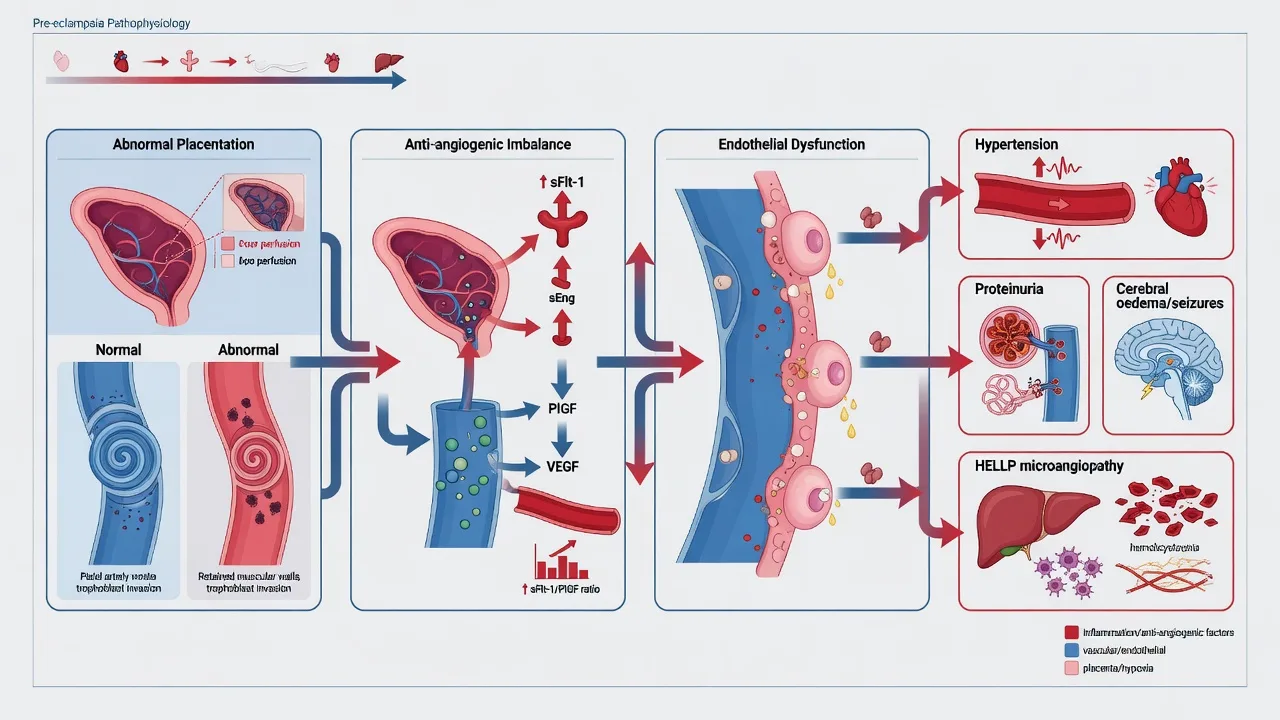
Management
Pre-eclampsia/eclampsia ICU management
Magnesium sulphate — FIRST (seizure prevention/treatment)
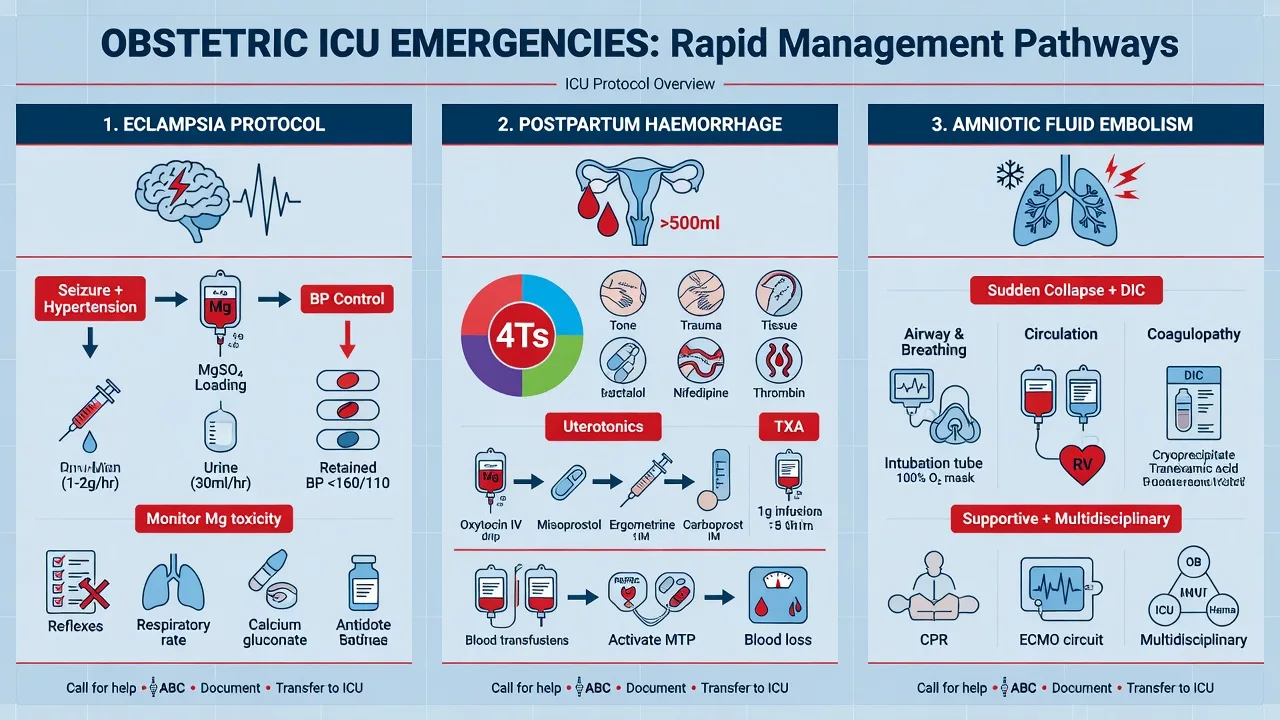
Loading: 4-6 g IV over 20 min. Maintenance: 1-2 g/h infusion for 24h after delivery or last seizure. Monitor: reflexes (loss = early toxicity), respiratory rate (depression), urine output, magnesium levels (target 2-4 mmol/L). Antidote: calcium gluconate 10% 10 mL IV slow for toxicity. Magnesium prevents eclampsia but is NOT an antihypertensive.<Cite id="1" />
BP control — AFTER magnesium
IV labetalol (20 mg every 10 min, max 300 mg, or infusion 1-2 mg/min) OR hydralazine (5 mg every 20 min). Target: <160/110 (prevent stroke). Avoid ACE inhibitors, ARBs, nitroprusside (teratogenic/toxic). Oral nifedipine 10 mg can be used if IV not available.
Fluid management — CAUTIOUS
Pre-eclamptic patients are at high risk of pulmonary oedema (capillary leak + low albumin). Give fluids cautiously — monitor closely. Avoid aggressive fluid resuscitation. If oliguric, do NOT fluid challenge — risk of pulmonary oedema. May need CVP/PA catheter guidance.
Delivery — definitive treatment
The only definitive treatment for pre-eclampsia is delivery of the baby and placenta. Timing depends on gestational age and severity. Consult obstetrics urgently. Postpartum pre-eclampsia can occur up to 6 weeks postpartum.
HELLP syndrome
HELLP syndrome
Severe pre-eclampsia variant
- H: Haemolysis (LDH >600, schistocytes, bilirubin >20)
- EL: Elevated Liver enzymes (AST >70)
- LP: Low Platelets (<100,000)
- Risk: liver haematoma/rupture (RUQ pain — EMERGENCY)
- Management: delivery (definitive) + supportive care ± steroids for fetal lung maturation
- Higher morbidity than standard pre-eclampsia
Peripartum cardiomyopathy
Amniotic fluid embolism
Exam practice
SAQ — Eclampsia in ICU
10 minutes · 10 marks
A 32-year-old woman at 36 weeks gestation is admitted to ICU after a generalised seizure. BP 172/114, HR 102, SpO2 96%. She is post-ictal, confused. Proteinuria 3+ on dipstick. Platelets 85, AST 95, LDH 650.
Clinical pearls
Red flags
Detailed physiology of pregnancy and ICU implications
Pregnancy physiology transforms every system. Understanding the magnitude and direction of each change is essential because normal ICU thresholds and drug doses do not apply. The intensivist must use pregnancy-adjusted reference ranges for vital signs, blood gases, haematology and biochemistry, and must anticipate the altered pharmacokinetics (increased volume of distribution, increased renal clearance, altered protein binding).[6]
Cardiovascular changes
[1]Respiratory changes
Haematological changes
[1]Renal
Hyperfiltration
- GFR rises by ~50% by mid-pregnancy
- Normal serum creatinine in pregnancy <75 µmol/L (0.85 mg/dL) — a "normal" creatinine of 90 already signals renal impairment
- Glycosuria, proteinuria up to 300 mg/24h, and aminoaciduria are normal
- Urea <3 mmol/L normal; uric acid rises in pre-eclampsia (marker of severity)
Gastrointestinal
Aspiration risk
- Lower oesophageal sphincter tone reduced (progesterone)
- Gastric emptying delayed from mid-pregnancy (mechanical + hormonal)
- Intragastric pressure raised by the gravid uterus
- All pregnant patients >20 weeks treated as "full stomach" — RSI with cricoid pressure for any intubation
- Antacid prophylaxis (sodium citrate 30 mL + ranitidine 50 mg IV) before caesarean
Pharmacology
Altered PK/PD
- Increased volume of distribution → higher loading doses for many drugs (e.g. magnesium)
- Increased renal clearance → more frequent dosing of renally-cleared drugs (β-lactams, digoxin)
- Reduced plasma protein (albumin) → more free drug for highly-bound agents
- Placental transfer: avoid ACEi, ARBs, warfarin (teratogenic/foetotoxic), NSAIDs (premature closure of ductus)
- Inhaled volatiles: MAC reduced by ~25-40% in pregnancy
Magnesium sulphate — dosing and toxicity in depth
Magnesium sulphate: practical ICU protocol
Indications and dosing
INDICATION: seizure prophylaxis in severe pre-eclampsia; treatment of eclampsia. REGIMEN (Pritchard IM or Zuspan IV): IV LOADING 4-6 g magnesium sulphate over 20 min (4 g in 100 mL over 15-20 min; IM alternative 10 g — 5 g deep IM into each buttock). MAINTENANCE 1-2 g/h IV for 24 h after delivery OR last seizure. ALWAYS have calcium gluconate 10% 10 mL drawn up at bedside before starting.
Monitoring
Clinical monitoring EVERY hour: (1) patellar reflexes PRESENT (loss = first sign of toxicity, Mg²⁺ ~5-7 mmol/L); (2) respiratory rate ≥12/min; (3) urine output ≥25 mL/h (Mg²⁺ renally excreted — oliguria = accumulation). Serum magnesium levels: target therapeutic 2-4 mmol/L (4-8 mEq/L). Check level if >4 or any concern.
Toxicity ladder
2-4 mmol/L = therapeutic. 5-7 = loss of deep tendon reflexes, flushing, warmth. 7-10 = somnolence, slurred speech, hypotension, ECG widening of QRS, prolonged PR. 10-12 = respiratory depression/arrest. >15 = cardiac arrest (asystole). ALWAYS stop infusion at first sign; calcium gluconate 10% 10 mL IV over 5-10 min reverses cardiorespiratory toxicity.
Magnesium and neuromuscular blockade
Magnesium potentiates both depolarising (suxamethonium) and non-depolarising (rocuronium, vecuronium) neuromuscular blockers — expect prolonged paralysis. Use processed EEG (TOF) monitoring and reduce NMBA doses by ~30-50%. Magnesium crosses placenta — neonate may be hypotonic or have respiratory depression at birth (notify neonatal team).
Magnesium for neuroprotection (separate indication)
For preterm labour <32 weeks, magnesium sulphate is given for FETAL neuroprotection (reduces cerebral palsy) — different protocol (4 g loading, may repeat). Coexists with maternal indication but the rationale is fetal, not maternal.
Sepsis in pregnancy and the puerperium
Sepsis is a leading direct cause of maternal death worldwide and consistently ranks in the top three in MBRRACE-UK reports. Pregnancy immunomodulation (blunted cell-mediated immunity, neutrophil dysfunction) and the hypercoagulable state increase susceptibility and severity. The physiological tachycardia, leukocytosis, and tachypnoea of pregnancy can mask early sepsis — use pregnancy-modified qSOFA/Sepsis in Obstetrics Scores (SOS).[11][12]
Common sources
Antepartum
Pregnancy-specific
- Pyelonephritis (most common — dilated ureters from progesterone, 2× risk of progression to sepsis)
- Chorioamnionitis (fever, tachycardia, uterine tenderness, foul liquor) — delivery is source control
- Septic abortion / retained products of conception
- Listeria monocytogenes (bacteraemia, often flulike — avoid unpasteurised foods)
- Influenza, COVID-19, varicella pneumonia (higher mortality than non-pregnant)
Peripartum / postpartum
Within 6 weeks
- Endometritis (post-caesarean risk 10× vaginal delivery)
- Wound infection (caesarean, perineal, episiotomy)
- Mastitis / breast abscess (often Staph aureus)
- Retained products of conception
- Episiotomy or perineal laceration infection
- Necrotising fasciitis (polymicrobial, often with Group A Strep — surgical emergency)
Non-obstetric
Same as non-pregnant
- Community-acquired pneumonia
- Appendicitis (often atypical presentation — pain higher due to uterine displacement)
- Biliary sepsis (gallstones common in pregnancy)
- Pyelonephritis from asymptomatic bacteriuria
- Meningitis, cellulitis, line infection
Sepsis in pregnancy — modified Surviving Sepsis bundle (within 1 hour)
Recognition — use pregnancy-specific thresholds
Modified qSOFA in pregnancy: RR ≥22, SBP <90 or MAP <65, altered mentation. NOTE: baseline RR is high (18-20 normal), HR high (90s normal), WCC high (up to 15 normal). Suspect sepsis with fever ≥38, sustained tachycardia >110, RR >24, or new confusion. Lactate is well-validated: >2 mmol/L warrants concern.
Resuscitation (with fetal monitoring)
Crystalloid 30 mL/kg over first 3 h (cautious — risk of pulmonary oedema). Target MAP ≥65, urine output ≥0.5 mL/kg/h (in pregnancy ≥1 mL/kg/h is normal). LEFT LATERAL TILT >20 weeks. Apply continuous CTG (cardiotocography) for fetal heart rate >23 weeks. Norepinephrine is first-line vasopressor in pregnancy (less uterine vasoconstriction than phenylephrine/metaraminol).
Investigations and cultures
Blood cultures ×2, MSU, vaginal/high vaginal swab, wound swab, placental swab at delivery. Send lochia in postpartum. Lactate, FBC, CRP, coagulation, U&E, LFTs, venous gas. Imaging: CXR, ultrasound (renal/obstetric), CT abdomen/pelvis if source unclear (recognise radiation risk — single CT <1 mSv to fetus is acceptable at >12 weeks; MRI without gadolinium is preferred). Empirical antibiotics MUST cover common obstetric pathogens.
Empirical antibiotics
CHORIOAMNIONITIS/ENDOMETRITIS: piperacillin-tazobactam 4.5 g IV + gentamicin 5-7 mg/kg IV + metronidazole 500 mg IV (or carbapenem monotherapy). PYELONEPHRITIS: ceftriaxone 2 g IV ± gentamicin. SEPSIS UNCLEAR: piperacillin-tazobactam ± vancomycin (line infection, MRSA). Add oseltamivir if influenza suspected. Therapeutic drug monitoring of aminoglycosides is essential (altered Vd and clearance). DE-ESCALATE within 48-72 h on culture results.
Source control — and timing of delivery
CHORIOAMNIONITIS or ENDOMETRITIS = DELIVERY (the source is uterine contents). Retained products = surgical evacuation. Abscess = drainage. The decision to deliver balances gestational age, maternal stability, and fetal status — multi-disciplinary (obstetric, neonatal, ICU). Live fetus: do not delay maternal resuscitation for delivery.
Special considerations
Use filter on blood products. Continue magnesium if concurrent pre-eclampsia. Avoid NSAIDs if <32 weeks (ductus arteriosus) or in AKI. Steroids for fetal lung maturation (betamethasone 12 mg IM ×2, 24 h apart) if <34 weeks and delivery anticipated. Venous thromboprophylaxis mandatory (sepsis + pregnancy = highest VTE risk).
Postpartum haemorrhage (PPH)
PPH is defined as blood loss ≥500 mL after vaginal delivery or ≥1000 mL after caesarean, OR any blood loss causing haemodynamic instability. Major PPH = continued bleeding >1000 mL. Severe PPH (>2500 mL or 5+ units) carries a maternal mortality risk and the term "massive obstetric haemorrhage" is used. Pregnancy physiology masks early PPH: a young woman can lose 1.5 L (30% of blood volume) before tachycardia and hypotension appear because blood volume is up 50% — by which point she is already critically ill. [1]
The "4 Ts" of PPH causes
Tone (70%)
Uterine atony
- Most common cause — uterus fails to contract after delivery
- Risk factors: prolonged/augmented labour, multiparity, overdistended uterus (twins, macrosomia, polyhydramnios), prior PPH
- Examine: boggy, soft uterus on palpation
- Management: uterotonic sequence — oxytocin 5 IU IV/IM → ergometrine 250 µg IM (avoid in hypertension) → carboprost (15-methyl-PGF2α) 250 µg IM q15min max 8 doses (avoid in asthma) → misoprostol 800 µg PR/SL; bimanual uterine compression; Bakri balloon tamponade
Trauma (20%)
Genital tract
- Cervical, vaginal, or perineal lacerations
- Uterine rupture (especially with prior caesarean scar and labour)
- Retained instrumentation injury, broad ligament haematoma
- Management: systematic inspection of vagina/cervix/uterus under anaesthesia; surgical repair; laparotomy for rupture
Tissue (9%)
Retained products
- Retained placenta or placental fragments
- Placenta accreta/increta/percreta (massive risk if anterior placenta + previous caesarean scar)
- Management: manual removal / uterine evacuation; hysterectomy if accreta and uncontrolled
Thrombin (1%)
Coagulopathy
- Pre-existing: von Willebrand disease, on warfarin/DOAC, thrombocytopenia
- Acquired: pre-eclampsia/HELLP, AFLP, amniotic fluid embolism, sepsis, massive transfusion dilution
- Management: correct specific defects — fibrinogen (cryoprecipitate), platelets, FFP, factors. Keep fibrinogen >4 g/L in obstetric bleeding
Massive obstetric haemorrhage — ICU protocol
Activate and resuscitate
Call massive obstetric haemorrhage protocol. Two large-bore IV (14-16 G) or rapid infusion catheter. Send bloods for FBC, coagulation, fibrinogen, U&E, group & save + crossmatch 6 units. Warm crystalloid 1-2 L while awaiting blood. LEFT LATERAL TILT until delivered. Apply warmed fluids, forced-air warmer, maintain core temp >36°C.
Massive transfusion — pregnancy ratio 1:1:1
Give RBC:FFP:platelets 1:1:1 (six-pack plate = one adult dose) for >1 blood volume. Give CRYOPRECIPIPATE 2 pools (10 units) when fibrinogen <4 g/L — fibrinogen is the FIRST clotting factor to fall in obstetric haemorrhage and the threshold to treat is HIGHER than in trauma (>4 not >1.5). Aim for Hb >70, platelets >75, PT/APTR <1.5× normal, fibrinogen >4.
Tranexamic acid — give EARLY
TRANEXAMIC ACID 1 g IV over 10 min within 3 h of bleeding onset — reduces death from bleeding (WOMAN Trial). Give a second 1 g dose after 30 min if bleeding continues. Cheap, safe, no thrombotic signal in pregnancy — give before leaving the room.
Pharmacological and mechanical uterotonics
OXYTOCIN 5 IU IV slow (then 40 IU in 500 mL over 4 h). ERGOMETRINE 250 µg IM (contraindicated in hypertension/pre-eclampsia). CARBOPROST 250 µg IM q15 min (contraindicated in asthma — causes bronchospasm). MISOPROSTOL 800 µg PR. Then BAKRI balloon, uterine packing, B-Lynch suture at laparotomy.
Definitive surgical / radiological
If >2 L ongoing or unstable: laparotomy with uterine compression sutures (B-Lynch), ligation of uterine/internal iliac arteries, pelvic packing. INTERVENTIONAL RADIOLOGY (uterine artery embolisation) if stable. HYSTERECTOMY is life-saving — do not delay once >10 units transfused or coagulopathic. Theatres and obstetric consultant MUST be present.
Post-bleeding ICU care
Admit to ICU. Watch for: re-bleeding, coagulopathy, transfusion-associated circulatory overload (TACO), transfusion-related acute lung injury (TRALI), AKI, Sheehan syndrome (pituitary infarction — late, postpartum), and venous thromboembolism (start prophylactic LMWH once bleeding controlled, usually 12-24 h). Treat hypothermia, acidosis, hypocalcaemia (citrate from transfusion binds Ca²⁺).
Amniotic fluid embolism — in depth
AFE — biphasic clinical course
Phase 1 — cardiopulmonary collapse (0-30 min)
Trigger: labour, delivery, caesarean, or within 30 min postpartum. Mechanism: amniotic fluid + fetal debris enter maternal circulation → anaphylactoid activation of complement and inflammatory cascades → acute pulmonary vasospasm and RV failure. Presentation: sudden hypoxia, altered mental state, seizure, then cardiopulmonary arrest (typically VF or PEA). Hypotension is profound and often out of proportion to blood loss.
Phase 2 — coagulopathy (within 30-60 min)
Survivors of phase 1 enter a consumptive coagulopathy (DIC). Fibrinogen falls rapidly (often <1 g/L), PT/APTT prolonged, platelets drop. Bleeding from IV sites, surgical wounds, vagina, and mucous membranes is torrential. This is the phase that kills — anticipate and start MTP early.
Differential diagnosis at collapse
Pulmonary embolism, massive venous air embolism, local anaesthetic toxicity (after epidural/spinal — give Intralipid 20% 1.5 mL/kg bolus), eclamptic seizure, anaphylaxis, MI/cardiac arrest, septic shock, uterine rupture, placental abruption. AFE is a DIAGNOSIS OF EXCLUSION in practice — there is no reliable diagnostic test in life. Send tryptase (often elevated) and look for fetal squames in pulmonary vasculature on post-mortem.
Management — supportive + MCS
ABCDE; high-quality CPR (left lateral displacement if undelivered, perimortem caesarean at 4 min if no ROSC and fetus >20 weeks). Intubate and ventilate with 100% O₂; consider inhaled nitric oxide or prostacyclin for RV failure/pulmonary hypertension. Vasopressors (norepinephrine first-line), veno-arterial ECMO for refractory shock. ACTIVATE MTP early. Deliver if antepartum. Mortality 20-60% despite best care; survivors often have complete neurological recovery if ROSC <15 min.
Peripartum cardiomyopathy — in depth
[3]Venous thromboembolism in pregnancy
Pregnancy is a prothrombotic state: a 4-5× increased VTE risk versus age-matched non-pregnant women, peaking in the puerperium (20× in first 6 weeks postpartum). VTE is a leading direct cause of maternal death in the UK. Risk is driven by venous stasis (progesterone-mediated venodilatation, IVC compression by the gravid uterus), increased clotting factors (factor VIII, fibrinogen, vWF), reduced protein S, and acquired resistance to activated protein C.[14]
DVT in pregnancy
80% left leg
- Left leg predominance (80%) due to compression of left common iliac vein by right common iliac artery + gravid uterus
- Iliofemoral DVT more common than distal — higher PE risk
- Diagnosis: COMPRESSION ULTRASOUND first. If negative and clinical suspicion high, repeat in 5-7 days. MRI venography for suspected iliac DVT (not seen on lower-limb US). D-dimer unhelpful (normally elevated in pregnancy).
- Treatment: therapeutic LMWH (enoxaparin 1 mg/kg BD or 1.5 mg/kg OD) for REST of pregnancy + 6 weeks postpartum. Warfarin only postpartum (breastfeeding-safe). Avoid DOACs in pregnancy/breastfeeding.
PE in pregnancy
High mortality
- Clinical features same as non-pregnant: dyspnoea, pleuritic chest pain, haemoptysis, syncope. Tachycardia, hypoxia. Massive PE: hypotension, RV strain.
- Diagnosis algorithm: if haemodynamically STABLE — D-dimer (if low and low pretest, exclude; if high or non-diagnostic) → CTPA (preferred; lower radiation) or V/Q scan (preferred if normal CXR; no maternal breast radiation dose). Either is acceptable — fetal radiation is well below harmful threshold (<1 mSv).
- If haemodynamically UNSTABLE — bedside echocardiography (RV dysfunction, McConnell sign), start empiric LMWH immediately, confirm with CTPA if stabilises. Thrombolysis if life-threatening (alteplase 50-100 mg over 2 h) — relative contraindications apply but maternal life takes priority. Perimortem caesarean if cardiac arrest.
- Maintenance: therapeutic LMWH switched to warfarin postpartum (target INR 2-3) for MINIMUM 3 months postpartum or 6 weeks postpartum + duration of antepartum therapy.
Massive PE / collapse
Critical care
- ABCDE, 100% O₂, IV access, vasopressors (norepinephrine).
- Consider systemic thrombolysis (alteplase 100 mg over 2 h, or 50 mg bolus if arrest).
- Catheter-directed thrombolysis or surgical embolectomy if thrombolysis contraindicated.
- VA-ECMO rescue for refractory cardiac arrest from PE.
- IVC filter only if recurrent PE despite anticoagulation or absolute contraindication to anticoagulation (rare).
Prophylaxis
Risk-stratified
- ALL women assessed for VTE risk at booking, on admission, postpartum. Risk factors: prior VTE (highest), thrombophilia, BMI >30, age >35, multiple pregnancy, pre-eclampsia, immobility, smoking, varicose veins.
- HIGH risk (prior VTE / known thrombophilia): antenatal prophylactic LMWH + 6 weeks postpartum.
- INTERMEDIATE risk (multiple risk factors): postpartum LMWH 10 days minimum.
- Dose: enoxaparin 40 mg OD for BMI <50, weight-adjusted if >90 kg or <50 kg. Continue 6 weeks postpartum if any major risk.
- Mechanical: anti-embolism stockings for surgical patients.
Airway management and modified RSI in pregnancy
Pregnancy-modified RSI (the "obstetric difficult airway")
Anticipate the difficult airway
Risk factors in pregnancy: Mallampati III/IV, short neck, receding chin, obesity, reduced neck mobility, airway oedema (especially in pre-eclampsia after fluid), breast engorgement impeding laryngoscope insertion. Failed intubation ~1:390 in obstetric vs 1:2,230 in general OR. Plan A/B/C and a surgical airway plan BEFORE induction.
Positioning and pre-oxygenation
HEAD-UP/RAMP position (head of bed 25-30°) — reduces functional residual capacity loss, lifts breasts away from chin. LEFT LATERAL TILT or manual uterine displacement if >20 weeks. Pre-oxygenate with 100% O₂ for 3 min tight-fitting mask (or 8 vital-capacity breaths) — denitrogenation. Have nasal cannulae at 5 L for apnoeic oxygenation (NO DESAT technique).
Induction agents and doses
Use pregnancy-reduced doses of induction agents (opioids and hypnotics). Common regimen: PROPOFOL 2 mg/kg (or thiopentone 4-5 mg/kg — historical obstetric standard). Consider KETAMINE 1-1.5 mg/kg if hypotensive/hypovolaemic (preserves BP, bronchodilator). FENTANYL 1-2 µg/kg to blunt sympathetic response. AVOID high-dose remifentanil (apnoea). Reduced MAC for volatiles — pregnancy lowers anaesthetic requirement.
Neuromuscular blockade
SUXAMETHONIUM 1-1.5 mg/kg (rapid onset, short duration; preferred for RSI but beware prolonged blockade if patient on magnesium or with pseudocholinesterase deficiency). ROCURONIUM 1.2 mg/kg — alternative, fully reversed by sugammadex 16 mg/kg. NOTE: magnesium potentiates both — expect longer paralysis; use TOF monitoring.
Cricoid pressure, intubation, and fallback
Apply cricoid pressure (debatable but standard in many units — release if it impairs view). Use a small ETT (size 6.0-6.5) — airway oedema reduces glottic aperture. VIDEO LARYNGOSCOPE first-line if available. Have a bougie, stylet, LMA (i-gel supreme for obstetric), and a surgeon ready. Follow DAS obstetric difficult airway guidelines: Plan A intubation → Plan B SGA → Plan C face mask → Plan D surgical airway (cricothyroidotomy).
Aspiration prophylaxis and post-extubation
BEFORE induction: sodium citrate 30 mL PO (immediate), ranitidine 50 mg IV, metoclopramide 10 mg IV (optional). AFTER extubation: patients remain at aspiration risk — extubate fully awake, lateral head-down position. Tracheal tube cuff leak may indicate airway oedema — assess for leak before extubation, expect possible re-intubation.
Timing of delivery in ICU
Delivery is the definitive treatment for several obstetric emergencies (severe pre-eclampsia/HELLP, chorioamnionitis, AFLP, AFE once stabilised). The decision balances maternal condition (always paramount), gestational age, fetal wellbeing, and the steroid window for fetal lung maturation. Always multidisciplinary — obstetrician, neonatologist, intensivist, anaesthetist. [1]
Maternal indication for urgent delivery
Life-saving, no delay
- Eclampsia (deliver after stabilisation, typically within 12 h)
- Severe pre-eclampsia with uncontrolled BP, HELLP with liver haematoma/rupture, eclampsia
- Massive PPH unresponsive to medical therapy
- Amniotic fluid embolism (perimortem CS if arrest and fetus >20 weeks)
- Chorioamnionitis
- Acute fatty liver of pregnancy with liver failure
- Severe sepsis where the uterus is the source (e.g. retained products, septic abortion)
Fetal indication
Pathology on CTG
- Sustained fetal bradycardia
- Recurrent late or severe variable decelerations
- Absent/reversed end-diastolic flow on Doppler
- Intrauterine fetal death (deliver once maternal stabilisation, no emergency)
Steroid window
Betamethasone
- BETAMETHASONE 12 mg IM, 2 doses 24 h apart, optimal <34 weeks (or DEXAMETHASONE 6 mg q12h ×4)
- Reduces neonatal respiratory distress syndrome, intraventricular haemorrhage, necrotising enterocolitis
- Can be given if delivery anticipated within 7 days and <34+6 weeks
- Causes transient maternal hyperglycaemia and leukocytosis (do not over-interpret as infection)
- Do NOT delay life-saving maternal delivery to complete the steroid course
Magnesium for fetal neuroprotection
Separate indication
- MAGNESIUM SULPHATE 4 g loading + 1 g/h ×12 h if delivery anticipated <32 weeks
- Reduces cerebral palsy (Cochrane meta-analysis)
- Often co-administered with maternal magnesium for seizure prophylaxis — single loading dose suffices for both
Fetal monitoring in the ICU
[1]Drug safety in pregnancy and lactation
Safe
Generally OK
- Paracetamol (acetaminophen) — first-line analgesic
- Penicillins, cephalosporins, macrolides (azithromycin, erythromycin)
- Heparin (UFH, LMWH) — does NOT cross placenta
- Labetalol, methyldopa, hydralazine, nifedipine
- Insulin, metformin (gestational diabetes)
- Levothyroxine (often need ↑ dose in pregnancy)
- Suxamethonium, rocuronium, neostigmine
- Propofol, thiopentone, ketamine, fentanyl
Caution
Risk-benefit
- Aminoglycosides (gentamicin — theoretical fetal ototoxicity; short course OK)
- Vancomycin (monitor levels)
- NSAIDs (avoid <32 weeks — premature ductal closure; avoid in AKI)
- Aspirin (low-dose 75-150 mg IS used for pre-eclampsia prophylaxis)
- Corticosteroids (cross placenta; prednisolone preferred over dexamethasone if not for fetal indication)
- Beta-blockers (metoprolol OK; atenolol associated with IUGR)
- Opioids (short-term OK; chronic use → neonatal abstinence syndrome)
Contraindicated
Avoid
- ACE inhibitors, ARBs (fetopathy: oligohydramnios, renal agenesis, skull hypoplasia) — esp 2nd/3rd trimester
- Warfarin (teratogenic 6-12 wks; fetal bleeding, chondrodysplasia) — use heparin instead
- DOACs (insufficient safety data)
- Tetracyclines (fetal bone/teeth), chloramphenicol (grey baby), quinolones (cartilage), trimethoprim 1st trimester (neural tube)
- Nitroprusside (cyanide/thiocyanate toxicity to fetus)
- Sodium valproate (neural tube defects, neurodevelopmental)
- Methotrexate, mycophenolate (teratogenic)
- Lithium (Ebstein anomaly — 1st trimester)
- Statins (theoretical teratogenicity — contraindicated)
Hypertensive disorders of pregnancy — spectrum and differentials
Chronic hypertension
Pre-pregnancy or <20 wks
- BP ≥140/90 before pregnancy or before 20 weeks gestation
- Persists >12 weeks postpartum
- Treat if BP ≥140/90 — first-line labetalol, methyldopa, nifedipine (CHiPT trial showed less-tight control had more severe hypertension without improving outcomes; tight control target diastolic 85)
- Low-dose aspirin 75-150 mg from 12 weeks if high risk of superimposed pre-eclampsia
Gestational hypertension
>20 wks, no proteinuria
- New hypertension ≥140/90 after 20 weeks without proteinuria or end-organ damage
- May progress to pre-eclampsia in 25%
- Monitor closely; deliver at 37 weeks
Pre-eclampsia
>20 wks + proteinuria/organ dysfunction
- New hypertension ≥140/90 PLUS proteinuria (≥300 mg/24h or PCR ≥30 mg/mmol) OR end-organ dysfunction
- Severe features: BP ≥160/110, platelets <100, AST/ALT ≥2× normal, renal insufficiency, pulmonary oedema, cerebral/visual symptoms
- fullPIERS model predicts adverse maternal outcomes within 48 h using 7 variables (SpO₂, platelets, creatinine, AST, BP, gestational age, admission/transfer status)
- Definitive: delivery. Magnesium for severe features.
HELLP
Severe pre-eclampsia variant
- Haemolysis (LDH >600, schistocytes), Elevated Liver enzymes (AST >70), Low Platelets (<100)
- May present with RUQ/epigastric pain, malaise, nausea — can occur without hypertension
- Risk of liver haematoma/rupture — surgical emergency
- Higher maternal and perinatal mortality than standard pre-eclampsia
- Mississippi/Tennessee classification by severity
Eclampsia
Seizure
- Tonic-clonic seizure in pre-eclamptic woman (may be first presentation of pre-eclampsia)
- Can occur antepartum (38%), intrapartum (18%), postpartum (44%) — up to 6 weeks postpartum
- Magnesium sulphate (MAGPIE Trial) prevents and treats eclampsia
- Recurrence risk ~2% in subsequent pregnancy
Key trials and evidence
Altman 2002 — MAGPIE Trial: magnesium sulphate for pre-eclampsia (Lancet; PMID 11860827)
Source
Multinational RCT across 33 countries, 10,141 women with pre-eclampsia (Altman D, Carroli G, Duley L, Farrell B, Moodley J, Neilson J, Smith D, MAGPIE Trial Collaborative Group)
Objective
Determine whether magnesium sulphate reduces the risk of eclampsia and maternal/neonatal morbidity and mortality in women with pre-eclampsia
Intervention
Magnesium sulphate (4 g loading + 1 g/h maintenance IM or IV) vs placebo
Key finding
Magnesium more than halved the risk of eclampsia (1.0% vs 2.4%, RR 0.42, 95% CI 0.29-0.60; NNT 63 to prevent one seizure). Maternal mortality was non-significantly reduced. No serious harm to mother or baby.
Clinical bottom line
Magnesium sulphate is the standard of care for eclampsia prevention in pre-eclampsia with severe features, and for treatment of eclampsia. It is anticonvulsant, NOT antihypertensive.
von Dadelszen 2011 — fullPIERS model (Lancet; PMID 21304157)
Source
Multicentre prospective cohort, 2023 women admitted with pre-eclampsia across 3 countries (von Dadelszen P, Payne B, Li J, Ansermino JM, Broughton Pipkin F, Côté AM, et al.)
Objective
Develop and validate a model to predict adverse maternal outcomes within 48 h of admission with pre-eclampsia
Method
Multivariable logistic regression of 7 readily available variables: SpO₂, platelet count, serum creatinine, AST, gestational age, parity, prior admission/transfer
Key finding
The fullPIERS model had AUC 0.88 (95% CI 0.84-0.92) for predicting adverse maternal outcomes (maternal death, neurological, cardiac, respiratory, hepatic, or renal complication) within 48 h
Clinical bottom line
fullPIERS identifies women with pre-eclampsia at highest risk of deterioration and guides the urgency of ICU admission, monitoring intensity, and timing of delivery
Magee 2022 — CHiPT Trial: less-tight vs tight BP control in pre-eclampsia (NEJM; PMID 35304544)
Source
International multicentre RCT, 987 women with non-severe pre-existing or gestational hypertension (Magee LA, von Dadelszen P, Singer J, et al.)
Objective
Compare perinatal outcomes with less-tight (target diastolic 100) vs tight (target diastolic 85) BP control
Intervention
Labetalol, methyldopa, or nifedipine titrated to BP target
Key finding
Pregnancy loss or NICU admission did not differ between groups. Less-tight control had more severe maternal hypertension (≥160/110). Tight control did not impair fetal growth.
Clinical bottom line
Tight BP control (diastolic target 85) is safe and prevents severe maternal hypertension. For ICU patients with severe features, target <160/110 acutely, then <140/90.
WOMAN Trial Collaborators 2017 — tranexamic acid for PPH (Lancet; PMID 28622957)
Source
International multicentre RCT across 193 hospitals in 21 countries, 20,060 women with postpartum haemorrhage (WOMAN Trial Collaborators)
Objective
Determine whether early tranexamic acid reduces death from bleeding in women with postpartum haemorrhage
Intervention
Tranexamic acid 1 g IV over 10 min vs placebo, within 3 h of delivery. Second 1 g dose if bleeding continued after 30 min.
Key finding
Tranexamic acid reduced death from bleeding (1.5% vs 1.9%, RR 0.81, 95% CI 0.65-1.00). Greatest benefit if given within 3 h (RR 0.80). No increase in thromboembolic events or complications.
Clinical bottom line
Give tranexamic acid 1 g IV EARLY (within 3 h) for all PPH, with a second dose at 30 min if bleeding continues. Cheap, safe, life-saving.
MBRRACE-UK 2017 — Confidential Enquiries into Maternal Deaths (NPEU Oxford; PMID 28456259)
Source
National confidential enquiry, UK and Ireland, 2013-2015 maternal deaths (Knight M, Nair M, Tuffnell D, Kenyon S, Shakespeare J, Brocklehurst P, Kurinczuk JJ, on behalf of MBRRACE-UK)
Objective
Surveillance and confidential review of all maternal deaths to identify lessons for care
Key finding
Maternal mortality 9.2 per 100,000 maternities. Leading direct causes: thrombosis/thromboembolism, suicide and other mental health, sepsis, haemorrhage, pre-eclampsia/eclampsia. 71% of women who died had pre-existing medical illness; opportunities to improve care in 64% of sepsis and 80% of haemorrhage deaths.
Clinical bottom line
Thromboembolism remains the leading direct cause — apply VTE risk assessment rigorously. Recognise sepsis early (use pregnancy-modified criteria), do not delay resuscitation for delivery, and involve senior decision-makers.
Honigberg 2020 — PPCM JACC state-of-the-art (JACC; PMID 31563221)
Source
Comprehensive narrative review of peripartum cardiomyopathy (Honigberg MC, Givertz MM, Jameson JE, et al.)
Objective
Synthesise current evidence on diagnosis, pathophysiology, and management of PPCM
Key finding
PPCM is diagnosed with new heart failure (LVEF <45%) toward end of pregnancy to 5 months postpartum, without other cause. Pathophysiology implicates a 16 kDa prolactin fragment — rationale for bromocriptine. Recovery of LVEF in ~50-60%. Standard HF therapy with pregnancy/lactation modifications. Mechanical circulatory support for refractory cases.
Clinical bottom line
Suspect PPCM in any woman with new HF in last month of pregnancy to 5 months postpartum. Use hydralazine + nitrate instead of ACEi/ARB if still pregnant. Consider bromocriptine. Anticoagulate if LVEF <30%. Avoid subsequent pregnancy if EF did not recover.
Additional high-yield pearls
[1] [1]SAQ — peripartum cardiomyopathy
SAQ — Peripartum cardiomyopathy
10 minutes · 10 marks
A 34-year-old woman, day 7 post caesarean section (her 4th pregnancy), is admitted with progressive dyspnoea, orthopnoea, and bilateral leg swelling. HR 124, BP 96/60, RR 28, SpO2 88% on room air. Bibasal crackles. CXR shows pulmonary oedema and cardiomegaly. ECG shows sinus tachycardia. Troponin mildly raised. NT-proBNP 9800. Echocardiogram: LVEF 25%, dilated LV, no valvular pathology.
SAQ — amniotic fluid embolism
SAQ — Amniotic fluid embolism in ICU
10 minutes · 10 marks
A 29-year-old multiparous woman, Gravida 3 Para 2, collapses 10 minutes after an uncomplicated vaginal delivery at 39 weeks. She becomes cyanosed, gasping, with a GCS of 8. HR 145, BP 60/30, SpO2 75% on 15 L mask. She then has a brief tonic-clonic seizure. Within minutes she begins bleeding from IV cannula sites and the perineal laceration repair site, with profuse vaginal bleeding.
SAQ — sepsis in pregnancy
SAQ — Pyelonephritis with septic shock in pregnancy
10 minutes · 10 marks
A 26-year-old woman at 28 weeks gestation presents with 3 days of right flank pain, fever 39.2°C, rigors, and dysuria. HR 132, BP 84/48, RR 26, SpO2 95%, temp 39.2°C. Confused. Urinalysis: blood 3+, leucocytes 3+, nitrites positive. Lactate 3.8. CTG shows baseline fetal HR 175 with reduced variability.
References
- [1]Cunningham FG, et al. Applying children's enuresis treatment with amitriptyline for canine post-spaying urinary incontinence: A pilot estriol-controlled randomized clinical trial Res Vet Sci, 2024.PMID 38150943
- [2]Sibai BM. No evidence for an association between Clock gene allelic variation and migration timing in a long-distance migratory shorebird (Limosa lapponica baueri) Oecologia, 2019.PMID 31659437
- [3]Aranyi-Verkes C, et al. A Review on Garlic as a Supplement for Alzheimer’s Disease: A Mechanistic Insight into its Direct and Indirect Effects Curr Pharm Des, 2023.PMID 36809972
- [4]Clark SL, et al. [The categorization and molecular mechanism of tumorigenesis of non-ampullary duodenal tumors] Nihon Shokakibyo Gakkai Zasshi, 2022.PMID 35153258
- [5]Fitzpatrick KE, et al. Ambient air pollution and low temperature associated with case fatality of COVID-19: A nationwide retrospective cohort study in China Innovation (Camb), 2021.PMID 34189495
- [6]Pollock W, et al. Knockdown of p62/sequestosome enhances ginsenoside Rh2-induced apoptosis in cervical cancer HeLa cells with no effect on autophagy Biosci Biotechnol Biochem, 2021.PMID 33784737
- [7]Altman D, Carroli G, Duley L, et al. [Homogeneity study on the Streptococcus suis isolated from human and swine] Zhonghua Liu Xing Bing Xue Za Zhi, 2000.PMID 11860827
- [8]von Dadelszen P, Payne B, Li J, et al. Galpha(q) and phospholipase C-beta: turn on, turn off, and do it fast Sci Signal, 2011.PMID 21304157
- [9]Magee LA, Nicolaides KH, von Dadelszen P, et al. Advances in multiscale image processing and its effects on image quality in skeletal radiography Sci Rep, 2022.PMID 35304544
- [10]Knight M, Nair M, Tuffnell D, et al. A multichannel visible spectroscopy system for the ITER-like W divertor on EAST Rev Sci Instrum, 2017.PMID 28456259
- [11]Pacheco LD, Saade GR, Hankins GDV, et al. Measurement of fluctuations of electrostatic force acting between a dielectric plate and an electrostatic drive Rev Sci Instrum, 2017.PMID 28456264
- [12]Arulkumaran N, Liossi C, Stanhope TJ, et al. Corrigendum to Cross reactive molecules of human lymphatic filaria Brugia malayi inhibit Leishmania donovani infection in hamsters [Acta Trop. 152 (2015) 103-111] Acta Trop, 2017.PMID 28456277
- [13]WOMAN Trial Collaborators. Real-Time Polymerase Chain Reaction-Based Detection of Bordetella pertussis in Mexican Infants and Their Contacts: A 3-Year Multicenter Study J Pediatr, 2017.PMID 28622957
- [14]Bates SM, Rajasekhar A, Middeldorp S, et al. Elevated expression of circulating miR876-5p is a specific response to severe EV71 infections Sci Rep, 2016.PMID 27052555
- [15]Honigberg MC, Hay SS, Park JG, et al. Surgery in Patients with Portal Hypertension Clin Liver Dis, 2019.PMID 31563221
- [16]Quinn AC, Milne D, Columb M, et al. Resolution of ROS-induced G-quadruplexes and R-loops at transcriptionally active sites is dependent on BLM helicase FEBS Lett, 2020.PMID 31977077