ICU · obstetric
Acute Postpartum Haemorrhage — Comprehensive ICU Management
Also known as Postpartum haemorrhage · PPH · Obstetric haemorrhage · Uterine atony · Placenta accreta · Obstetric DIC · Bakri balloon · B-Lynch suture
Acute postpartum haemorrhage (PPH) — blood loss 500 mL (vaginal) or 1000 mL (caesarean) OR any blood loss causing haemodynamic instability. Causes (4 Ts): Tone (uterine atony — 1 cause, 70%), Trauma (cervical/vaginal laceration, uterine rupture — 20%), Tissue (retained placenta/placenta accreta — 9%), Thrombin (coagulopathy — DIC from abruption, pre-eclampsia, amniotic fluid embolism, sepsis — 1%). Management cascade: (1) call for help (obstetric + anaesthetic + haematology), (2) resuscitate (2 large-bore IV, crystalloid + blood, activate massive transfusion protocol), (3) identify and treat cause: atony → uterotonics (oxytocin 5 IU IV + infusion 40 IU in 500 mL at 125 mL/hr; ergometrine 0.25 mg IM — AVOID in pre-eclampsia; carboprost 250 mcg IM q15 min max 8 doses — AVOID in asthma; misoprostol 800 mcg PR), Bakri balloon tamponade, B-Lynch compression suture, uterine artery embolisation, hysterectomy (life-saving last resort). Trauma → surgical repair. Tissue → manual removal/evacuation. Thrombin → correct coagulopathy (FFP, cryoprecipitate, platelets, tranexamic acid). WOMAN trial: tranexamic acid 1 g IV within 3 hours REDUCES mortality from bleeding. Mortality: 2-5% (higher in resource-limited settings).
On this page & tools
Your progress
Saved locally on this device.
Target exams
Red flags
Overview
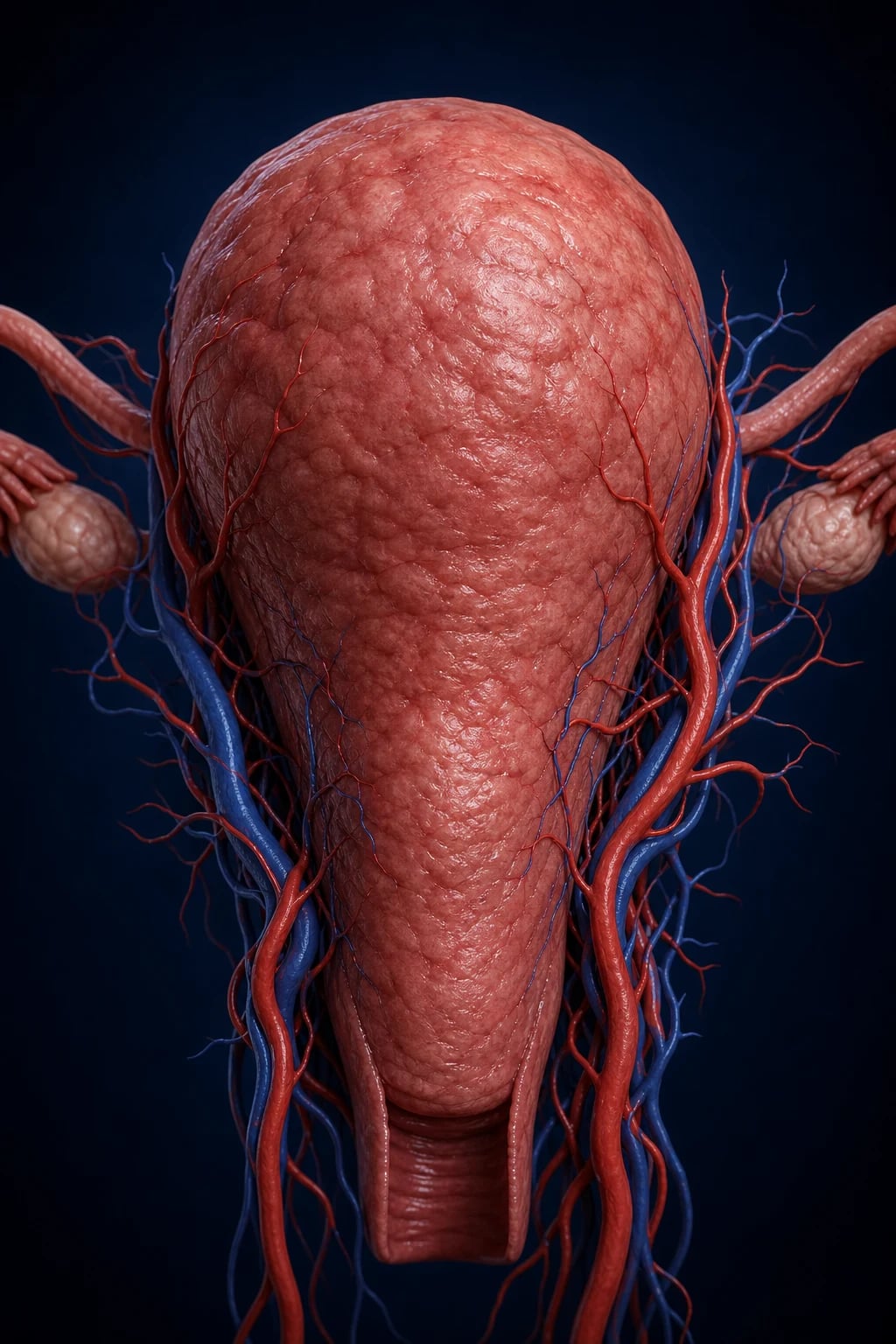
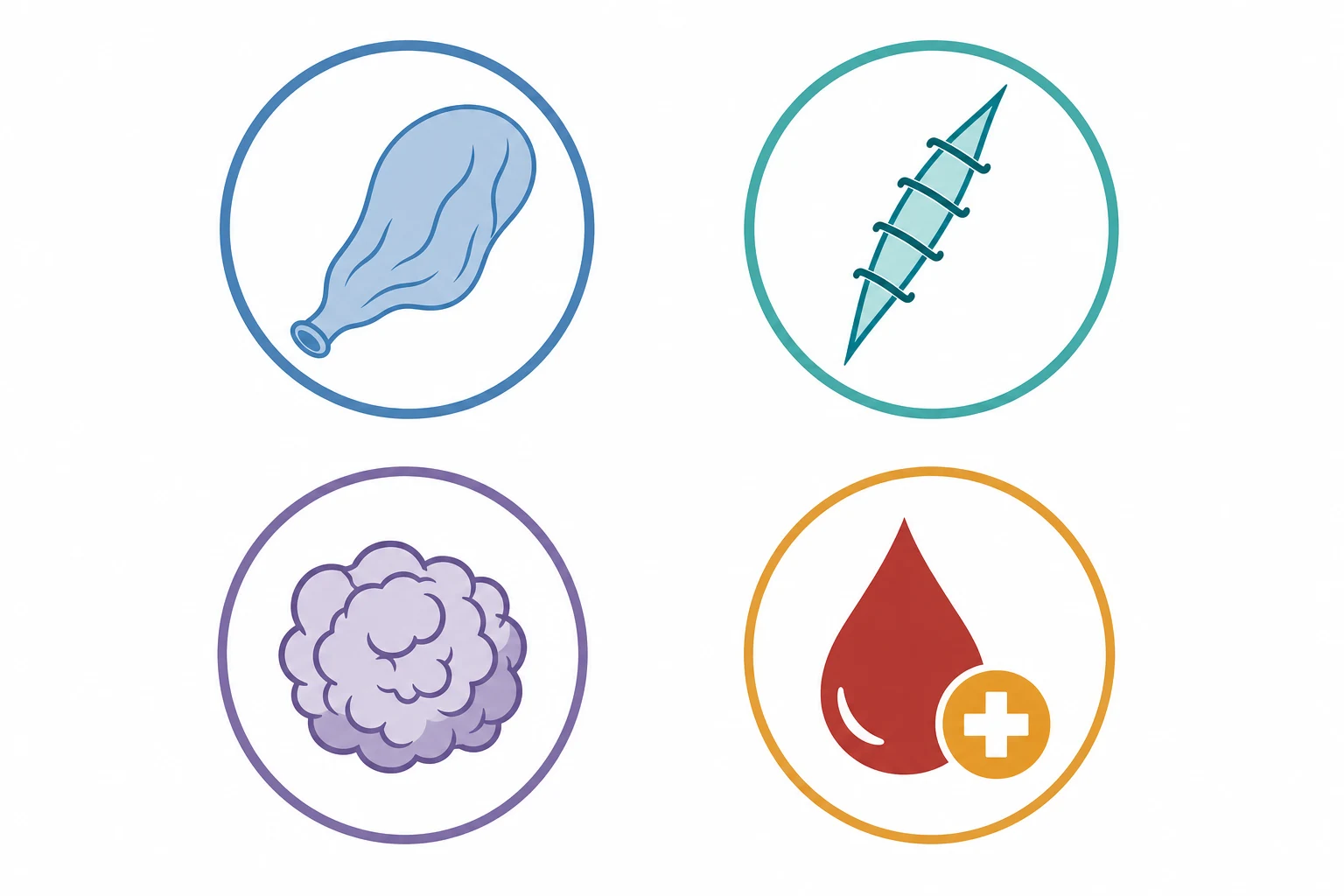
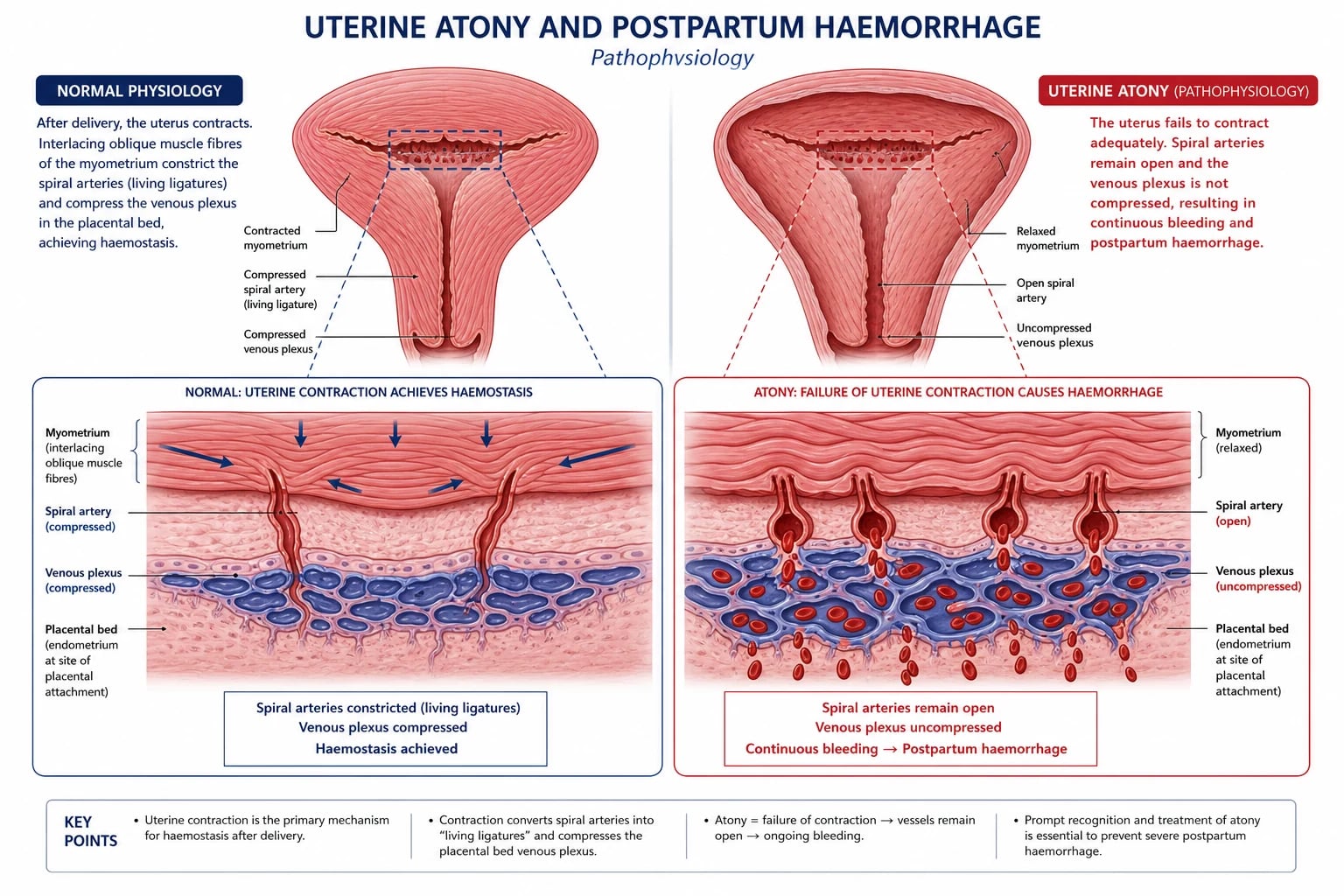
The 4 Ts — diagnostic framework
The 4 Ts of PPH — causes and initial management
| Cause | Frequency | Clinical clue | Initial management |
|---|---|---|---|
| Tone (uterine atony) | 70% (#1) | Uterus is SOFT, BOGGY, not contracted — palpate abdomen immediately | Uterotonics: oxytocin 5 IU IV bolus + infusion → ergometrine 0.25 mg IM (AVOID hypertension) → carboprost 250 mcg IM q15min max 8 doses (AVOID asthma) → misoprostol 800 mcg PR/SL. If fails → Bakri balloon → B-Lynch suture → hysterectomy |
| Trauma (laceration/rupture) | 20% | Uterus is WELL CONTRACTED but bleeding continues → examine vagina/cervix for lacerations. Uterine rupture: severe abdominal pain + fetal distress + loss of station + haemodynamic collapse | Surgical repair (vaginal laceration under anaesthesia), uterine rupture → laparotomy + repair or hysterectomy |
| Tissue (retained placenta) | 9% | Placenta not delivered or incomplete on inspection. Placenta accreta: placenta ADHERENT — cannot be separated manually | Manual removal under anaesthesia. Curettage for retained products. Placenta accreta → do NOT force removal → leave in situ or hysterectomy |
| Thrombin (coagulopathy) | 1% | Oozing from IV sites + gum bleeding + abnormal coagulation labs (PT/APTT prolonged, fibrinogen <2 g/L, platelets <50) | Correct coagulopathy: FFP 15 mL/kg, cryoprecipitate (fibrinogen <2 → target >4 g/L in PPH — higher target than usual), platelets (target >50 × 10^9/L), tranexamic acid 1 g IV |
Management cascade — the stepwise approach
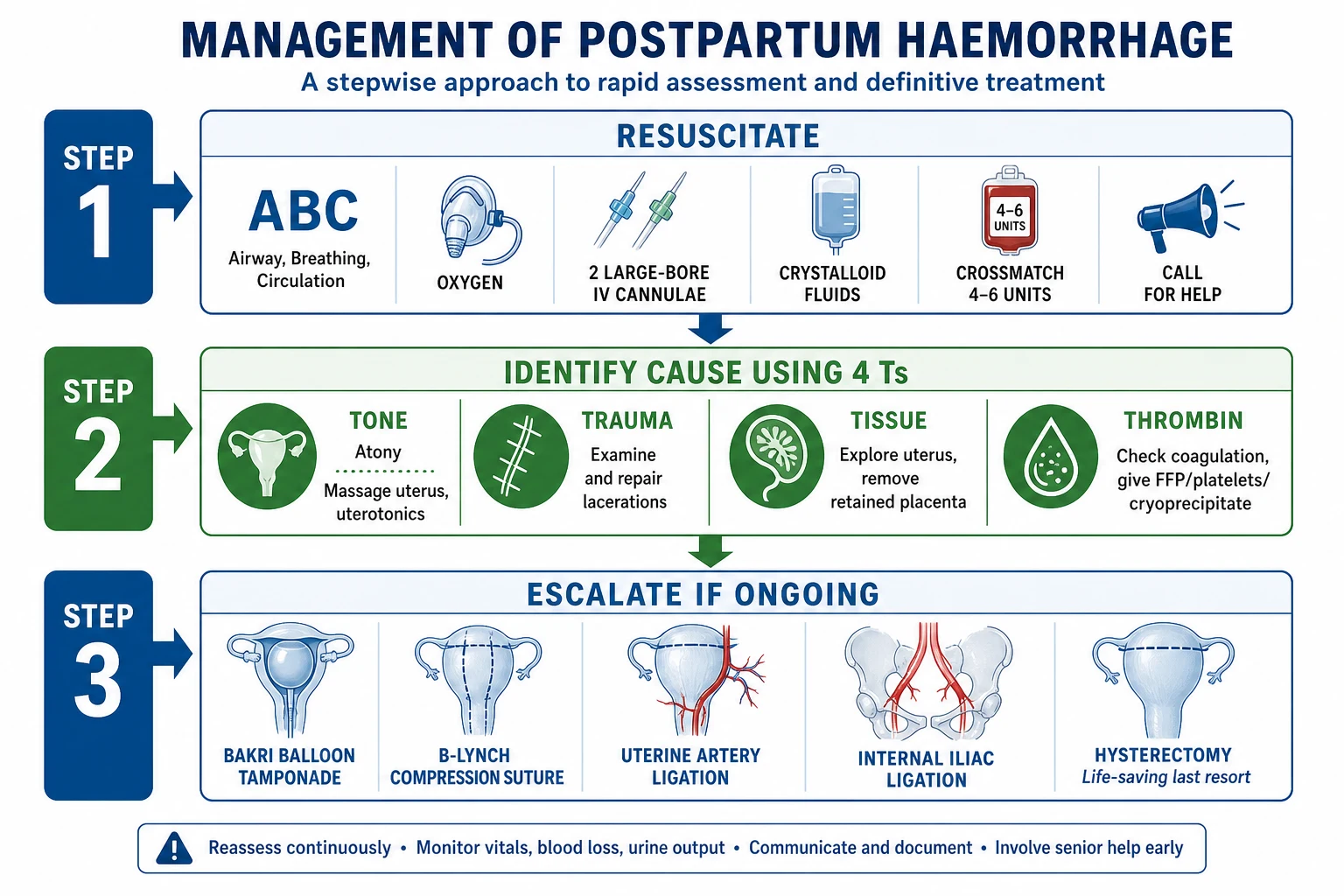
PPH management protocol — the first 30 minutes
- CALL FOR HELP — obstetric consultant + anaesthetic consultant + haematology + activate massive transfusion protocol. This is a team event — do NOT manage alone
- RESUSCITATE:
- 2 large-bore IV cannulae (14-16G)
- Crystalloid bolus (1 L Hartmann's or saline) — rapidly
- Cross-match blood (6 units RBC + 4 units FFP + 1 pool platelets + 10 units cryoprecipitate) — emergency release if no cross-match available (O-negative RBC)
- Activate massive transfusion protocol — target RBC:FFP:platelets ratio 1:1:1 (from trauma literature — balanced resuscitation)
- Tranexamic acid 1 g IV over 10 min (within 3 hours of bleeding — WOMAN trial: reduces mortality — time-dependent)
- Vasopressors (noradrenaline) if hypotensive despite fluids + blood
- Keep patient WARM (hypothermia worsens coagulopathy — use fluid warmer, Bair Hugger)
- IDENTIFY AND TREAT THE CAUSE:
- Palpate uterus: if SOFT/BOGGY → ATONY → give uterotonics (the #1 cause — treat first)
- If uterus firm but bleeding continues: inspect vagina and cervix for lacerations → repair under anaesthesia
- If placenta incomplete or retained: manual removal + curettage
- Check coagulation: PT, APTT, fibrinogen, platelets → correct if abnormal
- UTEROTONIC LADDER for atony (escalate if each fails):
- Oxytocin: 5 IU IV bolus + infusion 40 IU in 500 mL crystalloid at 125 mL/hr (first-line — most effective — works rapidly)
- Ergometrine: 0.25 mg IM (AVOID in pre-eclampsia/hypertension — alpha-agonist → vasopressor crisis; AVOID in cardiac disease). Can repeat after 5 min. Max 0.5 mg
- Carboprost (15-methyl PGF2alpha): 250 mcg deep IM every 15 min (AVOID in ASTHMA — causes bronchospasm). Max 8 doses (2 mg). Side effects: diarrhoea, vomiting, fever, bronchospasm
- Misoprostol: 800 mcg PR or sublingual (can be used when oxytocin/ergometrine/carboprost unavailable or contraindicated)
- MECHANICAL METHODS (if uterotonics fail):
- Bimanual uterine compression (temporary — while preparing definitive treatment — compress uterus between hands)
- Uterine packing (gauze or balloon)
- Bakri balloon: silicone balloon inserted into uterine cavity → filled with 300-500 mL saline → tamponades the bleeding surface. Left in situ 12-24h. Success rate 60-80% for atony
- External aortic compression: compress aorta against vertebral body (at level of umbilicus) → temporary reduction in pelvic blood flow → buys time
- SURGICAL METHODS (if balloon fails — proceed to theatre):
- B-Lynch suture: compression suture around uterus (like a brace) → physically compresses the uterus → stops atonic bleeding. Uterine-sparing
- Uterine artery ligation: ligate ascending branch of uterine artery → reduces blood flow to uterus. Uterine-sparing
- Internal iliac (hypogastric) artery ligation: reduces pelvic blood flow by 50%. Technically demanding. Uterine-sparing
- Uterine artery embolisation: interventional radiology — embolise uterine artery with gelatin sponge particles. Uterine-sparing. Requires IR availability (may not be available emergently)
- Hysterectomy: LIFE-SAVING LAST RESORT. Performed when all other measures have failed and the patient is exsanguinating. Do NOT delay — mortality increases with delay. The decision must be made early (once 4-6 units of blood have been transfused and bleeding is not controlled)
- CORRECT COAGULOPATHY:
- Fibrinogen: target >4 g/L in PPH (HIGHER than usual trauma target of 1.5 — pregnancy has higher baseline fibrinogen 4-6 g/L — a "normal" fibrinogen of 2 is actually LOW for a pregnant patient). Give cryoprecipitate 10 units
- Platelets: target >50 × 10^9/L (give 1 adult dose if <50)
- PT/APTT: correct with FFP 15 mL/kg (4 units) if INR >1.5
- Calcium: massive transfusion → citrate toxicity → hypocalcaemia → give calcium gluconate 10 mmol IV for every 4 units RBC transfused
- Use viscoelastic testing (TEG/ROTEM) to guide blood product administration if available
- POST-PPH CARE:
- ICU admission (monitor for ongoing bleeding, coagulopathy, AKI from hypoperfusion, DIC)
- Correct anaemia (iron — oral or IV ferric carboxymaltose; consider RBC transfusion if Hb <70)
- Thromboprophylaxis (PPH is pro-thrombotic — start LMWH 6-12h post-delivery once bleeding controlled)
- Psychological support (traumatic birth — debriefing + counselling)
- Contraception counselling (risk of recurrence in future pregnancy)
SAQ — Massive postpartum haemorrhage in ICU
12 minutes · 12 marks
A 34-year-old woman is transferred to your ICU 40 minutes after emergency caesarean for fetal distress. Estimated blood loss 2.8 L. Uterus remains boggy despite oxytocin infusion. BP 78/42, HR 128, lactate 5.1 mmol/L. She has a history of asthma and pre-eclampsia. Hb 68 g/L, fibrinogen 1.1 g/L, INR 1.6.
Clinical pearls
Red flags
Prognosis
PPH outcomes
| Factor | Mortality/Morbidity | Notes |
|---|---|---|
| Overall PPH | 2-5% (developed), 10-30% (developing) | The #1 cause of maternal death globally |
| With massive transfusion (>10 units) | 10-20% | DIC + multi-organ failure are the killers |
| With hysterectomy | 5-15% | Depends on delay — early hysterectomy = better outcome |
| Placenta accreta | 5-10% (with planned surgery), 30%+ (emergency) | Planned multidisciplinary delivery dramatically improves outcomes |
| Amniotic fluid embolism | 20-40% | The highest-mortality obstetric emergency |
| Sheehan syndrome (hypopituitarism from pituitary apoplexy during PPH) | Variable | Presents weeks-months later — failure to lactate + amenorrhoea + hypothyroidism + adrenal insufficiency |
Key trials and evidence
WOMAN trial — tranexamic acid for PPH (PMID 28434649)
Study design
Randomised, placebo-controlled — 20,060 women in 193 hospitals across 21 countries
Population
Women with postpartum haemorrhage after vaginal or caesarean delivery
Intervention
Tranexamic acid 1 g IV over 10 min vs placebo (within 3 hours of bleeding onset)
Primary outcome
Death from bleeding: 1.5% (TXA) vs 1.9% (placebo) — 19% relative reduction (p=0.045)
Key finding
Benefit ONLY if given within 3 hours. No benefit after 3 hours. No increase in thromboembolic events
Clinical bottom line
Tranexamic acid 1 g IV is SAFE and REDUCES mortality from PPH — give EARLY (within 3 hours)
Uterotonic pharmacology — in depth
Uterotonics are the cornerstone of atonic PPH management (the #1 cause, 70%). The four agents — oxytocin, ergometrine, carboprost, misoprostol — act at DIFFERENT receptors with DIFFERENT contraindications, which is why a sequential "ladder" works (if one class fails or is contraindicated, the next uses a distinct mechanism). Understanding the receptor pharmacology makes the contraindications logical rather than rote.[2][3]
Uterotonic agents at a glance
| Agent | Class / receptor | Dose & route | Onset | Key contraindications | Hallmark side effects |
|---|---|---|---|---|---|
| Oxytocin (Syntocinon) | Nonapeptide; OXTR (Gq-coupled) on myometrium → IP3 → Ca²⁺ release | 5 IU slow IV (over ≥1 min) OR 10 IU IM; then infusion 40 IU in 500 mL Hartmann's at 125 mL/hr (titrate to tone) | 1 min (IV); 3-5 min (IM) | Hypersensitivity; rapid IV = hypotension (give slowly). Caution in cardiac disease | Hypotension/tachycardia (fast push); water intoxication/hyponatraemia at high infusion rates (weak ADH activity); flushing |
| Ergometrine (Ergonovine) / Methylergometrine | Ergot alkaloid; alpha-agonist + 5-HT2 + dopamine agonist → TETANIC contraction | 0.25 mg IM; repeat after 5 min; max 0.5 mg. (0.125-0.25 mg IV if urgent) | 5-7 min (IM); 1 min (IV) | Pre-eclampsia/hypertension (alpha-agonist → hypertensive crisis); cardiac disease (coronary spasm/afterload); sepsis; Raynaud's/PVD | Hypertension; nausea/vomiting (direct CTZ); bradycardia; coronary spasm → MI (rare) |
| Carboprost (15-methyl PGF2α; Hemabate) | PGF2α analogue (15-methyl resists degradation) → FP receptor (Gq) | 250 mcg deep IM q15min; max 8 doses (2 mg). NOT IV | ~5 min | ASTHMA (absolute) — bronchoconstrictor; cardiac disease; prostaglandin hypersensitivity | Diarrhoea (~40%); vomiting; fever (reset hypothalamic set-point); bronchospasm; flushing |
| Misoprostol (PGE1 analogue; Cytotec) | PGE1 → EP receptors (Gq/Gi); also VASODILATES (opposite of PGF2α) | 800 mcg PR (single); alt 600 mcg SL, 800 mcg oral | SL ~10 min; PR/oral ~20 min | Prior caesarean (NOT a concern in postpartum/empty uterus). Off-label use | Shivering (~30-50%); fever; diarrhoea; nausea |
| Carbetocin (long-acting) | Oxytocin analogue, t½ ~40 min (vs ~5 min) | 100 mcg IV (single dose for prophylaxis at LSCS) | ~2 min | As for oxytocin | Mild flushing, nausea; hypotension (less than oxytocin bolus) |
Oxytocin — the first-line agent
Mechanism. Synthetic nonapeptide identical to endogenous oxytocin. Binds the oxytocin receptor (OXTR, a Gq-protein-coupled receptor) on myometrial smooth muscle → activates phospholipase C → inositol triphosphate (IP3) + diacylglycerol (DAG) → release of calcium from the sarcoplasmic reticulum → myosin-light-chain phosphorylation → uterine contraction. It also upregulates prostaglandin F2α receptor expression, sensitising the uterus to endogenous prostaglandins.[2]
Receptor upregulation. OXTR expression rises 100-200-fold across gestation, peaking near term — which is why the late-pregnant uterus is exquisitely sensitive to oxytocin while the non-pregnant uterus is essentially unresponsive. This also explains the dose-response: a tiny IV bolus (5 IU) produces maximal contraction in seconds. [1]
Dosing.
- 3rd-stage prophylaxis: 10 IU IM OR 5 IU slow IV bolus + infusion (40 IU in 500 mL Hartmann's at 125 mL/hr).
- Treatment of atonic PPH: 5 IU slow IV (over ≥1 minute) + infusion 40 IU in 500 mL at 125 mL/hr, titrated upward to uterine tone (up to ~250-500 mL/hr in refractory atony, balanced against fluid overload).[3]
Tachyphylaxis — the oxytocin "burnout." Prolonged or saturating oxytocin exposure causes receptor downregulation/desensitisation — the uterus becomes oxytocin-resistant and escalating doses produce diminishing contractions. This is the pharmacological reason to escalate to a second-line agent (ergometrine/carboprost/misoprostol) after ~1-2 hours of high-dose infusion, rather than endlessly increasing the oxytocin rate. The same phenomenon underlies failed labour inductions after prolonged augmentation. Practically: do not expect oxytocin alone to rescue an atonic uterus that has already been exposed to a long labour-augmentation infusion.[2]
Adverse effects. (a) Hypotension + tachycardia from a rapid IV push — oxytocin causes endothelial nitric-oxide release + direct vascular smooth-muscle relaxation → sudden venodilation; in a hypovolaemic patient this can cause cardiovascular collapse. Give the IV bolus SLOWLY (≥1 min); if the patient is hypotensive, prefer IM or a slow infusion. (b) Water intoxication/hyponatraemia at high infusion rates (>40 mU/min) — oxytocin has weak vasopressin (ADH) activity at pharmacological doses; if given with hypotonic fluids, free-water retention → hyponatraemia → seizures. Always dilute in isotonic crystalloid and monitor. (c) Flushing, nausea, palpitations.[3]
Ergometrine / methylergometrine — the tetanic constrictor
Mechanism. Ergot alkaloid (ergometrine = ergonovine; methylergometrine = methylergonovine — slightly less emetic). Acts as an agonist at alpha-adrenergic, serotonin (5-HT2) and dopamine receptors on myometrium → produces a sustained TETANIC (cramp-like) contraction, distinct from oxytocin's rhythmic contractions. The tetanic contraction mechanically strangulates the spiral arteries and venous sinuses — the uterus becomes a hard, contracted mass.[3]
Dosing. 0.25 mg IM (onset 5-7 min) OR 0.125-0.25 mg IV (onset ~1 min — more side effects). Can repeat IM after 5 min; maximum 0.5 mg total. Storage: light-sensitive (photo-degrades to inactive) — store in the dark. [1]
Contraindications. The contraindications follow directly from its alpha-agonist/vasoconstrictor action: (a) pre-eclampsia/eclampsia/hypertension (absolute — precipitates hypertensive crisis → stroke, intracranial haemorrhage, pulmonary oedema); (b) cardiac disease, especially stenotic valvular lesions and ischaemic heart disease (increased afterload + coronary vasospasm → MI/pulmonary oedema); (c) sepsis (vasoconstriction worsens tissue perfusion); (d) Raynaud's/peripheral vascular disease; (e) retained placenta (tetanic contraction traps the placenta inside — never give before delivery of the placenta); (f) before delivery of the fetus (would cause fetal distress / uterine rupture).[3]
Adverse effects. Hypertension, nausea/vomiting (direct chemoreceptor trigger zone stimulation — give an antiemetic), reflex bradycardia, coronary vasospasm (rare MI), headache, dizziness. [1]
Carboprost (15-methyl PGF2α; Hemabate) — the prostaglandin
Mechanism. Synthetic analogue of prostaglandin F2α with a 15-methyl group that resists degradation by 15-hydroxyprostaglandin dehydrogenase → prolonged half-life. Binds the FP prostanoid receptor (Gq-coupled) on myometrium → IP3 → intracellular calcium release → strong rhythmic contractions. Also directly constricts uterine vasculature.[2]
Dosing. 250 micrograms (0.25 mg) deep IM (gluteal or deltoid — NOT IV). Repeat every 15 minutes to a maximum of 8 doses (2 mg total). Onset ~5 min. Intramyometrial injection at laparotomy has been described but is NOT recommended (erratic absorption, risk of toxic levels).[3]
Contraindications. (a) ASTHMA — absolute contraindication. PGF2α is a potent bronchoconstrictor; in an asthmatic it can trigger fatal bronchospasm. ALWAYS check asthma status before giving carboprost. (b) Cardiac disease, hypertension (relative — causes transient vasoconstriction). (c) Known prostaglandin hypersensitivity. (d) Relative caution in renal/hepatic impairment. Use misoprostol (PGE1) instead in the asthmatic — PGE1 vasodilates and does NOT bronchoconstrict.[3]
Adverse effects. These are prominent and frequently tested: diarrhoea (~40%, from gut smooth-muscle stimulation), vomiting, fever (prostaglandins reset the hypothalamic set-point — a pyretic, non-infective fever that must be distinguished from sepsis), flushing, coughing, transient hypertension, and bronchospasm (even in non-asthmatics — monitor). The diarrhoea/vomiting can be dramatic. [1]
Misoprostol (PGE1 analogue; Cytotec) — the off-label workhorse
Mechanism. Synthetic prostaglandin E1 analogue, originally developed for gastric-ulcer prophylaxis and now used off-label (extensively) for PPH. Binds EP prostanoid receptors (Gq/Gi) on myometrium → calcium mobilisation → uterine contractions. Crucially, PGE1 is a vasodilator (opposite of PGF2α) and does NOT cause bronchospasm → safe in asthma. It is cheap, heat-stable (no refrigeration) → the agent of choice in resource-limited settings.[2]
Dosing.
- Treatment of established PPH: 800 micrograms rectally (PR) — single dose. The rectal route is preferred for established PPH (slower onset but sustained effect; avoids vomiting in a nauseated patient). Alternatives: 600 mcg sublingual (fastest onset, highest bioavailability) or 800 mcg oral.
- 3rd-stage prophylaxis: 600 mcg oral (WHO — alternative where oxytocin unavailable). [1]
Onset: SL ~10 min; PR/oral ~20 min. The shivering that follows within 10-20 min is so characteristic it almost confirms drug absorption. [1]
Carbetocin — the long-acting oxytocin analogue
Carbetocin is a long-acting oxytocin agonist (half-life ~40 min vs oxytocin's ~5 min) → a single 100 mcg IV dose sustains uterine tone for hours without an infusion. It is used for prophylaxis at caesarean section (equivalent efficacy to an oxytocin infusion, simpler logistics). Heat-stable carbetocin (WHO CHAMPION trial, 2018, NEJM) retains potency at 30°C/75% humidity for 3 years → ideal for tropical and resource-limited settings where cold-chain oxytocin fails. Carbetocin is NOT a treatment for established atonic PPH (no bolus effect) — give oxytocin bolus first.[2]
Mechanical tamponade — the Bakri balloon in detail
When uterotonics fail to control atonic PPH, intrauterine balloon tamponade is the first mechanical step — it is uterine-sparing, rapid, and avoids laparotomy. The Bakri SOS balloon (silicone, double-lumen, max ~500 mL) is the prototype; the Rusch balloon, a Foley catheter (24-26 Fr, 3-way, balloon to 30-75 mL — better for lower-segment/cervical bleeds), and the condom catheter (a condom tied to a Foley, inflated to 1-2 L — the resource-limited workhorse) are alternatives with the same principle.[2]
Insertion technique.
- Empty the bladder (indwelling catheter — also allows urine-output monitoring during resuscitation).
- Sterile technique. Insert the deflated balloon through the cervix into the uterine cavity — by vaginal exam or, ideally, under transabdominal ultrasound guidance (the balloon is echogenic; confirms intracavitary position). At caesarean, place it under direct vision and bring the catheter tail out through the cervix into the vagina.
- Once in the cavity, inflate through the dedicated port with warm sterile saline (NOT water or air — saline is ultrasound-visible; air creates acoustic shadowing). Use the syringe/insufflator provided.
- Inflate incrementally: start 150-200 mL, reassess uterine tone + bleeding, titrate up to 300-500 mL (manufacturer max ~500 mL for Bakri). Over-inflation risks uterine perforation or displacement into the vagina.
- Apply gentle traction on the catheter and pack the vagina to seat the balloon against the cervix and prevent prolapse. Some centres hang a 500 mL fluid bag on the catheter for continuous traction.
- The central lumen drains uterine blood — measuring this volume confirms whether tamponade is working (drainage should fall to a trickle).[2]
Duration of placement. 12-24 hours. Keep the balloon inflated; continue the oxytocin infusion; give prophylactic antibiotics (the balloon is a foreign body — broad-spectrum cover, e.g., co-amoxiclav + metronidazole). Deflate gradually over ~30 min (not abruptly) while watching for re-bleeding — if bleeding recurs, re-inflate or proceed to laparotomy. [1]
Success rate. 60-80% (~75% pooled) for atonic PPH when used after uterotonics have failed. Success is higher when used EARLY, before profound consumption coagulopathy develops — a coagulopathic uterus will bleed around any balloon. Failure → laparotomy for compression sutures/vessel ligation/hysterectomy.[3]
Complications. Uterine perforation (over-inflation), endometritis/infection, displacement/prolapse into the vagina, concealed bleeding if the balloon is not seated against the bleeding surface (always monitor the central lumen drain), pain. [1]
Surgical techniques — compression sutures and vessel ligation
When tamponade fails, surgery is next. All four procedures below are uterine-sparing alternatives to hysterectomy; hysterectomy is the life-saving last resort when they fail. [1]
B-Lynch suture (the "brace" / compression suture)
Described by Christopher B-Lynch in 1997. It is a compression suture that physically cinches the atonic uterus like a brace/suspender to compress the anterior and posterior walls against each other, occluding the arcuate and spiral arteries and the venous sinuses.[2]
Principle — the B-Lynch test. Before placing the suture, the surgeon bimanually compresses the uterus (one hand anterior, one posterior, squeezing like closing a book). If manual compression controls the bleeding, the suture will work; if compression does NOT control bleeding, the suture will fail and the surgeon should proceed directly to vessel ligation or hysterectomy. [1]
Technique (the suture path).
- Laparotomy; exteriorise the uterus. Use the existing lower-segment caesarean incision (or open it) as the entry/exit corridor for the suture.
- Use a large absorbable suture (No. 1 chromic catgut or No. 1 Vicryl/PDS — absorbable, strong).
- Right side first: the needle enters the uterine cavity 3 cm below the lower-segment incision on the right lateral aspect, and exits 3 cm above the incision on the right — the suture thus traverses the full myometrial thickness of the right lower segment.
- The suture is looped over the fundus (over the top — like a suspender) and re-enters the posterior wall of the lower segment on the right, traversing the posterior myometrium.
- It is then passed across the posterior lower segment to the left side, looped over the fundus again on the left, and re-enters the anterior lower segment on the left, mirroring the right.
- The two ends are tied anteriorly over the lower segment while the assistant maintains bimanual uterine compression.[2]
Result. Two longitudinal braces (anterior-over-fundus-posterior) on each side pull the uterine walls together → the uterus is cinched around its long axis → bleeding surfaces are compressed → haemostasis. The uterus ends up slim and elongated. [1]
Variants. Cho multiple-square suture (front-to-back through the whole uterus at multiple points, tied — like quilting the cavity shut); Hayman suture (vertical compression sutures without opening the lower segment — faster); Pereira (vertical + horizontal compression). All share the compression principle. [1]
Complications. Uterine ischaemia/necrosis (rare — suture tied too tight), uterine synechiae / Asherman syndrome (cavity scarring → amenorrhoea/infertility), suture erosion, failure (bleeding continues → proceed to ligation/embolisation/hysterectomy). Subsequent pregnancies are reported — the suture is absorbed.[2]
Internal iliac (hypogastric) artery ligation
Rationale. The internal iliac arteries supply the uterus (via the uterine arteries, branches of the anterior division) and all pelvic organs. Bilateral ligation does NOT abolish pelvic flow (extensive collaterals maintain perfusion) — it converts the high-pressure pulsatile arterial inflow into a low-pressure continuous flow, dropping the pulse pressure by ~75% and pelvic blood flow by ~50%. This pressure reduction lets clots form and hold at the bleeding placental bed. Unilateral ligation is ineffective because of cross-filling from the contralateral side via the extensive pelvic collateral network — you MUST ligate BOTH internal iliac arteries.[3]
Technique (surgical).
- Laparotomy. Open the retroperitoneum and identify the common iliac bifurcation (the external iliac runs laterally; the internal iliac dives medially/inferiorly).
- Identify and protect the ureter — it crosses the bifurcation on the peritoneal surface and is easily injured. Reflect the peritoneum (with the ureter attached) medially.
- Skeletonise the internal iliac artery 2-3 cm distal to the bifurcation — deliberately distal to the posterior-division branches (to avoid ischaemia to gluteal/sciatic territory). Ligation too proximal risks buttock/lower-limb claudication.
- Pass a right-angle clamp behind the artery, between the artery and the underlying internal iliac vein (fragile, adherent, a catastrophic bleeder if torn).
- Pass two ligatures (absorbable, e.g., Vicryl) behind the artery and doubly ligate. Do NOT divide the artery — it is left intact but occluded (division risks retraction of the stump and uncontrollable bleeding).
- Repeat on the contralateral side.[3]
Efficacy. Success ~40-60% (an older technique; less used now that balloon-catheter options and earlier hysterectomy decisions predominate). Best in centres with an experienced surgeon. [1]
Complications. Injury to the internal iliac vein (massive bleeding — the most feared), ureteric injury, lower-limb/gluteal ischaemia (rare — collaterals usually suffice), failure. If bleeding persists → hysterectomy. [1]
Modern alternatives. (a) Prophylactic internal iliac artery balloon catheters — interventional radiology places occlusion balloons in the internal iliac arteries BEFORE planned caesarean for placenta accreta; balloons are inflated at delivery to reduce inflow, then deflated (reversible — preserves fertility). (b) Therapeutic uterine artery embolisation — selective catheterisation of both uterine arteries + gelatin-sponge (Gelfoam) particles → temporary occlusion (Gelfoam resorbs in ~10-14 days → vessel recanalises → fertility preserved). Success 70-90%. Limitation: requires an IR suite + 30-60 min + a patient stable enough to be in IR (not exsanguinating on the operating table) — often not feasible in true emergency, which is why surgical options precede it in the unstable patient.[2]
Surgical and mechanical options for refractory atonic PPH
| Option | What it does | Uterus-sparing? | Success rate | Setting / limitation |
|---|---|---|---|---|
| Bakri balloon | Intrauterine tamponade | Yes | 60-80% | Bedside; first mechanical step; needs coagulopathy corrected |
| B-Lynch suture | Compression suture (like a brace) | Yes | 70-90% (when B-Lynch test positive) | Laparotomy; needs uterus that compresses bimanually |
| Uterine artery ligation | Ligate ascending uterine branch | Yes | ~80% | Laparotomy; quick; usually combined with other sutures |
| Internal iliac artery ligation | Drops pelvic pulse pressure ~75% (bilateral) | Yes | 40-60% | Laparotomy; technically demanding; protect ureter + vein |
| Uterine artery embolisation (UAE) | Gelfoam occlusion of uterine arteries (temporary) | Yes | 70-90% | IR suite; patient must be stable enough for transfer + ~30-60 min |
| Hysterectomy | Removes the bleeding organ | No (definitive) | ~100% (stops bleeding) | Life-saving last resort; do NOT delay the decision |
Coagulopathy and fibrinogen recovery post-PPH
PPH generates coagulopathy by consumption (clot formation consumes factors/platelets at the bleeding site) and dilution (massive crystalloid + RBC transfusion dilutes clotting factors), compounded by acidosis/hypothermia (the lethal triad) and hyperfibrinolysis (placental tissue factor activates plasmin). Fibrinogen is the first factor to fall — it is consumed fastest and is the strongest single predictor of progression to severe PPH (a fibrinogen <2 g/L during active bleeding predicts severe PPH).[5]
Targets DURING active bleeding. Fibrinogen >4 g/L (pregnancy baseline is 4-6 g/L — a "normal" non-pregnant value of 2 is in fact LOW for a peripartum patient); platelets >50 × 10⁹/L; INR <1.5; APTT <1.5× normal. Correct with cryoprecipitate (fibrinogen), FFP (factors), platelet pool, and tranexamic acid (hyperfibrinolysis). Use TEG/ROTEM to target therapy.[5]
Recovery — and the rebound hypercoagulability trap. Once bleeding is controlled, fibrinogen rises over 24-48 hours (hepatic synthesis + acute-phase response) and frequently rises above the pregnancy baseline. The same patient who was hypocoagulable during the bleed swings into a rebound hypercoagulable state, compounded by pregnancy hypercoagulability, endothelial activation, surgical trauma, venous stasis/immobility, and inflammation. Clinical implication: a "high/normal" fibrinogen at 24-48 h post-PPH does NOT mean the patient has "recovered" from coagulopathy — it means she is now pro-thrombotic. This is the rationale for early, mandatory VTE prophylaxis (LMWH started 6-12 h after bleeding is controlled, continued 6 weeks postpartum) and a low threshold to investigate chest pain/dyspnoea/leg swelling in the recovery phase. Do NOT over-transfuse blood products during the recovery phase — you will worsen the pro-thrombotic state.[5]
Monitoring. Serial fibrinogen, platelets, PT/APTT for 24-48 h after massive transfusion; TEG/ROTEM if available. Watch for the consumption → hypercoagulability swing. If DIC was triggered (abruption, AFE, sepsis), platelet + fibrinogen recovery takes 3-7 days; PT/APTT normalise over 2-4 days. [1]
Sheehan syndrome — postpartum hypopituitarism
Cause. Severe PPH → profound hypovolaemic shock → hypoperfusion of the anterior pituitary. The pituitary enlarges ~2-3-fold in pregnancy (lactotroph hyperplasia → high metabolic demand) yet is supplied by the low-pressure hypophyseal portal system, making it the organ most vulnerable to shock-induced ischaemia. The result is ischaemic necrosis of the anterior pituitary (pituitary apoplexy of the Sheehan type). The posterior pituitary has its own direct arterial supply → usually spared → diabetes insipidus is uncommon in Sheehan syndrome.[3]
Onset. Classically days to weeks postpartum (subacute). May present early (failure to lactate in the immediate postpartum) or be delayed by years with subtle, partial hypopituitarism. Rare in developed countries (good obstetric care prevents profound shock); still seen in resource-limited settings. A perennial exam vignette. [1]
Classic presentation. A woman after a complicated PPH → (1) failure to lactate / agalactorrhoea (loss of prolactin — often the first and most easily noticed sign), (2) persistent amenorrhoea (loss of LH/FSH), (3) loss of pubic and axillary hair (loss of ACTH → loss of adrenal androgens), (4) fatigue, hypotension, hyponatraemia, hypoglycaemia (loss of ACTH → secondary adrenal insufficiency — cortisol deficiency → ADH escape → water retention → hyponatraemia), (5) cold intolerance, weight gain, bradycardia (loss of TSH → secondary hypothyroidism). The two red-flag clues are failure to lactate and failure to resume menses after a PPH.[3]
Diagnosis. Anterior pituitary hormones are LOW with LOW/inappropriately normal trophic hormones (the pituitary is failing, so the stimulating hormones are not raised): low 8 am cortisol + low ACTH; low free T4 + low/normal TSH; low FSH/LH + low oestradiol; low prolactin; low IGF-1 (growth-hormone deficiency — often the first axis lost). MRI shows a partially empty sella (the necrotic, scarred gland shrinks). The dangerous unrecognised presentation is acute adrenal crisis (hypotension, hyponatraemia, hypoglycaemia during intercurrent illness) — can be fatal.[3]
Differential. Distinguish from lymphocytic hypophysitis (autoimmune, peripartum, but the pituitary is ENLARGED on MRI, not shrunken) and from Simmonds' disease (panhypopituitarism from any non-postpartum cause). [1]
Sheehan syndrome vs lymphocytic hypophysitis
| Feature | Sheehan syndrome | Lymphocytic hypophysitis |
|---|---|---|
| Aetiology | Ischaemic necrosis from PPH shock | Autoimmune (peripartum) |
| Trigger | Severe PPH / shock | Pregnancy/postpartum (immune) |
| Pituitary size (MRI) | Shrunk / partially empty sella | Enlarged (mass-like) |
| Prolactin | Low (necrosis) | Variable (may be high — stalk effect) |
| Diabetes insipidus | Rare (posterior spared) | May occur |
| Histology | Infarct/necrosis | Lymphocytic infiltrate |
Management. Lifetime hormone replacement. (1) Hydrocortisone FIRST — glucocorticoid deficiency is life-threatening; start before thyroid replacement. (2) Levothyroxine AFTER cortisol — giving T4 first up-regulates metabolism and precipitates adrenal crisis. (3) Sex-steroid replacement (oestrogen/progesterone) when not breastfeeding, for bone and cardiovascular protection. (4) Growth hormone (selected patients). (5) Desmopressin if diabetes insipidus (rare). Stress-dose steroids (hydrocortisone 100 mg IV) during illness/surgery; patient education + MedicAlert.[3]
PPH in special situations
PPH in special situations — diagnosis and the one thing you must do
| Situation | Diagnostic clue | The critical action |
|---|---|---|
| Placenta accreta spectrum | Antenatal US/MRI + previous LSCS; placenta adherent — cannot separate at delivery | Do NOT avulse — leave placenta in situ; planned caesarean-hysterectomy; prophylactic iliac balloon catheters |
| Amniotic fluid embolism (AFE) | Sudden CV collapse + hypoxia + DIC during/soon after delivery; bleeding is from COAGULOPATHY not atony | Treat the DIC aggressively (blood products + TXA); supportive care (ventilation, vasopressors); atony uterotonics alone will fail |
| Acute uterine inversion | Shock OUT OF PROPORTION to bleeding; fundus not palpable abdominally; mass in vagina | Relax the uterus (terbutaline/nitroglycerin/volatile anaesthesia) → hydrostatic (O'Sullivan) or manual replacement → THEN oxytocin |
| Placental abruption (DIC) | Pain + tense/tender uterus + fetal distress; concealed or revealed bleed; DIC from retroplacental clot | Deliver + correct coagulopathy; Caesarean if viable fetus; watch for Couvelaire uterus (confluent bruising → atony) |
| Uterine rupture | Previous LSCS + VBAC; constant severe abdominal pain + fetal bradycardia + loss of station + collapse | Immediate laparotomy — repair (if small/stable) or hysterectomy |
| Retained placenta | Placenta not delivered / incomplete on inspection; uterus may be contracted but bleeding continues | Manual removal under anaesthesia + curettage; if accreta suspected → do not force |
Worked exam scenario — refractory atonic PPH
Presentation: 34-year-old gravida 3 para 2 (two previous LSCS), delivered vaginally after prolonged oxytocin augmentation, now at 45 minutes postpartum with ongoing brisk bleeding. Uterus is soft and boggy. Estimated blood loss 1800 mL. BP 85/45, HR 128, SpO₂ 96%. Fibrinogen 1.8 g/L, platelets 80, INR 1.6. [1]
Step-by-step reasoning. (1) Atony is the cause (soft boggy uterus + prolonged oxytocin augmentation → receptor downregulation/burnout → atony) — confirm by palpation, treat FIRST. (2) Major PPH (>1500 mL + haemodynamic instability) → call for help + activate MTP. (3) Resuscitate: 2 large-bore IV, crystalloid + emergency O-negative / group-specific blood, MTP 1:1:1, tranexamic acid 1 g IV now (within 3 h), keep warm, target fibrinogen >4 (give cryoprecipitate — hers is 1.8, critically low), give calcium gluconate (citrate toxicity from massive transfusion). (4) Uterotonic ladder: oxytocin 5 IU slow IV + infusion → BUT she has had prolonged oxytocin already (tachyphylaxis likely), so escalate promptly → ergometrine ONLY if no hypertension/pre-eclampsia → carboprost ONLY if no asthma → misoprostol 800 mcg PR (safe regardless). (5) If uterotonics fail → Bakri balloon (understand she is now coagulopathic — correct fibrinogen first or the balloon will fail) → if balloon fails → laparotomy → B-Lynch suture (if B-Lynch test positive) ± uterine/internal iliac artery ligation → hysterectomy if all fail (do NOT delay — decide early once 4-6 units transfused and bleeding uncontrolled; she has had two LSCS so future fertility is one consideration but survival dominates). (6) Post-PPH: ICU, serial fibrinogen/TEG, LMWH 6-12 h after bleeding controlled (rebound hypercoagulability), screen for Sheehan syndrome at follow-up (failure to lactate / amenorrhoea).[2][3][5]
Exam teaching point. The three inter-locking traps in this vignette: (a) oxytocin tachyphylaxis after prolonged augmentation — don't just push more oxytocin; (b) coagulopathy makes mechanical methods fail — fix fibrinogen BEFORE the balloon; (c) the post-bleed rebound hypercoagulability — start LMWH early, do not be reassured by a "normal-high" fibrinogen at 24-48 h. [1]
Additional key trials and evidence
E-MOTIVE trial — early detection + bundled response for PPH (NEJM 2023, PMID 37807729)
Study design
Multicentre, international, cluster-randomised trial — WHO, ~210,000 births across hospitals in Kenya, Nigeria, South Africa, Tanzania
Population
Women with vaginal delivery
Intervention
Early PPH detection using a **calibrated blood-collection drape** (objective measurement) + an immediate first-response bundle: uterotonic (oxytocin), tranexamic acid, IV access, uterine massage, examination + escalation
Primary outcome
Severe PPH: 1.6% (intervention) vs 4.3% (control) — **60% relative reduction** (p<0.001)
Key finding
Objective early detection + a standardised bundled response dramatically reduced severe PPH — the benefit was in EARLY recognition (drape) and standardised first-line action, not new drugs
Clinical bottom line
Use an objective measure of blood loss (calibrated drape) AND give a bundled first response (uterotonic + TXA + IV + massage + escalate) at the earliest sign of PPH — early, standardised action prevents progression to severe PPH
CHAMPION trial — heat-stable carbetocin for PPH prophylaxis (NEJM 2018, PMID 30110543)
Study design
Double-blind, non-inferiority RCT — WHO, ~30,000 women across 10 countries
Population
Women undergoing vaginal delivery — prophylaxis for postpartum haemorrhage
Intervention
Heat-stable carbetocin 100 mcg IM vs oxytocin 10 IU IM for 3rd-stage prophylaxis
Primary outcome
Non-inferiority for prevention of PPH (>500 mL) and severe PPH (>1000 mL) — carbetocin was **non-inferior** to oxytocin
Key finding
Heat-stable carbetocin retains efficacy at 30°C/75% humidity for 3 years → solves the cold-chain problem for oxytocin in tropical and resource-limited settings
Clinical bottom line
Heat-stable carbetocin is a viable prophylactic alternative where oxytocin cold-chain cannot be guaranteed; for TREATMENT of established PPH, oxytocin bolus remains first-line
PROPPR trial — 1:1:1 vs 1:1:2 transfusion in trauma (JAMA 2015, PMID 25647203)
Study design
Multicentre RCT — 680 severely injured trauma patients with major bleeding
Population
Adult trauma patients predicted to need massive transfusion
Intervention
Plasma:platelets:RBC ratio of **1:1:1** vs **1:1:2** during active haemorrhage
Primary outcome
No significant difference in 24-h or 30-d mortality — but **fewer deaths from exsanguination** and **earlier haemostasis** with 1:1:1
Key finding
Balanced 1:1:1 resuscitation achieves earlier haemostasis — the basis for applying 1:1:1 to obstetric MTP
Clinical bottom line
In massive PPH, deliver RBC:FFP:platelets in a 1:1:1 ratio (one adult pool of platelets + one FFP + one RBC per 'pack') with cryoprecipitate added for fibrinogen — extrapolated from trauma, as no obstetric-specific MTP ratio trial exists
SAQ — Major atonic PPH with coagulopathy
10 minutes · 10 marks
A 34-year-old after emergency caesarean for prolonged labour bleeds 2 L. Uterus is soft and boggy. BP 80/40, fibrinogen 1.6 g/L. She has a history of asthma.
References
- [1]WOMAN Trial Collaborators Immune oncology in hepatocellular carcinoma-hype and hope Lancet, 2017.PMID 28434649
- [2]Sentilhes L, et al. Interaction of insulin-like growth factor-I and insulin resistance-related genetic variants with lifestyle factors on postmenopausal breast cancer risk Breast Cancer Res Treat, 2017.PMID 28478612
- [3]Mavrides E, et al. Hypolipidemic drugs in elderly subjects: Indications and limits Nutr Metab Cardiovasc Dis, 2016.PMID 27522161
- [4]Silver RM, et al. A Novel Recombinant Anti-CD22 Immunokinase Delivers Proapoptotic Activity of Death-Associated Protein Kinase (DAPK) and Mediates Cytotoxicity in Neoplastic B Cells Mol Cancer Ther, 2016.PMID 26826117
- [5]Collins P, et al. Colorectal cancer screening in Australia Lancet Public Health, 2017.PMID 29253456
- [6]Eskildsen MA, et al. Systemic immune-inflammation index, serum albumin, and fibrinogen impact prognosis in castration-resistant prostate cancer patients treated with first-line docetaxel Int Urol Nephrol, 2019.PMID 31456101