MedVellum
MCQsExamsAtlas
DashboardPricing
MBBS / Core medicine✳Dermatology✳ICU Fellowship (CICM)✳Anaesthesia✳Emergency Medicine✳Psychiatry Fellowship✳Paediatrics Fellowship✳Physician Medicine✳MCQs✳SAQs✳Vivas✳OSCE✳Evidence-first✳MBBS / Core medicine✳Dermatology✳ICU Fellowship (CICM)✳Anaesthesia✳Emergency Medicine✳Psychiatry Fellowship✳Paediatrics Fellowship✳Physician Medicine✳MCQs✳SAQs✳Vivas✳OSCE✳Evidence-first✳

MedVellum.

The folio

Exam-exhaustive medical education across every specialty — evidence-graded topics, engraved plates, and practice in every written and oral format. Educational content only — not medical advice.

llms.txt · psychiatry LLM catalog · sitemap

Atlas

  • Specialty atlas
  • MBBS / Core medicine
  • Dermatology
  • ICU Fellowship (CICM)
  • Anaesthesia
  • Emergency Medicine
  • Psychiatry Fellowship
  • Paediatrics Fellowship
  • Physician Medicine

Study & account

  • MCQ practice
  • Practice alias
  • Exam tools
  • Dashboard
  • Pricing
  • Sign in

© 2026 MedVellum. For education only — not a substitute for clinical judgement.

Folio edition · Set in Instrument Serif & Archivo

ICU TopicsObstetric

ICU · Obstetric

Pre-eclampsia with severe features, eclampsia, and HELLP: ICU management

Also known as Pre-eclampsia severe · Eclampsia · HELLP syndrome · Hypertensive emergency pregnancy · Magnesium sulfate · Pre-eclampsia ICU

Pre-eclampsia (new hypertension after 20 weeks + proteinuria/end-organ dysfunction) affects 5-8% of pregnancies. SEVERE FEATURES: BP ≥160/110, thrombocytopenia (<100), elevated transaminases (2x), renal insufficiency (Cr 1.1 or 2x baseline), pulmonary oedema, cerebral/visual symptoms. ECLAMPSIA = seizures (new-onset, no other cause). HELLP = Haemolysis, Elevated Liver enzymes, Low Platelets (variant of severe pre-eclampsia). MANAGEMENT: (1) MAGNESIUM SULFATE for seizure prophylaxis/treatment (4 g IV loading + 1-2 g/hr infusion — monitoring reflexes, urine output, respirations). (2) BP control: IV labetalol, hydralazine, oral nifedipine (target 140-150/90-100 — avoid precipitous drops). (3) DELIVERY is the definitive treatment (timing based on maternal/fetal status). (4) Steroids (betamethasone) for fetal lung maturity (<34 weeks). COMPLICATIONS: stroke (leading cause of death), pulmonary oedema, AKI, hepatic rupture/infarction, DIC, placental abruption, fetal demise. POSTPARTUM: pre-eclampsia can develop/worsen up to 6 weeks postpartum.

high9 referencesUpdated 4 July 2026
On this page & tools

Your progress

Saved locally on this device.

Target exams

CICMFFICMEDIC

Red flags

Magnesium sulfate for ALL severe pre-eclampsia (seizure prophylaxis) and eclampsiaTarget BP 140-150/90-100 — avoid precipitous drops (compromise placenta)HELLP: haemolysis + AST>70 + platelets &lt;100 — high maternal morbidityHepatic rupture: sudden severe RUQ pain + shock — emergency surgeryPostpartum pre-eclampsia can develop up to 6 weeks after delivery

Your progress

Saved locally on this device.

Target exams

CICMFFICMEDIC

Red flags

Magnesium sulfate for ALL severe pre-eclampsia (seizure prophylaxis) and eclampsiaTarget BP 140-150/90-100 — avoid precipitous drops (compromise placenta)HELLP: haemolysis + AST>70 + platelets &lt;100 — high maternal morbidityHepatic rupture: sudden severe RUQ pain + shock — emergency surgeryPostpartum pre-eclampsia can develop up to 6 weeks after delivery
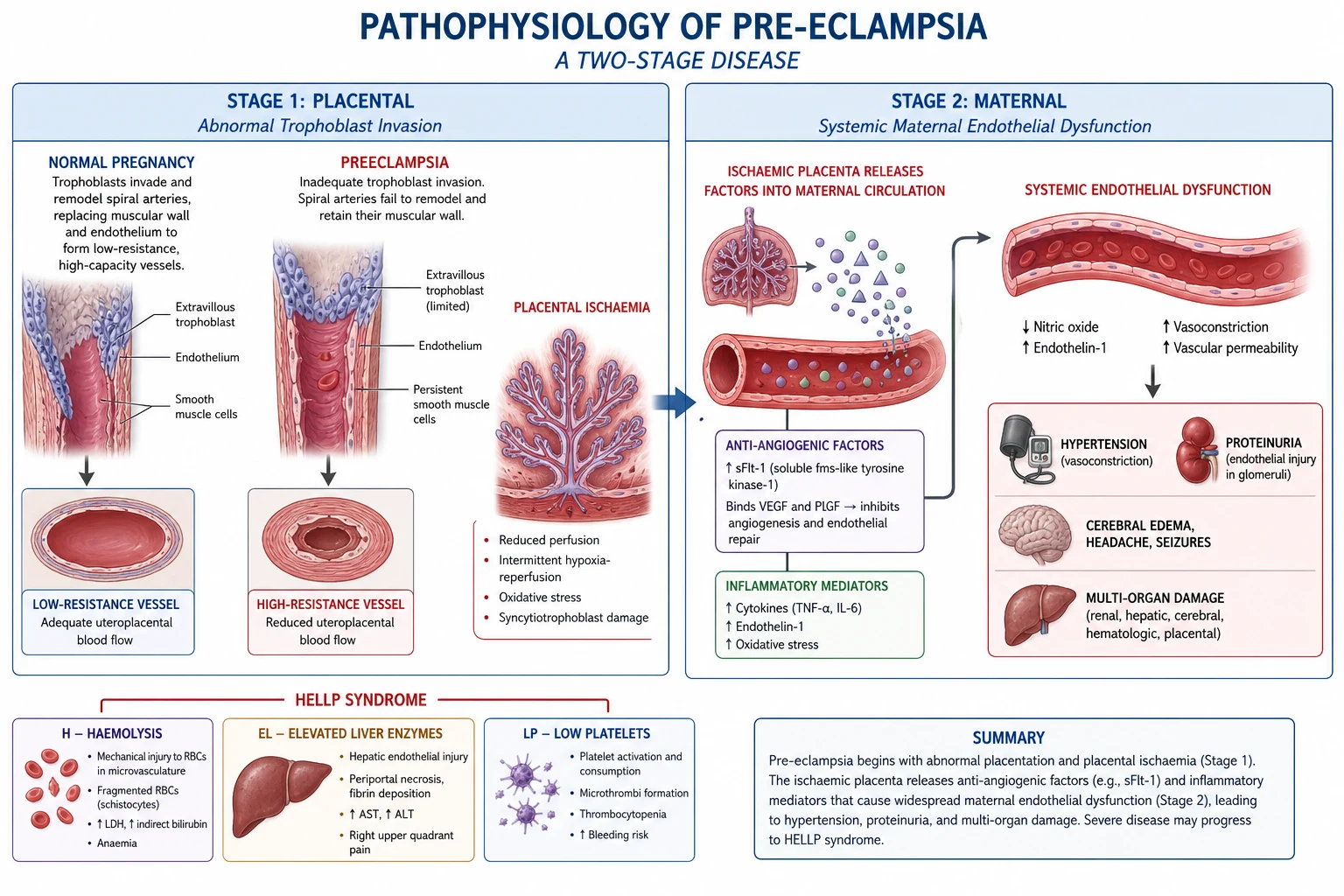
Educational pathophysiology of pre-eclampsia: placental ischaemia, anti-angiogenic imbalance, endothelial dysfunction, HELLP microangiopathy, clinical-blue diagram
FigurePlacental ischaemia drives systemic endothelial injury — HELLP is the microangiopathic extreme with hepatic risk.
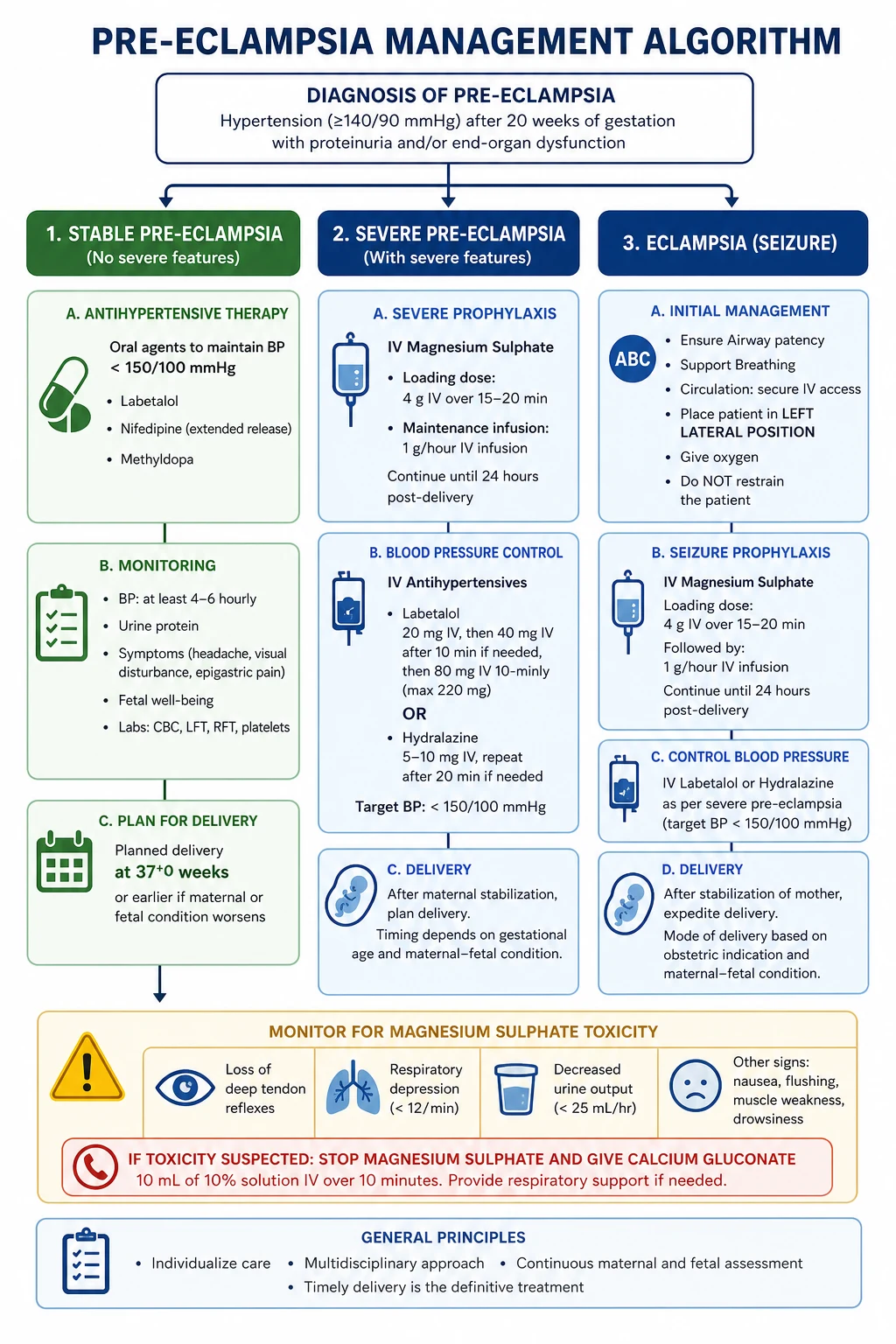
Management algorithm for severe pre-eclampsia/eclampsia/HELLP: magnesium sulphate, BP control, delivery, coagulopathy correction, clinical educational
FigureMgSO4 load and infusion, BP 140–150/90–100, correct coagulopathy, deliver once mother stabilised.
Cinematic ICU scene of severe pre-eclampsia with HELLP — a hypertensive pregnant patient, a magnesium-sulphate infusion for seizure prophylaxis, a labetalol and hydralazine for the pressure, a low-platelet count on the panel, clinical-blue lighting, medical educational, no faces, no text
FigureSevere pre-eclampsia, eclampsia, HELLP — new hypertension after 20 weeks with end-organ damage. Magnesium sulphate prevents and treats the seizures (4 g load, 1–2 g/h, watch the reflexes, the urine, the respirations). Control the pressure (labetalol, hydralazine, nifedipine) to 140–150/90–100 — never a precipitous drop. HELLP (haemolysis, elevated liver enzymes, low platelets) threatens the liver haematoma. Delivery is the definitive treatment.
[1]

In one line

Severe pre-eclampsia (BP ≥160/110 or end-organ dysfunction): MAGNESIUM SULFATE (4 g IV loading + 1 g/hr infusion — seizure prophylaxis) + BP control (IV labetalol/hydralazine/oral nifedipine — target 140-150/90-100). Delivery is definitive. Eclampsia = seizures → magnesium loading 4-6 g + ongoing infusion. HELLP (haemolysis, AST >70, platelets <100) → high morbidity → urgent delivery (esp <34 weeks). Monitor: reflexes, respirations, urine output (magnesium toxicity → calcium gluconate antidote). Postpartum: pre-eclampsia can develop/worsen for 6 weeks.

[1]

Pre-eclampsia spectrum

ConditionDefinitionKey featuresManagement priority
Gestational hypertensionNew BP ≥140/90 after 20 weeks, no proteinuria/end-organMild — no severe featuresMonitor; deliver at 37 weeks
Pre-eclampsiaHypertension + proteinuria (>300 mg/24h) or end-organ dysfunctionMild (140-159/90-109) or severe (≥160/110 or severe features)Monitor; magnesium if severe; deliver at 37 (mild) or 34 (severe)
Severe pre-eclampsiaBP ≥160/110 OR end-organ (thrombocytopenia, AST 2x, Cr >1.1, pulmonary oedema, cerebral/visual)High maternal/fetal riskMagnesium + BP control + delivery (often urgent)
EclampsiaSeizures in pre-eclampsia (no other cause)Life-threateningMagnesium loading + delivery
HELLPHaemolysis + Elevated Liver enzymes + Low PlateletsVariant of severe pre-eclampsia; high morbidityUrgent delivery (esp <34 weeks); supportive
Chronic hypertension with superimposed pre-eclampsiaKnown chronic HTN + new proteinuria/end-organHigher risk than either aloneTreat as severe pre-eclampsia
[1]

ICU management of severe pre-eclampsia / eclampsia

  1. RECOGNISE + RESUSCITATE — ABC: oxygenate, IV access, continuous fetal monitoring (if antepartum). Eclamptic seizure: protect airway (left lateral position — prevents aspiration + improves venous return), give MAGNESIUM SULFATE (4-6 g IV loading over 20 min). Severe hypertension: IV labetalol (10-20 mg, repeat) or hydralazine (5 mg) — target BP 140-150/90-100
  2. MAGNESIUM SULFATE — seizure prophylaxis/treatment — LOADING: 4-6 g IV over 20 min (4 g for prophylaxis, 6 g for eclampsia). MAINTENANCE: 1-2 g/hr infusion (continue 24h postpartum or 24h after last seizure). MONITORING: reflexes (patellar — loss = early toxicity), respiratory rate (>12), urine output (>25 mL/hr — magnesium renally excreted). TOXICITY: loss of reflexes → respiratory depression → cardiac arrest. ANTIDOTE: CALCIUM GLUCONATE 10% 10 mL IV (over 10 min). CONTRAINDICATION: myasthenia gravis, heart block. Magnesium halves eclampsia risk (MAGPIE trial)
  3. BLOOD PRESSURE CONTROL — Target: 140-150 systolic, 90-100 diastolic. RATIONALE: lower compromises placental perfusion (fetal); higher risks maternal stroke. AGENTS: (a) IV LABETOL (alpha+beta blocker) — 10-20 mg IV q10min (max 300 mg) — first-line. (b) IV HYDRALAZINE (direct vasodilator) — 5 mg IV q20min (max 20 mg) — second-line. (c) ORAL NIFEDIPINE (CCB) — 10 mg PO, repeat in 30 min (slower onset but effective). (d) AVOID: ACEi/ARB (fetotoxic — renal malformation), nitroprusside (cyanide — fetal), diuretics (reduce placental perfusion). CHIPS trial: target diastolic 85 (vs 100) — no difference in pregnancy outcomes, less severe HTN
  4. FLUID MANAGEMENT — CAUTIOUS: pre-eclamptics have LOW intravascular volume (leaky capillaries -> third-spacing) but are prone to PULMONARY OEDEMA (capillary leak + low colloid oncotic pressure). Give maintenance crystalloid (75-125 mL/hr) — AVOID boluses unless hypotensive/oliguric. Monitor: input/output, JVP, oxygenation (pulmonary oedema). If pulmonary oedema: oxygen, diurese (small-dose frusemide), positional
  5. LABORATORY MONITORING — Full blood count (platelets — HELLP), U&E (renal function), LFTs (AST/ALT — HELLP, hepatic dysfunction), coagulation (INR, fibrinogen — DIC), uric acid (marker of pre-eclampsia), lactate (perfusion), magnesium level (if renal impairment or toxicity). Repeat every 6-12h. Monitor for: thrombocytopenia (HELLP), rising transaminases (HELLP), AKI, DIC (low fibrinogen, high INR/PTT, elevated D-dimer)
  6. DEFINITIVE — DELIVERY — The ONLY cure for pre-eclampsia/eclampsia/HELLP is DELIVERY (removal of placenta). TIMING: (a) Severe pre-eclampsia at TERM (≥37 weeks): DELIVER. (b) Severe pre-eclampsia at 34-37 weeks: deliver (after stabilising mother). (c) Severe pre-eclampsia <34 weeks: EXPECTANT management (if stable) with steroids for fetal lung maturity, close monitoring — deliver at 34 weeks or if maternal/fetal deterioration. (d) ECLAMPSIA or HELLP with complications: deliver URGENTLY (regardless of gestation) — after stabilising mother (BP, magnesium). MODE: vaginal (induction) preferred if feasible; caesarean if obstetric indication or unstable. MULTIDISCIPLINARY: obstetrician, anaesthetist, neonatologist, ICU
[1]

SAQ — Eclamptic seizure in the ICU: magnesium sulfate and blood pressure control

10 minutes · 10 marks

A 27-year-old primigravida at 36 weeks gestation, admitted to HDU 6 hours ago with severe pre-eclampsia (BP 168/108, proteinuria 3+, platelets 112, AST 95), on a maintenance magnesium sulfate infusion at 1 g/hr following a 4 g loading dose, has a generalised tonic-clonic seizure lasting 90 seconds. She is now post-ictal, drowsy, RR 8, SpO2 90 percent on room air, BP 184/116, patellar reflexes absent, urine output 12 mL/hr for the last 2 hours.

[1]

SAQ — HELLP syndrome with coagulopathy and postpartum deterioration

10 minutes · 10 marks

A 34-year-old woman (gravida 3 para 2) at 32 weeks gestation presents with 3 days of epigastric and right-upper-quadrant pain, nausea and malaise. She is alert, HR 108, BP 158/102, RR 20, SpO2 96 percent. Bloods: platelets 42 × 10⁹/L, AST 340 U/L, LDH 1450 U/L, bilirubin 38 micromol/L, INR 1.8, fibrinogen 1.4 g/L, Hb 86 g/L with schistocytes on film, creatinine 145 micromol/L. CTG is reactive.

[1]

Clinical pearls

High-yield pre-eclampsia/eclampsia/HELLP points for CICM/FFICM exam

  1. Magnesium sulfate — mechanism, monitoring, toxicity. (1) MECHANISM of seizure prevention: (a) Antagonises NMDA receptor (blocks glutamate excitotoxicity in brain). (b) Inhibits acetylcholine release (neuromuscular). (c) Cerebral vasodilation (improves perfusion). (2) LOADING: 4 g IV over 20 min (prophylaxis) or 4-6 g (eclampsia — active seizure). MAINTENANCE: 1-2 g/hr infusion. CONTINUE: 24h postpartum OR 24h after last seizure. (3) MONITORING (toxicity signs): (a) LOSS OF REFLEXES (patellar — first sign — magnesium blocks neuromuscular transmission). (b) Respiratory depression (RR <12). (c) Cardiac arrhythmia/arrest (severe). (4) TOXICITY RISK: renal impairment (magnesium renally excreted — accumulates). (5) ANTIDOTE: CALCIUM GLUCONATE 10% 10 mL IV (calcium antagonises magnesium at neuromuscular junction). (6) LEVEL: therapeutic 2-4 mmol/L; toxic >5. (7) MAGPIE trial: magnesium halves eclampsia risk in severe pre-eclampsia.[3]
  2. Eclampsia — seizure management. (1) ECLAMPSIA = new-onset GENERALISED SEIZURE in a woman with pre-eclampsia (no other cause — epilepsy, etc.). (2) SEIZURE FIRST AID: (a) LEFT LATERAL POSITION (prevents aspiration — pregnant woman has high aspiration risk + improves venous return — vena cava not compressed by gravid uterus). (b) Protect airway (don't force objects into mouth). (c) Oxygen. (3) MAGNESIUM SULFATE: (a) LOADING: 4-6 g IV over 5-20 min (stops most seizures). (b) If seizure persists: repeat 2 g bolus. (c) MAINTENANCE: 1-2 g/hr infusion. (d) Collaborative Eclampsia Trial: magnesium superior to diazepam or phenytoin for eclampsia. (4) AVOID: diazepam/phenytoin as first-line (magnesium is drug of choice — but benzos can be added if magnesium fails — rare). (5) POST-SEIZURE: monitor for recurrent (continue magnesium), assess fetus, prepare for delivery (definitive).[4]
  3. HELLP syndrome — diagnosis and severity. (1) CRITERIA (Tennessee classification): (a) HAEMOLYSIS: abnormal peripheral smear (schistocytes), LDH >600, bilirubin >20. (b) ELEVATED LIVER enzymes: AST ≥70. (c) LOW PLATELETS: <100 ×10⁹/L. (2) All THREE required for HELLP. (3) PRESENTATION: often ATYPICAL (may have minimal/no hypertension, no proteinuria) -> MISSED. Symptoms: RUQ/epigastric pain (80%), nausea/vomiting (50%), malaise (90%), headache. (4) CLUES: thrombocytopenia + elevated AST in pregnancy -> HELLP. (5) DIFFERENTIAL: AFLP (acute fatty liver of pregnancy — hypoglycaemia, coagulopathy, severe liver dysfunction), thrombotic microangiopathy (TTP/HUS — but ADAMTS13 low in TTP), viral hepatitis. (6) SEVERITY (Mississippi): class 1 (platelets <50), class 2 (50-100), class 3 (100-150).[5]
  4. Hepatic complications — rupture, infarction, haematoma. (1) HEPATIC HAEMATOMA/RUPTURE: (a) PRE-ECLAMPSIA/HELLP -> fibrinoid necrosis of hepatic vessels -> haemorrhage into liver substance -> haematoma. (b) If haematoma RUPTURES (through Glisson's capsule) -> intraperitoneal haemorrhage -> SHOCK. (c) PRESENTATION: sudden severe RUQ/epigastric pain + shoulder tip + shock (hypotension, tachycardia) in pre-eclamptic/HELLP patient. (d) DIAGNOSIS: CT abdomen (haematoma, free fluid). (e) MANAGEMENT: (i) RESUSCITATE (fluids, blood — massive transfusion). (ii) SURGERY (emergency — haematoma evacuation, packing, embolisation) OR interventional radiology (hepatic artery embolisation). (iii) DELIVER (urgent — if antepartum). (iv) MORTALITY: high (50% maternal). (2) HEPATIC INFARCTION: (a) Vessel occlusion -> liver infarct (elevated AST/ALT massively). (b) Usually resolves with delivery. (c) Manage supportively.[5]
  5. Pulmonary oedema in pre-eclampsia — capillary leak. (1) MECHANISM: (a) Pre-eclampsia causes ENDOTHELIAL DYSFUNCTION (capillary leak — fluid shifts to interstitium). (b) Low colloid oncotic pressure (proteinuria -> low albumin). (c) Iatrogenic fluid overload (aggressive resuscitation). (d) LV dysfunction (pre-eclampsia cardiomyopathy — rare). (2) PRESENTATION: dyspnoea, hypoxia, bibasal crackles, CXR fluffy infiltrates. (3) MANAGEMENT: (a) OXYGEN (target SpO2 >95%). (b) DIURESE (frusemide IV — small doses, titrate — careful — pre-eclamptics have low intravascular volume). (c) NIV (CPAP — if hypoxic — reduces work of breathing, pushes fluid back). (d) AVOID FLUID BOLUSES (worsen). (e) Vasopressor if hypotensive (noradrenaline — careful in pregnancy). (4) POSTPARTUM: pulmonary oedema often WORSENS after delivery (mobilisation of fluid + autotransfusion from contracting uterus) — monitor closely.[6]
  6. Stroke — the leading cause of pre-eclampsia death. (1) Pre-eclampsia INCREASES stroke risk: (a) Severe hypertension (uncontrolled -> haemorrhagic stroke). (b) Cerebral vasospasm (pre-eclampsia -> vasoconstriction -> ischaemic stroke). (c) POSTERIOR REVERSIBLE ENCEPHALOPATHY SYNDROME (PRES): pre-eclampsia -> cerebral oedema (especially posterior) -> visual disturbance, headache, seizures. (2) MANAGEMENT: (a) AGGRESSIVE BP control (target 140-150 — reduce stroke risk). (b) Magnesium (prevents seizures — reduces secondary brain injury). (c) CT brain if focal deficits (haemorrhage vs ischaemia). (d) Stroke pathway (thrombolysis/thrombectomy for ischaemic — but pregnancy relative contraindication for thrombolysis — weigh risk-benefit). (3) PRES: usually reversible with BP control + delivery.[1]
  7. DIC and coagulopathy. (1) Pre-eclampsia (esp HELLP, placental abruption) -> activation of coagulation -> DIC. (2) LABS: (a) Low platelets (<100). (b) Prolonged INR/PTT. (c) Low fibrinogen (<2 g/L). (d) Elevated D-dimer. (3) MANAGEMENT: (a) DELIVERY (remove placenta — source of tissue factor). (b) BLOOD PRODUCTS: platelets (<50 or bleeding), fresh frozen plasma (INR >1.5), cryoprecipitate (fibrinogen <1.5-2). (c) Tranexamic acid (1 g IV — reduces bleeding — WOMAN trial). (d) AVOID anticoagulants (already bleeding — heparin contraindicated in active DIC with bleeding — exception: thrombotic DIC — rare in pregnancy). (4) PREVENT: recognise early (repeat labs), deliver promptly.[1]
  8. Anaesthesia — neuraxial vs general. (1) NEURAXIAL (epidural/spinal) — PREFERRED for caesarean/vaginal: (a) Avoids airway manipulation (pregnant airway oedema, difficult intubation). (b) Better BP control (gradual). (c) Awake mother (bonding). (2) REQUIREMENTS: (a) Platelets >75-80 (neuraxial safe above this — check if HELLP). (b) Normal INR (<1.4). (c) No coagulopathy (fibrinogen >2). (3) GENERAL ANAESTHESIA — if: (a) Coagulopathy (platelets <75, abnormal INR). (b) Emergency (foetal distress — no time for neuraxial). (c) Failed neuraxial. (4) RSI in pregnancy: (a) DIFFICULT AIRWAY (oedema, obesity, gravid abdomen — higher rate). (b) ASPIRATION RISK (relaxed LES, full stomach). (c) RAPID desaturation (low FRC, high O2 consumption). (d) Agents: thiopental/propofol/ketamine + suxamethonium. (e) Aortocaval compression (left lateral tilt).[6]
  9. Aspirin prophylaxis — who and when. (1) LOW-DOSE ASPIRIN (75-150 mg/day) REDUCES pre-eclampsia risk in HIGH-RISK women. (2) HIGH RISK: (a) Previous pre-eclampsia. (b) Chronic hypertension. (c) Diabetes. (d) Renal disease. (e) Autoimmune (SLE, APS). (f) Multiple pregnancy. (3) WHEN: start at 12-16 weeks (before 20 weeks) — continue until delivery. (4) EVIDENCE: ASPRE trial, meta-analyses — 50-60% reduction in preterm pre-eclampsia. (5) GUIDELINES: NICE, ACOG, WHO — recommend aspirin for high-risk women. (6) NOT for all women (low-risk: no benefit, bleeding risk).[1]
  10. Postpartum pre-eclampsia — can develop late. (1) Pre-eclampsia can develop for the FIRST TIME in the postpartum period (up to 6 weeks after delivery). (2) RISK: women who had pre-eclampsia antepartum (may worsen), but also DE NOVO postpartum (no antepartum hypertension). (3) PRESENTATION: new hypertension + proteinuria or end-organ (headache, visual disturbance, oedema, epigastric pain) days-weeks postpartum. (4) MANAGEMENT: same as antepartum — magnesium (if severe features), BP control, lab monitoring. (5) DELIVERY: already delivered (no further intervention) — supportive until resolves (usually days-weeks). (6) EDUCATION: warn postpartum women about symptoms (seek care if severe headache, visual changes, epigastric pain) — DELAYED diagnosis is dangerous (stroke, eclampsia postpartum). (7) BP: monitor postpartum (women with pre-eclampsia — check BP weekly for 6 weeks).[1]
  11. CHIPS trial — BP target in pregnancy. (1) CHIPS trial (2015, NEJM): target diastolic BP 85 mmHg (less-tight) vs 100 mmHg (tight) in pregnant women with non-severe hypertension. (2) RESULTS: (a) NO difference in pregnancy loss/neonatal care/low birthweight (primary). (b) BUT: less-tight group had MORE severe hypertension (>160/110) — which is associated with stroke. (c) Tight control (target diastolic 85) was SAFE (no harm to fetus) and reduced severe hypertension. (3) CONCLUSION: target diastolic 85 mmHg (with antihypertensives) in pregnant women with hypertension. (4) For SEVERE hypertension (≥160/110): treat URGENTLY (target 140-150/90-100) — IV agents. (5) AVOID precipitous drops (compromise placenta) — gradual reduction.[2]
  12. Long-term cardiovascular risk after pre-eclampsia. (1) Pre-eclampsia is a MARKER of future cardiovascular disease: (a) Women with pre-eclampsia have 2-4x risk of later hypertension, ischaemic heart disease, stroke, thromboembolism. (b) Risk highest with EARLY-ONSET pre-eclampsia (<34 weeks), recurrent, or with low birthweight. (2) MECHANISM: shared endothelial dysfunction/vascular risk factors (pre-eclampsia 'reveals' underlying vascular disease). (3) POSTPARTUM follow-up: (a) BP monitoring (6 weeks). (b) Cardiovascular risk assessment (lipids, glucose). (c) Lifestyle: weight loss, exercise, smoking cessation. (d) Aspirin/heparin for future pregnancies (if high risk). (4) EDUCATION: inform women of their elevated risk + need for long-term cardiovascular care.[1]
  13. Differential of hypertension in pregnancy — distinguish causes. (1) CHRONIC HYPERTENSION (pre-existing — before 20 weeks or persists >12 weeks postpartum). (2) GESTATIONAL HYPERTENSION (new after 20 weeks, no proteinuria/end-organ — resolves postpartum). (3) PRE-ECLAMPSIA (hypertension + proteinuria/end-organ — after 20 weeks). (4) CHRONIC HTN WITH SUPERIMPOSED PRE-ECLAMPSIA (known chronic + new proteinuria/end-organ — higher risk). (5) WHITE COAT HYPERTENSION (elevated in office, normal at home — ambulatory monitoring to confirm). (6) MASKED HYPERTENSION (normal in office, elevated at home — under-recognised — home monitoring). (7) SECONDARY HYPERTENSION (renal artery stenosis, pheochromocytoma, Cushing — rare but consider if atypical). HISTORY + TIMING + PROTEINURIA/end-organ distinguishes.[1]
  14. Magnesium toxicity — recognition and reversal. (1) CLINICAL PROGRESSION: (a) Loss of patellar reflexes (first sign — 4-7 mmol/L). (b) Feeling of warmth, flushing. (c) Double vision, slurred speech. (d) Respiratory depression (RR <12 — 7-10 mmol/L). (e) Cardiac arrest (>12-15 mmol/L). (2) RISK FACTORS: renal impairment (magnesium accumulates — check Cr, reduce dose), accidental overdose (wrong infusion rate). (3) MANAGEMENT: (a) STOP magnesium infusion. (b) CALCIUM GLUCONATE 10% 10 mL IV over 10 min (antidote — calcium antagonises magnesium at neuromuscular junction + heart). (c) Supportive: ventilation (if respiratory depression — intubate), vasopressors (if hypotension). (d) Check magnesium level (if available). (e) Haemodialysis (if severe + renal failure — magnesium renally excreted). (4) PREVENT: monitor reflexes + respirations + urine output hourly; check magnesium level if renal impairment; reduce infusion if oliguric.[3]

Red flags

Critical pre-eclampsia/eclampsia/HELLP red flags

  • Magnesium sulfate for ALL severe pre-eclampsia (seizure prophylaxis) + eclampsia.[3]
  • Target BP 140-150/90-100 — avoid precipitous drops (placental compromise).[2]
  • HELLP: haemolysis + AST >70 + platelets <100 — high morbidity — urgent delivery.[5]
  • Hepatic rupture: sudden RUQ pain + shock — emergency surgery/embolisation.[5]
  • Magnesium toxicity: loss of reflexes → respiratory depression → arrest → CALCIUM GLUCONATE.[3]
  • Postpartum pre-eclampsia — can develop up to 6 weeks postpartum.[1]
  • Stroke is the leading cause of pre-eclampsia death — aggressive BP control.[1]
  • DIC in HELLP/abruption — deliver + blood products + TXA (WOMAN trial).[1]

Prognosis

Pre-eclampsia/eclampsia/HELLP evidence and outcomes

Magnesium (MAGPIE 2002 — prophylaxis halves eclampsia; Collaborative Eclampsia Trial 1995 — magnesium superior to diazepam/phenytoin). CHIPS (2015, NEJM): target diastolic 85 — no fetal harm, less severe HTN. Aspirin prophylaxis (ASPRE 2017, meta-analyses): 50-60% reduction in preterm pre-eclampsia in high-risk women. BP control: labetalol/hydralazine/nifedipine — target 140-150/90-100. WOMAN trial (2017, Lancet): TXA reduces death from postpartum haemorrhage. Maternal mortality: severe pre-eclampsia 0.2-1%; eclampsia 1-2%; HELLP 1-3% (higher with hepatic rupture). Recurrence: pre-eclampsia in 15-20% of subsequent pregnancies (higher if early-onset, severe). Long-term: 2-4x cardiovascular risk (HTN, IHD, stroke) after pre-eclampsia.

[1]

Definitions and classification

Diagnostic criteria — pre-eclampsia spectrum (ACOG/NICE)

CategoryBP criteriaProteinuria / end-organOnsetDelivery
Chronic hypertension≥140/90 before 20 wk or persists >12 wk postpartumNonePre-pregnancy / earlyTerm (manage HTN)
Gestational hypertension≥140/90 after 20 wkNo proteinuria, no end-organAfter 20 wk37 weeks
Pre-eclampsia (uncomplicated)140-159/90-109Proteinuria >300 mg/24h OR PCR >30 mg/mmol OR end-organAfter 20 wk37 weeks
Pre-eclampsia with severe features≥160/110 (confirmed on two readings 4 hr apart) OR any severe featureThrombocytopenia <100, AST/ALT ≥2× normal, Cr >1.1 mg/dL or 2× baseline, pulmonary oedema, new-onset headache unresponsive to analgesia, visual disturbanceAfter 20 wk34 weeks (or earlier if unstable)
EclampsiaAnyNew-onset generalised seizure — no alternative causeAntepartum (60%), intrapartum (20%), postpartum (20%)Stabilise then deliver
HELLP syndromeMay be normal / mildly elevatedHaemolysis + AST ≥70 + platelets <100After 20 wk (peak 27-37 wk)Stabilise then deliver
Chronic HTN + superimposed pre-eclampsiaKnown chronic + sudden rise or new severe featureNew/worsening proteinuria or end-organAfter 20 wkTreat as severe
[1]

Severe features of pre-eclampsia (memorise these — any one mandates magnesium + ICU-level care):

  1. Severe hypertension: SBP ≥160 or DBP ≥110 on two occasions ≥4 hr apart (unless antihypertensive started before this time).
  2. Thrombocytopenia: platelet count <100 × 10⁹/L.
  3. Elevated transaminases to twice the upper limit of normal (AST/ALT ≥70 IU/L) or severe RUQ/epigastric pain unresponsive to analgesia.
  4. Renal insufficiency: serum creatinine >1.1 mg/dL (97 µmol/L) or doubling of baseline (in absence of other renal disease).
  5. Pulmonary oedema.
  6. New-onset headache unresponsive to analgesia and not accounted for by alternative diagnosis.
  7. Visual disturbance: scotomata, diplopia, photopsia, cortical blindness (PRES). [1]

HELLP syndrome classification

HELLP classification systems

SystemClass/gradeCriteria
Tennessee (strict)Complete HELLPAll of: (a) haemolysis — abnormal smear OR LDH >600 OR bilirubin ≥20 mg/dL; (b) AST ≥70 IU/L; (c) platelets <100 × 10⁹/L. Partial HELLP = 1-2 of the three.
Mississippi (tripart)Class 1Platelets ≤50 × 10⁹/L
Class 2Platelets 51-100 × 10⁹/L
Class 3Platelets 101-150 × 10⁹/L + AST ≥40 + LDH ≥600
Swansea (AFLP)Differentiates AFLP from HELLPAFLP needs ≥6 of 11 criteria (vomiting, abdominal pain, polydipsia/polyuria, encephalopathy, hyperbilirubinaemia, hypoglycaemia, urate, AST, leukocytosis, ascites/echo, renal dysfunction)
[1]

HELLP vs AFLP vs TTP/HUS vs viral hepatitis — the dangerous mimics

FeatureHELLPAFLPTTP / HUSViral hepatitis
Trimester27-37 wk (can postpartum)3rd trimesterAny (often postpartum for HUS)Any
HypertensionUsually present~50%Usually absentAbsent
PlateletsLow (<100)Low-normalVery low (<30)Normal
AST/ALT≥70 (mild-moderate)Very high (often >1000)MildVery high (>1000)
BilirubinMild ↑ (haemolysis)Marked ↑Marked ↑ (haemolysis)Marked ↑
GlucoseNormalLOW (hypoglycaemia — hallmark)NormalNormal
CoagulationINR may rise lateINR ↑, fibrinogen ↓ earlyNormalNormal
ADAMTS13NormalNormal<10% (TTP)Normal
Hallmark clueSchistocytes, RUQ painHypoglycaemia + encephalopathySevere MAHAViral serology
TreatmentDeliverDeliver + glucose + FFPPlasmapheresis (do NOT deliver alone)Antiviral / supportive
[1]

Magnesium sulphate regimens

Magnesium sulphate dosing regimens

RegimenLoading doseMaintenanceSetting / comment
Zuspan (IV)4-6 g IV over 20 min1-2 g/hr IV infusionICU/HDU standard; titratable; needs infusion pump; preferred in monitored setting
Pritchard (IM)4 g IV + 10 g IM (5 g each deep gluteal)5 g IM q4h alternate buttockWHO/MAGPIE; rural/field; reliable; painful; sterile abscess risk
Sibai (high-dose)6 g IV over 20 min2 g/hr IVActive eclampsia / recurrent seizure; close monitoring
Low-dose (renal)4 g IV over 20 min0.5-1 g/hr IVCr >90 µmol/L, oliguria, elderly — check level at 4-6 hr
Recurrent seizure2 g IV bolus over 3-5 min (after loading)Continue infusionIf seizure recurs after loading → 2 g bolus (up to 8-10 g total in 1 hr)
[1]

Therapeutic range: 2-4 mmol/L (4-8 mEq/L). Level vs toxicity: loss of reflexes 4-7 mmol/L; somnolence/weakness 5-8; respiratory depression 7-10; PR prolongation/QRS widening 8-12; cardiac arrest >12-15 mmol/L. Monitoring (hourly): patellar/biceps reflex, RR ≥12, urine output ≥25 mL/hr (≥0.5 mL/kg/hr), SpO₂, conscious state. Draw level at 4-6 hr and in renal impairment. Antidote: calcium gluconate 10% — 10 mL (1 g) IV over 10 min (reverses cardiotoxicity and respiratory depression; effect lasts 30-60 min — repeat if needed). Stop magnesium infusion immediately. Keep drawn-up syringe at bedside. Contraindications/caution: myasthenia gravis, heart block, severe renal impairment, digitalis toxicity, concurrent aminoglycosides/neuromuscular blockers (potentiation). [1]

Antihypertensive agents

Antihypertensive agents in severe pre-eclampsia

AgentClassDoseOnsetRepeat / maxCautions
Labetalolα + non-selective β blocker10-20 mg IV, then 20-80 mg q10min5-10 minMax 300 mg total; or 20-160 mg/hr infusionAvoid in asthma, heart block; first-line for most
HydralazineDirect arteriolar vasodilator5 mg IV over 1-2 min10-20 minRepeat 5-10 mg q20-30min; max 20-30 mgReflex tachycardia, headache, flush; give with fluid to avoid precipitant drop
NifedipineDihydropyridine CCB10 mg PO (bite-and-swallow)10-20 minRepeat 10 mg q20-30min; max 30 mg then 10-20 mg q4-6hCaution with magnesium (severe hypotension — myth largely refuted, still monitor)
NitroglycerineVenous/arterial dilator5-100 µg/min IV1-3 minTitratePulmonary oedema; very short-acting; tachyphylaxis
NicardipineDihydropyridine CCB5 mg/hr IV, titrate 2.5-15 mg/hr5-15 minContinuousRefractory HTN; avoid abrupt drop
Esmololβ1-selective (short-acting)250-500 µg/kg load then 50 µg/kg/min1-2 minTitrateFetal bradycardia — reserve for aortic dissection/thyrotoxic crisis
AVOIDACE-i/ARB (fetotoxic — oligohydramnios, renal agenesis), nitroprusside (fetal cyanide), diuretics (reduce placental perfusion unless pulmonary oedema)
[1]

Magnesium toxicity emergency management

  1. SUSPECT — loss of reflexes, RR <12, somnolence, slurred speech, hypotension, ECG changes (PR ↑, QRS widening) in any woman receiving magnesium
  2. STOP the magnesium infusion immediately — do not wait for level
  3. CALCIUM GLUCONATE 10% — 10 mL (1 g) IV over 10 min (slow); revers cardiotoxicity and respiratory depression within minutes; effect lasts 30-60 min — repeat at 10 min if no response
  4. AIRWAY / BREATHING — high-flow oxygen; if RR depressed or apnoea → bag-mask ventilation → intubation; do not delay ventilation awaiting reversal
  5. CIRCULATION — IV crystalloid bolus if hypotensive; vasopressor (noradrenaline) if refractory; treat bradycardia
  6. CHECK magnesium level, U&E, ABG (respiratory + metabolic acidosis), ECG
  7. ELIMINATE — if severe toxicity, oliguria, or renal impairment → haemodialysis (magnesium is small ion, readily dialysed); forced diuresis only if urine output preserved
  8. RE-START magnesium only once toxicity resolved, level <3 mmol/L, reflexes present — consider lower infusion rate or alternative (e.g. benzodiazepine-based protocol)
  9. DOCUMENT and review dosing error / renal function
[1]

HELLP syndrome ICU pathway

  1. DIAGNOSE — FBC (platelets), LFTs (AST/ALT), LDH, bilirubin, coagulation (INR, fibrinogen), peripheral smear (schistocytes). Cross-match. Exclude AFLP (hypoglycaemia, low fibrinogen, encephalopathy).
  2. STABILISE MOTHER — magnesium for seizure prophylaxis (severe features present), BP control (140-150/90-100), fluid restrict (80 mL/hr — pulmonary oedema risk), correct coagulopathy (FFP if INR >1.5, cryoprecipitate if fibrinogen <2 g/L, platelets <20 or before procedure).
  3. STEROIDS for fetal lung maturity — betamethasone 12 mg IM q24h × 2 (or dexamethasone 6 mg q12h × 4) if 24-34 weeks and delivery can be deferred 48 hr. Maternal high-dose dexamethasone for HELLP remains controversial — not routinely recommended (no consistent survival benefit).
  4. DELIVER — definitive. Stabilise mother first (magnesium loaded, BP controlled, coagulopathy corrected). Caesarean often if <30 wk or unstable; induction if viable cervix and stable. Continue magnesium 24 hr postpartum.
  5. POSTPARTUM MONITORING — platelet and LFT typically worsen for 24-72 hr postpartum before recovery; ICU monitoring throughout this nadir. Watch for hepatic rupture, AKI, pulmonary oedema, DIC.
  6. COMPLICATIONS — hepatic haematoma/rupture (CT, surgery/IR embolisation), AKI (rare dialysis), pulmonary oedema (diurese), DIC (blood products, TXA), eclampsia (magnesium).
  7. PLASMAPHERESIS — consider in refractory cases (persistent thrombocytopenia, multi-organ failure, atypical haemolytic-uraemic overlap) — usually 3-5 sessions postpartum.
[1]

Additional clinical pearls

Pre-eclampsia/eclampsia/HELLP — extended high-yield points

  1. Acute Fatty Liver of Pregnancy (AFLP) — the dangerous mimic of HELLP. (1) AFLP is microvesicular fatty infiltration of hepatocytes (analogous to Reye syndrome) — often in 3rd trimester. (2) PRESENTATION: malaise, anorexia, nausea/vomiting, RUQ/epigastric pain, then jaundice, polydipsia/polyuria (DI-like), and encephalopathy. (3) HALLMARK LABS: HYPOGLYCAEMIA (10% severe — glucose 6 hourly), low fibrinogen and high INR EARLY (coagulopathy disproportionate to platelet), leukocytosis, urate elevated, mild transaminitis (rarely >1000), bilirubin ↑. (4) SWANSEA criteria: ≥6 of 11 features. (5) DIFFERENTIAL: HELLP (more haemolysis, less hypoglycaemia, more thrombocytopenia), viral hepatitis (much higher AST/ALT, serology), TTP/HUS (severe MAHA, low ADAMTS13). (6) MANAGEMENT: DELIVER (only cure), aggressive glucose (10% dextrose ± glucagon), FFP/cryoprecipitate for coagulopathy, ICU supportive (often transient liver failure — recoverable once delivered). (7) MORTALITY: ~7-18% maternal, 7-58% fetal.[1]
  2. Pritchard vs Zuspan magnesium regimens — know the difference. (1) PRITCHARD (IM): 4 g IV + 10 g IM loading (5 g each deep upper outer gluteal — Z-track, 20 gague needle), then 5 g IM q4h alternate buttock. Used by WHO/MAGPIE — robust, no pump needed, painful. (2) ZUSPAN (IV): 4 g IV over 20 min then 1-2 g/hr IV infusion — ICU/HDU standard, titratable, monitor closely. (3) Both equally effective in trials — choice is logistical (IV access + pump vs. nursing workload). (4) Recurrent seizure: 2 g IV bolus over 3-5 min (after either regimen). (5) Cautions with IM: obesity makes absorption unreliable; abscess risk; do not use if coagulopathy (HELLP).[3]
  3. Nifedipine — underutilised first-line in ICU. (1) 10 mg PO (swallow whole or bite-and-swallow for slightly faster onset) — onset 10-20 min, peak 30 min, repeat at 20-30 min up to 30 mg total, then 10-20 mg q4-6h. (2) EVIDENCE: equivalent to labetalol/hydralazine for BP control in severe pre-eclampsia; PILLAR trial — nifedipine UR (extended release) 30-120 mg/day is emerging first-line. (3) OLD MYTH: nifedipine + magnesium → profound hypotension — largely refuted by modern series, but monitor BP. (4) ADVANTAGE: oral, cheap, no IV access needed, uterine relaxant (does not impair placental perfusion). (5) AVOID sublingual nifedipine (unpredictable, precipitous drop — no longer recommended).[2]
  4. Acute kidney injury in pre-eclampsia — mechanism and management. (1) MECHANISM: pre-eclampsia → glomerular endotheliosis + renal vasoconstriction → GFR drops. AKI in ~1-2% severe pre-eclampsia, ~7-15% HELLP. (2) RISK FACTORS: HELLP, DIC, haemorrhage, sepsis, pre-existing renal disease, NSAIDs. (3) PRESENTATION: oliguria, rising creatinine, hyperkalaemia, acidosis. (4) MANAGEMENT: (a) FLUID — careful (preload low but capillary leak); small (250 mL) crystalloid challenges; avoid overload (pulmonary oedema). (b) DIAGNOSE cause: pre-renal (hypovolaemia — respond to fluid) vs intrinsic (ATN, cortical necrosis — does not respond). (c) NEPHROLOGY input early; renal-dose dopamine NOT recommended. (d) RRT indications standard (K+, acidosis, fluid, uraemia) — CVVH/CVVHDF preferred in haemodynamically unstable. (5) PROGNOSIS: usually recovers postpartum, but bilateral renal cortical necrosis (rare, catastrophic — permanent dialysis) — seen with severe haemorrhage/DIC.[1]
  5. Corticosteroids in HELLP — what the evidence actually shows. (1) FETAL LUNG MATURITY: betamethasone 12 mg IM × 2 (24h apart) if <34 weeks and delivery deferred 48 hr — standard of care. (2) MATERNAL HELLP: high-dose dexamethasone historically used (to raise platelets, stabilise LFTs) — trials (Visser 1995, Fonseca 2005, Katz 2008) show transient platelet rise but NO consistent reduction in maternal morbidity, transfusion, or mortality. (3) CURRENT GUIDANCE: routine maternal dexamethasone NOT recommended for HELLP per se; give steroids only for fetal indications. (4) EXCEPTION: catastrophic / atypical HELLP with cerebral oedema or refractory course — may be considered case-by-case. (5) Recovery of platelets/LFTs typically occurs 3-7 days postpartum — patience and supportive care.[9]
  6. Posterior Reversible Encephalopathy Syndrome (PRES) — neuroimaging clue. (1) Pre-eclampsia is one of the commonest causes of PRES (alongside hypertensive emergency, sepsis, immunosuppressants). (2) PATHOPHYSIOLOGY: loss of cerebral autoregulation → hyperperfusion → breakdown of blood-brain barrier → vasogenic oedema (posterior circulation dominant — less sympathetic innervation). (3) PRESENTATION: headache, visual disturbance (cortical blindness, scotomata, hemianopia), seizures, altered mental status. (4) MRI: T2/FLAIR hyperintensity in parieto-occipital (and frontal, cerebellar, brainstem) white matter — typically reversible. (5) MANAGEMENT: BP control (140-150/90-100 — not too aggressive), magnesium for seizures, remove trigger (delivery). (6) PROGNOSIS: usually complete radiological and clinical recovery in days-weeks; permanent deficits rare (haemorrhage, infarction). (7) DIFFERENTIAL: venous sinus thrombosis, meningoencephalitis, demyelination.[1]
  7. Retinal and visual symptoms — localise the lesion. (1) Visual disturbance is a SEVERE FEATURE requiring magnesium + delivery consideration. (2) MECHANISMS in pre-eclampsia: (a) CORTICAL (PRES) → cortical blindness, hemianopia; (b) RETINAL — serous retinal detachment (exudative, bilateral — inferotemporal); (c) OPTIC NERVE — ischaemic optic neuropathy; (d) CEREBROVASCULAR — occipital stroke. (3) SEROUS RETINAL DETACHMENT: sudden visual loss, often with severe pre-eclampsia/HELLP — usually self-limited, resolves postpartum; ophthalmology consult; avoid pushing fluids. (4) CORTICAL BLINDNESS: patient 'blind' but pupillary reflexes intact and fundus normal — PRES — recover in hours-days with BP control + delivery. (5) ACTION: any new visual symptom → magnesium, BP control, urgent delivery discussion, CT/MRI if focal or persistent.[1]
  8. Fetal assessment and antenatal steroids in the ICU. (1) CONTINUOUS CTG if viable (>23-24 weeks) — pre-eclampsia → uteroplacental insufficiency → IUGR, oligohydramnios, abnormal Dopplers (high umbilical artery PI, absent/reversed end-diastolic flow), placental abruption. (2) STEROIDS: betamethasone 12 mg IM × 2 (24h apart) if 24-34 weeks and delivery can wait 48 hr — reduces neonatal respiratory distress, IVH, mortality. (3) DOSE NOT REPEAT in same admission unless >14 days and still preterm (rescue course single dose). (4) MAGNESIUM for NEUROPROTECTION: 4 g IV load + 1 g/hr if <30 weeks and imminent delivery (<24 hr) — reduces cerebral palsy. (5) Note: same magnesium molecule, two indications (maternal seizure vs fetal neuroprotection) — dosing similar but duration differs.[1]
  9. Recurrent seizure on magnesium — escalation. (1) ~10-15% of eclamptic women have recurrent seizure DESPITE loading dose. (2) FIRST: give 2 g IV magnesium bolus over 3-5 min (most respond). (3) Check magnesium level (target 2-4 mmol/L — increase infusion if subtherapeutic), glucose, sodium, calcium. (4) If STILL seizing → SECOND-LINE: IV diazepam 5-10 mg or lorazepam 4 mg (midazolam 10 mg IM if no IV). (5) Refractory status → intubation, propofol/midazolam infusion, EEG monitoring, ICU. (6) ALWAYS re-examine for alternative cause (intracranial haemorrhage, eclampsia mimics — meningitis, metabolic, drug withdrawal). (7) Magnesium is anticonvulsant of choice but NOT a general anaesthetic — escalating seizures need airway protection.[4]
  10. ICU monitoring setup — what to put in. (1) ARTERIAL LINE — for beat-to-beat BP (titrating antihypertensive) + serial gases/magnesium. (2) TWO LARGE-BORE IV (16 g) + cross-match (haemorrhage risk). (3) FOLEY CATHETER (hourly UO — magnesium toxicity + renal function + fluid balance). (4) CONTINUOUS CTG (if antepartum and viable). (5) CVC if vasoactive infusion (noradrenaline) — internal jugular preferred. (6) OXYGEN — target SpO₂ >94% (avoid maternal hypoxia → fetal distress). (7) DEFAULT: HDU/ICU for severe pre-eclampsia with organ failure, eclampsia, HELLP, pulmonary oedema, AKI, failed outpatient/ward management.[6]
  11. Coagulation changes — fibrinogen is the sentinel. (1) Pregnancy is a HYPERCOAGULABLE state (fibrinogen 4-6 g/L normally — double non-pregnant). (2) In HELLP/DIC fibrinogen FALLS — a level <2 g/L in late pregnancy is ABNORMAL (cf. <1.5 in non-pregnant). (3) ROTEM/TEG useful — FIBTEM A10 <10 mm or MCF <12 mm suggests hypofibrinogenaemia — give cryoprecipitate (3-4 pools = 6-9 g fibrinogen) to keep >2 g/L (bleeding) or >2.5-3 (active haemorrhage). (4) Platelets: keep >50 (bleeding), >75 (neuraxial/caesarean). (5) INR target <1.5 (FFP 12-15 mL/kg). (6) TXA 1 g IV (WOMAN trial) early in obstetric haemorrhage. (7) AVOID prophylactic heparin in active bleeding/DIC — VTE prophylaxis once stable postpartum (pre-eclampsia is high VTE risk).[7]
  12. Placental abruption — the under-recognised killer. (1) Pre-eclampsia INCREASES abruption risk 3-4×. (2) PRESENTATION: vaginal bleeding (concealed or revealed — concealed worse), sudden severe constant abdominal/back pain, uterine hypertonus/tenderness, fetal distress or demise, maternal shock disproportionate to visible blood loss. (3) ASSOCIATION: ~30% have DIC (retroplacental clot consumes clotting factors). (4) DIAGNOSIS clinical — ultrasound insensitive for abruption (good for excluding praevia). (5) MANAGEMENT: resuscitate (massive transfusion 1:1:1), deliver (emergency caesarean if viable + maternal instability; vaginal if imminent), correct DIC, magnesium for seizure prophylaxis if pre-eclampsia coexists. (6) KLEIHAUER-BETKE if Rh-negative mother (fetomaternal haemorrhage — anti-D + extra).[1]
  13. Counselling on recurrence and future pregnancy. (1) RECURRENCE: pre-eclampsia overall 15-20% in next pregnancy; HELLP 2-6%; eclampsia 1-2%. (2) HIGHER if early-onset (<34 wk) — up to 25-40%; recurrent pre-eclampsia 30-50%; severe disease; underlying renal/autoimmune; paternal change reduces risk slightly. (3) PREVENTION in subsequent pregnancy: aspirin 100-150 mg from 12 weeks (start <16 wk); calcium 1-1.5 g/day if low intake; optimise BMI, interval between pregnancies; heparin if thrombophilia/APS. (4) LONG-TERM: pre-eclampsia is a cardiovascular risk equivalent — annual BP, lipids, glucose; aggressive lifestyle modification; counsel regarding future cardiovascular event risk (2-4× over 10-20 yr). (5) ASPIRIN in next pregnancy reduces recurrence by ~30-50%.[1]
  14. Sepsis as a trigger / coexistence. (1) Pre-eclampsia and sepsis can coexist and mimic each other (both cause end-organ dysfunction, thrombocytopenia, AKI). (2) SEPSIS → inflammatory storm → endothelial dysfunction → can precipitate or worsen pre-eclampsia. (3) INVESTIGATE: cultures, lactate, procalcitonin; consider chorioamnionitis, pyelonephritis, postpartum endometritis, wound infection. (4) MANAGEMENT: Surviving Sepsis bundle (1 hr — cultures, broad-spectrum antibiotics, 30 mL/kg crystalloid — CAUTIOUS in pre-eclampsia due to pulmonary oedema risk), vasopressors (noradrenaline — preserve placental perfusion), magnesium continued, deliver if chorioamnionitis/septic source is uterine. (5) Lactate may be elevated in both — trend rather than treat in isolation.[6]

Postpartum pre-eclampsia / late-onset — ICU workup

  1. DIAGNOSE — new BP ≥140/90 within 6 weeks postpartum (de novo OR persistence/worsening of antepartum), ± proteinuria or end-organ. Common day 2-7 but up to 6 weeks.
  2. SEVERE FEATURES? (BP ≥160/110, headache, visual symptoms, epigastric/RUQ pain, dyspnoea) → MAGNESIUM + ICU admission + IV antihypertensive
  3. LABS — FBC (platelets), LFTs, U&E, coagulation, urinalysis/PCR, magnesium level; exclude other causes (sepsis, renal, VTE)
  4. MAGNESIUM — full loading + maintenance for 24 hr after delivery / onset of severe features (postpartum eclampsia is the most dangerous — often unwitnessed at home)
  5. BP CONTROL — IV labetalol/hydralazine then convert to oral (labetalol, nifedipine, methyldopa — avoid ACE-i if breastfeeding within first 2 weeks)
  6. FLUID — restrict; pulmonary oedema is the commonest postpartum complication (auto-ADH + capillary leak)
  7. DISCHARGE only after BP controlled on oral for 24 hr, labs improving, magnesium completed; community BP follow-up; counsel on symptoms; 6-week postnatal review with cardiovascular risk assessment
  8. ANTIHYPERTENSIVES postpartum — labetalol, nifedipine, enalapril, captopril all SAFE in breastfeeding (avoid atenolol — high milk levels + neonatal bradycardia)
[1]

Additional red flags

Critical pre-eclampsia/eclampsia/HELLP red flags — extended

  • AFLP — hypoglycaemia + encephalopathy + low fibrinogen + AST/ALT elevated in late pregnancy → deliver urgently, give 10% dextrose, FFP/cryoprecipitate.[1]
  • PRES — cortical blindness, scotomata, headache, seizure in pre-eclampsia → MRI parieto-occipital oedema; BP control + magnesium; reversible.[1]
  • Refractory seizure on magnesium — 2 g IV bolus; if persists → diazepam/lorazepam; intubate if status. Re-examine for intracranial haemorrhage.[4]
  • Pulmonary oedema — commonest postpartum; restrict fluids; small frusemide doses; NIV/CPAP if hypoxic.[1]
  • Renal cortical necrosis — anuria + flank pain after haemorrhage/DIC → permanent dialysis risk; urgent nephrology.[1]
  • Placental abruption — severe constant abdominal pain, hypertonus, fetal distress, concealed bleed → emergency caesarean, massive transfusion, correct DIC.[1]
  • Corticosteroids NOT routine for maternal HELLP — give only for fetal lung maturity <34 wk.[9]
  • VTE prophylaxis — pre-eclampsia is high VTE risk; start LMWH once haemostasis secure (6-12 hr postpartum), continue 6 weeks.[7]
  • Avoid sublingual nifedipine — unpredictable precipitous drop; use oral/IR preparation.[2]

Trials and evidence (extended)

Pre-eclampsia/eclampsia/HELLP — landmark trials and data

MAGPIE (2002, Lancet — Altman): 10,000 women; magnesium vs placebo for pre-eclampsia — eclampsia 0.8% vs 1.9% (58% RRR); no serious maternal harm; cornerstone of magnesium prophylaxis. Collaborative Eclampsia Trial (1995, Lancet — Duley): magnesium vs diazepam vs phenytoin for eclampsia — magnesium superior (recurrent seizure 9.4% vs 23% vs 27%); magnesium is drug of choice. CHIPS (2015, NEJM — Magee): target DBP 85 vs 100 — no difference in perinatal/primary outcomes; less-tight arm had more severe HTN → current practice favours tighter control (≤85 DBP). ASPRE (2016, NEJM — Rolnik): aspirin 150 mg from 11-14 wk in high-risk (by first-trimester screening) — 62% reduction in preterm pre-eclampsia; basis for universal aspirin in high-risk. WOMAN (2017, Lancet — Shakur-Still): TXA within 3 hr of postpartum haemorrhage — 19% reduction in bleed-related death (1.5% vs 1.9%); no increase in thromboembolism. CLASP (1994): low-dose aspirin — modest effect, established safety in pregnancy. Cochrane (Duley): magnesium halving of eclampsia confirmed across 10,000+ women. Maternal mortality: severe pre-eclampsia 0.2-1%; eclampsia 1-2%; HELLP 1-3% (up to 25% with hepatic rupture); AFLP 7-18%. Perinatal mortality: HELLP 7-20%; eclampsia 5-15%; placental abruption 10-30%. Recurrence: pre-eclampsia 15-20%; early-onset (<34 wk) 25-40%; HELLP 2-6%. Long-term: 2-4× cardiovascular risk (HTN, IHD, stroke) — pre-eclampsia is a cardiovascular risk amplifier.

[1]

ICU complications of severe pre-eclampsia/eclampsia/HELLP — frequency and management

ComplicationFrequencyPresentationManagement
Pulmonary oedema3-5% severe PE; commonest postpartumDyspnoea, hypoxia, crackles, fluffy CXROxygen, frusemide, CPAP, restrict fluid, vasopressor if hypotensive
AKI1-2% severe PE; 7-15% HELLPOliguria, ↑Cr, ↑K⁺Fluid challenge, nephrology, CVVH if indicated
DIC10-15% HELLP; high with abruption↓Platelets, ↓fibrinogen, ↑INR, ↑D-dimerDeliver, blood products, TXA, supportive
Stroke (haemorrhagic/ischaemic)Leading cause of PE deathFocal deficit, coma, seizureAggressive BP control, magnesium, neurosurgery/ thrombolysis case-by-case
PRESUp to 25% neurologically symptomaticCortical blindness, headache, seizureBP control, magnesium, delivery
Hepatic haematoma/rupture1-2% HELLPSudden RUQ/shoulder pain + shockCT, surgery/IR embolisation, deliver
Placental abruption3-4× riskPain, hypertonus, fetal distress, bleedResuscitate, emergency caesarean, MTP
AFLP coexistenceRare but catastrophicHypoglycaemia, encephalopathyDeliver, 10% dextrose, FFP/cryo
Eclampsia1-2% severe PE on no magnesiumGeneralised seizureMagnesium loading + repeat bolus; deliver
Retinal detachmentRareVisual loss; inferotemporalConservative; resolves postpartum
HELLP syndrome0.5-0.9% of all pregnanciesRUQ pain, thrombocytopenia, AST ↑Deliver; supportive
Retroplacental/apoptosis-related ARDSVariableRefractory hypoxiaLung-protective ventilation; consider delivery
[1]

References

  1. [1]American College of Obstetricians and Gynecologists. Gestational Hypertension and Preeclampsia: ACOG Practice Bulletin, Number 222 Obstet Gynecol, 2020.PMID 32443079
  2. [2]Magee LA, von Dadelszen P, Rey E, et al. Less-tight versus tight control of hypertension in pregnancy N Engl J Med, 2015.PMID 26061848
  3. [3]Altman D, Carroli G, Duley L, et al. Do women with pre-eclampsia, and their babies, benefit from magnesium sulphate? The Magpie Trial: a randomised placebo-controlled trial Lancet, 2002.PMID 12057549
  4. [4]The Eclampsia Trial Collaborative Group. Which anticonvulsant for women with eclampsia? Evidence from the Collaborative Eclampsia Trial Lancet, 1995.PMID 7769899
  5. [5]ElFarra J, Bean C, Martin JN Jr. Management of Hypertensive Crisis for the Obstetrician/Gynecologist Obstet Gynecol Clin North Am, 2016.PMID 27816151
  6. [6]Schwaiberger D, Karcz M, Menk M, et al. Respiratory Failure and Mechanical Ventilation in the Pregnant Patient Crit Care Clin, 2016.PMID 26600446
  7. [7]Shakur-Still S, Roberts I, Fawole B, et al. Effect of early tranexamic acid administration on mortality, hysterectomy, and other morbidities in women with post-partum haemorrhage (WOMAN): an international, randomised, double-blind, placebo-controlled trial Lancet, 2017.PMID 28456509
  8. [8]Rolnik DL, Wright D, Poon LC, et al. Aspirin versus Placebo in Pregnancies at High Risk for Preterm Preeclampsia N Engl J Med, 2017.PMID 28657417
  9. [9]Sibai BM. Diagnosis, controversies, and management of the syndrome of hemolysis, elevated liver enzymes, and low platelet count Obstet Gynecol, 2004.PMID 15121574