ICU · Pharmacology
Antibiotic pharmacokinetics in critical illness
Also known as Antibiotic dosing in ICU · Augmented renal clearance (ARC) · Volume of distribution in sepsis · Beta-lactam therapeutic drug monitoring
Critical illness alters antibiotic pharmacokinetics (PK), often leading to sub-therapeutic levels and treatment failure. Key changes: (1) Increased volume of distribution (Vd) — capillary leak, fluid resuscitation, hypoalbuminaemia dilute water-soluble drugs (beta-lactams, aminoglycosides). (2) Augmented renal clearance (ARC) — young trauma/sepsis patients have increased renal blood flow → enhanced clearance of renally eliminated drugs → sub-therapeutic levels. (3) Organ failure — renal/hepatic impairment reduces clearance → accumulation → toxicity. (4) CRRT — removes drugs, need dose adjustment. (5) ECMO — sequesters drugs in circuit, increases Vd. Principles: give LOADING DOSE for severe infections (especially beta-lactams — target 4-5x MIC). Consider extended/continuous infusion for beta-lactams (time-dependent killing). Monitor levels (TDM) for vancomycin, aminoglycosides, beta-lactams.
On this page & tools
Your progress
Saved locally on this device.
Target exams
Red flags
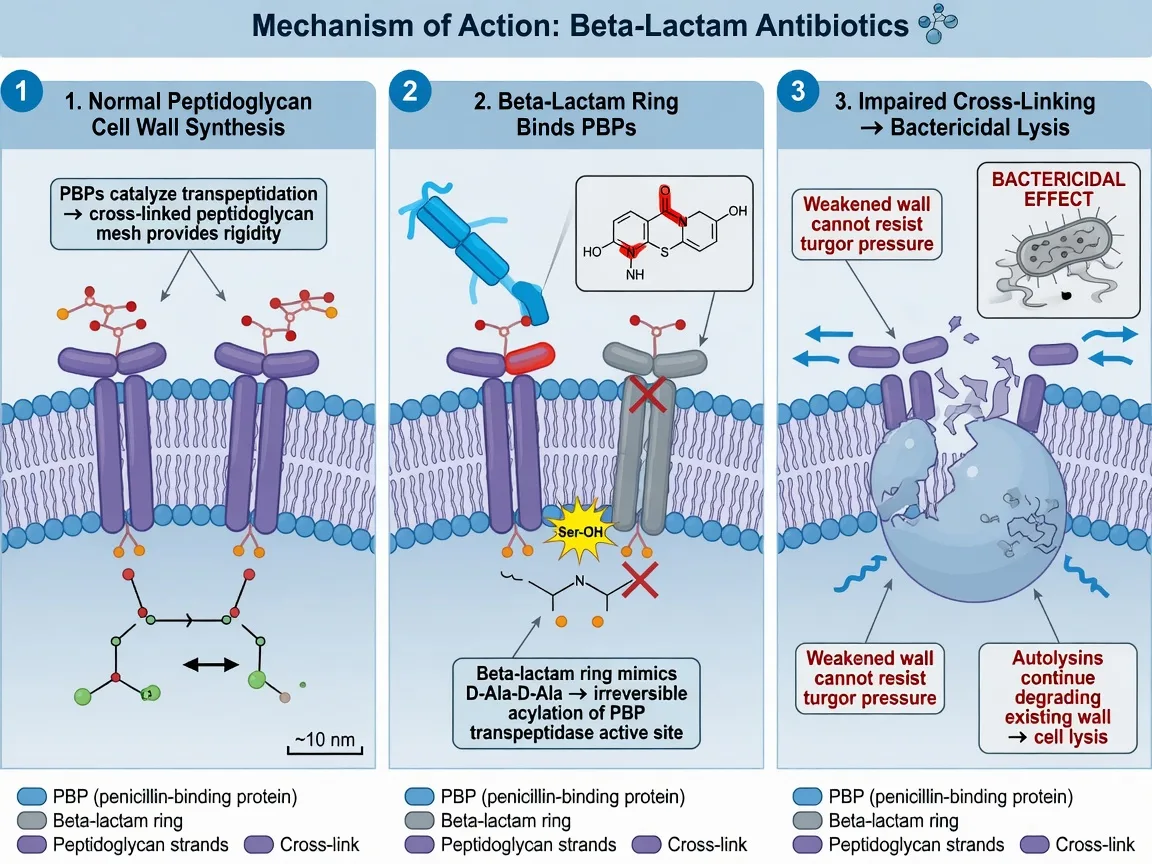
PK changes in critical illness
Increased Vd
Water-soluble drugs diluted
- Capillary leak → fluid shifts to interstitium → larger Vd for water-soluble drugs (beta-lactams, aminoglycosides, glycopeptides)
- Fluid resuscitation (3-6 L crystalloid) further dilutes
- Hypoalbuminaemia → increased free drug fraction (unbound) for highly protein-bound drugs
- Result: lower peak concentrations → sub-therapeutic. Need: LOADING DOSE
Augmented renal clearance (ARC)
Young trauma/sepsis
- CrCl >130 mL/min/1.73m2
- Mechanism: increased cardiac output → increased renal blood flow → increased GFR
- Common in: young, trauma, sepsis, burns, post-major surgery
- Result: renally eliminated drugs (most beta-lactams, vancomycin, aminoglycosides) cleared faster → sub-therapeutic
- Need: increased dose or extended infusion. Consider TDM.
Organ failure
Reduced clearance
- Renal failure: reduced clearance of renally eliminated drugs → accumulation → toxicity
- Hepatic failure: reduced metabolism of hepatically cleared drugs
- Need: dose reduction based on eGFR/clearance. Monitor levels.
CRRT and ECMO
Extracorporeal effects
- CRRT: removes drugs through filter. Dose adjustment needed (varies by modality, flow rate, membrane). Consult pharmacy.
- ECMO: sequesters drugs in circuit (especially lipophilic). Increases Vd. Dose adjustment needed.
PK/PD principles for ICU dosing
How to optimise antibiotic dosing in ICU
Give a LOADING DOSE
For severe infections (septic shock, meningitis, VAP, neutropenic sepsis): give loading dose to rapidly achieve therapeutic levels. Beta-lactams: 2x maintenance dose. Vancomycin: 25-30 mg/kg loading. The increased Vd in ICU patients means standard doses take too long to reach therapeutic levels without a loading dose.
Use extended or continuous infusion for beta-lactams
Beta-lactams are TIME-DEPENDENT killers: efficacy depends on time above MIC (T >MIC, target 40-60% of dosing interval). Extended infusion (over 3-4h) or continuous infusion (24h) maintains higher trough levels and increases T >MIC. Especially useful for: severe sepsis, ARC, MDR organisms with high MIC, immunocompromised. BLING II trial: continuous infusion improved outcomes in severe sepsis.
Adjust for renal function
Check eGFR daily. Renally eliminated drugs: reduce dose if eGFR <30. BUT: if ARC (CrCl >130), INCREASE dose (standard dose will be sub-therapeutic). Use measured creatinine clearance (urine collection) rather than estimated formulas (Cockcroft-Gault) in ICU — eGFR formulas may underestimate clearance.
Monitor drug levels (TDM)
Vancomycin: trough 15-20 mg/L (severe MRSA). AUC/MIC 400-600 (newer target — Bayesian dosing software). Aminoglycosides: trough <1 mg/L (gentamicin), peak 5-10 mg/L (depends on indication). Beta-lactams: emerging — target trough >4x MIC. Consider TDM for: severe sepsis, ARC, renal failure, CRRT, morbid obesity, uncertain response.
Adjust for CRRT
CRRT removes drugs differently than native kidneys. Factors: filter type (membrane permeability), flow rate (effluent dose), modality (CVVH vs CVVHD vs CVVHDF). General principle: CRRT at 25 mL/kg/h ≈ CrCl of 25-35 mL/min. Most beta-lactams need HIGHER doses than intermittent dialysis (CRRT is continuous — removes drug continuously). Consult pharmacy for CRRT-specific dosing.
SAQ — Beta-lactam PK/PD dosing in augmented renal clearance
10 minutes · 10 marks
A 55-year-old man (80 kg) is admitted to ICU with septic shock from hospital-acquired pneumonia. He requires noradrenaline 0.25 mcg/kg/min, lactate 3.8 mmol/L, albumin 22 g/L, and a measured 24-hour urinary creatinine clearance of 145 mL/min. Sputum grows Pseudomonas aeruginosa with a piperacillin MIC of 16 mg/L. You plan to use piperacillin-tazobactam. Outline your dosing strategy using PK/PD principles.
SAQ — Antibiotic dosing on continuous renal replacement therapy
10 minutes · 10 marks
A 64-year-old woman (70 kg) is in ICU with septic shock from a perforated viscus. She has AKI (oliguric, eGFR ~10 mL/min) and is on CVVHDF with an effluent rate of 25 mL/kg/h (1750 mL/h). She is on empiric piperacillin-tazobactam and vancomycin. Outline your antibiotic dosing approach on CRRT.
Clinical pearls
Red flags
PK/PD killing patterns — the three pharmacodynamic models
Antibiotic efficacy is governed by WHICH pharmacokinetic index best predicts bacterial kill. There are three distinct patterns — knowing which pattern a drug follows tells you HOW to dose it. This is the single most examinable concept in ICU antibiotic dosing.[1]
Concentration-dependent killing
Higher peak = more kill
- PK/PD target: **Cmax/MIC ≥8–10** (or **AUC₀–₂₄/MIC ≥100–125** for Gram-negatives)
- Higher the concentration above MIC → greater & faster kill. There is no benefit to keeping levels up over time.
- Drugs: **aminoglycosides** (gentamicin, tobramycin, amikacin), **fluoroquinolones** (ciprofloxacin, levofloxacin), **daptomycin**, **metronidazole**, **colistin**, **telavancin**.
- Dosing strategy: **ONCE-DAILY high dose** (maximise peak), then let levels fall. Long post-antibiotic effect (PAE) protects the drug-free interval.
- Aminoglycoside target: Cmax/MIC 8–10 → give 7 mg/kg gentamicin/tobramycin (Hartford once-daily nomogram).
- Fluoroquinolone target: AUC/MIC >125 (Gram-negatives) or >30–40 (S. pneumoniae).
Time-dependent killing
Longer time above MIC = more kill
- PK/PD target: **fT >MIC for 40–60–70% of the dosing interval** (free, unbound drug)
- Concentration above MIC does NOT increase kill once a threshold (~4×MIC) is reached — only TIME matters.
- Drugs: **beta-lactams** (penicillins, cephalosporins, carbapenems), **linezolid**, **erythromycin/clarithromycin**, **clindamycin**, **penicillin**.
- Sub-class nuances: penicillins need fT>MIC ~30–40%, cephalosporins ~50–60%, carbapenems ~40% (imipenem/meropenem).
- Dosing strategy: **frequent dosing or extended/continuous infusion** to maximise time above MIC. No meaningful PAE (except carbapenems have modest PAE).
- Loading dose (2× maintenance) recommended for severe infection to rapidly exceed MIC.
Concentration-dependent with time-dependence
Both AUC and time matter
- PK/PD target: **AUC₀–₂₄/MIC ≥400** (vancomycin for MRSA; ≥625 for some data, target 400–600).
- Kill depends on TOTAL EXPOSURE (AUC) over 24 h — both the peak AND the duration above MIC contribute.
- Drugs: **vancomycin**, **teicoplanin** (AUC/MIC), **tigecycline** (AUC/MIC), **azithromycin**, **quinupristin-dalfopristin**, **fluconazole** (AUC/MIC).
- Dosing strategy: combine a **loading dose** (to rapidly reach target) with **ongoing maintenance** (to sustain AUC). Neither a single huge dose nor many tiny doses is optimal.
- Vancomycin: loading 25–30 mg/kg, then AUC-guided maintenance targeting AUC 400–600 mg·h/L (Bayesian dosing).
Worked example — why the model changes everything
A patient with Pseudomonas bacteraemia (MIC 2 mg/L for both piperacillin-tazobactam and gentamicin):
- Piperacillin (time-dependent): the goal is fT>MIC ≥50%. If the dosing interval is 8 h, levels must be >2 mg/L for ≥4 h of each interval → extended infusion over 4 h achieves this where a 30-min bolus may not. A higher peak gives NO extra kill.
- Gentamicin (concentration-dependent): the goal is Cmax/MIC ≥10. With MIC 2, you need Cmax ≥20 mg/L → a single 7 mg/kg dose achieves this; 1 mg/kg TDS would never reach the peak. The 24-h drug-free window is safe due to PAE. [1]
Rapid bedside framework — pick the right dosing strategy in 3 questions
- Is the drug concentration-dependent (aminoglycoside, fluoroquinolone, daptomycin, colistin)? → Give a single HIGH daily dose (maximise Cmax). Use once-daily aminoglycoside nomogram. Do NOT split doses.
- Is the drug time-dependent (beta-lactam, linezolid)? → Maximise TIME above MIC. Give a loading dose (2× maintenance), then use extended (3–4 h) or continuous (24 h) infusion. Increase frequency, not the size of each bolus.
- Is it concentration-dependent with time-dependence (vancomycin, tigecycline)? → Target the AUC. Give a loading dose + ongoing maintenance, monitor AUC (Bayesian software) rather than a single trough.
ICU-specific pharmacokinetic changes — deep dive
Critical illness is not "normal physiology with a high fever." Five pathophysiological processes reshape antibiotic distribution and elimination, and each demands a specific countermeasure.[1][2]
Augmented renal clearance (ARC)
Hyper-clearance → under-dosing
- Definition: **measured CrCl >130 mL/min/1.73 m²** (some use >120). Up to **65% of ICU patients** meet this in the first week.
- Mechanism: ↑ cardiac output + systemic inflammation + vasopressor-driven renal perfusion + recovery-phase tubular hypertrophy → ↑ GFR.
- Highest-risk phenotypes: **young (<50 y), trauma, severe sepsis, burns >20% TBSA, post-major surgery, haematological malignancy, diabetes**.
- Consequence: renally-cleared drugs (most beta-lactams, vancomycin, aminoglycosides, fluoroquinolones, linezolid) are washed out → **sub-therapeutic levels in ~75%** (DALI study).
- eGFR formulae (Cockcroft-Gault, CKD-EPI) **systematically underestimate** ARC — they use a single creatinine that lags behind rapidly changing GFR. **Use a measured 4–8 h urinary CrCl** (CCr = UCr × Uflow / PCr).
- Countermeasure: INCREASE dose (e.g. pip-tazo 4.5 g q6h extended infusion), use continuous infusion, and measure beta-lactam levels (TDM).
Capillary leak / increased Vd
Water-soluble drugs diluted
- Mechanism: SIRS/inflammation breaks endothelial glycocalyx & tight junctions → albumin + water shift to interstitium → **third-spacing**.
- Effect: **Vd of hydrophilic drugs (beta-lactams, aminoglycosides, glycopeptides) increases 20–100%** → lower peak & trough → sub-therapeutic.
- Fluid resuscitation (3–8 L crystalloid/albumin in septic shock) compounds this further.
- Lipophilic drugs (macrolides, fluoroquinolones, tigecycline, linezolid) have large Vd regardless and are relatively SPARED — they distribute into tissues anyway.
- Countermeasure: **LOADING DOSE** (Beta-lactam 2× maintenance; vancomycin 25–30 mg/kg; aminoglycoside 7 mg/kg). Loading dose depends on Vd, NOT renal function — give the full load even in renal failure.
Hypoalbuminaemia
Altered free fraction
- ICU albumin often **<25 g/L** (normal 35–50). Critically affects **highly protein-bound** drugs (>70% bound): ceftriaxone (95%), flucloxacillin (95%), ertapenem (95%), teicoplanin (90%), daptomycin (92%).
- Lower albumin → ↑ free (unbound) fraction → transiently more active drug, BUT also ↑ Vd and ↑ clearance (free drug is filtered) → net effect often LOWER total concentrations and unpredictable.
- For vancomycin (only ~50% bound) and aminoglycosides (low binding) the effect is minor.
- Countermeasure: monitor unbound levels where available (ceftriaxone, flucloxacillin); consider higher doses of highly-bound drugs; beware total-level TDM misrepresenting active drug.
CRRT
Continuous extracorporeal clearance
- CRRT removes drugs via **convection** (CVVH — solute drag with water), **diffusion** (CVVHD — down concentration gradient), or both (CVVHDF).
- Saturation coefficient (S_c): fraction of drug that crosses the membrane. Most beta-lactams S_c ≈ 0.8–1.0 (well removed); vancomycin S_c ≈ 0.8; aminoglycosides S_c ≈ 0.9.
- CRRT clearance ≈ effluent flow rate (Q_eff × S_c). At **25 mL/kg/h**, this approximates a CrCl of 25–35 mL/min — i.e. patients on CRRT often need MORE drug than those on intermittent HD (which clears nothing between sessions).
- Factors that change clearance: **higher effluent dose**, **newer/higher-cut-off filter (oXiris, EMic2)**, **filter clotting** (sudden drop in clearance), **downscaling/transitioning off CRRT**.
- Countermeasure: dose for the CRRT prescription, dose AFTER a filter change (drug adsorbed/lost), re-dose when escalating effluent rate, and use TDM (beta-lactams especially). See dedicated CRRT dosing topic.
ECMO
Circuit sequestration
- ECMO increases Vd & reduces drug levels via: (1) **large priming volume** (1–3 L) dilutes drug on circuit; (2) **adsorption** of lipophilic drugs onto the PVC tubing & oxygenator membrane; (3) **higher Vd** overall.
- Lipophilic & highly protein-bound drugs (voriconazole, posaconazole, teicoplanin, ceftriaxone, amiodarone, propofol, fentanyl) are most sequestered — may need **1.5–2× standard dose**.
- Hydrophilic drugs (beta-lactams, aminoglycosides, vancomycin) are less adsorbed but still diluted — increased Vd means a **loading dose** is essential.
- Renal function on ECMO is highly variable — some have intact native kidneys (with ARC), others AKI requiring CRRT in-line. Clearance may be HIGHER or LOWER than expected.
- Countermeasure: **loading dose** for all antibiotics on ECMO; TDM is strongly recommended (especially voriconazole, beta-lactams). Do NOT empirically under-dose.
Obesity
Dosing-weight dilemma
- Obesity increases Vd for BOTH lipophilic drugs (more adipose) AND hydrophilic drugs (increased lean mass, blood volume, cardiac output — "fat-free mass" is higher).
- Dosing weight options: **total body weight (TBW)**, **ideal body weight (IBW)**, **adjusted body weight (AdjBW = IBW + 0.4×[TBW−IBW])**, or **fat-free mass (FFM)**.
- Vancomycin: use **TBW** for loading & initial maintenance (Vd scales with TBW). Aminoglycosides: use **AdjBW** (Vd ~0.26 L/kg). Beta-lactams: use **AdjBW or FFM**; consider higher doses + extended infusion.
- ARC is common in obese critically-ill patients — combine obesity + young + trauma and you have the highest under-dosing risk.
- Countermeasure: dose on the CORRECT weight, give a loading dose, use extended infusion, and TDM (especially vancomycin — obesity is an independent risk factor for sub-therapeutic AUC).
Decision algorithm — is this patient at risk of antibiotic under-dosing?
- Identify ARC phenotype: age <50? Trauma/burns/major surgery? Severe sepsis with high cardiac output? Leukaemia/stem-cell transplant? On vasopressors with rising urine output? → If YES, suspect ARC — obtain a measured 4–8 h urinary CrCl.
- Estimate Vd derangement: large-volume resuscitation (>4 L)? Severe sepsis/septic shock? Burns? Gross oedema/anasarca? Albumin <25 g/L? On ECMO? → If YES, Vd is enlarged — give a LOADING DOSE (independent of renal function).
- Check elimination pathway: Is the drug renally cleared (most ICU antibiotics)? → Match dose to measured CrCl: reduce if AKI, INCREASE if ARC. Is it hepatically cleared (linezolid, fluconazole, azithromycin, clindamycin, metronidazole)? → dose unchanged in renal failure but watch in hepatic failure.
- Account for extracorporeal circuits: CRRT dose in mL/kg/h? Recent filter change? ECMO running? → Adjust dose to circuit clearance (CRRT ≈ CrCl 25–35 at 25 mL/kg/h; ECMO → increase Vd, give loading dose).
- Select PK/PD-optimised regimen: time-dependent (beta-lactam) → extended/continuous infusion + loading; concentration-dependent (aminoglycoside) → once-daily high dose; AUC-dependent (vancomycin) → loading + AUC-guided TDM.
- Sample TDM at the right time: vancomycin AUC — 2 levels (peak + 4–8 h) or Bayesian single-level; aminoglycoside — post-dose 6–14 h for Hartford nomogram; beta-lactam — trough immediately before next dose. Re-check every 24–72 h and after ANY change in renal function or circuit.
Therapeutic drug monitoring (TDM) — drug-by-drug
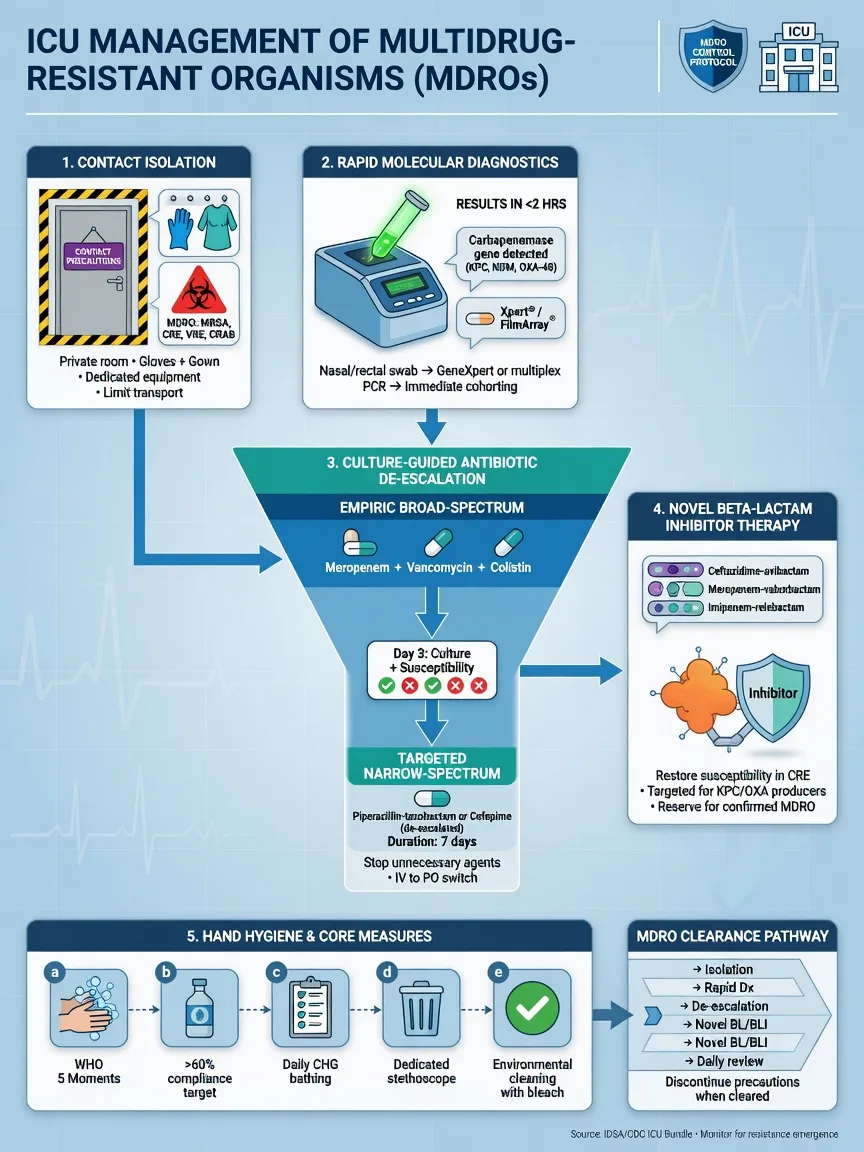
TDM closes the loop between predicted and actual drug exposure. Three drugs/classes are the core of ICU TDM.[1][6]
Vancomycin — AUC-guided
Target AUC 400–600
- 2020 consensus (Rybak/ASHP-IDSA): **AUC₀–₂₄/MIC 400–600** replaces trough-only monitoring for serious MRSA infection (assuming MIC ≤1).
- Trough ~15–20 mg/L is a ROUGH surrogate for AUC 400–500 but is unreliable in extremes of Vd/clearance (ARC, AKI, obesity, CRRT).
- Dosing: **loading 25–30 mg/kg** (over 2 h, max 3 g), then 15–20 mg/kg q8–12h or continuous infusion 30–60 mg/kg/24h. Use **Bayesian software** (e.g. InsightRx, DoseMeRx) — needs only 1–2 levels.
- Without Bayesian: take 2 levels (1–2 h post-infusion peak + trough) within the same interval; calculate AUC via trapezoidal rule.
- Nephrotoxicity risk rises sharply when **AUC >600** or concurrent piperacillin-tazobactam (the "vanco-piptazo AKI" association). Avoid >7 days unless clearly indicated.
Aminoglycosides — extended interval
Hartford nomogram
- Target Cmax/MIC 8–10 → gentamicin/tobramycin **7 mg/kg** once daily (amikacin 15–20 mg/kg) achieves peak ~20 mg/L.
- Monitoring: **one random level 6–14 h post-dose**, plotted on the **Hartford once-daily nomogram** → determines the next dosing interval (q24h / q36h / q48h).
- Trough target: **<1 mg/L** (gent/tobra) before next dose — confirms washout & minimises renal/toxic accumulation.
- Cautions / contraindications to once-daily: **endocarditis** (synergy dosing 1 mg/kg q8h is standard), **pregnancy**, **severe renal failure** (CrCl <30), **burns >20%** (altered Vd — consider q12h), **ascites/effusions** (large Vd).
- Stop at 72–96 h if possible — nephrotoxicity & ototoxicity are duration-dependent (>5–7 days). Re-audit indication daily.
Beta-lactams — emerging TDM
Trough 4–5× MIC
- Target: **100% fT>MIC** (trough ≥ MIC) as a minimum; for severe/invasive infection target **trough ≥4–5× MIC** (100% fT>4–5×MIC).
- DALI study: ~**19% of ICU beta-lactam levels were sub-therapeutic** (below 50% fT>MIC); even higher in ARC.
- Sampling: **trough immediately before the next dose** (or at steady state on continuous infusion). Turnaround 24–48 h (LC-MS/MS) limits bedside use — point-of-care assays emerging.
- Indications for beta-lactam TDM: **severe sepsis/shock, ARC, AKI/CRRT, ECMO, morbid obesity, MDR/high-MIC organism, deep-seed infection (endocarditis, CNS, osteo), immunocompromised, no clinical response at 48 h**.
- Adjust: if trough
10×MIC or toxic (seizures with cefepime/carbapenems) → reduce dose.
PK/PD optimisation strategies
Loading doses
Overcome increased Vd
- Principle: loading dose = Vd × target concentration. In ICU the Vd is enlarged, so the load is larger than maintenance.
- Loading is INDEPENDENT of renal function — give the FULL load even in anuric AKI (the problem is distribution, not elimination).
- Routine loads: vancomycin 25–30 mg/kg; pip-tazo 4.5 g; meropenem 2 g; cefepime 2 g; aminoglycoside 7 mg/kg; fluconazole 800 mg; teicoplanin 6 mg/kg q12h ×3.
- Goal: reach therapeutic levels within the first 1–2 h — the window when bacterial load is highest & mortality benefit of early appropriate antibiotics is greatest ("first dose is the most important dose").
Extended / continuous infusion (beta-lactams)
Maximise T>MIC
- Extended infusion: administer over **3–4 h** (e.g. pip-tazo 4.5 g q6h over 4 h) — covers ~60–70% of the dosing interval above MIC.
- Continuous infusion: **24 h infusion** after a loading bolus — maintains a steady concentration, maximises fT>MIC (~100%), simplifies nursing.
- Stability limits: meropenem stable ~8–12 h at room temp (use extended, not 24-h continuous, unless cold-lined); pip-tazo stable 24 h; cefepime stable 24 h; flucloxacillin stable 24 h.
- Best evidence: BLING II showed a TRENDA to better clinical cure with continuous infusion in severe sepsis; BLING III (JAMA 2024) was NEUTRAL for 90-day mortality in unselected septic shock — benefit may be confined to high-MIC / ARC subgroups. Meta-analysis (Vardakas 2018) favoured prolonged infusion.
Once-daily (extended-interval) aminoglycosides
Maximise Cmax/MIC
- Single daily high dose (gentamicin 7 mg/kg) maximises Cmax/MIC ≥10 AND exploits PAE — the long drug-free interval allows washout that protects the kidney & inner ear.
- Hartford nomogram (6–14 h post-dose level) tailors the NEXT interval without needing peaks.
- Equivalent or superior efficacy vs TDS dosing with LESS nephrotoxicity in most meta-analyses.
- Exceptions: endocarditis (synergy 1 mg/kg q8h), burns, pregnancy, ascites, paediatrics.
AUC-guided vancomycin
Bayesian dosing
- Replaces empirical trough dosing. Bayesian software combines population PK with 1–2 measured levels to individualise the AUC.
- Reduces nephrotoxicity (fewer AUC >600) and improves target attainment vs trough-only dosing.
- Standard regimen: load 25–30 mg/kg → maintenance to keep AUC 400–600. If MIC >1 (vancomycin-intermediate S. aureus, VISA), switch to alternative agent — AUC 400 with MIC 2 cannot be safely achieved.
Higher doses in ARC
Match hyper-clearance
- Pip-tazo 4.5 g q6h (vs standard q8h); cefepime 2 g q8h; meropenem 1–2 g q8h; all as EXTENDED infusion.
- Consider CONTINUOUS infusion beta-lactam + loading dose in confirmed ARC.
- Beta-lactam TDM is the most reliable way to confirm adequacy.
Drug-class dosing quick-reference (ICU)
Practical ICU dosing for the common antibiotics
- PIPERACILLIN-TAZOBACTAM (Pseudomonas, intra-abdominal, neutropenic sepsis): Loading 4.5 g → then 4.5 g q6–8h as EXTENDED infusion (4 h) or continuous infusion. Double dose to 4.5 g q6h in ARC. In AKI reduce per eGFR. Caution: "vanco-piptazo" AKI association — reconsider combination if vancomycin AUC rising.
- MEROPENEM (ESBL, severe sepsis, CNS infection): Loading 2 g → 1–2 g q8h. Extended infusion over 3 h (not 24-h continuous unless cold-stored — unstable at room temp). Meningitis/endocarditis: 2 g q8h. In ARC: 2 g q8h extended. Seizures are the dose-related toxicity (especially renal failure).
- CEFEPIME (Pseudomonas, febrile neutropenia): 2 g q8–12h. Loading + extended infusion for severe sepsis/ARC. Watch for cefepime neurotoxicity (encephalopathy, myoclonus, non-convulsive status) in renal failure — reduce dose if eGFR <30.
- VANCOMYCIN (MRSA, Gram-positive cover): Loading 25–30 mg/kg over 2 h → AUC-guided maintenance (target AUC 400–600). If MIC >1 → switch agent. Stop empiric therapy at 48 h if MRSA excluded (de-escalation). Avoid >7 days unless proven MRSA infection.
- GENTAMICIN/TOBRAMYCIN (Gram-negative synergy, pyelonephritis, endocarditis synergy): 7 mg/kg once daily (Hartford nomogram). Synergy in endocarditis: 1 mg/kg q8h (traditional). Max duration 72–96 h. Check trough <1 mg/L before the 2nd dose.
- CIPROFLOXACIN (Pseudomonas, Gram-negative): 400 mg q8–12h IV. AUC/MIC >125 — if MIC high, switch to a beta-lactam. Note: markedly raises INR with warfarin; tendon rupture; QT prolongation; lowers seizure threshold.
- LINEZOLID (VRE, MRSA pneumonia): 600 mg q12h IV/PO. 100% oral bioavailability. NO renal adjustment. Caution: thrombocytopenia (duration >14 days), serotonin syndrome with SSRIs/MAOIs, lactic acidosis, peripheral/optic neuropathy (long courses).
- DAPTOMYCIN (VRE, MRSA bacteraemia — NOT pneumonia, inactivated by surfactant): 6–10 mg/kg q24h IV. Concentration-dependent. Caution: CK rise / rhabdomyolysis (monitor CK weekly, hold statins), eosinophilic pneumonia. Reduced by CRRT — dose 6 mg/kg q48h on CVVH.
Key trials
DALI study — Defining Antibiotic Levels in ICU patients (PMID 24429437)
Study design
Prospective, point-prevalence, multicentre pharmacokinetic study — 38 ICUs, 8 countries, 248 patients receiving beta-lactams
Population
Critically ill patients on beta-lactam antibiotics (pip-tazo, meropenem, cefepime, ceftriaxone, flucloxacillin)
Intervention / measure
Measured plasma beta-lactam concentrations; PK/PD target = 50% fT>MIC (free drug above MIC for 50% of interval)
Key result
**~19% of patients did NOT achieve 50% fT>MIC** — i.e. one in five critically ill patients had sub-therapeutic beta-lactam levels. Target non-attainment was highest in patients with **CrCl >100 mL/min (ARC)** and in those not given a loading dose.
Clinical bottom line
Standard beta-lactam dosing frequently fails in ICU — especially in ARC. Provides the empirical backbone for loading doses, extended infusion, and beta-lactam TDM in the critically ill.
BLING II — Beta-Lactam INfusion in severe sepsis (PMID 26200166)
Study design
Multicentre, double-blind, randomised controlled trial — 432 patients, 9 ICUs (Australia/NZ/UK)
Population
Critically ill patients with severe sepsis, treated with pip-tazo, ticarcillin-clav, or meropenem
Intervention
Continuous infusion vs intermittent bolus of the beta-lactam (both groups received the same total daily dose + a loading dose)
Primary outcome
Days alive and free of organ dysfunction at day 14 (primary) — no significant difference
Secondary
Trend toward improved **90-day survival** (continuous 82.6% vs intermittent 76.4%, p=0.09) and higher rates of **biological target attainment** (higher fT>MIC)
Clinical bottom line
Continuous infusion did NOT significantly improve the primary outcome but showed a promising trend. Established continuous infusion as SAFE and biologically superior (better PK/PD). Subgroups with high MIC / ARC most likely to benefit.
BLING III — Continuous vs intermittent beta-lactam in septic shock (PMID 38864155)
Study design
Multicentre, randomised, parallel-group trial — ~7000 patients planned, pragmatic
Population
Critically ill patients with septic shock requiring a beta-lactam (pip-tazo or meropenem)
Intervention
Continuous infusion vs intermittent bolus of beta-lactam antibiotic
Primary outcome
All-cause mortality at 90 days
Key result
NEUTRAL — no significant difference in 90-day mortality between continuous and intermittent infusion in the broad septic-shock population
Clinical bottom line
In UNSELECTED septic shock, infusion strategy does not change mortality. Continuous infusion remains reasonable for HIGH-RISK subgroups (ARC, high-MIC organisms, deep-seed infection). Practice-changing: do NOT mandate continuous infusion for all — individualise.
MERINO — Meropenem vs pip-tazo for ESBL E. coli/Klebsiella bacteraemia (PMID 30208454)
Study design
Multicentre, randomised, non-inferiority trial — 378 patients
Population
Adults with ceftriaxone-non-susceptible E. coli or K. pneumoniae complex bloodstream infection
Intervention
Definitive therapy: meropenem 1 g q8h vs piperacillin-tazobactam 4.5 g q6h, for 7 days
Primary outcome
All-cause mortality at day 30
Key result
Pip-tazo FAILED non-inferiority — **4% mortality with meropenem vs 12% with pip-tazo** (absolute difference 8%). Pip-tazo was inferior. Note: largely low-inoculum bacteraemia (not pneumonia/intra-abdominal); PK not optimised (no extended infusion/TDM).
Clinical bottom line
For ceftriaxone-resistant (ESBL) E. coli / Klebsiella bacteraemia, prefer **meropenem** over pip-tazo for definitive therapy. PK lesson: with sub-optimal pip-tazo dosing (no extended infusion, no TDM) the drug under-performs — a PK/PD argument as much as a resistance one.
Vancomycin consensus — AUC/MIC 400–600 (PMID 32227354)
Document type
Joint consensus guideline — ASHP, IDSA, SIDP, PIDS (Rybak, Le, et al. 2020)
Key recommendation
Therapeutic monitoring of vancomycin for serious MRSA infection should target **AUC₀–₂₄/MIC 400–600** (assuming MIC ≤1 mg/L), measured by Bayesian methods
What changed
Replaces the previous **trough 15–20 mg/L** target for serious MRSA infection. Trough-only monitoring is no longer recommended as the primary method.
Rationale
Trough is an imperfect surrogate for AUC — it over-exposes (~30% have AUC >600 → ↑ nephrotoxicity) or under-exposes. AUC-guided dosing reduces nephrotoxicity while maintaining efficacy.
Dosing
Loading 20–25 (–30) mg/kg, then individualised to AUC 400–600. Bayesian software (1–2 levels) preferred; trapezoidal 2-level method acceptable.
Clinical bottom line
The new standard of care for serious MRSA infection is AUC-guided vancomycin. Trough 10–15 remains acceptable for non-severe/empirical use. Examinees must know AUC 400–600.
Vardakas meta-analysis — prolonged vs short beta-lactam infusion (PMID 29102324)
Study design
Systematic review and meta-analysis of RCTs — prolonged (≥3 h / continuous) vs short-term (≤30 min) infusion of antipseudomonal beta-lactams
Population
Patients with sepsis (mostly ICU)
Key result
Prolonged infusion was associated with **lower mortality** (OR ~0.66) and improved clinical cure vs short-term infusion, without increased adverse events
Clinical bottom line
The aggregate RCT evidence favours prolonged/continuous infusion of antipseudomonal beta-lactams in severe sepsis — the strongest case-by-case argument even though the largest single trial (BLING III) was neutral.
Common clinical scenarios
Scenario 1 — Young trauma patient with VAP and CrCl 160 mL/min (ARC)
- Recognise ARC: measured CrCl >130 confirms augmented renal clearance. Cockcroft-Gault would have estimated ~90 — under-recognised without a urinary measurement.
- Choose agent & dose for ARC: Pip-tazo 4.5 g q6h as EXTENDED infusion (4 h) + amikacin 25 mg/kg once daily (Cmax/MIC). Plus vancomycin loading 30 mg/kg if MRSA risk.
- Add TDM: beta-lactam trough (target ≥4×MIC) at 24–48 h; amikacin 6–14 h post-dose level (Hartford); vancomycin AUC on day 2.
- Expect to UP-titrate: ~75% of ARC patients need dose increases above standard. If troughs low, switch pip-tazo to continuous infusion or add aminoglycoside.
- Re-assess daily: as the patient recovers (inflammation resolves, cardiac output falls), ARC will abate by day 5–7 — re-measure CrCl and DOWN-titrate to avoid toxicity.
Scenario 2 — Septic shock on CRRT (CVVHDF 25 mL/kg/h) with ESBL bacteraemia
- Pick the right drug: meropenem (ESBL active, per MERINO superior to pip-tazo).
- Loading dose first: meropenem 2 g loading (independent of renal function — Vd is the issue).
- CRRT-adjusted maintenance: meropenem 1 g q12h or continuous infusion 3 g/24h (CRRT clearance ≈ CrCl 25–35). Do NOT under-dose because "they're on dialysis" — CRRT removes drug continuously.
- Re-dose after filter change: drug is lost with the clotted circuit & effluent — give a half-load.
- TDM: meropenem trough before next dose, target ≥4×MIC. Adjust to effluent dose changes.
Scenario 3 — Morbidly obese (BMI 48) patient with MRSA bacteraemia
- Loading: vancomycin 30 mg/kg based on TOTAL body weight (Vd scales with TBW).
- Maintenance: use Bayesian dosing with 2 levels; target AUC 400–600. Expect higher mg/kg needs than in non-obese.
- Add renal consideration: obese patients often have ARC — measure urinary CrCl.
- Monitor nephrotoxicity: AKI risk is higher in obesity + vancomycin + pip-tazo; check creatinine daily, keep AUC <600.
- Duration: 14 days for uncomplicated MRSA bacteraemia (longer if persistent bacteraemia, endocarditis, metastatic foci).
Additional clinical pearls
Additional red flags
Summary — the 10 commandments of ICU antibiotic dosing
Ten non-negotiable principles
- Give a LOADING DOSE for every severe infection — beta-lactam 2× maintenance, vancomycin 25–30 mg/kg, aminoglycoside 7 mg/kg. The load is independent of renal function.
- Match the dosing strategy to the PK/PD pattern: time-dependent → extended/continuous infusion; concentration-dependent → once-daily high dose; AUC-dependent → loading + AUC TDM.
- Suspect ARC in young/sepsis/trauma — measure urinary CrCl, do not trust Cockcroft-Gault. Up-titrate renally-cleared drugs.
- Use TDM: vancomycin AUC 400–600 (Bayesian), aminoglycoside Hartford nomogram, beta-lactam trough ≥4×MIC when available.
- Dose for the circuit: CRRT ≈ CrCl 25–35 at 25 mL/kg/h — usually need MORE than intermittent-HD dosing. Re-dose after filter change.
- Account for ECMO: loading dose + higher maintenance; lipophilic/highly-bound drugs sequester in circuit. TDM strongly advised.
- Choose the right dosing weight in obesity: vancomycin on TBW, aminoglycoside on adjusted BW, beta-lactams on adjusted BW or FFM.
- De-escalate at 48 h: stop empiric vancomycin if MRSA excluded; narrow to culture-directed therapy (antimicrobial stewardship).
- Limit toxicity: avoid vanco-piptazo where possible (use cefepime); cap aminoglycosides at 72–96 h; reduce cefepime dose in renal failure.
- Re-assess daily: renal function, circuit, weight, albumin, and clinical response all change fast — yesterday's correct dose may be today's overdose (or under-dose). Antibiotic dosing is dynamic, not a set-and-forget prescription.
References
- [1]Roberts JA, Abdul-Aziz MH, et al. Individualised antibiotic dosing for patients who are critically ill: challenges and potential solutions Lancet Infect Dis, 2014.PMID 24768475
- [2]Udy AA, Roberts JA, et al. Implications of augmented renal clearance in critically ill patients Nat Rev Nephrol, 2011.PMID 21769107
- [3]Roberts JA, Paul SK, et al. DALI: defining antibiotic levels in intensive care unit patients: are current β-lactam antibiotic doses sufficient for critically ill patients? Clin Infect Dis, 2014.PMID 24429437
- [4]Dulhunty JM, Roberts JA, et al. A Multicenter Randomized Trial of Continuous versus Intermittent β-Lactam Infusion in Severe Sepsis Am J Respir Crit Care Med, 2015.PMID 26200166
- [5]Dulhunty JM, Brett SJ, et al. Continuous vs Intermittent β-Lactam Antibiotic Infusions in Critically Ill Patients With Sepsis: The BLING III Randomized Clinical Trial JAMA, 2024.PMID 38864155
- [6]Rybak MJ, Le J, et al. Executive Summary: Therapeutic Monitoring of Vancomycin for Serious Methicillin-Resistant Staphylococcus aureus Infections: A Revised Consensus Guideline and Review of the American Society of Health-System Pharmacists, the Infectious Diseases Society of America, the Pediatric Infectious Diseases Society, and the Society of Infectious Diseases Pharmacists Pharmacotherapy, 2020.PMID 32227354
- [7]Pagkalis S, Mantadakis E, et al. Pharmacological considerations for the proper clinical use of aminoglycosides Drugs, 2011.PMID 22085385
- [8]Vardakas KZ, Voulgaris GL, et al. Prolonged versus short-term intravenous infusion of antipseudomonal β-lactams for patients with sepsis: a systematic review and meta-analysis of randomised trials Lancet Infect Dis, 2018.PMID 29102324
- [9]Roberts JA, Bellomo R, et al. Machines that help machines to help patients: optimising antimicrobial dosing in patients receiving extracorporeal membrane oxygenation and renal replacement therapy using dosing software Intensive Care Med, 2022.PMID 35997793
- [10]Harris PNA, Tambyah PA, et al. Effect of Piperacillin-Tazobactam vs Meropenem on 30-Day Mortality for Patients With E coli or Klebsiella pneumoniae Bloodstream Infection and Ceftriaxone Resistance: A Randomized Clinical Trial JAMA, 2018.PMID 30208454
- [11]Dulhunty JM, Roberts JA, et al. Continuous infusion of beta-lactam antibiotics in severe sepsis: a multicenter double-blind, randomized controlled trial Clin Infect Dis, 2013.PMID 23074313