ICU · Pharmacology
Antihypertensives — ACEi, ARB, CCB, Beta-blockers & Vasodilators
Also known as Antihypertensives · ACE inhibitor · ARB · Calcium channel blocker · Beta-blocker · Sodium nitroprusside · Glyceryl trinitrate · Labetalol · Nicardipine · Clevidipine · Esmolol · Hydralazine · Phentolamine · Nimodipine
Antihypertensives — by mechanism: the RAS (ACEi — the bradykinin cough; the ARB); the CCB (the dihydropyridine — the amlodipine; the non-DHP — the verapamil/diltiazem); the beta-blockers (metoprolol β1-selective, labetalol α+β, esmolol ultra-short); the vasodilators (the SNP — the cyanide toxicity; the GTN; the hydralazine); the alpha-blockers (phentolamine — pheochromocytoma); the centrally acting (the methyldopa, the clonidine); the diuretics (furosemide — acute pulmonary oedema). ICU drug selection by indication: aortic dissection (beta-blocker first), intracerebral haemorrhage (nicardipine/clevidipine), pre-eclampsia (labetalol/hydralazine/nifedipine), eclampsia (magnesium sulfate).
On this page & tools
Your progress
Saved locally on this device.
8 MCQs with explanations
Target exams
Red flags
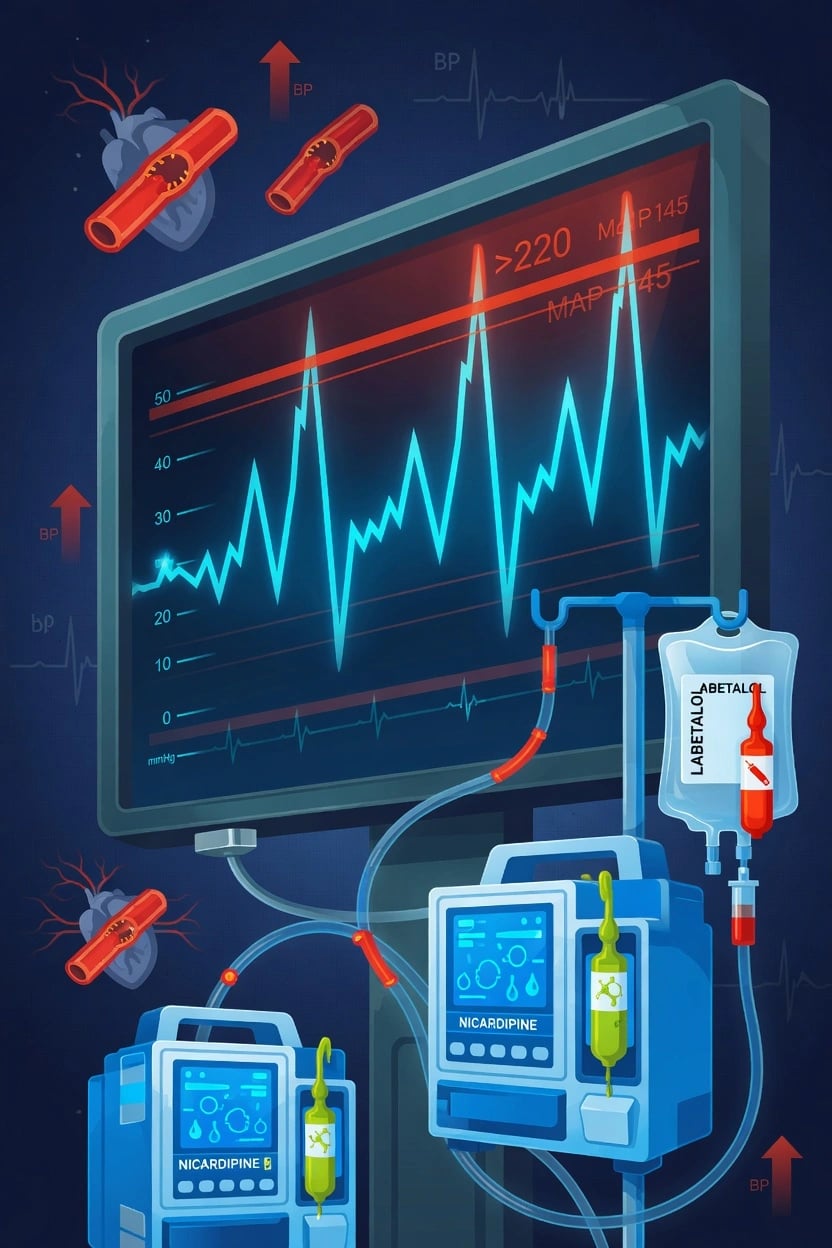
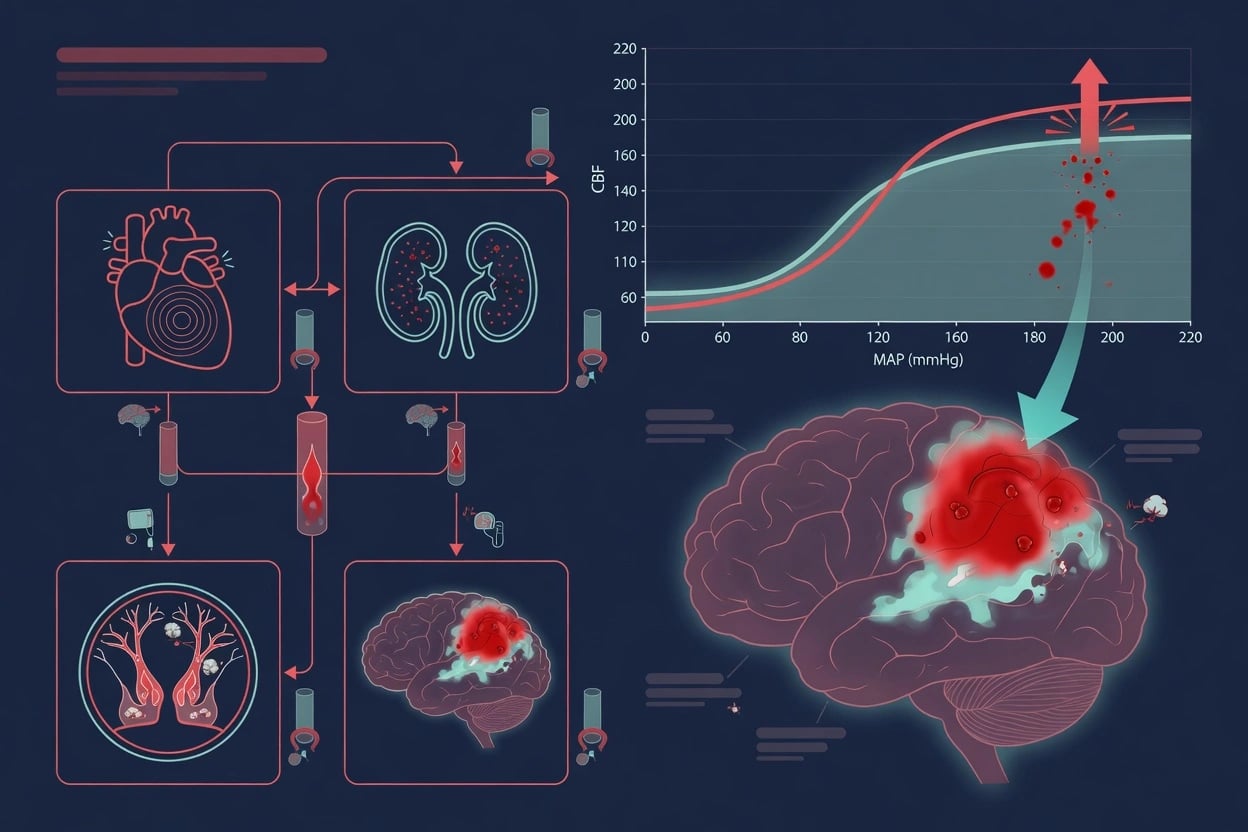
Overview & definition
Antihypertensives — by the mechanism. The RAS (ACEi/ARB), the CCB (DHP/non-DHP), the beta-blockers, the vasodilators (SNP/GTN/hydralazine), the alpha-blockers, the centrally acting.[1]
In the ICU the question is rarely "which oral agent for chronic hypertension?" — it is "which IV agent, for which acute indication, lowered over what timeframe, avoiding which adverse effect?" The drug must be matched to the indication because the target, the acceptable rate of fall, and the contraindications differ for every hypertensive emergency. Lowering blood pressure in an aortic dissection (target SBP 100-120 mmHg within minutes) is a completely different task from lowering it in an acute ischaemic stroke (permissive hypertension, no treatment unless >220/120) or in pre-eclampsia (labetalol/hydralazine/nifedipine only, never ACEi).[1][9]
Hypertensive emergency vs urgency — the first triage decision
The single most important initial distinction is between a hypertensive emergency (acute target-organ damage requiring IV therapy within minutes-hour) and a hypertensive urgency (high BP without acute end-organ damage, lowered over hours-days with oral agents). Mislabeling an urgency as an emergency and crashing the pressure with an IV vasodilator causes strokes and MIs; mislabeling an emergency as an urgency and discharging the patient kills them.[1][9]
Hypertensive emergency vs urgency — the triage decision
| Feature | Hypertensive EMERGENCY | Hypertensive URGENCY |
|---|---|---|
| Definition | Severe BP elevation + ACUTE target-organ damage | Severe BP elevation WITHOUT acute end-organ damage |
| Setting | ICU / HDU / resus bay, arterial line | ED observation, outpatient, oral therapy |
| Speed of lowering | Minutes to 1 hour (controlled IV titration) | 24-48 hours (oral agents) |
| Route | IV titratable infusion (labetalol, nicardipine, clevidipine, GTN, esmolol) | Oral (labetalol, amlodipine, felodipine, captopril) |
| Monitoring | Arterial line, continuous cardiac monitor, urine output | Repeat cuff BP, observe 4-6 h, close follow-up |
| Examples | Dissection, ICH, SAH, ACS with pulmonary oedema, hypertensive encephalopathy, eclampsia, pheo crisis | Asymptomatic BP 200/110, non-adherence, missed dose |
| Danger | Untreated → organ loss; over-treated (too fast) → ischaemia | Rapid IV lowering → falls, stroke, MI (the classic error) |
General approach to acute blood-pressure lowering
General ICU approach to a hypertensive emergency
Recognise the emergency and identify the target organ
Confirm severe BP elevation (preferably arterial line) AND identify the acute end-organ damage. The target organ defines the drug, the goal BP and the rate of fall. Aortic dissection, ICH, SAH, ACS/pulmonary oedema, hypertensive encephalopathy, eclampsia and pheo crisis each have a different algorithm.
Place an arterial line and continuous ECG
Beat-to-beat BP is essential when titrating IV vasodilators (especially SNP/clevidipine/nicardipine, which act within seconds-minutes). Continuous ECG because reflex changes, ischaemia and beta-blocker effects all show on the trace.
Choose the agent by indication (not by habit)
Dissection → beta-blocker FIRST then vasodilator. ICH → nicardipine/clevidipine/labetalol. ACS → GTN + beta-blocker. Pulmonary oedema → GTN + loop diuretic ± clevidipine. Pre-eclampsia → labetalol/hydralazine/nifedipine. Eclampsia → magnesium sulfate. Pheo → phentolamine (alpha-blockade first).
Set an explicit BP goal and rate of fall
Dissection: SBP 100-120, HR <60-70 within 20-30 min. ICH: SBP <140 (INTERACT2/ATACH-2) over 1 h. SAH: SBP <160 pre-clip. ACS: reduce by 10-20% then titrate to symptoms. Eclampsia: SBP <160 / DBP <110. State the goal, write it on the chart, titrate to it.
Titrate, do not bolus blindly
Use short-acting titratable infusions (clevidipine, nicardipine, esmolol, labetalol, GTN). Re-check BP every 3-5 min during active titration. Most agents act within 2-10 min — wait for the effect before escalating.
Plan the transition to oral
Once the acute insult is controlled and stable, transition to oral agents (ACEi/ARB, CCB, beta-blocker) overlapping the infusion, then wean the IV. Continue oral therapy long-term — an emergency is a sentinel for uncontrolled chronic hypertension.
By class
| Class | Mechanism | Agents | Key adverse |
|---|---|---|---|
| ACEi | ACE block → ↓AngII + ↑bradykinin | Enalapril, ramipril | Cough (bradykinin), angioedema, hyperK, AKI (renal artery stenosis) |
| ARB | AngII receptor block | Losartan, valsartan | HyperK, AKI (no cough/angioedema) |
| CCB-DHP | Vascular L-type Ca | Amlodipine, nifedipine, nicardipine, clevidipine | Ankle oedema, flushing, headache, reflex tachycardia |
| CCB-nonDHP | Cardiac L-type Ca | Verapamil, diltiazem | Bradycardia, heart block, constipation |
| Beta-blocker | β1/β2 block | Metoprolol, labetalol (α+β), esmolol | Bradycardia, bronchospasm, masking hypoglycaemia |
| Vasodilator | NO donor / direct | SNP, GTN, hydralazine | SNP cyanide; GTN headache/tachyphylaxis; hydralazine lupus |
| Alpha-blocker | α1 block | Phentolamine, phenoxybenzamine | Reflex tachycardia, orthostatic hypotension |
| Central | α2 agonist | Clonidine, methyldopa | Rebound hypertension on withdrawal |
| Diuretic | Na/water loss | Furosemide, thiazides | Hypokalaemia, hypovolaemia, ototoxicity |
| Direct renin inh | Renin block | Aliskiren | Diarrhoea, hyperK, contraindicated with ACEi/ARB |
Key ICU agents
- Labetalol (α+β blocker) — the IV titration; the first-line for the hypertensive emergency (the aortic dissection, the pre-eclampsia).[1]
- SNP (the NO donor) — the IV titration; the most potent; the cyanide toxicity (the thiocyanate; the hydroxocobalamin/sodium thiosulfate).[1]
- GTN (the NO donor) — the IV titration; the ACS + the acute pulmonary oedema.[1]
- Nicardipine (the IV DHP-CCB) — the smooth titration; the stroke (the cerebral vasodilation).[10][11]
- Clevidipine (the ultra-short IV DHP-CCB) — the arteriolar vasodilator; the rapid titration; the lipid emulsion (the egg/soy allergy).[5]
- Esmolol (the ultra-short β1-blocker) — the perioperative / aortic dissection rate control; the ester hydrolysis (the rapid offset).[1]
- Phentolamine (the non-selective α-blocker) — the pheochromocytoma crisis (the alpha-blockade first).[15]
- Hydralazine (the direct arteriolar vasodilator) — the pregnancy (the pre-eclampsia); the drug-induced lupus.[1]
Beta-blockers — the negative chronotrope / inotrope class
Beta-blockers lower BP by reducing cardiac output (negative chronotropy + inotropy) and by suppressing renin release from the juxtaglomerular apparatus. In a hypertensive emergency their unique role is to lower the rate of pressure rise (dP/dt) — the shear force on the aortic wall — which is why they are the mandatory first agent in aortic dissection before any pure vasodilator.[1][1]
The ICU-relevant beta-blockers — selectivity and duration
| Agent | Selectivity | Onset (IV) | Offset | Half-life | Typical IV dose | Niche |
|---|---|---|---|---|---|---|
| Esmolol | β1 (cardioselective) | 1-2 min | ~9 min | ~9 min (RBC esterase) | Bolus 0.5-1 mg/kg; infusion 50-300 µg/kg/min | Ultra-short; aortic dissection, perioperative, SVT, where offset matters |
| Labetalol | Non-selective β + α1 (ratio ~7:1) | 2-5 min | 2-4 h | 5.5 h | Bolus 10-20 mg q10min; infusion 1-8 mg/h (up to 300 mg/24h) | First-line IV agent for most emergencies; pregnancy-safe |
| Metoprolol | β1 (cardioselective) | 5-10 min | 5-8 h | 3-7 h | 5 mg IV q5min × 3 (cardiac dosing) | ACS, AF rate control; oral for chronic |
| Propranolol | Non-selective β1+β2 | — | — | 4 h | oral/mainly | Avoid in asthma; rarely IV in ICU |
| Bisoprolol / atenolol | β1 | — | — | long | oral | Chronic; not for acute titration |
Metoprolol — the β1-selective workhorse
β1-selective (cardioselective) at low dose, so less bronchospasm than propranolol (selectivity is lost at high dose). The IV form is used for acute coronary syndromes and rate control in atrial fibrillation: 5 mg slow IV every 5 minutes up to 15 mg, then oral metoprolol. Adverse effects: bradycardia, heart block, bronchospasm (caution in asthma/COPD), and masking of hypoglycaemia (loss of the adrenergic warning signs — tremor, palpitations — in diabetics; the sweating is cholinergic and is NOT blocked).[1]
Labetalol — the combined α+β agent
The most versatile IV antihypertensive: blocks β1/β2 (reduces CO and renin) AND α1 (vasodilates arterioles), so it lowers BP without reflex tachycardia (the β-blockade blunts the reflex). This combination, plus a pregnancy-safe profile, makes it first-line for pre-eclampsia, aortic dissection, post-stroke BP, and most undifferentiated hypertensive emergencies. Bolus 10-20 mg IV every 10 minutes (max 300 mg/24h) or infusion 1-8 mg/h. Contraindications: asthma, severe bradycardia, heart block >1st degree, overt heart failure (the negative inotropy).[1][9]
Esmolol — the ultra-short β1-blocker
Hydrolysed by red-blood-cell esterases to an inactive acid + methanol, giving a half-life of ~9 minutes — the offset is complete within ~30 minutes of stopping. This makes esmolol the agent of choice when you need a beta-blocker whose effect can be turned off rapidly: perioperative hypertension, aortic dissection rate control, and acute SVT/AF rate control in a haemodynamically tenuous patient. Bolus 0.5 mg/kg over 1 min, then infusion 50-300 µg/kg/min titrated. Caution: methanol accumulation only at very high/prolonged doses; avoid in severe bradycardia and decompensated heart failure.[1]
Calcium channel blockers — the L-type channel blockers
CCBs block the L-type voltage-gated calcium channel. The dihydropyridines (DHP) are vascular-selective (arteriolar vasodilators → ↓ afterload); the non-dihydropyridines (non-DHP) are cardiac-selective (↓ contractility, ↓ conduction through AV node). The distinction is exam-critical and clinically critical.[1]
Dihydropyridines — arteriolar vasodilators
DHP-CCBs (amlodipine, nifedipine, nicardipine, clevidipine, nimodipine, felodipine) act on vascular smooth-muscle L-type channels → arteriolar vasodilation → reduced systemic vascular resistance. They are pure afterload reducers and cause reflex sympathetic activation (tachycardia, which is why non-DHP + beta-blocker combinations are avoided but DHP + beta-blocker combinations are synergistic). Adverse effects common to the class: ankle oedema (precapillary vasodilation, NOT fluid overload — so not diuretic-responsive), flushing, headache, gingival hyperplasia.[1]
Nicardipine — the smooth-titrating IV DHP
An IV DHP-CCB and potent selective arteriolar vasodilator. Onset 5-15 min, offset 4-6 h after stopping, half-life ~40 min. Titrated infusion 5-15 mg/h. It produces smooth, predictable BP control and is the agent of choice for acute intracerebral haemorrhage, subarachnoid haemorrhage and acute stroke where a labetalol infusion fails or is contraindicated — it preserves cerebral autoregulation better than SNP and causes less sedation than beta-blockers.[10][11][12] In the CLUE study subgroup, nicardipine achieved target BP more often than labetalol in ED patients with end-organ damage.[10]
Clevidipine — the ultra-short IV DHP
An ester-linked DHP hydrolysed by blood/tissue esterases → onset 2-4 min, offset 5-15 min. Start 1-2 mg/h, double every 90 seconds to a maximum 32 mg/h. The fastest, most titratable IV antihypertensive available — ideal for situations requiring moment-to-moment BP control (perioperative, acute severe hypertension in heart failure). It is formulated as a lipid emulsion (20%) and is therefore contraindicated in egg/soy allergy and defective lipid metabolism (e.g. primary hypertriglyceridaemia), and carries a risk of acute pancreatitis from the lipid load at high doses. The VELOCITY analysis supported its efficacy in severe hypertension with acute heart failure.[5]
Nimodipine — the SAH vasospasm agent
A DHP-CCB with high lipid solubility and cerebral vascular selectivity, used specifically to prevent cerebral vasospasm after aneurysmal subarachnoid haemorrhage. Given orally (60 mg every 4 h for 21 days) — NOT primarily as an antihypertensive, though it does lower BP. The British Aneurysm Nimodipine Trial established a reduction in cerebral infarction and improved outcome after SAH.[4] The IV formulation is photosensitive (protect from light) and carries a higher risk of hypotension, AKI and pulmonary oedema than the oral form; oral is preferred where enteral access exists.
DHP vs non-DHP CCBs — the exam distinction
| Feature | Dihydropyridine (DHP) | Non-dihydropyridine (non-DHP) |
|---|---|---|
| Examples | Amlodipine, nifedipine, nicardipine, clevidipine, nimodipine, felodipine | Verapamil, diltiazem |
| Primary site | Vascular smooth muscle (arterioles) | Cardiac myocytes + AV node |
| Effect | Vasodilation → ↓SVR (afterload) | ↓Contractility, ↓HR, ↓AV conduction |
| Heart rate | Reflex ↑ (sympathetic) | ↓ (bradycardia) |
| Oedema | Ankle oedema (precapillary vasodilation) | Less |
| Constipation | No | Verapamil — yes (classic) |
| Key ICU use | Nicardipine/clevidipine for ICH, SAH, perioperative BP | Rate control (AF), NOT acute BP lowering |
| Combo with β-blocker | Synergistic and safe | DANGER — combined AV block / bradycardia / asystole |
ACE inhibitors & ARBs — the renin-angiotensin system blockers
ACE inhibitors (ACEi) — the bradykinin cough
Block angiotensin-converting enzyme (kininase II) → ↓angiotensin II (vasoconstriction, aldosterone, ADH all fall) AND ↓bradykinin degradation → ↑bradykinin. The bradykinin excess is the basis of the dry cough (10-20% of patients) and angioedema (more common in Black patients and with concomitant mTOR inhibitors). Hyperkalaemia (↓aldosterone) and a rise in creatinine (efferent arteriolar dilation → ↓GFR; acceptable up to ~30%) are expected. Enalaprilat is the only IV ACEi (1.25-5 mg IV q6h, onset 15 min) — rarely used acutely because of unpredictable first-dose hypotension and the hyperkalaemia/AKI risk in volume-depleted ICU patients.[1][8]
ARBs — "the ACEi without the cough"
Block the angiotensin II type-1 (AT1) receptor directly. Bradykinin degradation is unaffected → no cough, no angioedema — making ARBs the substitute for ACEi-intolerant patients. The renal (hyperkalaemia, AKI in renal artery stenosis) and pregnancy contraindications are IDENTICAL to ACEi. Combining ACEi + ARB is contraindicated (no added benefit, excess hyperkalaemia/AKI — the ONTARGET finding).[1]
Direct renin inhibitor (aliskiren)
Blocks renin → ↓angiotensin I generation. Same renal/pregnancy cautions as ACEi/ARB; contraindicated in combination with either (hyperkalaemia/AKI). Rarely used in ICU.[1]
Direct vasodilators — SNP, GTN, hydralazine
Sodium nitroprusside (SNP) — arterial + venous NO donor
Releases nitric oxide → activates guanylyl cyclase → ↑cGMP → smooth-muscle relaxation in BOTH arterioles and venules. The most potent and rapidly titratable IV vasodilator (onset seconds, offset 1-2 min). Start 0.25-0.5 µg/kg/min, titrate to 10 µg/kg/min (max). Because it dilates both arterial and venous beds it reduces preload and afterload equally — useful in severe hypertension with heart failure. Its dangers are (1) cyanide toxicity (1 molecule SNP releases 5 cyanide ions), (2) coronary steal (preferential arteriolar dilation in non-ischaemic beds), and (3) intracranial pressure rise (cerebral vasodilation) — so SNP is now largely displaced by nicardipine/clevidipine/labetalol for most neuro emergencies.[1][9]
Glyceryl trinitrate (GTN, nitroglycerin) — venous > arterial NO donor
An organic nitrate converted to NO (via mitochondrial aldehyde dehydrogenase) → activates guanylyl cyclase → vasodilation. At low doses it is predominantly a VENODILATOR (↓preload → ↓filling pressure → relieves pulmonary oedema and angina); at higher doses arteriolar dilation (↓afterload) appears. Onset 2-5 min, infusion 5-200 µg/min. The agent of choice for acute coronary syndrome with hypertension and acute pulmonary oedema (it relieves ischaemia AND offloads the failing ventricle). Key adverse effects: throbbing headache (cerebral vasodilation), methaemoglobinaemia (rare, at high doses), tolerance/tachyphylaxis within 24-48 h (free-radical generation + sulfhydryl depletion), and hypoxaemia from pulmonary V/Q mismatch (vasodilation of poorly ventilated units).[1]
Hydralazine — direct arteriolar vasodilator
A direct smooth-muscle relaxant acting predominantly on arterioles (little venous effect), mechanism partly via NO release. Onset 10-20 min (slow), duration 3-6 h (long and unpredictable). Dose 5-20 mg IV q4-6h or infusion 0.5-10 mg/h. It crosses the placenta poorly relative to its maternal effect and is pregnancy-safe — a second/third-line agent for pre-eclampsia/eclampsia hypertension (after labetalol, with nifedipine). It causes reflex tachycardia (avoid alone in dissection/ACS) and, with chronic use, drug-induced lupus erythematosus (anti-histone antibodies; reversible on cessation). May also raise intracranial pressure (cerebral vasodilation) — caution in neuro patients.[1]
SNP vs GTN vs hydralazine — the three IV vasodilators
| Property | Sodium nitroprusside | Glyceryl trinitrate | Hydralazine |
|---|---|---|---|
| Vascular bed | Arterial + venous (both) | Venous > arterial | Arterial (mostly) |
| Mechanism | NO donor → ↑cGMP | NO (via ALDH-2) → ↑cGMP | Direct relaxant / NO |
| Onset / offset | Seconds / 1-2 min | 2-5 min / 5-10 min | 10-20 min / 3-6 h |
| Preload effect | ↓↓ | ↓↓↓ (strongest) | ↓ (minimal) |
| Afterload effect | ↓↓ | ↓ (at low dose) | ↓↓ |
| Best indication | Malignant HTN, dissection (with β-blocker) | ACS, acute pulmonary oedema | Pregnancy (pre-eclampsia) |
| Signature toxicity | Cyanide / thiocyanate | Headache, tachyphylaxis, metHb | Lupus, reflex tachycardia |
| ICP effect | ↑ (cerebral vasodilation) | ↑ (mild) | ↑ (may raise) |
| Coronary steal | Yes | Minimal | No |
Alpha-blockers — the pheochromocytoma drugs
Alpha-adrenoceptor antagonists block α1-mediated vasoconstriction → arteriolar and venous vasodilation. Their defining ICU niche is the catecholamine-excess state: pheochromocytoma crisis, cocaine/ amphetamine/ MDMA toxicity, and clonidine/MAOI withdrawal. In all of these the problem is surging alpha-mediated vasoconstriction, so an alpha-blocker is the rational first agent.[15]
Phentolamine — the reversible, non-selective α-blocker
A competitive α1 + α2 antagonist, IV, onset immediate, duration 15-30 min. Bolus 1-5 mg IV, repeat/infuse 0.2-0.5 mg/min. The first-line agent for a pheochromocytoma crisis (5-15 mg IV) and the diagnostic/therapeutic phentolamine test historically. It causes reflex tachycardia and orthostatic hypotension — co-administer a beta-blocker ONLY AFTER alpha-blockade is established.[15]
Phenoxybenzamine — the irreversible α-blocker (preoperative)
An irreversible, non-competitive α1 antagonist (>α2) used for preoperative preparation of pheochromocytoma — started 1-2 weeks preoperatively to volume-replete and prevent intraoperative hypertensive crisis. The irreversible bond means the effect lasts days (new receptors must be synthesised). Adverse effects: postural hypotension, reflex tachycardia, nasal stuffiness, sedation. The principle of phaeo management — alpha-blockade BEFORE beta-blockade — was established to prevent the catastrophe of unopposed alpha stimulation.[15]
Selective α1-blockers (prazosin, doxazosin, terazosin)
Oral "α1a"-selective agents used for benign prostatic hyperplasia and as adjunct antihypertensives; first-dose postural hypotension is the classic adverse effect (give the first dose at night). Doxazosin was inferior to chlorthalidone for heart failure prevention in ALLHAT, so they are not first-line for primary hypertension.[1]
Centrally acting sympatholytics — the α2 agonists
Clonidine and methyldopa are central α2-receptor agonists that stimulate presynaptic α2 receptors in the medullary vasomotor centre → ↓sympathetic outflow → ↓BP and ↓HR. Methyldopa is a prodrug (converted to α-methylnoradrenaline, the false transmitter). Both cross the blood-brain barrier and the placenta; methyldopa is pregnancy-safe (a long historical safety record) and remains a first-line oral agent for chronic hypertension in pregnancy.[1]
Their defining hazard is rebound hypertension on abrupt withdrawal (clonidine > methyldopa) — abrupt cessation causes a surge of sympathetic outflow, sometimes with hypertensive encephalopathy, within 24-48 h. Always taper. Clonidine is also used (at much higher doses, often patch) for opioid/alcohol withdrawal and ADHD. Adverse effects: sedation, dry mouth, bradycardia, positive Coombs test and haemolytic anaemia (methyldopa), drug-induced lupus and hepatitis (methyldopa).[1]
Diuretics in acute hypertension — furosemide for pulmonary oedema
Diuretics are NOT acute antihypertensives in the conventional sense — their BP effect is slow (over days) and driven by volume. The exception is acute pulmonary oedema with hypertension, where a loop diuretic (furosemide) provides immediate venodilation (via prostaglandin release and, when given IV, a transient pulmonary venous effect) that precedes the diuretic action, plus volume reduction — making it a core part of the vasodilator + diuretic combination (GTN + furosemide ± clevidipine) for hypertensive acute heart failure.[1]
Furosemide — the loop diuretic
Inhibits the Na-K-2Cl cotransporter in the thick ascending limb — the most potent diuretic. IV onset 5 min, peak diuresis 30 min. For acute pulmonary oedema: 40-80 mg IV (or 2.5× chronic oral dose). Adverse effects: hypokalaemia, hypocalcaemia, hypomagnesaemia, ototoxicity (high-dose rapid IV push, especially with renal impairment or concurrent aminoglycosides — infuse <4 mg/min in renal failure), contraction alkalosis, and hyperuricaemia. Thiazides act on the distal tubule (HYPERcalcaemia — opposite of loop) and are adjunctive oral antihypertensives (chlorthalidone > hydrochlorothiazide for BP and outcomes).[1][13]
IV antihypertensive pharmacology — the one comparison table to memorise
The titratable IV antihypertensives — onset, offset, dose, niche
| Agent | Class | Onset | t1/2 / offset | Typical dose | Niche / first-line for |
|---|---|---|---|---|---|
| Clevidipine | DHP-CCB | 2-4 min | 5-15 min | 1-32 mg/h (double q90s) | Most acute severe HTN; perioperative; rapid on/off |
| Nicardipine | DHP-CCB | 5-15 min | 4-6 h off | 5-15 mg/h | ICH, SAH, stroke, renal impairment |
| Labetalol | α+β blocker | 2-5 min | 2-4 h off | Bolus 10-20 mg q10min; 1-8 mg/h | Most emergencies; pregnancy (pre-eclampsia); dissection |
| Esmolol | β1 blocker | 1-2 min | ~9 min | 0.5 mg/kg load; 50-300 µg/kg/min | Aortic dissection rate control; perioperative; SVT |
| GTN | NO donor (venous) | 2-5 min | 5-10 min | 5-200 µg/min | ACS with HTN; acute pulmonary oedema |
| SNP | NO donor (art+ven) | seconds | 1-2 min | 0.25-10 µg/kg/min | Malignant HTN, dissection (with β-blocker); cyanide risk |
| Hydralazine | Direct arteriolar | 10-20 min | 3-6 h | 5-20 mg q4-6h | Pregnancy (pre-eclampsia/eclampsia) |
| Enalaprilat | ACEi (IV) | 15 min | 6 h | 1.25-5 mg q6h | Rare; CHF with high afterload |
| Fenoldopam | D1 agonist | 5-15 min | 10-15 min | 0.1-1.6 µg/kg/min | Renal-insufficiency HTN (renal vasodilation); preserves renal flow |
Drug selection by indication — the heart of ICU antihypertensive use
The drug is chosen by the indication, not by habit. Below is the indication-specific logic, with the agent, the target, the rate of fall and the pitfalls for each major emergency.[1][9]
Acute aortic dissection — beta-blocker FIRST, then vasodilator
The immediate goal is to lower dP/dt and SBP to halt propagation of the tear. Give an IV beta-blocker first (esmolol, labetalol or metoprolol) to target HR <60-70 bpm, then add a vasodilator (SNP, GTN, or clevidipine) to bring SBP to 100-120 mmHg within 20-30 minutes. Giving a vasodilator alone causes reflex tachycardia → increased shear → propagation/rupture. Type A dissection is a surgical emergency; type B may be medical (IRAD data inform outcomes).[1][1]
Acute aortic dissection — BP control sequence
Beta-blockade FIRST (rate control)
IV esmolol 0.5 mg/kg load then 50-300 µg/kg/min, OR labetalol 10-20 mg bolus then infusion, to target HR <60-70 bpm. This lowers dP/dt — the shear force on the intimal flap.
Add vasodilator to reach SBP target
Only after rate control, add SNP 0.25-5 µg/kg/min, or clevidipine, or GTN, to bring SBP to 100-120 mmHg. Vasodilator alone is dangerous (reflex tachycardia).
Adequate analgesia
Pain drives sympathetic surge and BP. IV morphine or fentanyl for pain control contributes to BP stability.
Definitive management
Type A (ascending) → urgent cardiothoracic surgery. Type B (descending, uncomplicated) → medical; complicated (rupture, malperfusion, refractory pain/BP) → endovascular/surgery.
Acute intracerebral haemorrhage (ICH) — nicardipine / clevidipine / labetalol
The haematoma continues to expand in the first few hours, and elevated BP promotes expansion. INTERACT2 showed that rapid lowering to SBP <140 mmHg within 1 hour improved functional outcome (modified Rankin) and was safe.[2] ATACH-2 then tested more aggressive lowering (110-140 vs 140-180) and found no benefit and more renal adverse events at the lower target — so the sweet spot is SBP ~140 mmHg, not lower.[3] First-line IV agents: nicardipine, clevidipine or labetalol. AVOID SNP (raises ICP, cerebral steal) and hydralazine (slow, unpredictable, raises ICP).[10][11][12]
INTERACT2 vs ATACH-2 — the ICH BP-lowering trials
| Trial | Target (SBT, mmHg) | Patients | Outcome |
|---|---|---|---|
| INTERACT2 (2013, n=2839) | <140 within 1 h vs <180 | Spontaneous ICH <6 h | Improved modified Rankin (ordinal shift); safe; no mortality difference.[2] |
| ATACH-2 (2016, n=1000) | 110-140 vs 140-180 | Spontaneous ICH | Stopped early — NO benefit at lower target; MORE renal adverse events (AKI) at 110-140.[3] |
| Bottom line | Target SBP ~140 mmHg (not 110) within 1 h, using nicardipine/clevidipine/labetalol | — | — |
Acute ischaemic stroke — permissive hypertension
In acute ischaemic stroke, hypertension is permissive (cerebral autoregulation is lost in the penumbra, which depends on perfusion pressure). Do NOT lower BP unless SBP >220 or DBP >120 mmHg (or the patient is receiving thrombolysis — then lower to <185/110 before, <180/105 after). If treatment is needed, use labetalol, nicardipine or clevidipine gently (lower by ~15% only).[12]
Subarachnoid haemorrhage (SAH) — nimodipine + BP control pre-clip
Before the aneurysm is secured, keep SBP <160 mmHg (nicardipine/labetalol) to prevent re-bleed. After securing, allow permissive hypertension to maintain cerebral perfusion through vasospasm. Nimodipine 60 mg PO q4h for 21 days is standard to prevent cerebral vasospasm and improve outcome (British Aneurysm Nimodipine Trial).[4]
Acute coronary syndrome — GTN + beta-blocker + analgesia
Hypertension in ACS is driven by pain, anxiety and sympathetic surge. The combination is GTN (coronary vasodilation + preload reduction + antihypertensive), beta-blocker (↓myocardial O2 demand, rate control), and analgesia (morphine/fentanyl). Target a reduction of ~10-20% then titrate to symptoms/ischaemia. Avoid reflex tachycardia. Clevidipine is a reasonable adjunct.[1]
Acute pulmonary oedema — GTN + loop diuretic ± clevidipine
The failing LV is afterload-sensitive; hypertension worsens pulmonary congestion. The combination is GTN infusion (venodilation → ↓preload; some afterload) + IV furosemide (venodilation then diuresis) ± clevidipine/nicardipine for pure afterload reduction. NIPPV (CPAP/BiPAP) is synergistic — it drops afterload and preload and improves oxygenation. AVOID beta-blockers in the acute decompensated phase (negative inotropy) unless tachyarrhythmia-driven; AVOID labetalol/hydralazine. Add an ACEi/ARB early once stabilising (mortality benefit in HFrEF).[1][5]
Hypertensive encephalopathy — nicardipine / labetalol, controlled fall
Papilloedema, confusion, seizures, and BP >180/120 with evidence of cerebral oedema. Lower MAP by ~20-25% in the first hour, then to 160/100 over 2-6 h — too rapid a fall causes watershed cerebral infarction (autoregulation is shifted right in chronic hypertension). Agents: nicardipine, labetalol, clevidipine. AVOID SNP (ICP rise) and rapid boluses.[9][12]
Pheochromocytoma crisis — phentolamine (alpha-blockade first)
Surging catecholamine release → catastrophic hypertension, headache, sweating, palpitations. Phentolamine (alpha-blocker) 1-5 mg IV is first-line; add a beta-blocker (esmolol/labetalol) ONLY after alpha-blockade to control tachycardia/arrhythmia. Definitive: alpha-blockade (phenoxybenzamine) for 1-2 weeks pre-surgery. Diagnose with plasma-free metanephrines.[15]
Cocaine / sympathomimetic toxicity — benzodiazepines first, then phentolamine
Cocaine, amphetamines, MDMA, and MAOI/sympathomimetic overdose cause hypertension via catecholamine surge. First-line is benzodiazepines (diazepam/lorazepam) to settle central sympathetic drive; refractory cases get phentolamine or nicardipine. AVOID beta-blockers alone (historical concern of unopposed alpha stimulation — the "cocaine + beta-blocker" debate; contemporary evidence is less clear-cut, but the conservative teaching remains to avoid pure beta-blockade and prefer combined agents like labetalol or benzodiazepines + vasodilator).[9]
Pre-eclampsia — labetalol, hydralazine, or nifedipine
Pre-eclampsia (new hypertension + proteinuria/end-organ dysfunction after 20 weeks) requires treatment of severe hypertension (SBP >160 or DBP >110) to prevent stroke. The three safe, first-line agents are IV labetalol (10-20 mg, repeat; infusion), IV hydralazine (5-10 mg slow), and oral nifedipine (10-20 mg; onset 10-30 min, and crucially can be given when IV access is difficult). All are pregnancy-safe.[14] Target SBP <160 / DBP <110 (chronic-hypertension-in-pregnancy targets are now lower, <140/90, per newer data).[14]
Eclampsia — magnesium sulfate (seizure prevention/treatment), plus BP control
Once seizures occur (eclampsia), magnesium sulfate is the definitive anticonvulsant (loading 4 g IV over 5-10 min, then 1-2 g/h infusion; IM regimen 10 g loading where IV access unavailable). The Magpie trial established MgSO4 superiority over placebo for preventing eclampsia in pre-eclamptic women.[6] Concurrently control BP with labetalol/hydralazine/nifedipine to <160/110. Monitor for magnesium toxicity (loss of deep tendon reflexes at ~5-7 mmol/L, respiratory depression >7.5, cardiac arrest >12) — keep calcium gluconate (1 g IV) ready as the antidote.[6]
Pregnancy — which drugs are safe, which are not
Antihypertensives in pregnancy — safe vs contraindicated
| Agent | Pregnancy status | Notes |
|---|---|---|
| Labetalol | ✅ SAFE — first-line | α+β; extensive safety record |
| Methyldopa | ✅ SAFE — first-line (chronic) | Central α2; decades of safety data; avoid postpartum (depression) |
| Nifedipine (oral) | ✅ SAFE — first-line | Onset 10-30 min; useful when no IV access |
| Hydralazine (IV) | ✅ SAFE — second-line | Reflex tachycardia; lupus |
| Nicardipine (IV) | ✅ Generally safe | Second/third-line |
| Magnesium sulfate | ✅ Essential (eclampsia) | Anticonvulsant, not antihypertensive |
| ACEi / ARB | ❌ CONTRAINDICATED | ACE fetopathy (renal dysgenesis, oligohydramnios, skull hypoplasia, fetal death) |
| Direct renin inhibitor | ❌ CONTRAINDICATED | Same fetopathy |
| Sublingual nifedipine | ❌ CONTRAINDICATED | Precipitous uncontrolled BP fall |
| SNP | ⚠️ Avoid (cyanide/thiocyanate fetal toxicity) | Last resort only |
| Diuretics | ⚠️ Caution | Reduce placental perfusion; only if pulmonary oedema |
Drug selection by indication — the master table
| Indication | FIRST-line agent(s) | AVOID | Target / rate |
|---|---|---|---|
| Aortic dissection | Beta-blocker FIRST (esmolol/labetalol) then SNP/GTN/clevidipine | Vasodilator alone (reflex tachycardia) | HR <60-70; SBP 100-120 in 20-30 min |
| ICH | Nicardipine, clevidipine, labetalol | SNP, hydralazine | SBP ~140 in 1 h (INTERACT2/ATACH-2) |
| Ischaemic stroke (no lysis) | Labetalol/nicardipine if SBP >220 | Aggressive lowering | Lower ~15% only; permissive HTN |
| SAH (pre-clip) | Nicardipine/labetalol + nimodipine (vasospasm) | SNP | SBP <160 pre-clip; permissive after |
| ACS | GTN + beta-blocker + analgesia | Reflex tachycardia | Lower 10-20%, titrate to symptoms |
| Pulmonary oedema | GTN + furosemide ± clevidipine + NIPPV | Beta-blockers (acute), labetalol, hydralazine | Symptom relief; ↓afterload |
| Hypertensive encephalopathy | Nicardipine, labetalol, clevidipine | SNP (↑ICP), rapid boluses | MAP ↓20-25% in 1 h; 160/100 over 2-6 h |
| Pre-eclampsia | Labetalol, hydralazine, nifedipine | ACEi/ARB, sublingual nifedipine | SBP <160 / DBP <110 |
| Eclampsia | Magnesium sulfate (seizure) + BP control | ACEi/ARB | As above + Mg level monitoring |
| Pheochromocytoma | Phentolamine (alpha first), then beta-blocker | Beta-blocker alone | SBP normalisation |
| Cocaine/sympathomimetic | Benzodiazepines, then phentolamine/nicardipine | Pure beta-blocker | BP control + settle central drive |
| Renal failure / AKI | Clevidipine, nicardipine, fenoldopam | ACEi/ARB, SNP (thiocyanate) | Cautious; preserve renal flow |
| Perioperative | Clevidipine, esmolol, nicardipine | Long-acting oral boluses | Rapid on/off; titrate to surgical stimulus |
Oral antihypertensives — the chronic / step-down agents
Once the acute emergency is controlled, transition to oral therapy. The major classes, with their defining features:[1][8]
Oral antihypertensives — class, dose, signature adverse effect
| Class | Example (oral) | Typical dose | Signature adverse effect |
|---|---|---|---|
| ACEi | Ramipril, perindopril, enalapril | 2.5-10 mg daily-bd | Cough, angioedema, hyperK |
| ARB | Losartan, valsartan, telmisartan | 50-300 mg daily | HyperK, AKI (no cough) |
| DHP-CCB | Amlodipine, felodipine, nifedipine LA | 5-10 mg daily | Ankle oedema, headache, flushing |
| Non-DHP-CCB | Verapamil, diltiazem | 80-240 mg bd-tid | Bradycardia, constipation (verapamil) |
| Thiazide/thiazide-like | Chlorthalidone, indapamide, HCTZ | 12.5-25 mg daily | Hypokalaemia, hypercalcaemia, hyperuricaemia, hyponatraemia |
| Beta-blocker | Bisoprolol, metoprolol, nebivolol | 2.5-10 mg daily | Bradycardia, fatigue, masking hypoglycaemia |
| Alpha-blocker | Doxazosin, prazosin, terazosin | 1-8 mg daily | First-dose postural hypotension |
| Central α2 | Clonidine, methyldopa | Variable | Rebound HTN on withdrawal, sedation |
| Direct vasodilator | Minoxidil, hydralazine | Variable | Minoxidil — hypertrichosis, pericardial effusion, reflex tachycardia; hydralazine — lupus |
| Aldosterone antagonist | Spironolactone, eplerenone | 12.5-50 mg daily | HyperK, gynaecomastia (spironolactone) |
Resistant hypertension and combination therapy
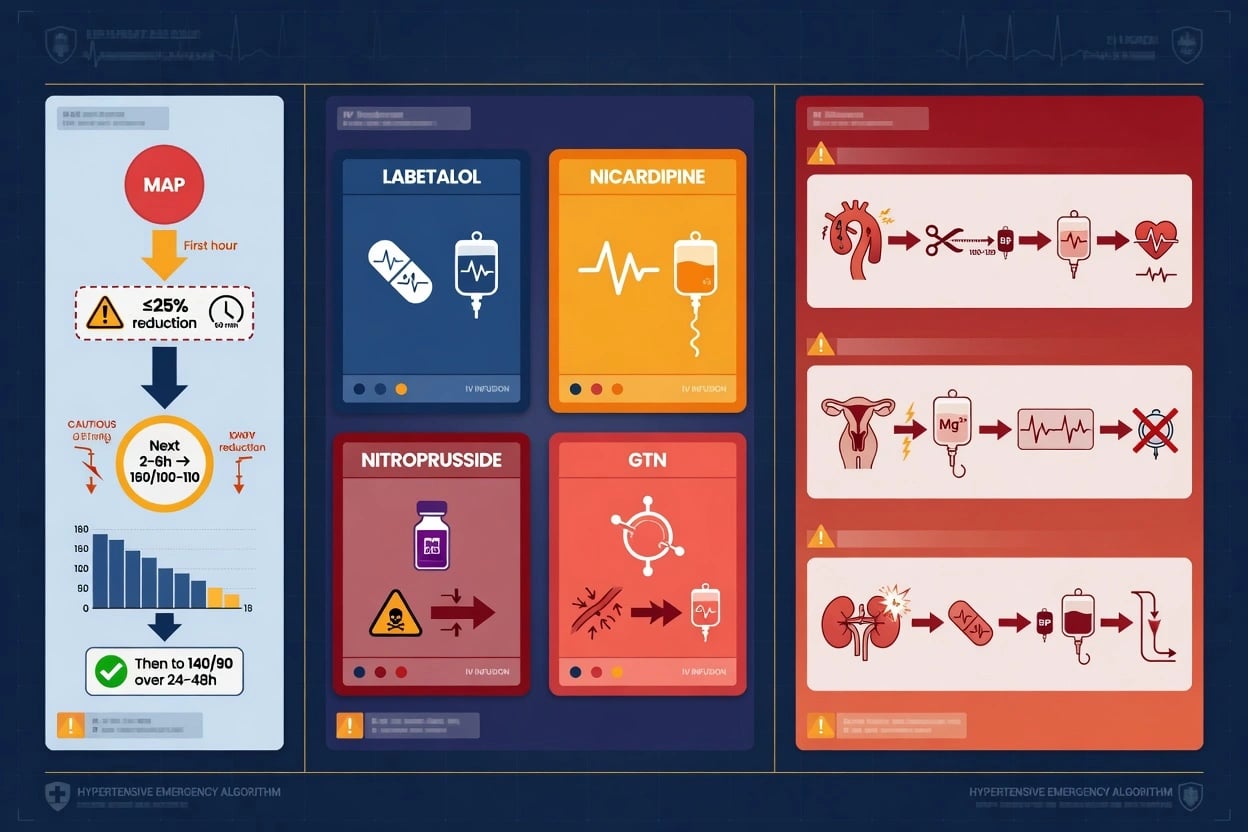
Resistant hypertension is BP above target despite three agents at full dose, including a diuretic. The 2018 ESC/ESH and 2017 ACC/AHA guidelines emphasise dual combination therapy from the outset (any two of ACEi/ARB + CCB + thiazide-like diuretic — the "ACD" triad), escalating to triple therapy, then adding spironolactone as the fourth agent (the PATHWAY-2 finding that spironolactone beats bisoprolol and doxazosin in resistant hypertension).[7][8] Always exclude secondary causes (renal artery stenosis, primary aldosteronism, pheochromocytoma, OSA, CKD) and confirm adherence + rule out pseudo-resistance (white-coat, cuff too small) before labelling.[7]
The SPRINT trial (2015) underpins the modern intensive-control strategy: targeting SBP <120 mmHg (vs <140) in high-risk non-diabetic patients reduced CV events and all-cause mortality — but at the cost of more hypotension, AKI and electrolyte disorders, which has shaped how aggressively we lower BP (and how closely we monitor).[13]
Special populations
Renal impairment / AKI
Prefer clevidipine or nicardipine (no renal metabolism, no toxic metabolites) or fenoldopam (a D1 agonist that maintains renal blood flow and may preserve renal function). AVOID ACEi/ARB in AKI, bilateral renal artery stenosis, or after recent kidney transplant. AVOID SNP in severe renal failure (thiocyanate accumulation). Dose-adjust renally-cleared agents.[1][9]
Elderly and frail
Lower targets gently; the elderly have stiffened vessels, altered autoregulation and polypharmacy. SPRINT showed benefit of intensive control but EXCLUDED the institutionalised/frail — apply intensive targets selectively. Watch for orthostatic hypotension and falls (especially with alpha-blockers and high-dose diuretics).[13]
Pregnancy — see the dedicated table above
Labetalol, methyldopa, nifedipine, hydralazine; magnesium sulfate for eclampsia. NEVER ACEi/ARB/direct renin inhibitor.[14]
Fellowship SAQs — hypertensive emergency agents
SAQ — Acute Stanford type B aortic dissection: agent selection and the beta-blocker-first principle
10 minutes · 10 marks
A 64-year-old man is brought to the emergency department with sudden, tearing interscapular pain radiating to the abdomen and both legs. He is diaphoretic and agitated. Right arm BP 220/125, left arm BP 195/110, HR 118 in sinus rhythm, RR 28, SpO2 96 percent on room air. CT angiography of the chest and abdomen confirms an acute Stanford type B aortic dissection with the primary entry tear just distal to the left subclavian artery, extending to the renal arteries without evidence of rupture or malperfusion. The vascular surgery team has been consulted and asks you to achieve immediate blood-pressure control while they assess him.
SAQ — Acute intracerebral haemorrhage: clevidipine versus nicardipine for rapid BP control
10 minutes · 10 marks
A 72-year-old woman is admitted with an acute spontaneous intracerebral haemorrhage. GCS 10 (E3V2M5), BP 200/115, HR 86 in sinus, SpO2 95 percent. Non-contrast CT brain shows a 25 mL right basal-ganglia haematoma with no intraventricular extension and no midline shift. Coagulation and platelet count are normal. The neurosurgical and stroke teams agree there is no operative target but ask you to lower the systolic blood pressure to 140 mmHg within one hour, in line with the INTERACT2 evidence. The hospital stocks both clevidipine and nicardipine; the ICU registrar asks you which to use and why.
Clinical pearls
[1]Red flags
Key trials and guideline evidence
INTERACT2 — Anderson 2013 (PMID 23713578)
Study design
Multicentre, open-label, randomised controlled trial (blinded outcome assessment)
Population
2839 patients with spontaneous ICH (onset <6 h) and elevated SBP (150-220 mmHg)
Intervention
Intensive BP lowering to SBP <140 mmHg within 1 h vs guideline (<180 mmHg)
Primary outcome
Ordinal shift in modified Rankin Scale at 90 days
Key finding
Intensive lowering produced a favourable ordinal shift in functional outcome (OR 0.87) and was safe; no difference in mortality or serious adverse events
Clinical bottom line
In acute ICH, lower SBP to <140 mmHg within 1 h using nicardipine/labetalol/clevidipine — improved functional outcome without excess harm
ATACH-2 — Qureshi 2016 (PMID 27276234)
Study design
Multicentre, open-label, randomised controlled trial
Population
1000 patients with spontaneous ICH (onset <4.5 h) and SBP ≥180 mmHg
Intervention
Intensive lowering (SBP 110-139) vs standard (140-179) within 4.5 h
Primary outcome
Death or disability at 90 days
Key finding
Stopped early for futility — NO difference in death/disability between groups, but MORE renal adverse events (AKI) in the intensive-lowering group. Lower is NOT better below ~140
Clinical bottom line
The sweet spot for ICH SBP is ~140 mmHg; pushing to 110 adds harm (AKI) without benefit. Avoids excessive BP lowering
British Aneurysm Nimodipine Trial — Pickard 1989 (PMID 2496789)
Study design
Multicentre, randomised, double-blind, placebo-controlled trial
Population
554 patients with aneurysmal SAH
Intervention
Oral nimodipine 60 mg q4h for 21 days vs placebo
Primary outcome
Cerebral infarction and outcome at 3 months
Key finding
Nimodipine reduced cerebral infarction (22% → 17%), poor outcome and mortality — the foundation of standard SAH care
Clinical bottom line
Oral nimodipine 60 mg q4h for 21 days is standard after aneurysmal SAH to reduce vasospasm-related cerebral infarction and improve outcome
VELOCITY — Peacock 2010 (PMID 20412469)
Study design
Prospective, open-label, single-arm trial ( subgroup analysis in acute heart failure)
Population
Patients with severe hypertension and acute heart failure
Intervention
IV clevidipine titrated to BP target
Key finding
Clevidipine achieved rapid, controlled BP lowering in severe hypertension with acute heart failure, without excess mortality in this subgroup
Clinical bottom line
Clevidipine is an effective, rapidly titratable IV DHP-CCB for severe hypertension in the setting of acute heart failure — remember the lipid-emulsion contraindications
Magpie Trial — Altman/ Duley 2002 (PMID 12057549)
Study design
International, multicentre, randomised, placebo-controlled trial
Population
10,141 women with pre-eclampsia
Intervention
IV/IM magnesium sulfate vs placebo
Primary outcome
Eclampsia (seizure)
Key finding
Magnesium sulfate halved the risk of eclampsia (1.9% vs 0.8%); no serious maternal adverse effects; established MgSO4 as standard for eclampsia prevention and treatment
Clinical bottom line
Magnesium sulfate is the anticonvulsant of choice in pre-eclampsia/eclampsia (loading 4 g IV, then 1-2 g/h); it is NOT an antihypertensive — BP is controlled separately with labetalol/hydralazine/nifedipine
SPRINT — Wright 2015 (PMID 26551272)
Study design
Multicentre, randomised, controlled, open-label trial (blinded outcome)
Population
9361 patients ≥50 y with hypertension and high CV risk (EXCLUDING diabetes and prior stroke)
Intervention
Intensive SBP target <120 mmHg vs standard <140 mmHg
Primary outcome
Composite of MI, other acute coronary syndrome, stroke, HF, CV death
Key finding
Stopped early — intensive control reduced the primary composite (HR 0.75) and all-cause mortality (HR 0.73); more hypotension, AKI, syncope and electrolyte disorders
Clinical bottom line
Intensive SBP targets (<120) benefit high-risk non-diabetic patients but require close monitoring for hypotension and AKI; underpins modern intensive-control guidelines
CLUE subgroup — Cannon 2013 (PMID 23535700)
Study design
Prospective, observational subgroup analysis of the CLUE study
Population
ED patients with severe hypertension and signs/symptoms of end-organ damage
Intervention
IV nicardipine vs IV labetalol
Key finding
Nicardipine achieved target BP within 30 min more often than labetalol in this high-risk subgroup
Clinical bottom line
IV nicardipine is at least as effective as labetalol for acute BP control in ED hypertensive emergencies, and is preferred when beta-blockers are contraindicated
Liu-DeRyke 2013 — labetalol vs nicardipine in acute stroke (PMID 23760911)
Study design
Prospective, randomised (open-label) trial in a neurocritical care unit
Population
Patients with acute stroke requiring IV BP control
Intervention
IV nicardipine vs IV labetalol
Key finding
Nicardipine achieved and maintained BP within the target range more often and with less dose escalation than labetalol
Clinical bottom line
For neurovascular BP control, nicardipine provides smoother, more sustained control than labetalol — a practical reason it is first-line for ICH/SAH
Hagan 2000 — IRAD (PMID 10685714)
Study design
International, multicentre, observational registry
Population
464 patients with acute aortic dissection across 12 IRAD centres
Key findings
Defined the modern clinical profile: pain is the dominant symptom; pulse/BP differentials and widened mediastinum are key clues; type A is surgical; in-hospital mortality high (type A 30%, type B 10%). Informed the BP/HR control strategy (β-blocker first)
Clinical bottom line
IRAD underpins contemporary dissection management — aggressive BP/HR control (β-blocker + vasodilator) and type A surgical repair
ESC/ESH 2018 Hypertension Guidelines — Williams (PMID 30990869)
Document type
European Society of Cardiology / European Society of Hypertension clinical practice guideline (summary)
Key recommendations
Dual combination therapy (ACEi/ARB + CCB ± diuretic) from the outset; target <130/80 in most (<65 y), <140 systolic in elderly; spironolactone as fourth agent in resistant hypertension; intensive targets supported by SPRINT
Clinical bottom line
The contemporary European standard for chronic hypertension management — combination therapy, intensive targets, attention to resistant hypertension and secondary causes
ACC/AHA 2017 Hypertension Guideline — Whelton (PMID 29133356)
Document type
American College of Cardiology / American Heart Association clinical practice guideline
Key recommendations
Redefined hypertension as ≥130/80 (stage 1 ≥130/80; stage 2 ≥140/90); non-pharmacological first; drug therapy for stage 1 with CV risk/CDM ≥10%, or stage 2; target <130/80 in most
Clinical bottom line
Lowered the diagnostic threshold in the US, expanding the treated population; the basis for the intensive-control era alongside SPRINT
van den Born 2011 — Dutch hypertensive crisis guideline (PMID 21646675)
Document type
National (Netherlands) clinical practice guideline
Key recommendations
Distinguishes emergency from urgency; drug selection by indication; specific agents and targets for dissection, ICH, SAH, pre-eclampsia, pheo; warns against sublingual nifedipine and rapid lowering in urgency
Clinical bottom line
A widely cited practical framework for hypertensive crisis management — indication-specific drug selection and controlled rates of BP fall
Abalos/ Duley 2018 — Cochrane on antihypertensives in pregnancy (PMID 30277556)
Document type
Cochrane systematic review and meta-analysis
Population
Randomised trials of antihypertensive drug therapy for mild-moderate hypertension in pregnancy
Key findings
Antihypertensive therapy halves progression to severe hypertension; no clear difference in perinatal outcome between agent classes; labetalol, methyldopa, nifedipine and hydralazine remain the safe options
Clinical bottom line
Labetalol, methyldopa, nifedipine and hydralazine are the safe antihypertensives in pregnancy; ACEi/ARB/direct renin inhibitors are contraindicated
Management summary (rapid recap)
| Indication | First-line | Target | Pitfall to avoid |
|---|---|---|---|
| Aortic dissection | β-blocker (esmolol/labetalol) → SNP/GTN | HR <60-70, SBP 100-120 in 20-30 min | Vasodilator alone → reflex tachycardia |
| ICH | Nicardipine/clevidipine/labetalol | SBP ~140 in 1 h | SNP/hydralazine (↑ICP); pushing <110 (ATACH-2 AKI) |
| Ischaemic stroke | Labetalol/nicardipine if SBP >220 | Lower ~15% only | Treating permissive HTN |
| SAH | Nicardipine/labetalol + nimodipine PO | SBP <160 pre-clip; permissive after | Forgetting 21-day nimodipine |
| ACS | GTN + β-blocker + analgesia | Lower 10-20%, titrate | Reflex tachycardia |
| Acute pulmonary oedema | GTN + furosemide ± clevidipine + NIPPV | Symptom relief, ↓afterload | β-blockers in acute decompensation |
| Hypertensive encephalopathy | Nicardipine/labetalol/clevidipine | MAP ↓20-25% in 1 h; 160/100 over 2-6 h | Too-rapid fall → watershed infarct |
| Pre-eclampsia | Labetalol/hydralazine/nifedipine | SBP <160 / DBP <110 | ACEi/ARB; sublingual nifedipine |
| Eclampsia | Magnesium sulfate (seizure) + BP control | As above + Mg monitoring | Forgetting MgSO4; ignoring Mg toxicity |
| Pheochromocytoma | Phentolamine (alpha first) → β-blocker | Normotension | β-blocker alone → unopposed α |
| Cocaine/sympathomimetic | Benzodiazepines → phentolamine/nicardipine | BP control | Pure β-blocker |
| Perioperative | Clevidipine/esmolol/nicardipine | Titrate to stimulus | Long-acting oral boluses |
References
- [1]Hagan PG, Nienaber CA, Isselbacher EM, et al. The International Registry of Acute Aortic Dissection (IRAD): new insights into an old disease JAMA, 2000.PMID 10685714
- [2]Anderson CS, Heeley E, Huang Y, et al. Rapid blood-pressure lowering in patients with acute intracerebral hemorrhage N Engl J Med, 2013.PMID 23713578
- [3]Qureshi AI, Palesch YY, Barsan WG, et al. Intensive Blood-Pressure Lowering in Patients with Acute Cerebral Hemorrhage N Engl J Med, 2016.PMID 27276234
- [4]Pickard JD, Murray GD, Illingworth R, et al. Effect of oral nimodipine on cerebral infarction and outcome after subarachnoid haemorrhage: British aneurysm nimodipine trial BMJ, 1989.PMID 2496789
- [5]Peacock WF 4th, Varon J, Ebrahimi R, et al. Clevidipine for severe hypertension in acute heart failure: a VELOCITY trial analysis Congest Heart Fail, 2010.PMID 20412469
- [6]Altman D, Carroli G, Duley L, et al. (Magpie Trial Collaboration Group) Do women with pre-eclampsia, and their babies, benefit from magnesium sulphate? The Magpie Trial: a randomised placebo-controlled trial Lancet, 2002.PMID 12057549
- [7]Williams B, Mancia G. Ten Commandments of the 2018 ESC/ESH HTN Guidelines on Hypertension in Adults Eur Heart J, 2018.PMID 30990869
- [8]Whelton PK, Carey RM, Aronow WS, et al. 2017 ACC/AHA/AAPA/ABC/ACPM/AGS/APhA/ASH/ASPC/NMA/PCNA Guideline for the Prevention, Detection, Evaluation, and Management of High Blood Pressure in Adults: A Report of the American College of Cardiology/American Heart Association Task Force on Clinical Practice Guidelines Hypertension, 2018.PMID 29133356
- [9]van den Born BJ, Beutler JJ, Gaillard CA, et al. Dutch guideline for the management of hypertensive crisis -- 2010 revision Neth J Med, 2011.PMID 21646675
- [10]Cannon CM, Levy P, Baumann BM, et al. Intravenous nicardipine and labetalol use in hypertensive patients with signs or symptoms suggestive of end-organ damage in the emergency department: a subgroup analysis of the CLUE trial BMJ Open, 2013.PMID 23535700
- [11]Liu-DeRyke X, Levy PD, Parker D Jr, et al. A prospective evaluation of labetalol versus nicardipine for blood pressure management in patients with acute stroke Neurocrit Care, 2013.PMID 23760911
- [12]Talbert RL. The challenge of blood pressure management in neurologic emergencies Pharmacotherapy, 2006.PMID 16863478
- [13]SPRINT Research Group; Wright JT Jr, Williamson JD, et al. A Randomized Trial of Intensive versus Standard Blood-Pressure Control N Engl J Med, 2015.PMID 26551272
- [14]Abalos E, Duley L, Steyn DW, Gialdini C. Antihypertensive drug therapy for mild to moderate hypertension during pregnancy Cochrane Database Syst Rev, 2018.PMID 30277556
- [15]Eisenhofer G, Lenders JW, Linehan WM, et al. Plasma normetanephrine and metanephrine for detecting pheochromocytoma in von Hippel-Lindau disease and multiple endocrine neoplasia type 2 N Engl J Med, 1999.PMID 10369850