ICU · Pharmacology
Acute respiratory distress syndrome: pharmacological therapies — comprehensive (neuromuscular blockade, inhaled vasodilators, corticosteroids, statins, beta-2 agonists, ECMO pharmacology, fluid management)
Also known as ARDS pharmacotherapy · Steroids in ARDS · Neuromuscular blockade in ARDS · Cisatracurium in ARDS · ACURASYS trial · ROSE trial · DEXA-ARDS trial · BALTI-2 trial · HARP-2 trial · SAILS trial · FACTT trial · Inhaled pulmonary vasodilators · Inhaled nitric oxide ARDS · Inhaled epoprostenol ARDS · Statins in ARDS · Beta-2 agonists in ARDS · ECMO pharmacology · Conservative fluid management ARDS
No specific pharmacological therapy has been proven to reduce mortality in ALL ARDS patients. Evidence-based approach: (1) SUPPORTIVE: lung-protective ventilation (the only proven mortality-reducing intervention). (2) SELECTIVE PHARMACOTHERAPY: corticosteroids (DEXA-ARDS trial — dexamethasone improved ventilator-free days in moderate-severe ARDS; LaSRS — methylprednisolone for unresolving ARDS), neuromuscular blockade (cisatracurium — ACURASYS showed mortality benefit in severe PaO2/FiO2 <150, ROSE did not confirm — use ONLY in severe ARDS with ventilator dyssynchrony), inhaled pulmonary vasodilators (nitric oxide — selective pulmonary vasodilator, oxygenation only, no mortality benefit, requires rapid weaning; epoprostenol — prostacyclin, cheaper alternative), conservative fluid strategy (FACTT — favours conservative over liberal). (3) FAILED THERAPIES: beta-2 agonists (BALTI-2 — IV salbutamol INCREASED mortality, AVOID), statins (HARP-2 simvastatin, SAILS rosuvastatin — no benefit), vitamin C (LOVIT — increased mortality), N-acetylcysteine, ketoconazole, lisofylline, surfactant — all NEGATIVE trials. (4) ECMO pharmacology: altered PK/PD, increased volume of distribution, drug sequestration in circuit, anticoagulation requirements. Berlin definition classifies mild/moderate/severe by PaO2/FiO2; ARDS has two inflammatory subphenotypes (hyper- and hypoinflammatory) that may respond differently to therapy.
On this page & tools
Your progress
Saved locally on this device.
Target exams
Red flags
Evidence summary
Therapies WITH some evidence
Selective use
- CORTICOSTEROIDS: DEXA-DAD trial — dexamethasone improved ventilator-free days in moderate-severe ARDS. ARDSNet LaSRS — methylprednisolone improved in unresolving ARDS. Selective use: for moderate-severe ARDS with persistent inflammation.
- NEUROMUSCULAR BLOCKADE: ACURASYS — cisatracurium 48h improved outcomes in PaO2/FiO2 <150. ROSE trial — no benefit in larger population. Current: selective use for severe hypoxaemia/dyssynchrony.
- INHALED NO: improves oxygenation temporarily. No mortality benefit. Use as bridge to recovery/ECMO.
- INHALED EPOPROSTENOL: similar to iNO — oxygenation improvement, no mortality benefit. Cheaper than iNO.
Failed therapies
Do NOT use
- BETA-2 AGONISTS (salbutamol): BALTI-2 trial — INCREASED mortality. Mechanism: beta-2 stimulates alveolar fluid clearance but also causes tachycardia, arrhythmia, lactic acidosis. CONTRAINDICATED.
- STATINS (simvastatin, rosuvastatin): HARP-2, SIMVSTATATIN trials — no benefit. Anti-inflammatory theory did not translate to clinical improvement. Do NOT use.
- VITAMIN C: LOVIT trial (2022) — INCREASED mortality. High-dose IV vitamin C monotherapy harmful in ARDS. Do NOT use.
- NAC, KETOCONAZOLE, LISOFYLLINE, SURFACTANT: all NEGATIVE trials. No benefit.
- MESNCHYMAL STEM CELLS: ongoing trials. Not standard of care.
Clinical pearls
Red flags
Overview & definitions
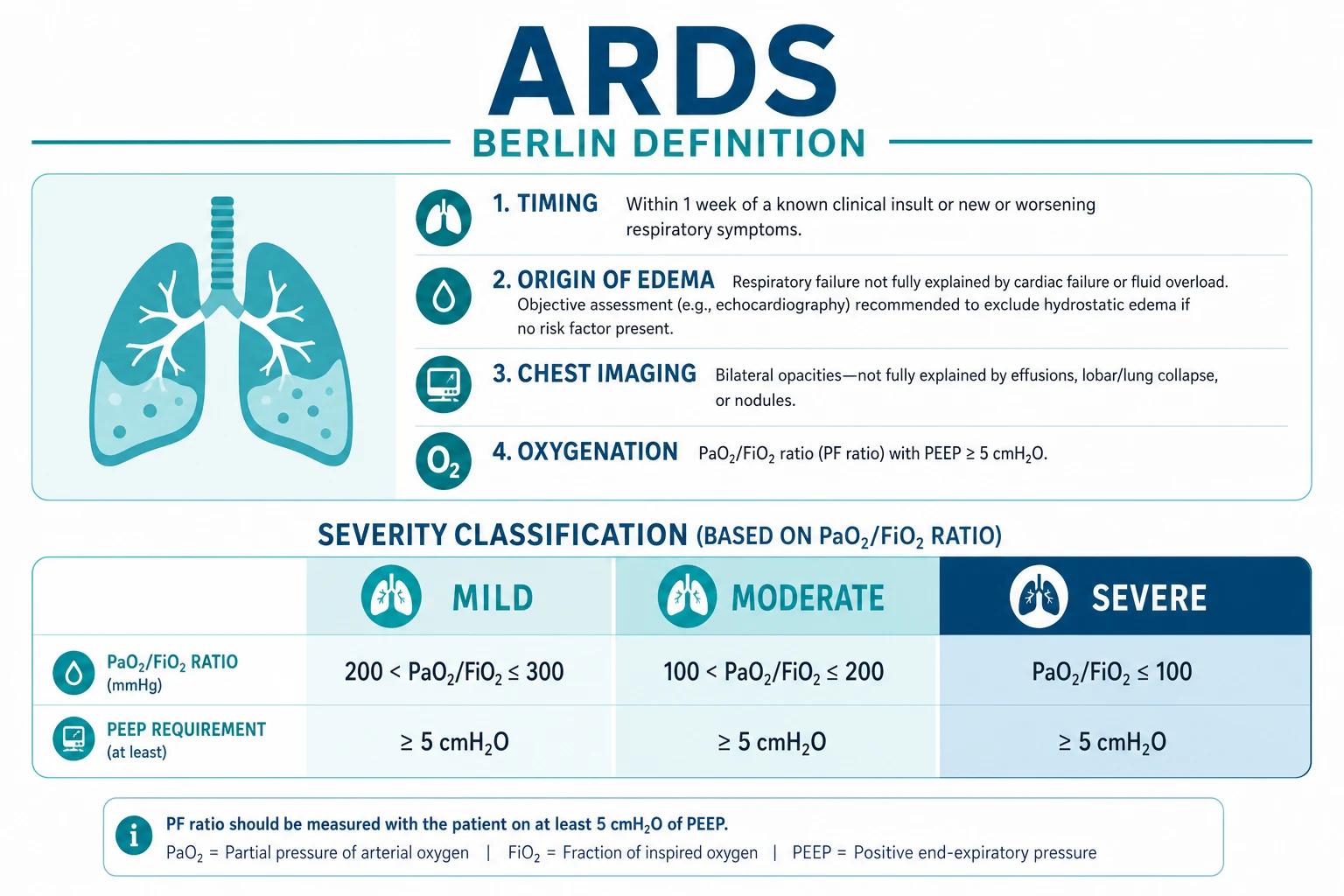
Acute respiratory distress syndrome (ARDS) is non-cardiogenic pulmonary oedema from inflammatory alveolar-capillary injury — radiographic bilateral opacities, refractory hypoxaemia, and reduced respiratory-system compliance. The Berlin definition (2012) stratifies severity by PaO2/FiO2 ratio on a ventilator with PEEP/CPAP ≥5 cmH2O: mild (200 < PaO2/FiO2 ≤300), moderate (100 < PaO2/FiO2 ≤200), severe (PaO2/FiO2 ≤100). Severity matters for pharmacotherapy: most selective drugs (cisatracurium, prone positioning, ECMO) are reserved for moderate-severe disease.[18]
The pharmacology of ARDS is the story of a long series of negative trials — surfactant, ketoconazole, N-acetylcysteine, lisofylline, beta-2 agonists, statins, vitamin C, aspirin — alongside a handful of agents with a marginal or phenotype-specific signal (corticosteroids, neuromuscular blockade, inhaled vasodilators). The unifying lesson for the fellowship exam is sobering: no drug reliably reduces ARDS mortality across all patients. The interventions that do change outcome — lung-protective ventilation (6 mL/kg predicted body weight, plateau pressure <30 cmH2O), prone positioning (PROSEVA), and conservative fluid therapy (FACTT) — are ventilator- and fluid-based, not pharmacological. Pharmacotherapy is therefore adjunctive and selective.[1][2]
A critical advance is the recognition of two reproducible ARDS subphenotypes — hyperinflammatory (high IL-6, high surfactant protein D, low platelets, low bicarbonate, high vasopressor need) and hypoinflammatory — identified by latent class analysis (Calfee 2014). Retrospective analyses suggest the hyperinflammatory subphenotype responds better to corticosteroids, statins, and higher PEEP, whereas the hypoinflammatory subphenotype may be harmed. This is the frontier of personalised ARDS pharmacotherapy and a high-yield exam concept.[19]
Neuromuscular blocking agents (cisatracurium)
Rationale and mechanism
In early severe ARDS, ventilator dyssynchrony, patient-ventilator asynchrony, and active expiration generate trans-pulmonary pressure swings that stress injure the lung, while vigorous respiratory effort increases lung stress and strain (driving pressure, transpulmonary pressure), driving volutrauma and biotrauma. A neuromuscular blocking agent (NMBA) abolishes respiratory effort, eliminates double-triggering and breath-stacking, reduces oxygen consumption ( respiratory muscle work falls by ~5-10% of VO2), improves chest-wall compliance, and allows full synchrony with lung-protective ventilation. The agent of choice is cisatracurium because of its organ-independent Hofmann elimination (plasma cholinesterase-independent, no accumulation in renal/hepatic failure) and minimal histamine release (unlike atracurium). [1]
The two landmark trials — ACURASYS vs ROSE
This is the single most examinable controversy in ARDS pharmacology. Two large RCTs reached opposite conclusions, and understanding why is the key. [1]
ACURASYS (Papazian, NEJM 2010): 340 patients with severe early ARDS (PaO2/FiO2 <150), within 48 h of onset, randomised to cisatracurium 15 mg bolus + 37.5 mg/h infusion for 48 h (deep paralysis, monitored with train-of-four 2/4) vs placebo, with heavy sedation in both arms. Result: cisatracurium reduced 90-day mortality (23.7% vs 33.3%, adjusted hazard ratio 0.68, p=0.05; 28-day mortality 40.7% vs 31.6%) and increased ventilator-free days (12.8 vs 10.4), with no difference in ICU-acquired weakness. The benefit was greatest in the most hypoxaemic patients (baseline PaO2/FiO2 <120).[3]
ROSE (PETAL Network, NEJM 2019): 1006 patients with moderate-severe ARDS (PaO2/FiO2 <150 with PEEP/CPAP ≥8), randomised to cisatracurium for 48 h (light sedation strategy, no mandatory deep paralysis, no routine train-of-four) vs usual care with lighter sedation. Result: NO difference in 90-day mortality (42.5% vs 42.8%), no difference in ventilator-free days, and a trend toward MORE cardiovascular events in the NMBA arm (e.g., cardiac arrest 10.5% vs 7.6%).[4]
Reconciling the discordance
Why did ACURASYS show benefit and ROSE not? Several explanations dominate exam discussion: [1]
- Sedation depth: ACURASYS used deep sedation in both arms (the placebo arm was heavily sedated too); ROSE used a lighter-sedation strategy in the control arm, which itself may be beneficial and narrows any advantage of paralysis.
- Population and severity: ACURASYS enrolled strictly PaO2/FiO2 <150 within 48 h; ROSE allowed a broader window and the cohort was arguably less severe.
- Paralysis intensity: ACURASYS targeted deep paralysis (TOF 2/4); ROSE did not mandate a depth target, so paralysis may have been lighter/inconsistent.
- Standard-of-care drift: Between 2010 and 2019, routine care improved (more proning, better PEEP titration), shrinking any residual benefit of paralysis. [1]
Current recommendation
Most guidelines (including a cautious reading of the combined evidence) now reserve early 48-h cisatracurium for severe ARDS (PaO2/FiO2 <150) within 48 h of onset with significant ventilator dyssynchrony, and explicitly do NOT recommend routine NMB in all moderate-severe ARDS. The examinable line: ACURASYS positive, ROSE negative → selective use only, not routine.[3][4]
Cisatracurium (preferred NMBA)
Hofmann elimination
- Benzylisoquinolinium NMBA — non-depolarising
- Elimination: Hofmann elimination (spontaneous plasma degradation at physiological pH/temp) + non-specific esterases — INDEPENDENT of renal/hepatic function (safe in organ failure)
- Metabolite laudanosine (excitant in animal models — negligible clinical relevance at ICU doses)
- Minimal histamine release (advantage over atracurium) → haemodynamically stable
- Dose in ARDS: 15 mg IV bolus then 37.5 mg/h infusion (ACURASYS protocol); titrate to TOF 2/4 if monitoring used
- Onset 2-3 min, duration ~30-45 min after infusion stops (reversible with neostigmine/sugammadex — note sugammadex does NOT reverse benzylisoquinoliniums)
Atracurium
Histamine release
- Same class (benzylisoquinolinium), Hofmann elimination
- MORE histamine release than cisatracurium → hypotension, tachycardia, bronchospasm at bolus
- Higher laudanosine production → theoretically higher seizure risk at high doses/renal failure
- Largely superseded by cisatracurium in ARDS
Rocuronium
Aminosteroid
- Aminosteroid NMBA — non-depolarising
- Cleared hepatically/renally → accumulates in organ failure and with prolonged infusion
- Advantage: rapidly reversible with sugammadex (no reversal for cisatracurium/atracurium)
- Used for RSI and when rapid reversal is desired; less often for 48-h ARDS infusion
- ICU-acquired weakness risk with prolonged aminosteroid infusions (a concern for any prolonged NMBA)
Inhaled pulmonary vasodilators
Rationale
In ARDS, hypoxic pulmonary vasoconstriction, microvascular thrombosis, and uneven ventilation create a mismatch between ventilation and perfusion (V/Q) and raised pulmonary vascular resistance (PVR). An inhaled vasodilator selectively dilates the vasculature of well-ventilated alveoli ("selective pulmonary vasodilatation"), redirecting blood flow from shunted (non-ventilated) units toward ventilated units → improved V/Q matching → improved oxygenation (higher PaO2/FiO2, lower FiO2 requirement). Because the drug is inactivated on contact with haemoglobin or is delivered only to ventilated lung, it has minimal systemic effect (no systemic vasodilation/hypotension, unlike IV vasodilators such as nitroglycerin or prostacyclin which worsen V/Q shunt). The trade-off: improved oxygenation has never translated into a survival benefit. [1]
Inhaled nitric oxide (iNO)
Nitric oxide is a lipophilic gas delivered via the inspiratory limb of the ventilator. It diffuses to vascular smooth muscle → activates soluble guanylate cyclase → ↑ cGMP → smooth-muscle relaxation (vasodilation). On reaching the bloodstream it is rapidly bound and inactivated by haemoglobin (forming methaemoglobin and nitrates) — this is what confines its effect to the pulmonary circulation. [1]
- Effect: rapid improvement in oxygenation (PaO2/FiO2 typically rises within minutes) and a modest fall in pulmonary artery pressure/PVR. Useful in ARDS with secondary pulmonary hypertension / right ventricular failure.
- Dose: 5-40 ppm (start at 5 ppm and titrate; effect plateaus ~20 ppm — higher doses add toxicity without benefit).
- NO mortality benefit: multiple RCTs and a meta-analysis (Afshari 2011) confirm iNO produces a transient (24-72 h) oxygenation improvement but does not reduce mortality (pooled ~60-day mortality unchanged) and may trend toward increased mortality and renal failure.[13]
- Toxicities and weaning: (a) Nitrogen dioxide (NO2) formation — a direct pulmonary irritant; monitor NO2 (keep <1-2 ppm). (b) Methaemoglobinaemia — monitor metHb (keep <5%); treat with methylene blue (caution: methylene blue itself can cause pulmonary hypertension and interacts with serotonergics/SNRIs). (c) Rebound pulmonary hypertension and hypoxaemia on abrupt withdrawal — iNO must be weaned SLOWLY (reduce by 1 ppm steps, observing oxygenation/PVR) because of downregulation of endogenous NO synthase and upregulation of soluble guanylate cyclase.
- Indication: a bridging therapy — temporary oxygenation rescue in severe refractory hypoxaemia or acute RV failure while awaiting recovery, proning, or ECMO cannulation. Not for routine use.[2][13]
Inhaled epoprostenol (prostacyclin, PGI2)
Epoprostenol is prostacyclin — delivered as an aerosolised nebulised infusion into the inspiratory limb. It activates prostacyclin (IP) receptors → ↑ cAMP → vasodilation in ventilated alveoli — the same V/Q-improving mechanism as iNO. It is the cheaper, more accessible alternative to iNO (which requires a dedicated delivery/monitoring system and cylinder gas). [1]
- Effect: oxygenation improvement equivalent to iNO; no need for NO2 monitoring and no methaemoglobinaemia.
- Dose: nebulised 0.01-0.05 mcg/kg/min (titrate).
- Drawbacks: (a) systemic absorption can cause mild systemic vasodilation/hypotension (less than IV but more than iNO); (b) abrupt discontinuation can cause rebound (not as severe as iNO but wean if used >24 h); (c) requires a continuous nebuliser set-up with drug preparation (short shelf-life once reconstituted).
- No mortality benefit (same as iNO) — oxygenation/bridge therapy only.[2]
Inhaled nitric oxide (iNO)
NO → cGMP
- Mechanism: soluble guanylate cyclase → ↑ cGMP → vasodilation of well-ventilated alveoli
- Effect: rapid oxygenation improvement, modest fall in PVR (useful in RV failure)
- Dose: 5-40 ppm via inspiratory limb (start 5 ppm)
- Inactivated by haemoglobin → confined to pulmonary circulation (minimal systemic effect)
- No mortality benefit; possible ↑ renal failure and trend to ↑ mortality (Afshari meta-analysis)
- Toxicities: NO2 (pulmonary irritant, keep <2 ppm), methaemoglobinaemia (monitor metHb <5%), rebound on withdrawal — WEAN SLOWLY (1 ppm steps)
- Indication: bridge to recovery/proning/ECMO; acute RV failure
Inhaled epoprostenol (PGI2)
IP → cAMP
- Mechanism: prostacyclin (IP) receptor → ↑ cAMP → vasodilation of well-ventilated alveoli
- Effect: oxygenation improvement equivalent to iNO
- Dose: nebulised 0.01-0.05 mcg/kg/min
- CHEAPER and more accessible than iNO (no cylinder/delivery system, no NO2 monitoring, no metHb risk)
- Mild systemic vasodilation possible (more than iNO); rebound possible on withdrawal
- No mortality benefit — bridge therapy only
Glucocorticoids in ARDS
Rationale
ARDS is driven by uncontrolled pulmonary and systemic inflammation (cytokines — IL-1, IL-6, TNF-α; neutrophil influx; capillary leak). Corticosteroids are broad anti-inflammatories: they inhibit phospholipase A2 (↓ prostaglandins/leukotrienes), suppress NF-κB-mediated cytokine transcription, reduce capillary permeability, and modulate the late fibroproliferative phase. The hope has been that dampening this inflammation would shorten the course and improve survival. The evidence is inconsistent across trial designs, drug, dose, timing, and ARDS aetiology — which is exactly why steroids remain selective rather than routine. [1]
The trials — DEXA-ARDS, LaSRS, CoDEX, RECOVERY
DEXA-ARDS (Villar, Lancet Respir Med 2020): 277 adults with moderate-severe ARDS (PaO2/FiO2 <200) within 24 h of onset, randomised to dexamethasone (20 mg IV day 1-5, 10 mg day 6-10) vs placebo. Result: increased ventilator-free days (median 12.3 vs 7.5 days) and more days alive and off the ventilator at 28 days; non-significant trend to lower 28-day mortality (21% vs 36%, p=0.06) but no significant difference in 60-day mortality. This is the strongest modern non-COVID evidence favouring dexamethasone in early moderate-severe ARDS.[5]
LaSRS (Steinberg/ARDSNet, NEJM 2006): 180 patients with persistent ARDS (7-28 days) randomised to methylprednisolone (2 mg/kg/day taper) vs placebo. Result: more ventilator-free days and shock-free days, but no mortality benefit and a trend to higher mortality if started late (>13 days) and more infections/neuromyopathy. Conclusion: steroids may speed recovery in unresolving ARDS but do not improve survival and may harm if started too late.[14]
CoDEX (Tomazini, JAMA 2020): 299 patients with moderate-severe COVID-19 ARDS, dexamethasone (20 mg day 1-5, 10 mg day 6-10) plus standard care vs standard care. Result: more days alive and ventilator-free at 28 days; no significant all-cause mortality difference. The companion RECOVERY trial (Horby, NEJM 2021) showed dexamethasone 6 mg/day for up to 10 days reduced 28-day mortality in COVID-19 patients on ventilators (29.3% vs 40.4%) — the definitive COVID-ARDS steroid evidence.[15][17]
Practical approach
- Drug & dose: dexamethasone 20 mg/day (then 10 mg/day) per DEXA-ARDS, or hydrocortisone 200 mg/day (continuous or 50 mg q6h) in sepsis-associated ARDS. Dexamethasone is increasingly preferred (minimal mineralocorticoid effect, long half-life, the DEXA-ARDS and RECOVERY signal).
- Timing: early (within 24-48 h) for moderate-severe ARDS (DEXA-ARDS); or for persistent/unresolving ARDS (LaSRS) — but do not start >2 weeks in (LaSRS harm signal).
- Severity: moderate-severe only (PaO2/FiO2 <200). Do NOT use in mild ARDS.
- Adverse effects: hyperglycaemia (require insulin protocol), secondary infection/superinfection (more in ADRENAL-type cohorts), neuromyopathy/critical-illness weakness (worse with prolonged NMBAs), GI bleeding, psychosis/delirium. No rebound on standard taper (DEXA-ARDS used a 10-day fixed course without a long taper).
- Phenotype: the hyperinflammatory subphenotype (high IL-6) appears to derive the most benefit — a personalised approach.[19]
Corticosteroid trials in ARDS — drug, timing, outcome
| Trial | Year | Drug & dose | Population | Timing | Outcome |
|---|---|---|---|---|---|
| DEXA-ARDS | 2020 | Dexamethasone 20 mg→10 mg ×10 d | Moderate-severe (P/F <200) | Within 24 h | ↑ ventilator-free days; trend ↓ 28-d mortality |
| LaSRS | 2006 | Methylprednisolone 2 mg/kg/day, taper | Persistent ARDS | 7-28 d | ↑ VFD, no mortality benefit; harm if >13 d |
| CoDEX | 2020 | Dexamethasone 20 mg→10 mg ×10 d | COVID-19 moderate-severe ARDS | Early | ↑ days alive + ventilator-free |
| RECOVERY | 2021 | Dexamethasone 6 mg ×≤10 d | COVID-19 (ventilated subgroup) | Any | ↓ 28-d mortality (29% vs 41%) |
Beta-2 agonists in ARDS — AVOID (BALTI-2)
Rationale (the failed hypothesis)
Beta-2 agonists (salbutamol/albuterol) activate the β2 receptor on alveolar type II cells → ↑ cAMP → ↑ Na⁺/K⁺-ATPase → drive alveolar fluid clearance, theoretically reabsorbing the protein-rich pulmonary oedema of ARDS. The BALTI-1 (beta-agonist lung injury trial) proof-of-concept study suggested IV salbutamol accelerated alveolar fluid clearance. This led to the definitive BALTI-2 trial. [1]
BALTI-2 (Gao Smith, Lancet 2012) — INCREASED mortality
BALTI-2 randomised 326 ARDS patients to IV salbutamol (15 mcg/kg/h infusion — a high "alveolar fluid clearance" dose) vs placebo. The trial was stopped early by the data monitoring committee for HARM: increased 28-day mortality (34% vs 23%, p=0.033) in the salbutamol arm, with more tachyarrhythmias, lactic acidosis, and tachycardia. [1]
Why the harm — and the bottom line
The proposed mechanisms of harm: (1) beta-2-mediated tachycardia and arrhythmia (atrial and ventricular) at high IV doses; (2) lactic acidosis (beta-2 stimulation of glycolysis, the Na⁺/K⁺-ATPase pump) which can confound resuscitation and worsen acidaemia; (3) hypokalaemia; (4) high alveolar fluid clearance may not translate once the alveolar-capillary barrier is destroyed. The beta-2 agonist arm of ARDS pharmacology is closed — IV salbutamol is CONTRAINDICATED in ARDS. Inhaled beta-2 agonists for bronchospasm (e.g., co-existing asthma/COPD) are still acceptable, but IV salbutamol for the ARDS itself must not be used.[6]
Statins in ARDS — HARP-2 and SAILS (no benefit)
Rationale
Statins (HMG-CoA reductase inhibitors) have pleiotropic anti-inflammatory effects independent of lipid lowering: they reduce isoprenoid intermediates, downregulate Rho GTPases, ↓ endothelial adhesion molecules, ↓ NF-κB, and modulate leukocyte trafficking. Because ARDS is an inflammatory disease and statins are cheap and safe, they were an attractive repurposing candidate. Two definitive trials closed this door. [1]
HARP-2 (McAuley, NEJM 2014): 540 patients with ARDS (within 72 h) randomised to simvastatin 80 mg/day vs placebo for up to 28 days. Result: no significant difference in 28-day survival (ICU-free, ventilator-free days similar); a small improvement in a secondary oxygenation outcome. No benefit. [1]
SAILS (NHLBI ARDS Network, NEJM 2014): 745 patients with sepsis-associated ARDS randomised to rosuvastatin 40 mg then 20 mg/day vs placebo. Result: no difference in 60-day in-hospital mortality (28.5% vs 24%) and more hepatic/renal dysfunction in the rosuvastatin arm. No benefit, possible harm. [1]
Bottom line: statins have no role in the treatment of established ARDS (regardless of simvastatin vs rosuvastatin, ARDS aetiology, or inflammatory phenotype). The pleiotropic anti-inflammatory theory did not translate into clinical benefit. Do NOT use statins to treat ARDS.[7][8]
Vitamin C (and the "HAT"/metabolic cocktail) — LOVIT (increased mortality)
High-dose IV vitamin C (alone or with hydrocortisone and thiamine — the "HAT" cocktail) was proposed as an antioxidant/sepsis therapy. The LOVIT trial (Lamontagne, NEJM 2022) randomised 872 critically ill adults with sepsis to high-dose IV vitamin C (50 mg/kg q6h for 96 h) vs placebo. Result: increased 28- and 90-day mortality and more persistent organ dysfunction with vitamin C. Vitamin C monotherapy is harmful in sepsis/ARDS — do NOT use.[10]
ECMO pharmacology considerations
Venovenous ECMO is a rescue therapy for severe refractory ARDS (e.g., PaO2/FiO2 <80 despite optimised lung-protective ventilation and proning) — the CESAR trial (Peek, Lancet 2009) showed transfer to an ECMO-capable centre improved survival without severe disability at 6 months. ECMO profoundly alters drug pharmacokinetics and adds its own pharmacotherapy requirements:[11]
Altered pharmacokinetics on ECMO
- Increased volume of distribution (Vd): the ECMO circuit adds ~1-3 L of circulating volume (oxygenator, tubing, prime) → dilution of water-soluble drugs (β-lactams, aminoglycosides, glycopeptides) → lower peak concentrations → need for higher/more frequent dosing and therapeutic drug monitoring (TDM) where available.
- Drug sequestration in the circuit: the large polymer surface of tubing and the oxygenator adsorbs lipophilic and highly protein-bound drugs (e.g., propofol, midazolam, fentanyl, amiodarone, vasopressors to a lesser degree) → reduced bioavailability → need for higher infusion rates, especially early after circuit change.
- Altered clearance: critical illness, AKI on continuous renal replacement therapy (CRRT run in series/parallel), and circuit-related changes all alter clearance. Augmented renal clearance in younger patients further lowers antibiotic levels.
- Practical rule: dose lipophilic sedatives and vasoactive drugs higher and titrate to effect; measure antibiotic levels (vancomycin, beta-lactams, aminoglycosides) and dose to target. [1]
ECMO-specific pharmacotherapy
- Anticoagulation: the circuit is thrombogenic → systemic unfractionated heparin (UFH) is standard, titrated to a target aPTT (~1.5× normal) or anti-Xa (0.3-0.7 IU/mL). Direct thrombin inhibitors (bivalirudin, argatroban) for heparin-induced thrombocytopenia (HIT). Balance bleeding vs thrombosis (oxygenator clots, line clots) — both common.
- Sedation: propofol and midazolam are heavily sequestered → fentanyl/morphine + midazolam or volatile anaesthetic (isoflurane) via anaesthetic-conserving device are options; dexmedetomidine is increasingly used for lighter sedation once stable.
- Infection: ECMO patients are at high risk of nosocomial infection (line, circuit, lung) — vigilance and dose-adjusted antibiotics guided by TDM.
- Renal replacement therapy: often required (AKI, fluid overload); CRRT in parallel allows the conservative fluid strategy (below) and modifies drug dosing further. [1]
Fluid management — conservative vs liberal (FACTT)
Although not a "drug," fluid strategy is the most evidence-supported adjunctive intervention in ARDS after lung-protective ventilation and proning. ARDS is a state of capillary leak — positive fluid balance worsens pulmonary oedema, impairs gas exchange, and prolongs ventilation. [1]
FACTT (Wiedemann/ARDSNet, NEJM 2006): 1000 patients with acute lung injury/ARDS randomised to a conservative fluid protocol (target: lower intravascular volume — driven by CVP <4 or PAOP <8, using furosemide and fluid restriction) vs a liberal protocol (target: higher intravascular volume, CVP 10-14 or PAOP 14-18). Result: the conservative strategy gave more ventilator-free days (14.6 vs 12.1) and more ICU-free days, without increasing the need for dialysis or renal failure. There was no mortality difference, but the conservative arm was clearly better on every organ-support metric. [1]
Practical rule: once the patient is out of shock (off vasopressors, euvolaemic), shift to a conservative/zero or negative fluid-balance strategy using furosemide (the practical pharmacological tool) to drive a daily negative balance (~-0.5 to -1 L/day), monitoring for AKI/electrolytes (hypoK⁺, hypoMg²⁺, alkalosis). Do not pursue negative balance while still in shock or under-resuscitated. FACTT favours conservative — the default after resuscitation.[9]
Evidence — the key trials
ACURASYS (Papazian, NEJM 2010) — cisatracurium in early severe ARDS
Multicentre double-blind RCT, 340 adults with severe early ARDS
Population: Adults with PaO2/FiO2 <150 within 48 h of ARDS onset
Key finding
Cisatracurium REDUCED 90-day mortality (23.7% vs 33.3%, adjusted HR 0.68) and increased ventilator-free days (12.8 vs 10.4). No increase in ICU-acquired weakness. Benefit greatest in the most hypoxaemic (P/F <120).
Practice change
Deep cisatracurium paralysis for 48 h improved survival in severe early ARDS. This was the positive trial that established neuromuscular blockade as a selective therapy in severe ARDS.
ROSE (PETAL Network, NEJM 2019) — early NMBA in moderate-severe ARDS
Multicentre RCT, 1006 adults with moderate-severe ARDS
Population: Adults with PaO2/FiO2 <150 (PEEP/CPAP >=8) within 48 h
Key finding
NO difference in 90-day mortality (42.5% vs 42.8%) or ventilator-free days. Trend to MORE cardiovascular events (cardiac arrest 10.5% vs 7.6%) in the NMBA arm.
Practice change
In a larger population with a lighter-sedation control, routine 48-h cisatracurium conferred NO benefit and a possible cardiovascular harm signal. Contradicts ACURASYS → do NOT use routine NMB in all moderate-severe ARDS; reserve for severe ARDS with dyssynchrony.
DEXA-ARDS (Villar, Lancet Respir Med 2020) — dexamethasone in early moderate-severe ARDS
Multicentre RCT, 277 adults with moderate-severe ARDS
Population: Adults with PaO2/FiO2 <200 within 24 h of ARDS onset
Key finding
Dexamethasone INCREASED ventilator-free days (12.3 vs 7.5) and days alive + ventilator-free. Non-significant trend to lower 28-day mortality (21% vs 36%, p=0.06); no significant 60-day mortality difference.
Practice change
Early dexamethasone in moderate-severe ARDS improves ventilator-free days — the strongest modern non-COVID evidence for steroids in ARDS. Supports selective dexamethasone for moderate-severe early ARDS.
BALTI-2 (Gao Smith, Lancet 2012) — IV salbutamol in ARDS
Multicentre RCT, 326 adults with ARDS (stopped early for harm)
Population: Adults with ARDS within 72 h
Key finding
Trial STOPPED EARLY for HARM. Increased 28-day mortality (34% vs 23%, p=0.033) with more tachyarrhythmias and lactic acidosis in the salbutamol arm.
Practice change
IV beta-2 agonists INCREASE mortality in ARDS. CONTRAINDICATED. The alveolar fluid clearance theory is closed. Inhaled beta-2 agonists remain acceptable for co-existing bronchospasm only.
HARP-2 (McAuley, NEJM 2014) — simvastatin in ARDS
Multicentre RCT, 540 adults with ARDS
Population: Adults with ARDS within 72 h of onset
Key finding
No significant difference in survival or ventilator-free days. Small secondary improvement in oxygenation only.
Practice change
Simvastatin has no role in treating ARDS. The pleiotropic anti-inflammatory theory did not translate to clinical benefit.
SAILS (NHLBI ARDS Network, NEJM 2014) — rosuvastatin in sepsis-associated ARDS
Multicentre RCT, 745 adults with sepsis-associated ARDS
Population: Adults with sepsis-associated ARDS
Key finding
No difference in 60-day mortality (28.5% vs 24%). More hepatic and renal dysfunction with rosuvastatin.
Practice change
Rosuvastatin has no role in ARDS and may add hepatic/renal harm. Combined with HARP-2, statins are contraindicated-for-purpose in established ARDS.
FACTT (Wiedemann/ARDSNet, NEJM 2006) — conservative vs liberal fluid management in ARDS
Multicentre RCT, 1000 adults with acute lung injury/ARDS
Population: Adults with ALI/ARDS, 48 h after admission to ICU
Key finding
No mortality difference. Conservative arm had MORE ventilator-free days (14.6 vs 12.1) and ICU-free days, WITHOUT an increase in dialysis or renal failure.
Practice change
After resuscitation, a conservative fluid strategy (driven by furosemide + restriction) improves lung function and shortens ventilation without renal cost. The default post-shock strategy in ARDS.
LOVIT (Lamontagne, NEJM 2022) — high-dose IV vitamin C in sepsis
Multicentre RCT, 872 critically ill adults with sepsis
Population: Adults with sepsis in the ICU
Key finding
Vitamin C INCREASED the composite outcome of death or persistent organ dysfunction, with higher 28- and 90-day mortality.
Practice change
High-dose IV vitamin C is HARMFUL in sepsis/ARDS. Do NOT use vitamin C (alone or as part of the HAT cocktail) for ARDS.
CESAR (Peek, Lancet 2009) — transfer to ECMO centre for severe adult respiratory failure
Multicentre RCT, 180 adults with severe but potentially reversible respiratory failure
Population: Adults with severe reversible respiratory failure (Murray score >=3 or pH <7.20)
Key finding
Fewer deaths or severe disability at 6 months in the ECMO-centre group (37% vs 53%). Benefit driven by both survival and access to a specialised centre.
Practice change
Transfer to an ECMO-capable centre improves survival in severe reversible ARDS. ECMO pharmacology (anticoagulation, altered PK/PD, sedation sequestration) is part of the package.
LaSRS (Steinberg/ARDSNet, NEJM 2006) — methylprednisolone in persistent ARDS
Multicentre RCT, 180 adults with persistent ARDS (7-28 days)
Population: Adults with persistent ARDS of 7-28 days duration
Key finding
More ventilator-free and shock-free days, but NO mortality benefit. Trend to HIGHER mortality if started late (>13 days); more infections and neuromyopathy.
Practice change
Methylprednisolone may speed recovery in unresolving ARDS but does not improve survival and may harm if started too late. Steroids are selective, not routine.
LIPS-A (Kor, JAMA 2016) — aspirin for ARDS prevention
Multicentre RCT, 390 adults at risk of ARDS presenting to ED
Population: Adults with ARDS risk (LIPS >=7) at ED presentation
Key finding
No difference in ARDS incidence (aspirin 7.5% vs placebo 7.8%) or 28-day mortality.
Practice change
Aspirin does NOT prevent ARDS in at-risk patients. Platelet modulation theory is closed for prevention.
iNO meta-analysis (Afshari, Anesth Analg 2011) — inhaled nitric oxide in ARDS
Systematic review + meta-analysis + trial sequential analysis of RCTs in adults and children
Population: Adults and children with ARDS/ALI
Key finding
iNO transiently improved oxygenation (first 24-72 h) but did NOT reduce mortality, and may INCREASE renal failure and trend toward higher mortality. Insufficient data in children.
Practice change
iNO is a rescue/bridge for oxygenation and RV failure — NOT a mortality-reducing therapy. Routine use is not justified.
PROSEVA (Guerin, NEJM 2013) — prone positioning in severe ARDS
Multicentre RCT, 466 adults with severe ARDS
Population: Adults with PaO2/FiO2 <150, FiO2 >=60%, PEEP >=5
Key finding
Prone positioning REDUCED 28-day (16.0% vs 32.8%) and 90-day (23.6% vs 41.0%) mortality.
Practice change
Not a drug, but the most powerful mortality-reducing adjunct in severe ARDS after lung-protective ventilation. Early continuous proning is standard for PaO2/FiO2 <150.
FlowSteps
Pharmacological approach to a new ARDS patient — what to use, what to avoid
- CONFIRM ARDS and severity. Berlin definition: timing (within 1 week), bilateral opacities not fully explained by effusion/atelectasis/nodules, oedema not fully cardiac/hydrostatic, PaO2/FiO2 on PEEP >=5: mild 200-300, moderate 100-200, severe <=100. Severity drives every subsequent decision.[18]
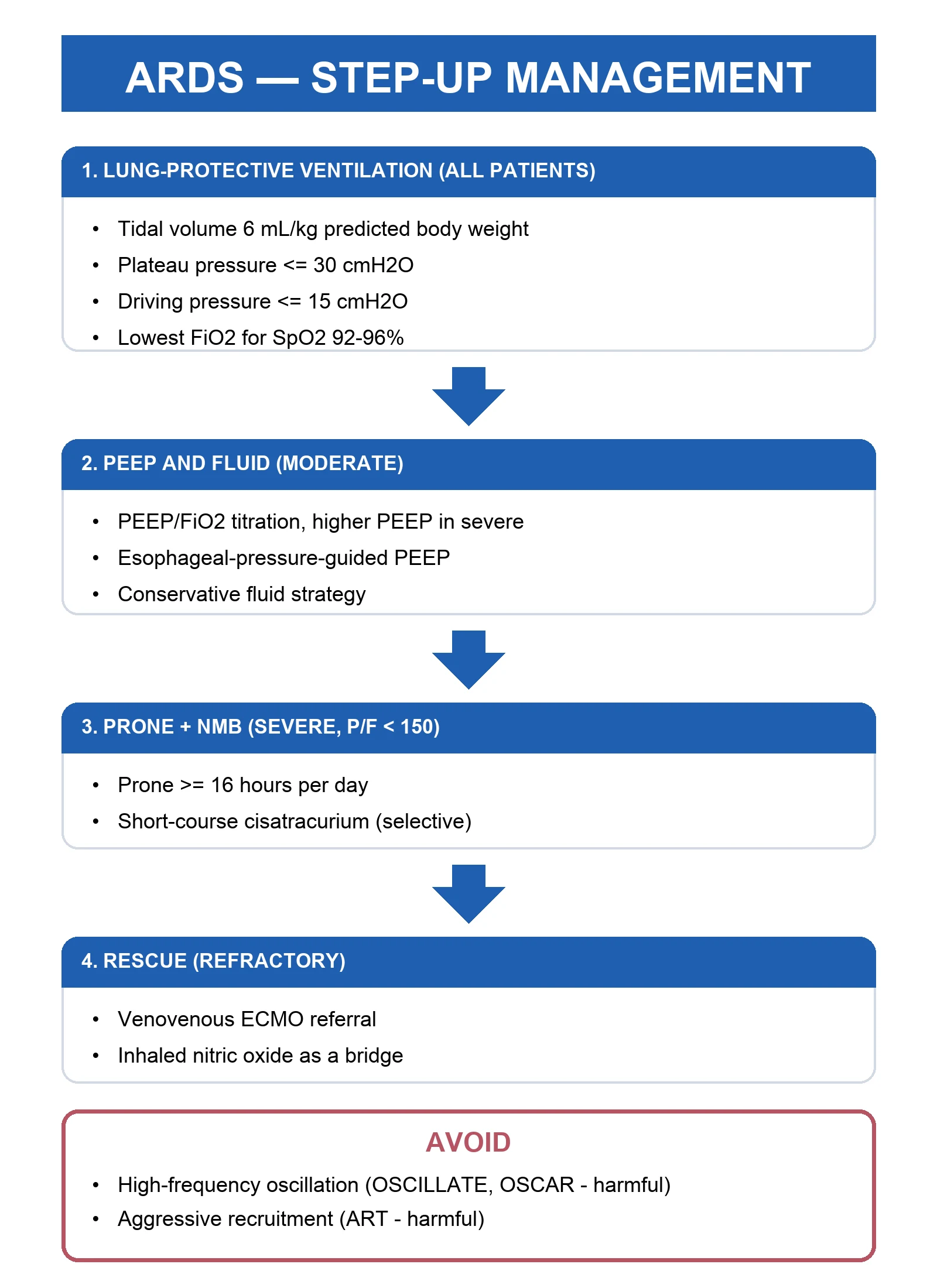
- FOUNDATION FIRST — lung-protective ventilation. Tidal volume 6 mL/kg predicted body weight, plateau pressure <30 cmH2O, titrate PEEP/driving pressure. This (and proning) — NOT any drug — is the only proven mortality-reducing intervention. Get this right before reaching for any pharmacotherapy.[1]
- PRONE EARLY if PaO2/FiO2 <150 (PROSEVA, >=16 h/day) — proven mortality benefit. Not a drug but the highest-yield adjunct.[16]
- CONSIDER CORTICOSTEROIDS in moderate-severe ARDS (PaO2/FiO2 <200) within 24 h. Dexamethasone 20 mg/day x5 d then 10 mg/day x5 d (DEXA-ARDS). Monitor glucose, infection, weakness. Do NOT use in mild ARDS; do NOT start >2 weeks in.[5]
- CONSIDER 48-h CISATRACURIUM ONLY in severe ARDS (PaO2/FiO2 <150) with significant ventilator dyssynchrony refractory to deep sedation/optimised ventilation. ACURASYS positive, ROSE negative → selective, not routine. Ensure deep sedation first; reverse only when dyssynchrony resolves.[3][4]
- INHALED VASODILATOR (iNO or epoprostenol) as a BRIDGE for refractory hypoxaemia or acute RV failure while awaiting recovery/proning/ECMO. WEAN SLOWLY (especially iNO — 1 ppm steps) to avoid rebound. Do NOT use routinely — no mortality benefit.[13]
- FLUID STRATEGY: conservative after resuscitation (FACTT). Once out of shock, use furosemide + restriction to target zero/negative daily balance (-0.5 to -1 L/day), monitoring renal function/electrolytes.[9]
- ESCALATE TO ECMO for severe refractory ARDS (e.g., PaO2/FiO2 <80 despite optimised ventilation + proning) at an ECMO-capable centre (CESAR). Adjust drug dosing for circuit sequestration (lipophilic sedatives higher, antibiotics by TDM), maintain systemic heparin anticoagulation.[11]
- AVOID the failed therapies explicitly: NO IV beta-2 agonists (BALTI-2: ↑ mortality), NO statins (HARP-2/SAILS), NO vitamin C (LOVIT), NO NAC/ketoconazole/lisofylline/surfactant/aspirin-for-ARDS. Document the decision so they are not started reflexively.[6][7][8][10]
Starting and weaning inhaled nitric oxide safely
- INDICATION. Refractory hypoxaemia (e.g., PaO2/FiO2 <80-100 despite optimised ventilation/proning) OR acute right-ventricular failure with pulmonary hypertension, as a bridge to recovery or ECMO. NOT routine — no mortality benefit.[13]
- SET UP delivery and monitoring. iNO via inspiratory limb with a calibrated delivery/monitoring system; continuous or intermittent monitoring of NO2 (keep <1-2 ppm) and methaemoglobin (baseline + daily; keep <5%). Check baseline PaO2/FiO2 and, if available, pulmonary artery pressures.
- START at 5 ppm, reassess oxygenation within 15-30 min. Titrate upward in 5 ppm increments to effect (rarely need >20 ppm — higher adds toxicity without benefit). Document the PaO2/FiO2 response.
- DAILY REVIEW for ongoing indication. If oxygenation has improved and the underlying ARDS is recovering (or ECMO is running), plan to wean. Do NOT continue indefinitely.
- WEAN SLOWLY because of rebound pulmonary hypertension/hypoxaemia (downregulated endogenous NO synthase). Reduce by 1 ppm every 2-4 h, observing oxygenation/PVR/heart rate. If the patient desaturates, return to the previous dose and wean more slowly.
- STOP once FiO2 is weaned and the patient tolerates iNO <1 ppm. Continue to monitor for 1-2 h after cessation for rebound.
- METHAEMOGLOBINAEMIA (metHb >5%) or NO2 >2 ppm → reduce/stop iNO. Treat significant metHb with methylene blue 1-2 mg/kg IV (caution with serotonergic drugs/SNRIs; methylene blue may itself raise pulmonary vascular tone).[13]
Compare tables — drug classes at a glance
ARDS pharmacotherapy — the whole landscape on one page
| Class | Drug | Trial(s) | Outcome | Recommendation |
|---|---|---|---|---|
| Corticosteroid | Dexamethasone | DEXA-ARDS, CoDEX, RECOVERY | ↑ ventilator-free days (and ↓ mortality in COVID) | SELECTIVE — moderate-severe early ARDS |
| Corticosteroid | Methylprednisolone | LaSRS | ↑ VFD, no mortality benefit, harm if late | SELECTIVE — unresolving ARDS only |
| NMBA | Cisatracurium | ACURASYS (+), ROSE (–) | Conflicting → selective benefit only | SELECTIVE — severe ARDS + dyssynchrony |
| Inhaled vasodilator | Nitric oxide | Afshari meta | Oxygenation only, no mortality benefit | BRIDGE only |
| Inhaled vasodilator | Epoprostenol | (equivalence data) | Oxygenation only, no mortality benefit | BRIDGE (cheaper alternative) |
| Beta-2 agonist | IV salbutamol | BALTI-2 | ↑ MORTALITY | CONTRAINDICATED |
| Statin | Simvastatin | HARP-2 | No benefit | Do NOT use |
| Statin | Rosuvastatin | SAILS | No benefit, hepatic/renal harm | Do NOT use |
| Antioxidant | Vitamin C | LOVIT | ↑ MORTALITY | CONTRAINDICATED |
| Antiplatelet | Aspirin | LIPS-A | No prevention | Do NOT use |
| Surfactant / NAC / ketoconazole / lisofylline | — | Multiple | All NEGATIVE | Do NOT use |
Cisatracurium — when it helps
Severe ARDS + dyssynchrony
- Severe ARDS: PaO2/FiO2 <150 within 48 h
- Significant ventilator dyssynchrony (double-trigger, breath-stacking, active expiration) despite deep sedation
- High transpulmonary pressure swings / injurious effort (patient self-inflicted lung injury, P-SILI)
- Used for a defined 48-h course with deep sedation; reversible only when dyssynchrony resolves
- Hofmann elimination — safe in renal/hepatic failure; minimal histamine
Cisatracurium — when NOT to use
No routine paralysis
- ROSE: routine 48-h NMB in all moderate-severe ARDS gave no benefit, possible cardiovascular harm
- Do NOT use as a substitute for adequate sedation/analgesia
- Do NOT use without a plan to reverse and reassess
- Avoid prolonged (>48 h) infusions — ICU-acquired weakness, prolonged recovery
- Remember sugammadex does NOT reverse cisatracurium (only aminosteroids: rocuronium/vecuronium)
Drug selection by ARDS severity (Berlin) — a quick bedside map
| Berlin severity | PaO2/FiO2 | First-line | Selective pharmacology | Avoid |
|---|---|---|---|---|
| Mild | 200-300 | Lung-protective ventilation; treat cause | No steroids; conservative fluids once stable | All failed drugs |
| Moderate | 100-200 | + early proning if P/F <150 | Dexamethasone if within 24 h (DEXA-ARDS) | Beta-2, statins, vitamin C |
| Severe | <=100 | + continuous proning; consider ECMO | + cisatracurium 48 h IF dyssynchronous; iNO/epoprostenol bridge | All routine failed drugs |
High-yield clinical pearls (exam-exhaustive)
Red flags — critical safety points
Common ARDS pharmacology exam questions — model answers
| Question | Model answer |
|---|---|
| Which drug reduces ARDS mortality? | None reliably. Lung-protective ventilation is the only proven mortality-reducing therapy. |
| ACURASYS vs ROSE — who was right? | Both valid; reconcile by severity/sedation. Selective 48-h cisatracurium for severe ARDS + dyssynchrony only. |
| Why is cisatracurium preferred over rocuronium in ARDS? | Hofmann elimination (organ-independent) + minimal histamine; works in organ failure. |
| Why do beta-2 agonists harm in ARDS? | Tachyarrhythmia, lactic acidosis, hypokalaemia at the high IV doses needed for alveolar fluid clearance (BALTI-2). |
| iNO mechanism and main risks? | NO → cGMP → vasodilation of ventilated alveoli; risks NO2, metHb, rebound on withdrawal. |
| Conservative vs liberal fluids? | FACTT: conservative wins (more VFD/ICU-free days, no renal cost) — pursue negative balance after resuscitation. |
| Steroid of choice and timing? | Dexamethasone in moderate-severe ARDS within 24 h (DEXA-ARDS); methylprednisolone for unresolving ARDS. |
| ECMO drug dosing? | ↑ Vd + circuit sequestration of lipophilic drugs → dose up, sedate to effect, TDM for antibiotics. |
| Two ARDS subphenotypes? | Hyper- vs hypoinflammatory (Calfee 2014); hyperinflammatory may respond better to steroids/higher PEEP. |
Summary answer card
[1] [2] [9]SAQ — Corticosteroids in moderate-severe ARDS (DEXA-ARDS)
10 minutes · 10 marks
A 58-year-old woman (height 165 cm, 70 kg) is intubated for severe pneumococcal pneumonia. Within 18 hours of ARDS onset she is on Vt 420 mL (6 mL/kg PBW), RR 28, PEEP 14 cmH2O, FiO2 0.85. ABG: pH 7.30, PaCO2 48, PaO2 68 (PaO2/FiO2 80). Plateau pressure 28 cmH2O, driving pressure 14 cmH2O. Noradrenaline 0.15 mcg/kg/min for septic shock. CXR shows bilateral alveolar infiltrates; echo shows normal biventricular function. The ICU consultant asks whether to start dexamethasone.
SAQ — Neuromuscular blockade in severe ARDS (ACURASYS vs ROSE)
10 minutes · 10 marks
A 47-year-old man (height 178 cm, 85 kg; PBW 75 kg) is ventilated for severe ARDS from aspiration pneumonia, now 30 hours after onset. Settings: Vt 450 mL (6 mL/kg PBW), RR 30, PEEP 16, FiO2 0.9. ABG: pH 7.29, PaCO2 52, PaO2 60 (PaO2/FiO2 67). Plateau pressure 29 cmH2O, driving pressure 14 cmH2O. Despite fentanyl 200 mcg/h and propofol 200 mg/h (RASS -4) he is doubly triggering and breath-stacking on the ventilator. The team is considering a cisatracurium infusion.
References
- [1]Diaz JV, et al. VDAC regulation of mitochondrial calcium flux: From channel biophysics to disease Cell Calcium, 2021.PMID 33529977
- [2]Thompson BT, et al. Notum palmitoleoyl-protein carboxylesterase regulates Fas cell surface death receptor-mediated apoptosis via the Wnt signaling pathway in colon adenocarcinoma Bioengineered, 2021.PMID 34402722
- [3]Papazian L, Forel JM, Gacouin A, et al. Neuromuscular blockers in early acute respiratory distress syndrome N Engl J Med, 2010.PMID 20843245
- [4]National Heart, Lung, and Blood Institute PETAL Clinical Trials Network, Moss M, Huang DT, et al. Early Neuromuscular Blockade in the Acute Respiratory Distress Syndrome N Engl J Med, 2019.PMID 31112383
- [5]Villar J, Ferrando C, Martinez D, et al. Dexamethasone treatment for the acute respiratory distress syndrome: a multicentre, randomised controlled trial Lancet Respir Med, 2020.PMID 32043986
- [6]Gao Smith F, Perkins GD, Gates S, et al. Effect of intravenous β-2 agonist treatment on clinical outcomes in acute respiratory distress syndrome (BALTI-2): a multicentre, randomised controlled trial Lancet, 2012.PMID 22166903
- [7]McAuley DF, Laffey JG, O'Kane CM, et al. Simvastatin in the acute respiratory distress syndrome N Engl J Med, 2014.PMID 25268516
- [8]National Heart, Lung, and Blood Institute ARDS Clinical Trials Network, Truwit JD, Bernard GR, et al. Rosuvastatin for sepsis-associated acute respiratory distress syndrome N Engl J Med, 2014.PMID 24835849
- [9]National Heart, Lung, and Blood Institute Acute Respiratory Distress Syndrome (ARDS) Clinical Trials Network, Wiedemann HP, Wheeler AP, et al. Comparison of two fluid-management strategies in acute lung injury N Engl J Med, 2006.PMID 16714767
- [10]Lamontagne F, Masse MH, Menard J, et al. Intravenous Vitamin C in Adults with Sepsis in the Intensive Care Unit N Engl J Med, 2022.PMID 35704292
- [11]Peek GJ, Mugford M, Tiruvoipati R, et al. Efficacy and economic assessment of conventional ventilatory support versus extracorporeal membrane oxygenation for severe adult respiratory failure (CESAR): a multicentre randomised controlled trial Lancet, 2009.PMID 19762075
- [12]Kor DJ, Carter RE, Park PK, et al. Effect of Aspirin on Development of ARDS in At-Risk Patients Presenting to the Emergency Department: The LIPS-A Randomized Clinical Trial JAMA, 2016.PMID 27179988
- [13]Afshari A, Brok J, Moller AM, Wetterslev J. Inhaled nitric oxide for acute respiratory distress syndrome and acute lung injury in adults and children: a systematic review with meta-analysis and trial sequential analysis Anesth Analg, 2011.PMID 21372277
- [14]Steinberg KP, Hudson LD, Goodman RB, et al. Efficacy and safety of corticosteroids for persistent acute respiratory distress syndrome N Engl J Med, 2006.PMID 16625008
- [15]Tomazini BM, Maia IS, Cavalcanti AB, et al. Effect of Dexamethasone on Days Alive and Ventilator-Free in Patients With Moderate or Severe Acute Respiratory Distress Syndrome and COVID-19: The CoDEX Randomized Clinical Trial JAMA, 2020.PMID 32876695
- [16]Guerin C, Reignier J, Richard JC, et al. Prone positioning in severe acute respiratory distress syndrome N Engl J Med, 2013.PMID 23688302
- [17]RECOVERY Collaborative Group, Horby P, Lim WS, et al. Dexamethasone in Hospitalized Patients with Covid-19 N Engl J Med, 2021.PMID 32678530
- [18]ARDS Definition Task Force, Ranieri VM, Rubenfeld GD, et al. Acute respiratory distress syndrome: the Berlin Definition JAMA, 2012.PMID 22797452
- [19]Calfee CS, Delucchi K, Parsons PE, et al. Subphenotypes in acute respiratory distress syndrome: latent class analysis of data from two randomised controlled trials Lancet Respir Med, 2014.PMID 24853585