ICU · Pharmacology
Acute severe community-acquired pneumonia: corticosteroid adjunct therapy
Also known as Corticosteroids in CAP · Hydrocortisone for severe pneumonia · CAPE COD trial · CACTUS trial
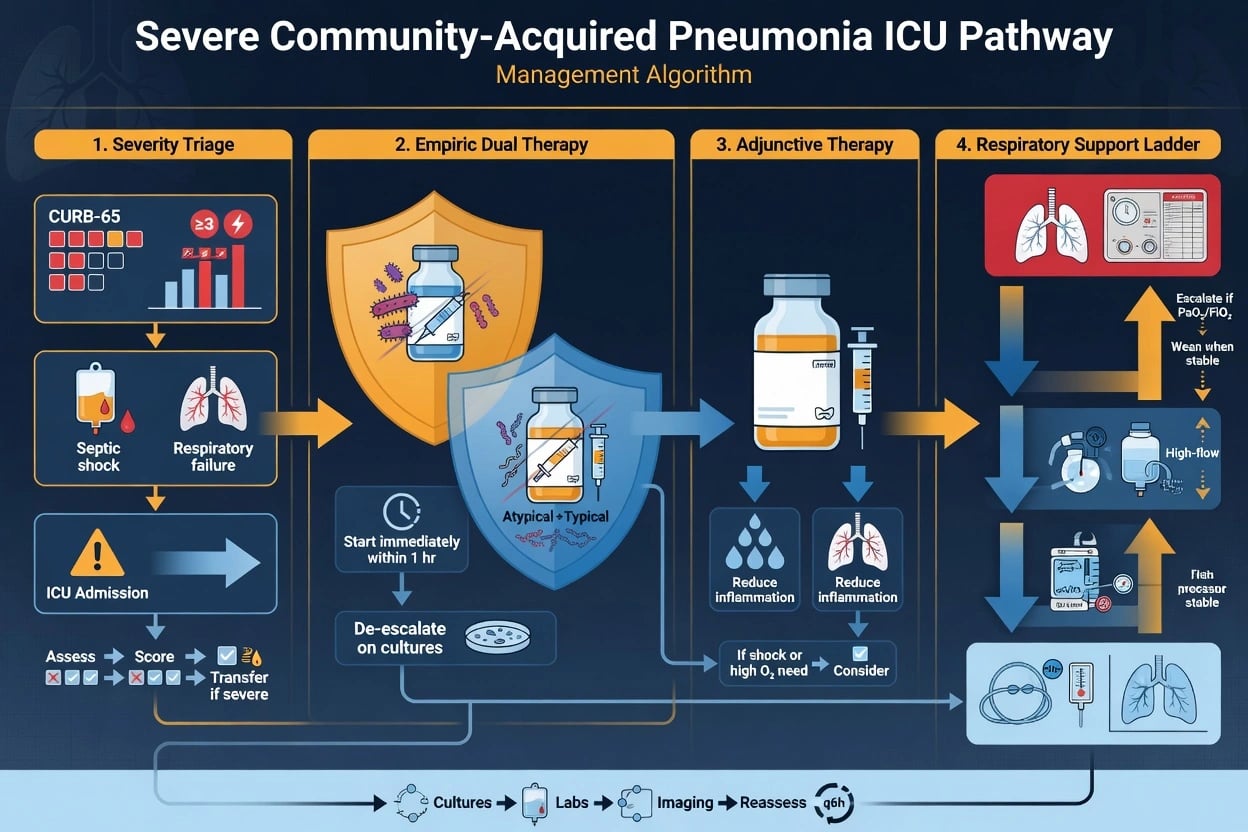
Corticosteroids as adjunct therapy in severe CAP: reduces excessive inflammation (cytokine storm) associated with severe infection. Evidence: CAPE COD trial (2024, JAMA) — hydrocortisone 200 mg/day for 7 days reduced 28-day mortality in severe CAP requiring ICU. CACTUS trial (2022) — hydrocortisone reduced treatment failure in severe CAP. Meta-analyses: corticosteroids reduce mortality, duration of ventilation, and ARDS development in severe CAP. Dose: hydrocortisone 200 mg/day (continuous infusion or 50 mg Q6H) for 5-7 days. Benefit greatest in: high inflammatory burden (CRP 150, high procalcitonin), severe CAP with septic shock, PJP pneumonia, influenza pneumonia, COVID-19. Risks: hyperglycaemia, secondary infection, GI bleeding, neuromyopathy.
On this page & tools
Your progress
Saved locally on this device.
Target exams
Red flags
Evidence
Corticosteroid evidence in CAP
CAPE COD trial (2024, JAMA)
RCT: hydrocortisone 200 mg/day (continuous infusion) for 7 days vs placebo in severe CAP requiring ICU. Result: REDUCED 28-day mortality (primary endpoint). Stopped early for efficacy. Strongest evidence for corticosteroids in bacterial CAP. Dose: hydrocortisone 200 mg/day (50 mg Q6H or continuous infusion). Duration: 7 days or until clinical improvement.
CACTUS trial (2022)
RCT: hydrocortisone 200 mg/day for 8 days vs placebo in severe CAP. Result: reduced treatment failure (need for ventilation, vasopressors, or death). Less robust than CAPE COD (smaller, different population). Supports hydrocortisone in severe CAP.
Cochrane meta-analysis (2021)
Pooled data: corticosteroids reduced mortality (RR 0.79), duration of mechanical ventilation, and development of ARDS in severe CAP. BUT: increased hyperglycaemia (RR 1.27) and no increase in secondary infection. Conclusion: corticosteroids should be considered in severe CAP.
Specific pneumonia types
PJP: prednisolone 40 mg BD x 5 days, then taper (for PaO2 <70 — reduces organism lysis inflammation). Influenza: controversial — some studies show benefit, others harm. Use selectively for severe influenza with high inflammatory burden. COVID-19: dexamethasone 6 mg daily x 10 days (RECOVERY trial — reduces mortality in O2/ventilated patients).
SAQ — severe CAP with septic shock: CAPE COD and the case for adjunct corticosteroids
10 minutes · 10 marks
A 68-year-old man is admitted to ICU with severe community-acquired pneumonia. CURB-65 is 4, CRP 220 mg/L, PaO2/FiO2 180. He requires noradrenaline for septic shock and has bilateral infiltrates on chest X-ray. You are considering adjunct corticosteroid therapy.
SAQ — steroid dosing, duration, and special pneumonia types in severe CAP
10 minutes · 10 marks
A 55-year-old woman with severe CAP (PaO2/FiO2 150, CRP 280 mg/L, procalcitonin 25) is intubated and ventilated within 12 hours of ICU admission. Blood cultures grow Streptococcus pneumoniae and appropriate antibiotics have been commenced. You have decided to start adjunct corticosteroid therapy.
Clinical pearls
Red flags
Rationale & mechanism
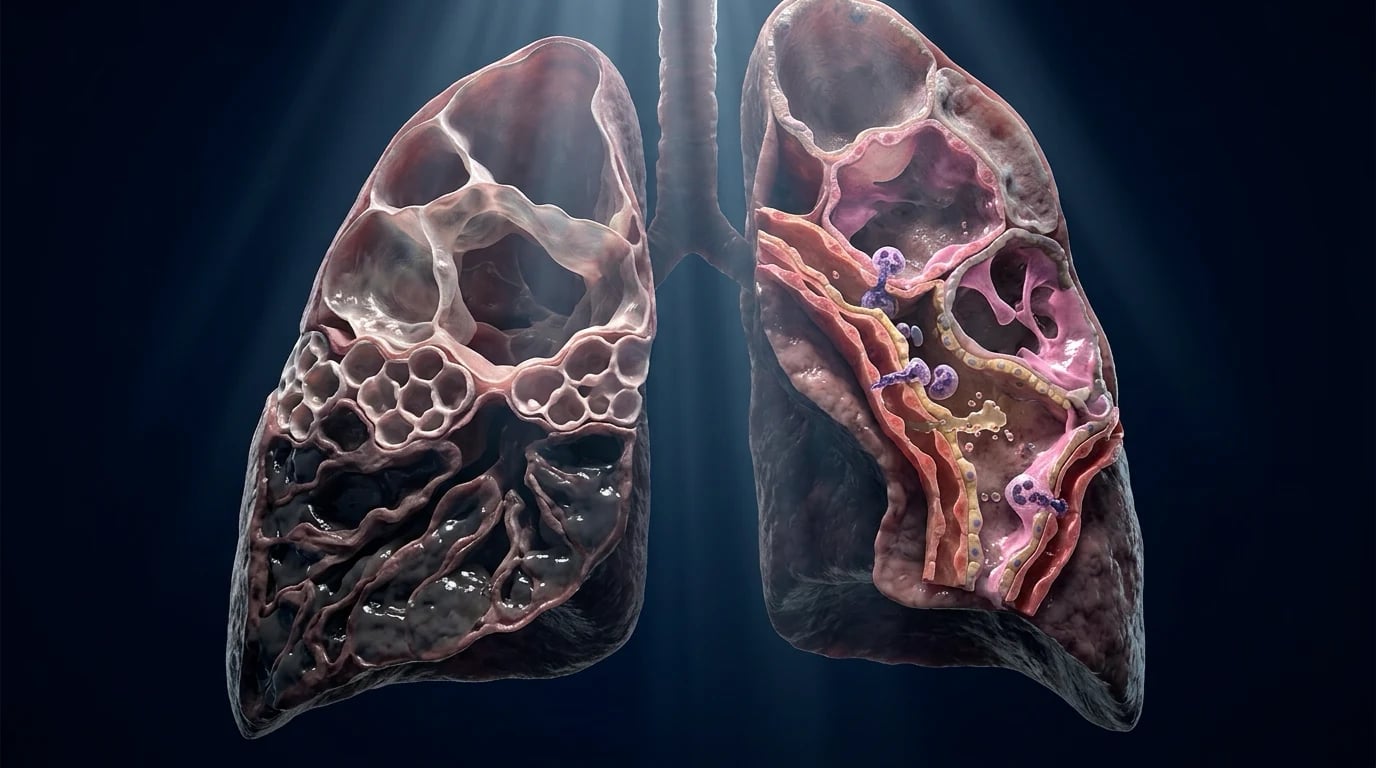
Mechanism of benefit in severe CAP — step by step
1. Pathogen → cytokine storm
Bacterial products (pneumococcal cell wall, endotoxin) bind TLR2/TLR4 on alveolar macrophages → NF-κB activation → surge of TNF-α, IL-1β, IL-6, IL-8. High IL-6/CRP (>150 mg/L) marks the "hyper-inflammatory phenotype" most likely to benefit.
2. Endothelial leak → ARDS
Cytokines disrupt the alveolar-capillary barrier → protein-rich oedema, hyaline membranes, shunt, refractory hypoxaemia. Corticosteroids restore endothelial integrity by inhibiting ICAM-1/VCAM-1 expression.
3. Corticosteroid genomic action
Glucocorticoid-receptor complex translocates to nucleus → trans-repression of pro-inflammatory genes (cytokines, COX-2, iNOS) and trans-activation of anti-inflammatory genes (I-κB, annexin-A1). Onset is genomic (hours), not immediate.
4. Vasopressor sensitisation
Up-regulates α-1 adrenergic receptor expression → restores catecholamine responsiveness in vasodilatory shock. This is why hydrocortisone reduces vasopressor dose in septic shock.
5. Clinical translation
Net effect in severe CAP: less treatment failure, faster resolution of fever/CRP, shorter time to clinical stability, less progression to ARDS, reduced duration of mechanical ventilation, and (in the sickest patients) reduced 28-day mortality.
Corticosteroid pharmacology in ICU
Corticosteroid agents used in critical care — equivalent anti-inflammatory doses
| Agent | Equivalent dose (mg) | Glucocorticoid potency | Mineralocorticoid potency | Plasma t½ (h) | Biological effect (h) | CAP / sepsis use |
|---|---|---|---|---|---|---|
| Hydrocortisone | 20 | 1 (reference) | 1 (highest) | 8–12 | 8–12 | Severe bacterial CAP, septic shock (CAPE COD, ADRENAL) |
| Methylprednisolone | 4 | 5 | 0.5 | 18–36 | 12–36 | Torres 2015 regimen (0.5 mg/kg BD) |
| Prednisolone / Prednisone | 5 | 4 | 0.6 | 18–36 | 12–36 | PJP adjunct; Blum/ProHeart ward CAP |
| Dexamethasone | 0.75 | 25–30 | ~0 (negligible) | 36–54 | 36–72 | COVID-19 CAP (RECOVERY) |
| Fludrocortisone | — | 10 | 125 (pure) | 3–4 | — | Septic-shock arm of APROCCHSS |
Practical point: hydrocortisone retains mineralocorticoid activity (sodium + fluid retention) — relevant in heart failure/ARDS where fluid balance is tight. Dexamethasone has essentially no mineralocorticoid effect, hence its preference when sodium retention is undesirable, but its long t½ risks cumulative tissue exposure and critical-illness myopathy if given beyond 10 days. [1]
Dosing
Adjunctive corticosteroid regimens in severe CAP
Hydrocortisone 200 mg/day (CAPE COD, Dequin 2023)
Continuous IV infusion 200 mg/24 h OR 50 mg IV every 6 hours. Duration: 4–7 days (or until clinical stability / 7 days, whichever first). NO taper for the short course. This is the regimen with the strongest mortality signal in bacterial severe CAP.
Methylprednisolone 0.5 mg/kg BD x 5 days (Torres 2015)
~40 mg BD (0.5 mg/kg q12h) IV for 5 days, then taper. Reduced early treatment failure in severe CAP (IDSA/ATS criteria). Useful when a non-hydrocortisone agent is preferred.
Prednisone 50 mg/day x 7 days (Blum / ProHeart)
50 mg PO/IV daily for 7 days. Reduced time to clinical stability but NO mortality benefit — appropriate for non-ICU CAP with high inflammatory burden.
Dexamethasone 5 mg daily x 5 days (Meijvis 2011)
Reduced length of hospital stay by ~1 day; no mortality effect. A pragmatic option for ward CAP.
Dexamethasone 6 mg daily x 10 days (RECOVERY, COVID-19)
Reduces 28-day mortality in COVID-19 requiring oxygen or ventilation. NOT a substitute for hydrocortisone in bacterial CAP.
Indications — who actually benefits
Indication decision: when to add corticosteroids in CAP
GIVE (strong evidence)
Severe CAP (IDSA/ATS major criteria: invasive mechanical ventilation OR septic shock requiring vasopressors) PLUS high inflammatory burden (CRP >150 mg/L, or IL-6 high). Hydrocortisone 200 mg/day for 4–7 days (CAPE COD, Torres 2015).
GIVE (pathogen-specific)
Pneumocystis jirovecii pneumonia with PaO2 <70 mmHg or A-a gradient >35 mmHg (prednisolone 40 mg BD). COVID-19 pneumonia on supplemental O2 or ventilated (dexamethasone 6 mg x10 d, RECOVERY).
CONSIDER (moderate evidence)
Severe CAP with rising CRP despite 48–72 h of appropriate antibiotics; high CURB-65/SMART-COP; elderly with excessive inflammation. Biomarker-guided (CRP/procollagon) strategies enrich for responders.
AVOID / harm likely
Uncomplicated CAP (CURB-65 0–2, managed as outpatient); low-inflammatory (low CRP) phenotype; fungal pneumonia without antifungal cover; influenza pneumonia where steroids may increase secondary bacterial infection and impair viral clearance; pure viral CAP without hypoxaemia.
Inflammatory phenotype matters. The benefit is concentrated in the high-inflammatory (CRP >150, IL-6 elevated) phenotype. Low-inflammatory CAP gains nothing and takes the harm. Siemieniuk’s individual-patient-data meta-analysis showed the mortality reduction was driven almost entirely by the most severely ill, high-inflammation patients.[8]
Evidence — landmark trials
CAPE COD (Dequin 2023) — the pivotal bacterial CAP trial
CAPE COD — Hydrocortisone in Severe Community-Acquired Pneumonia (PMID 36942789)
Source
Dequin PF, Meziani F, Quenot JP, et al. N Engl J Med 2023
Design
Multicentre, double-blind, randomised, placebo-controlled, Bayesian, group-sequential trial in French ICUs
Population
Adults with severe CAP (Pneumonia Severity Index IV–V) needing ICU — high-inflammatory phenotype
Intervention
Hydrocortisone 200 mg/day (continuous infusion) for 4–7 days vs placebo
Primary outcome
Day-28 treatment failure (death or persistence/progression)
Result
Marked reduction in day-28 treatment failure (OR ~0.42) AND day-28 mortality; trial stopped early for efficacy at 2nd interim analysis
Exam nuance
Day-28 mortality benefit clear, but day-90 mortality difference NOT statistically significant — an early anti-inflammatory rescue effect rather than a long-term survival cure
Exam anchor: CAPE COD is the single most important steroid-CAP trial. Know: hydrocortisone 200 mg/day continuous infusion, Bayesian design, stopped early for efficacy, 28-day benefit > 90-day benefit. The day-28-but-not-day-90 pattern is the classic exam point. [1]
Torres 2015 — methylprednisolone, reduced treatment failure
Torres et al 2015 — Methylprednisolone in severe CAP (PMID 25688779)
Source
Torres A, Sibila O, Ferrer M, et al. JAMA 2015
Design
Multicentre RCT, Spain
Population
Adults with severe CAP (IDSA/ATS criteria) and high inflammatory response (CRP >150 mg/L)
Intervention
Methylprednisolone 0.5 mg/kg q12h for 5 days vs placebo
Primary outcome
Early treatment failure at day 5
Result
Reduced early treatment failure (31% vs 46%, p=0.02) and late treatment failure; no difference in mortality
Exam nuance
This is the ‘0.5 mg/kg BD’ dose quoted in every guideline; CRP enrichment strengthens the phenotype argument
Confalonieri 2005 — the original hydrocortisone signal
Confalonieri et al 2005 — Hydrocortisone in severe CAP (PMID 15557131)
Source
Confalonieri M, Urbino R, Potena A, et al. Am J Respir Crit Care Med 2005
Design
Single-centre, preliminary RCT (n=46)
Population
Severe CAP requiring ICU
Intervention
Hydrocortisone 240 mg/day continuous infusion x 7 days then taper vs placebo
Primary outcome
Modulation of systemic inflammation / multiple organ dysfunction score
Result
Reduced multiple-organ dysfunction score, shorter hospital stay, reduced mortality in the pneumococcal subgroup
Exam nuance
Small but seminal; established the hydrocortisone-in-severe-CAP concept later confirmed by CAPE COD
Meijvis 2011 & Blum 2015 — modest benefit, no mortality effect
Meijvis et al 2011 — Dexamethasone in CAP (PMID 21636122)
Source
Meijvis SC, Hardeman H, et al. Lancet 2011
Design
Double-blind RCT (n=304)
Population
Adults hospitalised with CAP (not selected for severity)
Intervention
Dexamethasone 5 mg daily x 5 days vs placebo
Primary outcome
Length of hospital stay
Result
Reduced length of stay by ~1 day; no mortality difference
Exam nuance
Predominantly non-severe CAP — explains absence of mortality signal; supports the ‘severity-and-inflammation’ enrichment thesis
Blum / ProHeart 2015 — Adjunct prednisone in CAP (PMID 25608756)
Source
Blum CA, Nigro N, Briel M, et al. Lancet 2015
Design
Multicentre double-blind RCT (n=785)
Population
Adults hospitalised with CAP (all severities)
Intervention
Prednisone 50 mg daily x 7 days vs placebo
Primary outcome
Time to clinical stability
Result
Shorter time to clinical stability (~1.4 days); NO mortality benefit; no difference at 180-day follow-up
Exam nuance
Confirmed that mixed-severity CAP gains only speed-of-recovery, not survival — benefit must be enriched by severity/inflammation
Pattern that wins marks: every negative (no-mortality) steroid-CAP trial (Meijvis, Blum) enrolled all-comer CAP. Every positive trial (Confalonieri, Torres, CAPE COD) enriched for severe + high-inflammation. This is the central exam insight. [1]
Meta-analyses
What the meta-analyses converge on
| Meta-analysis | PMID | Mortality | Mechanical ventilation | ARDS development | Time to stability | Harms |
|---|---|---|---|---|---|---|
| Siemieniuk 2015 (IPD, Ann Intern Med) | 26258555 | Reduced (RR ~0.65 in severe) | Reduced duration | Reduced | Shorter | Hyperglycaemia ↑ |
| Briel 2018 (Clin Infect Dis) | 29020323 | Reduced | Reduced | Reduced | Shorter | Hyperglycaemia ↑ |
| Stern 2017 (Cochrane) | 29236286 | Reduced (RR 0.79) | Reduced | Reduced | Shorter | Hyperglycaemia ↑ (RR 1.27); no ↑ secondary infection |
| Bergmann 2023 (Clin Infect Dis) | 37876267 | Reduced day-28, not day-90 | Reduced need | Reduced | Shorter | Hyperglycaemia ↑ |
Convergent message: across IPD and aggregate meta-analyses, corticosteroids reduce mortality, ventilation duration, and progression to ARDS in severe CAP, at the cost of hyperglycaemia (consistently) but NOT a clearly increased rate of secondary infection. The day-90 vs day-28 discrepancy (CAPE COD) is the main remaining controversy. [1]
Pneumocystis jirovecii pneumonia (PJP)
Adjunctive corticosteroids in PJP — a distinct, well-established indication
Trigger
Hypoxaemic PJP (classically in HIV/AIDS with CD4 <200). Give adjunctive corticosteroids if PaO2 <70 mmHg on room air OR alveolar-arterial (A-a) gradient >35 mmHg. They blunt the inflammatory response to organism lysis when co-trimoxazole starts killing Pneumocystis.
Standard taper
Prednisolone 40 mg BD x 5 days → 40 mg OD x 5 days → 20 mg OD x 11 days (total 21 days). Start BEFORE or WITH the first dose of co-trimoxazole; ideally within 24–72 h.
Outcome
Reduces deterioration in oxygenation, need for ICU/ventilation, and mortality in moderate-to-severe PJP. This is among the most robust steroid-pneumonia indications and predates the bacterial-CAP trials by decades.
Pitfall
Steroids WITHOUT effective anti-pneumocystis therapy (or in the absence of co-trimoxazole) risk uncontrolled infection. Always pair with anti-PJP therapy; reconsider if no PJP on diagnostic stain.
Don’t confuse regimens: bacterial severe CAP = hydrocortisone 200 mg/day x 4–7d (no taper). PJP = prednisolone 40 mg BD x 5d, then taper over 16 days. COVID-19 CAP = dexamethasone 6 mg x 10d. Three indications, three different steroids, three different durations. [1]
Influenza & viral CAP
COVID-19 pneumonia
RECOVERY — Dexamethasone in hospitalised COVID-19 (PMID 32678530)
Source
RECOVERY Collaborative Group. N Engl J Med 2021
Design
Platform RCT, UK (>6000 patients in this comparison)
Population
Hospitalised COVID-19
Intervention
Dexamethasone 6 mg daily x 10 days vs usual care
Primary outcome
28-day mortality
Result
Mortality reduced in ventilated (29.3% vs 41.4%) and oxygen-only (23.3% vs 26.2%) patients; NO benefit (possible harm) in those not on respiratory support
Exam nuance
Established the ‘steroid-if-hypoxaemic’ rule for COVID-19 — distinct agent and indication from bacterial CAP
Comparison: CAP steroids vs septic shock steroids
Corticosteroid trials across the sepsis / CAP spectrum
| Trial | Population | Agent | Mortality | Take-home |
|---|---|---|---|---|
| CAPE COD (2023) | Severe CAP, ICU | Hydrocortisone 200 mg/d | ↓ day-28 (not day-90) | Benefit in severe CAP |
| Torres (2015) | Severe CAP, high CRP | Methylprednisolone 0.5 mg/kg BD | No Δ in mortality | ↓ treatment failure |
| ADRENAL (2018) | Septic shock (any) | Hydrocortisone 200 mg/d | No Δ | No benefit, no harm; faster shock reversal |
| APROCCHSS (2018) | Septic shock (any) | Hydro 200 + fludro 50 µg | ↓ 90-day | Benefit, especially vasoplegia |
| CORTICUS (2008) | Septic shock (any) | Hydrocortisone 200 mg/d | No Δ | No benefit; no advantage of taper |
| Annane (2002) | Refractory septic shock | Hydro + fludro | ↓ (refractory only) | Benefit only if vasopressor-refractory |
How to reason about it for the viva: [1]
- Septic shock (APROCCHSS-positive, CORTICUS-negative): the 2018 APROCCHSS trial (hydrocortisone + fludrocortisone) showed a 90-day mortality benefit; the near-simultaneous ADRENAL trial (hydrocortisone alone) did not. The differentiator may be the mineralocorticoid component and the sicker vasoplegic population. Current practice: hydrocortisone ~200 mg/day for septic shock needing ongoing high-dose vasopressors, without routine fludrocortisone (APROCCHSS adds it; ADRENAL did not and is the broader ANZ practice).[12][13]
- CORTICUS lessons: hydrocortisone did NOT reduce mortality when given to all septic-shock patients (non-refractory included), and a fixed 11-day course with taper was not superior. Two enduring lessons: (i) don’t universalise the indication; (ii) shock-reversal-guided duration beats fixed courses.[14]
- Why CAP behaves differently: CAP steroid benefit is inflammation-driven (anti-ARDS, anti-treatment-failure) whereas septic-shock benefit is haemodynamic (vasopressor sparing). Same drug class, different dominant mechanism.[11]
Adverse effects & monitoring
Corticosteroid toxicities and how to mitigate them in ICU
Hyperglycaemia
Universal and dose-dependent (RR ~1.27). Corticosteroids induce hepatic gluconeogenesis and insulin resistance. Manage with an insulin sliding scale / infusion; target glucose 6–10 mmol/L (avoid hypoglycaemia). Check pre-meal and bedtime BGLs.
Secondary infection
Increased fungal colonisation (candida, aspergillus) and nosocomial infection risk; meta-analyses paradoxically show no clear ↑ in secondary infection in CAP RCTs, but vigilance is mandatory — surveillance cultures, procalcitonin trend, low threshold for repeat cultures/imaging.
GI bleeding
Risk ↑ with concomitant NSAIDs, anticoagulation, mechanical ventilation. Provide stress-ulcer prophylaxis (PPI or H2RA) per SUP-ICU criteria (coagulopathy or ≥2-day ventilation).
Critical-illness neuromyopathy
Dose- and duration-dependent, especially with neuromuscular blockers and prolonged dexamethasone. Limit duration; favour hydrocortisone over high-dose long-acting agents; mobilise early.
Adrenal suppression
Negligible for courses ≤7 days (no taper needed). Taper if >14 days or if the patient was on chronic pre-admission steroids. Never forget stress-dose hydrocortisone for the chronic-steroid patient.
Sodium/fluid, hypertension, psychosis
Hydrocortisone → sodium + fluid retention (monitor electrolytes, fluid balance). Dexamethasone → hypertension, mood/psychiatric effects, dyspepsia. Monitor BP, electrolytes, mental state.
High-yield exam pearls (part 2)
Red flags (part 2)
One-minute viva answer
[3] [4] [8] [16]References
- [1]Martin-Loeches I, Torres A. Severe community-acquired pneumonia Eur Respir Rev, 2022.PMID 36517046
- [2]Briel M, et al. Notum palmitoleoyl-protein carboxylesterase regulates Fas cell surface death receptor-mediated apoptosis via the Wnt signaling pathway in colon adenocarcinoma Bioengineered, 2021.PMID 34402722
- [3]Dequin PF, Meziani F, Quenot JP, et al. Hydrocortisone in Severe Community-Acquired Pneumonia N Engl J Med, 2023.PMID 36942789
- [4]Torres A, Sibila O, Ferrer M, et al. Effect of corticosteroids on treatment failure among hospitalized patients with severe community-acquired pneumonia and high inflammatory response: a randomized clinical trial JAMA, 2015.PMID 25688779
- [5]Confalonieri M, Urbino R, Potena A, et al. Hydrocortisone infusion for severe community-acquired pneumonia: a preliminary randomized study Am J Respir Crit Care Med, 2005.PMID 15557131
- [6]Meijvis SC, Hardeman H, Remmelts HH, et al. Dexamethasone and length of hospital stay in patients with community-acquired pneumonia: a randomised, double-blind, placebo-controlled trial Lancet, 2011.PMID 21636122
- [7]Blum CA, Nigro N, Briel M, et al. Adjunct prednisone therapy for patients with community-acquired pneumonia: a multicentre, double-blind, randomised, placebo-controlled trial Lancet, 2015.PMID 25608756
- [8]Siemieniuk RA, Meade MO, Alonso-Coello P, et al. Corticosteroid Therapy for Patients Hospitalized With Community-Acquired Pneumonia: A Systematic Review and Meta-analysis Ann Intern Med, 2015.PMID 26258555
- [9]Briel M, Spoorenberg SMC, Snijders D, et al. Corticosteroids in Patients Hospitalized With Community-Acquired Pneumonia: Systematic Review and Individual Patient Data Metaanalysis Clin Infect Dis, 2018.PMID 29020323
- [10]Stern A, Skalsky K, Avni T, et al. Corticosteroids for pneumonia Cochrane Database Syst Rev, 2017.PMID 29236286
- [11]Niederman MS, Torres A. Severe community-acquired pneumonia Eur Respir Rev, 2022.PMID 36517046
- [12]Venkatesh B, Finfer S, Cohen J, et al. (ADRENAL trial). Adjunctive Glucocorticoid Therapy in Patients with Septic Shock N Engl J Med, 2018.PMID 29347874
- [13]Annane D, Renault A, Brun-Buisson C, et al. (APROCCHSS trial). Hydrocortisone plus Fludrocortisone for Adults with Septic Shock N Engl J Med, 2018.PMID 29490185
- [14]Sprung CL, Annane D, Keh D, et al. (CORTICUS trial). Hydrocortisone therapy for patients with septic shock N Engl J Med, 2008.PMID 18184957
- [15]Annane D, Sebille V, Charpentier C, et al. Effect of treatment with low doses of hydrocortisone and fludrocortisone on mortality in patients with septic shock JAMA, 2002.PMID 12186604
- [16]RECOVERY Collaborative Group, Horby P, Lim WS, et al. Dexamethasone in Hospitalized Patients with Covid-19 N Engl J Med, 2021.PMID 32678530
- [17]Bergmann F, Pracher L, Kesselmeier M, et al. Efficacy and Safety of Corticosteroid Therapy for Community-Acquired Pneumonia: A Meta-Analysis and Meta-Regression of Randomized, Controlled Trials Clin Infect Dis, 2023.PMID 37876267
- [18]Salluh JI, Povoa P, Soares M, et al. Biomarkers to guide the use of corticosteroids in community-acquired pneumonia: a wish rather than a tangible concept J Infect, 2013.PMID 23068451
- [19]Blum CA, Roethlisberger EA, Ottiger M, et al. Adjunct prednisone in community-acquired pneumonia: 180-day outcome of a multicentre, double-blind, randomized, placebo-controlled trial BMC Pulm Med, 2023.PMID 38082273