ICU · Pharmacology
Corticosteroids — Glucocorticoid & Mineralocorticoid Effects
Also known as Corticosteroids · Glucocorticoids · Mineralocorticoids · Dexamethasone · Hydrocortisone · Prednisolone · Methylprednisolone · Fludrocortisone · 11-beta-HSD2 · Adrenal suppression · Glucocorticoid receptor · Transactivation / transrepression · Stress-dose steroids · ADRENAL trial · APROCCHSS trial · DEXA-ARDS trial · CAPE COD trial · RECOVERY dexamethasone · CORTICUS trial
Corticosteroids in the ICU — the glucocorticoid vs the mineralocorticoid potency, the molecular mechanism, and the disease-specific evidence. MECHANISM: the lipophilic steroid crosses the cell membrane → binds the cytosolic glucocorticoid receptor (GR, NR3C1) → heat-shock-protein dissociation → nuclear translocation → transactivation (GRE-driven anti-inflammatory genes — I-kB, annexin-A1/lipocortin-1, IL-10) and transrepression (GR monomer blocks NF-kB / AP-1 / STAT → downregulates IL-1, IL-2, IL-6, TNF-a); non-genomic effects at high dose. SPECTRUM: hydrocortisone (GC 1, MC 1, equiv 20 mg, short-acting) — physiological replacement, refractory septic shock, adrenal crisis, thyroid storm; prednisolone (GC 4, MC 0.6, equiv 5 mg) — oral immunosuppression, PJP, asthma/COPD; methylprednisolone (GC 5, MC 0.5, equiv 4 mg) — ARDS, autoimmune pulses, spinal-cord injury; dexamethasone (GC 25-30, MC 0, equiv 0.75 mg, long-acting) — cerebral oedema, COVID-19 (RECOVERY 6 mg), antenatal lung maturation, DEXA-ARDS, bacterial meningitis; fludrocortisone (MC 250) — mineralocorticoid replacement, the APROCCHSS septic-shock adjunct. INDICATIONS: septic shock (ADRENAL — hydrocortisone speeds shock reversal, no mortality benefit; APROCCHSS — hydrocortisone + fludrocortisone reduces mortality in SEVERE shock), ARDS (DEXA-ARDS — dexamethasone 20 mg x5d then 10 mg x5d; Meduri methylprednisolone), CAP (CAPE COD — hydrocortisone 200 mg/day; CAPO/Siemieniuk meta-analysis), thyroid storm (hydrocortisone 100 mg TDS blocks T4-T3), adrenal crisis (hydrocortisone 200 mg/day + fludrocortisone), anaphylaxis (adjunct only), asthma/COPD exacerbation, cerebral oedema (dexamethasone). STRESS-DOSE: hydrocortisone 50 mg q6h or 200 mg/24 h infusion in vasopressor-dependent shock; perioperative 100 mg at induction. ADVERSE: hyperglycaemia, immunosuppression, GI bleed, critical-illness myopathy (especially + NMBA), psychiatric effects, osteoporosis, and HPA-axis adrenal suppression after more than 2 weeks of more than 7.5 mg prednisolone equivalent — MUST taper.
On this page & tools
Your progress
Saved locally on this device.
8 MCQs with explanations
Target exams
Red flags
Overview & definition
Corticosteroids — by the glucocorticoid (the anti-inflammatory, the metabolic) and the mineralocorticoid (the sodium retention, the potassium loss) potency. The equivalent doses. The placental transfer (the 11-beta-HSD2). The adverse.[1]
By potency
| Agent | Glucocorticoid | Mineralocorticoid | Equivalent dose |
|---|---|---|---|
| Hydrocortisone | 1 | 1 | 20 mg |
| Prednisolone | 4 | 0.6 | 5 mg |
| Methylprednisolone | 5 | 0.5 | 4 mg |
| Dexamethasone | 30 | 0 | 0.75 mg |
| Fludrocortisone | 10 | 250 | (mineralocorticoid primarily) |
Effects
Glucocorticoid: anti-inflammatory (the phospholipase A2, the NF-kB, the cytokines); metabolic (gluconeogenesis, hyperglycaemia, protein catabolism, lipolysis); the permissive vascular (the catecholamine sensitisation).[1] Mineralocorticoid: sodium retention, potassium loss, hypertension.[1]
Placental transfer
The prednisolone — 90 per cent metabolised by the placental 11-beta-HSD2 → minimal fetal exposure (SAFE in pregnancy). The dexamethasone/betamethasone — cross the placenta (NOT metabolised by 11-beta-HSD2 — used for fetal lung maturation).[1]
Adverse
- Metabolic: diabetes, hypernatraemia, hypokalaemia, hyperlipidaemia.[1]
- Musculoskeletal: osteoporosis, myopathy, avascular necrosis.[1]
- Infection: immunosuppression.[1]
- GI: peptic ulcer, pancreatitis.[1]
- CNS: psychosis, mood changes.[1]
- Eye: cataracts, glaucoma.[1]
- Skin: thinning, striae, impaired wound healing.[1]
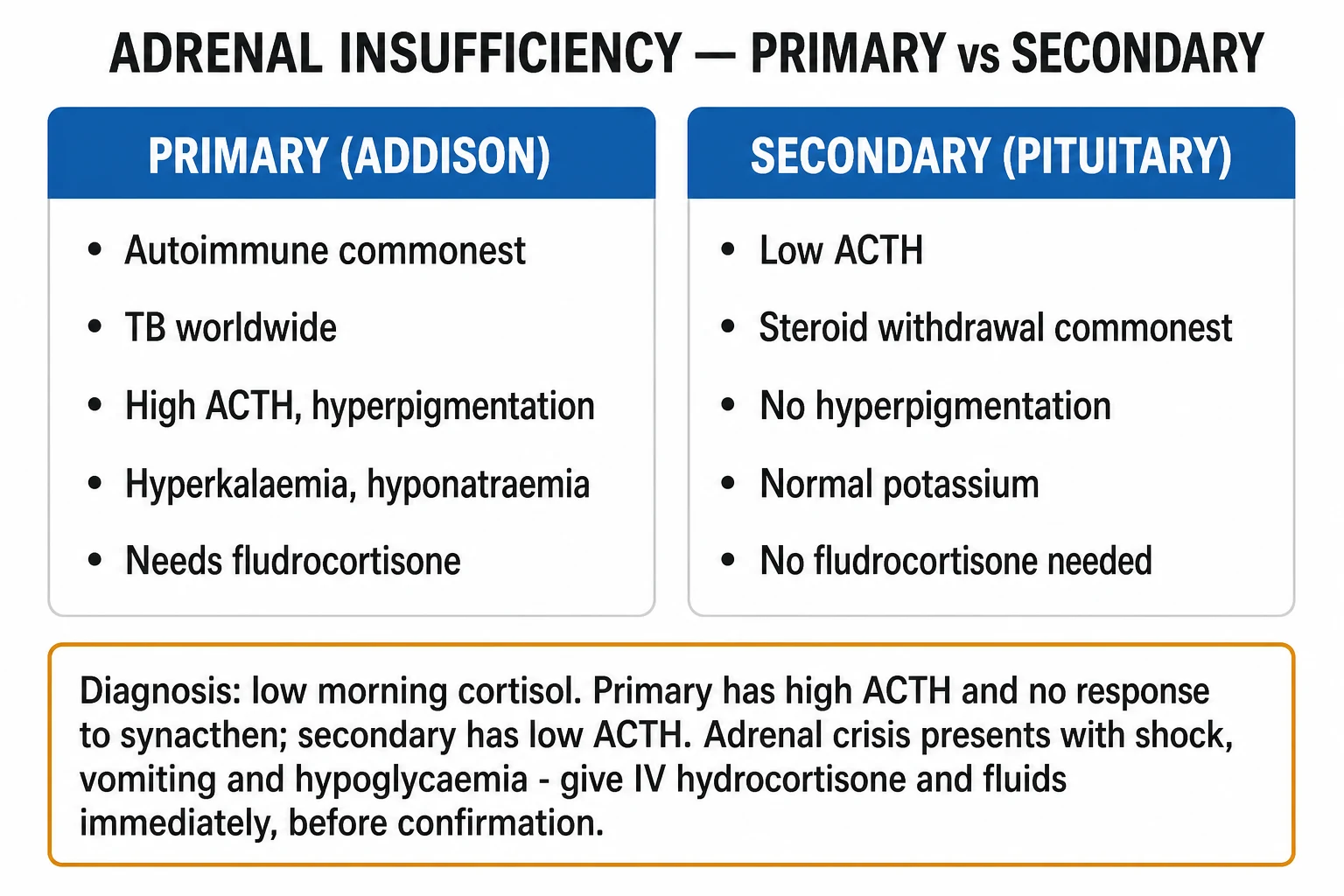
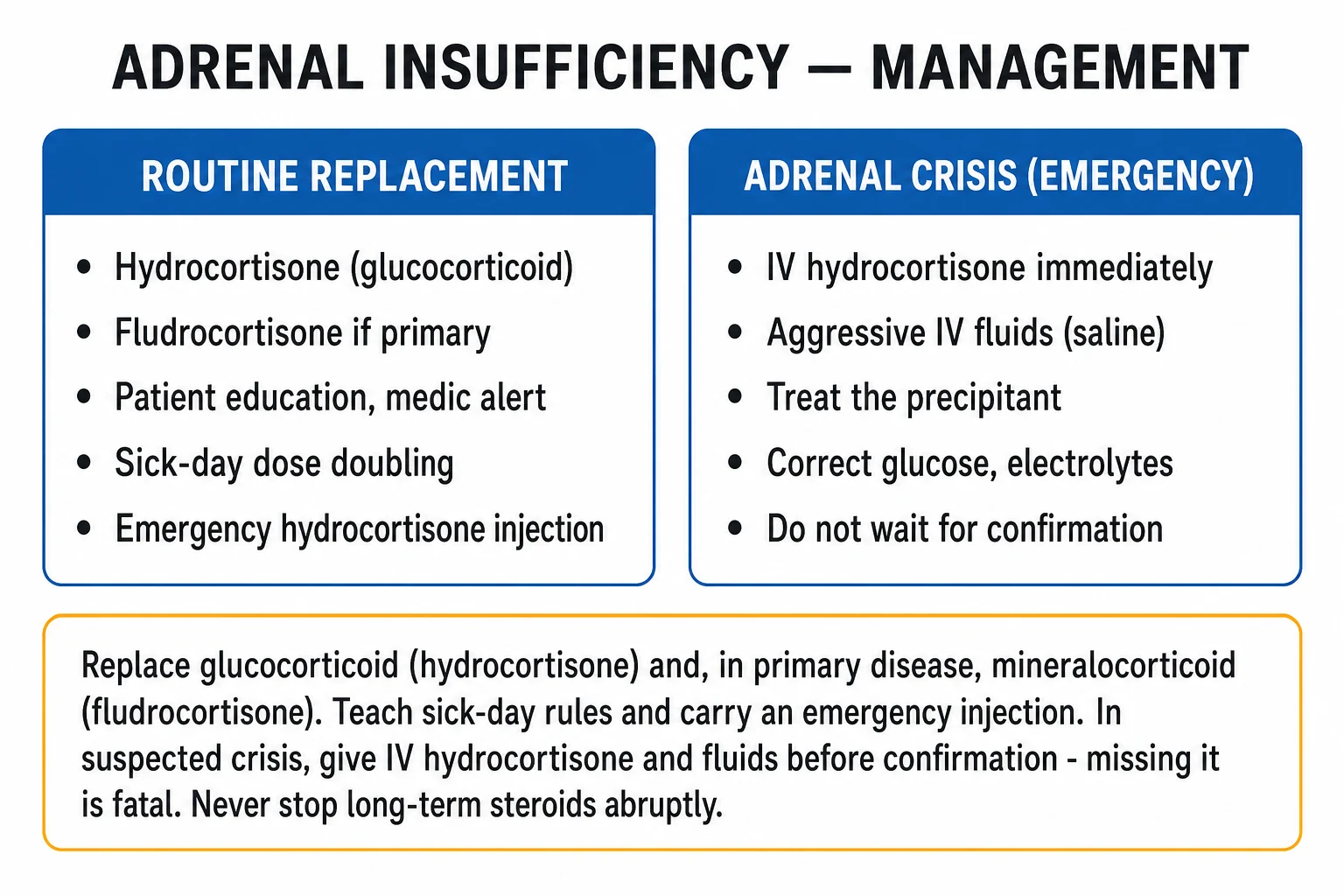
- Adrenal suppression — the HPA axis suppressed by the chronic exogenous; do NOT stop abruptly (the adrenal crisis); taper.[1]
Red flags
Mechanism of action — the molecular pharmacology
Corticosteroids are lipophilic and diffuse freely across the plasma membrane. The intracellular target is the glucocorticoid receptor (GR, gene NR3C1) — a ligand-activated transcription factor of the nuclear-receptor superfamily. In the resting state the GR is cytosolic, held in an inactive hetero-oligomeric complex with heat-shock proteins (hsp90, hsp70) and immunophilins. Binding of the steroid causes a conformational change, dissociation of the heat-shock proteins, dimerisation, and exposure of the nuclear-localisation signal. The activated GR–ligand complex translocates to the nucleus, where it alters gene expression through two complementary, mechanistically distinct pathways.[1]
The genomic mechanism — from receptor binding to anti-inflammatory effect
Membrane diffusion + receptor binding
Lipophilic steroid crosses plasma membrane → binds cytosolic glucocorticoid receptor (GR/NR3C1) held in inactive hsp90/hsp70 complex. Steroid–receptor affinity determines potency (dexamethasone binds GR with ~10x the affinity of hydrocortisone).
Heat-shock-protein dissociation
Conformational change → hsp90/hsp70 dissociate → nuclear-localisation signal exposed → GR dimerises. This step is blocked by the GR antagonist mifepristone (RU-486).
Nuclear translocation
The GR–ligand complex translocates from cytosol to nucleus along the cytoskeleton (minutes). This is why corticosteroid onset is delayed relative to adrenaline, salbutamol, or vasopressors.
Transactivation (GRE-driven gene induction)
GR homodimers bind glucocorticoid-response elements (GREs) in gene promoters → UPREGULATION of anti-inflammatory / regulatory proteins: IκB-α (inhibits NF-κB), annexin-A1 / lipocortin-1 (inhibits phospholipase A2 → ↓ arachidonic acid, prostaglandins, leukotrienes), MAPK phosphatase-1 (DUSP1), interleukin-10, and the β2-adrenergic receptor (the molecular basis of steroid upregulation of salbutamol responsiveness in asthma).
Transrepression (protein–protein interference)
GR MONOMERS physically tether to and block other transcription factors — principally NF-κB, AP-1, and STAT → DOWNREGULATION of pro-inflammatory cytokines (IL-1, IL-2, IL-3, IL-6, IL-8, TNF-α, IFN-γ), adhesion molecules (ICAM-1, E-selectin), COX-2, inducible nitric-oxide synthase, and chemokines. Transrepression accounts for most of the desired anti-inflammatory effect.
Non-genomic effects (high-dose / pulse therapy)
At supraphysiological doses, corticosteroids exert rapid membrane-mediated effects (within minutes): physicochemical alteration of plasma membranes, inhibition of immediate calcium / sodium fluxes, and reduced T-cell trafficking. These explain the prompt haemodynamic response sometimes seen in refractory septic shock and the rapid effect in allergic emergencies.
Clinical consequence of a transcriptional mechanism — onset is delayed (hours). Corticosteroids are therefore NOT the first-line immediate treatment of anaphylaxis (adrenaline IM is first-line) or the immediate treatment of bronchospasm (salbutamol/ipratropium first); in both their role is to prevent the biphasic / late-phase / relapsing reaction over the subsequent 6–72 hours. Conversely, a patient who deteriorates after steroid loading for anaphylaxis needs more adrenaline — not more steroid. [1]
[1]Mineralocorticoid mechanism — why dexamethasone cannot replace hydrocortisone
Fludrocortisone, and the intrinsic mineralocorticoid activity of hydrocortisone, bind the mineralocorticoid receptor (MR, gene NR3C2) → induction of aldosterone-induced proteins (sgk1, αENaC subunit) → increased apical epithelial sodium-channel (ENaC) expression in the distal nephron and collecting duct → sodium (and water) reabsorption, potassium and hydrogen-ion excretion. In the kidney, the enzyme 11β-hydroxysteroid dehydrogenase type 2 (11β-HSD2) normally converts cortisol to inactive cortisone at the MR, so that only aldosterone activates it. Pharmacological doses of hydrocortisone overwhelm 11β-HSD2 and produce mineralocorticoid effects — the basis of its sodium retention, hypokalaemia and volume expansion. Dexamethasone, betamethasone, and triamcinolone are poor MR agonists (and not inactivated differently), so they have essentially zero mineralocorticoid activity.[1]
This is the single most testable corticosteroid concept: choose the agent by its mineralocorticoid activity. Need sodium retention / vascular tone (adrenal crisis, septic shock) → hydrocortisone ± fludrocortisone. Need anti-inflammatory / anti-oedema effect WITHOUT fluid retention (cerebral oedema, ARDS, COVID-19) → dexamethasone. Giving dexamethasone for adrenal crisis leaves the patient hyponatraemic and hypotensive because the mineralocorticoid deficit is uncorrected. [1]
Spectrum of activity — the full comparative pharmacology
Glucocorticoid vs mineralocorticoid potency — the complete ICU table
| Agent | Glucocorticoid potency | Mineralocorticoid potency | Equivalent dose | Plasma half-life | Biological half-life | Duration of action |
|---|---|---|---|---|---|---|
| Hydrocortisone (cortisol) | 1 (reference) | 1 | 20 mg | 1.5 h | 8–12 h | Short |
| Cortisone acetate | 0.8 | 0.8 | 25 mg | 1.5 h | 8–12 h | Short (pro-drug, hepatic conversion) |
| Prednisolone | 4 | 0.6 | 5 mg | 3 h | 18–36 h | Intermediate |
| Prednisone | 4 | 0.6 | 5 mg | 3 h | 18–36 h | Intermediate (pro-drug → prednisolone) |
| Methylprednisolone | 5 | 0.5 | 4 mg | 3 h | 18–36 h | Intermediate |
| Triamcinolone | 5 | 0 | 4 mg | 3 h | 18–36 h | Intermediate |
| Deflazacort | 4 | 0 | 6 mg | 2 h | — | Intermediate (oxazoline derivative) |
| Dexamethasone | 25–30 | 0 | 0.75 mg | 3–4 h | 36–54 h | Long |
| Betamethasone | 25–30 | 0 | 0.6–0.75 mg | 3–5 h | 36–54 h | Long (antenatal lung maturation) |
| Fludrocortisone | 10 | 250 | 2 mg (mineralocorticoid use) | 1 h | 18–36 h | Intermediate |
The four agents every intensivist must master — by role
| Agent | The defining property | The canonical ICU indication | The trap |
|---|---|---|---|
| Hydrocortisone | Short-acting + HIGH mineralocorticoid activity | Physiological replacement; refractory septic shock (200 mg/day ± fludrocortisone); adrenal crisis; thyroid storm; perioperative stress-dose | Mineralocorticoid effect → sodium/fluid retention, hypokalaemia — unwanted in volume-overload states |
| Prednisolone | Oral, intermediate, low-mineralocorticoid | Oral chronic immunosuppression; PJP adjunct (40 mg BD); severe CAP; asthma/COPD exacerbation | Slow taper needed if >3 weeks — adrenal suppression |
| Methylprednisolone | Intermediate, LOW mineralocorticoid, pulse-able | ARDS; autoimmune emergencies (SLE, vasculitis, autoimmune hepatitis); transplant rejection; spinal-cord injury (NASCIS) | High-dose pulses → arrhythmia, flush, hyperglycaemia, pancreatitis |
| Dexamethasone | Long-acting, ZERO mineralocorticoid | Cerebral oedema; COVID-19 (RECOVERY 6 mg); antenatal lung maturation; DEXA-ARDS; bacterial meningitis | Cannot replace hydrocortisone when mineralocorticoid effect is needed |
Dosing equivalents — the one table to memorise
Anti-inflammatory dose equivalents (the exam staples)
| Agent | Equivalent anti-inflammatory dose | Notes |
|---|---|---|
| Hydrocortisone | 20 mg | Reference compound; ~20–30 mg/day = physiological cortisol secretion (the circadian peak is morning) |
| Cortisone acetate | 25 mg | Hepatic pro-drug of hydrocortisone; oral only |
| Prednisolone / Prednisone | 5 mg | 5 mg ≈ 20 mg hydrocortisone — the standard "1 : 4" ratio |
| Methylprednisolone | 4 mg | ~5× hydrocortisone; the standard pulse unit is 500–1000 mg IV |
| Triamcinolone | 4 mg | Rarely used IV in ICU (intra-articular / depot use) |
| Dexamethasone | 0.75 mg | ~25–30× hydrocortisone; 6 mg ≈ 160 mg hydrocortisone ≈ 40 mg prednisolone (the RECOVERY dose) |
| Betamethasone | 0.6–0.75 mg | Antenatal lung maturation: 12 mg IM ×2, 24 h apart |
| Deflazacort | 6 mg | Oxazoline pro-drug; slightly less bone toxicity; used in Duchenne muscular dystrophy |
| Fludrocortisone | 2 mg (mineralocorticoid) | Not used for anti-inflammatory effect — purely mineralocorticoid replacement (50–200 mcg/day) |
ICU indications — by disease
Corticosteroid indications in the ICU — disease-specific drug, dose, mechanism and evidence
| Indication | Drug + dose | Mechanism / rationale | Key evidence / point |
|---|---|---|---|
| Refractory septic shock | Hydrocortisone 200 mg/day (50 mg q6h OR continuous infusion) ± fludrocortisone 50 mcg PO/NG | Restores vascular tone + permissive catecholamine sensitisation + HPA-axis support (critical-illness–related corticosteroid insufficiency, CIRCI) | ADRENAL: faster shock reversal, fewer vasopressor days, NO mortality benefit. APROCCHSS: hydrocortisone + fludrocortisone REDUCED 90-day mortality in SEVERE shock (43% vs 49%). Reserve for shock refractory to adequate fluids + vasopressors, NOT all septic shock |
| Moderate–severe ARDS (P/F <200) | Dexamethasone 20 mg/day ×5d → 10 mg/day ×5d (DEXA-ARDS) OR methylprednisolone 1 mg/kg/day ×14d then taper (Meduri) | Suppresses fulminant pulmonary inflammation; reduces fibroproliferation; improves oxygenation | DEXA-ARDS (Villar 2020): more ventilator-free days. Meduri IPD meta-analysis: reduced mortality + ventilator days when started <14 days |
| COVID-19 requiring O2 / ventilation | Dexamethasone 6 mg once daily ≤10 days | Suppresses the late cytokine-driven phase of COVID | RECOVERY: mortality reduced in ventilated (29.3% vs 40.4%) and oxygen-only (21.5% vs 25.0%) patients; HARM in those not on O2 (17.0% vs 13.2%). Do NOT give to non-hypoxic COVID |
| Severe community-acquired pneumonia | Hydrocortisone 200 mg/day ×4–7d OR prednisolone 50 mg ×5d | Modulates excessive host inflammation (high CRP / ferritin) | CAPE COD (Dequin 2023): reduced 28-day treatment failure in severe CAP. Siemieniuk / CAPO meta-analysis: reduced mortality + ARDS, greatest benefit when CRP high |
| Pneumocystis jirovecii pneumonia (PJP) with hypoxia | Prednisolone 40 mg BD (or equivalent) ×5d → taper; START within 24 h of antibiotics if PaO2 <70 mmHg or A–a gradient >35 | Reduces inflammatory response to dying organisms (prevents deterioration at day 3–5) | Standard of care in moderate–severe PJP — reduces mortality |
| Thyroid storm | Hydrocortisone 100 mg IV TDS (or q6h) | Blocks peripheral T4→T3 conversion (5′-deiodinase) + treats coexisting relative adrenal insufficiency | Adjunct to thionamide (carbimazole/PTU) + beta-blocker + supportive care |
| Adrenal crisis | Hydrocortisone 100 mg IV bolus → 200 mg/day (50 mg q6h or 10 mg/h infusion) + fludrocortisone 100 mcg (if primary adrenal insufficiency) | Replace deficient glucocorticoid + mineralocorticoid | Life-saving — give EMPIRICALLY, do NOT wait for cortisol level in crisis |
| Anaphylaxis (refractory / adjunct) | Hydrocortisone 200 mg IV (or 400 mg) | Prevents biphasic / protracted reaction; NOT first-line | Adrenaline IM is first-line. Steroids do NOT alter the early course. Steroid does not change 2-hour outcomes |
| Acute severe asthma | Hydrocortisone 100 mg IV bolus then 200 mg/day, OR prednisolone 40–50 mg PO | Switch off airway inflammation; upregulate β2-receptors (synergy with salbutamol) | Give EARLY — the effect is hours, not minutes. IV and PO equivalent in severe asthma if gut perfusion normal |
| COPD exacerbation | Prednisolone 30–40 mg PO ×5d (or hydrocortisone 100 mg IV if NIV/ventilated) | Reduce airway inflammation; shorten recovery | SHORT course (5d) as effective as 14d — do NOT prolong unnecessarily (myopathy, hyperglycaemia) |
| Cerebral oedema (vasogenic — tumour, abscess) | Dexamethasone load 10 mg IV → 4 mg q6h (4–16 mg/day) | Reduces vasogenic oedema around tumour/abscess by restoring blood–brain-barrier integrity | Effective for vasogenic oedema; LITTLE role in traumatic/cytotoxic oedema (TBI) or cytotoxic stroke oedema |
| Bacterial meningitis | Dexamethasone 10 mg IV BEFORE or WITH the first antibiotic dose, q6h ×4d | Reduces meningeal inflammation + neurological sequelae (sensorineural hearing loss) | Benefit strongest in pneumococcal meningitis; must precede/coincide with antibiotic |
| Autoimmune emergencies (SLE flare, vasculitis, autoimmune hepatitis) | Methylprednisolone 500–1000 mg IV daily ×3d (pulse) → oral taper | Rapid, potent immunosuppression to halt organ-threatening inflammation | Pulse therapy is standard for organ/life-threatening rheumatological disease |
| Antenatal lung maturation (24–34 weeks) | Dexamethasone 6 mg IM ×4 (q12h) OR betamethasone 12 mg IM ×2 (24h apart) | Accelerates type-II pneumocyte surfactant production | Reduces neonatal RDS, IVH, mortality — give if preterm delivery 24–34 wk anticipated within 7 days |
Disease-specific management pathways
Refractory septic shock — when and how to add hydrocortisone
Ensure adequate resuscitation FIRST
Crystalloid 30 mL/kg, noradrenaline titrated to MAP ≥65 mmHg, source control, broad-spectrum antibiotics within 1 h. Steroids are an ADJUNCT to, not a substitute for, the sepsis bundle.
Define 'refractory'
Persistent hypotension despite adequate fluid + escalating / high-dose vasopressors (noradrenaline ≥0.25 mcg/kg/min, or dual vasopressors), ongoing lactate elevation, not responding within 4–6 h.
Start hydrocortisone 200 mg/day
50 mg IV q6h OR continuous infusion (continuous preferred — avoids troughs and gives stable levels). This is PHYSIOLOGICAL replacement, NOT high-dose — high-dose methylprednisolone (30 mg/kg) was abandoned in the 1990s (increased infection, no benefit).
Add fludrocortisone 50 mcg PO/NG daily (APROCCHSS approach)
The mineralocorticoid adds vascular tone and sodium retention. The only trial showing a mortality benefit used this COMBINATION in severe shock — the mineralocorticoid and the sicker population explain why APROCCHSS succeeded where ADRENAL (hydrocortisone alone) did not.
Assess response at 24–48 h
Vasopressor dose falling, lactate clearing, improving haemodynamics = response. If no response, reconsider diagnosis (cardiogenic shock? inadequate source control? adrenal insufficiency?).
Do NOT do ACTH stimulation routinely
Surviving Sepsis Campaign 2021 SUGGESTS AGAINST routine cosyntropin testing — give empirically if shock is refractory. A random cortisol <276 nmol/L (10 mcg/dL) in vasopressor-dependent shock is supportive but not required to treat.
Continue until vasopressors weaned, then STOP or taper
CORTICUS: no taper needed, no rebound shock. APROCCHSS: tapered over 7 days (more conservative). Either is acceptable; many units stop without taper after a short (≤7 day) course.
Monitor adverse effects
Glucose (steroid-induced hyperglycaemia — insulin protocol, target 6–10 mmol/L), superinfection (more in ADRENAL — surveillance cultures), neuromuscular weakness (minimise NMBA overlap), GI bleeding (stress-ulcer prophylaxis if ventilated >48 h or coagulopathic).
ARDS — the corticosteroid protocol (DEXA-ARDS / Meduri paradigm)
Identify the candidate
Moderate–severe ARDS (PaO2/FiO2 <200 with PEEP ≥5) within 14 days of onset, NOT improving, NO uncontrolled active infection. Early (<14 d) treatment benefits; late (>14 d, fibroproliferative) treatment is more contentious.
Exclude contraindications
Uncontrolled infection (relative), recent GI perforation/anastomosis, refractory hyperglycaemia. Active infection is NOT an absolute contraindication if on appropriate antimicrobials.
Start dexamethasone (DEXA-ARDS regimen)
20 mg IV daily ×5 days → 10 mg IV daily ×5 days (a fixed 10-day course). Alternatively methylprednisolone 1 mg/kg/day ×14 days then taper (Meduri).
Monitor for early improvement
P/F ratio, lung compliance, FiO2 requirement should improve within 5–7 days. If no improvement by day 7, reassess diagnosis and persistence of the trigger.
Aggressively manage hyperglycaemia
Steroid-induced; insulin infusion targeting glucose 6–10 mmol/L. Steroid hyperglycaemia peaks 4–8 h after the dose — time insulin accordingly.
AVOID concurrent NMBA where possible
Steroid + NMBA + sepsis + renal failure = critical-illness myopathy (thick-filament loss, type-II fibre atrophy) — prolonged paralysis, failure to wean. If paralysis is essential, minimise duration.
Taper on improvement — do NOT stop abruptly
DEXA-ARDS uses a fixed 10-day step-down; Meduri tapers over 7–14 days. Abrupt cessation risks rebound inflammation and deterioration.
Continue lung-protective ventilation, proning, conservative fluid strategy
Steroids are an ADJUNCT, not a replacement for the ARDS fundamentals: low tidal volume (6 mL/kg PBW), plateau pressure <30, prone positioning for P/F <150.
Stress-dose steroids — the perioperative / critically-ill patient on chronic steroids
Identify the at-risk patient
Anyone on >7.5 mg prednisolone (or equivalent) daily for >2–3 weeks within the last year → HPA-axis suppression → risk of adrenal crisis under surgical / septic stress. Also primary adrenal insufficiency and recent high-dose steroid courses.
Assess surgical stress level
Minor (hernia, peripheral): take usual morning dose — no extra. Moderate (cholecystectomy, joint replacement): hydrocortisone 50 mg IV at induction. Major (cardiothoracic, bowel, >2 h): hydrocortisone 100 mg IV at induction then 50 mg q8h for 24–48 h. Critical illness (sepsis, trauma): hydrocortisone 100 mg bolus then 200 mg/day.
Give hydrocortisone 100 mg IV at induction (major surgery)
Covers the cortisol demand of surgical stress. The classic regimen.
Continue 50 mg IV q8h for 24–48 h postoperatively
Then resume the usual oral steroid dose. Do NOT overshoot with supraphysiological doses beyond 48 h — that just adds hyperglycaemia and infection risk.
Convert to oral when tolerating enteral intake
Resume the patient's chronic prednisolone dose. Do NOT stop chronic steroids abruptly — the HPA axis is suppressed; cessation = adrenal crisis.
Monitor for adrenal crisis
Unexplained hypotension, hyponatraemia, hyperkalaemia, hypoglycaemia, lethargy, abdominal pain → give hydrocortisone 100 mg IV immediately.
Thyroid storm — the corticosteroid component
Recognise thyroid storm
Burch–Wartofsky score ≥45: hyperthermia >40°C, tachycardia >140, atrial fibrillation, heart failure, CNS dysfunction (agitation → coma), precipitant (infection, surgery, iodine load).
Give hydrocortisone 100 mg IV TDS (or q6h) — FIRST-LINE adjunct
Started immediately alongside the thionamide (PTU preferred — blocks new synthesis AND T4→T3) and beta-blocker (propranolol — also blocks T4→T3). The four pillars: thionamide + beta-blocker + hydrocortisone + supportive care.
Dual mechanism
(a) Blocks peripheral T4→T3 conversion (inhibits 5′-deiodinase), lowering active thyroid hormone; (b) treats presumed relative adrenal insufficiency (cortisol clearance is accelerated in thyrotoxicosis, and adrenal reserve is often inadequate for the storm).
Continue 2–3 days then taper
As the storm resolves (usually 5–7 days total). Switch to oral as tolerated.
Note on drug choice
Dexamethasone ALSO blocks T4→T3 but is NOT preferred — hydrocortisone additionally provides the glucocorticoid stress cover these haemodynamically unstable patients need.
Corticosteroid tapering — preventing adrenal crisis
Identify who MUST taper
>2–3 weeks of >7.5 mg prednisolone daily (or equivalent) → HPA-axis suppression. NEVER stop abruptly. Short courses (<2 weeks, even at high dose) generally do not need tapering.
Reduce rapidly to physiological range
If started at high dose (pulse methylprednisolone or 60 mg prednisolone), reduce by ~25% every 1–2 days down to ~20 mg prednisolone. This phase reflects pharmacological EXCESS; a quick taper is safe.
Taper SLOWLY below physiological dose
Once at ~10 mg/day (near physiological), reduce by 1 mg every 1–2 weeks. This phase restores the HPA axis — slow because the axis recovers over months, not days.
Convert long-acting to hydrocortisone at the end
Dexamethasone/prednisolone → hydrocortisone 20 mg mane → reduce to 10 mg → every-other-day dosing → stop. Hydrocortisone's short half-life allows the axis to "see" low morning cortisol and recover.
Monitor for withdrawal symptoms
Fatigue, arthralgia, myalgia, lethargy, hypotension, nausea, anorexia = taper too fast — pause or slow. The "pseudo-rheumatism" of steroid withdrawal can mimic disease flare.
Stress cover during intercurrent illness
Any infection / surgery during taper → double the dose or give IV hydrocortisone (the HPA axis is not yet fully recovered). Provide the patient a steroid alert card / Medic-Alert bracelet.
Consider ACTH stimulation test at end of taper
Optional — confirms HPA recovery (250 mcg cosyntropin → cortisol >500 nmol/L at 30/60 min). Often done clinically by observing tolerance of dose reduction.
Adverse effects — the comprehensive ICU profile
Corticosteroid adverse effects are dose- and duration-dependent, and several (hyperglycaemia, myopathy, immunosuppression) are amplified by the underlying critical illness. The intensivist must actively monitor for each. [1]
Adverse-effect monitoring — the ICU corticosteroid checklist
| Adverse effect | Mechanism | Monitoring / prevention |
|---|---|---|
| Hyperglycaemia | Gluconeogenesis + insulin resistance; peaks 4–8 h after each dose | Q1–4 h glucose; insulin infusion; target 6–10 mmol/L; time insulin to the dose peak |
| Immunosuppression / infection | T-cell suppression, reduced cytokines, impaired macrophage function | PJP prophylaxis (co-trimoxazole) if >20 mg prednisolone >4 weeks; surveillance cultures; low threshold for antifungal if persistent fever |
| Critical-illness myopathy | Type-II fibre atrophy + thick-(myosin) filament loss; amplified by NMBA, sepsis, renal failure | Minimise steroid + NMBA overlap; early mobilisation; monitor CK; daily sedation holds |
| Peptic ulcer / GI bleed | Impaired mucosal healing + acid; synergistic with NSAIDs and stress ulceration | Stress-ulcer prophylaxis (PPI) if ventilated >48 h or coagulopathic; AVOID NSAIDs |
| Osteoporosis / avascular necrosis | Osteoclast activation + osteoblast suppression + ↓ calcium absorption | Calcium + vitamin D; bisphosphonate for long-term; MRI hip if symptomatic (AVN of femoral head) |
| Steroid psychosis / delirium | CNS glucocorticoid effect; insomnia, agitation, mania, paranoia | CAM-ICU monitoring; reduce dose if severe; antipsychotic (haloperidol/quetiapine) if needed; insomnia → give dose in the morning |
| Adrenal suppression | HPA-axis suppression (CRH → ACTH → cortisol) | Taper; stress-dose cover for illness / surgery; do NOT stop abruptly |
| Fluid / electrolyte (mineralocorticoid) | Na+ retention, K+ loss, Ca2+ loss (hydrocortisone > dexamethasone) | Monitor K+, supplement; (not an issue with dexamethasone) |
| Wound-healing impairment | Reduced collagen synthesis / fibroblast activity | Adequate nutrition (protein, vitamin C); monitor surgical wounds |
| Hyperlipidaemia / fat redistribution | Lipolysis + redistribution (moon face, buffalo hump, central obesity) | Relevant for chronic therapy; rarely acute ICU concern |
| Hypertension | Mineralocorticoid volume expansion + vascular sensitisation | BP monitoring; not an issue with dexamethasone |
| Cataracts / glaucoma | Lens and aqueous-outflow effects | Long-term therapy only; ophthalmology review |
| Pancreatitis | Direct toxicity + hypertriglyceridaemia | Rare; consider if abdominal pain on high-dose pulse |
| Anaphylactoid reaction | Rare hypersensitivity to the vehicle (e.g., PEG, carboxymethylcellulose in some IV formulations) | Stop infusion; treat as anaphylaxis (adrenaline) |
The HPA-axis / adrenal-suppression time-line
HPA-axis suppression — the time course (examinable)
Normal physiology
Hypothalamic CRH → pituitary ACTH → adrenal cortex cortisol, with a circadian peak at 06:00–08:00 and trough at midnight. Output ~20–30 mg cortisol/day (≈10 mg prednisolone equivalent).
<1–2 weeks of any dose
HPA axis generally intact — can usually stop abruptly without taper (e.g., a 5-day asthma course). Minor functional suppression recovers within days.
>2–3 weeks of >7.5 mg prednisolone equivalent
Sustained negative feedback → ↓ CRH → ↓ ACTH → adrenal zona fasciculata atrophy. Endogenous cortisol cannot rise to stress. The patient is now dependent on exogenous steroid.
Recovery phase (months)
After withdrawal, the HPA axis recovers over 1–12 months — CRH first, then ACTH, then adrenal responsiveness (the slowest). During this window ANY stress (surgery, sepsis, trauma) requires stress-dose hydrocortisone.
The crisis
Abrupt cessation (or an intercurrent illness without stress cover) → adrenal crisis: hypotension refractory to fluids, hyponatraemia, hyperkalaemia, hypoglycaemia, abdominal pain, lethargy → coma. Treat with hydrocortisone 100 mg IV bolus + aggressive fluid resuscitation.
Key trials and evidence
ADRENAL trial — Hydrocortisone in septic shock (PMID 29347874)
Study design
Multicentre, randomised, double-blind, placebo-controlled — 3,658 patients, 69 ICUs
Population
Adults with septic shock within 24 h, on vasopressors, mechanically ventilated
Intervention
Hydrocortisone 200 mg/day (continuous infusion) vs placebo, until shock resolution or 7 days
Primary outcome
90-day mortality: 27.9% vs 28.8% (NOT significant)
Key secondary findings
Faster shock resolution, fewer days on vasopressors, faster ICU discharge; MORE new infection / superinfection with hydrocortisone; no excess GI bleed, no excess neuromuscular weakness
Clinical bottom line
Hydrocortisone does NOT improve survival in septic shock overall, but accelerates shock reversal — reserve for REFRACTORY shock to reduce vasopressor burden, NOT routine septic shock
APROCCHSS trial — Hydrocortisone + Fludrocortisone in SEVERE septic shock (PMID 29490185)
Study design
Multicentre, randomised, double-blind, placebo-controlled — 1,241 patients
Population
SEVERE septic shock (SOFA cardiovascular ≥8 OR shock index >0.8 for >6 h) within 24 h — a sicker cohort than ADRENAL
Intervention
Hydrocortisone 200 mg/day + FLUDROCORTISONE 50 mcg/day vs placebo ×7 days, then tapered
Primary outcome
90-day mortality: 43.0% vs 48.8% (RR 0.89, p=0.03) — REDUCED mortality
Key secondary findings
More vasopressor-free days; no excess serious adverse events or infection
Clinical bottom line
In SEVERE septic shock, hydrocortisone + fludrocortisone REDUCES mortality — the added mineralocorticoid (fludrocortisone) and the sicker population explain why APROCCHSS succeeded where ADRENAL (hydrocortisone alone) did not
CORTICUS trial — Hydrocortisone in septic shock, the earlier study (PMID 18184957)
Study design
Multicentre, randomised, double-blind, placebo-controlled — 499 patients
Population
Adults with septic shock and vasopressor dependence (less stringent than APROCCHSS)
Intervention
Hydrocortisone 200 mg/day (50 mg q6h) ×5 days then tapered vs placebo
Primary outcome
28-day mortality in non-responders to ACTH: NOT different; shock reversal faster in both responders and non-responders
Key secondary findings
More superinfections (including fungaemia) with hydrocortisone; NO rebound shock on cessation — established that steroids can be STOPPED without taper after a short course
Clinical bottom line
CORTICUS tempered enthusiasm (no mortality benefit, more superinfection) and is the basis for reserving hydrocortisone for refractory shock rather than all septic shock
RECOVERY trial — Dexamethasone in COVID-19 (PMID 32678530)
Study design
Multicentre, randomised, open-label platform trial — >6,400 patients allocated to dexamethasone vs usual care
Population
Hospitalised COVID-19 patients
Intervention
Dexamethasone 6 mg once daily (up to 10 days) vs usual care
Primary outcome
28-day mortality stratified by respiratory support at randomisation
Key findings
Invasive ventilation: 29.3% vs 40.4% (RR 0.64). Oxygen only: 21.5% vs 25.0% (RR 0.82). No oxygen: 17.0% vs 13.2% (RR 1.19 — harm). NNT ~8 in ventilated patients
Clinical bottom line
Dexamethasone 6 mg reduces mortality in COVID-19 patients requiring oxygen or ventilation; AVOID in those not on oxygen (suppresses the beneficial early antiviral response). A landmark trial that defined COVID corticosteroid use globally
DEXA-ARDS trial — Dexamethasone in moderate–severe ARDS (PMID 32043986)
Study design
Multicentre, randomised, parallel-group, open-label (blinded outcome assessment) — 274 patients
Population
Adults with moderate–severe ARDS (PaO2/FiO2 <200 within 24 h of meeting ARDS criteria)
Intervention
Dexamethasone 20 mg IV daily ×5 days → 10 mg IV daily ×5 days vs usual care
Primary outcome
Ventilator-free days at 28 days: INCREASED with dexamethasone (median 6.0 vs −4.0)
Key findings
More ventilator-free days, lower 60-day mortality (21% vs 36%), fewer ICU-acquired infections; no excess neuromuscular weakness reported; mildly more hyperglycaemia (manageable)
Clinical bottom line
A fixed 10-day dexamethasone regimen improves ventilator-free days and survival in moderate–severe ARDS — a simple, cheap, effective protocol now widely adopted
Meduri IPD meta-analysis — Glucocorticoids in ARDS (PMID 26508525)
Study design
Individual-patient-data meta-analysis of 4 randomised trials + trial-level meta-analysis
Population
Patients with ARDS receiving prolonged glucocorticoid treatment (methylprednisolone-based) vs control
Intervention
Prolonged glucocorticoid (methylprednisolone ~1 mg/kg/day, tapering) vs placebo / standard
Key findings
Reduced mortality, increased ventilator-free and shock-free days, improved oxygenation; benefit when started EARLY (<14 days). Late initiation (>14 days) less effective and may be harmful if stopped abruptly
Clinical bottom line
Prolonged glucocorticoid treatment improves outcomes in moderate–severe ARDS — the intellectual foundation for the DEXA-ARDS dexamethasone paradigm; start early, use a tapering regimen
CAPE COD trial — Hydrocortisone in severe CAP (PMID 36942789)
Study design
Multicentre, randomised, double-blind, placebo-controlled (group-sequential, stopped early) — 800 patients
Population
Adults with severe community-acquired pneumonia requiring ICU (PSI class IV–V or CRB-65 ≥3)
Intervention
Hydrocortisone 200 mg/day (continuous infusion) ×4–8 days (with tapered stopping) vs placebo
Primary outcome
28-day treatment failure (death or worsening-defined) — REDUCED with hydrocortisone
Key findings
Lower 28-day treatment failure, fewer ventilator days, earlier clinical stability; benefit greatest with high inflammatory burden (high CRP). Stopped early for benefit and for secondary outcomes
Clinical bottom line
A short course of hydrocortisone 200 mg/day reduces treatment failure in SEVERE CAP admitted to ICU — supports corticosteroid use in severe CAP with high inflammatory burden, NOT in mild/uncomplicated CAP
Siemieniuk / CAPO meta-analysis — Corticosteroids in CAP (PMID 26258555)
Study design
Systematic review and meta-analysis — 13 RCTs, ~2,000 patients
Population
Adults hospitalised with community-acquired pneumonia
Intervention
Corticosteroids (hydrocortisone, prednisolone) vs placebo
Key findings
Reduced mortality (RR ~0.78), reduced ARDS development, shorter time to clinical stability; benefit greatest in severe CAP with high inflammatory burden (CRP >150). Increased hyperglycaemia but NOT increased infection
Clinical bottom line
Corticosteroids reduce mortality and ARDS in severe CAP, especially with high CRP — consider a short course in severe CAP with excessive inflammation
de Gans — Dexamethasone in bacterial meningitis (PMID 12432041)
Study design
Prospective, randomised, double-blind, multicentre — 301 patients
Population
Adults with suspected bacterial meningitis
Intervention
Dexamethasone 10 mg IV 15–20 min BEFORE or WITH the first antibiotic dose, then q6h ×4 days vs placebo
Primary outcome
8-week Glasgow Outcome Score — improved unfavourable outcome 15% vs 25%, mortality 7% vs 15% (benefit strongest in pneumococcal meningitis)
Key findings
Reduced unfavourable outcome and mortality; dramatic reduction in sensorineural hearing loss in pneumococcal disease; benefit lost if given AFTER antibiotics (inflammation already triggered by lysed organisms)
Clinical bottom line
Dexamethasone 10 mg IV BEFORE or WITH the first antibiotic in suspected bacterial meningitis — timing is critical; standard of care in high-income settings
SAQ — Refractory septic shock: the corticosteroid decision
10 minutes · 10 marks
A 62-year-old man is admitted to ICU with community-acquired pneumonia and septic shock. Despite 30 mL/kg crystalloid and noradrenaline escalating to 0.4 mcg/kg/min, his MAP is 58 mmHg, lactate 5.2 mmol/L, and he remains oliguric. Vasopressin has been added. The team asks whether to start hydrocortisone.
SAQ — Critical-illness myopathy after ARDS management
10 minutes · 10 marks
A 48-year-old woman with severe COVID-19 ARDS received dexamethasone 20 mg/day ×5 then 10 mg/day ×5 (DEXA-ARDS regimen) and a 48-hour cisatracurium infusion for profound hypoxaemia. On day 14 she fails an SBT: MRC sum-score 28/60, weak respiratory muscles, elevated CK. The diagnosis is critical-illness myopathy (CIM).
Clinical pearls
Prognosis / outcomes — what the evidence shows
Corticosteroid outcomes — the evidence summary
| Scenario | Outcome impact | Evidence |
|---|---|---|
| Refractory septic shock + hydrocortisone | Faster shock reversal, shorter vasopressor duration (no overall mortality benefit) | ADRENAL (2018)[1] |
| SEVERE septic shock + hydrocortisone + fludrocortisone | 90-day mortality reduced (43% vs 49%) | APROCCHSS (2018)[2] |
| Septic shock, hydrocortisone stopped without taper | No rebound shock; more superinfection | CORTICUS (2008)[3] |
| COVID-19 on oxygen/ventilation + dexamethasone 6 mg | Mortality reduced (NNT ~8 ventilated); harm if not on O2 | RECOVERY (2021)[4] |
| Moderate–severe ARDS + dexamethasone (DEXA-ARDS) | More ventilator-free days, lower mortality | DEXA-ARDS (2020)[5] |
| Moderate–severe ARDS + methylprednisolone (Meduri) | Reduced mortality + ventilator days, if started <14 d | Meduri IPD meta-analysis (2016)[6][7] |
| Severe CAP + hydrocortisone (high CRP) | Reduced treatment failure, mortality, ARDS | CAPE COD (2023)[8]; Siemieniuk (2015)[9][11] |
| PJP with hypoxia + prednisolone adjunct | Reduced mortality | Standard of care |
| Bacterial meningitis + dexamethasone (before/with antibiotic) | Reduced mortality + hearing loss (pneumococcal) | de Gans (2002)[10] |
| Long-term >7.5 mg prednisolone >2–3 weeks | HPA-axis suppression → crisis risk if stopped abruptly | Endocrine guideline consensus |
| Steroid + NMBA in ARDS | Critical-illness myopathy → prolonged weakness, delayed weaning | Observational + trial data[6] |
Additional red flags
References
- [1]Venkatesh B, Finfer S, Cohen J, et al. Adjunctive Glucocorticoid Therapy in Patients with Septic Shock N Engl J Med, 2018.PMID 29347874
- [2]Annane D, Renault A, Brun-Buisson C, et al. Hydrocortisone plus Fludrocortisone for Adults with Septic Shock N Engl J Med, 2018.PMID 29490185
- [3]Sprung CL, Annane D, Keh D, et al. Hydrocortisone therapy for patients with septic shock N Engl J Med, 2008.PMID 18184957
- [4]RECOVERY Collaborative Group; Horby P, Lim WS, Emberson JR, et al. Dexamethasone in Hospitalized Patients with Covid-19 N Engl J Med, 2021.PMID 32678530
- [5]Villar J, Anon JM, Ferrando C, et al. Dexamethasone treatment for the acute respiratory distress syndrome: a multicentre, randomised controlled trial Lancet Respir Med, 2020.PMID 32043986
- [6]Meduri GU, Bridges L, Shih MC, et al. Prolonged glucocorticoid treatment is associated with improved ARDS outcomes: analysis of individual patients' data from four randomized trials and trial-level meta-analysis of the updated literature Intensive Care Med, 2016.PMID 26508525
- [7]Chaudhuri D, Sasaki K, Karkar A, et al. (Rochwerg B, Annane D) Corticosteroids in COVID-19 and non-COVID-19 ARDS: a systematic review and meta-analysis Intensive Care Med, 2021.PMID 33876268
- [8]Dequin PF, Meziani F, Quenot JP, et al. (CAPE COD trial) Hydrocortisone in Severe Community-Acquired Pneumonia N Engl J Med, 2023.PMID 36942789
- [9]Siemieniuk RA, Meade MO, Alonso-Coello P, et al. Corticosteroid Therapy for Patients Hospitalized With Community-Acquired Pneumonia: A Systematic Review and Meta-analysis Ann Intern Med, 2015.PMID 26258555
- [10]de Gans J, van de Beek D. Dexamethasone in adults with bacterial meningitis N Engl J Med, 2002.PMID 12432041
- [11]Martin-Loeches I, Torres A. Severe community-acquired pneumonia Eur Respir Rev, 2022.PMID 36517046