ICU · pharmacology
ICU Corticosteroids — Comprehensive Pharmacology (Glucocorticoids in Critical Illness)
Also known as Glucocorticoids in ICU · Hydrocortisone septic shock · Dexamethasone ARDS · Methylprednisolone pulses · Stress-dose steroids · ADRENAL trial · APROCCHSS trial · RECOVERY dexamethasone · DEXA-ARDS · Corticosteroid myopathy
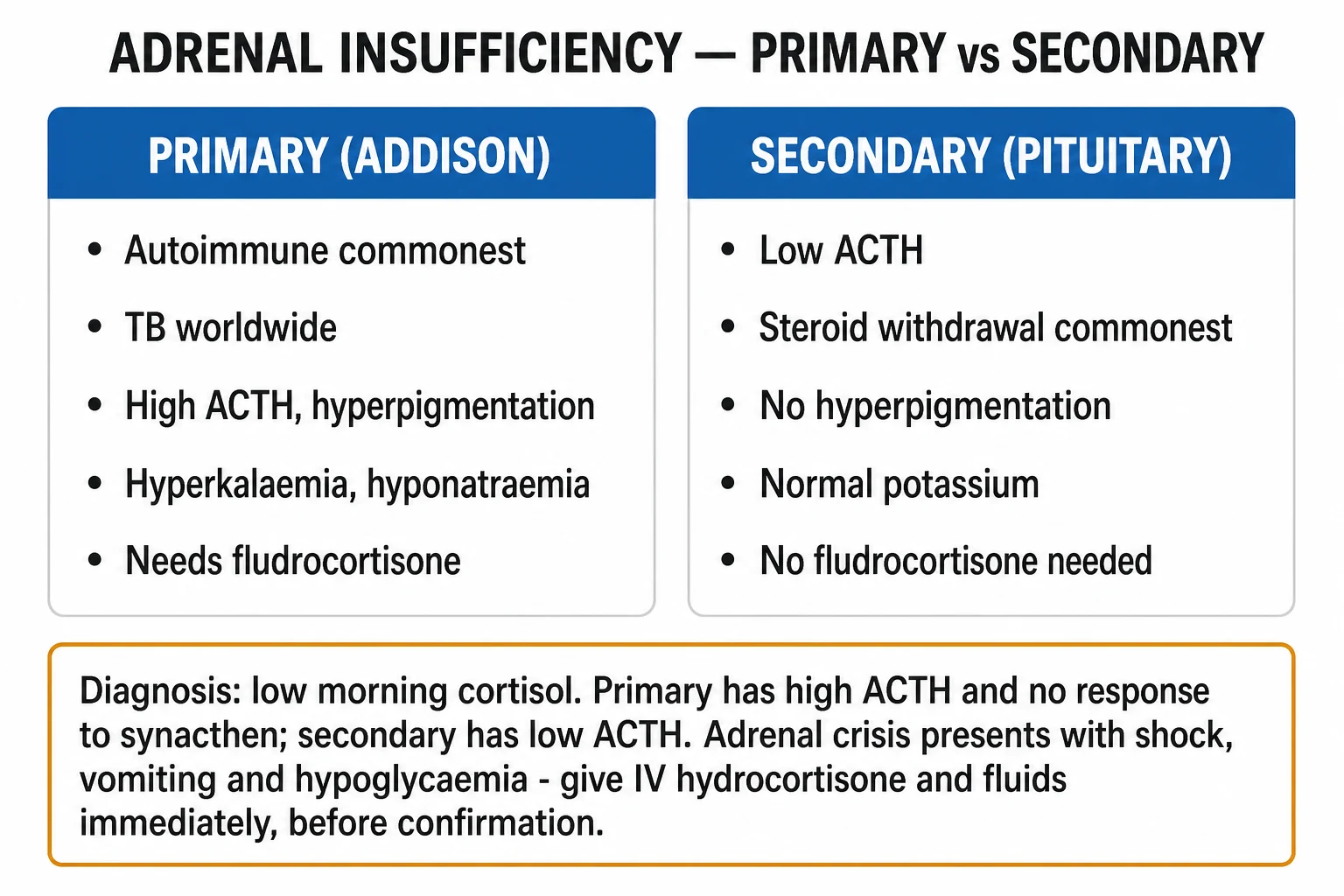
ICU corticosteroid pharmacology — the evidence-based use of glucocorticoids across the full spectrum of critical illness. The four agents every intensivist must master: HYDROCORTISONE (short-acting, mineralocorticoid-active — physiological replacement + refractory septic shock 200 mg/day ± fludrocortisone [ADRENAL/APROCCHSS]), METHYLPREDNISOLONE (intermediate-acting, low mineralocorticoid activity — ARDS, autoimmune emergencies [SLE/vasculitis], Pneumocystis pneumonia, transplant rejection; 500-1000 mg IV pulses), DEXAMETHASONE (long-acting, ZERO mineralocorticoid activity — cerebral oedema, COVID-19 [RECOVERY: 6 mg reduces mortality in ventilated patients], thyroid storm, antenatal lung maturation), and PREDNISOLONE (oral — chronic immunosuppression, PJP adjunct). Mineralocorticoid hierarchy: hydrocortisone HIGH → methylprednisolone LOW → dexamethasone NONE (dexamethasone cannot substitute for hydrocortisone in adrenal crisis). Indications: refractory septic shock (hydrocortisone — improves shock reversal, APROCCHSS reduces mortality with fludrocortisone), moderate-severe ARDS (DEXA-ARDS/Meduri — dexamethasone improves outcomes), Pneumocystis pneumonia with hypoxia (prednisolone 40 mg BD if PaO2 <70), autoimmune emergencies (methylprednisolone pulses), thyroid storm (hydrocortisone 100 mg TDS blocks T4→T3), adrenal crisis (hydrocortisone 200 mg/day), severe CAP (CAPO meta-analysis — reduces mortality with high inflammatory burden). Adverse effects: hyperglycaemia, immunosuppression (PJP prophylaxis if >20 mg prednisolone >4 weeks), critical-illness myopathy (especially with NMBA in ARDS), osteoporosis, peptic ulcer (synergy with NSAIDs), steroid psychosis, and adrenal suppression (>3 weeks of >7.5 mg prednisolone — MUST taper). Stress-dose steroids: surgical/ICU patients on chronic steroids receive hydrocortisone 100 mg IV at induction then 50 mg q8h to prevent adrenal crisis.
On this page & tools
Your progress
Saved locally on this device.
Target exams
Red flags

Overview
Drug comparison — the four ICU corticosteroids
Glucocorticoid pharmacology — the four agents every intensivist must know
| Drug | Relative anti-inflammatory potency | Equivalent dose | Half-life (biological) | Mineralocorticoid activity | Duration of action | Key ICU role |
|---|---|---|---|---|---|---|
| Hydrocortisone | 1× (reference) | 20 mg | 8-12 h | HIGH (1×) | Short (8-12 h) | Physiological replacement; refractory septic shock; adrenal crisis; thyroid storm; perioperative stress-dose |
| Prednisolone | 4× | 5 mg | 18-36 h | Low-minimal (0.6×) | Intermediate (12-36 h) | Oral chronic immunosuppression; PJP adjunct (40 mg BD); CAP; asthma/COPD exacerbation |
| Methylprednisolone | 5× | 4 mg | 18-36 h | LOW (0.5×) | Intermediate (12-36 h) | ARDS; autoimmune pulses (SLE, vasculitis, autoimmune hepatitis); transplant rejection; spinal cord injury |
| Dexamethasone | 25-30× | 0.75 mg | 36-54 h | NONE (~0) | Long (36-72 h) | Cerebral oedema; COVID-19 (RECOVERY); antenatal lung maturation; thyroid storm; DEXA-ARDS paradigm; bacterial meningitis |
Mineralocorticoid activity — the deciding factor in drug selection
| Clinical situation | Why mineralocorticoid activity matters | Correct agent | WRONG agent (do NOT use) |
|---|---|---|---|
| Adrenal crisis / Addisonian crisis | Need both glucocorticoid + mineralocorticoid (sodium retention, K+ excretion, vascular tone) | Hydrocortisone (has mineralocorticoid activity) + fludrocortisone if primary AI | Dexamethasone (zero mineralocorticoid — patient remains hyponatraemic/hypotensive) |
| Refractory septic shock | Mineralocorticoid effect adds vascular tone; APROCCHSS used fludrocortisone | Hydrocortisone ± fludrocortisone | Dexamethasone (no mineralocorticoid benefit) |
| Cerebral oedema / raised ICP | Want maximal anti-inflammatory/anti-oedema effect, NO fluid retention | Dexamethasone (no mineralocorticoid — no Na+/water retention) | Hydrocortisone (mineralocorticoid → fluid retention → worsens cerebral oedema) |
| COVID-19 / ARDS | Anti-inflammatory at low fluid cost; long duration | Dexamethasone 6 mg | Hydrocortisone (shorter-acting, fluid retention) |
| Thyroid storm | Need to block T4→T3 conversion (all glucocorticoids do this) AND manage haemodynamics | Hydrocortisone 100 mg TDS (treats possible coexisting adrenal insufficiency) | Dexamethasone works for T4→T3 but lacks stress-dose cover |
ICU indications by disease
Corticosteroid indications in the ICU — disease-specific dosing
| Indication | Drug + dose | Mechanism / rationale | Evidence / key point |
|---|---|---|---|
| Refractory septic shock | Hydrocortisone 200 mg/day (continuous or 50 mg QDS) ± fludrocortisone 50 mcg/day | Restores vascular tone + HPA axis support (CIRCI) | ADRENAL: faster shock reversal, no mortality benefit. APROCCHSS: +fludrocortisone reduced 90-day mortality in SEVERE shock |
| Moderate-severe ARDS (P/F <200) | Dexamethasone (DEXA-ARDS: 20 mg day 1-5 → 10 mg day 6-10) or methylprednisolone | Suppresses fulminant pulmonary inflammation; reduces fibroproliferation | Meduri IPD meta-analysis: reduced mortality + ventilator days. Rochwerg 2021: confirmed benefit |
| COVID-19 (requiring O2/ventilation) | Dexamethasone 6 mg once daily ≤10 days | Suppresses cytokine storm in late-phase COVID | RECOVERY: 28-day mortality 22.9% vs 25.7%; benefit greatest in ventilated patients (29.3% vs 40.4%); NO benefit in patients not on O2 |
| Pneumocystis jirovecii pneumonia (PJP) | Prednisolone 40 mg BD (or equivalent) ×5d → taper; START within 24h of antibiotics if PaO2 <70 mmHg or A-a gradient >35 | Reduces inflammatory response to dying organisms (prevents clinical deterioration at 3-5 days) | Standard of care in moderate-severe PJP — reduces mortality |
| Severe community-acquired pneumonia | Hydrocortisone 200 mg/day ×4-7d OR prednisolone 50 mg ×5d | Modulates excessive inflammation (high CRP/ ferritin) | CAPO/Siemieniuk meta-analysis: reduced mortality + ARDS, especially high inflammatory burden |
| Autoimmune emergencies (SLE flare, vasculitis, autoimmune hepatitis) | Methylprednisolone 500-1000 mg IV daily ×3 days (pulse) → oral taper | Rapid, potent immunosuppression (halt organ-threatening inflammation) | Pulse therapy is standard for organ/life-threatening rheumatological disease |
| Thyroid storm | Hydrocortisone 100 mg IV TDS | Blocks T4→T3 (5'-deiodinase) conversion + treats coexisting adrenal insufficiency | Adjunct to thionamides (carbimazole/PTU) + beta-blocker + supportive care |
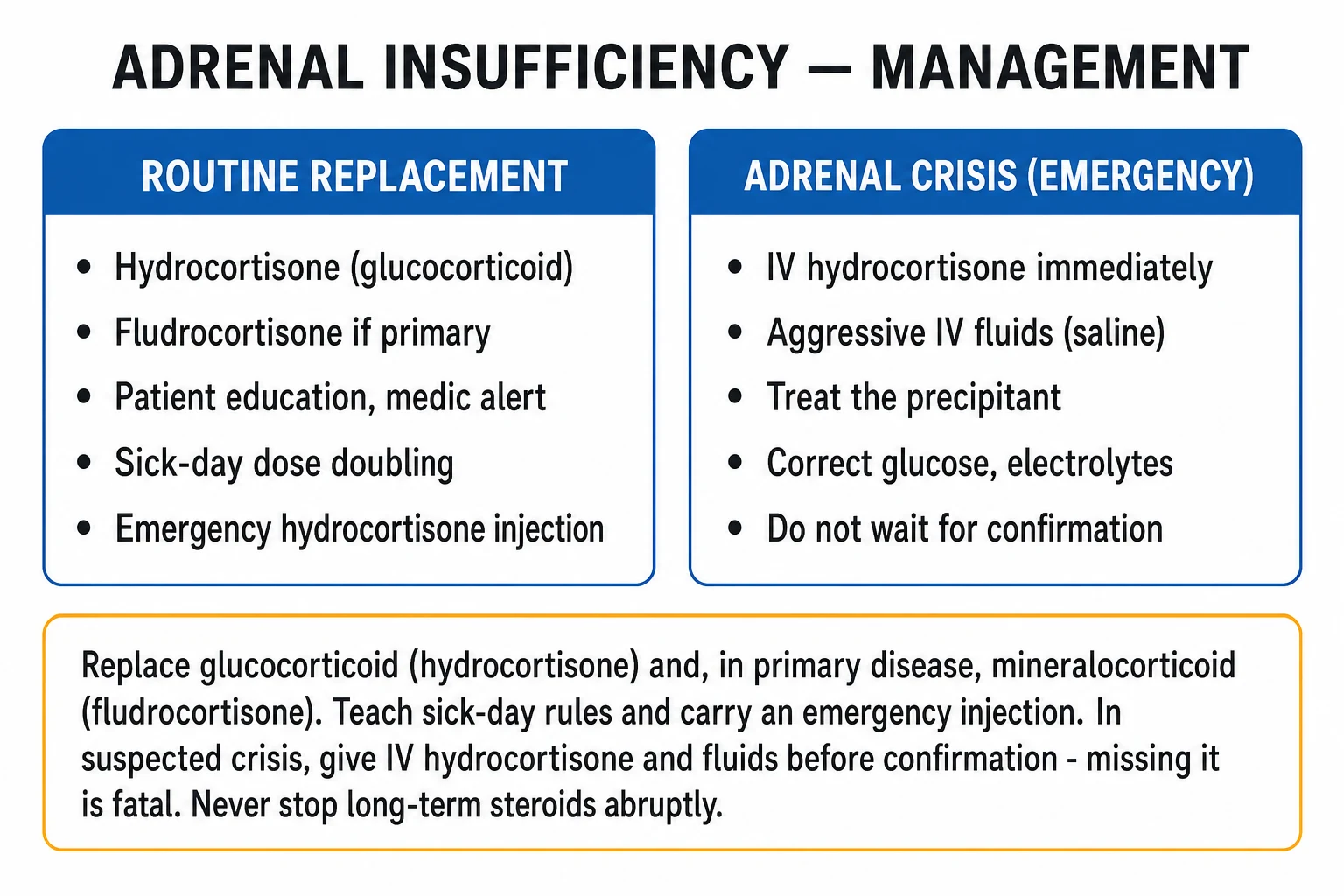
| Adrenal crisis | Hydrocortisone 200 mg/day (100 mg IV bolus → 50 mg QDS or 10 mg/hr infusion) + fludrocortisone | Replace deficient glucocorticoid + mineralocorticoid (primary AI) | Life-saving — give empirically, do not wait for cortisol level in crisis |
| Cerebral oedema (tumour, abscess) | Dexamethasone 4-16 mg/day (load 10 mg IV) | Reduces vasogenic oedema around tumour/abscess (NOT effective for traumatic/cytotoxic oedema) | Effective for vasogenic oedema; little role in TBI or infarction |
| Bacterial meningitis | Dexamethasone 10 mg IV BEFORE or WITH first antibiotic dose ×4d | Reduces meningeal inflammation + neurological sequelae (hearing loss) | Benefit strongest in pneumococcal meningitis; must precede/coinide with antibiotic |
| Antenatal lung maturation (24-34 weeks) | Dexamethasone 6 mg IM ×4 doses (or betamethasone 12 mg IM ×2) | Accelerates type II pneumocyte surfactant production | Reduces neonatal RDS, IVH, mortality — give if preterm delivery 24-34 weeks anticipated within 7 days |
| Anaphylaxis (refractory) | Hydrocortisone 200 mg IV (ADJUNCT only) | Prevents biphasic/late-phase reaction | NEVER first-line — adrenaline IM is first-line; steroids are adjunct and do not alter early course |
Management pathways
Refractory septic shock — when and how to add hydrocortisone
- Ensure adequate resuscitation FIRST — fluids 30 mL/kg crystalloid, noradrenaline titrated to MAP ≥65 mmHg, source control, broad-spectrum antibiotics within 1 hour
- Define 'refractory' — persistent hypotension despite adequate fluid + escalating/high-dose vasopressors (noradrenaline ≥0.25 mcg/kg/min, or dual vasopressors), ongoing lactate elevation, not responding within 4-6 hours
- Start hydrocortisone 200 mg/day — continuous infusion preferred (stable levels) OR 50 mg IV QDS. This is PHYSIOLOGICAL replacement, NOT high-dose (high-dose methylprednisolone was abandoned — harmful)
- Add fludrocortisone 50 mcg PO/NG daily (APROCCHSS approach) — mineralocorticoid adds vascular tone; the only trial showing mortality benefit used this combination in severe shock
- Assess response at 24-48 h — vasopressor dose falling, lactate clearing, improving haemodynamics = response. If no response, reconsider diagnosis (cardiogenic shock? source control inadequate?)
- Do NOT do ACTH stimulation routinely — SSC 2021 suggests against routine cosyntropin testing; give empirically
- Continue until vasopressors weaned — then STOP (CORTICUS: no taper needed, no rebound) OR taper over 7 days (APROCCHSS, more conservative)
- Monitor adverse effects — glucose (steroid-induced hyperglycaemia — use insulin protocol), infection (more superinfections in ADRENAL), neuromuscular weakness, GI bleeding (add stress-ulcer prophylaxis)
Stress-dose steroids — the perioperative / critically-ill patient on chronic steroids
- Identify the at-risk patient — anyone on >7.5 mg prednisolone (or equivalent) daily for >3 weeks within the last year → HPA axis suppression → risk of adrenal crisis under surgical/septic stress
- Assess surgical stress level:
- Minor surgery (hernia, peripheral): take usual morning dose — no extra needed
- Moderate surgery (cholecystectomy, joint replacement): hydrocortisone 50 mg IV at induction
- Major surgery (cardiothoracic, bowel, long >2 h): hydrocortisone 100 mg IV at induction, then 50 mg IV q8h for 24-48 h
- Critical illness (sepsis, trauma): hydrocortisone 100 mg bolus then 200 mg/day continuous
- Give hydrocortisone 100 mg IV at induction (the classic major-surgery regimen) — covers the cortisol demand of surgical stress
- Continue 50 mg IV q8h for 24-48 h postoperatively — then resume usual oral steroid dose
- Convert to oral when tolerating enteral intake — resume the patient's chronic prednisolone dose
- Do NOT stop chronic steroids abruptly — the patient's HPA axis is suppressed; cessation = adrenal crisis
- Monitor for adrenal crisis — unexplained hypotension, hyponatraemia, hyperkalaemia, hypoglycaemia, lethargy → give hydrocortisone 100 mg IV immediately
Thyroid storm — the corticosteroid component
- Recognise thyroid storm — Burch-Wartofsky score ≥45 (hyperthermia >40°C, tachycardia >140, AF, heart failure, CNS dysfunction, precipitant)
- Give hydrocortisone 100 mg IV TDS (or q6h) — FIRST-LINE adjunct, started immediately with thionamide + beta-blocker
- Dual mechanism — (a) blocks peripheral T4→T3 conversion (inhibits 5'-deiodinase), lowering active thyroid hormone; (b) treats presumed relative adrenal insufficiency (cortisol clearance is accelerated in thyrotoxicosis)
- Continue 2-3 days then taper as storm resolves (usually 5-7 days total)
- Note: dexamethasone ALSO blocks T4→T3 but is NOT preferred — hydrocortisone additionally provides the glucocorticoid stress cover these patients need
Corticosteroid tapering — preventing adrenal crisis
- Identify who MUST taper — >3 weeks of >7.5 mg prednisolone daily (or equivalent) → HPA axis suppression. NEVER stop abruptly
- Reduce rapidly to physiological range — if started at high dose (e.g., pulse methylprednisolone or 60 mg prednisolone), reduce by 25% every 1-2 days down to ~20 mg prednisolone (this phase reflects pharmacological excess; quick taper safe)
- Taper SLOWLY below physiological dose — once at ~10 mg/day (near physiological), reduce by 1 mg every 1-2 weeks. This phase restores HPA axis — slow because the axis recovers over months
- Convert long-acting to hydrocortisone at the end — dexamethasone/prednisolone → hydrocortisone 20 mg mane → reduce to 10 mg → every-other-day dosing → stop
- Monitor for withdrawal symptoms — fatigue, arthralgia, myalgia, lethargy, hypotension, nausea = too fast; pause/slow the taper
- Stress cover during intercurrent illness — any infection/surgery during taper → double the dose or give IV hydrocortisone (HPA axis not yet recovered)
- Consider ACTH stimulation test at end of taper to confirm HPA recovery (optional — often done clinically by observing tolerance of dose reduction)
ARDS — corticosteroid protocol (DEXA-ARDS / Meduri paradigm)
- Identify the candidate — moderate-severe ARDS (PaO2/FiO2 <200 with PEEP ≥5) within 14 days of onset, NOT improving, NO active infection contraindication
- Exclude contraindications — uncontrolled infection, recent GI perforation, refractory hyperglycaemia (relative)
- Start dexamethasone (DEXA-ARDS regimen): 20 mg IV daily ×5 days → 10 mg IV daily ×5 days (10-day course). Alternatively methylprednisolone 1 mg/kg/day ×14 days then taper (Meduri)
- Monitor for early improvement — P/F ratio, lung compliance, FiO2 requirement should improve within 5-7 days; if no improvement by day 7, reassess
- Aggressively manage hyperglycaemia — steroid-induced; use insulin infusion targeting glucose 6-10 mmol/L
- AVOID concurrent NMBA where possible — steroid + NMBA = critical-illness myopathy risk; if paralysis essential, minimise duration
- Taper on improvement — do not stop abruptly; DEXA-ARDS uses fixed 10-day course, Meduri tapers over 7-14 days
- Continue lung-protective ventilation, proning, conservative fluid strategy — steroids are adjunct, not replacement for ARDS fundamentals
Clinical pearls
Red flags
Key trials and evidence
ADRENAL trial — Hydrocortisone in septic shock (PMID 29347874)
Study design
Multicentre, randomised, double-blind, placebo-controlled — 3,658 patients
Population
Adults with septic shock within 24h, on vasopressors, mechanical ventilation
Intervention
Hydrocortisone 200 mg/day (continuous infusion) vs placebo, until shock resolution or 7 days
Primary outcome
90-day mortality: 27.9% vs 28.8% (NOT significant)
Key secondary findings
Faster shock resolution, fewer days on vasopressors, faster ICU discharge; MORE new infection/superinfection with hydrocortisone
Clinical bottom line
Hydrocortisone does NOT improve survival in septic shock overall, but accelerates shock reversal — reserve for REFRACTORY shock to reduce vasopressor burden
APROCCHSS trial — Hydrocortisone + Fludrocortisone in severe septic shock (PMID 29490185)
Study design
Multicentre, randomised, double-blind, placebo-controlled — 1,241 patients
Population
SEVERE septic shock (SOFA ≥8 OR shock index >0.8 for >6h) within 24h
Intervention
Hydrocortisone 200 mg/day + fludrocortisone 50 mcg/day vs placebo ×7 days, then tapered
Primary outcome
90-day mortality: 43.0% vs 48.8% (RR 0.89, p=0.03) — REDUCED mortality
Key secondary findings
More vasopressor-free days; no excess serious adverse events or infection
Clinical bottom line
In SEVERE septic shock, hydrocortisone + fludrocortisone REDUCES mortality — the mineralocorticoid (fludrocortisone) and sicker population explain why APROCCHSS succeeded where ADRENAL (hydrocortisone alone) did not
RECOVERY trial — Dexamethasone in COVID-19 (PMID 32678530)
Study design
Multicentre, randomised, open-label — >6,400 patients allocated to dexamethasone vs usual care
Population
Hospitalised COVID-19 patients
Intervention
Dexamethasone 6 mg once daily (up to 10 days) vs usual care
Primary outcome
28-day mortality by respiratory support at randomisation
Key findings
Invasive ventilation: 29.3% vs 40.4% (RR 0.64). Oxygen only: 21.5% vs 25.0% (RR 0.82). No oxygen: 17.0% vs 13.2% (RR 1.19 — harm). Overall NNT ~8 in ventilated patients
Clinical bottom line
Dexamethasone 6 mg reduces mortality in COVID-19 patients requiring oxygen or ventilation; avoid in those not on oxygen. A landmark trial that defined COVID corticosteroid use globally
Meduri IPD meta-analysis — Glucocorticoids in ARDS (PMID 26508525)
Study design
Individual patient data meta-analysis of 4 randomised trials + trial-level meta-analysis
Population
Patients with ARDS receiving prolonged glucocorticoid treatment (methylprednisolone-based) vs control
Intervention
Prolonged glucocorticoid (methylprednisolone ~1 mg/kg/day, tapering) vs placebo/standard
Key findings
Reduced mortality, increased ventilator-free and shock-free days, improved oxygenation; benefit when started early (<14 days)
Clinical bottom line
Prolonged glucocorticoid treatment improves outcomes in moderate-severe ARDS — foundation for the DEXA-ARDS dexamethasone paradigm; start early, use a tapering regimen
CAPO / Siemieniuk meta-analysis — Corticosteroids in CAP (PMID 26258555)
Study design
Systematic review and meta-analysis — 13 RCTs, ~2,000 patients
Population
Adults hospitalised with community-acquired pneumonia
Intervention
Corticosteroids (hydrocortisone, prednisolone) vs placebo
Key findings
Reduced mortality (RR 0.78), reduced ARDS development (RR 0.46), shorter time to clinical stability; benefit greatest in severe CAP with high inflammatory burden (CRP >150)
Clinical bottom line
Corticosteroids reduce mortality and ARDS in severe CAP, especially with high CRP — consider a short course in severe CAP with excessive inflammation
Prognosis
Corticosteroid outcomes — what the evidence shows
| Scenario | Outcome impact | Evidence |
|---|---|---|
| Refractory septic shock + hydrocortisone | Faster shock reversal, shorter vasopressor duration (no overall mortality benefit) | ADRENAL (2018) |
| Severe septic shock + hydrocortisone + fludrocortisone | 90-day mortality reduced (43% vs 49%) | APROCCHSS (2018) |
| COVID-19 on oxygen/ventilation + dexamethasone 6 mg | Mortality reduced (NNT ~8 ventilated) | RECOVERY (2021) |
| Moderate-severe ARDS + dexamethasone/methylprednisolone | Reduced mortality + more ventilator-free days | Meduri IPD meta-analysis (2016); Rochwerg (2021) |
| Severe CAP + corticosteroids (high CRP) | Reduced mortality + reduced ARDS | Siemieniuk/CAPO (2015) |
| PJP with hypoxia + prednisolone adjunct | Reduced mortality | Standard of care |
| Long-term >7.5 mg prednisolone >3 weeks | Adrenal suppression → crisis risk if stopped abruptly | Endocrine guideline consensus |
| Steroid + NMBA in ARDS | Critical-illness myopathy → prolonged weakness, delayed weaning | Observational + trial data |
Adverse-effect monitoring — the ICU corticosteroid checklist
| Adverse effect | Mechanism | Monitoring / prevention |
|---|---|---|
| Hyperglycaemia | Gluconeogenesis + insulin resistance | Q1-4h glucose; insulin infusion; target 6-10 mmol/L |
| Immunosuppression / infection | T-cell suppression, reduced cytokines | Prophylaxis if prolonged (>20 mg prednisolone >4 wk → co-trimoxazole); surveillance cultures |
| Critical-illness myopathy | Type II fibre atrophy + myosin loss | Minimise steroid + NMBA overlap; early mobilisation; monitor CK |
| Peptic ulcer / GI bleed | Impaired mucosal healing + acid | Stress-ulcer prophylaxis (PPI); AVOID NSAIDs |
| Osteoporosis / avascular necrosis | Osteoclast activation + osteoblast suppression | Calcium + vitamin D; bisphosphonate for long-term; MRI hip if symptomatic |
| Steroid psychosis / delirium | CNS glucocorticoid effect | CAM-ICU monitoring; reduce dose if severe; antipsychotic if needed |
| Adrenal suppression | HPA axis suppression | Taper; stress-dose cover for illness/surgery |
| Fluid/electrolyte (mineralocorticoid) | Na+ retention, K+ loss (hydrocortisone) | Monitor K+; supplement; (not an issue with dexamethasone) |
| Wound healing impairment | Reduced collagen synthesis / fibroblast activity | Surgical patients: adequate nutrition; monitor wounds |
Examiner densify anchors
SAQ — Vasopressor-dependent septic shock and steroids
10 minutes · 10 marks
A 62-year-old woman with community pneumonia remains on noradrenaline 0.4 µg/kg/min at 12 hours despite antibiotics and source control. MAP is 65. Lactate is falling. The registrar asks whether to start corticosteroids and which regimen.
Practical ICU checklist (densify)
Bedside densify checklist
- Confirm diagnosis thresholds with numbers the examiner expects.
- Name the first therapy and the absolute contraindication.
- State monitoring frequency and escalation triggers.
- Cite one landmark paper/guideline and one limitation of the evidence.
- Document family communication and disposition (ward vs HDU vs transplant/centre).
Practical ICU checklist (densify)
Bedside densify checklist
- Confirm diagnosis thresholds with numbers the examiner expects.
- Name the first therapy and the absolute contraindication.
- State monitoring frequency and escalation triggers.
- Cite one landmark paper/guideline and one limitation of the evidence.
- Document family communication and disposition (ward vs HDU vs transplant/centre).
References
- [1]Venkatesh B, Finfer S, Cohen J, et al. Adjunctive Glucocorticoid Therapy in Patients with Septic Shock N Engl J Med, 2018.PMID 29347874
- [2]Annane D, Renault A, Brun-Buisson C, et al. Hydrocortisone plus Fludrocortisone for Adults with Septic Shock N Engl J Med, 2018.PMID 29490185
- [3]RECOVERY Collaborative Group; Horby P, Lim WS, Emberson JR, et al. Dexamethasone in Hospitalized Patients with Covid-19 N Engl J Med, 2021.PMID 32678530
- [4]Meduri GU, Bridges L, Shih MC, et al. Prolonged glucocorticoid treatment is associated with improved ARDS outcomes: analysis of individual patients' data from four randomized trials and trial-level meta-analysis of the updated literature Intensive Care Med, 2016.PMID 26508525
- [5]Siemieniuk RA, Meade MO, Alonso-Coello P, et al. Corticosteroid Therapy for Patients Hospitalized With Community-Acquired Pneumonia: A Systematic Review and Meta-analysis Ann Intern Med, 2015.PMID 26258555
- [6]Chaudhuri D, Sasaki K, Karkar A, et al. (Rochwerg B, Annane D) Corticosteroids in COVID-19 and non-COVID-19 ARDS: a systematic review and meta-analysis Intensive Care Med, 2021.PMID 33876268