ICU · Pharmacology
Diuretics — Loop, Thiazide, Potassium-Sparing & Osmotic
Also known as Diuretics · Loop diuretics · Furosemide · Bumetanide · Torasemide · Thiazide · Hydrochlorothiazide · Chlorthalidone · Metolazone · Potassium-sparing · Spironolactone · Eplerenone · Amiloride · Mannitol · Acetazolamide · Sequential nephron blockade · Diuretic resistance · DOSE trial
Diuretics — by site of action in the nephron. LOOP (furosemide, bumetanide, torasemide — inhibit the Na-K-2Cl [NKCC2] cotransporter in the thick ascending limb — the MOST POTENT class, blocking 20-25% of filtered Na+). THIAZIDE (hydrochlorothiazide, chlorthalidone, indapamide, metolazone — inhibit the Na-Cl [NCC] cotransporter in the distal convoluted tubule — 5-10% of Na+). POTASSIUM-SPARING (spironolactone/eplerenone — aldosterone/mineralocorticoid-receptor antagonists; amiloride/triamterene — ENaC blockers — cortical collecting duct). OSMOTIC (mannitol — filtered, not reabsorbed — osmotic water pull throughout the nephron; reduces ICP 0.5-1 g/kg). CARBONIC ANHYDRASE INHIBITOR (acetazolamide — proximal tubule — HCO3 loss → metabolic acidosis). ICU use: furosemide 40-80 mg IV bolus for acute pulmonary oedema, fluid overload, hyperkalaemia adjunct; mannitol 0.5-1 g/kg for raised ICP; acetazolamide for metabolic alkalosis and altitude prophylaxis; spironolactone for cirrhotic ascites and resistant hypertension. The DOSE trial established that continuous infusion and intermittent bolus furosemide are equivalent in efficacy and renal safety. Adverse-effect signature: hypokalaemia, hyponatraemia, metabolic alkalosis, ototoxicity (high-dose furosemide), hypercalciuria/nephrocalcinosis (loop). Resistance managed by sequential nephron blockade (loop + thiazide).
On this page & tools
Your progress
Saved locally on this device.
8 MCQs with explanations
Target exams
Red flags
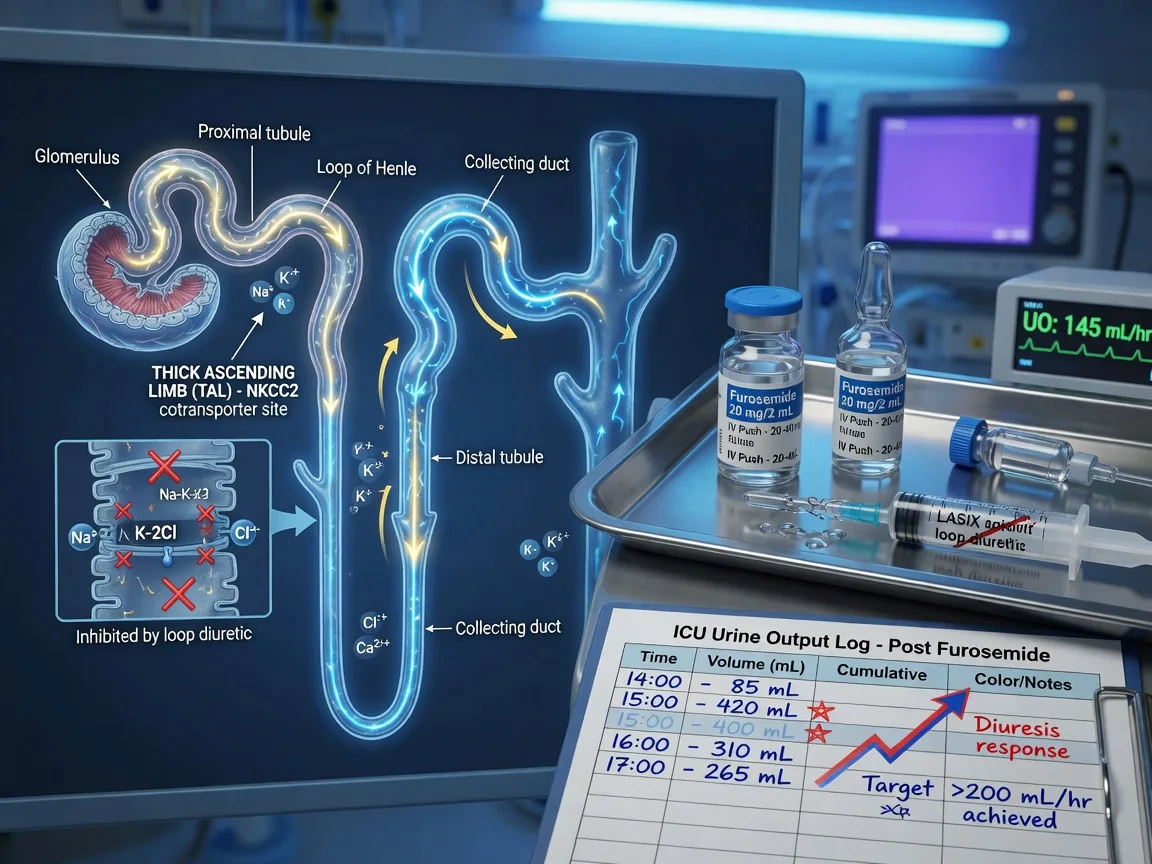
Overview & definition
Diuretics — by the site of action in the nephron. The loop (the most potent), the thiazide (the moderate), the potassium-sparing (the weak), the osmotic (the mannitol), and the carbonic anhydrase inhibitor (the acetazolamide).[1]
Diuretics increase urine output by interfering with sodium reabsorption at specific nephron segments. Because each nephron segment reabsorbs a characteristic fraction of the filtered sodium load, the potency of a diuretic class is determined almost entirely by where in the nephron it acts: agents acting on the proximal tubule or collecting duct block a small fraction (1–3%) and produce a weak diuresis, whereas agents blocking the thick ascending limb abolish 20–25% of filtered Na+ and are the most powerful natriuretics available. This site-of-action principle explains potency, the signature electrolyte and acid–base effects (calcium, magnesium, potassium, acid–base), and the toxicities of each class.[3]
In ICU practice, diuretics are among the most frequently prescribed drugs. Their dominant use is volume control — relief of pulmonary and peripheral congestion in heart failure, fluid overload in AKI/CRRT weaning, and negative balance in ARDS — but they are also deployed for intracranial pressure control (mannitol), correction of metabolic alkalosis (acetazolamide), hypercalcaemia (furosemide), and as a hyperkalaemia adjunct (furosemide to promote distal K+ secretion). The intensivist must understand each agent's site of action, dose–response, adverse-effect signature, and the strategy of sequential nephron blockade for diuretic resistance.[6][17]
By class
| Class | Site | Mechanism | Agents | Key adverse |
|---|---|---|---|---|
| Loop | Thick ascending limb | Na-K-2Cl block | Furosemide, bumetanide | Hypokalaemia, hypocalcaemia, ototoxicity |
| Thiazide | Distal tubule | Na-Cl block | Hydrochlorothiazide, indapamide | Hypokalaemia, hypercalcaemia, hyponatraemia |
| K-sparing | Cortical collecting duct | Aldosterone block / ENaC | Spironolactone, amiloride | Hyperkalaemia |
| Osmotic | Throughout | Osmotic pull | Mannitol | Hypovolaemia, hypernatraemia |
| CA inhibitor | Proximal tubule | CA block → HCO3 loss | Acetazolamide | Metabolic acidosis, hypokalaemia |
Nephron anatomy — where each class acts
The five diuretic classes — nephron site, molecular target, potency and signature toxicity
| Class | Site of action | Molecular target | Potency (% filtered Na+ blocked) | Agents | Signature adverse effect |
|---|---|---|---|---|---|
| Carbonic anhydrase inhibitor | Proximal tubule | Carbonic anhydrase → ↓H+ → ↓HCO3/Na+ reabsorption | Weakest (1–3%) | Acetazolamide | Metabolic acidosis, hypokalaemia, renal stones |
| Osmotic | Throughout (mainly proximal tubule & loop) | Freely filtered, not reabsorbed — osmotic water retention in lumen | Variable (depends on filtered load) | Mannitol, urea | Hypovolaemia, hypernatraemia, acute tubular injury |
| Loop | Thick ascending limb (TAL) | Na-K-2Cl (NKCC2) cotransporter | Most potent (20–25%) | Furosemide, bumetanide, torasemide | Hypokalaemia, hypomagnesaemia, HYPOcalcaemia, ototoxicity |
| Thiazide / thiazide-like | Distal convoluted tubule (DCT) | Na-Cl (NCC) cotransporter | Moderate (5–10%) | Hydrochlorothiazide, chlorthalidone, indapamide, metolazone | Hypokalaemia, HYPOnatraemia, hyperuricaemia, HYPERcalcaemia |
| Potassium-sparing | Cortical collecting duct (CCD) | Mineralocorticoid receptor (aldosterone antagonist) OR ENaC (epithelial Na+ channel blocker) | Weak (1–3%) | Spironolactone, eplerenone (MRA); amiloride, triamterene (ENaC) | HYPERkalaemia, metabolic acidosis, gynaecomastia (spironolactone) |
The nephron segments, in the order filtrate flows, and the diuretic acting at each:[3][4]
- Glomerulus — (no diuretic acts here; filtration is the input).
- Proximal tubule — reabsorbs ~65% of filtered Na+ via Na+/H+ exchange (driven by carbonic anhydrase). Acetazolamide blocks carbonic anhydrase here → HCO3-/Na+ loss → weak diuresis + metabolic acidosis.
- Thin descending limb — water-permeable, reabsorbs water passively along the medullary gradient. Site of mannitol action (osmotic hold of water in the lumen).
- Thick ascending limb (TAL) — reabsorbs ~25% of filtered Na+ via the Na-K-2Cl (NKCC2) cotransporter; impermeable to water (the "diluting segment"). Loop diuretics act here → most potent class.
- Distal convoluted tubule (DCT) — reabsorbs ~5–10% of filtered Na+ via Na-Cl (NCC) cotransporter; also the Ca2+/Mg2+ reabsorption site. Thiazides act here.
- Cortical collecting duct (CCD) — principal cells reabsorb Na+ via ENaC (epithelial Na+ channel), driven by aldosterone acting at the mineralocorticoid receptor (MR). K-sparing diuretics act here — MR antagonists (spironolactone/eplerenone) or ENaC blockers (amiloride/triamterene). [1]
Mechanism in depth — why each class works (and its toxicity)
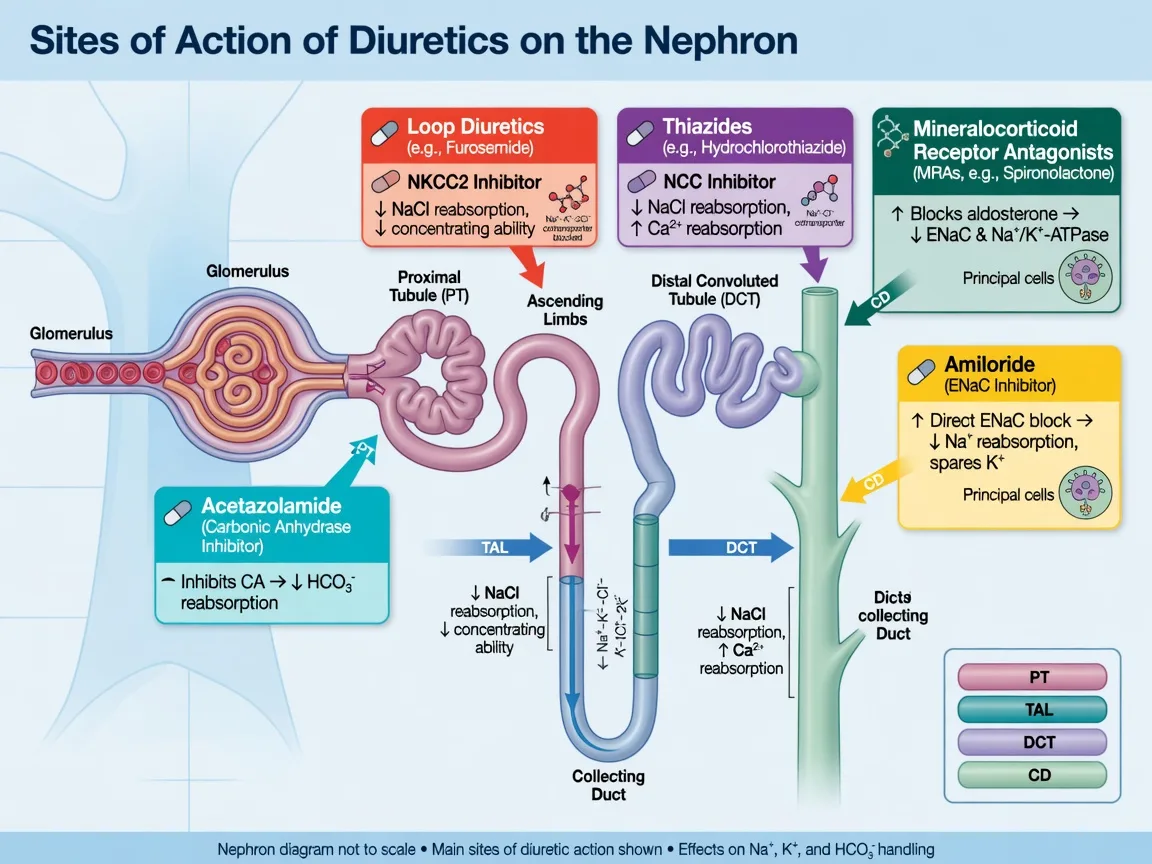
Nephron physiology — diuretic mechanism and electrolyte consequences by segment
-
PROXIMAL TUBULE — acetazolamide (carbonic anhydrase inhibitor):
- Carbonic anhydrase (on the luminal brush border) catalyses CO2 + H2O → H2CO3 → H+ + HCO3-. The H+ is secreted into the lumen in exchange for Na+ (Na+/H+ exchanger).
- Acetazolamide inhibits carbonic anhydrase → less H+ available → less Na+/H+ exchange → Na+ and HCO3- are lost in the urine.
- Result: alkaline urine + metabolic acidosis (HCO3 loss). Weak diuresis because downstream segments (TAL, DCT) reabsorb most of the escaped Na+.
- Clinical: corrects metabolic alkalosis (chronic diuretic use, vomiting, post-hypercapnic alkalosis), altitude sickness prophylaxis (induces metabolic acidosis → stimulates ventilation → ↑oxygenation), glaucoma (↓aqueous humour production), altitude acclimatisation.
- Toxicity: metabolic acidosis (intended when treating alkalosis), hypokalaemia (increased distal Na+ delivery → ↑K+ secretion), renal stones (alkaline, calcium-rich urine), paraesthesia, fatigue. [1]
-
THIN DESCENDING LIMB / THROUGHOUT — mannitol (osmotic):
- Mannitol is freely filtered at the glomerulus and not reabsorbed anywhere along the nephron.
- It remains in the tubular lumen, exerting an osmotic force that holds water in the lumen (and secondarily limits Na+ reabsorption by reducing the concentration gradient and tubular flow time).
- Result: an osmotic diuresis — water-rich urine with modest Na+ loss.
- Extrarenal effects: mannitol draws water out of brain (↓ICP) and eye (↓intra-ocular pressure) across an intact blood–brain barrier; increases plasma osmolality and circulating volume.
- Clinical: raised ICP (0.5–1 g/kg IV bolus over 10–15 min), raised intra-ocular pressure, crush injury / rhabdomyolysis (osmotic flush, controversial), early ARDS/ARF "renal protection" (not supported).
- Toxicity: hypovolaemia (over-diuresis), hypernatraemia (free-water loss), acute kidney injury (if used in hypovolaemia / high osmolar gap — mannitol accumulates when GFR is low), rebound cerebral oedema (if BBB disrupted), pulmonary oedema (in volume-overloaded patients). [1]
-
THICK ASCENDING LIMB (TAL) — loop diuretics (the powerhouse):
- The TAL reabsorbs ~25% of filtered Na+ via the apical Na-K-2Cl (NKCC2) cotransporter. This reabsorption establishes the countercurrent multiplier — the corticomedullary osmotic gradient that drives water reabsorption in the collecting duct.
- Loops (furosemide, bumetanide, torasemide) are secreted into the proximal tubule (via OAT) and reach the TAL luminal NKCC2 from the urine side — so they must reach the tubule to work (GFR-dependent delivery, competition with NSAIDs/organic anions).
- Blocking NKCC2: (a) abolishes Na+/K+/Cl- reabsorption → massive natriuresis (20–25% of filtered load — most potent class); (b) abolishes the lumen-positive potential that normally drives paracellular Ca2+ and Mg2+ reabsorption → HYPOcalcaemia + HYPOmagnesaemia + hypercalciuria (and long-term nephrocalcinosis in preterm infants); (c) abolishes the corticomedullary gradient → loss of concentrating ability → free-water loss.
- Early (pre-diuretic) effect: furosemide causes venodilation within 5 min (prostaglandin-mediated, requires intact renal prostaglandin production) → ↓preload → relief of pulmonary oedema before diuresis begins.
- Toxicity: hypokalaemia, hypomagnesaemia, hypocalcaemia, metabolic alkalosis (contraction + hypochloraemia), hyperuricaemia, ototoxicity (high-dose IV). [1]
-
DISTAL CONVOLUTED TUBULE (DCT) — thiazides:
- The DCT reabsorbs ~5–10% of filtered Na+ via the Na-Cl (NCC) cotransporter.
- Thiazides block NCC → moderate natriuresis. Increased distal Na+ delivery → augmented Na+/K+ and Na+/H+ exchange in the CCD → hypokalaemia + metabolic alkalosis.
- Calcium: blocking NCC hyperpolarises the DCT cell, enhancing apical Ca2+ entry (via TRPV5) and basolateral extrusion → HYPERcalcaemia / reduced urinary calcium (opposite of loops — classic exam contrast; thiazides are first-line for idiopathic hypercalciuria and Ca-oxalate stones).
- Thiazides are delivered from the urine side (secreted into the proximal tubule), so they are ineffective when GFR < 30 mL/min (cannot reach luminal NCC) — except metolazone, which retains activity at low GFR (longer half-life, higher lipid solubility) — hence its special role in sequential nephron blockade.
- Toxicity: hypokalaemia, HYPOnatraemia (commonest drug cause — impaired diluting capacity + ADH stimulation), hyperuricaemia, HYPERcalcaemia, hyperglycaemia. [1]
-
CORTICAL COLLECTING DUCT (CCD) — potassium-sparing diuretics:
- Principal cells reabsorb Na+ via the apical ENaC channel (aldosterone-regulated), generating a lumen-negative potential that drives K+ and H+ secretion.
- MR antagonists (spironolactone, eplerenone) compete with aldosterone at the cytosolic mineralocorticoid receptor → ↓ENaC synthesis and ↓Na+/K+ ATPase activity → ↓Na+ reabsorption, ↓K+ secretion → K+ retention.
- ENaC blockers (amiloride, triamterene) block ENaC directly from the luminal side → ↓lumen-negative potential → ↓K+ and H+ secretion.
- Result: weak diuresis (1–3% Na+) but K+ and H+ retention → hyperkalaemia + metabolic acidosis.
- Clinical: HFrEF (spironolactone/eplerenone — mortality), Conn syndrome, cirrhotic ascites (spironolactone first-line), diuretic-induced hypokalaemia (amiloride), Liddle syndrome (amiloride).
- Toxicity: HYPERkalaemia (dangerous with ACE inhibitor + renal impairment), metabolic acidosis, gynaecomastia/menstrual irregularity (spironolactone via antiandrogen/procine progestogen effect — eplerenone has much lower rate).
Loop diuretics — the ICU workhorse
Agents and pharmacology
Loop diuretic agent comparison (furosemide vs bumetanide vs torasemide)
| Property | Furosemide | Bumetanide | Torasemide |
|---|---|---|---|
| Oral bioavailability | Variable (10–100%, ~50% average) — unreliable oral absorption | ~80% (more reliable) | 80–100% (most reliable) |
| Relative potency | 40 mg IV = 20 mg PO (2:1 IV:PO) | 1 mg bumetanide ≈ 40 mg furosemide (40× more potent by mass) | 10–20 mg torasemide ≈ 40 mg furosemide |
| Onset (IV) | 5 min | 2–5 min | 10 min |
| Duration | 2–3 h (short) | 3–4 h | 4–6 h (longer) |
| Elimination | Renal (60%) + conjugation; metabolite glucuronide | Renal (50%) + hepatic metabolism | Hepatic (80%) — preferred in renal impairment |
| Ototoxicity risk | Highest (of the three) | Lower | Lowest |
| Half-life | Short (~1.5 h, longer in renal failure) | Short (~1 h) | Longer (~3.5 h) |
| Clinical bottom line | First-line, cheapest, but variable absorption and highest ototoxicity | Useful when reliable absorption needed or furosemide allergy | Longer-acting, hepatically cleared, less ototoxic — preferred in some units for stable HF |
The key practical points: furosemide has unpredictable oral bioavailability (so decompensated HF needs IV); IV:PO ratio is ~2:1 for furosemide (but 1:1 for bumetanide and torasemide); and all three loop diuretics are equally effective when given in equipotent doses — choice is driven by pharmacokinetics, ototoxicity, and hepatic vs renal elimination.[3][4]
Loop diuretic delivery — secretion into the tubule
Why loop diuretics must reach the tubule (and why NSAIDs/GFR matter)
- Filtration + secretion. Loop diuretics are highly protein-bound, so only a small fraction is filtered at the glomerulus. They reach their site of action (luminal NKCC2 in the TAL) mainly by active secretion into the proximal tubule via the organic anion transporter (OAT).
- GFR dependence. In AKI/low cardiac output, reduced renal blood flow and GFR reduce the amount of drug delivered to the tubule — requiring higher doses to achieve the same luminal concentration.
- NSAID competition. NSAIDs occupy OAT and also block prostaglandin-mediated renal vasodilation, competing with furosemide for secretion and reducing its delivery — a common cause of apparent diuretic resistance (and the basis of the venodilating effect being prostaglandin-dependent and abolished by NSAIDs).
- Hypoalbuminaemia. Reduced protein binding increases volume of distribution and reduces the amount delivered to the OAT — pairing furosemide with albumin is sometimes used in nephrotic/hypoalbuminaemic patients (evidence mixed).
- Take-home: a 'resistant' loop may simply not be reaching the tubule — switch to IV, ensure no NSAID, address hypoperfusion, then escalate dose before declaring true resistance.
ICU clinical use — which diuretic for which problem
Clinical indications — which diuretic for which problem
| Indication | First-line class / agent | Rationale |
|---|---|---|
| Acute pulmonary oedema / cardiogenic | IV furosemide 40–80 mg IV bolus (loop) | Rapid venodilation (prostaglandin-mediated, within 5 min, before diuresis begins) + potent natriuresis → ↓preload.[6] |
| Acute decompensated heart failure (decongestion) | IV loop (furosemide first-line); add thiazide if resistant | Loop is cornerstone of decongestion. DOSE trial: bolus = continuous infusion (equivalent).[1] |
| Chronic HFrEF (one of the four pillars) | Loop + spironolactone/eplerenone (MRA) | RALES: spironolactone 30% mortality reduction. MRA is a guideline pillar regardless of K+ status (monitor).[2] |
| Fluid overload in AKI / oliguria | Loop (furosemide — high doses often needed; torasemide if hepatic) | Thiazides ineffective when GFR <30 (can't reach luminal site); loops remain effective down to low GFR. Not for AKI prevention (no benefit on mortality/RRT).[17] |
| Hyperkalaemia adjunct | IV furosemide (with insulin/dextrose, β2-agonist, bicarbonate) | Promotes distal K+ secretion (especially in volume-replete patients with adequate GFR); slower than insulin but sustained K+ loss. |
| Raised intracranial pressure (ICP) | Mannitol 0.5–1 g/kg IV bolus over 10–15 min | Osmotic water extraction from brain (intact BBB) → ↓brain water + ↓ICP; rapid onset 5–10 min. Monitor serum osmolality (target 300–320 mOsm/kg, stop if gap >20).[11][12] |
| Hypertension (uncomplicated) | Thiazide (chlorthalidone preferred) | ALLHAT: chlorthalidone superior for HF prevention. Once daily.[10] |
| Resistant / refractory hypertension | Spironolactone (add-on 4th line) | PATHWAY-2: spironolactone superior to bisoprolol/doxazosin as 4th-line agent in resistant HTN; undiagnosed primary aldosteronism contributes. |
| Nephrogenic DI | Thiazide (hydrochlorothiazide) | Paradoxical — thiazides reduce polyuria by volume contraction → enhanced proximal Na+/water reabsorption → less distal delivery. |
| Idiopathic hypercalciuria / Ca-oxalate stones | Thiazide | Reduces urinary calcium excretion (the only class that does). |
| Hypercalcaemia (symptomatic) | IV furosemide + saline | Loop increases Ca excretion (after saline rehydration to prevent hypovolaemia). Do NOT use thiazide. |
| Conn syndrome (primary hyperaldosteronism) | Spironolactone / eplerenone | Blocks the excess aldosterone → corrects hypertension + hypokalaemia. |
| Cirrhotic ascites | Spironolactone ± furosemide (ratio 100:40 to maintain normokalaemia) | Spironolactone first-line (aldosterone high due to 2° hyperaldosteronism); add loop if insufficient.[16] |
| Resistant oedema / diuretic resistance | Loop + thiazide (sequential nephron blockade — metolazone 2.5–5 mg) | Blocks hypertrophied downstream NCC → synergistic massive diuresis.[5] |
| Metabolic alkalosis (correction) | Acetazolamide | HCO3 loss in urine → corrects alkalosis; useful in post-hypercapnic alkalosis, loop-induced alkalosis, and to facilitate ventilator weaning in COPD.[14] |
| Altitude sickness prophylaxis | Acetazolamide (125–250 mg PO BD, start 24–48 h pre-ascent) | Induces mild metabolic acidosis → stimulates ventilation → ↑oxygenation + acclimatisation.[15] |
| Glaucoma (↑intra-ocular pressure) | Acetazolamide (systemic) | ↓Aqueous humour production (CA in ciliary body). |
Acute pulmonary oedema — furosemide protocol
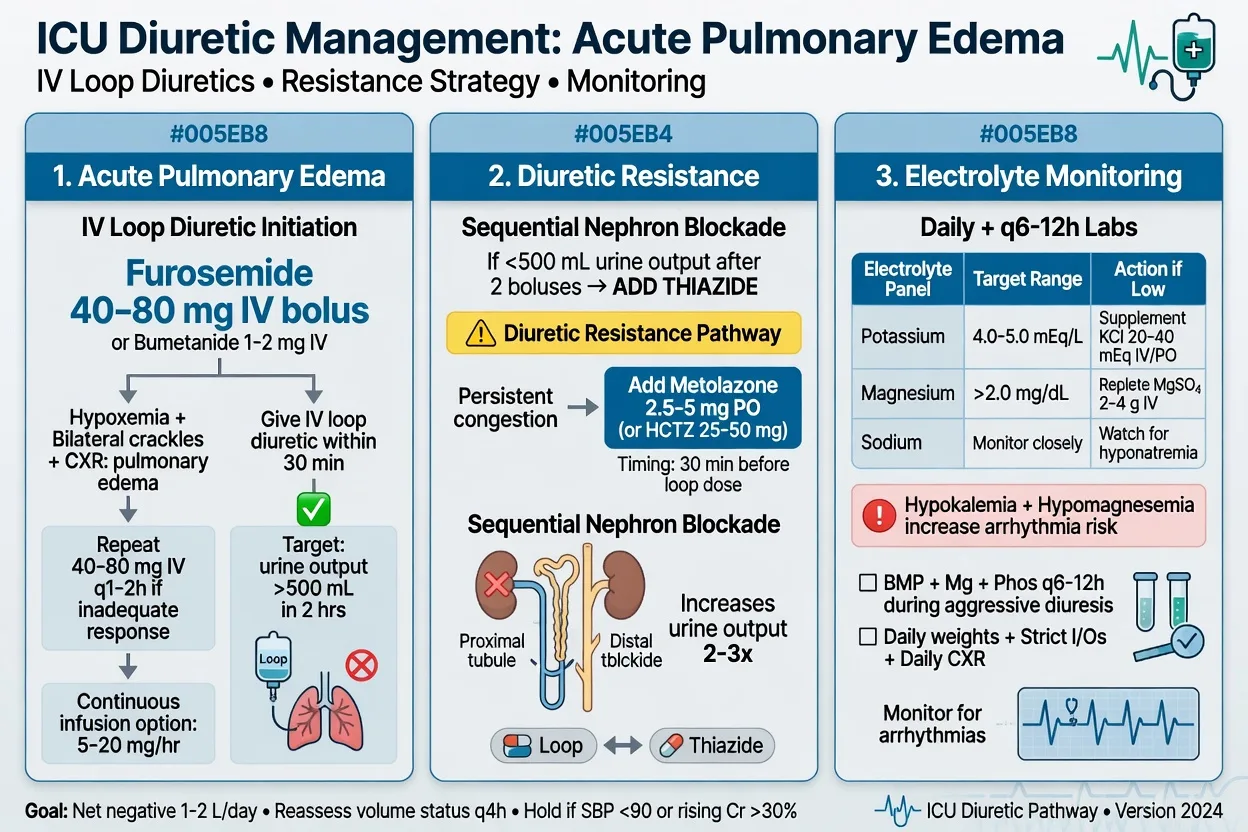
Goal-directed IV furosemide in acute pulmonary oedema / cardiogenic pulmonary oedema
- Assess volume status and perfusion (Stevenson phenotyping). Classify as WET or DRY (congestion) and WARM or COLD (perfusion). Diuretics are for the WET patient. If WET + COLD (cardiogenic shock), give inotropes/vasopressors FIRST, then diurese — diuretics alone in a cold, hypoperfused patient worsen AKI.
- Give IV furosemide immediately. 40–80 mg IV bolus in a patient not on chronic loop; 1–2.5× the patient's total daily oral dose as IV bolus if already on a loop at home. (DOSE trial: high-dose 2.5× gave more diuresis with transient creatinine rise but no mortality harm.)
- Pre-diuretic relief. Within 5 min, furosemide causes venodilation (prostaglandin-mediated) → ↓preload → relief of breathlessness before any urine is produced. Give oxygen, nitrates (sublingual GTN / IV nitrate), and position upright in parallel.
- Measure response at 2 h. Target urine output >150 mL/h at 2–6 h (a 'good' responder). If <100 mL/h at 2 h, double the next IV dose (e.g. 80 → 160 mg). Use spot urine sodium >50–70 mmol/L as a confirmatory marker.
- Titrate to goal. Aim for a net negative balance of 1–2 L/24 h in moderate congestion, more in severe. Adjust daily; check weight, JVP, lung US (B-lines), IVC. Stop decongestion when euvolaemic (JVP normal, no B-lines, weight stable) — over-diuresis → AKI.
- Monitor. K+, Mg2+, Na+, creatinine every 6–12 h during active diuresis. Replace K+ (target 4.0–4.5 mEq/L in HF) and Mg2+ (target >0.85 mmol/L; Mg2+ repletion potentiates K+ repletion).[1][6]
Continuous infusion vs bolus — the DOSE question
Bolus vs continuous infusion — practical pros and cons (DOSE-equivalent)
| Feature | Intermittent IV bolus | Continuous IV infusion |
|---|---|---|
| Onset of action | Immediate (5 min) | Steady-state within 30–60 min |
| Practical monitoring | Each dose gives a discrete, observable urine response — easy to titrate | Requires a pump; urine output continuous so harder to assign per-dose effect |
| Ototoxicity risk | Higher with each large bolus (>240 mg rapid, >4 mg/min) | Lower (smoother plasma profile; standard rate <4 mg/min, up to 20–40 mg/h) |
| Nursing effort | Drug round-dependent | Infusion setup + rate titration |
| Pharmacodynamic rationale | Post-dose peak reaches luminal NKCC2 — sigmoidal dose–response | Constant luminal exposure may be more efficient (some data: less total drug for same diuresis) |
| Best for | First dose / unstable / need rapid venodilation / bedside response assessment | High total daily doses (>200–240 mg/24 h); need smooth titration; oedematous stable patient |
| Evidence | DOSE: equivalent to infusion | DOSE: equivalent to bolus; meta-analysis no mortality difference |
Practical DOSE-derived dosing. Convert the patient's home oral furosemide dose to IV (×0.5), then choose:
- Bolus arm: give that IV dose as a bolus every 6–12 h, doubling if 2-h urine output is poor.
- Infusion arm: give the same total IV dose as a continuous infusion over 24 h (rate up to 20–40 mg/h; keep peak <4 mg/min).
- High-dose arm (2.5×): more aggressive diuresis, accept transient creatinine rise.[1]
Diuretic resistance and sequential nephron blockade
Stepwise approach to the diuretic-resistant patient
- Confirm TRUE resistance (not under-dosing). Check the dose is adequate. The loop dose–response curve is sigmoidal on a log-dose axis — if response is poor, double the dose (e.g. 40 → 80 → 160 → 240 mg IV furosemide as bolus or split). Use the 6-hour urine output (>150 mL/h = good; <100 mL/h = poor) and spot urine sodium (>50–70 mmol/L = good) to quantify response.
- Exclude CORRECTABLE causes of reduced loop efficacy. (a) NSAIDs — stop them (compete for OAT secretion, block renal prostaglandins). (b) Hypoperfusion / low cardiac output — needs inotrope, not more diuretic. (c) Hypoalbuminaemia — consider 25% albumin + furosemide in nephrotic/cirrhotic states. (d) Poor oral absorption — switch to IV (intestinal oedema). (e) Non-adherence / dosing error — review drug chart.
- Switch oral loop to IV and ensure adequate dose. IV guarantees delivery and bypasses absorption variability.
- Add a thiazide — SEQUENTIAL NEPHRON BLOCKADE. Metolazone 2.5–5 mg PO 30–60 min before the loop (works at GFR <30), or IV chlorothiazide 500–1000 mg. The combination blocks the hypertrophied NCC + the TAL simultaneously → synergistic massive natriuresis.
- Intensify monitoring. Check K+, Mg2+, Na+, creatinine every 6–12 h for 24–48 h. Pre-emptively replace K+ and Mg2+. Stop the thiazide once euvolaemic (often after 1–3 doses).
- Consider ultrafiltration ONLY if pharmacologic therapy fails. CARRESS-HF showed pharmacologic stepwise therapy is superior to ultrafiltration (less creatinine rise, fewer adverse events) — reserve ultrafiltration for truly refractory cases.[7]
- Address the underlying cause. Treat the cardiorenal driver (e.g. inotrope for low output, decongestion of portal hypertension, valvular correction) — diuretic resistance is often a marker of advanced disease.
Causes of apparent (rather than true) diuretic resistance — exclude these first
| Cause | Mechanism | Fix |
|---|---|---|
| Under-dosing | Loop dose–response is sigmoidal-log — inadequate dose sits on the flat part | Double the IV dose |
| NSAIDs | Compete for OAT secretion; block renal prostaglandin-mediated vasodilation | Stop NSAIDs |
| Hypoperfusion / low CO | Reduced renal blood flow → less drug delivered to tubule | Inotrope/vasopressor first |
| Hypoalbuminaemia | ↓Protein binding → ↑Vd → less drug reaches OAT; ↓oncotic pressure → oedema refractory | 25% albumin + furosemide |
| Intestinal oedema | Impaired oral absorption of the loop | Switch to IV |
| Non-adherence | Patient not actually taking the drug | Chart review, supervised dosing |
| Distal nephron hypertrophy (TRUE resistance) | NCC upregulation during chronic loop → 'braking' | Add thiazide (sequential blockade) |
Adverse effects — by class and by system
Electrolyte and acid–base signature
Adverse-effect signature — the classic contrasts (high-yield exam material)
| Adverse effect | Loop | Thiazide | K-sparing | Acetazolamide |
|---|---|---|---|---|
| Potassium | HYPOkalaemia | HYPOkalaemia | HYPERkalaemia | HYPOkalaemia |
| Calcium | HYPOcalcaemia (↑Ca excretion) | HYPERcalcaemia (↓Ca excretion) | No effect | No effect |
| Sodium | Hyponatraemia (uncommon) | HYPOnatraemia (commonest drug cause) | No effect | No effect |
| Magnesium | HYPOmagnesaemia (significant) | Mild hypomagnesaemia | No effect | Mild |
| Urate / uric acid | Hyperuricaemia | Hyperuricaemia (worse than loop) | No effect | No effect |
| Acid–base | Metabolic alkalosis (contraction + hypochloraemia) | Metabolic alkalosis | Metabolic acidosis | Metabolic acidosis |
| Glucose | Hyperglycaemia (mild) | Hyperglycaemia (more pronounced) | No effect | No effect |
| Class-specific | Ototoxicity (high-dose IV); hypercalciuria/nephrocalcinosis | — | Gynaecomastia (spironolactone) | Renal stones (alkaline urine) |
The two contrasts worth memorising: (1) CALCIUM — loops cause HYPOcalcaemia (via loss of the lumen-positive potential that normally drives paracellular Ca2+ reabsorption), thiazides cause HYPERcalcaemia (enhanced DCT Ca2+ reabsorption via TRPV5) — so furosemide is a treatment for hypercalcaemia, while thiazides are contraindicated in it. (2) POTASSIUM/ACID–BASE — loops and thiazides cause hypokalaemic metabolic alkalosis, while K-sparing agents and acetazolamide cause hyperkalaemic (or normal-K) metabolic acidosis.[3]
Loop-specific toxicity in detail
Loop diuretic adverse effects — mechanism and monitoring
- Hypokalaemia. Increased distal Na+ delivery → augmented Na+/K+ exchange in the CCD; secondary hyperaldosteronism (volume contraction) amplifies K+ loss. Target K+ 4.0–4.5 mEq/L in heart failure. Replace orally/IV; correct Mg2+ first (hypomagnesaemia perpetuates K+ loss by disinhibiting ROMK).
- Hypomagnesaemia. Loss of the lumen-positive potential that drives paracellular Mg2+ reabsorption in the TAL. Often coexists with hypokalaemia and is essential to correct for K+ repletion to succeed.
- HYPOcalcaemia + hypercalciuria. Same mechanism as Mg2+ — loss of lumen-positive potential abolishes paracellular Ca2+ reabsorption. Chronic use → hypercalciuria; in preterm infants → nephrocalcinosis. (Contrast: thiazides cause the opposite — HYPERcalcaemia.)
- Metabolic alkalosis. Two mechanisms: (a) contraction alkalosis (volume contraction → same HCO3 in smaller volume); (b) hypochloraemia (Cl- lost with Na+/K+ in the TAL) → augmented H+ secretion. Treat with KCl + (if severe) acetazolamide or saline.
- Ototoxicity. Direct toxic effect on the stria vascularis of the inner ear. Dose-rate dependent: occurs with rapid IV bolus >240 mg or infusion >4 mg/min. Reversible initially, can be permanent. Synergistic with aminoglycosides. Prevent: infuse <4 mg/min; dilute large boluses over ≥20 min.
- Hyperuricaemia / gout. Competition for OAT secretion with urate; volume contraction enhances proximal urate reabsorption. Watch in gout patients.
- Hyperglycaemia. Mild impairment of insulin release and glucose tolerance; monitor in diabetics.
- Allergic interstitial nephritis and skin reactions (sulfa cross-reactivity — furosemide/bumetanide/torasemide are sulfonamides; thiazides too). Use ethacrynic acid (non-sulfa) in true sulfa allergy.
Mannitol — osmotic diuretic in ICU
ICP control
Mannitol for raised intracranial pressure (ICP)
- Mechanism. Freely filtered at the glomerulus, not reabsorbed. Increases plasma osmolality → osmotic gradient draws water out of brain parenchyma (across an intact BBB) into the intravascular space → ↓brain water volume + ↓ICP. Also reduces CSF production and improves rheology (↓blood viscosity → reflex vasoconstriction → ↓cerebral blood volume).
- Dose. 0.5–1 g/kg IV bolus (typically 1 g/kg) of 20% mannitol, infused over 10–15 min, via a central or large-bore peripheral line. Onset within 5–10 min; peak effect 20–60 min; duration 4–6 h.
- Monitoring. Serum osmolality before each dose — target 300–320 mOsm/kg. Calculate the osmolar gap (measured − calculated osmolality); stop if gap >20 mOsm/kg (signifies mannitol accumulation → risk of AKI and rebound). Check Na+, K+, and urine output. A brisk diuresis is expected — replace intravascular volume to avoid hypovolaemia and a secondary hypertensive ICP response.
- Cautions. (a) Hypovolaemia — give mannitol only after ensuring euvolaemia; in shock, resuscitate first. (b) AKI / low GFR — mannitol accumulates → further AKI; avoid if oliguric/anuric. (c) Disrupted BBB — mannitol may cross disrupted BBB and worsen local oedema (rebound). (d) Heart failure / volume overload — the initial intravascular expansion can precipitate pulmonary oedema. (e) Electrolytes — hyponatraemia (free-water loss), hyperkalaemia, acidosis.
- Alternatives. Hypertonic saline (3%, 5%, 7.5% / 23.4%) is increasingly used as first-line or alongside mannitol — comparable or superior ICP control, less diuresis/volume loss, no osmolar-gap nephrotoxicity. Choice is centre-specific.[11][12]
Acetazolamide — the carbonic anhydrase inhibitor
ICU use — metabolic alkalosis and beyond
Acetazolamide indications in ICU
- Metabolic alkalosis. In the critically ill, loop diuretics + gastric losses + post-hypercapnia produce a metabolic alkalosis that (a) shifts the oxyhaemoglobin curve left, (b) inhibits ventilatory drive (permissive hypercapnia), and (c) complicates ventilator weaning. Acetazolamide 250–500 mg IV/PO induces HCO3 loss in the urine → corrects alkalosis within 12–48 h. A randomised trial in COPD patients with metabolic alkalosis (Bemand 2023) confirmed it raises the PaCO2 set-point and can facilitate weaning.[14]
- Altitude sickness prophylaxis. 125–250 mg PO BD, starting 24–48 h before ascent and continuing 2–4 days at altitude. Induces a mild metabolic acidosis → stimulates central ventilation → improves oxygenation, sleep, and acclimatisation; also reduces periodic breathing and CSF pressure.[15]
- Glaucoma (acute angle closure). 500 mg IV/PO reduces aqueous humour production (CA in the ciliary body) → rapid ↓intra-ocular pressure as temporising therapy pending laser iridotomy.
- Idiopathic intracranial hypertension — adjunct to reduce CSF production.
- Periodic paralysis (hyperkalaemic and hypokalaemic) — through membrane effects independent of CA inhibition.
- Urinary alkalinisation — for tricyclic antidepressant or uric acid clearance (therapeutic trapping of weak acids).
Toxicity
- Metabolic acidosis (intended in alkalosis treatment; problematic if oversuppressed).
- Hypokalaemia (increased distal Na+ delivery → ↑K+ secretion) — monitor.
- Renal stones — alkaline, calcium-rich urine → calcium phosphate stones.
- Paraesthesia, fatigue, dysgeusia (common with chronic therapy).
- Sulfa allergy — acetazolamide is a sulfonamide; cross-reactivity is low but caution in severe sulfa allergy. [1]
Potassium-sparing diuretics and mineralocorticoid antagonists
Spironolactone / eplerenone — MRA class
Spironolactone vs eplerenone — comparative pharmacology
| Property | Spironolactone | Eplerenone |
|---|---|---|
| Receptor selectivity | Binds MR + androgen + progesterone receptors (low selectivity) | Selective for MR (10–20× less androgen/progesterone binding) |
| Endocrine AEs | Gynaecomastia, impotence, menstrual irregularity (10–20%) | Much lower (<1%) |
| Half-life (active metabolites) | Long (canrenone metabolite ~16 h; tissue half-life days) | Shorter (~4–6 h) |
| Onset | Days (slow — gene transcription effect; not for acute diuresis) | Days |
| Heart failure mortality data | RALES — 30% mortality reduction in severe HFrEF | EMPHASIS-HF (mild HFrEF), EPHESUS (post-MI LV dysfunction) — mortality reduction |
| Dose | 12.5–50 mg PO daily (titrate) | 25–50 mg PO daily |
| Clinical bottom line | First-line MRA where endocrine AEs tolerable; cheapest | Preferred if gynaecomastia/intolerance; post-MI |
Indications
- HFrEF — one of the four pillars. Spironolactone (RALES, 30% mortality reduction) or eplerenone (EMPHASIS-HF, EPHESUS) in symptomatic HFrEF (LVEF ≤35–40%).[2][8][9]
- Resistant hypertension. Spironolactone is the most effective 4th-line agent (PATHWAY-2) — undiagnosed primary aldosteronism contributes.
- Primary aldosteronism (Conn syndrome). MRA corrects hypertension + hypokalaemia pre-operatively or as medical management.
- Cirrhotic ascites. Spironolactone is first-line (aldosterone high due to 2° hyperaldosteronism); combined with furosemide in a 100:40 mg ratio (e.g. spironolactone 100 mg + furosemide 40 mg daily) to maintain normokalaemia.[16]
- Diuretic-induced hypokalaemia — amiloride as K+-sparing adjunct.
Key points (consolidated)
- Furosemide — the IV onset 5 min; the duration 2–3 h; IV:PO ratio ~2:1. The ototoxicity (the high-dose IV; the infusion the safer at <4 mg/min).[1]
- Spironolactone — the aldosterone antagonist (the heart failure, the cirrhosis ascites, the Conn). The gynaecomastia.[1]
- Mannitol — the osmotic; the ICP reduction 0.5–1 g/kg; the osmolar-gap monitoring (the ruptured BBB — the rebound; the AKI if accumulated).[1]
- Acetazolamide — the metabolic acidosis (the HCO3 loss); the altitude sickness, the metabolic alkalosis correction, the glaucoma.[1]
- Sequential nephron blockade (loop + thiazide) — the cornerstone for diuretic resistance; monitor every 6–12 h.[5]
- DOSE trial — bolus = continuous infusion (equivalent); high-dose 2.5× = more diuresis, transient creatinine rise, no mortality difference.[1]
Fellowship SAQs — furosemide in AKI and acetazolamide
SAQ — Furosemide in oliguric AKI: dosing, resistance and the question of renal protection
10 minutes · 10 marks
A 68-year-old man in ICU following an emergency laparotomy for ischaemic bowel develops oliguric AKI (KDIGO stage 2). On day 3, urine output is 280 mL/24h, creatinine has risen from 90 to 310 micromol/L, K+ 5.8 mmol/L, and he is 4 L in positive fluid balance with pulmonary congestion on lung ultrasound (diffuse B-lines). He is normotensive on low-dose noradrenaline 0.05 mcg/kg/min (MAP 72, lactate 1.4). The team asks whether furosemide should be used, at what dose, and whether it might hasten renal recovery or reduce the need for renal replacement therapy.
SAQ — Acetazolamide for post-hypercapnic metabolic alkalosis complicating ventilator weaning
10 minutes · 10 marks
A 72-year-old woman with severe COPD is intubated for a pneumonia-triggered exacerbation. After 5 days she is ready to wean, but her blood gas shows pH 7.48, PaCO2 48 mmHg (6.4 kPa), HCO3 36 mmol/L, BE +12, PaO2 78 mmHg on pressure support. She has been on IV furosemide 80 mg/day for pulmonary congestion, has a mild AKI (creatinine 150 micromol/L), and K+ 3.1 mmol/L. The registrar asks whether acetazolamide would help and how to use it.
Clinical pearls
Red flags
Prognosis and outcome by strategy
Diuretic strategy outcomes — what the evidence shows
| Strategy / drug | Outcome impact | Evidence |
|---|---|---|
| Loop bolus vs continuous infusion | Equivalent efficacy and renal safety | DOSE trial (2011) — no difference in symptoms or creatinine; high-dose gave more diuresis but transient creatinine rise[1]; systematic review confirms no mortality difference[13] |
| High-dose (2.5×) vs low-dose (1×) loop | High-dose: more diuresis + fluid loss; non-significant symptom trend; transient creatinine rise | DOSE trial[1] |
| Spironolactone in severe HFrEF | 30% reduction in all-cause mortality + fewer hospitalisations | RALES (1999) — stopped early for benefit; NNT ≈ 9 for mortality[2] |
| Eplerenone in mild HFrEF | Reduced CV mortality + hospitalisation | EMPHASIS-HF (2011)[8] |
| Eplerenone post-MI with LV dysfunction | Reduced all-cause + CV mortality | EPHESUS (2003)[9] |
| Sequential nephron blockade (loop + thiazide) | Effective decongestion in resistant oedema; risk of AKI/electrolyte loss | Mechanistic + observational; standard of care for resistance[5] |
| Pharmacologic stepwise therapy vs ultrafiltration | Pharmacologic SUPERIOR (less creatinine rise, fewer adverse events) | CARRESS-HF (2012) — ultrafiltration not first-line for cardiorenal syndrome[7] |
| Thiazide for hypertension | Reduced stroke, HF, CV events | ALLHAT (2002) — chlorthalidone superior to amlodipine/lisinopril for HF prevention[10] |
| Loop diuretics for AKI prevention/conversion | No mortality or RRT benefit | Systematic reviews; loops do not prevent AKI — use only for volume overload |
Key trials and evidence
DOSE trial — Diuretic Optimization Strategies Evaluation (PMID 21366472)
Study design
Prospective, double-blind, randomised — 2×2 factorial — 308 patients
Population
Acute decompensated heart failure (ADHF)
Intervention
Bolus vs continuous infusion furosemide, AND low-dose (1× home oral dose) vs high-dose (2.5× home dose)
Co-primary outcomes
(a) Patient global symptom assessment (VAS AUC over 72 h); (b) change in serum creatinine from baseline to 72 h
Key finding
NO significant difference in either primary outcome for bolus vs infusion OR for low- vs high-dose. High-dose gave greater fluid loss/diuresis but transiently more creatinine rise and electrolyte disturbance.
Clinical bottom line
Bolus and continuous-infusion furosemide are EQUIVALENT — use either. High-dose (2.5×) is reasonable for marked congestion. This ended the belief that continuous infusion is superior.
RALES — Randomized Aldactone Evaluation Study (PMID 10471456)
Study design
Randomised, double-blind, placebo-controlled — 1663 patients across 195 centres
Population
Severe heart failure (NYHA III–IV, LVEF ≤35%) on standard therapy (ACE inhibitor + loop diuretic)
Intervention
Spironolactone 25 mg daily (titrated to 50 mg) vs placebo
Primary outcome
All-cause mortality
Key finding
30% REDUCTION in all-cause mortality (relative risk 0.70) — stopped EARLY after mean 24 months follow-up for benefit. Also significant reduction in hospitalisations and symptomatic improvement. Serious hyperkalaemia rare (~2%).
Clinical bottom line
Established aldosterone antagonism as a CORNERSTONE of HFrEF therapy (one of the four pillars). Monitor K+ but the mortality benefit is large and consistent.
CARRESS-HF — ultrafiltration vs pharmacologic therapy in cardiorenal syndrome (PMID 23131078)
Study design
Randomised — 188 patients with cardiorenal syndrome (decompensated HF + worsening renal function + persistent congestion)
Intervention
Stepped pharmacologic therapy (loop ± thiazide ± dopamine/dobutamine) vs veno-venous ultrafiltration
Primary outcome
Change in weight (fluid loss) and creatinine at 96 h
Key finding
Equivalent weight loss, BUT ultrafiltration had SIGNIFICANTLY MORE adverse events (including worsening renal function requiring RRT). Trial stopped early.
Clinical bottom line
Pharmacologic stepwise diuretic therapy is SUPERIOR to ultrafiltration for cardiorenal syndrome. Reserve ultrafiltration for truly refractory cases unresponsive to maximal drug therapy.
EMPHASIS-HF — Eplerenone in Mild Symptoms HFrEF (PMID 21073363)
Study design
Randomised, double-blind, placebo-controlled — 2737 patients
Population
NYHA II HFrEF (LVEF ≤35%) on standard therapy
Intervention
Eplerenone (titrated to 50 mg daily) vs placebo
Primary outcome
Composite of CV death or HF hospitalisation
Key finding
Significant reduction in the primary composite (HR 0.63); also all-cause mortality reduced. Trial stopped early for benefit. Hyperkalaemia was the main safety concern.
Clinical bottom line
Extended the MRA mortality benefit to MILD symptomatic HFrEF — MRAs are a guideline pillar in all symptomatic HFrEF.
EPHESUS — Eplerenone Post-AMI Heart Failure Efficacy and Survival Study (PMID 12668699)
Study design
Randomised, double-blind, placebo-controlled — 6642 patients
Population
Acute MI + LV dysfunction (LVEF ≤40%) + signs of HF
Intervention
Eplerenone (titrated to 50 mg daily) vs placebo, started 3–14 days post-MI
Primary outcomes
All-cause mortality + CV mortality/CV hospitalisation composite
Key finding
15% reduction in all-cause mortality; significant reductions in CV mortality and sudden cardiac death.
Clinical bottom line
MRA indicated post-MI with LV dysfunction/HF on top of standard therapy (ACE inhibitor, beta-blocker).
ALLHAT — chlorthalidone for hypertension major outcomes (PMID 12479763)
Study design
Randomised, double-blind, active-controlled — 33,357 patients
Population
High-risk hypertensive patients (age ≥55 + ≥1 other CV risk factor)
Intervention
Chlorthalidone (thiazide-like) vs amlodipine vs lisinopril vs doxazosin
Primary outcome
Combined fatal CHD + non-fatal MI
Key finding
No difference in primary outcome between arms, but chlorthalidone SUPERIOR for prevention of heart failure (vs lisinopril and amlodipine) and stroke (vs lisinopril). Doxazosin arm stopped early (excess HF).
Clinical bottom line
Thiazide (chlorthalidone) remains first-line for uncomplicated hypertension — superior outcomes at low cost.
Dosing quick-reference (ICU)
IV/PO diuretic dosing in ICU — practical reference
| Drug | Typical dose | Onset | Duration | Notes |
|---|---|---|---|---|
| Furosemide | 40–80 mg IV bolus (up to 240 mg); infusion 5–40 mg/h (<4 mg/min) | 5 min (IV) | 2–3 h | IV:PO ~2:1. Watch ototoxicity at high doses/rates. |
| Bumetanide | 1–2 mg IV bolus (1 mg ≈ 40 mg furosemide) | 2–5 min | 3–4 h | Reliable absorption, IV:PO ~1:1, lower ototoxicity. |
| Torasemide | 10–20 mg (10 mg ≈ 40 mg furosemide) | 10 min | 4–6 h | Hepatically cleared (preferred in renal impairment), longest half-life. |
| Chlorothiazide (IV, for sequential blockade) | 500–1000 mg IV | 15–30 min | 6–12 h | Only IV thiazide; used with loop for resistant oedema. |
| Metolazone (PO, for sequential blockade) | 2.5–5 mg PO | 1 h | 12–24 h | Active at low GFR (GFR <30) — preferred thiazide for blockade. Give 30–60 min before loop. |
| Acetazolamide | 250–500 mg IV/PO | 1–2 h | 8–12 h | For metabolic alkalosis; causes metabolic acidosis. |
| Spironolactone | 12.5–50 mg PO daily | Days | — | Slow onset (days) — not for acute diuresis; for HFrEF/hyperaldosteronism. |
| Eplerenone | 25–50 mg PO daily | Days | — | Selective MRA; lower gynaecomastia rate. |
| Amiloride | 5–10 mg PO daily | 2 h | 24 h | ENaC blocker; K+-sparing adjunct. |
| Mannitol (20%) | 0.5–1 g/kg IV over 10–15 min | 5–10 min | 4–6 h | For raised ICP; monitor serum osmolality & osmolar gap (target <20). |
| Ethacrynic acid | 50–100 mg IV | 5–10 min | 2–3 h | Non-sulfa loop — use in true sulfa allergy; higher ototoxicity. |
Monitoring during active diuresis — the checklist
Bedside monitoring during active diuretic therapy in ICU
- Volume status, every shift. Daily weight, fluid balance (aim for the prescribed net negative), JVP, lung ultrasound B-lines, IVC collapsibility, peripheral oedema, hepatomegaly.
- Electrolytes every 6–12 h during active diuresis. K+ (target 4.0–4.5 mEq/L in HF), Mg2+ (>0.85 mmol/L — replete first to enable K+ repletion), Na+ (watch for hyponatraemia with thiazides), phosphate, calcium (thiazide = hyper, loop = hypo).
- Renal function daily (or more often). Creatinine and urea — a transient rise with high-dose diuresis is acceptable if congestion is relieving; a persistent rise with over-diuresis mandates slowing down.
- Acid–base. Loops/thiazides → metabolic alkalosis; K-sparing/acetazolamide → metabolic acidosis. Treat symptomatic/destabilising alkalosis with KCl, NaCl, or acetazolamide.
- Urine output. Target the prescribed rate (e.g. 100–200 mL/h); a poor 2-h response triggers dose doubling; a profound response to sequential blockade triggers electrolyte checks.
- Ototoxicity. Symptom check (tinnitus, hearing change, vertigo) with high-dose IV furosemide — infuse <4 mg/min; dilute large boluses over ≥20 min.
- Osmolar gap (mannitol). Before each mannitol dose; hold if gap >20 mOsm/kg or oliguria.
- Signs of over-diuresis. Hypotension, rising creatinine, thirst, hypernatraemia, raised haematocrit → slow down or pause.
Exam one-liners (rapid recall)
- Most potent diuretic → loop (blocks NKCC2 in TAL, 20–25% filtered Na+).
- Only diuretic that lowers calcium excretion → thiazide (causes HYPERcalcaemia).
- Diuretic that raises calcium excretion → loop (treat hypercalcaemia with furosemide + saline).
- Commonest drug cause of hyponatraemia → thiazide.
- Diuretic that causes metabolic alkalosis → loop and thiazide (contraction + hypochloraemia).
- Diuretics that cause metabolic acidosis → acetazolamide (HCO3 loss), K-sparing (H+ retention).
- Diuretic that causes gynaecomastia → spironolactone (antiandrogen effect).
- Diuretic that causes ototoxicity → loop (high-dose IV furosemide; synergistic with aminoglycosides).
- Diuretic that works at low GFR (GFR <30) → metolazone (thiazide-like); loops remain effective at all GFRs.
- Diuretic that reduces ICP → mannitol 0.5–1 g/kg (osmotic).
- Diuretic for metabolic alkalosis / altitude → acetazolamide (carbonic anhydrase inhibitor).
- Diuretic for cirrhotic ascites (first-line) → spironolactone ± furosemide (100:40 ratio).
- Strategy for diuretic resistance → sequential nephron blockade (loop + thiazide/metolazone).
- Trial that settled bolus vs infusion → DOSE (equivalent).
- Trial of spironolactone in severe HFrEF → RALES (30% mortality reduction).
- Trial of ultrafiltration vs drugs in cardiorenal syndrome → CARRESS-HF (drugs superior).
- Non-sulfa loop diuretic → ethacrynic acid.
- IV:PO furosemide ratio → ~2:1 (1:1 for bumetanide/torasemide). [1]
References
- [1]Felker GM, Lee KL, Bull DA, et al. Diuretic strategies in patients with acute decompensated heart failure N Engl J Med, 2011.PMID 21366472
- [2]Pitt B, Zannad F, Remme WJ, et al. The effect of spironolactone on morbidity and mortality in patients with severe heart failure. Randomized Aldactone Evaluation Study Investigators N Engl J Med, 1999.PMID 10471456
- [3]Brater DC Pharmacology of diuretics Am J Med Sci, 2000.PMID 10653443
- [4]Sica DA, Carter B, Cushman W, Hamm L Thiazide and loop diuretics J Clin Hypertens (Greenwich), 2011.PMID 21896142
- [5]Ellison DH Mechanistic Insights into Loop Diuretic Responsiveness in Heart Failure Clin J Am Soc Nephrol, 2019.PMID 31064772
- [6]Ellison DH, Felker GM Diuretic Treatment in Heart Failure N Engl J Med, 2017.PMID 29141174
- [7]Bart BA, Goldsmith SR, Lee KL, et al. Ultrafiltration in decompensated heart failure with cardiorenal syndrome N Engl J Med, 2012.PMID 23131078
- [8]Zannad F, McMurray JJ, Krum H, et al. Eplerenone in patients with systolic heart failure and mild symptoms N Engl J Med, 2011.PMID 21073363
- [9]Pitt B, Remme W, Zannad F, et al. Eplerenone, a selective aldosterone blocker, in patients with left ventricular dysfunction after myocardial infarction N Engl J Med, 2003.PMID 12668699
- [10]ALLHAT Officers and Coordinators for the ALLHAT Collaborative Research Group Major outcomes in high-risk hypertensive patients randomized to angiotensin-converting enzyme inhibitor or calcium channel blocker vs diuretic: The Antihypertensive and Lipid-Lowering Treatment to Prevent Heart Attack Trial (ALLHAT) JAMA, 2002.PMID 12479763
- [11]Boone MD, Oren-Grinberg N, Thomas TM, Joshi S, Chadwick CA, Pascual JL Mannitol or hypertonic saline in the setting of traumatic brain injury: What have we learned? Surg Neurol Int, 2015.PMID 26673517
- [12]Brain Trauma Foundation Guidelines for the management of severe traumatic brain injury. II. Hyperosmolar therapy J Neurotrauma, 2007.PMID 17511539
- [13]Kuriyama A, Urushidani S, Uchino S Continuous versus intermittent administration of furosemide in acute decompensated heart failure: a systematic review and meta-analysis Heart Fail Rev, 2019.PMID 30054781
- [14]Bemand TJ, Demishtiku A, Bose S, et al. Acetazolamide for metabolic alkalosis complicating respiratory failure with chronic obstructive pulmonary disease or obesity hypoventilation syndrome: a systematic review Thorax, 2023.PMID 37217290
- [15]Tapia L, Lanas F, Lanas Z Acetazolamide for the treatment of acute mountain sickness Medwave, 2019.PMID 31891352
- [16]Runyon BA Management of adult patients with ascites due to cirrhosis: an update Hepatology, 2009.PMID 19475696
- [17]Bagshaw SM, Bellomo R, Kellum JA Oliguria, volume overload, and loop diuretics Crit Care Med, 2008.PMID 18382190