ICU · Pharmacology
Drug dosing in continuous renal replacement therapy (CRRT)
Also known as CRRT drug dosing · CVVH pharmacokinetics · CVVHD dosing · Renal replacement dosing · Antibiotic dosing in CRRT · Sieving coefficient drug dosing · TDM in CRRT
Drug dosing in CRRT is COMPLEX — many ICU patients receive CRRT, and incorrect dosing causes treatment failure (underdosing) or toxicity (overdosing). Pharmacokinetic changes in CRRT: altered volume of distribution (Vd), changed clearance (CRRT adds extracorporeal clearance), residual renal function. Factors affecting CRRT clearance: modality (CVVH, CVVHD, CVVHDF), effluent flow rate, membrane type (cutoff), filter age. Drugs affected: antibiotics (beta-lactams, vancomycin, aminoglycosides, linezolid), anticoagulants, antiepileptics. Principles: (1) Hydrophilic drugs (beta-lactams, aminoglycosides, vancomycin) — removed by CRRT, need higher/dose more frequently. (2) Lipophilic drugs (fluoroquinolones, macrolides, azoles) — less removed. The sieving coefficient (Sc ≈ 1 for small unbound drugs) and effluent flow rate together determine CRRT clearance (Cl_CRRT = Sc × Qeff). KDIGO recommends effluent dose 20–25 mL/kg/h after accounting for downtime. Loading doses are unchanged; maintenance doses are increased and individualised with therapeutic drug monitoring (TDM) for vancomycin, beta-lactams and aminoglycosides.
On this page & tools
Your progress
Saved locally on this device.
Target exams
Red flags
CRRT pharmacokinetics — how drugs are actually removed
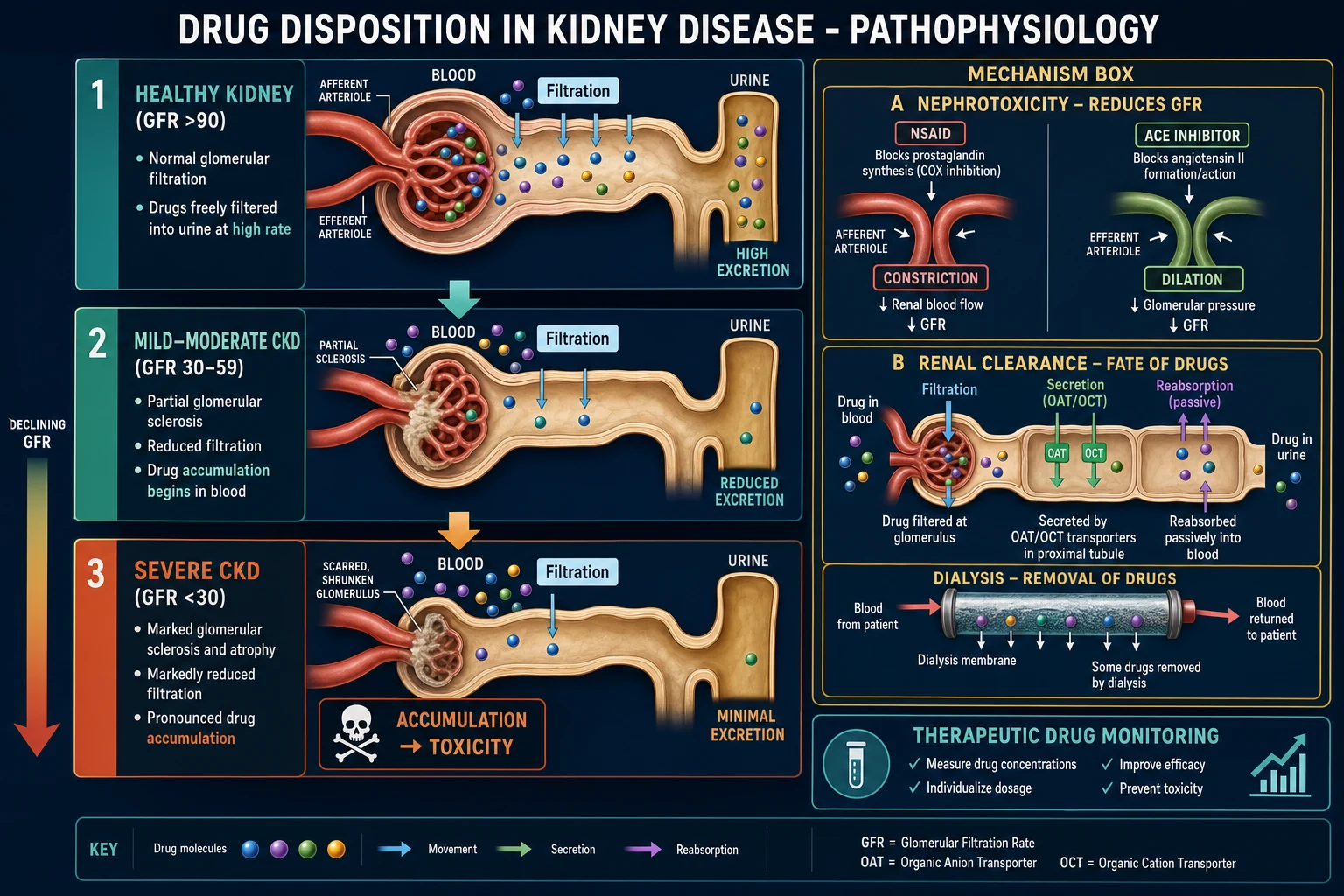
Drug removal during CRRT depends on three physical mechanisms acting across the semipermeable membrane.[1] }
- Convection (CVVH) — solutes are dragged across the membrane by hydrostatic pressure (solute drag) along with plasma water. Removal is governed by the sieving coefficient (Sc), the ratio of solute concentration in ultrafiltrate to plasma water. For small unbound solutes Sc ≈ 1 (i.e. the drug freely crosses); for highly protein-bound drugs Sc is low because only free drug is dragged.
- Diffusion (CVVHD) — solutes move down a concentration gradient from blood to dialysate. Removal is governed by the saturation coefficient (Sd). For small molecules Sd ≈ Sc ≈ 1.
- Adsorption — some drugs (aminoglycosides, daptomycin, linezolid to a lesser extent) bind to the synthetic membrane surface, transiently increasing apparent clearance early in filter life. This adsorption saturates within hours and the bound drug is lost when the filter clots or is changed. [1]
For most small hydrophilic antibiotics (MW < 1000 Da, free fraction appreciable) the practical formula is: [1]
Cl_CRRT (mL/min) ≈ Sc × Q_eff (mL/min) [1]
where Q_eff is the total effluent flow rate (ultrafiltration + dialysate + replacement fluid, depending on modality). At a typical delivered dose of 25 mL/kg/h in a 70 kg patient, Q_eff = 1750 mL/h ≈ 29 mL/min — equivalent to a native GFR of ~30 mL/min. KDIGO recommends a delivered effluent dose of 20–25 mL/kg/h once downtime (filter changes, transport, interruptions) is accounted for; prescribed doses of 25–30 mL/kg/h are needed to actually deliver this.[9] }
Enhanced clearance for renally-cleared drugs is the central pharmacological insight: any drug normally eliminated by the kidneys with low molecular weight and modest protein binding will be substantially cleared by CRRT. Under-dosing in this population is the rule, not the exception — the DALI study showed only ~60% of ICU patients achieved PK/PD beta-lactam targets with standard dosing.[4] } The clearance of drugs is not the patient's serum creatinine (which is artificially low because the machine is clearing creatinine too) — clinicians must dose based on the delivered CRRT dose, not the biochemistry.
Several additional patient factors compound the dosing challenge: augmented Vd from capillary leak and fluid resuscitation in sepsis (raising loading-dose requirements), hypoalbuminaemia (raising free fraction of highly bound drugs such as ceftriaxone, flucloxacillin and diazepam — increasing both Vd and CRRT removal), and residual renal function (variable native GFR that adds to total clearance as AKI resolves). All three reinforce the case for TDM-guided individualisation.[7] }
CVVH vs CVVHD vs CVVHDF — pharmacokinetic differences
| Feature | CVVH (haemofiltration) | CVVHD (haemodialysis) | CVVHDF (combined) |
|---|---|---|---|
| Mechanism | Convection (solute drag) | Diffusion (concentration gradient) | Convection + diffusion |
| Driving force | Hydrostatic pressure (pump) | Concentcentration gradient (dialysate) | Both |
| Solute removal | Excellent for middle molecules (vancomycin, MW 1448 Da) | Excellent for small molecules (beta-lactams, MW < 500 Da) | Excellent for both |
| Drug clearance formula | Sc × Q_UF | Sd × Q_dialysate | Sc × Q_UF + Sd × Q_dialysate |
| Effluent flow (Q_eff) | Ultrafiltrate only | Spent dialysate | Ultrafiltrate + spent dialysate |
| Typical vancomycin clearance | Higher (convection efficient at MW 1448) | Lower (diffusion less efficient for middle molecules) | Intermediate |
| Typical beta-lactam clearance | High | High | High |
| Pre-dilution effect | Reduces clearance (haemodilution lowers Sc measured at filter inlet ~10–15%) | Not applicable | Minor |
| Post-dilution | No effect on Sc (preferred for drug removal) | Not applicable | No effect on convective component |
| Preferred for high-MW drugs | ✔ Yes | Less ideal | ✔ Yes |
Approximate sieving coefficients (Sc) of common ICU drugs
| Drug | Molecular weight (Da) | Protein binding (%) | Sc (typical) | Practical implication |
|---|---|---|---|---|
| Vancomycin | 1448 | 10–55 | 0.6–0.8 | Removed efficiently, especially by convection. Dose by effluent rate |
| Gentamicin | 477 | <10 | 0.8–0.9 | Significantly removed. Level-guided dosing |
| Amikacin | 586 | <10 | 0.9 | Significantly removed. Level-guided dosing |
| Piperacillin | 517 | 16–22 | 0.8–1.0 | Removed; use extended/continuous infusion |
| Tazobactam | 300 | 20–23 | 0.7–0.9 | Removed faster than piperacillin (ratio may alter) |
| Meropenem | 437 | 2 | 1.0 | Near-complete removal; dose q8h |
| Imipenem | 299 | 13–21 | 0.9 | Significantly removed |
| Cefepime | 480 | 16–19 | 0.9 | Significantly removed |
| Ceftazidime | 547 | 5–17 | 0.9 | Significantly removed |
| Ceftriaxone | 554 | 85–95 | 0.2–0.4 | LOW Sc — largely NOT removed (high protein binding) |
| Flucloxacillin | 453 | 91–98 | 0.2–0.3 | LOW Sc — minimal removal |
| Benzylpenicillin | 334 | 60–65 | 0.4–0.6 | Partially removed |
| Ampicillin | 349 | 15–28 | 0.7–0.9 | Significantly removed |
| Linezolid | 337 | 31 | 0.6–0.8 | Partially removed; also adsorbed to membrane |
| Daptomycin | 1620 | 90 | 0.3 | Partially removed; check levels |
| Ciprofloxacin | 331 | 40 | 0.5–0.7 | Partially removed (large Vd also matters) |
| Levofloxacin | 361 | 24–38 | 0.6–0.8 | Partially removed |
| Fluconazole | 306 | 11 | 0.9 | Hydrophilic despite being an azole — significantly removed |
| Caspofungin | 1093 | 96 | <0.1 | Not removed (high protein binding + large Vd) |
| Colistin (CMS) | 1746 | 50–55 | 0.1–0.4 | Active moiety (colistin) formed in vivo; complex PK |
| Phenytoin | 252 | 90 (variable in hypoalbuminaemia) | 0.1–0.4 | Highly variable; check levels |
| Levetiracetam | 170 | <10 | 1.0 | Significantly removed; dose as if normal renal function |
| Valproate | 144 | 80–95 (saturable) | 0.1–0.3 | Variable; free level monitoring essential |
| Heparin (UFH) | ~3000–15000 | Variable | Low | Not significantly removed |
| Enoxaparin | ~3500–5500 | Variable | Low–moderate | Anti-Xa monitoring recommended |
Drug removal by CRRT — hydrophilic vs lipophilic
| Feature | Hydrophilic drugs | Lipophilic drugs |
|---|---|---|
| Examples | Beta-lactams (penicillins, cephalosporins, carbapenems), aminoglycosides, vancomycin, linezolid, fluconazole, levetiracetam | Fluoroquinolones (ciprofloxacin partially), macrolides (azithromycin), tetracyclines, most azoles (itraconazole, voriconazole), caspofungin |
| Volume of distribution | Small (mainly extracellular, 0.2–0.5 L/kg) | Large (intracellular, fat, 1–5 L/kg) |
| Protein binding | Usually low-moderate | Often high |
| CRRT removal | SIGNIFICANT (filtered/dialysed; Sc high) | MINIMAL (not well filtered; large Vd acts as reservoir) |
| Dose adjustment | HIGHER dose, more frequent, extended infusion | Often NO adjustment needed |
| Monitoring | Recommended (beta-lactam levels, vancomycin, aminoglycosides) | Usually not monitored |
| Target PK/PD index | Time above MIC (fT>MIC 70% for beta-lactams; 100% severe) | AUC/MIC (fluoroquinolones, azoles) or peak (aminoglycosides — exception, hydrophilic) |
Dosing principles in CRRT
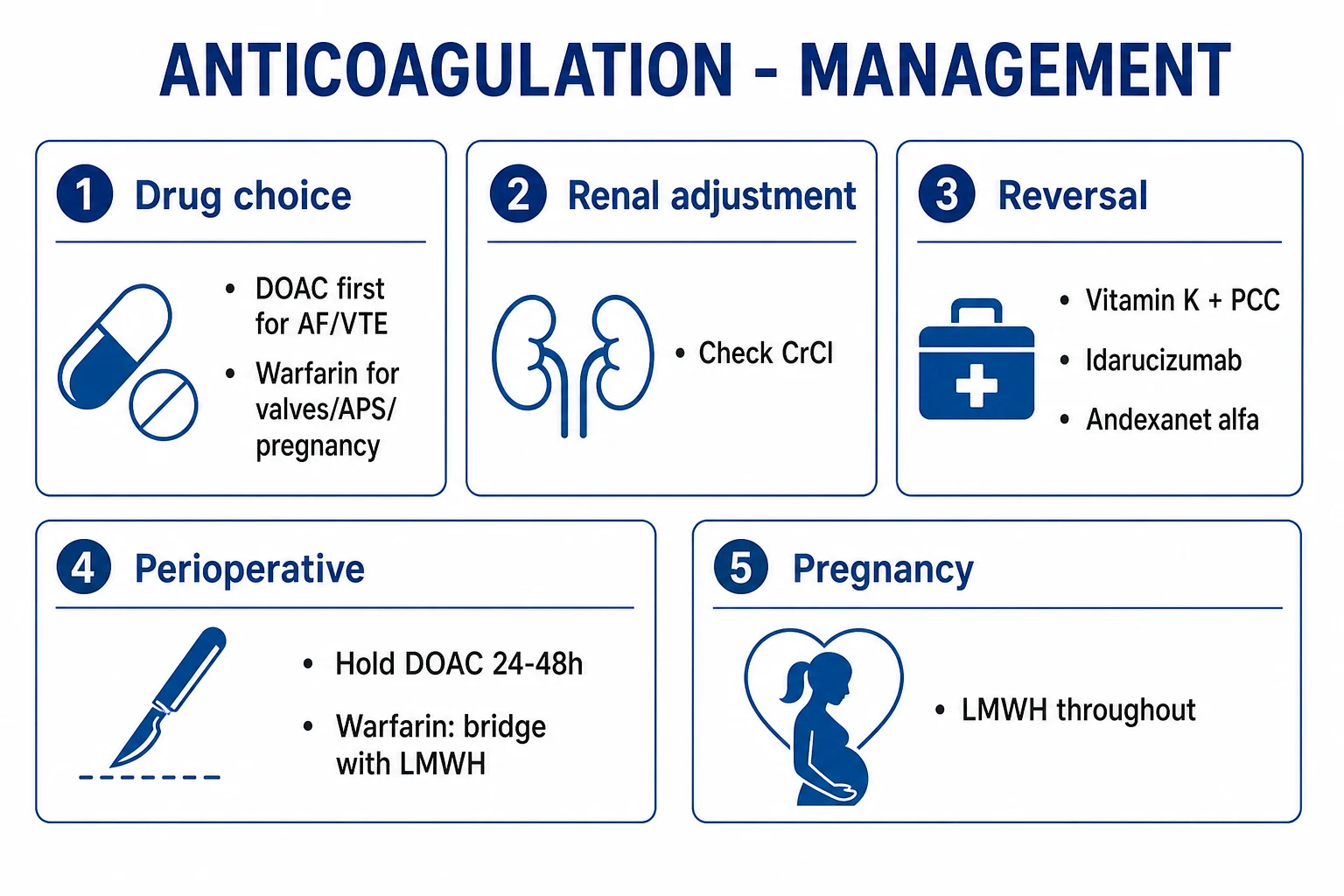
The overriding principles for any drug in CRRT are:[1] }[7] }
- Loading dose is UNCHANGED. The dose required to reach a target concentration in a given Vd is the same whether the patient is on CRRT or not. In sepsis with augmented Vd, the loading dose should be at the upper end of the standard range (e.g. vancomycin 25–30 mg/kg, piperacillin/tazobactam 4 g, meropenem 2 g). Under-loading is the commonest single error.
- Maintenance dose is INCREASED and frequency is INCREASED. Because CRRT continuously removes drug, the maintenance dose must replace both daily losses to the circuit and any residual clearance. Hydrophilic drugs with low Sc-independent total body clearance need a higher per-dose amount AND shorter interval.
- TDM is the gold standard. For vancomycin, beta-lactams and aminoglycosides, measure serum levels and titrate. Population-derived nomograms systematically under-dose — the DALI study and Beumier cohort both showed wide inter-patient variability that fixed regimens cannot capture.[4] }[10] }
- Account for delivered dose, not prescribed dose. A prescription of 30 mL/kg/h often delivers only 20–25 mL/kg/h after downtime. Dose to what the patient is actually receiving.
- Re-dose after each filter change. A new filter has higher clearance (no protein coating) and may also adsorb a bolus of drug (aminoglycosides, daptomycin). Consider an extra dose.
- Review daily. As native renal function recovers (urine output rises), total clearance rises — INCREASE doses. As the filter ages/clots, CRRT clearance falls — DECREASE doses or monitor for toxicity.
Approach to drug dosing in CRRT
- Identify drug characteristics — hydrophilic or lipophilic? Protein binding? Volume of distribution? Sc?
- Determine CRRT prescription — modality (CVVH, CVVHD, CVVHDF), effluent flow rate (mL/kg/h), membrane (cutoff — high cutoff removes more), pre- vs post-dilution
- Estimate extracorporeal clearance — Cl_CRRT ≈ Sc × Q_eff. For small drugs (Sc ≈ 1) this approximates the effluent flow rate (25 mL/kg/h in 70 kg ≈ 29 mL/min)
- Add residual renal function — if any native kidney function remains (check urine output, creatinine clearance — NOT serum creatinine)
- Calculate total clearance — CRRT clearance + residual clearance + non-renal clearance
- Adjust dose — hydrophilic drugs: loading dose UNCHANGED (upper end of range in sepsis), maintenance dose INCREASED and/or frequency increased. Lipophilic: usually no change
- Therapeutic drug monitoring — vancomycin (trough 15–20 or AUC 400–600), aminoglycosides (trough <1, peak), beta-lactams (if available — target trough 4–8x MIC)
- Review daily — CRRT dose changes, filter changes (new filter = more clearance), renal recovery
Therapeutic drug monitoring (TDM) workflow in CRRT
- Confirm the indication for TDM — vancomycin, beta-lactams (sepsis, immunocompromise, deep-seated infection, augmented renal clearance, morbid obesity), aminoglycosides
- Draw a loading-dose baseline (optional) — confirms Vd estimate before therapy starts
- First level after steady state or before 4th dose — vancomycin trough before the 4th dose; beta-lactam trough at end of dosing interval after 24–48 h; aminoglycoside trough + peak (peak 30 min post-infusion)
- Calculate individual clearance — Bayesian dose-adjustment software preferred (e.g. TDMx, Insight-Rx). Manual: calculate using 2-level kinetics
- Adjust maintenance dose to hit target — vancomycin AUC 400–600; beta-lactam 100% fT>MIC (trough ≥4× MIC); aminoglycoside peak ≥8–10× MIC
- Recheck levels after any CRRT change — filter change, effluent rate change, anticoagulation change, modality switch (CVVH↔CVVHDF), renal recovery
- Document and communicate — dose, level, target, next level date in the medication chart
- Stop TDM when stable or CRRT stops — re-baseline when renal replacement is weaned
Specific drug dosing in CRRT
The following table consolidates practical dosing for the most common ICU drugs across a typical delivered effluent dose of 20–35 mL/kg/h. Doses are for an adult with no residual renal function. Always confirm with local guidelines and TDM.[2] }[3] }[6] }
Specific drug dosing in CRRT (effluent 20–35 mL/kg/h, no residual function)
| Drug | Loading dose | Maintenance dose | Notes / target |
|---|---|---|---|
| Vancomycin | 25–30 mg/kg IBW over 2 h | 15–20 mg/kg q12h (or 20–30 mg/kg q24h continuous infusion) | AUC 400–600; trough 15–20. New filter = ↑ clearance |
| Teicoplanin | 6 mg/kg q12h × 3 doses | 6 mg/kg q24h | Less reliably removed; check levels in severe infection |
| Piperacillin/tazobactam | 4 g/0.5 g | 4 g/0.5 g over 4 h q6–8h OR 16/2 g loading then 12/1.5 g/24 h continuous infusion | fT>MIC; pip trough 16–32 mg/L |
| Meropenem | 1–2 g | 1 g q8h (extended infusion 3 h) OR 2 g q8h for MIC 4–8 | fT>MIC; CNS infection = 2 g q8h |
| Imipenem/cilastatin | 1 g | 500 mg–1 g q6–8h | Seizure threshold — reduce if neurological instability |
| Ertapenem | 1 g | 500 mg q24h | Low Sc variability; check if MIC borderline |
| Cefepime | 2 g | 2 g q8–12h (extended infusion) | fT>MIC; neurotoxicity risk if accumulation — monitor |
| Ceftazidime | 2 g | 2 g q8–12h | Good Sc, significantly removed |
| Ceftolozane/tazobactam | 1.5 g | 1.5 g q8h | VAP dose 3 g q8h; both components removed |
| Ceftriaxone | 2 g | 2 g q24h | Largely NOT removed (95% protein bound) — usually unchanged |
| Cefazolin | 2 g | 2 g q8–12h | Significantly removed |
| Flucloxacillin | 2 g | 2 g q6–8h | Mostly NOT removed (highly protein bound) |
| Benzylpenicillin | 1.8–2.4 g | 1.8 g q4–6h or continuous | Partially removed |
| Ampicillin/sulbactam | 3 g | 3 g q6–8h | Significantly removed |
| Gentamicin/tobramycin | 7 mg/kg IBW | 5–7 mg/kg q24h with trough <1 mg/L | Extended-interval may not apply — daily dosing + TDM |
| Amikacin | 25–30 mg/kg | 15–25 mg/kg q24–48h with monitoring | Peak 8–10× MIC; trough <5 |
| Linezolid | 600 mg | 600 mg q12h | Partially removed + membrane adsorption; check trough (target 2–7 mg/L) |
| Daptomycin | 8–10 mg/kg | 8–10 mg/kg q24h | Partially removed; check CPK |
| Ciprofloxacin | 400 mg | 400 mg q8–12h | Partially removed; AUC/MIC driven |
| Levofloxacin | 750 mg | 750 mg q24h | Partially removed |
| Moxifloxacin | 400 mg | 400 mg q24h | Largely NOT removed (biliary excretion) |
| Co-trimoxazole | 15–20 mg/kg TMP | 10–15 mg/kg/day TMP q8–12h | Both components removed; check levels in PCP |
| Colistin (as CMS) | 9 MU | 4.5 MU q12h | Active colistin formed in vivo; NOT reliably removed — often unchanged |
| Fluconazole | 800 mg | 400–800 mg q24h | Hydrophilic — significantly removed (dose up) |
| Voriconazole | 400 mg q12h × 2 | 200 mg q12h (IV); check level | Variable PK; IV not removed (large Vd); cyclodextrin in IV form IS removed but no dose change needed for short courses |
| Posaconazole | 300 mg q24h | 300 mg q24h | Not removed (large Vd) |
| Caspofungin | 70 mg | 50 mg q24h | Not removed (large Vd + high protein binding) |
| Aciclovir | 10 mg/kg | 5–10 mg/kg q24h | Significantly removed; hydration |
| Phenytoin | Load 15–20 mg/kg | Variable; check free level | Highly variable; Sc changes with albumin |
| Levetiracetam | 1000–1500 mg | 500–1000 mg q12h | Significantly removed — dose as normal renal function |
| Valproate | 20–30 mg/kg | Variable; check free level | Saturable binding; free level essential |
| Unfractionated heparin | Variable (bleeding-dependent) | Titrate to aPTT/anti-Xa | Not significantly removed |
| Enoxaparin | Caution | 0.5–1 mg/kg q24h + anti-Xa | Partial accumulation risk; UFH preferred |
| Insulin (regular IV) | Variable | Titrate to glucose | Half-life unaffected by CRRT |
Vancomycin: trough vs AUC₂₄ monitoring in CRRT
| Parameter | Trough-based dosing | AUC₂₄-based dosing (Bayesian, preferred) |
|---|---|---|
| Sampling | Single trough before 4th dose | 2 levels (post-infusion + trough) or Bayesian with 1 level |
| Target | Trough 15–20 mg/L (severe infection) | AUC₂₄ 400–600 mg·h/L |
| Strength | Simple, widely available | Better predictor of efficacy + nephrotoxicity |
| Weakness | Overestimates AUC in CRRT (clearance non-linear); risk of under-dosing | Requires software/training |
| Nephrotoxicity | AUC >600 strongly associated | AUC >600 strongly associated |
| CRRT-specific | Often leads to under-dosing at high effluent rates | Superior target attainment |
| Recommendation (2020s) | Acceptable if AUC unavailable | Preferred (ASHP/IDSA 2020 guidelines) |
Drug-class-specific considerations
Beta-lactams in CRRT
Beta-lactams exhibit time-dependent killing — efficacy depends on the free drug concentration remaining above the MIC for a proportion of the dosing interval (target 70% fT>MIC for standard infection, 100% fT>MIC for severe sepsis, deep-seated infection, neutropenia, and 4×MIC trough for the most severe).[3] } Because CRRT provides continuous clearance, extended (3–4 h) or continuous infusions are particularly valuable: they flatten the concentration-time profile, prolong fT>MIC, and reduce peak-to-trough variability. The Beumier cohort (Crit Care 2014) and the broader TDM literature show that fixed CRRT regimens miss targets in roughly a third of patients — making beta-lactam TDM a strong recommendation.[10] }[8] }
Two failure modes are well recognised: (a) subtherapeutic exposure → treatment failure, resistance selection (DALI study), and (b) excessive accumulation → neurotoxicity. The Beumier neurotoxicity paper (Minerva 2015) demonstrated that sustained elevated beta-lactam concentrations (especially cefepime, meropenem, pip/tazo) are associated with encephalopathy, myoclonus, seizures and status epilepticus, particularly in patients with hepatic dysfunction or pre-existing CNS disease.[11] } This is the argument against simply "more is better" — TDM finds the narrow therapeutic window.
Vancomycin in CRRT
Vancomycin (MW 1448 Da, time-dependent with AUC/MIC driver) is one of the most CRRT-relevant drugs. The Srour 2023 cohort (Pharmacotherapy) showed that in high-intensity CRRT (effluent >35 mL/kg/h) standard doses frequently miss the AUC 400–600 target, requiring 20 mg/kg q12h or even continuous infusion.[6] } The Wang 2023 population PK study confirmed that AUC-guided Bayesian dosing is superior to trough-only strategies, with troughs <15 mg/L associated with subtherapeutic AUC.[15] } In practice: load 25–30 mg/kg (IBW), measure a trough before the 4th dose, target AUC 400–600, and recheck after each filter change. Clearance correlates linearly with effluent rate.
Aminoglycosides in CRRT
Aminoglycosides (gentamicin, tobramycin, amikacin) are concentration-dependent with a post-antibiotic effect, traditionally given extended-interval (once-daily). In CRRT, this paradigm shifts: continuous removal means true peak-trough cycling is attenuated. Practical approach: load with the full extended-interval dose (gent 7 mg/kg, amikacin 25–30 mg/kg), then check a trough just before next dose (target <1 mg/L gent, <5 amikacin) and a peak 30 min post-infusion (target 8–10× MIC). Re-dose when trough reaches target — often this is daily or every other day even on CRRT. Significant adsorption to AN69/polyamide membranes occurs in the first hours.[1] }
Linezolid in CRRT
Linezolid (MW 337, 31% protein bound) is partially removed by CRRT (Sc 0.6–0.8) and also adsorbed to the membrane — net effect is meaningful clearance. Standard 600 mg q12h is usually adequate but TDM (target trough 2–7 mg/L) is recommended in severe infection, thrombocytopenia, or prolonged therapy >14 days to avoid both underdosing and myelosuppression. [1]
Antifungals in CRRT
A common misconception is that azoles are not removed by CRRT. Fluconazole is hydrophilic (Sc ≈ 0.9) and significantly removed — dose as if normal renal function (400–800 mg/day). Voriconazole IV contains sulfobutylether-β-cyclodextrin (SBECD), which accumulates in renal failure; however, the drug itself is metabolised hepatically (large Vd) and not meaningfully cleared by CRRT. Switching to oral voriconazole (no SBECD) is sensible once GI function returns. Posaconazole and isavuconazole (large Vd) are essentially unaffected. Echinocandins (caspofungin, micafungin) are not removed (high protein binding + large Vd) and require no dose adjustment.[7] }
Antiepileptics in CRRT
Levetiracetam is renally cleared, small (MW 170), Sc ≈ 1 — significantly removed. Use 500–1000 mg q12h (full standard dose). Valproate has saturable protein binding, making free-level monitoring essential; total levels are misleadingly low in hypoalbuminaemia. Phenytoin similarly: monitor free phenytoin (target 1–2 mg/L), as total levels under-represent active drug when albumin is low. [1]
Anticoagulants in CRRT
Unfractionated heparin (large MW, protein bound) is minimally removed. LMWH (enoxaparin) partially accumulates — anti-Xa monitoring is advised and UFH preferred for therapeutic anticoagulation. Direct oral anticoagulants (apixaban, rivaroxaban, dabigatran) cannot be relied upon in CRRT — the patient should be on a parenteral agent. Regional citrate anticoagulation (preferred for circuit) chelates calcium but does not affect drug PK; however, monitor for citrate accumulation (total:ionised Ca ratio >2.5) in hepatic dysfunction, which is a marker of metabolic derangement, not a drug dosing issue. [1]
Vasopressors, sedation and other ICU drugs
Vasopressors (noradrenaline, adrenaline, vasopressin) are rapidly metabolised and titrated to effect — no CRRT-specific dosing. Sedatives (propofol, midazolam, dexmedetomidine) are highly lipophilic and minimally removed. Fentanyl is lipophilic (large Vd) and minimally cleared by CRRT; morphine's active metabolites (M3G, M6G) accumulate in renal failure but are partly removed by CRRT. Paracetamol is hepatically metabolised and unaffected. N-acetylcysteine for paracetamol toxicity is significantly removed — increase the infusion rate. [1]
SaqBlocks — fellowship exam practice
SAQ — Septic shock on CVVHDF: piperacillin-tazobactam and meropenem dosing
10 minutes · 10 marks
A 62-year-old, 80 kg man with hospital-acquired pneumonia complicated by septic shock and AKI KDIGO stage 3 is commenced on continuous veno-venous haemodiafiltration (CVVHDF). Effluent flow is 25 mL/kg/h (post-dilution replacement 1500 mL/h + dialysate 500 mL/h), regional citrate anticoagulation, 0.9 m² AN69 filter, blood flow 200 mL/min. He is started on empirical piperacillin-tazobactam for a suspected Pseudomonas pneumonia (MIC 8 mg/L) and meropenem for intra-abdominal cover (MIC 2 mg/L). The nurse asks how to dose the antibiotics.
SAQ — Vancomycin therapeutic drug monitoring during CRRT for MRSA bacteraemia
10 minutes · 10 marks
A 55-year-old, 70 kg woman with endocarditis-related MRSA bacteraemia and AKI requiring CVVHDF is started on vancomycin. Effluent flow is 25 mL/kg/h, post-dilution, AN69 filter. The team ask you to design the dosing and monitoring strategy and to explain why the conventional trough-only approach may be inadequate.
Clinical pearls
Red flags
Prognosis and key trials
DALI study (Roberts 2014, Clin Infect Dis)
Prospective multinational point-prevalence study. 384 ICU patients receiving beta-lactams.
- Positive clinical outcome: 56% (only just over half)
- Achieved target antibiotic concentration (PK/PD): only 58% across all beta-lactams
- Independent predictors of negative outcome:
- Lower antibiotic concentration (subtherapeutic)
- Higher APACHE II
- CRRT itself was NOT independently associated — but drug choice and dose were [1]
CONCLUSION: Antibiotic UNDERDOSING is common in ICU (including CRRT). Higher dosing, extended infusion, and TDM may improve outcomes. The most important principle: individualise dosing, monitor levels when possible.[4] }
Shaw 2016 — We Underdose Antibiotics in Patients on CRRT (Semin Dial)
Narrative review and PK analysis of antibiotic dosing in CRRT.
- Identified systematic under-dosing in published CRRT dosing recommendations vs measured PK data
- The sieving coefficient × effluent rate model predicts clearance more accurately than fixed nomograms
- Authors explicitly titled the paper to drive the message: assume underdosing [1]
CONCLUSION: Published CRRT dosing regimens often produce subtherapeutic exposure. Use mechanistic PK-based dosing (Sc × Q_eff) plus TDM, not fixed nomograms.[5] }
Srour 2023 — Vancomycin in high-intensity CRRT (Pharmacotherapy)
Retrospective cohort of critically ill patients on high-intensity CRRT (effluent >35 mL/kg/h).
- Standard vancomycin regimens (15–20 mg/kg q24h) frequently missed AUC 400–600 target
- Required 20 mg/kg q12h or continuous infusion to achieve target attainment in most patients
- Trough-based dosing was less reliable than AUC-based Bayesian dosing [1]
CONCLUSION: High-intensity CRRT demands higher vancomycin dosing than standard CRRT. AUC-guided therapy preferred.[6] }
Beumier 2014 — Beta-lactam concentrations during CRRT (Crit Care)
Observational PK study of beta-lactams in CRRT patients.
- Demonstrated wide inter-patient variability in beta-lactam concentrations despite standardised CRRT
- A substantial proportion failed to achieve 100% fT>MIC for severe infection
- TDM identified both underdosing AND unexpected accumulation cases [1]
CONCLUSION: Fixed beta-lactam regimens in CRRT are inadequate. Beta-lactam TDM is feasible and identifies both failure modes.[10] }
Beumier 2015 — Beta-lactam neurotoxicity (Minerva Anestesiol)
Cohort study linking elevated beta-lactam concentrations to neurological deterioration.
- Sustained high concentrations (especially cefepime, meropenem, pip/tazo) associated with:
- Encephalopathy
- Myoclonus
- Seizures and status epilepticus
- Risk increased in hepatic dysfunction and pre-existing CNS disease [1]
CONCLUSION: Beta-lactam TDM in CRRT prevents both underdosing (DALI) AND neurotoxicity (Beumier). The therapeutic window is narrow.[11] }
STARRT-AKI (Gaudry 2020/2022) and timing of RRT
Landmark multinational RCT of standard vs accelerated initiation of RRT in severe AKI.
- No mortality benefit to early/accelerated initiation of RRT
- More RRT exposure = more CRRT drug-dosing complexity and more catheter-related complications
- Post-hoc analysis (Crit Care 2022) compared CRRT vs IHD as first modality — outcomes broadly similar [1]
CONCLUSION: Not every AKI patient needs immediate RRT. Once CRRT is started, dosing principles above apply. Reducing unnecessary CRRT reduces antibiotic dosing errors at the population level.[12] }[13] }
Practical summary
- CRRT clearance ≈ Sc × Q_eff — for small unbound drugs this approximates the effluent flow (25 mL/kg/h ≈ 30 mL/min).
- Loading dose unchanged (upper end in sepsis); maintenance dose increased for hydrophilic drugs.
- TDM is the gold standard for vancomycin (AUC 400–600), beta-lactams (100% fT>MIC, trough 4×MIC) and aminoglycosides (peak 8–10×MIC).
- Hydrophilic (beta-lactams, vancomycin, aminoglycosides, linezolid, fluconazole, levetiracetam) → dose up; lipophilic (most other azoles, macrolides, caspofungin) → standard dose; highly protein-bound (ceftriaxone, flucloxacillin) → usually unchanged.
- Re-dose after filter change. Re-dose upward on renal recovery. Recheck on every CRRT prescription change.
- Assume underdosing until proven otherwise — but watch for beta-lactam neurotoxicity from accumulation. [1]
References
- [1]Choi G, Gomersall CD, Tian Q, Joynt GM, Freebairn R, Lipman J Principles of antibacterial dosing in continuous renal replacement therapy Crit Care Med, 2009.PMID 19487930
- [2]Li AM, Gomersall CD, Choi G, Tian Q, Joynt GM, Lipman J A systematic review of antibiotic dosing regimens for septic patients receiving continuous renal replacement therapy: do current studies supply sufficient data? J Antimicrob Chemother, 2009.PMID 19706668
- [3]Gatti M, Pea F Pharmacokinetic/pharmacodynamic target attainment in critically ill renal patients on antimicrobial usage: focus on novel beta-lactams and beta lactams/beta-lactamase inhibitors Expert Rev Clin Pharmacol, 2021.PMID 33687300
- [4]Roberts JA, Paul SK, Akova M, et al. (DALI Study) DALI: defining antibiotic levels in intensive care unit patients: are current β-lactam antibiotic doses sufficient for critically ill patients? Clin Infect Dis, 2014.PMID 24429437
- [5]Shaw AR, Chaijamorn W, Mueller BA We Underdose Antibiotics in Patients on CRRT Semin Dial, 2016.PMID 27082510
- [6]Srour N, Lu X, Li R, et al. Vancomycin dosing in high-intensity continuous renal replacement therapy: A retrospective cohort study Pharmacotherapy, 2023.PMID 37458062
- [7]Honoré PM, Jacobs R, Joannes-Boyau O, et al. Applying pharmacokinetic/pharmacodynamic principles for optimizing antimicrobial therapy during continuous renal replacement therapy Anaesthesiol Intensive Ther, 2017.PMID 29171000
- [8]Pai Mangalore R, Thong YH, Larmour B, et al. The clinical application of beta-lactam antibiotic therapeutic drug monitoring in the critical care setting J Antimicrob Chemother, 2023.PMID 37466209
- [9]Bagshaw SM, Chakravarthi MR, Ricci Z, et al. Precision Continuous Renal Replacement Therapy and Solute Control Blood Purif, 2016.PMID 27562079
- [10]Beumier M, Roberts DM, Akhlaghi F, et al. β-lactam antibiotic concentrations during continuous renal replacement therapy Crit Care, 2014.PMID 24886826
- [11]Beumier M, Casu GS, Hites M, et al. Elevated β-lactam concentrations associated with neurological deterioration in ICU septic patients Minerva Anestesiol, 2015.PMID 25220556
- [12]Gaudry S, Quenot JP, Hertig A, et al. Continuous renal replacement therapy versus intermittent hemodialysis as first modality for renal replacement therapy in severe acute kidney injury: a secondary analysis of AKIKI and IDEAL-ICU studies Crit Care, 2022.PMID 35379300
- [13]Bagshaw SM, Wald R When to start renal replacement therapy in critically ill patients with acute kidney injury: comment on AKIKI and ELAIN Crit Care, 2016.PMID 27495159
- [14]Casu GS, Hites M, Jacobs F, et al. Can changes in renal function predict variations in β-lactam concentrations in septic patients? Int J Antimicrob Agents, 2013.PMID 23993066
- [15]Wang C, Pei F, Lin Y, et al. Determination of vancomycin exposure target and individualized dosing recommendations for critically ill patients undergoing continuous renal replacement therapy Pharmacotherapy, 2023.PMID 36714991