ICU · Pharmacology
ICU medication safety: prescribing errors, drug interactions, and prevention
Also known as Medication safety ICU · Prescribing errors · Drug interactions · ICU pharmacy · Medication reconciliation · Adverse drug events
ICU medication safety: critically ill patients receive 10-20+ medications simultaneously → high risk across all FIVE stages of the medication-use process (prescribing → transcribing → dispensing → administration → monitoring). ICU prescribing error rate: 5-10% of prescriptions; ~1.5 errors per patient per day. Common errors: (1) WRONG DRUG (LASA — dopaMINE vs DOBUTamine, HYDROmorphone vs morphine, KCl vs NaCl). (2) WRONG DOSE (renal/hepatic adjustment missed — vancomycin, beta-lactams, gabapentin). (3) WRONG ROUTE (IV potassium bolus — fatal; intratheal vincristine). (4) DRUG INTERACTIONS (QT — azithromycin + ondansetron; CYP3A4 — azoles + tacrolimus; serotonin — SSRIs + linezolid). (5) DUPLICATE THERAPY (two antiplatelets, two PPIs). HIGH-ALERT MEDS (ISMP): insulin, anticoagulants, opioids, sedatives, NMBAs, concentrated electrolytes (KCl, NaCl 3%, KPhos), vasopressors, chemotherapy. PREVENTION is layered (Swiss cheese): CPOE with CDS, pharmacist ward rounds, barcode medication administration, smart pump drug libraries with DERS, mandatory independent double-check, medication reconciliation at admission/transfer/discharge. WHO 'Medication Without Harm' goal: reduce severe preventable medication-related harm by 50% globally.
On this page & tools
Your progress
Saved locally on this device.
Target exams
Red flags
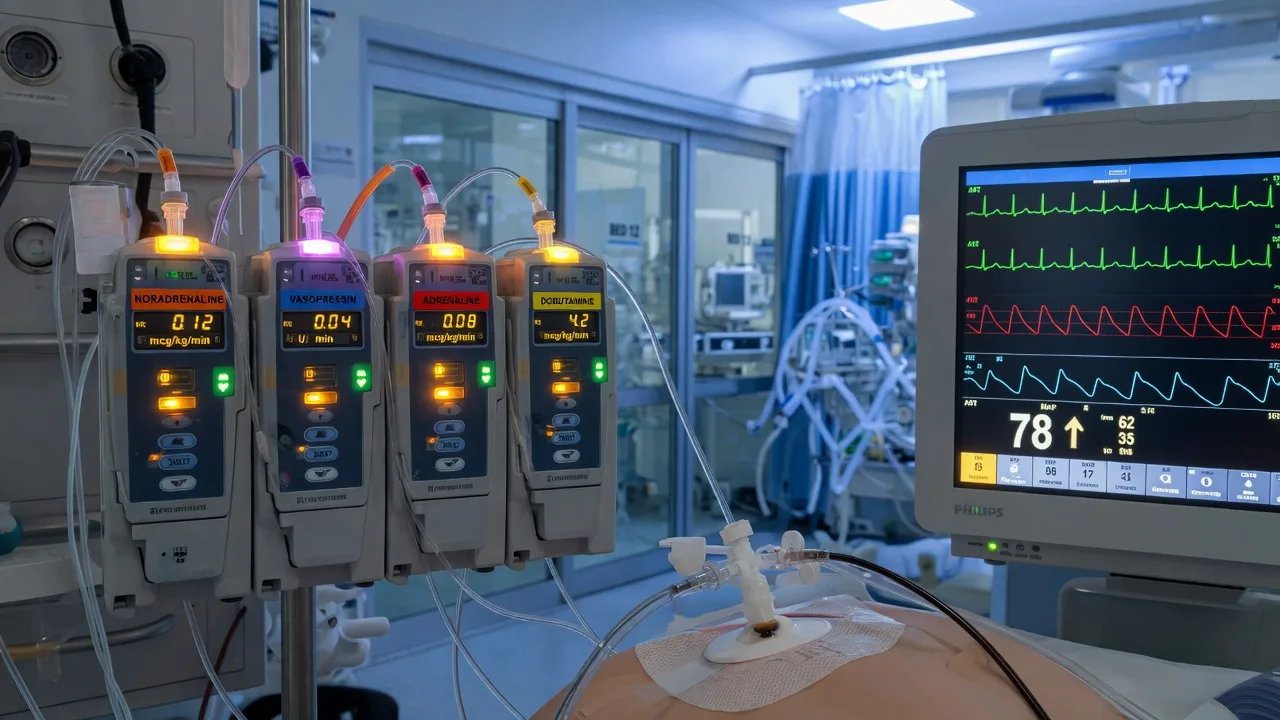
Common ICU medication errors
| Error type | Example | Consequence | Prevention |
|---|---|---|---|
| Wrong dose (renal) | Vancomycin not adjusted for AKI | Nephrotoxicity, ototoxicity | Pharmacokinetic dosing, TDM, pharmacist review |
| Wrong dose (hepatic) | Lorazepam high dose in cirrhosis | Prolonged sedation, overdose | Hepatic dose adjustment, pharmacist review |
| Drug interaction (QT) | Azithromycin + ondansetron | Torsades de Pointes (fatal) | QT alert on CPOE, pharmacist review |
| Drug interaction (CYP) | Fluconazole + tacrolimus | Tacrolimus toxicity (nephro) | Interaction checking, TDM |
| Duplicate therapy | Two antiplatelets + anticoagulant | Major bleeding | Medication reconciliation |
| Omitted medication | Home beta-blocker not prescribed | Tachycardia, ischaemia | Medication reconciliation (admission) |
| Wrong route | IV potassium bolus (not diluted) | Cardiac arrest | Double-check, standard concentrations |
ICU medication safety system
- ADMISSION — medication reconciliation: obtain COMPLETE medication list (patient, family, GP, pharmacy — include OTC, supplements, herbal). Compare with ICU medications. Decide: continue, hold, or modify each home medication. DOCUMENT
- DAILY REVIEW — pharmacist-led medication review: (a) appropriateness (still needed?). (b) Dose (correct for renal/hepatic function?). (c) Interactions (new drugs added — check interactions). (d) Duplicate therapy (two drugs same class). (e) Omissions (home medications not given). (f) Duration (antibiotics — stop if not needed; steroids — taper)
- HIGH-ALERT MEDICATIONS — DOUBLE-CHECK: insulin (hypoglycaemia), anticoagulants (bleeding), opioids (respiratory depression), sedatives (over-sedation), NMBA (prolonged paralysis), potassium (cardiac arrest), adrenaline/noradrenaline (wrong dose — extreme BP changes)
- DRUG INTERACTIONS — check at each new prescription: (a) QT prolongation (azithromycin, ondansetron, haloperidol, methadone — additive). (b) CYP450 (azoles, macrolides, fluoroquinolones affect tacrolimus, warfarin, statins). (c) Serotonin syndrome (SSRIs + linezolid, tramadol). (d) Bleeding (antiplatelet + anticoagulant + NSAID). Use: interaction checker (CPOE) or pharmacist
- TRANSFER/DISCHARGE — medication reconciliation: (a) Reconcile ICU medications with ward/discharge medications. (b) Identify: new medications (started in ICU — still needed?). (c) Identify: home medications held in ICU (restart?). (d) Provide: accurate discharge medication list (to GP, pharmacy, patient)
- CULTURE OF SAFETY — (a) Encourage error reporting (no blame — system focus). (b) Regular medication safety audits (identify patterns — specific drugs, times, staff). (c) Training (high-alert medications, common interactions). (d) Protocols (standard concentrations, dosing charts). (e) Technology (CPOE with decision support — alerts for interactions, renal dosing, duplicate therapy)
Short answer questions
SAQ — Tacrolimus-toxicity prescribing error after liver transplant
10 minutes · 10 marks
A 55-year-old man, day 4 after liver transplantation, is admitted to ICU with septic shock. He takes oral tacrolimus 5 mg twice daily (trough 9 ng/mL). Blood cultures grow Candida glabrata and fluconazole 400 mg IV daily is started. The team also prescribes vancomycin and piperacillin-tazobactam for suspected bacterial co-infection.
SAQ — High-alert medications: cisatracurium and heparin together in severe ARDS
10 minutes · 10 marks
A 60-year-old patient with severe ARDS (P/F ratio 90) is started on a cisatracurium infusion to facilitate lung-protective ventilation and prone positioning. He is simultaneously on a therapeutic unfractionated heparin infusion for a pulmonary embolism diagnosed two days ago.
Clinical pearls
Red flags
Prognosis
ICU medication safety outcomes
Medication error rate in ICU: 5-10% of prescriptions (Kane-Gill 2019). Higher than general ward (2-3%) — reflects ICU complexity. Pharmacist impact: ICU pharmacist daily review reduces medication errors by 60-80%, reduces ADEs by 50%, reduces mortality (some studies — Leape 1999: 66% reduction in preventable ADEs with pharmacist). CPOE with decision support: reduces medication errors by 50-80% (Bates 1998, 1999 — landmark studies). BUT: alert fatigue (doctors override 50-90% of alerts). Smart pumps: reduce infusion-related errors by 50-60% (dose error reduction systems). ADE outcomes: ICU patients with ADEs: 2-3 extra ICU days, 2x mortality risk, $5,000-10,000 extra cost. 30-50% of ADEs are PREVENTABLE. Vancomycin dosing errors: without pharmacist/TDM: 30-50% of vancomycin doses are inappropriate (subtherapeutic or toxic). WITH pharmacist: <10% inappropriate.
The five stages of the medication-use process
Medication errors are not a single event — they occur across five sequential stages of the medication-use process, each with distinct failure modes and distinct prevention strategies. Reason's "Swiss cheese" model applies: every layer has holes; harm occurs only when holes align. The ICU is the highest-risk environment in the hospital because all five stages are compressed into a single bed space, run by rotating staff, on patients with rapidly changing physiology (AKI, hepatic dysfunction, altered volume of distribution, RRT, ECMO).[15]
The five stages of the medication-use process and where errors occur
| Stage | Who | Common error types | Detection / prevention |
|---|---|---|---|
| 1. Prescribing (ordering) | Doctor / NP / pharmacist prescriber | Wrong drug, wrong dose, wrong route, wrong frequency, duplicate therapy, allergy missed, renal/hepatic dose not adjusted, drug–drug interaction, ambiguous order | CPOE with CDS, pharmacist on rounds, dose/interaction/allergy alerts, standard order sets |
| 2. Transcribing | Nurse / pharmacist / clerk (largely eliminated by CPOE) | Misreading handwritten order (e.g. "1U" read as "10"), decimal-point error (1.0 vs 10), LASA confusion | CPOE eliminates transcription; Tall Man lettering; no trailing zeros; leading zero for <1 |
| 3. Dispensing | Pharmacy | Wrong drug/strength selected from shelf, wrong diluent, wrong label, calculation error for individualised dose | Barcode-assisted dispensing, pharmacist double-check of high-alert meds, standard concentrations, automated dispensing cabinets |
| 4. Administration | Bedside nurse | Wrong patient, wrong drug, wrong dose, wrong rate (IV push vs infusion), wrong time, omitted dose, wrong-line (misconnection) | Barcode medication administration (BCMA), smart pump with DERS, independent double-check, dedicated lumens, no-bolus-from-infusion-line rule |
| 5. Monitoring | Doctor / nurse / pharmacist | Failure to check levels (vancomycin, tacrolimus, digoxin, anti-epileptics), failure to re-assess after dose change, failure to monitor for toxicity (QT, serotonin, NMB train-of-four) | TDM protocols, daily pharmacist review, structured "antibiotic timeout" at 48–72 h, q12h QTc check on ≥2 QT drugs |
Stage-specific contribution to ICU medication errors
| Stage | Share of errors reaching patient | Share of HARM (ADEs) | Why |
|---|---|---|---|
| Prescribing | ~50–60% | ~30–40% | Commonest stage of origin, but many prescribing errors are intercepted before administration |
| Transcribing | ~10% (was higher pre-CPOE) | <5% | Largely eliminated by CPOE; remains a risk during downtime |
| Dispensing | ~10% | ~5–10% | Pharmacy bar-coding and double-checks catch most |
| Administration | ~25–30% | ~40–50% | "Last line of defence" — once given, harm is immediate; intercepted by BCMA + smart pump |
| Monitoring | variable | ~10–15% | Failure to detect accumulating toxicity (digoxin, tacrolimus, vancomycin) causes delayed harm |
The administration stage contributes disproportionate harm because it is the last barrier before the drug enters the patient — there is no downstream check. This is why barcode medication administration (BCMA) and smart pumps target this stage specifically, and why the bedside nurse double-check is non-negotiable for high-alert medications.[9][11]
High-alert medications: deep dive
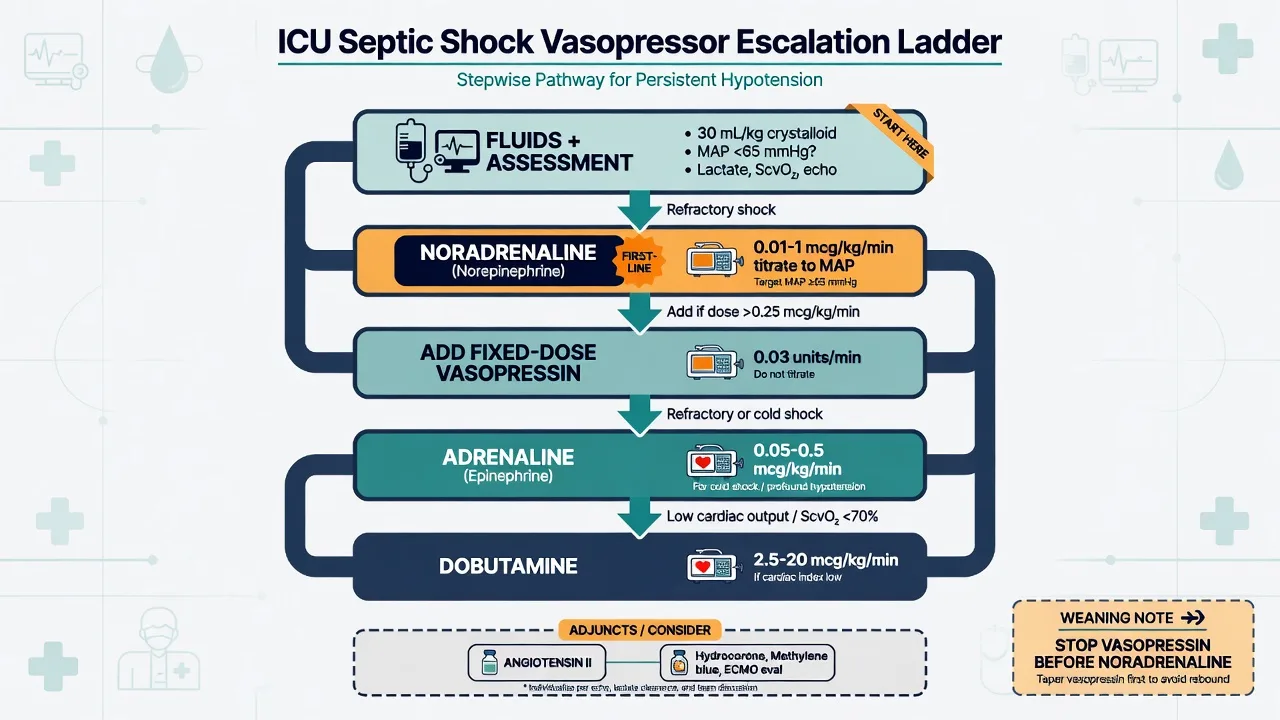
High-alert medications (Institute for Safe Medication Practices, ISMP) are drugs that carry a heightened risk of causing significant patient harm when used in error — the error RATE may not be higher, but the CONSEQUENCE of an error is devastating (death, paralysis, haemorrhage, hypoglycaemic brain injury). In the ICU, nearly every patient is on at least one high-alert medication at any given time.[3][18]
ISMP high-alert medications commonly used in the ICU
| Drug class | Specific agents | Characteristic error | Characteristic harm | Mandatory safeguard |
|---|---|---|---|---|
| Insulin | Regular insulin infusion (1 unit/mL), sliding-scale SC | "U" misread as "0" (e.g. 10U → 100 units); infusion rate not titrated; hypoglycaemia missed in sedated patient | Severe hypoglycaemia → seizures, brain injury, death | Write "units" never "U"; independent double-check; q1h glucose on infusion |
| Anticoagulants | UFH infusion, enoxaparin, warfarin, DOACs | Weight-based heparin miscalculation; enoxaparin NOT held pre-procedure; warfarin–drug interaction; DOAC dose not reduced in renal failure | Major bleeding (intracranial, GI); heparin-induced thrombocytopenia; thrombosis from underdosing | Weight-based protocol; anti-Xa monitoring for UFH; renal-function review for DOAC/LMWH; double-check |
| Opioids | Fentanyl, morphine, HYDROmorphone, methadone | HYDROmorphone confused with morphine (HYDROmorphone is ~5× more potent); equianalgesic conversion error; fentanyl patch on febrile patient | Respiratory depression → arrest; over-sedation → prolonged ventilation | Tall Man "HYDROmorphone"; independent double-check; sedation scoring (RASS, CPOT) |
| Sedatives | Propofol, midazolam, dexmedetomidine | Over-infusion (mg/h vs mcg/kg/h); propofol infusion syndrome (PRIS) at >4 mg/kg/h for >48 h | Over-sedation, hypotension, PRIS (hypertriglyceridaemia, metabolic acidosis, rhabdomyolysis, arrhythmia) | Standard concentrations; smart-pump DERS; daily sedation interruption; RASS target |
| Neuromuscular blockers (NMBAs) | Rocuronium, vecuronium, cisatracurium | Given to a non-intubated / non-ventilated patient; not reversed before extubation; unlabeled syringe mistaken for sedative | Awake paralysis (awareness without ability to breathe) — catastrophic psychological trauma and death if airway not secured | Tall Man "PARALYSING AGENT" label; NEVER in a numbered bay; mandatory double-check; dedicated lumen; capnography confirmation |
| Concentrated electrolytes | KCl (2 mmol/mL ampoules), NaCl 3%, KPhos, MgSO4 2 g/mL | KCl given as IV push (not diluted); NaCl 3% confused with 0.9%; concentrated ampoule drawn into IV line | KCl IV push → asystolic cardiac arrest; NaCl 3% push → central pontine myelinolysis / hypernatraemia | KCl NOT stocked in patient-care areas (pharmacy-prepared diluted bags only); double-check; smart-pump mandatory |
| Vasopressors / inotropes | Noradrenaline, adrenaline, vasopressin, dobutamine, milrinone | Wrong concentration (mg vs mcg); noradrenaline vs adrenaline confusion; vasopressin units vs international units | Extreme hypertension or hypotension; peripheral extravasation → tissue necrosis (noradrenaline, adrenaline); dobutamine tachyarrhythmia | Standard concentrations; central-line administration; smart-pump DERS; dedicated labelled lumen; double-check |
| Antiarrhythmics | Amiodarone, lidocaine, magnesium (torsades), adenosine | Adenosine given without warning / without crash access; amiodarone concentration error; rapid IV push of magnesium | Transient asystole (adenosine); hypotension (amiodarone); respiratory depression (magnesium) | Crash trolley access; standard concentrations; double-check; warn patient of "doom" sensation with adenosine |
| Immunosuppressants | Tacrolimus, ciclosporin, mycophenolate | Tacrolimus dose not adjusted on starting azole; ciclosporin level not checked | Tacrolimus nephrotoxicity; myelosuppression; transplant rejection if under-dosed | TDM for calcineurin inhibitors; pharmacist review on any CYP3A4 change |
| Vinca alkaloids (oncology) | Vincristine, vinblastine | Vincristine given intrathecally (fatal) | Fatal ascending paralysis | Vincristine ONLY in minibag (never syringe); intrathecal drugs supplied separately |
| Concentrated dextrose | D50, D25 (paeds) | D50 given to a child; extravasation → tissue injury | Hyperglycaemia; tissue necrosis from extravasation | Age-appropriate concentration; central line preferred |
Concentrated electrolytes: a special case
Concentrated potassium chloride (KCl) and hypertonic saline (3% NaCl) are among the most dangerous drugs in any hospital. KCl IV push produces sudden fatal hyperkalaemia → asystolic cardiac arrest that is essentially untreatable — and several homicides and patient-safety catastrophes have used exactly this mechanism.[19][20]
Mandatory safeguards: [1]
- Concentrated KCl must NOT be stocked as a floor-stock item in patient-care areas (including ICU bays). It lives only in pharmacy.
- All KCl for infusion is pharmacy-prepared in standard concentrations (e.g. 10 mmol/100 mL, 20 mmol/100 mL, never >40 mmol/L peripheral).
- Smart-pump administration mandatory with hard upper rate limit (e.g. 10 mmol/h peripheral, 20 mmol/h central).
- Independent double-check of the bag, the line, and the pump rate.
- Continuous cardiac monitoring for any K⁺ replacement >10 mmol/h.
- 3% NaCl is segregated, labelled with a warning overlay, and requires two-nurse sign-off and central-line confirmation. [1]
The same principle — eliminate the concentrated product from the point of care — drives removal of concentrated heparin, concentrated morphine, and undiluted vinca alkaloids from ward stock. [1]
Drug interactions by mechanism
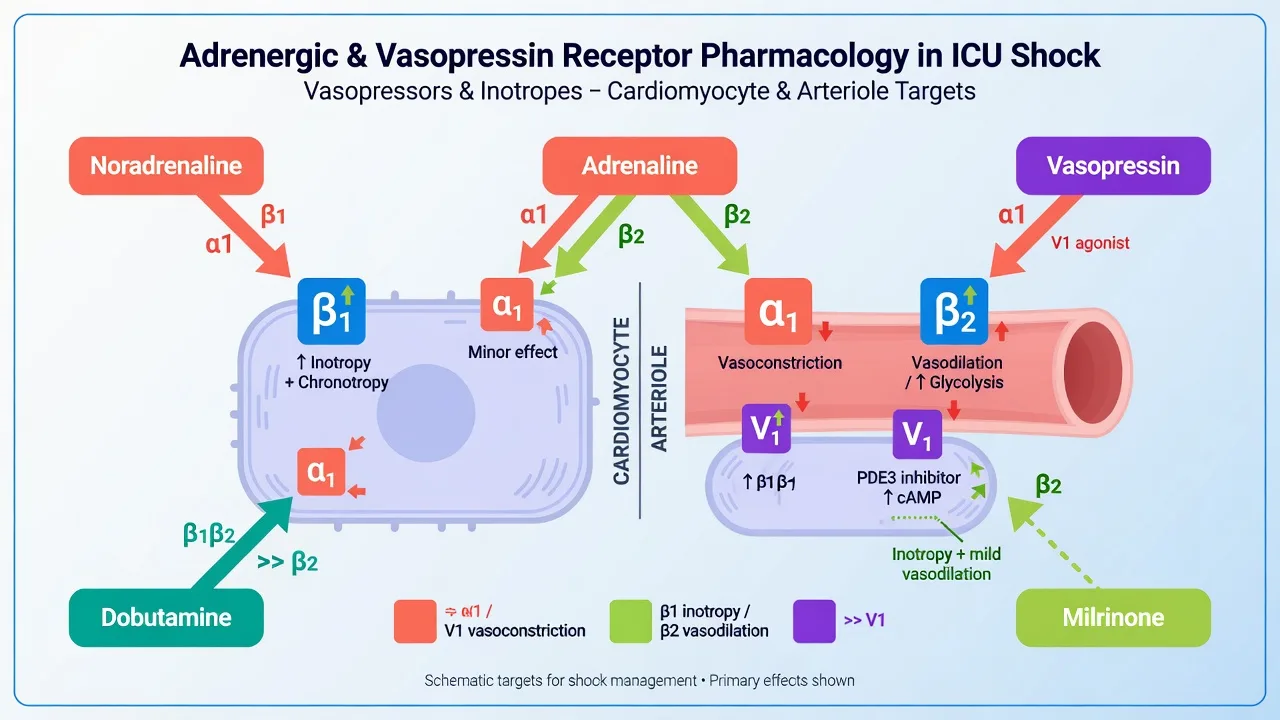
ICU patients are on 10–20+ drugs simultaneously; the probability of at least one clinically significant drug–drug interaction approaches 100% in any prolonged ICU stay. The four highest-yield mechanisms for the exam — and for daily practice — are QT prolongation, serotonin syndrome, CYP450 metabolism, and additive bleeding.[14][22]
The four high-yield ICU drug-interaction mechanisms
| Mechanism | Typical pair / class | Pathophysiology | Clinical picture | Management |
|---|---|---|---|---|
| QT prolongation → Torsades | Azithromycin + ondansetron + haloperidol; methadone; moxifloxacin; amiodarone | Additive block of the rapid delayed-rectifier K⁺ current (I_Kr, hERG channel) → prolonged action potential → early after-depolarisations | Syncope / cardiac arrest with polymorphic VT, long QTc on baseline ECG, bradycardia, hypokalaemia amplifies | Sum QT-prolonging drugs; Tisdale risk score; ECG on each new drug; QTc >500 ms or >60 ms rise → stop; Mg 2 g IV for torsades |
| Serotonin syndrome | SSRI/SNRI + linezolid, tramadol, fentanyl, methylene blue, MAOIs | Excess central serotonergic activity → autonomic and neuromuscular hyperactivity | Hunter criteria: spontaneous/inducible clonus (most specific) + hyper-reflexia + agitation + autonomic instability ± hyperthermia | STOP serotonergic agents; benzodiazepines for agitation; cyproheptadine (5-HT2A antagonist); cooling; supportive |
| CYP3A4 inhibition / induction | Fluconazole/voriconazole/clarithromycin + tacrolimus/warfarin/statin/midazolam/fentanyl | Inhibition → substrate accumulates → toxicity; induction (rifampicin, phenytoin, carbamazepine) → substrate subtherapeutic | Tacrolimus nephrotoxicity; statin rhabdomyolysis; INR spike with warfarin; immunosuppressant failure with induction | Check substrate level DAILY when starting/stopping an inhibitor; pre-emptively reduce tacrolimus 50% when starting fluconazole |
| CYP2C19/2C9 | Omeprazole clopidogrel (2C19 inhibition → reduced active clopidogrel); fluconazole + warfarin (2C9) | Phenoconversion; pharmacogenomic variability | Clopidogrel non-response → stent thrombosis; INR lability | Prefer pantoprazole in PCI patients; monitor INR |
| Additive bleeding | Antiplatelet + anticoagulant + NSAID; SSRI + warfarin (platelet effect) | Independent effects on platelets + coagulation cascade → multiplicative bleeding risk | GI/intracranial bleed; falling haemoglobin | Reconcile all anti-haemostatic agents; add PPI; avoid NSAID combinations |
| Additive sedation / respiratory depression | Opioid + benzodiazepine + antipsychotic + gabapentinoid | Independent CNS depressant effects → multiplicative respiratory depression | Hypercapnic respiratory failure; over-sedation | Daily sedation interruption; RASS target; avoid opioid-benzodiazepine combinations where possible |
| Nephrotoxicity potentiation | Vancomycin + piperacillin-tazobactam; NSAID + ACEi + diuretic ("triple whammy"); amphotericin + tacrolimus | Additive acute tubular injury / afferent-efferent arteriolar effects | Acute kidney injury, rising creatinine | Prefer cefepime over pip-tazo with vancomycin; monitor creatinine; pharmacist review |
| Syndrome of inappropriate antidiuretic hormone / hyponatraemia | SSRIs + carbamazepine + cyclophosphamide + thiazide | Additive ADH effect → euvolaemic hyponatraemia | Seizures from rapid Na⁺ drop | Check Na⁺ on admission and with new drug; avoid combining >2 SIADH-causing drugs |
CYP450 enzyme cheat-sheet for the ICU
| Enzyme | Strong inhibitors (→ toxicity of substrate) | Strong inducers (→ failure of substrate) | Classic substrates |
|---|---|---|---|
| CYP3A4 | Clarithromycin, itraconazole/voriconazole/fluconazole, ritonavir/cobicistat, grapefruit, diltiazem/verapamil (moderate) | Rifampicin, phenytoin, carbamazepine, phenobarbital, St John's wort | Tacrolimus, ciclosporin, midazolam, fentanyl, simvastatin/atorvastatin, apixaban/rivaroxaban (partly), many chemotherapeutics |
| CYP2C9 | Fluconazole, amiodarone, sulfamethoxazole | Rifampicin, phenytoin, carbamazepine | Warfarin (S-enantiomer), phenytoin, losartan, NSAIDs |
| CYP2C19 | Omeprazole/esomeprazole, fluconazole, fluoxetine, clopidogrel (auto-inhibition) | Rifampicin, carbamazepine | Clopidogrel (prodrug activation), pantoprazole (less affected), voriconazole, phenytoin |
| CYP2D6 | Bupropion, fluoxetine, paroxetine, quinidine | None clinically significant | Codeine/tramadol (activation → analgesia), metoprolol, carvedilol, haloperidol, amitriptyline |
| CYP1A2 | Ciprofloxacin, fluvoxamine | Tobacco, omeprazole, carbamazepine | Theophylline, caffeine, clozapine/olanzapine, ropinirole |
Practical rule of thumb: when starting or stopping ANY of the four big inducers (rifampicin, phenytoin, carbamazepine, phenobarbital) or the three big inhibitors (a systemic azole, clarithromycin, or a ritonavir-boosted regimen) on an ICU patient, immediately review every CYP3A4/2C9 substrate on the chart — tacrolimus, warfarin, statins, midazolam, fentanyl, apixaban — and either pre-emptively adjust the dose or commit to daily level monitoring. [1]
Medication reconciliation: the three bridges
Medication reconciliation is the formal process of comparing the patient's actual medications against what is prescribed at every transition of care. Each transition is a "bridge" where unintended discrepancies — omissions, duplications, wrong doses — are introduced. Reconciliation reduces medication errors at admission by ~70–80% and is a WHO/Joint Commission international standard.[22]
Medication reconciliation: the three bridges (Best Possible Medication History)
- ADMISSION bridge (home → ICU). (a) Obtain the Best Possible Medication History (BPMH) using at least TWO sources — patient/family interview PLUS a confirmatory source (community pharmacy fill record, GP summary, prior discharge letter). Include prescription drugs, OTC, herbal/supplements, recreational drugs, PRN use, adherence, last dose, allergies, prior adverse events. (b) Compare BPMH against every ICU order. (c) For EACH home medication, explicitly DOCUMENT one of four decisions: CONTINUE at the same dose, MODIFY (renal/hepatic/route), HOLD (with reason and review date), or STOP (with reason). (d) Common admission errors this prevents: omitted beta-blocker (rebound tachycardia/ischaemia), omitted anti-epileptic (seizure), duplicate PPI, accidental continuation of a recently-stopped anticoagulant.
- TRANSFER bridge (ICU → ward, or ward → ICU). (a) Compare ICU medications against the receiving unit's orders. (b) Specifically reconcile: vasopressors and sedatives (should be weaned, not carried over); antibiotics started in ICU (continue/de-escalate/stop?); anticoagulants (VTE prophylaxis vs treatment dose); newly-started gastric protection; stopped home medications. (c) Document a transferred medication list signed by both sending and receiving clinicians.
- DISCHARGE bridge (hospital → home). (a) Compare the inpatient medication list against the discharge prescription. (b) Reconcile: drugs STARTED in hospital and still needed (e.g. beta-blocker post-MI); drugs HELD in hospital and now to be RESTARTED; drugs PERMANENTLY STOPPED (so the patient does not resume them); dose changes from pre-admission. (c) Provide the patient, GP, and community pharmacy with a single reconciled discharge medication list — written AND verbal counselling. (d) Common discharge errors this prevents: patient resumes an anticoagulant that was held peri-operatively; patient continues a duplicate PPI started in ICU; patient stops a beta-blocker because the discharge letter omitted it.
- DOCUMENT the reconciliation — the name of the reconciler (pharmacist-led is gold standard), the sources used, the discrepancies found, and the action taken. Reconciliation without documentation is not reconciliation.
Common unintended discrepancies found at each bridge
| Bridge | Most common unintended discrepancy | Most dangerous if missed |
|---|---|---|
| Admission | Omitted home beta-blocker / statin / anti-epileptic; OTC NSAID or herbal not recorded | Omitted anti-epileptic → seizure; missed dabigatran/rivaroxaban → thrombosis |
| Transfer | VTE prophylaxis dose not adjusted from prophylactic to therapeutic; sedative carried over to ward | Accidental continuation of ICU sedative → ward over-sedation/airway loss |
| Discharge | New medication started in ICU not on discharge list; held anticoagulant resumed by patient | Patient resumes held DOAC + new antiplatelet → major bleed; missing beta-blocker → readmission |
Prevention: a layered (Swiss cheese) defence
No single intervention eliminates medication errors. Safe systems layer multiple independent safeguards so that the failure of one is caught by another. Each layer has known limitations — the art of ICU medication safety is understanding where the holes are.[15][21]
Layered medication-safety defence in the ICU (inside to outside)
- CPOE with clinical decision support (CDS). Eliminates transcription errors (no handwriting); provides real-time alerts for allergy, drug–drug interaction, renal dose adjustment, duplicate therapy, QT-prolongation, and maximum-dose. Provides standardised order sets (sepsis bundle, intubation, DKA, massive transfusion). Limitation: alert fatigue — clinicians override 49–96% of alerts, so a critical alert may be dismissed; CDS only helps if a human reads it.[5][8]
- Pharmacist on ICU rounds. Daily pharmacist review of every ICU medication — appropriateness, dose for organ function, interactions, duplicates, omissions, duration. Pharmacist-led ADE rates fall by ~66% (Leape 1999). Pharmacist-managed vancomycin / aminoglycoside / anticoagulant dosing. Limitation: only as good as daily presence; off-hours gaps; relies on being asked.[7]
- Pharmacy dispensing safeguards. Barcode-assisted dispensing, automated dispensing cabinets, pharmacist verification of high-alert preparations, removal of concentrated KCl from ward stock. Limitation: pharmacy preparation errors still occur; turnaround time pressure.[3]
- Standard concentrations for ALL infusions. Pharmacy-prepared, pre-printed labels, a single agreed concentration per drug across the whole ICU (e.g. noradrenaline 4 mg/250 mL, insulin 50 units/50 mL, heparin 25 000 units/250 mL). Eliminates bedside dilution and arithmetic errors. Limitation: must be institution-wide to work; deviations in emergencies.
- Smart infusion pumps with drug-error-reduction software (DERS). Drug library with hard and soft dose limits; pump refuses a dose outside the hard limit. Reduces infusion-related errors by ~50–60%. Limitation: staff may bypass the library and use "basic" mode; pump does not prevent wrong-drug selection.[11]
- Barcode medication administration (BCMA). Nurse scans patient wristband + drug barcode + her own ID before administration; system confirms right patient/right drug/right time. Reduces administration errors by ~41% and potential ADEs by ~51% (Poon 2010, NEJM). Limitation: workaround scanning (scan after the fact); barcode quality; downtime.[9]
- Independent double-check for every high-alert medication (insulin, heparin, opioid, NMBA, K⁺, chemotherapy, paediatric weight-based doses). Two clinicians, independently, calculate/verify and sign. An "independent" check means the second checker does NOT see the first checker's calculation. Limitation: token/checklist double-checks that are not truly independent offer little protection.
- Monitoring and feedback loops. TDM for vancomycin/aminoglycosides/tacrolimus/digoxin/antiepileptics; q12h QTc when on ≥2 QT drugs; daily sedation interruption; antibiotic timeout at 48–72 h; incident-reporting system with feedback to staff. Limitation: monitoring only works if results are acted upon.
- Culture of psychological safety. No-blame (or "just culture") incident reporting; regular multidisciplinary mortality-and-morbidity and medication-safety huddles; visible executive sponsorship; staff empowered to speak up regardless of seniority. Limitation: culture is slow to build and easy to lose.
Approach to specific high-alert medications
Insulin — the commonest cause of catastrophic inpatient medication error
| Step | Error trap | Safe practice |
|---|---|---|
| Prescribing | "U" misread as "0" (10U → 100 units); sliding scale written ambiguously; basal insulin continued when nil-by-mouth | Spell out "units"; never use "U", "IU", or abbreviations; standard institution-wide sliding scale and infusion protocol |
| Preparation | Drawing up U-100 from a vial with a tuberculin syringe (1 mL = 100 units, easy to draw 1.0 mL = 100 units by mistake) | Use only insulin syringes (marked in units); pharmacy-prepared infusion bags (50 units/50 mL); no ward preparation |
| Administration | Infusion continued during transport without titration; SC long-acting given IV by accident | Insulin infusion on a dedicated lumen; hourly glucose; clear "INSULIN" lumen label |
| Monitoring | Hypoglycaemia missed in sedated/paralysed patient (no autonomic symptoms); point-of-care glucose meter error | q1h glucose on infusion; treat glucose <4 mmol/L immediately; daily review of total insulin load |
Anticoagulants in the ICU — dose, monitoring, reversal
| Agent | Renal adjustment | Monitoring | Reversal | Common error trap |
|---|---|---|---|---|
| Unfractionated heparin (UFH) infusion | No | aPTT or anti-Xa (anti-Xa preferred in ICU — not affected by acute-phase reactants) | Protamine 1 mg per 100 units heparin (last 4 h) | Weight-based miscalculation; protamine dose based on total daily heparin (over-correction) |
| Enoxaparin | CrCl <30 → once daily; consider UFH in severe AKI | Anti-Xa peak (4 h post dose) if obese, renal failure, pregnancy | Protamine (partial) | Not held before neuraxial/procedure; continued on RRT without anti-Xa |
| Warfarin | No | INR (CYP2C9/2C19 interactions; diet) | Vitamin K (slow); PCC (fast); FFP if PCC unavailable | INR not re-checked when azole started/stopped; loading dose too aggressive in hepatic failure |
| Apixaban / rivaroxaban (DOAC) | CrCl-dependent dose reduction; avoid rivaroxaban if CrCl <15 | Levels rarely needed; anti-Xa semi-quantitative | Andexanet alfa or PCC; haemodialysis ineffective (highly protein-bound) | Dose not reduced in AKI; given with antiplatelet → bleeding; half-life prolonged in hepatic failure |
| Dabigatran | CrCl-dependent; avoid if CrCl <30 | Thrombin time / dTT | Idarucizumab; haemodialysis (not protein-bound) | Forgotten in the hypothermic/post-arrest patient; continued for procedure without hold |
Opioid and sedative safety in the ICU
| Risk | Mechanism | Safe practice |
|---|---|---|
| Equianalgesic conversion error | HYDROmorphone ≈ 5× morphine potency; fentanyl patch dose reflects mcg/h not mg | Use institutional conversion chart + pharmacist; independent double-check for any conversion >50% dose change |
| Opioid-benzodiazepine synergy | Multiplicative respiratory depression | Avoid co-prescription where possible; daily sedation interruption; capnography if not intubated |
| Methadone QT | hERG block → long QT → torsades | Baseline + 1-week ECG; avoid with other QT-prolongers |
| Fentanyl patch on febrile patient | Heat ↑ absorption → toxic dose | Avoid patches in ICU; if used, no warming blankets |
| Propofol infusion syndrome (PRIS) | Mitochondrial toxicity at >4 mg/kg/h for >48 h | Cap dose; check triglycerides, lactate, CK; switch to dexmedetomidine/midazolam for prolonged sedation |
| NMBAs given to non-intubated patient | Awake paralysis — catastrophic | "PARALYSING AGENT" Tall-Man label; never in numbered bays; double-check airway confirmed |
Additional clinical pearls
Red flags — expanded
[1]Evidence and landmark trials
Leape et al., 1999 — Pharmacist on ICU rounds (JAMA)
Prospective, controlled (before-and-after)
Population: Adult medical ICU (Brigham and Women's Hospital)
Key finding
Rate of preventable ADEs FELL by 66% (from 10.4 to 3.5 per 1000 patient-days) when a pharmacist participated in rounds. The pharmacist made ~9 interventions per day, most commonly on dosing, drug selection, and route.
Practice change
Pharmacist participation on ICU rounds is one of the most effective single interventions to reduce preventable ADEs. Every ICU should have a clinical pharmacist on the daily round.
Bates et al., 1998 — CPOE + team intervention (JAMA)
Pre/post with historical control
Population: Medical and cardiac ICUs and general wards (Brigham and Women's)
Key finding
Serious medication errors FELL by 55% across all units (greatest in the ICU). The team intervention alone reduced non-intercepted serious errors by ~80% in the ICU.
Practice change
CPOE with clinical decision support is foundational to medication safety and acts synergistically with pharmacist-led review.
Poon et al., 2010 — Bar-code medication administration (NEJM)
Before-and-after with time-series control
Population: Adult medical, surgical, and cardiac ICUs and general wards
Key finding
Non-timing administration errors FELL by 41.4% and potential ADEs due to administration errors FELL by 50.8%. Errors in chart-documented timing fell 27.3%. No reduction was seen during downtime procedures.
Practice change
BCMA substantially reduces administration-stage errors and potential ADEs and is now a standard of care in well-resourced ICUs.
Rothschild et al., 2005 — Critical Care Safety Study (Crit Care Med)
Prospective observational (incident reporting + chart review)
Population: Adult medical ICU
Key finding
Adverse events (including non-medication) occurred in 35.7 per 100 patient-days; serious medical errors in 91.3 per 1000 patient-days. Medication-related serious errors were the largest single category. Most errors were preventable.
Practice change
ICU care is high-risk by its nature; medication-related serious errors are common and prevention requires a layered system, not individual vigilance.
Rothschild et al., 2005 — Smart infusion pumps (Crit Care Med)
Controlled trial (cluster, before-and-after)
Population: Adult medical, surgical, and coronary ICUs
Key finding
Smart pumps REDUCED infusion-related medication errors but did NOT significantly reduce serious (clinically important) errors or ADEs, because clinicians often bypassed the drug library ('basic' mode). The protective effect was strongly associated with library USE compliance.
Practice change
Smart pumps reduce infusion errors ONLY when the drug library is consistently engaged. Pump purchase without a compliance and library-maintenance programme is wasted money.
Rybak et al., 2020 — Revised vancomycin consensus (Clin Infect Dis)
Multisociety consensus guideline (revised)
Population: Adults and children with serious MRSA infections
Key finding
AUC-guided dosing achieves similar efficacy with LOWER nephrotoxicity than trough-only targeting 15–20 mg/L. Bayesian AUC dosing is preferred; two-level (trough + mid-interval) AUC is acceptable. Loading 20–25 mg/kg actual body weight.
Practice change
Trough-only vancomycin monitoring is OUTDATED. AUC₀–₂₄ 400–600 mg·h/L (with Bayesian dosing) is the new standard, balancing efficacy and nephrotoxicity.
Leape et al., 1995 — Systems analysis of ADEs (JAMA, ADE Prevention Study Group)
Prospective cohort with structured incident analysis
Population: Hospitalised adults (including ICU)
Key finding
Of ADEs, 78% were judged to be due to dosing or prescribing errors originating in the ORDERING stage; ~48% of ADEs were PREVENTABLE. The ordering stage accounted for ~50% of errors, transcription 11%, pharmacy 14%, administration 26%.
Practice change
Half of preventable ADEs originate in prescribing — making CPOE + pharmacist review the highest-leverage interventions. Established the conceptual foundation for medication-safety system redesign.
Prognosis — expanded
ICU medication safety outcomes — context
- ICU medication error rate: ~5–10% of prescriptions and ~1.5 errors per patient per day; ~2–3× higher than general wards (Wilmer 2010 systematic review).[2]
- Pharmacist on rounds: Leape 1999 → 66% reduction in preventable ADEs in the ICU.[7]
- CPOE with CDS: Bates 1998/1999 → 55% reduction in serious medication errors; effect concentrated at the prescribing stage.[8][5]
- Barcode medication administration: Poon 2010 → 41% reduction in non-timing administration errors and 51% reduction in potential ADEs.[9]
- Smart pumps: reduce infusion-related errors by ~50–60% ONLY when the drug library is engaged; no effect on serious ADEs if library bypassed.[11]
- ADE burden: ICU patients with an ADE have ~2–3 extra ICU days, ~2× mortality risk, ~$5,000–10,000 extra cost; 30–50% of ADEs are preventable.[4][17]
- Vancomycin: pharmacist-led AUC-based dosing reduces inappropriate doses from ~30–50% to <10% and reduces AKI; combining with piperacillin-tazobactam increases AKI vs cefepime.[12][13]
- WHO "Medication Without Harm" (5th Global Patient Safety Challenge): global goal to reduce severe, preventable medication-related harm by 50% over 5 years — the strategic frame for all ICU medication-safety work.
- Machine-learning prescribing-error detection: emerging evidence that ML on EHR data can flag high-risk orders with high specificity and reduce both errors and cost (Rozenblum 2020).[21]
References
- [1]Kane-Gill SL, Dasta JF, Buckley MS, et al. Innovations in Medication Safety: Services and Technologies to Enhance the Understanding and Prevention of Adverse Drug Reactions Pharmacotherapy, 2018.PMID 30033608
- [2]Wilmer A, Louie K, Drevich P, et al. Incidence of medication errors and adverse drug events in the ICU: a systematic review Qual Saf Health Care, 2010.PMID 20671079
- [3]Federico F. Preventing harm from high-alert medications Jt Comm J Qual Patient Saf, 2007.PMID 17915527
- [4]Classen DC, Pestotnik SL, Evans RS, et al. Adverse drug events among hospitalized Medicare patients: epidemiology and national estimates from a new approach to surveillance Jt Comm J Qual Patient Saf, 2010.PMID 20112660
- [5]Bates DW, Teich JM, Lee J, et al. The impact of computerized physician order entry on medication error prevention J Am Med Inform Assoc, 1999.PMID 10428004
- [6]Cresswell KM, Bates DW, Williams R, et al. Evaluation of medium-term consequences of implementing commercial computerized physician order entry and clinical decision support prescribing systems in two 'early adopter' hospitals J Am Med Inform Assoc, 2014.PMID 24431334
- [7]Leape LL, Cullen DJ, Clapp MD, et al. Pharmacist participation on physician rounds and adverse drug events in the intensive care unit JAMA, 1999.PMID 10422996
- [8]Bates DW, Leape LL, Cullen DJ, et al. Effect of computerized physician order entry and a team intervention on prevention of serious medication errors JAMA, 1998.PMID 9794308
- [9]Poon EG, Keohane CA, Yoon CS, et al. Effect of bar-code technology on the safety of medication administration N Engl J Med, 2010.PMID 20445181
- [10]Rothschild JM, Landrigan CP, Cronin JW, et al. The Critical Care Safety Study: The incidence and nature of adverse events and serious medical errors in intensive care Crit Care Med, 2005.PMID 16096443
- [11]Rothschild JM, Keohane CA, Cook EF, et al. A controlled trial of smart infusion pumps to improve medication safety in critically ill patients Crit Care Med, 2005.PMID 15753744
- [12]Rybak MJ, Le J, Lodise TP, et al. Therapeutic Monitoring of Vancomycin for Serious Methicillin-resistant Staphylococcus aureus Infections: A Revised Consensus Guideline and Review by the American Society of Health-system Pharmacists, the Infectious Diseases Society of America, the Pediatric Infectious Diseases Society, and the Society of Infectious Diseases Pharmacists Clin Infect Dis, 2020.PMID 32658968
- [13]Magagnoli J, Auld SC, Bowdish J, et al. Kidney Injury, Dialysis, and Mortality with Vancomycin Plus Piperacillin-Tazobactam or Cefepime Int J Antimicrob Agents, 2026.PMID 42362071
- [14]Boyer EW, Shannon M. The serotonin syndrome N Engl J Med, 2005.PMID 15784664
- [15]Leape LL, Bates DW, Cullen DJ, et al. Systems analysis of adverse drug events. ADE Prevention Study Group JAMA, 1995.PMID 7791256
- [16]Lee BV, Fong G, Tran M, et al. Cost-benefit analysis comparing trough, two-level AUC and Bayesian AUC dosing for vancomycin Clin Microbiol Infect, 2021.PMID 33221430
- [17]Bates DW, Miller EB, Cullen DJ, et al. Patient risk factors for adverse drug events in hospitalized patients. ADE Prevention Study Group Arch Intern Med, 1999.PMID 10573045
- [18]Otero MJ, Castano B, Perez M, et al. Developing a list of high-alert medications for patients with chronic diseases Eur J Intern Med, 2014.PMID 25468740
- [19]Wetherton AR, Corey TS, McCloud HH, et al. Fatal intravenous injection of potassium in hospitalized patients Am J Forensic Med Pathol, 2003.PMID 12773847
- [20]Cornish P. Enhancing safety with potassium phosphates injection Dynamics, 2007.PMID 18274363
- [21]Rozenblum R, Rodriguez-Monguio R, Quinn M, et al. Using a Machine Learning System to Identify and Prevent Medication Prescribing Errors: A Clinical and Cost Analysis Evaluation Jt Comm J Qual Patient Saf, 2020.PMID 31786147
- [22]Gentile G, Bagnasco D, Togias A, et al. Recognizing and preventing unacknowledged prescribing errors associated with polypharmacy Arch Public Health, 2024.PMID 39232813