ICU · Pharmacology
ICU vasopressor and inotrope pharmacology — comprehensive (catecholamines, vasopressin, inodilators)
Also known as Noradrenaline (norepinephrine) · Adrenaline (epinephrine) · Vasopressin · Dobutamine · Milrinone · Dopamine · Phenylephrine · Metaraminol · Levosimendan · Angiotensin II · SOSO trial · SOAP II trial · VASST trial · VANISH trial · SEPSISPAM trial · Vasopressor weaning
Vasopressors increase blood pressure (vasoconstriction) and inotropes increase cardiac output (contractility). First-line vasopressor in septic shock: NORADRENALINE (alpha-1 vasoconstriction, mild beta-1). SOSO trial: noradrenaline non-inferior to adrenaline for mortality, with fewer arrhythmias. Add vasopressin (V1 receptor — catecholamine-sparing) as second agent. Adrenaline as third-line or for severe shock. Inotropes: dobutamine (beta-1 — increases CO) for low cardiac output. Milrinone (PDE inhibitor — inotrope + vasodilator) for right heart failure/pulmonary hypertension. Dopamine: NO LONGER recommended in septic shock (SOAP II — more arrhythmias than noradrenaline).
On this page & tools
Your progress
Saved locally on this device.
Target exams
Red flags
Overview & definition
Vasopressors and inotropes are the haemodynamic backbone of ICU shock management. A vasopressor increases blood pressure predominantly through vasoconstriction (↑ systemic vascular resistance, SVR), while an inotrope increases cardiac output through positive inotropy (↑ stroke volume). Several agents do both — adrenaline is a potent vasopressor and inotrope, and the artificial distinction matters most at the bedside when choosing which drug (or combination) matches the patient's haemodynamic phenotype: a vasodilatory shock (low SVR, high CO) needs a vasopressor; a cardiogenic shock (low CO, high SVR) needs an inotrope; the common mixed shock of sepsis often needs both. [1]
The decision tree hinges on three questions: (1) what is the shock phenotype — vasodilatory, cardiogenic, hypovolaemic, obstructive, or mixed? (2) has the patient been adequately resuscitated — vasopressors are no substitute for intravascular volume (giving noradrenaline to a dry patient worsens peripheral/digital/splanchnic ischaemia without fixing the problem); and (3) which receptor profile best matches the desired haemodynamic change? Understanding adrenergic and vasopressin-receptor pharmacology is therefore non-negotiable for the fellowship exam and for safe practice.[8]
The evidence base has matured through a remarkable sequence of trials — SOAP II (dopamine vs noradrenaline), CAT (adrenaline vs noradrenaline), SOSO (adrenaline vs noradrenaline in septic shock), VASST and VANISH (vasopressin), SEPSISPAM (MAP targets), ADRENAL/APROCCHSS/CORTICUS (corticosteroids), and CLOVERS (early restrictive fluids) — which together establish a clear hierarchy: noradrenaline first-line → add vasopressin → reserve adrenaline for refractory shock → inotrope only when low CO is proven → hydrocortisone for refractory vasopressor-dependent shock. [1]
[1]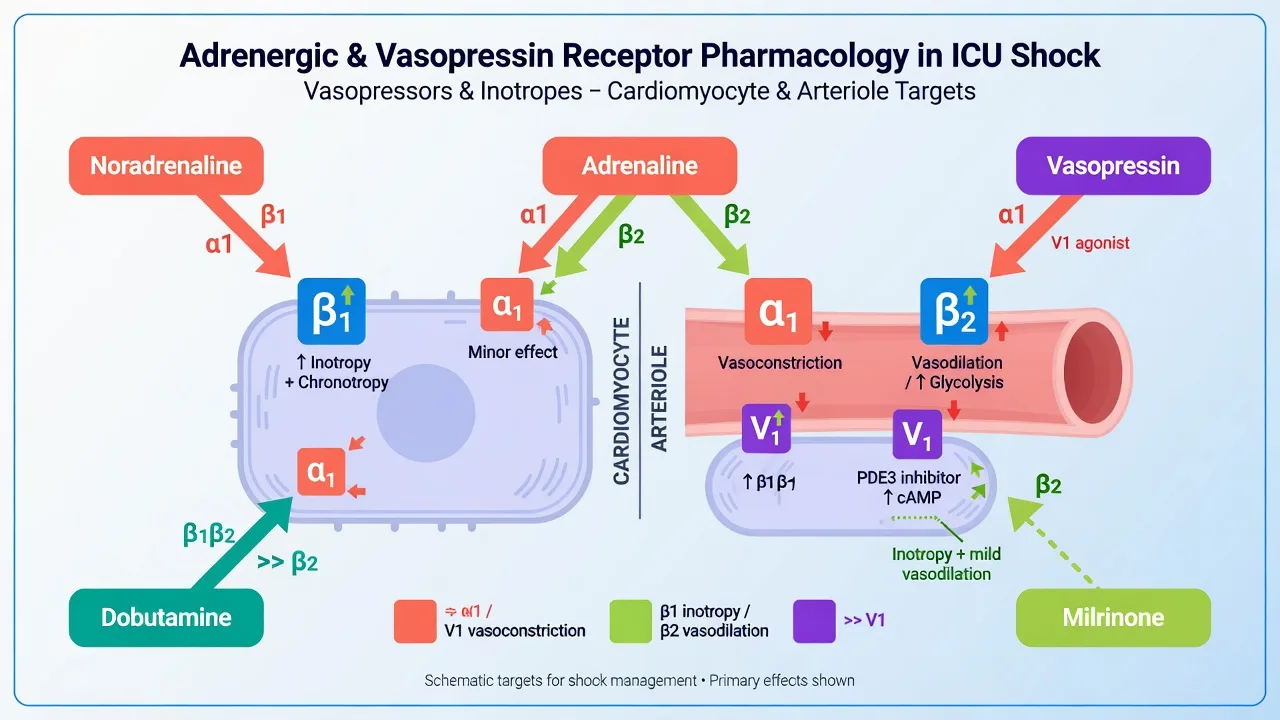
Adrenergic receptor physiology — the foundation
Every catecholamine vasopressor/inotrope acts at the three adrenoceptors (α1, α2, β1, β2) plus, for dopamine, the dopaminergic D1/D2 receptors. The fellowship exam expects you to know which receptor each drug hits, what intracellular signal each receptor produces, and the resulting end-organ effect. This is the foundation on which all drug selection rests. [1]
Receptor coupling and intracellular signalling
- Alpha-1 (α1) — Gq → phospholipase C → IP3/DAG → ↑ intracellular Ca²⁺. Located on vascular smooth muscle (arterioles and venules). Effect: vasoconstriction (↑ SVR, ↑ venous return/preload). Also on the radial iris (mydriasis), internal sphincters (urinary retention), and pilomotor smooth muscle. This is the receptor that makes noradrenaline a vasopressor.
- Alpha-2 (α2) — Gi → ↓ cAMP. Presynaptic α2 is an autoreceptor that inhibits noradrenaline release (negative feedback). Postsynaptic α2 on vascular smooth muscle causes vasoconstriction. Clonidine/dexmedetomidine are α2 agonists (sedation + sympatholysis).
- Beta-1 (β1) — Gs → ↑ cAMP → ↑ PKA. Located on the heart (SA node, AV node, atria, ventricles). Effect: positive chronotropy (↑ HR), positive inotropy (↑ contractility), positive dromotropy (↑ AV conduction), and positive bathmotropy (↑ automaticity). Also on the juxtaglomerular cells → ↑ renin release. This is the receptor that makes dobutamine an inotrope.
- Beta-2 (β2) — Gs → ↑ cAMP. Located on bronchial smooth muscle (bronchodilation), vascular smooth muscle of skeletal muscle (vasodilation — lowers SVR), uterine smooth muscle (tocolysis), and hepatocytes (glycogenolysis, gluconeogenesis → hyperglycaemia), and stimulates the Na⁺/K⁺-ATPase (→ ↑ glycolysis and lactate — the mechanism behind adrenaline-induced hyperlactataemia).
- Dopamine D1 — Gs → ↑ cAMP. Located on renal, mesenteric, coronary and cerebral vascular smooth muscle → vasodilation (the historical basis for "renal-dose dopamine", now debunked). Also on renal tubules → natriuresis/diuresis.
- Dopamine D2 — Gi → ↓ cAMP. Located presynaptically and in the chemoreceptor trigger zone → anti-emetic/nausea effect; modulates pituitary hormone release (inhibits prolactin). [1]
Vasopressin receptors
- V1 (V1a) — Gq → IP3/DAG → ↑ Ca²⁺. On vascular smooth muscle → vasoconstriction (splanchnic, renal, cutaneous, coronary). Independent of adrenergic receptors — the critical point, because it works when adrenergic receptors are downregulated and it spares catecholamine dose.
- V2 — Gs → ↑ cAMP. On the renal collecting duct → inserts aquaporin-2 channels → water reabsorption (the basis for desmopressin). This is why high-dose vasopressin can cause dilutional hyponatraemia.
- V3 (V1b) — Gq. On anterior pituitary → ACTH release (minor clinical relevance). [1]
The seven agents — receptor pharmacology at a glance
Noradrenaline
Alpha-1 > beta-1
- Alpha-1: potent vasoconstriction (arterioles + veins) — ↑ SVR and venous return
- Beta-1: mild positive inotropy (increases CO slightly)
- Dose: 0.05-1.0 mcg/kg/min (titrate to MAP >65)
- FIRST-LINE in septic shock (SOSO: non-inferior to adrenaline, fewer arrhythmias; CAT: similar to adrenaline)
- Side effects: peripheral/coronary/digital/splanchnic vasoconstriction, extravasation necrosis
Adrenaline
Alpha + beta equal
- Alpha-1: vasoconstriction (predominant at higher doses)
- Beta-1: strong inotropy + chronotropy
- Beta-2: bronchodilation, vasodilation (at low doses), ↑ lactate (Na/K pump glycolysis)
- Dose: 0.05-1.0 mcg/kg/min (infusion); 1 mg IV / 0.5 mg IM (anaphylaxis/arrest)
- Uses: anaphylaxis, cardiac arrest, severe septic shock refractory to noradrenaline, symptomatic bradycardia
- Side effects: arrhythmias, tachycardia, hyperglycaemia, ↑ lactate (beta-2 glycolysis — do NOT misread as sepsis)
Vasopressin
V1 receptor — catecholamine-sparing
- V1 receptor: vasoconstriction INDEPENDENT of adrenergic receptors
- Fixed dose: 0.03 U/min (NOT titrated — no benefit above 0.04 U/min, more ischaemia)
- Does NOT reliably increase MAP on its own — reduces noradrenaline dose required (catecholamine-sparing)
- Add as SECOND agent when noradrenaline >0.25-0.5 mcg/kg/min
- Side effects: mesenteric/digital ischaemia (vasoconstriction), hyponatraemia (V2 effect), hyponatraemia, bradycardia
Dopamine
AVOID in septic shock
- Dose-dependent: D1/D2 (1-3 mcg/kg/min, renal vasodilation), beta-1 (3-10, inotropy), alpha-1 (>10, vasoconstriction)
- SOAP II: MORE arrhythmias than noradrenaline (24% vs 12%); possible ↑ mortality in cardiogenic shock
- NOT recommended as first-line in septic shock (Surviving Sepsis — weak AGAINST)
- Still used for: symptomatic bradycardia (when pacing not available), short-term bridge to pacing
- "Renal-dose dopamine" is a myth — does NOT protect kidneys (no outcome benefit, harms)
Phenylephrine
Pure alpha-1
- Pure alpha-1 agonist — vasoconstriction with NO beta effect → no tachycardia
- Ideal for tachyarrhythmia-prone patients (e.g., AF who need pressors) and HOCM (improves afterload, no inotropy to worsen gradient)
- Dose: 0.5-5 mcg/kg/min infusion, or 100-200 mcg bolus
- Drawback: pure vasoconstriction → reflex bradycardia → reduced CO — AVOID in heart failure/cardiogenic shock
Metaraminol
Alpha-1 > beta-1 (ANZ workhorse)
- Synthetic mixed alpha-1 (potent) + mild beta-1 — predominant vasoconstrictor
- The ANZ/UK first-line peri-operative & rapid-response pressor (cheaper, longer-acting boluses)
- Dose: 0.5-2 mg IV bolus, or 2-10 mg in 500 mL infusion
- Indirect-acting (releases noradrenaline) PLUS direct alpha-1 → tachyphylaxis possible; not ideal for prolonged shock
Dobutamine
Beta-1 agonist
- Beta-1: increases contractility + HR (positive inotropy + chronotropy)
- Beta-2 (mild): vasodilation (may lower BP/SVR — often needs noradrenaline)
- Dose: 2.5-20 mcg/kg/min
- Uses: cardiogenic shock, low cardiac output, acute heart failure, septic shock with proven low CO
- Side effects: tachycardia, arrhythmias, hypotension (from beta-2 vasodilation), ↑ myocardial O2 demand
- Often combined with noradrenaline (dobutamine for CO, noradrenaline for BP)
Milrinone
PDE-3 inhibitor — inodilator
- Phosphodiesterase-3 inhibitor: prevents cAMP breakdown → ↑ intracellular cAMP (downstream of beta-receptor)
- Positive inotropy + vasodilation (systemic AND pulmonary) — "inodilator"
- Dose: 0.125-0.75 mcg/kg/min (loading bolus 50 mcg/kg increases hypotension risk — avoid in ICU)
- Uses: right heart failure, pulmonary hypertension, weaning from cardiopulmonary bypass, chronic beta-agonist downregulation
- Advantages: works when beta-receptors are DOWNREGULATED (chronic beta-agonist, advanced HF) — bypasses the receptor
- Side effects: hypotension (vasodilation), arrhythmias (esp AF), thrombocytopenia (rare)
- Long half-life (2-3 h) — effects persist after stopping; renally cleared (reduce dose in renal failure)
Levosimendan
Myofilament Ca²⁺ sensitizer
- Calcium sensitizer (binds troponin C, increases myofilament Ca²⁺ sensitivity) + opens ATP-sensitive K⁺ channels → vasodilation
- Positive inotropy WITHOUT increased intracellular Ca²⁺ → less arrhythmia/O2 demand than catecholamines
- Loading 6-12 mcg/kg over 10 min → infusion 0.05-0.2 mcg/kg/min
- Active metabolite (OR-1896) half-life ~80 h — effect persists for days
- Uses: acute decompensated HF, cardiogenic shock (esp if beta-blocked), RV failure, weaning from bypass
- REVIVE/SURVIVE: no mortality benefit in acute HF; CHEAP-2: no benefit in cardiogenic shock
- Side effects: hypotension (K⁺-channel vasodilation), tachycardia
Angiotensin II
AT1 receptor — RAAS pressor
- Direct angiotensin II receptor agonist (AT1 on vascular smooth muscle → vasoconstriction)
- ATHOS-3 trial: effective in vasodilatory (distributive) shock refractory to catecholamines and vasopressin
- Dose: 20 ng/kg/min, titrate to max 80 ng/kg/min
- Niche: refractory vasodilatory shock (sepsis, post-VAD, ACE-inhibitor overdose); can be catecholamine-sparing
- Side effects: venous thrombosis (DVT risk — prophylaxis mandatory), digital ischaemia, AKI
Detailed drug profiles
Noradrenaline (norepinephrine) — first-line vasopressor
Noradrenaline is the physiological postganglionic neurotransmitter of the sympathetic nervous system and the exogenous agent of choice for vasodilatory shock. It is a potent alpha-1 agonist (vasoconstriction) with a modest beta-1 effect (mild positive inotropy) and negligible beta-2 action. The result is a reliable rise in SVR, MAP, venous return and a slight rise in stroke volume/CO, with a modest increase in heart rate (less than adrenaline). [1]
- Pharmacokinetics: synthetic L-norepinephrine; onset within 1-2 min, peak effect in ~5 min, half-life 2-3 min (so it is titrated as a continuous infusion and stopped/started at bedside). Metabolised by COMT and MAO (monoamine oxidase — caution/contraindication with MAO inhibitors: hypertensive crisis). Cleared in minutes → no loading dose, just titrate to MAP.
- Pharmacodynamics: alpha-1 vasoconstriction (arterioles + veins) → ↑ SVR + ↑ venous return/preload; mild beta-1 → slight ↑ in CO (less than dobutamine). Net effect: ↑ MAP, ↑ SVR, mild ↑ CO, small ↑ HR, modest ↑ in myocardial O2 demand.
- Dosing: start 0.05-0.1 mcg/kg/min, titrate by 0.02-0.05 every 5-10 min to MAP ≥65 mmHg. Typical range 0.05-1.0 mcg/kg/min; doses above 1.0 mark "high-dose" vasopressor — at this point add a second agent (vasopressin) and consider hydrocortisone.
- Adverse effects: peripheral/digital/mesenteric/coronary vasoconstriction (ischaemia), extravasation necrosis (manage with phentolamine), reflex bradycardia at high doses, hyperglycaemia, ↑ lactate (much less than adrenaline). [1]
Why it is first-line: SOSO (Gordon 2018) and CAT (Myburgh 2008) showed noradrenaline is non-inferior to adrenaline for mortality in septic/critical-care shock, with fewer arrhythmias and less hyperlactataemia. SOAP II showed it has fewer arrhythmias than dopamine. It is the Surviving Sepsis Campaign 2021 first-line recommendation.[1][6][8]
Adrenaline (epinephrine) — third-line, anaphylaxis, arrest
Adrenaline is the adrenal medullary hormone — a non-selective agonist at alpha-1, alpha-2, beta-1 and beta-2 receptors. Its effects are dose-dependent: at low doses beta-2 dominates (vasodilation of skeletal muscle beds, bronchodilation); at moderate doses beta-1 dominates (inotropy + chronotropy); at high doses alpha-1 dominates (vasoconstriction). It is the most versatile but also the most arrhythmogenic and lactatogenic agent. [1]
- Pharmacokinetics: onset within 1-2 min IV, peak 5 min, half-life 2-3 min. Metabolised by COMT/MAO. In anaphylaxis the intramuscular route is preferred (vastus lateralis) — IM absorption is reliable even in shock.
- Pharmacodynamics: alpha-1 (vasoconstriction), beta-1 (inotropy + chronotropy), beta-2 (bronchodilation, vasodilation at low dose, ↑ lactate via Na/K-ATPase stimulation of glycolysis, hyperglycaemia via glycogenolysis/gluconeogenesis).
- Dosing: infusion 0.05-1.0 mcg/kg/min (titrate to MAP); anaphylaxis 0.5 mg (500 mcg) IM repeat 5 min (0.3-0.5 mg); cardiac arrest 1 mg IV every 3-5 min (or 2-2.5 mg endotracheal).
- Adverse effects: arrhythmias (more than noradrenaline — atrial and ventricular), tachycardia, hyperlactataemia (beta-2 stimulation of glycolysis — Type B lactic acidosis, not from tissue hypoperfusion), hyperglycaemia, hypokalaemia, myocardial O2 demand. [1]
When to use it: (1) anaphylaxis (IM 500 mcg, first-line); (2) cardiac arrest (1 mg IV after 3rd shock for VF/pulseless VT, alongside amiodarone); (3) symptomatic bradycardia when atropine/pacing fails; (4) severe refractory septic shock as third-line when noradrenaline + vasopressin insufficient; (5) short-term bridge in profound shock before central access. Why not first-line in septic shock: more arrhythmias than noradrenaline (SOSO, CAT) and the lactate rise confounds sepsis monitoring.[1][6]
Vasopressin — catecholamine-sparing, V1
Vasopressin (antidiuretic hormone, ADH) acts at V1 receptors on vascular smooth muscle to cause vasoconstriction independently of adrenergic receptors — the key principle. In septic shock, endogenous vasopressin levels are paradoxically inappropriately low ("vasopressin deficiency") and adrenergic receptors are downregulated by prolonged catecholamine exposure — both of which make exogenous vasopressin a rational second agent. [1]
- Pharmacodynamics: V1 vasoconstriction (splanchnic, renal, cutaneous, coronary — does NOT cause the same reflex tachycardia as noradrenaline, may even slow HR); V2 water reabsorption (negligible at vasopressor doses, but can contribute to hyponatraemia); V3 ACTH release (minor).
- Dosing: fixed 0.03 U/min (0.03 units/min), NOT titrated. There is no benefit above 0.04 U/min and increasing ischaemia (VANISH used 0.06 U/min in the titrated arm without benefit). Start when noradrenaline >0.25-0.5 mcg/kg/min.
- VASST: no overall mortality benefit vs noradrenaline (the trial was underpowered for that), BUT a pre-specified subgroup of less severe septic shock showed a mortality benefit (26.5% vs 35.7%) — the basis for the catecholamine-sparing role.
- VANISH: early vasopressin (titrated up to 0.06 U/min ± hydrocortisone) did NOT reduce kidney failure-free days vs noradrenaline. No mortality benefit. Confirms vasopressin as catecholamine-sparing adjunct, not a superior agent.
- Adverse effects: digital/mesenteric/splanchnic ischaemia (vasoconstriction — the reason it is NOT titrated above 0.04), hyponatraemia (V2), bradycardia, decreased CO (afterload). Stop vasopressin before stopping noradrenaline during weaning (abrupt withdrawal can cause rebound hypotension from vasopressin deficiency).[3][1]
Dopamine — the historical agent now abandoned
Dopamine is the biochemical precursor of noradrenaline. Its dose-dependent receptor profile is one of the most examinable facts in ICU pharmacology: [1]
-
Low dose (1-3 mcg/kg/min) — "renal-dose dopamine": D1 (renal/mesenteric vasodilation) + D2. The historical idea that low-dose dopamine "protects the kidney" in ATN — DEBUNKED. Multiple RCTs (e.g., the Australian ANZICS trial, Bellomo 2000) showed NO benefit in renal outcomes, ATN prevention, dialysis avoidance, or mortality. Do not use "renal-dose dopamine."
-
Moderate dose (3-10 mcg/kg/min): β1 (inotropy + chronotropy).
-
High dose (>10 mcg/kg/min): α1 (vasoconstriction). [1]
-
SOAP II (De Backer 2010): dopamine vs noradrenaline in 1679 patients with shock. No difference in overall mortality (52.5% vs 48.5%) — BUT more arrhythmias (24.1% vs 12.4%, p<0.001), and a pre-specified cardiogenic shock subgroup had HIGHER mortality with dopamine. Conclusion: dopamine is not first-line; it causes harm through arrhythmias.
-
Surviving Sepsis 2021: weak recommendation AGAINST dopamine in septic shock.
-
Remaining niche uses: symptomatic bradycardia when pacing not immediately available (the chronotropic effect is useful), short-term bridge to pacing, occasional peri-arrest scenarios. Avoid in cardiogenic shock (SOAP II cardiogenic subgroup: ↑ mortality).[2][8]
Dobutamine — first-line inotrope
Dobutamine is a synthetic racemic mixture of beta-1 and beta-2 agonists (predominantly β1). It increases stroke volume and CO with a modest increase in HR, and a mild β2 vasodilation that can lower SVR/BP — hence it is frequently co-administered with noradrenaline. [1]
- Pharmacodynamics: β1 (inotropy > chronotropy — less tachycardia than dopamine/isoprenaline) + mild β2 (vasodilation). Net: ↑ CO, ↑ SV, mild ↑ HR, ↓ SVR (may ↓ BP).
- Dosing: 2.5-20 mcg/kg/min, titrate to cardiac output/lactate/SvO2 (NOT to BP — it often lowers BP).
- Indication in septic shock: add when there is persistent low CO/high lactate/low SvO2 despite adequate MAP and volume — not routinely. Clinical/lactate/SvO2 or POCUS evidence of low CO is the trigger, not just "high noradrenaline."
- Indication in cardiogenic shock: first-line inotrope (± noradrenaline for BP), as a bridge to definitive therapy (revascularisation, mechanical support).
- Adverse effects: tachycardia, arrhythmias (less than dopamine/adrenaline), hypotension (β2), ↑ myocardial O2 demand (ischaemia). Tachyphylaxis in 24-48 h (beta-receptor downregulation). [1]
Milrinone — the inodilator for RV failure and pulmonary HTN
Milrinone is a phosphodiesterase-3 (PDE-3) inhibitor — it prevents the breakdown of cAMP, increasing intracellular cAMP downstream of the beta-receptor. This is its key advantage: it works when beta-receptors are downregulated (chronic HF on beta-blockers, prolonged catecholamine infusion, advanced heart failure). [1]
- Pharmacodynamics: ↑ cAMP in cardiac myocytes → ↑ inotropy; ↑ cAMP in vascular smooth muscle → vasodilation (systemic AND pulmonary). Net: ↑ CO, ↓ SVR, ↓ PVR — "inodilator."
- Dosing: 0.125-0.75 mcg/kg/min infusion. The 50 mcg/kg loading bolus causes significant hypotension — omit in ICU patients already on vasopressors. Renally cleared → reduce dose in renal failure.
- Indications: right heart failure / RV infarct, pulmonary hypertension (reduces PVR), weaning from cardiopulmonary bypass, acute decompensated HF (especially if beta-blocked).
- Adverse effects: hypotension (the main one — often needs noradrenaline concurrently), arrhythmias (esp AF), thrombocytopenia (rare). Half-life 2-3 h (vs minutes for catecholamines) — effects persist after stopping, so the hypotension persists; this is a major ICU pitfall. [1]
Phenylephrine, metaraminol — pure vasoconstrictors
- Phenylephrine — pure α1 agonist, no β effect. Ideal when you need vasoconstriction without tachycardia (AF needing pressor, HOCM, tachyarrhythmia-prone). Drawback: reflex bradycardia reduces CO — avoid in cardiogenic shock. 0.5-5 mcg/kg/min, or 100-200 mcg bolus.
- Metaraminol — mixed α1 (potent, both direct and indirect via noradrenaline release) + mild β1. The ANZ/UK first-line rapid-response and peri-operative pressor (cheaper, longer-acting, usable peripherally short-term). 0.5-2 mg IV bolus or 2-10 mg in 500 mL infusion. Indirect action → tachyphylaxis; not ideal for prolonged shock. [1]
Dose-response relationships — what changes as you titrate
Dose-response — what each agent does across its dose range
| Agent | Low dose | Moderate dose | High dose | Notes |
|---|---|---|---|---|
| Noradrenaline | 0.05 mcg/kg/min: modest ↑ SVR/MAP | 0.2-0.5: titration range — ↑ SVR, ↑ venous return, mild ↑ CO | >1.0: high-dose — add 2nd agent (vasopressin) + hydrocortisone | Linear dose-response; no receptor-switch |
| Adrenaline | 0.05: β2 dominant — vasodilation (↓ SVR!), bronchodilation | 0.1-0.5: β1 dominant — ↑ inotropy + chronotropy | >0.5: α1 dominant — vasoconstriction | Receptor switch with dose — classic exam point |
| Dopamine | 1-3: D1/D2 (renal/mesenteric vasodilation) | 3-10: β1 (inotropy) | >10: α1 (vasoconstriction) | Receptor switch with dose — "renal-dose" debunked |
| Dobutamine | 2.5: mild inotropy | 5-10: standard inotropy + chronotropy | 15-20: max inotropy, arrhythmias, β2 vasodilation | Often lowers BP at higher doses |
| Vasopressin | — | 0.03 U/min FIXED — NOT titrated | — | No dose-response titration; fixed dose only |
| Milrinone | 0.125: inodilation | 0.25-0.5: standard | 0.75: more vasodilation/hypotension | Half-life 2-3 h — slow offset |
A crucial exam point: adrenaline and dopamine show a dose-dependent receptor switch (β2 → β1 → α1 for adrenaline; D → β1 → α1 for dopamine), whereas noradrenaline does not — it is α1-dominant across its dose range. This is why low-dose adrenaline can paradoxically lower blood pressure (β2 vasodilation) in a vasodilated patient. [1]
Clinical scenarios — which agent, when
Scenario 1: Septic shock (the commonest)
Phenotype: vasodilatory (low SVR, high or normal CO, warm peripheries), often mixed (myocardial depression in severe sepsis → low CO). [1]
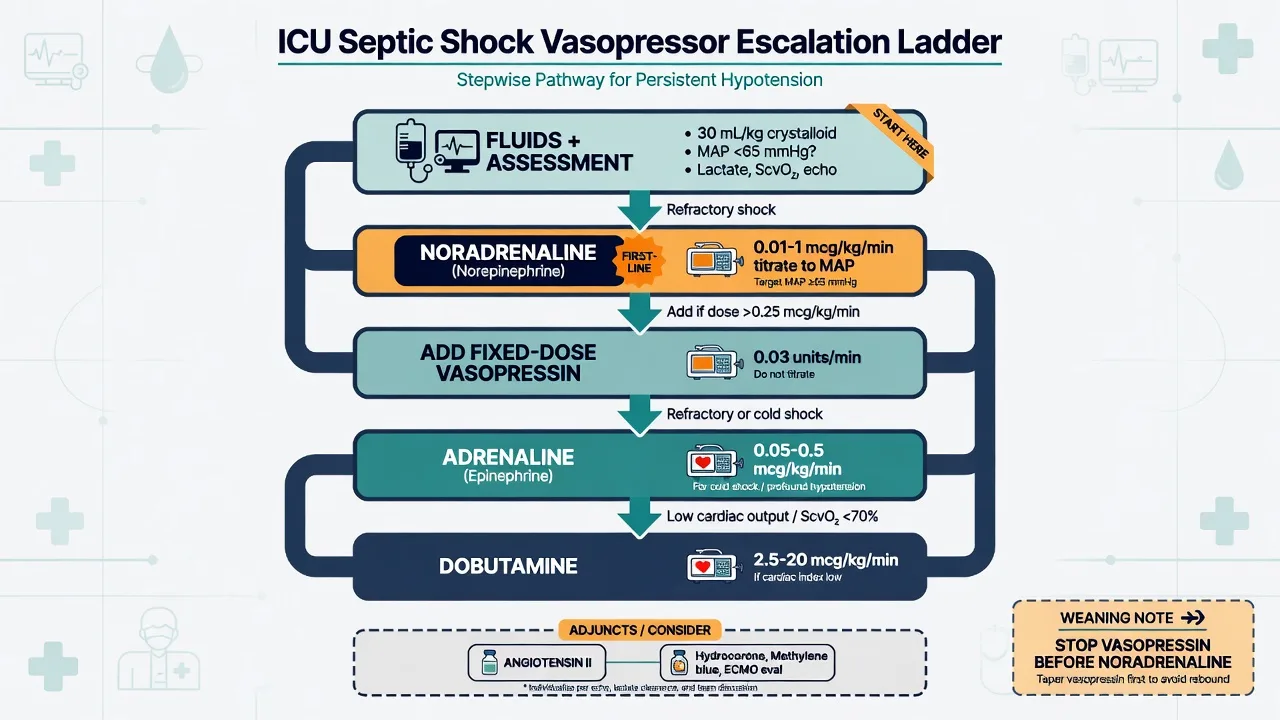
Stepwise escalation: [1]
- Resuscitate: 30 mL/kg crystalloid (Surviving Sepsis), source control, antibiotics within 1 h. CLOVERS (2023) showed an early restrictive fluid strategy (using vasopressors earlier, less fluid) was safe and feasible — non-inferior to liberal fluids, with fewer positive fluid balance harms.[7]
- Noradrenaline first-line — titrate to MAP ≥65 mmHg (arterial line).[1]
- Add vasopressin 0.03 U/min when noradrenaline >0.25-0.5 mcg/kg/min (catecholamine-sparing).[3][1]
- Add hydrocortisone 200 mg/day (± fludrocortisone 50 mcg) when shock is refractory / vasopressor-dependent. ADRENAL: faster shock reversal, no mortality benefit (so reserve for refractory); APROCCHSS: hydrocortisone + fludrocortisone reduced mortality in severe shock.[4][5]
- Add dobutamine if proven low CO (POCUS, lactate, SvO2 <65%) — NOT routinely.
- Adrenaline as third-line vasopressor if still hypotensive.
Scenario 2: Cardiogenic shock
Phenotype: low CO, high SVR (cold, vasoconstricted, oliguric), pulmonary oedema. [1]
- Noradrenaline preferred over adrenaline for BP support (fewer arrhythmias, less lactate) — SOAP II cardiogenic subgroup: dopamine ↑ mortality.
- Dobutamine or milrinone for inotropy. Milrinone preferred in RV failure/pulmonary HTN or if beta-blocked; dobutamine preferred if needing rapid titration (short half-life).
- SWAN-Ganz/pulmonary artery catheter or POCUS to guide — define the haemodynamics, don't guess.
- Mechanical support (IABP, Impella, VA-ECMO) if refractory — drugs alone are a bridge, not a destination. Revascularisation is definitive for ischaemic CS. [1]
Scenario 3: Anaphylaxis
Phenotype: vasodilatory + bronchospasm + angioedema — adrenaline is first-line, not noradrenaline (need the β2 bronchodilation + α1 vasoconstriction). [1]
- Adrenaline 0.5 mg (500 mcg) IM (vastus lateralis), repeat every 5 min.
- Adrenaline infusion 0.05-0.5 mcg/kg/min if refractory.
- Fluids (crystalloid 1-2 L rapidly), H1/H2 blockers (chlorphenamine + ranitidine) and steroids (hydrocortisone 200 mg) are adjuncts — never delay adrenaline. [1]
Scenario 4: RV failure / pulmonary hypertension
Phenotype: high RV afterload, low LV preload/CO, often systemic hypotension. [1]
- Noradrenaline to maintain coronary perfusion (RV perfusion is systemic-pressure-dependent — RV ischaemia is a vicious cycle).
- Milrinone (PDE-3) — reduces PVR + provides inotropy. Often needs noradrenaline concurrently for systemic BP.
- Inhaled nitric oxide / nebulised prostacyclin to selectively reduce PVR without systemic hypotension.
- AVOID pure vasoconstrictors that increase PVR (high-dose noradrenaline, phenylephrine) without RV support. [1]
Scenario 5: Vasoplegia post-cardiac surgery / post-bypass
Phenotype: profound vasodilatory shock after CPB (inflammatory response), often with normal/high CO. [1]
- Noradrenaline first-line.
- Vasopressin second agent (often works well — these patients frequently have vasopressin deficiency from haemodilution).
- Methylene blue 1-2 mg/kg (guanylate cyclase inhibitor — emerging therapy for refractory vasoplegia).
- Hydrocortisone if refractory.
- Angiotensin II (ATHOS-3 paradigm) as rescue. [1]
Scenario 6: Tachyarrhythmia-prone patient needing pressors
- Phenylephrine (pure α1 — no tachycardia) or vasopressin (no adrenergic tachycardia).
- AVOID adrenaline, dopamine, dobutamine (all chronotropic/pro-arrhythmic).
- Noradrenaline is usually acceptable (only mild β1). [1]
Scenario 7: Chronic hypertension / elderly
- Target MAP higher — SEPSISPAM subgroup with chronic hypertension had fewer renal events at higher MAP (80-85 vs 65).[1]
Evidence — the key trials
SOSO (Gordon, Lancet 2018) — adrenaline vs noradrenaline in septic shock
Multicentre RCT, 2659 adults with septic shock
Population: Adults with septic shock requiring vasopressors within 6 h
Key finding
Noradrenaline was NON-INFERIOR to adrenaline for 28-day mortality (30.1% vs 28.8%). Adrenaline had MORE cardiovascular adverse events (more arrhythmias, more lactate).
Practice change
Noradrenaline is the preferred first-line vasopressor in septic shock. Adrenaline is an acceptable alternative but with more arrhythmias and hyperlactataemia (which confounds sepsis monitoring).
SOAP II (De Backer, NEJM 2010) — dopamine vs noradrenaline in shock
Multicentre RCT, 1679 adults with shock (septic, cardiogenic, hypovolaemic)
Population: Adults with shock requiring vasopressors
Key finding
No difference in overall mortality (52.5% vs 48.5%). BUT dopamine had MORE arrhythmias (24.1% vs 12.4%, p<0.001) AND the pre-specified cardiogenic shock subgroup showed HIGHER mortality with dopamine.
Practice change
Noradrenaline is preferred over dopamine in ALL forms of shock. Dopamine causes more arrhythmias and may increase mortality in cardiogenic shock. Dopamine is NOT first-line in septic shock (Surviving Sepsis — weak recommendation against).
VASST (Russell, NEJM 2008) — vasopressin vs noradrenaline in septic shock
Multicentre RCT, 778 adults with septic shock on vasopressors
Population: Adults with septic shock requiring ≥5 mcg/kg/min noradrenaline (or equivalent)
Key finding
No significant difference in 28-day mortality overall (35.4% vs 39.3%, p=0.26). BUT a pre-specified subgroup of LESS SEVERE septic shock showed a mortality benefit (26.5% vs 35.7%, p=0.05). Fewer arrhythmias with vasopressin; less noradrenaline required (catecholamine-sparing).
Practice change
Vasopressin is NOT superior to noradrenaline overall, but is catecholamine-sparing and may benefit less-severe septic shock. It is used as a SECOND agent (0.03 U/min fixed) to reduce noradrenaline dose, NOT to replace it.
VANISH (Gordon, JAMA 2016) — early vasopressin vs noradrenaline ± corticosteroids
2×2 factorial RCT, 409 adults with septic shock
Population: Adults with septic shock within 12 h of vasopressor requirement
Key finding
No significant difference in kidney failure-free days. No mortality benefit. The vasopressin + hydrocortisone group used LESS noradrenaline (catecholamine-sparing effect of the combination).
Practice change
Early vasopressin does NOT improve kidney outcomes and does NOT reduce mortality vs noradrenaline. Confirms vasopressin's role as a catecholamine-sparing adjunct at fixed 0.03 U/min, NOT as a superior or renoprotective agent.
SEPSISPAM (Asfar, NEJM 2014) — high vs low MAP target in septic shock
Multicentre RCT, 776 adults with septic shock
Population: Adults with septic shock within 24 h requiring vasopressors
Key finding
No difference in 28-day mortality (28.5% vs 28.7%). MORE atrial fibrillation with high target. Subgroup with CHRONIC HYPERTENSION: fewer renal-replacement-therapy events with high target.
Practice change
Target MAP ≥65 mmHg is adequate for most. Higher targets (80-85) do NOT improve mortality and increase arrhythmias and vasopressor dose. Consider higher target in patients with chronic hypertension (less AKI/RRT).
ADRENAL (Venkatesh, NEJM 2018) — hydrocortisone in septic shock
Multicentre RCT, 3658 adults with septic shock
Population: Adults with septic shock within 24 h, mechanically ventilated, on vasopressors
Key finding
No difference in 90-day mortality (27.9% vs 28.8%). Faster shock reversal, fewer days on vasopressors, faster ICU discharge. MORE new infection/superinfection with hydrocortisone.
Practice change
Hydrocortisone does NOT reduce mortality in septic shock overall, but speeds shock reversal and reduces vasopressor duration. Reserve for REFRACTORY / vasopressor-dependent shock, not all septic shock.
CORTICUS (Sprung, NEJM 2008) — hydrocortisone timing & ACTH response
Multicentre RCT, 499 adults with septic shock
Population: Adults with septic shock within 72 h (slower enrolment than Annane 2002)
Key finding
No difference in mortality overall OR in ACTH non-responders. Faster shock reversal in both responders and non-responders. No rebound after stopping (no taper needed).
Practice change
Hydrocortisone speeds shock reversal but does NOT reduce mortality. ACTH stimulation test does NOT predict response — abandon routine cosyntropin testing. No rebound → can stop without taper.
CAT (Myburgh, NEJM 2008) — adrenaline vs noradrenaline in critically ill
Multicentre RCT, 280 critically ill patients with shock requiring vasopressors
Population: Adults with shock of ANY cause (septic, cardiogenic, hypovolaemic) in ANZ ICUs
Key finding
No difference in 28-day or 90-day mortality. Adrenaline caused MORE lactate (lactataemia at 24 h), transient hyperglycaemia. Arrhythmias similar (small study).
Practice change
Adrenaline and noradrenaline are equivalent for mortality — but adrenaline's lactate rise confounds sepsis monitoring. Confirms noradrenaline as first-line.
CLOVERS (Shapiro, NEJM 2023) — restrictive vs liberal fluids in early sepsis
Multicentre RCT, 1563 adults with septic shock and hypotension
Population: Adults with sepsis-induced hypotension within 4 h
Key finding
No significant difference in 90-day mortality (restrictive 30.7% vs liberal 31.4%). Fewer serious adverse events in restrictive group. Less fluid balance in restrictive arm.
Practice change
An early restrictive strategy (vasopressors EARLIER, less fluid) is safe and feasible — supports starting noradrenaline EARLY rather than piling in fluid. Reinforces 'fluids are not always benign.'
Septic shock — vasopressor/inotrope escalation (the rescue ladder)
- RECOGNISE & RESUSCITATE (first hour). (a) Confirm septic shock: suspected infection + hypotension (SBP <90 / MAP <65) OR lactate ≥2 mmol/L despite fluids. (b) Lactate, blood cultures ×2, broad-spectrum antibiotics within 1 h, 30 mL/kg crystalloid (balanced isotonic). (c) Source control urgently. (d) Arterial line for accurate BP; central access for vasopressors. (e) CLOVERS supports starting vasopressors EARLY — do not delay noradrenaline to chase fluid goals.[7]
- NORADRENALINE FIRST-LINE — titrate to MAP ≥65 mmHg. Start 0.05-0.1 mcg/kg/min, titrate by 0.02-0.05 every 5-10 min. Central line as soon as feasible (short-term large-bore peripheral acceptable in emergency per ANZ practice — replace within hours).[1]
- ADD VASOPRESSIN 0.03 U/min (fixed) when noradrenaline >0.25-0.5 mcg/kg/min. Catecholamine-sparing — do NOT titrate. Reassess volume (POCUS IVC/lungs, dynamic tests) before escalating further.[3][1]
- ADD HYDROCORTISONE 200 mg/day (± fludrocortisone 50 mcg) when shock is refractory / vasopressor-dependent. Faster shock reversal (ADRENAL); APROCCHSS showed mortality benefit in SEVERE shock with fludrocortisone. Do NOT do ACTH testing routinely (CORTICUS).[4][5]
- ADD DOBUTAMINE if PROVEN low CO — clinical (cold, oliguric, mottled), lactate rising, SvO2 <65%, or POCUS showing low EF/hyperdynamic. Dose 2.5-20 mcg/kg/min. Often co-administered with noradrenaline (dobutamine lowers SVR). Do NOT add dobutamine for high lactate alone — sepsis causes type A and B lactataemia.
- ADRENALINE as third-line vasopressor if MAP still <65 despite noradrenaline + vasopressin ± hydrocortisone. Beware arrhythmias and lactate rise (do not misread as worsening sepsis).
- REASSESS the diagnosis if refractory. Missed source (collections, ischaemic bowel, endocarditis)? Cardiogenic component (POCUS)? Obstructive (tension pneumothorax, tamponade, PE)? Adrenal insufficiency? Ongoing losses (bleeding)?
- CONSIDER MECHANICAL SUPPORT / ESCALATION. Refractory vasodilatory shock → methylene blue (1-2 mg/kg), angiotensin II (20-80 ng/kg/min, ATHOS-3). Cardiogenic component → IABP/Impella/VA-ECMO. Define ceilings of care with the team and family.
Vasopressor weaning in recovering shock
- Confirm shock resolution — MAP ≥65 on stable/decreasing vasopressor dose, lactate normalising (<2), improving clinical perfusion (warm, urine >0.5 mL/kg/h, clear mentation), SvO2 >65%. Do NOT wean for normalised lactate alone — confirm haemodynamics.
- Wean SLOWLY — typically noradrenaline first in decrements of 0.02-0.05 mcg/kg/min every 15-30 min, observing MAP. A common pattern: wean by ~25% of current dose at each step. Have the nurse observe MAP continuously; pause if MAP drops >10%.
- WEAN NORADRENALINE BEFORE VASOPRESSIN — abrupt vasopressin withdrawal in a patient still needing pressors causes rebound hypotension (vasopressin deficiency). Stop vasopressin when noradrenaline is low (e.g., <0.1-0.15 mcg/kg/min).
- Keep the patient euvolaemic during weaning — a patient weaned into relative hypovolaemia will rebound into hypotension. Reassess volume responsiveness (POCUS, passive leg raise) before/during weaning.
- TAPER STEROIDS LAST — if on hydrocortisone, wean after vasopressors off. APROCCHSS tapered over 7 d; ADRENAL stopped at shock reversal without taper (no rebound). In practice, a brief taper (3-7 d) is conservative and safe for prolonged courses.
- DO NOT WEAN the inotrope prematurely in cardiogenic shock — wean dobutamine/milrinone only when CO is self-sustaining (often after definitive therapy: revascularisation, VAD, recovery). Milrinone's long half-life (2-3 h) means the effect outlasts the infusion — do not be falsely reassured by a "normal" BP right after stopping.
- WATCH for recurrence — sepsis relapse, ongoing source, new infection. Have a low threshold to re-escalate.
Managing vasopressor extravasation
- RECOGNISE — blanching, coolness, mottling, pain, reduced capillary refill around the IV site; progression to blistering/necrosis over hours. HIGH-RISK agents: noradrenaline, adrenaline, dopamine, vasopressin (all vasoconstrictors).
- STOP the infusion immediately — leave the cannula in situ (do not remove yet — use it for antidote).
- ASPIRATE any residual drug from the cannula/tissue (3-5 mL).
- GIVE PHENTOLAMINE — α-blocker that reverses α1 vasoconstriction. 5-10 mg in 10 mL saline, injected SC around the extravasation site (multiple small injections around the perimeter). Repeat in 15-30 min if no improvement. Effect within 2 h.
- Topical NITROGLYCERIN paste (2%) — alternative/additional (NO-mediated vasodilation). Warming the limb may help.
- ELEVATE the limb — do NOT apply cold (worsens vasoconstriction/ischaemia). Warm compresses may aid vasodilation.
- Refer PLASTIC SURGERY early if necrosis/blistering — debridement/skin grafting may be required.
- PREVENT recurrence — central venous access for any sustained vasopressor infusion; if peripheral access is unavoidable (emergency), use a large proximal vein (antecubital) and monitor the site hourly; change to central as soon as possible (ANZ practice: peripheral noradrenaline acceptable short-term in monitored setting, replaced within hours).
Cardiogenic shock — inotrope/vasopressor selection
- DEFINE THE PHENOTYPE with POCUS / pulmonary artery catheter. Cold-shock (low CO, high SVR — classic CS) vs warm-shock (post-MI vasoplegia). The drugs differ: cold-shock needs inotrope, warm-shock needs vasopressor.
- COLD SHOCK (low CO, high SVR): (a) Dobutamine 2.5-20 mcg/kg/min (β1 inotropy) — first-line, rapid titration. (b) Milrinone 0.125-0.75 mcg/kg/min if beta-blocked / RV failure / pulmonary HTN (PDE-3, bypasses β receptor; reduces PVR). (c) Levosimendan if catecholamine-tachyphylactic / chronic HF. (d) Add noradrenaline only if BP/organ-perfusion pressure inadequate (coronary perfusion = diastolic BP — keep it ≥60). AVOID pure α1 vasoconstrictors (phenylephrine/metaraminol) — reflex bradycardia worsens CO.
- WARM SHOCK / VASOPLEGIA (low SVR): Noradrenaline first-line (vasoconstriction + mild inotropy).
- SOAP II lesson: AVOID dopamine in cardiogenic shock — subgroup showed higher mortality vs noradrenaline. More arrhythmias.[2]
- Aim for ORGAN PERFUSION, not a number. Targets: lactate clearance, urine >0.5 mL/kg/h, warm peripheries, mentation, SvO2 >60-65%. A MAP of 65 in a perfusing CS patient is fine; chasing higher MAP with vasoconstrictors worsens CO.
- REMEMBER: drugs are a BRIDGE. Definitive therapy for ischaemic CS = revascularisation (PCI/CABG). Refractory CS = mechanical support (IABP, Impella, VA-ECMO) as bridge to recovery/decision/transplant. Activate the shock team early.
Compare: noradrenaline vs adrenaline vs vasopressin
Noradrenaline
First-line
- Receptor: α1 > β1, negligible β2
- Effect: ↑ SVR, ↑ MAP, mild ↑ CO, small ↑ HR
- Lactate: minimal rise
- Arrhythmias: fewer than adrenaline (SOSO, CAT)
- Surviving Sepsis 2021: FIRST-LINE
- Antidote for extravasation: phentolamine
Adrenaline
Third-line / anaphylaxis / arrest
- Receptor: α1 + α2 + β1 + β2 (dose-dependent)
- Effect: ↑ inotropy, ↑ chronotropy, ↑ SVR (high dose); β2 vasodilation + bronchodilation (low dose)
- Lactate: SIGNIFICANT rise (β2 glycolysis — do NOT misread as sepsis)
- Arrhythmias: MORE than noradrenaline (atrial + ventricular)
- First-line in ANAPHYLAXIS (β2 bronchodilation), CARDIAC ARREST, symptomatic bradycardia
- Use in septic shock only when noradrenaline + vasopressin inadequate
Vasopressin
Second agent (catecholamine-sparing)
- Receptor: V1 (independent of adrenergic)
- Effect: vasoconstriction without adrenergic tachycardia; reduces noradrenaline dose
- Lactate: no effect
- Arrhythmias: FEWER (not a catecholamine)
- FIXED dose 0.03 U/min — do NOT titrate above 0.04 (more ischaemia, no benefit)
- Side effects: digital/mesenteric ischaemia, hyponatraemia (V2)
Compare: dobutamine vs milrinone — the inotrope choice
Dobutamine
β1 agonist — catecholamine
- Mechanism: β1 agonism → ↑ cAMP (receptor-dependent)
- Onset/offset: minutes — rapid titration possible
- Effect: ↑ CO, mild ↑ HR, ↓ SVR (β2)
- Works when β-receptors functional — TACHYPHYLAXIS in 24-48 h (downregulation)
- Preferred when: rapid titration needed, short-term support, NOT beta-blocked
- Drawback: ↓ BP from β2 vasodilation; ↑ arrhythmia risk
Milrinone
PDE-3 inhibitor — inodilator
- Mechanism: prevents cAMP breakdown (receptor-INDEPENDENT)
- Onset/offset: half-life 2-3 h — SLOW titration, slow offset (hypotension persists)
- Effect: ↑ CO, ↓ SVR AND ↓ PVR (pulmonary vasodilation)
- Works when β-receptors DOWNREGULATED (chronic HF, beta-blocked, prolonged catecholamine)
- Preferred when: RV failure, pulmonary HTN, beta-blocked, chronic HF
- Drawback: hypotension (often needs noradrenaline); reduce dose in renal failure; NO bolus in ICU
Compare: dopamine vs noradrenaline (why dopamine is out)
Noradrenaline
Preferred
- α1 > β1 — predictable vasoconstriction across dose range
- SOAP II: FEWER arrhythmias (12.4% vs 24.1%, p<0.001)
- SOAP II cardiogenic subgroup: better outcomes
- Surviving Sepsis 2021: FIRST-LINE recommendation
- No dose-dependent receptor switch — simpler to use
Dopamine
AVOID first-line
- Dose-dependent: D1/D2 (1-3) → β1 (3-10) → α1 (>10) — unpredictable
- SOAP II: MORE arrhythmias (24.1%); possible ↑ mortality in cardiogenic shock
- Surviving Sepsis 2021: WEAK recommendation AGAINST
- "Renal-dose dopamine" (1-3 mcg/kg/min) DEBUNKED — no renal protection, no outcome benefit
- Residual niche: symptomatic bradycardia when pacing unavailable; short-term bridge to pacing
Compare: MAP targets and the role of corticosteroids
MAP targets and adjuncts — the evidence-based thresholds
| Decision | Threshold / target | Evidence | Rationale |
|---|---|---|---|
| MAP target — most | ≥65 mmHg | SEPSISPAM 2014 | Higher (80-85) no mortality benefit, more AF, more vasopressor |
| MAP target — chronic hypertension | Consider 75-80 mmHg | SEPSISPAM subgroup | Fewer RRT events in chronic HTN subgroup at higher MAP |
| Add vasopressin | Noradrenaline >0.25-0.5 mcg/kg/min | VASST, VANISH, SSC 2021 | Catecholamine-sparing; may benefit less-severe shock |
| Add hydrocortisone | Refractory / vasopressor-dependent shock | ADRENAL, APROCCHSS, CORTICUS | Speeds shock reversal; APROCCHSS (severe shock + fludrocortisone) reduces mortality |
| Add dobutamine | Proven low CO (POCUS, lactate, SvO2 <65%) | SSC 2021 (weak) | Inotropy for myocardial depression — NOT routine |
| Fluid bolus (resuscitation) | 30 mL/kg crystalloid initial; reassess before each subsequent bolus | SSC 2021; CLOVERS 2023 | Early restrictive is safe — do not pile in fluid blindly |
SAQ — Noradrenaline pharmacology and its place as first-line vasopressor in septic shock
10 minutes · 10 marks
A 66-year-old man (85 kg) is admitted to ICU with septic shock from a biliary source. Despite 30 mL/kg of balanced crystalloid and appropriate antibiotics, his MAP is 58 mmHg, lactate 4.6 mmol/L, HR 118 sinus tachycardia, and he is oliguric. The bedside nurse asks why you have chosen noradrenaline rather than adrenaline or dopamine, and what dose, route, and monitoring you intend to use.
SAQ — Vasopressin in septic shock: rationale, dosing, and the catecholamine-sparing role
10 minutes · 10 marks
A 71-year-old woman in septic shock from a urinary source is on noradrenaline 0.45 mcg/kg/min, with MAP 62 mmHg, lactate 3.1 mmol/L, and new-onset atrial fibrillation at 138/min. The registrar suggests adding vasopressin. Discuss the pharmacological rationale, evidence, dose, and pitfalls of vasopressin in this scenario.
Clinical pearls
Red flags
Prognosis and context
Outcomes and context
- Noradrenaline vs adrenaline (SOSO 2018): 28-day mortality 30.1% vs 28.8% — equivalent. Noradrenaline first-line (fewer arrhythmias/lactate).[1]
- CAT (2008): adrenaline vs noradrenaline equivalent for mortality; adrenaline ↑ lactate. Confirms noradrenaline first-line.[6]
- Dopamine vs noradrenaline (SOAP II 2010): overall mortality equivalent BUT dopamine ↑ arrhythmias (24% vs 12%) and possible ↑ mortality in cardiogenic shock — abandon dopamine.[2]
- Vasopressin (VASST 2008, VANISH 2016): no mortality/renal benefit overall; catecholamine-sparing; possible benefit in less-severe shock (VASST subgroup). Fixed 0.03 U/min second agent.[3][1]
- MAP targets (SEPSISPAM 2014): 65 vs 80-85 mmHg — no mortality difference; higher target more AF, more vasopressor; benefit (fewer RRT) in chronic hypertension.[1]
- Hydrocortisone (ADRENAL 2018, CORTICUS 2008): no mortality benefit; faster shock reversal, less vasopressor; reserve for refractory. APROCCHSS (2018): hydrocortisone + fludrocortisone reduces mortality in SEVERE shock.[4][5]
- Early restrictive fluids (CLOVERS 2023): non-inferior to liberal — start noradrenaline early, don't pile in fluid.[7]
- Surviving Sepsis Campaign 2021: noradrenaline first-line → vasopressin second → hydrocortisone for refractory. MAP ≥65. Do NOT use dopamine routinely.[8]
- Septic shock mortality: overall ~30-40%; refractory vasodilatory shock on multiple agents — much higher (50%+). Mortality rises with each additional vasopressor.
- Cardiogenic shock mortality: ~40-50% historical; modern shock teams and mechanical support improving. Time to revascularisation is the dominant determinant.
Quick-reference dosing table
ICU vasopressor/inotrope dosing — bedside reference
| Agent | Receptor | Dose | Onset | Half-life | Key caution |
|---|---|---|---|---|---|
| Noradrenaline | α1 > β1 | 0.05-1.0 mcg/kg/min | 1-2 min | 2-3 min | Extravasation necrosis |
| Adrenaline | α + β | 0.05-1.0 mcg/kg/min; 0.5 mg IM; 1 mg IV arrest | 1-2 min | 2-3 min | Arrhythmias, ↑ lactate |
| Vasopressin | V1 | 0.03 U/min FIXED | 5-15 min | 10-20 min | Digital/mesenteric ischaemia |
| Dopamine | D/β1/α1 | 1-20 mcg/kg/min | 5 min | 2-3 min | Arrhythmias (AVOID septic) |
| Dobutamine | β1 > β2 | 2.5-20 mcg/kg/min | 1-2 min | 2-3 min | Hypotension (β2), tachyphylaxis |
| Milrinone | PDE-3 | 0.125-0.75 mcg/kg/min | 5-15 min | 2-3 h | Prolonged hypotension; ↓ dose in RF |
| Levosimendan | troponin C | 6-12 mcg/kg load → 0.05-0.2 mcg/kg/min | 30 min | ~80 h (metabolite) | Hypotension |
| Phenylephrine | α1 pure | 0.5-5 mcg/kg/min; 100-200 mcg bolus | <1 min | 5-10 min | Reflex bradycardia ↓ CO |
| Metaraminol | α1 + mild β1 | 0.5-2 mg IV bolus; 2-10 mg/500 mL | 1-2 min | 20-30 min | Tachyphylaxis |
| Angiotensin II | AT1 | 20-80 ng/kg/min | 5 min | 1-2 min | DVT (prophylax) |
References
- [1]Gordon AC, Mason AJ, Thirunavukkarasu N, et al. p53 and Me N Engl J Med, 2018.PMID 29791817
- [2]De Backer D, Biston P, Devriendt J, et al. Health and medicine in Hapsburg Spain: agents, practices, representations. Introduction Med Hist Suppl, 2009.PMID 20235381
- [3]Russell JA, Walley KR, Singer J, et al. Visual vignette. Adrenal gland ganglioneuroma Endocr Pract, 2008.PMID 18308669
- [4]Venkatesh B, Finfer S, Cohen J, et al. Adjunctive Glucocorticoid Therapy in Patients with Septic Shock N Engl J Med, 2018.PMID 29347874
- [5]Sprung CL, Annane D, Keh D, et al. Antibiotics in urology: new essentials Urol Clin North Am, 2008.PMID 18061025
- [6]Myburgh JA, Higgins A, Jovanovska A, Lipman J, Ramakrishnan N, D'Amico A, CAT Study Investigators Transcranial direct current stimulation improves recognition memory in Alzheimer disease Neurology, 2008.PMID 18525028
- [7]Shapiro NI, Douglas IS, Brower RG, et al. Adverse professional life experiences may affect mental health among cardiologists Nat Rev Cardiol, 2023.PMID 36869095
- [8]Evans L, Rhodes A, Alhazzani W, et al. [Pseudogliomatous osteoporosis due to homozygous mutation of the LRP5 gene] An Pediatr (Engl Ed), 2021.PMID 33775580