ICU · Rehabilitation
Acute severe community-acquired pneumonia: patient and family education
Also known as CAP patient education · ICU discharge education · Self-management after pneumonia · Medication adherence after CAP · Pneumonia discharge counselling · Written action plan pneumonia · Post-ICU patient and family communication
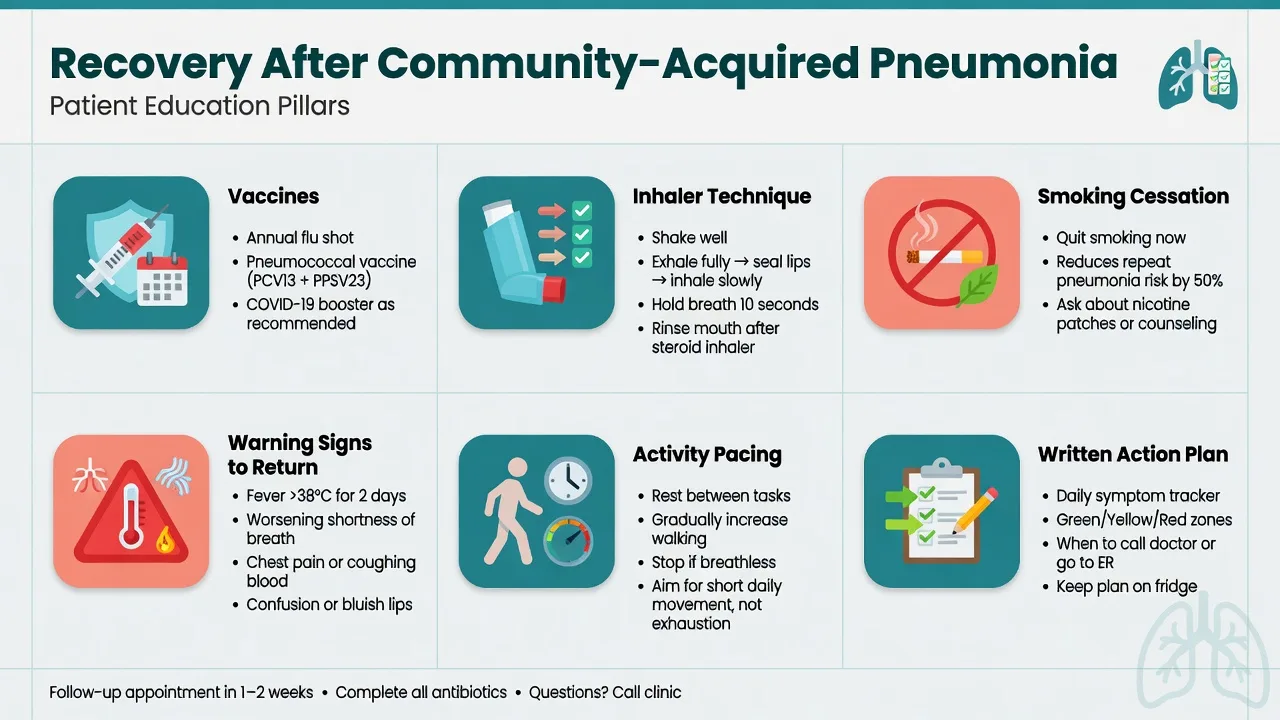
Patient and family education after severe community-acquired pneumonia (CAP) is a core, evidence-based intervention that reduces readmission, accelerates recovery, prevents recurrence, and mitigates post-intensive care syndrome (PICS). Education is delivered across the whole admission — not just at the door — and is structured around seven domains: (1) Understanding what happened — pneumonia is an infection of the lung alveoli; explain the organism if known, the ICU course (oxygen, ventilation, antibiotics) and what to expect. (2) Medication management — complete the antibiotic course even when feeling well, know common side-effects (diarrhoea, nausea, rash, photosensitivity with doxycycline/fluoroquinolones), avoid interactions (fluoroquinolones and divalent cations/QT drugs, warfarin potentiation), and correct inhaler technique if an inhaled bronchodilator or corticosteroid is prescribed. (3) Warning signs — fever >38.5°C returning, worsening breathlessness (especially at rest), new or worsening confusion, chest pain, haemoptysis, or inability to tolerate oral medications or fluids mandate immediate medical review. (4) Recovery timeline — most symptoms resolve over 2–6 weeks, full energy return takes 3–6 months, and radiographic clearing lags behind clinical recovery; some patients never fully recover. (5) Lifestyle modification — smoking cessation (single biggest modifiable risk factor), annual influenza vaccine, pneumococcal vaccination, hand hygiene, avoid sick contacts. (6) Follow-up plan — GP review at ~1 week, clinical review at 6 weeks, repeat chest X-ray at 6–12 weeks (mandatory in smokers/older adults to exclude underlying malignancy), ICU follow-up clinic at 2–3 months. (7) PICS awareness — physical weakness, memory and mood changes are expected after ICU, not dementia, and not necessarily permanent. Deliver education with the teach-back technique, plain language at year-6 reading level, written materials and a written personalised action plan, and always involve family/carers.
On this page & tools
Your progress
Saved locally on this device.
Target exams
Red flags
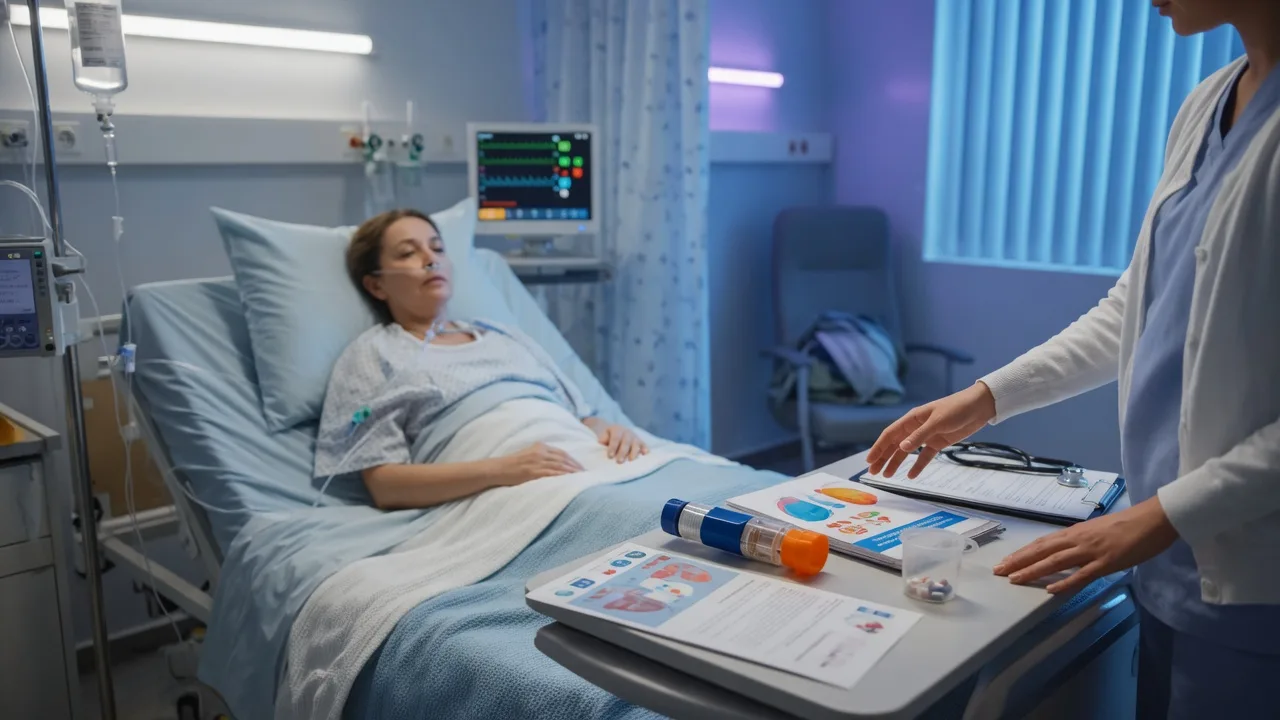
Discharge after a severe community-acquired pneumonia (CAP) admission — particularly one requiring ICU — is not the end of the illness but the start of a prolonged, multidomain recovery. Up to one in five CAP patients is readmitted within 30 days, much of it preventable; survivors commonly experience breathlessness, fatigue, new weakness, sleep disturbance, low mood and problems with memory and concentration for months; and the risk of a further episode of pneumonia is materially reduced by vaccination and smoking cessation.[1][14][17] Patient and family education is the single most cost-effective lever the clinician controls at the moment of discharge. Done well, it converts a passive convalescence into an active, informed self-management plan. Done badly (a hurried verbal handover, a leaflet the patient cannot read, no follow-up booked), it predicts readmission, non-adherence and delayed recognition of complications.
This topic covers what to teach, how to teach it, when to schedule reinforcement, and how to tailor it across health-literacy, language, cognitive, age and cultural contexts. The framework applies the ATS/IDSA 2019 CAP guideline, the British Thoracic Society primary-care CAP summary, ACIP immunisation recommendations, and the post-intensive care syndrome (PICS) literature.[6][7][15]
Exam practice
SAQ — CAP discharge education and the teach-back consultation
10 minutes · 10 marks
A 66-year-old woman with severe community-acquired pneumococcal pneumonia has spent 8 days in ICU, 4 of them intubated and ventilated for type 1 respiratory failure. She is now on the ward, afebrile for 48 hours, saturating 95% on room air, tolerating oral intake, and finishing day 4 of a 7-day course of oral amoxicillin-clavulanate. She is a current smoker (35 pack-years) and lives alone. As the ICU registrar you are preparing her for discharge tomorrow. Outline your structured discharge-education plan.
Clinical pearls
Core principles of CAP patient education
Effective patient education is a clinical intervention with its own evidence base, not a courtesy. It is most effective when it is structured, repeated, multimodal, interactive, and tailored to the individual's literacy, language, cognition and social context. The generic principles below apply to every discharge conversation. [1]
Structured
A framework, not a chat
- Use a checklist (the seven domains above) so no element is missed
- Begin discharge education on the ward, not at the door — reinforce daily
- Book and document each follow-up contact before the patient leaves
- Standardise written materials so every patient gets the same core content
Repeated
Spaced reinforcement
- Adults retain ~50% of medical information from a single encounter
- Repeat key messages at each contact: ward, discharge, GP, 6-week review
- Use the same plain-language phrases each time to build recognition
- Family/carers absorb information more slowly than the patient — re-explain
Multimodal
Verbal + written + visual
- Verbal explanation alone is forgotten within hours by most patients
- Pair every verbal message with a written leaflet and a personalised action plan
- Use diagrams, pill cards, inhaler technique placards, and short videos
- Offer translated materials and interpreter-mediated education for CALD patients
Interactive
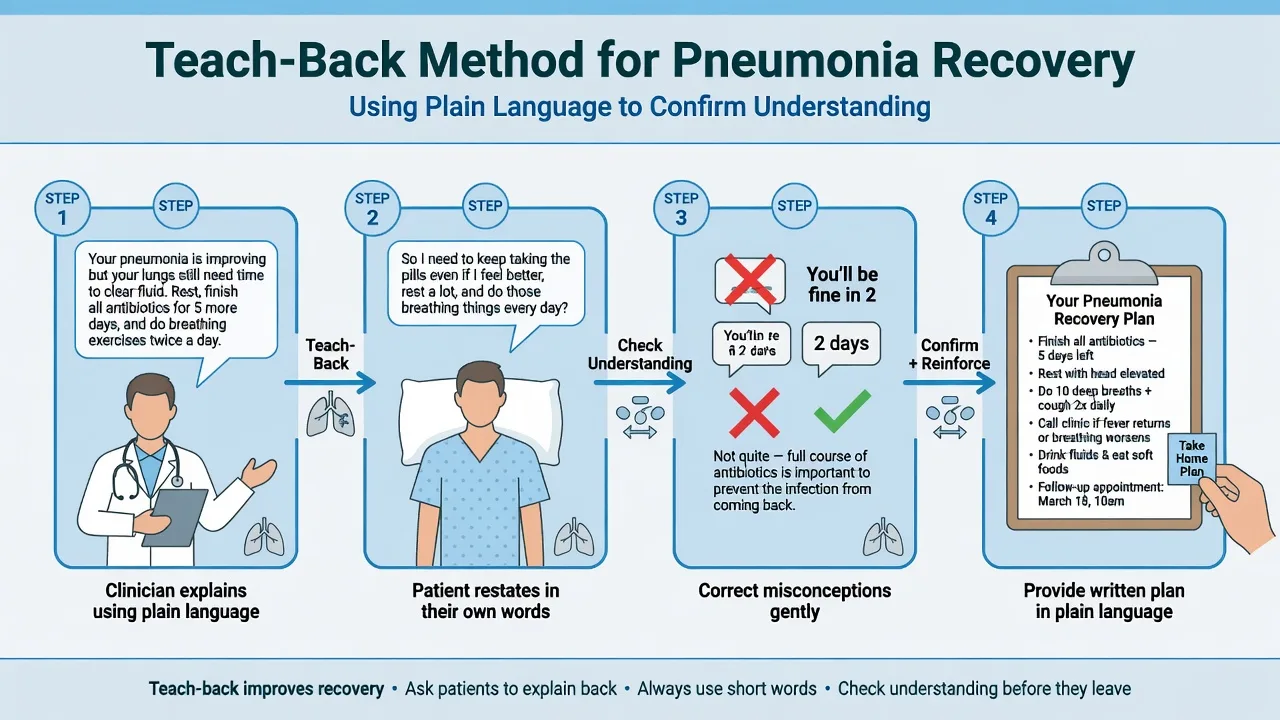
Teach-back, not tell
- Close the loop with teach-back: "Just to make sure I explained it clearly, can you tell me…"
- Frame teach-back as testing your teaching, not the patient — removes shame
- Demonstrate inhaler technique, then have the patient demonstrate it back
- Ask "what questions do you have?" rather than "do you have any questions?"
Tailored
To the individual
- Screen health literacy; adjust vocabulary, sentence length and font size
- Account for post-ICU cognitive impairment (PICS) — break content into chunks
- Address sensory impairment (glasses, hearing aids) and language
- Respect cultural and health-belief frameworks; involve the family where culturally appropriate
What patients need to know about their pneumonia
Patients (and families) consistently want three things explained clearly: what happened, how long recovery will take, and when to worry. Failing to answer these explicitly is a leading driver of anxiety, premature re-presentation, and disengagement from follow-up. Use plain language — "an infection of the air sacs of the lung" rather than "alveolar consolidation." [1]
Understanding the illness
Explain that pneumonia is an infection of the lung tissue (the alveoli) that causes them to fill with inflammatory fluid, which is why breathing becomes hard and oxygen falls. Name the likely organism if it was identified (e.g. pneumococcus, Legionella), explain the treatment received (antibiotics by vein then by mouth, supplemental oxygen, and — if relevant — ventilator support, IV fluids, physiotherapy), and explicitly state that the acute infection has been treated. Where relevant, explain that radiographic clearing lags behind clinical improvement, so the chest X-ray may still look abnormal at the 6-week review even though the patient feels better — this is expected, not a sign of failure.[1][7]
Expected recovery timeline
Recovery from severe CAP is measured in weeks to months, not days. Setting a realistic timeline up front prevents the patient interpreting normal, expected symptoms as relapse. [1]
Days 0–7
Acute / early discharge
- Fever, breathlessness and hypoxaemia should be resolving; oral intake tolerated
- Antibiotic course being completed (typically 5–7 days; longer for Legionella, staphylococcal, bacteraemic)
- Functional: profound fatigue, breathlessness on minimal exertion, needs help with ADLs
- Cough and sputum may persist — clearing takes longer than the fever
- Counsel: this is the worst phase; rest, hydrate, complete antibiotics
Weeks 1–4
Early convalescence
- GP review at ~1 week: check symptoms improving, oral intake, medications tolerated
- Gradual return of energy; light activities of daily living resumed
- Cough may persist (post-infectious, lasts 2–8 weeks); breathlessness on stairs common
- Smoking cessation and vaccination should be underway
- Counsel: pace activity; do not expect to be back to normal
Weeks 4–8
Mid-convalescence
- 6-week clinical review: symptom, function and smoking check
- Repeat chest X-ray at 6–12 weeks to document radiographic resolution
- Most symptoms resolved; residual fatigue and exercise limitation common
- Phased return to work often begins here
- Counsel: improvement is non-linear; rest days are normal
Months 2–6
Medium-term
- ICU follow-up clinic at 2–3 months: physical, cognitive and psychological PICS screen
- Spirometry + DLCO if severe or underlying lung disease
- Most physical recovery occurs here; full energy return by ~3–6 months
- Cognitive and psychological recovery is slower; some impairment persists in ~30%
- Counsel: keep rehabilitating; this is a marathon, not a sprint
When to return — red-flag return precautions
These are the non-negotiable warnings the patient and family must be able to recite (use teach-back). They should be written on the discharge summary, the action plan and the leaflet. [1]
[1] [6]Medication education
Medication-related problems are among the commonest preventable causes of CAP readmission. The discharge medication conversation must cover what each drug is for, how long to take it, the major side-effects, the interactions, and how to store and obtain resupply — and must be confirmed with teach-back. [1]
Antibiotic course completion
The single most important medication message after CAP is to complete the entire antibiotic course exactly as prescribed, even once the patient feels well. Premature cessation risks clinical relapse (particularly for Legionella, staphylococcal and bacteraemic pneumonia) and contributes to antimicrobial resistance. Patients commonly feel substantially better within 48–72 hours of starting therapy; this is precisely the moment to reinforce continuation.[6][17]
Common antibiotics, counselling points and interactions
Amoxicillin (± macrolide)
First-line oral step-down
- Take at regular intervals; complete the full course
- Common side-effects: diarrhoea, nausea, rash, oral/vaginal thrush
- Take with or without food; if stomach upset, take with food
- Seek review for any rash (consider penicillin allergy) or severe diarrhoea (C. difficile)
- Mildly reduces oestrogen contraceptive absorption — use additional precautions
Doxycycline
Macrolide alternative / atypical cover
- Take with a full glass of water, sitting upright — prevents oesophageal ulceration
- Avoid taking within 2 hours of dairy, antacids, iron or calcium (chelation reduces absorption)
- Photosensitivity — use sunscreen and avoid prolonged sun exposure
- Do NOT take at the same time as dairy-rich food or multivitamins
- Avoid in pregnancy and children <12 years (tooth discolouration)
Macrolides (azithromycin, clarithromycin)
Atypical cover
- Clarithromycin: common side-effects nausea, taste disturbance, diarrhoea
- QT prolongation — flag if patient on other QT-prolonging drugs (fluoroquinolones, ondansetron, antipsychotics)
- Potent CYP3A4 inhibitor — interacts with statins (stop simvastatin), warfarin, colchicine, some calcium-channel blockers
- Azithromycin has fewer interactions and a short course (3–5 days)
Fluoroquinolones (levofloxacin, moxifloxacin)
Respiratory fluoroquinolone
- Avoid divalent cations (calcium, iron, antacids, dairy) within 2 hours — chelation
- Tendonitis and Achilles tendon rupture risk (especially older patients on steroids) — stop and seek review if tendon pain
- QT prolongation; CNS effects (insomnia, confusion, seizure risk); photosensitivity
- Potentiates warfarin (monitor INR); clostridioides difficile colitis risk
- Reserve for documented failure/intolerance of first-line; stewardship concern
Other discharge medications
Beyond antibiotics
- Inhaled bronchodilator ± corticosteroid: check technique (see inhaler section)
- VTE prophylaxis if extended: teach injection technique, bleeding signs
- PPI / gastroprotection: take before food; review need at follow-up
- Resume and optimise pre-admission cardiac, respiratory, diabetic medications
- Reconcile the full list with GP at the 1-week review — reconcile discrepancies
Discharge medication counselling — a structured script
Reconcile the list
Compare pre-admission, inpatient and discharge medications. Identify new drugs, ceased drugs and dose changes. Document the reconciled list on the discharge summary and the patient-held medication card. Flag high-risk drugs (warfarin, insulin, anti-epileptics, digoxin).
For each drug, explain the "why, how, how long, what if"
Why it is being taken, how to take it (time of day, with/without food, technique for inhaled/injected), how long the course is, and what to do if a dose is missed. Special detail for antibiotics: complete the whole course even when well.
Counsel side-effects and interactions
Name the two or three most common and the red-flag side-effects (rash, severe diarrhoea, tendon pain, bleeding). Highlight drug–drug and drug–food interactions (fluoroquinolone and dairy/antacids, warfarin potentiation, statin–macrolide). Provide a written summary.
Demonstrate device technique
For any inhaled or injected medication: demonstrate, then have the patient (or carer) demonstrate back (teach-back). Errors are commonest with inhalers and injection devices. Re-check at every follow-up.
Confirm resupply and affordability
Ensure the patient knows how and when to obtain resupply, and that cost is not a barrier (arrange authority supply, generic substitution or social-work input if needed). Non-adherence is frequently driven by silent cost barriers.
Close the loop with teach-back
"Just to check I explained that clearly — can you tell me which of these medicines is the antibiotic, how long you will take it, and what you would do if you got a rash?" Correct and re-explain until accurate. Document the teach-back in the chart.
Inhaler technique
If the patient is discharged on an inhaled bronchodilator, inhaled corticosteroid, or combination inhaler (common when CAP has uncovered underlying COPD or asthma, or when post-infectious bronchial hyperreactivity is present), correct inhaler technique is essential. Critical inhaler errors — errors that prevent any meaningful drug reaching the lung — are made by a large proportion of patients and are independently associated with worse clinical outcomes, including exacerbations and hospitalisation.[12]
Checking and coaching inhaler technique
Ask the patient to show you, do not just describe
Asking "are you using your inhaler correctly?" is uninformative. Hand the patient the device and ask them to demonstrate. Most errors are invisible to the patient and to a verbal history.
Pressurised metered-dose inhaler (pMDI) — key errors
Failure to shake before use (especially first actuation of the day); not exhaling fully before actuation; actuating out of synchrony with the slow deep breath (the commonest error); breathing in too fast; no breath-hold for ~10 seconds; no 30–60 s gap between actuations. Solution where error persists: add a spacer.
Dry-powder inhaler (DPI — Turbuhaler, Accuhaler, Breezhaler) — key errors
Failure to load the dose correctly; exhaling into the device (scatters the dose); not breathing in forcefully and deeply through the mouthpiece; not rinsing mouth after inhaled corticosteroid (candidiasis/hoarseness). DPIs cannot be used in patients who cannot generate sufficient inspiratory flow.
Always prescribe a spacer with a pMDI
A spacer (volumatic/aerochamber) overcomes hand–breath synchrony problems, reduces oropharyngeal deposition, and dramatically improves lung delivery. It is the single highest-yield device intervention for technique-impaired patients.
Re-check at every follow-up
Technique decays. Re-assess and re-coach at the GP review, the 6-week visit, and the ICU follow-up clinic. A 30-second check at each visit sustains correct technique over time.
Activity and exercise guidance
Patients commonly oscillate between two errors after severe CAP: doing too little (fear of exertion, leading to deconditioning and a slower recovery) and doing too much (frustration at fatigue, leading to relapse or post-exertional malaise). The guidance is a graded, symptom-paced return to activity, supported by breathing exercises and — for those with persistent breathlessness or deconditioning — formal pulmonary rehabilitation. [1]
Weeks 0–2
Rest and gentle mobility
- Prioritise sleep, hydration, nutrition, antibiotic completion
- Mobilise around the home; short walks; sit out of bed for meals
- Incentive spirometry 10 breaths × 4–6 times/day
- No strenuous exercise; avoid driving until off opioids and able to emergency-stop
Weeks 2–6
Graded return to ADLs
- Increase walking distance daily; aim for a daily walk
- Light household tasks; pace and prioritise ("plan, prioritise, pace")
- Sit for tiring tasks (showering, cooking); use a shower stool if needed
- Pursed-lip breathing for breathlessness; rest between activities
Weeks 6–12
Building exercise tolerance
- Longer walks; introduce gentle graded aerobic activity
- Begin phased return to work (50% hours initially, building)
- Avoid strenuous or competitive exercise until fully recovered
- Pulmonary rehabilitation referral if breathless or deconditioned
Months 3–6
Return to full activity
- Most patients back to baseline activity by 3–6 months
- Resistance exercise to rebuild ICU-lost muscle mass
- Continue smoking cessation, vaccination, comorbidity optimisation
- Accept that some patients (30–50%) will not reach pre-ICU baseline — adjust expectations
Nutrition and hydration
Critical illness and pneumonia impose a catabolic insult: muscle is lost rapidly (up to 2% per day in ICU), appetite is suppressed for weeks, and swallow may be impaired after intubation. Nutritional rehabilitation is part of the treatment, not an afterthought.[1]
Targets
What to aim for
- Protein 1.2–1.5 g/kg/day to rebuild muscle (oral nutrition supplements if intake poor)
- Energy 25–35 kcal/kg/day; weight-stable is the minimum goal
- Fluid 30–35 mL/kg/day unless fluid-restricted (heart failure, CKD)
- Fruit, vegetables, whole grains; limit ultra-processed food
Practical tactics
For poor appetite
- Small, frequent, energy-dense meals (nuts, cheese, eggs, smoothies)
- Fortify food (milk powder in mash, oil in cooking, grated cheese)
- Drink nourishing fluids between meals, not with them (avoids early satiety)
- Oral nutrition supplements if intake remains inadequate at 1–2 weeks
Special considerations
After ICU
- Post-extubation dysphagia in up to 50% of long-intubated patients — SLT assessment before unlimited oral intake
- Refeeding risk in malnourished patients — thiamine, slow calorie escalation, monitor electrolytes
- Diabetic patients: steroids (if used) and stress hyperglycaemia — adjust glycaemic management
- Dentition and swallow: address before discharge to prevent aspiration-driven recurrence
Follow-up appointments
Structured follow-up is the operational backbone of recovery. An unbooked follow-up is a follow-up that does not happen. Before the patient leaves hospital, every appointment should be booked, written on the discharge summary, and handed to the patient and family on a single appointment sheet. [1]
Structured CAP follow-up schedule
General Practitioner at ~1 week
Confirm clinical improvement (fever settled, breathlessness easing, oral intake and medications tolerated). Reconcile medications. Reinforce antibiotic course completion and smoking cessation. Check mental health and functional status. Book outstanding vaccinations. No routine repeat chest X-ray at this point (radiology lags).
Clinical review at 6 weeks
Symptom assessment: persistent cough, sputum, breathlessness, haemoptysis, weight loss (red flags for malignancy/TB). Functional recovery and return-to-work planning. Smoking cessation follow-through. Vaccination status (give pneumococcal and influenza if not yet given). Spirometry if underlying COPD suspected. Referral to pulmonary rehabilitation if breathless or deconditioned.
Repeat chest X-ray at 6–12 weeks
Routine repeat CXR to document radiographic resolution. ~50% clear by 6 weeks, ~90% by 12 weeks. Mandatory in smokers, older adults and anyone with persistent symptoms — to exclude an underlying lung cancer or TB that presented as pneumonia. Fully resolved + asymptomatic → no further imaging. Incomplete resolution → repeat at 3 months or investigate.
ICU follow-up clinic at 2–3 months
Multidisciplinary comprehensive review. Physical (MRC sum score, grip strength, 6-minute walk test), cognitive (MoCA), psychological (PHQ-9, GAD-7, PCL-5). Review the ICU diary with the patient. Spirometry + DLCO if severe or underlying lung disease. Pulmonary rehabilitation, occupational therapy, neuropsychology and clinical psychology referrals as indicated.
Reassessment at 6 and 12 months
Functional and quality-of-life assessment (SF-36). 6-minute walk test trend. Reassess psychological morbidity — PTSD may first present months after discharge. Confirm annual influenza vaccination and pneumococcal booster schedule. Establish final functional status; ~30–50% will not reach pre-ICU baseline.
Follow-up milestones by the numbers
Prevention of recurrent CAP
A first episode of severe CAP is a powerful predictor of a second. Prevention is therefore part of treatment. The four evidence-based pillars are vaccination, smoking cessation, aspiration prevention, and comorbidity optimisation, supplemented by hand hygiene and avoidance of sick contacts. [1]
Vaccination
Influenza vaccine
Annually, every patient
- Offer annually to every CAP survivor, ideally before discharge or at the first follow-up
- Reduces influenza-attributable pneumonia, hospitalisation and death
- High-dose or adjuvanted formulations preferred in adults ≥65 years (superior immunogenicity and effectiveness)
- Safe in pregnancy and immunocompromise; co-administer with pneumococcal vaccine at different sites
Pneumococcal vaccine
Per current ACIP schedule
- CAPITA trial: PCV13 prevented a first episode of vaccine-type pneumococcal pneumonia in adults ≥65 years
- Current ACIP recommendations: PCV20 (or PCV21) alone, OR PCV15 followed ≥1 year later by PPSV23 — a single series for adults who have never received a pneumococcal vaccine
- Adults with immunocompromising conditions, CSF leak, cochlear implant: shorter interval (≥8 weeks) between PCV15 and PPSV23
- Re-vaccination rules are vaccine-specific; document exactly what was given
COVID-19 vaccine
Per current guidance
- Keep up to date with current national guidance for age and risk group
- Particularly important in older, multimorbid and immunocompromised survivors
- Co-administer with influenza vaccine if both due
Other vaccines
Don't forget
- Herpes zoster (shingles) vaccine for adults ≥50 years
- Tdap / tetanus booster as per schedule
- Pneumococcal, influenza and COVID together reduce future respiratory admissions
CAPITA — pneumococcal conjugate vaccine in adults
Multicentre, double-blind, randomised placebo-controlled trial (n≈84,496), Netherlands
Population: Adults ≥65 years without prior pneumococcal vaccination
Key finding
PCV13 reduced vaccine-type pneumococcal pneumonia (45.6% efficacy), invasive pneumococcal disease (75.0% efficacy), and non-invasive/non-bacteraemic pneumococcal pneumonia (45.0% efficacy).
Practice change
Pneumococcal conjugate vaccination is effective in immunocompetent older adults at preventing a first episode of vaccine-type pneumococcal pneumonia. Every CAP survivor should receive pneumococcal vaccination per current ACIP guidance.
High-dose influenza vaccine in older adults — systematic review
Systematic review and meta-analysis
Population: Adults ≥65 years
Key finding
High-dose influenza vaccine improved prevention of laboratory-confirmed influenza and pneumonia outcomes in older adults, particularly during seasons with antigenic match.
Practice change
In adults ≥65 years, a high-dose or adjuvanted influenza vaccine is preferred over standard-dose for superior protection — relevant counselling for the CAP survivor.
Smoking cessation
Smoking is the single most modifiable risk factor for recurrent CAP and for delayed recovery. Offer smoking cessation pharmacotherapy plus behavioural support at every encounter, ideally starting in hospital (a teachable moment).[10][9]
Behavioural support
Foundation of all cessation
- Brief advice from a clinician increases quit rates — "the best thing you can do for your lungs is stop"
- Set a quit date; identify triggers; plan coping strategies
- Refer to a quitline and/or face-to-face behavioural program
- Acknowledge multiple quit attempts are usually needed — normalise relapse
Nicotine replacement therapy (NRT)
First-line pharmacotherapy
- Patch for baseline + a short-acting form (gum, lozenge, inhalator, spray) for cravings
- Combination NRT is more effective than single form
- Safe in stable cardiovascular disease; caution in acute coronary syndrome
- Can be started before the quit date (pre-quit patch)
Varenicline
Most effective monotherapy
- Partial α4β2 nicotinic agonist — reduces craving and reward
- More effective than bupropion and NRT monotherapy
- Take with food; reduce dose in CKD; counsel nausea and vivid dreams
- Earlier neuropsychiatric warnings have been overstated — re-evaluated as low risk
Cytisine
Cost-effective alternative
- Plant-derived partial agonist, mechanism similar to varenicline
- Systematic review confirms superiority to placebo for abstinence; inexpensive
- Not universally available; limited by short treatment course format
Bupropion
Second-line
- Norepinephrine-dopamine reuptake inhibitor
- Avoid in seizure disorder, eating disorder, MAOI use
- Interacts with drugs lowering seizure threshold
Aspiration prevention, comorbidity optimisation and hygiene
Other preventive measures — counsel every patient
Aspiration prevention
Post-extubation dysphagia is common after prolonged intubation and is a driver of recurrent pneumonia. Refer for SLT swallow assessment before unrestricted oral intake; teach safe-swallow strategies (small sips, chin-tuck, upright position); optimise dentition and oral hygiene.
Comorbidity optimisation
Optimise COPD, asthma, heart failure, diabetes, chronic kidney disease, liver disease and immunosuppression at the first follow-up. Review inhaler technique and adherence in airways disease. Address alcohol-use disorder and malnutrition.
Hand hygiene and sick contacts
Wash hands regularly with soap and water or alcohol-based hand rub, especially after being in public. Avoid close contact with people who have respiratory infections. In season, consider mask use in crowded indoor settings for the first months of recovery.
Dental and oral health
Poor dentition and periodontal disease increase aspiration-pneumonia risk. Arrange dental review; reinforce twice-daily tooth brushing and good oral hygiene.
Airway clearance
Teach active cycle of breathing techniques, huff coughing, and (if provided) use of an incentive spirometer or acapella/flutter device to clear secretions during early recovery.
Written action plan
A personalised, written action plan is the operational centrepiece of self-management. It translates the discharge conversation into a single, take-home document the patient and family can act on at 3 a.m. The plan should be written in plain language, fit on one or two pages, and be reviewed with teach-back before discharge and at every follow-up.[8]
Section 1 — My medicines
The reconciled list
- Each drug named, dose, frequency, indication, course duration
- Antibiotic course completion date highlighted
- Inhaler device named with a technique reminder card attached
- What to do if a dose is missed
Section 2 — Daily recovery plan
Activity, nutrition, breathing
- Daily activity goal (e.g. walk to the letterbox and back, building weekly)
- Incentive spirometry / breathing exercise schedule
- Nutrition target (high-protein meals, fluid goal, oral supplements if needed)
- Rest and pacing guidance
Section 3 — Green / yellow / red zones
Traffic-light self-triage
- GREEN: improving, afebrile, breathless only on exertion → continue plan, attend follow-up
- YELLOW: fever returning, worsening cough or sputum, mild breathlessness increase → contact GP within 24 hours
- RED: breathlessness at rest, confusion, chest pain, haemoptysis, cannot tolerate oral intake → call emergency services / attend ED immediately
Section 4 — Appointments
Booked and written
- GP at ~1 week — date/time/location
- Clinical review at 6 weeks — date/time/location
- Chest X-ray at 6–12 weeks — date/time/location
- ICU follow-up clinic at 2–3 months — date/time/location
Section 5 — Vaccination & prevention
Personalised plan
- Influenza vaccine: due date (annually)
- Pneumococcal vaccine: product given or due, date, next dose if any
- Smoking cessation plan: quit date, pharmacotherapy, quitline number
- Hand hygiene and sick-contact avoidance reminders
Teach-back discharge education — randomised controlled trial
Single-centre randomised controlled trial
Population: Patients hospitalised with heart failure
Key finding
Teach-back discharge education improved self-care behaviour and reduced readmission compared with usual care.
Practice change
Although studied in heart failure, the mechanism — closing the comprehension loop — generalises across chronic and post-discharge populations. Teach-back is the highest-yield communication technique for any discharge education, including post-CAP.
Communication techniques
How information is delivered matters as much as what is delivered. Three techniques — teach-back, plain language, and the chunk-and-check structure — reliably improve comprehension, recall and adherence. [1]
Teach-back
Teach-back is the practice of asking the patient (or carer) to restate, in their own words, the key message just delivered. It is framed as a check on the clinician's clarity, not the patient's intelligence, which removes shame and improves engagement. Teach-back should be used for the three highest-stakes messages: medication (especially the antibiotic course), red-flag return precautions, and the follow-up plan. A heart-failure RCT demonstrated that teach-back-based discharge education improved self-care and reduced readmission.[8]
Plain language and the chunk-and-check structure
Use short sentences, common words, and concrete examples ("take with food" rather than "administer concomitantly with nutrition"). Break the conversation into chunks of two or three messages, then check understanding before moving on. Avoid medical jargon and acronyms (say "blood clot in the lung," not "PE"). Aim for written material at a year-6 reading level.[2]
Health literacy and special populations
Low health literacy
~40–60% of adults
- Screen with a single question: "How often do you need help reading hospital materials?"
- Use teach-back universally — do not rely on self-reported understanding
- Provide pictograms, videos and short written material at year-6 reading level
- Avoid numerical risk framing without a concrete anchor ("4 in 10" not "40%")
Culturally and linguistically diverse
Use interpreters
- Always use a credentialed interpreter — never family, especially children
- Provide translated written material in the patient's preferred language
- Respect cultural health beliefs; integrate rather than dismiss them
- Be aware of varying family decision-making structures
Older adults
Multimorbidity and sensory
- Address hearing and vision (glasses, hearing aids, lighting)
- Slow pace; allow extra time; reinforce with written material
- Watch for post-ICU cognitive impairment (PICS) — simplify and repeat
- Polypharmacy: reconcile carefully; simplify regimen where possible
Cognitive impairment / PICS
Chunk and repeat
- Break education into small chunks across multiple sessions
- Direct teaching to the family/carer who will supervise medications
- Use written and visual aids heavily
- Reassess understanding at each follow-up visit
Family and carer education
Family and carers are co-recipients of every education intervention and often the primary safety net at home. They are usually more anxious and absorb information more slowly than the patient. Invite them to every education session, address their questions directly, give them their own copy of the written action plan, and teach them the red-flag return precautions with teach-back. Where appropriate, offer an ICU diary — a family-authored record of the ICU stay — which has been shown to reduce post-traumatic stress in both patients and relatives.[1][5]
Post-intensive care syndrome (PICS) — patient and family awareness
After a severe CAP admission requiring ICU, the dominant long-term problem is not the pneumonia itself but the post-intensive care syndrome — new or worsening impairment in physical, cognitive or mental health that persists after critical illness. About a third of survivors have impairment in all three domains at one year. Patients and families must be warned this is expected, that it is not dementia, and that structured rehabilitation helps.[5]
Physical (PICS-P)
Weakness and deconditioning
- ICU-acquired weakness (critical-illness polyneuropathy/myopathy): symmetric, proximal-predominant
- Reduced exercise tolerance, breathlessness on exertion, sarcopenia
- Recovery: gradual over 6–12 months; some residual weakness in up to half
- Action: pulmonary rehabilitation, graded exercise, nutritional rehabilitation
Cognitive (PICS-C)
Memory and executive function
- Deficits in memory, attention, executive function, visuospatial ability
- Driven by delirium duration, hypoxaemia, sepsis; ~30% have impairment at 1 year resembling mild TBI
- Action: cognitive screen at ICU follow-up clinic; neuropsychology referral; cognitive rehabilitation
- Practical: written lists, calendars, alarms, family support
Mental health (PICS-M)
Depression, anxiety, PTSD
- Depression ~30%, anxiety ~30%, PTSD ~20% — frequently co-exist
- Risk factors: recall of frightening ICU experiences, prolonged sedation, lack of family diary
- Action: screen (PHQ-9, GAD-7, PCL-5); clinical psychology; CBT; ICU diary
- Often under-recognised — proactive screening is essential
BRAIN-ICU — long-term cognitive impairment after critical illness
Prospective cohort (n=821), medical and surgical ICU
Population: Patients with respiratory failure, cardiogenic shock, or septic shock (non-elective)
Key finding
40% had global cognition scores <1.5 SD below mean (TBI-equivalent) at 3 months; 34% at 12 months; 26% had executive scores similar to traumatic brain injury at 12 months. Longer duration of delirium independently predicted worse cognition.
Practice change
Cognitive impairment is the rule, not the exception, after critical illness. Counsel patients and families that this is expected, not dementia, and that delirium prevention (ABCDEF bundle) is the modifiable driver. Reassure, screen, and refer.
Schweickert — early physical and occupational therapy during mechanical ventilation
Single-centre randomised controlled trial (n=104)
Population: Mechanically ventilated patients, ICU stay expected >72 hours
Key finding
More patients returned to independent function (59% vs 35%, p=0.02), more days without delirium (2.0 vs 0.0, p=0.02), and more days out of bed. Trend to shorter ventilation and ICU stay.
Practice change
Early, structured mobilisation in the ICU improves functional outcomes and reduces delirium. Recovery is shaped by what happens in the ICU bed — and this is what patients are living with when they go home. Begin rehabilitation in the ICU, do not wait for the ward.
Additional clinical pearls
Red flags
[1]References
- [1]Niederman MS, Torres A. Severe community-acquired pneumonia Eur Respir Rev, 2022.PMID 36517046
- [2]Parnell TA, Stichler JF, Barton AJ, Loan LA, Boyle DK. A concept analysis of health literacy Nurs Forum, 2019.PMID 30793314
- [3]Bonten MJ, Huijts SM, Bolkenbaas M, Webber C, Patterson S, et al. Polysaccharide conjugate vaccine against pneumococcal pneumonia in adults N Engl J Med, 2015.PMID 25785969
- [4]Schweickert WD, Pohlman MC, Pohlman AS, Nigos C, Pawlik AJ, et al. Early physical and occupational therapy in mechanically ventilated, critically ill patients: a randomised controlled trial Lancet, 2009.PMID 19446324
- [5]Pandharipande PP, Girard TD, Jackson JC, Morandi A, Thompson JL, et al. Long-term cognitive impairment after critical illness N Engl J Med, 2013.PMID 24088092
- [6]Metlay JP, Waterer GW, Long AC, Anzueto A, Brozek J, et al. Diagnosis and Treatment of Adults with Community-acquired Pneumonia. An Official Clinical Practice Guideline of the American Thoracic Society and Infectious Diseases Society of America Am J Respir Crit Care Med, 2019.PMID 31573350
- [7]Levy ML, Le Jeune I, Woodhead MA, Macfarlane JT, Lim WS, on behalf of the British Thoracic Society. Primary care summary of the British Thoracic Society Guidelines for the management of community acquired pneumonia in adults: 2009 update. Endorsed by the Royal College of General Practitioners and the Primary Care Respiratory Society UK Prim Care Respir J, 2010.PMID 20157684
- [8]Oh EG, Lee JY, Lee HJ, Oh S, Chung GH, et al. Effects of discharge education using teach-back methods in patients with heart failure: A randomized controlled trial Int J Nurs Stud, 2023.PMID 36827745
- [9]Ofori S, Lu C, Olasupo OO, Dennis BB. Cytisine for smoking cessation: A systematic review and meta-analysis Drug Alcohol Depend, 2023.PMID 37678096
- [10]US Preventive Services Task Force; Krist AH, Davidson KW, Mangione CM, et al. Interventions for Tobacco Smoking Cessation in Adults, Including Pregnant Persons: US Preventive Services Task Force Recommendation Statement JAMA, 2021.PMID 33464343
- [11]Lee JKH, Lam GKL, Shin T, Samson SI, Greenberg DP, et al. Efficacy and effectiveness of high-dose influenza vaccine in older adults by circulating strain and antigenic match: An updated systematic review and meta-analysis Vaccine, 2021.PMID 33422382
- [12]Usmani OS, Lavorini F, Marshall J, Dunlop WCN, Kalmar CL, et al. Critical inhaler errors in asthma and COPD: a systematic review of impact on health outcomes Respir Res, 2018.PMID 29338792
- [13]Soril LJJ, Damant RW, Lam GY, Smith MP, Weatherald J, et al. The effectiveness of pulmonary rehabilitation for Post-COVID symptoms: A rapid review of the literature Respir Med, 2022.PMID 35272262
- [14]Stevens S. Preventing 30-day readmissions Nurs Clin North Am, 2015.PMID 25680492
- [15]Kobayashi M, Pilishvili T, Farrar JL, Leidner AJ, Gierke R, et al. Pneumococcal Vaccine for Adults Aged ≥19 Years: Recommendations of the Advisory Committee on Immunization Practices, United States, 2023 MMWR Recomm Rep, 2023.PMID 37669242
- [16]Calabretta D, Martin-Loeches I, Torres A. New Guidelines for Severe Community-acquired Pneumonia Semin Respir Crit Care Med, 2024.PMID 38428839
- [17]Reyes LF, Conway Morris A, Serrano-Mayorga C, Derde LPG, Dickson RP, et al. Community-acquired pneumonia Lancet, 2025.PMID 41110447