ICU · Rehabilitation
Acute severe community-acquired pneumonia: ICU sleep disruption and circadian rhythm
Also known as Sleep in ICU · Circadian rhythm disruption · ICU environment · Sleep quality in critical illness · Sleep architecture in critical illness · Melatonin in ICU · Earplugs and eye masks in ICU · Cluster nursing care · Sleep-promotion protocol
Sleep disruption is UNIVERSAL in ICU (100% of patients affected). ICU patients sleep only 2-5 hours/day (vs 7-8 normal), with severely fragmented architecture (reduced REM and slow-wave sleep). Causes: noise (alarms, staff, equipment), light (24-hour illumination), patient care activities (blood draws, observations, repositioning), medications (sedatives disrupt sleep architecture), illness (pain, dyspnoea, delirium), mechanical ventilation (patient-ventilator asynchrony). Consequences: delirium (poor sleep → delirium → poor sleep — vicious cycle), immunosuppression (reduced NK cell activity), delayed wound healing, increased catabolism, insulin resistance, impaired cognitive function, prolonged mechanical ventilation, PTSD. Management: reduce noise at night (cluster care, quiet protocol, alarm management), control light (bright daylight, darkness at night, eye masks), melatonin 3 mg nocte, dexmedetomidine (preserves sleep architecture better than propofol/benzodiazepines), earplugs/eye masks (reduces delirium by ~30-40%), minimise night-time awakenings, and address the underlying illness.
On this page & tools
Your progress
Saved locally on this device.
Target exams
Red flags
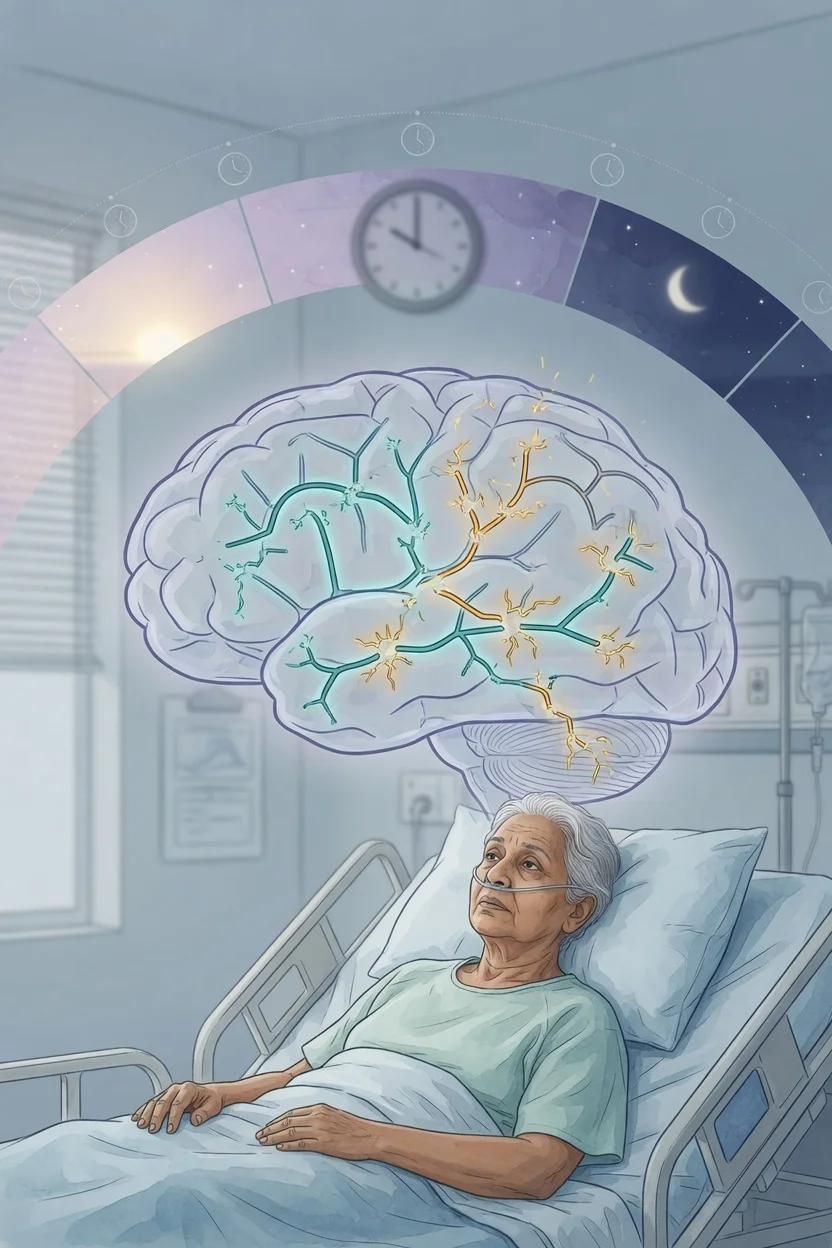
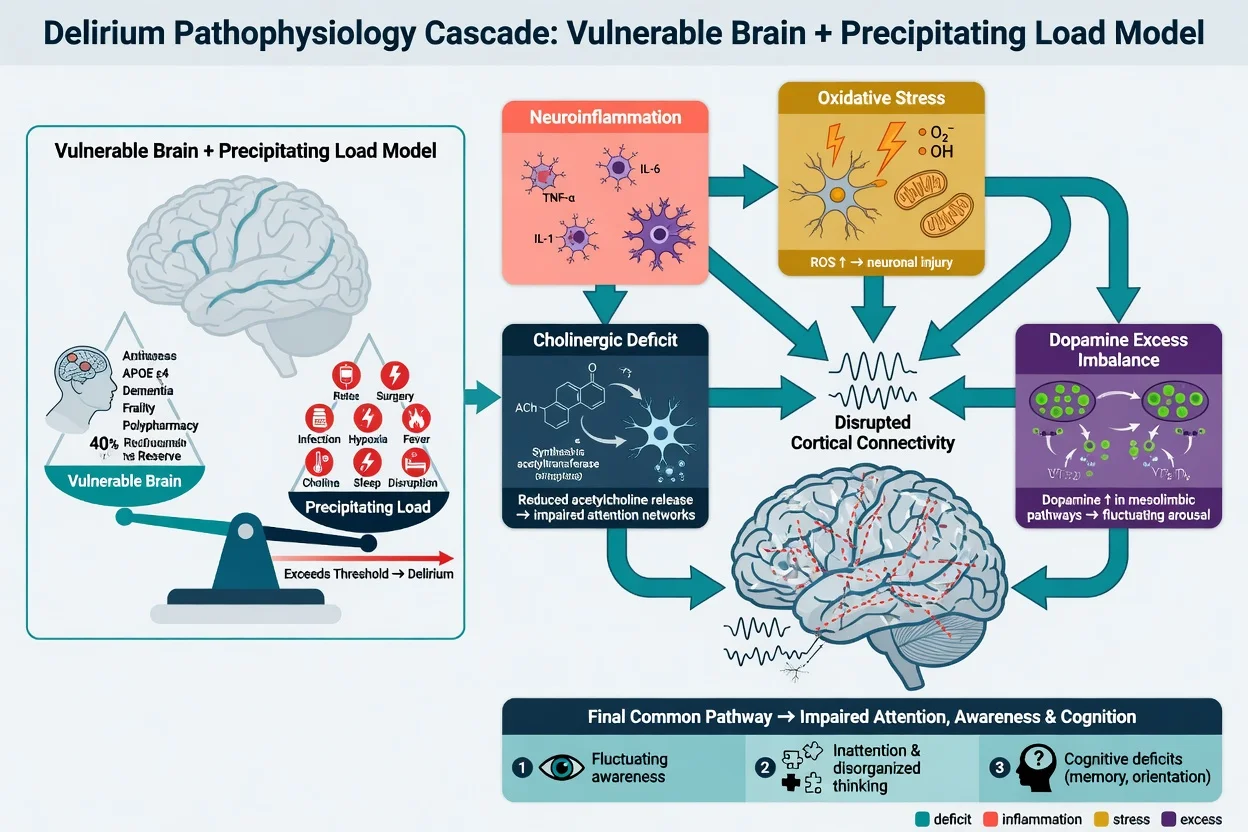
Definition — sleep disruption in the ICU
[1]Sleep disruption in the ICU is universal, predictable, and clinically important. Every critically ill patient is sleep-deprived — not in the trivial "tired" sense, but in the architecture-altering sense in which the restorative stages of sleep (slow-wave and REM) are almost abolished. Unlike elective sleep deprivation in health, ICU sleep loss occurs against a background of severe illness, inflammation, pain, and pharmacological sedation, where the physiological need for sleep is greatest. [1]
Two points frame the topic for the exam: [1]
-
Sleep is not the same as sedation. A deeply sedated patient on propofol is unconscious, not asleep. Polysomnography of propofol-sedated patients shows burst suppression or slow delta activity — not the cycling NREM/REM pattern of natural sleep. Traditional ICU sedatives suppress the very stages (N3 and REM) that drive immune restoration, memory consolidation, and tissue repair.[1]
-
The disruption is iatrogenically amplifiable. Noise, light, fragmented nursing care, and injudicious sedation are all modifiable. Multicomponent sleep-promotion bundles (cluster care, earplugs/eye masks, day-night lighting, alarm management) can reduce incident delirium by 30-40%. Promoting sleep is therefore a delirium-prevention intervention as much as a comfort measure.[2][4]
Normal sleep architecture — the baseline you are losing
Normal sleep architecture — click each stage
Stage 3 NREM (slow-wave / deep)
15-25% of total sleep time. Delta waves (0.5-4 Hz) — high-amplitude slow activity. The most restorative stage: growth hormone release, tissue repair, glymphatic clearance of beta-amyloid, declarative memory consolidation, immune restoration. Difficult to arouse. Predominates in first half of night. ALMOST ABOLISHED IN ICU.
Normal adult sleep is 7-9 hours of cycling NREM and REM. Sleep is organised in 4-6 cycles per night, each lasting 90-110 minutes. The architecture is not static: slow-wave (N3) sleep dominates the first half of the night, and REM episodes lengthen progressively across the second half — so morning REM is the longest and richest. This temporal architecture (the "sleep timetable") is critical, because most memory consolidation and hormonal secretion are tied to specific stages at specific times of night. [1]
Normal sleep architecture — the numbers
Functions of each stage — and why losing them matters in the ICU: [1]
What each sleep stage does — and what is lost when it is abolished in ICU
| Stage | Normal % | Key functions | Consequence when abolished in ICU |
|---|---|---|---|
| N1 | 2-5% | Sleep onset transition | Increased (sleep is shallow, fragmented) |
| N2 | 45-50% | Disconnection from environment, sleep maintenance | Relatively preserved; over-represented in dexmedetomidine sedation |
| N3 (slow-wave) | 15-25% | Growth hormone release, tissue repair, glymphatic clearance of neurotoxins, declarative memory consolidation, immune restoration (NK cells, cytokines), anabolic metabolism | Almost abolished → catabolism, delayed wound healing, immune suppression, impaired cognition |
| REM | 20-25% | Procedural and emotional memory consolidation, mood regulation, synaptic plasticity, brain development | Almost abolished → cognitive impairment, mood disturbance, contributes to PICS |
How ICU sleep differs from normal
ICU sleep is not simply shorter than normal — its structure is destroyed. Three cardinal abnormalities:[1]
-
Severe fragmentation. ICU patients experience 20-50 awakenings per night (normal adults: 4-5 brief arousals, usually without full awakening). Each nursing intervention, alarm, or vital-sign check produces a full awakening that resets the sleep cycle — the patient never reaches N3 or REM. [1]
-
Redistribution toward light sleep. N1 increases; N2 is preserved or increased; slow-wave (N3) sleep falls to <10% (normal 15-25%) and REM falls to <6%, often absent (normal 20-25%). The stages that are lost are exactly the restorative ones. [1]
-
Day-night reversal and circadian disruption. Many ICU patients sleep more during the day than at night. Constant illumination suppresses melatonin, illness and inflammation shift circadian phase, and sedation confounds the sleep-wake cycle. The result is a patient with no functional circadian rhythm — the worst possible substrate for recovery. [1]
Normal sleep vs ICU sleep — side-by-side
| Parameter | Normal adult | ICU patient | Clinical implication |
|---|---|---|---|
| Total sleep time | 7-9 hours | 2-5 hours | Cumulative sleep debt within days |
| Sleep efficiency | 85-95% | 40-70% | Half of time in bed is awake |
| Awakenings per night | 4-5 (brief) | 20-50 (full) | Sleep cycle never completes |
| Slow-wave (N3) sleep | 15-25% | <10% (often ~5%) | Restorative stage lost |
| REM sleep | 20-25% | <6%, often 0% | Memory consolidation lost |
| Stage 1 (N1) | 2-5% | 15-30% (increased) | Sleep is superficial, easily broken |
| Day-night rhythm | Preserved | Often reversed | Circadian rhythm abolished |
| Subjective report | Reliable | Unreliable (delirium, recall bias) | Must use objective measures |
Causes of ICU sleep disruption — six categories
Sleep disruption in ICU is multifactorial. The exam-favoured framework groups causes into six categories: (1) noise, (2) light, (3) patient care activities, (4) mechanical ventilation, (5) medications, and (6) patient (illness-related) factors.[1][2]
1. Noise — the #1 environmental disruptor
Noise in ICU — the numbers
ICU ambient noise levels are 50-70 dB continuously, with peaks exceeding 85 dB at each alarm. The World Health Organization recommends <30 dB for sleep and <35 dB peak in hospital bedrooms at night — exceeded on every ICU on every night. Sources (in descending order of disruption): ventilator and monitor alarms (~50% of disruptive noise), staff conversation, telephones and pagers, doors, IV pumps, suction, and other equipment. Up to 90% of monitor alarms are non-actionable (false or clinically irrelevant), yet each one fragments sleep.[1]
2. Light — disrupts the circadian clock
ICU illumination is 1000-3000 lux during the day (artificial — most ICUs have little natural light) and 100-500 lux at night (lights kept on for nursing care). Melatonin secretion is suppressed at >5 lux of blue-spectrum light to the retina. Sustained night-time illumination suppresses melatonin, phase-shifts the circadian rhythm, and abolishes the day-night contrast that the suprachiasmatic nucleus needs to entrain sleep. Compounding this, most ICU rooms are windowless or have small windows, so patients get little bright natural daylight during the day — the strongest circadian zeitgeber.[1]
3. Patient care activities — fragmentation by design
Nursing interventions interrupt patients on average every 30-60 minutes through the night. Each full awakening resets the sleep cycle and prevents descent into N3 or REM. Activities include: vital sign measurement, blood draws, medication administration, repositioning, oral care, suctioning, physician rounds, dressing changes, transport for imaging, and family visits. Many of these are non-urgent and could be deferred or batched. Cluster care (batching activities into one intervention) and protected sleep periods (e.g., 00:00-04:00) are the principal solutions.[4]
4. Mechanical ventilation — patient-ventilator asynchrony
Ventilation and sleep
Patient-ventilator asynchrony occurs in up to 88% of ventilated ICU patients and is a major, under-recognised cause of sleep fragmentation. Mechanisms: [1]
- Trigger too sensitive → auto-triggering during sleep → repeated arousals
- Trigger too insensitive → increased work of breathing to trigger → arousal
- Insufficient pressure support → increased WOB → arousal
- Excessive pressure support / over-assist → respiratory alkalosis → central apnoea during sleep (loss of respiratory drive) → arousal from apnoea. This is the most paradoxical and frequently missed mechanism.
- Inappropriate backup rate / mode mismatch → fights the ventilator during sleep [1]
Proportional modes (PAV — proportional assist ventilation, NAVA — neurally adjusted ventilatory assist) track patient effort more closely and are associated with better sleep than fixed pressure support ventilation. Adequate (not excessive) pressure support and trigger tuning are key. Adjusting ventilator settings to support sleep is an under-used intervention.[1]
5. Medications — the iatrogenic architecture destroyer
Effect of ICU drugs on sleep architecture
| Drug class | Effect on sleep architecture | Effect on delirium | Recommendation |
|---|---|---|---|
| Benzodiazepines (midazolam, lorazepam) | Suppress REM and slow-wave; produce unconsciousness NOT sleep | Increase delirium (strongest drug association) | AVOID for sleep; minimise for sedation |
| Propofol | Suppress REM and slow-wave; EEG shows burst suppression, not natural sleep | Neutral-to-increase delirium | Acceptable for short-term sedation; NOT "sleep" |
| Dexmedetomidine | Produces stage N2-like sedation that resembles natural sleep; patient arousable; preserves sleep architecture better than propofol/benzos | Reduces delirium vs benzos | PREFERRED for sleep-favourable sedation |
| Opioids (morphine, fentanyl) | Suppress REM; increase arousals; analgesia may improve sleep if pain is the disruptor | Neutral (analgesia beneficial) | Use for pain; avoid high doses for "sleep" |
| Antihistamines (promethazine, diphenhydramine) | Sedation but anticholinergic; disrupt architecture | Increase delirium | AVOID |
| Antidepressants (SSRI, TCA) | Variable; TCAs anticholinergic | Variable | Continue pre-admission; don't initiate for "sleep" |
| Corticosteroids | Insomnia, reduce REM | Increase delirium (high dose) | Give in morning; minimise dose |
| Beta-2 agonists (salbutamol) | Increase arousals, tremor | — | Give earlier in day; inhaled preferred |
| Melatonin (supplement) | Restores circadian rhythm; may increase REM | May reduce delirium | OFFER 3-10 mg nocte |
The single most important pharmacological principle for the exam: propofol and benzodiazepines produce unconsciousness, not sleep. EEG of a propofol-sedated patient shows slow delta activity or burst suppression — not the cycling NREM/REM pattern of natural sleep. The patient is rendered unresponsive but the restorative stages of sleep are suppressed, not reproduced. Dexmedetomidine is the exception: an alpha-2 agonist that produces a stage N2-like state resembling natural sleep, in which the patient is arousable and sleep architecture is relatively preserved.[1][3]
6. Patient (illness-related) factors
Critical illness itself disrupts sleep, independent of the ICU environment. Mechanisms include systemic inflammation (cytokines IL-1, IL-6, TNF alter sleep architecture), pain, dyspnoea, anxiety, delirium, hypoxaemia, and the underlying disease (sepsis, ARDS, heart failure). Pain is the most modifiable; the ABCDEF bundle's "A — Assess and manage pain" is also a sleep intervention. Delirium and sleep disruption form a vicious cycle: poor sleep → delirium → worse sleep → worse delirium.[2][7]
Causes of ICU sleep disruption — the six-category framework
| Category | Specific causes | Modifiable? | Key intervention |
|---|---|---|---|
| 1. Noise | Ventilator/monitor/IV pump alarms, staff conversation, telephones, pagers, doors, equipment | YES | Alarm management, quiet protocol, sound-absorbing materials |
| 2. Light | Constant illumination (100-500 lux at night), little natural daylight | YES | Day-night contrast, eye masks, blackout curtains, dimming |
| 3. Care activities | Vital signs, bloods, medications, repositioning, rounds, imaging | YES | Cluster care, protected sleep period, defer non-urgents |
| 4. Mechanical ventilation | Trigger mismatch, over/under-assist, asynchrony, central apnoea | YES | Adjust trigger/PS; consider PAV/NAVA |
| 5. Medications | Benzos, propofol, opioids, antihistamines, steroids, beta-agonists | YES | Prefer dexmedetomidine; minimise benzos; melatonin |
| 6. Patient factors | Pain, dyspnoea, anxiety, delirium, inflammation, hypoxaemia, disease | PARTLY | Treat pain/dyspnoea; prevent delirium (ABCDEF) |
Consequences of sleep disruption in ICU
Sleep is not optional. Acute sleep deprivation produces measurable physiological deterioration across multiple organ systems, and the critically ill patient — who most needs anabolic, restorative physiology — is the least able to tolerate it.[1][7]
Consequences of ICU sleep disruption — by system
| System | Consequence | Mechanism / evidence |
|---|---|---|
| Neurological / cognitive | Delirium (bidirectional vicious cycle); cognitive impairment | Sleep deprivation doubles delirium risk; each additional night of poor sleep increases delirium; contributes to PICS |
| Immune | Reduced NK cell activity, reduced antibody response, impaired T-cell function, increased infection susceptibility | Sleep deprivation reduces NK cell number/activity; sleep is when immune restoration occurs (in N3) |
| Metabolic / endocrine | Insulin resistance, impaired glucose tolerance, increased catabolism, negative nitrogen balance | Sleep deprivation reduces insulin sensitivity within days; growth hormone (released in N3) suppressed |
| Wound healing | Delayed wound healing | Reduced growth hormone in N3; reduced anabolic state |
| Respiratory | Reduced ventilatory drive, impaired respiratory muscle function, prolonged mechanical ventilation | Sleep deprivation blunts hypercapnic ventilatory response; contributes to weaning failure |
| Cardiovascular | Increased sympathetic activity, hypertension, tachycardia, arrhythmias | Loss of nocturnal BP dipping; sympathetic surges with arousals |
| Psychological | Anxiety, depression, reduced pain tolerance; PTSD post-ICU | Contributes to PICS psychological morbidity; sleep disruption persists for months |
| Cognition / memory | Impaired memory consolidation, executive dysfunction | Loss of REM and N3 abolishes memory consolidation; contributes to long-term cognitive impairment |
The delirium–sleep vicious cycle
The delirium–sleep vicious cycle (the key pathophysiological concept)
Sleep disruption
ICU patient sleeps 2-5 h, fragmented, with abolished REM/N3. Sleep debt accumulates from the first night.
Neurobiological vulnerability
Sleep loss → impaired glymphatic clearance of neurotoxins, neurotransmitter imbalance (acetylcholine/dopamine), altered melatonin/cortisol rhythm. The brain becomes vulnerable to delirium.
Delirium develops
Acute brain dysfunction (CAM-ICU positive). Delirium itself fragments sleep further (agitation, day-night reversal, hallucinations).
Bidirectional escalation
Poor sleep → delirium → worse sleep → worse delirium. Each additional day of delirium measurably worsens 12-month cognition (BRAIN-ICU).
Long-term consequences
Delirium duration is the #1 predictor of long-term cognitive impairment; sleep disruption persists for months; PTSD, depression, anxiety are common. BREAKING THE CYCLE (sleep promotion) is a delirium-prevention intervention.
Assessment of sleep in the ICU
There is no single perfect measure of sleep in the ICU. The gold standard is impractical, and patient self-report is unreliable (delirium, recall bias, sedation).[1][2]
Methods of measuring sleep in ICU
| Method | What it measures | Practicality | Limitation |
|---|---|---|---|
| Polysomnography (PSG) | EEG, EOG, EMG → stage-by-stage architecture (gold standard) | IMPRACTICAL in ICU | Technician needed; electrodes dislodged; expensive; equipment adds noise |
| Actigraphy | Wrist movement → sleep/wake estimation | Practical; feasible long-term | Overestimates sleep in still (sedated) patients; can't stage sleep |
| Bispectral index (BIS) | Processed EEG → depth of sedation | Reasonable | Sedation depth surrogate, not sleep architecture |
| Richards-Campbell Sleep Questionnaire (RCSQ) | 5-item visual analogue scale (depth, latency, awakenings, efficiency, quality) | Practical; validated in ICU | Subjective; needs awake/cooperative patient |
| Nurse assessment | Observed sleep duration/quality | Practical | Poorly correlated with objective measures; overestimates |
| Patient recall (post-discharge) | Subjective sleep quality | Only retrospective | Biased by delirium, sedation, psychological morbidity |
Key exam point: patient perception of sleep quality is poorly correlated with objective measurements (PSG, actigraphy). Patients who report sleeping "well" often have severely disrupted architecture on PSG, and vice versa.[1]
Management — non-pharmacological (multicomponent bundle)
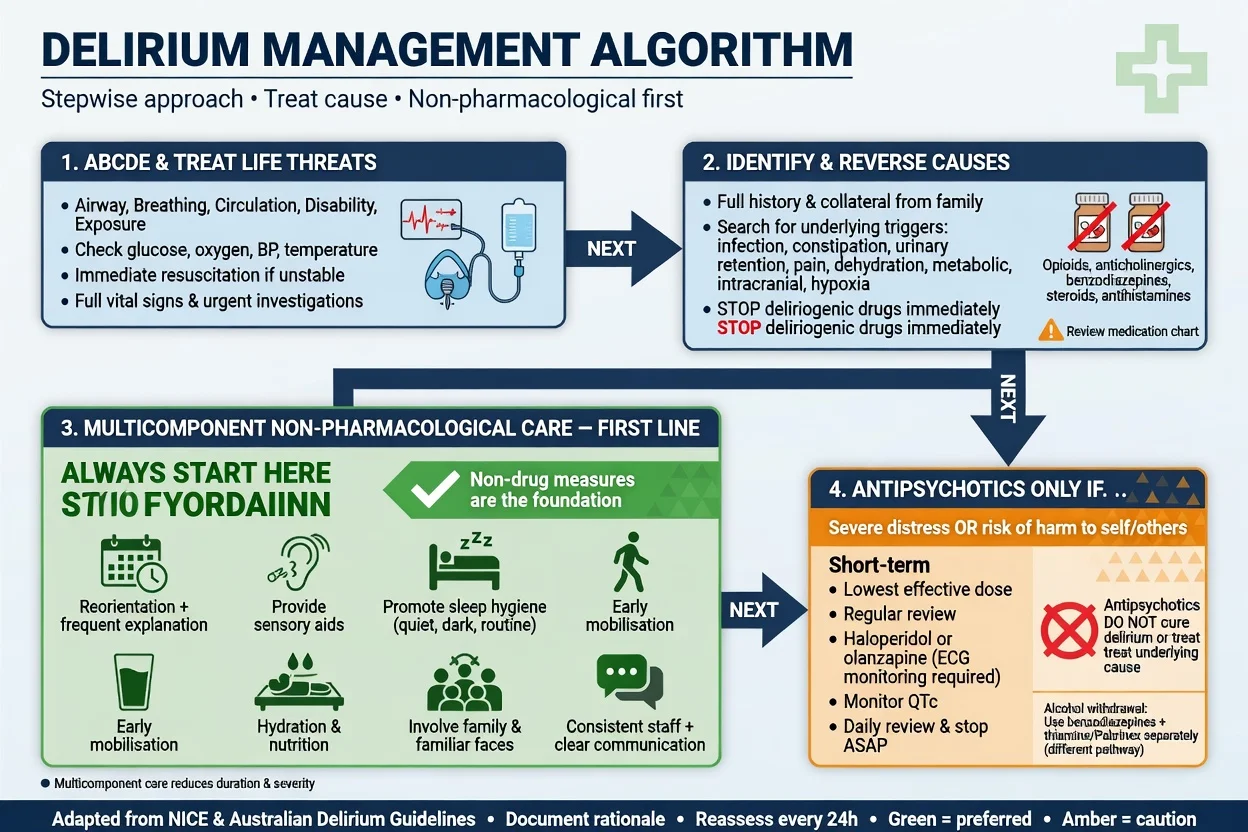
Sleep promotion in ICU is a multicomponent, multidisciplinary bundle. No single intervention is sufficient; the evidence supports combining noise reduction, light control, cluster care, and patient comfort measures. The PADIS guidelines (2018) recommend multicomponent sleep-promotion protocols for all ICU patients.[8]
Non-pharmacological sleep-promotion bundle
Noise reduction
Alarm management (tune thresholds, silence non-urgent, route non-actionable alarms to pagers not bedside). Quiet protocol (no non-urgent conversation after 22:00; telephones on vibrate; soft-closing bins). Sound-absorbing ceiling/wall materials. Target <35 dB at night. Reduce alarm burden — up to 90% of monitor alarms are non-actionable.
Light control — day-night contrast
BRIGHT natural daylight during the day (open blinds, lights on, mobilise out of bed near window — daylight is the strongest circadian zeitgeber). DARKNESS at night (dim lights, blackout curtains, doors closed). Eye masks for all patients at night. Avoid blue-spectrum screens at night. Maintain a clear 24-hour light cycle.
Cluster nursing care
BATCH activities: combine vital signs, bloods, medications, repositioning, oral care into a single intervention rather than waking the patient 8-10 times. Establish a PROTECTED SLEEP PERIOD (e.g., 00:00-04:00) during which only urgent care is performed. Defer non-urgent bloods/imaging to morning. Reduce nighttime vital sign frequency if stable.
Earplugs and eye masks
Offer to ALL ICU patients. RCT evidence shows earplugs improve subjective sleep quality and reduce incident delirium by ~30-40% (especially on the first night). Cheap, safe, effective — should be default, not opt-in.
Optimise mechanical ventilation for sleep
Adjust trigger sensitivity (avoid auto-triggering). Provide adequate (not excessive) pressure support. Consider proportional modes (PAV, NAVA) which track patient effort and improve sleep vs fixed pressure support. Avoid over-assist (causes central apnoea → arousals). Set appropriate backup rate.
Treat pain, dyspnoea, anxiety
Assess pain (CPOT/BPS) and treat adequately — untreated pain is a major sleep disruptor. Treat dyspnoea (oxygen, bronchodilators, position). Address anxiety (reassurance, family presence, orientation with clock/calendar).
Prevent and treat delirium
Apply the ABCDEF bundle. Delirium and sleep disruption form a vicious cycle — preventing delirium improves sleep, and promoting sleep prevents delirium. Reorient, restore day-night cycle, mobilise early.
Environmental comfort
Single rooms where possible (noise, light, privacy). Comfortable temperature (~21°C). Comfortable bed and positioning. Mouth care, dry/stable lines, empty drains/catheters to reduce nocturnal disturbance.
Early mobilisation
Daytime activity (sitting, standing, walking as able) builds sleep pressure and entrains the circadian rhythm. Early mobilisation also prevents ICU-acquired weakness and delirium. Activity during the day = sleep at night.
Family and orientation
Family presence (reduces anxiety). ICU diary (reduces PTSD post-discharge). Visible clock, calendar, and orientation cues. Familiar objects from home where possible.
Non-pharmacological interventions — evidence summary
| Intervention | Effect | Evidence | Cost |
|---|---|---|---|
| Earplugs | Improved subjective sleep; reduced delirium ~30-40% | RCT (Belyadi 2014) — first-night effect strongest | Negligible |
| Eye masks | Improved subjective sleep; reduced delirium | RCT — combined with earplugs | Negligible |
| Cluster care / protected sleep period | Fewer awakenings, longer sleep bouts | Multicomponent bundle (Patel 2017) | Zero (workflow change) |
| Bright light therapy (day) | Circadian entrainment; may reduce delirium | Observational + small RCTs | Low |
| Day-night lighting protocol | Preserved melatonin, day-night contrast | Multicomponent bundles | Low |
| Alarm management | Reduced noise, fewer awakenings | Quality-improvement studies | Zero (workflow change) |
| Single rooms | Less noise, better light control | Observational | Capital cost |
| Early mobilisation | Builds sleep pressure; reduces delirium | Schweickert 2009 (Lancet) | Moderate (staffing) |
Management — pharmacological
Pharmacological sleep aids have a limited but useful role. The principles: (1) restore the circadian rhythm with melatonin, (2) prefer dexmedetomidine for sedation, (3) avoid benzodiazepines, antihistamines, and high-dose opioids.[2][8]
Melatonin
Melatonin secretion is reduced in ICU patients (constant light, illness, medications). Supplementation with melatonin 3-10 mg nocte restores circadian timing, improves subjective sleep quality, and may reduce incident delirium. The evidence is growing but not definitive; melatonin is safe, cheap, and has few side effects. Ramelteon (melatonin-receptor agonist) has shown benefit in small studies for delirium prevention. Melatonin is not a sedative — it is a circadian timing agent — and works best combined with a dark environment.[6]
Dexmedetomidine — the sleep-favourable sedative
Dexmedetomidine for sleep
Dexmedetomidine is a selective alpha-2 adrenergic agonist acting on the locus coeruleus (the brain's arousal centre). It produces a unique state resembling natural stage N2 sleep: the patient is sedated but arousable (can be woken to cooperate with neurology, nursing, mobilisation), and sleep architecture is relatively preserved (N2 predominates, REM/N3 not abolished to the same degree as with propofol or benzodiazepines). It is the sedative of choice when sleep architecture matters.[3]
The DEXACLU trial (Skrobik 2018) tested low-dose nocturnal dexmedetomidine (no circadian infusion pause) in older non-intubated ICU patients at risk of delirium: a signal toward reduced delirium in patients who developed it at baseline, though the trial was stopped early. The broader evidence (MENDS, SEDCOM, SPICE) consistently shows dexmedetomidine reduces delirium and shortens ventilation compared with benzodiazepines.[3]
Drugs to avoid
- Benzodiazepines (midazolam, lorazepam): disrupt sleep architecture (suppress REM/N3), produce unconsciousness not sleep, and are the single strongest pharmacological risk factor for delirium. Avoid for sedation and sleep.
- Antihistamines (promethazine, diphenhydramine): anticholinergic → delirium; disrupt architecture.
- High-dose opioids: suppress REM, increase arousals (though analgesia can improve sleep if pain is the disruptor — use for pain, not for sleep).
- Propofol for "sleep": propofol is unconsciousness, not sleep. EEG shows burst suppression. Acceptable for short-term procedural/ICU sedation; do not confuse with sleep. [1]
Pharmacological sleep aids in ICU — what to use and what to avoid
| Drug | Effect on sleep | Recommendation |
|---|---|---|
| Melatonin 3-10 mg nocte | Restores circadian rhythm; may improve REM | OFFER to all ICU patients (safe, cheap, growing evidence) |
| Ramelteon 8 mg nocte | Melatonin agonist; delirium prevention | Reasonable alternative to melatonin |
| Dexmedetomidine | N2-like sleep; arousable; preserves architecture | PREFERRED sedative when sleep matters |
| Zolpidem / zopiclone | Short-acting non-benzo hypnotic | Use cautiously; may worsen delirium; avoid if delirious |
| Trazodone | Sedating antidepressant; off-label hypnotic | Reasonable in non-delirious patient with insomnia |
| Benzodiazepines | Suppress REM/N3; unconsciousness not sleep | AVOID |
| Antihistamines | Anticholinergic; disrupt architecture | AVOID |
| High-dose opioids | Suppress REM | Use for pain, NOT for sleep |
| Propofol | Burst suppression; not sleep | Acceptable sedative, NOT a sleep aid |
Key trials and evidence
Belyadi 2014 — Earplugs in ICU (PMID 24988366)
Study design
Randomised controlled trial — earplugs vs usual care on first ICU night
Population
ICU patients on first night of admission
Intervention
Earplugs overnight
Key result
Improved subjective sleep quality (RCSQ). Reduced incident delirium — confounders-adjusted OR ~0.47 (i.e., ~30-40% relative reduction in delirium). Greatest effect on the first night.
Clinical bottom line
Earplugs are a simple, cheap, safe intervention that improves sleep and reduces delirium in ICU. Offer to ALL patients.
Patel 2017 — Multicomponent sleep bundle (PMID 29610852)
Study design
Pre-post quality improvement study of a multicomponent sleep-promotion bundle
Population
Medical and surgical ICU patients
Intervention
Bundle: cluster care, dim lights at night, eye masks/earplugs, day-night lighting, alarm management, staff education
Key result
Reduced nocturnal awakenings; trend toward reduced delirium; improved subjective sleep quality
Clinical bottom line
Multicomponent bundles (not single interventions) are the evidence-based approach to ICU sleep promotion. Whole-unit culture change is required.
Skrobik 2018 — DEXACLU trial, nocturnal dexmedetomidine (PMID 30449217)
Study design
Randomised, double-blind, placebo-controlled trial — low-dose nocturnal dexmedetomidine vs placebo
Population
100 older (≥65 y) non-intubated ICU patients at risk of delirium
Intervention
Dexmedetomidine infusion overnight (no circadian pause) vs placebo
Key result
Trial stopped early for futility on primary (delirium-free days). Pre-specified subgroup: patients already delirious at randomisation had significantly more delirium-free days with dexmedetomidine. No excess bradycardia/hypotension at low dose.
Clinical bottom line
Low-dose nocturnal dexmedetomidine is safe and may benefit patients with established delirium; dexmedetomidine remains the preferred sedative for sleep architecture.
Kamdar 2013 — Sleep and delirium cohort (PMID 23637375)
Study design
Prospective cohort — sleep quality assessed nightly; delirium assessed twice daily (CAM-ICU)
Population
Medical ICU patients
Key result
Worse subjective sleep quality on a given night independently predicted delirium/coma the following day. The association was strongest for the first ICU night.
Clinical bottom line
Sleep disruption is not just a comfort issue — it is an independent risk factor for delirium. Promoting sleep is delirium prevention.
Devlin 2018 — PADIS guidelines (PMID 30068470)
Article type
Clinical practice guidelines (Society of Critical Care Medicine) — Pain, Agitation/sedation, Delirium, Immobility, Sleep disruption
Sleep recommendation
Recommends multicomponent sleep-promotion protocols (cluster care, light/noise control, eye masks/earplugs) for all ICU patients
Pharmacology
No strong recommendation for or against specific pharmacological sleep aids; melatonin and ramelteon are reasonable options; benzodiazepines not recommended
Clinical bottom line
The PADIS bundle formally recognises sleep disruption as a target for routine ICU care. Multicomponent non-pharmacological bundles are first-line.
The post-ICU sleep legacy
Sleep disruption does not end at ICU discharge. Sleep disturbance persists for months in a substantial proportion of ICU survivors and is a recognised component of post-intensive care syndrome (PICS). Mechanisms include persistent hyperarousal (anxiety, PTSD), residual neurological damage (from hypoxia, delirium, neuroinflammation), medication withdrawal (sedatives, opioids), persistent pain, and disrupted circadian rhythm. Post-ICU sleep disturbance is strongly linked to PTSD, depression, and impaired quality of life.[2]
Management at the ICU recovery clinic: sleep hygiene education, melatonin, CBT for insomnia (CBT-I) — the most effective long-term intervention for chronic insomnia — treatment of underlying psychological morbidity (trauma-focussed CBT for PTSD), and pharmacotherapy where indicated. Addressing sleep is part of comprehensive PICS rehabilitation. [1]
stem="A 72-year-old man is admitted to ICU with severe community-acquired pneumonia and septic shock. He is intubated and ventilated. On day 3 he is CAM-ICU positive (delirious). The night nurse reports he slept poorly, with multiple awakenings for bloods, repositioning, and medication administration. The unit is brightly lit and noisy from monitor alarms. You are asked to institute a sleep-promotion plan." [1]
SAQ — Sleep disruption and delirium in the ICU
10 minutes · 10 marks
A 72-year-old man is admitted to ICU with severe community-acquired pneumonia and septic shock. He is intubated and ventilated. On day 3 he isCAM-ICU positive (delirious). The night nurse reports he slept poorly, with multiple awakenings for bloods, repositioning, and medication administration. The unit is brightly lit and noisy from monitor alarms. You are asked to institute a sleep-promotion plan.
Clinical pearls
Red flags
References
- [1]Friese RS, et al. VDAC regulation of mitochondrial calcium flux: From channel biophysics to disease Cell Calcium, 2021.PMID 33529977
- [2]Kamdar BB, et al. Notum palmitoleoyl-protein carboxylesterase regulates Fas cell surface death receptor-mediated apoptosis via the Wnt signaling pathway in colon adenocarcinoma Bioengineered, 2021.PMID 34402722
- [3]Skrobik Y, Duprey MS, Hill NS, Devlin JW. Real-world treatment patterns, resource use and costs of treating uncontrolled carcinoid syndrome and carcinoid heart disease: a retrospective Swedish study Scand J Gastroenterol, 2018.PMID 30449217
- [4]Patel J, Baldwin J, Bunting P, Laha S. Consistency of Structure-Function Correlation Between Spatially Scaled Visual Field Stimuli and In Vivo OCT Ganglion Cell Counts Invest Ophthalmol Vis Sci, 2018.PMID 29610852
- [5]Belyadi MH, et al. Single-step and rapid growth of silver nanoshells as SERS-active nanostructures for label-free detection of pesticides ACS Appl Mater Interfaces, 2014.PMID 24988366
- [6]Huang HW, Zheng BL, Jiang L, et al. C-reactive protein kinetics post elective cranial surgery. A prospective observational study Br J Neurosurg, 2020.PMID 31645141
- [7]Kamdar BB, King LM, Colantuoni E, et al. C'mon, CAM J Rheumatol, 2013.PMID 23637375
- [8]Devlin JW, Skrobik Y, Gélinas C, et al. A taboo topic? How General Practitioners talk about overweight and obesity in New Zealand J Prim Health Care, 2018.PMID 30068470